
28 Books Written

Good to Great: Why Some Companies Make the Leap... and Others Don't
by Jim Collins
Rating: 4.1 ⭐
• 28 recommendations ❤️
sach hay ve ky nang - bi quyet thanh cong - hinh thanh tu duy tich cuc
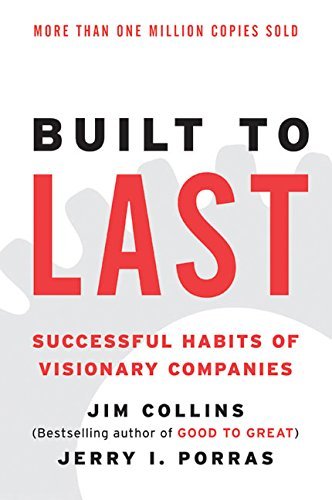
Built to Last: Successful Habits of Visionary Companies
by Jim Collins
Rating: 4.1 ⭐
• 12 recommendations ❤️
Drawing upon a six-year research project at the Stanford University Graduate School of Business, James C. Collins and Jerry I. Porras took eighteen truly exceptional and long-lasting companies and studied each in direct comparison to one of its top competitors. They examined the companies from their very beginnings to the present day -- as start-ups, as midsize companies, and as large corporations. Throughout, the authors asked: "What makes the truly exceptional companies different from the comparison companies and what were the common practices these enduringly great companies followed throughout their history?" Filled with hundreds of specific examples and organized into a coherent framework of practical concepts that can be applied by managers and entrepreneurs at all levels, Built to Last provides a master blueprint for building organizations that will prosper long into the 21st century and beyond.

Great by Choice: Uncertainty, Chaos, and Luck--Why Some Thrive Despite Them All
by Jim Collins
Rating: 4.1 ⭐
• 6 recommendations ❤️
Ten years after the worldwide bestseller Good to Great , Jim Collins returns withanother groundbreaking work, this time to ask: why do some companies thrive inuncertainty, even chaos, and others do not? Based on nine years of research,buttressed by rigorous analysis and infused with engaging stories, Collins andhis colleague Morten Hansen enumerate the principles for building a truly greatenterprise in unpredictable, tumultuous and fast-moving times. This book isclassic Collins: contrarian, data-driven and uplifting.
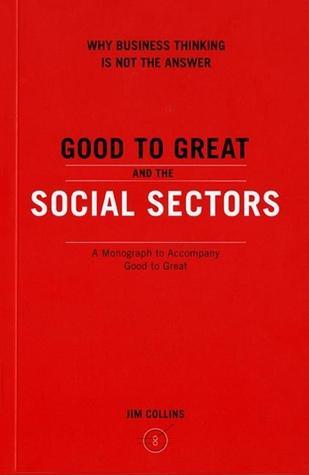
Good to Great and the Social Sectors: A Monograph to Accompany Good to Great
by Jim Collins
Rating: 4.0 ⭐
• 4 recommendations ❤️
Building upon the concepts introduced in Good to Great , Jim Collins answers the most commonly asked questions raised by his readers in the social sectors. Using information gathered from interviews with over 100 social sector leaders, Jim Collins shows that his "Level 5 Leader" and other good-to-great principles can help social sector organizations make the leap to greatness.
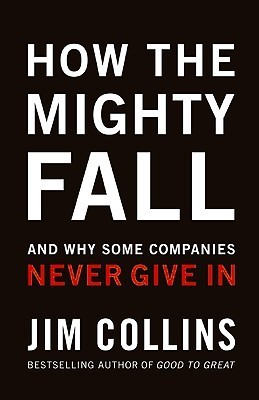
How The Mighty Fall: And Why Some Companies Never Give In
by Jim Collins
Rating: 4.0 ⭐
• 4 recommendations ❤️
Decline can be avoided.Decline can be detected.Decline can be reversed.Amidst the desolate landscape of fallen great companies, Jim Collins began to wonder: How do the mighty fall? Can decline be detected early and avoided? How far can a company fall before the path toward doom becomes inevitable and unshakable? How can companies reverse course?In How the Mighty Fall, Collins confronts these questions, offering leaders the well-founded hope that they can learn how to stave off decline and, if they find themselves falling, reverse their course. Collins' research project—more than four years in duration—uncovered five step-wise stages of decline:Stage 1: Hubris Born of SuccessStage 2: Undisciplined Pursuit of MoreStage 3: Denial of Risk and PerilStage 4: Grasping for SalvationStage 5: Capitulation to Irrelevance or DeathBy understanding these stages of decline, leaders can substantially reduce their chances of falling all the way to the bottom.Great companies can stumble, badly, and recover.Every institution, no matter how great, is vulnerable to decline. There is no law of nature that the most powerful will inevitably remain at the top. Anyone can fall and most eventually do. But, as Collins' research emphasizes, some companies do indeed recover—in some cases, coming back even stronger—even after having crashed into the depths of Stage 4.Decline, it turns out, is largely self-inflicted, and the path to recovery lies largely within our own hands. We are not imprisoned by our circumstances, our history, or even our staggering defeats along the way. As long as we never get entirely knocked out of the game, hope always remains. The mighty can fall, but they can often rise again.

Beyond Entrepreneurship: Turning Your Business into an Enduring Great Company
by Jim Collins
Rating: 4.1 ⭐
• 4 recommendations ❤️
“This is a hands-on guide to making your company a compelling marketplace force.”— Industry Week Every great company, no matter how large or small, has as its core a compelling vision. Beyond Entrepreneurship explains step by step how any firm can develop this vision and achieve enduring greatness. It provides a complete blueprint for steering your company to success.Packed with real-world examples of firms that have grown and attained corporate greatness—including Nike, L.L. Bean, Mrs. Fields’ Cookies, Sony, and FedEx—this inspirational yet practical book . . .· Covers in depth the five key elements common to all great enduring companies· Shows how to lay a foundation for greatness while a company is still small and adaptable . . . how to set values, purpose, and mission, and instill them into the very roots of your organization· Demonstrates how to develop the most effective leadership style for your specific situation· Shows how to translate vision into effective day-to-day business tactics –and how to foster consistent tactical excellence in everything your company does· Explains how to resolve the critical strategic issues faced by every small and mid-sized firm· Prevents a set of concepts—and a host of practical techniques—for stimulating creativity and maintaining innovation as the company evolves“ Beyond Entrepreneurship is a blueprint for becoming great.” – Entrepreneur Magazine

Turning the Flywheel: A Monograph to Accompany Good to Great
by Jim Collins
Rating: 4.2 ⭐
• 3 recommendations ❤️
A companion guidebook to the number-one bestselling Good to Great, focused on implementation of the flywheel concept, one of Jim Collins’ most memorable ideas that has been used across industries and the social sectors, and with startups.The key to business success is not a single innovation or one plan. It is the act of turning the flywheel, slowly gaining momentum and eventually reaching a breakthrough. Building upon the flywheel concept introduced in his groundbreaking classic Good to Great, Jim Collins teaches readers how to create their own flywheel, how to accelerate the flywheel’s momentum, and how to stay on the flywheel in shifting markets and during times of turbulence.Combining research from his Good to Great labs and case studies from organizations like Amazon, Vanguard, and the Cleveland Clinic which have turned their flywheels with outstanding results, Collins demonstrates that successful organizations can disrupt the world around them—and reach unprecedented success—by employing the flywheel concept.

De la Performance à l'excellence: Devenir une entreprise leader
by Jim Collins
Rating: 3.2 ⭐
• 3 recommendations ❤️

BE 2.0 (Beyond Entrepreneurship 2.0): Turning Your Business into an Enduring Great Company
by Jim Collins
Rating: 4.4 ⭐
• 2 recommendations ❤️
From Jim Collins, the most influential business thinker of our era, comes an ambitious upgrade of his classic, Beyond Entrepreneurship, that includes all-new findings and world-changing insights.What's the roadmap to create a company that not only survives its infancy but thrives, changing the world for decades to come?Nine years before the publication of his epochal bestseller Good to Great, Jim Collins and his mentor, Bill Lazier, answered this question in their bestselling book, Beyond Entrepreneurship.Beyond Entrepreneurship left a definitive mark on the business community, influencing the young pioneers who were, at that time, creating the technology revolution that was birthing in Silicon Valley. Decades later, successive generations of entrepreneurs still turn to the strategies outlined in Beyond Entrepreneurship to answer the most pressing business questions.BE 2.0 is a new and improved version of the book that Jim Collins and Bill Lazier wrote years ago. In BE 2.0, Jim Collins honors his mentor, Bill Lazier, who passed away in 2005, and reexamines the original text of Beyond Entrepreneurship with his 2020 perspective.The book includes the original text of Beyond Entrepreneurship, as well as four new chapters and fifteen new essays. BE 2.0 pulls together the key concepts across Collins' thirty years of research into one integrated framework called The Map. The result is a singular reading experience, which presents a unified vision of company creation that will fascinate not only Jim's millions of dedicated readers worldwide, but also introduce a new generation to his remarkable work.

Good to Why Some Companies Make the Leap... and Others Don't is a 2001 management book by James C. Collins that aims to describe how companies transition from being average companies to great companies and how companies can fail to make the transition. “Good to Great” attained long-running positions on the New York Times, Wall Street Journal and Business Week best-seller lists, sold 2.5 million hardcover copies since publication, and has been translated into 32 languages."Greatness" is defined as financial performance several multiples better than the market average over a sustained period. Collins finds the main factor for achieving the transition to be a narrow focusing of the company’s resources on their field of competence. Collins used a large team of researchers who studied "6,000 articles, generated more than 2,000 pages of interview transcripts and created 384 megabytes of computer data in a five-year project". In this book summary of "Good to Great" you can discover the condensed wisdom to be gained from the book. You can discover what differences there were in companies that managed to achieve greatness. Do you want to know the characteristics of a leader most likely to take their company from good to great? Do you want to know how to hire the right people? The book summary includes information on each of the topics covered in “Good To Great” in a format that will help you while reducing the time required for reading the entire book.Chapter Good is the Enemy of GreatChapter Level 5 Leadership Chapter First Who… Then What Chapter Confront the Brutal Facts Chapter The Hedgehog Concept Chapter A Culture of DisciplineChapter Technology AcceleratorsChapter The Flywheel and the Doom LoopChapter From Good to Great to Built to LastThe author of “Good to Great”, James C. "Jim" Collins, III is an American business consultant, author, and lecturer on the subject of company sustainability and growth. Jim Collins frequently contributes to Harvard Business Review, Business Week, Fortune and other magazines, journals, etc. Collins began his research and teaching career on the faculty at Stanford University's Graduate School of Business, where he received the Distinguished Teaching Award in 1992. In 1995, he founded a management laboratory in Boulder, Colorado, where he now conducts research and teaches executives from the corporate and social sectors.

Most executives have a big, hairy, audacious goal. But they install layers of stultifying bureaucracy that prevent them from realizing it. In this article, Jim Collins introduces the catalytic mechanism , a simple yet powerful managerial tool that helps turn lofty aspirations into reality. The crucial link between objectives and results, this tool is a galvanizing, nonbureaucratic way to turn one into the other. But the same catalytic mechanism that works in one organization won’t necessarily work in another. So, to help readers get started, Collins offers some general principles that support the process of building one effectively. Since 1922, Harvard Business Review has been a leading source of breakthrough ideas in management practice. The Harvard Business Review Classics series now offers you the opportunity to make these seminal pieces a part of your permanent management library. Each highly readable volume contains a groundbreaking idea that continues to shape best practices and inspire countless managers around the world.

Good to Great Summarized for Busy People
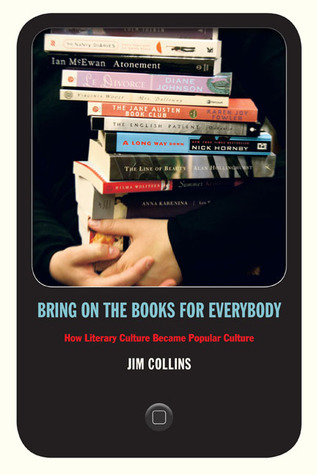
Bring on the Books for Everybody: How Literary Culture Became Popular Culture
by Jim Collins
Rating: 3.7 ⭐
Bring on the Books for Everybody is an engaging assessment of the robust popular literary culture that has developed in the United States during the past two decades. Jim Collins describes how a once solitary and print-based experience has become an exuberantly social activity, enjoyed as much on the screen as on the page. Fueled by Oprah’s Book Club, Miramax film adaptations, superstore bookshops, and new technologies such as the Kindle digital reader, literary fiction has been transformed into best-selling, high-concept entertainment. Collins highlights the infrastructural and cultural changes that have given rise to a flourishing reading public at a time when the future of the book has been called into question. Book reading, he claims, has not become obsolete; it has become integrated into popular visual media. Collins explores how digital technologies and the convergence of literary, visual, and consumer cultures have changed what counts as a “literary experience” in phenomena ranging from lush film adaptations such as The English Patient and Shakespeare in Love to the customer communities at Amazon. Central to Collins’s analysis and, he argues, to contemporary literary culture, is the notion that refined taste is now easily acquired; it is just a matter of knowing where to access it and whose advice to trust. Using recent novels, he shows that the redefined literary landscape has affected not just how books are being read, but also what sort of novels are being written for these passionate readers. Collins connects literary bestsellers from The Jane Austen Book Club and Literacy and Longing in L.A. to Saturday and The Line of Beauty , highlighting their depictions of fictional worlds filled with avid readers and their equations of reading with cultivated consumer taste.

Baseball bonded the Collins family, culminating when Michael played in the junior college World Series in Enid, Oklahoma, while Jim was coaching University High School in the Illinois state finals—seven hundred miles apart! Those bonds reached new heights with Jim as a head coach and Michael his assistant at University High School. A doorbell rings and lives are changed forever. A drunk driver and a horrific crash. Two brain surgeries. Five days in the hospital. A funeral. All played out in a very dramatic and public manner. But with all the pain comes some miracles, including a “Pay It Forward” movement with positive impact around the world in honor of Michael. Knowing it is what Michael would want, Jim returns to the dugout to coach the University High School Pioneers. How does a team of high school kids attend the funeral of their assistant coach one day, then resume their season the next? Players, parents, and coaches pull together unlike any team Jim has coached before. There are no complaints about playing time, just a focus on the emotional well-being of this savvy group of teenagers and their still-grieving head coach. One post-season win would be an upset. A regional championship seemed impossible. The team discovers that no adversity on the field can come close to what they have already experienced off it. Coaches, players, and parents learn the power of one team playing with a purpose bigger than the game. The season ends where Jim never could have imagined that first day of practice.


Vencedoras por Opção: Incerteza, caos e acaso - por que algumas empresas prosperam apesar de tudo
by Jim Collins
Rating: 4.2 ⭐
Jim Collins lança mais um trabalho inovador e Por que algumas empresas prosperam na incerteza, até mesmo no caos, e outras não? Com base em nove anos de pesquisas, Collins e seu colega Morten Hansen enumeram os princípios necessários para construir uma empresa de sucesso em tempos imprevisíveis, focando não apenas o desempenho, mas também os cenários instáveis que os líderes de hoje enfrentam. Foram estudadas companhias que alcançaram o sucesso em cenários caracterizados por mudanças bruscas que os gestores não podiam prever nem controlar. Os pesquisadores compararam essas empresas com um conjunto formado por organizações que não tiveram o mesmo sucesso em cenários muito semelhantes. Os estudos apresentaram resultados • Os líderes destas empresas não assumiram mais riscos nem foram mais visionários ou mais criativos; foram, sim, mais disciplinados, empíricos e paranoicos. • A inovação em si não é um trunfo; mais importante é a competência para dosar a inovação e mesclar criatividade com disciplina. • Seguir a máxima segundo a qual liderar em um "mundo veloz" requer "decisões e ações rápidas" é assinar a própria sentença de morte. As empresas mais bem-sucedidas reagiram às mudanças radicais do mundo com menos mudanças que as do grupo comparativo.Vencedoras por opção é um Collins clá contestador, bem pesquisado, edificante. Mostra de maneira convincente que, mesmo num mundo caótico e incerto, o sucesso é uma opção e não apenas um golpe de sorte.

A combination of 29 cases from Stanford and Harvard, and 11 chapters covering managing a small to mid-sized business

ˆder‰ Weg Zu Den Bestendie Sieben Management Prinzipien Für Dauerhaften Unternehmenserfolg
by Jim Collins
Rating: 4.8 ⭐

Der Weg zu den Besten: Die 7 Management-Prinzipien für dauerhaften Unternehmenserfolg
by Jim Collins
Rating: 3.4 ⭐
Rare Book

Caution! No English version! Polish release.

Turning Goals Into Results (Harvard Business Review Classics): The Power of Catalytic Mechanisms
by Jim Collins
Rating: 3.8 ⭐

Leadership Qualities: Qualities of a Good Leader What is leadership? Many confuse leadership with management. There is a clear distinction between leadership and management. Leaders lead and managers manage. Leaders are innovative and always seek for fresh and efficient strategies for maximizing productivity. Whatever capacity of leadership you may be in, the author shares powerful insights and leadership principles that will maximize your potential and develop the leader within you. Leadership Qualities: Qualities of a Good Leader Tags: leadership qualities, qualities of a good leader, leadership, leaders, what is leadership, leadership skills, leadership qualities, effective leadership, qualities of a leader, leadership characteristics, leadership and management, leader, inspiration, situational leadership, leadership models, define leadership, women in leadership, leadership books, leadership attributes, charismatic leadership, authentic leadership, management, teamwork, leadership skills list, effective leadership skills, great leaders, what makes a great leader, thought leader, inspirational words, words of inspiration, inspiring words, inspirational messages, inspirational sayings, motivational words, business leadership, leadership development, effective leadership skills, change management, strategic leadership, inspire action, trust, communicate, motivation, inspiring people, innovation, creativity, decision making, entrepreneurship, mentoring, making ideas happen, inspiring organizations, inspiring leaders, inspiring action, women in leadership, women's leadership, leadership styles, leadership advice, on leadership, leadership development, leadership training, leadership skills, good leadership skills, leadership definition, leadership quotes, effective leadership skills, good leadership qualities, situational leadership, leadership books, best leadership books, books on leadership, qualities of a good leader, leader, team leader skills, managerial skills, communication skills, team leadership, leadership traits, visionary leadership, leadership academy, transactional leadership, authentic leadership, educational leadership, adaptive leadership, leadership vs management, time management


Good to Referenciado como uno de los diez mejores libros sobre gestión empresarial, "Good to Great" nos ofrece todo un conjunto de directrices y paradigmas que debe adoptar cualquier empresa que pretenda diferenciarse de las demás. Después de revisar montañas de datos, de hacer miles de entrevistas y de utilizar rigurosas herramientas de comparación, Jim Collins y su equipo de investigación identificaron los determinantes clave de la excelencia en un conjunto de empresas de élite que dieron el salto hasta conseguir unos resultados extraordinarios y sostenibles.Girando la Una guía indispensable que acompaña al libro Good to Great, el número uno de los best-sellers de empresa. La obra se centra en la aplicación del concepto de "rueda o volante de inercia", una de las ideas más reconocidas de Jim Collins y que está siendo empleada en todas las industrias y sectores sociales, así como por las startups. La clave del éxito empresarial no responde a una sola innovación o a un solo plan. Consiste en el efecto de saber hacer girar la rueda, generando impulso de manera gradual para acabar consiguiendo un gran avance.
![Good To Great [Hardcover], Don't Sweat the Small Stuff and Drive 3 Books Collection Set](https://m.media-amazon.com/images/S/compressed.photo.goodreads.com/books/1568571746l/51562908.jpg)
Good To Great [Hardcover], Don't Sweat the Small Stuff and Drive 3 Books Collection Set
by Jim Collins
Rating: 3.8 ⭐
Please Note That The Following Individual Books As Per Original ISBN and Cover Image In this Listing shall be Dispatched Collectively : Good To Great [Hardcover], Don't Sweat the Small Stuff and Drive 3 Books Collection Set: Good To Great: After a five-year research project, Jim Collins concludes that good to great can and does happen. In this book, he uncovers the underlying variables that enable any type of organisation to make the leap from good to great while other organisations remain only good. Don't Sweat the Small Stuff: So many of us would like to live our lives in a calmer and less stressful way, and be able to let go of our problems. This is the book that can show you how to stop letting the little things in life drive you crazy.Dr Richard Carlson teaches us, in his gentle and encouraging style, simple strategies for living a more fulfilled and peaceful life. Drive: Forget everything you thought you knew about how to motivate people - at work, at school, at home. It is wrong. As Daniel H. Pink explains in his paradigm-shattering book Drive, the secret to high performance and satisfaction in today's world is the deeply human need to direct our own lives, to learn and create new things, and to do better by ourselves and the world.

