Loading genres...
Explore the best books about Business genre.


WHAT VALUABLE COMPANY IS NOBODY BUILDING? The next Bill Gates will not build an operating system. The next Larry Page or Sergey Brin won’t make a search engine. If you are copying these guys, you aren’t learning from them. It’s easier to copy a model than to make something new: doing what we already know how to do takes the world from 1 to n, adding more of something familiar. Every new creation goes from 0 to 1. This book is about how to get there.‘Peter Thiel has built multiple breakthrough companies, and Zero to One shows how.’ELON MUSK, CEO of SpaceX and Tesla‘This book delivers completely new and refreshing ideas on how to create value in the world.’MARK ZUCKERBERG, CEO of Facebook‘When a risk taker writes a book, read it. In the case of Peter Thiel, read it twice. Or, to be safe, three times. This is a classic.’NASSIM NICHOLAS TALEB, author of The Black Swan
In this candid and riveting memoir, for the first time ever, Nike founder and CEO Phil Knight shares the inside story of the company’s early days as an intrepid start-up and its evolution into one of the world’s most iconic, game-changing, and profitable brands.In 1962, fresh out of business school, Phil Knight borrowed $50 from his father and created a company with a simple mission: import high-quality, low-cost athletic shoes from Japan. Selling the shoes from the trunk of his lime green Plymouth Valiant, Knight grossed $8,000 his first year. Today, Nike’s annual sales top $30 billion. In an age of startups, Nike is the ne plus ultra of all startups, and the swoosh has become a revolutionary, globe-spanning icon, one of the most ubiquitous and recognizable symbols in the world today.But Knight, the man behind the swoosh, has always remained a mystery. Now, for the first time, in a memoir that is candid, humble, gutsy, and wry, he tells his story, beginning with his crossroads moment. At 24, after backpacking around the world, he decided to take the unconventional path, to start his own business—a business that would be dynamic, different.Knight details the many risks and daunting setbacks that stood between him and his dream—along with his early triumphs. Above all, he recalls the formative relationships with his first partners and employees, a ragtag group of misfits and seekers who became a tight-knit band of brothers. Together, harnessing the transcendent power of a shared mission, and a deep belief in the spirit of sport, they built a brand that changed everything.

Influence: Science and Practice is an examination of the psychology of compliance (i.e. uncovering which factors cause a person to say “yes” to another's request). Written in a narrative style combined with scholarly research, Cialdini combines evidence from experimental work with the techniques and strategies he gathered while working as a salesperson, fundraiser, advertiser, and in other positions inside organizations that commonly use compliance tactics to get us to say “yes.” Widely used in classes, as well as sold to people operating successfully in the business world, the eagerly awaited revision of Influence reminds the reader of the power of persuasion. Cialdini organizes compliance techniques into six categories based on psychological principles that direct human behavior: reciprocation, consistency, social proof, liking, authority, and scarcity.

You can go after the job you want...and get it! You can take the job you have...and improve it! You can take any situation you're in...and make it work for you!Since its release in 1936, How to Win Friends and Influence People has sold more than 30 million copies. Dale Carnegie's first book is a timeless bestseller, packed with rock-solid advice that has carried thousands of now famous people up the ladder of success in their business and personal lives.As relevant as ever before, Dale Carnegie's principles endure, and will help you achieve your maximum potential in the complex and competitive modern age.Learn the six ways to make people like you, the twelve ways to win people to your way of thinking, and the nine ways to change people without arousing resentment.

EXPANDED THIRD EDITION includes Charlie's 2007 USC Law School Commencement address. Edited by Peter D. Kaufman. Brand New.

This carefully researched and well-written book disproves most of the current management hype-from the cult of the superhuman CEO to the cult of IT to the acquisitions and merger mania. It will not enable mediocrity to become competence. But it should enable competence to become excellence.

Harvard professor Clayton M. Christensen says outstanding companies can do everything right and still lose their market leadership -- or worse, disappear completely. And he not only proves what he says, he tells others how to avoid a similar fate.Focusing on "disruptive technology" -- the Honda Super Cub, Intel's 8088 processor, or the hydraulic excavator, for example -- Christensen shows why most companies miss "the next great wave." Whether in electronics or retailing, a successful company with established products will get pushed aside unless managers know when to abandon traditional business practices. Using the lessons of successes and failures from leading companies, "The Innovator's Dilemma" presents a set of rules for capitalizing on the phenomenon of disruptive innovation.

This is a user-friendly guide to the art and science of management from Andrew S. Grove, the president of America's leading manufacturer of computer chips. Groves recommendations are equally appropriate for sales managers, accountants, consultants, and teachers--anyone whose job entails getting a group of people to produce something of value. Adapting the innovations that have made Intel one of America's most successful corporations, High Output Management teaches what techniques and indicators you can use to make even corporate recruiting as precise and measurable as manufacturinghow to turn your subordinates and coworkers into members of highly productive teamhow to motivate that team to attain peak performance every timeCombining conceptual elegance with a practical understanding of the real-life scenarios that managers encounter every day, High Output Management is one of those rare books that have the power to revolutionize the way we work

Learn what sets high achievers apart -- from Bill Gates to the Beatles -- in this #1 bestseller from "a singular talent" ( New York Times Book Review ).In this stunning book, Malcolm Gladwell takes us on an intellectual journey through the world of "outliers"--the best and the brightest, the most famous and the most successful. He asks the what makes high-achievers different?His answer is that we pay too much attention to what successful people are like, and too little attention to where they are that is, their culture, their family, their generation, and the idiosyncratic experiences of their upbringing. Along the way he explains the secrets of software billionaires, what it takes to be a great soccer player, why Asians are good at math, and what made the Beatles the greatest rock band.Brilliant and entertaining, Outliers is a landmark work that will simultaneously delight and illuminate
The War of Break Through the Blocks and Win Your Inner Creative Battles.

Most startups fail. But many of those failures are preventable. The Lean Startup is a new approach being adopted across the globe, changing the way companies are built and new products are launched. Eric Ries defines a startup as an organization dedicated to creating something new under conditions of extreme uncertainty. This is just as true for one person in a garage or a group of seasoned professionals in a Fortune 500 boardroom. What they have in common is a mission to penetrate that fog of uncertainty to discover a successful path to a sustainable business.The Lean Startup approach fosters companies that are both more capital efficient and that leverage human creativity more effectively. Inspired by lessons from lean manufacturing, it relies on "validated learning," rapid scientific experimentation, as well as a number of counter-intuitive practices that shorten product development cycles, measure actual progress without resorting to vanity metrics, and learn what customers really want. It enables a company to shift directions with agility, altering plans inch by inch, minute by minute.Rather than wasting time creating elaborate business plans, The Lean Startup offers entrepreneurs - in companies of all sizes - a way to test their vision continuously, to adapt and adjust before it's too late. Ries provides a scientific approach to creating and managing successful startups in a age when companies need to innovate more than ever.

Avec ce provocant paradoxe, Nassim Nicholas Taleb, l'auteur du best-seller Le Cygne Noir, nous offre un enseignement d'une portée révolutionnaire: comment non seulement surmonter les cataclysmes de notre temps – ces Cygnes Noirs qui fondent sur un homme, une culture, une civilisation, les bouleversent et les réduisent à néant –, mais en faire une source de bienfaits.De même que le corps humain se renforce à mesure qu'il est soumis au stress et à l'effort, de même que les mouvements populaires grandissent lorsqu'ils sont réprimés, de même le vivant en général se développe d'autant mieux qu’il est confronté à des facteurs de désordre, de volatilité ou à quoi que ce soit à même de le troubler. Cette faculté à non seulement tirer profit du chaos mais à en avoir besoin pour devenir meilleur est « l’antifragile », à l’image de l’antique Hydre de Lerne dont les têtes se multipliaient à mesure qu’elles étaient coupées.Riche, limpide et spirituel, promenant son lecteur dans les rues tonitruantes de Brooklyn, les chemins de la pensée antique, les dédales de l’affaire Kerviel, de la « gauche caviar » ou les méandres des neurosciences avec autant d’aisance et de légèreté profonde, ce livre, dont la science n’est jamais sans conscience, laisse une question en suspens: êtes-vous prêt à devenir antifragile ?

“Originals is one of the most important and captivating books I have ever read, full of surprising and powerful ideas. It will not only change the way you see the world; it might just change the way you live your life. And it could very well inspire you to change your world.”— Sheryl Sandberg, bestselling author of Lean InThe New York Times bestselling author examines how people can drive creative, moral, and organisational progress—and how leaders can encourage originality in their organisations.How can we originate new ideas, policies and practices without risking it all? Adam Grant shows how to improve the world by championing novel ideas and values that go against the grain, battling conformity, and bucking outdated traditions.Using surprising studies and stories spanning business, politics, sports, and entertainment, Grant explores how to recognize a good idea, speak up without getting silenced, build a coalition of allies, choose the right time to act, and manage fear and doubt; how parents and teachers can nurture originality in children; and how leaders can fight groupthink to build cultures that welcome dissent.Learn from an entrepreneur who pitches his startups by highlighting the reasons not to invest, a woman at Apple who challenged Steve Jobs from three levels below, an analyst who overturned the rule of secrecy at the CIA, a billionaire financial wizard who fires employees for failing to criticize him, and a TV executive who didn’t even work in comedy but saved Seinfeld from the cutting room floor. Originals will give you groundbreaking insights about rejecting conformity and improving the status quo.

In The 7 Habits of Highly Effective People, author Stephen R. Covey presents a holistic, integrated, principle-centered approach for solving personal and professional problems. With penetrating insights and pointed anecdotes, Covey reveals a step-by-step pathway for living with fairness, integrity, service, and human dignity -- principles that give us the security to adapt to change and the wisdom and power to take advantage of the opportunities that change creates.

A newer edition of this book can be found here.After decades of research, world-renowned Stanford University psychologist Carol S. Dweck, Ph.D., discovered a simple but groundbreaking idea: the power of mindset. In this brilliant book, she shows how success in school, work, sports, the arts, and almost every area of human endeavor can be dramatically influenced by how we think about our talents and abilities. People with a fixed mindset — those who believe that abilities are fixed — are less likely to flourish than those with a growth mindset — those who believe that abilities can be developed. Mindset reveals how great parents, teachers, managers, and athletes can put this idea to use to foster outstanding accomplishment.In this edition, Dweck offers new insights into her now famous and broadly embraced concept. She introduces a phenomenon she calls false growth mindset and guides people toward adopting a deeper, truer growth mindset. She also expands the mindset concept beyond the individual, applying it to the cultures of groups and organizations. With the right mindset, you can motivate those you lead, teach, and love — to transform their lives and your own.

Twenty-Five Hundred years ago, Sun Tzu wrote this classic book of military strategy based on Chinese warfare and military thought. Since that time, all levels of military have used the teaching on Sun Tzu to warfare and civilization have adapted these teachings for use in politics, business and everyday life. The Art of War is a book which should be used to gain advantage of opponents in the boardroom and battlefield alike.

Give and Take highlights what effective networking, collaboration, influence, negotiation, and leadership skills have in common.For generations, we have focused on the individual drivers of success: passion, hard work, talent, and luck. But today, success is increasingly dependent on how we interact with others. It turns out that at work, most people operate as either takers, matchers, or givers. Whereas takers strive to get as much as possible from others and matchers aim to trade evenly, givers are the rare breed of people who contribute to others without expecting anything in return. Using his own pioneering research as Wharton's youngest tenured professor, Grant shows that these styles have a surprising impact on success. Although some givers get exploited and burn out, the rest achieve extraordinary results across a wide range of industries. Combining cutting-edge evidence with captivating stories, this landmark book shows how one of America's best networkers developed his connections, why the creative genius behind one of the most popular shows in television history toiled for years in anonymity, how a basketball executive responsible for multiple draft busts transformed his franchise into a winner, and how we could have anticipated Enron's demise four years before the company collapsed - without ever looking at a single number. Praised by bestselling authors such as Dan Pink, Tony Hsieh, Dan Ariely, Susan Cain, Dan Gilbert, Gretchen Rubin, Bob Sutton, David Allen, Robert Cialdini, and Seth Godin-as well as senior leaders from Google, McKinsey, Merck, Estee Lauder, Nike, and NASA - Give and Take highlights what effective networking, collaboration, influence, negotiation, and leadership skills have in common. This landmark book opens up an approach to success that has the power to transform not just individuals and groups, but entire organizations and communities.

An extraordinary book that will dramatically change the way you experience life.Finite games are the familiar contests of everyday life, the games we play in business and politics, in the bedroom and on the battlefied -- games with winners and losers, a beginning and an end. Infinite games are more mysterious -- and ultimately more rewarding. They are unscripted and unpredictable; they are the source of true freedom.In this elegant and compelling work, James Carse explores what these games mean, and what they can mean to you. He offers stunning new insights into the nature of property and power, of culture and community, of sexuality and self-discovery, opening the door to a world of infinite delight and possibility."An extraordinary little book . . . a wise and intimate companion, an elegant reminder of the real."-- Brain/Mind Bulletin

A black swan is a highly improbable event with three principal characteristics: It is unpredictable; it carries a massive impact; and, after the fact, we concoct an explanation that makes it appear less random, and more predictable, than it was. The astonishing success of Google was a black swan; so was 9/11. For Nassim Nicholas Taleb, black swans underlie almost everything about our world, from the rise of religions to events in our own personal lives.Why do we not acknowledge the phenomenon of black swans until after they occur? Part of the answer, according to Taleb, is that humans are hardwired to learn specifics when they should be focused on generalities. We concentrate on things we already know and time and time again fail to take into consideration what we don’t know. We are, therefore, unable to truly estimate opportunities, too vulnerable to the impulse to simplify, narrate, and categorize, and not open enough to rewarding those who can imagine the “impossible.”For years, Taleb has studied how we fool ourselves into thinking we know more than we actually do. We restrict our thinking to the irrelevant and inconsequential, while large events continue to surprise us and shape our world. Now, in this revelatory book, Taleb explains everything we know about what we don’t know. He offers surprisingly simple tricks for dealing with black swans and benefiting from them.Elegant, startling, and universal in its applications 'The Black Swan' will change the way you look at the world. Taleb is a vastly entertaining writer, with wit, irreverence, and unusual stories to tell. He has a polymathic command of subjects ranging from cognitive science to business to probability theory. 'The Black Swan' is a landmark book – itself a black swan.

Vous croulez sous vos listes de tâches au travail et à la maison ? La méthode GTD (Getting Things Done, d'après le titre américain du livre) ou l'art de l'efficacité sans le stress est une méthode qui permet d'accroître vos capacités d'organisation, votre efficacité et votre créativité sans multiplier vos efforts. Déjà appliquée dans les plus grandes entreprises internationales, elle peut transformer radicalement votre manière de vivre et de travailler. Son principe : votre efficacité est directement proportionnelle à votre capacité à vous détendre. Si votre esprit est clair et vos idées organisées, vous pouvez améliorer vos performances sans subir de stress. Ce livre vous apprend à réévaluer vos objectifs au fur et à mesure que les priorités changent ; vous débarrasser du sentiment d'être débordé, anxieux, stressé, impuissant ; planifier et matérialiser vos projets ; accepter de ne pas pouvoir tout faire en même temps.

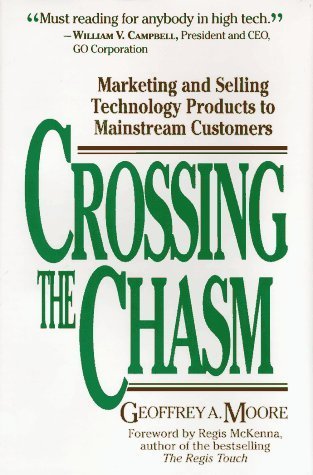
Examines marketing strategies for high-tech products and why they differ from those in other industries.

PULITZER PRIZE WINNER • A modern American classic, this huge and galvanizing biography of Robert Moses reveals not only the saga of one man’s incredible accumulation of power but the story of his shaping (and mis-shaping) of twentieth-century New York.One of the Modern Library’s hundred greatest books of the twentieth century, Robert Caro's monumental book makes public what few outsiders that Robert Moses was the single most powerful man of his time in the City and in the State of New York. And in telling the Moses story, Caro both opens up to an unprecedented degree the way in which politics really happens—the way things really get done in America's City Halls and Statehouses—and brings to light a bonanza of vital information about such national figures as Alfred E. Smith and Franklin D. Roosevelt (and the genesis of their blood feud), about Fiorello La Guardia, John V. Lindsay and Nelson Rockefeller.But The Power Broker is first and foremost a brilliant multidimensional portrait of a man—an extraordinary man who, denied power within the normal framework of the democratic process, stepped outside that framework to grasp power sufficient to shape a great city and to hold sway over the very texture of millions of lives. We see how Moses the handsome, intellectual young heir to the world of Our Crowd, an idealist. How, rebuffed by the entrenched political establishment, he fought for the power to accomplish his ideals. How he first created a miraculous flowering of parks and parkways, playlands and beaches—and then ultimately brought down on the city the smog-choked aridity of our urban landscape, the endless miles of (never sufficient) highway, the hopeless sprawl of Long Island, the massive failures of public housing, and countless other barriers to humane living. How, inevitably, the accumulation of power became an end in itself.Moses built an empire and lived like an emperor. He was held in fear—his dossiers could disgorge the dark secret of anyone who opposed him. He was, he claimed, above politics, above deals; and through decade after decade, the newspapers and the public believed. Meanwhile, he was developing his public authorities into a fourth branch of government known as "Triborough"—a government whose records were closed to the public, whose policies and plans were decided not by voters or elected officials but solely by Moses—an immense economic force directing pressure on labor unions, on banks, on all the city's political and economic institutions, and on the press, and on the Church. He doled out millions of dollars' worth of legal fees, insurance commissions, lucrative contracts on the basis of who could best pay him back in the only coin he power. He dominated the politics and politicians of his time—without ever having been elected to any office. He was, in essence, above our democratic system.Robert Moses held power in the state for 44 years, through the governorships of Smith, Roosevelt, Lehman, Dewey, Harriman and Rockefeller, and in the city for 34 years, through the mayoralties of La Guardia, O'Dwyer, Impellitteri, Wagner and Lindsay, He personally conceived and carried through public works costing 27 billion dollars—he was undoubtedly America's greatest builder.This is how he built and dominated New York—before, finally, he was stripped of his reputation (by the press) and his power (by Nelson Rockefeller). But his work, and his will, had been done.

In his first comic book, Zappos CEO Tony Hsieh shares the different lessons he has learned in business and life, from starting a worm farm to running a pizza business; through LinkExchange (acquired by Microsoft for $265 million), Zappos (acquired by Amazon for over $1 billion in stock), and more.

Walter Isaacson’s “enthralling” ( The New Yorker ) worldwide bestselling biography of Apple cofounder Steve Jobs.Based on more than forty interviews with Steve Jobs conducted over two years—as well as interviews with more than 100 family members, friends, adversaries, competitors, and colleagues—Walter Isaacson has written a riveting story of the roller-coaster life and searingly intense personality of a creative entrepreneur whose passion for perfection and ferocious drive revolutionized six personal computers, animated movies, music, phones, tablet computing, and digital publishing.At a time when America is seeking ways to sustain its innovative edge, Jobs stands as the ultimate icon of inventiveness and applied imagination. He knew that the best way to create value in 21st century was to connect creativity with technology. He built a company where leaps of the imagination were combined with remarkable feats of engineering.Although Jobs cooperated with the author, he asked for no control over what was written. He put nothing off-limits. He encouraged the people he knew to speak honestly. And Jobs speaks candidly, sometimes brutally so, about the people he worked with and competed against. His friends, foes, and colleagues provide an unvarnished view of the passions, perfectionism, obsessions, artistry, devilry, and compulsion for control that shaped his approach to business and the innovative products that resulted.Driven by demons, Jobs could drive those around him to fury and despair. But his personality and products were interrelated, just as Apple’s hardware and software tended to be, as if part of an integrated system. His tale is instructive and cautionary, filled with lessons about innovation, character, leadership, and values.Steve Jobs is the inspiration for the movie of the same name starring Michael Fassbender, Kate Winslet, Seth Rogen, and Jeff Daniels, directed by Danny Boyle with a screenplay by Aaron Sorkin.

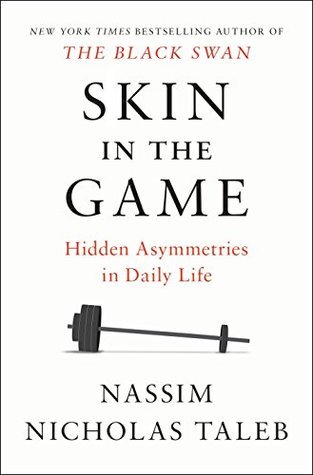
From the New York Times bestselling author of The Black Swan, a bold new work that challenges many of our long-held beliefs about risk and reward, politics and religion, finance and personal responsibility In his most provocative and practical book yet, one of the foremost thinkers of our time redefines what it means to understand the world, succeed in a profession, contribute to a fair and just society, detect nonsense, and influence others. Citing examples ranging from Hammurabi to Seneca, Antaeus the Giant to Donald Trump, Nassim Nicholas Taleb shows how the willingness to accept one’s own risks is an essential attribute of heroes, saints, and flourishing people in all walks of life. As always both accessible and iconoclastic, Taleb challenges long-held beliefs about the values of those who spearhead military interventions, make financial investments, and propagate religious faiths. Among his insights: • For social justice, focus on symmetry and risk sharing. You cannot make profits and transfer the risks to others, as bankers and large corporations do. You cannot get rich without owning your own risk and paying for your own losses. Forcing skin in the game corrects this asymmetry better than thousands of laws and regulations. • Ethical rules aren’t universal. You’re part of a group larger than you, but it’s still smaller than humanity in general. • Minorities, not majorities, run the world. The world is not run by consensus but by stubborn minorities imposing their tastes and ethics on others. • You can be an intellectual yet still be an idiot. “Educated philistines” have been wrong on everything from Stalinism to Iraq to low-carb diets. • Beware of complicated solutions (that someone was paid to find). A simple barbell can build muscle better than expensive new machines. • True religion is commitment, not just faith. How much you believe in something is manifested only by what you’re willing to risk for it.The phrase “skin in the game” is one we have often heard but rarely stopped to truly dissect. It is the backbone of risk management, but it’s also an astonishingly rich worldview that, as Taleb shows in this book, applies to all aspects of our lives. As Taleb says, “The symmetry of skin in the game is a simple rule that’s necessary for fairness and justice, and the ultimate BS-buster,” and “Never trust anyone who doesn’t have skin in the game. Without it, fools and crooks will benefit, and their mistakes will never come back to haunt them.”

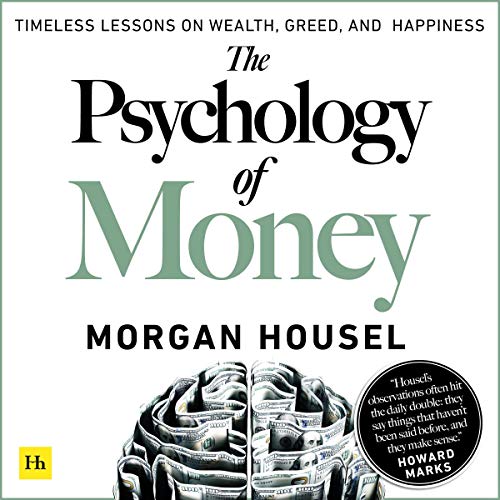
Doing well with money isn't necessarily about what you know. It's about how you behave. And behavior is hard to teach, even to really smart people. Money--investing, personal finance, and business decisions--is typically taught as a math-based field, where data and formulas tell us exactly what to do. But in the real world people don't make financial decisions on a spreadsheet. They make them at the dinner table, or in a meeting room, where personal history, your own unique view of the world, ego, pride, marketing, and odd incentives are scrambled together. In The Psychology of Money, award-winning author Morgan Housel shares 19 short stories exploring the strange ways people think about money and teaches you how to make better sense of one of life's most important topics.

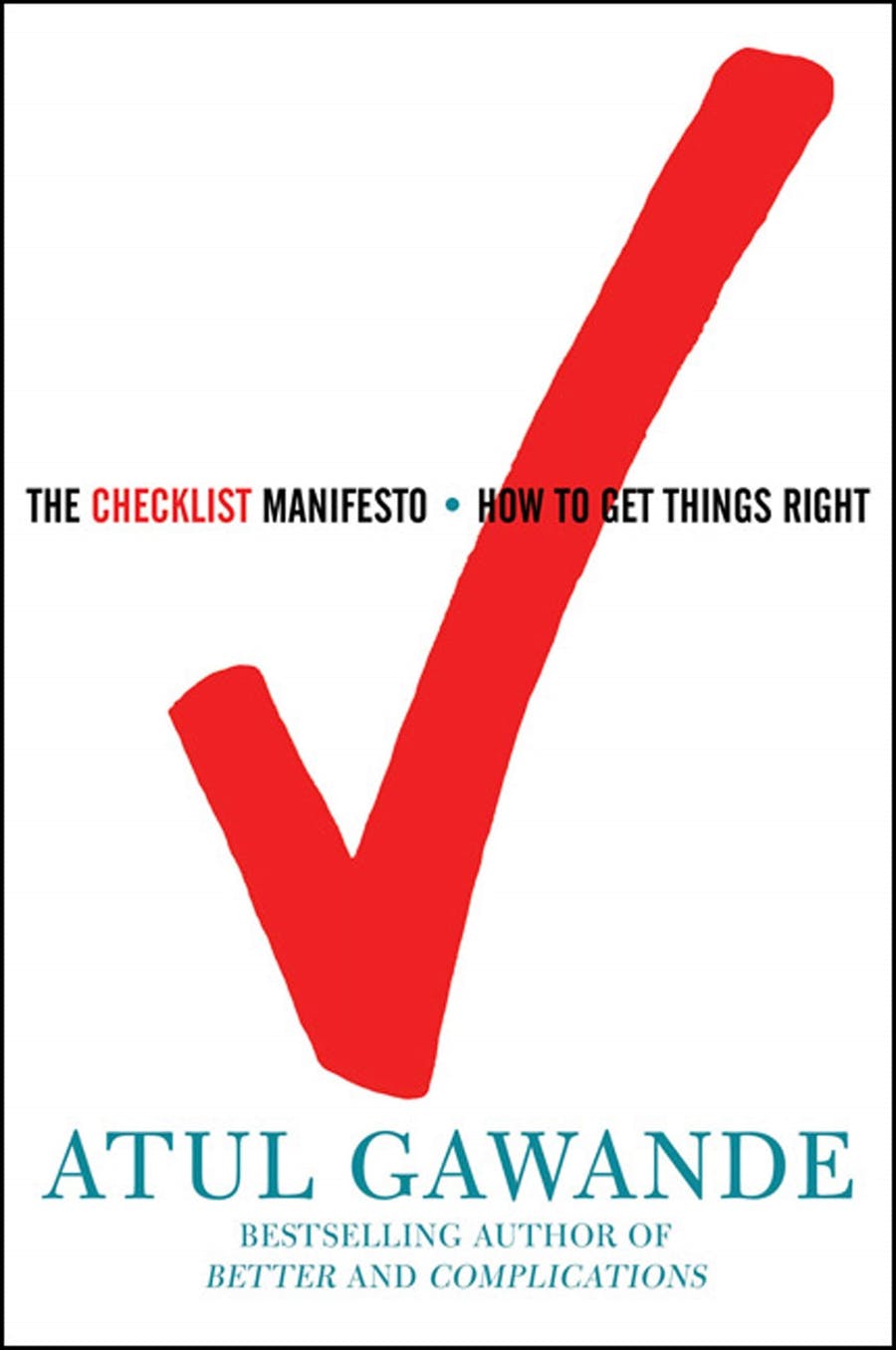
The New York Times bestselling author of Better and Complications reveals the surprising power of the ordinary checklistWe live in a world of great and increasing complexity, where even the most expert professionals struggle to master the tasks they face. Longer training, ever more advanced technologies—neither seems to prevent grievous errors. But in a hopeful turn, acclaimed surgeon and writer Atul Gawande finds a remedy in the humblest and simplest of techniques: the checklist. First introduced decades ago by the U.S. Air Force, checklists have enabled pilots to fly aircraft of mind-boggling sophistication. Now innovative checklists are being adopted in hospitals around the world, helping doctors and nurses respond to everything from flu epidemics to avalanches. Even in the immensely complex world of surgery, a simple ninety-second variant has cut the rate of fatalities by more than a third.In riveting stories, Gawande takes us from Austria, where an emergency checklist saved a drowning victim who had spent half an hour underwater, to Michigan, where a cleanliness checklist in intensive care units virtually eliminated a type of deadly hospital infection. He explains how checklists actually work to prompt striking and immediate improvements. And he follows the checklist revolution into fields well beyond medicine, from disaster response to investment banking, skyscraper construction, and businesses of all kinds.An intellectual adventure in which lives are lost and saved and one simple idea makes a tremendous difference, The Checklist Manifesto is essential reading for anyone working to get things right.

CE LIVRE A ETE ECRIT POUR QUICONQUE DESIRE INSPIRER D'AUTRES PERSONNES OU POUR CEUX QUI SOUHAITENT TROUVER UNE PERSONNE QUI LES INSPIRERA.Simon Sinek est le leader d'un mouvement qui vise à bâtir un monde dans lequel la majorité des gens sont inspirés par le travail qu'ils font. Des millions de gens ont déjà vu sa vidéo sur TED.com concernant l'importance de savoir pourquoi nous faisons ce que nous faisons. Commencer par pourquoi amène ce concept beaucoup plus loin.Toute personne ou organisation est en mesure d'expliquer ce qu'elle fait; certaines peuvent expliquer en quoi elles sont différentes des autres, mais très rares sont celles qui parviennent à articuler clairement pourquoi. Le POURQUOI n'a rien à voir avec l'argent et les profits, ce sont les résultats qui comptent. Le POURQUOI, c'est la raison qui nous inspire et inspire également les gens autour de nous.De Martin Luther King à Steve Jobs, en passant par les frères Wright, Commencer par pourquoi démontre que les leaders qui savent inspirer les gens pensent, agissent et communiquent tous de la même façon, une façon diamétralement opposée à celle de tous les autres. Riche d'un vaste éventail d'histoires vécues, ce livre procure une structure permettant de mettre sur pied des organisations, de diriger des mouvements et d'inspirer des gens, tout cela à partir de POURQUOI.
“Ridley writes with panache, wit, and humor and displays remarkable ingenuity in finding ways to present complicated materials for the lay reader.” — Los Angeles Times In a bold and provocative interpretation of economic history, Matt Ridley, the New York Times -bestselling author of Genome and The Red Queen , makes the case for an economics of hope, arguing that the benefits of commerce, technology, innovation, and change—what Ridley calls cultural evolution—will inevitably increase human prosperity. Fans of the works of Jared Diamond ( Guns, Germs, and Steel ), Niall Ferguson ( The Ascent of Money ), and Thomas Friedman ( The World Is Flat ) will find much to ponder and enjoy in The Rational Optimist.

Lisa souffrait de boulimie, d’alcoolisme, de tabagisme et de surendettement. Un jour, tout a changé : en modifiant une pièce du puzzle de son existence, elle est sortie du cercle vicieux de ses habitudes toxiques. Comment Starbucks est-elle devenue un mastodonte générant plus de 10 millions de dollars de chiffre d’affaires par an ? En changeant une habitude de management. L’habitude est le pilote automatique de notre cerveau. S’appuyant sur les dernières recherches en psychologie et en neurosciences, Charles Duhigg en dévoile le fonctionnement et révèle ce principe élémentaire : si notre vie est faite d’habitudes clés qui régissent nos conduites à notre insu, il suffit d’en modifier un élément pour créer un cercle vertueux. En changeant de clés, vous ouvrirez des portes insoupçonnées !

THE LIFE-CHANGING NEW YORK TIMES BESTSELLER • MORE THAN TWO MILLION COPIES SOLD • Now in a 10th anniversary edition featuring a new introduction and bonus 21-day challenge.“Essentialism holds the keys to solving one of the great puzzles of life: How can we do less but accomplish more?”—Adam Grant, bestselling author of Think AgainEssentialism isn’t about getting more done in less time. It’s about getting only the right things done.Have you ever found yourself stretched too thin?Are you often busy but not productive?Do you feel like your time is constantly being hijacked?If you answered yes to any of these, the way out is the Way of the Essentialist. Essentialism is more than a time-management technique. It is a systematic discipline for discerning what is absolutely essential, then eliminating everything that is not, so we can make the highest possible contribution toward the things that really matter. By forcing us to apply more selective criteria for where to spend our precious time and energy, the disciplined pursuit of less empowers us to reclaim control of our own choices, instead of giving others the implicit permission to choose for us. Essentialism is not one more thing to do. It’s a whole new way of doing less, but better, in every area of our lives. Join the millions of people who have used Essentialism to change their outlook on the world.

“The impediment to action advances action. What stands in the way becomes the way.” — Marcus AureliusWe are stuck, stymied, frustrated. But it needn’t be this way. There is a formula for success that’s been followed by the icons of history—from John D. Rockefeller to Amelia Earhart to Ulysses S. Grant to Steve Jobs—a formula that let them turn obstacles into opportunities. Faced with impossible situations, they found the astounding triumphs we all seek.These men and women were not exceptionally brilliant, lucky, or gifted. Their success came from timeless philosophical principles laid down by a Roman emperor who struggled to articulate a method for excellence in any and all situations.This book reveals that formula for the first time—and shows us how we can turn our own adversity into advantage.

In this must-read book for anyone striving to succeed, pioneering psychologist Angela Duckworth shows parents, educators, students, and business people both seasoned and new that the secret to outstanding achievement is not talent but a focused persistence called grit.Why do some people succeed and others fail? Sharing new insights from her landmark research on grit, Angela Duckworth explains why talent is hardly a guarantor of success. Rather, other factors can be even more crucial such as identifying our passions and following through on our commitments.Drawing on her own powerful story as the daughter of a scientist who frequently bemoaned her lack of smarts, Duckworth describes her winding path through teaching, business consulting, and neuroscience, which led to the hypothesis that what really drives success is not genius, but a special blend of passion and long-term perseverance. As a professor at the University of Pennsylvania, Duckworth created her own character lab and set out to test her theory.Here, she takes readers into the field to visit teachers working in some of the toughest schools, cadets struggling through their first days at West Point, and young finalists in the National Spelling Bee. She also mines fascinating insights from history and shows what can be gleaned from modern experiments in peak performance. Finally, she shares what she's learned from interviewing dozens of high achievers; from JP Morgan CEO Jamie Dimon to the cartoon editor of The New Yorker to Seattle Seahawks Coach Pete Carroll.Winningly personal, insightful, and even life-changing, Grit is a book about what goes through your head when you fall down, and how that not talent or luck makes all the difference.

From the #1 New York Times bestselling author of Principles and legendary investor Ray Dalio, who has spent half a century studying global markets, The Changing World Order examines history’s most turbulent economic and political periods to reveal why the times ahead will likely be radically different from those we’ve experienced in our lifetimes. A few years ago, renowned investor Ray Dalio began noticing a confluence of political and economic conditions he hadn’t encountered before in his fifty-year career. They included large debts and zero or near-zero interest rates in the world’s three major reserve currencies; significant wealth, political, and values divisions within countries; and emerging conflict between a rising world power (China) and the existing one (US). Seeking to explain the cause-effect relationships behind these conditions, he began a study of analogous historical times and discovered that such combinations of conditions were characteristic of periods of transition, such as the years between 1930 and 1945, in which wealth and power shifted in ways that reshaped the world order. Looking back across five hundred years of history and nine major empires—including the Dutch, the British, and the American—The Changing World Order puts into perspective the cycles and forces that have driven the successes and failures of all the world’s major countries throughout history. Dalio reveals the timeless and universal dynamics that were behind these shifts, while also offering practical principles for policymakers, business leaders, investors, and others operating in this environment.

John D. Rockefeller, Sr.--history's first billionaire and the patriarch of America's most famous dynasty--is an icon whose true nature has eluded three generations of historians. Now Ron Chernow, the National Book Award-winning biographer of the Morgan and Warburg banking families, gives us a history of the mogul "etched with uncommon objectivity and literary grace . . . as detailed, balanced, and psychologically insightful a portrait of the tycoon as we may ever have" (Kirkus Reviews). Titan is the first full-length biography based on unrestricted access to Rockefeller's exceptionally rich trove of papers. A landmark publication full of startling revelations, the book will indelibly alter our image of this most enigmatic capitalist. Born the son of a flamboyant, bigamous snake-oil salesman and a pious, straitlaced mother, Rockefeller rose from rustic origins to become the world's richest man by creating America's most powerful and feared monopoly, Standard Oil. Branded "the Octopus" by legions of muckrakers, the trust refined and marketed nearly 90 percent of the oil produced in America. Rockefeller was likely the most controversial businessman in our nation's history. Critics charged that his empire was built on unscrupulous grand-scale collusion with the railroads, predatory pricing, industrial espionage, and wholesale bribery of political officials. The titan spent more than thirty years dodging investigations until Teddy Roosevelt and his trustbusters embarked on a marathon crusade to bring Standard Oil to bay. While providing abundant new evidence of Rockefeller's misdeeds, Chernow discards the stereotype of the cold-blooded monster to sketch an unforgettably human portrait of a quirky, eccentric original. A devout Baptist and temperance advocate, Rockefeller gave money more generously--his chosen philanthropies included the Rockefeller Foundation, the University of Chicago, and what is today Rockefeller University--than anyone before him. Titan presents a finely nuanced portrait of a fascinating, complex man, synthesizing his public and private lives and disclosing numerous family scandals, tragedies, and misfortunes that have never before come to light. John D. Rockefeller's story captures a pivotal moment in American history, documenting the dramatic post-Civil War shift from small business to the rise of giant corporations that irrevocably transformed the nation. With cameos by Joseph Pulitzer, William Randolph Hearst, Jay Gould, William Vanderbilt, Ida Tarbell, Andrew Carnegie, Carl Jung, J. Pierpont Morgan, William James, Henry Clay Frick, Mark Twain, and Will Rogers, Titan turns Rockefeller's life into a vivid tapestry of American society in the late nineteenth and early twentieth centuries. It is Ron Chernow's signal triumph that he narrates this monumental saga with all the sweep, drama, and insight that this giant subject deserves.

Quel que soit le domaine – famille, travail, relations internationales –, et que nous en soyons conscients ou non, nous devons négocier. Or, trop souvent encore, les différends sont « réglés » à l’issue d’une épreuve de force. Résultat, en instaurant un vainqueur et un vaincu, on crée des risques de nouveaux conflits : l’actualité nous en apporte tous les jours des exemples criants.Rédigé par des spécialistes américains de la négociation et de la médiation, ce livre expose, concrètement, des stratégies éprouvées pour apprendre à négocier et parvenir à un accord satisfaisant pour les deux parties.Avec plus de quinze millions d’exemplaires vendus dans le monde depuis sa première parution aux États-Unis (1981, et 1982 en France), le succès de ce livre ne se dément pas. « Par la simplicité de ses concepts et le pragmatisme de son approche, ce livre s’est imposé comme la référence mondiale en matière de négociation. »Michel GhazalFondateur du Centre européen de la négociation Roger Fisher (1922-2012) a été ledirecteur fondateur du Harvard Negotiation Project ( H.N.P.), centre de recherche et d’enseignement de l’université de Harvard, qui a pour objectif de développer des méthodes éprouvées de négociation.William Ury , Cofondateur du H.N.P . et du Global Negotiation Project , qui développe des méthodes de négociations internationales pour le règlement des conflits armés et des problèmes globaux.Bruce Patton , Cofondateur du H.N.P. , et professeur à Harvard, il a coécrit le best-seller Comment mener les discussions difficiles (Seuil). Traduit de l’anglais par Léon Brahem et par Baptiste Mylondo pour les ajouts et corrections de la présente édition. Préface à l’édition française de Michel Ghazal.
The tipping point is that magic moment when an idea, trend, or social behavior crosses a threshold, tips, and spreads like wildfire. Just as a single sick person can start an epidemic of the flu, so too can a small but precisely targeted push cause a fashion trend, the popularity of a new product, or a drop in the crime rate. This widely acclaimed bestseller, in which Malcolm Gladwell explores and brilliantly illuminates the tipping point phenomenon, is already changing the way people throughout the world think about selling products and disseminating ideas.

The Japanese phenomenon that teaches us the simple yet profound lessons required to liberate our real selves and find lasting happiness.The Courage to Be Disliked shows you how to unlock the power within yourself to become your best and truest self, change your future and find lasting happiness. Using the theories of Alfred Adler, one of the three giants of 19th-century psychology alongside Freud and Jung, the authors explain how we are all free to determine our own future free of the shackles of past experiences, doubts and the expectations of others. It’s a philosophy that’s profoundly liberating, allowing us to develop the courage to change, and to ignore the limitations that we and those around us can place on ourselves.The result is a book that is both highly accessible and profound in its importance. Millions have already read and benefited from its wisdom. Now that The Courage to Be Disliked has been published for the first time in English, so can you.

LinkedIn co-founder, legendary investor and author of the NYT Bestseller The Start-up of You reveals the secret to starting and scaling massively valuable companies.For most of the world, the terms "Silicon Valley" and "startup" are synonymous. Indeed, Silicon Valley is home to a disproportionate number of companies that have grown from garage startups into global giants. But what is the secret to these startups' extraordinary success? Contrary to the popular narrative, it's not their superhuman founders or savvy venture capitalists. Rather, it's that they have learned how to Blitzscale. Blitzscaling is a specific set of practices for igniting and managing dizzying growth; an accelerated path to the stage in a startup's life-cycle where the most value is created. It prioritizes speed over efficiency in an environment of uncertainty, and allows a company to go from "startup" to "scaleup" at a furious pace that captures the market. Drawing on their experiences scaling startups into billion-dollar businesses, Hoffman and Yeh offer a framework for blitzscaling that can be replicated in any region or industry. Readers will learn how to design business models that support lightning-fast growth, navigate necessary shifts in strategy at each level of scale, and weather the management challenges that arise as their company grows.

1986 Copyright: by Michael E. Gerber- One person writes- my whole life has changed since enrolling in this program 3 months ago.

Just before the 2002 season opens, the Oakland Athletics must relinquish its three most prominent (and expensive) players and is written off by just about everyone—but then comes roaring back to challenge the American League record for consecutive wins. How did one of the poorest teams in baseball win so many games?In a quest to discover the answer, Michael Lewis delivers not only “the single most influential baseball book ever” (Rob Neyer, Slate) but also what “may be the best book ever written on business” (Weekly Standard). Lewis first looks to all the logical places—the front offices of major league teams, the coaches, the minds of brilliant players—but discovers the real jackpot is a cache of numbers?numbers!?collected over the years by a strange brotherhood of amateur baseball software engineers, statisticians, Wall Street analysts, lawyers, and physics professors.What these numbers prove is that the traditional yardsticks of success for players and teams are fatally flawed. Even the box score misleads us by ignoring the crucial importance of the humble base-on-balls. This information had been around for years, and nobody inside Major League Baseball paid it any mind. And then came Billy Beane, general manager of the Oakland Athletics. He paid attention to those numbers?with the second-lowest payroll in baseball at his disposal he had to?to conduct an astonishing experiment in finding and fielding a team that nobody else wanted.In a narrative full of fabulous characters and brilliant excursions into the unexpected, Michael Lewis shows us how and why the new baseball knowledge works. He also sets up a sly and hilarious morality Big Money, like Goliath, is always supposed to win . . . how can we not cheer for David?

Under Andy Grove’s leadership, Intel became the world’s largest chip maker and one of the most admired companies in the world. In Only the Paranoid Survive, Grove reveals his strategy for measuring the nightmare moment every leader dreads–when massive change occurs and a company must, virtually overnight, adapt or fall by the wayside–in a new way.Grove calls such a moment a Strategic Inflection Point, which can be set off by almost anything: mega-competition, a change in regulations, or a seemingly modest change in technology. When a Strategic Inflection Point hits, the ordinary rules of business go out the window. Yet, managed right, a Strategic Inflection Point can be an opportunity to win in the marketplace and emerge stronger than ever.Grove underscores his message by examining his own record of success and failure, including how he navigated the events of the Pentium flaw, which threatened Intel’s reputation in 1994, and how he has dealt with the explosions in growth of the Internet. The work of a lifetime, Only the Paranoid Survive is a classic of managerial and leadership skills.

The Magic of Thinking Big gives you useful methods, not empty promises. Dr. Schwartz presents a carefully designed program for getting the most out of your job, your marriage and family life, and your community. He proves that you don’t need to be an intellectual or have innate talent to attain great success and satisfaction—but you do need to learn and understand the habit of thinking and behaving in ways that will get you there. This CD set gives you those secrets! Believe you can succeed and you -Cure yourself of the fear of failure -Think and dream creatively -You are what you think you are -Make your attitudes your allies -Learn how to think positively -Turn defeat into victory -Use goals to help you grow -Think like a leader

Benjamin Franklin is the Founding Father who winks at us. An ambitious urban entrepreneur who rose up the social ladder, from leather-aproned shopkeeper to dining with kings, he seems made of flesh rather than of marble. In bestselling author Walter Isaacson's vivid and witty full-scale biography, we discover why Franklin seems to turn to us from history's stage with eyes that twinkle from behind his new-fangled spectacles. By bringing Franklin to life, Isaacson shows how he helped to define both his own time and ours.He was, during his 84-year life, America's best scientist, inventor, diplomat, writer, and business strategist, and he was also one of its most practical—though not most profound—political thinkers. He proved by flying a kite that lightning was electricity, and he invented a rod to tame it. He sought practical ways to make stoves less smoky and commonwealths less corrupt. He organized neighborhood constabularies and international alliances, local lending libraries and national legislatures. He combined two types of lenses to create bifocals and two concepts of representation to foster the nation's federal compromise. He was the only man who shaped all the founding documents of America: the Albany Plan of Union, the Declaration of Independence, the treaty of alliance with France, the peace treaty with England, and the Constitution. And he helped invent America's unique style of homespun humor, democratic values, and philosophical pragmatism.But the most interesting thing that Franklin invented, and continually reinvented, was himself. America's first great publicist, he was, in his life and in his writings, consciously trying to create a new American archetype. In the process, he carefully crafted his own persona, portrayed it in public, and polished it for posterity.Through it all, he trusted the hearts and minds of his fellow "leather-aprons" more than he did those of any inbred elite. He saw middle-class values as a source of social strength, not as something to be derided. His guiding principle was a "dislike of everything that tended to debase the spirit of the common people." Few of his fellow founders felt this comfort with democracy so fully, and none so intuitively.In this colorful and intimate narrative, Isaacson provides the full sweep of Franklin's amazing life, from his days as a runaway printer to his triumphs as a statesman, scientist, and Founding Father. He chronicles Franklin's tumultuous relationship with his illegitimate son and grandson, his practical marriage, and his flirtations with the ladies of Paris. He also shows how Franklin helped to create the American character and why he has a particular resonance in the twenty-first century.

Adam Smith's masterpiece, first published in 1776, is the foundation of modern economic thought and remains the single most important account of the rise of, and the principles behind, modern capitalism. Written in clear and incisive prose, The Wealth of Nations articulates the concepts indispensable to an understanding of contemporary society; and Robert Reich's Introduction both clarifies Smith's analyses and illuminates his overall relevance to the world in which we live. As Reich writes, "Smith's mind ranged over issues as fresh and topical today as they were in the late eighteenth century--jobs, wages, politics, government, trade, education, business, and ethics."Introduction by Robert Reich - Commentary by R. H. Campbell and A. S. Skinner - Includes a Modern Library Reading Group Guide

One of the great fears many of us face is that despite all our effort and striving, we will discover at the end that we have wasted our life. In A Guide to the Good Life, William B. Irvine plumbs the wisdom of Stoic philosophy, one of the most popular and successful schools of thought in ancient Rome, and shows how its insight and advice are still remarkably applicable to modern lives. In A Guide to the Good Life, Irvine offers a refreshing presentation of Stoicism, showing how this ancient philosophy can still direct us toward a better life. Using the psychological insights and the practical techniques of the Stoics, Irvine offers a roadmap for anyone seeking to avoid the feelings of chronic dissatisfaction that plague so many of us. Irvine looks at various Stoic techniques for attaining tranquility and shows how to put these techniques to work in our own life. As he does so, he describes his own experiences practicing Stoicism and offers valuable first-hand advice for anyone wishing to live better by following in the footsteps of these ancient philosophers. Readers learn how to minimize worry, how to let go of the past and focus our efforts on the things we can control, and how to deal with insults, grief, old age, and the distracting temptations of fame and fortune. We learn from Marcus Aurelius the importance of prizing only things of true value, and from Epictetus we learn how to be more content with what we have. Finally, A Guide to the Good Life shows readers how to become thoughtful observers of their own life. If we watch ourselves as we go about our daily business and later reflect on what we saw, we can better identify the sources of distress and eventually avoid that pain in our life. By doing this, the Stoics thought, we can hope to attain a truly joyful life.

The last lecture on leadership by the NFL's greatest coach: Bill Walsh Bill Walsh is a towering figure in the history of the NFL. His advanced leadership transformed the San Francisco 49ers from the worst franchise in sports to a legendary dynasty. In the process, he changed the way football is played.Prior to his death, Walsh granted a series of exclusive interviews to bestselling author Steve Jamison. These became his ultimate lecture on leadership.Additional insights and perspective are provided by Hall of Fame quarterback Joe Montana and others.Bill Walsh taught that the requirements of successful leadership are the same whether you run an NFL franchise, a fortune 500 company, or a hardware store with 12 employees. These final words of 'wisdom by Walsh' will inspire, inform, and enlighten leaders in all professions.

From the founders of the trailblazing software company 37signals, here is a different kind of business book - one that explores a new reality. Today, anyone can be in business. Tools that used to be out of reach are now easily accessible. Technology that cost thousands is now just a few pounds or even free. Stuff that was impossible just a few years ago is now simple. That means anyone can start a business. And you can do it without working miserable 80-hour weeks or depleting your life savings. You can start it on the side while your day job provides all the cash flow you need. Forget about business plans, meetings, office space - you don't need them. With its straightforward language and easy-is-better approach, "Rework" is the perfect playbook for anyone who's ever dreamed of doing it on their own. Hardcore entrepreneurs, small-business owners, people stuck in day jobs who want to get out, and artists who don't want to starve anymore will all find valuable inspiration and guidance in these pages. It's time to rework work.

The book that started the Quiet RevolutionAt least one-third of the people we know are introverts. They are the ones who prefer listening to speaking; who innovate and create but dislike self-promotion; who favor working on their own over working in teams. It is to introverts—Rosa Parks, Chopin, Dr. Seuss, Steve Wozniak—that we owe many of the great contributions to society. In Quiet, Susan Cain argues that we dramatically undervalue introverts and shows how much we lose in doing so. She charts the rise of the Extrovert Ideal throughout the twentieth century and explores how deeply it has come to permeate our culture. She also introduces us to successful introverts—from a witty, high-octane public speaker who recharges in solitude after his talks, to a record-breaking salesman who quietly taps into the power of questions. Passionately argued, superbly researched, and filled with indelible stories of real people, Quiet has the power to permanently change how we see introverts and, equally important, how they see themselves.Now with Extra Libris material, including a reader’s guide and bonus content.

As a young man, Ed Catmull had a dream: to make the world’s first computer-animated movie. He nurtured that dream first as a Ph.D. student at the University of Utah, where many computer science pioneers got their start, and then forged an early partnership with George Lucas that led, indirectly, to his founding Pixar with Steve Jobs and John Lasseter in 1986. Nine years later and against all odds, Toy Story was released, changing animation forever.Since then, Pixar has dominated the world of animation, producing such beloved films as Monsters, Inc., Finding Nemo, The Incredibles, Up, and WALL-E, which have gone on to set box-office records and garner twenty-seven Academy Awards. The joyousness of the storytelling, the inventive plots, the emotional authenticity: In some ways, Pixar movies are an object lesson in what creativity really is. Now, in this book, Catmull reveals the ideals and techniques, honed over years, that have made Pixar so widely admired—and so profitable.Creativity, Inc. is a book for managers who want to lead their employees to new heights, a manual for anyone who strives for originality, and the first-ever, all-access trip into the nerve center of Pixar Animation Studios—into the story meetings, the postmortems, and the ‘Braintrust’ sessions where art is born. It is, at heart, a book about how to build and sustain a creative culture—but it is also, as Pixar co-founder and president Ed Catmull writes, ‘an expression of the ideas that I believe make the best in us possible.’

#1 New York Times Bestseller There have been many books—on a large and small scale—about Steve Jobs, one of the most famous CEOs in history. But this book is different from all the others.Becoming Steve Jobs takes on and breaks down the existing myth and stereotypes about Steve Jobs. The conventional, one-dimensional view of Jobs is that he was half-genius, half-jerk from youth, an irascible and selfish leader who slighted friends and family alike. Becoming Steve Jobs answers the central question about the life and career of the Apple cofounder and CEO: How did a young man so reckless and arrogant that he was exiled from the company he founded become the most effective visionary business leader of our time, ultimately transforming the daily life of billions of people?Drawing on incredible and sometimes exclusive access, Schlender and Tetzeli tell a different story of a real human being who wrestled with his failings and learned to maximize his strengths over time. Their rich, compelling narrative is filled with stories never told before from the people who knew Jobs best, and who decided to open up to the authors, including his family, former inner circle executives, and top people at Apple, Pixar and Disney, most notably Tim Cook, Jony Ive, Eddy Cue, Ed Catmull, John Lasseter, Robert Iger and many others. In addition, Brent knew Jobs personally for 25 years and draws upon his many interviews with him, on and off the record, in writing the book. He and Rick humanize the man and explain, rather than simply describe, his behavior. Along the way, the book provides rich context about the technology revolution we all have lived through, and the ways in which Jobs changed our world.Schlender and Tetzeli make clear that Jobs's astounding success at Apple was far more complicated than simply picking the right products: he became more patient, he learned to trust his inner circle, and discovered the importance of growing the company incrementally rather than only shooting for dazzling game-changing products.A rich and revealing account that will change the way we view Jobs, Becoming Steve Jobs shows us how one of the most colorful and compelling figures of our times was able to combine his unchanging, relentless passion with a more mature management style to create one of the most valuable and beloved companies on the planet.

Elon Musk, the entrepreneur and innovator behind SpaceX, Tesla, and SolarCity, sold one of his internet companies, PayPal, for $1.5 billion. Ashlee Vance captures the full spectacle and arc of the genius's life and work, from his tumultuous upbringing in South Africa and flight to the United States to his dramatic technical innovations and entrepreneurial pursuits. Vance uses Musk's story to explore one of the pressing questions of our age: can the nation of inventors and creators who led the modern world for a century still compete in an age of fierce global competition? He argues that Musk is an amalgam of legendary inventors and industrialists including Thomas Edison, Henry Ford, Howard Hughes, and Steve Jobs. More than any other entrepreneur today, Musk has dedicated his energies and his own vast fortune to inventing a future that is as rich and far-reaching as the visionaries of the golden age of science-fiction fantasy

In Super Bowl XLIX, Seahawks coach Pete Carroll made one of the most controversial calls in football history: With 26 seconds remaining, and trailing by four at the Patriots' one-yard line, he called for a pass instead of a hand off to his star running back. The pass was intercepted and the Seahawks lost. Critics called it the dumbest play in history. But was the call really that bad? Or did Carroll actually make a great move that was ruined by bad luck?Even the best decision doesn't yield the best outcome every time. There's always an element of luck that you can't control, and there is always information that is hidden from view. So the key to long-term success (and avoiding worrying yourself to death) is to think in bets: How sure am I? What are the possible ways things could turn out? What decision has the highest odds of success? Did I land in the unlucky 10% on the strategy that works 90% of the time? Or is my success attributable to dumb luck rather than great decision making?Annie Duke, a former World Series of Poker champion turned business consultant, draws on examples from business, sports, politics, and (of course) poker to share tools anyone can use to embrace uncertainty and make better decisions. For most people, it's difficult to say "I'm not sure" in a world that values and, even, rewards the appearance of certainty. But professional poker players are comfortable with the fact that great decisions don't always lead to great outcomes and bad decisions don't always lead to bad outcomes.By shifting your thinking from a need for certainty to a goal of accurately assessing what you know and what you don't, you'll be less vulnerable to reactive emotions, knee-jerk biases, and destructive habits in your decision making. You'll become more confident, calm, compassionate and successful in the long run.

Do you ever have trouble finishing what you start? Do amazing ideas come to you all the time but after the initial excitement wanes you struggle to follow through? If you're creative and ambitious, the answer is likely yes.The problem isn't you. It's not that you're not hardworking, intelligent or deserving, but that you haven't yet installed the one key belief that will change everything: Everything is figureoutable.Whether you want to leave a dead-end job, heal a relationship, grow a business, master your money, or just find two free hours in your day, Everything is Figureoutable will train your brain to think more positively and help you break down any dream into manageable steps.Inside you'll learn:- How to deal with criticism and imposter syndrome- Why it's crucial that you strive for progress not perfection- How to bounce back from failure- How to overcome a lack of time and moneyYou'll also hear triumphant stories of everyday people using the everything is figureoutable philosophy to transform their life. Everything is figureoutable is more than just a fun phrase to say. It's a practical, actionable discipline. And it's about to make you unstoppable!

A grand vision defined: The CEO of The Walt Disney Company shares the ideas and values he has used to reinvent one of the most beloved companies in the world, and inspire the people who bring the magic to life.In 2005, Robert Iger became CEO of The Walt Disney Company during a difficult time. Morale had deteriorated, competition was more intense, and technology was changing faster than at any time in the company's history. "I knew there was nothing to be gained from arguing over the past," Iger writes. "The only thing that mattered was the future, and I believed I had a clear idea of the direction Disney needed to go." It came down to three clear ideas: 1) Create the highest quality content Disney could produce. 2) Embrace and adopt technology instead of fighting it. And 3) Think bigger--think global--and turn Disney into a stronger brand in international markets.Twelve years later, Disney is the largest, most respected media company in the world counting Pixar, Marvel, Lucasfilm and 21st Century Fox among its properties. Its value is nearly five times what it was when Iger took over, and Iger is recognized as one of the most innovative and successful CEOs of our time.Now, he's sharing the lessons he's learned while running Disney and leading its 200,000 employees--taking big risks in the face of historic disruption; learning to inspire the people who work for you; leading with fairness and communicating principles clearly. This book is about the relentless curiosity that has driven Iger for forty-five years, since the day he started as a studio supervisor at ABC. It's also about thoughtfulness and respect, and a decency-over-dollars approach that has become the bedrock of every project and partnership Iger pursues, from a deep friendship with Steve Jobs in his final years to an abiding love of the evolving Star Wars myth."Over the past fourteen years, I think I've learned so much about what real leadership is," Iger writes. "But I couldn't have articulated all of this until I lived it. You can't fake it--and that's one of the key lessons in this book."Librarian Note: This is an Advance Reader Copy issued with ISBN 9780399592096. That ISBN has been moved to the final published copy, found here

Shortlisted for the Financial Times Business Book of the Year Named a Best Book of 2022 by The Economist“A gripping fly-on-the-wall story of the rise of this unique and important industry based on extensive interviews with some of the most successful venture capitalists.” - Daniel Rasmussen, Wall Street Journal“A must-read for anyone seeking to understand modern-day Silicon Valley and even our economy writ large.” -Bethany McLean, The Washington Post"A rare and unsettling look inside a subculture of unparalleled influence.” —Jane Mayer"A classic...A book of exceptional reporting, analysis and storytelling.” —Charles DuhiggFrom the New York Times bestselling author of More Money Than God comes the astonishingly frank and intimate story of Silicon Valley’s dominant venture-capital firms—and how their strategies and fates have shaped the path of innovation and the global economyInnovations rarely come from “experts.” Elon Musk was not an “electric car person” before he started Tesla. When it comes to improbable innovations, a legendary tech VC told Sebastian Mallaby, the future cannot be predicted , it can only be discovered . It is the nature of the venture-capital game that most attempts at discovery fail, but a very few succeed at such a scale that they more than make up for everything else. That extreme ratio of success and failure is the power law that drives the VC business, all of Silicon Valley, the wider tech sector, and, by extension, the world. In The Power Law , Sebastian Mallaby has parlayed unprecedented access to the most celebrated venture capitalists of all time—the key figures at Sequoia, Kleiner Perkins, Accel, Benchmark, and Andreessen Horowitz, as well as Chinese partnerships such as Qiming and Capital Today—into a riveting blend of storytelling and analysis that unfurls the history of tech incubation, in the Valley and ultimately worldwide. We learn the unvarnished truth, often for the first time, about some of the most iconic triumphs and infamous disasters in Valley history, from the comedy of errors at the birth of Apple to the avalanche of venture money that fostered hubris at WeWork and Uber. VCs’ relentless search for grand slams brews an obsession with the ideal of the lone entrepreneur-genius, and companies seen as potential “unicorns” are given intoxicating amounts of power, with sometimes disastrous results. On a more systemic level, the need to make outsized bets on unproven talent reinforces bias, with women and minorities still represented at woefully low levels. This does not just have social justice as Mallaby relates, China’s homegrown VC sector, having learned at the Valley’s feet, is exploding and now has more women VC luminaries than America has ever had. Still, Silicon Valley VC remains the top incubator of business innovation anywhere—it is not where ideas come from so much as where they go to become the products and companies that create the future. By taking us so deeply into the VCs’ game, The Power Law helps us think about our own future through their eyes.

Detailed mental and physical exercises designed to help a player increase body awareness and improve concentration and rhythm demonstrate strategies for putting into practice the inner-game concept of tennis play.

More than one million hardcovers soldNow available for the first time in paperback!The Classic Text Annotated to Update Graham's Timeless Wisdom for Today's Market ConditionsThe greatest investment advisor of the twentieth century, Benjamin Graham taught and inspired people worldwide. Graham's philosophy of "value investing" -- which shields investors from substantial error and teaches them to develop long-term strategies -- has made The Intelligent Investor the stock market bible ever since its original publication in 1949.Over the years, market developments have proven the wisdom of Graham's strategies. While preserving the integrity of Graham's original text, this revised edition includes updated commentary by noted financial journalist Jason Zweig, whose perspective incorporates the realities of today's market, draws parallels between Graham's examples and today's financial headlines, and gives readers a more thorough understanding of how to apply Graham's principles.Vital and indispensable, this HarperBusiness Essentials edition of The Intelligent Investor is the most important book you will ever read on how to reach your financial goals.

This an alternate cover for 9780060742751The bestselling business book from award-winning restauranteur Danny Meyer, of Union Square Cafe, Gramercy Tavern, and Shake ShackSeventy-five percent of all new restaurant ventures fail, and of those that do stick around, only a few become icons. Danny Meyer started Union Square Cafe when he was 27, with a good idea and hopeful investors. He is now the co-owner of a restaurant empire. How did he do it? How did he beat the odds in one of the toughest trades around? In this landmark book, Danny shares the lessons he learned developing the dynamic philosophy he calls Enlightened Hospitality. The tenets of that philosophy, which emphasize strong in-house relationships as well as customer satisfaction, are applicable to anyone who works in any business. Whether you are a manager, an executive, or a waiter, Danny’s story and philosophy will help you become more effective and productive, while deepening your understanding and appreciation of a job well done. Setting the Table is landmark a motivational work from one of our era’s most gifted and insightful business leaders.

Masters of Doom is the amazing true story of the Lennon and McCartney of video games: John Carmack and John Romero. Together, they ruled big business. They transformed popular culture. And they provoked a national controversy. More than anything, they lived a unique and rollicking American Dream, escaping the broken homes of their youth to produce the most notoriously successful game franchises in history - Doom and Quake - until the games they made tore them apart. This is a story of friendship and betrayal, commerce and artistry - a powerful and compassionate account of what it's like to be young, driven, and wildly creative.

The time was the 1980s. The place was Wall Street. The game was called Liar’s Poker. Michael Lewis was fresh out of Princeton and the London School of Economics when he landed a job at Salomon Brothers, one of Wall Street’s premier investment firms. During the next three years, Lewis rose from callow trainee to bond salesman, raking in millions for the firm and cashing in on a modern-day gold rush. Liar’s Poker is the culmination of those heady, frenzied years—a behind-the-scenes look at a unique and turbulent time in American business. From the frat-boy camaraderie of the forty-first-floor trading room to the killer instinct that made ambitious young men gamble everything on a high-stakes game of bluffing and deception, here is Michael Lewis’s knowing and hilarious insider’s account of an unprecedented era of greed, gluttony, and outrageous fortune. .

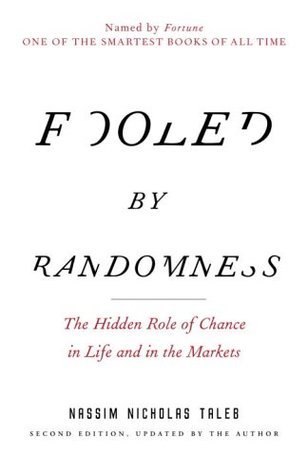
Fooled by Randomness is a standalone book in Nassim Nicholas Taleb’s landmark Incerto series, an investigation of opacity, luck, uncertainty, probability, human error, risk, and decision-making in a world we don’t understand. The other books in the series are The Black Swan, Antifragile,and The Bed of Procrustes.

The #1 New York Times–bestselling sequel to The 48 Laws of PowerMastery synthesizes the years of research Robert Greene conducted while writing the international bestsellers The 48 Laws of Power, The 33 Strategies of War, and The Art of Seduction and demonstrates that the ultimate form of power is mastery itself. By analyzing the lives of such past masters as Charles Darwin, Benjamin Franklin, Albert Einstein, and Leonard da Vinci, as well as by interviewing nine contemporary masters, including tech guru Paul Graham and animal rights advocate Temple Grandin, Greene debunks our culture’s many myths about genius and distills the wisdom of the ages to reveal the secret to greatness. With this seminal text as a guide, readers will learn how to unlock the passion within and become masters.

**Winner of the 2013 Financial Times and Goldman Sachs Business Book of the Year Award**Though Amazon.com started off delivering books through the mail, its visionary founder, Jeff Bezos, was never content with being just a bookseller. He wanted Amazon to become ‘the everything store’, offering limitless selection and seductive convenience at disruptively low prices. To achieve that end, he developed a corporate culture of relentless ambition and secrecy that's never been cracked. Until now...Jeff Bezos stands out for his relentless pursuit of new markets, leading Amazon into risky new ventures like the Kindle and cloud computing, and transforming retail in the same way that Henry Ford revolutionized manufacturing. Amazon placed one of the first and largest bets on the Internet. Nothing would ever be the same again.

A real-life political thriller about an American financier in the Wild East of Russia, the murder of his principled young tax attorney, and his dangerous mission to expose the Kremlin’s corruption.Bill Browder’s journey started on the South Side of Chicago and moved through Stanford Business School to the dog-eat-dog world of hedge fund investing in the 1990s. It continued in Moscow, where Browder made his fortune heading the largest investment fund in Russia after the Soviet Union’s collapse. But when he exposed the corrupt oligarchs who were robbing the companies in which he was investing, Vladimir Putin turned on him and, in 2005, had him expelled from Russia. In 2007, a group of law enforcement officers raided Browder’s offices in Moscow and stole $230 million of taxes that his fund’s companies had paid to the Russian government. Browder’s attorney Sergei Magnitsky investigated the incident and uncovered a sprawling criminal enterprise. A month after Sergei testified against the officials involved, he was arrested and thrown into pre-trial detention, where he was tortured for a year. On November 16, 2009, he was led to an isolation chamber, handcuffed to a bedrail, and beaten to death by eight guards in full riot gear. Browder glimpsed the heart of darkness, and it transformed his life: he embarked on an unrelenting quest for justice in Sergei’s name, exposing the towering cover-up that leads right up to Putin. A financial caper, a crime thriller, and a political crusade, Red Notice is the story of one man taking on overpowering odds to change the world.

The unbelievable true story of the man who built a billion-dollar online drug empire from his bedroom—and almost got away with it. In 2011, a twenty-six-year-old libertarian programmer named Ross Ulbricht launched the ultimate free market: the Silk Road, a clandestine Web site hosted on the Dark Web where anyone could trade anything—drugs, hacking software, forged passports, counterfeit cash, poisons—free of the government’s watchful eye. It wasn’t long before the media got wind of the new Web site where anyone—not just teenagers and weed dealers but terrorists and black hat hackers—could buy and sell contraband detection-free. Spurred by a public outcry, the federal government launched an epic two-year manhunt for the site’s elusive proprietor, with no leads, no witnesses, and no clear jurisdiction. All the investigators knew was that whoever was running the site called himself the Dread Pirate Roberts. The Silk Road quickly ballooned into $1.2 billion enterprise, and Ross embraced his new role as kingpin. He enlisted a loyal crew of allies in high and low places, all as addicted to the danger and thrill of running an illegal marketplace as their customers were to the heroin they sold. Through his network he got wind of the target on his back and took drastic steps to protect himself—including ordering a hit on a former employee. As Ross made plans to disappear forever, the Feds raced against the clock to catch a man they weren’t sure even existed, searching for a needle in the haystack of the global Internet.Drawing on exclusive access to key players and two billion digital words and images Ross left behind, Vanity Fair correspondent and New York Times bestselling author Nick Bilton offers a tale filled with twists and turns, lucky breaks and unbelievable close calls. It’s a story of the boy next door’s ambition gone criminal, spurred on by the clash between the new world of libertarian-leaning, anonymous, decentralized Web advocates and the old world of government control, order, and the rule of law. Filled with unforgettable characters and capped by an astonishing climax, American Kingpin might be dismissed as too outrageous for fiction. But it’s all too real.

Instant Wall Street Journal Bestseller! Congratulations, you're a manager! After you pop the champagne, accept the shiny new title, and step into this thrilling next chapter of your career, the truth descends like a fog: you don't really know what you're doing.That's exactly how Julie Zhuo felt when she became a rookie manager at the age of 25. She stared at a long list of logistics--from hiring to firing, from meeting to messaging, from planning to pitching--and faced a thousand questions and uncertainties. How was she supposed to spin teamwork into value? How could she be a good steward of her reports' careers? What was the secret to leading with confidence in new and unexpected situations?Now, having managed dozens of teams spanning tens to hundreds of people, Julie knows the most important lesson of all: great managers are made, not born. If you care enough to be reading this, then you care enough to be a great manager.The Making of a Manager is a modern field guide packed everyday examples and transformative insights, including:* How to tell a great manager from an average manager (illustrations included) * When you should look past an awkward interview and hire someone anyway * How to build trust with your reports through not being a boss * Where to look when you lose faith and lack the answersWhether you're new to the job, a veteran leader, or looking to be promoted, this is the handbook you need to be the kind of manager you wish you had.

A million copy seller, Henry Hazlitt’s Economics in One Lesson is a classic economic primer. But it is also much more, having become a fundamental influence on modern “libertarian” economics of the type espoused by Ron Paul and others.Considered among the leading economic thinkers of the “Austrian School,” which includes Carl Menger, Ludwig von Mises, Friedrich (F.A.) Hayek, and others, Henry Hazlitt (1894-1993), was a libertarian philosopher, an economist, and a journalist. He was the founding vice-president of the Foundation for Economic Education and an early editor of The Freeman magazine, an influential libertarian publication. Hazlitt wrote Economics in One Lesson, his seminal work, in 1946. Concise and instructive, it is also deceptively prescient and far-reaching in its efforts to dissemble economic fallacies that are so prevalent they have almost become a new orthodoxy.Many current economic commentators across the political spectrum have credited Hazlitt with foreseeing the collapse of the global economy which occurred more than 50 years after the initial publication of Economics in One Lesson. Hazlitt’s focus on non-governmental solutions, strong — and strongly reasoned — anti-deficit position, and general emphasis on free markets, economic liberty of individuals, and the dangers of government intervention make Economics in One Lesson, every bit as relevant and valuable today as it has been since publication.

Al Ries and Jack Trout, two of the world's most successful marketing strategists, call upon over 40 years of marketing experise to identify the definitive rules that govern the world of marketing. Combining a wide-ranging historical overview with a keen eye for the future, the authors bring to light 22 superlative tools and innovative techniques for the international marketplace. The authors examines marketing campaigns that have succeeded and others that have failed, why good ideas didn't live up to expectations, and offer their own ideas on what would have worked better. The real-life examples, commonsense suggestions and killer instincts contained are nothing less than rules by which companies will flourish or fail.

“The computer world is like an intellectual Wild West, in which you can shoot anyone you wish with your ideas, if you’re willing to risk the consequences.” —from Hackers & Painters: Big Ideas from the Computer Age, by Paul GrahamWe are living in the computer age, in a world increasingly designed and engineered by computer programmers and software designers, by people who call themselves hackers. Who are these people, what motivates them, and why should you care?Consider these facts: Everything around us is turning into computers. Your typewriter is gone, replaced by a computer. Your phone has turned into a computer. So has your camera. Soon your TV will. Your car was not only designed on computers, but has more processing power in it than a room-sized mainframe did in 1970. Letters, encyclopedias, newspapers, and even your local store are being replaced by the Internet.Hackers & Painters: Big Ideas from the Computer Age, by Paul Graham, explains this world and the motivations of the people who occupy it. In clear, thoughtful prose that draws on illuminating historical examples, Graham takes readers on an unflinching exploration into what he calls “an intellectual Wild West.”The ideas discussed in this book will have a powerful and lasting impact on how we think, how we work, how we develop technology, and how we live. Topics include the importance of beauty in software design, how to make wealth, heresy and free speech, the programming language renaissance, the open-source movement, digital design, internet startups, and more.

Two renowned investment advisors and authors of the best seller The Great Reckoning bring to light both currents of disaster and the potential for prosperity and renewal in the face of radical changes in human history as we move into the next century. The Sovereign Individual details strategies necessary for adapting financially to the next phase of Western civilization.Few observers of the late-20th century have their fingers so presciently on the pulse of the global political and economic realignment ushering in the new millennium as do James Dale Davidson and Lord William Rees-Mogg. Their bold prediction of disaster on Wall Street in Blood in the Streets was borne out by Black Tuesday. In their ensuing best sellar, The Great Reckoning, published just weeks before the coup attempt against Gorbachev, they analyzed the pending collapse of the Soviet Union and foretold the civil war in Yugoslavia and other events that have proved to be among the most searing developments of the past few years.In The Sovereign Individual, Davidson and Rees-Mogg explore the greatest economic and political transition in centuries - the shift from an industrial to an information-based society. This transition, which they have termed "the fourth stage of human society", will liberate individuals as never before, irrevocably altering the power of government. This outstanding book will replace false hopes and fictions with new understanding and clarified values.

Avant d'inventer Mickey, Walt Disney rêvait de répandre le bonheur à travers le monde. Les Frères Michelin ont commencé par miser sur l'invention et l'innovation est resté leur moteur. Le laboratoire Merck a fondé son empire avec la volonté de préserver et d'améliorer la vie humaine. Disney, Michelin, Merck, trois exemples parmi d'autres, trois entreprises que les auteurs de ce livre qualifient de visionnaires. Pourquoi ont-elles émergé ? Pourquoi perdurent elles ? Et pourquoi, par exemple, Ford, IBM ou Boeing ont-ils survécus à leurs fondateurs en emboîtant le pas au changement ?En comparant, en listant les valeurs clés de la réussite des entreprises visionnaires, James Collins et Jerry Portas ont établi des constantes, des lignes de conduites. L'entreprise visionnaire ne naît pas forcément d'une idée géniale, son fondateur est rarement charismatique mais elle sait durer. Elle anticipe, elle imagine, elle sait traduire ses principes de base dans son organisation et ses choix d'avenir. Elle s'adapte. Votre entreprise est-elle visionnaire ? Peut-elle le devenir ? L'épilogue en forme de questions réponses vous permet de tester votre entreprise, votre journal, le groupe où vous travaillez.

Amoral, cunning, ruthless, and instructive, this multi-million-copy New York Times bestseller is the definitive manual for anyone interested in gaining, observing, or defending against ultimate control – from the author of The Laws of Human Nature.In the book that People magazine proclaimed “beguiling” and “fascinating,” Robert Greene and Joost Elffers have distilled three thousand years of the history of power into 48 essential laws by drawing from the philosophies of Machiavelli, Sun Tzu, and Carl Von Clausewitz and also from the lives of figures ranging from Henry Kissinger to P.T. Barnum. Some laws teach the need for prudence (“Law 1: Never Outshine the Master”), others teach the value of confidence (“Law 28: Enter Action with Boldness”), and many recommend absolute self-preservation (“Law 15: Crush Your Enemy Totally”). Every law, though, has one thing in common: an interest in total domination. In a bold and arresting two-color package, The 48 Laws of Power is ideal whether your aim is conquest, self-defense, or simply to understand the rules of the game.

Rich Dad Poor Dad is Robert's story of growing up with two dads — his real father and the father of his best friend, his "rich dad" — and the ways in which both men shaped his thoughts about money and investing. The book explodes the myth that you need to earn a high income to be rich and explains the difference between working for money and having your money work for you.

What is the secret of talent? How do we unlock it? In this groundbreaking work, journalist and New York Times bestselling author Daniel Coyle provides parents, teachers, coaches, businesspeople—and everyone else—with tools they can use to maximize potential in themselves and others. Whether you're coaching soccer or teaching a child to play the piano, writing a novel or trying to improve your golf swing, this revolutionary book shows you how to grow talent by tapping into a newly discovered brain mechanism.Drawing on cutting-edge neurology and firsthand research gathered on journeys to nine of the world's talent hotbeds—from the baseball fields of the Caribbean to a classical-music academy in upstate New York—Coyle identifies the three key elements that will allow you to develop your gifts and optimize your performance in sports, art, music, math, or just about anything. • Deep Practice--Everyone knows that practice is a key to success. What everyone doesn't know is that specific kinds of practice can increase skill up to ten times faster than conventional practice.• Ignition--We all need a little motivation to get started. But what separates truly high achievers from the rest of the pack? A higher level of commitment—call it passion—born out of our deepest unconscious desires and triggered by certain primal cues. Understanding how these signals work can help you ignite passion and catalyze skill development.• Master Coaching--What are the secrets of the world's most effective teachers, trainers, and coaches? Discover the four virtues that enable these "talent whisperers" to fuel passion, inspire deep practice, and bring out the best in their students.These three elements work together within your brain to form myelin, a microscopic neural substance that adds vast amounts of speed and accuracy to your movements and thoughts. Scientists have discovered that myelin might just be the holy grail: the foundation of all forms of greatness, from Michelangelo's to Michael Jordan's. The good news about myelin is that it isn't fixed at birth; to the contrary, it grows, and like anything that grows, it can be cultivated and nourished. Combining revelatory analysis with illuminating examples of regular people who have achieved greatness, this book will not only change the way you think about talent, but equip you to reach your own highest potential.

The #1 New York Times bestseller: "It is the work of our greatest financial journalist, at the top of his game. And it's essential reading."—Graydon Carter, Vanity FairThe real story of the crash began in bizarre feeder markets where the sun doesn't shine and the SEC doesn't dare, or bother, to tread: the bond and real estate derivative markets where geeks invent impenetrable securities to profit from the misery of lower- and middle-class Americans who can't pay their debts. The smart people who understood what was or might be happening were paralyzed by hope and fear; in any case, they weren't talking.Michael Lewis creates a fresh, character-driven narrative brimming with indignation and dark humor, a fitting sequel to his #1 bestseller Liar's Poker. Out of a handful of unlikely-really unlikely-heroes, Lewis fashions a story as compelling and unusual as any of his earlier bestsellers, proving yet again that he is the finest and funniest chronicler of our time.

How did salesforce.com grow from a start up in a rented apartment into the world's fastest growing software company in less than a decade? For the first time, Marc Benioff, the visionary founder, chairman and CEO of salesforce.com, tells how he and his team created and used new business, technology, and philanthropic models tailored to this time of extraordinary change. Showing how salesforce.com not only survived the dotcom implosion of 2001, but went on to define itself as the leader of the cloud computing revolution and spark a $46-billion dollar industry, Benioff's story will help business leaders and entrepreneurs stand out, innovate better, and grow faster in any economic climate. In Behind the Cloud , Benioff shares the strategies that have inspired employees, turned customers into evangelists, leveraged an ecosystem of partners, and allowed innovation to flourish.

Based on author Sebastian Mallaby's unprecedented access to the industry, including three hundred hours of interviews, More Money Than God tells the inside story of hedge funds, from their origins in the 1960s and 1970s to their role in the financial crisis of 2007-2009. Wealthy, powerful, and potentially dangerous, hedge fund moguls have become the It Boys of twenty-first century capitalism. Ken Griffin of Citadel started out trading convertible bonds from his dorm room at Harvard. Julian Robertson staffed his hedge fund with college athletes half his age, then he flew them to various retreats in the Rockies and raced them up the mountains. Paul Tudor Jones posed for a magazine photograph next to a killer shark and happily declared that a 1929-style crash would be "total rock-and-roll" for him. Michael Steinhardt was capable of reducing underlings to sobs. "All I want to do is kill myself," one said. "Can I watch?" Steinhardt responded. Finance professors have long argued that beating the market is impossible, and yet drawing on insights from physics, economics, and psychology, these titans have cracked the market's mysteries and gone on to earn fortunes. Their innovation has transformed the world, spawning new markets in exotic financial instruments and rewriting the rules of capitalism. More than just a history, More Money Than God is a window on tomorrow's financial system. Hedge funds have been left for dead after past financial panics: After the stock market rout of the early 1970s, after the bond market bloodbath of 1994, after the collapse of Long Term Capital Management in 1998, and yet again after the dot-com crash in 2000. Each time, hedge funds have proved to be survivors, and it would be wrong to bet against them now. Banks such as CitiGroup, brokers such as Bear Stearns and Lehman Brothers, home lenders such as Fannie Mae and Freddie Mac, insurers such as AIG, and money market funds run by giants such as Fidelity-all have failed or been bailed out. But the hedge fund industry has survived the test of 2008 far better than its rivals. The future of finance lies in the history of hedge funds.

”It is impossible to produce superior performance unless you do something different.” — John TempletonWhat makes a successful CEO? Most people call to mind a familiar definition: a seasoned manager with deep industry expertise. Others might point to the qualities of today’s so-called celebrity CEOs—charisma, virtuoso communication skills, and a confident management style. But what really matters when you run an organization? What is the hallmark of exceptional CEO performance? Quite simply, it is the returns for the shareholders of that company over the long term.In this refreshing, counterintuitive book, author Will Thorndike brings to bear the analytical wisdom of a successful career in investing, closely evaluating the performance of companies and their leaders. You will meet eight individualistic CEOs whose firms’ average returns outperformed the S&P 500 by a factor of twenty—in other words, an investment of $10,000 with each of these CEOs, on average, would have been worth over $1.5 million twenty-five years later. You may not know all their names, but you will recognize their companies: General Cinema, Ralston Purina, The Washington Post Company, Berkshire Hathaway, General Dynamics, Capital Cities Broadcasting, TCI, and Teledyne. In The Outsiders, you’ll learn the traits and methods—striking for their consistency and relentless rationality—that helped these unique leaders achieve such exceptional performance.Humble, unassuming, and often frugal, these "outsiders” shunned Wall Street and the press, and shied away from the hottest new management trends. Instead, they shared specific traits that put them and the companies they led on winning trajectories: a laser-sharp focus on per share value as opposed to earnings or sales growth; an exceptional talent for allocating capital and human resources; and the belief that cash flow, not reported earnings, determines a company’s long-term value.Drawing on years of research and experience, Thorndike tells eye-opening stories, extracting lessons and revealing a compelling alternative model for anyone interested in leading a company or investing in one—and reaping extraordinary returns.

Factfulness: The stress-reducing habit of only carrying opinions for which you have strong supporting facts.When asked simple questions about global trends—what percentage of the world’s population live in poverty; why the world’s population is increasing; how many girls finish school—we systematically get the answers wrong. So wrong that a chimpanzee choosing answers at random will consistently outguess teachers, journalists, Nobel laureates, and investment bankers.In Factfulness, Professor of International Health and global TED phenomenon Hans Rosling, together with his two long-time collaborators, Anna and Ola, offers a radical new explanation of why this happens. They reveal the ten instincts that distort our perspective—from our tendency to divide the world into two camps (usually some version of us and them) to the way we consume media (where fear rules) to how we perceive progress (believing that most things are getting worse).Our problem is that we don’t know what we don’t know, and even our guesses are informed by unconscious and predictable biases.It turns out that the world, for all its imperfections, is in a much better state than we might think. That doesn’t mean there aren’t real concerns. But when we worry about everything all the time instead of embracing a worldview based on facts, we can lose our ability to focus on the things that threaten us most.Inspiring and revelatory, filled with lively anecdotes and moving stories, Factfulness is an urgent and essential book that will change the way you see the world and empower you to respond to the crises and opportunities of the future.

Matt Mochary coaches the CEOs of many of the fastest-scaling technology companies in Silicon Valley. With The Great CEO Within , he shares his highly effective leadership and business-operating tools with any CEO or manager in the world. Learn how to efficiently scale your business from startup to corporation by implementing a system of accountability, effective problem-solving, and transparent feedback. Becoming a great CEO requires training. For a founding CEO, there is precious little time to complete that training, especially at the helm of a rapidly growing company. Now you have the guidance you need in one book.

Shortlisted for the 2020 Financial Times & McKinsey Business Book of the Year Netflix cofounder Reed Hastings reveals for the first time the unorthodox culture behind one of the world's most innovative, imaginative, and successful companies There has never before been a company like Netflix. It has led nothing short of a revolution in the entertainment industries, generating billions of dollars in annual revenue while capturing the imaginations of hundreds of millions of people in over 190 countries. But to reach these great heights, Netflix, which launched in 1998 as an online DVD rental service, has had to reinvent itself over and over again. This type of unprecedented flexibility would have been impossible without the counterintuitive and radical management principles that cofounder Reed Hastings established from the very beginning. Hastings rejected the conventional wisdom under which other companies operate and defied tradition to instead build a culture focused on freedom and responsibility, one that has allowed Netflix to adapt and innovate as the needs of its members and the world have simultaneously transformed.Hastings set new standards, valuing people over process, emphasizing innovation over efficiency, and giving employees context, not controls. At Netflix, there are no vacation or expense policies. At Netflix, adequate performance gets a generous severance, and hard work is irrel-evant. At Netflix, you don't try to please your boss, you give candid feedback instead. At Netflix, employees don't need approval, and the company pays top of market. When Hastings and his team first devised these unorthodox principles, the implications were unknown and untested. But in just a short period, their methods led to unparalleled speed and boldness, as Netflix quickly became one of the most loved brands in the world.Here for the first time, Hastings and Erin Meyer, bestselling author of The Culture Map and one of the world's most influential business thinkers, dive deep into the controversial ideologies at the heart of the Netflix psyche, which have generated results that are the envy of the business world. Drawing on hundreds of interviews with current and past Netflix employees from around the globe and never-before-told stories of trial and error from Hastings's own career, No Rules Rules is the fascinating and untold account of the philosophy behind one of the world's most innovative, imaginative, and successful companies.

A handsome, commemorative edition of Peter F. Drucker’s timeless classic work on leadership and management, with a foreword by Jim Collins. What makes an effective executive? For decades, Peter F. Drucker was widely regarded as "the dean of this country’s business and management philosophers" ( Wall Street Journal ). In this concise and brilliant work, he looks to the most influential position in management—the executive. The measure of the executive, Drucker reminds us, is the ability to "get the right things done." This usually involves doing what other people have overlooked as well as avoiding what is unproductive. Intelligence, imagination, and knowledge may all be wasted in an executive job without the acquired habits of mind that mold them into results. Drucker identifies five practices essential to business effectiveness that can—and must—be Ranging across the annals of business and government, Drucker demonstrates the distinctive skill of the executive and offers fresh insights into old and seemingly obvious business situations.

Psychologist Mihaly Csikszentmihalyi's investigations of "optimal experience" have revealed that what makes an experience genuinely satisfying is a state of consciousness called flow. During flow, people typically experience deep enjoyment, creativity, and a total involvement with life. Csikszentmihalyi demonstrates the ways this positive state can be controlled, not just left to chance. Flow: The Psychology of Optimal Experience teaches how, by ordering the information that enters our consciousness, we can discover true happiness, unlock our potential, and greatly improve the quality of our lives.

• Why are lovers quicker to forgive their partners for infidelity than for leaving dirty dishes in the sink? • Why will sighted people pay more to avoid going blind than blind people will pay to regain their sight? • Why do dining companions insist on ordering different meals instead of getting what they really want? • Why do pigeons seem to have such excellent aim; why can’t we remember one song while listening to another; and why does the line at the grocery store always slow down the moment we join it? In this brilliant, witty, and accessible book, renowned Harvard psychologist Daniel Gilbert describes the foibles of imagination and illusions of foresight that cause each of us to mis-conceive our tomorrows and mis-estimate our satisfactions. Vividly bringing to life the latest scientific research in psychology, cognitive neuroscience, philosophy, and behavioral economics, Gilbert reveals what scientists have discovered about the uniquely human ability to imagine the future, and about our capacity to predict how much we will like it when we get there. With penetrating insight and sparkling prose, Gilbert explains why we seem to know so little about the hearts and minds of the people we are about to become.

The acclaimed Wall Street Journal and Business Week Bestseller.You're either a Purple Cow or you're not. You're either remarkable or invisible. Make your choice. What do Starbucks and JetBlue and KrispyKreme and Apple and DutchBoy and Kensington and Zespri and Hard Candy have that you don't? How do they continue to confound critics and achieve spectacular growth, leaving behind former tried-and true brands to gasp their last? Face it, the checklist of tired 'P's marketers have used for decades to get their product noticed - Pricing, Promotion, Publicity, to name a few - aren't working anymore. There's an exceptionally important 'P' that has to be added to the list. It's Purple Cow. Cows, after you've seen one, or two, or ten, are boring. A Purple Cow, though...now that would be something. Purple Cow describes something phenomenal, something counterintuitive and exciting and flat out unbelievable. Every day, consumers come face to face with a lot of boring stuff-a lot of brown cows - but you can bet they won't forget a Purple Cow. And it's not a marketing function that you can slap on to your product or service. Purple Cow is inherent. It's built right in, or it's not there. Period. In Purple Cow, Seth Godin urges you to put a Purple Cow into everything you build, and everything you do, to create something truly noticeable. It's a manifesto for marketers who want to help create products that are worth marketing in the first place. Description from Amazon.com

A #1 New York Times bestseller and arguably the best business narrative ever written, Barbarians at the Gate is the classic account of the fall of RJR Nabisco. An enduring masterpiece of investigative journalism by Bryan Burrough and John Helyar, it includes a new afterword by the authors that brings this remarkable story of greed and double-dealings up to date twenty years after the famed deal. The Los Angeles Times calls Barbarians at the Gate, “Superlative.” The Chicago Tribune raves, “It’s hard to imagine a better story...and it’s hard to imagine a better account.” And in an era of spectacular business crashes and federal bailouts, it still stands as a valuable cautionary tale that must be heeded.

'Mesmerizing' TimeAn art expert instantly spots a fake. A cop decides whether to shoot. A psychologist accurately predicts a couple's future in minutes. This book is about those moments when we 'know' something without knowing why. It shows that honing your instincts could change the way you think about thinking forever. 'Trust my snap judgement, buy this book: you'll be delighted' David Brooks, The New York Times'Fiendishly clever' Evening Standard'Provocative, fascinating, radical' Fergal Byrne, Financial Times

The bestselling success book of all time—now revised and updated for the 21st century.Think and Grow Rich has been called the “Granddaddy of All Motivational Literature.” It was the first book to boldly ask, “What makes a winner?” The man who asked and listened for the answer, Napoleon Hill, is now counted in the top ranks of the world's winners himself. The most famous of all teachers of success spent “a fortune and the better part of a lifetime of effort” to produce the “Law of Success” philosophy that forms the basis of his books and that is so powerfully summarized in this one.In the original Think and Grow Rich, published in 1937, Hill draws on stories of Andrew Carnegie, Thomas Edison, Henry Ford, and other millionaires of his generation to illustrate his principles. In the updated version, Arthur R. Pell, Ph.D., a nationally known author, lecturer, and consultant in human resources management and an expert in applying Hill's thought, deftly interweaves anecdotes of how contemporary millionaires and billionaires, such as Bill Gates, Mary Kay Ash, Dave Thomas, and Sir John Templeton, achieved their wealth. Outmoded or arcane terminology and examples are faithfully refreshed to preclude any stumbling blocks to a new generation of readers.

'When you attain the Way of strategy, there will not be one thing you cannot see.'- Miyamoto Musashi, Book of Five RingsShortly before his death in 1645, the undefeated swordsman Miyamoto Musashi retreated to a cave to live as a hermit. There he wrote five scrolls describing the "true principles" required for victory in the martial arts and on the battlefield. Instead of relying on religion or theory, Musashi based his writings on his own experience, observation, and reason.

A global phenomenon now published in a record 43 languages. Over 3.5 million copies sold. A bestseller across five continents. Since the dawn of the industrial age, companies have engaged in head-to-head competition in search of sustained, profitable growth. They have fought for competitive advantage, battled over market share, and struggled for differentiation. Yet, as widely practiced as this approach has been, W. Chan Kim and Renée Mauborgne’s research shows that is not the way to create profitable growth in the future.In their book Blue Ocean Strategy—now expanded and with a new Preface by the authors—Kim and Mauborgne (INSEAD) argue that cutthroat competition increasingly results in nothing but a bloody red ocean of rivals fighting over a shrinking profit pool. Based on a study of 150 strategic moves (spanning more than 100 years across 30 industries), the authors argue that lasting success comes not from battling competitors, but from creating "blue oceans"—untapped new market spaces ripe for growth. Such strategic moves, which the authors call “value innovation,” create powerful leaps in value that often render rivals obsolete for more than a decade. Blue Ocean Strategy presents a systematic approach to making the competition irrelevant and outlines principles and tools any company, organization or government can use to create and capture their own blue oceans. A landmark work that upends traditional thinking about strategy, this bestselling business book charts a bold new path to winning the future. Learn more at blueoceanstrategy.com. Published by Harvard Business Review Press.

The latest edition of the communication guide that has sold more than 1,000,000 copies An enlightening look at how peaceful communication can create compassionate connections with family, friends, and other acquaintances, this international bestseller uses stories, examples, and sample dialogues to provide solutions to communication problems both at home and in the workplace. Guidance is provided on identifying and articulating feelings and needs, expressing anger fully, and exploring the power of empathy in order to speak honestly without creating hostility, break patterns of thinking that lead to anger and depression, and communicate compassionately. Included in the new edition is a chapter on conflict resolution and mediation.

It's a fact of birds flock, fish school, people "tribe." Every company, indeed every organization, is a tribe, or if it's large enough, a network of tribes—groups of 20 to 150 people in which everyone knows everyone else, or at least knows of everyone else. Tribes are more powerful than teams, companies, or even CEOs, and yet their key leverage points have not been mapped—until now. In Tribal Leadership , Dave Logan, John King, and Halee Fischer-Wright show leaders how to assess their organization's tribal culture on a scale from one to five and then implement specific tools to elevate the stage to the next. The result is unprecedented success. In a rigorous eight-year study of approximately 24,000 people in over two dozen corporations, Logan, King, and Fischer-Wright refine and define a common the success of a company depends on its tribes, the strength of its tribes is determined by the tribal culture, and a thriving corporate culture can be established by an effective tribal leader. Tribal Leadership will show leaders how to employ their companies' tribes to maximize productivity and the authors' research, backed up with interviews ranging from Brian France (CEO of NASCAR) to "Dilbert" creator Scott Adams, shows that over three quarters of the organizations they've studied have tribal cultures that are merely adequate, no better than the third of five tribal stages. Leaders, managers, and organizations that fail to understand, motivate, and grow their tribes will find it impossible to succeed in an increasingly fragmented world of business. The often counterintuitive findings of Tribal Leadership will help leaders at today's major corporations, small businesses, and nonprofits learn how to take the people in their organization from adequate to outstanding, to discover the secrets that have led the highest-level tribes (like the team at Apple that designed the iPod) to remarkable heights, and to find new ways to succeed where others have failed.

In this fascinating book, New Yorker business columnist James Surowiecki explores a deceptively simple idea: Large groups of people are smarter than an elite few, no matter how brilliant -- better at solving problems, fostering innovation, coming to wise decisions, even predicting the future.With boundless erudition and in delightfully clear prose, Surowiecki ranges across fields as diverse as popular culture, psychology, ant biology, behavioral economics, artificial intelligence, military history, and politics to show how this simple idea offers important lessons for how we live our lives, select our leaders, run our companies, and think about our world.

In this eye-opening account, Cal Newport debunks the long-held belief that "follow your passion" is good advice. Not only is the cliché flawed—preexisting passions are rare and have little to do with how most people end up loving their work—but it can also be dangerous, leading to anxiety and chronic job hopping.After making his case against passion, Newport sets out on a quest to discover the reality of how people end up loving what they do. Spending time with organic farmers, venture capitalists, screenwriters, freelance computer programmers, and others who admitted to deriving great satisfaction from their work, Newport uncovers the strategies they used and the pitfalls they avoided in developing their compelling careers.Matching your job to a preexisting passion does not matter, he reveals. Passion comes after you put in the hard work to become excellent at something valuable, not before. In other words, what you do for a living is much less important than how you do it.With a title taken from the comedian Steve Martin, who once said his advice for aspiring entertainers was to "be so good they can't ignore you," Cal Newport's clearly written manifesto is mandatory reading for anyone fretting about what to do with their life, or frustrated by their current job situation and eager to find a fresh new way to take control of their livelihood. He provides an evidence-based blueprint for creating work you love.So Good They Can't Ignore You will change the way we think about our careers, happiness, and the crafting of a remarkable life.