Loading themes...
Explore the best books about Military Fiction theme.

The retired four-star general and and bestselling author of My Share of the Task shares a powerful new leadership model As commander of Joint Special Operations Command (JSOC), General Stanley McChrystal played a crucial role in the War on Terror. But when he took the helm in 2004, America was losing that war badly: despite vastly inferior resources and technology, Al Qaeda was outmaneuvering America’s most elite warriors. McChrystal came to realize that today’s faster, more interdependent world had overwhelmed the conventional, top-down hierarchy of the US military. Al Qaeda had seen the future: a decentralized network that could move quickly and strike ruthlessly. To defeat such an enemy, JSOC would have to discard a century of management wisdom, and pivot from a pursuit of mechanical efficiency to organic adaptability. Under McChrystal’s leadership, JSOC remade itself, in the midst of a grueling war, into something entirely new: a network that combined robust centralized communication with decentralized managerial authority. As a result, they beat back Al Qaeda. In this book, McChrystal shows not only how the military made that transition, but also how similar shifts are possible in all organizations, from large companies to startups to charities to governments. In a turbulent world, the best organizations think and act like a team of teams, embracing small groups that combine the freedom to experiment with a relentless drive to share what they’ve learned. Drawing on a wealth of evidence from his military career, the private sector, and sources as diverse as hospital emergency rooms and NASA’s space program, McChrystal frames the existential challenge facing today’s organizations, and presents a compelling, effective solution.

One of the great war memoirs, published here in a stunning Deluxe Edition for the centenary of World War I and the Battle of the Somme — and featuring a foreword by the New York Times bestselling author of MatterhornA worldwide bestseller published shortly after the end of World War I, Storm of Steel is a memoir of astonishing power, savagery, and ashen lyricism. It illuminates not only the horrors but also the fascination of total war, as seen through the eyes of an ordinary German soldier.Young, tough, patriotic, but also disturbingly self-aware, Ernst Jünger exulted in the Great War, which he saw not just as a great national conflict but also — more importantly — as a unique personal struggle. Leading raiding parties, defending trenches against murderous British incursions, simply enduring as shells tore his comrades apart, Jünger keeps testing himself, braced for the death that will mark his failure. His account is ripe for rediscovery upon the centennial of the Battle of the Somme — a major set piece in Storm of Steel — and a bracing read for fans of Redeployment and American Sniper.

Thucydides called his account of two decades of war between Athens and Sparta “a possession for all time,” and indeed it is the first and still the most famous work in the Western historical tradition.Considered essential reading for generals, statesmen, and liberally educated citizens for more than 2,000 years, The Peloponnesian War is a mine of military, moral, political, and philosophical wisdom.However, this classic book has long presented obstacles to the uninitiated reader. Written centuries before the rise of modern historiography, Thucydides' narrative is not continuous or linear. His authoritative chronicle of what he considered the greatest war of all time is rigorous and meticulous, yet omits the many aids to comprehension modern readers take for granted—such as brief biographies of the story's main characters, maps and other visual enhancements, and background on the military, cultural, and political traditions of ancient Greece.Robert Strassler's new edition amends these omissions, and not only provides a new coherence to the narrative overall but effectively reconstructs the lost cultural context that Thucydides shared with his original audience. Based on the venerable Richard Crawley translation, updated and revised for modern readers, The Landmark Thucydides includes a vast array of superbly designed and presented maps, brief informative appendices by outstanding classical scholars on subjects of special relevance to the text, explanatory marginal notes on each page, an index of unprecedented subtlety and depth, and numerous other useful features. Readers will find that with this edition they can dip into the text at any point and be immediately oriented with regard to the geography, season, date, and stage of the conflict.In any list of the Great Books of Western Civilization, The Peloponnesian War stands near the top. This handsome, elegant, and authoritative new edition will ensure that its greatness is appreciated by future generations.

Carl von Clausewitz’s On War is the most significant attempt in Western history to understand war, both in its internal dynamics and as an instrument of policy. Since the work’s first appearance in 1832, it has been read throughout the world, and has stimulated generations of soldiers, political leaders, and intellectuals. First published in 1976 and revised in 1984, Michael Howard and Peter Paret’s Princeton edition of Clausewitz’s classic work has itself achieved classic status and is widely regarded as the best translation and standard edition of On War in English. This feature-rich edition includes an essay by Paret on the genesis of Clausewitz’s book, an essay by Howard on Clausewitz’s influence, and an essay by Bernard Brodie on the continuing relevance of On War. In addition, Brodie provides a lengthy and detailed commentary on and guide to reading On War, and the edition also includes a comprehensive index.

"David Marquet is the kind of leader who comes around only once in a generation ... his ideas and lessons are invaluable" — Simon Sinek, author of Start With WhyCaptain David Marquet was used to giving orders. In the high-stress environment of the USS Santa Fe, a nuclear-powered submarine, it was crucial his men did their job well. But the ship was dogged by poor morale, poor performance and the worst retention in the fleet.One day, Marquet unknowingly gave an impossible order, and his crew tried to follow it anyway. He realized he was leading in a culture of followers, and they were all in danger unless they fundamentally changed the way they did things. Marquet took matters into his own hands and pushed for leadership at every level. Before long, his crew became fully engaged and the Santa Fe skyrocketed from worst to first in the fleet.No matter your business or position, you can apply Marquet's approach to create a workplace where everyone takes responsibility for their actions, people are healthier and happier — and everyone is a leader.

Entrepreneur Jesse Itzler chronicles his month of living and extreme fitness training with a Navy SEAL in the New York Times and #1 LA Times bestseller Living With a Seal, now with two bonus chapters.Entrepreneur Jesse Itzler will try almost anything. His life is about being bold and risky. So when Jesse felt himself drifting on autopilot, he hired a rather unconventional trainer to live with him for a month-an accomplished Navy SEAL widely considered to be "the toughest man on the planet"! Living With a Seal is like a buddy movie if it starred the Fresh Prince of Bel- Air. . .and Rambo. Jesse is about as easy-going as you can get. SEAL is. . . not. Jesse and SEAL's escapades soon produce a great friendship, and Jesse gains much more than muscle. At turns hilarious and inspiring, Living With a Seal ultimately shows you the benefits of stepping out of your comfort zone.

In his own book, Wartime, Paul Fussell called With the Old Breed "one of the finest memoirs to emerge from any war." John Keegan referred to it in The Second World War as "one of the most arresting documents in war literature." And Studs Terkel was so fascinated with the story he interviewed its author for his book, "The Good War." What has made E.B. Sledge's memoir of his experience fighting in the South Pacific during World War II so devastatingly powerful is its sheer honest simplicity and compassion.Now including a new introduction by Paul Fussell, With the Old Breed presents a stirring, personal account of the vitality and bravery of the Marines in the battles at Peleliu and Okinawa. Born in Mobile, Alabama in 1923 and raised on riding, hunting, fishing, and a respect for history and legendary heroes such as George Washington and Daniel Boone, Eugene Bondurant Sledge (later called "Sledgehammer" by his Marine Corps buddies) joined the Marines the year after the bombing of Pearl Harbor and from 1943 to 1946 endured the events recorded in this book. In those years, he passed, often painfully, from innocence to experience.Sledge enlisted out of patriotism, idealism, and youthful courage, but once he landed on the beach at Peleliu, it was purely a struggle for survival. Based on the notes he kept on slips of paper tucked secretly away in his New Testament, he simply and directly recalls those long months, mincing no words and sparing no pain. The reality of battle meant unbearable heat, deafening gunfire, unimaginable brutality and cruelty, the stench of death, and, above all, constant fear. Sledge still has nightmares about "the bloody, muddy month of May on Okinawa." But, as he also tellingly reveals, the bonds of friendship formed then will never be severed.Sledge's honesty and compassion for the other marines, even complete strangers, sets him apart as a memoirist of war. Read as sobering history or as high adventure, With the Old Breed is a moving chronicle of action and courage.

In 480 B.C., two million Persian invaders come to the mountain pass of Thermopylae in eastern Greece, where they are met by 300 of Sparta's finest warriors. The Greek loyalists battle for six days in a prelude to their ultimate victory.

WARS CHANGE, WARRIORS DON'TWe are all warriors. Each of us struggles every day to define and defend our sense of purpose and integrity, to justify our existence on the planet and to understand, if only within our own hearts, who we are and what we believe in. Do we fight by a code? If so, what is it? What is the Warrior Ethos? Where did it come from? What form does it take today? How do we (and how can we) use it and be true to it in our internal and external lives?The Warrior Ethos is intended not only for men and women in uniform, but artists, entrepreneurs and other warriors in other walks of life. The book examines the evolution of the warrior code of honor and "mental toughness." It goes back to the ancient Spartans and Athenians, to Caesar's Romans, Alexander's Macedonians and the Persians of Cyrus the Great (not excluding the Garden of Eden and the primitive hunting band). Sources include Herodotus, Thucydides, Plutarch, Xenophon, Vegetius, Arrian and Curtius--and on down to Gen. George Patton, Field Marshal Erwin Rommel, and Israeli Minister of Defense, Moshe Dayan.

John Boyd may be the most remarkable unsung hero in all of American military history. Some remember him as the greatest U.S. fighter pilot ever -- the man who, in simulated air-to-air combat, defeated every challenger in less than forty seconds. Some recall him as the father of our country's most legendary fighter aircraft -- the F-15 and F-16. Still others think of Boyd as the most influential military theorist since Sun Tzu. They know only half the story.Boyd, more than any other person, saved fighter aviation from the predations of the Strategic Air Command. His manual of fighter tactics changed the way every air force in the world flies and fights. He discovered a physical theory that forever altered the way fighter planes were designed. Later in life, he developed a theory of military strategy that has been adopted throughout the world and even applied to business models for maximizing efficiency. And in one of the most startling and unknown stories of modern military history, the Air Force fighter pilot taught the U.S. Marine Corps how to fight war on the ground. His ideas led to America's swift and decisive victory in the Gulf War and foretold the terrorist attacks of September 11, 2001.On a personal level, Boyd rarely met a general he couldn't offend. He was loud, abrasive, and profane. A man of daring, ferocious passion and intractable stubbornness, he was that most American of heroes -- a rebel who cared not for his reputation or fortune but for his country. He was a true patriot, a man who made a career of challenging the shortsighted and self-serving Pentagon bureaucracy. America owes Boyd and his disciples -- the six men known as the "Acolytes" -- a great debt.Robert Coram finally brings to light the remarkable story of a man who polarized all who knew him, but who left a legacy that will influence the military -- and all of America -- for decades to come . . .

Robert Timberg weaves together the lives of Annapolis graduates John McCain, James Webb, Oliver North, Robert McFarlane, and John Poindexter to reveal how the Vietnam War continues to haunt America. Casting all five men as metaphors for a legion of well-meaning if ill-starred warriors, Timberg probes the fault line between those who fought the war and those who used money, wit, and connections to avoid battle. A riveting tale that illuminates the flip side of the fabled Vietnam generation -- those who went.

Here for the first time, in rich, human, political, and scientific detail, is the complete story of how the bomb was developed, from the turn-of-the-century discovery of the vast energy locked inside the atom to the dropping of the first bombs on Japan.Few great discoveries have evolved so swiftly -- or have been so misunderstood. From the theoretical discussions of nuclear energy to the bright glare of Trinity there was a span of hardly more than twenty-five years. What began as merely an interesting speculative problem in physics grew into the Manhattan Project, and then into the Bomb with frightening rapidity, while scientists known only to their peers -- Szilard, Teller, Oppenheimer, Bohr, Meitner, Fermi, Lawrence, and yon Neumann -- stepped from their ivory towers into the limelight.Richard Rhodes takes us on that journey step by step, minute by minute, and gives us the definitive story of man's most awesome discovery and invention.

MacArthur, the public figure, the private man, the soldier-hero whose mystery and appeal created a uniquely American legend, portrayed in a biography that will challenge the cherished myths of admirers and critics alike.IllustrationsPreamble: ReveilleFirst Call Ruffles & Flourishes (1880-1917)Charge (1917-1918) Call to Quarters (1919-1935)To the Colors (1935-1941)Retreat (1941-1942) The Green War (1942-1944)At High Port (1944-1945)Last Post (1945-1950) Sunset Gun (1950-1951) Recall (1951) Taps (1951-1964)AcknowledgmentsNotesBibliographyCopyright AcknowledgmentsIndex

Undoubtedly the most famous work of military history of the nineteenth century, Edward S. Creasy's Fifteen Decisive Battles of the World has been read and re-read for close to 150 years. It is not only the authoritative account of each battle that makes Creasy's work such a classic--it is his command of narrative, his interest in human struggle, his profound deductions as to effects of the battles, and his striving after truth. Furthermore, his selections seem as wise and well-considered today as when Fifteen Decisive Battles first appeared in 1851: Nobody since has made better ones, nor given us better accounts.Apart from the scholarship and literary skill of Creasy's book, there is another reason it has Creasy was essentially fair-minded. He had been a judge, and when he became England's great military critic and historian, he maintained a thoroughly judicial attitude. He was not a British partisan, nor French, nor German--he was a cosmopolitan observer of great events.Out of 2300 years, Creasy only found fifteen battles which he called decisive in the highest sense. He chose them not for the number of killed and wounded, nor for their status in myth and lore, but because they fundamentally changed the course of world history. In doing so, he made his book a miniature military history of the western world, a classic that will repay continued study for generations to come, as it has for generations.

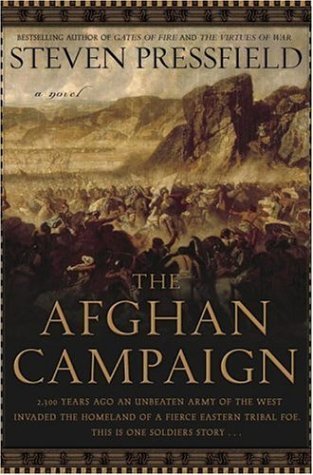
2,300 years ago an unbeaten army of the West invaded the homeland of a fierce Eastern tribal foe. This is one soldier’s story . . .The bestselling novelist of ancient warfare returns with a riveting historical novel that re-creates Alexander the Great’s invasion of the Afghan kingdoms in 330 b.c.In a story that might have been ripped from today’s combat dispatches, Steven Pressfield brings to life the confrontation between an invading Western army and fierce Eastern warriors determined at all costs to defend their homeland. Narrated by an infantryman in Alexander’s army, The Afghan Campaign explores the challenges, both military and moral, that Alexander and his soldiers face as they embark on a new type of war and are forced to adapt to the methods of a ruthless foe that employs terror and insurgent tactics. An edge-of-your-seat adventure, The Afghan Campaign once again demonstrates Pressfield’s profound understanding of the hopes and desperation of men in battle and of the historical realities that continue to influence our world.

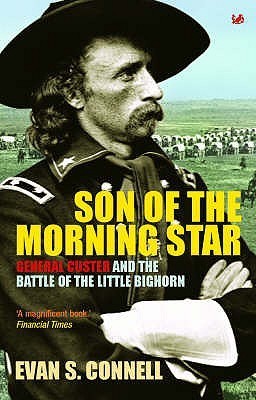
On a scorching June Sunday in 1876, thousands of Indian warriors - Lakota Sioux, Cheyenne and Arapaho - converged on a grassy ridge above the valley of Montana's Little Bighorn River. On the ridge five companies of United States cavalry - 262 soldiers, comprising officers and troopers - fought desperately but hopelessly. When the guns fell silent, no soldier - including their commanding officer, Lt Col. George Armstrong Custer - had survived. Custer's Last Stand is among the most enduring events in American history - 130 years after the fact, books continue to be written and people continue to argue about even the most basic details surrounding the Little Bighorn. Evan S. Connell, whom Joyce Carol Oates has described as 'one of our most interesting and intelligent American writers', wrote what continues to be the most reliable - and compulsively readable - account of the subject. Connell makes good use of his research and novelist's eye for story and detail to re-create the heroism, foolishness and savagery of this crucial chapter in the history of the West.

On October 3, 1993, about a hundred U.S. soldiers were dropped by helicopter into a teeming market in the heart of Mogadishu, Somalia, to abduct two top lieutenants of a Somali warlord. The action was supposed to take an hour. Instead, they spent a long and terrible night fighting thousands of armed Somalis. By morning, eighteen Americans were dead, and more than seventy badly injured. Mark Bowden's gripping narrative is one of the most exciting accounts of modern war ever written--a riveting story that captures the heroism, courage and brutality of battle.

A classic work of American literature that has not stopped changing minds and lives since it burst onto the literary scene, The Things They Carried is a ground-breaking meditation on war, memory, imagination, and the redemptive power of storytelling. The Things They Carried depicts the men of Alpha Company: Jimmy Cross, Henry Dobbins, Rat Kiley, Mitchell Sanders, Norman Bowker, Kiowa, and the character Tim O’Brien, who has survived his tour in Vietnam to become a father and writer at the age of forty-three. Taught everywhere—from high school classrooms to graduate seminars in creative writing—it has become required reading for any American and continues to challenge readers in their perceptions of fact and fiction, war and peace, courage and fear and longing. The Things They Carried won France's prestigious Prix du Meilleur Livre Etranger and the Chicago Tribune Heartland Prize; it was also a finalist for the Pulitzer Prize and the National Book Critics Circle Award.

The historians can’t seem to settle whether to call this one "The Third Space War" (or the fourth), or whether "The First Interstellar War" fits it better. We just call it “The Bug War." Everything up to then and still later were "incidents," "patrols," or "police actions." However, you are just as dead if you buy the farm in an "incident" as you are if you buy it in a declared war...In one of Robert A. Heinlein’s most controversial bestsellers, a recruit of the future goes through the toughest boot camp in the Universe—and into battle with the Terran Mobile Infantry against mankind’s most alarming enemy.

A big, powerful saga of men in combat, written over the course of thirty-five years by a highly decorated Vietnam veteran.Intense, powerful, and compelling, Matterhorn is an epic war novel in the tradition of Norman Mailer's The Naked and the Dead and James Jones's The Thin Red Line. It is the timeless story of a young Marine lieutenant, Waino Mellas, and his comrades in Bravo Company, who are dropped into the mountain jungle of Vietnam as boys and forced to fight their way into manhood. Standing in their way are not merely the North Vietnamese but also monsoon rain and mud, leeches and tigers, disease and malnutrition. Almost as daunting, it turns out, are the obstacles they discover between each other: racial tension, competing ambitions, and duplicitous superior officers. But when the company finds itself surrounded and outnumbered by a massive enemy regiment, the Marines are thrust into the raw and all-consuming terror of combat. The experience will change them forever.Written over the course of thirty years by a highly decorated Vietnam veteran, Matterhorn is a visceral and spellbinding novel about what it is like to be a young man at war. It is an unforgettable novel that transforms the tragedy of Vietnam into a powerful and universal story of courage, camaraderie, and sacrifice: a parable not only of the war in Vietnam but of all war, and a testament to the redemptive power of literature.A graduate of Yale University and a Rhodes Scholar at Oxford University, Karl Marlantes served as a Marine in Vietnam, where he was awarded the Navy Cross, the Bronze Star, two Navy Commendation Medals for valor, two Purple Hearts, and ten air medals. This is his first novel. He lives in rural Washington State.

In WAR Sebastian Junger gives breathtaking insight into the truths of war-- the fear, the honor, and the trust among men. His on-the-ground account follows a single platoon through a 15-month tour of duty in the most dangerous outpost in Afghanistan's Korengal Valley. Through the experiences of these young men at war, he shows what it means to fight, to serve, and to face down mortal danger on a regular basis.

General David Petraeus is the most transformative leader the American military has seen since the generation of Marshall. In the New York Times bestseller All In , military expert Paula Broadwell examines Petraeus's career, his intellectual development as a military officer, and his impact on the U.S. military. Afforded extensive access by General Petraeus, his mentors, his subordinates, and his longtime friends, Broadwell reported on the front lines of fighting and at the strategic command in Afghanistan to chronicle the experiences of this American general as they were brought to bear in the terrible crucible of war. All In draws on hundreds of hours of exclusive interviews with Petraeus and his top officers and soldiers to tell the inside story of this commander's development and leadership in war.When Petraeus assumed command in Afghanistan in July 2010, the conflict looked as bleak as at any moment in America's nine years on the ground there. Petraeus's defining idea—counterinsurgency—was immediate put to its most difficult the hard lessons learned during the surge in Iraq were to be applied in a radically different theater. All In examines the impact in Afghanistan of new counterinsurgency as well as counterterrorism strategies through the commands of several Petraeus protégés.Broadwell examines his evolution as a solider from his education at West Point in the wake of Vietnam to his earlier service in Central America, Haiti, Kuwait, Bosnia, and Iraq. All In also documents the general's role in the war in Washington, going behind the scenes of negotiations during policy reviews of the war in Afghanistan in Congress, the Pentagon, and the White House.Broadwell ultimately appraises Petraeus's impact on the entire U.S. Thanks to this man's influence, the military is better prepared to fight using a comprehensive blend of civil-military activities. As America surveys a decade of untraditional warfare, this much is The career of General David Petraeus profoundly shaped our military and left an indelible mark on its rising leaders.

NEW YORK TIMES BESTSELLER • SELECTED BY THE ECONOMIST AS ONE OF THE BEST BOOKS OF THE YEARRemarkable as it may seem today, there once was a time when the president of the United States could pick up the phone and ask the president of General Motors to resign his position and take the reins of a great national enterprise. And the CEO would oblige, no questions asked, because it was his patriotic duty. In Freedom’s Forge, bestselling author Arthur Herman takes us back to that time, revealing how two extraordinary American businessmen—automobile magnate William Knudsen and shipbuilder Henry J. Kaiser—helped corral, cajole, and inspire business leaders across the country to mobilize the “arsenal of democracy” that propelled the Allies to victory in World War II. “Knudsen? I want to see you in Washington. I want you to work on some production matters.” With those words, President Franklin D. Roosevelt enlisted “Big Bill” Knudsen, a Danish immigrant who had risen through the ranks of the auto industry to become president of General Motors, to drop his plans for market domination and join the U.S. Army. Commissioned a lieutenant general, Knudsen assembled a crack team of industrial innovators, persuading them one by one to leave their lucrative private sector positions and join him in Washington, D.C. Dubbed the “dollar-a-year men,” these dedicated patriots quickly took charge of America’s moribund war production effort. Henry J. Kaiser was a maverick California industrialist famed for his innovative business techniques and his can-do management style. He, too, joined the cause. His Liberty ships became World War II icons—and the Kaiser name became so admired that FDR briefly considered making him his vice president in 1944. Together, Knudsen and Kaiser created a wartime production behemoth. Drafting top talent from companies like Chrysler, Republic Steel, Boeing, Lockheed, GE, and Frigidaire, they turned auto plants into aircraft factories and civilian assembly lines into fountains of munitions, giving Americans fighting in Europe and Asia the tools they needed to defeat the Axis. In four short years they transformed America’s army from a hollow shell into a truly global force, laying the foundations for a new industrial America—and for the country’s rise as an economic as well as military superpower. Featuring behind-the-scenes portraits of FDR, George Marshall, Henry Stimson, Harry Hopkins, Jimmy Doolittle, and Curtis LeMay, as well as scores of largely forgotten heroes and heroines of the wartime industrial effort, Freedom’s Forge is the American story writ large. It vividly re-creates American industry’s finest hour, when the nation’s business elites put aside their pursuit of profits and set about saving the world.Praise for Freedom’s Forge “A rambunctious book that is itself alive with the animal spirits of the marketplace.”— The Wall Street Journal “A rarely told industrial saga, rich with particulars of the growing pains and eventual triumphs of American industry . . . Arthur Herman has set out to right an injustice: the loss, down history’s memory hole, of the epic achievements of American business in helping the United States and its allies win World War II.”— The New York Times Book Review “Magnificent . . . It’s not often that a historian comes up with a fresh approach to an absolutely critical element of the Allied victory in World War II, but Pulitzer finalist Herman . . . has done just that.”— Kirkus Reviews (starred review)

One of the U.S. government's leading China experts reveals the hidden strategy fueling that country's rise – and how Americans have been seduced into helping China overtake us as the world's leading superpower.For more than forty years, the United States has played an indispensable role helping the Chinese government build a booming economy, develop its scientific and military capabilities, and take its place on the world stage, in the belief that China's rise will bring us cooperation, diplomacy, and free trade. But what if the "China Dream" is to replace us, just as America replaced the British Empire, without firing a shot?Based on interviews with Chinese defectors and newly declassified, previously undisclosed national security documents, The Hundred-Year Marathon reveals China's secret strategy to supplant the United States as the world's dominant power, and to do so by 2049, the one-hundredth anniversary of the founding of the People's Republic. Michael Pillsbury, a fluent Mandarin speaker who has served in senior national security positions in the U.S. government since the days of Richard Nixon and Henry Kissinger, draws on his decades of contact with the "hawks" in China's military and intelligence agencies and translates their documents, speeches, and books to show how the teachings of traditional Chinese statecraft underpin their actions. He offers an inside look at how the Chinese really view America and its leaders – as barbarians who will be the architects of their own demise.Pillsbury also explains how the U.S. government has helped – sometimes unwittingly and sometimes deliberately – to make this "China Dream" come true, and he calls for the United States to implement a new, more competitive strategy toward China as it really is, and not as we might wish it to be. The Hundred-Year Marathon is a wake-up call as we face the greatest national security challenge of the twenty-first century.

CHINA AND THE UNITED STATES ARE HEADING TOWARD A WAR NEITHER WANTS. The reason is Thucydides’s Trap, a deadly pattern of structural stress that results when a rising power challenges a ruling one. This phenomenon is as old as history itself. About the Peloponnesian War that devastated ancient Greece, the historian Thucydides explained: “It was the rise of Athens and the fear that this instilled in Sparta that made war inevitable.” Over the past 500 years, these conditions have occurred sixteen times. War broke out in twelve of them. Today, as an unstoppable China approaches an immovable America and both Xi Jinping and Donald Trump promise to make their countries “great again,” the seventeenth case looks grim. Unless China is willing to scale back its ambitions or Washington can accept becoming number two in the Pacific, a trade conflict, cyberattack, or accident at sea could soon escalate into all-out war. In Destined for War, the eminent Harvard scholar Graham Allison explains why Thucydides’s Trap is the best lens for understanding U.S.-China relations in the twenty-first century. Through uncanny historical parallels and war scenarios, he shows how close we are to the unthinkable. Yet, stressing that war is not inevitable, Allison also reveals how clashing powers have kept the peace in the past — and what painful steps the United States and China must take to avoid disaster today.

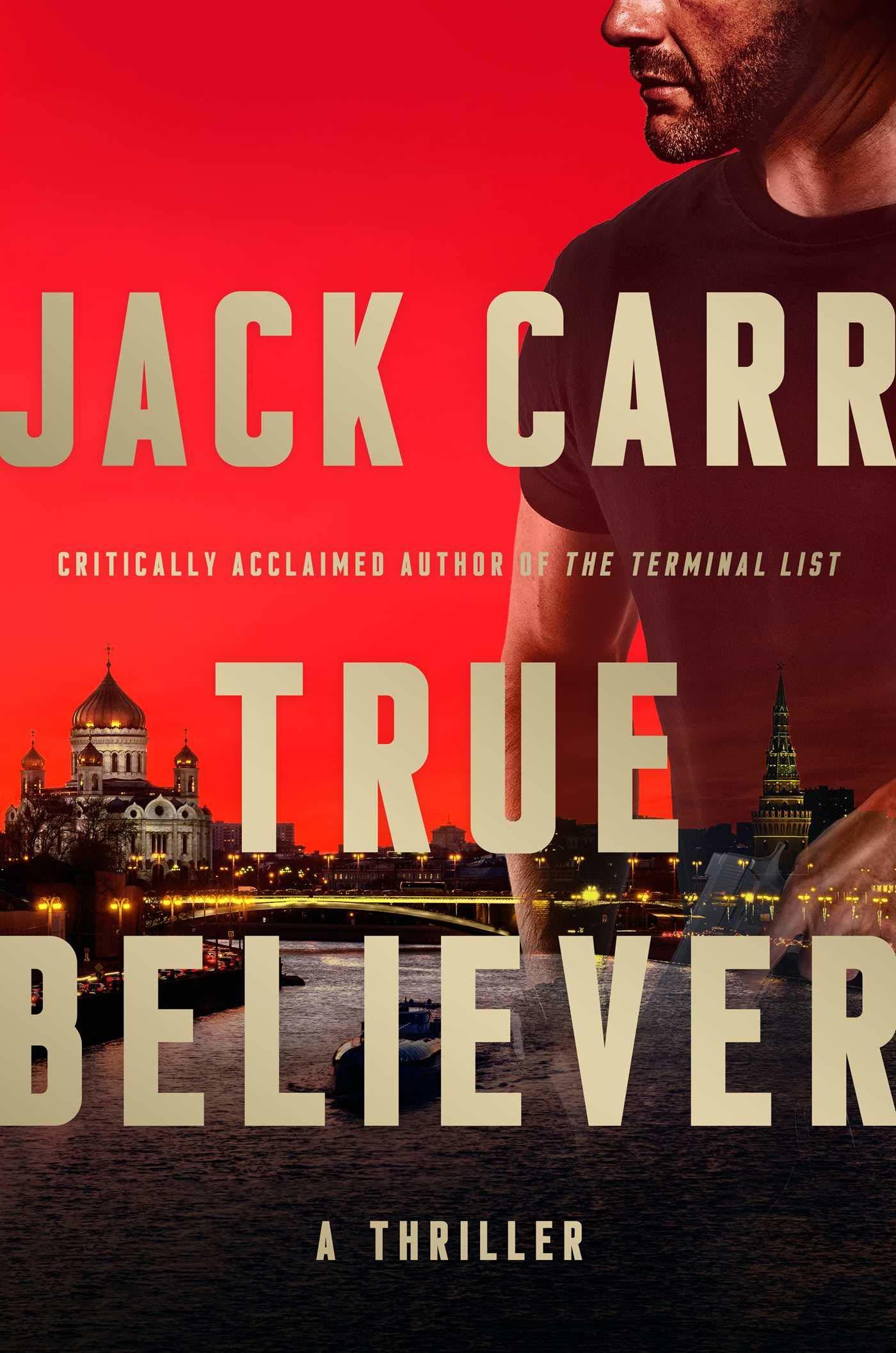
In acclaimed author Jack Carr’s follow-up to The Terminal List, former Navy SEAL James Reece’s skill, cunning, and heroism put the US government back in his debt and set him on another path of revenge. When a string of horrific terrorist attacks plagues the Western world during the holiday season, the broader markets fall into a tailspin. The attacks are being coordinated by a shadowy former Iraqi commando who has disappeared into Europe’s underground. The United States government has an asset who can turn the Iraqi against his masters: James Reece, the most-wanted domestic terrorist alive. After avenging the deaths of his family and team members, Reece emerges deep in the wilds of Mozambique, protected by the family of his estranged best friend and former SEAL Team member. When a series of events uncovers his whereabouts, the CIA recruits him, using a Presidential pardon for Reece and immunity for the friends who helped him in his mission of vengeance. Now a reluctant tool of the United States government, Reece travels the globe, targeting terrorist leaders and unraveling a geopolitical conspiracy that exposes a traitorous CIA officer and uncovers a sinister assassination plot with worldwide repercussions. A high-intensity roller-coaster ride, True Believer explodes with action and authenticity that cements Jack Carr as the new leader in political thrillers.

On March 12, 2034, US Navy Commodore Sarah Hunt is on the bridge of her flagship, the guided missile destroyer USS John Paul Jones, conducting a routine freedom of navigation patrol in the South China Sea when her ship detects an unflagged trawler in clear distress, smoke billowing from its bridge. On that same day, US Marine aviator Major Chris "Wedge" Mitchell is flying an F35E Lightning over the Strait of Hormuz, testing a new stealth technology as he flirts with Iranian airspace.By the end of that day, Wedge will be an Iranian prisoner, and Sarah Hunt's destroyer will lie at the bottom of the sea, sunk by the Chinese Navy. Iran and China have clearly coordinated their moves, which involve the use of powerful new forms of cyber weaponry that render US ships and planes defenseless. In a single day, America's faith in its military's strategic pre-eminence is in tatters. A new, terrifying era is at hand.So begins a disturbingly plausible work of speculative fiction, co-authored by an award-winning novelist and decorated Marine veteran and the former commander of NATO, a legendary admiral who has spent much of his career strategically out maneuvering America's most tenacious adversaries.Written with a powerful blend of geopolitical sophistication and literary, human empathy, 2034 takes us inside the minds of a global cast of characters--Americans, Chinese, Iranians, Russians, Indians--as a series of arrogant miscalculations on all sides leads the world into an intensifying international storm. In the end, China and the United States will have paid a staggering cost, one that forever alters the global balance of power.Everything in 2034 is an imaginative extrapolation from present-day facts on the ground combined with the authors' years working at the highest and most classified levels of national security. Sometimes it takes a brilliant work of fiction to illuminate the most dire of warnings: 2034 is all too close at hand, and this cautionary tale presents the reader a dark yet possible future that we must do all we can to avoid.

INSTANT NEW YORK TIMES BESTSELLERFrom decorated Green Beret sniper, UFC headliner, and all around badass, Tim Kennedy, a rollicking, inspirational memoir offering lessons in how to embrace failure and weather storms, in order to unlock the strongest version of yourself.Tim Kennedy has a problem; he only feels alive right before he’s about to die. Kennedy, a Green Beret, decorated Army sniper, and UFC headliner, has tackled a bull with his bare hands, jumped out of airplanes, dove to the depths of the ocean, and traveled the world hunting poachers, human traffickers, and the Taliban.But he’s also the same man who got kicked out of the police department, fire department, and as an EMT, before getting two women pregnant four days apart, and finally, been beaten up by his Special Forces colleagues for, quite simply, “being a selfish asshole.”In Scars and Stripes , Kennedy describes how these failures shaped him into the successful businessman and devoted husband and father he is today. Through unbelievably vivid, wild anecdotes Kennedy reveals all the dumb, violent, embarrassing, and undeniably heroic things he’s done in his life, including multiple combat missions in Afghanistan, building a school in Texas for elementary kids, and creating two-multimillion-dollar businesses. You will learn that failure isn’t the end—rather it’s the first step towards unearthing the best version of yourself and finding success, no matter how overwhelming the setbacks may feel.

In this strikingly original and groundbreaking book, Dr. Shay examines the psychological devastation of war by comparing the soldiers of Homer's Iliad with Vietnam veterans suffering from post-traumatic stress disorder. Although the Iliad was written twenty-seven centuries ago it has much to teach about combat trauma, as do the more recent, compelling voices and experiences of Vietnam vets.

The Battle of Stalingrad was not only the psychological turning point of World War II: it also changed the face of modern warfare. Historians and reviewers worldwide have hailed Antony Beevor's magisterial Stalingrad as the definitive account of World War II's most harrowing battle. In August 1942, Hitler's huge Sixth Army reached the city that bore Stalin's name. In the five-month siege that followed, the Russians fought to hold Stalingrad at any cost; then, in an astonishing reversal, encircled and trapped their Nazi enemy. This battle for the ruins of a city cost more than a million lives. Stalingrad conveys the experience of soldiers on both sides, fighting in inhuman conditions, and of civilians trapped on an urban battlefield. Antony Beevor has interviewed survivors and discovered completely new material in a wide range of German and Soviet archives, including prisoner interrogations and reports of desertions and executions. As a story of cruelty, courage, and human suffering, Stalingrad is unprecedented and unforgettable.

From science fiction master Peter F. Hamilton comes a standalone novel that is “a fascinating, compulsively readable clash of hardware and ideals”, political intrigue, and space opera at its best (Kirkus Reviews (starred review)). In the distant future, corporations have become sustainable communities with their own militaries, and corporate goals have essentially replaced political ideology. On a youthful, rebellious impulse, Lawrence joined the military of a corporation that he now recognizes to be ruthless and exploitative. His only hope for escape is to earn enough money to buy his place in a better corporation.When his platoon is sent to a distant colony to quell a local resistance effort, it seems like a stroke of amazing fortune, and Lawrence plans to rob the colony of their fabled gemstone, the Fallen Dragon, to get the money he needs. However, he soon discovers that the Fallen Dragon is not a gemstone at all, but an alien life form that the local colonists have been protecting since it crashed in their area. Now, Lawrence must decide if he will steal the alien to exploit the use of its inherent biotechnical processes — which far exceed anything humans are capable of — or if he will help the Resistance get the alien home.

8-page b/w photo section 6 x 9 "Last Reflections on a War stands as a fine representative sample of Fall's work as a whole; as such, it is nearly as personal as an autobiography. . . . That the collection includes an excellent outline of Vietnamese history, a discussion of the basic issues of the war, and an emotive picture of Vietnam, 1967, speaks to the depth of Fall's knowledge and the scope of his concerns."-Frances FitzGerald, from a 1968 review Bernard B. Fall was 40 years old when he was killed by a booby trap in northern South Vietnam on February 21, 1967. By the time of his death he had already authored seven books on Vietnam, most notably Street Without Joy (0-8117-1700-3), an indictment of French intrusion into Indochina and a warning to American forces just beginning their involvement. Last Reflections on a War, first published shortly after Dr. Fall's death, is a tribute to his life's It contains the only known autobiographical account of his life, several previously unpublished articles, notes for "Street Without Joy Revisited," and transcripts of Dr. Fall's tape recordings, including his last recorded words. Bernard Fall was born in France and fought with the French Resistance during World War II. Later, as professor of International Relations and accomplished author, he was one of the most influential academic critics of U.S. policy in Vietnam.

Before becoming the basis for two motion pictures, A Message to Garcia was written as an inspirational essay by Elbert Hubbard. This popular work is about a soldier who takes the initiative to accomplish a daunting and difficult task without questions or objections and graciously accomplishes the task. Often used in business and life as a motivational example to readers of applying a positive attitude towards achieving a successful life.

“The best damned book from the point of view of the infantrymen who fought there.”― Army Times Among the best books ever written about men in combat, The Killing Zone tells the story of the platoon of Delta One-six, capturing what it meant to face lethal danger, to follow orders, and to search for the conviction and then the hope that this war was worth the sacrifice. The book includes a new chapter on what happened to the platoon members when they came home.

The news-breaking book that has sent shockwaves through the Bush White House, Ghost Wars is the most accurate and revealing account yet of the CIA's secret involvement in al-Qaeda's evolution. It won the Pulitzer Prize in 2005.Prize-winning journalist Steve Coll has spent years reporting from the Middle East, accessed previously classified government files and interviewed senior US officials and foreign spymasters. Here he gives the full inside story of the CIA's covert funding of an Islamic jihad against Soviet forces in Afghanistan, explores how this sowed the seeds of Bin Laden's rise, traces how he built his global network and brings to life the dramatic battles within the US government over national security. Above all, he lays bare American intelligence's continual failure to grasp the rising threat of terrorism in the years leading to 9/11 - and its devastating consequences.

From the development of the U-2 to the Stealth fighter, the never-before-told story behind the high-stakes quest to dominate the skies Skunk Works is the true story of America's most secret & successful aerospace operation. As recounted by Ben Rich, the operation's brilliant boss for nearly two decades, the chronicle of Lockheed's legendary Skunk Works is a drama of cold war confrontations and Gulf War air combat, of extraordinary feats of engineering & achievement against fantastic odds. Here are up-close portraits of the maverick band of scientists & engineers who made the Skunk Works so renowned. Filled with telling personal anecdotes & high adventure, with narratives from the CIA & from Air Force pilots who flew the many classified, risky missions, this book is a portrait of the most spectacular aviation triumphs of the 20th century.

With intelligence now getting a front-row seat in governments around the world, this book is especially timely. Intelligence rains in, but without an understanding of the nature of the intelligence, it accumulates in puddles of obscurity. The problems therefore seem to be how to obtain it, how to understand it, and how to sell it to one's bosses. This book deals with how to understand it. Three fundamental points are at the heart of this presentation about the cognitive challenges intelligence analysts face: The mind is poorly wired to deal effectively with both inherent uncertainty (the natural fog surrounding complex, indeterminate intelligence issues) and induced uncertainty (the man-made fog fabricated by denial and deception operations). Even increased awareness of cognitive and other unmotivated biases, such as the tendency to see information confirming an already-held judgement more vividly than one sees disconfirming information, does little by itself to help analysts deal effectively with uncertainty. critical thinking can substantially improve analysis on complex issues on which information is incomplete, ambiguous, and often deliberately distorted. Key examples of such intellectual devices include techniques for structuring information, challenging assumptions, and exploring alternative interpretations. This book was first issued by the CIA.

If the Marines are “the few, the proud,” Recon Marines are the fewest and the proudest. Nathaniel Fick’s career begins with a hellish summer at Quantico, after his junior year at Dartmouth. He leads a platoon in Afghanistan just after 9/11 and advances to the pinnacle—Recon— two years later, on the eve of war with Iraq. His vast skill set puts him in front of the front lines, leading twenty-two Marines into the deadliest conflict since Vietnam. He vows to bring all his men home safely, and to do so he’ll need more than his top-flight education. Fick unveils the process that makes Marine officers such legendary leaders and shares his hard-won insights into the differences between military ideals and military practice, which can mock those ideals.In this deeply thoughtful account of what it’s like to fight on today’s front lines, Fick reveals the crushing pressure on young leaders in combat. Split-second decisions might have national consequences or horrible immediate repercussions, but hesitation isn’t an option. One Bullet Away never shrinks from blunt truths, but ultimately it is an inspiring account of mastering the art of war.

Many modern historians have painted Ulysses S. Grant as a butcher, a drunk, and a failure as president. Others have argued the exact opposite and portray him with saintlike levels of ethic and intellect.In Ulysses S. Grant: Triumph over Adversity 1822–1865, historian Brooks D. Simpson takes neither approach, recognizing Grant as a complex and human figure with human faults, strengths, and motivations. Simpson offers a balanced and complete study of Grant from birth to the end of the Civil War, with particular emphasis on his military career and family life and the struggles he overcame in his unlikely rise from unremarkable beginnings to his later fame as commander of the Union Army. Chosen as a New York Times Notable Book upon its original publication, Ulysses S. Grant is a readable, thoroughly researched portrait that sheds light on this controversial figure.

In The Pity of War, Niall Ferguson makes a simple and provocative argument: that the human atrocity known as the Great War was entirely England's fault. Britain, according to Ferguson, entered into war based on naïve assumptions of German aims—and England's entry into the war transformed a Continental conflict into a world war, which they then badly mishandled, necessitating American involvement. The war was not inevitable, Ferguson argues, but rather the result of the mistaken decisions of individuals who would later claim to have been in the grip of huge impersonal forces. That the war was wicked, horrific, inhuman,is memorialized in part by the poetry of men like Wilfred Owen and Siegfried Sassoon, but also by cold statistics. More British soldiers were killed in the first day of the Battle of the Somme than Americans in the Vietnam War; indeed, the total British fatalities in that single battle—some 420,000—exceeds the entire American fatalities for both World Wars. And yet, as Ferguson writes, while the war itself was a disastrous folly, the great majority of men who fought it did so with enthusiasm. Ferguson vividly brings back to life this terrifying period, not through dry citation of chronological chapter and verse but through a series of brilliant chapters focusing on key ways in which we now view the First World War.For anyone wanting to understand why wars are fought, why men are willing to fight them, and why the world is as it is today, there is no sharper nor more stimulating guide than Niall Ferguson's The Pity of War.

One of the most popular and controversial historians of the twentieth century, who made his subject accessible to millions, A.J.P. Taylor caused a storm of outrage with this scandalous bestseller. Debunking what were accepted truths about the Second World War, he argued provocatively that Hitler did not set out to cause the war as part of an evil master plan, but blundered into it partly by accident, aided by the shortcomings of others. Fiercely attacked for vindicating Hitler, A.J.P. Taylor's stringent re-examination of the events preceding the Nazi invasion of Poland on 1st September 1939 opened up new debate, and is now recognized as a brilliant and classic piece of scholarly research. 'Highly original and penetrating...No one who has digested this enthralling work will ever be able to look at the period again in quite the same way'

In The Threatening Storm , Kenneth M. Pollack, one of the world’s leading experts on Iraq, provides a masterly insider’s perspective on the crucial issues facing the United States as it moves toward a new confrontation with Saddam Hussein.For the past fifteen years, as an analyst on Iraq for the Central Intelligence Agency and the National Security Council, Kenneth Pollack has studied Saddam as closely as anyone else in the United States. In 1990, he was one of only three CIA analysts to predict the Iraqi invasion of Kuwait. As the principal author of the CIA’s history of Iraqi military strategy and operations during the Gulf War, Pollack gained rare insight into the methods and workings of what he believes to be the most brutal regime since Stalinist Russia.Examining all sides of the debate and bringing a keen eye to the military and geopolitical forces at work, Pollack ultimately comes to this controversial through our own mistakes, the perfidy of others, and Saddam’s cunning, the United States is left with few good policy options regarding Iraq. Increasingly, the option that makes the most sense is for the United States to launch a full-scale invasion, eradicate Saddam’s weapons of mass destruction, and rebuild Iraq as a prosperous and stable society—for the good of the United States, the Iraqi people, and the entire region.Pollack believed for many years that the United States could prevent Saddam from threatening the stability of the Persian Gulf and the world through containment—a combination of sanctions and limited military operations. Here, Pollack explains why containment is no longer effective, and why other policies intended to deter Saddam ultimately pose a greater risk than confronting him now, before he gains possession of nuclear weapons and returns to his stated goal of dominating the Gulf region. “It is often said that war should be employed only in the last resort,” Pollack writes. “I reluctantly believe that in the case of the threat from Iraq, we have come to the last resort.”Offering a view of the region that has the authority and force of an intelligence report, Pollack outlines what the leaders of neighboring Arab countries are thinking, what is necessary to gain their support for an invasion, how a successful U.S. operation would be mounted, what the likely costs would be, and how Saddam might react. He examines the state of Iraq today—its economy, its armed forces, its political system, the status of its weapons of mass destruction as best we understand them, and the terrifying security apparatus that keeps Saddam in power. Pollack also analyzes the last twenty years of relations between the United States and Iraq to explain how the two countries reached the unhappy standoff that currently prevails.Commanding in its insights and full of detailed information about how leaders on both sides will make their decisions, The Threatening Storm is an essential guide to understanding what may be the crucial foreign policy challenge of our time.

An essential collection of the wartime writings and diary of World War II German Field Marshal Erwin Rommel, edited with commentary by one of the great military theorists of our timeWhen Erwin Rommel died-by forced suicide at Hitler's command-he left behind in various ingenious hiding places the papers that recorded the story of his dramatic career and the exact details of his masterly campaigns. It was his custom to dictate each evening a running narrative of the day's events and, after each battle, to summarize its course and the lessons to be learned from it. He wrote, almost daily, intimate and outspoken letters to his wife in which his private feelings and-after the tide had turned-forebodings found expression. To this is added by Rommel's son Manfred the story of the field marshall's last weeks and the final day when he was given the choice of an honorable suicide or an ignominious trial for treason. An engrossing human document and a rare look at the mind of the "Desert Fox," The Rommel Papers throws an interesting light on the Axis alliance and on the inner workings of Hitler's high command.

With his stirring, rapturous first novel--originally published in 1956 --James Salter established himself as the most electrifying prose stylist since Hemingway. Four decades later, it is clear that he also fashioned the most enduring fiction ever about aerial warfare.Captain Cleve Connell arrives in Korea with a single to become an ace, one of that elite fraternity of jet pilots who have downed five MIGs. But as his fellow airmen rack up kill after kill--sometimes under dubious circumstances--Cleve's luck runs bad. Other pilots question his guts. Cleve comes to question himself. And then in one icy instant 40,000 feet above the Yalu River, his luck changes forever. Filled with courage and despair, eerie beauty and corrosive rivalry, The Hunters is a landmark in the literature of war.

Winner of the Pulitzer Prize, Lewis B. Puller, Jr.'s memoir is a moving story of a man born into a proud military legacy who struggles to rebuild his world after the Vietnam War has shattered his body and his ideals. Raised in the shadow of his father, Marine General Lewis B. "Chesty" Puller, a hero of five wars, young Lewis went to Southeast Asia at the height of the Vietnam War and served with distinction as an officer in his father's beloved Corps. But when he tripped a booby-trapped howitzer round, triggering an explosion that would cost him his legs, his career as a soldier ended, and the battle to reclaim his life began.

As a newly commisioned Captain of a veteran Army regiment, MacDonald's first combat was war at its most hellish--the Battle of the Bulge. In this plain-spoken but eloquent narrative, we live each minute at MacDonald's side, sharing in all of combat's misery, terror, and drama. How this green commander gains his men's loyalty in the snows of war-torn Europe is one of the great, true, unforgettable war stories of all time.

The story of Captain D. Michael Abrashoff and his command of USS Benfold has become legendary inside and outside the Navy. Now Abrashoff offers this fascinating tale of top-down change for anyone trying to navigate today's uncertain business seas.When Captain Abrashoff took over as commander of USS Benfold, a ship armed with every cutting-edge system available, it was like a business that had all the latest technology but only some of the productivity. Knowing that responsibility for improving performance rested with him, he realized he had to improve his own leadership skills before he could improve his ship. Within months he created a crew of confident and inspired problem-solvers eager to take the initiative and take responsibility for their actions. The slogan on board became "It's your ship," and Benfold was soon recognized far and wide as a model of naval efficiency.How did Abrashoff do it? Against the backdrop of today's United States Navy-Benfold was a key player in our Persian Gulf fleet-Abrashoff shares his secrets of successful management including:* See the ship through the eyes of the crew: By soliciting a sailor's suggestions, Abrashoff drastically reduced tedious chores that provided little additional value.* Communicate, communicate, communicate: The more Abrashoff communicated the plan, the better the crew's performance. His crew would eventually call him "Megaphone Mike," since they heard from him so often.* Create discipline by focusing on purpose: Discipline skyrocketed when Abrashoff's crew believed that what they were doing was important.* Listen aggressively: After learning that many sailors wanted to use the GI Bill, Abrashoff brought a test official aboard the ship-and held the SATs forty miles off the Iraqi coast.From achieving amazing cost savings to winning the highest gunnery score in the Pacific Fleet, Captain Abrashoff's extraordinary campaign sent shock waves through the U.S. Navy. It can help you change the course of your ship, no matter where your business battles are fought.

A. J. P. Taylor was one of the most acclaimed and uncompromising historians of the twentieth century. In this clear, lively and now-classic account of the First World War, he tells the story of the conflict from the German advance in the West, through the Marne, Gallipoli, the Balkans and the War at Sea to the offensives of 1918 and the state of Europe after the war. Containing photographs and maps, this an essential history of the war that 'cut deep into the consciousness of modern man'.

An epic narrative documents the fight to create the United States of America, beginning with the deterioration in relations between England and her colonists and chronicling the events of the American Revolution until the last British flag was lowered during the siege of Yorktown. Reprint.

From commanding the Horse Marines in Peking to leading the Inchon landing, Puller became a legend in his own time. Now, Davis offers a no-holds-barred biography of this courageous hero--the only marine in history ever to win five Navy Crosses.

WHY DO COMPETENT ARMIES FAIL? Why did the American-led coalition in Iraq fail to wage a classic counter-insurgency campaign for so long after the fall of Baghdad? Why was the sophisticated Israeli intelligence service so thoroughly surprised by the onslaught of combined Arab armies during the Yom Kippur War of 1973? How did a dozen German U-boats manage to humiliate the U.S. Navy for nine months in 1942 -- sinking an average of 650,000 tons of shipping monthly? What made the 1915 British-led invasion of Gallipoli one of the bloodiest catastrophes of the First World War?Since it was first published in 1990, Military Misfortunes has become the classic analysis of the unexpected catastrophes that befall competent militaries. Now with a new Afterword discussing America's missteps in Iraq, Somalia, and the War on Terror, Eliot A. Cohen and John Gooch's gripping battlefield narratives and groundbreaking explanations of the hidden factors that undermine armies are brought thoroughly up to date. As recent events prove, Military Misfortunes will be required reading for as long as armies go to war.

Anthrax. Smallpox. Incurable and horrifying Ebola-related fevers. For two decades, while a fearful world prepared for nuclear winter, an elite team of Russian bioweaponeers began to till a new killing field: a bleak tract sown with powerful seeds of mass destruction—by doctors who had committed themselves to creating a biological Armageddon. Biohazard is the never-before-told story of Russia’s darkest, deadliest, and most closely guarded Cold War secret. No one knows more about Russia’s astounding experiments with biowarfare than Ken Alibek. Now the mastermind behind Russia’s germ warfare effort reveals two decades of shocking breakthroughs . . . how Moscow’s leading scientists actually reengineered hazardous microbes to make them even more virulent . . . the secrets behind the discovery of an invisible, untraceable new class of biological agents just right for use in political assassinations . . . the startling story behind Russia’s attempt to turn a sample of the AIDS virus into the ultimate bioweapon. And in a chilling work of real-world intrigue, Biohazard offers us all a rare glimpse into a shadowy scientific underworld where doctors manufacture mass destruction, where witnesses to errors are silenced forever, and where ground zero is closer than we ever dared believe.

The coup is the most frequently attempted method of changing government & the most successful. Coup d'Etat outlines the mechanism of the coup & analyzes the conditions political, military & social, that gives rise to it. In doing so, the book sheds much light on societies where power does indeed grow out of the barrel of a gun & the role of law is a concept little understood.List of FiguresList of TablesForewordPreace to the 1st EditionPreface to the 1979 EditionWhat is the coup d'état? --When is a coup d'état possible?The strategy of the coup d'étatThe planning of the coup d'étatThe execution of the coup d'étatAppendicesTablesIndex

Very simply, this publication describes the philosophy which distinguishes the U.S. Marine Corps. The thoughts contained here are not merely guidance for action in combat but a way of thinking. This publication provides the authoritative basis for how we fight and how we prepare to fight. This book contains no specific techniques or procedures for conduct. Rather, it provides broad guidance in the form of concepts and values. It requires judgment in application. Warfighting is not meant as a reference manual; it is designed to be read from cover to cover. Its four chapters have a natural progression. Chapter 1 describes our understanding of the characteristics, problems, and demands of war. Chapter 2 derives a theory about war from that understanding. This theory in turn provides the foundation for how we prepare for war and how we wage war, chapters 3 and 4, respectively.

Michael Kelly, who traveled through every country touched by the Gulf War, moved about as a free-lance journalist for the Boston Globe and the New Republic. He traveled through much of the Middle East during and after the Gulf War, watching the bombs fall on Baghdad and waiting for Scuds in Tel Aviv, inspecting the gold bathroom fixtures installed by the U.S. Army Corps of Engineers in the empire's temporary palace in Kuwait City and dining with Kurdish chieftains in remote mountain camps in northern Iran.When ground war in Iraq began, Michael Kelly rented a four-wheel-drive Nissan Safari, borrowed some camouflage pants and gas-proof rubber gloves, and set off across the desert, where he was mistaken for an advance party of the American Army and surrendered to by a batch of bewildered Iraqi soldiers. In Kuwait after the liberation, he listened to horrific tales of torture and rape, and walked among the grotesque remains of the bombed-out retreating Iraqi army on the roads home. Later, when Kelly went to Kurdistan, he hiked into forbidden Iraqi territory and then traveled with various guerrilla bands at war with Saddam Hussein. He got out of Iraq by swimming across a river into Turkey in the company of smugglers. Kelly's story is witty, moving, and dramatically compelling, at once superb reporting and the very best travel writing. By avoiding the human story of the Gulf War, he has given us an indispensable piece of our history."Restrained yet explosive dispatches from the front . . . Kelly demonstrates a keen eye for the telling detail, a well-developed sense of irony . . . courage and enterprise."--National Magazine

This is the untold story of the small group of men who have devised the plans and shaped the policies on how to use the Bomb. The book (first published in 1983) explores the secret world of these strategists of the nuclear age and brings to light a chapter in American political and military history never before revealed.

Europe in 1618 was divided between Protestants and Catholics, and Bourbon and Hapsburg, as well as empires, kingdoms, and countless independent states. After angry Protestants tossed three representatives of the Holy Roman Empire out the window of the royal castle in Prague, world war spread from Bohemia with similar abandon and relentless persistence, destroying European powers from Spain to Sweden as they marched on the contested soil of Germany. Fanatics, speculators, and ordinary people found themselves trapped in a nightmarish world of famine, disease, and seemingly unstoppable destruction. The Thirty Years War was a turning point in the making of modern Europe and the modern world: out of it came the system of nation-states that remains fundamental to international law. C.V. Wedgwood's magisterial book is the only comprehensive account of the war in English, as well as a triumph of scholarship and literature. Includes maps and charts.

Called “everything a twentieth century war memoir could possibly be” by The New York Times, this national bestseller by Colonel David H. Hackworth presents a vivid and powerful portrait of a life of patriotism.From age fifteen to forty David Hackworth devoted himself to the US Army and fast became a living legend. In 1971, however, he appeared on television to decry the doomed war effort in Vietnam. With About Face, he has written what many Vietnam veterans have called the most important book of their generation.From Korea to Berlin, from the Cuban missile crisis to Vietnam, Hackworth’s story is that of an exemplary patriot, played out against the backdrop of the changing fortunes of America and the American military. It is also a stunning indictment of the Pentagon’s fundamental misunderstanding of the Vietnam conflict and of the bureaucracy of self-interest that fuelled the war.Heavily decorated Colonel Hackworth narrates his life and disillusionment during Vietnam. Orphaned before he was a year old, he found his home at 15 in the Army. In Korea, heroism gave him a battlefield commission at 20. During the Cold War, he commanded at the Berlin wall and the Cuban missile crises. But Vietnam led to disillusionment.


In January 1969, one of the most promising young lieutenant colonels the US Army had ever seen touched down in Vietnam for his second tour of duty, which would turn out to be his most daring and legendary.David H. Hackworth had just completed the writing of a tactical handbook for the Pentagon, and now he had been ordered to put his counterguerilla-fighting theories into action. He was given the morale-drained 4/39th—a battalion of poorly led draftees suffering the Army's highest casualty rate and considered its worst fighting battalion. Hackworth's hard-nosed, inventive and inspired leadership quickly turned the 4/39th into Vietnam's valiant and ferocious Hardcore Recondos.Drawing on interviews with soldiers from the Hardcore Battalion conducted over the past decade by his partner and coauthor, Eilhys England, Hackworth takes readers along on their sniper missions, ambush actions, helicopter strikes and inside the quagmire of command politics. With Steel My Soldiers' Hearts, Hackworth places the brotherhood of the 4/39th into the pantheon of our nation's most heroic warriors.

For nearly two and a half millennia, Alexander the Great has loomed over history as a legend–and an enigma. Wounded repeatedly but always triumphant in battle, he conquered most of the known world, only to die mysteriously at the age of thirty-two. In his day he was revered as a god; in our day he has been reviled as a mass murderer, a tyrant as brutal as Stalin or Hitler.Who was the man behind the mask of power? Why did Alexander embark on an unprecedented program of global domination? What accounted for his astonishing success on the battlefield? In this luminous new biography, the esteemed classical scholar and historian Guy MacLean Rogers sifts through thousands of years of history and myth to uncover the truth about this complex, ambiguous genius.Ascending to the throne of Macedonia after the assassination of his father, King Philip II, Alexander discovered while barely out of his teens that he had an extraordinary talent and a boundless appetite for military conquest. A virtuoso of violence, he was gifted with an uncanny ability to visualize how a battle would unfold, coupled with devastating decisiveness in the field. Granicus, Issos, Gaugamela, Hydaspes–as the victories mounted, Alexander’s passion for conquest expanded from cities to countries to continents. When Persia, the greatest empire of his day, fell before him, he marched at once on India, intending to add it to his holdings.As Rogers shows, Alexander’s military prowess only heightened his exuberant sexuality. Though his taste for multiple partners, both male and female, was tolerated, Alexander’s relatively enlightened treatment of women was nothing short of revolutionary. He outlawed rape, he placed intelligent women in positions of authority, and he chose his wives from among the peoples he conquered. Indeed, as Rogers argues, Alexander’s fascination with Persian culture, customs, and sexual practices may have led to his downfall, perhaps even to his death.Alexander emerges as a charismatic and surprisingly modern figure–neither a messiah nor a genocidal butcher but one of the most imaginative and daring military tacticians of all time. Balanced and authoritative, this brilliant portrait brings Alexander to life as a man, without diminishing the power of the legend.

Europe was in the throes of World War II, and when America joined the fighting, Ernie Pyle went along. Long before television beamed daily images of combat into our living rooms, Pyle’s on-the-spot reporting gave the American public a firsthand view of what war was like for the boys on the front. Pyle followed the soldiers into the trenches, battlefields, field hospitals, and beleaguered cities of Europe. What he witnessed he described with a clarity, sympathy, and grit that gave the public back home an immediate sense of the foot soldier’s experience. There were really two wars, John Steinbeck wrote in Time one of maps and logistics, campaigns, ballistics, divisions, and regiments and the other a "war of the homesick, weary, funny, violent, common men who wash their socks in their helmets, complain about the food, whistle at Arab girls, or any girls for that matter, and bring themselves through as dirty a business as the world has ever seen and do it with humor and dignity and courage—and that is Ernie Pyle’s war." This collection of Pyle’s columns detailing the fighting in Europe in 1943–44 brings that war—and the living, and dying, moments of history—home to us once again.

In this seminal story of naval life during the Napoleonic War, Frederick Murrayat's young hero embarks upon a life at sea and finds it be a rough school indeed. Simple's trials and triumphs, alongside his faithful mentor, Terence O'Brien, Mirror Marryat's personal experience, from the hand-to-hand combat of cutting-out missions to the devastating hurricane off St. Pierre and the mutiny aboard the "Rattlesnake". "Peter Simple" is a towering tale from the great age of sail, filled with keen wit, vivid characters, and gripping adventure.

For eight years, far beyond the battlefields of Vietnam and the glare of media distortions, American Green Berets fought a deadly secret war in Laos and Cambodia under the aegis of the top secret Military Assistance Command Vietnam – Studies and Observations Group, or SOG. Go deep into the jungle with five SOG warriors surrounded by 10,000 enemy troops as they stack up the dead to build a human buttress for protection. Witness a Green Beret, shot in the back four times and left for dead, who survives to fight savagely against incredible odds to complete his missions. Shudder as an enemy soldier touches a Green Beret’s boot in the dark of night. Cringe as a Sergeant on SOG Spike Team Louisiana calls in an air strike on his team to break an enemy’s wave attack. A team member dies instantly, and a Green Beret has an out-of-body experience as he watches his leg get blown off. “As the commander of SOG, I can say that “Across the Fence” accurately reflects why the secret war was hazardous for our troops and so deadly for the enemy. – Major General John K. Singlaub (U. S. Army Ret.) Black Ops told with the terrifying clarity that only one who was there can tell it. – W.E.B. Griffin & William E. Butterworth IV

To Rule the Waves tells the extraordinary story of how the British Royal Navy allowed one nation to rise to a level of power unprecedented in history. From the navy's beginnings under Henry VIII to the age of computer warfare and special ops, historian Arthur Herman tells the spellbinding tale of great battles at sea, heroic sailors, violent conflict, and personal tragedy -- of the way one mighty institution forged a nation, an empire, and a new world.This P.S. edition features an extra 16 pages of insights into the book, including author interviews, recommended reading, and more.

With meticulous research and page-turning suspense, Patriots brings to life the American Revolution—the battles, the treacheries, and the dynamic personalities of the men who forged our freedom.George Washington, John Adams, Samuel Adams, Ben Franklin, Thomas Jefferson, Patrick Henry—these heroes were men of intellect, passion, and ambition. From the secret meetings of the Sons of Liberty to the final victory at Yorktown and the new Congress, Patriots vividly re-creates one of history's great eras.

Winston Churchill was not only a statesman and leader of historic proportions, he also possessed substantial literary talents. These two factors combine to make The Gathering Storm a unique work. The first volume of Churchill's memoirs, this selection is broken into two parts. The first, From War to War, consists of Churchill's critical observations on the settlement of World War I and its place in the causes of the Second World War. The second volume contains letters and memoranda from the British government--of which Churchill was part--as the country plunged unprepared into war. This stands as the best of history: written as it was made, by the man who made it.

Colin Powell is the embodiment of the American dream. He was born in Harlem to immigrant parents from Jamaica. He knew the rough life of the streets. He overcame a barely average start at school. Then he joined the Army. The rest is history—Vietnam, the Pentagon, Panama, Desert Storm—but a history that until now has been known only on the surface. Here, for the first time, Colin Powell himself tells us how it happened, in a memoir distinguished by a heartfelt love of country and family, warm good humor, and a soldier's directness.My American Journey is the powerful story of a life well lived and well told. It is also a view from the mountaintop of the political landscape of America. At a time when Americans feel disenchanted with their leaders. General Powell's passionate views on family, personal responsibility, and, in his own words, "the greatness of America and the opportunities it offers" inspire hope and present a blueprint for the future. An utterly absorbing account, it is history with a vision.

With candor and ennobling power, McCain tells a story that, in the words of Newsweek, 'makes the other presidential candidates look like pygmies'.John McCain is one of the most admired leaders in the United States government, but his deeply felt memoir of family and war is not a political one and ends before his election to Congress. With candor and ennobling power, McCain tells a story that, in the words of Newsweek, "makes the other presidential candidates look like pygmies."John McCain learned about life and honor from his grandfather and father, both four-star admirals in the U.S. Navy. This is a memoir about their lives, their heroism, and the ways that sons are shaped and enriched by their fathers. John McCain's grandfather was a gaunt, hawk-faced man known as Slew by his fellow officers and, affectionately, as Popeye by the sailors who served under him. McCain Sr. played the horses, drank bourbon and water, and rolled his own cigarettes with one hand. More significant, he was one of the navy's greatest commanders, and led the strongest aircraft carrier force of the Third Fleet in key battles during World War II. John McCain's father followed a similar path, equally distinguished by heroic service in the navy, as a submarine commander during World War II. McCain Jr. was a slightly built man, but like his father, he earned the respect and affection of his men. He, too, rose to the rank of four-star admiral, making the McCains the first family in American history to achieve that distinction. McCain Jr.'s final assignment was as commander of all U.S. forces in the Pacific during the Vietnam War. It was in the Vietnam War that John McCain III faced the most difficult challenge of his life. A naval aviator, he was shot down over Hanoi in 1967 and seriously injured. When Vietnamese military officers realized he was the son of a top commander, they offered McCain early release in an effort to embarrass the United States. Acting from a sense of honor taught him by his father and the U.S. Naval Academy, McCain refused the offer. He was tortured, held in solitary confinement, and imprisoned for five and a half years. Faith of My Fathers is about what McCain learned from his grandfather and father, and how their example enabled him to survive those hard years. It is a story of three imperfect men who faced adversity and emerged with their honor intact. Ultimately, Faith of My Fathers shows us, with great feeling and appreciation, what fathers give to their sons, and what endures.

“Slaughter vividly conveys the reality of combat during World War II in his book with sweeping passages that literally place his reader on the battlefield beside him.”Belvoir EagleBefore D-Day, regular army soldiers called the National Guardsmen of Virginias 116th Infantry Regiment "Home Nannies," "Weekend Warriors," and worse. On June 6, 1944, on Omaha Beach, however, these proud Virginians who carried the legacy of the famed Stonewall Brigade showed the regular army and the world what true valor really was. In this moving World War II memoir, the author captures the day-to-day comings and goings of GI Joe from pre--World War II National Guard days through induction, training, deployment overseas, and more training.All leads up to D-Day and Normandy on June 6, 1944, when Sergeant Bob Slaughter came across Omaha Beach with Company D of the 116th Infantry. This was the beginning of his long march to final victory in Europe, a march that would take him and his fellow soldiers of Company D, at least those who survived, to Holland, the Bulge, and on into Germany itself.

The Command of the Ocean describes with unprecedented authority and scholarship the rise of Britain to naval greatness, and the central place of the Navy and naval activity in the life of the nation and government. Based on the author's own research in a dozen languages over more than a decade, it describes not just battles, voyages, and cruises but also how the Navy was manned, supplied, fed, and, above all, how it was financed and directed.N. A. M. Rodger provides convincing reassessments of such famous figures as Pepys, Hawke, Howe, and St. Vincent. The very particular and distinct qualities of Nelson and Collingwood are illuminatingly contrasted, and the world of officers and men who make up the originals of Jack Aubrey and Horatio Hornblower is brilliantly brought to life. Rodger's comparative view of other navies—French, Dutch, Spanish, and American—allows him to make a fresh assessment of the qualities of the British.

ISBN: 1881886026'I'm No Hero' is the story of Charlie Plumb, but it is also the story of all POWs who faced an isolated world of degradation, loneliness, tedium, hunger, and pain.It is no pretty story. It tells of the torture room with walls built to muffle human screams, of the 'rope trick' and 'fanbelt' techniques designed to make a man talk, of illness, of insanity. But it also tells of the ingenuity and creativity which allowed the men to outsmart their guards and to set up communication systems, classes, escape plans, and to maintain their chain of command.It is a revealing story. It pictures men who are reduced to the basics physically, mentally, emotionally, and spiritually. It shows how these situations can be survived with individual integrity and pride intact.It tells of growing relationships with God which came as a result of desperate need. It outlines a closed society's methods of developing rules which allow members to live together in harmony.It is a story of hope, for it suggests that the techniques used by POWs to survive their conditions can be used by others to overcome similar situations faced in day-to-day living.

Sergeant Charles Windolph was the last white survivor of the Battle of the Little Big Horn when he described it nearly seventy years later. A six-year veteran of the Seventh Cavalry, Windolph fought in Benteen’s troop on that fatal Sunday and recalls in vivid detail the battle that wiped out Custer’s command. Equally vivid is the evidence marshaled by Frazier and Robert Hunt on events leading up to the battle and on the investigation that followed.

Stephen E. Ambrose draws upon extensive sources, an unprecedented degree of scholarship, and numerous interviews with Eisenhower himself to offer the fullest, richest, most objective rendering yet of the soldier who became president. He gives us a masterly account of the European war theater and Eisenhower's magnificent leadership as Allied Supreme Commander. Ambrose's recounting of Eisenhower's presidency, the first of the Cold War, brings to life a man and a country struggling with issues as diverse as civil rights, atomic weapons, communism, and a new global role. Along the way, Ambrose follows the 34th President's relations with the people closest to him, most of all Mamie, his son John, and Kay Summersby, as well as Franklin D. Roosevelt, Winston Churchill, Charles de Gaulle, Harry Truman, Nixon, Dulles, Khrushchev, Joe McCarthy, and indeed, all the American and world leaders of his time. This superb interpretation of Eisenhower's life confirms Stephen Ambrose's position as one of our finest historians.

The magnificent, unrivaled history of codes and ciphers—how they're made, how they're broken, and the many and fascinating roles they've played since the dawn of civilization in war, business, diplomacy, and espionage—updated with a new chapter on computer cryptography and the Ultra secret.Man has created codes to keep secrets and has broken codes to learn those secrets since the time of the Pharaohs. For 4,000 years, fierce battles have been waged between codemakers and codebreakers, and the story of these battles is civilization's secret history, the hidden account of how wars were won and lost, diplomatic intrigues foiled, business secrets stolen, governments ruined, computers hacked. From the XYZ Affair to the Dreyfus Affair, from the Gallic War to the Persian Gulf, from Druidic runes and the kaballah to outer space, from the Zimmermann telegram to Enigma to the Manhattan Project, codebreaking has shaped the course of human events to an extent beyond any easy reckoning. Once a government monopoly, cryptology today touches everybody. It secures the Internet, keeps e-mail private, maintains the integrity of cash machine transactions, and scrambles TV signals on unpaid-for channels. David Kahn's The Codebreakers takes the measure of what codes and codebreaking have meant in human history in a single comprehensive account, astonishing in its scope and enthralling in its execution. Hailed upon first publication as a book likely to become the definitive work of its kind, The Codebreakers has more than lived up to that it remains unsurpassed. With a brilliant new chapter that makes use of previously classified documents to bring the book thoroughly up to date, and to explore the myriad ways computer codes and their hackers are changing all of our lives, The Codebreakers is the skeleton key to a thousand thrilling true stories of intrigue, mystery, and adventure. It is a masterpiece of the historian's art.

Uncovering the secrets behind the 1968 My Lai massacre in Vietnam, this is “a brutal, cautionary tale that serves as a painful reminder of the worst that can happen in war.”—Chicago Tribune.

They were called Easy Company—but their mission was never easy. Immortalized as the Band of Brothers, they suffered 150% casualties while liberating Europe—an unparalleled record of bravery under fire. Dick Winters was their commander—"the best combat leader in World War II" to his men. This is his story—told in his own words for the first time.On D-Day, Dick Winters parachuted into France and assumed leadership of the Band of Brothers when their commander was killed. He led them through the Battle of the Bulge and into Germany, by which time each member had been wounded. They liberated an S.S. death camp from the horrors of the Holocaust and captured Berchtesgaden, Hitler's alpine retreat. After briefly serving during the Korean War, Winters was a highly successful businessman. Made famous by Stephen Ambrose's book Band of Brothers—and the subsequent award-winning HBO miniseries—he is the object of worldwide adulation, Beyond Band of Brothers is Winters's memoir—based on his wartime diary—but it also includes his comrades' untold stories. Virtually all this material is being released for the first time. Only Winters was present from the activation of Easy Company until the war's end. Winner of the Distinguished Service Cross, only he could pen this moving tribute to the human spirit.

This book explains the history of US/Central American relations, explaining why these countries have remained so overpopulated, illiterate and violent; and why US government notions of economic and military security combine to keep in place a system of Central American dependency. This second edition is updated to include new material covering the Reagan and Bush years, and the Iran/Contra affair.

Ernest K. Gann’s classic pilot's memoir is an up-close and thrilling account of the treacherous early days of commercial aviation. “Few writers have ever drawn readers so intimately into the shielded sanctum of the cockpit, and it is hear that Mr. Gann is truly the artist” (The New York Times Book Review).“A splendid and many-faceted personal memoir that is not only one man’s story but the story, in essence, of all men who fly” (Chicago Tribune). In his inimitable style, Gann brings you right into the cockpit, recounting both the triumphs and terrors of pilots who flew when flying was anything but routine.

"Allison's comprehensive but accessible treatment of this vital subject is a major contribution to public understanding." -The New York Times Book ReviewAmericans in the twenty-first century are keenly aware of the many forms of hijackings, biological attacks, chemical weapons. But the deadliest form is almost too scary to think about-a terrorist group exploding a nuclear device in an American city.In this urgent call to action, Graham Allison, one of America's leading experts on nuclear weapons and national security, presents the evidence for two provocative, compelling conclusions. First, if policy makers in Washington keep doing what they are currently doing about the threat, a nuclear terrorist attack on America is inevitable. Second, the surprising and largely unrecognized good news is that nuclear terrorism is, in fact, preventable. In these pages, Allison offers an ambitious but feasible blueprint for eliminating the possibility of nuclear terrorist attacks, if we are willing to face the issue squarely.

When Liddell Hart's Sherman was first published in 1929, it received encomiums such as these:"A masterly performance . . . one of the most thorougly dignified, one of the most distinguished biographies of the year." -- Henry Steele Commager, New York Herald Tribune"It is not often that one comes upon a biography that is so well done as this book. Nearly every page bears evidence of the fact that it is the product of painstaking and exhaustive research, mature thought, and an expert understanding of the subject in hand . . ." -- Saturday Review of Literature

James Brady's The Coldest War is a powerful and moving memoir of the Korean War.America's "forgotten war" lasted just thirty-seven months, yet 54,246 Americans died in that time -- nearly as many as died in ten years in Vietnam. On the fiftieth anniversary of this devastating conflict, James Brady tells the story of his life as a young marine lieutenant in Korea.In 1947, seeking to avoid the draft, nineteen-year-old Jim Brady volunteered for a Marine Corps program that made him a lieutenant in the reserves on the day he graduated college. He didn't plan to find himself in command of a rifle platoon three years later facing a real enemy, but that is exactly what happened after the Chinese turned a so-called police action into a war.The Coldest War vividly describes Brady's rapid education in the realities of war and the pressures of command. Opportunities for bold offensives sink in the miasma of trench warfare; death comes in fits and starts as too-accurate artillery on both sides seeks out men in their bunkers; constant alertness is crucial for survival, while brutal cold and a seductive silence conspire to lull soldiers into an often fatal stupor.The Korean War affected the lives of all Americans, yet is little known beyond the antics of "M*A*S*H." Here is the inside story that deserves to be told, and James Brady is a powerful witness to a vital chapter of our history.

Brilliant at war, a master of politics, and a charismatic lover, Alcibiades was Athens’ favorite son and the city’s greatest general.A prodigal follower of Socrates, he embodied both the best and the worst of the Golden Age of Greece. A commander on both land and sea, he led his armies to victory after victory.But like the heroes in a great Greek tragedy, he was a victim of his own pride, arrogance, excess, and ambition. Accused of crimes against the state, he was banished from his beloved Athens, only to take up arms in the service of his former enemies.For nearly three decades, Greece burned with war and Alcibiades helped bring victories to both sides — and ended up trusted by neither.Narrated from death row by Alcibiades’ bodyguard and assassin, a man whose own love and loathing for his former commander mirrors the mixed emotions felt by all Athens, Tides of War tells an epic saga of an extraordinary century, a war that changed history, and a complex leader who seduced a nation.

In 1942, Leo Marks left his father's famous bookshop, 84 Charing Cross Road, and went off to fight the war. He was twenty-two. Soon recognized as a cryptographer of genius, he became head of communications at the Special Operations Executive (SOE), where he revolutionized the codemaking techniques of the Allies and trained some of the most famous agents dropped into occupied Europe, including "the White Rabbit" and Violette Szabo. As a top codemaker, Marks had a unique perspective on one of the most fascinating and, until now, little-known aspects of the Second World War. Writing with the narrative flair and vivid characterization of his famous screenplays, Marks gives free rein to his keen sense of the absurd and his wry wit, resulting in a thrilling and poignant memoir that celebrates individual courage and endeavor, without losing sight of the human cost and horror of war.

Uses recently declassified documents to survey the American use of covert warfare against terrorists and adversarial states

As a veteran campaigner, the Byzantine emperor Maurice (582-602) compiled a unique and influential handbook intended for the field commander. In this first complete English translation, the Strategikon is an invaluable source not only for early Byzantine history but for the general history of the art of war. Describing in detail weaponry and armor, daily life on the march or in camp, clothing, food, medical care, military law, and titles of the Byzantine army of the seventh century, the Strategikon offers insights into the Byzantine military ethos. In language contemporary, down-to-earth, and practical, the text also provides important data for the historian, and even the ethnologist, including eyewitness accounts of the Persians, Slavs, Lombards, and Avars at the frontier of the Empire.

"For my money, John Robb, a former Air Force officer and tech guru, is the futurists' futurist."Slate The counterterrorism expert John Robb reveals how the same technology that has enabled globalization also allows terrorists and criminals to join forces against larger adversaries with relative ease and to carry out small, inexpensive actionslike sabotaging an oil pipelinethat generate a huge return. He shows how combating the shutdown of the worlds oil, high-tech, and financial markets could cost us the thing weve come to value the mostworldwide economic and cultural integrationand what we must do now to safeguard against this new method of warfare.

Ardent, gregarious British naval officer Jack Aubrey is elated to be given his first appointment as commander: the fourteen-gun ship HMS Sophie. Meanwhile—after a heated first encounter that nearly comes to a duel—Aubrey and a brilliant but down-on-his-luck physician, Stephen Maturin, strike up an unlikely rapport. On a whim, Aubrey invites Maturin to join his crew as the Sophie’s surgeon. And so begins the legendary friendship that anchors this beloved saga set against the thrilling backdrop of the Napoleonic Wars.Through every ensuing adventure on which Aubrey and Maturin embark, from the witty parley of their lovers and enemies to the roar of broadsides as great ships close in battle around them, O’Brian “provides endlessly varying shocks and surprises—comic, grim, farcical and tragic.… [A] whole, solidly living world for the imagination to inhabit” (A. S. Byatt).

For nearly a decade distinguished scholars Richard Neustadt and Ernest May of Harvard's Kennedy School of Government have taught an unusual and influential course for high-level public officials and their aides, showing them how to make practical use of history in day-to-day decision making and management. And while the pioneering methods they have developed and introduced through their course are based on decision processes in government, their techniques can prove valuable in the upper echelons of business and industry as well. Now, in this long-awaited book, Neustadt and May describe their methods in full.

Book discusses the days of General Marshall and his experiences where he served in Europe and the Pacific as a combat officer in the Second World War.

"A MUST READ . . . This book [is] one of the best on that war in Korea. . . . A wonderful account of common, decent men in desperate action."--LeatherneckDuring the early, uncertain days of the Korean War, World War II veteran and company lieutenant Joe Owen saw firsthand how the hastily assembled mix of some two hundred regulars and raw reservists hardened into a superb Marine rifle company known as Baker-One-Seven.As comrades fell wounded and dead around them on the frozen slopes above Korea's infamous Chosin Reservoir, Baker-One-Seven's Marines triumphed against the relentless human-wave assaults of Chinese regulars and took part in the breakout that destroyed six to eight divisions of Chinese regulars. COLDER THAN HELL paints a vivid, frightening portrait of one of the most horrific infantry battles ever waged."Thoroughly gripping . . . The Chosin action is justly called epical; Lieutenant Owen tells the tale of the men who made it so."--Booklist

The good news is that most soldiers are loath to kill. But armies have developed sophisticated ways of overcoming this instinctive aversion. And contemporary civilian society, particularly the media, replicates the army's conditioning techniques, and, according to Lt. Col. Dave Grossman's thesis, is responsible for our rising rate of murder among the young.Upon its initial publication, On Killing was hailed as a landmark study of the techniques the military uses to overcome the powerful reluctance to kill, of how killing affects soldiers, and of the societal implications of escalating violence. Now, Grossman has updated this classic work to include information on 21st-century military conflicts, recent trends in crime, suicide bombings, school shootings, and more. The result is a work certain to be relevant and important for decades to come.

Jason Burke has produced the definitive account of Islamic militancy - revolutionising our understanding of Al-Qaeda, retelling its history from scratch and critically exploding the myths that form the very foundations of the 'War on Terror'. Fully updated with new material on Iraq and Afghanistan.

THE WIDELY ACCLAIMED BESTSELLER THAT BOLDLY AND LUCIDLY PUTS OUR CURRENT ECONOMIC AND POLITICAL DILEMMAS INTO THE PERSPECTIVE OF WORLD HISTORY."A work of almost Toynbeean sweep... When a scholar as careful and learned as Mr. Kennedy is prompted by contemporary issues to reexamine the great processes of the past, the result can only be an enhancement of our historical understanding.... When the study is written as simply and attractively as this work is, its publication may have a great and beneficient impact. It is to be hoped that Mr. Kennedy's will have one, at a potentially decisive moment in America's history."Michael Howard, The New York Times Book Review"Important, learned, and lucid... Paul Kennedy's great achievement is that he makes us see our current international problems against a background of empires that have gone under because they were unaible to sustain the material cost of greatness; and he does so in a universal historical perspective of which Ranke would surely have approved."James Joll, The New York Review of Books"His strategic-economic approach provides him with the context for a shapely narrative....Professor Kennedy not only exploits his framework eloquently, he also makes use of it to dig deeper and explore the historical contexts in which some 'power centers' prospered....But the most commanding purpose of his project...is the lesson he draws from 15 centuries of statecraft to apply to the present scene....[The book's] final section is for everyone concerned with the contemporary political scene."Christopher Lehmann-Haupt, The New York Times"Kennedy gives epic meaning to the nation's relative economic and industrial decline." Newsweek

Originally published in 1958 and now available for the first time in paperback, this classic of modern military history tells the exciting true story of the fall of St. L", the first major objective of the invading American armies in Normandy in June of 1944. Although St. L" was intended to be taken within days of the landing, stubborn German resistance postponed the town's fall until July 18. The author describes the bloody action that took place in the thirty days in between as he led his battalion dubbed "The Indestructible Clay Pigeons" through the daunting combat.