
Carl von Clausewitz
Carl Philipp Gottlieb von Clausewitz was a Prussian soldier, military historian and military theorist. He is most famous for his military treatise Vom Kriege, translated into English as On War. Clausewitz has served in the Rhine campaign (1793–1794), when the Prussian army invaded France during the French revolution and in the Napoleonic Wars from 1806 to 1815. Clausewitz helped negotiate the Convention of Tauroggen where Russia, Prussia and the United Kingdom formed an coalition that later defeated Napoleon Bonaparte.
34 Books Written

Fascinated by the leading military figures of his day, Prussian General Carl von Clausewitz spent over ten years writing a book - “On War” – that he would never finish. The book examines the tactics of Napoleon, Frederick II of Prussia, and others. In this insightful, well-informed work of military analysis, Von Clausewitz theorizes that war is an instrument of political commerce.
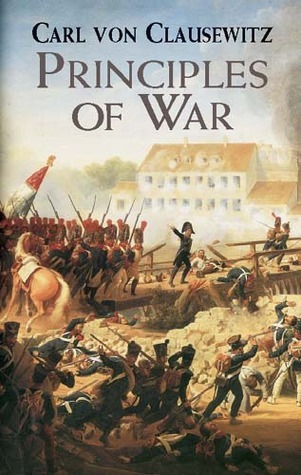
"Not simply the greatest but the only truly great book on war," declared historian Bernard Brodie of Principles of War. Written two centuries ago by a Prussian military thinker, this is the most frequently cited, the most controversial, and in many ways, the most modern book on warfare. Author Carl von Clausewitz fought against the armies of the French Revolution and Napoleon, served as a high-ranking staff officer, and became a prominent military educator. By his day, war had become a contest of mass armies, with results decided by swift, concentrated action and superior effort. "Victory is purchased by blood," Clausewitz proclaims, stating that total victory is assured only through annihilation of the enemy's forces. Based on the author's "thought and observation, philosophy and experience," Principles of War examines the moral and psychological aspects of warfare, stressing the necessity of such qualities as courage, audacity, and self-sacrifice and the importance of morale and public opinion. Clausewitz emphasizes the notion of strategy as an evolving plan, rather than a formula, a concept that makes this work adaptable to modern strategists in fields beyond military science. Translated into virtually every major language, Principles of War is required reading in intermediate-level and senior military schools, as well as in many civilian strategic studies programs and business schools.

This book was converted from its physical edition to the digital format by a community of volunteers. You may find it for free on the web. Purchase of the Kindle edition includes wireless delivery.

Throughout history, some books have changed the world. They have transformed the way we see ourselves and each other. They have inspired debate, dissent, war and revolution. They have enlightened, outraged, provoked and comforted. They have enriched lives and destroyed them. Now Penguin brings you the works of the great thinkers, pioneers, radicals and visionaries whose ideas shook civilization and helped make us who we are.

Among the enormous oeuvre of Clausewitz the best-known work, by far, is the unfinished magnum opus On War. His works include many excellent writings on military history, of which The Campaign of 1812 in Russia is, assuredly, the masterpiece. This book is a superb first-hand account and analysis of the military disaster of 1812 and the characters who played a significant role in it. An eyewitness and participant in the war, Clausewitz' writing remains the most serious source on that campaign. Napoleon's campaign of 1812 against Russia was a crucial event in the Napoleonic history. At the beginning of 1812, Napoleon was at the peak of his glory. On the eve of the Russian campaign the majority of European diplomats thought that Napoleon would emerge victorious. The campaign, however, proved to be disastrous for the French Grand Arme. The Battle of Borodino, with heavy causalities on both sides, was probably the hardest fought battle of the Napoleonic era. Victory at Borodino gained Napoleon entry to Moscow only to end in catastrophe and the retreat of the French army in fall of the same year. The campaign of 1812 against Russia marked the beginning of the end of Napoleon's rule in Europe.Clausewitz is more than a military historian in the traditional sense. His concrete and objective analysis enables him to appreciate the situation in all its political, diplomatic and military ramifications. The Russian Campaign of 1812 will be of interest to historians, political scientists, and students of military history and strategy.

Clausewitz, a Prussian General who fought in the Napoleonic Wars, is considered the founder of modern military strategy. This book is based on Vom Kriege, published in 1832 and translated into English in 1908. An important work of influence on American military strategists for more than a century, the present leadership consider it a primary text for our current wars.

War, Politics, and Power: Selections from On War, and I Believe and Profess
by Carl von Clausewitz
Rating: 3.7 ⭐
For the strategist - whether he's in business, the military, or any other competitive field of endeavor - here is the essence of the greatest military thinker in the world.Karl von Clausewitz (1780-1831) was a Prussian general and battlefield opponent of Napoleon (including on the retreat from Moscow). His book On War is the most famous and influential analysis of warfare and its principles ever written. As Colonel Harry G. Summers points out in his new foreword to this edition, it was the American military's failure to absorb Clausewitz's lessons that led to political and military catastrophe in Vietnam.This celebrated abridgement and translation by Colonel Edward M. Collins has since become a set military text and is credited by Colonel Summers with helping the American military achieve its smashing victory in the Persian Gulf. No student of war or strategy can ignore it, and no educated person's bookshelf can be without it.

This book at last makes available in English a penetrating exchange between two of history's most famous soldiers concerning the dramatic events of the Waterloo campaign of 1815. The Duke of Wellington is one of the greatest military commanders in British history; General Carl von Clausewitz is widely regarded as the greatest military thinker in the history of Western civilization. Both men had vast experience in the Napoleonic Wars, and both were prominent participants in the campaign. Wellington commanded the Anglo-Dutch-Belgian army; the much younger Clausewitz was chief-of-staff to Prussia's 3rd Corps. Wellington went on to become prime minister of Great Britain and commander-in-chief-for-life of the British Army. Clausewitz went on to author VOM KRIEGE (ON WAR), a seminal and still hotly debated treatise on the theory and philosophy of war. He also became the founder of modern, "scientific" military history, via the work of his disciple, military historian Hans Delbrück. Oddly, Clausewitz's study of the campaign of 1815 was never published in English, and Wellington's once-famous response to it has been strangely but studiously ignored by British military historians since 1914. Hence this book. It contains Wellington's initial battle report; Clausewitz's post-battle letters to his wife Marie; correspondence within Wellington's circle concerning Clausewitz's work; Clausewitz's strategic analysis of the entire campaign (not just the Battle of Waterloo); Wellington's memorandum in response; and enlightening essays by prominent experts on Clausewitz, Wellington, and the Battle of Waterloo. Major General [U.S. Army] David T. Zabecki, Ph.D., writes in the April 2011 edition of The Journal of Military "Long overdue, we now have two English translations of [Clausewitz's] The Campaign of 1815 [i.e., Peter Hofschröer's translation of Clausewitz's study and Bassford, Moran, and Pedlow's edition of the full Clausewitz-Wellington exchange]. Either of these volumes would be a welcome addition to the bookshelf of any serious student of military affairs, but On Clausewitz, Wellington, and the Campaign of 1815 is clearly the richer of the two." Napoleonic expert Bruno Colson wrote [in War in History 19(3)] that Pedlow “convincingly resurrects Wellington’s ideas and actions, and gives a final and excellent reply to the arguments of Peter Hofschröer, while remaining balanced, recognizing the latter’s merits and quoting him courteously. Waterloo ‘was neither a British victory nor a Prussian victory; it was an Allied victory,’ says Pedlow (p. 282). For Waterloo enthusiasts, this essay alone justifies buying the book.” Noted Clausewitz scholar Jon Sumida (U.Md) writes that "On Waterloo is essential reading for those seeking an understanding of Clausewitz’s distinctive approach to historical case study as the basis of practical knowledge of armed conflict. Clausewitz’s history of the campaign of 1815 incorporates methods of critical analysis explained in Book II of On War, which were addressed primarily to the observation and assessment of past cases of strategic and operational decision-making by commanders-in chief. The Bassford, Moran, and Pedlow edition provides a highly readable translation of a work previously accessible only in German that illustrates Clausewitz’s approach to the replication and evaluation of the experience of high command." The Christopher Bassford is Professor of Strategy at the National War College, in Washington, DC. Daniel Moran is Professor of National Security Affairs at the Naval Postgraduate School, in Monterey, CA. Gregory W. Pedlow is Chief of the Historical Office at NATO's Supreme Headquarters Allied Powers Europe (SHAPE), near Mons, Belgium.

The Battle of Waterloo has been studied and dissected so extensively that one might assume little more on the subject could be discovered. Now historian Peter Hofschröer brings forward a long-repressed commentary written by Carl von Clausewitz, the author of On War. Clausewitz, the Western world’s most renowned military theorist, participated in the Waterloo campaign as a senior staff officer in the Prussian army. His appraisal, offered here in an up-to-date and readable translation, criticized the Duke of Wellington’s actions. Lord Liverpool sent his translation of the manuscript to Wellington, who pronounced it a “lying work.” The translated commentary was quickly buried in Wellington’s private papers, where it languished for a century and a half. Now published for the first time in English, Hofschröer brings Clausewitz’s critique back into view with thorough annotation and contextual explanation. Peter Hofschröer, long recognized as a leading scholar of the Napoleonic Wars, shows how the Duke prevented the account’s publication during his lifetime—a manipulation of history so successful that almost two centuries passed before Clausewitz’s work reemerged, finally permitting a reappraisal of key events in the campaign. In addition to translating and annotating Clausewitz’s critique, Hofschröer also includes an order of battle and an extensive bibliography.

Carl von Clausewitz (1780-1831) is best known for his masterpiece of military theory On War, yet that work formed only the first three of ten volumes of his published writings. The others, historical analyses of the wars that roiled Europe from 1789 through 1815, informed and shaped Clausewitz's military thought, so they offer invaluable insight into his dialectical, often difficult theoretical masterwork.Among these historical works, perhaps the most important is Napoleon's 1796 Italian Campaign, which covers a crucial period in the French Revolutionary Wars. During this campaign the young, largely unknown Corsican, in his first command, led the French Army to triumph over the superior forces of the Austrian and Sardinian Armies. Moving from strategy to battle scene to analysis, this first English translation nimbly conveys the character of Clausewitz's writing in all its registers: the brisk, often powerful description of events as they unfolded; the critical reflections on strategic theory and its implications; and, most bracing, the dissection and sharp judgment of the actions of the French and Austrian commanders.From the thrill of the Battle of Montenotte--the youthful Bonaparte's first offensive--to the remorseless logic of Clausewitz's assessments, Napoleon's 1796 Italian Campaign will expand readers' experience and understanding of not only this critical moment in European history but also the thought and writings of the modern master of military philosophy.

Carl von Clausewitz's major theoretical work, On War, has retained its freshness and relevance since it first appeared 160 years ago. Clausewitz was also a wide-ranging, innovative historian--his acerbic history of Prussia before 1806 became an underground classic long before it could be published--and a combative political essayist, whose observations on the affairs of Germany and Europe combine social egalitarianism with a nearly Bismarckian Realpolitik. In this companion volume to On War, the editors bring together Clausewitz's political writings and a selection of his historical works--material that is fascinating in its own right, important as a commentary on his theories of war, and a valuable source for understanding European ideas and attitudes during and after the Napoleonic era. None of these works has previously appeared in English, with one exception, which was published in a corrupt, censored text that has now been restored to its original form. The editors have contributed introductions for the historical and for the political parts of the volume, as well as brief introductions to the individual selections. Their analyses and the texts themselves reveal Clausewitz to be an exceptionally independent observer both of the past and of his own times, whose outlook is distinguished by an unideological pragmatism and a keen sense of the possibilities and shortcomings of state power.Originally published in 1992.The Princeton Legacy Library uses the latest print-on-demand technology to again make available previously out-of-print books from the distinguished backlist of Princeton University Press. These editions preserve the original texts of these important books while presenting them in durable paperback and hardcover editions. The goal of the Princeton Legacy Library is to vastly increase access to the rich scholarly heritage found in the thousands of books published by Princeton University Press since its founding in 1905.

Rédigé en 1812 pour la formation militaire du prince de Prusse, ce manuel condense en quelques dizaines de pages les thèses du monumental traité De la guerre.À son élève, Clausewitz (1780-1831) offre une véritable préparation mentale au combat : avant de se battre vraiment, l'apprenti stratège doit s'armer conceptuellement et s'aguerrir par la méditation. Qu'est-ce qu'une tactique ? Un plan de bataille ? Un but de guerre ? L'officier prussien qui combattit contre la Grande Armée insiste de façon étonnamment moderne sur la dimension psychologique du conflit, accordant une grande place à l'opinion publique et soulignant la nécessité de l'audace, de la fermeté et de la ruse face à l'incertitude et au brouillard de la guerre effective.

A través de la amenidad que ofrece el formato manga, el lector se adentrará en el inextricable mundo de los conflictos bélicos, hallando respuestas en la complejidad de causas y consecuencias que acarrean las guerras."De la guerra", clásico referente en literatura de guerra, habla de forma realista sobre los conflictos bélicos y critica los enfoques sentimentalistas del siglo XIX por los que se pretendía disfrazar la realidad. El autor, definiendo la guerra como "un acto de fuerza que se lleva a cabo para obligar al adversario a acatar nuestra voluntad", defiende que siempre hay un objetivo político como causa primera y que no responde a un hecho aislado. A través de la voz del personaje de Clausewitz, el lector encontrará en este manga una profunda reflexión y análisis de uno de los acontecimientos más recurrentes que han existido des de los inicios de la humanidad, las guerras, y que, desgraciadamente, forman parte inherente de la cultura humana y universal.

Succinct edition of the influential work, from its observations on the nature and theory of warfare to its outlines of strategic moral force and military virtues, duration and decision of combat, effects of victory and retreat, tactics of offense and defense, planning, and wartime politics.


General Carl Von Clausewitz was the military mastermind that defeated Napoleon. His abilities for strategy were incredibly efficient. His understanding of War proved to be superior to any other general of his time, something that makes his collection of books an integral part of military academies worldwide to this day. "On War" is a collection of eight books with hundreds of pages of which we present you here the first and second book together for easier reading and study. This is an official edition without censorship or changes to the original text, translated by Colonel James J. Graham (Translator, British Army)

The seemingly endless wars in Iraq and Afghanistan have renewed the age-old debate over what constitutes military victory. Will the withdrawal of troops from Iraq and Afghanistan be seen as a sign of victory or defeat? Although the nature of warfare has changed dramatically since Clausewitz's On War was first written, this selection from his classic work remains an invaluable source of insight for understanding what it means to achieve victory in war and how to recognize defeat. Princeton Shorts are brief selections excerpted from influential Princeton University Press publications produced exclusively in eBook format. They are selected with the firm belief that while the original work remains an important and enduring product, sometimes we can all benefit from a quick take on a topic worthy of a longer book. In a world where every second counts, how better to stay up-to speed on current events and digest the kernels of wisdom found in the great works of the past? Princeton Shorts enables you to be an instant expert in a world where information is everywhere but quality is at a premium. On Victory and Defeat does just that.

General Carl Von Clausewitz was the military mastermind that defeated Napoleon. His abilities for strategy were incredibly efficient. His understanding of War proved to be superior to any other general of his time, something that makes his collection of books an integral part of military academies worldwide to this day. "On War" is a collection of eight books with hundreds of pages of which we present you here the third and fourth book together for easier reading and study. This is an official edition without censorship or changes to the original text, translated by Colonel James J. Graham (Translator, British Army).

General Carl Von Clausewitz was the military mastermind that defeated Napoleon. His abilities for strategy were incredibly efficient. His understanding of War proved to be superior to any other general of his time, something that makes his collection of books an integral part of military academies worldwide to this day. "On War" is a collection of eight books with hundreds of pages of which we present you here the fifth and sixth books together for easier reading and study. This is an official edition without censorship or changes to the original text, translated by Colonel James J. Graham (Translator, British Army).

General Carl Von Clausewitz was the military mastermind that defeated Napoleon. His abilities for strategy were incredibly efficient. His understanding of War proved to be superior to any other general of his time, something that makes his collection of books an integral part of military academies worldwide to this day. "On War" is a collection of eight books with hundreds of pages of which we present you here the final seventh and eighth books together for easier reading and study. This is an official edition without censorship or changes to the original text, translated by Colonel James J. Graham (Translator, British Army).
. with dw, 1967, 237pp

Carl Philipp Gottfried von Clausewitz was a Prussian soldier and German military theorist who stressed the moral and political aspects of war. His most notable work, Vom Kriege (On War), was unfinished at his death.Clausewitz espoused a romantic and Hegelian conception of warfare, though he also had at least one foot planted firmly in the more rationalist ideas of the European Enlightenment. He stressed the dialectic of how opposite factors interact, noting how unexpected developments unfolding under the "fog of war" called for rapid decisions by alert commanders. He saw history as a complex check on abstractions that did not accord with experience. In opposition to Antoine-Henri Jomini he argued war could not be quantified or graphed or reduced to mapwork and graphs. Clausewitz had many aphorisms, of which the most famous is "War is the continuation of policy by other means," a description that has won wide acceptance

Paris. 1976. Champ Libre. 22x13. 171p.

Selection from "On War". "Principles Of War"В своей книге автор всесторонне рассматривает природу войны, подчеркивая решающее значение военного гения в исходе сражения. Четко и ясно излагая важность плана войны, взаимосвязь войны и политики, стратегию и тактику ведения войны, включая организацию боя, виды и способы наступления и обороны.Клаузевиц определяет и поясняет термины профессионального военного языка, что придает его книге характер превосходного справочного руководства. Отводя значительную часть книги оценке моральных факторов ведения войны, он подчеркивает необходимость таких качеств, как мужество, отвага и самопожертвование, обращает внимание на важность армейского кодекса чести, боевого духа и общественного мнения.ОглавлениеПредисловиеИз книги «О войне»Глава 1О природе войныВоенный генийОпасность и напряжение сил во время войныИнформация во время войныПрепятствия и помехи на войнеГлава 2О теории ведения войныВетви военного искусстваТеория ведения войныМоральные качества на войнеГлава 3О стратегии в общемСтратегия (определение)Моральные качества и воинская доблестьХрабростьЧисленное превосходствоВнезапностьСосредоточение сил в пространстве и времениСтратегический резервЭкономия силО временном прекращении военных действийНапряжение и передышкаБойО значении бояПродолжительность бояИсход бояГенеральное сражениеВлияние победыСтратегическое значение победыОтступление после проигранной битвыГлава 4Наступление и оборонаПонятие обороныНаступление и оборона в тактикеНаступление и оборона в стратегииХарактер стратегической обороныПартизанская войнаБолее определенные цели в войнеГлава 5План войныВзаимозависимость участников войныО значении движущих мотивов в войнеГлава 6Война и политикаГлава 7ЗаключениеЧто такое война?Цели и средства в войнеПринципы ведения войныГлава 1Общие принципы ведения войныГлава 2Тактика, или теория бояОбщие принципы обороныОбщие принципы наступленияПринципы управления войскамиПринципы использования местностиГлава 3СтратегияГлавные принципыОборонаНаступлениеГлава 4О применении изложенных принципов во время войны

У цїй книзі автор докладно розглядає природу війни, наголошуючи на вирішальній ролі військового генія в результаті битви. Чітко викладаючи важливість планування війни, взаємозв’язок війни та політики, стратегію і тактику ведення війни, зокрема організацію бою, види та способи наступу й оборони, Клаузевіц визначає та розкриває базові принципи ведення війни, що надає його книзі характеру чудового довідкового посібника.Оцінюючи моральні чинники ведення війни, автор акцентує увагу на необхідності таких якостей, як мужність, відвага та самопожертва, а також на важливості армійського кодексу честі, бойового духу та громадської думки.Пропонована книга стане в пригоді і як джерело воєнної мудрості, і як практичний посібник із тактики та стратегії воєнних дій.

Carl von Grundgedanken über Krieg und Kriegführung Edition Holzinger. Taschenbuch Berliner Ausgabe, 2016 Vollständiger, durchgesehener Neusatz bearbeitet und eingerichtet von Michael Holzinger Herausgeber der Michael Holzinger Viktor Harvion Umschlaggestaltung unter Verwendung des Karl Wilhelm Wach, Carl von Clausewitz Gesetzt aus der Minion Pro, 11 pt.

Essential On War for Business: The Classic Work by Carl von Clausewitz for Business Today
by Carl von Clausewitz
Rating: 2.8 ⭐
Boardroom lessons from a master strategist.The Prussian general Carl von Clausewitz’s On War has, alongside Sun Tzu’s Art of War, long been recognized as the most definitive classic on the art, theory and principles of warfare. This new, compact adaptation of Clausewitz's vast treatise presents in carefully selected, focused yet accessible sections all the key lessons from the battlefield needed to succeed in the twenty-first-century world of business.The unpredictability of war is not too different from constantly changing economic conditions. Just as the army general needs to understand and implement the asymmetrical relationship between attack and defence, the business leader, too, needs to plan for all contingencies. Clausewitz’s philosophy, encompassing every aspect of strategic thinking – dealing with defeat, planning a campaign, using the element of surprise, and marshalling resources at hand – speaks simply and clearly to every business practitioner.

Hinterlassene Werke Über Krieg und Kriegführung, Vol. 1: Vom Kriege, Erster Theil (Classic Reprint)
by Carl von Clausewitz
Rating: 4.0 ⭐
Excerpt from Hinterlassene Werke Über Krieg und KriegführungGB mirh mit %r«hi befremhen, hab eine weibliche à anh eà wagt, ein %cri von foi1hem 3nhali, mir ha8 vorliegenhe mit einer orrehe an begleiten. 8ür meine %reunhe beharf eà hierüber feiner @rflärnng, aber auch in hen äugen herer, hie mich nicht irnnen hoffe ich hunh hie einfache («ergähinng hefien, maà mid; hagn naanigfife iehen @chein einer 9inmafinng von mit 311 fernen.

L'offensiva è l'elemento fondamentale della guerra. Lo dimostra in queste pagine un grandissimo teorico dell'arte militare, forse il più grande di tutti, Carl von Clausewitz. Questa antologia di brani tratti dal suo celeberrimo trattato "Della guerra", curata da uno dei massimi studiosi di storia militare, Gastone Breccia, è dedicata principalmente alle strategie offensive, sui campi di battaglìa e nella vita. Perché tutti noi siamo come piccoli Stati, determinati a raggiungere i nostri obiettivi anche a costo di metterci in contrasto con altri individui. E spesso ci troviamo costretti a "muovere guerra": è indispensabile tenere presenti allora le regole fondamentali che rispecchiano la natura stessa dei conflitti. Qui si rivelano tutta la genialità e l'attualità del grande teorico prussiano di inizio Ottocento. Nessuno ha saputo analizzare l'essenza e i caratteri della guerra con tale profondità, ed è per questo che leggere il suo testo, dopo duecento anni e in un mondo socialmente, politicamente e tecnologicamente così diverso, è di estremo interesse non solo per gli specialisti ma per chiunque si trovi a misurarsi con una situazione conflittuale. Il che, prima a poi, capita davvero a tutti.

L'art de la stratégie: Principes fondamentaux de stratégie et de tactique militaire
by Carl von Clausewitz
Rating: 3.5 ⭐
Mort en 1831 après avoir succombé au choléra, le Général Carl von Clausewitz laissa derrière lui une oeuvre monumentale, non achevée, qui lui valut une reconnaissance posthume sur le plan international. À l'origine, sa Théorie de la grande Guerre (Vom Kriege) devait comporter dix volumes. A l'instar d'un Sun Tzu ou d'un Machiavel, le texte de Clausewitz dépasse largement le cadre militaire et se lit comme un véritable traité de philosophie dont les enseignements ont fortement marqué les esprits dans différents domaines des sciences humaines, que ce soit chez les spécialistes de politique, de sociologie ou, plus récemment, de stratégie économique. Clausewitz y perçoit notamment la guerre, non comme une fin en soi, mais un moyen, comme un « art » qui possède dans tous les cas de figures une dimension politique qui ne doit pas être éludée au risque d'en perdre l'essentiel. Les pages qui suivent constituent la première partie du Volume 1 de sa Théorie de la Grande Guerre et abordent la question de la stratégie d'un point de vue général, fragment de l'oeuvre du Général Prussien que nous avons estimé être révélateur de cette approche si singulière qui permet à ces écrits, encore aujourd'hui, d'être étudiés dans les manuels scolaires.

The Masterminds of Warcraft
by Carl von Clausewitz
E-artnow presents to you the most important books on military organization, the art of war, movements of armies, decision-making, leadership and most important of all - the The Book of War (Wu Qi) The Art of War (Sun Tzu) The The Book of Leadership (Confucius) The Ancient Indian Book on Wisdom and Strategy (Kautilya) The Manual of Military Tactics (Sextus Julius Frontinus) De re Organization of the Roman Army and Battle Tactics (Publius Vegetius Renatus) The Art of War (Niccolò Machiavelli) On War (Carl von Clausewitz) Maxims of War (Napoleon Bonaparte) Battle Studies (Ardant du Picq) Guerrilla Warfare (Ernesto Che Guevara) Small Wars The Strategy of Military Operations (US Marine Corps)

The Art of Warfare – Anthology
by Carl von Clausewitz
E-artnow presents to you this meticulously edited collection of the greatest military strategy books in On War (Carl von Clausewitz) Maxims of War (Napoleon Bonaparte) Battle Studies (Ardant du Picq) Guerrilla Warfare (Ernesto Che Guevara) The Book of War (Wu Qi) The Art of War (Sun Tzu) The The Book of Leadership (Confucius) The Ancient Indian Book on Wisdom and Strategy (Kautilya) The Manual of Military Tactics (Sextus Julius Frontinus) De re Organization of the Roman Army and Battle Tactics (Publius Vegetius Renatus) The Art of War (Niccolò Machiavelli) Small Wars The Strategy of Military Operations (US Marine Corps)

The Strategy of Warfare – Boxed Set
by Carl von Clausewitz
The Strategy of Warfare – Boxed Set' immerses readers in a comprehensive exploration of military strategy across cultures and epochs. This anthology showcases a remarkable array of literary styles, from the venerable wisdom of Sun Tzu's 'The Art of War' to the revolutionary fervor of Che Guevara's guerrilla warfare tactics. The collection spans ancient philosophies, medieval tactics, and modern doctrines, reflecting the evolution and diversity of military thought. The inclusion of works by figures like Carl von Clausewitz and Niccolò Machiavelli highlights significant contributions to strategic thinking, positioning this anthology at the confluence of history, philosophy, and military science. The authors and editors, each a titan in their field, bring a wealth of experience and perspective. From Confucius' ancient wisdom to the tactical genius of Napoleon Bonaparte and the strategic acumen of the US Marine Corps, these contributors have shaped the course of military history. Their collective works, deeply rooted in varying cultural and historical contexts, offer a rich tapestry of thought that has influenced not only military strategy but also global political dynamics. This anthology aligns with critical historical and cultural movements, encapsulating the strategic philosophies that have guided empires and nations. 'The Strategy of Warfare – Boxed Set' is an indispensable resource for students, scholars, and enthusiasts of military strategy. It offers a unique opportunity to engage with the minds of history's great strategists, providing a broad spectrum of perspectives on warfare and strategy. This collection is not only an educational treasure trove but also a catalyst for further thought and discussion on the complexities of conflict and the art of war. Readers are encouraged to delve into this collection to enhance their understanding of military strategy through the lens of varied and pivotal viewpoints.

The Art of War - Book Set
by Carl von Clausewitz
The 'Art of War - Book Set' is a compendium that transcends time and place, weaving together an extraordinary tapestry of militaristic philosophy from a spectrum of the globe's most influential strategists. Within its pages, readers will uncover a diverse array of literary styles, from the grounded, poignant treatises of Carl von Clausewitz to the timeless aphorisms of Sun Tzu. This collection is not only significant for its variety but for the thematic threads of strategy, power, and conflict resolution that bind these works together, offering standout pieces rooted in different epochs yet remarkably cohesive in their examination of warfare and strategy. The illustrious roster of authors represented in this anthology brings together figures from varied backgrounds and eras, ranging from ancient philosophers like Confucius to revolutionary leaders such as Ernesto Che Guevara. Each contributor has left an indelible mark on the understanding and conduct of war, with their works collectively tracing the evolution of military strategy across historical, cultural, and literary movements. This anthology not only showcases the individual brilliance of these strategists but also highlights the cumulative wisdom that has shaped military thought across centuries. This anthology is recommended for those keen on exploring the strategic mindsets that have shaped warfare and conflict resolution throughout history. 'The Art of War - Book Set' offers readers a unique opportunity to delve into a broad spectrum of military thought and theory, presenting a comprehensive understanding of war's art and science. Engaging with this collection promises not only educational enrichment but also a deeper appreciation for the nuanced dialogue between these seminal works, making it a vital addition to the libraries of scholars, strategists, and enthusiasts alike.