
Richards J. Heuer Jr.
Richards "Dick" J. Heuer, Jr. is a former CIA veteran of 45 years and most known for his work on analysis of competing hypotheses and his book, Psychology of Intelligence Analysis.
9 Books Written

2018 Reprint of 1999 Edition. Full facsimile of the original edition. Not reproduced with Optical Recognition software. This volume pulls together and republishes, with some editing, updating, and additions, articles written during 1978-86 for internal use within the CIA Directorate of Intelligence. The information is relatively timeless and still relevant to the never-ending quest for better analysis. The articles are based on reviewing cognitive psychology literature concerning how people process information to make judgments on incomplete and ambiguous information. The essays selected are the most relevant to intelligence analysis and most in need of communication to intelligence analysts. The articles are intended to help the intelligence analysts understand and interpreted the issues that most intelligence analysts face.
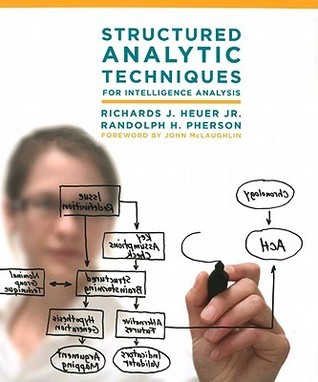
Richards J. Heuer Jr. and Randolph H. Pherson turn a lifetime of expertise toward formalizing, adapting, and standardizing a set of 50 of the most robust analytic techniques in use in intelligence analysis today. This ready reference showcases current and cutting-edge best practices and represents a significant leap forward in depth, detail, and utility from existing handbooks. Logically organized and richly illustrated, Structured Analytic Techniques makes it easy to navigate, reference, and put the tools to use right away. Each technique is clearly and systematically when to use, value added, the method, potential pitfalls, examples of how it can be used, its relationship to other techniques, and its origins.THE TECHNIQUESGetting Started ChecklistCustomer ChecklistIssue RedefinitionChronologies and TimelinesSortingRanking, Scoring, PrioritizingMatricesNetwork AnalysisMind Maps and Concept MapsProcess Maps and Gantt ChartsStructured BrainstormingVirtual BrainstormingNominal Group TechniqueStarburstingCross-Impact MatrixMorphological AnalysisQuadrant CrunchingBasic Scenario AnalysisAlternative Futures AnalysisMultiple Scenario GenerationIndicatorsIndicators ValidatorSimple HypothesisMultiple Hypotheses GeneratorQuadrant Hypothesis GenerationDiagnostic ReasoningAnalysis of Competing HypothesesArgument MappingDeception DetectionKey Assumptions CheckStructured AnalogiesRole PlayingRed Hat AnalysisOutside-In ThinkingPolicy Outcomes Forecasting ModelPrediction MarketsPremortem AnalysisStructured Self-CritiqueWhat If? AnalysisHigh Impact/Low Probability AnalysisDevil’s AdvocacyRed Team AnalysisDelphi MethodAdversarial CollaborationStructured DebateComplexity ManagerDecision MatrixForce Field AnalysisPros-Cons-Faults-and-FixesSWOT Analysis

Rethinking Intelligence: Richards J. Heuer Jr.'s Life of Public Service
by Richards J. Heuer Jr.
Rating: 5.0 ⭐
Heuer’s career as a civil servant stands out because his contributions to the profession spanned many disciplines reflecting his work as a case officer, counterintelligence expert, analytic methodologist, and security specialist. Filled with unexpected and memorable anecdotes, this fascinating read begins with Heuer’s recruitment to work at the Central Intelligence Agency and traces his career to the present day. Interspersed throughout the memoir are a dozen telling narratives taken from his childhood, his student days at Williams College, and his service in the Army in Korea. Readers of this memoir will The stories behind ground-breaking contributions Heuer made to the field of intelligence + The creative process that went into creating two Intelligence Community “bibles”: Psychology of Intelligence Analysis and Structured Analytic Techniques for Intelligence Analysis + How Heuer was compelled by the vagaries of the infamous Nosenko case to develop the Analysis of Competing Hypotheses method + How the work of an Israeli colleague spurred him to explore the implications of cognitive bias for intelligence analysis + How structured analytic techniques emerged as a new domain in intelligence analysis

Quantitative Approaches to Political Intelligence: The CIA Experience
by Richards J. Heuer Jr.
Rating: 5.0 ⭐

Technological, Social, and Economic Trends That Are Increasing U.S. Vulnerability to Insider Espionage
by Richards J. Heuer Jr.
Abstract : This study explores ten technological, social, and economic trends in the United States and globally that are serving to increase opportunity and motivation for espionage. Findings suggest that American insiders have an unprecedented level of access to classified and proprietary information due to technological advances in information storage and retrieval. American employees have greater opportunity to establish contact with foreign entities and to transfer information to them through traveling internationally more often and by participating in international research and business ventures more frequently. Internet use is expanding globally and computer-users are becoming more culturally and linguistically diverse. The Internet can now be used to transmit massive amounts of digitized information to multiple foreign parties simultaneously. Finally, the market for U.S. information is expanding. American insiders can sell more types of information to a broader range of foreign buyers than ever before. In addition to these new opportunities for espionage, American employees are more often encountering situations that can provide motivation for this crime. More insiders are experiencing financial problems and gambling addiction, both of which can provide impetus for workplace theft. Loyalty to organizations is diminishing and a greater proportion of American workers are at risk for becoming disgruntled. A growing number of insiders have emotional and financial ties to other countries. Under some circumstances, insiders with loyalties to other peoples may be less inclined to view espionage as morally wrong. It is possible that some insiders with a global orientation to world affairs will view espionage as morally justifiable if they feel that sharing information will benefit the world community or prevent armed conflict.

Compulsive Gambling: Background Information for Security Personnel
by Richards J. Heuer Jr.
PREFACE Gambling is becoming more important as a security issue. Investigators, polygraphers, adjudicators and managers involved in the security clearance process need a good perspective on what is going on in society as a whole, what is common and what is uncommon. Gambling behavior receives minimal mention in personnel security adjudication guidelines listed in Appendix I of the DoD Personnel Security Program, DoD 5200.2-R, and in the Director of Central Intelligence Directive Number 1/14, Minimum Personnel Security Standards and Procedures Governing Eligibility for Access to Sensitive Compartmented Information. Yet, as this report shows, compulsive gambling is particularly important as our society is undergoing dramatic change in the prevalence of gambling and in attitudes toward gambling. The value of this report will be to precipitate a review of adjudication and investigative policies and procedures relating to compulsive gambling and to provide information for integrating the results into training programs. The report will also be helpful to counselors in employee assistance programs. This is the third in a series of studies of behaviors that raise questions about personnel secur.ty and suitability. Previous studies dealt with alcohol use and abuse and with financial irresponsibility. Future studies will deal with nonconforming sexual behavior, criminal behavior, and drug abuse. These reports are part of the research agenda recommended by the 1985 Stilwell Commission Report, Keeping the Nation's Secrets, a Report to the Secretary of Defense by the Commission to Review DoD Security Policies and Practices. The report was prepared by the Central Intelligence Agency using the support facilities and assistance of the Defense Personnel Security Research Center, and it is being disseminated by both organizations.

Drug Use and Abuse: Background Information for Security Personnel
by Richards J. Heuer Jr.
PREFACE This report provides background information for investigators, polygraphers and adjudicators who make judgments relating to illegal or improper drug use by cleared employees or applicants. It will also be helpful in developing training programs. setting standards and policies, and in documenting the basis for security concern with drug use. report may be useful to counselors in employee assistance programs. This is the sixth in a series of studies of behaviors that raise questions about personnel security and suitability. Previous studies dealt with alcohol use and abuse, financial irresponsibility, compulsive gambling, crime, and sexual behavior. These reports are pan of the research agenda recommended by the 1985 Stilwell Commission Report, Keeping the Nation's Secrets: A Report to the Secretary of Defense by the Commission to Review DoD Security Policies and Practices. This review and synthesis of the unclassified research literature does not make policy recommendations, nor does it necessarily represent the views of the U.S. Government. Individual managers and supervisors should judge the significance of the information for their activities and communicate appropriate guidance to their personnel. This report was prepared for the Central Intelligence Agency with support and assistance from the Defense Personnel Security Research Center, and it is being disseminated by both organizations. Descriptors : *SECURITY PERSONNEL , *DRUG USERS , POLICIES , STANDARDS , DRUG ABUSE , ROLES(BEHAVIOR) , INTERPERSONAL RELATIONS , BACKGROUND , JUDGEMENT(PSYCHOLOGY)

Multidisciplinary Perspectives on Military Deception
by Richards J. Heuer Jr.
Abstract : Investigators from a variety of scientific and social scientific disciplines report results of a group research effort into the nature of military strategic deception. Seven essays are included. Basic concepts which define strategic deception and its variants are identified and the process of deception is analyzed using evidence from the recent past. Deception is found to be reliably advantageous to those who attempt it despite its susceptibility to unforseen contingencies. Psychological biases of individuals and characteristics of organizations are identified which may lend themselves to being deceived. Feedback is identified as a key element in successful deception. Communications theory, game theory, and systems theory are applied to deception to clarify the elements of a theory of deception. Recommendations for countering deception and for further research in the area are made.

Alcohol Use and Abuse: Background Information for Security Personnel
by Richards J. Heuer Jr.
Abstract : This study of alcohol abuse and alcoholism as it relates to personnel security is prepared as background information for policy makers, adjudicators, investigators, and researchers. It discusses the relationships between alcohol use and personnel security, the prevalence of alcohol use and abuse, indicators of alcohol dependence and abuse, the relationships of alcohol problems to other forms of problem behavior, and treatment effectiveness and relapse rates. About 10% of adult Americans have a serious alcohol problem. Excessive alcohol consumption may impair judgement and increase the risk of accidental, careless or even deliberate disclosure of classified information. Motivation for using alcohol or any other drug is one of the most potent predictors of future use or problems with that drug. If the motivation is experimentation, peer pressure, or adolescent rebelliousness, this does not necessarily lead to future abuse. To the extent that alcohol is used as a means of coping with life's problems, such as stress or low self-esteem, then one can expect that the alcohol consumption itself may eventually become a source of future problems. Solitary drinking is far more predictive of future problems than social drinking. So is drinking prior to social events (to relax), as compared with alcohol use at social events.