Loading genres...
Explore the best books about Germany genre.

When Voluptuous Panic: The Erotic World of Weimar Berlin first appeared in the fall of 2000, it inspired wide acclaim and multiple printings. Anticipating the expanded edition, Feral House placed Voluptuous Panic out of print, and for the past year buyers paid as much as $460 to online sellers for a used copy.This sourcebook of hundreds of rare visual delights from pre-Nazi, Cabaret-period “Babylon on the Spree” has the distinction of being praised both by scholars and avatars of contemporary culture, inspiring hip clubgoers, filmmakers, gay historians, graphic designers, and musicians like the Dresden Dolls and Marilyn Manson.Voluptuous Panic’s expanded edition includes the new illustrated chapter, “Sex Magic and the Occult,” documenting German pagan cults and their bizarre erotic rituals, including instructions for entering into the “Sexual Fourth Dimension.” The deluxe hardcover edition also includes sensational accounts of hypno-erotic cabaret acts, Berlin Fetish prostitution (“The Boot Girl Visit”), gay life (“A Wild-Boy Initiation!”), descriptions and illustrations of Aleister Crowley’s Berlin OTO Secret Society, and sex crime (“the Curious Career and Untimely Death of Fritz Ulbrich”).

Named one of the "100 Best Books of the Decade" by The Times of London "Oh my human brothers, let me tell you how it happened." A former Nazi officer, Dr. Maximilien Aue has reinvented himself, many years after the war, as a middle-class family man and factory owner in France. An intellectual steeped in philosophy, literature, and classical music, he is also a cold-blooded assassin and the consummate bureaucrat. Through the eyes of this cultivated yet monstrous man we experience in disturbingly precise detail the horrors of the Second World War and the Nazi genocide of the Jews. Eichmann, Himmler, Göring, Speer, Heydrich, Höss—even Hitler himself—play a role in Max's story. An intense and hallucinatory historical epic, The Kindly Ones is also a morally challenging read. It holds a mirror up to humanity—and the reader cannot look away.

The final novel of Hermann Hesse, The Glass Bead Game is a fascinating tale of the complexity of modern life as well as a classic of modern literature.Set in the twenty-third century, The Glass Bead Game is the story of Joseph Knecht, who has been raised in Castalia, the remote place his society has provided for the intellectual elite to grow and flourish. Since childhood, Knecht has been consumed with mastering the Glass Bead Game, which requires a synthesis of aesthetics and philosophy, which he achieves in adulthood, becoming a Magister Ludi (Master of the Game).

When Money Dies is the classic history of what happens when a nation’s currency depreciates beyond recovery. In 1923, with its currency effectively worthless (the exchange rate in December of that year was one dollar to 4,200,000,000,000 marks), the German republic was all but reduced to a barter economy. Expensive cigars, artworks, and jewels were routinely exchanged for staples such as bread; a cinema ticket could be bought for a lump of coal; and a bottle of paraffin for a silk shirt. People watched helplessly as their life savings disappeared and their loved ones starved. Germany’s finances descended into chaos, with severe social unrest in its wake.Money may no longer be physically printed and distributed in the voluminous quantities of 1923. However, “quantitative easing,” that modern euphemism for surreptitious deficit financing in an electronic era, can no less become an assault on monetary discipline. Whatever the reason for a country’s deficit necessity or profligacy, unwillingness to tax or blindness to expenditure it is beguiling to suppose that if the day of reckoning is postponed economic recovery will come in time to prevent higher unemployment or deeper recession. What if it does not? Germany in 1923 provides a vivid, compelling, sobering moral tale.

In this highly original book, a bestseller in Germany, Norman Ohler investigates the murky, chaotic world of drug use in the Third Reich. There have been other books on Dr Morell's cocktail of treatments for Hitler and Goering's reliance on drugs, but Ohler's book is the first to show how the entire Nazi regime was permeated with drugs - cocaine, heroin, morphine and methamphetamines, the last of these crucial to troops' resilience and partly explaining German victory in 1940. Ohler is explicit that drugs cannot explain Third Reich ideology, but their promiscuous use impaired and confused decision-making, with drastic effects on Hitler and his entourage, who, as the war turned against Germany, took refuge in ever more poorly understood cocktails of stimulants. This chemical euphoria changes how we should think about the Nazi high command and its ability to understand the situation it found itself in by 1944-45. As such Blitzed will force a wider reinterpretation of several key events during the Second World War.

This is a remarkable book about a man (perhaps the most important and original philosopher of our age), a society (the corrupt Austro-Hungarian Empire on the eve of dissolution), and a city (Vienna, with its fin-de siecle gaiety and corrosive melancholy). The central figure in this study of a crumbling society that gave birth to the modern world is Wittgenstein, the brilliant and gifted young thinker. With others, including Freud, Viktor Adler, and Arnold Schoenberg, he forged his ideas in a classical revolt against the stuffy, doomed, and moralistic lives of the old regime. As a portrait of Wittgenstein, the book is superbly realized; it is even better as a portrait of the age, with dazzling and unusual parallels to our own confused society. Allan Janik and Stephen Toulmin have acted on a striking premise: an understanding of prewar Vienna, Wittgenstein s native city, will make it easier to comprehend both his work and our own problems .This is an independent work containing much that is challenging, new, and useful. New York Times Book Review."

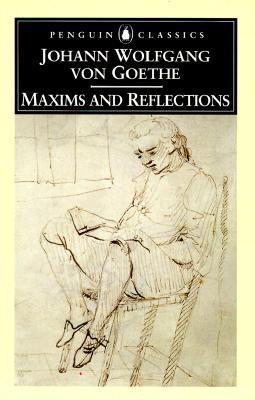
Goethe was probably the last true ‘Renaissance Man’. Although employed as a Privy Councillor at the Duke of Weimar’s court, where he helped oversee major mining, road-building and irrigation projects, he also painted, directed plays, carried out research in anatomy, botany and optics — and still found time to produce masterpieces in every literary genre. His 1,413 maxims and reflections reveal not only some of his deepest thought on art, ethics, literature and natural science, but also his immediate reactions to books, chance encounters or his administrative work. With a freshness and immediacy which vividly conjure up Goethe the man, they make an ideal introduction to one of the greatest of European writers.

Hailed for its coiled eroticism and the moral claims it makes upon the reader, this mesmerizing novel is a story of love and secrets, horror and compassion, unfolding against the haunted landscape of postwar Germany.When he falls ill on his way home from school, fifteen-year-old Michael Berg is rescued by Hanna, a woman twice his age. In time she becomes his lover—then she inexplicably disappears. When Michael next sees her, he is a young law student, and she is on trial for a hideous crime. As he watches her refuse to defend her innocence, Michael gradually realizes that Hanna may be guarding a secret she considers more shameful than murder.

The Battle of Stalingrad was not only the psychological turning point of World War II: it also changed the face of modern warfare. Historians and reviewers worldwide have hailed Antony Beevor's magisterial Stalingrad as the definitive account of World War II's most harrowing battle. In August 1942, Hitler's huge Sixth Army reached the city that bore Stalin's name. In the five-month siege that followed, the Russians fought to hold Stalingrad at any cost; then, in an astonishing reversal, encircled and trapped their Nazi enemy. This battle for the ruins of a city cost more than a million lives. Stalingrad conveys the experience of soldiers on both sides, fighting in inhuman conditions, and of civilians trapped on an urban battlefield. Antony Beevor has interviewed survivors and discovered completely new material in a wide range of German and Soviet archives, including prisoner interrogations and reports of desertions and executions. As a story of cruelty, courage, and human suffering, Stalingrad is unprecedented and unforgettable.

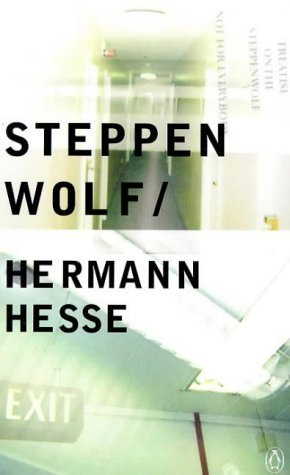
Steppenwolf is a poetical self-portrait of a man who felt himself to be half-human and half-wolf. This Faust-like and magical story is evidence of Hesse's searching philosophy and extraordinary sense of humanity as he tells of the humanization of a middle-aged misanthrope. Yet his novel can also be seen as a plea for rigorous self-examination and an indictment of the intellectual hypocrisy of the period. As Hesse himself remarked, "Of all my books Steppenwolf is the one that was more often and more violently misunderstood than any of the others".

This remarkably ambitious book tells the story of the great social and political catastrophe that enveloped Europe between 1914 and 1945. In a period of almost continuous upheaval, society was transformed by two world wars, the Russian Revolution, the Holocaust, and the rise and fall of the Third Reich. Combining a powerful narrative with profound analysis, acclaimed historian Robert Gellately argues that these tragedies are inextricably linked and that to consider them as discrete events is to misunderstand their genesis and character. Central to the catastrophe, of course, were Lenin, Stalin, and Hitler, and this book makes use of recently opened Russian and German sources to explain how these dictators’ pursuit of utopian—and dreadfully flawed—ideals led only to dystopian nightmare.In a groundbreaking work, Gellately makes clear that most comparative studies of the Soviet and Nazi dictatorships are undermined by neglecting the key importance of Lenin in the unfolding drama. Rejecting the myth of the “good” Lenin, the book provides a convincing social-historical account of all three dictatorships and carefully documents their similarities and differences. It traces the escalation of conflicts between Communism and Nazism, and particularly of the role of Hitler’s anathema against what he called “Jewish Bolshevism.” The book shows how the vicious rivalry between Stalin and Hitler led inescapably to a war of annihilation and genocide. The reverberations of this gargantuan struggle are felt everywhere to this day.

A key member of the prosecution team at the Nuremberg war crimes trials offers an eyewitness account of the tribunal, shedding new light on the accused top-echelon Nazis, the events of the trials, and the verdicts

From his illegitimate birth in a small Austrian village to his fiery death in a bunker under the Reich chancellery in Berlin, Adolf Hitler left a murky trail, strewn with contradictory tales & overgrown with self-created myths. One truth prevails: the sheer scale of the evils that he unleashed on the world has made him a demonic figure without equal in this century. Kershaw's Hitler brings us closer than ever before to the character of the bizarre misfit in his 30-year ascent from a Viennese shelter for the indigent to uncontested rule over the German nation that had tried & rejected democracy in the crippling aftermath of WWI. With extraordinary vividness, Kershaw recreates the settings that made Hitler's rise possible: the virulent anti-Semitism of prewar Vienna, the crucible of a war with immense casualties, the toxic nationalism that gripped Bavaria in the 20s, the undermining of the Weimar Republic by extremists of the Right & the Left, the hysteria that accompanied Hitler's seizure of power in 1933 & then mounted in brutal attacks by his storm troopers on Jews & others condemned as enemies of the Aryan race. In an account drawing on many previously untapped sources, Hitler metamorphoses from an obscure fantasist, a drummer sounding an insistent beat of hatred in Munich beer halls, to the instigator of an infamous failed putsch &, ultimately, to the leadership of a ragtag alliance of right-wing parties fused into a movement that enthralled the German people. This volume, 1st of two, ends with the promulgation of the infamous Nuremberg laws that pushed German Jews to the outer fringes of society, & with the march of the German army into the Rhineland, Hitler's initial move toward the abyss of war.

One of the most popular and controversial historians of the twentieth century, who made his subject accessible to millions, A.J.P. Taylor caused a storm of outrage with this scandalous bestseller. Debunking what were accepted truths about the Second World War, he argued provocatively that Hitler did not set out to cause the war as part of an evil master plan, but blundered into it partly by accident, aided by the shortcomings of others. Fiercely attacked for vindicating Hitler, A.J.P. Taylor's stringent re-examination of the events preceding the Nazi invasion of Poland on 1st September 1939 opened up new debate, and is now recognized as a brilliant and classic piece of scholarly research. 'Highly original and penetrating...No one who has digested this enthralling work will ever be able to look at the period again in quite the same way'

An essential collection of the wartime writings and diary of World War II German Field Marshal Erwin Rommel, edited with commentary by one of the great military theorists of our timeWhen Erwin Rommel died-by forced suicide at Hitler's command-he left behind in various ingenious hiding places the papers that recorded the story of his dramatic career and the exact details of his masterly campaigns. It was his custom to dictate each evening a running narrative of the day's events and, after each battle, to summarize its course and the lessons to be learned from it. He wrote, almost daily, intimate and outspoken letters to his wife in which his private feelings and-after the tide had turned-forebodings found expression. To this is added by Rommel's son Manfred the story of the field marshall's last weeks and the final day when he was given the choice of an honorable suicide or an ignominious trial for treason. An engrossing human document and a rare look at the mind of the "Desert Fox," The Rommel Papers throws an interesting light on the Axis alliance and on the inner workings of Hitler's high command.

A. J. P. Taylor was one of the most acclaimed and uncompromising historians of the twentieth century. In this clear, lively and now-classic account of the First World War, he tells the story of the conflict from the German advance in the West, through the Marne, Gallipoli, the Balkans and the War at Sea to the offensives of 1918 and the state of Europe after the war. Containing photographs and maps, this an essential history of the war that 'cut deep into the consciousness of modern man'.

Perhaps no modern day leader of the Roman Catholic Church has sparked as much controversy as Pope Pius XII, the Bishop of Rome during World War II. Was he a Nazi sympathizer? Or did he vehemently oppose Hitler's regime? Professor Ron Rychlak gives a full exploration of the back-ground facts, including discussions of history, religion, politics, diplomacy and military tactics.

The publication of Victor Klemperer's secret diaries brings to light one of the most extraordinary documents of the Nazi period. I Will Bear Witness is a work of literature as well as a revelation of the day-by-day horror of the Nazi years. A Dresden Jew, a veteran of World War I, a man of letters and historian of great sophistication, Klemperer recognized the danger of Hitler as early as 1933. His diaries, written in secrecy, provide a vivid account of everyday life in Hitler's Germany. What makes this book so remarkable, aside from its literary distinction, is Klemperer's preoccupation with the thoughts and actions of ordinary Germans: Berger the greengrocer, who was given Klemperer's house ("anti-Hitlerist, but of course pleased at the good exchange"), the fishmonger, the baker, the much-visited dentist. All offer their thoughts and theories on the progress of the war: Will England hold out? Who listens to Goebbels? How much longer will it last? This symphony of voices is ordered by the brilliant, grumbling Klemperer, struggling to complete his work on eighteenth-century France while documenting the ever- tightening Nazi grip. He loses first his professorship and then his car, his phone, his house, even his typewriter, and is forced to move into a Jews' House (the last step before the camps), put his cat to death (Jews may not own pets), and suffer countless other indignities. Despite the danger his diaries would pose if discovered, Klemperer sees it as his duty to record events. "I continue to write," he notes in 1941 after a terrifying run-in with the police. "This is my heroics. I want to bear witness, precise witness, until the very end." When a neighbor remarks that, in his isolation, Klemperer will not be able to cover the main events of the war, he writes: "It's not the big things that are important, but the everyday life of tyranny, which may be forgotten. A thousand mosquito bites are worse than a blow on the head. I observe, I note, the mosquito bites."

Europe in 1618 was divided between Protestants and Catholics, and Bourbon and Hapsburg, as well as empires, kingdoms, and countless independent states. After angry Protestants tossed three representatives of the Holy Roman Empire out the window of the royal castle in Prague, world war spread from Bohemia with similar abandon and relentless persistence, destroying European powers from Spain to Sweden as they marched on the contested soil of Germany. Fanatics, speculators, and ordinary people found themselves trapped in a nightmarish world of famine, disease, and seemingly unstoppable destruction. The Thirty Years War was a turning point in the making of modern Europe and the modern world: out of it came the system of nation-states that remains fundamental to international law. C.V. Wedgwood's magisterial book is the only comprehensive account of the war in English, as well as a triumph of scholarship and literature. Includes maps and charts.

An international bestseller, Klaus Kinski's memoir has become a cult classic, telling the story of his fascinating life, from his tortured, poverty-stricken childhood in prewar Berlin to his rise to international stardom as a film actor. "Probably the most outrageous autobiography ever--less a memoir than a hyperbolically pornographic performance piece."--Newsweek.


An autobiography of controversial German dancer, actress and eventually Hitler's top national film executive, Leni Riefenstahl.

Adorno's literary and philosophical masterpiece, built from aphorisms and reflections.A reflection on everyday existence in the 'sphere of consumption of late Capitalism', this work is Adorno's literary and philosophical masterpiece. Built from aphorisms and reflections, he shifts in register from personal experience to the most general theoretical problems.

As it's usually told, the story of the German Jews starts at the end, with their tragic demise in Hitler's Third Reich. Now, in this important work of historical restoration, Amos Elon takes us back to the beginning, chronicling a period of achievement and integration that at its peak produced a golden age second only to the Renaissance.Writing with a novelist's eye, Elon shows how a persecuted clan of cattle dealers and wandering peddlers was transformed into a stunningly successful community of writers, philosophers, scientists, tycoons and activists. He peoples his account with dramatic figures: Moses Mendelssohn, who entered Berlin in 1743 through the gate reserved for Jews and cattle, and went on to become "the German Socrates;" Heinrich Heine, beloved lyric poet who famously referred to baptism as the admission ticket to European culture; Hannah Arendt, whose flight from Berlin signaled the end of the German-Jewish idyll. Elon traces how this minority-never more than one percent of the population-came to be perceived as a deadly threat to national integrity, and he movingly demonstrates that this devastating outcome was uncertain almost until the end.A collective biography, full of depth and compassion, The Pity of It All summons up a splendid world and a dream of integration and tolerance that, despite all, remains the essential ennobling project of modernity.(less)

The reference to the Antichrist is not intended to refer to the biblical Antichrist but is rather an attack on the "slave morality" and apathy of Western Christianity. Nietzsche's basic claim is that Christianity is a poisoner of western culture and perversion of the words of and practice of Jesus. Throughout the text, Nietzsche is very critical of institutionalized religion and its priest class, from which he himself was descended. The majority of the book is a systematic attack upon the interpretations of Christ's words by St. Paul and those who followed him. Nietzsche claimed in the Foreword to have written the book for a very limited readership. In order to understand the book, he asserted that the reader "... must be honest in intellectual matters to the point of hardness to so much as endure my seriousness, my passion." The reader should be above politics and nationalism. Also, the usefulness or harmfulness of truth should not be a concern. Characteristics such as "Strength which prefers questions for which no one today is sufficiently daring; courage for the forbidden" are also needed. He disdained all other readers.

The horrors of the Nazi regime and the Holocaust still present some of the most disturbing questions in modern history: Why did Hitler's party appeal to millions of Germans, and how entrenched was anti-Semitism among the population? How could anyone claim, after the war, that the genocide of Europe's Jews was a secret? Did ordinary non-Jewish Germans live in fear of the Nazi state? In this unprecedented firsthand analysis of daily life as experienced in the Third Reich, What We Knew offers answers to these most important questions. Combining the expertise of Eric A. Johnson, an American historian, and Karl-Heinz Reuband, a German sociologist, What We Knew is the most startling oral history yet of everyday life in theThird Reich.

Central Europe has always been richly endowed with a variety of migrants and settlers, and repeatedly been the scene of nomadic invasions, mixed settlements and military conquests. As a result, the area has witnessed a profusion of languages, cultures, religions and nationalities.The history of Silesia's main city can be seen as a fascinating tale in its own right, but it is more than that. It embodies all the experiences that have made Central Europe what it is -- the rich mixture of nationalities and cultures; the German settlement and the reflux of the Slavs; a Jewish presence of exceptional distinction; a turbulent succession of Imperial rules; and the shattering exposure to both Nazis and Stalinists. In short, it is a Central European microcosm.The third largest German city of the mid-nineteenth century, Breslau's population reached one million in 1945, before the bitter German defence of the city against the Soviets wrought almost total destruction. Transferred to Poland after the war, Breslau has risen from ruins and is again a thriving economic and cultural centre of the region.

The German Generals who survived Hitler's Reich talk over World War II with Capt. Liddell Hart, noted British miltary strategist and writer. They speak as professional soldiers to a man they know and respect. For the first time, answers are revealed to many questions raised during the war. Was Hitler the genius of strategy he seemed to be at first? Why did his Generals never overthrow him? Why did Hitler allow the Dunkirk evacuation? Current interest, of course, focuses on the German Generals' opinion of the Red Army as a fighting force. What did the Russians look like from the German side? How did we look? And what are the advantages and disadvantages under which dictator-controlled armies fight? In vivid, non-technical language, Capt. Liddell Hart reports these interviews and evaluates the vital military lessons of World War II.

Excellent Book

What has Germany made of its Nazi past? A significant new look at the legacy of the Nazi regime, this book exposes the workings of past beliefs and political interests on how--and how differently--the two Germanys have recalled the crimes of Nazism, from the anti-Nazi emigration of the 1930s through the establishment of a day of remembrance for the victims of National Socialism in 1996. Why, Jeffrey Herf asks, would German politicians raise the specter of the Holocaust at all, in view of the considerable depth and breadth of support its authors and their agenda had found in Nazi Germany? Why did the public memory of Nazi anti-Jewish persecution and the Holocaust emerge, if selectively, in West Germany, yet was repressed and marginalized in "anti-fascist" East Germany? And how do the politics of left and right come into play in this divided memory? The answers reveal the surprising relationship between how the crimes of Nazism were publicly recalled and how East and West Germany separately evolved a Communist dictatorship and a liberal democracy. This book, for the first time, points to the impact of the Cold War confrontation in both West and East Germany on the public memory of anti-Jewish persecution and the Holocaust. Konrad Adenauer, Theodor Heuss, Kurt Schumacher, Willy Brandt, Richard von Weizsacker, and Helmut Kohl in the West and Walter Ulbricht, Wilhelm Pieck, Otto Grotewohl, Paul Merker, and Erich Honnecker in the East are among the many national figures whose private and public papers and statements Herf examines. His work makes the German memory of Nazism--suppressed on the one hand and selective on the other, from Nuremberg to Bitburg--comprehensible within the historical context of the ideologies and experiences of pre-1945 German and European history as well as within the international context of shifting alliances from World War II to the Cold War. Drawing on West German and recently opened East German archives, this book is a significant contribution to the history of belief that shaped public memory of Germany's recent past.

One of A.J.P. Taylor's best-known books, The Course of German History is a notoriously idiosyncratic work. Composed in his famously witty style, yet succinct to the point of sharpness, this is one of the great historian's finest, if more controversial, accomplishments. As Taylor himself noted, 'the history of the Germans is a history of extremes. It contains everything except moderation.' He could, of course, simply be referring to his own book.

Berliini 1940. Pelon ja väkivallan kaupunki. 55 Jablonski Strassen asukkaat yrittävät kukin tavallaan selvitä natsihallinnon alla: öykkärimäiset Persicket ovat natsilojalistejä, kun taas eläkkeellä oleva tuomari Fromm ja tavallinen saksalainen pariskunta, Otto ja Anna Quangel, elävät hiljaiseloa.Quangelit saavat kuulla, että heidän poikansa on kuollut länsirintamalla. Sokki herättää heidät passiivisuudesta, he käynnistävät vastarintakampanjan ja samalla vaarallisen kissa ja hiiri -leikin kunnianhimoisen Gestapo-etsivän kanssa. Seurauksena on sarja petoksia ja murhia, ja piinallisen hitaasti silmukka Quangelien kaulan ympärillä kiristyy.Yksin Berliinissä on uudelleenlöydetty klassikko, kuvaus tavallisen ihmisen halusta elää ihmisarvoista elämää hirvittävissä olosuhteissa ja siitä, mitä sen eteen on valmis uhraamaan.

This controversial portrayal of Viennese artistic circles begins as the writer-narrator arrives at an 'artistic dinner' given by a composer and his society wife—a couple that the writer once admired but has now come to loathe. The guest of honor, an actor from the Burgtheater, is late. As the other guests wait impatiently, they are seen through the critical eye of the narrator, who begins a silent but frenzied, sometimes maniacal, and often ambivalent tirade against these former friends, most of whom were brought together by the woman whom they had buried that day. Reflections on Joana's life and suicide are mixed with these denunciations until the famous actor arrives, bringing a culmination to the evening for which the narrator had not even thought to hope."Mr. Bernhard's portrait of a society in dissolution has a Scandinavian darkness reminiscent of Ibsen and Strindberg, but it is filtered through with a minimalist prose. . . . Woodcutters offers an unusually strange, intense, engrossing literary experience."—Mark Anderson, New York Times Book Review"Musical, dramatic and set in Vienna, Woodcutters. . . .resembles a Strauss operetta with a libretto by Beckett."—Joseph Costes, Chicago Tribune"Thomas Bernhard, the great pessimist-rhapsodist of German literature . . . never compromises, never makes peace with life. . . . Only in the pure, fierce isolation of his art can he get justice."—Michael Feingold, Village Voice"In typical Bernhardian fashion the narrator is moved by hatred and affection for a society that he believes destroys the very artistic genius it purports to glorify. A superb translation."—Library Journal

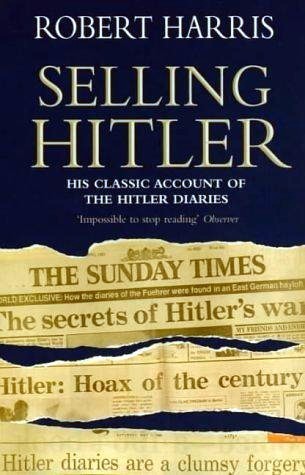
Chronicles the story of the creation, manufacture, and sale of the fraudulent "Hitler Diaries," a con game that successfully fooled leading historians and publishers because of their obsession with the Nazi mystique

Murder, mutilation, cannibalism, infanticide, and incest: the darker side of classic fairy tales figures as the subject matter for this intriguing study of Jacob and Wilhelm Grimm's Nursery and Household Tales. This updated and expanded second edition includes a new preface and an appendix containing new translations of six tales, along with commentary by Maria Tatar. Throughout the book, Tatar skillfully employs the tools not only of a psychoanalyst but also of a folklorist, literary critic, and historian to examine the harsher aspects of these stories. She presents new interpretations of the powerful stories in this worldwide best-selling book. Few studies have been written in English on these tales, and none has probed their allegedly happy endings so thoroughly.

Translated from the original German, this final volume of Victor Klemperer’s diaries opens in 1945. After the horrors of the war, Victor and Eva’s return to their Dresden home seems like a fairytale. Victor tries to resume his distinguished academic career and joins East Germany’s Communist Party. In 1951, Eva dies; a year later, aged 70, Victor marries a student—an unlikely but successful love match. But with the growing repression of the Communist Party, and the memory of those who did not survive, Victor’s achievements ring hollow. Politics, he comes to believe, is, above all, the choice of "the lesser evil." A masterpiece both of Holocaust literature and memoir.

In 1933, at the age of 18, Patrick Leigh Fermor set out on an extraordinary journey by foot—from the Hook of Holland to Constantinople. A Time of Gifts is the first volume in a trilogy recounting the trip, and takes the reader with him as far as Hungary. It is a book of compelling glimpses—not only of the events which were curdling Europe at that time, but also of its resplendent domes and monasteries, its great rivers, the sun on the Bavarian snow, the storks and frogs, the hospitable burgomasters who welcomed him, and that world's grandeurs and courtesies. His powers of recollection have astonishing sweep and verve, and the scope is majestic. First published to enormous acclaim, it confirmed Fermor's reputation as the greatest living travel writer, and has, together with its sequel Between the Woods and the Water (the third volume is famously yet to be published), been a perennial seller for 25 years.

Thomas Mann's last great novel, first published in 1947 and now rendered into English by acclaimed translator John E. Woods, is a modern reworking of the Faust legend, in which Germany sells its soul to the Devil. Mann's protagonist, the composer Adrian Leverkühn, is the flower of German culture, a brilliant, isolated, overreaching figure, his radical new music a breakneck game played by art at the very edge of impossibility. In return for twenty-four years of unparalleled musical accomplishment, he bargains away his soul - and the ability to love his fellow man.Leverkühn's life story is a brilliant allegory of the rise of the Third Reich, of Germany's renunciation of its own humanity and its embrace of ambition and its nihilism. It is also Mann's most profound meditation on the German genius - both national and individual - and the terrible responsibilities of the truly great artist.

A classic of modern literature: Buddenbrooks is the story of four generations of a wealthy bourgeois family in northern Germany facing the advent of modernity; in an uncertain new world, the family’s bonds and traditions begin to disintegrate. With an introduction by T. J. Reed, and translated by John E. Woods.As Mann charts the Buddenbrooks’ decline from prosperity to bankruptcy, from moral and psychic soundness to sickly piety, artistic decadence, and madness, he ushers the reader into a world of stunning vitality, pieced together from births and funerals, weddings and divorces, recipes, gossip, and earthy humor.First published in Germany in 1901, when Mann was only twenty-six, Buddenbrooks surpasses all other modern family chronicles in its immensity of scope, richness of detail, and fullness of humanity. With remarkable fidelity to the original German text, this superb translation emphasizes the magnificent scale of Mann’s achievement in this riveting, tragic novel.

Finally, the one-volume edition of Ian Kershaw's definitive and masterful biography of Hitler."The Hitler biography of the twenty-first century" (Richard J. Evans), Ian Kershaw's Hitler is a new, distilled, one-volume masterpiece that will become the standard work. From Hitler's origins as a failed artist in fin-de-siecle Vienna to the terrifying last days in his Berlin bunker, Kershaw's richly illustrated biography is a mesmerizing portrait of how Hitler attained, exercised, and retained power. Drawing on previously untapped sources, such as Goebbels's diaries, Kershaw addresses crucial questions about the unique nature of Nazi radicalism, about the Holocaust, and about the poisoned European world that allowed Hitler to operate so effectively.151 photographs; 8 maps

Emil Sinclair ist ein Junge, der in einem als "Scheinwelt" beschrieben bürgerlichen Elternhaus aufgewachsen ist. Dies ist die dramatische Geschichte seiner Abstieg - gesteuert durch sein frühreifen Schulkamerad Max Demian - in eine geheime und gefährliche Welt der Kleinkriminalität und Revolte gegen Konvention und seiner Erwachen zu Selbstheit.

Americans call the Second World War “The Good War.” But before it even began, America’s wartime ally Josef Stalin had killed millions of his own citizens—and kept killing them during and after the war. Before Hitler was finally defeated, he had murdered six million Jews and nearly as many other Europeans. At war’s end, both the German and the Soviet killing sites fell behind the iron curtain, leaving the history of mass killing in darkness.Bloodlands is a new kind of European history, presenting the mass murders committed by the Nazi and Stalinist regimes as two aspects of a single history, in the time and place where they occurred: between Germany and Russia, when Hitler and Stalin both held power. Assiduously researched, deeply humane, and utterly definitive, Bloodlands will be required reading for anyone seeking to understand the central tragedy of modern history.From BooklistIf there is an explanation for the political killing perpetrated in eastern Europe in the 1930s and 1940s, historian Snyder roots it in agriculture. Stalin wanted to collectivize farmers; Hitler wanted to eliminate them so Germans could colonize the land. The dictators wielded frightening power to advance such fantasies toward reality, and the despots toted up about 14 million corpses between them, so stupefying a figure that Snyder sets himself three goals here: to break down the number into the various actions of murder that comprise it, from liquidation of the kulaks to the final solution; to restore humanity to the victims via surviving testimony to their fates; and to deny Hitler and Stalin any historical justification for their policies, which at the time had legions of supporters and have some even today. Such scope may render Snyder’s project too imposing to casual readers, but it would engage those exposed to the period’s chronology and major interpretive issues, such as the extent to which the Nazi and Soviet systems may be compared. Solid and judicious scholarship for large WWII collections.

In his philosophical reflections on the art of lingering, acclaimed cultural theorist Byung-Chul Han argues that the value we attach today to the vita activa is producing a crisis in our sense of time. Our attachment to the vita activa creates an imperative to work which degrades the human being into a labouring animal, an animal laborans. At the same time, the hyperactivity which characterizes our daily routines robs human beings of the capacity to linger and the faculty of contemplation. It therefore becomes impossible to experience time as fulfilling.Drawing on a range of thinkers including Heidegger, Nietzsche and Arendt, Han argues that we can overcome this temporal crisis only by revitalizing the vita contemplativa and relearning the art of lingering. For what distinguishes humans from other animals is the capacity for reflection and contemplation, and when life regains this capacity, this art of lingering, it gains in time and space, in duration and vastness.

This is a remarkable historical and psychological examination of the enigma of Adolf Hitler--who he was, how he wielded power, and why he was destined to fail.Beginning with Hitler's early life, Sebastian Haffner probes the historical, political, and emotional forces that molded his character. In examining the inhumanity of a man for whom politics became a substitute for life, he discusses Hitler's bizarre relationships with women, his arrested psychological development, his ideological misconceptions, his growing obsession with racial extermination, and the murderous rages of his distorted mind. Finally, Haffner confronts the most disturbing question of all: Could another Hitler rise to power in modern Germany?

El presente libro presta toda su atención a un asunto capital en el pensamiento de Erich Fromm: la aplicación del método psicoanalítico a una amplia crítica de la patología del hombre "normal" y socialmente adaptado. Sometiendo a un análisis radical los difundidos afanes pasionales que dominan la conducta en la sociedad, Fromm intenta finalmente relacionarlos con las exigencias económicas y sociales, con el fin de llegar a entender los rasgos de carácter que pueden desarrollarse en una sociedad como consecuencia de un proceso de adaptación a la situación socioeconómica. De este modo, el autor descubre que lo bueno para el funcionamiento del actual régimen económico resulta ser nocivo para la conservación de la salud mental del hombre. Y, además, concluye que en el núcleo de este padecimiento de lo normal se encuentra la creciente incapacidad de la persona para relacionarse por sí misma con la realidad. La consecuencia es una idea revolucionaria del hombre y de su salud mental, que a su vez desemboca en la reclamación programática de una nueva ciencia humanista.

All That I Am is a masterful and exhilarating exploration of bravery and betrayal, of the risks and sacrifices some people make for their beliefs, and of heroism hidden in the most unexpected places.When eighteen-year-old Ruth Becker visits her cousin Dora in Munich in 1923, she meets the love of her life, the dashing young journalist Hans Wesemann, and eagerly joins in the heady activities of the militant political left in Germany. Ten years later, Ruth and Hans are married and living in Weimar Berlin when Hitler is elected chancellor of Germany. Together with Dora and her lover, Ernst Toller, the celebrated poet and self-doubting revolutionary, the four become hunted outlaws overnight and are forced to flee to London. Inspired by the fearless Dora to breathtaking acts of courage, the friends risk betrayal and deceit as they dedicate themselves to a dangerous mission: to inform the British government of the very real Nazi threat to which it remains willfully blind. All That I Am is the heartbreaking story of these extraordinary people, who discover that Hitler’s reach extends much further than they had thought.Gripping, compassionate, and inspiring, this remarkable debut novel reveals an uncommon depth of humanity and wisdom. Anna Funder has given us a searing and intimate portrait of courage and its price, of desire and ambition, and of the devastating consequences when they are thwarted.

Nietzsche’s notebooks, kept by him during his most productive years, offer a fascinating glimpse into the workshop and mind of a great thinker, and compare favorably with the notebooks of Gide and Kafka, Camus and Wittgenstein. The Will to Power, compiled from the notebooks, is one of the most famous books of the past hundred years, but few have studied it. Here is the first critical edition in any language.Down through the Nazi period The Will to Power, was often mistakenly considered to be Nietzche’s crowning systematic labor; since World War II it has frequently been denigrated. In fact, it represents a stunning selection from Nietzsche’s notebooks, in a topical arrangement that enables the reader to find what Nietzsche wrote on nihilism, art, morality, religion, the theory of knowledge, and whatever else interested him. But no previous edition—even in the original German—shows which notes Nietzsche utilized subsequently in his works, and which sections are not paralleled in the finished books. Nor has any previous edition furnished a commentary or index.Walter Kaufmann, in collaboration with R. J. Holilngdale, brings to this volume his unsurpassed skills as a Nietzsche translator and scholar. Professor Kaufmann has included an approximate date of each note. His running footnote commentary offers information needed to follow Nietzsche’s train of thought, and indicates, among other things, which notes were eventually superseded by later formulations. The comprehensive index serves to guide the reader to the extraordinary riches of this book.


Translated, with an Introduction and Notes by John R. Williams.Goethe's Faust is a classic of European literature. Based on the fable of the man who traded his soul for superhuman powers and knowledge, it became the life's work of Germany's greatest poet. Beginning with an intriguing wager between God and Satan, it charts the life of a deeply flawed individual, his struggle against the nihilism of his diabolical companion Mephistopheles.Part One presents Faust's pact with the Devil and the harrowing tragedy of his love affair with the young Gretchen. Part Two shows Faust's experience in the world of public affairs, including his encounter with Helen of Troy, the emblem of classical beauty and culture. The whole is a symbolic and panoramic commentary on the human condition and on modern European history and civilisation.This new translation of both parts of Faust preserves the poetic character of the original, its tragic pathos and hilarious comedy. In addition, John Williams has translated the Urfaust, a fascinating glimpse into the young Goethe's imagination, and a selection from the draft scenarios for the Walpurgis Night witches' sabbath - material so ribald and blasphemous that Goethe did not dare publish it.

In the shadows of World War II, trust becomes the greatest risk of all for two strangers.December 1943. In the years before the rise of Hitler, the Gerber family’s summer cottage was filled with laughter. Now, as deep drifts of snow blanket the Black Forest, German dissenter Franka Gerber is alone and hopeless. Fervor and brutality have swept through her homeland, taking away both her father and her brother and leaving her with no reason to live.That is, until she discovers an unconscious airman lying in the snow wearing a Luftwaffe uniform, his parachute flapping in the wind. Unwilling to let him die, Franka takes him to her family’s isolated cabin despite her hatred for the regime he represents. But when it turns out that he is not who he seems, Franka begins a race against time to unravel the mystery of the airman’s true identity. Their tenuous bond becomes as inseparable as it is dangerous. Hunted by the Gestapo, can they trust each other enough to join forces on a mission that could change the face of the war and their own lives forever?

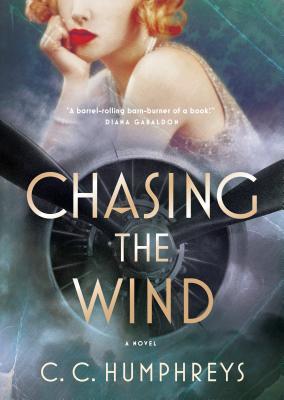
Smuggler. Smoker. Aviatrix. Thief. The dynamic Roxy Loewen is all these things and more, in this riveting and gorgeous historical fiction novel for readers of Paula McLain, Roberta Rich, Kate Morton and Jacqueline Winspear.You should never fall in love with a flyer. You should only fall in love with flight.That's what Roxy Loewen always thought, until she falls for fellow pilot Jocco Zomack as they run guns into Ethiopia. Jocco may be a godless commie, but his father is a leading art dealer and he's found the original of Bruegel's famous painting, the Fall of Icarus. The trouble is, it's in Spain, a country slipping fast into civil war. The money's better than good--if Roxy can just get the painting to Berlin and back out again before Reichsmarshall Hermann Goring and his Nazi pals get their hands on it . . .But this is 1936, and Hitler's Olympics are in full swing. Not only that, but Goring has teamed up with Roxy's greatest enemy: Sydney Munroe, an American billionaire responsible for the death of her beloved dad seven years before. When the Nazis steal the painting, Roxy and Jocco decide that they are just going to have to steal it back.What happens when Icarus flies too close to the sun? Roxy is going to find out. From African skies to a cellar in Madrid, from the shadow cast by the swastika to the world above the clouds on the Hindenburg's last voyage, in the end Roxy will have just two choices left--but only one bullet.

Germany, 1945: a country in ruins. Cities have been reduced to rubble and more than half of the population are where they do not belong or do not want to be. How can a functioning society ever emerge from this chaos?In bombed-out Berlin, Ruth Andreas-Friedrich, journalist and member of the Nazi resistance, warms herself by a makeshift stove and records in her diary how a frenzy of expectation and industriousness grips the city. The Americans send Hans Habe, an Austro-Hungarian Jewish journalist and US army soldier, to the frontline of psychological warfare - tasked with establishing a newspaper empire capable of remoulding the minds of the Germans. The philosopher Hannah Arendt returns to the country she fled to find a population gripped by a manic loquaciousness, but faces a deafening wall of silence at the mention of the Holocaust.Aftermath is a nuanced panorama of a nation undergoing monumental change. 1945 to 1955 was a raw, wild decade poised between two eras that proved decisive for Germany's future - and one starkly different to how most of us imagine it today. Featuring black and white photographs and posters from post-war Germany - some beautiful, some revelatory, some shocking - Aftermath evokes an immersive portrait of a society corrupted, demoralised and freed - all at the same time.

A letter from a German soldier to his grandson recounts the terrors of war on the Eastern Front, and a postwar ordinary life in search of atonement, in this “raw, visceral, and propulsive” novel (New York Times Book Review).A New York Times Book Review Editors’ Choice In the throes of the Second World War, young Meissner, a college student with dreams of becoming a scientist, is drafted into the German army and sent to the Eastern Front. But soon his regiment collapses in the face of the onslaught of the Red Army, hell-bent on revenge in its race to Berlin. Many decades later, now an old man reckoning with his past, Meissner pens a letter to his grandson explaining his actions, his guilt as a Nazi participator, and the difficulty of life after war. Found among his effects after his death, the letter is at once a thrilling story of adventure and a questing rumination on the moral ambiguity of war. In his years spent fighting the Russians and attempting afterward to survive the Gulag, Meissner recounts a life lived in perseverance and atonement. Wracked with shame—both for himself and for Germany—the grandfather explains his dark rationale, exults in the courage of others, and blurs the boundaries of right and wrong. We Germans complicates our most steadfast beliefs and seeks to account for the complicity of an entire country in the perpetration of heinous acts. In this breathless and page-turning story, Alexander Starritt also presents us with a deft exploration of the moral contradictions inherent in saving one's own life at the cost of the lives of others and asks whether we can ever truly atone.

“For the more a man has in himself, the less he will want from other people,—the less, indeed, other people can be to him. This is why a high degree of intellect tends to make a man unsocial. True” Arthur Schopenhauer Do you think that usual goals in life such as money, fame, pride, social position, and material and physical pleasures bring actual pleasure in life?If your answer is no and you are interested in development of one's inner mind and a strong and healthy body, this book is right for you.This abridged version brought together both essays of Wisdom of Life and Counsels and Maxims. It explores the thoughts behind Arthur Schopenhauer’s more realistic and pessimistic worldview.In these essays, Arthur Schopenhauer begins with the assumption that individual’s life will be fundamentally painful and miserable, then he considers how to arrange our lives to gain the maximum amount of enjoyment and success. In fact, he offers thoughts about how we can enhance pleasure for ourselves during our brief time on this earth. In author’s opinion, a great life should always reach beyond itself to a higher plane. About the Arthur Schopenhauer (1788 – 1860) was a German artist philosopher. He was one of the first scholars in Western philosophy to share and state major thoughts of Indian philosophy, such as asceticism, self-denial, and the concept of the world-as-appearance. His work is also known as the philosophical pessimism, as he expresses a world-outlook that challenges the value of beings.

From the best-selling author of The Invention of Nature comes an exhilarating story about a remarkable group of young rebels--poets, novelists, philosophers--who, through their epic quarrels, passionate love stories, heartbreaking grief, and radical ideas launched Romanticism onto the world stage, inspiring some of the greatest thinkers of the time.When did we begin to be as self-centered as we are today? At what point did we expect to have the right to determine our own lives? When did we first ask the question, How can I be free? It all began in a quiet university town in Germany in the 1790s, when a group of playwrights, poets, and writers put the self at center stage in their thinking, their writing, and their lives. This brilliant circle included the famous poets Goethe, Schiller, and Novalis; the visionary philosophers Fichte, Schelling, and Hegel; the contentious Schlegel brothers; and, in a wonderful cameo, Alexander von Humboldt. And at the heart of this group was the formidable Caroline Schlegel, who sparked their dazzling conversations about the self, nature, identity, and freedom. The French revolutionaries may have changed the political landscape of Europe, but the young Romantics incited a revolution of the mind that transformed our world forever. We are still empowered by their daring leap into the self, and by their radical notions of the creative potential of the individual, the highest aspirations of art and science, the unity of nature, and the true meaning of freedom. We also still walk the same tightrope between meaningful self-fulfillment and destructive narcissism, between the rights of the individual and our responsibilities toward our community and future generations. At the heart of this inspiring book is the extremely modern tension between the dangers of selfishness and the thrilling possibilities of free will.