Loading themes...
Explore the best books about Biography theme.

Richard P. Feynman, winner of the Nobel Prize in physics, thrived on outrageous adventures. In this lively work that “can shatter the stereotype of the stuffy scientist” (Detroit Free Press), Feynman recounts his experiences trading ideas on atomic physics with Einstein and cracking the uncrackable safes guarding the most deeply held nuclear secrets—and much more of an eyebrow-raising nature. In his stories, Feynman’s life shines through in all its eccentric glory—a combustible mixture of high intelligence, unlimited curiosity, and raging chutzpah.Included for this edition is a new introduction by Bill Gates.
A newer edition of this title can be found here."Thirty years ago my older brother, who was ten years old at the time, was trying to get a report on birds written that he'd had three months to write. [It] was due the next day. We were out at our family cabin in Bolinas, and he was at the kitchen table close to tears, surrounded by binder paper and pencils and unopened books on birds, immobilized by the hugeness of the task ahead. Then my father sat down beside him, put his arm around my brother's shoulder, and said. 'Bird by bird, buddy. Just take it bird by bird.'"With this basic instruction always in mind, Anne Lamott returns to offer us a new gift: a step-by-step guide on how to write and on how to manage the writer's life. From "Getting Started,' with "Short Assignments," through "Shitty First Drafts," "Character," "Plot," "Dialogue." all the way from "False Starts" to "How Do You Know When You're Done?" Lamott encourages, instructs, and inspires. She discusses "Writers Block," "Writing Groups," and "Publication." Bracingly honest, she is also one of the funniest people alive.If you have ever wondered what it takes to be a writer, what it means to be a writer, what the contents of your school lunches said about what your parents were really like, this book is for you. From faith, love, and grace to pain, jealousy, and fear, Lamott insists that you keep your eyes open, and then shows you how to survive. And always, from the life of the artist she turns to the art of life.

PULITZER PRIZE WINNER • A modern American classic, this huge and galvanizing biography of Robert Moses reveals not only the saga of one man’s incredible accumulation of power but the story of his shaping (and mis-shaping) of twentieth-century New York.One of the Modern Library’s hundred greatest books of the twentieth century, Robert Caro's monumental book makes public what few outsiders that Robert Moses was the single most powerful man of his time in the City and in the State of New York. And in telling the Moses story, Caro both opens up to an unprecedented degree the way in which politics really happens—the way things really get done in America's City Halls and Statehouses—and brings to light a bonanza of vital information about such national figures as Alfred E. Smith and Franklin D. Roosevelt (and the genesis of their blood feud), about Fiorello La Guardia, John V. Lindsay and Nelson Rockefeller.But The Power Broker is first and foremost a brilliant multidimensional portrait of a man—an extraordinary man who, denied power within the normal framework of the democratic process, stepped outside that framework to grasp power sufficient to shape a great city and to hold sway over the very texture of millions of lives. We see how Moses the handsome, intellectual young heir to the world of Our Crowd, an idealist. How, rebuffed by the entrenched political establishment, he fought for the power to accomplish his ideals. How he first created a miraculous flowering of parks and parkways, playlands and beaches—and then ultimately brought down on the city the smog-choked aridity of our urban landscape, the endless miles of (never sufficient) highway, the hopeless sprawl of Long Island, the massive failures of public housing, and countless other barriers to humane living. How, inevitably, the accumulation of power became an end in itself.Moses built an empire and lived like an emperor. He was held in fear—his dossiers could disgorge the dark secret of anyone who opposed him. He was, he claimed, above politics, above deals; and through decade after decade, the newspapers and the public believed. Meanwhile, he was developing his public authorities into a fourth branch of government known as "Triborough"—a government whose records were closed to the public, whose policies and plans were decided not by voters or elected officials but solely by Moses—an immense economic force directing pressure on labor unions, on banks, on all the city's political and economic institutions, and on the press, and on the Church. He doled out millions of dollars' worth of legal fees, insurance commissions, lucrative contracts on the basis of who could best pay him back in the only coin he power. He dominated the politics and politicians of his time—without ever having been elected to any office. He was, in essence, above our democratic system.Robert Moses held power in the state for 44 years, through the governorships of Smith, Roosevelt, Lehman, Dewey, Harriman and Rockefeller, and in the city for 34 years, through the mayoralties of La Guardia, O'Dwyer, Impellitteri, Wagner and Lindsay, He personally conceived and carried through public works costing 27 billion dollars—he was undoubtedly America's greatest builder.This is how he built and dominated New York—before, finally, he was stripped of his reputation (by the press) and his power (by Nelson Rockefeller). But his work, and his will, had been done.

The harrowing tale of British explorer Ernest Shackleton's 1914 attempt to reach the South Pole, one of the greatest adventure stories of the modern age.In August 1914, polar explorer Ernest Shackleton boarded the Endurance and set sail for Antarctica, where he planned to cross the last uncharted continent on foot. In January 1915, after battling its way through a thousand miles of pack ice and only a day's sail short of its destination, the Endurance became locked in an island of ice. Thus began the legendary ordeal of Shackleton and his crew of twenty-seven men. When their ship was finally crushed between two ice floes, they attempted a near-impossible journey over 850 miles of the South Atlantic's heaviest seas to the closest outpost of civilization.In Endurance, the definitive account of Ernest Shackleton's fateful trip, Alfred Lansing brilliantly narrates the harrowing and miraculous voyage that has defined heroism for the modern age.First edition: here.

In his first comic book, Zappos CEO Tony Hsieh shares the different lessons he has learned in business and life, from starting a worm farm to running a pizza business; through LinkExchange (acquired by Microsoft for $265 million), Zappos (acquired by Amazon for over $1 billion in stock), and more.

Walter Isaacson’s “enthralling” ( The New Yorker ) worldwide bestselling biography of Apple cofounder Steve Jobs.Based on more than forty interviews with Steve Jobs conducted over two years—as well as interviews with more than 100 family members, friends, adversaries, competitors, and colleagues—Walter Isaacson has written a riveting story of the roller-coaster life and searingly intense personality of a creative entrepreneur whose passion for perfection and ferocious drive revolutionized six personal computers, animated movies, music, phones, tablet computing, and digital publishing.At a time when America is seeking ways to sustain its innovative edge, Jobs stands as the ultimate icon of inventiveness and applied imagination. He knew that the best way to create value in 21st century was to connect creativity with technology. He built a company where leaps of the imagination were combined with remarkable feats of engineering.Although Jobs cooperated with the author, he asked for no control over what was written. He put nothing off-limits. He encouraged the people he knew to speak honestly. And Jobs speaks candidly, sometimes brutally so, about the people he worked with and competed against. His friends, foes, and colleagues provide an unvarnished view of the passions, perfectionism, obsessions, artistry, devilry, and compulsion for control that shaped his approach to business and the innovative products that resulted.Driven by demons, Jobs could drive those around him to fury and despair. But his personality and products were interrelated, just as Apple’s hardware and software tended to be, as if part of an integrated system. His tale is instructive and cautionary, filled with lessons about innovation, character, leadership, and values.Steve Jobs is the inspiration for the movie of the same name starring Michael Fassbender, Kate Winslet, Seth Rogen, and Jeff Daniels, directed by Danny Boyle with a screenplay by Aaron Sorkin.

John D. Rockefeller, Sr.--history's first billionaire and the patriarch of America's most famous dynasty--is an icon whose true nature has eluded three generations of historians. Now Ron Chernow, the National Book Award-winning biographer of the Morgan and Warburg banking families, gives us a history of the mogul "etched with uncommon objectivity and literary grace . . . as detailed, balanced, and psychologically insightful a portrait of the tycoon as we may ever have" (Kirkus Reviews). Titan is the first full-length biography based on unrestricted access to Rockefeller's exceptionally rich trove of papers. A landmark publication full of startling revelations, the book will indelibly alter our image of this most enigmatic capitalist. Born the son of a flamboyant, bigamous snake-oil salesman and a pious, straitlaced mother, Rockefeller rose from rustic origins to become the world's richest man by creating America's most powerful and feared monopoly, Standard Oil. Branded "the Octopus" by legions of muckrakers, the trust refined and marketed nearly 90 percent of the oil produced in America. Rockefeller was likely the most controversial businessman in our nation's history. Critics charged that his empire was built on unscrupulous grand-scale collusion with the railroads, predatory pricing, industrial espionage, and wholesale bribery of political officials. The titan spent more than thirty years dodging investigations until Teddy Roosevelt and his trustbusters embarked on a marathon crusade to bring Standard Oil to bay. While providing abundant new evidence of Rockefeller's misdeeds, Chernow discards the stereotype of the cold-blooded monster to sketch an unforgettably human portrait of a quirky, eccentric original. A devout Baptist and temperance advocate, Rockefeller gave money more generously--his chosen philanthropies included the Rockefeller Foundation, the University of Chicago, and what is today Rockefeller University--than anyone before him. Titan presents a finely nuanced portrait of a fascinating, complex man, synthesizing his public and private lives and disclosing numerous family scandals, tragedies, and misfortunes that have never before come to light. John D. Rockefeller's story captures a pivotal moment in American history, documenting the dramatic post-Civil War shift from small business to the rise of giant corporations that irrevocably transformed the nation. With cameos by Joseph Pulitzer, William Randolph Hearst, Jay Gould, William Vanderbilt, Ida Tarbell, Andrew Carnegie, Carl Jung, J. Pierpont Morgan, William James, Henry Clay Frick, Mark Twain, and Will Rogers, Titan turns Rockefeller's life into a vivid tapestry of American society in the late nineteenth and early twentieth centuries. It is Ron Chernow's signal triumph that he narrates this monumental saga with all the sweep, drama, and insight that this giant subject deserves.

openHuman Story of a Sporting Hero Filled with ImpressionThe best of the tennis world superstar Andre Agassi. A story like his blues and roller coasters begins. Full of fascinating and touching content, [Open] is full of energetic frankness and embodies Andre Agassis life journey. This is not a plain autobiographical autobiographical autobiography of the average athlete, but a sophisticated and intoxicating book that, as the title boldly reveals, is a painful chronicle of Agassis confession of identity and tranquility that he has been searching for on and off the tennis courts all his life, It is a memoir of Andre Agassi moving alive....

Recipient of the Ivan Sandrof Lifetime Achievement AwardDraft No. 4 is a master class on the writer's craft. John McPhee shares insights he has gathered over his long career, and has refined while teaching at Princeton University, where he has nurtured some of the most highly regarded writers of our time. He discusses structure, diction and tone, observing that 'readers are not supposed to notice the structure. It is meant to be about as visible as someone's bones.' This book is a vivid depiction of the writing process, from reporting to drafting to revising - and revising and revising.

“This is your country, this is your world, this is your body, and you must find some way to live within the all of it.” In a profound work that pivots from the biggest questions about American history and ideals to the most intimate concerns of a father for his son, Ta-Nehisi Coates offers a powerful new framework for understanding our nation’s history and current crisis. Americans have built an empire on the idea of “race,” a falsehood that damages us all but falls most heavily on the bodies of black women and men—bodies exploited through slavery and segregation, and, today, threatened, locked up, and murdered out of all proportion. What is it like to inhabit a black body and find a way to live within it? And how can we all honestly reckon with this fraught history and free ourselves from its burden? Between the World and Me is Ta-Nehisi Coates’s attempt to answer these questions in a letter to his adolescent son. Coates shares with his son—and readers—the story of his awakening to the truth about his place in the world through a series of revelatory experiences, from Howard University to Civil War battlefields, from the South Side of Chicago to Paris, from his childhood home to the living rooms of mothers whose children’s lives were taken as American plunder. Beautifully woven from personal narrative, reimagined history, and fresh, emotionally charged reportage, Between the World and Me clearly illuminates the past, bracingly confronts our present, and offers a transcendent vision for a way forward.

"Do not act as if thou were going to live ten thousand years. Death hangs over thee. While thoug livest, while it is in thy power, be good."Meditations contains the private wisdom of Marcus Aurelius, Roman Emperor from AD 161 to 180, and a great philosopher.His Meditations were never intended for publication. They were his personal thoughts and spiritual reflections, which he wrote down and referred to in order to help him manage the challenges of governing the Roman Empire while maintaining a peaceful private life.His philosophy articulated the need for inner peace and moral certainty in a world filled with chaos and suffering. The insights found in Meditations are just as helpful today as when Marcus Aurelius first wrote them nearly two millennia ago.

Just before the 2002 season opens, the Oakland Athletics must relinquish its three most prominent (and expensive) players and is written off by just about everyone—but then comes roaring back to challenge the American League record for consecutive wins. How did one of the poorest teams in baseball win so many games?In a quest to discover the answer, Michael Lewis delivers not only “the single most influential baseball book ever” (Rob Neyer, Slate) but also what “may be the best book ever written on business” (Weekly Standard). Lewis first looks to all the logical places—the front offices of major league teams, the coaches, the minds of brilliant players—but discovers the real jackpot is a cache of numbers?numbers!?collected over the years by a strange brotherhood of amateur baseball software engineers, statisticians, Wall Street analysts, lawyers, and physics professors.What these numbers prove is that the traditional yardsticks of success for players and teams are fatally flawed. Even the box score misleads us by ignoring the crucial importance of the humble base-on-balls. This information had been around for years, and nobody inside Major League Baseball paid it any mind. And then came Billy Beane, general manager of the Oakland Athletics. He paid attention to those numbers?with the second-lowest payroll in baseball at his disposal he had to?to conduct an astonishing experiment in finding and fielding a team that nobody else wanted.In a narrative full of fabulous characters and brilliant excursions into the unexpected, Michael Lewis shows us how and why the new baseball knowledge works. He also sets up a sly and hilarious morality Big Money, like Goliath, is always supposed to win . . . how can we not cheer for David?

Under Andy Grove’s leadership, Intel became the world’s largest chip maker and one of the most admired companies in the world. In Only the Paranoid Survive, Grove reveals his strategy for measuring the nightmare moment every leader dreads–when massive change occurs and a company must, virtually overnight, adapt or fall by the wayside–in a new way.Grove calls such a moment a Strategic Inflection Point, which can be set off by almost anything: mega-competition, a change in regulations, or a seemingly modest change in technology. When a Strategic Inflection Point hits, the ordinary rules of business go out the window. Yet, managed right, a Strategic Inflection Point can be an opportunity to win in the marketplace and emerge stronger than ever.Grove underscores his message by examining his own record of success and failure, including how he navigated the events of the Pentium flaw, which threatened Intel’s reputation in 1994, and how he has dealt with the explosions in growth of the Internet. The work of a lifetime, Only the Paranoid Survive is a classic of managerial and leadership skills.

Benjamin Franklin is the Founding Father who winks at us. An ambitious urban entrepreneur who rose up the social ladder, from leather-aproned shopkeeper to dining with kings, he seems made of flesh rather than of marble. In bestselling author Walter Isaacson's vivid and witty full-scale biography, we discover why Franklin seems to turn to us from history's stage with eyes that twinkle from behind his new-fangled spectacles. By bringing Franklin to life, Isaacson shows how he helped to define both his own time and ours.He was, during his 84-year life, America's best scientist, inventor, diplomat, writer, and business strategist, and he was also one of its most practical—though not most profound—political thinkers. He proved by flying a kite that lightning was electricity, and he invented a rod to tame it. He sought practical ways to make stoves less smoky and commonwealths less corrupt. He organized neighborhood constabularies and international alliances, local lending libraries and national legislatures. He combined two types of lenses to create bifocals and two concepts of representation to foster the nation's federal compromise. He was the only man who shaped all the founding documents of America: the Albany Plan of Union, the Declaration of Independence, the treaty of alliance with France, the peace treaty with England, and the Constitution. And he helped invent America's unique style of homespun humor, democratic values, and philosophical pragmatism.But the most interesting thing that Franklin invented, and continually reinvented, was himself. America's first great publicist, he was, in his life and in his writings, consciously trying to create a new American archetype. In the process, he carefully crafted his own persona, portrayed it in public, and polished it for posterity.Through it all, he trusted the hearts and minds of his fellow "leather-aprons" more than he did those of any inbred elite. He saw middle-class values as a source of social strength, not as something to be derided. His guiding principle was a "dislike of everything that tended to debase the spirit of the common people." Few of his fellow founders felt this comfort with democracy so fully, and none so intuitively.In this colorful and intimate narrative, Isaacson provides the full sweep of Franklin's amazing life, from his days as a runaway printer to his triumphs as a statesman, scientist, and Founding Father. He chronicles Franklin's tumultuous relationship with his illegitimate son and grandson, his practical marriage, and his flirtations with the ladies of Paris. He also shows how Franklin helped to create the American character and why he has a particular resonance in the twenty-first century.

How did Einstein's mind work? What made him a genius? Isaacson's biography shows how his scientific imagination sprang from the rebellious nature of his personality. His fascinating story is a testament to the connection between creativity and freedom.Based on the newly released personal letters of Albert Einstein, Walter Isaacson explores how an imaginative, impertinent patent clerk -- a struggling father in a difficult marriage who couldn't get a teaching job or a doctorate -- became the mind reader of the creator of the cosmos, the locksmith of the mysteries of the atom and the universe. His success came from questioning conventional wisdom and marveling at mysteries that struck others as mundane. This led him to embrace a morality and politics based on respect for free minds, free spirits, and free individuals.These traits are just as vital for this new century of globalization, in which our success will depend on our creativity, as they were for the beginning of the last century, when Einstein helped usher in the modern age.

This acclaimed autobiography presents a fascinating portrait of one of the great spiritual figures of our time. With engaging candor, eloquence, and wit, Paramahansa Yogananda narrates the inspiring chronicle of his life: the experiences of his remarkable childhood, encounters with many saints and sages during his youthful search throughout India for an illumined teacher, ten years of training in the hermitage of a revered yoga master, and the thirty years that he lived and taught in America. Also recorded here are his meetings with Mahatma Gandhi, Rabindranath Tagore, Luther Burbank, the Catholic stigmatist Therese Neumann, and other celebrated spiritual personalities of East and West. Autobiography of a Yogi is at once a beautifully written account of an exceptional life and a profound introduction to the ancient science of Yoga and its time-honored tradition of meditation. The author clearly explains the subtle but definite laws behind both the ordinary events of everyday life and the extraordinary events commonly termed miracles. His absorbing life story thus becomes the background for a penetrating and unforgettable look at the ultimate mysteries of human existence. Considered a modern spiritual classic, the book has been translated into more than twenty languages and is widely used as a text and reference work in colleges and universities. A perennial bestseller since it was first published sixty years ago, Autobiography of a Yogi has found its way into the hearts of millions of readers around the world.

The definitive biography of the founder of history's greatest empire. In 25 years, Genghis Khan and his Mongol armies conquered more than the Romans had in four centuries, founding the most extensive empire humankind has ever seen. Born Temujin, a pariah from the steppes, the man destined to make history as the Great Khan of the Mongols conquered every territory he held, from Georgia and Armenia to Korea. Genghis Khan emerged as an unexpected leader, abolishing torture, guaranteeing religious freedom, and destroying feudal systems based on aristocratic privilege. When he was born, holding a blood clot in his hand, his mother predicted that the child would change the course of the world. Thus, Genghis Khan united all the Mongol tribes of the steppes and transformed their way of life. He created the most efficient army of the Middle Ages, opened trade routes that connected the known world, and founded an empire that stretched from Europe to East Asia. His successors were kings, khans, and emperors in China, India, and Russia, and his legacy was enduring. From the early life of Genghis Khan and his rise and transformation from the tribal world of the steppes to the civilizing explosion of the Mongol Empire, this brilliant essay by Jack Weatherford, an anthropologist specializing in Mongol history, tells the epic story of how the modern world was forged.

The last lecture on leadership by the NFL's greatest coach: Bill Walsh Bill Walsh is a towering figure in the history of the NFL. His advanced leadership transformed the San Francisco 49ers from the worst franchise in sports to a legendary dynasty. In the process, he changed the way football is played.Prior to his death, Walsh granted a series of exclusive interviews to bestselling author Steve Jamison. These became his ultimate lecture on leadership.Additional insights and perspective are provided by Hall of Fame quarterback Joe Montana and others.Bill Walsh taught that the requirements of successful leadership are the same whether you run an NFL franchise, a fortune 500 company, or a hardware store with 12 employees. These final words of 'wisdom by Walsh' will inspire, inform, and enlighten leaders in all professions.

As a young man, Ed Catmull had a dream: to make the world’s first computer-animated movie. He nurtured that dream first as a Ph.D. student at the University of Utah, where many computer science pioneers got their start, and then forged an early partnership with George Lucas that led, indirectly, to his founding Pixar with Steve Jobs and John Lasseter in 1986. Nine years later and against all odds, Toy Story was released, changing animation forever.Since then, Pixar has dominated the world of animation, producing such beloved films as Monsters, Inc., Finding Nemo, The Incredibles, Up, and WALL-E, which have gone on to set box-office records and garner twenty-seven Academy Awards. The joyousness of the storytelling, the inventive plots, the emotional authenticity: In some ways, Pixar movies are an object lesson in what creativity really is. Now, in this book, Catmull reveals the ideals and techniques, honed over years, that have made Pixar so widely admired—and so profitable.Creativity, Inc. is a book for managers who want to lead their employees to new heights, a manual for anyone who strives for originality, and the first-ever, all-access trip into the nerve center of Pixar Animation Studios—into the story meetings, the postmortems, and the ‘Braintrust’ sessions where art is born. It is, at heart, a book about how to build and sustain a creative culture—but it is also, as Pixar co-founder and president Ed Catmull writes, ‘an expression of the ideas that I believe make the best in us possible.’

#1 New York Times Bestseller There have been many books—on a large and small scale—about Steve Jobs, one of the most famous CEOs in history. But this book is different from all the others.Becoming Steve Jobs takes on and breaks down the existing myth and stereotypes about Steve Jobs. The conventional, one-dimensional view of Jobs is that he was half-genius, half-jerk from youth, an irascible and selfish leader who slighted friends and family alike. Becoming Steve Jobs answers the central question about the life and career of the Apple cofounder and CEO: How did a young man so reckless and arrogant that he was exiled from the company he founded become the most effective visionary business leader of our time, ultimately transforming the daily life of billions of people?Drawing on incredible and sometimes exclusive access, Schlender and Tetzeli tell a different story of a real human being who wrestled with his failings and learned to maximize his strengths over time. Their rich, compelling narrative is filled with stories never told before from the people who knew Jobs best, and who decided to open up to the authors, including his family, former inner circle executives, and top people at Apple, Pixar and Disney, most notably Tim Cook, Jony Ive, Eddy Cue, Ed Catmull, John Lasseter, Robert Iger and many others. In addition, Brent knew Jobs personally for 25 years and draws upon his many interviews with him, on and off the record, in writing the book. He and Rick humanize the man and explain, rather than simply describe, his behavior. Along the way, the book provides rich context about the technology revolution we all have lived through, and the ways in which Jobs changed our world.Schlender and Tetzeli make clear that Jobs's astounding success at Apple was far more complicated than simply picking the right products: he became more patient, he learned to trust his inner circle, and discovered the importance of growing the company incrementally rather than only shooting for dazzling game-changing products.A rich and revealing account that will change the way we view Jobs, Becoming Steve Jobs shows us how one of the most colorful and compelling figures of our times was able to combine his unchanging, relentless passion with a more mature management style to create one of the most valuable and beloved companies on the planet.

Elon Musk, the entrepreneur and innovator behind SpaceX, Tesla, and SolarCity, sold one of his internet companies, PayPal, for $1.5 billion. Ashlee Vance captures the full spectacle and arc of the genius's life and work, from his tumultuous upbringing in South Africa and flight to the United States to his dramatic technical innovations and entrepreneurial pursuits. Vance uses Musk's story to explore one of the pressing questions of our age: can the nation of inventors and creators who led the modern world for a century still compete in an age of fierce global competition? He argues that Musk is an amalgam of legendary inventors and industrialists including Thomas Edison, Henry Ford, Howard Hughes, and Steve Jobs. More than any other entrepreneur today, Musk has dedicated his energies and his own vast fortune to inventing a future that is as rich and far-reaching as the visionaries of the golden age of science-fiction fantasy

#1 NEW YORK TIMES BESTSELLER • PULITZER PRIZE FINALIST • OVER TWO MILLION COPIES SOLDThis inspiring, exquisitely observed memoir finds hope and beauty in the face of insurmountable odds as an idealistic young neurosurgeon attempts to answer the question, What makes a life worth living?“Unmissable . . . Finishing this book and then forgetting about it is simply not an option.”—Janet Maslin, The New York TimesONE OF THE BEST BOOKS OF THE YEAR: The New York Times Book Review, People, NPR, The Washington Post, Slate, Harper’s Bazaar, Time Out New York, Publishers Weekly, BookPageAn Oprah Daily Best Nonfiction Book of the Past Two Decades • A Kirkus Reviews Best Nonfiction Book of the CenturyAt the age of thirty-six, on the verge of completing a decade’s worth of training as a neurosurgeon, Paul Kalanithi was diagnosed with stage IV lung cancer. One day he was a doctor treating the dying, and the next he was a patient struggling to live. And just like that, the future he and his wife had imagined evaporated. When Breath Becomes Air chronicles Kalanithi’s transformation from a naïve medical student “possessed,” as he wrote, “by the question of what, given that all organisms die, makes a virtuous and meaningful life” into a neurosurgeon at Stanford working in the brain, the most critical place for human identity, and finally into a patient and new father confronting his own mortality.What makes life worth living in the face of death? What do you do when the future, no longer a ladder toward your goals in life, flattens out into a perpetual present? What does it mean to have a child, to nurture a new life as another fades away? These are some of the questions Kalanithi wrestles with in this profoundly moving, exquisitely observed memoir.Paul Kalanithi died in March 2015, while working on this book, yet his words live on as a guide and a gift to us all. “I began to realize that coming face to face with my own mortality, in a sense, had changed nothing and everything,” he wrote. “Seven words from Samuel Beckett began to repeat in my head: ‘I can’t go on. I’ll go on.’” When Breath Becomes Air is an unforgettable, life-affirming reflection on the challenge of facing death and on the relationship between doctor and patient, from a brilliant writer who became both.Finalist for the PEN Center USA Literary Award in Creative Nonfiction and the Books for a Better Life Award in Inspirational Memoir

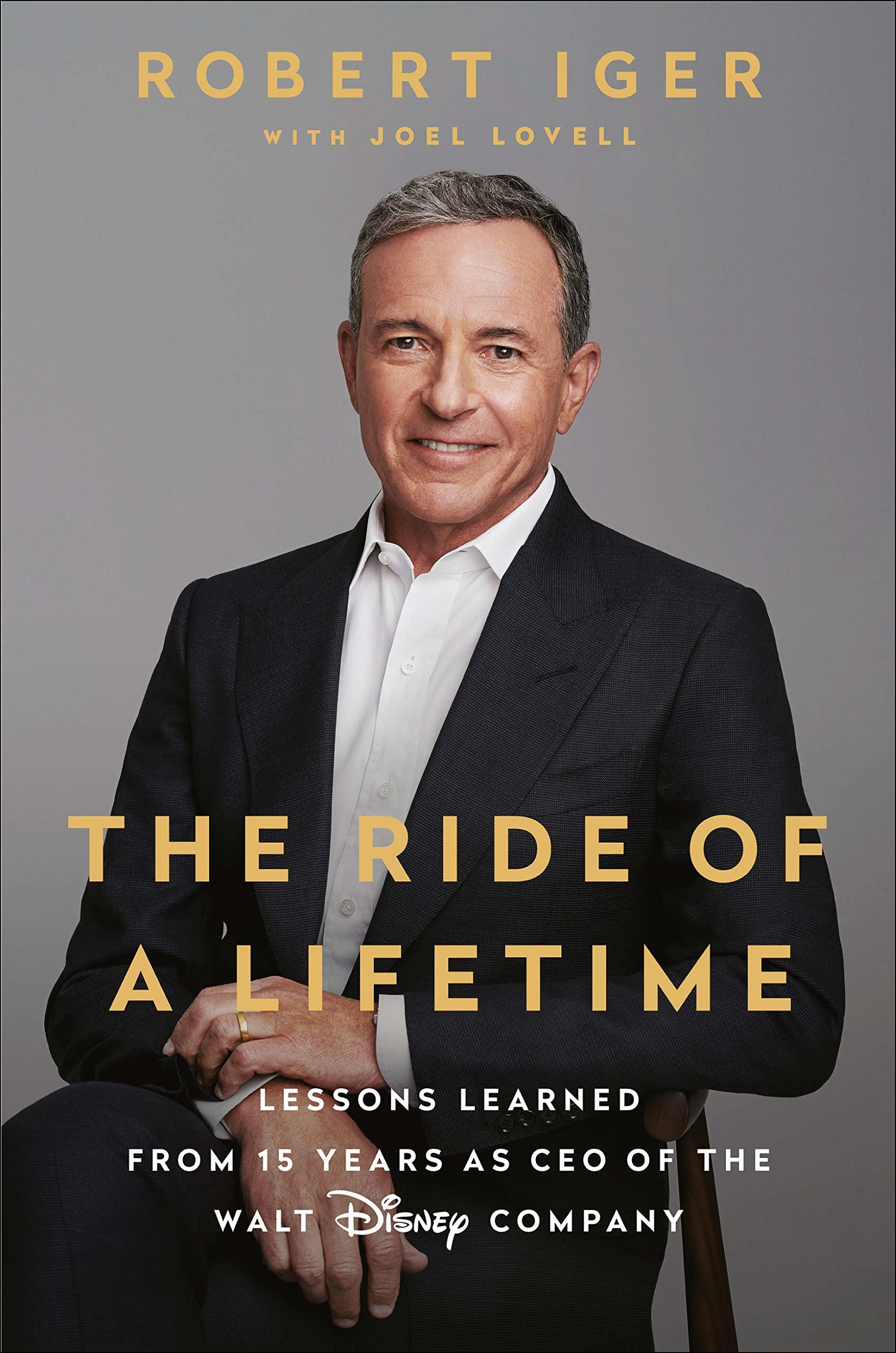
A grand vision defined: The CEO of The Walt Disney Company shares the ideas and values he has used to reinvent one of the most beloved companies in the world, and inspire the people who bring the magic to life.In 2005, Robert Iger became CEO of The Walt Disney Company during a difficult time. Morale had deteriorated, competition was more intense, and technology was changing faster than at any time in the company's history. "I knew there was nothing to be gained from arguing over the past," Iger writes. "The only thing that mattered was the future, and I believed I had a clear idea of the direction Disney needed to go." It came down to three clear ideas: 1) Create the highest quality content Disney could produce. 2) Embrace and adopt technology instead of fighting it. And 3) Think bigger--think global--and turn Disney into a stronger brand in international markets.Twelve years later, Disney is the largest, most respected media company in the world counting Pixar, Marvel, Lucasfilm and 21st Century Fox among its properties. Its value is nearly five times what it was when Iger took over, and Iger is recognized as one of the most innovative and successful CEOs of our time.Now, he's sharing the lessons he's learned while running Disney and leading its 200,000 employees--taking big risks in the face of historic disruption; learning to inspire the people who work for you; leading with fairness and communicating principles clearly. This book is about the relentless curiosity that has driven Iger for forty-five years, since the day he started as a studio supervisor at ABC. It's also about thoughtfulness and respect, and a decency-over-dollars approach that has become the bedrock of every project and partnership Iger pursues, from a deep friendship with Steve Jobs in his final years to an abiding love of the evolving Star Wars myth."Over the past fourteen years, I think I've learned so much about what real leadership is," Iger writes. "But I couldn't have articulated all of this until I lived it. You can't fake it--and that's one of the key lessons in this book."Librarian Note: This is an Advance Reader Copy issued with ISBN 9780399592096. That ISBN has been moved to the final published copy, found here

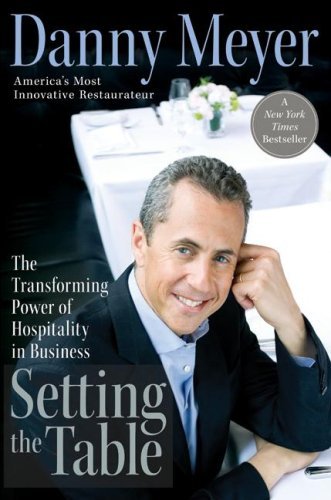
This an alternate cover for 9780060742751The bestselling business book from award-winning restauranteur Danny Meyer, of Union Square Cafe, Gramercy Tavern, and Shake ShackSeventy-five percent of all new restaurant ventures fail, and of those that do stick around, only a few become icons. Danny Meyer started Union Square Cafe when he was 27, with a good idea and hopeful investors. He is now the co-owner of a restaurant empire. How did he do it? How did he beat the odds in one of the toughest trades around? In this landmark book, Danny shares the lessons he learned developing the dynamic philosophy he calls Enlightened Hospitality. The tenets of that philosophy, which emphasize strong in-house relationships as well as customer satisfaction, are applicable to anyone who works in any business. Whether you are a manager, an executive, or a waiter, Danny’s story and philosophy will help you become more effective and productive, while deepening your understanding and appreciation of a job well done. Setting the Table is landmark a motivational work from one of our era’s most gifted and insightful business leaders.

Masters of Doom is the amazing true story of the Lennon and McCartney of video games: John Carmack and John Romero. Together, they ruled big business. They transformed popular culture. And they provoked a national controversy. More than anything, they lived a unique and rollicking American Dream, escaping the broken homes of their youth to produce the most notoriously successful game franchises in history - Doom and Quake - until the games they made tore them apart. This is a story of friendship and betrayal, commerce and artistry - a powerful and compassionate account of what it's like to be young, driven, and wildly creative.

Written initially to guide his son, Benjamin Franklin’s autobiography is a lively, spellbinding account of his unique and eventful life, now a classic of world literature that is sure to inspire and delight readers everywhere.Few men could compare to Benjamin Franklin. Virtually self-taught, he excelled as an athlete, a man of letters, a printer, a scientist, a wit, an inventor, an editor, and a writer, and he was probably the most successful diplomat in American history. David Hume hailed him as the first great philosopher and great man of letters in the New World.

The time was the 1980s. The place was Wall Street. The game was called Liar’s Poker. Michael Lewis was fresh out of Princeton and the London School of Economics when he landed a job at Salomon Brothers, one of Wall Street’s premier investment firms. During the next three years, Lewis rose from callow trainee to bond salesman, raking in millions for the firm and cashing in on a modern-day gold rush. Liar’s Poker is the culmination of those heady, frenzied years—a behind-the-scenes look at a unique and turbulent time in American business. From the frat-boy camaraderie of the forty-first-floor trading room to the killer instinct that made ambitious young men gamble everything on a high-stakes game of bluffing and deception, here is Michael Lewis’s knowing and hilarious insider’s account of an unprecedented era of greed, gluttony, and outrageous fortune. .

**Winner of the 2013 Financial Times and Goldman Sachs Business Book of the Year Award**Though Amazon.com started off delivering books through the mail, its visionary founder, Jeff Bezos, was never content with being just a bookseller. He wanted Amazon to become ‘the everything store’, offering limitless selection and seductive convenience at disruptively low prices. To achieve that end, he developed a corporate culture of relentless ambition and secrecy that's never been cracked. Until now...Jeff Bezos stands out for his relentless pursuit of new markets, leading Amazon into risky new ventures like the Kindle and cloud computing, and transforming retail in the same way that Henry Ford revolutionized manufacturing. Amazon placed one of the first and largest bets on the Internet. Nothing would ever be the same again.

A real-life political thriller about an American financier in the Wild East of Russia, the murder of his principled young tax attorney, and his dangerous mission to expose the Kremlin’s corruption.Bill Browder’s journey started on the South Side of Chicago and moved through Stanford Business School to the dog-eat-dog world of hedge fund investing in the 1990s. It continued in Moscow, where Browder made his fortune heading the largest investment fund in Russia after the Soviet Union’s collapse. But when he exposed the corrupt oligarchs who were robbing the companies in which he was investing, Vladimir Putin turned on him and, in 2005, had him expelled from Russia. In 2007, a group of law enforcement officers raided Browder’s offices in Moscow and stole $230 million of taxes that his fund’s companies had paid to the Russian government. Browder’s attorney Sergei Magnitsky investigated the incident and uncovered a sprawling criminal enterprise. A month after Sergei testified against the officials involved, he was arrested and thrown into pre-trial detention, where he was tortured for a year. On November 16, 2009, he was led to an isolation chamber, handcuffed to a bedrail, and beaten to death by eight guards in full riot gear. Browder glimpsed the heart of darkness, and it transformed his life: he embarked on an unrelenting quest for justice in Sergei’s name, exposing the towering cover-up that leads right up to Putin. A financial caper, a crime thriller, and a political crusade, Red Notice is the story of one man taking on overpowering odds to change the world.

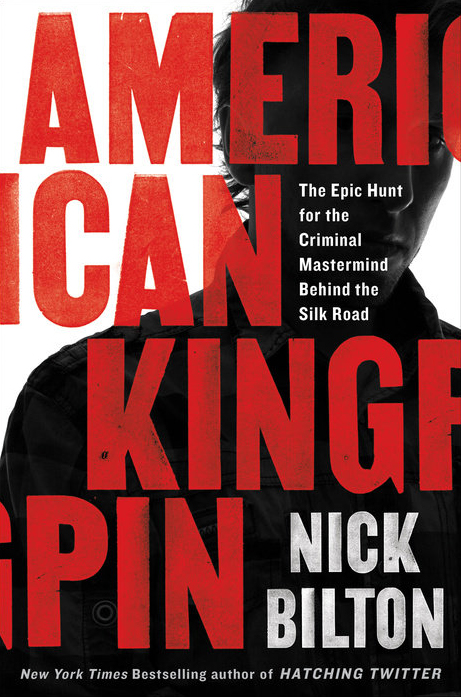
The unbelievable true story of the man who built a billion-dollar online drug empire from his bedroom—and almost got away with it. In 2011, a twenty-six-year-old libertarian programmer named Ross Ulbricht launched the ultimate free market: the Silk Road, a clandestine Web site hosted on the Dark Web where anyone could trade anything—drugs, hacking software, forged passports, counterfeit cash, poisons—free of the government’s watchful eye. It wasn’t long before the media got wind of the new Web site where anyone—not just teenagers and weed dealers but terrorists and black hat hackers—could buy and sell contraband detection-free. Spurred by a public outcry, the federal government launched an epic two-year manhunt for the site’s elusive proprietor, with no leads, no witnesses, and no clear jurisdiction. All the investigators knew was that whoever was running the site called himself the Dread Pirate Roberts. The Silk Road quickly ballooned into $1.2 billion enterprise, and Ross embraced his new role as kingpin. He enlisted a loyal crew of allies in high and low places, all as addicted to the danger and thrill of running an illegal marketplace as their customers were to the heroin they sold. Through his network he got wind of the target on his back and took drastic steps to protect himself—including ordering a hit on a former employee. As Ross made plans to disappear forever, the Feds raced against the clock to catch a man they weren’t sure even existed, searching for a needle in the haystack of the global Internet.Drawing on exclusive access to key players and two billion digital words and images Ross left behind, Vanity Fair correspondent and New York Times bestselling author Nick Bilton offers a tale filled with twists and turns, lucky breaks and unbelievable close calls. It’s a story of the boy next door’s ambition gone criminal, spurred on by the clash between the new world of libertarian-leaning, anonymous, decentralized Web advocates and the old world of government control, order, and the rule of law. Filled with unforgettable characters and capped by an astonishing climax, American Kingpin might be dismissed as too outrageous for fiction. But it’s all too real.

Tara Westover was 17 the first time she set foot in a classroom. Born to survivalists in the mountains of Idaho, she prepared for the end of the world by stockpiling home-canned peaches and sleeping with her "head-for-the-hills bag". In the summer she stewed herbs for her mother, a midwife and healer, and in the winter she salvaged in her father's junkyard.Her father forbade hospitals, so Tara never saw a doctor or nurse. Gashes and concussions, even burns from explosions, were all treated at home with herbalism. The family was so isolated from mainstream society that there was no one to ensure the children received an education and no one to intervene when one of Tara's older brothers became violent.Then, lacking any formal education, Tara began to educate herself. She taught herself enough mathematics and grammar to be admitted to Brigham Young University, where she studied history, learning for the first time about important world events like the Holocaust and the civil rights movement. Her quest for knowledge transformed her, taking her over oceans and across continents, to Harvard and to Cambridge. Only then would she wonder if she'd traveled too far, if there was still a way home.Educated is an account of the struggle for self-invention. It is a tale of fierce family loyalty and of the grief that comes with severing the closest of ties. With the acute insight that distinguishes all great writers, Westover has crafted a universal coming-of-age story that gets to the heart of what an education is and what it offers: the perspective to see one's life through new eyes and the will to change it.

At the center of Mountains Beyond Mountains stands Paul Farmer. Doctor, Harvard professor, renowned infectious-disease specialist, anthropologist, the recipient of a MacArthur "genius" grant, world-class Robin Hood, Farmer was brought up in a bus and on a boat, and in medical school found his life’s calling: to diagnose and cure infectious diseases and to bring the lifesaving tools of modern medicine to those who need them most.Mountains Beyond Mountains takes us from Harvard to Haiti, Peru, Cuba, and Russia as Farmer changes minds and practices through his dedication to the philosophy that "the only real nation is humanity"—a philosophy that is embodied in the small public charity he founded, Partners in Health. He enlists the help of the Gates Foundation, George Soros, the U.N.’s World Health Organization, and others in his quest to cure the world. At the heart of this book is the example of a life based on hope, and on an understanding of the truth of the Haitian proverb "Beyond mountains there are mountains": as you solve one problem, another problem presents itself, and so you go on and try to solve that one too.

How did salesforce.com grow from a start up in a rented apartment into the world's fastest growing software company in less than a decade? For the first time, Marc Benioff, the visionary founder, chairman and CEO of salesforce.com, tells how he and his team created and used new business, technology, and philanthropic models tailored to this time of extraordinary change. Showing how salesforce.com not only survived the dotcom implosion of 2001, but went on to define itself as the leader of the cloud computing revolution and spark a $46-billion dollar industry, Benioff's story will help business leaders and entrepreneurs stand out, innovate better, and grow faster in any economic climate. In Behind the Cloud , Benioff shares the strategies that have inspired employees, turned customers into evangelists, leveraged an ecosystem of partners, and allowed innovation to flourish.

Based on author Sebastian Mallaby's unprecedented access to the industry, including three hundred hours of interviews, More Money Than God tells the inside story of hedge funds, from their origins in the 1960s and 1970s to their role in the financial crisis of 2007-2009. Wealthy, powerful, and potentially dangerous, hedge fund moguls have become the It Boys of twenty-first century capitalism. Ken Griffin of Citadel started out trading convertible bonds from his dorm room at Harvard. Julian Robertson staffed his hedge fund with college athletes half his age, then he flew them to various retreats in the Rockies and raced them up the mountains. Paul Tudor Jones posed for a magazine photograph next to a killer shark and happily declared that a 1929-style crash would be "total rock-and-roll" for him. Michael Steinhardt was capable of reducing underlings to sobs. "All I want to do is kill myself," one said. "Can I watch?" Steinhardt responded. Finance professors have long argued that beating the market is impossible, and yet drawing on insights from physics, economics, and psychology, these titans have cracked the market's mysteries and gone on to earn fortunes. Their innovation has transformed the world, spawning new markets in exotic financial instruments and rewriting the rules of capitalism. More than just a history, More Money Than God is a window on tomorrow's financial system. Hedge funds have been left for dead after past financial panics: After the stock market rout of the early 1970s, after the bond market bloodbath of 1994, after the collapse of Long Term Capital Management in 1998, and yet again after the dot-com crash in 2000. Each time, hedge funds have proved to be survivors, and it would be wrong to bet against them now. Banks such as CitiGroup, brokers such as Bear Stearns and Lehman Brothers, home lenders such as Fannie Mae and Freddie Mac, insurers such as AIG, and money market funds run by giants such as Fidelity-all have failed or been bailed out. But the hedge fund industry has survived the test of 2008 far better than its rivals. The future of finance lies in the history of hedge funds.

”It is impossible to produce superior performance unless you do something different.” — John TempletonWhat makes a successful CEO? Most people call to mind a familiar definition: a seasoned manager with deep industry expertise. Others might point to the qualities of today’s so-called celebrity CEOs—charisma, virtuoso communication skills, and a confident management style. But what really matters when you run an organization? What is the hallmark of exceptional CEO performance? Quite simply, it is the returns for the shareholders of that company over the long term.In this refreshing, counterintuitive book, author Will Thorndike brings to bear the analytical wisdom of a successful career in investing, closely evaluating the performance of companies and their leaders. You will meet eight individualistic CEOs whose firms’ average returns outperformed the S&P 500 by a factor of twenty—in other words, an investment of $10,000 with each of these CEOs, on average, would have been worth over $1.5 million twenty-five years later. You may not know all their names, but you will recognize their companies: General Cinema, Ralston Purina, The Washington Post Company, Berkshire Hathaway, General Dynamics, Capital Cities Broadcasting, TCI, and Teledyne. In The Outsiders, you’ll learn the traits and methods—striking for their consistency and relentless rationality—that helped these unique leaders achieve such exceptional performance.Humble, unassuming, and often frugal, these "outsiders” shunned Wall Street and the press, and shied away from the hottest new management trends. Instead, they shared specific traits that put them and the companies they led on winning trajectories: a laser-sharp focus on per share value as opposed to earnings or sales growth; an exceptional talent for allocating capital and human resources; and the belief that cash flow, not reported earnings, determines a company’s long-term value.Drawing on years of research and experience, Thorndike tells eye-opening stories, extracting lessons and revealing a compelling alternative model for anyone interested in leading a company or investing in one—and reaping extraordinary returns.

Librarian's note: An alternate cover edition can be found hereTwo-time winner of the Pulitzer Prize David McCullough tells the dramatic story-behind-the-story about the courageous brothers who taught the world how to fly: Wilbur and Orville Wright.On a winter day in 1903, in the Outer Banks of North Carolina, two unknown brothers from Ohio changed history. But it would take the world some time to believe what had happened: the age of flight had begun, with the first heavier-than-air, powered machine carrying a pilot.Who were these men and how was it that they achieved what they did?David McCullough, two-time winner of the Pulitzer Prize, tells the surprising, profoundly American story of Wilbur and Orville Wright.Far more than a couple of unschooled Dayton bicycle mechanics who happened to hit on success, they were men of exceptional courage and determination, and of far-ranging intellectual interests and ceaseless curiosity, much of which they attributed to their upbringing. The house they lived in had no electricity or indoor plumbing, but there were books aplenty, supplied mainly by their preacher father, and they never stopped reading.When they worked together, no problem seemed to be insurmountable. Wilbur was unquestionably a genius. Orville had such mechanical ingenuity as few had ever seen. That they had no more than a public high school education, little money and no contacts in high places, never stopped them in their mission to take to the air. Nothing did, not even the self-evident reality that every time they took off in one of their contrivances, they risked being killed.In this thrilling book, master historian David McCullough draws on the immense riches of the Wright Papers, including private diaries, notebooks, scrapbooks, and more than a thousand letters from private family correspondence to tell the human side of the Wright Brothers' story, including the little-known contributions of their sister, Katharine, without whom things might well have gone differently for them.

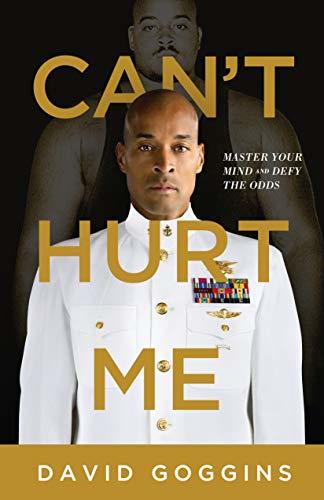
New York Times Best SellerOver 5 million copies soldFor David Goggins, childhood was a nightmare -- poverty, prejudice, and physical abuse colored his days and haunted his nights. But through self-discipline, mental toughness, and hard work, Goggins transformed himself from a depressed, overweight young man with no future into a U.S. Armed Forces icon and one of the world's top endurance athletes. The only man in history to complete elite training as a Navy SEAL, Army Ranger, and Air Force Tactical Air Controller, he went on to set records in numerous endurance events, inspiring Outside magazine to name him "The Fittest (Real) Man in America."In Can't Hurt Me, he shares his astonishing life story and reveals that most of us tap into only 40% of our capabilities. Goggins calls this The 40% Rule, and his story illuminates a path that anyone can follow to push past pain, demolish fear, and reach their full potential.

Shortlisted for the 2020 Financial Times & McKinsey Business Book of the Year Netflix cofounder Reed Hastings reveals for the first time the unorthodox culture behind one of the world's most innovative, imaginative, and successful companies There has never before been a company like Netflix. It has led nothing short of a revolution in the entertainment industries, generating billions of dollars in annual revenue while capturing the imaginations of hundreds of millions of people in over 190 countries. But to reach these great heights, Netflix, which launched in 1998 as an online DVD rental service, has had to reinvent itself over and over again. This type of unprecedented flexibility would have been impossible without the counterintuitive and radical management principles that cofounder Reed Hastings established from the very beginning. Hastings rejected the conventional wisdom under which other companies operate and defied tradition to instead build a culture focused on freedom and responsibility, one that has allowed Netflix to adapt and innovate as the needs of its members and the world have simultaneously transformed.Hastings set new standards, valuing people over process, emphasizing innovation over efficiency, and giving employees context, not controls. At Netflix, there are no vacation or expense policies. At Netflix, adequate performance gets a generous severance, and hard work is irrel-evant. At Netflix, you don't try to please your boss, you give candid feedback instead. At Netflix, employees don't need approval, and the company pays top of market. When Hastings and his team first devised these unorthodox principles, the implications were unknown and untested. But in just a short period, their methods led to unparalleled speed and boldness, as Netflix quickly became one of the most loved brands in the world.Here for the first time, Hastings and Erin Meyer, bestselling author of The Culture Map and one of the world's most influential business thinkers, dive deep into the controversial ideologies at the heart of the Netflix psyche, which have generated results that are the envy of the business world. Drawing on hundreds of interviews with current and past Netflix employees from around the globe and never-before-told stories of trial and error from Hastings's own career, No Rules Rules is the fascinating and untold account of the philosophy behind one of the world's most innovative, imaginative, and successful companies.

Alternate cover for ISBN 9780345350688Through a life of passion and struggle, Malcolm X became one of the most influential figures of the 20th Century. In this riveting account, he tells of his journey from a prison cell to Mecca, describing his transition from hoodlum to Muslim minister. Here, the man who called himself "the angriest Black man in America" relates how his conversion to true Islam helped him confront his rage and recognize the brotherhood of all mankind. An established classic of modern America, "The Autobiography of Malcolm X" was hailed by the New York Times as "Extraordinary. A brilliant, painful, important book." Still extraordinary, still important, this electrifying story has transformed Malcolm X's life into his legacy. The strength of his words, and the power of his ideas continue to resonate more than a generation after they first appeared.

"Long live the King" hailed Entertainment Weekly upon the publication of Stephen King's On Writing. Part memoir, part master class by one of the bestselling authors of all time, this superb volume is a revealing and practical view of the writer's craft, comprising the basic tools of the trade every writer must have. King's advice is grounded in his vivid memories from childhood through his emergence as a writer, from his struggling early career to his widely reported near-fatal accident in 1999 -- and how the inextricable link between writing and living spurred his recovery. Brilliantly structured, friendly and inspiring, On Writing will empower and entertain everyone who reads it -- fans, writers, and anyone who loves a great story well told.(back cover)

The first book from the legendary New Yorker writer John McPhee, tells about Bill Bradley when he was the best basketball player Princeton had ever seen.When John McPhee met Bill Bradley, both were at the beginning of their careers. In A Sense of Where You Are ,McPhee delineates for the reader the training and techniques that made Bradley the extraordinary athlete he was, and this part of the book is a blueprint of superlative basketball. But athletic prowess alone would not explain Bradley's magnetism, which is in the quality of the man himself―his self-discipline, his rationality, and his sense of responsibility.Here is a portrait of Bradley as he was in college, before his time with the New York Knicks and his election to the U.S. Senate―a story that suggests the abundant beginnings of his professional careers in sport and politics.

A #1 New York Times bestseller and arguably the best business narrative ever written, Barbarians at the Gate is the classic account of the fall of RJR Nabisco. An enduring masterpiece of investigative journalism by Bryan Burrough and John Helyar, it includes a new afterword by the authors that brings this remarkable story of greed and double-dealings up to date twenty years after the famed deal. The Los Angeles Times calls Barbarians at the Gate, “Superlative.” The Chicago Tribune raves, “It’s hard to imagine a better story...and it’s hard to imagine a better account.” And in an era of spectacular business crashes and federal bailouts, it still stands as a valuable cautionary tale that must be heeded.

By virtue of its casual, off-handedly brilliant wisdom and the easy splendor of its nature writing, Thoreau’s account of his adventure in self-reliance on the shores of a pond in Massachusetts is one of the signposts by which the modern mind has located itself in an increasingly bewildering world. Deeply sane, invigorating in its awareness of humanity’s place in the moral and natural order, Walden represents the progressive spirit of nineteenth-century America at its eloquent best.

In the midseventies, Steve Martin exploded onto the comedy scene. By 1978 he was the biggest concert draw in the history of stand-up. In 1981 he quit forever. This book is, in his own words, the story of "why I did stand-up and why I walked away." Emmy and Grammy Award winner, author of the acclaimed New York Times bestsellers Shopgirl and The Pleasure of My Company, and a regular contributor to The New Yorker, Martin has always been a writer. His memoir of his years in stand-up is candid, spectacularly amusing, and beautifully written. At age ten Martin started his career at Disneyland, selling guidebooks in the newly opened theme park. In the decade that followed, he worked in the Disney magic shop and the Bird Cage Theatre at Knott's Berry Farm, performing his first magic/comedy act a dozen times a week. The story of these years, during which he practiced and honed his craft, is moving and revelatory. The dedication to excellence and innovation is formed at an astonishingly early age and never wavers or wanes. Martin illuminates the sacrifice, discipline, and originality that made him an icon and informs his work to this day. To be this good, to perform so frequently, was isolating and lonely. It took Martin decades to reconnect with his parents and sister, and he tells that story with great tenderness. Martin also paints a portrait of his times-the era of free love and protests against the war in Vietnam, the heady irreverence of The Smothers Brothers Comedy Hour in the late sixties, and the transformative new voice of Saturday Night Live in the seventies.Throughout the text, Martin has placed photographs, many never seen before. Born Standing Up is a superb testament to the sheer tenacity, focus, and daring of one of the greatest and most iconoclastic comedians of all time.

An alternative cover edition for this ISBN can be found hereAt twenty-two, Cheryl Strayed thought she had lost everything. In the wake of her mother’s death, her family scattered and her own marriage was soon destroyed. Four years later, with nothing more to lose, she made the most impulsive decision of her life. With no experience or training, driven only by blind will, she would hike more than a thousand miles of the Pacific Crest Trail from the Mojave Desert through California and Oregon to Washington State — and she would do it alone.Told with suspense and style, sparkling with warmth and humor, Wild powerfully captures the terrors and pleasures of one young woman forging ahead against all odds on a journey that maddened, strengthened, and ultimately healed her.

"He was history's most creative genius. What secrets can he teach us? The author of the acclaimed bestsellers Steve Jobs, Einstein, and Benjamin Franklin brings Leonardo da Vinci to life in this exciting new biography. Based on thousands of pages from Leonardo's astonishing notebooks and new discoveries about his life and work, Walter Isaacson weaves a narrative that connects his art to his science. He shows how Leonardo's genius was based on skills we can improve in ourselves, such as passionate curiosity, careful observation, and an imagination so playful that it flirted with fantasy. He produced the two most famous paintings in history, The Last Supper and the Mona Lisa. But in his own mind, he was just as much a man of science and technology. With a passion that sometimes became obsessive, he pursued innovative studies of anatomy, fossils, birds, the heart, flying machines, botany, geology, and weaponry. His ability to stand at the crossroads of the humanities and the sciences, made iconic by his drawing of Vitruvian Man, made him history's most creative genius"--

An epic true-tale of hubris and greed from two Pulitzer-finalist Wall Street Journal reporters, Billion Dollar Whale reveals how a young social climber pulled off one of the biggest financial heists in history--right under the nose of the global financial industry--exposing the shocking secret nexus of elite wealth, banking, Hollywood, and politics. The dust had yet to settle on the global financial crisis in 2009 when an unlikely Wharton grad was setting in motion a fraud of unprecedented gall and magnitude--one that would come to symbolize the next great threat to the global financial system. Billion Dollar Whale will become a classic, harrowing parable about the financial world in the twenty-first century.

Now in paperback--the intimate, powerful, and inspiring memoir by the former First Lady of the United States, featuring a new introduction by Michelle Obama, a letter from the author to her younger self, and a book club guide with 20 discussion questions and a 5-question Q&A#1 NEW YORK TIMES BESTSELLER - WATCH THE EMMY-NOMINATED NETFLIX ORIGINAL DOCUMENTARY - OPRAH'S BOOK CLUB PICK - NAACP IMAGE AWARD WINNER - ONE OF ESSENCE'S 50 MOST IMPACTFUL BLACK BOOKS OF THE PAST 50 YEARSIn a life filled with meaning and accomplishment, Michelle Obama has emerged as one of the most iconic and compelling women of our era. As First Lady of the United States of America--the first African American to serve in that role--she helped create the most welcoming and inclusive White House in history, while also establishing herself as a powerful advocate for women and girls in the U.S. and around the world, dramatically changing the ways that families pursue healthier and more active lives, and standing with her husband as he led America through some of its most harrowing moments. Along the way, she showed us a few dance moves, crushed Carpool Karaoke, and raised two down-to-earth daughters under an unforgiving media glare.In her memoir, a work of deep reflection and mesmerizing storytelling, Michelle Obama invites readers into her world, chronicling the experiences that have shaped her--from her childhood on the South Side of Chicago to her years as an executive balancing the demands of motherhood and work, to her time spent at the world's most famous address. With unerring honesty and lively wit, she describes her triumphs and her disappointments, both public and private, telling her full story as she has lived it--in her own words and on her own terms. Warm, wise, and revelatory, Becoming is the deeply personal reckoning of a woman of soul and substance who has steadily defied expectations--and whose story inspires us to do the same.

New York Times and Wall Street Journal BestsellerA New York Times technology correspondent presents the dramatic story of Uber, the Silicon Valley startup at the center of one of the great venture capital power struggles of our time. In June 2017, Travis Kalanick, the hard-charging CEO of Uber, was ousted in a boardroom coup that capped a brutal year for the transportation giant. Uber had catapulted to the top of the tech world, yet for many came to symbolize everything wrong with Silicon Valley. Award-winning New York Times technology correspondent Mike Isaac’s Super Pumped presents the dramatic rise and fall of Uber, set against an era of rapid upheaval in Silicon Valley. Backed by billions in venture capital dollars and led by a brash and ambitious founder, Uber promised to revolutionize the way we move people and goods through the world. A near instant “unicorn,” Uber seemed poised to take its place next to Amazon, Apple, and Google as a technology giant. What followed would become a corporate cautionary tale about the perils of startup culture and a vivid example of how blind worship of startup founders can go wildly wrong. Isaac recounts Uber’s pitched battles with taxi unions and drivers, the company’s toxic internal culture, and the bare-knuckle tactics it devised to overcome obstacles in its quest for dominance. With billions of dollars at stake, Isaac shows how venture capitalists asserted their power and seized control of the startup as it fought its way toward its fateful IPO. Based on hundreds of interviews with current and former Uber employees, along with previously unpublished documents, Super Pumped is a page-turning story of ambition and deception, obscene wealth, and bad behavior that explores how blistering technological and financial innovation culminated in one of the most catastrophic twelve-month periods in American corporate history.

NEW YORK TIMES BESTSELLER • The founder and co-CEO of Salesforce delivers an inspiring vision for successful companies of the future—in which changing the world is everyone’s business.“An urgent and compelling book for anyone in business who yearns to fulfill a higher mission in the world.”—Richard BransonWhat’s the secret to business growth and innovation and a purpose-driven career in a world that is becoming vastly more complicated by the day? According to Marc Benioff, the answer is embracing a culture in which your values permeate everything you do.In Trailblazer, Benioff gives readers a rare behind-the-scenes look at the inner workings of one of the world’s most admired companies. He reveals how Salesforce’s core values—trust, customer success, innovation, and equality—and commitment to giving back have become the company’s greatest competitive advantage and the most powerful engine of its success. Because no matter what business you’re in, Benioff says, values are the bedrock of a resilient company culture that inspires all employees, at every level, to do the best work of their lives. Along the way, he shares insights and best practices for anyone who wants to cultivate a company culture positioned to thrive in the face of the inevitable disruption ahead.None of us in the business world can afford to sit on the sidelines and ignore what’s going on outside the walls of our workplaces. In the future, profits and progress will no longer be sustainable unless they serve the greater good. Whether you run a company, lead a small team, or have just draped an ID badge around your neck for the first time, Trailblazer reveals how anyone can become an agent of change.Praise for Trailblazer“A guide for what every business and organization must do to thrive in this period of profound political and economic change.”—Jamie Dimon, chairman and CEO of JPMorgan Chase“In Trailblazer, Benioff explores how companies can nurture a values-based culture to become powerful platforms for change.”—Susan Wojcicki, CEO of YouTube

Founders at Work recounts the early struggles for independence and acceptance of many of modern technology’s giants, through personal interviews that are at times hilarious, at times painful, and always inspiring. As human-interest stories they will interest the same audience that enjoys reading about the Google founders in PEOPLE magazine. These stories are exceptionally interesting, because they're about the early stages, when the founders were younger and inexperienced. Most readers know startup founders only as confident millionaires. As novices trying to find their way by trial and error, they're more human, and easier for the reader to identify with.

Ricardo Semler inherited his family company, Semco - manufacturer of marine pumps, industrial dishwashers and mixing equipment - when he was 19. Soon, by 1980, it was on the brink of bankruptcy, but a decade later, during a period of savage recession in Brazil, it had been transformed into a rapidly-growing company with profits of 10% on sales of $37 million. This was achieved by throwing out the rule-book and getting rid of all manuals and written procedures. Workers make the decisions previously made by their bosses; assembly workers can come and go as they please, and set their own production schedules; corporate decisions are put to the vote; managerial staff set their own salaries and bonuses; everyone has access to the company books; and there is a minimum of meetings, memos and approvals. All this was achieved through a series of 30 programmes designed to change the entire working environment, and in this book Semler presents an account of his company's revolution.

An eight-time national chess champion and world champion martial artist shares the lessons he has learned from two very different competitive arenas, identifying key principles about learning and performance that readers can apply to their life goals. 50,000 first printing.

The personally revealing and complete biography of the man known everywhere as “The Oracle of Omaha”—for fans of the HBO documentary Becoming Warren BuffettHere is the book recounting the life and times of one of the most respected men in the world, Warren Buffett. The legendary Omaha investor has never written a memoir, but now he has allowed one writer, Alice Schroeder, unprecedented access to explore directly with him and with those closest to him his work, opinions, struggles, triumphs, follies, and wisdom.Although the media track him constantly, Buffett himself has never told his full life story. His reality is private, especially by celebrity standards. Indeed, while the homespun persona that the public sees is true as far as it goes, it goes only so far. Warren Buffett is an array of paradoxes. He set out to prove that nice guys can finish first. Over the years he treated his investors as partners, acted as their steward, and championed honesty as an investor, CEO, board member, essayist, and speaker. At the same time he became the world’s richest man, all from the modest Omaha headquarters of his company Berkshire Hathaway. None of this fits the term “simple.”When Alice Schroeder met Warren Buffett she was an insurance industry analyst and a gifted writer known for her keen perception and business acumen. Her writings on finance impressed him, and as she came to know him she realized that while much had been written on the subject of his investing style, no one had moved beyond that to explore his larger philosophy, which is bound up in a complex personality and the details of his life. Out of this came his decision to cooperate with her on the book about himself that he would never write.Never before has Buffett spent countless hours responding to a writer’s questions, talking, giving complete access to his wife, children, friends, and business associates—opening his files, recalling his childhood. It was an act of courage, as The Snowball makes immensely clear. Being human, his own life, like most lives, has been a mix of strengths and frailties. Yet notable though his wealth may be, Buffett’s legacy will not be his ranking on the scorecard of wealth; it will be his principles and ideas that have enriched people’s lives. This book tells you why Warren Buffett is the most fascinating American success story of our time.Praise for The Snowball“Even people who don't care a whit about business will be intrigued by this portrait. . . . Schroeder, a former insurance-industry analyst, spent years interviewing Buffett, and the result is a side of the Oracle of Omaha that has rarely been seen.” — Time“Will mesmerize anyone interested in who Mr. Buffett is or how he got that way. The Snowball tells a fascinating story.” — New York Times“If the replication of any great achievement first requires knowledge of how it was done, then The Snowball , the most detailed glimpse inside Warren Buffett and his world that we likely will ever get, should become a Bible for capitalists.” — Washington Post“Riveting and encyclopedic.” — Wall Street Journal“A monumental biography . . . Schroeder got the best access yet of any Buffett biographer. . . . She deals out marvelously funny and poignant stories about Buffett and the conglomerate he runs, Berkshire Hathaway.” — Forbes“The most authoritative portrait of one of the most important American investors of our time.” — Los Angeles Times

Avoiding shellfish was easy. The stoning of adulterers proved a little more difficult - and potentially controversial. Was it enough to walk up to an adulterer and gently touch them with a stone? Even that could be grounds for accusations of assault, especially with female adulterers in Manhattan. So what's a good Bible-reading boy to do?Raised in a secular family but increasingly interested in the relevance of faith in our modern world, A.J. Jacobs decides to dive in headfirst and attempt to obey the hundreds of less-publicised rules. The resulting spiritual journey is at once funny and profound, reverent and irreverent, personal and universal, and will make you see history's most influential book with new eyes.

Levels of the Game is John McPhee's astonishing account of a tennis match played by Arthur Ashe against Clark Graebner at Forest Hills in 1968.It begins with the ball rising into the air for the initial serve and ends with the final point. McPhee provides a brilliant, stroke-by-stroke description while examining the backgrounds and attitudes which have molded the players' games."This may be the high point of American sports journalism"- Robert Lipsyte, The New York Times

Illustrated in B/W. A sweeping, atmospheric history of Bell Labs that highlights its unparalleled role as an incubator of innovation and birthplace of the century's most influential technologies.

A legendary tale, both true and astonishing, from the author of Israel is Real and Sweet and Low When Samuel Zemurray arrived in America in 1891, he was tall, gangly, and penniless. When he died in the grandest house in New Orleans sixty-nine years later, he was among the richest, most powerful men in the world. In between, he worked as a fruit peddler, a banana hauler, a dockside hustler, and a plantation owner. He battled and conquered the United Fruit Company, becoming a symbol of the best and worst of the United States: proof that America is the land of opportunity, but also a classic example of the corporate pirate who treats foreign nations as the backdrop for his adventures. In Latin America, when people shouted “Yankee, go home!” it was men like Zemurray they had in mind. Rich Cohen’s brilliant historical profile The Fish That Ate the Whale unveils Zemurray as a hidden kingmaker and capitalist revolutionary, driven by an indomitable will to succeed. Known as El Amigo, the Gringo, or simply Z, the Banana Man lived one of the great untold stories of the last hundred years. Starting with nothing but a cart of freckled bananas, he built a sprawling empire of banana cowboys, mercenary soldiers, Honduran peasants, CIA agents, and American statesmen. From hustling on the docks of New Orleans to overthrowing Central American governments, from feuding with Huey Long to working with the Dulles brothers, Zemurray emerges as an unforgettable figure, connected to the birth of modern American diplomacy, public relations, business, and war—a monumental life that reads like a parable of the American dream.

From a psychotherapist, and national advice columnist comes a thought-provoking new book that takes us behind the scenes of a therapist's world -- where her patients are looking for answers (and so is she). One day, Lori Gottlieb is a therapist who helps patients in her Los Angeles practice. The next, a crisis causes her world to come crashing down. Enter Wendell, the quirky but seasoned therapist in whose office she suddenly lands. With his balding head, cardigan, and khakis, he seems to have come straight from Therapist Central Casting. Yet he will turn out to be anything but. As Gottlieb explores the inner chambers of her patients' lives -- a self-absorbed Hollywood producer, a young newlywed diagnosed with a terminal illness, a senior citizen threatening to end her life on her birthday if nothing gets better, and a twenty-something who can't stop hooking up with the wrong guys -- she finds that the questions they are struggling with are the very ones she is now bringing to Wendell. With startling wisdom and humor, Gottlieb invites us into her world as both clinician and patient, examining the truths and fictions we tell ourselves and others as we teeter on the tightrope between love and desire, meaning and mortality, guilt and redemption, terror and courage, hope and change.Maybe You Should Talk to Someone is revolutionary in its candor, offering a deeply personal yet universal tour of our hearts and minds and providing the rarest of gifts: a boldly revealing portrait of what it means to be human, and a disarmingly funny and illuminating account of our own mysterious lives and our power to transform them.

An inspiring personal story of redemption, second chances, and the transformative power within us all, from the founder and CEO of the nonprofit charity: water. At 28 years old, Scott Harrison had it all. A top nightclub promoter in New York City, his life was an endless cycle of drugs, booze, models--repeat. But 10 years in, desperately unhappy and morally bankrupt, he asked himself, "What would the exact opposite of my life look like?" Walking away from everything, Harrison spent the next 16 months on a hospital ship in West Africa and discovered his true calling. In 2006, with no money and less than no experience, Harrison founded charity: water. Today, his organization has raised over $300 million to bring clean drinking water to more than 8.2 million people around the globe.In Thirst, Harrison recounts the twists and turns that built charity: water into one of the most trusted and admired nonprofits in the world. Renowned for its 100% donation model, bold storytelling, imaginative branding, and radical commitment to transparency, charity: water has disrupted how social entrepreneurs work while inspiring millions of people to join its mission of bringing clean water to everyone on the planet within our lifetime.In the tradition of such bestselling books as Shoe Dog and Mountains Beyond Mountains, Thirst is a riveting account of how to build a better charity, a better business, a better life--and a gritty tale that proves it's never too late to make a change.100% of the author's net proceeds from Thirst will go to fund charity: water projects around the world.

The full inside story of the breathtaking rise and shocking collapse of a multibillion-dollar startup, by the prize-winning journalist who first broke the story and pursued it to the end in the face of pressure and threats from the CEO and her lawyers. In 2014, Theranos founder and CEO Elizabeth Holmes was widely seen as the female Steve Jobs: a brilliant Stanford dropout whose startup "unicorn" promised to revolutionize the medical industry with a machine that would make blood tests significantly faster and easier. Backed by investors such as Larry Ellison and Tim Draper, Theranos sold shares in a fundraising round that valued the company at $9 billion, putting Holmes's worth at an estimated $4.7 billion. There was just one problem: The technology didn't work. For years, Holmes had been misleading investors, FDA officials, and her own employees. When Carreyrou, working at The Wall Street Journal, got a tip from a former Theranos employee and started asking questions, both Carreyrou and the Journal were threatened with lawsuits. Undaunted, the newspaper ran the first of dozens of Theranos articles in late 2015. By early 2017, the company's value was zero and Holmes faced potential legal action from the government and her investors. Here is the riveting story of the biggest corporate fraud since Enron, a disturbing cautionary tale set amid the bold promises and gold-rush frenzy of Silicon Valley.

A debut from Forbes' third most powerful woman in the world, Melinda Gates, a timely and necessary call to action for women's empowerment.For the last twenty years, Melinda Gates has been on a mission. Her goal, as co-chair of the Bill & Melinda Gates Foundation, has been to find solutions for people with the most urgent needs, wherever they live. Throughout this journey, one thing has become increasingly clear to her: If you want to lift a society up, invest in women.In this candid and inspiring book, Gates traces her awakening to the link between women's empowerment and the health of societies. She shows some of the tremendous opportunities that exist right now to “turbo-charge" change. And she provides simple and effective ways each one of us can make a difference.Convinced that all women should be free to decide whether and when to have children, Gates took her first step onto the global stage to make a stand for family planning. That step launched her into further efforts: to ensure women everywhere have access to every kind of job; to encourage men around the globe to share equally in the burdens of household work; to advocate for paid family leave for everyone; to eliminate gender bias in all its forms.Throughout, Gates introduces us to her heroes in the movement towards equality, offers startling data, shares moving conversations she's had with women from all over the world—and shows how we can all get involved.A personal statement of passionate conviction, this book tells of Gates' journey from a partner working behind the scenes to one of the world's foremost advocates for women, driven by the belief that no one should be excluded, all lives have equal value, and gender equity is the lever that lifts everything.

The fascinating story of brothers Tyler and Cameron Winklevoss's big bet on crypto-currency and its dazzling pay-off.Planning to start careers as venture capitalists, the brothers quickly discover that no one will take their money after their fight with Zuckerberg. While nursing their wounds in Ibiza, they accidentally run into an eccentric character who tells them about a brand-new idea: cryptocurrency. Immersing themselves in what is then an obscure and sometimes sinister world, they begin to realize “crypto” is, in their own words, "either the next big thing or total bulls--t." There’s nothing left to do but make a bet.From the Silk Road to the halls of the Securities and Exchange Commission, Bitcoin Billionaires will take us on a wild and surprising ride while illuminating a tantalizing economic future. On November 26, 2017, the Winklevoss brothers became the first bitcoin billionaires. Here’s the story of how they got there—as only Ben Mezrich could tell it.

From the Academy Award -winning actor, an unconventional memoir filled with raucous stories, outlaw wisdom, and lessons learned the hard way about living with greater satisfaction.I've been in this life for fifty years, been trying to work out its riddle for forty-two, and been keeping diaries of clues to that riddle for the last thirty-five. Notes about successes and failures, joys and sorrows, things that made me marvel, and things that made me laugh out loud. How to be fair. How to have less stress. How to have fun. How to hurt people less. How to get hurt less. How to be a good man. How to have meaning in life. How to be more me.Recently, I worked up the courage to sit down with those diaries. I found stories I experienced, lessons I learned and forgot, poems, prayers, prescriptions, beliefs about what matters, some great photographs, and a whole bunch of bumper stickers. I found a reliable theme, an approach to living that gave me more satisfaction, at the time, and still: If you know how, and when, to deal with life's challenges - how to get relative with the inevitable - you can enjoy a state of success I call 'catching greenlights.'So I took a one-way ticket to the desert and wrote this book: an album, a record, a story of my life so far. This is fifty years of my sights and seens, felts and figured-outs, cools and shamefuls. Graces, truths, and beauties of brutality. Getting away withs, getting caughts, and getting wets while trying to dance between the raindrops.Hopefully, it's medicine that tastes good, a couple of aspirin instead of the infirmary, a spaceship to Mars without needing your pilot's license, going to church without having to be born again, and laughing through the tears.It's a love letter. To life.It's also a guide to catching more greenlights-and to realising that the yellows and reds eventually turn green too.Good luck.

Hidden somewhere, in nearly every major city in the world, is an underground seduction lair. And in these lairs, men trade the most devastatingly effective techniques ever invented to charm women. This is not fiction. These men really exist. They live together in houses known as Projects. And Neil Strauss, the bestselling author and journalist, spent two years living among them, using the pseudonym Style to protect his real-life identity. The result is one of the most explosive and controversial books of the last decade—guaranteed to change the lives of men and transform the way women understand the opposite sex forever.On his journey from AFC (average frustrated chump) to PUA (pick-up artist) to PUG (pick-up guru), Strauss not only shares scores of original seduction techniques but also has unforgettable encounters with the likes of Tom Cruise, Britney Spears, Paris Hilton, Heidi Fleiss, and Courtney Love. And then things really start to get strange—and passions lead to betrayals lead to violence. The Game is the story of one man's transformation from frog to prince to prisoner in the most unforgettable book of this generation.

Since its hardcover publication in August of 1995, Buffett has appeared on the Wall Street Journal, New York Times, San Francisco Chronicle, Los Angeles Times, Seattle Times, Newsday and Business Week bestseller lists.Starting from scratch, simply by picking stocks and companies for investment, Warren Buffett amassed one of the epochal fortunes of the twentieth century—an astounding net worth of $10 billion, and counting. His awesome investment record has made him a cult figure popularly known for his seeming a billionaire who has a modest lifestyle, a phenomenally successful investor who eschews the revolving-door trading of modern Wall Street, a brilliant dealmaker who cultivates a homespun aura.Journalist Roger Lowenstein draws on three years of unprecedented access to Buffett’s family, friends, and colleagues to provide the first definitive, inside account of the life and career of this American original. Buffett explains Buffett’s investment strategy—a long-term philosophy grounded in buying stock in companies that are undervalued on the market and hanging on until their worth invariably surfaces—and shows how it is a reflection of his inner self.

Unusual book

An assemblage of reflections on the nature of writing and the writer from one the greatest American writers of the twentieth century.Throughout Hemingway’s career as a writer, he maintained that it was bad luck to talk about writing—that it takes off “whatever butterflies have on their wings and the arrangement of hawk’s feathers if you show it or talk about it.”Despite this belief, by the end of his life he had done just what he intended not to do. In his novels and stories, in letters to editors, friends, fellow artists, and critics, in interviews and in commissioned articles on the subject, Hemingway wrote often about writing. And he wrote as well and as incisively about the subject as any writer who ever lived…This book contains Hemingway’s reflections on the nature of the writer and on elements of the writer’s life, including specific and helpful advice to writers on the craft of writing, work habits, and discipline. The Hemingway personality comes through in general wisdom, wit, humor, and insight, and in his insistence on the integrity of the writer and of the profession itself.—From the Preface by Larry W. Phillips

"Oh, screw it, let's do it."That's the philosophy that has allowed Richard Branson, in slightly more than twenty-five years, to spawn so many successful ventures. From the airline business (Virgin Atlantic Airways), to music (Virgin Records and V2), to cola (Virgin Cola), to retail (Virgin Megastores), and nearly a hundred others, ranging from financial services to bridal wear, Branson has a track record second to none.Losing My Virginity is the unusual, frequently outrageous autobiography of one of the great business geniuses of our time. When Richard Branson started his first business, he and his friends decided that "since we're complete virgins at business, let's call it just that: Virgin." Since then, Branson has written his own "rules" for success, creating a group of companies with a global presence, but no central headquarters, no management hierarchy, and minimal bureaucracy.Many of Richard Branson's companies--airlines, retailing, and cola are good examples--were started in the face of entrenched competition. The experts said, "Don't do it." But Branson found golden opportunities in markets in which customers have been ripped off or underserved, where confusion reigns, and the competition is complacent. And in this stressed-out, overworked age, Richard Branson gives us a new model: a dynamic, hardworking, successful entrepreneur who lives life to the fullest. Family, friends, fun, and adventure are equally important as business in Branson's life. Losing My Virginity is a portrait of a productive, sane, balanced life, filled with rich and colorful stories: Crash-landing his hot-air balloon in the Algerian desert, yet remaining determined to have another go at being the first to circle the globeSigning the Sex Pistols, Janet Jackson, the Rolling Stones, Boy George, and Phil CollinsFighting back when British Airways took on Virgin Atlantic and successfully suing this pillar of the British business establishmentSwimming two miles to safety during a violent storm off the coast of MexicoSelling Virgin Records to save Virgin AtlanticStaging a rescue flight into Baghdad before the start of the Gulf War . . .And much more. Losing My Virginity is the ultimate tale of personal and business survival from a man who combines the business prowess of Bill Gates and the promotional instincts of P. T. Barnum.Also available in the UK from Virgin Publishing, and in Canada from General Publishing,From the Hardcover edition.

One of the great war memoirs, published here in a stunning Deluxe Edition for the centenary of World War I and the Battle of the Somme — and featuring a foreword by the New York Times bestselling author of MatterhornA worldwide bestseller published shortly after the end of World War I, Storm of Steel is a memoir of astonishing power, savagery, and ashen lyricism. It illuminates not only the horrors but also the fascination of total war, as seen through the eyes of an ordinary German soldier.Young, tough, patriotic, but also disturbingly self-aware, Ernst Jünger exulted in the Great War, which he saw not just as a great national conflict but also — more importantly — as a unique personal struggle. Leading raiding parties, defending trenches against murderous British incursions, simply enduring as shells tore his comrades apart, Jünger keeps testing himself, braced for the death that will mark his failure. His account is ripe for rediscovery upon the centennial of the Battle of the Somme — a major set piece in Storm of Steel — and a bracing read for fans of Redeployment and American Sniper.

In Just Kids, Patti Smith's first book of prose, the legendary American artist offers a never-before-seen glimpse of her remarkable relationship with photographer Robert Mapplethorpe in the epochal days of New York City and the Chelsea Hotel in the late sixties and seventies. An honest and moving story of youth and friendship, Smith brings the same unique, lyrical quality to Just Kids as she has to the rest of her formidable body of work--from her influential 1975 album Horses to her visual art and poetry.

By identifying the structure of DNA, the molecule of life, Francis Crick and James Watson revolutionized biochemistry & won themselves a Nobel Prize. At the time, Watson was only 24, a young scientist hungry to make his mark. His uncompromisingly honest account of the heady days of their thrilling sprint against other world-class researchers to solve one of science's greatest mysteries gives a dazzlingly clear picture of a world of brilliant scientists with great gifts, very human ambitions & bitter rivalries. With humility unspoiled by false modesty, Watson relates his & Crick's desperate efforts to beat Linus Pauling to the Holy Grail of life sciences, the identification of the basic building block of life. Never has a scientist been so truthful in capturing in words the flavor of his work.

The Right Stuff is an exhilarating flight into the death-defying lives of the Mercury Seven, America’s first astronauts. This Folio edition of Tom Wolfe’s classic features superb retro-styled color illustrations by Tavis Coburn."What is it that makes a man willing to sit up on top of an enormous Roman candle, and wait for someone to light the fuse?" In The Right Stuff, hailed as one of the greatest books ever written about space flight, Tom Wolfe sets out to answer the question, and lays bare the mindset and motivations of the first American astronauts to risk life and limb to beat the Soviets into orbit. He blows apart the mythology of the Mercury Seven – Deke Slayton, Gus Grissom, Alan Shepard, Wally Schirra, John Glenn, Scott Carpenter and Gordon Cooper – and the forerunner of them all, supersonic test pilot Chuck Yeager. Dazzlingly written, this is a thrilling account of men who "pushed the edge of the envelope" at work and play, all to prove they possessed the quality that Wolfe famously christened the right stuff. Opening with a new introduction by space historian Andrew Chaikin and featuring Tavis Coburn’s striking retro-styled graphic illustrations, this is an exceptional edition of a 20th-century classic from the Folio Society.UNIQUE SPACE AGE ILLUSTRATIONThis is the ultimate edition of Tom Wolfe’s most celebrated non-fiction book. To produce it, the Folio Society tapped into the expertise of Andrew Chaikin, author of A Man on the Moon – the definitive account of the Apollo space program, published in its own lavish Folio edition in 2021. Chaikin worked closely with Folio and illustrator Tavis Coburn on the visual look and feel of the book, which takes its cue from 1940s comic art and Soviet posters of the time. The illustrations portray the astronauts as Cold War heroes, and Coburn’s beautiful retro-futurist cover design perfectly captures the aesthetic and spirit of the early Space Age. Andrew Chaikin’s new introduction explores the origins of the book, and its uncanny ability to get inside the mindset of the Mercury astronauts: "Wolfe seemed to have found his way into their high-octane psyches and spilled their secret, innermost thoughts… they became three-dimensional human beings."Bound in printed and blocked clothSet in Cartier Book with Helvetica as display448 pagesFrontispiece and 7 colour illustrations, including 5 double-page spreadsBlack & white chapter detailsPrinted endpapersPrinted page edgesPrinted slipcase8 ¾" x 5 ½"

A quest across America, from the northernmost tip of Maine to California’s Monterey PeninsulaTo hear the speech of the real America, to smell the grass and the trees, to see the colors and the light—these were John Steinbeck's goals as he set out, at the age of fifty-eight, to rediscover the country he had been writing about for so many years.With Charley, his French poodle, Steinbeck drives the interstates and the country roads, dines with truckers, encounters bears at Yellowstone and old friends in San Francisco. Along the way he reflects on the American character, racial hostility, the particular form of American loneliness he finds almost everywhere, and the unexpected kindness of strangers.

The Barnes & Noble Review March 1999 While Gates, Jobs, and the other big boys of Silicon Valley are basking in the glory of the information age, renowned Los Angeles Times reporter Michael Hiltzik reveals how, back in the early '70s, a group of inventors at Xerox's Palo Alto Research Center (PARC) blazed the trail for all of today's indispensable technology from the PC to email to ATMs to meteorologists' weather maps. And they did it without fanfare or recognition from their employer. Hiltzik's Dealers of Lightning provides a fascinating look at technohistory that sets the record straight. In Dealers of Lightning, Hiltzik describes the forces and faces behind the revolution that the Xerox PARC team single-handedly spawned. The Xerox PARC group was composed solely of top technical minds. The decision was made at Xerox headquarters to give the team complete freedom from deadlines and directives, in hopes of fostering a true creative environment. It worked perhaps too well. The team responded with a steady output of amazing technology, including the first version of the Internet, the first personal computer, user-friendly word-processing programs, and pop-up menus. Xerox, far from ready for the explosion of innovation, failed to utilize the technology dreamed up by the group. Out of all the dazzling inventions born at Xerox PARC, only a handful were developed and marketed by Xerox. However, one of these inventions, the laser printer, proved successful enough to earn billions for the company, therefore justifying its investment in the research center. Most oftheteam's creations would go on to be developed and perfected by other companies, such as IBM, Apple, and Microsoft. Drawing from interviews with the engineers, executives, and scientists involved in the Xerox PARC, Dealers of Lightning chronicles an amazing era of egos, ideas, and inventions at the dawn of the computer age.

First of a 3-volume social history, Parting the Waters is more than a biography of the Rev. Martin Luther King Jr. during the decade preceding his emergence as a national figure. This 1000-page effort, which won the Pulitzer Prize as well as the National Book Critics Circle Award for General Nonfiction, profiles the key players & events that helped shape the American social landscape following WWII but before the civil-rights movement of the 60s reached its climax. Branch then goes a step further, endeavoring to explain how the struggles evolved as they did by probing the influences of the main actors while discussing the manner in which events conspired to create fertile ground for change. Also analyzing the beginnings of black self-consciousness, this book maps the structure of segregation & bigotry in America between '54 & '63. The author considers the constantly changing behavior of those in Washington with regard to the injustice of offical racism operating in many states at this time.Forerunner: Vernon Johns Rockefeller and Ebenezer Niebuhr and the Pool TablesFirst Trombone The Montgomery Bus BoycottA Taste of the World The Quickening Shades of PoliticsA Pawn of HistoryThe Kennedy TransitionBaptism on Wheels The Summer of Freedom RidesMoses in McComb, King in Kansas City Almost Christmas in Albany Hoover's Triangle and King's MachineThe Fireman's Last Reprieve The Fall of Ole MissTo Birmingham Greenwood and Birmingham JailThe Children's Miracle Firestorm The March on Washington Crossing Over: Nightmares and Dreams

Searching for Bobby Fischer is the story of Fred Waitzkin and his son Josh, from the moment six-year-old Josh first sits down at a chessboard until he competes for the national championship. Drawn into the insular, international network of chess, they must also navigate the difficult waters of their own relationship. All the while, Waitzkin wonders about and searches for the elusive Bobby Fischer, whose myth still dominates the chess world and profoundly affects Waitzkin's dreams for his son.

In this fascinating exposé, two investigative reporters trace the hugely successful career of Microsoft founder Bill Gates. Part entrepreneur, part enfant terrible, Gates has become the most powerful -- and feared -- player in the computer industry, and arguably the richest man in America. In Hard Drive, investigative reporters Wallace and Erickson follow Gates from his days as an unkempt thirteen-year-old computer hacker to his present-day status as a ruthless billionaire CEO. More than simply a "revenge of the nerds" story though, this is a balanced analysis of a business triumph, and a stunningly driven personality. The authors have spoken to everyone who knows anything about Bill Gates and Microsoft -- from childhood friends to employees and business rivals who reveal the heights, and limits, of his wizardry. From Gates's singular accomplishments to his equally extraordinary brattiness, arrogance, and hostility (the atmosphere is so intense at Microsoft that stressed-out programmers have been known to ease the tension of their eighty-hour workweeks by exploding homemade bombs), this is a uniquely revealing glimpse of the person who has emerged as the undisputed king of a notoriously brutal industry.

In the weird glow of the dying millennium, Michael Lewis set out on a safari through Silicon Valley to find the world’s most important technology entrepreneur. He found this in Jim Clark, a man whose achievements include the founding of three separate billion-dollar companies. Lewis also found much more, and the result—the best-selling book The New New Thing—is an ingeniously conceived history of the Internet revolution.

The blockbuster phenomenon that charts an amazing journey of the mind while revolutionizing our concept of memoryAn instant bestseller that is poised to become a classic, Moonwalking with Einstein recounts Joshua Foer's yearlong quest to improve his memory under the tutelage of top "mental athletes." He draws on cutting-edge research, a surprising cultural history of remembering, and venerable tricks of the mentalist's trade to transform our understanding of human memory. From the United States Memory Championship to deep within the author's own mind, this is an electrifying work of journalism that reminds us that, in every way that matters, we are the sum of our memories.

An alternative cover edition for this ISBN can be found here and here.The Emperor of All Maladies is a magnificent, profoundly humane “biography” of cancer - from its first documented appearances thousands of years ago through the epic battles in the twentieth century to cure, control, and conquer it to a radical new understanding of its essence. Physician, researcher, and award-winning science writer, Siddhartha Mukherjee examines cancer with a cellular biologist’s precision, a historian’s perspective, and a biographer’s passion. The result is an astonishingly lucid and eloquent chronicle of a disease humans have lived with - and perished from - for more than five thousand years. The story of cancer is a story of human ingenuity, resilience, and perseverance, but also of hubris, paternalism, and misperception. Mukherjee recounts centuries of discoveries, setbacks, victories, and deaths, told through the eyes of his predecessors and peers, training their wits against an infinitely resourceful adversary that, just three decades ago, was thought to be easily vanquished in an all-out “war against cancer.” The book reads like a literary thriller with cancer as the protagonist. From the Persian Queen Atossa, whose Greek slave cut off her malignant breast, to the nineteenth-century recipients of primitive radiation and chemotherapy to Mukherjee’s own leukemia patient, Carla, The Emperor of All Maladies is about the people who have soldiered through fiercely demanding regimens in order to survive—and to increase our understanding of this iconic disease. Riveting, urgent, and surprising, The Emperor of All Maladies provides a fascinating glimpse into the future of cancer treatments. It is an illuminating book that provides hope and clarity to those seeking to demystify cancer.

You've seen it all before. A malicious online rumor costs a company millions. A political sideshow derails the national news cycle and destroys a candidate. Some product or celebrity zooms from total obscurity to viral sensation. What you don’t know is that someone is responsible for all this. Usually, someone like me. I’m a media manipulator. In a world where blogs control and distort the news, my job is to control blogs—as much as any one person can. IN TODAY’S CULTURE…Blogs like Gawker, BuzzFeed, and The Huffington Post drive the media agenda. Bloggers are slaves to money, technology, and deadlines. Manipulators wield these levers to shape everything you read, see, and hear— online and off. Why am I giving away these secrets? Because I’m tired of a world where blogs take indirect bribes, marketers help write the news, reckless journalists spread lies, and no one is accountable for any of it. I’m going to explain exactly how the media really works. What you choose to do with this information is up to you.

As Alexis Ohanian learned when he helped to co-found the immensely popular reddit.com, the internet is the most powerful and democratic tool for disseminating information in human history. And when that power is harnessed to create new communities, technologies, businesses or charities, the results can be absolutely stunning.In this book, Alexis will share his ideas, tips and even his own doodles about harnessing the power of the web for good, and along the way, he will share his philosophy with young entrepreneurs all over the globe.At 29, Ohanian has come to personify the dorm-room tech entrepreneur, changing the world without asking permission. Within a couple of years of graduating from the University of Virginia, Ohanian did just that, selling reddit for millions of dollars. He's gone on to start many other companies, like hipmunk and breadpig, all while representing Y Combinator and investing in over sixty other tech startups. Without Their Permission is his personal guidebook as to how other aspiring entrepreneurs can follow in his footsteps.

An unforgettable true story about the potential for mercy to redeem us, and a clarion call to end mass incarceration in America — from one of the most inspiring lawyers of our time.Bryan Stevenson was a young lawyer when he founded the Equal Justice Initiative, a nonprofit law office in Montgomery, Alabama, dedicated to defending the poor, the incarcerated, and the wrongly condemned.Just Mercy tells the story of EJI, from the early days with a small staff facing the nation’s highest death sentencing and execution rates, through a successful campaign to challenge the cruel practice of sentencing children to die in prison, to revolutionary projects designed to confront Americans with our history of racial injustice.One of EJI’s first clients was Walter McMillian, a young Black man who was sentenced to die for the murder of a young white woman that he didn’t commit. The case exemplifies how the death penalty in America is a direct descendant of lynching — a system that treats the rich and guilty better than the poor and innocent.

The Earth teems with life: in its oceans, forests, skies and cities. Yet there’s a black hole at the heart of biology. We do not know why complex life is the way it is, or, for that matter, how life first began. In The Vital Question, award-winning author and biochemist Nick Lane radically reframes evolutionary history, putting forward a solution to conundrums that have puzzled generations of scientists.For two and a half billion years, from the very origins of life, single-celled organisms such as bacteria evolved without changing their basic form. Then, on just one occasion in four billion years, they made the jump to complexity. All complex life, from mushrooms to man, shares puzzling features, such as sex, which are unknown in bacteria. How and why did this radical transformation happen?The answer, Lane argues, lies in energy: all life on Earth lives off a voltage with the strength of a lightning bolt. Building on the pillars of evolutionary theory, Lane’s hypothesis draws on cutting-edge research into the link between energy and cell biology, in order to deliver a compelling account of evolution from the very origins of life to the emergence of multicellular organisms, while offering deep insights into our own lives and deaths.Both rigorous and enchanting, The Vital Question provides a solution to life’s vital question: why are we as we are, and indeed, why are we here at all?

Entrepreneur Jesse Itzler chronicles his month of living and extreme fitness training with a Navy SEAL in the New York Times and #1 LA Times bestseller Living With a Seal, now with two bonus chapters.Entrepreneur Jesse Itzler will try almost anything. His life is about being bold and risky. So when Jesse felt himself drifting on autopilot, he hired a rather unconventional trainer to live with him for a month-an accomplished Navy SEAL widely considered to be "the toughest man on the planet"! Living With a Seal is like a buddy movie if it starred the Fresh Prince of Bel- Air. . .and Rambo. Jesse is about as easy-going as you can get. SEAL is. . . not. Jesse and SEAL's escapades soon produce a great friendship, and Jesse gains much more than muscle. At turns hilarious and inspiring, Living With a Seal ultimately shows you the benefits of stepping out of your comfort zone.

An NPR Book Concierge Best Book of 2018!A stunning story about how power works in the modern age--the book the New York Times called "one helluva page-turner" and The Sunday Times of London celebrated as "riveting...an astonishing modern media conspiracy that is a fantastic read." Pick up the book everyone is talking about.In 2007, a short blogpost on Valleywag, the Silicon Valley-vertical of Gawker Media, outed PayPal founder and billionaire investor Peter Thiel as gay. Thiel's sexuality had been known to close friends and family, but he didn't consider himself a public figure, and believed the information was private. This post would be the casus belli for a meticulously plotted conspiracy that would end nearly a decade later with a $140 million dollar judgment against Gawker, its bankruptcy and with Nick Denton, Gawker's CEO and founder, out of a job. Only later would the world learn that Gawker's demise was not incidental--it had been masterminded by Thiel.For years, Thiel had searched endlessly for a solution to what he'd come to call the "Gawker Problem." When an unmarked envelope delivered an illegally recorded sex tape of Hogan with his best friend's wife, Gawker had seen the chance for millions of pageviews and to say the things that others were afraid to say. Thiel saw their publication of the tape as the opportunity he was looking for. He would come to pit Hogan against Gawker in a multi-year proxy war through the Florida legal system, while Gawker remained confidently convinced they would prevail as they had over so many other lawsuit--until it was too late. The verdict would stun the world and so would Peter's ultimate unmasking as the man who had set it all in motion. Why had he done this? How had no one discovered it? What would this mean--for the First Amendment? For privacy? For culture?In Holiday's masterful telling of this nearly unbelievable conspiracy, informed by interviews with all the key players, this case transcends the narrative of how one billionaire took down a media empire or the current state of the free press. It's a study in power, strategy, and one of the most wildly ambitious--and successful--secret plots in recent memory.Some will cheer Gawker's destruction and others will lament it, but after reading these pages--and seeing the access the author was given--no one will deny that there is something ruthless and brilliant about Peter Thiel's shocking attempt to shake up the world.

A landmark reconsideration of the iconoclastic war leader, based on extensive new material, from private letters to war cabinet meetings, by the bestselling, award-winning author of Napoleon and The Storm of War.When we seek an example of unalloyed courage, the man who comes to mind is Winston Churchill: the visionary leader, immune from the consensus of the day, who stood firmly for his beliefs when everyone doubted him. But how did young Winston become Churchill? What gave him the strength to take on the superior force of Nazi Germany when bombs rained on London and so many others had caved? In The Storm of War, Andrew Roberts gave us a tantalizing glimpse of Churchill the war leader. Now, at last, we have the full and definitive biography, as personally revealing as it is compulsively readable, about one of the great leaders of all time.Roberts was granted exclusive access to extensive new material: the transcripts of war cabinet meetings - the equivalent of the Nixon and JFK tapes - diaries, letters, unpublished memoirs, and detailed notes taken by the king after their bi-weekly meetings. Having read every one of Churchill's letters, including deeply personal ones that Churchill's son Randolph had previously chosen to withhold, and spoken to more than one hundred people who knew or worked with him, Roberts identifies the hidden forces fueling Churchill's drive. Churchill put his faith in the British Empire and fought as hard to preserve it as he did to defend London. Having started his career in India and South Africa, he understood better than most idealists how hard it can be to pacify reluctant people far from home.We think of Churchill as a hero of the age of mechanized warfare, but Roberts's masterwork reveals that he has as much to teach us about the challenges we face today and the fundamental values of courage, tenacity, leadership, and moral conviction.

Are leaders born or made? Where does ambition come from? How does adversity affect the growth of leadership? Does the leader make the times or do the times make the leader? In Leadership, Goodwin draws upon the four presidents she has studied most closely—Abraham Lincoln, Theodore Roosevelt, Franklin D. Roosevelt, and Lyndon B. Johnson (in civil rights)—to show how they recognized leadership qualities within themselves and were recognized as leaders by others. By looking back to their first entries into public life, we encounter them at a time when their paths were filled with confusion, fear, and hope.Leadership tells the story of how they all collided with dramatic reversals that disrupted their lives and threatened to shatter forever their ambitions. Nonetheless, they all emerged fitted to confront the contours and dilemmas of their times. No common pattern describes the trajectory of leadership. Although set apart in background, abilities, and temperament, these men shared a fierce ambition and a deep-seated resilience that enabled them to surmount uncommon hardships. At their best, all four were guided by a sense of moral purpose. At moments of great challenge, they were able to summon their talents to enlarge the opportunities and lives of others.

The extraordinary life story of the former chairman of the Federal Reserve, whose absolute integrity provides the inspiration we need as our constitutional system and political tradition are being tested to the breaking point.As chairman of the Federal Reserve (1979-1987), Paul Volcker slayed the inflation dragon that was consuming the American economy and restored the world's faith in central bankers. That extraordinary feat was just one pivotal episode in a decades-long career serving six presidents.Told with wit, humor, and down-to-earth erudition, the narrative of Volcker's career illuminates the changes that have taken place in American life, government, and the economy since World War II. He vibrantly illustrates the crises he managed alongside the world's leading politicians, central bankers, and financiers. Yet he first found his model for competent and ethical governance in his father, the town manager of Teaneck, NJ, who instilled Volcker's dedication to absolute integrity and his "three verities" of stable prices, sound finance, and good government.

An unforgettable story of four women who, through grit and ingenuity, became stars in the cutthroat, high-stakes, male dominated world of venture capital in Silicon Valley, and helped build some of the foremost companies of our time.In Alpha Girls , award-winning journalist Julian Guthrie takes readers behind the closed doors of venture capital, an industry that transforms economies and shapes how we live. We follow the lives and careers of four women who were largely written out of history - until now.Magdalena Yesil, who arrived in America from Turkey with $43 to her name, would go on to receive her electrical engineering degree from Stanford, found some of the first companies to commercialize internet access, and help Marc Benioff build Salesforce. Mary Jane Elmore went from the corn fields of Indiana to Stanford and on to the storied venture capital firm IVP - where she was one of the first women in the U.S. to make partner - only to be pulled back from the glass ceiling by expectations at home. Theresia Gouw, an overachieving first-generation Asian American from a working-class town, dominated the foosball tables at Brown (she would later reluctantly let Sergey Brin win to help Accel Partners court Google), before she helped land and build companies including Facebook, Trulia, Imperva, and ForeScout. Sonja Hoel, a Southerner who became the first woman investing partner at white-glove Menlo Ventures, invested in McAfee, Hotmail, Acme Packet, and F5 Networks. As her star was still rising at Menlo, a personal crisis would turn her into an activist overnight, inspiring her to found an all-women's investment group and a national nonprofit for girls.These women, juggling work and family, shaped the tech landscape we know today while overcoming unequal pay, actual punches, betrayals, and the sexist attitudes prevalent in Silicon Valley and in male-dominated industries everywhere. Despite the setbacks, they would rise again to rewrite the rules for an industry they love. In Alpha Girls , Guthrie reveals their untold stories.

Gregory Zuckerman, the bestselling author of The Greatest Trade Ever and The Frackers, answers the question investors have been asking for decades: How did Jim Simons do it?Shortlisted for the Financial Times/McKinsey Business Book of the Year AwardJim Simons is the greatest money maker in modern financial history. No other investor--Warren Buffett, Peter Lynch, Ray Dalio, Steve Cohen, or George Soros--can touch his record. Since 1988, Renaissance's signature Medallion fund has generated average annual returns of 66 percent. The firm has earned profits of more than $100 billion; Simons is worth twenty-three billion dollars.Drawing on unprecedented access to Simons and dozens of current and former employees, Zuckerman, a veteran Wall Street Journal investigative reporter, tells the gripping story of how a world-class mathematician and former code breaker mastered the market. Simons pioneered a data-driven, algorithmic approach that's sweeping the world.As Renaissance became a market force, its executives began influencing the world beyond finance. Simons became a major figure in scientific research, education, and liberal politics. Senior executive Robert Mercer is more responsible than anyone else for the Trump presidency, placing Steve Bannon in the campaign and funding Trump's victorious 2016 effort. Mercer also impacted the campaign behind Brexit.The Man Who Solved the Market is a portrait of a modern-day Midas who remade markets in his own image, but failed to anticipate how his success would impact his firm and his country. It's also a story of what Simons's revolution means for the rest of us.

We live, according to Eddie S. Glaude Jr., in a moment when the struggles of Black Lives Matter and the attempt to achieve a new America have been challenged by the election of Donald Trump, a president whose victory represents yet another failure of America to face the lies it tells itself about race. From Charlottesville to the policies of child separation at the border, his administration turned its back on the promise of Obama's presidency and refused to embrace a vision of the country shorn of the insidious belief that white people matter more than others.We have been here before: For James Baldwin, these after times came in the wake of the civil rights movement, when a similar attempt to compel a national confrontation with the truth was answered with the murders of Medgar Evers, Malcolm X, and Martin Luther King, Jr. In these years, spanning from the publication of The Fire Next Time in 1963 to that of No Name in the Street in 1972, Baldwin transformed into a more overtly political writer, a change that came at great professional and personal cost. But from that journey, Baldwin emerged with a sense of renewed purpose about the necessity of pushing forward in the face of disillusionment and despair.In the story of Baldwin's crucible, Glaude suggests, we can find hope and guidance through our own after times, this Trumpian era of shattered promises and white retrenchment. Mixing biography--drawn partially from newly uncovered interviews--with history, memoir, and trenchant analysis of our current moment, Begin Again is Glaude's endeavor, following Baldwin, to bear witness to the difficult truth of race in America today. It is at once a searing exploration that lays bare the tangled web of race, trauma, and memory, and a powerful interrogation of what we all must ask of ourselves in order to call forth a new America.

One Blade of Grass tells the story of how meditation practice helped Henry Shukman to recover from the depression, anxiety, and chronic eczema he had had since childhood and to integrate a sudden spiritual awakening into his life. By turns humorous and moving, this beautifully written memoir demystifies Zen training, casting its profound insights in simple, lucid language, and takes the reader on a journey of their own, into the hidden treasures of life that contemplative practice can reveal to any of us.

NAMED A BEST BOOK OF 2022 BY THE NEW YORKERNational Bestseller * New York Times Editors’ Choice * Financial Times “Books to Read in 2022”A SABEW BEST IN BUSINESS BOOK AWARDS FINALIST“A gripping account of PayPal’s origins and a vivid portrait of the geeks and contrarians who made its meteoric rise possible” ( The Wall Street Journal )—including Elon Musk, Amy Rowe Klement, Peter Thiel, Julie Anderson, Max Levchin, Reid Hoffman, and many others whose stories have never been shared.Today, PayPal’s founders and earliest employees are considered the technology industry’s most powerful network. Since leaving PayPal, they have formed, funded, and advised the leading companies of our era, including Tesla, Facebook, YouTube, SpaceX, Yelp, Palantir, and LinkedIn, among many others. As a group, they have driven twenty-first-century innovation and entrepreneurship. Their names stir passions; they’re as controversial as they are admired.Yet for all their influence, the story of where they first started has gone largely untold. Before igniting the commercial space race or jumpstarting social media’s rise, they were the unknown creators of a scrappy online payments start-up called PayPal. In building what became one of the world’s foremost companies, they faced bruising competition, internal strife, the emergence of widespread online fraud, and the devastating dot-com bust of the 2000s. Their success was anything but certain.In The The Story of PayPal and the Entrepreneurs Who Shaped Silicon Valley , award-winning author and biographer Jimmy Soni explores PayPal’s turbulent early days. With hundreds of interviews and unprecedented access to thousands of pages of internal material, he shows how the seeds of so much of what shapes our world today—fast-scaling digital start-ups, cashless currency concepts, mobile money transfer—were planted two decades ago. He also reveals the stories of countless individuals who were left out of the front-page features and banner headlines but who were central to PayPal’s success.Described as “an intensely magnetic chronicle” ( The New York Times ) and “engrossing” ( Business Insider ), The Founders is a story of iteration and inventiveness—the products of which have cast a long and powerful shadow over modern life. This narrative illustrates how this rare assemblage of talent came to work together and how their collaboration changed our world forever.