
James D. Watson
In 1928, James D. Watson was born in Chicago. Watson, who co-discovered the double helix structure of DNA (deoxyribonucleic acid) at age 25, was awarded the Nobel Prize in Physiology or Medicine in 1962, along with Francis Crick and Maurice Wilkins. His bird-watching hobby prompted his interest in genetics. He earned his B.Sc. degree in zoology from the University of Chicago in 1947, and his Ph.D. from Indiana University in Bloomington in 1950. He worked with Wilkins and Francis Crick at Cavendish Laboratory in England in 1951-1953, when they discovered the structure of DNA. Watson became a member of the Harvard Biology Department in 1956, then a full professor in 1961. His book The Double Helix, which was published in 1968, became a bestseller. Watson was appointed director of Cold Spring Harbor Laboratory on Long Island in 1968, and became its president in 1994. As director of the National Center for Human Genome Research at the NIH in 1989, Watson launched the worldwide campaign to map and sequence the human genome. Watson is an outspoken unbeliever who considers that human progress has been shackled by the idea of divine fate, and that human beings should do their utmost to improve the future. In a Youngstown State University speech, Watson said, "The biggest advantage to believing in God is you don't have to understand anything, no physics, no biology. I wanted to understand" (The Vindicator, Dec. 2, 2003). More: http://en.wikipedia.org/wiki/James_Wa... http://www.nobelprize.org/nobel_prize... http://www.achievement.org/autodoc/pa... http://www.britannica.com/EBchecked/t... http://www.dnaftb.org/19/bio.html
28 Books Written

The Double Helix: A Personal Account of the Discovery of the Structure of DNA
by James D. Watson
Rating: 3.6 ⭐
• 7 recommendations ❤️
The classic personal account of Watson and Crick’s groundbreaking discovery of the structure of DNA, now with an introduction by Sylvia Nasar, author of A Beautiful Mind .By identifying the structure of DNA, the molecule of life, Francis Crick and James Watson revolutionized biochemistry and won themselves a Nobel Prize. At the time, Watson was only twenty-four, a young scientist hungry to make his mark. His uncompromisingly honest account of the heady days of their thrilling sprint against other world-class researchers to solve one of science’s greatest mysteries gives a dazzlingly clear picture of a world of brilliant scientists with great gifts, very human ambitions, and bitter rivalries.With humility unspoiled by false modesty, Watson relates his and Crick’s desperate efforts to beat Linus Pauling to the Holy Grail of life sciences, the identification of the basic building block of life. Never has a scientist been so truthful in capturing in words the flavor of his work.

Now completely up-to-date with the latest research advances, the Seventh Edition of James D. Watson’s classic book, Molecular Biology of the Gene retains the distinctive character of earlier editions that has made it the most widely used book in molecular biology. Twenty-two concise chapters, co-authored by six highly distinguished biologists, provide current, authoritative coverage of an exciting, fast-changing discipline.

Fifty years ago, James D. Watson, then just twentyfour, helped launch the greatest ongoing scientific quest of our time. Now, with unique authority and sweeping vision, he gives us the first full account of the genetic revolution—from Mendel’s garden to the double helix to the sequencing of the human genome and beyond.Watson’s lively, panoramic narrative begins with the fanciful speculations of the ancients as to why “like begets like” before skipping ahead to 1866, when an Austrian monk named Gregor Mendel first deduced the basic laws of inheritance. But genetics as we recognize it today—with its capacity, both thrilling and sobering, to manipulate the very essence of living things—came into being only with the rise of molecular investigations culminating in the breakthrough discovery of the structure of DNA, for which Watson shared a Nobel prize in 1962. In the DNA molecule’s graceful curves was the key to a whole new science.Having shown that the secret of life is chemical, modern genetics has set mankind off on a journey unimaginable just a few decades ago. Watson provides the general reader with clear explanations of molecular processes and emerging technologies. He shows us how DNA continues to alter our understanding of human origins, and of our identities as groups and as individuals. And with the insight of one who has remained close to every advance in research since the double helix, he reveals how genetics has unleashed a wealth of possibilities to alter the human condition—from genetically modified foods to genetically modified babies—and transformed itself from a domain of pure research into one of big business as well. It is a sometimes topsy-turvy world full of great minds and great egos, driven by ambitions to improve the human condition as well as to improve investment portfolios, a world vividly captured in these pages.Facing a future of choices and social and ethical implications of which we dare not remain uninformed, we could have no better guide than James Watson, who leads us with the same bravura storytelling that made The Double Helix one of the most successful books on science ever published. Infused with a scientist’s awe at nature’s marvels and a humanist’s profound sympathies, DNA is destined to become the classic telling of the defining scientific saga of our age.From the Hardcover edition.
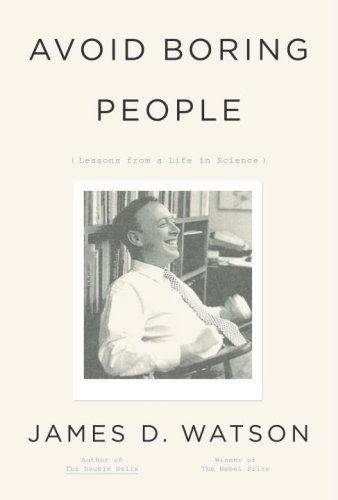
From Nobel Prize-winning scientist James D. Watson, a living legend for his work unlocking the structure of DNA, comes this candid and entertaining memoir, filled with practical advice for those starting out their academic careers. In Avoid Boring People, Watson lays down a life’s wisdom for getting ahead in a competitive world. Witty and uncompromisingly honest, he shares his thoughts on how young scientists should choose the projects that will shape their careers, the supreme importance of collegiality, and dealing with competitors within the same institution. It’s an irreverent romp through Watson’s colorful career and an indispensable guide to anyone interested in nurturing the life of the mind.

The definitive insider's history of the genetic revolution--significantly updated to reflect the discoveries of the last decade.James D. Watson, the Nobel laureate whose pioneering work helped unlock the mystery of DNA's structure, charts the greatest scientific journey of our time, from the discovery of the double helix to today's controversies to what the future may hold. Updated to include new findings in gene editing, epigenetics, agricultural chemistry, as well as two entirely new chapters on personal genomics and cancer research. This is the most comprehensive and authoritative exploration of DNA's impact--practical, social, and ethical--on our society and our world.
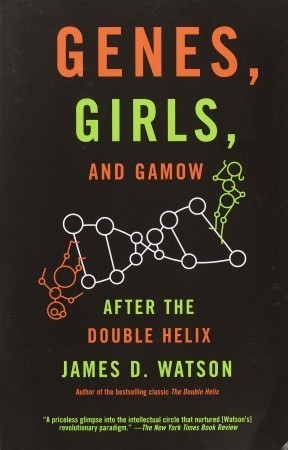
In the years following his and Francis Crick’s towering discovery of DNA, James Watson was obsessed with finding two things: RNA and a wife. Genes, Girls, and Gamow is the marvelous chronicle of those pursuits. Watson effortlessly glides between his heartbreaking and sometimes hilarious debacles in the field of love and his heady inquiries in the field of science. He also reflects with touching candor on some of science’s other titans, from fellow Nobelists Linus Pauling and the incorrigible Richard Feynman to Russian physicist George Gamow, who loved whiskey, limericks, and card tricks as much as he did molecules and genes. What emerges is a refreshingly human portrait of a group of geniuses and a candid, often surprising account of how science is done.

An overview of recombitant DNA techniques and surveys advances in recombinant molecular genetics, experimental methods and their results.

A principal architect and visionary of the new biology, a Nobel Prize-winner at 34 and best-selling author at 40 (The Double Helix), James D. Watson had the authority, flair, and courage to take an early and prominent role as commentator on the march of DNA science and its implications forsociety. In essays for publications large and small, and in lectures around the world, he delivered what were, in effect, dispatches from the front lines of the revolution. Outspoken and sparkling with ideas and opinions, a selection of them is collected for the first time in this volume. Theirresonance with today's headlines is striking.

For the first time ever in one volume, here are four of the most influential works of Charles Darwin, reprinted in their entirety, each illuminated by commentary from eminent scientist James D. Watson. Included are On the Origin of Species , arguably the most important scientific work of the nineteenth century; Voyage of the Beagle , a captivating travelogue richly stocked with observations that helped guide the young Darwin through his evolutionary world view; The Descent of Man , which explored the origins of humans and their history; and The Expressions of Emotions in Man and Animals , which explored the origin and nature of the mind. With his separate introductions for each of Darwin's books he goes further to explain how the modern considerations underlying genome research would have been impossible without Darwin, bringing a contemporary relevance to these nineteenth century masterworks.

Yirminci yüzyilin en büyük kesfinin, dna yapisinin kesfinin, etkileyici hikâyesi...Francis Crick ve James Watson 1953 yilinda biyokimya alaninda kÖklü bir degisime imza attilar. Ikili sarmalin kesfi yalnizca bilimsel alanda degil hayatin temelini anlama açisindan da Önemli bir dÖnüm noktasidir. Bilginin bir nesilden digerine nasil aktarildigina yÖnelik sorulara verilen yanitlara, akrabalik hiyerarsisine, genetik ve evrim arasindaki baglantiya sonunda ulasildi.Fakat bu basarinin arkasinda bir rekabet, hirs ve tartisma Öyküsü yatiyor. James Watson yeni bir fikrin dogusunu, mücadeleleri, süpheleri, çeliskileri, atesli tartismalari, rakiplerinin Önüne geçip bitis çizgisine ulasmasini ve nihai zaferini canli bir sekilde anlatiyor.(Tanitim Bülteninden)Sayfa Sayisi: 210Baski Yili: 2013Dili: TürkçeYayinevi: Say Yayinlari

No ISBNUno dei progetti più importanti del secolo scorso è stato quello di comprendere come la sequenza delle basi del DNA interviene nella definizione delle caratteristiche degli esseri viventi. Il progetto Genoma, iniziato circa venti anni orsono è oggi completato e i risultati forniscono informazioni decisive per la lotta a moltissime malattie finora ritenute invincibili. James Watson, colui che fece partire il progetto insieme a personalità del calibro di Dulbecco, ci racconta l'avvincente storia di questa fondamentale tappa della conoscenza scientifica.

Written by two eminent researchers, this account incorporates the documents that embody the record of gene cloning and provides an illuminating commentary on the social and scientific ramifications of DNA research

C. P. Snow, a hazánkban ismert angol tudós írta Watson könyvéről: „Ez a könyv egyetlen eddig megírt könyvhöz sem hasonlít. Első kézből származó beszámoló arról a napról-napra folyó munkáról, amely a század egyik legnagyobb természettudományi felfedezéséhez vezetett. Olyan, mint egy első osztályú háborús riport: személyes, szubjektív, szenvedélyes érzelmekkel telt. Az irodalomban semmi sem adhatja vissza: valójában hogyan is zajlik az alkotó tudomány. Azoknak akik nem olvasnak tudományos könyveket, egy új világot tár fel.”

La doble hélice: Relato personal del descubrimiento de la estructura del ADN (El libro de bolsillo - Ciencias)
by James D. Watson
Rating: 3.0 ⭐
El cambio del siglo XX al XXI se hallará ya para siempre vinculado al desciframiento definitivo del mapa genético humano, hecho que abre un nuevo mundo en el campo de la ciencia y, muy especialmente, en el de la medicina. ¿Cómo se produjo, sin embargo, el descubrimiento básico -el de la estructura del ácido desoxirribonucleico (ADN), componente esencial del material genético- que ha hecho posible llegar hasta este punto? La doble hélice es el relato del proceso que llevó a este instante crucial, hecho de primera mano por James D. Watson, protagonista del mismo en 1953 junto con el británico Francis Crick. Como apunta Steve Jones en el prefacio que abre el volumen, «leer este libro es entender cómo debió de ser participar en lo que Watson, con aplastante sinceridad, denomina el acontecimiento más famoso en la biología desde el libro de Darwin».


ięćdziesiąt lat temu James D. Watson, wówczas zaledwie dwudziestoczterolatek, był jednym z tych, którzy rozpoczęli największą naukową batalię naszych czasów. Dziś profesor Watson, autorytet i wizjoner współczesnej biologii, po raz pierwszy opisuje całe dzieje genetycznej rewolucji. Barwna i fascynująca opowieść Watsona rozpoczyna się w roku 1866 w niewielkim przyklasztornym ogrodzie, gdzie mnich Grzegorz Mendel przeprowadzał swe eksperymenty nad dziedziczeniem cech groszku. Potem autor prowadzi nas do prawdziwych początków współczesnej genetyki, do narodzin tej obiecującej tak wiele i zarazem przerażającej nauki, która mówi nam, jak manipulować samymi podstawami życia. W roku 1953 wieloletnie studia nad chemią życia doprowadziły do przełomu - poznano strukturę DNA. Za to właśnie odkrycie w roku 1962 James D. Watson i Francis Crick oraz Francis Wilkins uhonorowani zostali Nagrodą Nobla. A niecałe pięćdziesiąt lat później poznaliśmy genom człowieka…

Many of us wonder how our heritage has influenced who we are and what we have become. The renowned scientist and author James D. Watson has more to reflect upon than most. A Radio Quiz Kid at 12 and a University of Chicago student at 15, Watson at 24 had a scientific discovery to his credit - the structure of DNA - that would win a Nobel Prize and forever change our understanding of genes and inheritance. Now, after a lifetime of accomplishment in research, writing, education, and science advocacy, Watson has delved for the first time publicly into his own lineage.Father To Son was first intended as a small, privately published collection of the writings of his father, James D. Watson, Sr. But when Jim Watson, Jr. began investigating his family history, what emerged was a more complex story - the chronicle of an archetypical American family from before the Civil War to Vietnam. Their history includes settlement in the Midwest, a 20-year association with Abraham Lincoln, a successful search for California gold, and bold but disastrous investments in the stock market. Watson, Sr.'s passion for ornithology led to a short-lived association with Nathan Leopold, who would later be sentenced for murder in the 1924 "trial of the century." His Oberlin friendship with Robert Maynard Hutchins, later President of the University of Chicago, began a family association with the University that continues today. The extended clan also included notable individuals like Watson, Jr.'s great uncle Dudley Crafts Watson - artist and teacher - who, for a time, raised acousin, Orson Welles, the celebrated actor and director, and an uncle, William Weldon Watson, a physicist and participant in the development of the atomic bomb.In this book, Jim Watson portrays these lives in a fascinating narrative, illustrated with previously unpublished photographs and period documents, that ends with an affectionate tribute to his father, a man of principle, decency, intelligence, and reason, from whom Jim Jr. learned liberal politics and incisive writing.Always iconoclastic, in both science and literature, Watson has written his autobiography in installments, beginning with the now classic The Double Helix , followed by Genes, Girls, and Gamow and Avoid Boring People . Concluding The Double Helix , Watson portrayed himself as "...25 and too old to be unusual." Yet, in Father To Son , the latest of his unsparing self-examinations, Watson shows us that his heritage was remarkable after all and that "Most certainly I didn't emerge from nowhere!"

Molecular Biology Of The Gene
by James D. Watson

Blood pressure diary: My doctor's visit log to monitor my daily blood pressure and blood pressure, and monthly monitoring of the curve and daily medication
by James D. Watson
My doctor's visit log to monitor my daily blood pressure and blood pressure, and monthly monitoring of the curve and daily medication

Gene, woman, gamov
by James D. Watson
Watson in this book is far from the price of a double helix discoverer. Watson found a double helix and then jumped into RNA research to make another achievement. But as detailed in this book, Watson continued to stumble for years. I am so frustrated that I make a lot of wrong guesses, worry that I cant be hired as a professor because I havent made any other achievements, and Im anxious about who might be wrong when I publish my research. In addition, they approach an attractive woman, get dismissed, try to capture the heart of a woman, look to other attractive women, and frown when they act sternly not to be courteous. On the other hand, the next person who will receive the Nobel Prize will expect to be himself. It is no different from ordinary young people. Peter Pauling, the author, agrees that Watson seemed to have been motivated by a fascinating and broken heart for a girl named Krista.So, if youre looking for serious Watson and deep academic content in this book, you might be disappointed. This book, which is the sequel to Double Spiral, is full of private anecdotes painted with humor, humor, and emotions such as joy and sorrow, as in the previous part. After reading it, I think that the great masters of science are not very different from us. This is because the private lives of great people, such as those who have studied for a few years and do not make much difference, who are more involved in love than research, and who are drunk, are filled with privacy. Its also fun to have a look at the life of Gamov, who plays well with Watson.

Prohibido aburrirse (y aburrir): Lecciones aprendidas en una vida dedicada a la ciencia
by James D. Watson
Pocos saben que James D. Watson, codescubridor en 1953 junto con Francis Crick de la estructura en hélice del ADN y uno de los mayores científicos del siglo XX, tuvo que emplear todo su talento para seguir a flote en las complicadas aguas de las instituciones académicas anglosajonas. En esta absorbente autobiografía llena de anécdotas inolvidables, Watson reconstruye para el lector la peripecia de una vida dedicada al conocimiento y el aprendizaje continuo. El autor relata, con desenfado y cierta nostalgia, las dificultades económicas que padeció su familia durante la terrible depresión de los años treinta, su temprana pasión por la ornitología (y las complicaciones de todo tipo que ésta le provocó), los años de formación y los hábitos de pensamiento crítico adquiridos en su juventud, sus primeros pasos como investigador y los progresos en una carrera científica que le llevaron finalmente a protagonizar uno de los hitos fundamentales en la ciencia del pasado el descubrimiento del secreto de la vida. Además, el autor no duda en compartir con sus lectores otros impagables secretos y lecciones para la vida social, conquistadas tras duros años de aprendizaje y experiencia en los competitivos campus estadounidenses.
![(Bottom) DNA - genetic disease from genome sequencing, to human evolution (Blue Backs) (2005) ISBN: 406257473X [Japanese Import]](https://m.media-amazon.com/images/S/compressed.photo.goodreads.com/books/1678235745i/77110195.jpg)

DNA Rekombinan Suatu Pelajaran Singkat
by James D. Watson
![Biologie moléculaire du gène [with Site Companion]](https://m.media-amazon.com/images/S/compressed.photo.goodreads.com/books/1641954051i/60107330.jpg)
Biologie moléculaire du gène [with Site Companion]
by James D. Watson

Sulcata Tortoise Guide: The Ultimate Guide On How To Raise, Breed, Care, Supplies And Understand Sulcata Tortoise
by James D. Watson
The African prodded tortoise, additionally called the sulcata tortoise, is types of tortoise, which occupies the southern edge of the Sahara desert, in Africa. It is the third-biggest types of tortoise on the planet, the biggest types of territory tortoise, and the main surviving species in the variety Centrochelys. The African spurred tortoise is the biggest mainland tortoise, easily reaching 30 inches (seventy six centimeters) in duration and nicely over 100 kilos (forty five kilograms) in heft. Some adult males even attain 2 hundred pounds (ninety kilograms)! It is surpassed most effective through the island dweller tortoises from Aldabra and Galápagos.

MasteringBiology® with Pearson eText -- Instant Access -- for Molecular Biology of the Gene (Mastering Biology
by James D. Watson
Access Code 9780321906984 (Emailed to your purchasing email address within one hour)Before You This product is accessed in browser and does not require a Kindle. Several custom versions of Pearson’s MyLab™ & Mastering™ products exist for each title and access codes are not transferable. Before you purchase, ensure you have the correct ISBN. You will also need a CourseID, provided by your instructor, to register for and use this product.Break Through to Improving Driven by our understanding of the challenges and aspirations inherent to education, MyLab™ & Mastering™ engages learners continuously and offers data-driven guidance that helps them reach specific, measurable learning outcomes.

James Watson racconta Watson e Crick. Il DNA e il segreto della vita
by James D. Watson