Loading genres...
Explore the best books about Middle East genre.

More than any other Persian poet, it is perhaps Hafiz who accesses the mystical, healing dimensions of poetry. Because his poems were often ecstatic love songs from God to his beloved world, many have called Hafiz the "Tongue of the Invisible."With this stunning collection of 250 of Hafiz's most intimate poems, Daniel Ladinsky has succeeded brilliantly in capturing the essence of one of Islam's greatest poetic and religious voices. Each line of THE GIFT imparts the wonderful qualities of the spiritual teacher: an audacious love that empowers lives, profound knowledge, wild generosity, and a sweet, playful genius unparalleled in world literature.
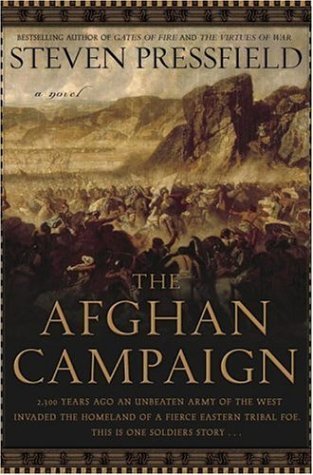
2,300 years ago an unbeaten army of the West invaded the homeland of a fierce Eastern tribal foe. This is one soldier’s story . . .The bestselling novelist of ancient warfare returns with a riveting historical novel that re-creates Alexander the Great’s invasion of the Afghan kingdoms in 330 b.c.In a story that might have been ripped from today’s combat dispatches, Steven Pressfield brings to life the confrontation between an invading Western army and fierce Eastern warriors determined at all costs to defend their homeland. Narrated by an infantryman in Alexander’s army, The Afghan Campaign explores the challenges, both military and moral, that Alexander and his soldiers face as they embark on a new type of war and are forced to adapt to the methods of a ruthless foe that employs terror and insurgent tactics. An edge-of-your-seat adventure, The Afghan Campaign once again demonstrates Pressfield’s profound understanding of the hopes and desperation of men in battle and of the historical realities that continue to influence our world.

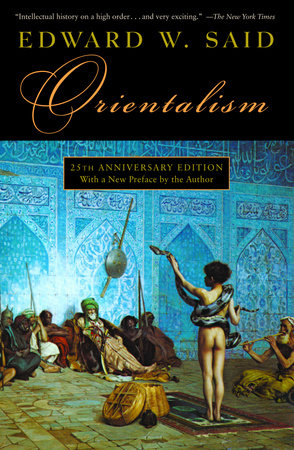
More than three decades after its first publication, Edward Said's groundbreaking critique of the West's historical, cultural, and political perceptions of the East has become a modern classic.In this wide-ranging, intellectually vigorous study, Said traces the origins of "orientalism" to the centuries-long period during which Europe dominated the Middle and Near East and, from its position of power, defined "the orient" simply as "other than" the occident. This entrenched view continues to dominate western ideas and, because it does not allow the East to represent itself, prevents true understanding. Essential, and still eye-opening, Orientalism remains one of the most important books written about our divided world.

In No god but God, internationally acclaimed scholar Reza Aslan explains Islam—the origins and evolution of the faith—in all its beauty and complexity. This updated edition addresses the events of the past decade, analyzing how they have influenced Islam’s position in modern culture. Aslan explores what the popular demonstrations pushing for democracy in the Middle East mean for the future of Islam in the region, how the Internet and social media have affected Islam’s evolution, and how the war on terror has altered the geopolitical balance of power in the Middle East. He also provides an update on the contemporary Muslim women’s movement, a discussion of the controversy over veiling in Europe, an in-depth history of Jihadism, and a look at how Muslims living in North America and Europe are changing the face of Islam. Timely and persuasive, No god but God is an elegantly written account that explains this magnificent yet misunderstood faith.

This is the first systematic critique of Edward Said's influential work, Orientalism, a book that for almost three decades has received wide acclaim, voluminous commentary, and translation into more than fifteen languages. Said's main thesis was that the Western image of the East was heavily biased by colonialist attitudes, racism, and more than two centuries of political exploitation. Although Said's critique was controversial, the impact of his ideas has been a pervasive rethinking of Western perceptions of Eastern cultures, plus a tendency to view all scholarship in Oriental Studies as tainted by considerations of power and prejudice. In this thorough reconsideration of Said's famous work, Ibn Warraq argues that Said's case against the West is seriously flawed. Warraq accuses Said of not only willfully misinterpreting the work of many scholars, but also of systematically misrepresenting Western civilization as a whole. With example after example, he shows that ever since the Greeks Western civilization has always had a strand in its very makeup that has accepted non-Westerners with open arms and has ever been open to foreign ideas. The author also criticizes Said for inadequate methodology, incoherent arguments, and a faulty historical understanding. He points out, not only Said's tendentious interpretations, but historical howlers that would make a sophomore blush. Warraq further looks at the destructive influence of Said's study on the history of Western painting, especially of the 19th century, and shows how, once again, the epigones of Said have succeeded in relegating thousands of first-class paintings to the lofts and storage rooms of major museums. An extended appendix reconsiders the value of 18th- and 19th-century Orientalist scholars and artists, whose work fell into disrepute as a result of Said's work.

Naguib Mahfouz’s magnificent epic trilogy of colonial Egypt appears here in one volume for the first time. The Nobel Prize-winning writer's masterwork is the engrossing story of a Muslim family in Cairo during Britain's occupation of Egypt in the early decades of the twentieth century.The novels of The Cairo Trilogy trace three generations of the family of tyrannical patriarch Al-Sayyid Ahmad Abd al-Jawad, who rules his household with a strict hand while living a secret life of self-indulgence. Palace Walk introduces us to his gentle, oppressed wife, Amina, his cloistered daughters, Aisha and Khadija, and his three sons–the tragic and idealistic Fahmy, the dissolute hedonist Yasin, and the soul-searching intellectual Kamal. Al-Sayyid Ahmad’s rebellious children struggle to move beyond his domination in Palace of Desire, as the world around them opens to the currents of modernity and political and domestic turmoil brought by the 1920s. Sugar Street brings Mahfouz’s vivid tapestry of an evolving Egypt to a dramatic climax as the aging patriarch sees one grandson become a Communist, one a Muslim fundamentalist, and one the lover of a powerful politician.Throughout the trilogy, the family's trials mirror those of their turbulent country during the years spanning the two World Wars, as change comes to a society that has resisted it for centuries. Filled with compelling drama, earthy humor, and remarkable insight, The Cairo Trilogy is the achievement of a master storyteller.

Frustrated by the failure of the peace process to end the Israeli occupation, and outraged by Ariel Sharon’s invasion, with one thousand armed guards, of the Al-Aqsa holy site in East Jerusalem, the Palestinian population of Israel and the Occupied Territories rose up in September 2000. A new intifada has raged ever since.In these pages, a group of writers and analysts, many of them directly involved in the conflict, trace the origins of the uprising, its consequences for the Palestinian people and the Israeli state, and its likely impact on the future of peace in the Middle East. They discuss the role of the United States in the conflict, pick apart the fraudulence of the Oslo accords, examine the brutal response of the Barak and Sharon governments, and critically appraise the strategy of the Palestinian leadership. In addition, several contributors provide eloquent first-hand reports from the front-line of the intifada—from the streets of Jerusalem and Gaza, to refugee camps in Lebanon and schools on the West Bank. Photographs provide searing testimony to the heroism and costs of the resistance. Maps illustrate the stranglehold Israel continues to exert over the Palestinian territories. The case for an international grassroots movement in support of Palestinian rights is made with urgency and persuasive clarity.

In his first book since What Went Wrong? Bernard Lewis examines the historical roots of the resentments that dominate the Islamic world today and that are increasingly being expressed in acts of terrorism. He looks at the theological origins of political Islam and takes us through the rise of militant Islam in Iran, Egypt, and Saudi Arabia, examining the impact of radical Wahhabi proselytizing, and Saudi oil money, on the rest of the Islamic world.The Crisis of Islam ranges widely through thirteen centuries of history, but in particular it charts the key events of the twentieth century leading up to the violent confrontations of today: the creation of the state of Israel, the Cold War, the Iranian Revolution, the Soviet defeat in Afghanistan, the Gulf War, and the September 11th attacks on the United States.While hostility toward the West has a long and varied history in the lands of Islam, its current concentration on America is new. So too is the cult of the suicide bomber. Brilliantly disentangling the crosscurrents of Middle Eastern history from the rhetoric of its manipulators, Bernard Lewis helps us understand the reasons for the increasingly dogmatic rejection of modernity by many in the Muslim world in favor of a return to a sacred past. Based on his George Polk Award–winning article for The New Yorker , The Crisis of Islam is essential reading for anyone who wants to know what Usama bin Ladin represents and why his murderous message resonates so widely in the Islamic world.

Coleman Barks has played a central role in making the Sufi mystic Rumi the most popular poet in the world. A Year with Rumi brings together 365 of Barks's elegant and beautiful translations of Rumi's greatest poems, including fifteen never-before-published poems.Barks includes an Introduction that sets Rumi in his context and an Afterword musing on poetry of the mysterious and the sacred. Join Coleman Barks and Rumi for a year-long journey into the mystical and sacred within and without. Join them in recognizing and embracing the divine in the sublime, in the ordinary, and in us all.

The news-breaking book that has sent shockwaves through the Bush White House, Ghost Wars is the most accurate and revealing account yet of the CIA's secret involvement in al-Qaeda's evolution. It won the Pulitzer Prize in 2005.Prize-winning journalist Steve Coll has spent years reporting from the Middle East, accessed previously classified government files and interviewed senior US officials and foreign spymasters. Here he gives the full inside story of the CIA's covert funding of an Islamic jihad against Soviet forces in Afghanistan, explores how this sowed the seeds of Bin Laden's rise, traces how he built his global network and brings to life the dramatic battles within the US government over national security. Above all, he lays bare American intelligence's continual failure to grasp the rising threat of terrorism in the years leading to 9/11 - and its devastating consequences.

If the Marines are “the few, the proud,” Recon Marines are the fewest and the proudest. Nathaniel Fick’s career begins with a hellish summer at Quantico, after his junior year at Dartmouth. He leads a platoon in Afghanistan just after 9/11 and advances to the pinnacle—Recon— two years later, on the eve of war with Iraq. His vast skill set puts him in front of the front lines, leading twenty-two Marines into the deadliest conflict since Vietnam. He vows to bring all his men home safely, and to do so he’ll need more than his top-flight education. Fick unveils the process that makes Marine officers such legendary leaders and shares his hard-won insights into the differences between military ideals and military practice, which can mock those ideals.In this deeply thoughtful account of what it’s like to fight on today’s front lines, Fick reveals the crushing pressure on young leaders in combat. Split-second decisions might have national consequences or horrible immediate repercussions, but hesitation isn’t an option. One Bullet Away never shrinks from blunt truths, but ultimately it is an inspiring account of mastering the art of war.

Arabs and Jews describe the first Arab-Israeli war of 1948 in completely different ways. Among Arabs, and especially Palestinians, the events of that year are known as the "nakba" - the catastrophe, the trauma, the disaster. For Jews, and in particular for Israelis, their victory in the war of 1948 is a veritable miracle in which, against tremendous odds and through heroic military effort, the Jewish community succeeded in thwarting attempts by the Arab states to destroy it.This book integrates new archival material with the findings of recent scholarship to present the reader with a comprehensive and general history of the origins and consequences of the 1948 war. The author shows, in sharp contrast to the recollections and myths of both sides, that the military events of 1948 were not decisive. The victory of the Zionist organization and the fate of the Palestinians was determined by politicians on both sides - in the discussions and decisions of the United Nations in 1947-8 and in the Arab League - long before a shot had been fired. The author argues that Israel's failure to take advantage of the genuine opportunity for peace with the Arabs at the UN-sponsored Lausanne Conference in 1949 resulted in the prolonged and tragic conflict between Israel and the Arab states still very much alive today.

Ever since Yasir Arafat and Yitzhak Rabin shook hands on the White House lawn, Israel and the Palestinian people have been engaged in what commentators persist in calling "the peace process." Yet Israel remains racked by violence and continuing land seizures, and Palestinians are more demoralized than ever before. Now in this probing and impassioned book, one of our foremost Palestinian-American intellectuals explains why the much-vaunted process has yet to produce peace--and is unlikely to as presently constituted.Whether Edward Said is addressing the fatal flaws in the PLO's bargain, denouncing fundamentalists on both sides of the religious divide, or calling our attention to the distortions in official coverage of the Arab world, he offers insights beyond the conventional wisdom and a sympathy that extends to bot Israelis and Palestinians. He does so with an incisiveness, clarity, and fairness that make Peace and Its Discontents essential reading for anyonve who cares about the future of the Middle East.

ترجمهٔ سرگذشت حاجی بابای اصفهانی که محصول سالهای پختگی میرزا حبیب اصفهانی و متکی به تجربههای گذشتهٔ او به منظور کشف قابلیتهای زبان فارسی است، یک ترجمهٔ متعارف نیست و در چارچوبِ تنگِ تعریفِ ترجمه نمیگنجد. ترجمهٔ سرگذشت حاجی بابای اصفهانی بازآفرینی یک اثر گمشده و تلاشی برای نوشتن یک رمان ایرانی – اولین رمان ایرانی – به دست یک نویسندهٔ ایرانیست. زبان میرزا حبیب متکیست به فارسی کهن و با اتکا به این پشتوانه است که زمینهٔ رهایی خودش را از بند زبان رسمی و مُنشیانهٔ قاجاری فراهم میکند. میرزا حبیب ایجاز و استحکام و وقار زبانش را به اسلاف خودش مدیون است و زبان او حلقهٔ پیوندیست میان فارسینویسی قرن ششم هجری با عصر ما. میرزا حبیب زبانی را که به دست مُنشیان بیمایه و ادیبان متظاهر قُلمبهسُلمبهنویس معاصرش به زبانِ الکنِ به بُنبست رسیده و دست و پا بستهای تبدیل شده بود، به یک زبان زندهٔ داستانگو تبدیل کرد و با تسلطی که بر زبان گفتار زمانهاش داشت و با پیوند زدن این زبان به زبان نُهصدسالهٔ فارسی، به همنهادی رسید که در قالب رمان به خوبی جا میافتاد و جواب میداد.سرگذشت حاجی بابای اصفهانی برای اولین بار در سال ۱۹۰۵ میلادی در کلکته و از روی نسخهٔ دستنوشتهٔ شیخ احمد روحی کرمانی به چاپ رسید. ویرایش جدیدی که از این اثر به دست دارید اولین ویرایشیست که براساس نسخهٔ دستنوشتهٔ خود میرزا حبیب اصفهانی به چاپ میرسد.

Michael Kelly, who traveled through every country touched by the Gulf War, moved about as a free-lance journalist for the Boston Globe and the New Republic. He traveled through much of the Middle East during and after the Gulf War, watching the bombs fall on Baghdad and waiting for Scuds in Tel Aviv, inspecting the gold bathroom fixtures installed by the U.S. Army Corps of Engineers in the empire's temporary palace in Kuwait City and dining with Kurdish chieftains in remote mountain camps in northern Iran.When ground war in Iraq began, Michael Kelly rented a four-wheel-drive Nissan Safari, borrowed some camouflage pants and gas-proof rubber gloves, and set off across the desert, where he was mistaken for an advance party of the American Army and surrendered to by a batch of bewildered Iraqi soldiers. In Kuwait after the liberation, he listened to horrific tales of torture and rape, and walked among the grotesque remains of the bombed-out retreating Iraqi army on the roads home. Later, when Kelly went to Kurdistan, he hiked into forbidden Iraqi territory and then traveled with various guerrilla bands at war with Saddam Hussein. He got out of Iraq by swimming across a river into Turkey in the company of smugglers. Kelly's story is witty, moving, and dramatically compelling, at once superb reporting and the very best travel writing. By avoiding the human story of the Gulf War, he has given us an indispensable piece of our history."Restrained yet explosive dispatches from the front . . . Kelly demonstrates a keen eye for the telling detail, a well-developed sense of irony . . . courage and enterprise."--National Magazine

A magisterial history of the titanic struggle between the Roman and Jewish worlds that led to the destruction of Jerusalem.In 70 C.E., after a four-year war, three Roman legions besieged and eventually devastated Jerusalem, destroying Herod’s magnificent Temple. Sixty years later, after further violent rebellions and the city’s final destruction, Hadrian built the new city of Aelia Capitolina where Jerusalem had once stood. Jews were barred from entering its territory. They were taxed simply for being Jewish. They were forbidden to worship their god. They were wholly reviled.What brought about this conflict between the Romans and the subjects they had previously treated with tolerance? Martin Goodman—equally renowned in Jewish and in Roman studies—examines this conflict, its causes, and its consequences with unprecedented authority and thoroughness. He delineates the incompatibility between the cultural, political, and religious beliefs and practices of the two peoples. He explains how Rome’s interests were served by a policy of brutality against the Jews. He makes clear how the original Christians first distanced themselves from their origins, and then became increasingly hostile toward Jews as Christian influence spread within the empire. The book thus also offers an exceptional account of the origins of anti-Semitism, the history of which reverberates still.An indispensable book.

A landmark assessment of Turkish culpability in the Armenian genocide, the first history of its kind by a Turkish historian In 1915, under the cover of a world war, some one million Armenians were killed through starvation, forced marches, forced exile, and mass acts of slaughter. Although Armenians and world opinion have held the Ottoman powers responsible, Turkey has consistently rejected any claim of intentional genocide. Now, in a pioneering work of excavation, Turkish historian Taner Akçam has made extensive and unprecedented use of Ottoman and other sources to produce a scrupulous charge sheet against the Turkish authorities. The first scholar of any nationality to have mined the significant evidence--in Turkish military and court records, parliamentary minutes, letters, and eyewitness accounts--Akçam follows the chain of events leading up to the killing and then reconstructs its systematic orchestration by coordinated departments of the Ottoman state, the ruling political parties, and the military. He also probes the crucial question of how Turkey succeeded in evading responsibility, pointing to competing international interests in the region, the priorities of Turkish nationalists, and the international community's inadequate attempts to bring the perpetrators to justice. As Turkey lobbies to enter the European Union, Akçam's work becomes ever more important and relevant. Beyond its timeliness, A Shameful Act is sure to take its lasting place as a classic and necessary work on the subject.

"One of the most important books ever written on the state of the modern Middle East." ―Geraldine Brooks, Wall Street Journal The Iraqi dissident Kanan Makiya brought the attention of the world to the brutality of Saddam Hussein's regime in his powerful 1989 bestseller Republic of Fear . Now, writing for the first time under his own name, Makiya confronts the broad realities of tyranny in the Middle East and the moral failure of Arab and pro-Arab intellectuals to repudiate it.Makiya first gives us the stories of Khalil, Abu Haydar, Omar, Mustafa, and Taimour―the Arab and Kurdish heroes of this book. Their testimony, revealing the true extent of occupation, prejudice, revolution, and routinized violence, is a compelling example of the literature of witness. He then links these tales of survival to an examination of the Arab intelligentsia's response to Saddam Hussein and the Gulf War, comparing the flood of condemnation of the West with the trickle of protest over Saddam's mass murder campaign against the Kurds.In his exploration of these "landscapes of cruelty and silence," Kanan Makiya lays out the nationalist mythologies that underlie them. He calls for a new politics in the Arab world―a politics that puts absolute respect for human life above all else.

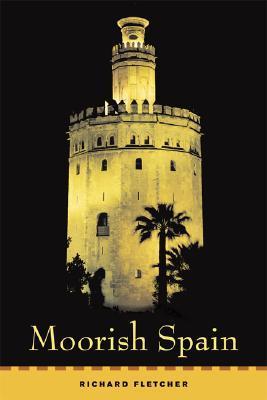
Beginning in the year 711 and continuing for nearly a thousand years, the Islamic presence survived in Spain, at times flourishing, and at other times dwindling into warring fiefdoms. But the culture and science thereby brought to Spain, including long-buried knowledge from Greece, largely forgotten during Europe’s Dark Ages, was to have an enduring impact on the country as it emerged into the modern era. In this gracefully written history, Richard Fletcher reveals the Moorish culture in all its fascinating disparity and gives us history at its best: here is vivid storytelling by a renowned scholar.

Ibn Battutah was just 21 when he set out in 1325 from his native Tangier on a pilgrimage to Mecca. He did not return to Morocco for another 29 years, traveling instead through more than 40 countries on the modern map, covering 75,000 miles and getting as far north as the Volga, as far east as China, and as far south as Tanzania. He wrote of his travels, and comes across as a superb ethnographer, biographer, anecdotal historian, and occasional botanist and gastronome. With this edition by Mackintosh-Smith, Battuta's Travels takes its place alongside other indestructible masterpieces of the travel-writing genre.

A lucid and compelling case for a new American stance toward the Islamic world.What comes after jihad? Outside the headlines, believing Muslims are increasingly calling for democratic politics in their undemocratic countries. But can Islam and democracy successfully be combined? Surveying the intellectual and geopolitical terrain of the contemporary Muslim world, Noah Feldman proposes that Islamic democracy is indeed viable and desirable, and that the West, particularly the United States, should work to bring it about, not suppress it.Encouraging democracy among Muslims threatens America's autocratic Muslim allies, and raises the specter of a new security threat to the West if fundamentalists are elected. But in the long term, the greater threat lies in continuing to support repressive regimes that have lost the confidence of their citizens. By siding with Islamic democrats rather than the regimes that repress them, the United States can bind them to the democratic principles they say they support, reducing anti-Americanism and promoting a durable peace in the Middle East.After Jihad gives the context for understanding how the many Muslims who reject religious violence see the world after the globalization of democracy. It is also an argument about how American self-interest can be understood to include a foreign policy consistent with the deeply held democratic values that make America what it is. At a time when the encounter with Islam has become the dominant issue of U.S. foreign policy, After Jihad provides a road map for making democracy work in a region where the need for it is especially urgent.

Recounts the secret negotiations between the Zionist leaders and the Hashemite rulers

« La rue d’al-Nahhasin n’était pas une rue calme… La harangue des camelots, le marchandage des clients, les invocations des illuminés de passage, les plaisanteries des chalands s’y fondaient en un concert de voix pointues… Les questions les plus privées en pénétraient les moindres recoins, s’élevaient jusqu’à ses minarets… Pourtant, une clameur soudaine s’éleva, d’abord lointaine, comme le mugissement des vagues, elle commença à s’enfler, s’amplifier, jusqu’à ressembler à la plainte sibilante du vent… Elle semblait étrange, insolite, même dans cette rue criante… »N. M.C’est dans les rues du Caire que Naguib Mahfouz, le « Zola du Nil », a promené son miroir et capté toutes les facettes d’une société égyptienne en pleine évolution. Impasse des deux palais est le premier volume d’une trilogie qui comporte également Le Palais du désir et Le Jardin du passé.Naguib Mahfouz est le premier écrivain de langue arabe à avoir reçu, en 1988, le prix Nobel de littérature.

Leon Uris retums to the land of his acclaimed best-seller Exodus for an epic story of hate and love, vengeance and forgiveness and forgiveness. The Middle East is the powerful setting for this sweeping tale of a land where revenge is sacred and hatred noble. Where an Arab ruler tries to save his people from destruction but cannot save them from themselves. When violence spreads like a plague across the lands of Palestine--this is the time of The Haj.

Jason Burke has produced the definitive account of Islamic militancy - revolutionising our understanding of Al-Qaeda, retelling its history from scratch and critically exploding the myths that form the very foundations of the 'War on Terror'. Fully updated with new material on Iraq and Afghanistan.

In this historical analysis of Zionism and the state of Israel, a former diplomat writes sympathetically of the Jews' fierce resistance under siege to secure their nation, their heritage, and their future

The critically acclaimed New York Times bestselling account of how the modern Middle East came into being after World War I, and why it is in upheaval todayIn our time the Middle East has proven a battleground of rival religions, ideologies, nationalisms, and dynasties. All of these conflicts, including the hostilities between Arabs and Israelis that have flared yet again, come down, in a sense, to the extent to which the Middle East will continue to live with its political inheritance: the arrangements, unities, and divisions imposed upon the region by the Allies after the First World War.In A Peace to End All Peace , David Fromkin reveals how and why the Allies came to remake the geography and politics of the Middle East, drawing lines on an empty map that eventually became the new countries of Iraq, Israel, Jordan, and Lebanon. Focusing on the formative years of 1914 to 1922, when all-even an alliance between Arab nationalism and Zionism-seemed possible he raises questions about what might have been done differently, and answers questions about why things were done as they were. The current battle for a Palestinian homeland has its roots in these events of 85 years ago.

In this classic work, now updated, the author of Culture and Imperialism reveals the hidden agendas and distortions of fact that underlie even the most "objective" coverage of the Islamic world.From the Iranian hostage crisis through the Gulf War and the bombing of the World Trade Center, the American news media have portrayed "Islam" as a monolithic entity, synonymous with terrorism and religious hysteria. At the same time, Islamic countries use "Islam" to justify unrepresentative and often repressive regimes. Combining political commentary with literary criticism, Covering Islam continues Edward Said's lifelong investigation of the ways in which language not only describes but also defines political reality.

Since its formation in 1932, Saudi Arabia has been ruled by two interdependent families. The Al Sa’uds control politics and the descendants of Ibn Abd al-Wahhab impose Wahhabism—a violent, fanatical perversion of the pluralistic Islam practiced by most Muslims. Stephen Schwartz argues that Wahhabism, vigorously exported with the help of Saudi oil money, is what incites Palestinian suicide bombers, Osama bin Laden, and other Islamic terrorists throughout the world.Schwartz reveals the hypocrisy of the Saudi regime, whose moderate facade conceals state-sponsored repression and terrorism. He also raises troubling questions about Wahhabi infiltration of America’s Islamic community and about U.S. oil companies sanitizing Saudi Arabia’s image for the West. This sharp analysis and eye-opening expose illuminates the background to the September 11th terrorist attacks and offers new approaches for U.S. policy toward its closest ally in the Middle East.

Every Thursday morning for two years in the Islamic Republic of Iran, a bold and inspired teacher named Azar Nafisi secretly gathered seven of her most committed female students to read forbidden Western classics. As Islamic morality squads staged arbitrary raids in Tehran, fundamentalists seized hold of the universities, and a blind censor stifled artistic expression, the girls in Azar Nafisi's living room risked removing their veils and immersed themselves in the worlds of Jane Austen, F. Scott Fitzgerald, Henry James, and Vladimir Nabokov. In this extraordinary memoir, their stories become intertwined with the ones they are reading. Reading Lolita in Tehran is a remarkable exploration of resilience in the face of tyranny and a celebration of the liberating power of literature.

In this meticulous work, based almost entirely on Hebrew archival material, Nur Masalha examines the Zionist concept of "transfer," or the expulsion of the Palestinian population to neighboring Arab lands. Masalha establishes the extent to which "transfer" was embraced by the highest levels of Zionist leadership, including virtually all the Founding Fathers of the Israeli state.

The daughter of a former aide to the king of Morocco, who was executed after a failed assassination attempt on the ruler, describes how she, her five siblings, and her mother were imprisoned in a desert penal colony for twenty years.

First published in 1989, just before the Gulf War broke out, Republic of Fear was the only book that explained the motives of the Saddam Hussein regime in invading and annexing Kuwait. This edition, updated in 1998, has a substantial introduction focusing on the changes in Hussein's regime since the Gulf War.In 1968 a coup d'état brought into power an extraordinary regime in Iraq, one that stood apart from other regimes in the Middle East. Between 1968 and 1980, this new regime, headed by the Arab Ba'th Socialist party, used ruthless repression and relentless organization to transform the way Iraqis think and react to political questions. In just twelve years, a party of a few thousand people grew to include nearly ten percent of the Iraqi population.This book describes the experience of Ba'thism from 1968 to 1980 and analyzes the kind of political authority it engendered, culminating in the personality cult around Saddam Hussein. Fear, the author argues, is at the heart of Ba'thi politics and has become the cement for a genuine authority, however bizarre.Examining Iraqi history in a search for clues to understanding contemporary political affairs, the author illustrates how the quality of Ba'thi pan-Arabism as an ideology, the centrality of the first experience of pan-Arabism in Iraq, and the interaction between the Ba'th and communist parties in Iraq from 1958 to 1968 were crucial in shaping the current regime.Saddam Hussein's decision to launch all-out war against Iran in September 1980 marks the end of the first phase of this re-shaping of modern Iraqi politics. The Iraq-Iran war is a momentous event in its own right, but for Iraq, the author argues, the war diverts dissent against the Ba'thi regime by focusing attention on the specter of an enemy beyond Iraq's borders, thus masking a hidden potential for even greater violence inside Iraq.

Dr. Amin Jaafari, an Arab-Israeli citizen, is a surgeon at a hospital in Tel Aviv. Dedicated to his work, respected and admired by his colleagues and community, he represents integration at its most successful. He has learned to live with the violence and chaos that plague his city, and on the night of a deadly bombing in a local restaurant, he works tirelessly to help the shocked and shattered patients brought to the emergency room. But this night of turmoil and death takes a horrifyingly personal turn. His wife's body is found among the dead, with massive injuries, the police coldly announce, typical of those found on the bodies of fundamentalist suicide bombers. As evidence mounts that his wife, Sihem, was responsible for the catastrophic bombing, Dr. Jaafari is torn between cherished memories of their years together and the inescapable realization that the beautiful, intelligent, thoroughly modern woman he loved had a life far removed from the comfortable, assimilated existence they shared. From the graphic, beautifully rendered description of the bombing that opens the novel to the searing conclusion, The Attack portrays the reality of terrorism and its incalculable spiritual costs. Intense and humane, devoid of political bias, hatred, and polemics, it probes deep inside the Muslim world and gives readers a profound understanding of what seems impossible to understand.

This acclaimed study surveys the dominant popular and scholarly images of the Israel–Palestine conflict. Finkelstein opens with a theoretical discussion of Zionism, locating it as a romantic form of nationalism that assumed the bankruptcy of liberal democracy. He goes on to look at the demographic origins of the Palestinians, with particular reference to the work of Joan Peters, and develops critiques of the influential studies of both Benny Morris and Anita Shapira. Reviewing the diplomatic history with Aban Eban‘s oeuvre as his foil, Finkelstein closes by demonstrating that the casting of Israel as the innocent victim of Arab aggression in the June 1967 and October 1973 wars is not supported by the documentary record. This new edition critically reexamines dominant popular and scholarly images in the light of the current failures of the peace process.

In the grand storytelling style that is his signature, James Michener sweeps us back through time to the very beginnings of the Jewish faith, thousands of years ago. Through the predecessors of four modern men and women, we experience the entire colorful history of the Jews, including the life of the early Hebrews and their persecutions, the impact of Christianity, the Crusades, and the Spanish Inquisition, all the way to the founding of present-day Israel and the Middle-East conflict."A sweeping chronology filled with excitement."THE PHILADELPHIA INQUIRER

When the New York Times finally apologized for its coverage of Iraq’s weapons of mass destruction in 2004, it was too late. The newspaper had already supported the invasion. The Bush administration was not only violating international law, it was lying to the public, using major media like the Times to spread its message.In this meticulously researched study—the first part of a two-volume work—Howard Friel and Richard Falk demonstrate how the newspaper of record in the United States has consistently, over the last 50 years, misreported the facts related to the wars waged by the United States. From Vietnam in the 1960s to Nicaragua in the 1980s and Iraq today, the authors accuse the New York Times of serial distortions. They claim that such coverage now threatens not only world legal order but constitutional democracy in the United States.Falk and Friel show, for example, that, despite numerous US threats to invade Iraq, and despite the fact that an invasion of one country by another implicates fundamental aspects of the UN Charter and international law, the New York Times editorial page never mentioned the words “UN Charter” or “international law” in any of its 70 editorials on Iraq from September 11, 2001, to March 20, 2003. The authors also show that the editorial page supported the Bush administration’s WMD claims against Iraq, and that its magazine, op-ed and news pages performed just as poorly.In conclusion the authors suggest an alternative editorial policy of “strict scrutiny” that incorporates the UN Charter and the US Constitution in the Times coverage of the use and threat of force by the United States and the protection of civil and human rights at home and abroad.

In Baghdad, an enormous monument nearly twice the size of the Arc de Triomphe towers over the city. Two huge forearms emerge from the ground, clutching two swords that clash overhead. Those arms are enlarged casts of those of Saddam Hussein, showing every bump and follicle. The "Victory Arch" celebrates a victory over Iran (in their eight-year-long war) that never happened. This text is a study of the interplay between art and politics - of how culture, normally an unquestioned good, can play into the hands of a power with devastating effects. Kanan Makiya uses the culture invented by Saddam Hussein as a window into the nature of totalitarianism and shows how art can become the weapon of dictatorship. Under Saddam Hussein, culture connived in his evil - this text explains how. It should be useful reading for anyone concerned with the power of culture and the culture of power.

This book looks at the development of Israeli-Arab relations during the formative years 1949 to 1956, focusing on Arab infiltration into Israel and Israeli retaliation. Palestinian refugee raiding and cross-border attacks by Egyptian-controlled irregulars and commandos were a core phenomenon during this period and one of the chief causes of Israel's invasion of Sinai and the Gaza strip in 1956.Benny Morris probes the types of Arab infiltration and the attitude of Arab governments towards the phenomenon, and traces the evolution of Israel's defensive and offensive responses. He analyzes Israeli decision-making processes, including the emergence and ultimate failure of Foreign Minister Moshe Sharett's dissident policy of moderation, and describes in detail the history of the Arab infiltration, including the terrorist-guerrilla raids by state-organized Fedayeen in 1955-6, and of the IDF raids of Qibya, Nahhalin, Kinneret, and the Sabha.This was a precedent-setting period in the making of Israeli defense policy, and this pattern of raiding and counter-raiding served to define Israeli-Arab relations during the subsequent four decades. In this pioneering study Morris deepens our understanding of the current situation in the Middle East and of the prospects for a lasting peace there.

Ariel Sharon was one of the most experienced, shrewd and frightening leaders of the new millennium. Despite being found both directly and indirectly responsible for acts considered war crimes under international law, he became Prime Minister of Israel, a political victory he won by provoking the Palestinians into a new uprising, the second intifada. From the beginning of his career Sharon was regarded as the most brutal, deceitful and unrestrained of all the Israeli generals and politicians. A man of monstrous vision, his attempts to destroy the Palestinian people have included the proposal to make Jordan the Palestinian state and the now infamous invasion of Lebanon in 1982, which resulted in the Sabra and Shatila massacre.Baruch Kimmerling’s new book describes Sharon’s quest to reshape the whole geopolitical landscape of the Middle East. He describes how Sharon is committed to politicide, the destruction of the Palestinian political identity, and how won the support of powerful elements within Israeli society and the American administration in order to achieve this. Kimmerling exposes the brutality of Sharon and his junta’s ‘solutions’, and constructs a devastating indictment of a man whose cruelty and ruthlessness have resulted in widespread and indiscriminate slaughter.

"Adana'da ayaklanmalar olmuştu. Kalabalık, Ermeni mahallesini yağmalamıştı. Altı yıl sonra çok daha büyük çapta olacakların provası gibi bir şeydi. Ama bu bile dehşetti. Yüzlerce ölü. Belki de binlerce."Can çekişen Osmanlı İmparatorluğu ve Beyrut ile Fransa arasında yaşamı sürüklenen İsyan. "Doğunun Limanları" bu yüzyılın başını, bir insanın trajik tarihinin içinden anlatıyor.

Access a Comprehensive BibliographyThough U.S. leaders try to convince the world of their success in fighting al Qaeda, one member of the U.S. intelligence community would like to inform the public that we are, in fact, losing the war on terror. Further, until U.S. leaders recognize the errant path they have irresponsibly chosen, he says, our enemies will only grow stronger.According to the author Michael Scheuer, the greatest danger for Americans confronting the Islamist threat is to believe—at the urging of U.S. leaders—that Muslims attack us for what we are and what we think rather than for what we do. Blustering political rhetoric “informs” the public that the Islamists are offended by the Western world’s democratic freedoms, civil liberties, inter-mingling of genders, and separation of church and state. However, although aspects of the modern world may offend conservative Muslims, no Islamist leader has fomented jihad to destroy participatory democracy, for example, the national association of credit unions, or coed universities. Instead, a growing segment of the Islamic world strenuously disapproves of specific U.S. policies and their attendant military, political, and economic implications.Capitalizing on growing anti-U.S. animosity, Osama bin Laden’s genius lies not simply in calling for jihad, but in articulating a consistent and convincing case that Islam is under attack by America. Al Qaeda’s public statements condemn America’s protection of corrupt Muslim regimes, unqualified support for Israel, the occupation of Iraq and Afghanistan, and a further litany of real-world grievances. Bin Laden’s supporters thus identify their problem and believe their solution lies in war. Scheuer contends they will go to any length, not to destroy our secular, democratic way of life, but to deter what they view as specific attacks on their lands, their communities, and their religion. Unless U.S. leaders recognize this fact and adjust their policies abroad accordingly, even moderate Muslims will join the bin Laden camp.

This classic account shows how the fall of Constantinople in May 1453, after a siege of several weeks, came as a bitter shock to Western Christendom. The city's plight had been neglected, and negligible help was sent in this crisis. To the Turks, victory not only brought a new imperial capital, but guaranteed that their empire would last. To the Greeks, the conquest meant the end of the civilisation of Byzantium, and led to the exodus of scholars stimulating the tremendous expansion of Greek studies in the European Renaissance."... an excellent tale, full of suspense and pathos... He [Sir Steven Runciman] tells the story and, as always, tells it very elegantly."- History"This is a marvel of learning lightly worn..."- The Guardian

Written by the Arab historian Ibn Khaldun in 1377 which records an early view of universal history. Some modern thinkers view it as the first work dealing with the social sciences of sociology, demography, and cultural history. The Muqaddimah also deals with Islamic theology, historiography, the philosophy of history, economics, political theory, and ecology. It has also been described as an early representative of social Darwinism.

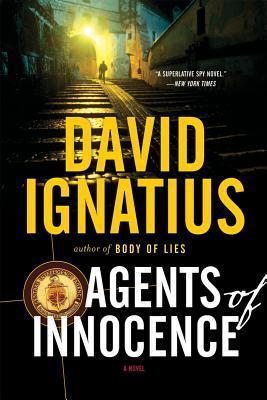
A "superlative spy novel" (New York Times) by the author of the bestselling espionage thrillers Body of Lies and The Director.Agents of Innocence is the book that established David Ignatius's reputation as a master of the novel of contemporary espionage. Into the treacherous world of shifting alliances and arcane subterfuge comes idealistic CIA man Tom Rogers. Posted in Beirut to penetrate the PLO and recruit a high-level operative, he soon learns the heavy price of innocence in a time and place that has no use for it.

In this updated and greatly enlarged edition of her Book of Middle Eastern Food, Claudia Roden re-creates a classic. The book was originally published here in 1972 and was hailed by James Beard as "a landmark in the field of cookery"; this new version represents the accumulation of the author's thirty years of further extensive travel throughout the ever-changing landscape of the Middle East, gathering recipes and stories.Now Ms. Roden gives us more than 800 recipes, including the aromatic variations that accent a dish and define the country of origin: fried garlic and cumin and coriander from Egypt, cinnamon and allspice from Turkey, sumac and tamarind from Syria and Lebanon, pomegranate syrup from Iran, preserved lemon and harissa from North Africa. She has worked out simpler approaches to traditional dishes, using healthier ingredients and time-saving methods without ever sacrificing any of the extraordinary flavor, freshness, and texture that distinguish the cooking of this part of the world.Throughout these pages she draws on all four of the region's major cooking styles: - The refined haute cuisine of Iran, based on rice exquisitely prepared and embellished with a range of meats, vegetables, fruits, and nuts - Arab cooking from Syria, Lebanon, and Jordan--at its finest today, and a good source for vegetable and bulgur wheat dishes - The legendary Turkish cuisine, with its kebabs, wheat and rice dishes, yogurt salads, savory pies, and syrupy pastries - North African cooking, particularly the splendid fare of Morocco, with its heady mix of hot and sweet, orchestrated to perfection in its couscous dishes and taginesFrom the tantalizing mezze--those succulent bites of filled fillo crescents and cigars, chopped salads, and stuffed morsels, as well as tahina, chickpeas, and eggplant in their many guises--to the skewered meats and savory stews and hearty grain and vegetable dishes, here is a rich array of the cooking that Americans embrace today. No longer considered exotic--all the essential ingredients are now available in supermarkets, and the more rare can be obtained through mail order sources (readily available on the Internet)--the foods of the Middle East are a boon to the home cook looking for healthy, inexpensive, flavorful, and wonderfully satisfying dishes, both for everyday eating and for special occasions.

One of multiple covers for ISBN 9780375706868.A spellbinding tale of disparate yearnings – for love, art, power, and God – set in a remote Turkish town, where stirrings of political Islamism threaten to unravel the secular order; by the winner of the 2006 Nobel Prize for Literature.From the acclaimed author of My Name Is Red comes a spellbinding tale of disparate yearnings–for love, art, power, and God–set in a remote Turkish town, where stirrings of political Islamism threaten to unravel the secular order. Following years of lonely political exile in Western Europe, Ka, a middle-aged poet, returns to Istanbul to attend his mother's funeral. Only partly recognizing this place of his cultured, middle-class youth, he is even more disoriented by news of strange events in the wider country: a wave of suicides among girls forbidden to wear their head scarves at school. An apparent thaw of his writer's curiosity–a frozen sea these many years–leads him to Kars, a far-off town near the Russian border and the epicenter of the suicides. No sooner has he arrived, however, than we discover that Ka's motivations are not purely journalistic; for in Kars, once a province of Ottoman and then Russian glory, now a cultural gray-zone of poverty and paralysis, there is also Ipek, a radiant friend of Ka's youth, lately divorced, whom he has never forgotten. As a snowstorm, the fiercest in memory, descends on the town and seals it off from the modern, westernized world that has always been Ka's frame of reference, he finds himself drawn in unexpected directions: not only headlong toward the unknowable Ipek and the desperate hope for love–or at least a wife–that she embodies, but also into the maelstrom of a military coup staged to restrain the local Islamist radicals, and even toward God, whose existence Ka has never before allowed himself to contemplate. In this surreal confluence of emotion and spectacle, Ka begins to tap his dormant creative powers, producing poem after poem in untimely, irresistible bursts of inspiration. But not until the snows have melted and the political violence has run its bloody course will Ka discover the fate of his bid to seize a last chance for happiness. Blending profound sympathy and mischievous wit, Snow illuminates the contradictions gripping the individual and collective heart in many parts of the Muslim world. But even more, by its narrative brilliance and comprehension of the needs and duties

"I, Hasan the son of Muhammad the weigh-master, I, Jean-Leon de Medici, circumcised at the hand of a barber and baptized at the hand of a pope, I am now called the African, but I am not from Africa, nor from Europe, nor from Arabia. I am also called the Granadan, the Fassi, the Zayyati, but I come from no country, from no city, no tribe. I am the son of the road, my country is the caravan, my life the most unexpected of voyages."Thus wrote Leo Africanus, in his fortieth year, in this imaginary autobiography of the famous geographer, adventurer, and scholar Hasan al-Wazzan, who was born in Granada in 1488. His family fled the Inquisition and took him to the city of Fez, in North Africa. Hasan became an itinerant merchant, and made many journeys to the East, journeys rich in adventure and observation. He was captured by a Sicilian pirate and taken back to Rome as a gift to Pope Leo X, who baptized him Johannes Leo. While in Rome, he wrote the first trilingual dictionary (Latin, Arabic and Hebrew), as well as his celebrated Description of Africa , for which he is still remembered as Leo Africanus.

To American observers, the Arab world often seems little more than a distant battleground characterized by religious zealotry and political chaos. Years of tone-deaf US policies have left the region powerless to control its own destiny—playing into a longstanding sense of shame and impotence for a once-mighty people. In this definitive account, preeminent historian Eugene Rogan traces five centuries of Arab history, from the Ottoman conquests through the British and French colonial periods and up to the present age of unipolar American hegemony. The Arab world is now more acutely aware than ever of its own vulnerability, and this sense of subjection carries with it vast geopolitical consequences.Drawing from Arab sources little known to Western readers, Rogan's The Arabs will transform our understanding of the past, present, and future of one of the world's most tumultuous regions.

Danh sách chương Lời Nói Đầu Lời Giới Thiệu Chương 1: “Ngoan Cố” Chương 2: Doanh Nhân Trên Chiến Trường Chương 3: Nhân Vật Của Quyển Sách Chương 4: Harvard, Princeton Và Yale Chương 5: Nơi Trật Tự Gặp Hỗn Loạn Chương 6: Một Chính Sách Công Nghiệp Hiệu Quả Chương 7: Nhập Cư Chương 8: Cộng Đồng Do Thái Hải Ngoại Chương 9: Phép Thử Của Buffett Chương 10: Yozma Chương 11: Phản Bội Và Cơ Hội Chương 12: Từ Đầu Đạn Tên Lửa Đến Mạch Nước Phun Chương 13: Thế Lưỡng Nan Của Sheikh Chương 14: Các Mối Đe Dọa Đối Với Sự Thần Kỳ Của Nền Kinh Tế Kết Luận Lời Bạt Chú Thích “Quốc gia khởi nghiệp”là câu chuyện viết về sự phát triển thần kỳ của nền kinh tế Israel từ lúc lập quốc cho đến khi trở thành quốc gia có nền công nghệ hàng đầu thế giới. Quyển sách này có thể trả lời cho những thắc mắc làm thế nào một đất nước nhỏ bé lại có thể tồn tại giữa sự thù địch của các quốc gia lân cận, đối phó với những cuộc chiến giữ vững bờ cõi mà vẫn tạo ra sự sáng tạo vượt bậc trong các lĩnh vực công nghệ, quân sự và dân sự. Với ngòi bút sắc sảo, phong phú và tập trung những lời nhận xét thực tế từ những doanh nhân thành công hàng đầu, “Quốc gia khởi nghiệp” đã đem đến những cái nhìn mới mẻ về con người và đất nước Israel, làm sáng tỏ phần nào những thành công tưởng chừng như không tưởng của đất nước nhỏ bé này. Cá tính quyết liệt, dám thách thức và sáng tạo không ngừng của những con người Do Thái lưu vong, chạy trốn và sống sót sau những cuộc thảm sát trong Chiến tranh thế giới thứ II, không cam chịu cuộc sống nghèo khó, họ đã cùng với những người theo Chủ nghĩa Phục quốc Do Thái gầy dựng và bảo vệ đất nước Israel bằng chính sức lực của mình và khiến cả thế gi&

An esteemed journalist travels to Turkey to investigate the legacy of the Armenian genocide and the quest for Kurdish statehood.In 2001, Christopher de Bellaigue, then the Economist's correspondent in Istanbul, wrote a piece about the history of Turkey for The New York Review of Books . In it, he briefly discussed the killing and deportation of half a million Armenians in 1915. These massacres, he suggested, were best understood as part of the struggles that attended the end of the Ottoman empire.After the story was published, the magazine was besieged with letters. This wasn't war, the correspondents said; it was genocide. And the death toll was not half a million but three times that many. De Bellaigue was mortified. How had he gotten it so wrong? He went back to Turkey, but found that the national archives had sealed all documents pertaining to those times. Undeterred and armed with a stack of contraband histories, he set out to the conflicted southeastern Turkish city of Varto to discover what had really happened.There, de Bellaigue found a place in which the centuries-old conflict among Turks, Armenians, and Kurds was still very much alive. His government escort began their association by marching with him arm in arm through the town's shopping district to show his presence; the local police chief, sent by the central office in Ankara to keep an eye on the Kurds, was sure he was a spy. He found houses built from the ruins of old Armenian churches, young boys playing soccer with old skulls, and a cast of villagers who all seemed unwilling to talk.What emerges is both an intellectual detective story and a reckoning with memory and identity that brings to life the basic conflicts of the Middle East: between statehood and religion, imperial borders and ethnic identity. Combining a deeply informed view of the area's history with the testimonials of the townspeople who slowly come to trust him, de Bellaigue unravels the enigma of the Turkish twentieth century, a time that contains the death of an empire, the founding of a nation, and the near extinction of a people. Rebel Land exposes the historical and emotional fault lines that lie behind many of today's headlines: about Turkey and its faltering bid for membership into the EU, about the Kurds and their bid for nationhood, and the Armenians' campaign for genocide recognition.

Since he was a small boy, Mosab Hassan Yousef has had an inside view of the deadly terrorist group Hamas. The oldest son of Sheikh Hassan Yousef, a founding member of Hamas and its most popular leader, young Mosab assisted his father for years in his political activities while being groomed to assume his legacy, politics, status . . . and power. But everything changed when Mosab turned away from terror and violence, and embraced instead the teachings of another famous Middle East leader. In Son of Hamas , Mosab Yousef―now called “Joseph”―reveals new information about the world’s most dangerous terrorist organization and unveils the truth about his own role, his agonizing separation from family and homeland, the dangerous decision to make his newfound faith public, and his belief that the Christian mandate to “love your enemies” is the only way to peace in the Middle East.

Here, in one volume: Marjane Satrapi's best-selling, internationally acclaimed memoir-in-comic-strips.Persepolis is the story of Satrapi's unforgettable childhood and coming of age within a large and loving family in Tehran during the Islamic Revolution; of the contradictions between private and public life in a country plagued by political upheaval; of her high school years in Vienna facing the trials of adolescence far from her family; of her homecoming—both sweet and terrible; and, finally, of her self-imposed exile from her beloved homeland. It is the chronicle of a girlhood and adolescence at once outrageous and familiar, a young life entwined with the history of her country yet filled with the universal trials and joys of growing up.Edgy, searingly observant, and candid, often heartbreaking but threaded throughout with raw humor and hard-earned wisdom—Persepolis is a stunning work from one of the most highly regarded, singularly talented graphic artists at work today.

When Maziar Bahari left London in June 2009 to cover Iran’s presidential election, he assured his pregnant fiancée, Paola, that he’d be back in just a few days, a week at most. Little did he know, as he kissed her good-bye, that he would spend the next three months in Iran’s most notorious prison, enduring brutal interrogation sessions at the hands of a man he knew only by his smell: Rosewater.For the Bahari family, wars, coups, and revolutions are not distant concepts but intimate realities they have suffered for generations: Maziar’s father was imprisoned by the shah in the 1950s, and his sister by Ayatollah Khomeini in the 1980s. Alone in his cell at Evin Prison, fearing the worst, Maziar draws strength from his memories of the courage of his father and sister in the face of torture, and hears their voices speaking to him across the years. He dreams of being with Paola in London, and imagines all that she and his rambunctious, resilient eighty-four-year-old mother must be doing to campaign for his release. During the worst of his encounters with Rosewater, he silently repeats the names of his loved ones, calling on their strength and love to protect him and praying he will be released in time for the birth of his first child. A riveting, heart-wrenching memoir, Rosewater offers insight into the past seventy years of regime change in Iran, as well as the future of a country where the democratic impulses of the youth continually clash with a government that becomes more totalitarian with each passing day. An intimate and fascinating account of contemporary Iran, it is also the moving and wonderfully written story of one family’s extraordinary courage in the face of repression.Now a major motion picture directed by Jon Stewart - Previously published as Then They Came for Me.

Writing with access to thousands of recently released official documents, new interviews & perspectives coming from a decade of research & reflection, Anthony Summers & Robbyn Swan deliver the 1st panoramic, authoritative look at 9/11. For many Americans, 9/11/2001, is the darkest date in the nation's history. What exactly happened? Could it have been prevented? How & why did so much acrimony & bad information arise from the ashes of the World Trade Center, the Pentagon & a Pennsylvania field? What remains unresolved? What is certain: Discord & dissent continue to this day. Beginning with the 1st brutal actions of the hijackers of American Airlines Flight 11, The Eleventh Day tracks the sequence of events & introduces the players: pilots, terrorists, passengers & those who died on the ground. Drawing on previously classified records & raw transcripts, Summers & Swan investigate the response of President Bush & the military that day, & the failure to intercept the hijacked airliners. They document the untruths told afterward by US officials &, as counterpoint, consider the contentions of the 9/11 Truth movement. With meticulous research, they examine the personalities of those behind the onslaught, analyze their motives & expose the US intelligence blunders preceding the attacks. They note how afterward--without good evidence--the Bush administration tried to link 9/11 to Iraq. Finally, they confront the question the 9/11 Commission's report blurred: Were the terrorists backed by powerful figures in a foreign nation long viewed as a friend? Riveting, revelatory, thoroughly sourced & complete with extensive endnotes, The Eleventh Day is the essential one-volume work on a pivotal event.

Former Army officer Parnell and collaborator Bruning (Shadow of the Sword) reprise Parnell’s 16 months as an infantry platoon leader in Afghanistan in this heartfelt memoir. In 2006, Parnell and his 10th Mountain Division platoon, the self-styled Outlaws, arrived in Afghanistan’s Bermel Valley, which borders Pakistan. Their mission was “to stanch the flow of enemy troops and supplies into Afghanistan.” Besides their 32 Purple Hearts, the platoon—which “usually patrolled with about 30 men... loaded into six Humvees”—earned seven Bronze Stars and 12 Army Commendations for Valor, making it one of the most decorated units in the Afghan war. Parnell vividly captures the sounds, sights, and smells of combat, and proves most eloquent when describing the bond—“selflessness was our secret weapon”—that developed among his men. Studiously nonpartisan, Parnell still raises important questions about Afghan president Hamid Karzai’s integrity, the competence of the Afghan police, and the sincerity of our Pakistani “allies.” Parnell balances sentimentality with sincerity and crisp prose to produce one of the Afghan war’s most moving combat narratives.

“The story of what Dakota did . . . will be told for generations.” — President Barack Obama, from remarks given at Meyer’s Medal of Honor ceremony.In the fall of 2009, Taliban insurgents ambushed a patrol of Afghan soldiers and Marine advisors in a mountain village called Ganjigal. Firing from entrenched positions, the enemy was positioned to wipe out one hundred men who were pinned down and were repeatedly refused artillery support. Ordered to remain behind with the vehicles, twenty-one year-old Marine corporal Dakota Meyer disobeyed orders and attacked to rescue his comrades. With a brave driver at the wheel, Meyer stood in the gun turret exposed to withering fire, rallying Afghan troops to follow. Over the course of the five hours, he charged into the valley time and again. Employing a variety of machine guns, rifles, grenade launchers, and even a rock, Meyer repeatedly repulsed enemy attackers, carried wounded Afghan soldiers to safety, and provided cover for dozens of others to escape—supreme acts of valor and determination. In the end, Meyer and four stalwart comrades—an Army captain, an Afghan sergeant major, and two Marines—cleared the battlefield and came to grips with a tragedy they knew could have been avoided. For his actions on that day, Meyer became the first living Marine in three decades to be awarded the Medal of Honor. Into the Fire tells the full story of the chaotic battle of Ganjigal for the first time, in a compelling, human way that reveals it as a microcosm of our recent wars. Meyer takes us from his upbringing on a farm in Kentucky, through his Marine and sniper training, onto the battlefield, and into the vexed aftermath of his harrowing exploits in a battle that has become the stuff of legend. Investigations ensued, even as he was pitched back into battle alongside U.S. Army soldiers who embraced him as a fellow grunt. When it was over, he returned to the States to confront living with the loss of his closest friends. This is a tale of American values and upbringing, of stunning heroism, and of adjusting to loss and to civilian life. We see it all through Meyer’s eyes, bullet by bullet, with raw honesty in telling of both the errors that resulted in tragedy and the resolve of American soldiers, U.S.Marines, and Afghan soldiers who’d been abandoned and faced certain death. Meticulously researched and thrillingly told, with nonstop pace and vivid detail, Into the Fire is the true story of a modern American hero. “Sergeant Meyer embodies all that is good about our nation’s Corps of Marines. . . . [His] heroic actions . . . will forever be etched in our Corps’ rich legacy of courage and valor.” —General James F. Amos, Commandant of the Marine Corps

With Jerusalem, Ottolenghi re-teams with his friend and co-owner of his restaurants, Sami Tamimi. Both men were born in Jerusalem in the same Tamimi on the Arab east side and Ottolenghi in the Jewish west. In this book they explore the vibrant cuisine of their home city together, and present an authentic collection of recipes that reflects the city's melting pot of Muslim, Jewish, Arab, Christian and Armenian communities. From their unique cross-cultural perspectives, Ottolenghi and Tamimi share 120 authentic from soups (Frikkeh, Chicken with Kneidelach), to meat and fish (Chicken with Cardamom Rice; Sharmula Bream with Rose Petals), to vegetables and salads (Chargrilled Squash with Labneh and Pickled Walnut Salsa), pulses and grains (Beetroot and SaffronRice); and cakes and desserts (Fig and Arak Trifle; Clementine and Almond Cake). Their cookbook is illustrated with 130 full-colour photographs, showcasing their sumptuous dishes in the dazzling setting of Jerusalem city. Ottolenghi and Tamimi have five bustling restaurants in London, UK. Ottolenghi is one of the most respected chefs in the world; his latest cookbook, Plenty , was a New York Times bestseller and one of the most lauded cookbooks of 2011. Jerusalem is his most personal, original and beautiful cookbook yet.

A thrilling and revelatory narrative of one of the most epic and consequential periods in 20th century history – the Arab Revolt and the secret “great game” to control the Middle EastThe Arab Revolt against the Turks in World War One was, in the words of T.E. Lawrence, “a sideshow of a sideshow.” Amidst the slaughter in European trenches, the Western combatants paid scant attention to the Middle Eastern theater. As a result, the conflict was shaped to a remarkable degree by a small handful of adventurers and low-level officers far removed from the corridors of power.Curt Prüfer was an effete academic attached to the German embassy in Cairo, whose clandestine role was to foment Islamic jihad against British rule. Aaron Aaronsohn was a renowned agronomist and committed Zionist who gained the trust of the Ottoman governor of Syria. William Yale was the fallen scion of the American aristocracy, who traveled the Ottoman Empire on behalf of Standard Oil, dissembling to the Turks in order gain valuable oil concessions. At the center of it all was Lawrence. In early 1914 he was an archaeologist excavating ruins in the sands of Syria; by 1917 he was the most romantic figure of World War One, battling both the enemy and his own government to bring about the vision he had for the Arab people.The intertwined paths of these four men – the schemes they put in place, the battles they fought, the betrayals they endured and committed – mirror the grandeur, intrigue and tragedy of the war in the desert. Prüfer became Germany’s grand spymaster in the Middle East. Aaronsohn constructed an elaborate Jewish spy-ring in Palestine, only to have the anti-Semitic and bureaucratically-inept British first ignore and then misuse his organization, at tragic personal cost. Yale would become the only American intelligence agent in the entire Middle East – while still secretly on the payroll of Standard Oil. And the enigmatic Lawrence rode into legend at the head of an Arab army, even as he waged secret war against his own nation’s imperial ambitions.Based on years of intensive primary document research, Lawrence in Arabia definitively overturns received wisdom on how the modern Middle East was formed. Sweeping in its action, keen in its portraiture, acid in its condemnation of the destruction wrought by European colonial plots, this is a book that brilliantly captures the way in which the folly of the past creates the anguish of the present.

June 5, 1967. The nineteen-year-old state of Israel is surrounded by enemies who want nothing less than her utter extinction. The Soviet-equipped Egyptian Army has amassed a thousand tanks on the nation’s southern border. Syrian heavy guns are shelling her from the north. To the east, Jordan and Iraq are moving mechanized brigades and fighter squadrons into position to attack. Egypt’s President Nasser has declared that the Arab force’s objective is the destruction of Israel.” The rest of the world turns a blind eye to the new nation’s desperate peril.June 10, 1967. The Arab armies have been routed, ground divisions wiped out, air forces totally destroyed. Israel’s citizen-soldiers have seized the Gaza Strip and the Sinai Peninsula from Egypt, the Golan Heights from Syria, East Jerusalem and the West Bank from Jordan. The land under Israeli control has tripled. Her charismatic defense minister, Moshe Dayan, has entered the Lion’s Gate of the Old City of Jerusalem to stand with the paratroopers who have liberated Judaism’s holiest site—the Western Wall, part of the ruins of Solomon’s temple, which has not been in Jewish hands for nineteen hundred years.It is one of the most unlikely and astonishing military victories in history.Drawing on hundreds of hours of interviews with veterans of the war—fighter and helicopter pilots, tank commanders and Recon soldiers, paratroopers, as well as women soldiers, wives, and others—bestselling author Steven Pressfield tells the story of the Six Day War as you’ve never experienced it before: in the voices of the young men and women who battled not only for their lives but for the survival of a Jewish state, and for the dreams of their ancestors.By turns inspiring, thrilling, and heartbreaking, The Lion’s Gate is both a true tale of military courage under fire and a journey into the heart of what it means to fight for one’s people.

Founder and former president of Blackwater, the private contractor that provided security in Iraq and Afghanistan defends himself from the many accusations that his organization was trigger-happy and bilked the American taxpayer.

Aref Al-Amri does not want to leave Oman. He does not want to leave his elementary school, his friends, or his beloved grandfather, Siddi. He does not want to live in Ann Arbor, Michigan, where his parents will go to graduate school. His mother is desperate for him to pack his suitcase—but he refuses. Finally, she calls Siddi for help. But rather than pack, Aref and Siddi go on a series of adventures. They visit the camp of a thousand stars deep in the desert, they sleep on Siddi’s roof, they fish in the Gulf of Oman and dream about going to India, they travel to the nature reserve to watch the sea turtles. At each stop, Siddi finds a small stone that he later slips into Aref’s suitcase—mementos of home.

One of the New York Times ' 100 Notable Books of 2015One of Financial Times ' Books of the Year, 2015A New York Times Editors' ChoiceA New Statesman [UK] Essential Book of the Year 2015A Times [UK] Book of the Year 2015Shortlisted for the 2015 Samuel Johnson Prize for NonfictionShortlisted for the 2016 Orwell PrizeWhen Emma Sky volunteered to help rebuild Iraq after the overthrow of Saddam Hussein in 2003, she had little idea what she was getting in to. Her assignment was only supposed to last three months. She went on to serve there longer than any other senior military or diplomatic figure, giving her an unrivaled perspective of the entire conflict.As the representative of the Coalition Provisional Authority in Kirkuk in 2003 and then the political advisor to US General Odierno from 2007-2010, Sky was valued for her knowledge of the region and her outspoken voice. She became a tireless witness to American efforts to transform a country traumatized by decades of war, sanctions, and brutal dictatorship; to insurgencies and civil war; to the planning and implementation of the surge and the subsequent drawdown of US troops; to the corrupt political elites who used sectarianism to mobilize support; and to the takeover of a third of the country by the Islamic State.With sharp detail and tremendous empathy, Sky provides unique insights into the US military as well as the complexities, diversity, and evolution of Iraqi society. The Unraveling is an intimate insider's portrait of how and why the Iraq adventure failed and contains a unique analysis of the course of the war. Highlighting how nothing that happened in Iraq after 2003 was inevitable, Sky exposes the failures of the policies of both Republicans and Democrats, and the lessons that must be learned about the limitations of power.

WINNER OF THE 2016 PULITZER PRIZE FOR GENERAL NONFICTION A Best Book of 2015 "The New York Times," "The Washington Post," "People" Magazine, "San Francisco Chronicle," "Kansas City Star," and "Kirkus Reviews" ""In a thrilling dramatic narrative, awarded the 2016 Pulitzer Prize for General Nonfiction, Joby Warrick"traces how the strain of militant Islam behind ISIS first arose in a remote Jordanian prison and spread with the unwitting aid of two American presidents." When the government of Jordan granted amnesty to a group of political prisoners in 1999, it little realized that among them was Abu Musab al-Zarqawi, a terrorist mastermind and soon the architect of an Islamist movement bent on dominating the Middle East. In "Black Flags, " an unprecedented character-driven account of the rise of ISIS, Pulitzer Prize-winning reporter Joby Warrickshows how the zeal of this one man and the strategic mistakes of Presidents Bush and Obama led to the banner of ISIS being raised over huge swaths of Syria and Iraq.Zarqawi began by directing terror attacks from a base in northern Iraq, but it was the American invasion in 2003 that catapulted him to the head of a vast insurgency. By falsely identifying him as the link between Saddam and bin Laden, U.S. officials inadvertently spurred like-minded radicals to rally to his cause. Their wave of brutal beheadings and suicide bombings persisted until American and Jordanian intelligence discovered clues that led to a lethal airstrike on Zarqawi s hideout in 2006.His movement, however, endured. First calling themselves al-Qaeda in Iraq, then Islamic State of Iraq and Syria, or ISIS, his followers sought refuge in unstable, ungoverned pockets on the Iraq-Syria border. When the Syrian civil war broke out in 2011, and as the U.S. largely stood by, ISIS seized its chance to pursue Zarqawi s dream of an ultra-conservative Islamic caliphate.Drawing on unique high-level access to CIA and Jordanian sources, Warrick weaves gripping, moment-by-moment operational details with the perspectives of diplomats and spies, generals and heads of state, many of whom foresaw a menace worse than al Qaeda and tried desperately to stop it. "Black Flags" is a brilliant and definitive history that reveals the long arc of today s most dangerous extremist threat. "From the Hardcover edition.""

Far more than a history of the Silk Roads, this book is truly a revelatory new history of the world, promising to destabilize notions of where we come from and where we are headed next. From the Middle East and its political instability to China and its economic rise, the vast region stretching eastward from the Balkans across the steppe and South Asia has been thrust into the global spotlight in recent years. Frankopan teaches us that to understand what is at stake for the cities and nations built on these intricate trade routes, we must first understand their astounding pasts.Frankopan realigns our understanding of the world, pointing us eastward. It was on the Silk Roads that East and West first encountered each other through trade and conquest, leading to the spread of ideas, cultures and religions. From the rise and fall of empires to the spread of Buddhism and the advent of Christianity and Islam, right up to the great wars of the twentieth century--this book shows how the fate of the West has always been inextricably linked to the East.Also available: The New Silk Roads, a timely exploration of the dramatic and profound changes our world is undergoing right now--as seen from the perspective of the rising powers of the East.

LONGLISTED FOR THE NATIONAL BOOK AWARD • A searing reassessment of U.S. military policy in the Middle East over the past four decades from retired army colonel and New York Times bestselling author Andrew J. Bacevich From the end of World War II until 1980, virtually no American soldiers were killed in action while serving in the Greater Middle East. Since 1990, virtually no American soldiers have been killed in action anywhere else. What caused this shift? Andrew J. Bacevich, one of the country’s most respected voices on foreign affairs, offers an incisive critical history of this ongoing military enterprise—now more than thirty years old and with no end in sight. During the 1980s, Bacevich argues, a great transition occurred. As the Cold War wound down, the United States initiated a new conflict—a War for the Greater Middle East—that continues to the present day. The long twilight struggle with the Soviet Union had involved only occasional and sporadic fighting. But as this new war unfolded, hostilities became persistent. From the Balkans and East Africa to the Persian Gulf and Central Asia, U.S. forces embarked upon a seemingly endless series of campaigns across the Islamic world. Few achieved anything remotely like conclusive success. Instead, actions undertaken with expectations of promoting peace and stability produced just the opposite. As a consequence, phrases like “permanent war” and “open-ended war” have become part of everyday discourse. Connecting the dots in a way no other historian has done before, Bacevich weaves a compelling narrative out of episodes as varied as the Beirut bombing of 1983, the Mogadishu firefight of 1993, the invasion of Iraq in 2003, and the rise of ISIS in the present decade. Understanding what America’s costly military exertions have wrought requires seeing these seemingly discrete events as parts of a single war. It also requires identifying the errors of judgment made by political leaders in both parties and by senior military officers who share responsibility for what has become a monumental march to folly. This Bacevich unflinchingly does. A twenty-year army veteran who served in Vietnam, Andrew J. Bacevich brings the full weight of his expertise to this vitally important subject. America’s War for the Greater Middle East is a bracing after-action report from the front lines of history. It will fundamentally change the way we view America’s engagement in the world’s most volatile region. Praise for America’s War for the Greater Middle East“Bacevich is thought-provoking, profane and fearless. . . . [His] call for Americans to rethink their nation’s militarized approach to the Middle East is incisive, urgent and essential.”—The New York Times Book Review “Bacevich’s magnum opus . . . a deft and rhythmic polemic aimed at America’s failures in the Middle East from the end of Jimmy Carter’s presidency to the present.”—Robert D. Kaplan, The Wall Street Journal“A critical review of American policy and military involvement . . . Those familiar with Bacevich’s work will recognize the clarity of expression, the devastating directness and the coruscating wit that characterize the writing of one of the most articulate and incisive living critics of American foreign policy.”—The Washington Post “[A] monumental new work.

From Man Booker Prize and National Book Critics Circle Award finalist Hisham Matar, a memoir of his journey home to his native Libya in search of answers to his father's disappearance. In 2012, after the overthrow of Qaddafi, the acclaimed novelist Hisham Matar journeys to his native Libya after an absence of thirty years. When he was twelve, Matar and his family went into political exile. Eight years later Matar's father, a former diplomat and military man turned brave political dissident, was kidnapped from the streets of Cairo by the Libyan government and is believed to have been held in the regime's most notorious prison. Now, the prisons are empty and little hope remains that Jaballa Matar will be found alive. Yet, as the author writes, hope is "persistent and cunning". This book is a profoundly moving family memoir, a brilliant and affecting portrait of a country and a people on the cusp of immense change, and a disturbing and timeless depiction of the monstrous nature of absolute power.

The story of a young girl and her family, at the core of an exploration of Iranian history.Kimiâ Sadr fled Iran at the age of ten in the company of her mother and sisters to join her father in France. Now twenty-five, with a new life and the prospect of a child, Kimiâ is inundated by her own memories and the stories of her ancestors, which reach her in unstoppable, uncontainable waves. In the waiting room of a Parisian fertility clinic, generations of flamboyant Sadrs return to her, including her formidable great-grandfather Montazemolmolk, with his harem of fifty-two wives, and her parents, Darius and Sara, stalwart opponents of each regime that befalls them.In this high-spirited, kaleidoscopic story, key moments of Iranian history, politics, and culture punctuate stories of family drama and triumph. Yet it is Kimiâ herself—punk-rock aficionado, storyteller extraordinaire, a Scheherazade of our time, and above all a modern woman divided between family traditions and her own “disorientalization”—who forms the heart of this bestselling and beloved novel.

There is a quiet revolution that is radically reshaping the Muslim 50 million women have entered the workforce and are upending their countries' economies and societies.Across the Muslim world, ever greater numbers of women are going to work. In the span of just over a decade, millions have joined the workforce, giving them more earning and purchasing power and greater autonomy.In Fifty Million Rising , award-winning economist Saadia Zahidi illuminates this discreet but momentous revolution through the stories of the remarkable women who are at the forefront of this shift -- a McDonald's worker in Pakistan who has climbed the ranks to manager; the founder of an online modest fashion startup in Indonesia; a widow in Cairo who runs a catering business with her daughter, against her son's wishes; and an executive in a Saudi corporation who is altering the culture of her workplace; among many others. These women are challenging familial and social conventions, as well as compelling businesses to cater to women as both workers and consumers. More importantly, they are gaining the economic power that will upend entrenched cultural norms, re-shape how women are viewed in the Muslim world and elsewhere, and change the mindset of the next generation.Inspiring and deeply reported, Fifty Million Rising is a uniquely insightful portrait of a seismic shift with global significance, as Muslim women worldwide claim a seat at the table.

“A classic of war reporting...The author’s stories give heart-rending meaning to the lives and deaths of these men and women, even if policymakers generally have not.” — The New York TimesPulitzer Prize winner C.J. Chivers’s unvarnished account of modern combat, told through the eyes of the fighters who have waged America’s longest wars.More than 2.7 million Americans have served in Afghanistan or Iraq since September 11, 2001. C.J. Chivers reported from both wars from their beginnings. The Fighters vividly conveys the physical and emotional experience of war as lived by six a fighter pilot, a corpsman, a scout helicopter pilot, a grunt, an infantry officer, and a Special Forces sergeant.Chivers captures their courage, commitment, sense of purpose, and ultimately their suffering, frustration, and moral confusion as new enemies arise and invasions give way to counterinsurgency duties for which American forces were often not prepared.The Fighters is a tour de force, a portrait of modern warfare that parts from slogans to do for American troops what Stephen Ambrose did for the G.I.s of World War II and Michael Herr for the grunts in Vietnam. Told with the empathy and understanding of an author who is himself an infantry veteran, The Fighters presents the long arc of two wars.

The New York Times bestselling author of Infidel, Nomad, and Heretic argues that waves of Muslim immigration are transforming sexual politics in Europe in ways that threaten to undermine the hard-won rights of Western women.Ayaan Hirsi Ali has been speaking against Islamic extremism for decades. In the age of #MeToo, she asks: Why is no one talking about the explosion of sexual violence and harassment in Europe’s cities? No one wants to admit that the problem is linked to the arrival of more than a million migrants from Muslim-majority countries.Hirsi Ali knows the pain of sexual violence firsthand. Growing up in Somalia and Saudi Arabia, she suffered female genital mutilation and the frustration of being treated as a second-class citizen. When she fled to the Netherlands, she thought she had escaped to a paradise of gender equality, but now new waves of Muslim migration imperil women’s freedom.In Prey, Hirsi Ali explains the systemic causes of sexual violence in the Muslim world, from the barring of women from public life to the lack of legal and cultural bulwarks against sexual abuse. She also brings up uncomfortable questions for the West. Why, she asks, have the European authorities and media sought to hush up the wave of violence against women? Why do Western feminists prefer to complain about glass ceilings in the workplace when women are facing severe threats to their most basic rights?A refugee herself, Hirsi Ali is not against immigration. She wants Europeans to reform their broken system—and for Americans to learn from European mistakes. Immigration implies integration and assimilation. If that is not made clear, the call to exclude new Muslim migrants from Western countries will only grow louder.For two decades, Hirsi Ali has faced death threats and harassment for daring to speak her mind. But she refuses to be silenced. In Prey, she argues passionately against allowing the clock of women’s right to be turned back.

The unforgettable love story of a mother blinded by loss and her husband who insists on their survival as they undertake the Syrian refugee trail to Europe.Nuri is a beekeeper; his wife, Afra, an artist. They live a simple life, rich in family and friends, in the beautiful Syrian city of Aleppo--until the unthinkable happens. When all they care for is destroyed by war, they are forced to escape. But what Afra has seen is so terrible she has gone blind, and so they must embark on a perilous journey through Turkey and Greece towards an uncertain future in Britain. On the way, Nuri is sustained by the knowledge that waiting for them is Mustafa, his cousin and business partner, who has started an apiary and is teaching fellow refugees in Yorkshire to keep bees.As Nuri and Afra travel through a broken world, they must confront not only the pain of their own unspeakable loss, but dangers that would overwhelm the bravest of souls. Above all, they must journey to find each other again.Moving, powerful, compassionate, and beautifully written, The Beekeeper of Aleppo is a testament to the triumph of the human spirit. It is the kind of book that reminds us of the power of storytelling.

This important collection of anecdotes and reminiscences from Sheikh Mohammed bin Rashid Al Maktoum is published to mark the occasion of his fifty years in public service, which began with his appointment as Dubai’s Minister of Defence in 1968. These stories tell of the vision behind Dubai’s meteoric growth from a small and bustling trading port to an international metropolis at the heart of global business. They record the evolution of the United Arab Emirates from a shared ideal to a nation where more than 195 nationalities live and work in peace, harmony and prosperity. And they reveal insights from a man whose drive, determination and will to succeed have become legendary. Within these stories lies the heart of Sheikh Mohammed the statesman, the equestrian, the poet and the leader. They are written with the intent to inspire and inform new generations of readers, and to celebrate the achievements of this young and vibrant nation and the people who shaped it. This celebration of a life in service is unavoidably incomplete. As Sheikh Mohammed himself indicates, there is still so much left to do. As a record of the first fifty years alone, however, it forms part of a remarkable legacy. Other titles written by Sheikh Mohammed and published by Explorer include Zayed, Reflections on Happiness & Positivity, Flashes of Verse and Two Great Leaders.

Gradually since 2003, Turkey's autocratic leader Recep Tayyip Erdogan has sought to make Turkey a great power -- in the tradition of past Turkish leaders from the late Ottoman sultans to Ataturk, the founder of modern Turkey. Here the leading authority Soner Cagaptay, author of The New Sultan -- the first biography of President Erdogan -- provides a masterful overview of the power politics in the Middle East and Turkey's place in it.Erdogan has picked an unorthodox model in the context of recent Turkish history, attempting to cast his country as a stand-alone Middle Eastern power. In doing so Turkey has broken ranks with its traditional Western allies, including the United States and has embraced an imperial-style foreign policy which has aimed to restore Turkey's Ottoman-era reach into the Arabian Middle East and the Balkans.Today, in addition to a domestic crackdown on dissent and journalistic freedoms, driven by Erdogan's style of governance, Turkey faces a hostile world. Ankara has nearly no friends left in the Middle East, and it faces a threat from resurgent historic Russia and Iran. Furthermore, Turkey cannot rely on the unconditional support of its traditional Western allies. Can Erdogan deliver Turkey back to safety? What are the risks that lie ahead for him, and his country? How can Turkey truly become a great power, fulfilling a dream shared by many Turks, the sultans, Ataturk, and Erdogan himself?

A compelling history of the ancient schism that continues to divide the Islamic worldWhen Muhammad died in 632 without a male heir, Sunnis contended that the choice of a successor should fall to his closest companions, but Shi'a believed that God had inspired the Prophet to appoint his cousin and son-in-law, Ali, as leader. So began a schism that is nearly as old as Islam itself. Laurence Lou�r tells the story of this ancient rivalry, taking readers from the last days of Muhammad to the political and doctrinal clashes of Sunnis and Shi'a today.In a sweeping historical narrative spanning the Islamic world, Lou�r shows how the Sunni-Shi'a divide was never just a dispute over succession--at issue are questions about the very nature of Islamic political authority. She challenges the widespread perception of Sunnis and Shi'a as bitter enemies who are perpetually at war with each other, demonstrating how they have coexisted peacefully at various periods throughout the history of Islam. Lou�r traces how sectarian tensions have been inflamed or calmed depending on the political contingencies of the moment, whether to consolidate the rule of elites, assert clerical control over the state, or defy the powers that be.Timely and provocative, Sunnis and Shi'a provides needed perspective on the historical roots of today's conflicts and reveals how both branches of Islam have influenced and emulated each other in unexpected ways. This compelling and accessible book also examines the diverse regional contexts of the Sunni-Shi'a divide, examining how it has shaped societies and politics in countries such as Iraq, Pakistan, Saudi Arabia, Iran, Yemen, and Lebanon.

One of Foreign Affairs' Best of Books of 2021 and "Books For The Century"!"Book of the Week" on Fareed Zakaria GPSFinancial Times Best Books of 2020The definitive account of how regime change in the Middle East has proven so tempting to American policymakers for decades―and why it always seems to go wrong."It's a first-rate work, intelligently analyzing a complex issue, and learning the right lessons from history."― Fareed ZakariaSince the end of World War II, the United States has set out to oust governments in the Middle East on an average of once per decade ― in places as diverse as Iran, Iraq, Afghanistan (twice), Egypt, Libya, and Syria. The reasons for these interventions have also been extremely diverse, and the methods by which the United States pursued regime change have likewise been highly varied, ranging from diplomatic pressure alone to outright military invasion and occupation. What is common to all the operations, however, is that they failed to achieve their ultimate goals, produced a range of unintended and even catastrophic consequences, carried heavy financial and human costs, and in many cases left the countries in question worse off than they were before.Philip H. Gordon's Losing the Long Game is a thorough and riveting look at the U.S. experience with regime change over the past seventy years, and an insider’s view on U.S. policymaking in the region at the highest levels. It is the story of repeated U.S. interventions in the region that always started out with high hopes and often the best of intentions, but never turned out well. No future discussion of U.S. policy in the Middle East will be complete without taking into account the lessons of the past, especially at a time of intense domestic polarization and reckoning with America's standing in world.

From the Pulitzer Prize–winning author of Black Flags comes the thrilling unknown story of America’s mission in to find and destroy Syria’s chemical weapons and keep them out of the hands of the Islamic State In August 2012, Syrian president Bashar al-Assad was clinging to power in a vicious civil war. When secret intelligence revealed that the dictator might resort to using chemical weapons, President Obama warned that doing so would cross “a red line.” Assad did it anyway, bombing the Damascus suburb of Ghouta with sarin gas, killing hundreds of civilians and forcing Obama to decide if he would mire America in another unpopular Middle Eastern war. When Russia offered to broker the removal of Syria’s chemical weapons, Obama leapt at the out.So begins an electrifying race to find, remove, and destroy 1,300 tons of chemical weapons in the midst of a raging civil war. The extraordinary little-known effort is a triumph for the Americans, but soon Russia’s long game becomes it will do anything to preserve Assad’s rule. As America’s ability to control events in Syria shrinks, the White House learns that ISIS, building its caliphate in Syria’s war-tossed territory, is seeking chemical weapons for itself, with an eye to attacking the West.Red Line is a classic Joby Warrick true-life a character-driven narrative with a cast of heroes and villains, including weapons hunters, politicians, doctors, diplomats, and spies. Drawing on astonishing original reporting, Warrick reveals how the United States embarked on a bold adventure to prevent one catastrophe but could not avoid a tragic chain of events that empowered America’s enemies.

This edited volume makes an impassioned and informed case for the central place of Palestine in socialist organizing and of socialism in the struggle to free Palestine.Palestine: A Socialist Introduction systematically tackles a number of important aspects of the Palestinian struggle for liberation, contextualizing it in an increasingly polarized world and offering a socialist perspective on how full liberation can be won.Through an internationalist, anti-imperialist lens, this book explores the links between the struggle for freedom in the United States and that in Palestine, and beyond. It examines both the historical and contemporary trajectory of the Palestine solidarity movement in order to glean lessons for today’s organizers, and compellingly lays out the argument that, in order to achieve justice in Palestine, the movement has to take up the question of socialism regionally and internationally.Contributors include: Jehad Abusalim, Shireen Akram-Boshar, Omar Barghouti, Nada Elia, Toufic Haddad, Omar Hassan, Remi Kanazi, Annie Levin, Mostafa Omar, Khury Petersen-Smith, and Daphna Thier.

A vibrant selection of poems by the great Persian mystic with groundbreaking translations by an American poet of Persian descent.Rumi’s poems were meant to induce a sense of ecstatic illumination and liberation in his audience, bringing its members to a condition of serenity, compassion, and oneness with the divine. They remain masterpieces of world literature to which readers in many languages continually return for inspiration and succor, as wellas aesthetic delight. This new translation by Haleh Liza Gafori preserves the intelligence and the drama of the poems, which are as full of individual character as they are of visionary wisdom.