
Bernard Lewis
Librarian Note: There is more than one author by this name in the Goodreads database. Bernard Lewis was the Cleveland E. Dodge Professor of Near Eastern Studies Emeritus at Princeton University and the author of many critially acclaimed and bestselling books, including two number one New York Times bestsellers: What Went Wrong? and Crisis of Islam. The Middle East: A Brief History of the Last 2,000 Years was a National Book Critics Circle Award finalist. Internationally recognized as the greatest historian of the Middle East, he received fifteen honorary doctorates and his books have been translated into more than twenty languages.
29 Books Written

In his first book since What Went Wrong? Bernard Lewis examines the historical roots of the resentments that dominate the Islamic world today and that are increasingly being expressed in acts of terrorism. He looks at the theological origins of political Islam and takes us through the rise of militant Islam in Iran, Egypt, and Saudi Arabia, examining the impact of radical Wahhabi proselytizing, and Saudi oil money, on the rest of the Islamic world.The Crisis of Islam ranges widely through thirteen centuries of history, but in particular it charts the key events of the twentieth century leading up to the violent confrontations of today: the creation of the state of Israel, the Cold War, the Iranian Revolution, the Soviet defeat in Afghanistan, the Gulf War, and the September 11th attacks on the United States.While hostility toward the West has a long and varied history in the lands of Islam, its current concentration on America is new. So too is the cult of the suicide bomber. Brilliantly disentangling the crosscurrents of Middle Eastern history from the rhetoric of its manipulators, Bernard Lewis helps us understand the reasons for the increasingly dogmatic rejection of modernity by many in the Muslim world in favor of a return to a sacred past. Based on his George Polk Award–winning article for The New Yorker , The Crisis of Islam is essential reading for anyone who wants to know what Usama bin Ladin represents and why his murderous message resonates so widely in the Islamic world.

What Went Wrong? The Clash Between Islam & Modernity in the Middle East
by Bernard Lewis
Rating: 3.5 ⭐
For many centuries, the world of Islam was in the forefront of human achievement--the foremost military and economic power in the world, the leader in the arts and sciences of civilization. Christian Europe, a remote land beyond its northwestern frontier, was seen as an outer darkness of barbarism and unbelief from which there was nothing to learn or to fear. And then everything changed, as the previously despised West won victory after victory, first in the battlefield and the marketplace, then in almost every aspect of public and even private life.In this intriguing volume, Bernard Lewis examines the anguished reaction of the Islamic world as it tried to understand why things had changed--how they had been overtaken, overshadowed, and to an increasing extent dominated by the West. Lewis provides a fascinating portrait of a culture in turmoil. He shows how the Middle East turned its attention to understanding European weaponry and military tactics, commerce and industry, government and diplomacy, education and culture. Lewis highlights the striking differences between the Western and Middle Eastern cultures from the 18th to the 20th centuries through thought-provoking comparisons of such things as Christianity and Islam, music and the arts, the position of women, secularism and the civil society, the clock and the calendar.Hailed in The New York Times Book Review as "the doyen of Middle Eastern studies," Bernard Lewis is one of the West's foremost authorities on Islamic history and culture. In this striking volume, he offers an incisive look at the historical relationship between the Middle East and Europe.

In a sweeping and vivid survey, renowned historian Bernard Lewis charts the history of the Middle East over the last 2,000 years, from the birth of Christianity through the modern era, focusing on the successive transformations that have shaped it.Drawing on material from a multitude of sources, including the work of archaeologists and scholars, Lewis chronologically traces the political, economical, social, and cultural development of the Middle East, from Hellenization in antiquity to the impact of westernization on Islamic culture. Meticulously researched, this enlightening narrative explores the patterns of history that have repeated themselves in the Middle East.From the ancient conflicts to the current geographical and religious disputes between the Arabs and the Israelis, Lewis examines the ability of this region to unite and solve its problems and asks if, in the future, these unresolved conflicts will ultimately lead to the ethnic and cultural factionalism that tore apart the former Yugoslavia.Elegantly written, scholarly yet accessible, The Middle East is the most comprehensive single volume history of the region ever written from the world’s foremost authority on the Middle East.

The word 'Assassin' was brought back from Syria by the Crusaders, and in time acquired the meaning of murderer. Originally it was applied to the members of a Muslim religious sect - a branch of the Ismailis, and the followers of a leader known as the Old Man of the Mountain. Their beliefs and their methods made them a by-word for both fanaticism and terrorism in Syria and Persia in the 11th and 12th centuries, and the subject of a luxuriant growth of myth and legend. In this book, Bernard Lewis begins by tracing the development of these legends in medieval and modern Europe and the gradual percolation of accurate knowledge concerning the Ismailis. He then examines the origins and activities of the sect, on the basis of contemporary Persian and Arabic sources, and against the background of Middle Eastern and Islamic history. In a final chapter he discusses some of the political, social and economic implications of the Ismailis, and examines the significance of the Assassins in the history of revolutionary and terrorist movements.

Written by renowned scholar Bernard Lewis, The Emergence of Modern Turkey has established itself as the preferred one-volume history of modern Turkey. It covers the emergence of Turkey over two centuries, from the decline and collapse of the Ottoman Empire up to the present day. In a new chapter, Lewis discusses the origins of his book in the Cold War era and the events that have taken place since its first publication in 1961. This new edition addresses Turkey's emergence as a decidedly Western-oriented power despite internal opposition from neutralists and Islamic fundamentalists. It examines such issues as Turkey's inclusion in NATO and application to the European Union, and its involvement with the politics of the Middle East. Authoritative and insightful, The Emergence of Modern Turkey remains the classic text on the history of modern Turkey.

The #1 New York Times bestselling author of What Went Wrong? tells the story of his extraordinary lifeAfter September 11, Americans who had never given much thought to the Middle East turned to Bernard Lewis for an explanation, catapulting What Went Wrong? and later Crisis of Islam to become number one bestsellers. He was the first to warn of a coming "clash of civilizations," a term he coined in 1957, and has led an amazing life, as much a political actor as a scholar of the Middle East. In this witty memoir he reflects on the events that have transformed the region since World War II, up through the Arab Spring.A pathbreaking scholar with command of a dozen languages, Lewis has advised American presidents and dined with politicians from the shah of Iran to the pope. Over the years, he had tea at Buckingham Palace, befriended Golda Meir, and briefed politicians from Ted Kennedy to Dick Cheney. No stranger to controversy, he pulls no punches in his blunt criticism of those who see him as the intellectual progenitor of the Iraq war. Like America’s other great historian-statesmen Arthur Schlesinger and Henry Kissinger, he is a figure of towering intellect and a world-class raconteur, which makes Notes on a Century essential reading for anyone who cares about the fate of the Middle East.

Now brought completely up to date, this classic study by one of the world's premier historians of the Middle East considers the achievement of the Arab peoples and their place in world history, from pre-Islamic times to the present-day. In a concise and readable account, Lewis examines the awakening that accompanied the advent of Islam and the political, religious, and social developments that transformed the Arab kingdom into an Islamic empire. He brings the edition up-to-the-minute with an account of recent events in the Middle East and analyzes the forces, internal and external, that have shaped the modern Arab world. Lewis shows how Western inventions and institutions have shattered the old structures and the traditional way of life, affecting every Arab, and causing a still unsatisfied demand for social, political, and cultural renewal.Incisive and intriguing, this highly regarded and timely work--previously translated into Arabic, as well as many other European, Asian, and Middle Eastern languages--is sure to advance a greater understanding of the Arab past and present.

The eleventh-century Muslim world was a great civilization while Europe lay slumbering in the Dark Ages. Slowly, inevitably, Europe and Islam came together, through trade and war, crusade and diplomacy. The ebb and flow between these two worlds for seven hundred years, illuminated here by a brilliant historian, is one of the great sagas of world history.

Hailed in The New York Times Book Review as "the doyen of Middle Eastern studies," Bernard Lewis has been for half a century one of the West's foremost scholars of Islamic history and culture, the author of over two dozen books, most notably The Arabs in History , The Emergence of Modern Turkey , The Political Language of Islam , and The Muslim Discovery of Europe . Eminent French historian Robert Mantran has written of Lewis's "How could one resist being attracted to the books of an author who opens for you the doors of an unknown or misunderstood universe, who leads you within to its innermost religion, ways of thinking, conceptions of power, culture--an author who upsets notions too often fixed, fallacious, or partisan."In Islam and the West , Bernard Lewis brings together in one volume eleven essays that indeed open doors to the innermost domains of Islam. Lewis ranges far and wide in these essays. He includes long pieces, such as his capsule history of the interaction--in war and peace, in commerce and culture--between Europe and its Islamic neighbors, and shorter ones, such as his deft study of the Arabic word watan and what its linguistic history reveals about the introduction of the idea of patriotism from the West. Lewis offers a revealing look at Edward Gibbon's portrait of Muhammad in Decline and Fall of the Roman Empire (unlike previous writers, Gibbon saw the rise of Islam not as something separate and isolated, nor as a regrettable aberration from the onward march of the church, but simply as a part of human history); he offers a devastating critique of Edward Said's controversial book, Orientalism ; and he gives an account of the impediments to translating from classic Arabic to otherlanguages (the old dictionaries, for one, are packed with scribal errors, misreadings, false analogies, and etymological deductions that pay little attention to the evolution of the language). And he concludes with an astute commentary on the Islamic world today, examining revivalism, fundamentalism, the role of the Shi'a, and the larger question of religious co-existence between Muslims, Christians, and Jews.A matchless guide to the background of Middle East conflicts today, Islam and the West presents the seasoned reflections of an eminent authority on one of the most intriguing and little understood regions in the world.

Bernard Lewis is recognized around the globe as one of the leading authorities on Islam. Hailed as "the world's foremost Islamic scholar" (Wall Street Journal), as "a towering figure among experts on the culture and religion of the Muslim world" (Baltimore Sun), and as "the doyen of Middle Eastern studies" (New York Times), Lewis is nothing less than a national treasure, a trusted voice that politicians, journalists, historians, and the general public have all turned to for insight into the Middle East. Now, this revered authority has brought together writings and lectures that he has written over four decades, featuring his reflections on Middle Eastern history and foreign affairs, the Iranian Revolution, the state of Israel, the writing of history, and much more. The essays cover such urgent and compelling topics as "What Saddam Wrought," "Deconstructing Osama and His Evil Appeal," "The Middle East, Westernized Despite Itself," "The Enemies of God," and "Can Islam be Secularized?" The collection ranges from two English originals of articles published before only in foreign languages, to previously unpublished writings, to his highly regarded essays from publications such as Foreign Affairs and The New York Review of Books. With more than fifty pieces in all, plus a new introduction to the book by Lewis, this is a valuable collection for everyone interested in the Middle East. Here then is a rich repository of wisdom on one of the key areas of the modern world--a wealth of profound reflections on Middle Eastern history, culture, politics, and current events.

The Middle East is the birthplace of ancient civilizations, but most of the modern states that occupy its territory today are of recent origin, as are many key concepts of communal and individual identity and loyalty that the peoples of the region now confront. In The Multiple Identities of the Middle East, eminent Middle East historian Bernard Lewis elucidates the critical role of identity in the domestic, regional, and international tensions and conflicts of the Middle East today.Examining religion, race and language, country, nation, and state, Lewis traces the rapid evolution of the identities of the Middle Eastern peoples, from the collapse of the centuries-old Ottoman Empire in 1918 to today's clash of old and new allegiances. He shows how, during the twentieth century, imported Western ideas such as liberalism, fascism, socialism, patriotism, and nationalism have transformed Middle Easterners' ancient notions of community, their self-perceptions, and their aspirations.To this fascinating historical portrait, Lewis brings an understanding of the region and its peoples, as well as a profound sympathy for the plight that the modern world has imposed on them. The result is an invaluable tool in our understanding of an area that is of increasing global importance and concern today.

Praise for Bernard Lewis "For newcomers to the subject[el]Bernard Lewis is the man.""TIME Magazine " "The doyen of Middle Eastern studies." "The New York Times" "No one writes about Muslim history with greater authority, or intelligence, or literary charm."British historian Hugh Trevor-Roper "Bernard Lewis has no living rival in his field.""Al Ahram," Cairo (the most influential Arab world newspaper) "When it comes to Islamic studies, Bernard Lewis is the father of us all. With brilliance, integrity, and extraordinary mastery of languages and sources, he has led the way for[el]investigators seeking to understand the Muslim world.""National Review" "Bernard Lewis combines profound depth of scholarship with encyclopedic knowledge of the Middle East and, above all, readability.""Daily Telegraph" (London) "Lewis speaks with authority in prose marked by lucidity, elegance, wit and force.""Newsday" (New York) "Lewis' style is lucid, his approach, objective.""Philadelphia Inquirer" "Lewis writes with unsurpassed erudition and grace.""Washington"" Times"" "An objective, easy-to-read introduction to Islam by Bernard Lewis, one of the West's leading experts on Islam" "For many people, Islam remains a mystery. Here Bernard Lewis and Buntzie Ellis Churchill examine Islam: what its adherents believe and how their religion has shaped them, their rich and diverse cultures, and their politics over more than 14 centuries. Considered one of the West's leading experts on Islam, Lewis, with Churchill, has written an illuminating introduction for those who want to understand the faith and the global challenges it confronts and presents. Whatever your political, personal, or religious views, this book will help you understand Islam's reality. Lewis and Churchill answer questions such as... - How does Islam differ from Judaism and Christianity?- What are the pillars of the Islamic faith?- What does Islam really say about peace and jihad?- How does the faith regard non-Muslims?- What are the differences between Sunni and Shi'a?- What does Islam teach about the position of women in society?- What does Islam say about free enterprise and profit?- What caused the rise of radical Islam?- What are the problems facing Muslims in the U.S. and Europe and what are the challenges posed by those minorities?

Probing the Muslims' attitude toward Judaism as a special case of their view of other religious minorities in Islamic countries, Bernard Lewis demolishes two competing stereotypes: the fanatical warrior, sword in one hand and Qur' an in the other, and the Muslim designer of an interfaith utopia. Available for the first time in paperback, his portrayal of the Judaeo-Islamic tradition is set against a vivid background of Jewish and Islamic history.

What does jihad really mean? What is the Muslim conception of law? What is Islam's stance toward unbelievers? Probing literary and historical sources, Bernard Lewis traces the development of Islamic political language from the time of the Prophet to the present. His analysis of documents written in Arabic, Persian, and Turkish illuminates differences between Muslim political thinking and Western political theory, and clarifies the perception, discussion, and practices of politics in the Islamic world."Lewis's own style, combining erudition with a simple elegance and subtle humor, continues to inspire. In an era of specialization and narrowing academic vision, he stands alone as one who deserves, without qualification, the title of historian of Islam."—Martin Kramer, Middle East Review"A superb effort at synthesis that presents all the relevant facts of Middle Eastern history in an eminently lucid form. . . . It is a book that should prove both rewarding and congenial to the Muslim reader."—S. Parvez Manzor, Muslim World Book Review"By bringing his thoughts together in this clear, concise and readable account, [Lewis] has placed in his debt scholars and all who seek to understand the Muslim world."—Ann K. S. Lambton, Bulletin of the School of Oriental and African Studies"[Lewis] constructs a fascinating account of the ways in which Muslims have conceived of the relations between ruler and ruled, rights and duties, legitimacy and illegitimacy, obedience and rebellion, justice and oppression. And he shows how changes in political attitudes and concepts can be traced through changes in the political vocabulary."—Shaul Bakhash, New York Review of Books

Cultures in Conflict: Christians, Muslims & Jews in the Age of Discovery
by Bernard Lewis
Rating: 3.5 ⭐
Hailed as "the doyen of Middle Eastern studies" in The New York Times Book Review , Bernard Lewis stands at the height of his field. "To read Mr. Lewis," wrote Fouad Ajami in The Wall Street Journal , "is to be taken through a treacherous terrain by the coolest and most reassuring of guides. You are in the hands of the Islamic world's foremost living historian." Now this sure-handed guide takes us through treacherous terrain indeed--the events of 1492, a year laden with epic events and riven by political debate.With elegance and erudition, Lewis explores that climactic year as a clash of civilizations--a clash not only of the New World and the Old, but also of Christendom and Islam, of Europe and the rest. In the same year that Columbus set sail across the Atlantic, he reminds us, the Spanish monarchy captured Granada, the last Muslim stronghold on the peninsula, and also expelled the Jews. Lewis uses these three epochal events to explore the nature of the European-Islamic conflict, placing the voyages of discovery in a striking new context. He traces Christian Europe's path from being a primitive backwater on the edges of the vast, cosmopolitan Caliphate, through the heightening rivalry of the two religions, to the triumph of the West over Islam, examining the factors behind their changing fortunes and cultural qualities.Balanced and insightful, this far-reaching discussion of the encounters between Islam, the West, and the globe provides a new understanding of the distant events that gave shape to the modern world.

Bernard Lewis is recognized around the globe as one of the leading authorities on Islam. Hailed as "the world's foremost Islamic scholar" (Wall Street Journal ), as "a towering figure among experts on the culture and religion of the Muslim world" (Baltimore Sun ), and as "the doyen of Middle Eastern studies" (New York Times ), Lewis is nothing less than a national treasure, a trusted voice that politicians, journalists, historians, and the general public have all turned to for insight into the Middle East.Now, Lewis has brought together writings on religion and government in the Middle East, so different than in the Western world. The collection includes previously unpublished writings, English originals of articles published before only in foreign languages, and an introduction to the book by Lewis.Acclaim for What Went Wrong?A New York Times Bestseller"Replete with the exceptional historical insight that one has come to expect from the world's foremost Islamic scholar." --Karen Elliott House, Wall Street JournalLewis has done us all--Muslim and non-Muslim alike--a remarkable service.... The book's great strength, and its claim upon our attention, [is that] it offers a long view in the midst of so much short-term and confusing punditry on television, in the op-ed pages, on campuses and in strategic studies think tanks." --Paul Kennedy, The New York Times Book ReviewAcclaim for From Babel to Dragomans"Lewis has long been considered the West's leading interpreter of Mideast culture and history, and this collection only solidifies his reputation."--National Review"For more than four decades, Lewis has been one of the most respected scholars and prolific writers on the history and politics of the Middle East. In this compilation of more than 50 journal articles and essays, he displays the full range of his eloquence, knowledge, and insight regarding this pivotal and volatile region."--Booklist

Illuminating the legacy of slavery in the region where it lasted longest, from the days of warrior slaves and palace eunuchs and concubines to the final drive for abolition, Bernard Lewis examines the romantic myth of the Middle East as a racial utopia. With twenty four rare and intriguing full-color illustrations, this fascinating study describes the Middle East's culture of slavery and the evolution of racial prejudice. Lewis shows that while Islam clearly teaches non-discrimination, prejudice often won out over pious sentiments, and he explores in detail how Africans were treated, depicted, and thought of from late antiquity to the twentieth century.
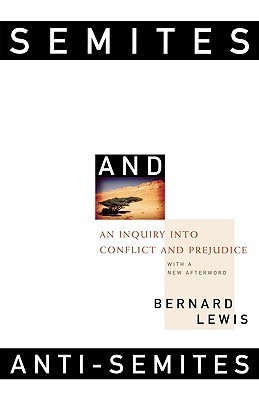
"A powerful book. It combines the coolness of scholarship with conclusions that cannot fail to engage the passions."―Saul Bellow The Arab-Israeli conflict has unsettled the Middle East for over half a century. This conflict is primarily political, a clash between states and peoples over territory and history. But it is also a conflict that has affected and been affected by prejudice. For a long time this was simply the "normal" prejudice between neighboring people of different religions and ethnic origins. In the present age, however, hostility toward Israel and its people has taken the form of anti-Semitism-a pernicious world view that goes beyond prejudice and ascribes to Jews a quality of cosmic evil. First published in the 1980s to universal acclaim, Semites and Anti-Semites traces the development of anti-Semitism from its beginnings as a poison in the bloodstream of Christianity to its modern entrance into mainstream Islam. Bernard Lewis, one of the world's foremost scholars of the Middle East, takes us through the history of the Semitic peoples to the emergence of the Jews and their virulent enemies, and dissects the region's recent tragic developments in a moving new afterword. "A powerful and important work, beautifully written and edited, and based on a range of erudition (in the best sense) that few others, if any, could command."―George Kennan

With this major revision of his classic The Middle East and the West (1964), a leading Middle East historian of our time offers a definitive and now more-timely-than-ever history of Western-Middle Eastern relations from the late seventeenth century to the present day. Fully revised to cover the volatile developments of the last three decades, The Shaping of the Modern Middle East sheds light on the climax and sudden end of the cold war, the disintegration of the Soviet Union, the Arab-Israeli wars, the formation and activities of the Palestinian Liberation Organization, the Egyptian-Israeli peace treaty, the Persian Gulf War, and the Iranian revolution. Illuminating the region's geography, culture, history, language, and religion, Lewis explores the complex and often confusing issues of Arab nationalism, Islamic fundamentalism, and responses and reactions in the Middle East to centuries of Western influence, revealing the subtlety and sophistication of this dynamic civilization as no other scholar can.

On Tuesday, May 29, 1453, the young Sultan Mehemmed, known to history as “the Conqueror,” launched the final assault against the walls of Constantinople and added that imperial capital, as coping stone; to the Empire that his fathers had conquered. As the Sultan’s Imam intoned the Muslim creed within the walls of Hagia Sophia, the Greek cathedral become a Turkish mosque, and the curtain went up on a new era. In this, the ninth volume of The Centers of Civilization Series, Bernard Lewis describes the city and its civilization in the great age of the Ottoman Sultanate, between the fifteenth and seventeenth centuries.Under the Ottomans, the city once again became the center of a vest empire and of a flourishing civilization. The conquerors did not destroy the captured Christian city, but took care to preserve and embellish; they added four Muslim minarets to Hagia Sophia, built many fine mosques and palaces of their own, and transformed the shrunken remnant of the Byzantine city into a new and splendid imperial capital.The great new Muslim city of Istanbul which they created became a center of cultural as well we political life. It was the gateway between East and West, the place where Asia and Europe clashed and blended. It was the seat of the Sultans and the Grand Viziers, of the government of the Ottoman Empire. No less interesting than the concepts of government and the Muslim religion practiced by the Ottoman Turks were the imperial place and household and the people of the city.Mr. Lewis relies upon the first-hand accounts of Turkish historians and poets and European travelers, thus enabling the reader to see the city, its people, and their life through the eyes of contemporary participants and observers.

The End of Modern History in the Middle East (Hoover Institution Press Publication)
by Bernard Lewis
Rating: 3.8 ⭐
With the ending of global strategic confrontation between superpowers, those in the Middle East must adjust to a new to accept final responsibility for their own affairs, to make and recognize their mistakes, and to accept the consequences. In The End of Modern History in the Middle East, Bernard Lewis discusses the future of the region in this new, postimperialist era. For each and every country and for the region as a whole, he explains, there is a range of alternative at one end, cooperation and progress; at the other, a vicious circle of poverty and ignorance. The author examines in detail the issues most critical to the region’s future. He describes oil as the current, most important export to the outside world from the Middle East but warns that technology will eventually make it obsolete, leaving those who depend solely on oil revenues with a bleak future. The three factors that could most help transform the Middle East, according to Lewis, are Turkey, Israel, and women. He also argues that there is enough in the traditional culture of Islam on the one hand and the modern experience of the Muslim peoples on the other to provide the basis for an advance toward freedom in the true sense of that word and to achieve the social, cultural, and scientific changes necessary to bring the Middle East into line with the developed countries of both West and East.

Demokrasinin Türkiye Serüveni, çağdaşlaşma sürecinde Batı’nın pek çok kurumunu benimseyen, benimserken de bunları önemli ölçüde kendine uyduran bir toplumun, demokrasiyle neler yaptığının bir dökümü.Demokrasi, bir yönetim biçimi olarak çeşitli dönemlerde ve çeşitli coğrafyalarda, birbirinden çok farklı serüvenler yaşadı. Bugün gelinen noktada, en iyi ve belki de tek yönetim biçimi olduğu yaygın olarak düşünülüyor. Kimilerine göre demokrasinin Batılı kökenleri, bu yönetim biçiminin başka kültürlerde yerleşiklik kazanmasını zorlaştırıyor. Batı’da bile tek bir demokrasi biçiminin olmaması, demokrasiyi benimsemek isteyen ülkeler için bir yandan model seçme güçlüğü yaratıyor, ama öte yandan kendi özgül koşullarına uygun, başka modellere harfi harfine benzemek zorunda olmayan demokrasi biçimleri geliştirebilmelerine olanak tanıyor. Türkiye’de demokratik düşüncenin eyleme geçirilmesinin tarihine eğilen Profesör Bernard Lewis, bu kitapta derlediği dört makalesinde bu serüvenin kilometre taşlarını katediyor ve nüfusunun büyük çoğunluğu Müslüman olan ülkeler arasında neden yalnızca Türkiye’de bir demokrasi kültürü ve geleneği oluşabildiğini sorguluyor.

In times of war and in peace, from the earliest days of the Roman Empire to our own, Westerners have traveled to the lands of the Middle East, bringing back accounts of their adventures and impressions. But it was never a one-way journey. In this spirited collection of Western views of the Middle East and Middle Eastern views of the West, Bernard Lewis gives us a rich overview of two thousand years of commerce, diplomacy, war and exploration. We hear from Napoleon, St. Augustine, T. E. Lawrence, Karl Marx and Ibn Khaldun. We peer into Queen Elizabeth's business correspondence, strike oil with Freya Stark and follow the footsteps of Mark Twain and Ibn Battuta, the Marco Polo of the East. This book is a delight, a treasury of stories drawn not only from letters, diaries and histories, but also from unpublished archives and previously untranslated accounts.

The description for this book, History-Remembered, Recovered, Invented, will be forthcoming.

Because of the secrecy with which the Ismailis shrouded their literature, most contemporary discussions we have of early Is’maili practice and doctrine comes from hostile Sunni outsiders. The confusion surrounding Is’mailism has produced heated debates on a number of issues, from the origin of the idea that Is’mail was the proper seventh Imam to the nature of the relationship between the Is’maili Fatamid caliphs and the Carmathian Muslims in Bahrain. In The Origins of Is’mailism, Bernard Lewis argues that Is’mail himself, along with his son and a number of companions, founded the Is’maili school of thought; that the Fatimid movement and, subsequently, the Fatimid caliphate were a direct continuation of the movement founded by Is’mail; that the Carmathians’ origins are uncertain, but may have been founded by the Is’maili, Abdallah ben Maimun; and that the Carmathian-Fatamid split was a division between radicals and moderates following the founding of the Fatamid State. Lewis argues convincingly that Is’maili thought was (and is) radically different from that of orthodox Islam — both Sunni and Twelver Shi’a. Based on a “quasi-masonic” (Lewis’ phrase) hierarchy of initiation and an elitist attitude towards the uninitiated, Is’mailism opposed the Sunnis’ relatively egalitarian ideas about access to knowledge. But Is’mailism was, paradoxically, more egalitarian in many social matters than Sunnism. It was more liberal in its treatment of women. It appealed to the artisan classes, and may have organized the first guilds of the Islamic world. In its Carmathian variety, it practiced an economic order that the orthodox confused with communism. There may be a connection between Is’maili elitism and Is’maili liberalism. After all, if the truth was properly the property of an initiate few, who cared what the unenlightened masses did? Both tendencies provoked the horrified reactions among the orthodox, who viewed the first — with some justification — as a front for a “secret doctrine” of materialism, libertinism, even atheism, and who saw the second as a threat to their established order.Lewis’ book is not just an attempt to sketch a history of the early Is’mailis. It is a history of the perceptions the non-Is’maili had of those early Is’mailis, a historiography combined with a history. In many ways, this story of the general perception of a potentially subversive heresy is more interesting than the story of the heresy itself, if only because our knowledge of the former is more substantial. The popular paranoia towards Sevener Shi’ism should remind the reader of similar attitudes throughout Western At various times, the orthodox attempted to tar the Is’mailis with patently untrue reports of non-Islamic origins (Judaic, Zoroastrian, Manichean) and with non-Islamic secret teachings. (Lewis does not draw such comparisons — though he does mention the influence of the gnostics on Is’maili thought. His monograph is narrowly focused and concise.)This book was originally written as a doctoral dissertation and, as such, is not the best introduction to the subject — it was not written for a popular audience, and it assumes a lot of knowledge on the part of the reader. It is also in many ways out of First issued in 1940, the preface to the edition I read — published in 1975 — makes it clear that much has been made obsolete by later discoveries (and that some errors were made in the hasty original preparation of the book). Still, it’s a fascinating study.

Recent events have made an understanding of the turmoil in the Middle East more important than ever. In these essays, Bernard Lewis, a leading expert on Islam, gives essential background on Middle Eastern conflicts with the West and shows how Islam — from its first expansion to its interpretation by Saddam Hussein and other extremists — has always been inextricably linked to the Western world.

يسجل برنارد لويس في هذا الكتاب تنبؤاته الشرق أوسطية حيث اعتبر أن بداية تاريخ الشرق الأوسط التي تعني عنده بداية مرحلة تدخل دول الغرب الطويلة في المنطقة تلك المرحلة بدأت بوصول نابليون إلى مصر في العام 1798. واليوم مع نهاية الحرب الباردة وتراجع القوى العظمى فإن الأهم-في رأيه-أن المنطقة وللمرة الأولى منذ حوالي مئتي سنة، أصبحت أقدر على تقرير مصيرها نفسها واتخاذ قراراتها المستقلة. ويتفحص برنارد لويس في سياق تحليله بعض أصعب المعضلات والتناقضات المستعصية في ساحة بلدان الشرق الأوسط، حالياً. والشرق الأوسط لا يعني في مفهوم أو تعريف لويس، البلدان المعروفة تقليدياً كمراكز ساحته دائماً، كإيران أو العراق أو إسرائيل، بل معظم دول العالم الإسلامي، وخصوصاً دول جمهوريات آسيا الوسطى. على ضوء تنبؤاته يقدم برنارد صورة أساسية لعالم يقف على حافة السقوط أو العظمة في منطقة الشرق الأوسط.

In spite if its astonishing impact upon the modern world, the civilization of Islam is still Terra Incognita for many in the West. The thirteen contributors to this volume, all eminent specialists, aim to remedy that situation. Islam itself, and the peoples who accepted it, come first in the story.
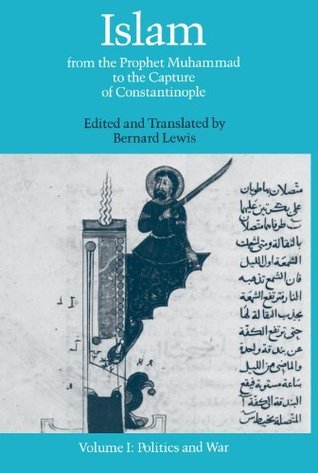
Islam from the Prophet Muhammad to the Capture of Constantinople #1: Politics & War
by Bernard Lewis
Rating: 3.3 ⭐
This documentary history of Islam from the advent of the prophet Muhammed to the capture of Constantinople by Sultan Mehmed, the Conqueror, is concerned with a period that extends from the 7th century to 1453; with a region that stretches from Western Arabia to embrace the Middle East, North Africa, and parts of Asia, tropical Africa, and southern and eastern Europe; and with people and states, which, amid many diversities, share a common acceptance of the faith and law of Islam. Bernard Lewis, a widely-known authority on the Middle East, here translates from original sources and documents works that present the sweeping civilization of Islam in all its vastness and glory.