Loading genres...
Explore the best books about Mental Health genre.


The #1 New York Times bestseller. More than 2 million copies sold!Look for Brené Brown’s new podcast, Dare to Lead, as well as her ongoing podcast Unlocking Us !From thought leader Brené Brown, a transformative new vision for the way we lead, love, work, parent, and educate that teaches us the power of vulnerability. “It is not the critic who counts; not the man who points out how the strong man stumbles, or where the doer of deeds could have done them better. The credit belongs to the man who is actually in the arena, whose face is marred by dust and sweat and blood; who strives valiantly; . . . who at the best knows in the end the triumph of high achievement, and who at worst, if he fails, at least fails while daring greatly. ”— Theodore RooseveltEvery day we experience the uncertainty, risks, and emotional exposure that define what it means to be vulnerable or to dare greatly. Based on twelve years of pioneering research, Brené Brown PhD, MSW, dispels the cultural myth that vulnerability is weakness and argues that it is, in truth, our most accurate measure of courage.Brown explains how vulnerability is both the core of difficult emotions like fear, grief, and disappointment, and the birthplace of love, belonging, joy, empathy, innovation, and creativity. She writes: “When we shut ourselves off from vulnerability, we distance ourselves from the experiences that bring purpose and meaning to our lives.”Daring Greatly is not about winning or losing. It’s about courage. In a world where “never enough” dominates and feeling afraid has become second nature, vulnerability is subversive. Uncomfortable. It’s even a little dangerous at times. And, without question, putting ourselves out there means there’s a far greater risk of getting criticized or feeling hurt. But when we step back and examine our lives, we will find that nothing is as uncomfortable, dangerous, and hurtful as standing on the outside of our lives looking in and wondering what it would be like if we had the courage to step into the arena—whether it’s a new relationship, an important meeting, the creative process, or a difficult family conversation. Daring Greatly is a practice and a powerful new vision for letting ourselves be seen.

In this groundbreaking book, Former Surgeon General of the United States, Vivek Murthy argues that loneliness is the underpinning to the current crisis in mental wellness and is responsible for the upsurge in suicide, the opioid epidemic, the overuse of psych meds, the over-diagnosing and pathologizing of emotional and psychological struggle. The good news is that social connection is innate and a cure for loneliness. In Together, the former Surgeon General will address the importance of community and connection and offer viable and actionable solutions to this overlooked epidemic.

International bestseller over 30 million copies sold worldwide learn how to break the worry habit now and forever! From the fundamental facts one must know about worry to the techniques in analyzing it, This book introduces ways to prevent apprehension and cultivate a mental attitude that will bring peace and happiness. Dealing with fundamental emotions and life-changing thoughts, how to stop worrying and Start living highlights positive points of life and Discourages stress and anxiety. Dale Carnegie time-tested techniques will help eliminate 50 percent of tension immediately avoid fatigue – and keep looking young find yourself and be yourself – remember there is no one else on Earth like you! With timeless practical advice, this classic holds the power to change your future Dale Carnegie was a lecturer of public speaking at ymca new York. He had also served in the US Army during World War 1. He was a sought-after self-help author and speaker. Some of his other works include how to stop worrying and Start living and the art of public speaking.

A pioneering researcher transforms our understanding of trauma and offers a bold new paradigm for healing. Trauma is a fact of life. Veterans and their families deal with the painful aftermath of combat; one in five Americans has been molested; one in four grew up with alcoholics; one in three couples have engaged in physical violence. Dr. Bessel van der Kolk, one of the world's foremost experts on trauma, has spent over three decades working with survivors. In The Body Keeps the Score, he uses recent scientific advances to show how trauma literally reshapes both body and brain, compromising sufferers' capacities for pleasure, engagement, self-control, and trust. He explores innovative treatments—from neurofeedback and meditation to sports, drama, and yoga—that offer new paths to recovery by activating the brain's natural neuroplasticity. Based on Dr. van der Kolk's own research and that of other leading specialists, The Body Keeps the Score exposes the tremendous power of our relationships both to hurt and to heal—and offers new hope for reclaiming lives.

From a psychotherapist, and national advice columnist comes a thought-provoking new book that takes us behind the scenes of a therapist's world -- where her patients are looking for answers (and so is she). One day, Lori Gottlieb is a therapist who helps patients in her Los Angeles practice. The next, a crisis causes her world to come crashing down. Enter Wendell, the quirky but seasoned therapist in whose office she suddenly lands. With his balding head, cardigan, and khakis, he seems to have come straight from Therapist Central Casting. Yet he will turn out to be anything but. As Gottlieb explores the inner chambers of her patients' lives -- a self-absorbed Hollywood producer, a young newlywed diagnosed with a terminal illness, a senior citizen threatening to end her life on her birthday if nothing gets better, and a twenty-something who can't stop hooking up with the wrong guys -- she finds that the questions they are struggling with are the very ones she is now bringing to Wendell. With startling wisdom and humor, Gottlieb invites us into her world as both clinician and patient, examining the truths and fictions we tell ourselves and others as we teeter on the tightrope between love and desire, meaning and mortality, guilt and redemption, terror and courage, hope and change.Maybe You Should Talk to Someone is revolutionary in its candor, offering a deeply personal yet universal tour of our hearts and minds and providing the rarest of gifts: a boldly revealing portrait of what it means to be human, and a disarmingly funny and illuminating account of our own mysterious lives and our power to transform them.

Ten years after the death of Elisabeth Kübler-Ross, this commemorative edition of her final book combines practical wisdom, case studies, and the authors’ own experiences and spiritual insight to explain how the process of grieving helps us live with loss. Includes a new introduction and resources section.Elisabeth Kübler-Ross's On Death and Dying changed the way we talk about the end of life. Before her own death in 2004, she and David Kessler completed On Grief and Grieving , which looks at the way we experience the process of grief.Just as On Death and Dying taught us the five stages of death -- denial, anger, bargaining, depression, and acceptance -- On Grief and Grieving applies these stages to the grieving process and weaves together theory, inspiration, and practical advice, including sections on sadness, hauntings, dreams, isolation, and healing.

There is a fundamental opportunity for happiness right within our reach, yet we usually miss it—ironically while we are caught up in attempts to escape pain and suffering. Drawn from traditional Buddhist wisdom, Pema Chödrön's radical and compassionate advice for what to do when things fall apart in our lives goes against the grain of our usual habits and expectations. There is only one approach to suffering that is of lasting benefit, Pema teaches, and that approach involves moving toward painful situations with friendliness and curiosity, relaxing into the essential groundlessness of our entire situation. It is there, in the midst of chaos, that we can discover the truth and love that are indestructible.The Shambhala Library is a series of exquisitely designed and produced cloth editions of the world's spiritual and literary classics, both ancient and modern. Perfect for collecting or as gifts, each volume features a sewn binding, decorative endsheets, and a ribbon marker—in a delightful-to-hold 4¼ x 6¾ trim size.

ACTUAL READER FEEDBACK “This book saved my life. Every tip is natural, just the way I want to treat my anxiety.” “Play It Away really hits on what ‘living in the moment’ is all about. Reading this book has been one of the most valuable investments I’ve made, both professionally and personally.” “I work in the mental health field, so I have read my weight in self-help books. I would highly recommend this to anyone wrestling with anxiety. Or really, just anyone.” “When reading Play It Away, I felt as though I was talking with a friend over a beer, rather than reading a book pointing out what I was doing wrong. Charlie relates to the reader in an extraordinary way and offers tangible advice that doesn't seem out of reach. This is certainly a different kind of self-help book that I will keep on my bookshelf for years to come.” “Living on the road for the better part of 7 years representing and speaking for Tony Robbins landed me in the adrenals burnt out, depressed, poor digestion, and miserable. It was pretty hard to be a ‘motivational speaker’ when I was actually dying on the inside. Charlie's book serves as a great reminder to enjoy life more, and also provides the necessary "how to" information and practical advice to enjoy life and be more productive. Highly recommend this book to anyone who is busy and wants to enjoy their life more.” “It might be because I see so much of myself in the author's story, but this book has already changed my life. It reminded me of all of the things that I used to fill my free time with that I completely abandoned, and it gave me concrete, actionable ways to re-integrate them into my life. I've already recommended this book to over a dozen good friends. It's a very solid read.” “I've been feeling 98% back to my former self 98% of the time. Sometimes I have a hard time believing the five months that I was crippled with anxiety even happened. My confidence is back and I'm having fun again.” “After reading your book, everything clicked for me. There are so many parts in it that I can relate to; the anxious feeling from coffee, lack of sleep, too much time spent on my laptop/iPhone, and so many other things. I can’t explain how nice it was to know that someone finally understood AND has solutions to change those feelings. The answers I’ve been searching for and asking doctors about for almost the last 3 years, you were able to summarize in one book.” “Play It Away is a gift. It’s totally changed how I think about my interactions with friends, women, and people I meet for the first time. I'm more open, playful, and happier overall since reading (and applying) this book.” “This book provides simple but profound advice on how to gift yourself with a stress-free, happier existence.” "What a truly inspiring and incredible read for anyone struggling with anxiety or depression. The author's style is so full of energy and bubbly, it made me want to go out and take my own adventure.”

When four classmates from a small Massachusetts college move to New York to make their way, they're broke, adrift, and buoyed only by their friendship and ambition. There is kind, handsome Willem, an aspiring actor; JB, a quick-witted, sometimes cruel Brooklyn-born painter seeking entry to the art world; Malcolm, a frustrated architect at a prominent firm; and withdrawn, brilliant, enigmatic Jude, who serves as their center of gravity. Over the decades, their relationships deepen and darken, tinged by addiction, success, and pride. Yet their greatest challenge, each comes to realize, is Jude himself, by midlife a terrifyingly talented litigator yet an increasingly broken man, his mind and body scarred by an unspeakable childhood, and haunted by what he fears is a degree of trauma that he’ll not only be unable to overcome—but that will define his life forever.

Alternate cover edition of ISBN 9780062457738In this generation-defining self-help guide, a superstar blogger cuts through the crap to show us how to stop trying to be "positive" all the time so that we can truly become better, happier people.For decades, we’ve been told that positive thinking is the key to a happy, rich life. "F**k positivity," Mark Manson says. "Let’s be honest, shit is f**ked and we have to live with it." In his wildly popular Internet blog, Manson doesn’t sugarcoat or equivocate. He tells it like it is—a dose of raw, refreshing, honest truth that is sorely lacking today. The Subtle Art of Not Giving a F**k is his antidote to the coddling, let’s-all-feel-good mindset that has infected American society and spoiled a generation, rewarding them with gold medals just for showing up.Manson makes the argument, backed both by academic research and well-timed poop jokes, that improving our lives hinges not on our ability to turn lemons into lemonade, but on learning to stomach lemons better. Human beings are flawed and limited—"not everybody can be extraordinary, there are winners and losers in society, and some of it is not fair or your fault." Manson advises us to get to know our limitations and accept them. Once we embrace our fears, faults, and uncertainties, once we stop running and avoiding and start confronting painful truths, we can begin to find the courage, perseverance, honesty, responsibility, curiosity, and forgiveness we seek.There are only so many things we can give a f**k about so we need to figure out which ones really matter, Manson makes clear. While money is nice, caring about what you do with your life is better, because true wealth is about experience. A much-needed grab-you-by-the-shoulders-and-look-you-in-the-eye moment of real-talk, filled with entertaining stories and profane, ruthless humor, The Subtle Art of Not Giving a F**k is a refreshing slap for a generation to help them lead contented, grounded lives.

This book has been replaced by Internal Family Systems Therapy, Second Edition , ISBN 978-1-4625-4146-1.

Why are many of the most successful people plagued by feelings of emptiness and alienation? This wise and profound book has provided thousands of readers with an answer—and has helped them to apply it to their own lives.Far too many of us had to learn as children to hide our own feelings, needs, and memories skillfully in order to meet our parents’ expectations and win their ”love.” Alice Miller writes, ”When I used the word ’gifted’ in the title, I had in mind neither children who receive high grades in school nor children talented in a special way. I simply meant all of us who have survived an abusive childhood thanks to an ability to adapt even to unspeakable cruelty by becoming numb… Without this ’gift’ offered us by nature, we would not have survived.” But merely surviving is not enough. The Drama of the Gifted Child helps us to reclaim our life by discovering our own crucial needs and our own truth.Miller’s wide and profound book about childhood trauma has provided thousands of readers with guidance and hope, and is essential reading for those interested in psychology, psychotherapy, and more.

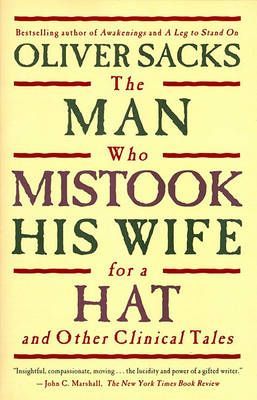
In his most extraordinary book, Oliver Sacks recounts the stories of patients lost in the bizarre, apparently inescapable world of neurological disorders. These are case studies of people who have lost their memories and with them the greater part of their pasts; who are no longer able to recognize people or common objects; whose limbs have become alien; who are afflicted and yet are gifted with uncanny artistic or mathematical talents. In Dr Sacks' splendid and sympathetic telling, each tale is a unique and deeply human study of life struggling against incredible adversity.

'A great blessing for our planet' Eckhart TolleA thought is harmless unless we believe itDrawing on her own experience of moving through suffering to freedom, Byron Katie developed 'The Work': a simple, four-step programme to help pinpoint the problems that are troubling you and how to tackle them effectively.A life-transforming system for discarding the stories at the source of our suffering, this is your guide to finding inner peace and happiness.

The definitive overview of this transformative breathwork.In this long-awaited book, Stanislav Grof and Christina Grof describe their groundbreaking new form of self-exploration and Holotropic Breathwork. Holotropic means “moving toward wholeness,” from the Greek holos (whole) and trepein (moving in the direction of). The breathwork utilizes the remarkable healing and transformative potential of nonordinary states of consciousness. These states engender a rich array of experiences with unique healing potential—reliving childhood memories, infancy, birth and prenatal life, and elements from the historical and archetypal realms of the collective unconscious. Induced by very simple means—a combination of accelerated breathing, evocative music, and bodywork in a safe and supportive setting, Holotropic Breathwork integrates the insights from modern consciousness research, depth psychology, transpersonal psychology, anthropology, Eastern spiritual practices, and mystical traditions. The Grofs’ work with holotropic states of consciousness has introduced revolutionary changes to psychiatry, psychology, and psychotherapy. Written in a clear, easily understandable style, this indispensable book summarizes their remarkable insights.“Stanislav Grof is one of the most important pioneers in the scientific understanding of consciousness. He and his wife, Christina, have contributed both to its intellectual and experiential understanding through their work with Holotropic Breathwork. Their book on this new approach to self-exploration and therapy is a must read.” — Deepak Chopra, author of Reinventing the Body, Resurrecting the How to Create a New You“This fascinating, informative book invites you to open your mind to explore the depths of the psyche and transpersonal dimensions of consciousness. Stanislav and Christina Grof, who pioneered this powerful, innovative approach to therapy and personal growth, offer sound advice, thoroughly grounded in decades of practical experience.” — Frances Vaughan, author of Shadows of the Seeing Through Spiritual Illusions“Take a few rapid, staccato breaths and open this book. You will have a great read, and at the same time maybe discover a new kind of consciousness, just waiting inside of you to be revealed. Stanislav and Christina Grof are modern pioneers of consciousness and this book is their map of the territory. Holotropic Breathwork reveals how the Grofs developed their revolutionary healing techniques, often told through fascinating stories of people being transformed by the breathwork process. The Grofs are at the center of the current psycho-spiritual revolution in the West, and this book is a testament to their role in our collective healing.” — Wes Nisker, author of The Essential Crazy Wisdom and Buddha’s A Practical Guide to Discovering Your Place in the Cosmos“The Grofs offer the first comprehensive text of the theory and practice of their pioneering and integrative model of experiential psychotherapy and self-exploration. This ‘psychology of the future,’ with its extended cartography of the psyche, provides irrefutable evidence that spontaneous episodes of nonordinary states of consciousness have great healing, transformative, and even evolutionary potential for humankind. History will record that Holotropic Breathwork and the certification training and program designed by the Grofs advanced the field of psychotherapy far beyond the contributions of Freud and Jung.” — Angeles Arrien, author of The Four-Fold Walking the Paths of the Warrior, Teacher, Healer, and Visionary“In this remarkable book Stanislav and Christina Grof summarize their pathbreaking discoveries of the past thirty years. They make two significant contributions, one to science, the other to our shared future. The first, by showing that altered states of consciousness have a dimension that is veridical—‘imaginal’ rather than ‘imaginary’—and thereby transcend the outdated but still persistent belief that our experience of the world is limited to information conveyed by our senses. The second, by demonstrating that the altered states achieved inter alia through their holotropic breathwork method reduce aggression and enhance tolerance, compassion, ecological sensitivity, and a sense of planetary citizenship. Since these are the very qualities we urgently need to cope with the global emergency in which we presently find ourselves, their contribution to the future of humankind matches their contribution to the future of psychology.” — Ervin Laszlo, author of The Connectivity Foundations of an Integral Science of Quantum, Cosmos, Life, and Consciousness“Holotropic Breathwork appears to have the potential for facilitating psychological insights and transformations that can be remarkably rapid and deep.” — Roger Walsh, coeditor of Higher Eminent Elders Explore the...
Is there a science to love? In this groundbreaking book, psychiatrist and neuroscientist Amir Levine and psychologist Rachel S. F. Heller reveal how an understanding of attachment theory-the most advanced relationship science in existence today-can help us find and sustain love. Attachment theory forms the basis for many bestselling books on the parent/child relationship, but there has yet to be an accessible guide to what this fascinating science has to tell us about adult romantic relationships-until now.Attachment theory owes its inception to British psychologist and psychoanalyst John Bowlby, who in the 1950s examined the tremendous impact that our early relationships with our parents or caregivers has on the people we become. Also central to attachment theory is the discovery that our need to be in a close relationship with one or more individuals is embedded in our genes.In Attached, Levine and Heller trace how these evolutionary influences continue to shape who we are in our relationships today. According to attachment theory, every person behaves in relationships in one of three distinct ways:*ANXIOUS people are often preoccupied with their relationships and tend to worry about their partner's ability to love them back.*AVOIDANT people equate intimacy with a loss of independence and constantly try to minimize closeness.*SECURE people feel comfortable with intimacy and are usually warm and loving.Attached guides readers in determining what attachment style they and their mate (or potential mates) follow. It also offers readers a wealth of advice on how to navigate their relationships more wisely given their attachment style and that of their partner. An insightful look at the science behind love, Attached offers readers a road map for building stronger, more fulfilling connections.

In her new book, Arianna Huffington, the co-founder and editor-in-chief of The Huffington Post, and the author of the #1 New York Times bestseller Thrive delves into the sleep revolution that is happening all across the world – a revolution that can transform our lives. Sleep, she writes, is one of humanity’s great unifiers, binding us to each other, to our ancestors, to our past, and to the future. Yet we find ourselves in the middle of a crisis of sleep deprivation, with devastating effects on our health, our happiness, our job performance, and our relationships. Only by renewing our relationship with sleep, she writes, can we take control of our lives, live more fully, be more engaged with ourselves and with the world, and more able to meet the inevitable challenges we all face. In Thrive, Arianna Huffington introduced her readers to the importance of sleep as a part of redefining success through well-being, wisdom, wonder, and giving. The topic struck such a powerful chord, resonating so intensely with her readers and her audiences around the world that she realized the power of sleep needed a full exploration. The result is a sweeping, scientifically rigorous, and deeply personal look at sleep, from its history though the ages and the current crisis of sleep deprivation, to the mysteries of dreams and the golden age of sleep science that is revealing all the ways sleep plays a vital role in our health, happiness, well-being, and productivity. In The Sleep Revolution, Arianna identifies the many ways our cultural dismissal of sleep as time wasted undermines our health and our decision-making, and ravages our relationships, our work lives, and even our sex lives. She takes on sleep from every angle, exploring the latest science on sleep, the manipulative and dangerous sleeping pill industry, and all the ways our addiction to technology disrupts our sleep. She also presents scientific recommendations and expert tips on how we can all achieve better and more restorative sleep, and learn how to make the power of sleep work for us. Most important, by highlighting the many areas where sleep’s benefits are being rediscovered – from the world of sports and technology to college campuses, the hotel industry, and even workplaces around the world – she points the way forward to amazing innovations, reforms, and inventions rooted in our new love affair with sleep. In today’s 24/7 fast-paced, always-connected, perpetually harried, and sleep-deprived world, the hunger for sleep is only getting stronger. The Sleep Revolution both sounds the alarm on the worldwide sleep crisis, and offers a road map for how we can take back our sleep and transform our lives and our world.

A long-awaited follow-up to the New York Times bestselling Search Inside Yourself shows us how to cultivate joy within the context of our fast-paced lives and explains why it is critical to creativity, innovation, confidence, and ultimately success in every arena.In Joy on Demand, Meng shows that you don’t need to meditate for hours, days, months or years to achieve lasting joy—you can actually get consistent access to it in as little as 15 seconds. Explaining joy and meditation as complementary things that naturally reinforce each other, Meng explains how these two skills form a virtuous cycle, and once put into motion, become a solid practice that can be sustained in daily life. For many years, meditation has been taught and practiced in cultures where almost all meditators practice full-time for years, resulting in training programs optimized for practitioners with lots of free time and not much else to do but develop profound mastery over the mind. Seeing a disconnect between the traditional practice and the modern world, bestselling author and Google’s “Jolly Good Fellow” Chade-Meng Tan has developed a program, through “wise laziness,” to help readers meditate more efficiently and effectively. Meng shares the three pillars of joy (inner peace, insight, and happiness), why joy is the secret is to success, and demonstrates the practical tools anyone can use to cultivate it on demand.

Dopo aver conseguito la laurea in Economia alla Cass Business School di Londra, Jay Shetty si trova di fronte a un bivio: può intraprendere una sicura carriera nel mondo degli affari oppure seguire un sentiero meno battuto e investigare la profondità di una chiamata interiore. Decidendo per la seconda opzione, pochi mesi dopo è in India in un noto ashram dove decide di diventare un monaco. Lì impara che dare ascolto a quella parte più profonda di noi stessi che spesso ignoriamo è il primo passo per riuscir ad accettare chi intimamente siamo, e che solo così facendo possiamo rendere significative le nostre vite e toccare la felicità. Jay Shetty comprende anche che essere un monaco è fondamentalmente uno stato d'animo e così dopo tre anni dedicati alla ricerca interiore, in pieno accordo con il suo maestro, decide di lasciare il monastero per raccontare al mondo tutta la bellezza di quell'antica sapienza.E in Pensa come un monaco condivide con il lettore le sue intuizioni maturate a partire da quell'esperienza, sottolineando che non è necessario trasferirsi a vivere in un monastero perché la saggezza insegnata dai monaci è sempre accessibile, e una volta che la si sappia accendere è capace di offrire una risposta a molte delle domande che quotidianamente affollano la mente. La magnetica capacità comunicativa di Jay Shetty è formidabile nel rendere attualissima la saggezza e nel farci comprendere che è possibile raggiungere l'agognata armonia con il nostro sé più intimo e dimorare in quel fugace equilibro interiore che sembra altrimenti sempre sfuggirci. Ci sono tre fasi di apprendimento della mentalità del monaco.La prima è il lasciar andare, liberandoci dalle influenze esterne, dagli ostacoli interni e dalle paure che ci bloccano. Potete vederla come una pulizia che farà spazio per la crescita. La seconda fase è la crescita. Ci aiuterà a ripensare la nostra vita in modo da poter prendere le decisioni con intenzione, determinazione e sicurezza. La terza è il dare, volgendoci al mondo al di fuori di noi, espandendo e condividendo il senso di gratitudine e approfondendo le nostre relazioni. Condivideremo con gli altri i nostri doni e il nostro amore e scopriremo l'autentica gioia e i sorprendenti benefici del servizio.

Philosopher-poet and cancer survivor, Mark Nepo opens a new season of freedom and joy--an escape from deadening, asleep-at-the wheel sameness--that is both profound and clarifying. His spiritual daybook is a summons to reclaim aliveness, liberate the self, take each day one at a time, and to savor the beauty offered by life's unfolding. Reading his poetic prose is like being given second sight, exposing the reader to life's multiple dimensions, each one drawn with awe and affection. The Book of Awakening is the result of his journey of the soul and will inspire others to embark on their own. Nepo speaks of spirit and friendship, urging readers to stay vital and in love with this life, no matter the hardships. Encompassing many traditions and voices, Nepo's words offer insight on pain, wonder, and love. Each entry is accompanied by an exercise that will surprise and delight the reader in its mind-waking ability.

Now in a third edition, Robert M. Sapolsky's acclaimed and successful Why Zebras Don't Get Ulcers features new chapters on how stress affects sleep and addiction, as well as new insights into anxiety and personality disorder and the impact of spirituality on managing stress.As Sapolsky explains, most of us do not lie awake at night worrying about whether we have leprosy or malaria. Instead, the diseases we fear—and the ones that plague us now—are illnesses brought on by the slow accumulation of damage, such as heart disease and cancer. When we worry or experience stress, our body turns on the same physiological responses that an animal's does, but we do not resolve conflict in the same way—through fighting or fleeing. Over time, this activation of a stress response makes us sick.

Twenty years of experience treating men and their families has convinced psychotherapist Terrence Real that depression is a silent epidemic in men; that men hide their condition from family, friends, and themselves to avoid the stigma of depression's "un-manliness." Problems that we think of as typically male; difficulty with intimacy, workaholism, alcoholism, abusive behavior, and rage-are really attempts to escape depression. And these escape attempts only hurt the people men love and pass their condition on to their children.This ground breaking book is the "pathway out of darkness" that these men and their families seek. Real reveals how men can unearth their pain, heal themselves, restore relationships, and break the legacy of abuse. He mixes penetrating analysis with compelling tales of his patients and even his ownexperiences with depression as the son of a violent, depressed father and the father of two young sons.

The first definitive guide to using the wisdom of the enneagram for spiritual and psychological growthThe ancient symbol of the Enneagram has become one of today's most popular systems for self-understanding, based on nine distinct personality types. Now, two of the world's foremost Enneagram authorities introduce a powerful new way to use the Enneagram as a tool for personal transformation and development. Whatever your spiritual background, the Enneagram shows how you can overcome your inner barriers, realize your unique gifts and strengths, and discover your deepest direction in life.The Wisdom of the Enneagram includes:Two highly accurate questionnaires for determining your typeVivid individual profiles focused on maximizing each type's potential and minimizing predictable pitfallsSpiritual Jump Starts, Wake-Up Calls, and Red Flags for each typeDozens of individualized exercises and practical strategies for letting go of troublesome habits, improving relationships, and increasing inner freedomRevealing insights into the deepest motivations, fears, and desires of each typeHighly accessible, yet filled with sophisticated concepts and techniques found nowhere else, The Wisdom of the Enneagram is a strikingly new fusion of psychology and spirituality. It offers an exciting vision of human possibility and a clear map of the nine paths to our highest self-expression.

In this revised and updated version of Facing Love Addiction , bestselling author of Facing Codependence and internationally recognized dependence and addiction authority Pia Mellody unravels the intricate dynamics of unhealthy love relationships and shows us how to let go of toxic love. Through twelve-step work, exercises, and journal-keeping, Facing Love Addiction compassionately and realistically outlines the recovery process for Love Addicts, and Mellody’s fresh perspective and clear methods work to comfort and motivate all those looking to establish and maintain healthy, happy relationships.

If contemporary culture were a school, with all the tasks and expectations meted out by modern life as its curriculum, would anyone graduate? In the spirit of a sympathetic teacher, Robert Kegan guides us through this tricky curriculum, assessing the fit between its complex demands and our mental capacities, and showing what happens when we find ourselves, as we so often do, in over our heads. In this dazzling intellectual tour, he completely reintroduces us to the psychological landscape of our private and public lives. A decade ago in The Evolving Self, Kegan presented a dynamic view of the development of human consciousness. Here he applies this widely acclaimed theory to the mental complexity of adulthood. As parents and partners, employees and bosses, citizens and leaders, we constantly confront a bewildering array of expectations, prescriptions, claims, and demands, as well as an equally confusing assortment of expert opinions that tell us what each of these roles entails. Surveying the disparate expert "literatures, " which normally take no account of each other, Kegan brings them together to reveal, for the first time, what these many demands have in common. Our frequent frustration in trying to meet these complex and often conflicting claims results, he shows us, from a mismatch between the way we ordinarily know the world and the way we are unwittingly expected to understand it. In Over Our Heads provides us entirely fresh perspectives on a number of cultural controversies - the "abstinence vs. safe sex" debate, the diversity movement, communication across genders, the meaning of postmodernism. What emerges in these pages is a theory of evolving ways of knowing that allows usto view adult development much as we view child development, as an open-ended process born of the dynamic interaction of cultural demands and emerging mental capabilities. If our culture is to be a good "school, " as Kegan suggests, it must offer, along with a challenging curriculu

Do you have a keen imagination and vivid dreams? Is time alone each day as essential to you as food and water? Are you "too shy" or "too sensitive" according to others? Do noise and confusion quickly overwhelm you? If your answers are yes, you may be a Highly Sensitive Person (HSP).Most of us feel overstimulated every once in a while, but for the HSP, it's a way of life. In this groundbreaking book, Dr. Elaine Aron, a clinical psychologist, workshop leader, and an HSP herself, shows you how to identify this trait in yourself and make the most of it in everyday situations. Drawing on her many years of research and hundreds of interviews, she shows how you can better understand yourself and your trait to create a fuller, richer life.

This book offers a hypothesis centering around the concept of the "Fantasy Bond," an illusion of connection formed with the mother and later with significant others in the individual's environment.

Sylvia Plath's shocking, realistic, and intensely emotional novel about a woman falling into the grip of insanityEsther Greenwood is brilliant, beautiful, enormously talented, and successful, but slowly going under—maybe for the last time. In her acclaimed and enduring masterwork, Sylvia Plath brilliantly draws the reader into Esther's breakdown with such intensity that her insanity becomes palpably real, even rational—as accessible an experience as going to the movies. A deep penetration into the darkest and most harrowing corners of the human psyche, The Bell Jar is an extraordinary accomplishment and a haunting American classic.

In your hands, you hold the secret to transforming your life. Big words? Yes, but this is a plan that has already proven itself with millions of people around the world. Pastor Will Bowen developed the life-changing A Complaint Free World plan based on the simple idea that good things will happen for you in abundance if you can just leave your grumbling behind. In a Sunday-morning sermon, Will told his congregation he wanted to make the world a complaint-free zone and, to prove he was serious, he passed out purple bracelets to each church member and offered them a challenge. "If you catch yourself complaining, take the bracelet and move it to the other wrist." Now, less than a year later, more than six million people have taken up the challenge, trying to go twenty-one consecutive days without complaining, criticizing, or gossiping, and in so doing, forming a new, positive habit. By changing your words, you can change your thoughts and then begin to create your life by design. People have shared stories with Will of chronic pain relieved, relationships healed, careers improved, and becoming an overall happier person. Less pain, improved health, satisfying relationships, a better job, being more serene and joyous—sound good? It’s not only possible, it’s probable. Consciously striving to reformat your mental hard drive is not easy, but you can start now by using the steps Bowen presents here. In this book, you can learn what constitutes a complaint, why we complain, what benefits we think we receive from complaining, how complaining is destructive to our lives, and how we can get others around us to stop complaining. You will learn the steps to eradicating this poisonous form of expression from your life. If you stay with it, you will find that not only will you not complain, but others around you will cease to do so as well. In a short period of time, you can have the life you’ve always dreamed of having.

Tyrannical Nurse Ratched rules her ward in an Oregon State mental hospital with a strict and unbending routine, unopposed by her patients, who remain cowed by mind-numbing medication and the threat of electric shock therapy. But her regime is disrupted by the arrival of McMurphy – the swaggering, fun-loving trickster with a devilish grin who resolves to oppose her rules on behalf of his fellow inmates. His struggle is seen through the eyes of Chief Bromden, a seemingly mute half-Indian patient who understands McMurphy's heroic attempt to do battle with the powers that keep them imprisoned. Ken Kesey's extraordinary first novel is an exuberant, ribald and devastatingly honest portrayal of the boundaries between sanity and madness.

Heralded by the New York Times and Time as the couples therapy with the highest rate of success, Emotionally Focused Therapy works because it views the love relationship as an attachment bond.This idea, once controversial, is now supported by science, and has become widely popular among therapists around the world. In Hold Me Tight, Dr. Sue Johnson presents Emotionally Focused Therapy to the general public for the first time. Johnson teaches that the way to save and enrich a relationship is to reestablish safe emotional connection and preserve the attachment bond. With this in mind, she focuses on key moments in a relationship-from "Recognizing the Demon Dialogue" to "Revisiting a Rocky Moment" -- and uses them as touch points for seven healing conversations.Through case studies from her practice, illuminating advice, and practical exercises, couples will learn how to nurture their relationships and ensure a lifetime of love.

standing on the fringes of life...offers a unique perspective. But there comes a time to seewhat it looks like from the dance floor.This haunting novel about the dilemma of passivity vs. passion marks the stunning debut of a provocative new voice in contemporary fiction: The Perks of Being A WALLFLOWERThis is the story of what it's like to grow up in high school. More intimate than a diary, Charlie's letters are singular and unique, hilarious and devastating. We may not know where he lives. We may not know to whom he is writing. All we know is the world he shares. Caught between trying to live his life and trying to run from it puts him on a strange course through uncharted territory. The world of first dates and mixed tapes, family dramas and new friends. The world of sex, drugs, and The Rocky Horror Picture Show, when all one requires is that the perfect song on that perfect drive to feel infinite.Through Charlie, Stephen Chbosky has created a deeply affecting coming-of-age story, a powerful novel that will spirit you back to those wild and poignant roller coaster days known as growing up.(back cover)

Intense, unpredictable, and instantly engaging, this is a story of drug and alcohol abuse and rehabilitation as it has never been told before. It is also the introduction of a bold and talented literary voice. Before considering reading this book, please see the BookBrowse note on the book jacket/review page.BookBrowse Note: January 9th 2006: An article in the Smoking Gun claimed that James Frey (author of A Million Little Pieces and My Friend Leonard) fabricated key parts of his books. They cited police records, court documents and interviews with law enforcement agents which belie a number of Frey's claims regarding criminal charges against him, jail terms and his fugitive status.In an interview with the Smoking Gun, Frey admitted that he had 'embellished central details' in A Million Little Pieces and backtracked on claims he made in the book.January 26th 2006. Frey's publisher stated that while it initially stood by him, after further questioning of the author, the house has "sadly come to the realization that a number of facts have been altered and incidents embellished." It will be adding a a publisher's note and author's note to all future editions of A Million Little Pieces.

The New York Times bestseller, now available in paperback—Mary Karr’s sequel to the beloved and bestselling The Liars’ Club and Cherry “lassos you, hogties your emotions and won’t let you go” (Michiko Kakutani, New York Times).Mary Karr’s bestselling, unforgettable sequel to her beloved memoirs The Liars’ Club and Cherry—and one of the most critically acclaimed books of the year—Lit is about getting drunk and getting sober; becoming a mother by letting go of a mother; learning to write by learning to live.The Boston Globe calls Lit a book that “reminds us not only how compelling personal stories can be, but how, in the hands of a master, they can transmute into the highest art." The New York Times Book Review calls it “a master class on the art of the memoir” in its Top 10 Books of 2009 Citation. Michiko Kakutani calls it “a book that lassos you, hogties your emotions and won’t let you go” in her New York Times review. And Susan Cheever states, simply, that Lit is “the best book about being a woman in America I have read in years."In addition to the New York Times, Lit was named a Best Book of 2009 by the New Yorker (Reviewer Favorite), Entertainment Weekly (Top 10), Time (Top 10), the Washington Post, the San Francisco Chronicle, the Chicago Tribune, the Christian Science Monitor, Slate, the St. Louis Post Dispatch, the Cleveland Plain Dealer, and the Seattle Times.

In hardcover for the first time, this tenth-anniversary edition of the game-changing #1 New York Times bestseller features a new foreword and brand-new tools to make the work your own.For over a decade, Brené Brown has found a special place in our hearts as a gifted mapmaker and a fellow traveler. She is both a social scientist and a kitchen-table friend whom you can always count on to tell the truth, make you laugh, and, on occasion, cry with you. And what's now become a movement all started with The Gifts of Imperfection, which has sold more than two million copies in thirty-five different languages across the globe.What transforms this book from words on a page to effective daily practices are the ten guideposts to wholehearted living. The guideposts not only help us understand the practices that will allow us to change our lives and families, they also walk us through the unattainable and sabotaging expectations that get in the way.Brené writes, "This book is an invitation to join a wholehearted revolution. A small, quiet, grassroots movement that starts with each of us saying, 'My story matters because I matter.' Revolution might sound a little dramatic, but in this world, choosing authenticity and worthiness is an absolute act of resistance."

Joy is not for just the lucky few–it’s a choice anyone can make. In this groundbreaking book, based on his popular course, James Baraz helps you discover a path to the happiness that’s right in front of you, offering a step-by-step program that will reorient your mind away from dissatisfaction and distraction and toward the contentment and delight that is abundantly available in our everyday lives.You can decide to be happy. For years, James Baraz’s online Awakening Joy course has offered participants from around the world the benefits of this simple but profoundly radical proposition. Grounded in simple Buddhist principles but accessible to people of all faiths–or no faith at all–this concept provides the jumping-off point for a transformational journey toward a richer, more meaningful, more positive outlook on life. Now readers everywhere can follow the same ten steps Baraz teaches to his program participants. In this practical down-to-earth guide, you will learn how to• make happiness a habit by inclining your mind toward states that lead to well-being• find joy even during difficult times and avoid the pitfalls that prevent you from achieving the contentment you seek• cultivate effective practices for sustaining joyfulness, such as reclaiming your natural sense of wonder and finding joy in the midst of everyday experiencesEach chapter of Awakening Joy consists of one step in Baraz’s ten-step program and includes engaging exercises and practical advice to make happiness your natural default setting. For everyone from the cynic despondent over life’s many sorrows to the harried commuter raging at freeway traffic, this book offers up a simple yet powerful message of hope grounded in the realization that joy already exists inside every one of us. Like a precious child, it only needs to be recognized, embraced, and nurtured in order to grow to its full potential.Praise"I've personally taken the Awakening Joy program and can say this It's fabulous and it works! This book, filled with moving stories and rich teachings, will give you wonderful tools to experience true happiness and well-being. It's a gem!"— Marci Shimoff, New York Times bestselling author of Happy for No Reason"Opening to joy takes courage and intention. This book will inspire you to discover genuine happiness, and show you how. Drawing on perennial wisdom and accessible meditative practices, James and Shoshana offer teachings that can awaken your love of life."— Tara Brach, author of Radical Acceptance" Awakening Joy is an important guide to transforming our everyday experience into genuine happiness. James and Shoshana's insight, kindness, and clear and practical language make this a direct, pragmatic and valuable manual for a better life."—Sharon Salzberg, author of The Revolutionary Art of Happiness"In this beautiful and heartwarming book, James Baraz and Shoshana Alexander take us on a journey that truly awakens joy. There are stories that bring tears to our eyes and practices that transform our lives. This is a loving, wise, and compassionate testament to what is possible for each one of us. Highly recommended."—Joseph Goldstein, author of A Heart Full of Peace "I'm so happy that James Baraz's Awakening Joy class is now available in book form. His class has been helpful to thousands of people. I plan to give it to all my clients who are struggling with creating a life of meaning and happiness. Joyfulness is our birthright. This book shows you how to reclaim it."—M.J. Ryan, author of AdaptAbility"This is a life-changing book that not only teaches practical, useful strategies for increasing your awareness, but also illuminates choices about how you can lead your emotional life." —Paul Ekman, Ph.D., Professor Emeritus, University of California, San Francisco, co-author of Emotional Awareness and author of Emotions Revealed "To awaken joy in oneself and others is one of life's great skills, a skill taught by sages across the centuries, and now distilled in this book."—Roger Walsh M.D., Ph.D., University of California Medical School, author of Essential The Seven Central Practices"This book is an inspiring gift that will open your heart to the presence of love and joy in everyday life."—Frances Vaughan, Ph.D., psychologist, author of Shadows of the Sacred "Every page of this wonderful book has something that inspires faith or a new story, a memorable quote, an exercise that invites participation....From beginning to end, it is a joy to read."—Sylvia Boorstein, author of Happiness Is An Inside Practicing for a Joyful Life "This book should be read by every person who cares about making this a better world. It can enhance the joys of working to develop a wiser and more compassionate society, and help make us both happier and more effective in challenging times."—Daniel Ellsberg, author of A Memoir of Vietnam and the Pentagon Papers "This is an important book—and a great read! With its...

In this madcap journey, a bestselling journalist investigates psychopaths and the industry of doctors, scientists, and everyone else who studies them. The Psychopath Test is a fascinating journey through the minds of madness. Jon Ronson's exploration of a potential hoax being played on the world's top neurologists takes him, unexpectedly, into the heart of the madness industry. An influential psychologist who is convinced that many important CEOs and politicians are, in fact, psychopaths teaches Ronson how to spot these high-flying individuals by looking out for little telltale verbal and nonverbal clues. And so Ronson, armed with his new psychopath-spotting abilities, enters the corridors of power. He spends time with a death-squad leader institutionalized for mortgage fraud in Coxsackie, New York; a legendary CEO whose psychopathy has been speculated about in the press; and a patient in an asylum for the criminally insane who insists he's sane and certainly not a psychopath. Ronson not only solves the mystery of the hoax but also discovers, disturbingly, that sometimes the personalities at the helm of the madness industry are, with their drives and obsessions, as mad in their own way as those they study. And that relatively ordinary people are, more and more, defined by their maddest edges.

Psychedelics for spiritual, therapeutic, and problem-solving use - Presents practices for safe and successful psychedelic voyages, including the benefits of having a guide and how to be a guide - Reviews the value of psychedelics for healing and self-discovery as well as how LSD has facilitated scientific and technical problem-solving - Reveals how ultra-low doses improve cognitive functioning, emotional balance, and physical stamina This year 600,000 people in the U.S. alone will try LSD for the the first time, joining the 23 million who have already experimented with this substance. Called "America's wisest and most respected authority on psychedelics and their use," James Fadiman has been involved with psychedelic research since the 1960s. In this guide to the immediate and long-term effects of psychedelic use for spiritual (high dose), therapeutic (moderate dose), and problem-solving (low dose) purposes, Fadiman outlines best practices for safe, sacred entheogenic voyages learned through his more than 40 years of experience--from the benefits of having a sensitive guide during a session (and how to be one) to the importance of the setting and pre-session intention.Fadiman reviews the newest as well as the neglected research into the psychotherapeutic value of visionary drug use for increased personal awareness and a host of serious medical conditions, including his recent study of the reasons for and results of psychedelic use among hundreds of students and professionals. He reveals new uses for LSD and other psychedelics, including extremely low doses for improved cognitive functioning and emotional balance. Cautioning that psychedelics are not for everyone, he dispels the myths and misperceptions about psychedelics circulating in textbooks and clinics as well as on the internet. Exploring the life-changing experiences of Ram Dass, Timothy Leary, Aldous Huxley, and Huston Smith as well as Francis Crick and Steve Jobs, Fadiman shows how psychedelics, used wisely, can lead not only to healing but also to scientific breakthroughs and spiritual epiphanies.

In A First-Rate Madness, Nassir Ghaemi, who runs the Mood Disorders Program at Tufts University Medical Center, draws from the careers and personal plights of such notable leaders as Lincoln, Churchill, Gandhi, Martin Luther King, Jr., JFK, and others from the past two centuries to build an argument that the very qualities that mark those with mood disorders- realism, empathy, resilience, and creativity-also make for the best leaders in times of crisis. By combining analysis of the historical evidence with the latest psychiatric research, Ghaemi demonstrates how he thinks these qualities have produced brilliant leadership under the toughest circumstances.individuals and society at large-however high the price for those who endure these illnesses.

You are not doomed by your genes and hardwired to be a certain way for the rest of your life. A new science is emerging that empowers all human beings to create the reality they choose. In Breaking the Habit of Being Yourself, renowned author, speaker, researcher, and chiropractor Dr. Joe Dispenza combines the fields of quantum physics, neuroscience, brain chemistry, biology, and genetics to show you what is truly possible.Not only will you be given the necessary knowledge to change any aspect of yourself, but you will be taught the step-by-step tools to apply what you learn in order to make measurable changes in any area of your life. Dr. Joe demystifies ancient understandings and bridges the gap between science and spirituality. Through his powerful workshops and lectures, thousands of people in 24 different countries have used these principles to change from the inside out. Once you break the habit of being yourself and truly change your mind, your life will never be the same!

5 unique Tools ... 3 seconds each to use ... A lifetime of fulfilmentCan you imagine what your life would be like if you could tap into a new source of power – one that has been inside you all along – to solve your own problems and become the master of your life?The Tools is an extraordinary psychological model based on the proven methods of Hollywood's greatest psychotherapists. Phil Stutz and Barry Michels have over 60 years of psychotherapeutic experience between them. Together they have helped their A-list clients work through whatever has held them back – be it insecurity, trauma, anger, lack of willpower, negativity or avoidance – to achieve their greatest work and find a deep level of fulfilment.Now, at last, the acclaimed clinicians are sharing their methods in this eye-opening and empowering book. Introducing their five simple techniques, namely The Reversal of Desire, Active Love, Inner Authority, The Grateful Flow and Jeopardy, the authors clearly explain what they are plus how and when to use them. Astonishingly effective and beautifully simple – once you've learned a tool it takes only three to five seconds to use it – this book will give you everything you need to propel yourself forward to achieve your ambitions and be who you were born to be.

Have you ever seen something that wasn’t really there? Heard someone call your name in an empty house? Sensed someone following you and turned around to find nothing? Hallucinations don’t belong wholly to the insane. Much more commonly, they are linked to sensory deprivation, intoxication, illness, or injury. People with migraines may see shimmering arcs of light or tiny, Lilliputian figures of animals and people. People with failing eyesight, paradoxically, may become immersed in a hallucinatory visual world. Hallucinations can be brought on by a simple fever or even the act of waking or falling asleep, when people have visions ranging from luminous blobs of color to beautifully detailed faces or terrifying ogres. Those who are bereaved may receive comforting “visits” from the departed. In some conditions, hallucinations can lead to religious epiphanies or even the feeling of leaving one’s own body. Humans have always sought such life-changing visions, and for thousands of years have used hallucinogenic compounds to achieve them. As a young doctor in California in the 1960s, Oliver Sacks had both a personal and a professional interest in psychedelics. These, along with his early migraine experiences, launched a lifelong investigation into the varieties of hallucinatory experience. Here, with his usual elegance, curiosity, and compassion, Dr. Sacks weaves together stories of his patients and of his own mind-altering experiences to illuminate what hallucinations tell us about the organization and structure of our brains, how they have influenced every culture’s folklore and art, and why the potential for hallucination is present in us all, a vital part of the human condition.

A witty, fascinating, and counterintuitive read that turns decades of self-help advice on its head and forces us to rethink completely our attitudes toward failure, uncertainty, and death.The Antidote is a series of journeys among people who share a single, surprising way of thinking about life. What they have in common is a hunch about human psychology: that it's our constant effort to eliminate the negative that causes us to feel so anxious, insecure, and unhappy. And that there is an alternative "negative path" to happiness and success that involves embracing the things we spend our lives trying to avoid. It is a subversive, galvanizing message, which turns out to have a long and distinguished philosophical lineage ranging from ancient Roman Stoic philosophers to Buddhists. Oliver Burkeman talks to life coaches paid to make their clients' lives a living hell, and to maverick security experts such as Bruce Schneier, who contends that the changes we've made to airport and aircraft security since the 9/11 attacks have actually made us less safe. And then there are the "backwards" business gurus, who suggest not having any goals at all and not planning for a company's future. Burkeman's new book is a witty, fascinating, and counterintuitive read that turns decades of self-help advice on its head and forces us to rethink completely our attitudes toward failure, uncertainty, and death.

In December of 2011, I gave a talk to an audience of scientists, Pentagon officials, politicians, and CEO's on the secret of life and how I'd figured it out the previous summer. Afterwards, people came up individually and told me how much what I'd shared meant to them. This book is based on the truth I spoke about.It's something I learned from within myself, something I believed saved me. And more than that, the way I set about to do it. This is a collection of thoughts on what I learned, what worked, what didn't. Where I succeed and importantly, where I fail daily.The truth is to love yourself with the same intensity you would use to pull yourself up if you were hanging off a cliff with your fingers. As if your life depended upon it. Once you get going, it's not hard to do. Just takes commitment and I'll share how I did it. It's been transformative for me. I know it will be transformative for you as well.

From one of the leading thinkers on Mindfulness-Based Cognitive Therapy, a pioneering set of simple practices to dissolve anxiety, stress, exhaustion, and unhappiness.In "Mindfulness," Oxford professor Mark Williams and award-winning journalist Dr. Danny Penman reveal the secrets to living a happier and less anxious, stressful and exhausting life. Based on the techniques of Mindfulness-Based Cognitive Therapy, the unique program developed by Williams and his colleagues, the book offers simple and straightforward forms of mindfulness meditation that can be done by anyone--and it can take just 10-20 minutes a day for the full benefits to be revealed.

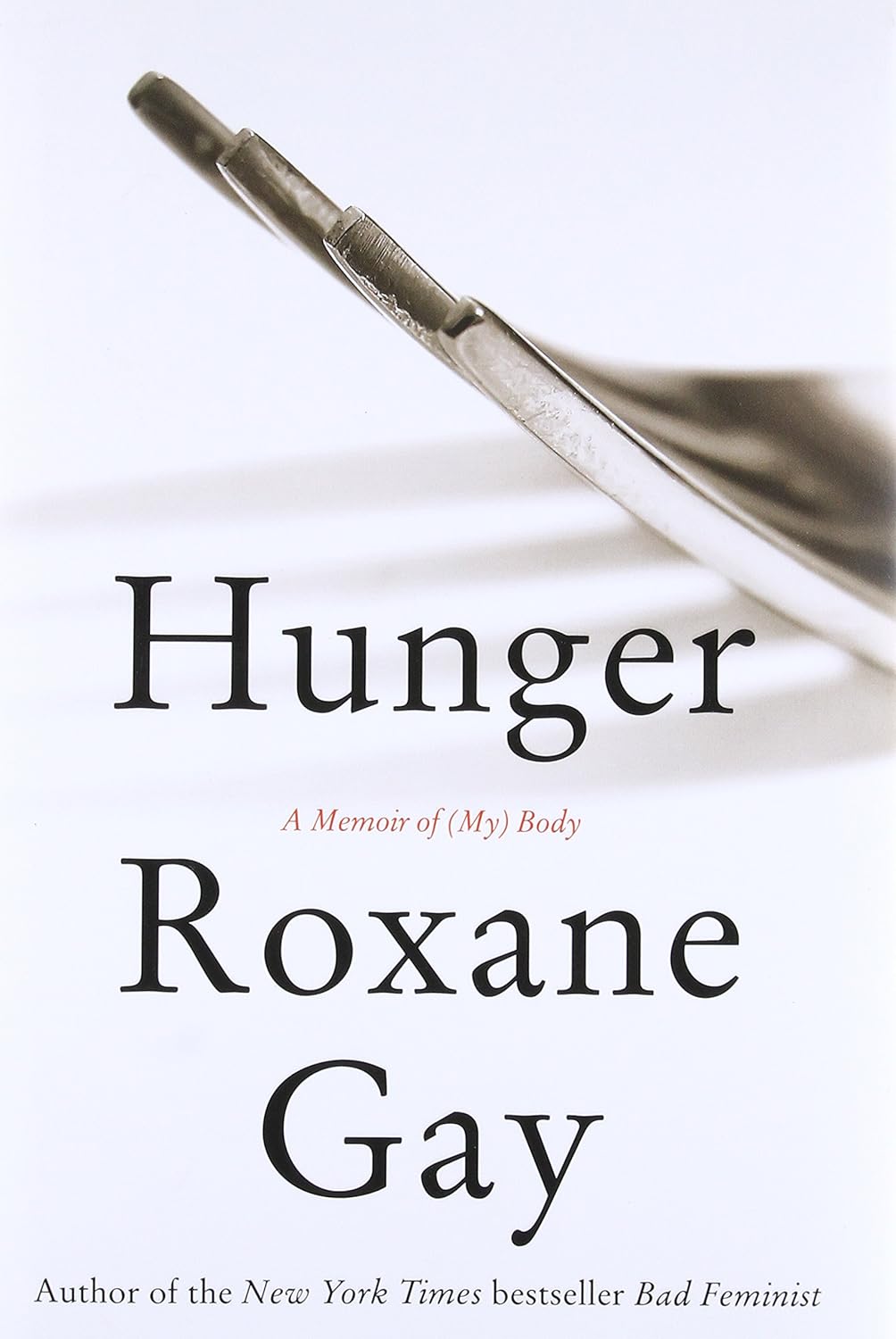
From the New York Times bestselling author of Bad Feminist: a searingly honest memoir of food, weight, self-image, and learning how to feed your hunger while taking care of yourself.“I ate and ate and ate in the hopes that if I made myself big, my body would be safe. I buried the girl I was because she ran into all kinds of trouble. I tried to erase every memory of her, but she is still there, somewhere. . . . I was trapped in my body, one that I barely recognized or understood, but at least I was safe.”In her phenomenally popular essays and long-running Tumblr blog, Roxane Gay has written with intimacy and sensitivity about food and body, using her own emotional and psychological struggles as a means of exploring our shared anxieties over pleasure, consumption, appearance, and health. As a woman who describes her own body as “wildly undisciplined,” Roxane understands the tension between desire and denial, between self-comfort and self-care. In Hunger, she explores her past—including the devastating act of violence that acted as a turning point in her young life—and brings readers along on her journey to understand and ultimately save herself.With the bracing candor, vulnerability, and power that have made her one of the most admired writers of her generation, Roxane explores what it means to learn to take care of yourself: how to feed your hungers for delicious and satisfying food, a smaller and safer body, and a body that can love and be loved—in a time when the bigger you are, the smaller your world becomes.

Drawing from groundbreaking research, psychologist and award-winning teacher Kelly McGonigal, PhD, offers a surprising new view of stress—one that reveals the upside of stress, and shows us exactly how to capitalize on its benefits.You hear it all the stress causes heart disease; stress causes insomnia; stress is bad for you! But what if changing how you think about stress could make you happier, healthier, and better able to reach your goals? Combining exciting new research on resilience and mindset, Kelly McGonigal, PhD, proves that undergoing stress is not bad for you; it is undergoing stress while believing that stress is bad for you that makes it harmful. In fact, stress has many benefits, from giving us greater focus and energy, to strengthening our personal relationships. McGonigal shows readers how to cultivate a mindset that embraces stress, and activate the brain's natural ability to learn from challenging experiences. Both practical and life-changing, The Upside of Stress is not a guide to getting rid of stress, but a toolkit for getting better at it—by understanding, accepting, and leveraging it to your advantage.

Everyone says they want to be happy. But that's much more easily said than done. What does being happy actually mean? And how do you even know when you feel it? Across the millennia, philosophers have thought long and hard about happiness, and come up with all sorts of different definitions and ideas for how we might live a happier life. Here, Derren explores the history of happiness from classical times until today, when the self-help industry has attempted to claim happiness as its own. His aim is to reclaim happiness for us all, and enable us to appreciate the really good things in life for what they are. Fascinating, entertaining and revelatory, this is a book for anyone who has ever wondered if there must be more to life...

Join the millions who have learned how to take control of their lives by setting healthy boundaries with their spouses, children, friends, parents, co-workers, and even themselves—in order to live life to the fullest.Do you feel like your life has spiraled out of control? Have you focused so much on being loving and unselfish that you've forgotten your own limits? Do you find yourself taking responsibility for other people's feelings and problems? In Boundaries, Drs. Henry Cloud and John Townsend share the lessons they've learned in their years of practicing psychology and studying the patterns and practices that support clear biblical boundaries. You'll learn the ins and outs of setting the boundaries that will transform your daily life.This updated and expanded edition of Boundaries, answers the most common questions on the science behind establishing Can I set limits and still be a loving person? What are legitimate boundaries? How do I effectively manage my digital life so that it doesn't control me? What if someone is upset or hurt by my boundaries? How do I answer someone who wants my time, love, energy, or money? Why do I feel guilty or afraid when I consider setting boundaries? Discover the countless ways that Boundaries can change your life for the better today!

Why are we obsessed with the things we want and bored when we get them? Why is addiction "perfectly logical" to an addict? Why does love change so quickly from passion to indifference? Why are some people diehard liberals and others hardcore conservatives? Why are we always hopeful for solutions even in the darkest times--and so good at figuring them out? The answer is found in a single chemical in your brain: dopamine. Dopamine ensured the survival of early man. Thousands of years later, it is the source of our most basic behaviors and cultural ideas--and progress itself. Dopamine is the chemical of desire that always asks for more--more stuff, more stimulation, and more surprises. In pursuit of these things, it is undeterred by emotion, fear, or morality. Dopamine is the source of our every urge, that little bit of biology that makes an ambitious business professional sacrifice everything in pursuit of success, or that drives a satisfied spouse to risk it all for the thrill of someone new. Simply put, it is why we seek and succeed; it is why we discover and prosper. Yet, at the same time, it's why we gamble and squander. From dopamine's point of view, it's not the having that matters. It's getting something--anything--that's new. From this understanding--the difference between possessing something versus anticipating it--we can understand in a revolutionary new way why we behave as we do in love, business, addiction, politics, religion - and we can even predict those behaviors in ourselves and others. In The Molecule of More: How a Single Chemical in Your Brain Drives Love, Sex, and Creativity--and will Determine the Fate of the Human Race, George Washington University professor and psychiatrist Daniel Z. Lieberman, MD, and Georgetown University lecturer Michael E. Long present a potentially life-changing proposal: Much of human life has an unconsidered component that explains an array of behaviors previously thought to be unrelated, including why winners cheat, why geniuses often suffer with mental illness, why nearly all diets fail, and why the brains of liberals and conservatives really are different.

In 2004, David Chang opened a noodle restaurant named Momofuku in Manhattan's East Village, not expecting the business to survive its first year. In 2018, he was the owner and chef of his own restaurant empire, with 15 locations from New York to Australia, the star of his own hit Netflix show and podcast, was named one of the most influential people of the 21st century and had a following of over 1.2 million. In this inspiring, honest and heartfelt memoir, Chang shares the extraordinary story of his culinary coming-of-age.Growing up in Virginia, the son of Korean immigrant parents, Chang struggled with feelings of abandonment, isolation and loneliness throughout his childhood. After failing to find a job after graduating, he convinced his father to loan him money to open a restaurant. Momofuku's unpretentious air and great-tasting simple staples - ramen bowls and pork buns - earned it rave reviews, culinary awards and before long, Chang had a cult following.Momofuku's popularity continued to grow with Chang opening new locations across the U.S. and beyond. In 2009, his Ko restaurant received two Michelin stars and Chang went on to open Milk Bar, Momofuku's bakery. By 2012, he had become a restaurant mogul with the opening of the Momofuku building in Toronto, encompassing three restaurants and a bar.Chang's love of food and cooking remained a constant in his life, despite the adversities he had to overcome. Over the course of his career, the chef struggled with suicidal thoughts, depression and anxiety. He shied away from praise and begged not to be given awards. In Eat a Peach, Chang opens up about his feelings of paranoia, self-confidence and pulls back the curtain on his struggles, failures and learned lessons. Deeply personal, honest and humble, Chang's story is one of passion and tenacity, against the odds.

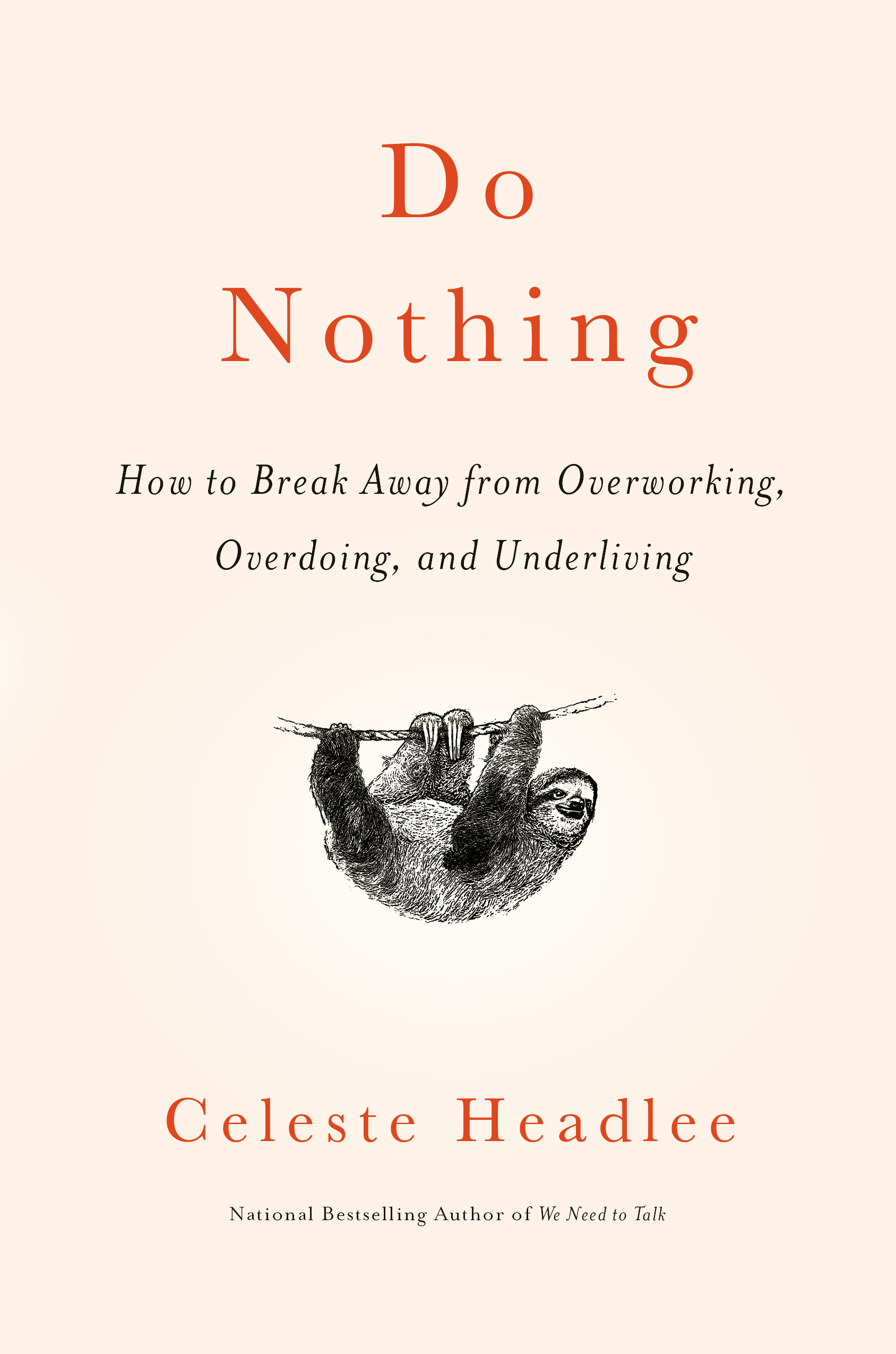
Despite our constant search for new ways to 'hack' our bodies and minds for peak performance, human beings are working more instead of less, living harder not smarter, and becoming more lonely and anxious. We strive for the absolute best in every aspect of our lives, ignoring what we do well naturally. Why do we measure our time in terms of efficiency instead of meaning? Why can't we just take a break?In Do Nothing, award-winning journalist Celeste Headlee illuminates a new path ahead, seeking to institute a global shift in our thinking so we can stop sabotaging our well-being, put work aside and start living instead of doing. The key lies in embracing what makes us human: our creativity, our social connections (Instagram doesn't count), our ability for reflective thought, and our capacity for joy. Celeste's strategies will allow you to regain control over your life and break your addiction to false efficiency, including:-Increase your time perception and determine how your hours are being spent. -Stop comparing yourself to others.-Invest in quality idle time. Take a hot bath and listen to music.-Spend face-to-face time with friends and familyIt's time to recover our leisure time and reverse the trend that's making us all sadder, sicker, and less productive.

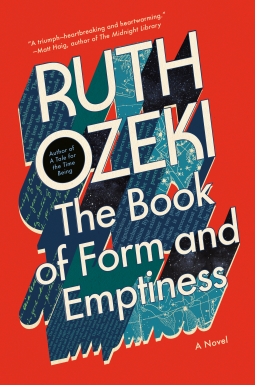
A brilliantly inventive new novel about loss, growing up, and our relationship with things, by the Booker Prize-finalist author of A Tale for the Time Being After the tragic death of his beloved musician father, fourteen-year-old Benny Oh begins to hear voices. The voices belong to the things in his house--a sneaker, a broken Christmas ornament, a piece of wilted lettuce. Although Benny doesn't understand what these things are saying, he can sense their emotional tone; some are pleasant, a gentle hum or coo, but others are snide, angry and full of pain. When his mother, Annabelle, develops a hoarding problem, the voices grow more clamorous.At first, Benny tries to ignore them, but soon the voices follow him outside the house, onto the street and at school, driving him at last to seek refuge in the silence of a large public library, where objects are well-behaved and know to speak in whispers. There, Benny discovers a strange new world, where "things happen." He falls in love with a mesmerizing street artist with a smug pet ferret, who uses the library as her performance space. He meets a homeless philosopher-poet, who encourages him to ask important questions and find his own voice amongst the many.And he meets his very own Book--a talking thing--who narrates Benny's life and teaches him to listen to the things that truly matter.With its blend of sympathetic characters, riveting plot, and vibrant engagement with everything from jazz, to climate change, to our attachment to material possessions, The Book of Form and Emptiness is classic Ruth Ozeki--bold, wise, poignant, playful, humane and heartbreaking.

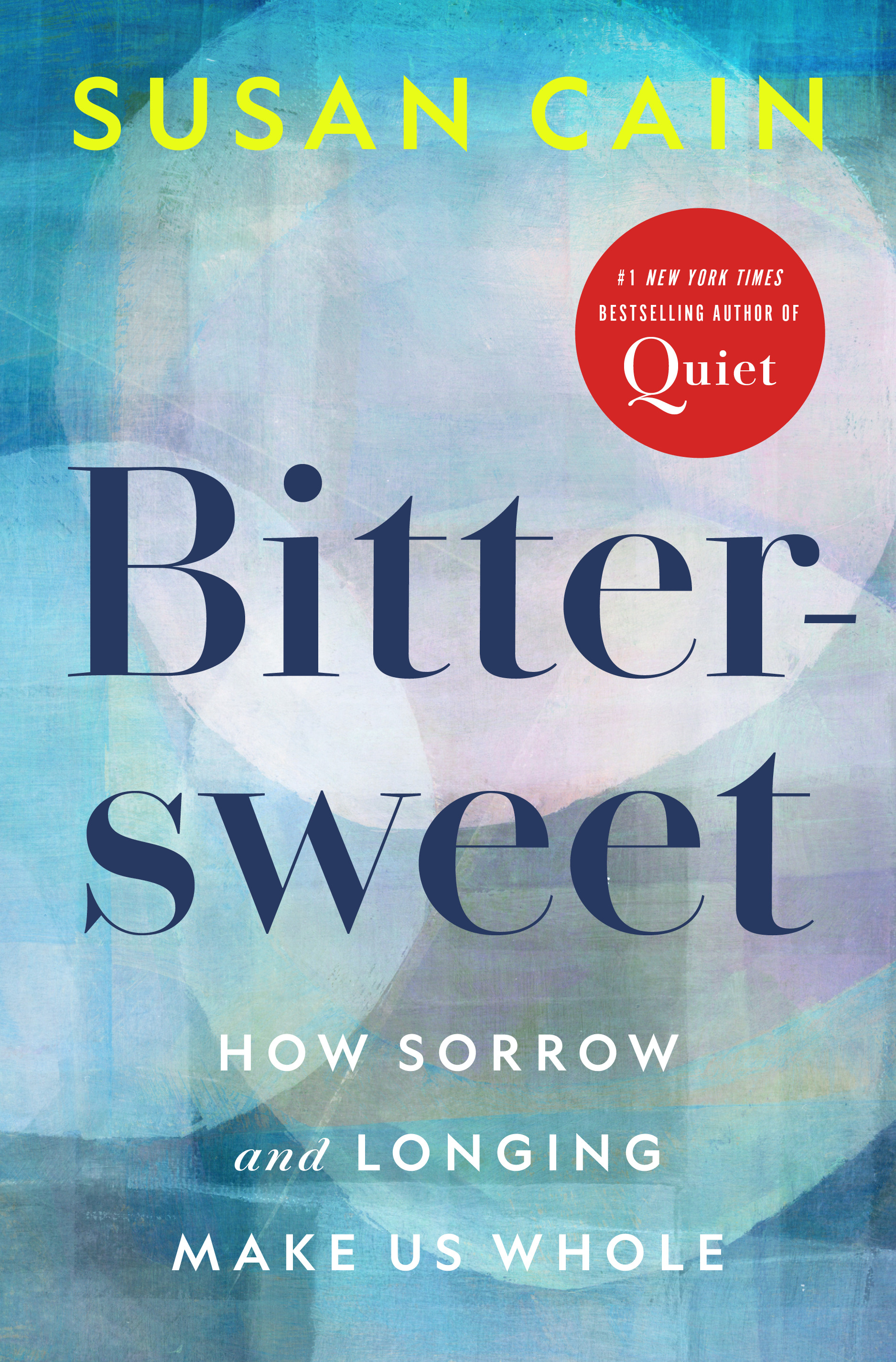
In her new masterpiece, the author of the bestselling phenomenon Quiet reveals the power of a bittersweet outlook on life, and why we’ve been so blind to its value.With Quiet, Susan Cain urged our society to cultivate space for the undervalued, indispensable introverts among us, thereby revealing an untapped power hidden in plain sight. Now she employs the same mix of research, storytelling, and memoir to explore why we experience sorrow and longing, and the surprising lessons these states of mind teach us about creativity, compassion, leadership, spirituality, mortality, and love. Bittersweetness is a tendency to states of longing, poignancy, and sorrow; an acute awareness of passing time; and a curiously piercing joy when beholding beauty. It recognizes that light and dark, birth and death—bitter and sweet—are forever paired. A song in a minor key, an elegiac poem, or even a touching television commercial all can bring us to this sublime, even holy, state of mind—and, ultimately, to greater kinship with our fellow humans. But bittersweetness is not, as we tend to think, just a momentary feeling or event. It’s also a way of being, a storied heritage. Our artistic and spiritual traditions—amplified by recent scientific and management research—teach us its power. Cain shows how a bittersweet state of mind is the quiet force that helps us transcend our personal and collective pain. If we don’t acknowledge our own sorrows and longings, she says, we can end up inflicting them on others via abuse, domination, or neglect. But if we realize that all humans know—or will know—loss and suffering, we can turn toward each other. And we can learn to transform our own pain into creativity, transcendence, and connection. At a time of profound discord and personal anxiety, Bittersweet brings us together in deep and unexpected ways.

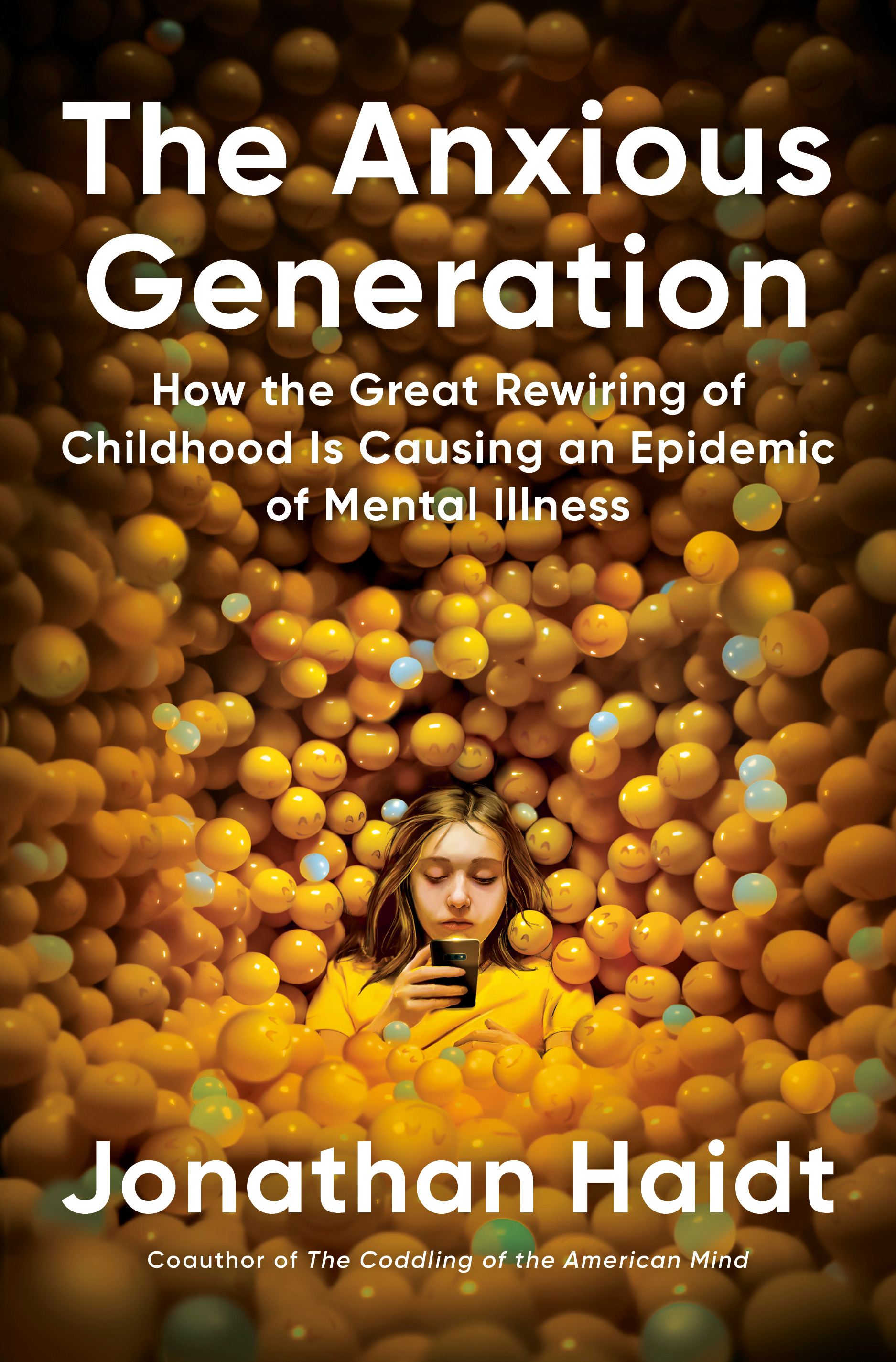
THE INSTANT #1 NEW YORK TIMES BESTSELLER • A Wall Street Journal Top 10 Book of 2024 • A Washington Post Notable Book • A New York Times Notable Book • The Goodreads Choice Award Nonfiction Book of the YearA must-read for all parents: the generation-defining investigation into the collapse of youth mental health in the era of smartphones, social media, and big tech—and a plan for a healthier, freer childhood.“With tenacity and candor, Haidt lays out the consequences that have come with allowing kids to drift further into the virtual world . . . While also offering suggestions and solutions that could help protect a new generation of kids.” —Shannon Carlin, ,i>TIME, 100 Must-Read Books of 2024After more than a decade of stability or improvement, the mental health of adolescents plunged in the early 2010s. Rates of depression, anxiety, self-harm, and suicide rose sharply, more than doubling on many measures. Why?In The Anxious Generation, social psychologist Jonathan Haidt lays out the facts about the epidemic of teen mental illness that hit many countries at the same time. He then investigates the nature of childhood, including why children need play and independent exploration to mature into competent, thriving adults. Haidt shows how the “play-based childhood” began to decline in the 1980s, and how it was finally wiped out by the arrival of the “phone-based childhood” in the early 2010s. He presents more than a dozen mechanisms by which this “great rewiring of childhood” has interfered with children’s social and neurological development, covering everything from sleep deprivation to attention fragmentation, addiction, loneliness, social contagion, social comparison, and perfectionism. He explains why social media damages girls more than boys and why boys have been withdrawing from the real world into the virtual world, with disastrous consequences for themselves, their families, and their societies.Most important, Haidt issues a clear call to action. He diagnoses the “collective action problems” that trap us, and then proposes four simple rules that might set us free. He describes steps that parents, teachers, schools, tech companies, and governments can take to end the epidemic of mental illness and restore a more humane childhood.Haidt has spent his career speaking truth backed by data in the most difficult landscapes—communities polarized by politics and religion, campuses battling culture wars, and now the public health emergency faced by Gen Z. We cannot afford to ignore his findings about protecting our children—and ourselves—from the psychological damage of a phone-based life.

Using a wealth of practical techniques, informative case histories and unique questionnaires, John Bradshaw demonstrates how your wounded inner child may be causing you pain. You'll learn to gradually, safely, go back to reclaim and nurture that inner child - and literally help yourself grow up again. Homecoming shows you how to:Validate your inner child through meditations and affirmations Give your child permission to break destructive family roles and rulesAdopt new rules allowing pleasure and honest self-expression Deal with anger and difficult relationshipsPay attention to your innermost purpose and desires...and find new joy and energy in living.

You have a God-given right to happiness, wealth, and success. In this dynamic book by Reverend Terry Cole-Whittaker, you’ll learn how to cast off the shackles of fear and false beliefs to discover your own inner path—the route to your inborn talents and limitless potential! Explore your deepest feelings with self-awareness strategies and consciousness-raising exercises. Learn how to cope with physical, mental, and spiritual problems, involving love, money, risk-taking, relationships, guilt, self-reliance, self-image, sexuality, and more. It’s all here in one astonishing the motivation, tools, and tactics to resolve personal conflicts—and change your life forever!

Suffering Is Three Keys to Freedom and Joy centers around three basic aspects of Zen pay attention, believe nothing, and don’t take anything personally. As ending suffering requires that one sees how suffering happens, the book urges readers to be willing to be quiet and pay attention to the process of suffering in effort to see each moment as an opportunity to step beyond illusion into freedom. It also argues that examining beliefs, abandoning them, and returning attention to the present is essential to ending suffering, as is living in the awareness that nothing in the universe is personal.

This guide to self-discovery through intimate relationships offers a spiritual perspective on healing childhood wounds and destructive patterns that are learned early on and later cause relationship dysfunction in adulthood.

"Anger is a signal and one worth listening to," writes Dr. Harriet Lerner, in her renowned classic that has transformed the lives of millions of readers. While anger deserves our attention and respect, women still learn to silence our anger, to deny it entirely, or to vent it in a way that leaves us feeling helpless and powerless. In this engaging and eminently wise book, Dr. Lerner teaches women to identify the true sources of our anger and to use anger as a powerful vehicle for creating lasting change.

"The author's challenge is compassionate and inspired. He wants us to succeed." -Psychological Perspectives A timely and thought-provoking corrective to the generalized fantasies about relationships that permeate Western culture. Here is a challenge to greater personal responsibility, a call for individual growth as opposed to seeking rescue through others.

This original and lucid account of the complexities of love and its essential role in human well-being draws on the latest scientific research. Three eminent psychiatrists tackle the difficult task of reconciling what artists and thinkers have known for thousands of years about the human heart with what has only recently been learned about the primitive functions of the human brain.A General Theory of Love demonstrates that our nervous systems are not self-contained: from earliest childhood, our brains actually link with those of the people close to us, in a silent rhythm that alters the very structure of our brains, establishes life-long emotional patterns, and makes us, in large part, who we are. Explaining how relationships function, how parents shape their child’s developing self, how psychotherapy really works, and how our society dangerously flouts essential emotional laws, this is a work of rare passion and eloquence that will forever change the way you think about human intimacy.

Nathaniel Branden's book is the culmination of a lifetime of clinical practice and study, already hailed in its hardcover edition as a classic and the most significant work on the topic. Immense in scope and vision and filled with insight into human motivation and behavior, The Six Pillars Of Self-Esteem is essential reading for anyone with a personal or professional interest in self-esteem. The book demonstrates compellingly why self-esteem is basic to psychological health, achievement, personal happiness, and positive relationships. Branden introduces the six pillars—six action-based practices for daily living that provide the foundation for self-esteem—and explores the central importance of self-esteem in five areas: the workplace, parenting, education, psychotherapy, and the culture at large. The work provides concrete guidelines for teachers, parents, managers, and therapists who are responsible for developing the self-esteem of others. And it shows why-in today's chaotic and competitive world-self-esteem is fundamental to our personal and professional power.

With uncommon humanity, candor, wit, and erudition, award-winning author Andrew Solomon takes the reader on a journey of incomparable range and resonance into the most pervasive of family secrets. His contribution to our understanding not only of mental illness but also of the human condition is truly stunning. The Noonday Demon examines depression in personal, cultural, and scientific terms. Drawing on his own struggles with the illness and interviews with fellow sufferers, doctors and scientists, policymakers and politicians, drug designers and philosophers, Solomon reveals the subtle complexities and sheer agony of the disease. He confronts the challenge of defining the illness and describes the vast range of available medications, the efficacy of alternative treatments, and the impact the malady has had on various demographic populations around the world and throughout history. He also explores the thorny patch of moral and ethical questions posed by emerging biological explanations for mental illness. The depth of human experience Solomon chronicles, the range of his intelligence, and his boundless curiosity and compassion will change the reader's view of the world.

A highly original and groundbreaking book from a noted PGA coach and Buddhist instructor • “The lessons in Zen Golf make the mental game seem so simple. Dr. Parent has given me very effective methods for working with thoughts and emotions, and for taking the negatives out of the picture.” —Vijay Singh, Masters and PGA ChampionBy combining classic insights and stories from Zen tradition, Zen Golf helps eliminate the mental distractions that routinely cause poor shots and loss of concentration, allowing golfers to feel in “the zone” that professionals have learned to master.The best players know that golf is a game of confidence, and most important, concentration–the ability to focus and block out distraction. The goal of achieving clear thought is also at the heart of Buddhist teachings. PGA coach and Buddhist instructor Dr. Joseph Parent draws on this natural connection and teaches golfers how to clear their minds, achieve ultimate focus, and play in the moment for each shot.Zen Golf presents a simple system for building “mental game mastery.” Dr Parent’s unique PAR Approach (focusing on Preparation, Action, and Response to Results) guides golfers with specific techniques for each aspect of their games. In chapters such as “How to Get From the Practice Tee to the First Tee”, “You Produce What You Fear”, and “How to Enjoy a Bad Round of Golf”, the author shares a personal teaching regimen that has helped improve the games of professionals and amateurs alike.Clear, concise, and enlightening, Zen Golf shows golfers how to prepare for, execute, and equally important, respond the results of any golf shot. A different approach to golf instruction, this book shapes ancient philosophies into new teachings.

In the 1980's, Janet Woititz broke new ground in our understanding of what it is to be an Adult Child of an Alcoholic. In this updated edition of her bestseller she re-examines the movement and its inclusion of Adult Children from various dysfunctional family backgrounds who share the same characteristics. After decades of working with ACoAs she shares the recovery hints that she has found to work. Read Adult Children of Alcoholics to see where the journey began and for ideas on where to go from here.

The late Carl Rogers, founder of the humanistic psychology movement, revolutionized psychotherapy with his concept of "client-centered therapy." His influence has spanned decades, but that influence has become so much a part of mainstream psychology that the ingenious nature of his work has almost been forgotten. A new introduction by Peter Kramer sheds light on the significance of Dr. Rogers's work today. New discoveries in the field of psychopharmacology, especially that of the antidepressant Prozac, have spawned a quick-fix drug revolution that has obscured the psychotherapeutic relationship. As the pendulum slowly swings back toward an appreciation of the therapeutic encounter, Dr. Rogers's "client-centered therapy" becomes particularly timely and important.

1993 FIRESIDE EDITION SOFTCOVER

Psychiatrist Gerald Jampolsky's timeless message may be even more timely today - the only thing that stands between us and the awesome energy of love is fear. To live without fear, we must stop analysing it, stop agonising over it, stop fighting with it, and let it go.

Scattered Minds explodes the myth of attention deficit disorder as genetically based – and offers real hope and advice for children and adults who live with the condition.Gabor Maté is a revered physician who specializes in neurology, psychiatry and psychology – and himself has ADD. With wisdom gained through years of medical practice and research, Scattered Minds is a must-read for parents – and for anyone interested how experiences in infancy shape the biology and psychology of the human brain.Scattered Minds:- Demonstrates that ADD is not an inherited illness, but a reversible impairment and developmental delay- Explains that in ADD, circuits in the brain whose job is emotional self-regulation and attention control fail to develop in infancy – and why- Shows how ‘distractibility’ is the psychological product of life experience- Allows parents to understand what makes their ADD children tick, and adults with ADD to gain insights into their emotions and behaviours- Expresses optimism about neurological development even in adulthood- Presents a programme of how to promote this development in both children and adults

A pioneering and revolutionary book that lays the foundation for a radical new psychology, based on an expanded cartography of the human unconsciousness. Famous for his lifelong research into psychedelic drugs, Dr. Grof constructs a comprehensive and helpful framework out of the bewildering welter of experiences triggered by LSD in patients and research subjects. Current research into the brain and ways of expanding consciousness give this seminal book, first published in 1979, new importance for the light it throws on many fundamental, but hitherto mysterious, human potentialities. Grof's theory of the human psyche transcends the personal and opens ways to a greater understanding of our inner selves.

Satürn, gücünü elinden alacaklar diye çocuklarını yiyen kadim Roma tanrısıydı. Tarih boyunca erkekler Satürn’ün mirasının psikolojik ve ruhsal yükü altında ezilmiş, otoritenin bozulması nedeniyle acı çekmişlerdir. Kadınlardan ve diğer erkeklerden duydukları korku yüzünden hem kendilerini hem de başkalarını yaralamışlardır.The Middle From Misery to Meaning in Midlife (Inner City, 1993) adlı kitabın da yazarı olan James Hollis, Satürn’ün Gölgesi Altında’da bu sorunları ele alıyor ve erkeklere kişisel bütünlük duygularını geri kazanmaları konusunda somut çözümler öneriyor.Erkekler kadar kadınlar da bu kitabı okumaya değer bulacaklar; çalışma, erkeklerin kalplerinde taşıdıkları sırları açığa çıkarıp açıklamakla yetinmiyor, ataerkilliğin en kötü etkilerinden kurtulmak için hepimizin yapması gerekenlere de zengin bir bakış açısı sunuyor.James Hollis, Ph.D., Zürih’teki C.G. Jung Enstitüsü’nden mezun oldu. Kuzey Amerika’da mitoloji ve din üzerine sayısız konferans düzenleyen yazar, genellikle erkek meselelerine ve ortayaş dönemlerine değinir. Hem Philadelphia’da hem de yaşadığı yer olan Linwood, New Jersey’de özel klinikleri bulunmaktadır.

Did you have a parent whose love for you felt more confining than freeing, more demanding than giving, more intrusive than nurturing? Did you feel trapped in a "psychological marriage" with this parent? If so, you may be a victim of covert incest. Identification of this kind of incest is difficult, since covert incest victims often feel idealized and privileged, not violated and abused. In Silently Seduced, Dr. Adams, through illustrative case examples and perceptive insight, provides covert incest victims a framework to understand what happened to them, how their lives and relationships continue to be affected and how to begin the process of recovery.

The revolutionary book that showed how mindfulness can be applied to every aspect of our livesThe highly innovative findings of social psychologist Dr. Ellen J. Langer and her team of researchers at Harvard introduced a unique concept of mindfulness, adapted to contemporary life in the West. Langer's theory has been applied to a wide number of fields, including health, business, aging, social justice, and learning. There is now a new psychological assessment based on her work (called the Langer Mindfulness Scale). In her introduction to this 25th anniversary edition, Dr. Langer (now known as "the Mother of Mindfulness") outlines some of these exciting applications and suggests those still to come.

Sleep better, live longer with the groundbreaking information and step-by-step program in this revolutionary book.Healthful sleep has been empirically proven to be the single most important factor in predicting longevity, more influential than diet, exercise, or heredity. And yet we are a sleep-sick society, ignorant of the facts of sleep--and the price of sleep deprivation. In this groundbreaking book, based on decades of study on the frontiers of sleep science, Dr. William Dement, founder and director of the Stanford University Sleep Research Center, explains what happens when we sleep, when we don't, and how we can reclaim the most powerful--and underrated--health miracle of all. Taking us on a fascinating tour of our sleeping body and mind, Dr. Dement reveals the price we have paid for ignoring sleep--an epidemic of heart disease, 33 percent of traffic-fatigue-related accidents, and immeasurable mental and psychological disadvantages. And he offers a hands-on prescription for vibrant good health and longevity, including...self-tests to determine how much sleep you really need...the role of prescription and over-the-counter sleeping aids...the latest research on how sleep affects the immune system...how to combat insomnia, snoring, and jet lag...plus information on sleep disorder clinics nationwide, Web sites, and more.Taking readers on a fascinating tour of our sleeping body and mind, Dr. William C. Dement reveals the price paid for ignoring sleep--an epidemic of heart disease, traffic-fatigue-related accidents (responsible for a full third of all traffic accidents), and immeasurable mental and psychological disadvantages. Offering a hands-on prescription for vibrant good health and longevity, THE PROMISE OF SLEEP includes self-tests to determine how much sleep you really need, full information on the role of prescription and over-the-counter sleeping aids, the latest research on how sleep affects the immune system, helpful methods for combating insomnia, snoring, and jet lag, plus information on sleep disorder clinics nationwide, sleep disorder Web sites, and more. -->

James ha 18 anni e vive a New York. Finita la scuola, lavoricchia nella galleria d'arte della madre, dove non entra mai nessuno: sarebbe arduo, d'altra parte, suscitare clamore intorno a opere di tendenza come le pattumiere dell'artista giapponese che vuole restare Senza Nome. Per ingannare il tempo, e nella speranza di trovare un'alternativa all'università («Ho passato tutta la vita con i miei coetanei e non mi piacciono granché»), James cerca in rete una casa nel Midwest dove coltivare in pace le sue attività preferite – la lettura e la solitudine –, ma per sua fortuna gli incauti agenti immobiliari gli riveleranno alcuni allarmanti inconvenienti della vita di provincia. Finché un giorno James entra in una chat di cuori solitari e, sotto falso nome, propone a John, il gestore della galleria che ne è un utente compulsivo, un appuntamento al buio... I puntini di sospensione sono un espediente abusato, ma in questo caso procedere oltre farebbe torto a uno dei pochi scrittori sulla scena che, come sa bene chi ha amato Quella sera dorata, chiedono solo di essere letti. Anticipare le avventure e i pensieri di James rischierebbe di mettere in ombra la singolare grazia che pervade questo libro, e da cui ci si lascia avvolgere molto prima di riconoscere, nella sua ironia inquieta e malinconica, qualcosa che pochi sanno raccontare: l'aria del tempo.

Here is a powerful new program that can clear away the unconscious agreement patterns that undermine even your best intentions. Through their own marriage and through nearly forty years of experience transforming relationships with thousands of people, Gay and Kathlyn Hendricks have developed precise strategies to help you create a vital partnership and enhance the energy, creativity, and happiness of each individual. You will learn how to: let go of power struggles and need for control; balance needs for closeness and separateness; increase intimacy by telling the microscopic truth; communicate in a positive way that stops arguments; make agreements you can keep; and allow more pleasure into your life. Addressed to individuals as well as to couples, Conscious Loving will heal old hurts and deepen your capacity for enjoyment, security, and enduing love.Runtime: 10. 59 hours, 1 MP3 CD

This text is suitable for the reader for whom being in love means being in pain. Therapist Robin Norwood describes loving too much as a pattern of thoughts and behaviour which certain women develop as a response to problems from childhood.

We all worry. We all have moments of unfounded dread (Is someone behind that door?), or little phobias (roaches) or superstitions (step on a crack) that we indulge. Just Checking is an autobiographical account of what it is like to live with a full-blown case of obsessive-compulsive disorder (OCD), which, at its height, finds author Emily Colas nervous that she will contract a disease from blood that she sees on television. In the course of the book, what at first appear to her husband and friends to be Colas's idiosyncratic notions accumulate until she is frozen by the astounding psychological binds of OCD. Using precise (of course), connect-the-dots scenes, Colas draws a life that is at first highly monitored and ultimately unraveled by her disorder. One imagines that from afar, Colas's behavior at the height of her illness would look incomprehensible and just plain weird: She has to check the dishwasher multiple times before using it to make sure the cat is safe; the packaging of every new toothbrush has to meet rigorous sanitary standards; the landlord can't attempt to find new tenants for her apartment she won't let them in the house. But readers are not at a distance here. Instead, we become privy to Colas's somewhat apologetic but firm explanations of what her logic was, and what it felt like to be afraid. She is so honest and witty that one can't help liking her, rooting for her, and wishing help would come. In a typical vignette, when the family tries to go to the Macy's Thanksgiving Day Parade ("definitely a mistake"), Colas is terrified that shewillstep on blood: When I was a kid in New York, all we had to eat on the street were pretzels and hot dogs. Food that was readily identifiable. Now, vendors sell the fanciest things with cherries, berries, jelly, and other crap that's way too close to the color of blood. We finally made it to where we had to go, but not before I had inspected the bottom of my shoes. There was a mushy red object there. Maybe a cherry, possibly a finger. The kids watched the parade on TV and I had a nice new worry. My kids don't even remember that lovely November day, but, lucky for me, I do. This event is sad and resonant, but it also manages to be viscerally entertaining. The result is that instead of inspiring schadenfreude, this book reminds us that psychological disorders are often exaggerations of the ordinary and familiar. We all, on a continuum, wish to survive, to avoid disease, to impose order on our lives. We sympathize with Colas's desperate attempts to find safety and with her seemingly loving husband's gradual loss of tolerance. Even the not-so-funny poems that are occasionally interspersed among the perfectly crafted chapterettes find their place. Strange as it may be to find charm in a memoir of illness, Colas is utterly winning. Hilary Liftin is a writer living in New York City. Her first book, coauthored with Kate Montgomery, is scheduled for publication by Vintage next year. She is the editorial development manager at BookWire (www.bookwire.com).

"Sylvia Frumkin," a highly intelligent young girl, became a schizophrenic in her late teens and spent most of the next seventeen years in and out of mental institutions. Susan Sheehan, a talented reporter, followed "Sylvia" for almost a year talking with and observing her, listening to her monologues, sitting in on consultations with doctors - even for a period sleeping in the bed next to her in a psychiatric hospital.

Waking the Tiger offers a new and hopeful vision of trauma. It views the human animal as a unique being, endowed with an instinctual capacity. It asks and answers an intriguing question: why are animals in the wild, though threatened routinely, rarely traumatized? By understanding the dynamics that make wild animals virtually immune to traumatic symptoms, the mystery of human trauma is revealed.Waking the Tiger normalizes the symptoms of trauma and the steps needed to heal them. People are often traumatized by seemingly ordinary experiences. The reader is taken on a guided tour of the subtle, yet powerful impulses that govern our responses to overwhelming life events. To do this, it employs a series of exercises that help us focus on bodily sensations. Through heightened awareness of these sensations trauma can be healed.

In ‘The Politics of Experience’ and the visionary ‘Bird of Paradise’, R.D. Laing shows how the straitjacket of conformity imposed on us all leads to intense feelings of alienation and a tragic waste of human potential. He throws into question the notion of normality, examines schizophrenia and psychotherapy, transcendence and ‘us and them’ thinking, and illustrates his ideas with a remarkable case history of a ten-day psychosis. ‘We are bemused and crazed creatures,’ Laing suggests. This outline of ‘a thoroughly self-conscious and self-critical human account of man’ represents a major attempt to understand our deepest dilemmas and sketch in solutions.‘Everyone in contemporary psychiatry owes something to R.D. Laing’ Anthony Clare, the Guardian.

"A book after my own heart!"—His Holiness The Dalai LamaThe Power of Kindness is a stirring examination of a simple but profound concept. Piero Ferrucci, one of the world's most respected transpersonal psychologists, explores the many surprising facets of kindness and argues that it is this trait that will not only lead to our own individual happiness and the happiness of those around us, but will guide us in a world that has become cold, anxious, difficult, and frightening.Piero Ferrucci warns against the dangers of "global cooling." As the pace of living grows faster and the impact of new technologies more insistent, communications become hurried and impersonal. The drive for profit overrides the heart. Warmth and genuine presence fade.In eighteen interlocking chapters, Dr. Ferrucci reveals that the kindest people are the most likely to thrive, to enable others to thrive, and to slowly but steadily turn our world away from violence, self-centeredness, and narcissism- and toward love. Writing with a rare combination of sensitivity and intellectual depth, Dr. Ferrucci shows that, ultimately, kindness is not a luxury in our world but rather a necessity for us all.

In this fascinating book, Alan Watts explores man's quest for psychological security, examining our efforts to find spiritual and intellectual certainty in the realms of religion and philosophy. The Wisdom of Insecurity underlines the importance of our search for stability in an age where human life seems particularly vulnerable and uncertain. Watts argues our insecurity is the consequence of trying to be secure and that, ironically, salvation and sanity lie in the recognition that we have no way of saving ourselves.

This classic work is a monumental, integrated view of man's search for an understanding of the inner reaches of the mind. In an account that is both exhaustive and exciting, the distinguished psychiatrist and author demonstrates the long chain of development—through the exorcists, magnetists, and hypnotists—that led to the fruition of dynamic psychiatry in the psychological systems of Janet, Freud, Adler, and Jung.

He would probably dispute it, but Gabor Maté is something of a compassion machine. Diligently treating the drug addicts of Vancouver's notorious Downtown Eastside with sympathy in his heart and legislative reform in mind can't be easy. But Maté never judges. His book is a powerful call-to-arms, both for the decriminalization of drugs and for a more sympathetic and informed view of addiction. As Maté observes, "Those whom we dismiss as 'junkies' are not creatures from a different world, only men and women mired at the extreme end of a continuum on which, here or there, all of us might well locate ourselves." In the Realm of Hungry Ghosts begins by introducing us to many of Dr. Maté's most dire patients who steal, cheat, sell sex, and otherwise harm themselves for their next hit. Maté looks to the root causes of addiction, applying a clinical and psychological view to the physical manifestation and offering some enlightening answers for why people inflict such catastrophe on themselves.Finally, he takes aim at the hugely ineffectual, largely U.S.-led War on Drugs (and its worldwide followers), challenging the wisdom of fighting drugs instead of aiding the addicts, and showing how controversial measures such as safe injection sites are measurably more successful at reducing drug-related crime and the spread of disease than anything most major governments have going. It's not easy reading, but we ignore his arguments at our peril. When it comes to combating the drug trade and the ravages of addiction, society can use all the help it can get. --Kim Hughes

In this revised edition of his classic work―the first modern book on anxiety following Freud and Kierkegaard―psychologist Rollo May brings order and lucidity to the subject of anxiety. Rollo May challenges the idea that "mental health is living without anxiety," believing it is essential to being human. He explores how it can relieve boredom, sharpen sensibilities, and produce the tension necessary to preserve human existence. May sees a link extending from anxiety to intelligence, creativity, and originality, and guides the reader away from destructive ways to positive ways of dealing with anxiety. He convincingly proposes that anxiety can impel personal change, as it is only by confronting and coping with it that self-realization can occur.

A profound and deeply personal collection of essays by renowned psychologist Carl RogersThe late Carl Rogers, founder of the humanistic psychology movement and father of client-centered therapy, based his life's work on his fundamental belief in the human potential for growth. A Way of Being was written in the early 1980s, near the end of Carl Rogers's career, and serves as a coda to his classic On Becoming a Person. More philosophical than his earlier writings, it traces his professional and personal development and ends with a prophetic call for a more humane future.

The #1 bestseller that has helped heal millions of readers, this modern classic holds the key to understanding codependency and unlocking its hold on your life. Melody Beattie’s compassionate and insightful look into codependency—the concept of losing oneself in the name of helping another— has helped millions of readers understand that they are powerless to change anyone but themselves and that caring for the self is where healing begins. Is someone else's problem your problem? If, like so many others, you've lost sight of your own life in the drama of tending to a loved one’s self-destructive behavior, you may be codependent--and you may find yourself in this book. With instructive life stories, personal reflections, exercises, and self-tests, Codependent No More helps you to break old patterns, maintain healthy boundaries, and say no to unhealthy relationships. It offers a clear and achievable path to freedom and a lifetime of healing, hope, and happiness. This ground-breaking book is even more relevant today, as readers confront new, urgent challenges with greater self-awareness, than it was when it first entered the national conversation over 35 years ago.

Paperback 1573227358 9781573227353 Penguin Group (USA) Incorporated 208 pages From Twelfth Grade to up English

The Emotional Brain investigates the origins of human emotions and explains that many exist as part of complex neural systems that evolved to enable us to survive.

This book covers topics about codependency, addiction to drugs the recovery process, how drugs affect your relationships, self help techniques, where to go for emotional support. It also covers alcoholism.

The shocking thing about the girls was how nearly normal they seemed when their mother let them out for the one and only date of their lives. Twenty years on, their enigmatic personalities are embalmed in the memories of the boys who worshipped them and who now recall their shared adolescence- the brassiere draped over a crucifix belonging to the promiscuous Lux; the sisters' breathtaking appearance on the night of the dance; and the sultry, sleepy street across which they watched a family disintegrate and fragile lives disappear.

You hold in your hand an invitation :To remember the transforming power of forgiveness and lovingkindness. To remember that no matter where you are and what you face, within your heart peace is possible.In this beautiful and graceful little book, internationally renowned Buddhist teacher and meditation master Jack Kornfield has collected age-old teachings, modern stories, and time-honored practices for bringing healing, peace, and compassion into our daily lives. Just to read these pages offers calm and comfort. The practices contained here offer meditations for you to discover a new way to meet life’s greatest challenges with acceptance, joy, and hope.

Louise’s key message in this powerful work is: “If we are willing to do the mental work, almost anything can be healed.” Louise explains how limiting beliefs and ideas are often the cause of illness, and how you can change your thinking…and improve the quality of your life.