
S. Nassir Ghaemi
Nassir Ghaemi MD MPH is an academic psychiatrist specializing in mood illnesses, depression and bipolar illness, and Editor of a monthly newsletter, The Psychiatry Letter (www.psychiatryletter.org). He is Professor of Psychiatry at Tufts Medical Center in Boston, where he directs the Mood Disorders Program. He is a also a Clinical Lecturer at Harvard Medical School, and teaches at the Cambridge Health Alliance. In the past, he trained and worked mostly in the Boston area, mainly in Harvard-affiliated hospitals (McLean Hospital, Massachusetts General Hospital, and Cambridge Hospital). He has also worked at George Washington University, and Emory University. His medical degree is from the Medical College of Virginia/Virginia Commonwealth University. His clinical work and research has focused on depression and manic-depressive illness. In this work, he has published over 200 scientific articles, over 50 scientific book chapters, and he has written or edited over half a dozen books. He is an Associate Editor of Acta Psychiatrica Scandinavica, and is a Distinguished Fellow of the American Psychiatric Association. After his medical training, he obtained an MA in philosophy from Tufts University in 2001, and a MPH from the Harvard School of Public Health in 2004. Born in Tehran, Iran, he immigrated to the US at the age of 5 with his family and was raised in McLean, Virginia by his father Kamal Ghaemi MD, a neurosurgeon and neurologist, and his mother Guity Kamali Ghaemi, an art historian. A graduate of McLean High School (1984), he received a BA in history from George Mason University (Fairfax, Virginia, 1986). He is an active writer, and besides his books, newsletter, and scientific articles, he writes a column for Medscape.
11 Books Written

A First-Rate Madness: Uncovering the Links Between Leadership and Mental Illness
by S. Nassir Ghaemi
Rating: 3.9 ⭐
• 4 recommendations ❤️
The New York Times bestseller“A glistening psychological history, faceted largely by the biographies of eight famous leaders . . .” — The Boston Globe“A provocative thesis . . . Ghaemi’s book deserves high marks for original thinking.” —The Washington Post“Provocative, fascinating.” —Salon.comHistorians have long puzzled over the apparent mental instability of great and terrible leaders Napoleon, Lincoln, Churchill, Hitler, and others. In A First-Rate Madness , Nassir Ghaemi, director of the Mood Disorders Program at Tufts Medical Center, offers a myth-shattering exploration of the powerful connections between mental illness and leadership and sets forth a controversial, compelling The very qualities that mark those with mood disorders also make for the best leaders in times of crisis. From the importance of Lincoln's "depressive realism" to the lackluster leadership of exceedingly sane men as Neville Chamberlain, A First-Rate Madness overturns many of our most cherished perceptions about greatness and the mind.

In a culture obsessed with youth, financial success, and achieving happiness, is it possible to live an authentic, meaningful life? Nassir Ghaemi, a psychiatrist with a wide grasp of philosophy, reflects on our society's current quest for happiness and rejection of anything resembling sadness. "On Depression" asks readers to consider the benefits of despair and the foibles of an unexamined life.Too often depression as disease is mistreated or not treated at all. Ghaemi warns against the "pretenders" who confuse our understanding of depression--those who deny disease excessively for instance or those who use psychiatric diagnosis (the DSM system) "pragmatically" and unscientifically. But sadness, even depression, can also have benefits. Ghaemi asserts that we can create a "narrative of ourselves such that we know and accept who we are," leading to a deeper, lasting level of contentment and a more satisfying personal and public life.Depression is complex, and we need guides to help us understand it, guides who comprehend it existentially as part of normal human experience and clinically as sometimes needing the right kind of treatment, including medications. Ghaemi discusses these guides in detail, thinkers like Viktor Frankl, Rollo May, Karl Jaspers, and Leston Havens, among others."On Depression" combines examples from philosophy and the history of medicine with psychiatric principles informed by the author's clinical experience with people who struggle with mental illness. He has seen great achievements arise from great suffering and feels that understanding depression can provide important insights into happiness.

The Concepts of Psychiatry: A Pluralistic Approach to the Mind and Mental Illness
by S. Nassir Ghaemi
Rating: 4.2 ⭐
Because most psychiatric illnesses are complex phenomena, no single method or approach is sufficient to explain them or the experiences of persons who suffer from them. In The Concepts of Psychiatry S. Nassir Ghaemi, M.D. argues that the discipline of psychiatry can therefore be understood best from a pluralistic perspective. Grounding his approach in the works of Paul McHugh, Phillip Slavney, Leston Havens, and others, Ghaemi incorporates a more explicitly philosophical discussion of the strengths of a pluralistic model and the weaknesses of other approaches, such as biological or psychoanalytic theories, the biopsychosocial model, or eclecticism. Ghaemi's methodology is on the one hand, he applies philosophical ideas, such as utilitarian versus duty-based ethical models, to psychiatric practice. On the other hand, he subjects clinical psychiatric phenomena, such as psychosis or the Kraepelin nosology, to a conceptual analysis that is philosophically informed. This book will be of interest to professionals and students in psychiatry, as well as psychologists, social workers, philosophers, and general readers who are interested in understanding the field of psychiatry and its practices at a conceptual level.

Clinical Psychopharmacology offers a comprehensive guide to clinical practice that explores two major aspects of the the clinical research that exists to guide clinical practice of psychopharmacology, and the application of that knowledge with attention to the individualized aspects of clinical practice. The text consists of 50 chapters, organized into 6 sections, focusing on disease-modifying effects, non-DSM diagnostic concepts, and essential facts about the most common drugs. This innovative book advocates a scientific and humanistic approach to practice and examines not only the benefits, but also the harms of drugs. Providing a solid foundation of knowledge and a great deal of practical information, this book is a valuable resource for practicing psychiatrists, psychiatric nurse practitioners, medical students and trainees in psychiatry, as well as pharmacists.

Thoroughly updated for its Second Edition, this practical guide will aid residents and clinicians in diagnosing and treating the full spectrum of mood disorders. Using the conversational style and clinical vignettes found in all Practical Guides in Psychiatry titles, Dr. Ghaemi explains how to accurately diagnose unipolar depression and bipolar disorder and offers specific, detailed, evidence-based recommendations on pharmacotherapy and psychotherapy.Chapters review the pharmacology of all antidepressants, mood stabilizers, and antipsychotics in current use and point out these drugs' advantages and drawbacks in specific clinical situations. Other chapters address clinical problems such as depression, mania, and ADHD in children and the conundrum of schizoaffective disorder.The Practical Guides in Psychiatry series provides quick, concise information for professionals on the front lines of mental health care. Written in an easy-to-read, conversational style, these invaluable resources take you through each step of the psychiatric care process, delivering fast facts and helpful strategies that help you provide effective and compassionate care to your patients.
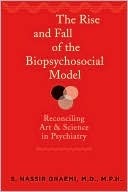
The Rise and Fall of the Biopsychosocial Model: Reconciling Art and Science in Psychiatry
by S. Nassir Ghaemi
Rating: 3.4 ⭐
2010 Outstanding Academic Title, Choice Magazine This is the first book-length historical critique of psychiatry’s mainstream ideology, the biopsychosocial (BPS) model. Developed in the twentieth century as an outgrowth of psychosomatic medicine, the biopsychosocial model is seen as an antidote to the constraints of the medical model of psychiatry. Nassir Ghaemi details the origins and evolution of the BPS model and explains how, where, and why it fails to live up to its promises. He analyzes the works of its founders, George Engel and Roy Grinker Sr., traces its rise in acceptance, and discusses its relation to the thought of William Osler and Karl Jaspers. In assessing the biopsychosocial model, Ghaemi provides a philosophically grounded evaluation of the concept of mental illness and the relation between evidence-based medicine and psychiatry. He argues that psychiatry's conceptual core is eclecticism, which in the face of too much freedom paradoxically leads many of its adherents to enact their own dogmas. Throughout, he makes the case for a new paradigm of medical humanism and method-based psychiatry that is consistent with modern science while incorporating humanistic aspects of the art of medicine. Ghaemi shows how the historical role of the BPS model as a reaction to biomedical reductionism is coming to an end and urges colleagues in the field to embrace other, less-eclectic perspectives.

A Clinician's Guide to Statistics and Epidemiology in Mental Health: Measuring Truth and Uncertainty
by S. Nassir Ghaemi
Rating: 4.6 ⭐
Accessible and clinically relevant, A Clinician's Guide to Statistics and Epidemiology in Mental Health describes statistical concepts in plain English with minimal mathematical content, making it perfect for the busy health professional. Using clear language in favour of complex terminology, limitations of statistical techniques are emphasized, as well as the importance of interpretation - as opposed to 'number-crunching' - in analysis. Uniquely for a text of this kind, there is extensive coverage of causation and the conceptual, philosophical and political factors involved, with forthright discussion of the pharmaceutical industry's role in psychiatric research. By creating a greater understanding of the world of research, this book empowers health professionals to make their own judgments on which statistics to believe - and why.

The second edition of a clear and accessible guide to the application of statistics in psychiatric practice. The book expertly describes statistical concepts in clear and simple terms, with minimal mathematical content, making it the ideal resource for busy mental health professionals. Fully revised throughout, it features five new chapters covering key advances in the field and important topics in greater detail. Amongst the key concepts discussed in this edition are the logic of randomization, clinical trials, the overuse of p-values, understanding effect sizes, meta-analysis and why clinical experience is limited by observational confounding bias. Featuring a wealth of clinical examples, on topics of high importance or controversy in psychiatry, plus explanations and reasoning, to give clinicians a better understanding of how to apply research to their practice.

Polypharmacy in Psychiatry
by S. Nassir Ghaemi
This practical reference examines the advantages and disadvantages of polypharmacy in psychiatry, and provides up-to-date clinical guidelines on the appropriate use of combinations of pharmacological therapy in major psychiatric disorders-including multidisciplinary approaches to treatment, such as social work and psychopharmacology, and an examination of the psychotherapeutic and historical aspects of polypharmacy.Consolidates all available and current material on polypharmacy and psychiatry into one comprehensive volume.Polypharmacy in Psychiatry discusses therapy of

Physicians Statistical and Mechanics to Know
by S. Nassir Ghaemi
Physicians Statistical and Mechanics to KnowThis book has been written in as easy to use as possible to minimize the number of mathematical content, as well as to emphasize limitations of statistics and precautions in interpretation .This book distinguishes itself from other books and discusses the role of pharmaceutical companies in clinical research and the process of publishing research results. It also covers the concepts of statistics and epidemiology, philosophy, and political and social factors. They also discussed Bayesian statistics from a clinical perspective and critically approached evidence-based medicine.
![[A First-Rate Madness: Uncovering the Links Between Leadership and Mental Illness] [By: Ghaemi, Nassir] [June, 2012]](/placeholder.svg?height=400&width=300)
[A First-Rate Madness: Uncovering the Links Between Leadership and Mental Illness] [By: Ghaemi, Nassir] [June, 2012]
by S. Nassir Ghaemi