Loading themes...
Explore the best books about Race theme.

First published in 1952 and immediately hailed as a masterpiece, Invisible Man is one of those rare novels that have changed the shape of American literature. For not only does Ralph Ellison's nightmare journey across the racial divide tell unparalleled truths about the nature of bigotry and its effects on the minds of both victims and perpetrators, it gives us an entirely new model of what a novel can be.As he journeys from the Deep South to the streets and basements of Harlem, from a horrifying "battle royal" where black men are reduced to fighting animals, to a Communist rally where they are elevated to the status of trophies, Ralph Ellison's nameless protagonist ushers readers into a parallel universe that throws our own into harsh and even hilarious relief. Suspenseful and sardonic, narrated in a voice that takes in the symphonic range of the American language, black and white, Invisible Man is one of the most audacious and dazzling novels of our century.
First of a 3-volume social history, Parting the Waters is more than a biography of the Rev. Martin Luther King Jr. during the decade preceding his emergence as a national figure. This 1000-page effort, which won the Pulitzer Prize as well as the National Book Critics Circle Award for General Nonfiction, profiles the key players & events that helped shape the American social landscape following WWII but before the civil-rights movement of the 60s reached its climax. Branch then goes a step further, endeavoring to explain how the struggles evolved as they did by probing the influences of the main actors while discussing the manner in which events conspired to create fertile ground for change. Also analyzing the beginnings of black self-consciousness, this book maps the structure of segregation & bigotry in America between '54 & '63. The author considers the constantly changing behavior of those in Washington with regard to the injustice of offical racism operating in many states at this time.Forerunner: Vernon Johns Rockefeller and Ebenezer Niebuhr and the Pool TablesFirst Trombone The Montgomery Bus BoycottA Taste of the World The Quickening Shades of PoliticsA Pawn of HistoryThe Kennedy TransitionBaptism on Wheels The Summer of Freedom RidesMoses in McComb, King in Kansas City Almost Christmas in Albany Hoover's Triangle and King's MachineThe Fireman's Last Reprieve The Fall of Ole MissTo Birmingham Greenwood and Birmingham JailThe Children's Miracle Firestorm The March on Washington Crossing Over: Nightmares and Dreams

An unforgettable true story about the potential for mercy to redeem us, and a clarion call to end mass incarceration in America — from one of the most inspiring lawyers of our time.Bryan Stevenson was a young lawyer when he founded the Equal Justice Initiative, a nonprofit law office in Montgomery, Alabama, dedicated to defending the poor, the incarcerated, and the wrongly condemned.Just Mercy tells the story of EJI, from the early days with a small staff facing the nation’s highest death sentencing and execution rates, through a successful campaign to challenge the cruel practice of sentencing children to die in prison, to revolutionary projects designed to confront Americans with our history of racial injustice.One of EJI’s first clients was Walter McMillian, a young Black man who was sentenced to die for the murder of a young white woman that he didn’t commit. The case exemplifies how the death penalty in America is a direct descendant of lynching — a system that treats the rich and guilty better than the poor and innocent.

Sixteen-year-old Starr Carter moves between two worlds: the poor neighborhood where she lives and the fancy suburban prep school she attends. The uneasy balance between these worlds is shattered when Starr witnesses the fatal shooting of her childhood best friend Khalil at the hands of a police officer. Khalil was unarmed.Soon afterward, his death is a national headline. Some are calling him a thug, maybe even a drug dealer and a gangbanger. Protesters are taking to the streets in Khalil’s name. Some cops and the local drug lord try to intimidate Starr and her family. What everyone wants to know is: what really went down that night? And the only person alive who can answer that is Starr.But what Starr does—or does not—say could upend her community. It could also endanger her life.--front flap

We live, according to Eddie S. Glaude Jr., in a moment when the struggles of Black Lives Matter and the attempt to achieve a new America have been challenged by the election of Donald Trump, a president whose victory represents yet another failure of America to face the lies it tells itself about race. From Charlottesville to the policies of child separation at the border, his administration turned its back on the promise of Obama's presidency and refused to embrace a vision of the country shorn of the insidious belief that white people matter more than others.We have been here before: For James Baldwin, these after times came in the wake of the civil rights movement, when a similar attempt to compel a national confrontation with the truth was answered with the murders of Medgar Evers, Malcolm X, and Martin Luther King, Jr. In these years, spanning from the publication of The Fire Next Time in 1963 to that of No Name in the Street in 1972, Baldwin transformed into a more overtly political writer, a change that came at great professional and personal cost. But from that journey, Baldwin emerged with a sense of renewed purpose about the necessity of pushing forward in the face of disillusionment and despair.In the story of Baldwin's crucible, Glaude suggests, we can find hope and guidance through our own after times, this Trumpian era of shattered promises and white retrenchment. Mixing biography--drawn partially from newly uncovered interviews--with history, memoir, and trenchant analysis of our current moment, Begin Again is Glaude's endeavor, following Baldwin, to bear witness to the difficult truth of race in America today. It is at once a searing exploration that lays bare the tangled web of race, trauma, and memory, and a powerful interrogation of what we all must ask of ourselves in order to call forth a new America.

Decoded is a book like no a collection of lyrics and their meanings that together tell the story of a culture, an art form, a moment in history, and one of the most provocative and successful artists of our time.Praise for Decoded“Compelling . . . provocative, evocative . . . Part autobiography, part lavishly illustrated commentary on the author’s own work, Decoded gives the reader a harrowing portrait of the rough worlds Jay-Z navigated in his youth, while at the same time deconstructing his lyrics.” —Michiko Kakutani, The New York Times“One of a handful of books that just about any hip hop fan should own.” — The New Yorker “Elegantly designed, incisively written . . . an impressive leap by a man who has never been known for small steps.” — Los Angeles Times “A riveting exploration of Jay-Z’s journey . . . So thoroughly engrossing, it reads like a good piece of cultural journalism.” — The Boston Globe “Shawn Carter’s most honest airing of the experiences he drew on to create the mythic figure of Jay-Z . . . The scenes he recounts along the way are fascinating.” — Entertainment Weekly “Hip-hop’s renaissance man drops a classic. . . . Heartfelt, passionate and slick.” — Kirkus Reviews (starred review)

The memoir of one man’s coming-of-age, set during the twilight of apartheid and the tumultuous days of freedom that followed. Trevor Noah’s unlikely path from apartheid South Africa to the desk of The Daily Show began with a criminal act: his birth. Trevor was born to a white Swiss father and a black Xhosa mother at a time when such a union was punishable by five years in prison. Living proof of his parents’ indiscretion, Trevor was kept mostly indoors for the earliest years of his life, bound by the extreme and often absurd measures his mother took to hide him from a government that could, at any moment, steal him away. Finally liberated by the end of South Africa’s tyrannical white rule, Trevor and his mother set forth on a grand adventure, living openly and freely and embracing the opportunities won by a centuries-long struggle. Born a Crime is the story of a mischievous young boy who grows into a restless young man as he struggles to find himself in a world where he was never supposed to exist. It is also the story of that young man’s relationship with his fearless, rebellious, and fervently religious mother—his teammate, a woman determined to save her son from the cycle of poverty, violence, and abuse that would ultimately threaten her own life.

Referring to the defensive moves that white people make when challenged racially, white fragility is characterized by emotions such as anger, fear, and guilt and by behaviors including argumentation and silence. These behaviors, in turn, function to reinstate white racial equilibrium and prevent any meaningful cross-racial dialogue. In this in-depth exploration, anti-racist educator Robin DiAngelo examines how white fragility develops, how it protects racial inequality, and what can be done to engage more constructively.

A striking and surprising debut novel from an exhilarating new voice, Such a Fun Age is a page-turning and big-hearted story about race and privilege, set around a young black babysitter, her well-intentioned employer, and a surprising connection that threatens to undo them both.Alix Chamberlain is a woman who gets what she wants and has made a living, with her confidence-driven brand, showing other women how to do the same. So she is shocked when her babysitter, Emira Tucker, is confronted while watching the Chamberlains' toddler one night, walking the aisles of their local high-end supermarket. The store's security guard, seeing a young black woman out late with a white child, accuses Emira of kidnapping two-year-old Briar. A small crowd gathers, a bystander films everything, and Emira is furious and humiliated. Alix resolves to make things right.But Emira herself is aimless, broke, and wary of Alix's desire to help. At twenty-five, she is about to lose her health insurance and has no idea what to do with her life. When the video of Emira unearths someone from Alix's past, both women find themselves on a crash course that will upend everything they think they know about themselves, and each other.With empathy and piercing social commentary, Such a Fun Age explores the stickiness of transactional relationships, what it means to make someone family, and the complicated reality of being a grown up. It is a searing debut for our times.

From the author of the widely acclaimed King Leopold's Ghost comes the taut, gripping account of one of the most brilliantly organized social justice campaigns in history - the fight to free the slaves of the British Empire. In early 1787, twelve men - a printer, a lawyer, a clergyman, and others united by their hatred of slavery - came together in a London printing shop and began the world's first grass-roots movement, battling for the rights of people on another continent. Masterfully stoking public opinion, the movement's leaders pioneered a variety of techniques that have been adopted by citizens' movements ever since, from consumer boycotts to wall posters and lapel buttons to celebrity endorsements. A deft chronicle of this groundbreaking antislavery crusade and its powerful enemies, Bury the Chains gives a little-celebrated human rights watershed its due at last.

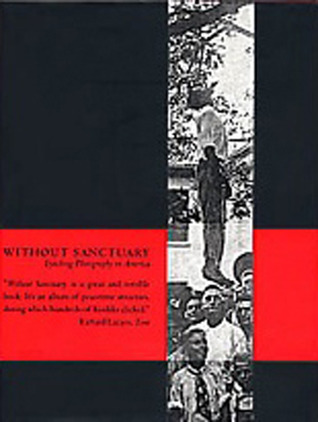
The Tuskegee Institute records the lynching of 3,436 blacks between 1882 and 1950. This is probably a small percentage of these murders, which were seldom reported, and led to the creation of the NAACP in 1909, an organization dedicated to passing federal anti-lynching laws. Through all this terror and carnage someone -- many times a professional photographer -- carried a camera and took pictures of the events. These lynching photographs were often made into postcards and sold as souvenirs to the crowds in attendance. These images are some of photography's most brutal, surviving to this day so that we may now look back on the terrorism unleashed on America's African-American community and perhaps know our history and ourselves better. The almost one hundred images reproduced here are a testament to the camera's ability to make us remember what we often choose to forget.

A powerful and impassioned historical account of the largest successful revolt by enslaved people in the Haitian Revolution of 1791–1803“One of the seminal texts about the history of slavery and abolition.... Provocative and empowering.” — The New York Times Book ReviewThe Black Jacobins, by Trinidadian historian C. L. R. James, was the first major analysis of the uprising that began in the wake of the storming of the Bastille in France and became the model for liberation movements from Africa to Cuba. It is the story of the French colony of San Domingo, a place where the brutality of plantation owners toward enslaved people was horrifyingly severe.And it is the story of a charismatic and barely literate enslaved person named Toussaint L’Ouverture, who successfully led the Black people of San Domingo against successive invasions by overwhelming French, Spanish, and English forces—and in the process helped form the first independent post-colonial nation in the Caribbean.With a new introduction (2023) by Professor David Scott.

"First published in 1963, James Baldwin's The fire next time stabbed at the heart of America's so-called "Negro problem." As remarkable for its masterful prose as it is for its frank and personal account of the black experience in the United States, it is considered one of the most passionate and influential explorations of 1960s race relations, weaving thematic threads of love, faith, and family into a candid assault on the hypocrisy of the "land of the free." Now, James Baldwin's rich, raw, and ever relevant prose is reprinted in a letterpress edition with more than 100 photographs from Steve Schapiro, who traveled the American South with Baldwin for Life magazine. The encounter thrust Schapiro into the thick of the movement, allowing for vital, often iconic, images both of civil rights leaders--including Dr. Martin Luther King Jr., Rosa Parks, Fred Shuttlesworth, and Jerome Smith--and such landmark events as the March on Washington and the Selma March. Rounding out the edition are Schapiro's stories from the field, a new introduction by civil rights legend and U.S. Congressman John Lewis, captions by Marcia Davis of The Washington post, and an essay by Gloria Baldwin Karefa-Smart, who was with her brother James in Sierra Leone when he started to work on the story. The result is a remarkable visual and textual record of one of the most important and enduring struggles of the American experience"--Publisher's WWW site

From Pulitzer Prize-winning author Taylor Branch, the second part of his epic trilogy on the American Civil Rights Movement.In the second volume of his three-part history, a monumental trilogy that began with Parting the Waters, winner of the Pulitzer Prize and the National Book Critics Circle Award, Taylor Branch portrays the Civil Rights Movement at its zenith, recounting the climactic struggles as they commanded the national stage.

The Bluest Eye is Toni Morrison's first novel, a book heralded for its richness of language and boldness of vision. Set in the author's girlhood hometown of Lorain, Ohio, it tells the story of black, eleven-year-old Pecola Breedlove. Pecola prays for her eyes to turn blue so that she will be as beautiful and beloved as all the blond, blue-eyed children in America. In the autumn of 1941, the year the marigolds in the Breedloves' garden do not bloom. Pecola's life does change—in painful, devastating ways. With its vivid evocation of the fear and loneliness at the heart of a child's yearning, and the tragedy of its fulfillment. The Bluest Eye remains one of Toni Morrison's most powerful, unforgettable novels- and a significant work of American fiction.

More than three decades after its first publication, Edward Said's groundbreaking critique of the West's historical, cultural, and political perceptions of the East has become a modern classic.In this wide-ranging, intellectually vigorous study, Said traces the origins of "orientalism" to the centuries-long period during which Europe dominated the Middle and Near East and, from its position of power, defined "the orient" simply as "other than" the occident. This entrenched view continues to dominate western ideas and, because it does not allow the East to represent itself, prevents true understanding. Essential, and still eye-opening, Orientalism remains one of the most important books written about our divided world.

Ifemelu and Obinze are young and in love when they depart military-ruled Nigeria for the West. Beautiful, self-assured Ifemelu heads for America, where despite her academic success, she is forced to grapple with what it means to be black for the first time. Quiet, thoughtful Obinze had hoped to join her, but with post-9/11 America closed to him, he instead plunges into a dangerous, undocumented life in London. Fifteen years later, they reunite in a newly democratic Nigeria, and reignite their passion—for each other and for their homeland.

A biting satire about a young man's isolated upbringing and the race trial that sends him to the Supreme Court, Paul Beatty's The Sellout showcases a comic genius at the top of his game. It challenges the sacred tenets of the United States Constitution, urban life, the civil rights movement, the father-son relationship, and the holy grail of racial equality―the black Chinese restaurant.Born in the "agrarian ghetto" of Dickens―on the southern outskirts of Los Angeles―the narrator of The Sellout resigns himself to the fate of lower-middle-class Californians: "I'd die in the same bedroom I'd grown up in, looking up at the cracks in the stucco ceiling that've been there since '68 quake." Raised by a single father, a controversial sociologist, he spent his childhood as the subject in racially charged psychological studies. He is led to believe that his father's pioneering work will result in a memoir that will solve his family's financial woes. But when his father is killed in a police shoot-out, he realizes there never was a memoir. All that's left is the bill for a drive-thru funeral.Fueled by this deceit and the general disrepair of his hometown, the narrator sets out to right another wrong: Dickens has literally been removed from the map to save California from further embarrassment. Enlisting the help of the town's most famous resident―the last surviving Little Rascal, Hominy Jenkins―he initiates the most outrageous action conceivable: reinstating slavery and segregating the local high school, which lands him in the Supreme Court.

A powerful, revealing story of hope, love, justice, and the power of reading by a man who spent thirty years on death row for a crime he didn't commit.In 1985, Anthony Ray Hinton was arrested and charged with two counts of capital murder in Alabama. Stunned, confused, and only twenty-nine years old, Hinton knew that it was a case of mistaken identity and believed that the truth would prove his innocence and ultimately set him free.But with no money and a different system of justice for a poor black man in the South, Hinton was sentenced to death by electrocution. He spent his first three years on Death Row at Holman State Prison in agonizing silence—full of despair and anger toward all those who had sent an innocent man to his death. But as Hinton realized and accepted his fate, he resolved not only to survive, but find a way to live on Death Row. For the next twenty-seven years he was a beacon—transforming not only his own spirit, but those of his fellow inmates, fifty-four of whom were executed mere feet from his cell. With the help of civil rights attorney and bestselling author of Just Mercy, Bryan Stevenson, Hinton won his release in 2015.With a foreword by Stevenson, The Sun Does Shine is an extraordinary testament to the power of hope sustained through the darkest times. Destined to be a classic memoir of wrongful imprisonment and freedom won, Hinton’s memoir tells his dramatic thirty-year journey and shows how you can take away a man’s freedom, but you can’t take away his imagination, humor, or joy.

In 2014, Shane Bauer was hired for $9 an hour to work as an entry-level prison guard at a private prison in Winnfield, Louisiana. An award-winning investigative journalist, he used his real name; In American Prison, Bauer weaves a much deeper reckoning with his experiences together with a thoroughly researched history of for-profit prisons in America from their origins in the decades before the Civil War. For, as he soon realized, we can't understand the cruelty of our current system and its place in the larger story of mass incarceration without understanding where it came from. Private prisons became entrenched in the South as part of a systemic effort to keep the African-American labor force in place in the aftermath of slavery, and the echoes of these shameful origins are with us still.

Teeming with life and crackling with energy — a love song to modern Britain and black womanhoodGirl, Woman, Other follows the lives and struggles of twelve very different characters. Mostly women, black and British, they tell the stories of their families, friends and lovers, across the country and through the years.Joyfully polyphonic and vibrantly contemporary, this is a gloriously new kind of history, a novel of our times: celebratory, ever-dynamic and utterly irresistible.

NAMED ONE OF THE “100 NOTABLE BOOKS OF THE YEAR” BY THE NEW YORK TIMES BOOK REVIEW“An extraordinary book, I can’t recommend it highly enough.” –Whoopi Goldberg, The ViewBy the widely celebrated New York Times bestselling author of Last Call —the powerful, definitive, and timely account of how the rise of eugenics helped America close the immigration door to “inferiors” in the 1920s.A forgotten, dark chapter of American history with implications for the current day, The Guarded Gate tells the story of the scientists who argued that certain nationalities were inherently inferior, providing the intellectual justification for the harshest immigration law in American history. Brandished by the upper class Bostonians and New Yorkers—many of them progressives—who led the anti-immigration movement, the eugenic arguments helped keep hundreds of thousands of Jews, Italians, and other unwanted groups out of the US for more than 40 years.Over five years in the writing, The Guarded Gate tells the complete story from its beginning in 1895, when Henry Cabot Lodge and other Boston Brahmins launched their anti-immigrant campaign. In 1921, Vice President Calvin Coolidge declared that “biological laws” had proven the inferiority of southern and eastern Europeans; the restrictive law was enacted three years later. In his characteristic style, both lively and authoritative, Okrent brings to life the rich cast of characters from this time, including Lodge’s closest friend, Theodore Roosevelt; Charles Darwin’s first cousin, Francis Galton, the idiosyncratic polymath who gave life to eugenics; the fabulously wealthy and profoundly bigoted Madison Grant, founder of the Bronx Zoo, and his best friend, H. Fairfield Osborn, director of the American Museum of Natural History; Margaret Sanger, who saw eugenics as a sensible adjunct to her birth control campaign; and Maxwell Perkins, the celebrated editor of Hemingway and Fitzgerald. A work of history relevant for today, The Guarded Gate is an important, insightful tale that painstakingly connects the American eugenicists to the rise of Nazism, and shows how their beliefs found fertile soil in the minds of citizens and leaders both here and abroad.

In this part-manifesto, part-memoir, the revolutionary editor who infused social consciousness into the pages of Teen Vogue explores what it means to come into your own—on your own terms Throughout her life, Elaine Welteroth has climbed the ranks of media and fashion, shattering ceilings along the way. In this riveting and timely memoir, the groundbreaking journalist unpacks lessons on race, identity, and success through her own journey, from navigating her way as the unstoppable child of an unlikely interracial marriage in small-town California to finding herself on the frontlines of a modern movement for the next generation of change makers. Welteroth moves beyond the headlines and highlight reels to share the profound lessons and struggles of being a barrier-breaker across so many intersections. As a young boss and often the only Black woman in the room, she’s had enough of the world telling her—and all women—they’re not enough. As she learns to rely on herself by looking both inward and upward, we’re ultimately reminded that we’re more than enough.

Douglas Murray examines the twenty-first century's most divisive issues: sexuality, gender, technology and race. He reveals the astonishing new culture wars playing out in our workplaces, universities, schools and homes in the names of social justice, identity politics and intersectionality.We are living through a postmodern era in which the grand narratives of religion and political ideology have collapsed. In their place have emerged a crusading desire to right perceived wrongs and a weaponization of identity, both accelerated by the new forms of social and news media. Narrow sets of interests now dominate the agenda as society becomes more and more tribal--and, as Murray shows, the casualties are mounting.

The moving true story of a group of young men growing up on Chicago's West side who form the first all-black high school rowing team in the nation, and in doing so not only transform a sport, but their lives. Growing up on Chicago’s Westside in the 90’s, Arshay Cooper knows the harder side of life. The street corners are full of gangs, the hallways of his apartment complex are haunted by junkies he calls “zombies” with strung out arms, clutching at him as he passes by. His mother is a recovering addict, and his three siblings all sleep in a one room apartment, a small infantry against the war zone on the street below.Arshay keeps to himself, preferring to write poetry about the girl he has a crush on, and spends his school days in the home-ec kitchen dreaming of becoming a chef. And then one day as he’s walking out of school he notices a boats in the school lunchroom, and a poster that reads “Join the Crew Team”.Having no idea what the sport of crew is, Arshay decides to take a chance. This decision to join is one that will forever change his life, and those of his fellow teammates. As Arshay and his teammates begin to come together to learn how to row--many never having been in water before--the sport takes them from the mean streets of Chicago, to the hallowed halls of the Ivy League. But Arshay and his teammates face adversity at every turn, from racism, gang violence, and a sport that has never seen anyone like them before.A Most Beautiful Thing is the inspiring true story about the most unlikely band of brothers that form a family, and forever change a sport and their lives for the better.

Alternate cover edition of ISBN 9780593085684A novel about the forbidden union between two enslaved young men on a Deep South plantation, the refuge they find in each other, and a betrayal that threatens their existence.Isaiah was Samuel’s and Samuel was Isaiah’s. That was the way it was since the beginning, and the way it was to be until the end. In the barn they tended to the animals, but also to each other, transforming the hollowed-out shed into a place of human refuge, a source of intimacy and hope in a world ruled by vicious masters. But when an older man—a fellow slave—seeks to gain favor by preaching the master’s gospel on the plantation, the enslaved begin to turn on their own. Isaiah and Samuel’s love, which was once so simple, is seen as sinful and a clear danger to the plantation’s harmony.With a lyricism reminiscent of Toni Morrison, Robert Jones, Jr. fiercely summons the voices of slaver and the enslaved alike to tell the story of these two men; from Amos the preacher to the calculating slave-master himself to the long line of women that surround them, women who have carried the soul of the plantation on their shoulders. As tensions build and the weight of centuries—of ancestors and future generations to come—culminate in a climactic reckoning, The Prophets masterfully reveals the pain and suffering of inheritance, but is also shot through with hope, beauty, and truth, portraying the enormous, heroic power of love.

In this essay collection, many of which have previously appeared in journals, West, the director of Afro-American studies at Princeton & author of several books, addresses a number of issues of concern to black Americans: the LA riots after the Rodney King verdict; Malcolm X; Clarence Thomas & Anita Hill; & black street life. These topics are all timely yet timeless in that they represent the continuing struggle to include African Americans in mainstream American political, economic & social life without destroying their unique culture. The essays have the feel of a fine sermon, with thought-provoking ideas & new ways of looking at the same old problems. They can be quickly read yet take a long time to digest because of West's unique slant on life. Already well known in scholarly circles, he's increasingly becoming more visible to the general public. This book should make his essays more accessible to a greater number of people.--Library JournalPrefaceIntroduction: Race mattersNihilism in Black America The pitfalls of racial reasoningThe crisis of Black leadership Demystifying the new Black conservatismBeyond affirmative action: equality and identityOn Black-Jewish relations Black sexuality: the taboo subjectMalcolm X and Black rage Epilogue to the Vintage edition

James Baldwin was a uniquely prophetic voice in American letters. His brilliant and provocative essays made him the literary voice of the Civil Rights Era, and they continue to speak with powerful urgency to us today, whether in the swirling debate over the Black Lives Matter movement or in the words of Raoul Peck’s documentary “I Am Not Your Negro.” Edited by Nobel laureate Toni Morrison, the Library of America’s Collected Essays is the most comprehensive gathering of Baldwin’s nonfiction ever published.With burning passion and jabbing, epigrammatic wit, Baldwin fearlessly articulated issues of race and democracy and American identity in such famous essays as “The Harlem Ghetto,” “Everybody’s Protest Novel,” “Many Thousands Gone,” and “Stranger in the Village.”Here are the complete texts of his early landmark collections, Notes of a Native Son (1955) and Nobody Knows My Name (1961), which established him as an essential intellectual voice of his time, fusing in unique fashion the personal, the literary, and the political. “One writes,” he stated, “out of one thing only—one’s own experience. Everything depends on how relentlessly one forces from this experience the last drop, sweet or bitter, it can possibly give.” With singular eloquence and unblinking sharpness of observation he lived up to his credo: “I want to be an honest man and a good writer.”The classic The Fire Next Time (1963), perhaps the most influential of his writings, is his most penetrating analysis of America’s racial divide and an impassioned call to “end the racial nightmare…and change the history of the world.” The later volumes No Name in the Street (1972) and The Devil Finds Work (1976) chart his continuing response to the social and political turbulence of his era and include his remarkable works of film criticism. A further 36 essays—nine of them previously uncollected—include some of Baldwin’s earliest published writings, as well as revealing later insights into the language of Shakespeare, the poetry of Langston Hughes, and the music of Earl Hines.

In his major bestseller, Race Matters, philosopher Cornel West burst onto the national scene with his searing analysis of the scars of racism in American democracy. In Democracy Matters, West returns to the analysis of the arrested development of democracy, both in America and in the crisis-ridden Middle East.In a strikingly original diagnosis, he argues that if America is to become a better steward of democratization around the world, we must first wake up to the long history of imperialist corruption that has plagued our own democracy. Both our failure to foster peace in the Israeli-Palestinian conflict and the crisis of Islamist anti-Americanism stem largely from hypocrisies in our dealings with the world.Racism and imperial expansionism have gone hand in hand in our country's inexorable drive toward hegemony, and our current militarism is only the latest expression of that drive. Even as we are shocked by Islamic fundamentalism, our own brand of fundamentalism, which West dubs Constantinian Christianity, has joined forces with imperialist corporate and political elites in an unholy alliance, and four decades after the murder of Dr. Martin Luther King, Jr., insidious racism still inflicts debilitating psychic pain on so many of our citizens.But there is a deep democratic tradition in America of impassioned commitment to the fight against imperialist corruptions---the last great expression of which was the civil rights movement led by Dr. King---and West brings forth the powerful voices of that great democratizing tradition in a brilliant and deeply moving call for the revival of our better democratic nature. His impassioned and provocative argument for the revitalization of America's democracy will reshape the terms of the raging national debate about America's role in today's troubled world.

The crime-infested intersection of West Fayette and Monroe Streets is well-known--and cautiously avoided--by most of Baltimore. But this notorious corner's 24-hour open-air drug market provides the economic fuel for a dying neighborhood. David Simon, an award-winning author and crime reporter, and Edward Burns, a 20-year veteran of the urban drug war, tell the chilling story of this desolate crossroad.Through the eyes of one broken family--two drug-addicted adults and their smart, vulnerable 15-year-old son, DeAndre McCollough, Simon and Burns examine the sinister realities of inner cities across the country and unflinchingly assess why law enforcement policies, moral crusades, and the welfare system have accomplished so little. This extraordinary book is a crucial look at the price of the drug culture and the poignant scenes of hope, caring, and love that astonishingly rise in the midst of a place America has abandoned.

In Teaching to Transgress, bell hooks—writer, teacher, and insurgent black intellectual—writes about a new kind of education, educations as the practice of freedom. Teaching students to "transgress" against racial, sexual, and class boundaries in order to achieve the gift of freedom is, for hooks, the teacher's most important goal.Bell hooks speaks to the heart of education today: how can we rethink teaching practices in the age of multiculturalism? What do we do about teachers who do not want to teach, and students who do not want to learn? How should we deal with racism and sexism in the classroom?Full of passion and politics, Teaching to Transgress combines practical knowledge of the classroom with a deeply felt connection to the world of emotions and feelings. This is the rare book about teachers and students that dares to raise critical questions about eros and rage, grief and reconciliation, and the future of teaching itself."To educate as the practice of freedom," writes bell hooks, "is a way of teaching that any one can learn." Teaching to Transgress is the record of one gifted teacher's struggle to make classrooms work.–from the back of the book

This definitive box set includes all the landmark speeches of the great orator and American leader Martin Luther King, Jr., from his inspirational "I Have a Dream" to his firey "Give Us the Ballot." Comprised of recordings previously included in A Call to Conscience and A Knock at Midnight, THE ESSENTIAL BOX SET is a must-have for any home, library, or school collection.

"These are poems which blaze and pulse on the page."—Adrienne Rich "The first declaration of a black, lesbian feminist identity took place in these poems, and set the terms—beautifully, forcefully—for contemporary multicultural and pluralist debate."—Publishers Weekly "This is an amazing collection of poetry by . . . one of our best contemporary poets. . . . Her poems are powerful, often political, always lyrical and profoundly moving."—Chuckanut Reader Magazine "What a deep pleasure to encounter Audre Lorde's most potent genius . . . you will welcome the sheer accessibility and the force and beauty of this volume."—Out Magazine

"The rich, complex story White tells . . . is never less than fascinating." ― New York Times Book Review Alice Walker's life is remarkable not only because she was the first black woman to win the Pulitzer Prize in fiction (the book that won her that award, The Color Purple , has been translated into nearly thirty languages and made into an Academy Award–nominated film), but also because these accomplishments are merely highlights of a luminous and varied career made from inauspicious beginnings in rural Georgia. Drawing on extensive interviews and exhaustive research, Evelyn C. White brings this life to light. 16 pages of illustrations

Joyce Gladwell grew up in Jamaica, a 'brown face' in a country where black and white were often at opposite ends of the social scale. 'Big Master' (in the country dialect she used as a child) is God.First published in 1969, the second edition of this open, forthright story of her life reveals a deep awareness of some of the major social issues and personal problems of our time - race, colour, human relationships, mixed marriage, the search for God. With vivid descriptions of people and her surroundings, she tells of her Jamaican school-days and the attitudes and prejudices which influenced her; of her life as a psychology student at London University; of the discrimination against her which came to a head when her proposed marriage to an Englishman was opposed by his family; and of her early problems of adjustment in marriage.

At Canaan's Edge concludes America in the King Years, a three-volume history that will endure as a masterpiece of storytelling on American race, violence, and democracy. Pulitzer Prize-winner and bestselling author Taylor Branch makes clear in this magisterial account of the civil rights movement that Martin Luther King, Jr., earned a place next to James Madison and Abraham Lincoln in the pantheon of American history.

"Good evening, ladies and gentlemen. I understand there are a good many Southerners in the room tonight. I know the South very well. I spent twenty years there one night..."

Yurugu removes the mask from the European facade and reveals the inner workings of global white supremacy, a system that functions to guarantee the control of Europe and her descendants over the majority of the world's peoples. Examines the influence of European culture on the formation of modern institutional frameworks, through colonialism and imperialism, from an African perspective.

Booker T. Washington, the most recognized national leader, orator and educator, emerged from slavery in the deep south, to work for the betterment of African Americans in the post Reconstruction period. "Up From Slavery" is an autobiography of Booker T. Washington's life and work, which has been the source of inspiration for all Americans. Washington reveals his inner most thoughts as he transitions from ex-slave to teacher and founder of one of the most important schools for African Americans in the south, The Tuskegee Industrial Institute.

PowerNomics: The National Plan to Empower Black America is a five-year plan to make Black America a prosperous and empowered race that is self-sufficient and competitive as a group by the year 2005. In this book, Dr. Anderson obliterates the myths and illusions of black progress and brings together data and information from many different sources to construct a framework for solutions to the dilemma of Black America. In PowerNomics: The National Plan, Dr. Anderson proposes new principles, strategies and concepts that show blacks a new way to see, think, and behave in race matters. The new mind set prepares blacks to take strategic steps to create a new reality for their race. It offers guidance to others who support blacks self-sufficiency. In this book, Dr. Anderson offers insightful analysis and action steps blacks can take to redesign core areas of life - Education, Economics, Politics and Religion - to better benefit their race. The action steps in each area require new empowerment tools that Dr. Anderson presents - a new group vision and a new culture of empowerment - tools designed to counter, if not break many of the racial monopolies in society. Vertical integration and Industrializing black communities are other major concepts and strategies that he presents in the book. He places a great deal of importance on building industries in black communities that are constructed upon group competitive advantages. A the same time he announced the release of PowerNomics: The National Plan, he also announced that he has established several models of the strategies he proposes in the book. PowerNomics: The Plan, is infused with Dr. Anderson's trademark creative thinking and answers questions such as: - Why are blacks the only group that equates success with working in a White corporation, government or the entertainment industry? - How did power and wealth - businesses, resources, privileges, income and control of all levels of government get so disproportionately distributed into the hands of White society?

Drawing on his tours in South Africa as a correspondent for the "New York Times," the author details the absurdities, rationalizations, inequities, and cruelties of apartheid, showing what it means to suffer and survive under the restrictions of racial separation

Uncovering the secrets behind the 1968 My Lai massacre in Vietnam, this is “a brutal, cautionary tale that serves as a painful reminder of the worst that can happen in war.”—Chicago Tribune.

In 1970 James Baldwin & Margaret Mead met for an extraordinary seven-&-a-half-hour discussion about race & society. Mead brought her knowledge of racism as practiced in remote societies around the world. Baldwin brought his personal experience with the legacy of black American history. They talked with candor, passion, rage & brilliance, & their discussion became this unique volume. Here is Baldwin's creativity & fire. Here is Mead's scholarship & reason. Here, for all to see, are their prejudices, their pain, & finally, their shared desire to find the thread that binds us all. "This book...traces a curve beginning in formal statements, moving thru wary affection & intellectual intimacy, ending with a raw confrontation."--�Newsweek. "Margaret Mead and James Baldwin are no ordinary people...their conversation...takes us along to places to which we could not otherwise go."--�Times Literary Supplement (London)

There were mythic sports figures before him--Jack Johnson, Babe Ruth, Joe Louis, Joe DiMaggio--but when Cassius Clay burst onto the sports scene from his native Louisville in the 1950s, he broke the mold. He changed the world of sports and went on to change the world itself. As Muhammad Ali, he would become the most recognized face on the planet. Ali was a transcendent athlete and entertainer, a heavyweight Fred Astaire, a rapper before rap was born. He was a mirror of his era, a dynamic figure in the racial and cultural battles of his time. This unforgettable story of his rise and self-creation, told by a Pulitzer Prize-winning writer, places Ali in a heritage of great American originals. Cassius Clay grew up in the Jim Crow South and came of athletic age when boxers were at the mercy of the mob. From the start, Clay rebelled against everything and everyone who would keep him and his people down. He refused the old stereotypes and refused the glad hand of the mob. And, to the confusion and fury of white sportswriters, who were far more comfortable with the self-effacing Joe Louis, Clay came forward as a rebel, insistent on his political views, on his new religion, and, eventually, on a new name. His rebellion nearly cost him the chance to fight for the heavyweight championship of the world. King of the World features some of the pivotal figures of the 1960s--Malcolm X, Elijah Muhammad, John F. Kennedy--and its pivotal events: the civil rights movement, political assassinations, the war in Vietnam. Muhammad Ali is a great hero and a beloved figure in American life. King of the World takes us back to the days when his life was a series of battles, inside the ring and out. A master storyteller at the height of his powers, David Remnick has written a book worthy of America's most dynamic modern hero.

Dr. Martin Luther King’s classic exploration of the events and forces behind the Civil Rights Movement—including his Letter from Birmingham Jail, April 16, 1963.“There comes a time when the cup of endurance runs over, and men are no longer willing to be plunged into the abyss of despair.”In 1963, Birmingham, Alabama, was perhaps the most racially segregated city in the United States. The campaign launched by Dr. Martin Luther King, Jr., and the Civil Rights movement on the segregated streets of Birmingham demonstrated to the world the power of nonviolent direct action.In this remarkable book—winner of the Nobel Peace Prize—Dr. King recounts the story of Birmingham in vivid detail, tracing the history of the struggle for civil rights back to its beginnings three centuries ago and looking to the future, assessing the work to be done beyond Birmingham to bring about full equality for African Americans. Above all, Dr. King offers an eloquent and penetrating analysis of the events and pressures that propelled the Civil Rights movement from lunch counter sit-ins and prayer marches to the forefront of American consciousness.Since its publication in the 1960s, Why We Can’t Wait has become an indisputable classic. Now, more than ever, it is an enduring testament to the wise and courageous vision of Martin Luther King, Jr.Includes photographs and an afterword by Reverend Jesse L. Jackson, Sr.

Could Greek philosophy be rooted in Egyptian thought? Is it possible that the Pythagorean theory was conceived on the shores of the Nile and the Euphrates rather than in ancient Greece? Could it be that Western civilization was born on the so-called Dark Continent? For almost two centuries, Western scholars have given little credence to the possibility of such scenarios.In Black Athena, an audacious three-volume series that strikes at the heart of today's most heated culture wars, Martin Bernal challenges Eurocentric attitudes by calling into question two of the longest-established explanations for the origins of classical civilization. The Aryan Model, which is current today, claims that Greek culture arose as the result of the conquest from the north by Indo-European speakers, or "Aryans," of the native "pre-Hellenes." The Ancient Model, which was maintained in Classical Greece, held that the native population of Greece had initially been civilized by Egyptian and Phoenician colonists and that additional Near Eastern culture had been introduced to Greece by Greeks studying in Egypt and Southwest Asia. Moving beyond these prevailing models, Bernal proposes a Revised Ancient Model, which suggests that classical civilization in fact had deep roots in Afroasiatic cultures.This long-awaited third and final volume of the series is concerned with the linguistic evidence that contradicts the Aryan Model of ancient Greece. Bernal shows how nearly 40 percent of the Greek vocabulary has been plausibly derived from two Afroasiatic languages-Ancient Egyptian and West Semitic. He also reveals how these derivations are not limited to matters of trade, but extended to the sophisticated language of politics, religion, and philosophy. This evidence, according to Bernal, confirms the fact that in Greece an Indo-European people was culturally dominated by speakers of Ancient Egyptian and West Semitic.Provocative, passionate, and colossal in scope, this volume caps a thoughtful rewriting of history that has been stirring academic and political controversy since the publication of the first volume.

A groundbreaking work of feminist history and theory analyzing the complex relations between various forms of oppression. Ain't I a Woman examines the impact of sexism on black women during slavery, the historic devaluation of black womanhood, black male sexism, racism within the recent women's movement, and black women's involvement with feminism.

From our twentieth-century perspective, we tend to think of the Europe of the past as a colonizer, a series of empires that conquered lands beyond their borders and forced European cultural values on other peoples. This provocative book shows that Europe in the Middle Ages was as much a product of a process of conquest and colonization as it was later a colonizer.

On May 2, 1973, Black Panther Assata Shakur (aka JoAnne Chesimard) lay in a hospital, close to death, handcuffed to her bed, while local, state, and federal police attempted to question her about the shootout on the New Jersey Turnpike that had claimed the life of a white state trooper. Long a target of J. Edgar Hoover's campaign to defame, infiltrate, and criminalize Black nationalist organizations and their leaders, Shakur was incarcerated for four years prior to her conviction on flimsy evidence in 1977 as an accomplice to murder.This intensely personal and political autobiography belies the fearsome image of JoAnne Chesimard long projected by the media and the state. With wit and candor, Assata Shakur recounts the experiences that led her to a life of activism and portrays the strengths, weaknesses, and eventual demise of Black and White revolutionary groups at the hand of government officials. The result is a signal contribution to the literature about growing up Black in America that has already taken its place alongside The Autobiography of Malcolm X and the works of Maya Angelou.Two years after her conviction, Assata Shakur escaped from prison. She was given political asylum by Cuba, where she now resides.

Go Tell It On The Mountain, first published in 1953, is Baldwin's first major work, a semi-autobiographical novel that has established itself as an American classic. With lyrical precision, psychological directness, resonating symbolic power, and a rage that is at once unrelenting and compassionate, Baldwin chronicles a fourteen-year-old boy's discovery of the terms of his identity as the stepson of the minister of a storefront Pentecostal church in Harlem one Saturday in March of 1935. Baldwin's rendering of his protagonist's spiritual, sexual, and moral struggle of self-invention opened new possibilities in the American language and in the way Americans understand themselves.

The visionary author’s masterpiece pulls us—along with her Black female hero—through time to face the horrors of slavery and explore the impacts of racism, sexism, and white supremacy then and now.Dana, a modern Black woman, is celebrating her 26th birthday with her new husband when she is snatched abruptly from her home in California and transported to the antebellum South. Rufus, the white son of a plantation owner, is drowning, and Dana has been summoned to save him. Dana is drawn back repeatedly through time to the slave quarters, and each time the stay grows longer, more arduous, and more dangerous until it is uncertain whether or not Dana’s life will end, long before it has a chance to begin.

White Boy Shuffle is Man Booker-winner Paul Beatty’s electrifying debut novel about teenage-surf-bum Gunnar Kaufman who is forced to wise up when his mother moves from suburban Santa Monica to urban West Los Angeles. There, he begins to undergo a startling transformation from neighbourhood outcast to basketball superstar, and eventually to reluctant messiah of a ‘divided, downtrodden people’. A bombastic coming-of-age novel that has the uncanny ability to make readers want to laugh and cry at the same time,Beatty mingles horrific reality with wild fancy in this outlandish, laugh-out-loud funny and poignant vision of contemporary America.

This landmark book is a founding work in the literature of black protest. W. E. B. Du Bois (1868–1963) played a key role in developing the strategy and program that dominated early 20th-century black protest in America. In this collection of essays, first published together in 1903, he eloquently affirms that it is beneath the dignity of a human being to beg for those rights that belong inherently to all mankind. He also charges that the strategy of accommodation to white supremacy advanced by Booker T. Washington, then the most influential black leader in America, would only serve to perpetuate black oppression.Publication of The Souls of Black Folk was a dramatic event that helped to polarize black leaders into two groups: the more conservative followers of Washington and the more radical supporters of aggressive protest. Its influence cannot be overstated. It is essential reading for everyone interested in African-American history and the struggle for civil rights in America.

This acclaimed study surveys the dominant popular and scholarly images of the Israel–Palestine conflict. Finkelstein opens with a theoretical discussion of Zionism, locating it as a romantic form of nationalism that assumed the bankruptcy of liberal democracy. He goes on to look at the demographic origins of the Palestinians, with particular reference to the work of Joan Peters, and develops critiques of the influential studies of both Benny Morris and Anita Shapira. Reviewing the diplomatic history with Aban Eban‘s oeuvre as his foil, Finkelstein closes by demonstrating that the casting of Israel as the innocent victim of Arab aggression in the June 1967 and October 1973 wars is not supported by the documentary record. This new edition critically reexamines dominant popular and scholarly images in the light of the current failures of the peace process.

American expansion, says Richard Drinnon, is characterized by repression and racism. In his reinterpretation of "winning" the West, Drinnon links racism with colonialism and traces this interrelationship from the Pequot War in New England, through American expansion westward to the Pacific, and beyond to the Phillippines and Vietnam. He cites parrallels between the slaughter of bison on the Great Plains and the defoliation of Vietnam and notes similarities in the language of aggression used in the American West, the Philippines, and Southeast Asia.

Born into slavery in 1818, Frederick Douglass escaped to freedom and became a passionate advocate for abolition and social change and the foremost spokesperson for the nation’s enslaved African American population in the years preceding the Civil War. My Bondage and My Freedom is Douglass’s masterful recounting of his remarkable life and a fiery condemnation of a political and social system that would reduce people to property and keep an entire race in chains.This classic is revisited with a new introduction and annotations by celebrated Douglass scholar David W. Blight. Blight situates the book within the politics of the 1850s and illuminates how My Bondage represents Douglass as a mature, confident, powerful writer who crafted some of the most unforgettable metaphors of slavery and freedom—indeed of basic human universal aspirations for freedom—anywhere in the English language.

NATIONAL BESTSELLER • One of our most visceral and important memoirs on race in America, this is the story of Nathan McCall, who began life as a smart kid in a close, protective family in a black working-class neighborhood.Yet by the age of fifteen, McCall was packing a gun and embarking on a criminal career that five years later would land him in prison for armed robbery. In these pages, McCall chronicles his passage from the street to the prison yard—and, later, to the newsrooms of The Washington Post and ultimately to the faculty of Emory University. His story is at once devastating and inspiring, at once an indictment and an elegy. Makes Me Wanna Holler became an instant classic when it was first published in 1994 and it continues to bear witness to the great troubles—and the great hopes—of our nation. With a new afterword by the author

James Baldwin used to tell Nina Simone, “This is the world you have made for yourself, now you have to live in it.” Simone has created for herself a world of magnificent peaks. Often compared to Billie Holiday and Edith Piaf, Simone is known as one of the greatest singers of her generation. She has recorded forty-three albums, ranging from blues to jazz to folk, and her hits like “I Loves You, Porgy,” “My Baby Just Cares for Me,” “I Put a Spell on You,” and “Mississippi Goddam” have confirmed her as an enduring force in popular music. Her song “Young, Gifted, and Black” became the anthem for the Civil Rights Movement and thrust her beyond international stardom into the center of activism. But such worlds as Simone’s are not without their grim valleys: disastrous marriages, arrest and the threat of imprisonment, mental breakdown, poverty, and attempted suicide. She has survived these trials and continues to perform throughout Europe and the United States. With undiminished passion and in her unconquerable voice, this is Nina Simone’s powerful memoir of her tempestuous life.

Capturing all the rueful irony and racial ambivalence of small-town Mississippi in the late 1950s, Melinda Haynes' celebrated novel is a wholly unforgettable exploration of family, identity, and redemption. Mother of Pearl revolves around twenty-eight-year-old Even Grade, a black man who grew up an orphan, and Valuable Korner, the fifteen-year-old white daughter of the town whore and an unknown father. Both are passionately determined to discover the precious things neither experienced as children: human connection, enduring commitment, and, above all, unconditional love. A startlingly accomplished mixture of beauty, mystery, and tragedy, Mother of Pearl marks the debut of an extraordinary literary talent. (Oprah's Book Club)

The works of James Baldwin constitute one of the major contributions to American literature in the twentieth century, and nowhere is this more evident than in The Price of the Ticket, a compendium of nearly fifty years of Baldwin's powerful nonfiction writing. With truth and insight, these personal, prophetic works speak to the heart of the experience of race and identity in the United States. Here are the full texts of Notes of a Native Son, Nobody Knows My Name, The Fire Next Time, No Name in the Street and The Devil Finds Work, along with dozens of other pieces, ranging from a 1948 review of Raintree Country to a magnificent introduction to this book that, as so many of Mr. Baldwin's works do, combines his intensely private experience with the deepest examination of social interaction between the races. In a way, The Price of the Ticket is an intellectual history of the twentieth-century American experience; in another, it is autobiography of the highest order.

"They shoot the white girl first. With the rest they can take their time." So begins this visionary work from a storyteller. Toni Morrison's first novel since she was awarded the Nobel Prize for Literature, Paradise opens with a horrifying scene of mass violence and chronicles its genesis in an all-black small town in rural Oklahoma. Founded by the descendants of freed slaves and survivors in exodus from a hostile world, the patriarchal community of Ruby is built on righteousness, rigidly enforced moral law, and fear. But seventeen miles away, another group of exiles has gathered in a promised land of their own. And it is upon these women in flight from death and despair that nine male citizens of Ruby will lay their pain, their terror, and their murderous rage.In prose that soars with the rhythms, grandeur, and tragic arc of an epic poem, Toni Morrison challenges our most fiercely held beliefs as she weaves folklore and history, memory and myth into an unforgettable meditation of race, religion, gender, and a far-off past that is ever present.

When he was a boy in Henning, Tennessee, Alex Haley's grandmother used to tell him stories about their family—stories that went back to her grandparents, and their grandparents, down through the generations all the way to a man she called "the African." She said he had lived across the ocean near what he called the "Kamby Bolongo" and had been out in the forest one day chopping wood to make a drum when he was set upon by four men, beaten, chained and dragged aboard a slave ship bound for Colonial America.Still vividly remembering the stories after he grew up and became a writer, Haley began to search for documentation that might authenticate the narrative. It took ten years and a half a million miles of travel across three continents to find it, but finally, in an astonishing feat of genealogical detective work, he discovered not only the name of "the African"—Kunta Kinte—but the precise location of Juffure, the very village in The Gambia, West Africa, from which he was abducted in 1767 at the age of sixteen and taken on the Lord Ligonier to Maryland and sold to a Virginia planter.Haley has talked in Juffure with his own African sixth cousins. On September 29, 1967, he stood on the dock in Annapolis where his great-great-great-great-grandfather was taken ashore on September 29, 1767. Now he has written the monumental two-century drama of Kunta Kinte and the six generations who came after him—slaves and freedmen, farmers and blacksmiths, lumber mill workers and Pullman porters, lawyers and architects—and one author.But Haley has done more than recapture the history of his own family. As the first black American writer to trace his origins back to their roots, he has told the story of 25,000,000 Americans of African descent. He has rediscovered for an entire people a rich cultural heritage that slavery took away from them, along with their names and their identities. But Roots speaks, finally, not just to blacks, or to whites, but to all people and all races everywhere, for the story it tells is one of the most eloquent testimonials ever written to the indomitability of the human spirit.

A sweeping examination of the core issues of sexual politics, bell hooks' new book Feminist Theory: from margin to center argues that the contemporary feminist movement must establish a new direction for the 1980s. Continuing the debates surrounding her controversial first book, Ain't I A Woman, bell hooks suggests that feminists have not succeeded in creating a mass movement against sexist oppression because the very foundation of women's liberation has, until now, not accounted for the complexity and diversity of female experience. In order to fulfill its revolutionary potential, feminist theory must begin by consciously transforming its own definition to encompass the lives and ideas of women on the margin. Hooks' work is a challenge to the women's movement and will have profound impact on all whose lives have been touched by feminism and its insights.

C L R James, one of the foremost thinkers of the twentieth century, was devoted to the game of cricket. In this classic summation of half a lifetime spent playing, watching and writing about the sport, he recounts the story of his overriding passion and tells us of the players whom he knew and loved, exploring the game's psychology and aesthetics, and the issues of class, race and politics that surround it.Part memoir of a West Indian boyhood, part passionate celebration and defence of cricket as an art form, part indictment of colonialism, Beyond a Boundary addresses not just a sport but a whole culture and asks the question, 'What do they know of cricket who only cricket know?

First published in London in 1939, Minty Alley is now available to American readers. In the pages of this work, C. L. R. James is both an imaginative political theorist and a sensitive commentator on the West Indian social and cultural scene.James's novel has been acclaimed as "a groundbreaking example of regional social realism" and as "a major forerunner of the Caribbean literary movements in English." Many of James's readers believe that it is not possible fully to comprehend Caribbean literary art in English without first reading Minty Alley . In the interactions of the characters of Maisie, Haynes, Mrs. Rouse, and Benoit, James discerns new forms of society rooted in the oldest of desires and aspirations. In the everyday language of the unforgettable dialogues in the novel James reveals new modes of human relationships.Haynes, a young middle-class lodger at No. 2 Minty Alley, becomes both confidant and judge as he examines the other inhabitants at this address. From his experiences, he realizes the mutually impoverishing alienation of the educated West Indian from the mainstream. Through Haynes's vivid narration, James presents the rich cultural life on Minty Alley. Haynes, an outsider among people of lower class, knows his fellow lodgers only as they have revealed themselves to him through their speech and actions, yet each has a mysterious inner life.Frequently reprinted in the United Kingdom, Minty Alley at last reaches the United States so that American readers can learn what much of the rest of the English-speaking world has long known, that before such masterworks as The Black Jacobins , World Revolution , and Beyond a Boundary , C. L. R. James had already made his mark as one of the foremost of West Indian novelists.

The missing link in the chain of American slavery For three centuries slave ships carted millions of people from the coasts of Africa across the Atlantic to the Americas. Much is known of the slave trade and the American plantation system, but little of the ships that made it all possible.In The Slave Ship, award-winning historian Marcus Rediker draws on thirty years of research in maritime archives to create an unprecedented history of these vessels and the human drama acted out on their rolling decks. He reconstructs in chilling detail the lives, deaths, and terrors of captains, sailors, and the enslaved aboard a “floating dungeon” trailed by sharks.From the young African kidnapped from his village and sold into slavery by a neighboring tribe to the would-be priest who takes a job as a sailor on a slave ship only to be horrified at the evil he sees to the captain who relishes having “a hell of my own,” Rediker illuminates the lives of people who were thought to have left no trace.This is a tale of tragedy and terror, but also an epic of resilience, survival, and the creation of something entirely new. Marcus Rediker restores the slave ship to its rightful place alongside the plantation as a formative institution of slavery, a place where a profound and still haunting history of race, class, and modern economy was made.

The Book of Night Women is a sweeping, startling novel, a true tour de force of both voice and storytelling. It is the story of Lilith, born into slavery on a Jamaican sugar plantation at the end of the eighteenth century. Even at her birth, the slave women around her recognize a dark power that they and she will come to both revere and fear. The Night Women, as they call themselves, have long been plotting a slave revolt, and as Lilith comes of age and reveals the extent of her power, they see her as the key to their plans. But when she begins to understand her own feelings and desires and identity, Lilith starts to push at the edges of what is imaginable for the life of a slave woman in Jamaica, and risks becoming the conspiracy's weak link. Lilith's story overflows with high drama and heartbreak, and life on the plantation is rife with dangerous secrets, unspoken jealousies, inhuman violence, and very human emotion between slave and master, between slave and overseer, and among the slaves themselves. Lilith finds herself at the heart of it all. And all of it told in one of the boldest literary voices to grace the page recently--and the secret of that voice is one of the book's most intriguing mysteries.

In The Breakthrough, veteran journalist Gwen Ifill surveys the American political landscape, shedding new light on the impact of Barack Obama’s stunning presidential victory and introducing the emerging young African American politicians forging a bold new path to political power. Ifill argues that the Black political structure formed during the Civil Rights movement is giving way to a generation of men and women who are the direct beneficiaries of the struggles of the 1960s. She offers incisive, detailed profiles of such prominent leaders as Newark Mayor Cory Booker, Massachusetts Governor Deval Patrick, and U.S. Congressman Artur Davis of Alabama (all interviewed for this book), and also covers numerous up-and-coming figures from across the nation. Drawing on exclusive interviews with power brokers such as President Obama, former Secretary of State Colin Powell, Vernon Jordan, the Reverend Jesse Jackson, his son Congressman Jesse Jackson Jr., and many others, as well as her own razor-sharp observations and analysis of such issues as generational conflict, the race/ gender clash, and the "black enough" conundrum, Ifill shows why this is a pivotal moment in American history. The Breakthrough is a remarkable look at contemporary politics and an essential foundation for understanding the future of American democracy in the age of Obama.

OTHER COMEDIANS TELL JOKES. PAUL MOONEY TELLS THE TRUTH. For more than forty years, whether writing for Richard Pryor and Saturday Night Live or performing stand-up to sold-out crowds around the country, Paul Mooney has been provocative, incisive... and absolutely hilarious. His comedy has always been indisputably real and raw, reflecting race issues in America, and this fascinating, fearless new memoir continues that unapologetically candid tradition. While other stars soared only to crash and burn, Paul Mooney has stayed chiefly behind the scenes, and he's got a lifetime of stories to show for it. As head writer for The Richard Pryor Show, he helped tear down racial barriers and change the course of comedy. He helped Robin Williams and Sarah Bernhard break into show business. He paved the way for superstars like Eddie Murphy. Few have witnessed as much comedy history as Mooney; even fewer could recount it with such riotous honesty and depth of insight. He reveals the truth about his celebrated partnership with the brilliant, self-destructive Richard Pryor, from their first meeting to the very last joke, and reflects on some of his most notorious moments. Decades ago, Paul Mooney set out not just make audiences laugh but to make them think. Black Is the New White is his blisteringly funny, no-holds-barred memoir of how he continues to succeed wildly at both.

In this beautifully written masterwork, Pulitzer Prize–winning author Isabel Wilkerson presents a definitive and dramatic account of one of the great untold stories of American history: the Great Migration of six million Black citizens who fled the South for the North and West in search of a better life, from World War I to 1970. Wilkerson tells this interwoven story through the lives of three unforgettable protagonists: Ida Mae Gladney, a sharecropper’s wife, who in 1937 fled Mississippi for Chicago; sharp and quick-tempered George Starling, who in 1945 fled Florida for Harlem, and Robert Foster, a surgeon who left Louisiana in 1953 in hopes of making it in California. Wilkerson brilliantly captures their first treacherous cross-country journeys by car and train and their new lives in colonies in the New World. The Warmth of Other Suns is a bold, remarkable, and riveting work, a superb account of an “unrecognized immigration” within our own land. Through the breadth of its narrative, the beauty of the writing, the depth of its research, and the fullness of the people and lives portrayed herein, this book is a modern classic.

In the wake of talk of a “postracial” America upon Barack Obama’s ascension as president of the United States, Michele Norris, cohost of National Public Radio’s flagship program All Things Considered, set out to write, through original reporting, a book about “the hidden conversation” on race that is unfolding nationwide. She would, she thought, base her book on the frank disclosures of others on the subject, but she was soon disabused of her presumption when forced to confront the fact that “the conversation” in her own family had not been forthright. Norris unearthed painful family secrets that compelled her to question her own from her father’s shooting by a Birmingham police officer weeks after his discharge from the navy at the conclusion of World War II to her maternal grandmother’s peddling pancake mix as an itinerant Aunt Jemima to white farm women in the Midwest. In what became a profoundly personal and bracing journey into her family’s past, Norris traveled from her childhood home in Minneapolis to her ancestral roots in the Deep South to explore the reasons for the “things left unsaid” by her father and mother when she was growing up, the better to come to terms with her own identity. Along the way she discovered how her character was forged by both revelation and silence. Extraordinary for Norris’s candor in examining her own racial legacy and what it means to be an American, The Grace of Silence is also informed by rigorous research in its evocation of time and place, scores of interviews with ordinary folk, and wise observations about evolving attitudes, at once encouraging and disturbing, toward race in America today. For its particularity and universality, it is powerfully moving, a tour de force.

White Girls, Hilton Als’s first book since The Women fourteen years ago, finds one of The New Yorker's boldest cultural critics deftly weaving together his brilliant analyses of literature, art, and music with fearless insights on race, gender, and history. The result is an extraordinary, complex portrait of "white girls," as Als dubs them—an expansive but precise category that encompasses figures as diverse as Truman Capote and Louise Brooks, Malcolm X and Flannery O’Connor. In pieces that hairpin between critique and meditation, fiction and nonfiction, high culture and low, the theoretical and the deeply personal, Als presents a stunning portrait of a writer by way of his subjects, and an invaluable guide to the culture of our time.

March is a vivid first-hand account of John Lewis' lifelong struggle for civil and human rights, meditating in the modern age on the distance traveled since the days of Jim Crow and segregation. Rooted in Lewis' personal story, it also reflects on the highs and lows of the broader civil rights movement.Book One spans John Lewis' youth in rural Alabama, his life-changing meeting with Martin Luther King, Jr., the birth of the Nashville Student Movement, and their battle to tear down segregation through nonviolent lunch counter sit-ins, building to a stunning climax on the steps of City Hall.Many years ago, John Lewis and other student activists drew inspiration from the 1950s comic book Martin Luther King and the Montgomery Story. Now, his own comics bring those days to life for a new audience, testifying to a movement whose echoes will be heard for generations.(Back flap)

In 1991, at the age of nineteen, Shaka Senghor shot and killed a man. He was a young drug dealer with a quick temper who had been hardened by what he experienced selling drugs on the unforgiving streets of Detroit. For years, as he served out his sentence for second degree murder, he blamed everybody else but himself for the decision he made to shoot on that fateful night. It wasn't until Shaka started writing about the pain from his childhood and his life on the streets that he was able to get at the root of the anger that led him to prison. Through the power of journaling, he accepted responsibility for his violent behavior and now uses his experience to help others avoid the same path.

Forty years in, the tough on crime turn in American politics has spurred a prison boom of historic proportions that disproportionately affects Black communities. It has also torn at the lives of those on the outside. As arrest quotas and high tech surveillance criminalize entire blocks, a climate of fear and suspicion pervades daily life, not only for young men entangled in the legal system, but for their family members and working neighbors. Alice Goffman spent six years in one Philadelphia neighborhood, documenting the routine stops, searches, raids, and beatings that young men navigate as they come of age. In the course of her research, she became roommates with Mike and Chuck, two friends trying to make ends meet between low wage jobs and the drug trade. Like many in the neighborhood, Mike and Chuck were caught up in a cycle of court cases, probation sentences, and low level warrants, with no clear way out. We observe their girlfriends and mothers enduring raids and interrogations, "clean" residents struggling to go to school and work every day as the cops chase down neighbors in the streets, and others eking out a living by providing clean urine, fake documents, and off the books medical care. This fugitive world is the hidden counterpoint to mass incarceration, the grim underside of our nation's social experiment in punishing Black men and their families. While recognizing the drug trade's damage, On The Run reveals a justice system gone awry: it is an exemplary work of scholarship highlighting the failures of the War on Crime, and a compassionate chronicle of the families caught in the midst of it."A remarkable feat of reporting . . . The level of detail in this book and Goffman's ability to understand her subjects' motivations are astonishing—and riveting."— The New York Times Book Review

Pink is my favorite color. I used to say my favorite color was black to be cool, but it is pink—all shades of pink. If I have an accessory, it is probably pink. I read Vogue, and I’m not doing it ironically, though it might seem that way. I once live-tweeted the September issue.In these funny and insightful essays, Roxane Gay takes us through the journey of her evolution as a woman of color while also taking readers on a ride through culture of the last few years and commenting on the state of feminism today. The portrait that emerges is not only one of an incredibly insightful woman continually growing to understand herself and our society, but also one of our culture.Bad Feminist is a sharp, funny, and spot-on look at the ways in which the culture we consume becomes who we are, and an inspiring call-to-arms of all the ways we still need to do better.Feel me, see me, hear me, reach me --Peculiar benefits --Typical first year professor --To scratch, claw or grope clumsily or frantically --How to be friends with another woman --Girls, girls, girls --I once was Miss America --Garish, glorious spectacles --Not here to make friends --How we all lose --Reaching for catharsis : getting fat right (or wrong) and Diana Spechler's Skinny --The smooth surfaces of idyll --The careless language of sexual violence --What we hunger for --The illusion of safety/the safety of illusion --The spectacle of broken men --A tale of three coming out stories --Beyond the measure of men --Some jokes are funnier than others --Dear young ladies who love Chris Brown --So much they would let him beat them --Blurred lines, indeed --The trouble with Prince Charming, or, He who trespassed against us --The solace of preparing fried foods and other quaint remembrances from 1960s Mississippi : thoughts on The help --Surviving Django --Beyond the struggle narrative --The morality of Tyler Perry --The last day of a young black man --When less is more --The politics of respectability --When Twitter does what journalism cannot --The alienable rights of women --Holding out for a hero --A tale of two profiles --The racism we all carry --Tragedy, call, compassion, response --Bad feminist : take one --Bad feminist : take two

A gorgeous, moving memoir of how one of America's most innovative and respected journalists found his voice by coming to terms with a painful pastNew York Times columnist Charles M. Blow mines the compelling poetry of the out-of-time African-American Louisiana town where he grew up — a place where slavery's legacy felt astonishingly close, reverberating in the elders' stories and in the near-constant wash of violence.Blow's attachment to his mother — a fiercely driven woman with five sons, brass knuckles in her glove box, a job plucking poultry at a nearby factory, a soon-to-be-ex husband, and a love of newspapers and learning — cannot protect him from secret abuse at the hands of an older cousin. It's damage that triggers years of anger and searing self-questioning.Finally, Blow escapes to a nearby state university, where he joins a black fraternity after a passage of brutal hazing, and then enters a world of racial and sexual privilege that feels like everything he's ever needed and wanted, until he's called upon, himself, to become the one perpetuating the shocking abuse.A powerfully redemptive memoir that both fits the tradition of African-American storytelling from the South, and gives it an indelible new slant.

When sixteen-year-old Tariq Johnson dies from two gunshot wounds, his community is thrown into an uproar. Tariq was black. The shooter, Jack Franklin, is white.In the aftermath of Tariq's death, everyone has something to say, but no two accounts of the events line up. Day by day, new twists further obscure the truth.Tariq's friends, family, and community struggle to make sense of the tragedy, and to cope with the hole left behind when a life is cut short. In their own words, they grapple for a way to say with certainty: This is how it went down.

A provocative meditation on race, Claudia Rankine's long-awaited follow up to her groundbreaking book Don't Let Me Be Lonely: An American Lyric.Claudia Rankine's bold new book recounts mounting racial aggressions in ongoing encounters in twenty-first-century daily life and in the media. Some of these encounters are slights, seeming slips of the tongue, and some are intentional offensives in the classroom, at the supermarket, at home, on the tennis court with Serena Williams and the soccer field with Zinedine Zidane, online, on TV-everywhere, all the time. The accumulative stresses come to bear on a person's ability to speak, perform, and stay alive. Our addressability is tied to the state of our belonging, Rankine argues, as are our assumptions and expectations of citizenship. In essay, image, and poetry, Citizen is a powerful testament to the individual and collective effects of racism in our contemporary, often named "post-race" society.

From the bestselling author of Public Enemies & The Big Rich , an account of the battle between the FBI & revolutionary movements of the '70s: Weathermen, The Symbionese Liberation Army, The FALN, The Black Liberation Army. The names seem quaint now, but then bombings by domestic underground groups were daily occurrences. The FBI combated these & other groups as nodes of a single revolutionary underground dedicated to the violent overthrow of the USA. Burrough's Days of Rage recreates an atmosphere almost unbelievable decades later, conjuring a time of native-born radicals, often nice middle-class kids, smuggling bombs into skyscrapers & detonating them inside the Pentagon & the Capitol, at a Boston courthouse & a Wall Street restaurant. The FBI’s response included the formation of a secret task force, Squad 47, dedicated to hunting the groups down. But Squad 47 itself broke laws in its attempts to bring the revolutionaries to justice. Its efforts ended in fiasco. Drawing on interviews about their experiences with members of the underground & the FBI, Days of Rage is a look into the hearts & minds of homegrown terrorists & federal agents alike, weaving their stories into a secret history of the '70s.

From the author of the critically beloved Pym comes a ruthlessly comic and moving tale of a man discovering a lost daughter, confronting an elusive ghost, and stumbling onto the possibility of utopia."In the ghetto there is a mansion, and it is my father's house." Warren Duffy has returned to America for all the worst reasons: His marriage to a beautiful Welsh woman has come apart; his comics shop in Cardiff has failed; and his Irish American father has died, bequeathing to Warren his last possession, a roofless, half-renovated mansion in the heart of black Philadelphia. On his first night in his new home, Warren spies two figures outside in the grass. When he screws up the nerve to confront them, they disappear. The next day he encounters ghosts of a different kind: In the face of a teenage girl he meets at a comics convention he sees the mingled features of his white father and his black mother, both now dead. The girl, Tal, is his daughter, and she’s been raised to think she’s white. Spinning from these revelations, Warren sets off to remake his life with a reluctant daughter he’s never known, in a haunted house with a history he knows too well. In their search for a new life, he and Tal struggle with ghosts, fall in with a utopian mixed-race cult, and ignite a riot on Loving Day, the unsung holiday for interracial lovers.A frequently hilarious, surprisingly moving story about blacks and whites, fathers and daughters, the living and the dead, Loving Day celebrates the wonders of opposites bound in love.

In these newly collected essays, interviews, and speeches, world-renowned activist and scholar Angela Y. Davis illuminates the connections between struggles against state violence and oppression throughout history and around the world.Reflecting on the importance of black feminism, intersectionality, and prison abolitionism for today's struggles, Davis discusses the legacies of previous liberation struggles, from the Black Freedom Movement to the South African anti-Apartheid movement. She highlights connections and analyzes today's struggles against state terror, from Ferguson to Palestine.Facing a world of outrageous injustice, Davis challenges us to imagine and build the movement for human liberation. And in doing so, she reminds us that "Freedom is a constant struggle."

A timely and powerful story about a teen girl from a poor neighborhood striving for success, from acclaimed author Renée Watson.Jade believes she must get out of her neighborhood if she’s ever going to succeed. Her mother says she has to take every opportunity. She has. She accepted a scholarship to a mostly-white private school and even Saturday morning test prep opportunities. But some opportunities feel more demeaning than helpful. Like an invitation to join Women to Women, a mentorship program for “at-risk” girls. Except really, it’s for black girls. From “bad” neighborhoods.But Jade doesn’t need support. And just because her mentor is black doesn’t mean she understands Jade. And maybe there are some things Jade could show these successful women about the real world and finding ways to make a real difference.Friendships, race, privilege, identity—this compelling and thoughtful story explores the issues young women face.

Daniel Black is at the top of his literary game with The Coming, a novel that National Book Award-winning author CharlesJohnson (Middle Passage) calls "powerful and beautiful" and "a work to be proud of."Lyrical, poetic, and hypnotizing, The Coming tells the story of a people's capture and sojourn from their homeland across the Middle Passage--a traumatic trip that exposed the strength andresolve of the African spirit. Extreme conditions produce extraordinary insight, and only after being stripped of everything do they discover the unspeakablebeauty they once took for granted. This powerful, haunting novel will shake readers to their very souls.

The hugely illuminating story of how a popular breed of dog became the most demonized and supposedly the most dangerous of dogs—and what role humans have played in the transformation. When Bronwen Dickey brought her new dog home, she saw no traces of the infamous viciousness in her affectionate, timid pit bull. Which made her wonder: How had the breed—beloved by Teddy Roosevelt, Helen Keller, and Hollywood’s “Little Rascals”—come to be known as a brutal fighter? Her search for answers takes her from nineteenth-century New York City dogfighting pits—the cruelty of which drew the attention of the recently formed ASPCA—to early twentieth‑century movie sets, where pit bulls cavorted with Fatty Arbuckle and Buster Keaton; from the battlefields of Gettysburg and the Marne, where pit bulls earned presidential recognition, to desolate urban neighborhoods where the dogs were loved, prized—and sometimes brutalized. Whether through love or fear, hatred or devotion, humans are bound to the history of the pit bull. With unfailing thoughtfulness, compassion, and a firm grasp of scientific fact, Dickey offers us a clear-eyed portrait of this extraordinary breed, and an insightful view of Americans’ relationship with their dogs.

In 1961, Sarah M. Broom's mother Ivory Mae bought a shotgun house in the then-promising neighborhood of New Orleans East and built her world inside of it. It was the height of the Space Race and the neighborhood was home to a major NASA plant--the postwar optimism seemed assured. Widowed, Ivory Mae remarried Sarah's father Simon Broom; their combined family would eventually number twelve children. But after Simon died, six months after Sarah's birth, the Yellow House would become Ivory Mae's thirteenth and most unruly child.A book of great ambition, Sarah M. Broom's The Yellow House tells a hundred years of her family and their relationship to home in a neglected area of one of America's most mythologized cities. This is the story of a mother's struggle against a house's entropy, and that of a prodigal daughter who left home only to reckon with the pull that home exerts, even after the Yellow House was wiped off the map after Hurricane Katrina. The Yellow House expands the map of New Orleans to include the stories of its lesser known natives, guided deftly by one of its native daughters, to demonstrate how enduring drives of clan, pride, and familial love resist and defy erasure. Located in the gap between the "Big Easy" of tourist guides and the New Orleans in which Broom was raised, The Yellow House is a brilliant memoir of place, class, race, the seeping rot of inequality, and the internalized shame that often follows. It is a transformative, deeply moving story from an unparalleled new voice of startling clarity, authority, and power.

An alternate cover edition can be found here.A novel of breathtaking sweep and emotional power that traces three hundred years in Ghana and along the way also becomes a truly great American novel. Extraordinary for its exquisite language, its implacable sorrow, its soaring beauty, and for its monumental portrait of the forces that shape families and nations, Homegoing heralds the arrival of a major new voice in contemporary fiction.Two half-sisters, Effia and Esi, are born into different villages in eighteenth-century Ghana. Effia is married off to an Englishman and lives in comfort in the palatial rooms of Cape Coast Castle. Unbeknownst to Effia, her sister, Esi, is imprisoned beneath her in the castle's dungeons, sold with thousands of others into the Gold Coast's booming slave trade, and shipped off to America, where her children and grandchildren will be raised in slavery. One thread of Homegoing follows Effia's descendants through centuries of warfare in Ghana, as the Fante and Asante nations wrestle with the slave trade and British colonization. The other thread follows Esi and her children into America. From the plantations of the South to the Civil War and the Great Migration, from the coal mines of Pratt City, Alabama, to the jazz clubs and dope houses of twentieth-century Harlem, right up through the present day, Homegoing makes history visceral, and captures, with singular and stunning immediacy, how the memory of captivity came to be inscribed in the soul of a nation. Generation after generation, Yaa Gyasi's magisterial first novel sets the fate of the individual against the obliterating movements of time, delivering unforgettable characters whose lives were shaped by historical forces beyond their control. Homegoing is a tremendous reading experience, not to be missed, by an astonishingly gifted young writer.

Is race only about the color of your skin? In The Latinos of Asia, Anthony Christian Ocampo shows that what "color" you are depends largely on your social context. Filipino Americans, for example, helped establish the Asian American movement and are classified by the U.S. Census as Asian. But the legacy of Spanish colonialism in the Philippines means that they share many cultural characteristics with Latinos, such as last names, religion, and language. Thus, Filipinos' "color"―their sense of connection with other racial groups―changes depending on their social context. The Filipino story demonstrates how immigration is changing the way people negotiate race, particularly in cities like Los Angeles where Latinos and Asians now constitute a collective majority. Amplifying their voices, Ocampo illustrates how second-generation Filipino Americans' racial identities change depending on the communities they grow up in, the schools they attend, and the people they befriend. Ultimately, The Latinos of Asia offers a window into both the racial consciousness of everyday people and the changing racial landscape of American society.
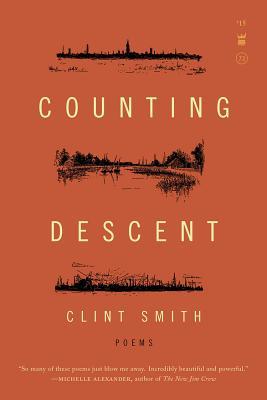
Cora is a slave on a cotton plantation in Georgia. Life is hell for all the slaves, but especially bad for Cora; an outcast even among her fellow Africans, she is coming into womanhood--where even greater pain awaits. When Caesar, a recent arrival from Virginia, tells her about the Underground Railroad, they decide to take a terrifying risk and escape. Matters do not go as planned--Cora kills a young white boy who tries to capture her. Though they manage to find a station and head north, they are being hunted.In Whitehead's ingenious conception, the Underground Railroad is no mere metaphor--engineers and conductors operate a secret network of tracks and tunnels beneath the Southern soil. Cora and Caesar's first stop is South Carolina, in a city that initially seems like a haven. But the city's placid surface masks an insidious scheme designed for its black denizens. And even worse: Ridgeway, the relentless slave catcher, is close on their heels. Forced to flee again, Cora embarks on a harrowing flight, state by state, seeking true freedom.Like the protagonist of Gulliver's Travels, Cora encounters different worlds at each stage of her journey--hers is an odyssey through time as well as space. As Whitehead brilliantly re-creates the unique terrors for black people in the pre-Civil War era, his narrative seamlessly weaves the saga of America from the brutal importation of Africans to the unfulfilled promises of the present day. The Underground Railroad is at once a kinetic adventure tale of one woman's ferocious will to escape the horrors of bondage and a shattering, powerful meditation on the history we all share.

Unpacks the twenty-one most common myths and misconceptions about Native AmericansIn this enlightening book, scholars and activists Roxanne Dunbar-Ortiz and Dina Gilio-Whitaker tackle a wide range of myths about Native American culture and history that have misinformed generations. Tracing how these ideas evolved, and drawing from history, the authors disrupt long-held and enduring myths such as:"Columbus Discovered America""Thanksgiving Proves the Indians Welcomed Pilgrims""Indians Were Savage and Warlike""Europeans Brought Civilization to Backward Indians""The United States Did Not Have a Policy of Genocide""Sports Mascots Honor Native Americans""Most Indians Are on Government Welfare""Indian Casinos Make Them All Rich""Indians Are Naturally Predisposed to Alcohol"Each chapter deftly shows how these myths are rooted in the fears and prejudice of European settlers and in the larger political agendas of a settler state aimed at acquiring Indigenous land and tied to narratives of erasure and disappearance. Accessibly written and revelatory, "All the Real Indians Died Off" challenges readers to rethink what they have been taught about Native Americans and history.

National Book Award winner Jesmyn Ward takes James Baldwin’s 1963 examination of race in America, The Fire Next Time, as a jumping off point for this groundbreaking collection of essays and poems about race from the most important voices of her generation and our time.In light of recent tragedies and widespread protests across the nation, The Progressive magazine republished one of its most famous pieces: James Baldwin’s 1962 “Letter to My Nephew,” which was later published in his landmark book, The Fire Next Time. Addressing his fifteen-year-old namesake on the one hundredth anniversary of the Emancipation Proclamation, Baldwin wrote: “You know and I know, that the country is celebrating one hundred years of freedom one hundred years too soon.”Award-winning author Jesmyn Ward knows that Baldwin’s words ring as true as ever today. In response, she has gathered short essays, memoir, and a few essential poems to engage the question of race in the United States. And she has turned to some of her generation’s most original thinkers and writers to give voice to their concerns.The Fire This Time is divided into three parts that shine a light on the darkest corners of our history, wrestle with our current predicament, and envision a better future. Of the eighteen pieces, ten were written specifically for this volume.In the fifty-odd years since Baldwin’s essay was published, entire generations have dared everything and made significant progress. But the idea that we are living in the post-Civil Rights era, that we are a “postracial” society, is an inaccurate and harmful reflection of a truth the country must confront. Baldwin’s “fire next time” is now upon us, and it needs to be talked about.

In Heavy, Laymon writes eloquently and honestly about growing up a hard-headed black son to a complicated and brilliant black mother in Jackson, Mississippi. From his early experiences of sexual violence, to his suspension from college, to time in New York as a college professor, Laymon charts his complex relationship with his mother, grandmother, anorexia, obesity, sex, writing, and ultimately gambling. Heavy is a “gorgeous, gutting…generous” (The New York Times) memoir that combines personal stories with piercing intellect to reflect both on the strife of American society and on Laymon’s experiences with abuse. By attempting to name secrets and lies he and his mother spent a lifetime avoiding, he asks us to confront the terrifying possibility that few in this nation actually know how to responsibly love, and even fewer want to live under the weight of actually becoming free.Defiant yet vulnerable, an insightful, often comical exploration of weight, identity, art, friendship, and family through years of haunting implosions and long reverberations.

A collection of newly discovered and never-before-published stories by the late Kathleen Collins, a brilliant yet little-known African American writer, artist, and filmmaker.Exuberant, poignant, perceptive, and full of grace, these sixteen stories by Kathleen Collins explore deep, far-reaching issues—relating to race, gender, family, and sexuality—that shape the ordinary moments in our lives. Collins’s work masterfully blends the quotidian and the profound in a personal, intimate way, seamlessly integrating the African American experience into her characters’ lives and creating rich and devastatingly familiar characters who transcend symbolism.In “The Uncle,” a young girl who idolizes her handsome uncle and his beautiful wife makes a haunting discovery about their lives. In “Only Once,” a woman reminisces about her charming daredevil of a lover and his ultimate—and final—act of foolishness. And in the title story, a recent college graduate realizes the limits of the civil rights movement—and the personal and romantic consequences it holds for her.Both contemporary and timeless, Whatever Happened to Interracial Love? is a major and long- overdue addition to our literary canon.

Clint Smith's debut poetry collection, Counting Descent, is a coming of age story that seeks to complicate our conception of lineage and tradition. Smith explores the cognitive dissonance that results from belonging to a community that unapologetically celebrates black humanity while living in a world that often renders blackness a caricature of fear. His poems move fluidly across personal and political histories, all the while reflecting on the social construction of our lived experiences. Smith brings the reader on a powerful journey forcing us to reflect on all that we learn growing up, and all that we seek to unlearn moving forward.

Toussaint Louverture’s life was one of hardship, triumph, and contradiction. He was born a slave on Saint-Domingue yet earned his freedom and established himself as a small-scale planter. He even purchased slaves of his own.Philippe Girard shows how Louverture transformed himself from lowly freedman into revolutionary hero as the mastermind of the bloody slave revolt of 1791. By 1801, Louverture was governor of the colony where he had once been a slave. But his lifelong quest to be accepted as a member of the colonial elite ended in despair: he spent the last year of his life in a French prison cell. His example nevertheless inspired anticolonial and black nationalist movements well into the twentieth century.Based on voluminous primary-source research, conducted in archives across the world and in multiple languages, Toussaint Louverture is the definitive biography of one of the most influential men in history.