
Colson Whitehead
COLSON WHITEHEAD is the #1 New York Times bestselling author of eleven works of fiction and nonfiction, and is a two-time winner of the Pulitzer Prize, for The Nickel Boys and The Underground Railroad, which also won the National Book Award. A recipient of MacArthur and Guggenheim fellowships, he lives in New York City. Harlem Shuffle is the first book in The Harlem Trilogy. The second, Crook Manifesto, will be published in 2023.
22 Books Written

This follow-up to The Underground Railroad brilliantly dramatizes another strand of American history through the story of two boys unjustly sentenced to a hellish reform school in Jim Crow-era Florida.When Elwood Curtis, a black boy growing up in 1960s Tallahassee, is unfairly sentenced to a juvenile reformatory called the Nickel Academy, he finds himself trapped in a grotesque chamber of horrors. Elwood's only salvation is his friendship with fellow "delinquent" Turner, which deepens despite Turner's conviction that Elwood is hopelessly naive, that the world is crooked, and that the only way to survive is to scheme and avoid trouble. As life at the Academy becomes ever more perilous, the tension between Elwood's ideals and Turner's skepticism leads to a decision whose repercussions will echo down the decades.Based on the real story of a reform school that operated for 111 years and warped the lives of thousands of children, The Nickel Boys is a devastating, driven narrative that showcases a great American novelist writing at the height of his powers.

Winner of the Pulitzer Prize and the National Book Award, this #1 New York Times bestseller chronicles a young slave’s adventures as she makes a desperate bid for freedom in the antebellum South. The basis for the acclaimed original Amazon Prime Video series directed by Barry Jenkins.Cora is a slave on a cotton plantation in Georgia. An outcast even among her fellow Africans, she is on the cusp of womanhood—where greater pain awaits. And so when Caesar, a slave who has recently arrived from Virginia, urges her to join him on the Underground Railroad, she seizes the opportunity and escapes with him.In Colson Whitehead’s ingenious conception, the Underground Railroad is no mere metaphor: engineers and conductors operate a secret network of actual tracks and tunnels beneath the Southern soil. Cora embarks on a harrowing flight from one state to the next, encountering, like Gulliver, strange yet familiar iterations of her own world at each stop.As Whitehead brilliantly re-creates the terrors of the antebellum era, he weaves in the saga of our nation, from the brutal abduction of Africans to the unfulfilled promises of the present day. The Underground Railroad is both the gripping tale of one woman’s will to escape the horrors of bondage—and a powerful meditation on the history we all share.
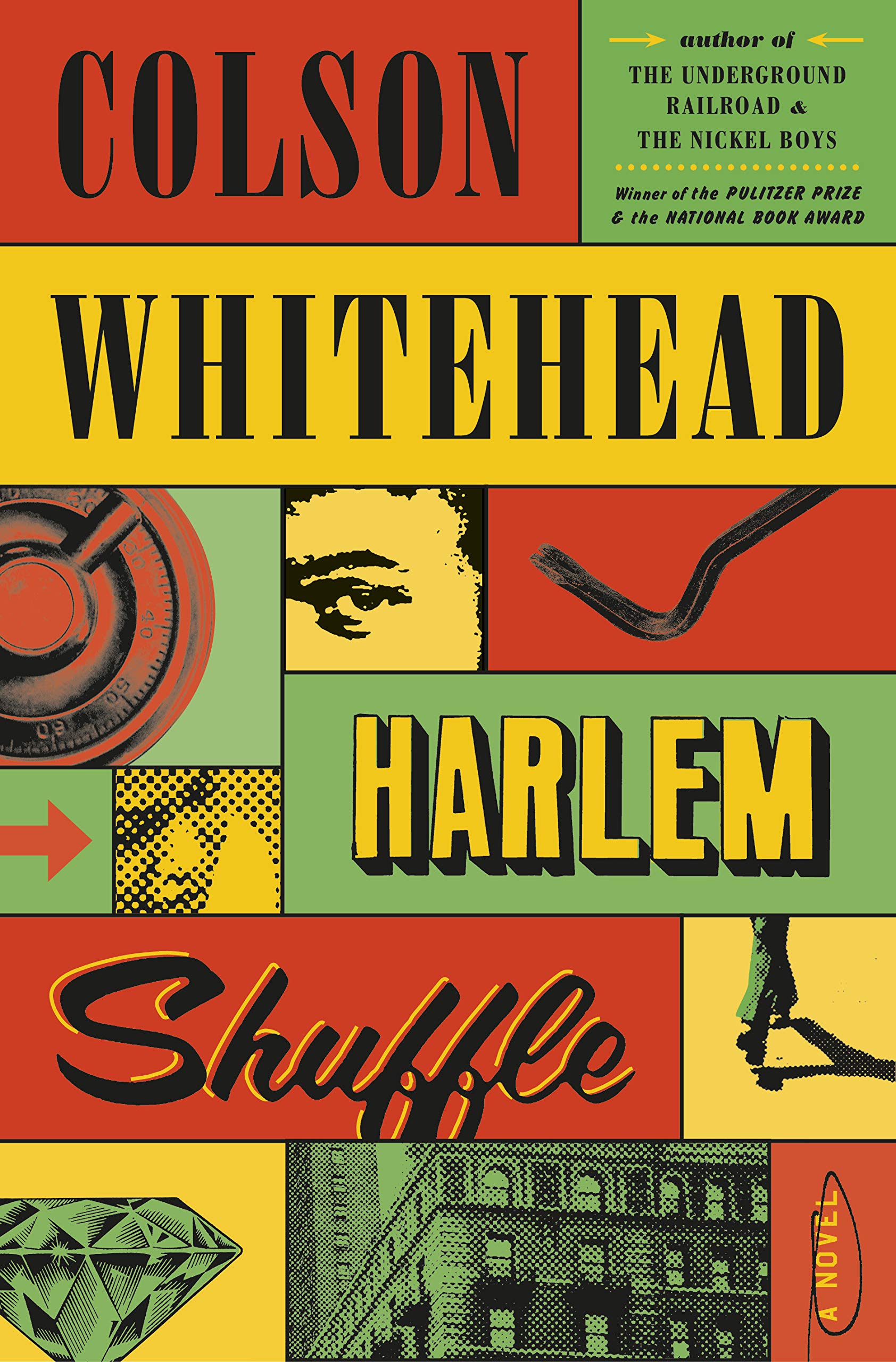
From the two-time Pulitzer Prize-winning author of The Underground Railroad and The Nickel Boys, a gloriously entertaining novel of heists, shakedowns, and rip-offs set in Harlem in the 1960s.“Ray Carney was only slightly bent when it came to being crooked…” To his customers and neighbors on 125th street, Carney is an upstanding salesman of reasonably priced furniture, making a decent life for himself and his family. He and his wife Elizabeth are expecting their second child, and if her parents on Striver’s Row don’t approve of him or their cramped apartment across from the subway tracks, it’s still home. Few people know he descends from a line of uptown hoods and crooks, and that his façade of normalcy has more than a few cracks in it. Cracks that are getting bigger all the time. Cash is tight, especially with all those installment-plan sofas, so if his cousin Freddie occasionally drops off the odd ring or necklace, Ray doesn’t ask where it comes from. He knows a discreet jeweler downtown who doesn’t ask questions, either. Then Freddie falls in with a crew who plan to rob the Hotel Theresa—the “Waldorf of Harlem”—and volunteers Ray’s services as the fence. The heist doesn’t go as planned; they rarely do. Now Ray has a new clientele, one made up of shady cops, vicious local gangsters, two-bit pornographers, and other assorted Harlem lowlifes. Thus begins the internal tussle between Ray the striver and Ray the crook. As Ray navigates this double life, he begins to see who actually pulls the strings in Harlem. Can Ray avoid getting killed, save his cousin, and grab his share of the big score, all while maintaining his reputation as the go-to source for all your quality home furniture needs? Harlem Shuffle’s ingenious story plays out in a beautifully recreated New York City of the early 1960s. It’s a family saga masquerading as a crime novel, a hilarious morality play, a social novel about race and power, and ultimately a love letter to Harlem. But mostly, it’s a joy to read, another dazzling novel from the Pulitzer Prize and National Book Award-winning Colson Whitehead.

In this wry take on the post-apocalyptic horror novel, a pandemic has devastated the planet. The plague has sorted humanity into two types: the uninfected and the infected, the living and the living dead. Now the plague is receding, and Americans are busy rebuilding civilization under orders from the provisional government based in Buffalo. Their top mission: the resettlement of Manhattan. Armed forces have successfully reclaimed the island south of Canal Street—aka Zone One—but pockets of plague-ridden squatters remain. While the army has eliminated the most dangerous of the infected, teams of civilian volunteers are tasked with clearing out a more innocuous variety—the “malfunctioning” stragglers, who exist in a catatonic state, transfixed by their former lives. Mark Spitz is a member of one of the civilian teams working in lower Manhattan. Alternating between flashbacks of Spitz’s desperate fight for survival during the worst of the outbreak and his present narrative, the novel unfolds over three surreal days, as it depicts the mundane mission of straggler removal, the rigors of Post-Apocalyptic Stress Disorder, and the impossible job of coming to grips with the fallen world. And then things start to go wrong. Both spine chilling and playfully cerebral, Zone One brilliantly subverts the genre’s conventions and deconstructs the zombie myth for the twenty-first century.

Colson Whitehead continues his Harlem saga in a novel that summons 1970s New York in all its seedy glory.It's 1971. Trash piles up on the streets, crime is at an all-time high, the city is careening towards bankruptcy, and a shooting war has broken out between the NYPD and the Black Liberation Army. Amidst this collective nervous breakdown furniture store owner and ex-fence Ray Carney tries to keep his head down and his business thriving. His days moving stolen goods around the city are over. It's strictly the straight-and-narrow for him -- until he needs Jackson 5 tickets for his daughter May and he decides to hit up his old police contact Munson, fixer extraordinaire. But Munson has his own favors to ask of Carney and staying out of the game gets a lot more complicated - and deadly.1973. The counter-culture has created a new generation, the old ways are being overthrown, but there is one constant, Pepper, Carney's endearingly violent partner in crime. It's getting harder to put together a reliable crew for hijackings, heists, and assorted felonies, so Pepper takes on a side gig doing security on a Blaxploitation shoot in Harlem. He finds himself in a freaky world of Hollywood stars, up-and-coming comedians, and celebrity drug dealers, in addition to the usual cast of hustlers, mobsters, and hit men. These adversaries underestimate the seasoned crook - to their regret.1976. Harlem is burning, block by block, while the whole country is gearing up for Bicentennial celebrations. Carney is trying to come up with a July 4th ad he can live with. ("Two Hundred Years of Getting Away with It!"), while his wife Elizabeth is campaigning for her childhood friend, the former assistant D.A and rising politician Alexander Oakes. When a fire severely injures one of Carney's tenants, he enlists Pepper to look into who may be behind it. Our crooked duo have to battle their way through a crumbling metropolis run by the shady, the violent, and the utterly corrupted.

Librarian note: Click here for alternate cover editionTwo warring factions in the Department of Elevator Inspectors in a bustling metropolis vie for dominance: the Empiricists, who go by the book and rigorously check every structural and mechanical detail, and the Intuitionists, whose observational methods involve meditation and instinct. Lila Mae Watson, the city’s first black female inspector and a devout Intuitionist with the highest accuracy rate in the department, is at the center of the turmoil. An elevator in a new municipal building has crashed on Lila Mae’s watch, fanning the flames of the Empiticist-Intuitionist feud and compelling Lila Mae to go underground to investigate. As she endeavors to clear her name, she becomes entangled in a web of intrigue that leads her to a secret that will change her life forever.A dead-serious and seriously funny feat of the imagination, The Intuitionist conjures a parallel universe in which latent ironies in matters of morality, politics, and race come to light, and stands as the celebrated debut of an important American writer.

The warm, funny, and supremely original new novel from one of the most acclaimed writers in AmericaThe year is 1985. Benji Cooper is one of the only black students at an elite prep school in Manhattan. He spends his falls and winters going to roller-disco bar mitzvahs, playing too much Dungeons and Dragons, and trying to catch glimpses of nudity on late-night cable TV. After a tragic mishap on his first day of high school—when Benji reveals his deep enthusiasm for the horror movie magazine Fangoria—his social doom is sealed for the next four years.But every summer, Benji escapes to the Hamptons, to Sag Harbor, where a small community of African American professionals have built a world of their own. Because their parents come out only on weekends, he and his friends are left to their own devices for three glorious months. And although he’s just as confused about this all-black refuge as he is about the white world he negotiates the rest of the year, he thinks that maybe this summer things will be different. If all goes according to plan, that is.There will be trials and tribulations, of course. There will be complicated new handshakes to fumble through, and state-of-the-art profanity to master. He will be tested by contests big and small, by his misshapen haircut (which seems to have a will of its own), by the New Coke Tragedy of ’85, and by his secret Lite FM addiction. But maybe, with a little luck, things will turn out differently this summer.In this deeply affectionate and fiercely funny coming-of-age novel, Whitehead—using the perpetual mortification of teenage existence and the desperate quest for reinvention—lithely probes the elusive nature of identity, both personal and communal.

In a dazzlingly original work of nonfiction, the award-winning novelist Colson Whitehead re-creates the exuberance, the chaos, the promise, and the heartbreak of New York. Here is a literary love song that will entrance anyone who has lived in—or spent time—in the greatest of American cities. A masterful evocation of the city that never sleeps, The Colossus of New York captures the city’s inner and outer landscapes in a series of vignettes, meditations, and personal memories. Colson Whitehead conveys with almost uncanny immediacy the feelings and thoughts of longtime residents and of newcomers who dream of making it their home; of those who have conquered its challenges; and of those who struggle against its cruelties. Whitehead’s style is as multilayered and multifarious as New York itself: Switching from third person, to first person, to second person, he weaves individual voices into a jazzy musical composition that perfectly reflects the way we experience the city. There is a funny, knowing riff on what it feels like to arrive in New York for the first time; a lyrical meditation on how the city is transformed by an unexpected rain shower; and a wry look at the ferocious battle that is commuting. The plaintive notes of the lonely and dispossessed resound in one passage, while another captures those magical moments when the city seems to be talking directly to you, inviting you to become one with its rhythms. The Colossus of New York is a remarkable portrait of life in the big city. Ambitious in scope, gemlike in its details, it is at once an unparalleled tribute to New York and the ideal introduction to one of the most exciting writers working today.From the Hardcover edition.
Colson Whitehead’s eagerly awaited and triumphantly acclaimed new novel is on one level a multifaceted retelling of the story of John Henry, the black steel-driver who died outracing a machine designed to replace him. On another level it’s the story of a disaffected, middle-aged black journalist on a mission to set a record for junketeering who attends the annual John Henry Days festival. It is also a high-velocity thrill ride through the tunnel where American legend gives way to American pop culture, replete with p. r. flacks, stamp collectors, blues men , and turn-of-the-century song pluggers. John Henry Days is an acrobatic, intellectually dazzling, and laugh-out-loud funny book that will be read and talked about for years to come.

From the MacArthur and Whiting Award–winning author of John Henry Days and The Intuitionist comes a new, brisk, comic tour de force about identity, history, and the adhesive bandage industryWhen the citizens of Winthrop needed a new name for their town, they did what anyone would do—they hired a consultant.The protagonist of Apex Hides the Hurt is a nomenclature consultant. If you want just the right name for your new product, whether it be automobile or antidepressant, sneaker or spoon, he’s the man to get the job done. Wardrobe lack pizzazz? Come to the Outfit Outlet. Always the wallflower at social gatherings? Try Loquacia.And of course, whenever you take a fall, reach for Apex, because Apex Hides the Hurt. Apex is his crowning achievement, the multicultural bandage that has revolutionized the adhesive bandage industry. “Flesh-colored” be damned—no matter what your skin tone is—Apex will match it, or your money back.After leaving his job (following a mysterious misfortune), his expertise is called upon by the town of Winthrop. Once there, he meets the town council, who will try to sway his opinion over the coming days.Lucky Aberdeen, the millionaire software pioneer and hometown-boy-made-good, wants the name changed to something that will reflect the town’s capitalist aspirations, attracting new businesses and revitalizing the community. Who could argue with that?Albie Winthrop, beloved son of the town’s aristocracy, thinks Winthrop is a perfectly good name, and can’t imagine what the fuss is about.Regina Goode, the mayor, is a descendent of the black settlers who founded the town, and has her own secret agenda for what the name should be.Our expert must decide the outcome, with all its implications for the town’s future. Which name will he choose? Or perhaps he will devise his own? And what’s with his limp, anyway?Apex Hides the Hurt brilliantly and wryly satirizes our contemporary culture, where memory and history are subsumed by the tides of marketing.

The Noble Hustle is Pulitzer finalist Colson Whitehead’s hilarious memoir of his search for meaning at high stakes poker tables, which the author describes as “ Eat, Pray, Love for depressed shut-ins.” On one level, The Noble Hustle is a familiar species of participatory journalism--a longtime neighborhood poker player, Whitehead was given a $10,000 stake and an assignment from the online online magazine Grantland to see how far he could get in the World Series of Poker. But since it stems from the astonishing mind of Colson Whitehead (MacArthur Award-endorsed!), the book is a brilliant, hilarious, weirdly profound, and ultimately moving portrayal of--yes, it sounds overblown and ridiculous, but really!--the human condition. After weeks of preparation that included repeated bus trips to glamorous Atlantic City, and hiring a personal trainer to toughen him up for sitting at twelve hours a stretch, the author journeyed to the gaudy wonderland that is Las Vegas – the world’s greatest “Leisure Industrial Complex” -- to try his luck in the multi-million dollar tournament. Hobbled by his mediocre playing skills and a lifelong condition known as “anhedonia” (the inability to experience pleasure) Whitehead did not – spoiler alert! - win tens of millions of dollars. But he did chronicle his progress, both literal and existential, in this unbelievably funny, uncannily accurate social satire whose main target is the author himself. Whether you’ve been playing cards your whole life, or have never picked up a hand, you’re sure to agree that this book contains some of the best writing about beef jerky ever put to paper.

The Nickel Boys, 9780385537070 The Underground Railroad, 9780345804327 Colson Whitehead

In our Autumn 2009 anthology, Colson Whitehead charts the rise to fame of a truth-telling comedian. Stephen O'Connor transports us to a cabin in the woods, where a young woman attempting to finish her dissertation in solitude becomes increasingly convinced she's not alone. Pasha Malla follows a young writer as he explores how tragedy influences art-and how life falls short of it. Marisa Silver tells the tale of three sisters who perceive the truth about their parents through the eyes of some unexpected visitors, and Lydia Davis' solitary narrator acutely details the behavior of three cows who live in a pasture just across the road.

The Nickel Boys / The Underground Railroad / The Colossus of New York
by Colson Whitehead
Rating: 3.9 ⭐
Please Note That The Following Individual Books As Per Original ISBN and Cover Image In this Listing shall be Dispatched Colson Whitehead Collection 4 Books The Nickel Boys : In reality, the Nickel Academy is a chamber of horrors, where physical, emotional and sexual abuse is rife, where corrupt officials and tradesmen do a brisk trade in supplies intended for the school, and where any boy who resists is likely to disappear 'out back'. Stunned to find himself in this vicious environment, Elwood tries to hold on to Dr King's ringing assertion. The Underground Cora is a slave on a cotton plantation in Georgia. All the slaves lead a hellish existence, but Cora has it worse than most; she is an outcast even among her fellow Africans and she is approaching womanhood, where it is clear even greater pain awaits. When Caesar, a slave recently arrived from Virginia, tells her about the Underground Railroad, they take the perilous decision to escape to the North. The Verticality, architectural and social, is at the heart of Colson Whitehead's first novel that takes place in an unnamed high-rise city that combines twenty-first-century engineering feats with nineteenth-century pork-barrel politics. Elevators are the technological expression of the vertical ideal, and Lila Mae Watson, the city's first black female elevator inspector, is its embattled token of upward mobility. The Colossus of New A masterful evocation of the city that never sleeps, The Colossus of New York captures the city's inner and outer landscapes in a series of vignettes, meditations, and personal memories. Colson Whitehead conveys with almost uncanny immediacy the feelings and thoughts of longtime residents and of newcomers who dream of making it their home.

The Nickel Boys / The Underground Railroad / The Intuitionist / The Colossus of New York / Apex Hides the Hurt
by Colson Whitehead
Rating: 3.4 ⭐

Contains: The Nickel Boys, The Underground Railroad, Apex Hides The Hurt

Electric Literature Aloud! 10 Short Stories from America's Best Writers
by Colson Whitehead
Electric Literature Aloud! is a compendium of 10 short stories from the anthology series. The editors select stories with a strong voice that capture readers and listeners and lead them somewhere exciting, unexpected, and meaningful.In Electric Literature Aloud! Colson Whitehead charts the rise to fame of a truth-telling comedian. Stephen O'Connor transports us to a cabin in the woods, where a young woman attempting to finish her dissertation in solitude becomes increasingly convinced she's not alone. Pasha Malla follows a young writer as he explores how tragedy influences art - and how life falls short of it. Marisa Silver tells the tale of three sisters who perceive the truth about their parents through the eyes of some unexpected visitors. Lydia Davis' solitary narrator acutely details the behavior of three cows who live in a pasture just across the road, Aimee Bender introduces us to a young woman unable to summon the desire to sleep with her husband without payment in cash. Matt Sumell's protagonist feels capable of anything but can save no one. Rick Moody charts the rise an fall of a romance via Twitter. Patrick deWitt presents a bleak, funny tale of two movers who are going nowhere. And Jenny Offill chronicles the awkward vigil of a man caring for his terminally ill ex-wife.

Colson Whitehead Bestselling 4 Books Set - The Nickel Boys, The Underground Railroad, Harlem Shuffle, Crook Manifesto
by Colson Whitehead
#1 NEW YORK TIMES BESTSELLERExperience Colson Whitehead's masterful storytelling across historical and contemporary landscapes with this exceptional four-book The Nickel Boys ( 9780345804341): A harrowing tale based on true events, exploring the brutal realities of a reform school in Jim Crow-era Florida. The Underground Railroad ( 9780345804327): A Pulitzer Prize-winning novel reimagining the Underground Railroad as an actual subterranean network, following Cora’s daring escape from slavery. Harlem Shuffle ( 9780525567271): A crime saga set in 1960s Harlem, blending family drama and heist thriller as Ray Carney navigates the city’s underworld. Crook Manifesto ( 9780525567288): A gritty sequel to Harlem Shuffle, capturing the chaos and corruption of 1970s New York through Ray Carney’s reluctant return to the criminal life. Together, these novels offer a powerful exploration of race, justice, and resilience through unforgettable characters and vivid prose.
Sag Harbor in Old Times
by Colson Whitehead

Cool Machine: A Novel
by Colson Whitehead
From #1 New York Times bestselling author and two-time Pulitzer winner Colson Whitehead, an exuberantly entertaining novel that brings to life 1980s New York in the magnificent final volume of his Harlem Trilogy1981. New York City is beginning to emerge from financial ruin and decline, energized by rampant real estate development and a Wall Street unchained by Reagan-era predatory capitalism. Up in Harlem, successful business owner/master fence Ray Carney has just been named Sterling Furniture’s Dealer of the Month. When the banks won’t give his beloved wife Elizabeth a loan for her new travel agency, however, Carney gambles on one last heist, and finds himself entangled with a legendary criminal mastermind.1983. To some, Carney’s friend and partner in crime Pepper is a stone-cold sociopath. To others, a top thief with questionable people skills. Either way, he’s feeling his age in his troubled gut and his aching bones. When he takes on a bodyguard gig as a favor to Elizabeth, he’s plunged into the alien territory of the East Village art and club scene. Luckily for him, whether you’re uptown or down, everyone speaks the same language of violence—Pepper is a native speaker.1986. Carney has always been haunted by his inability to save his cousin Freddie. Now, twenty years after Freddie’s death, he has a chance to rescue Freddie’s son from the violent forces of the city. But coming out of retirement and teaming up with Pepper again will mean risking the safety and security he’s spent decades building for his family, with only one shot to get it right.With his usual pitch-perfect prose Whitehead paints a portrait of a city in transition, where shimmering skyscrapers rise to the heavens as displaced people huddle in abandoned tunnels below. In a dazzling display of protean imagination, Cool Machine roves all over the city, from Windows on the World to the Meadowlands, to show that in New York, and in the lives of Whitehead’s vivid characters, it’s what’s below the surface that reveals the truth.
Colson Whitehead Collection 3 Books Set
by Colson Whitehead
Please Note The individual books included in this listing will be dispatched as per the original UK ISBN and UK edition cover image shown—are included in the Colson Whitehead Collection 3 Books Set (The Intuitionist, The Colossus of New York & Apex Hides the Hurt): Titles in The The IntuitionistThe Colossus of New YorkApex Hides the Hurt The Intuitionist It is a time of calamity in a major metropolitan city's Department of Elevator Inspectors, and Lila Mae Watson, the first black female elevator inspector in the history of the department, is at the center of it. There are two warring factions within the the Empiricists, who work by the book and dutifully check for striations on the winch cable and such; and the Intuitionists, who are simply able to enter the elevator cab in question, meditate, and intuit any defects. The Colossus of New YorkA masterful evocation of the city that never sleeps, The Colossus of New York captures the city's inner and outer landscapes in a series of vignettes, meditations, and personal memories. Colson Whitehead conveys with almost uncanny immediacy the feelings and thoughts of longtime residents and of newcomers who dream of making it their home; of those who have conquered its challenges; and of those who struggle against its cruelties. Apex Hides the HurtThe town of Winthrop has decided it needs a new name. The resident software millionaire wants to call it New Prospera; the mayor wants to return to the original choice of the founding black settlers; and the town's aristocracy sees no reason to change the name at all. What they need, they realize, is a nomenclature consultant.And, it turns out, the consultant needs them.
Ray Carney Series 2 Books Collection Set By Colson Whitehead
by Colson Whitehead
Please Note The individual books included in this listing will be dispatched as per the original UK ISBN and UK edition cover image shown—are included in the Ray Carney Series 2 Books Collection Set By Colson Whitehead (Harlem Shuffle & Crook Manifesto):Harlem To his customers and neighbors on 125th street, Carney is an upstanding salesman of reasonably-priced furniture, making a life for himself and his family. He and his wife Elizabeth are expecting their second child, and if her parents on Striver's Row don't approve of him or their cramped apartment across from the subway tracks, it's still home.Few people know he descends from a line of uptown hoods and crooks, and that his façade of normalcy has more than a few cracks in it. Cracks that are getting bigger and bigger all the time.See, cash is tight, especially with all those instalment plan sofas, so if his cousin Freddie occasionally drops off the odd ring or necklace at the furniture store, Ray doesn't see the need to ask where it comes from. He knows a discreet jeweller downtown who also doesn't ask questions.Crook 1971, New York City. Trash piles up on the streets, crime is at an all-time high, the city is going bankrupt, and a shooting war has broken out between the NYPD and the Black Liberation Army. Furniture store owner and ex-fence Ray Carney is trying to keep his head down, his business up and his life straight. But then he needs Jackson 5 tickets for his daughter May and he decides to hit up an old police contact, who wants favours in return. For Ray, staying out of the game gets a lot more complicated - and deadly.1973. The old ways are being overthrown by the thriving counterculture, but Pepper, Carney's enduringly violent partner in crime, is a constant. In these difficult times, Pepper takes on a side gig doing security on a Blaxploitation shoot in Harlem.