
Booker T. Washington
Booker Taliaferro Washington was an American educator, orator, author and the dominant leader of the African-American community nationwide from the 1890s to his death. Born to slavery and freed by the Civil War in 1865, as a young man, became head of the new Tuskegee Institute, then a teachers' college for blacks. It became his base of operations. His "Atlanta Exposition" speech of 1895 appealed to middle class whites across the South, asking them to give blacks a chance to work and develop separately, while implicitly promising not to demand the vote. White leaders across the North, from politicians to industrialists, from philanthropists to churchmen, enthusiastically supported Washington, as did most middle class blacks. He was the organizer and central figure of a network linking like-minded black leaders throughout the nation and in effect spoke for Black America throughout his lifetime. Meanwhile a more militant northern group, led by W. E. B. Du Bois rejected Washington's self-help and demanded recourse to politics, referring to the speech dismissively as "The Atlanta Compromise". The critics were marginalized until the Civil Rights Movement of the 1960s, at which point more radical black leaders rejected Washington's philosophy and demanded federal civil rights laws.
28 Books Written

Born in a Virginia slave hut, Booker T. Washington (1856–1915) rose to become the most influential spokesman for African Americans of his day. In this eloquently written book, he describes events in a remarkable life that began in bondage and culminated in worldwide recognition for his many accomplishments. In simply written yet stirring passages, he tells of his impoverished childhood and youth, the unrelenting struggle for an education, early teaching assignments, his selection in 1881 to head Tuskegee Institute, and more.A firm believer in the value of education as the best route to advancement, Washington disapproved of civil-rights agitation and in so doing earned the opposition of many black intellectuals. Yet, he is today regarded as a major figure in the struggle for equal rights, one who founded a number of organizations to further the cause and who worked tirelessly to educate and unite African Americans.
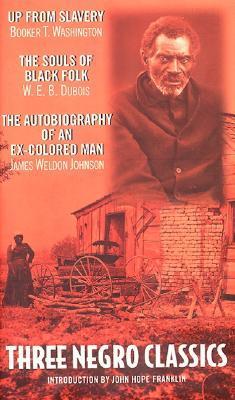
UP FROM SLAVERYThe autobiography of Booker T Washington is a startling portrait ofone of the great Americans of the late nineteenth and early twentieth century. The illegitimate son of 'a white man and a Negro slave, Washington, a man who struggled for his education, would go on to struggle for the dignity of all his people in a hostile and alien society.THE SOULS OF BLACK FOLKW.E.B. DuBois's classic is a major sociological document and one of the momentous books in the mosaic of American literature. No other work has had greater influence on black thinking, and nowhere is the African-American's unique heritage and his kinship with all men so passionately described.THE AUTOBIOGRAPHY OF AN EX-COLORED MANOriginally published anonymously, James Weldon Johnson's penetrating work is a remarkable human account of the life of black Americans in the early twentieth century and a profound interpretation of his feelings towards the white man and towards members of his own race. No other book touches with such understanding and objectivity on the phenomenon once called "passing" in a white society.These three narratives, gathered together in Three Negro Classics chronicle the remarkable evolution of African-American consciousness on both a personal and social level. Profound, intelligent, and insightful, they are as relevant today as they have ever been.

As president of the Tuskegee Institute, Booker T. Washington made it his habit to deliver an address to his students every Sunday night. Washington was not only concerned with a giving his students a technical education, but with teaching them how to be successful in both the moral and commercial realm. These collected lectures are all on topics of character building and living a moral life and include subjects such as " The Virtue of Simplicity", "Keeping Your Word", "Object Lessons" and "Individual Opportunities".

CONTENTS Chronology Frederick Douglass, the Slave Back to Plantation-Life Escape from Slavery; Learning the Ways of Freedom Beginning of His Public Career Slavery and Anti-Slavery Seeks Refuge in England Home Again as a Freeman - New Problems and New Triumphs Free Colored People and Colonization The Underground Railway and the Fugitive Slave Law Douglass, Harriet Beecher Stowe and John Brown Forebodings of the Crisis Douglass's Services in the Civil War Early Problems of Freedom Sharing the Responsibilities and Honors of Freedom Further Evidences of Popular Esteem, with Glimpses into the Past Final Honors to the Living and Tributes to the Dead

This scarce antiquarian book is a facsimile reprint of the original. Due to its age, it may contain imperfections such as marks, notations, marginalia and flawed pages. Because we believe this work is culturally important, we have made it available as part of our commitment for protecting, preserving, and promoting the world's literature in affordable, high quality, modern editions that are true to the original work.

Booker Taliaferro Washington (April 5, 1856 – November 14, 1915) was an American educator, orator, author and leader of the African-American community. He was freed from slavery at the age of nine, and after working at several menial jobs in West Virginia, he earned his way through an education at Hampton Institute and Wayland Seminary. Upon recommendation of Hampton founder Sam Armstrong, as a young man, he was appointed as the first leader of the new Tuskegee Institute, then a teachers' college for blacks. Washington filled this role from the opening of the school in 1881 until his death in 1915. - Wikipedia

Booker Taliaferro Washington (1856-1915) was an African American political leader, educator and author. He was one of the dominant figures in African American history in the United States from 1890 to 1915. Born into slavery in Franklin County, Virginia, at the age of 9, he was freed and moved with his family to West Virginia, where he learned to read and write while working in manual labor jobs. He later trained as a teacher, and in 1881 was named the first leader of the Tuskegee Institute in Alabama. He was granted an honorary Masters of Arts degree from Harvard University in 1896 and an honorary Doctorate degree from Dartmouth College in 1901. He received national prominence for his famous Atlanta Address of 1895, attracting the attention of politicians and the public as a popular spokesperson for African American citizens. In addition to the substantial contributions in the field of education, Dr. Washington did much to improve the overall friendship and working relationship between the races in the United States. His autobiography, Up From Slavery, first published in 1901, is still widely read.

This work has been selected by scholars as being culturally important and is part of the knowledge base of civilization as we know it.This work is in the public domain in the United States of America, and possibly other nations. Within the United States, you may freely copy and distribute this work, as no entity (individual or corporate) has a copyright on the body of the work.Scholars believe, and we concur, that this work is important enough to be preserved, reproduced, and made generally available to the public. To ensure a quality reading experience, this work has been proofread and republished using a format that seamlessly blends the original graphical elements with text in an easy-to-read typeface.We appreciate your support of the preservation process, and thank you for being an important part of keeping this knowledge alive and relevant.

The leading African American leader in the late nineteenth and early twentieth centuries was Booker T. Washington. His conciliatory stance toward the white majority, preference for working behind the scenes rather than public protest to remedy discrimination, and emphasis on education in the practical trades for the black masses as opposed to a liberal arts education, all won favor with prominent white politicians and businessmen. Among many black intellectuals, however, Washington was a controversial figure. They criticized his lack of public emphasis on civil rights and felt that his leadership style almost guaranteed a bleak future of segregation and second-class status for blacks.In this book, a sequel to his famous autobiography, Up from Slavery (1901), he lays out his philosophy of hard work and cooperative attitudes in persuasive and reasonable terms. He describes the men and experiences that had a lasting influence on his thinking and the impressive achievements of his Tuskegee Normal and Industrial Institute in Alabama.He also respectfully disagrees with his critics among black intellectuals. Chief among these was W. E. B. Du Bois, who criticized Washington's slow, patient methods and passive stance in the teeth of so much injustice. Indeed, reading Washington's account, one would never know that in the 1890s lynching reached an all-time high, that blacks were effectively disenfranchised in their own communities, and that the grip of poverty among African Americans was virtually ensured by the white power structure.However controversial his career, My Larger Education is still worth reading as an important document in African American history, and Washington's emphasis on economic empowerment for blacks is a continuing theme to this day.

Works of Booker T. Washington. The Future of the American Negro, The Negro Problem, Up from Slavery: an Autobiography, Heroes in Black Skins, Addresses ... of Carl Schurz, Atlanta Compromise
by Booker T. Washington
Rating: 3.9 ⭐
Indulge Yourself with the best classic literature on Your PDA. Navigate easily to any novel from Table of Contents or search for the words or phrases. Features Navigate from Table of Contents or search for words or phrases Make bookmarks, notes, highlights Searchable and interlinked. Access the e-book anytime, anywhere - at home, on the train, in the subway. Table of Contents The Future of the American NegroHeroes in Black SkinsThe Negro Problem (also W.E. Burghardt DuBois, Charles W. Chesnutt, Wilford H. Smith, H.T. Kealing, Paul Laurence Dunbar, T. Thomas Fortune)Up from an Autobiography Addresses in Memory of Carl SchurzAtlanta Compromise address by African-American leader Booker T. Washington on September 18, 1895. Given to a predominantly White audience at the Cotton States and International Exposition in Atlanta, Georgia, the speech has been recognized as one of the most important and influential speeches in American history. T. Washington Biography

The Man Farthest Down: A Record Of Observation And Study In Europe
by Booker T. Washington
Rating: 3.8 ⭐
This scarce antiquarian book is a facsimile reprint of the original. Due to its age, it may contain imperfections such as marks, notations, marginalia and flawed pages. Because we believe this work is culturally important, we have made it available as part of our commitment for protecting, preserving, and promoting the world's literature in affordable, high quality, modern editions that are true to the original work.

Excerpt from Putting the Most Into LifeThe chapters in this little book were originally part of a series of Sunday Evening Talks given by the Principal to the students of thetuskegee Normal and Industrial Institute. They have been recast from the second to the third per son, and many local allusions have been cut out. They are now sent out, in response to re peated requests, to a larger audience than that to which they were first spoken.
{ 15.34 x 23.59 cms} Leather Binding on Spine and Corners with Golden Leaf Printing on round Spine (extra customization on request like complete leather, Golden Screen printing in Front, Color Leather, Colored book etc.) Reprinted in 2020 with the help of original edition published long back [1900]. This book is printed in black & white, sewing binding for longer life, Printed on high quality Paper, re-sized as per Current standards, professionally processed without changing its contents. As these are old books, we processed each page manually and make them readable but in some cases some pages which are blur or missing or black spots. If it is multi volume set, then it is only single volume, if you wish to order a specific or all the volumes you may contact us. We expect that you will understand our compulsion in these books. We found this book important for the readers who want to know more about our old treasure so we brought it back to the shelves. Hope you will like it and give your comments and suggestions. - English, Pages 35. EXTRA 10 DAYS APART FROM THE NORMAL SHIPPING PERIOD WILL BE REQUIRED FOR LEATHER BOUND BOOKS. COMPLETE LEATHER WILL COST YOU EXTRA US$ 25 APART FROM THE LEATHER BOUND BOOKS. {FOLIO EDITION IS ALSO AVAILABLE.} Complete Sowing and reaping 1900 Booker T. Washington

Working With the Hands: A Sequel to Up from Slavery Covering the Author's Experiences in Industrial Training at Tuskegee
by Booker T. Washington
Rating: 4.5 ⭐
This scarce antiquarian book is included in our special Legacy Reprint Series. In the interest of creating a more extensive selection of rare historical book reprints, we have chosen to reproduce this title even though it may possibly have occasional imperfections such as missing and blurred pages, missing text, poor pictures, markings, dark backgrounds and other reproduction issues beyond our control. Because this work is culturally important, we have made it available as a part of our commitment to protecting, preserving and promoting the world's literature.

The Atlanta Compromise was an address by African-American leader Booker T. Washington on September 18, 1895. Given to a predominantly White audience at the Cotton States and International Exposition in Atlanta, Georgia, the speech has been recognized as one of the most important and influential speeches in American history. The compromise was announced at the Atlanta Exposition Speech. The primary architect of the compromise, on behalf of the African-Americans, was Booker T. Washington, president of the Tuskegee Institute. Supporters of Washington and the Atlanta compromise were termed the "Tuskegee Machine." The agreement was never written down. Essential elements of the agreement were that blacks would not ask for the right to vote, they would not retaliate against racist behavior, they would tolerate segregation and discrimination, that they would receive free basic education, education would be limited to vocational or industrial training (for instance as teachers or nurses), liberal arts education would be prohibited (for instance, college education in the classics, humanities, art, or literature). After the turn of the 20th century, other black leaders, most notably W. E. B. Du Bois and William Monroe Trotter – (a group Du Bois would call The Talented Tenth), took issue with the compromise, instead believing that African-Americans should engage in a struggle for civil rights. W. E. B. Du Bois coined the term "Atlanta Compromise" to denote the agreement. The term "accommodationism" is also used to denote the essence of the Atlanta compromise. After Washington's death in 1915, supporters of the Atlanta compromise gradually shifted their support to civil rights activism, until the modern Civil rights movement commenced in the 1950s. Booker Taliaferro Washington (April 5, 1856 – November 14, 1915) was an African-American educator, author, orator, and advisor to presidents of the United States. Between 1890 and 1915, Washington was the dominant leader in the African-American community. Washington was of the last generation of black American leaders born into slavery and became the leading voice of the former slaves and their descendants, who were newly oppressed by disfranchisement and the Jim Crow discriminatory laws enacted in the post-Reconstruction Southern states in the late 19th and early 20th centuries. In 1895 his Atlanta compromise called for avoiding confrontation over segregation and instead putting more reliance on long-term educational and economic advancement in the black community.

The Story of Slavery By Booker T. Washington President of Tuskegee Institute; author of "Up From Slavery," Etc. With Biographical Sketch

The Story of the Negro is a history of Americans of African descent before and after slavery. Originally produced in two volumes, and published here for the first time in one paperback volume, the first part covers Africa and the history of slavery in the United States while the second part carries the history from the Civil War to the first part of the twentieth century. Booker T. Washington was born into slavery, worked menial jobs in order to acquire an education, and became the most important voice of African American interests beginning in the latter part of the nineteenth century.The Story of the Negro is valuable in part because it is full of significant information taken from hundreds of obscure sources that would be nearly impossible to assemble today. For instance, Washington discusses the rise of African American comedy with names, places, and dates; elsewhere he traces the growth and spread of African American home ownership and independent businesses in the United States; and his discussion of slavery is informed by his own life. Washington wanted African Americans to understand and embrace their heritage, not be ashamed of it. He explains, as an example, the role of music in the lives of the slaves and then notes how, nearly a generation later, many African Americans were "embarrassed" by this music and did not want to learn traditional songs. Washington is able to reflect on the first fifty years of his life embracing a range of experiences from share-cropping to dinner at the White House. It is just this autobiographical element that makes the volume compelling.

Up From Slavery and The Atlanta Compromise Speech: Illustrated Black History Collection
by Booker T. Washington
Rating: 4.5 ⭐
A nice, unabridged edition of this classic with 28 photographs and illustrations, including the text of his influential 1895 Atlanta Compromise SpeechUp from Slavery is the 1901 autobiography of American educator Booker T. Washington. The book describes his personal experience of having to work to rise up from the position of a slave child during the Civil War, to the difficulties and obstacles he overcame to get an education at the new Hampton Institute, to his work establishing vocational schools—most notably the Tuskegee Institute in Alabama. His goal was to help black people and other disadvantaged minorities learn useful, marketable skills and work to pull themselves, as a race, up by the bootstraps. He reflects on the generosity of both teachers and philanthropists who helped in educating blacks and Native Americans. In 1998, the Modern Library listed the book at No. 3 on its list of the 100 best nonfiction books of the 20th century.

This Limited Edition (only 25,000 were printed) is a collection of success stories relating early ventures into business by Black entrepreneurs. The stories of successful entrepreneurs are not widely known, but they deserve to be. They tell of people with vision and ingenuity who achieved success with honorable business principles. Innovative ideas pursued by these businessmem still serve as models of original thinking in business. Today, just as when this book was first published, pride in accomplishment inspires the reader and affirms what can be achieved with creativity, diligence and integrity.

Up From Slavery: An Autobiography & My Larger Education: An Original Anthology
by Booker T. Washington
Rating: 4.7 ⭐
THIS volume is the outgrowth of a series of articles, dealing with incidents in my life, which were published consecutively in the Outlook. While they were appearing in that magazine I was constantly surprised at the number of requests which came to me from all parts of the country, asking that the articles be permanently preserved in book form. I am most grateful to the Outlook for permission to gratify these requests. I have tried to tell a simple, straightforward story, with no attempt at embellishment. My regret is that what I have attempted to do has been done so imperfectly. The greater part of my time and strength is required for the executive work connected with the Tuskegee Normal and Industrial Institute, and in securing the money necessary for the support of the institution. Much of what I have said has been written on board trains, or at hotels or railroad stations while I have been waiting for trains, or during the moments that I could spare from my work while at Tuskegee. Without the painstaking and generous assistance of Mr. Max Bennett Thrasher I could not have succeeded in any satisfactory degree.

Booker Taliaferro Washington (1856-1915) was an African American political leader, educator and author. He was one of the dominant figures in African American history in the United States from 1890 to 1915. Born into slavery in Franklin County, Virginia, at the age of 9, he was freed and moved with his family to West Virginia, where he learned to read and write while working in manual labor jobs. He later trained as a teacher, and in 1881 was named the first leader of the Tuskegee Institute in Alabama. He was granted an honorary Masters of Arts degree from Harvard University in 1896 and an honorary Doctorate degree from Dartmouth College in 1901. He received national prominence for his famous Atlanta Address of 1895, attracting the attention of politicians and the public as a popular spokesperson for African American citizens. In addition to the substantial contributions in the field of education, Dr. Washington did much to improve the overall friendship and working relationship between the races in the United States. His autobiography, Up From Slavery, first published in 1901, is still widely read.

Here in one omnibus edition are Booker T. Washington's most important books. Washington was constantly, and often bitterly, criticized by his contemporaries for being too conciliatory to whites and not concerned enough about civil rights. It would not be until after his death that the world would find out that he had indeed worked a great deal for civil rights anonymously behind the scenes. Up from Slavery is one of the most influential biographies ever written. On one level it is the life story of Booker T. Washington and his rise from slavery to accomplished educator and activist. On another level it the story of how an entire race strove to better itself. Washington makes it clear just how far race relations in America have come, and to some extent, just how much further they have to go. Written with wit and clarity. In My Larger Education, Booker T. Washington explains how he came by his positions on race relations, by describing the people who influenced him during the founding of Tuskegee Normal and Industrial Institute of Alabama. In Character Building are thirty seven addresses that Booker T. Washington gave before students, faculty, and guests at the Tuskegee Institute. These addresses take the form of timeless advice on a number of subjects. Very motivational and uplifting. Here are six historic essays on the state of race relations during the Reconstruction and early twentieth century, written from the African American point of view. Included are "Industrial Education for the Negro" by Booker T. Washington, "The Talented Tenth" by W.E. Burghardt DuBois, "The Disfranchisement of the Negro" by Charles W. Chesnutt, "The Negro and the Law" by Wilford H. Smith, "The Characteristics of the Negro People" by H.T. Kealing, and "Representative American Negroes" by Paul Laurence Dunbar.

Born in a Virginia slave hut, Booker T. Washington (1856–1915) rose to become the most influential spokesman for African Americans of his day. In this eloquently written book, he describes events in a remarkable life that began in bondage and culminated in worldwide recognition for his many accomplishments. In simply written yet stirring passages, he tells of his impoverished childhood and youth, the unrelenting struggle for an education, early teaching assignments, his selection in 1881 to head Tuskegee Institute, and more. A firm believer in the value of education as the best route to advancement, Washington disapproved of civil-rights agitation and in so doing earned the opposition of many black intellectuals. Yet, he is today regarded as a major figure in the struggle for equal rights, one who founded a number of organizations to further the cause and who worked tirelessly to educate and unite African Americans.

"The most interesting of the negro towns in the United States." -Booker T. Washington Boley was established in 1903 as a predominantly Black pioneer town with persons having Native American ancestry among its citizens. It was a characteristic product of the Black immigration from the South and Middle West into the new lands of what is now the State of Oklahoma. In 1905, when Booker T. Washington visited Indian Territory he made a specific point to visit Boley which he had heard about. He would later write: "I learned upon inquiry that there were a considerable number of communities throughout the Territory where an effort had been made to exclude negro settlers. To this the negroes had replied by starting other communities in which no white man was allowed to live. But among these various communities there was one of which I heard more than the others. This was the town of Boley, where, it is said, no white man has ever let the sun go down upon him." In 1908, Booker T. Washington would publish an 8-page article in the magazine New Outlook, titled " Boley, a Negro Town in the West," reprinted here.

Booker T. Washington was a prominent leader of the African-American community in the late 19th and early 20th centuries. Washington was born into slavery but would become a prolific author who wrote about extensively about his life experiences and the challenges facing African-Americans during his time. This edition of Industrial Education for the Negro includes a table of contents.

Up From Slavery and Other Booker T. Washington Classics: An Autobiography, The Future of The American Negro, and MORE!
by Booker T. Washington
Rating: 4.5 ⭐

This edition has a linked "Table of Contents" and has been beautifully formatted (searchable and interlinked) to work on your Amazon e-book reader, Amazon Desktop Reader, your iPad/iPhone ebook reader and any other device that carries the Amazon app. This collection of books written by Booker T. Washington "Up from Slavery – An Autobiography", "My Larger Education", and "Future of the American Negro."Booker Taliaferro Washington (April 5, 1856 – November 14, 1915) was an American educator, race leader, author, orator, and political leader. He founded the Tuskegee Normal and Industrial Institute in Alabama. He was one of the most influential (and controversial) African Americans in history. He was born into slavery to a slave mother and white father, who was a nearby planter, in a rural area in southwestern Virginia. After emancipation, Washington worked in West Virginia in a variety of manual labor jobs before making his way to Hampton Roads seeking an education--he was self-motivated and committed to his own education from a young age. He worked his way through Hampton Normal and Agricultural Institute (now Hampton University) and attended college at Wayland Seminary (now Virginia Union University). After returning to Hampton as a teacher, in 1881 he was named as the first leader of the new Tuskegee Institute in Alabama. Washington attained national prominence for his Atlanta Address of 1895, which attracted the attention of politicians and the public, making him a popular spokesperson for African-American citizens. He built a nationwide network of supporters in many black communities, with black ministers, educators and businessmen composing his core supporters. Washington played a dominant role in black politics, winning wide support in the black community and among more liberal whites (especially rich Northern whites). He gained access to top national leaders in politics, philanthropy and education. Washington's efforts included cooperating with white people and enlisting the support of wealthy philanthropists, helping to raise funds to establish and operate thousands of small community schools and institutions of higher education for the betterment of blacks throughout the South. This work continued for many years after his death. Northern critics called Washington's followers the "Tuskegee Machine." After 1909, Washington was criticized by the leaders of the new NAACP, especially W. E. B. Du Bois, who demanded a stronger tone of protest for advancement of civil rights needs. Washington replied that confrontation would lead to disaster for the outnumbered blacks, and that cooperation with supportive whites was the only way to overcome pervasive racism in the long run. At the same time, he secretly funded litigation for civil rights cases, such as challenges to southern constitutions and laws that disenfranchised blacks.In this Up from Slavery – An Autobiography (published in 1901) - a poignant memoir from Washington's early days of slavery on a plantation and his emancipation at the age of nine. Washington would go on to be the single-most powerful influence to disenchanted young blacks Nationwide. He was a powerful presence and self-made man, leading the way for future leader Martin Luther King Jr.Book My Larger Education (published in 1911) - a detailed account of the creation, development, and promotion of the Tuskegee Institute to satisfy frequent public requests for information about "the educational methods which we are now using at Tuskegee; and to illustrate, for the benefit of the members of my own race, some of the ways in which a people who are struggling upward may turn disadvantages into opportunities".

African-American educator, author, and leader Booker T. Washington addressed the students and staff at Tuskegee Normal and Industrial Institute, the school he led from 1881 until his death in 1915, with several character-building speeches. In "On Mother Earth," Washington encourages students to embark on their lives and invest in their future by owning, living on, and working their own land. He believed in building a great and powerful race on an agricultural foundation. "You had better begin life in a hollow tree and be a man, than begin it in a rented house and be a mere tool, the imitation of a man." This short work is part of Applewood's "American Roots," series, tactile mementos of American passions by some of America's most famous writers and thinkers.