
Angela Y. Davis
Angela Yvonne Davis is an American political activist, scholar, and author. She emerged as a nationally prominent activist and radical in the 1960s, as a leader of the Communist Party USA, and had close relations with the Black Panther Party through her involvement in the Civil Rights Movement despite never being an official member of the party. Prisoner rights have been among her continuing interests; she is the founder of Critical Resistance, an organization working to abolish the prison-industrial complex. She is a retired professor with the History of Consciousness Department at the University of California, Santa Cruz, and is the former director of the university's Feminist Studies department. Her research interests are in feminism, African American studies, critical theory, Marxism, popular music, social consciousness, and the philosophy and history of punishment and prisons. Her membership in the Communist Party led to Ronald Reagan's request in 1969 to have her barred from teaching at any university in the State of California. She was tried and acquitted of suspected involvement in the Soledad brothers' August 1970 abduction and murder of Judge Harold Haley in Marin County, California. She was twice a candidate for Vice President on the Communist Party USA ticket during the 1980s.
27 Books Written

Freedom is a Constant Struggle: Ferguson, Palestine and the Foundations of a Movement
by Angela Y. Davis
Rating: 4.5 ⭐
• 2 recommendations ❤️
In these newly collected essays, interviews, and speeches, world-renowned activist and scholar Angela Y. Davis illuminates the connections between struggles against state violence and oppression throughout history and around the world.Reflecting on the importance of black feminism, intersectionality, and prison abolitionism for today's struggles, Davis discusses the legacies of previous liberation struggles, from the Black Freedom Movement to the South African anti-Apartheid movement. She highlights connections and analyzes today's struggles against state terror, from Ferguson to Palestine.Facing a world of outrageous injustice, Davis challenges us to imagine and build the movement for human liberation. And in doing so, she reminds us that "Freedom is a constant struggle."

Her own powerful story up to 1972, told with warmth, brilliance, humor and conviction. With an introduction by the author.

From one of our most important scholars and civil rights activist icon, a powerful study of the women’s liberation movement and the tangled knot of oppression facing Black women."Angela Davis is herself a woman of undeniable courage. She should be heard." —The New York TimesAngela Davis provides a powerful history of the social and political influence of whiteness and elitism in feminism, from abolitionist days to the present, and demonstrates how the racist and classist biases of its leaders inevitably hampered any collective ambitions. While Black women were aided by some activists like Sarah and Angelina Grimke and the suffrage cause found unwavering support in Frederick Douglass, many women played on the fears of white supremacists for political gain rather than take an intersectional approach to liberation. Here, Davis not only contextualizes the legacy and pitfalls of civil and women's rights activists, but also discusses Communist women, the murder of Emmitt Till, and Margaret Sanger's racism. Davis shows readers how the inequalities between Black and white women influence the contemporary issues of rape, reproductive freedom, housework and child care in this bold and indispensable work.
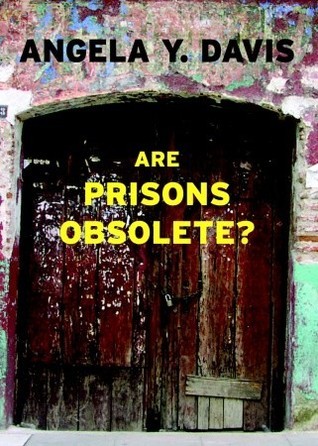
With her characteristic brilliance, grace and radical audacity, Angela Y. Davis has put the case for the latest abolition movement in American life: the abolition of the prison. As she quite correctly notes, American life is replete with abolition movements, and when they were engaged in these struggles, their chances of success seemed almost unthinkable. For generations of Americans, the abolition of slavery was sheerest illusion. Similarly,the entrenched system of racial segregation seemed to last forever, and generations lived in the midst of the practice, with few predicting its passage from custom. The brutal, exploitative (dare one say lucrative?) convict-lease system that succeeded formal slavery reaped millions to southern jurisdictions (and untold miseries for tens of thousands of men, and women). Few predicted its passing from the American penal landscape. Davis expertly argues how social movements transformed these social, political and cultural institutions, and made such practices untenable.In Are Prisons Obsolete?, Professor Davis seeks to illustrate that the time for the prison is approaching an end. She argues forthrightly for "decarceration", and argues for the transformation of the society as a whole.

An urgent, vital manifesto of intersectional, internationalist, abolitionist feminism, from leading scholar-activists Angela Y. Davis, Gina Dent, Erica Meiners, and Beth E. Richie.As a politic and a practice, abolition increasingly shapes our political moment—halting the construction of new jails and propelling movements to divest from policing. Yet erased from this landscape are the central histories of feminist organizing—usually queer, anti-capitalist, grassroots, and women of color—that continue to cultivate abolition. Also erased is a recognition of the stark reality: abolition is our best response to endemic forms of state and interpersonal gender and sexual violence.Amplifying the analysis and the theories of change generated from vibrant community based organizing, Abolition. Feminism. Now. surfaces necessary historical genealogies, key internationalist learnings, and everyday practices to grow our collective and flourishing present and futures.

Revelations about U.S policies and practices of torture and abuse have captured headlines ever since the breaking of the Abu Ghraib prison story in April 2004. Since then, a debate has raged regarding what is and what is not acceptable behavior for the world’s leading democracy. It is within this context that Angela Davis, one of America’s most remarkable political figures, gave a series of interviews to discuss resistance and law, institutional sexual coercion, politics and prison. Davis talks about her own incarceration, as well as her experiences as "enemy of the state," and about having been put on the FBI’s "most wanted" list. She talks about the crucial role that international activism played in her case and the case of many other political prisoners.Throughout these interviews, Davis returns to her critique of a democracy that has been compromised by its racist origins and institutions. Discussing the most recent disclosures about the disavowed "chain of command," and the formal reports by the Red Cross and Human Rights Watch denouncing U.S. violation of human rights and the laws of war in Guantánamo, Afghanistan and Iraq, Davis focuses on the underpinnings of prison regimes in the United States.

Blues Legacies and Black Feminism: Gertrude "Ma" Rainey, Bessie Smith, and Billie Holiday
by Angela Y. Davis
Rating: 4.3 ⭐
From one of this country's most important intellectuals comes a brilliant analysis of the blues tradition that examines the careers of three crucial black women blues singers through a feminist lens. Angela Davis provides the historical, social, and political contexts with which to reinterpret the performances and lyrics of Gertrude "Ma" Rainey, Bessie Smith, and Billie Holiday as powerful articulations of an alternative consciousness profoundly at odds with mainstream American culture.The works of Rainey, Smith, and Holiday have been largely misunderstood by critics. Overlooked, Davis shows, has been the way their candor and bravado laid the groundwork for an aesthetic that allowed for the celebration of social, moral, and sexual values outside the constraints imposed by middle-class respectability. Through meticulous transcriptions of all the extant lyrics of Rainey and Smith—published here in their entirety for the first time—Davis demonstrates how the roots of the blues extend beyond a musical tradition to serve as a conciousness-raising vehicle for American social memory. A stunning, indispensable contribution to American history, as boldly insightful as the women Davis praises, Blues Legacies and Black Feminism is a triumph.

A collection of her speeches and writings which address the political and social changes of the past decade as they are concerned with the struggle for racial, sexual, and economic equality.

What is the meaning of freedom? Angela Y. Davis' life and work have been dedicated to examining this fundamental question and to ending all forms of oppression that deny people their political, cultural, and sexual freedom. In this collection of twelve searing, previously unpublished speeches, Davis confronts the interconnected issues of power, race, gender, class, incarceration, conservatism, and the ongoing need for social change in the United States.With her characteristic brilliance, historical insight, and penetrating analysis, Davis addresses examples of institutional injustice and explores the radical notion of freedom as a collective striving for real democracy - not something granted or guaranteed through laws, proclamations, or policies, but something that grows from a participatory social process that demands new ways of thinking and being. "The speeches gathered together here are timely and timeless," writes Robin D.G. Kelley in the foreword, "they embody Angela Davis' uniquely radical vision of the society we need to build, and the path to get there."The Meaning of Freedom articulates a bold vision of the society we need to build and the path to get there. This is her only book of speeches."Davis' arguments for justice are formidable. . . . The power of her historical insights and the sweetness of her dream cannot be denied."—The New York Times"One of America's last truly fearless public intellectuals." —Cynthia McKinney, former US Congresswoman"Angela Davis offers a cartography of engagement in oppositional social movements and unwavering commitment to justice." —Chandra Talpade Mohanty, Women's Studies, Hamilton College"Angela Davis deserves credit, not just for the dignity and courage with which she has lived her life, but also for raising important critiques of a for-profit penitentiary system decades before those arguments gained purchase in the mainstream." —Thomas Chatterton Williams, SFGate"Angela Davis's revolutionary spirit is still strong. Still with us, thank goodness!"—Virginian-Pilot"Long before 'race/gender' became the obligatory injunction it is now, Angela Davis was developing an analytical framework that brought all of these factors into play. For readers who only see Angela Davis as a public icon . . . meet the real Angela Davis: perhaps the leading public intellectual of our era." —Robin D. G. Kelley author of Thelonious Monk: The Life and Times of an American Original"There was a time in America when to call a person an 'abolitionist' was the ultimate epithet. It evoked scorn in the North and outrage in the South. Yet they were the harbingers of things to come. They were on the right side of history. Prof. Angela Y. Davis stands in that proud, radical tradition." —Mumia Abu-Jamal, author of Jailhouse Lawyers: Prisoners Defending Prisoners v. the U.S.A."Behold the heart and mind of Angela Davis, open, relentless, and on time!" —June Jordan"Political activist, scholar, and author Angela Davis confronts the interconnected issues of power, race, gender, class, incarceration, conservatism, and the ongoing need for social change in the U.S. in her book, The Meaning of Freedom: And Other Difficult Dialogues." —Travis Smiley RadioAngela Y. Davis is professor emerita at the University of California and author of eight books. She is a much sought after public speaker and an internationally known advocate for social justice.Robin D.G. Kelley is the author of numerous books and a professor at the University of Southern California.

For three decades, Angela Y. Davis has written on liberation theory and democratic praxis. Challenging the foundations of mainstream discourse, her analyses of culture, gender, capital, and race have profoundly influenced democratic theory, antiracist feminism, critical studies and political struggles.Even for readers who primarily know her as a revolutionary of the late 1960s and early 1970s (or as a political icon for militant activism) she has greatly expanded the scope and range of social philosophy and political theory. Expanding critical theory, contemporary progressive theorists - engaged in justice struggles - will find their thought influenced by the liberation praxis of Angela Y. Davis.The Angela Y. Davis Reader presents eighteen essays from her writings and interviews which have appeared in If They Come in the Morning, Women, Race, and Class, Women, Culture, and Politics, and Black Women and the Blues as well as articles published in women's, ethnic/black studies and communist journals, and cultural studies anthologies. In four parts - "Prisons, Repression, and Resistance", "Marxism, Anti-Racism, and Feminism", "Aesthetics and Culture", and recent interviews - Davis examines revolutionary politics and intellectualism.Davis's discourse chronicles progressive political movements and social philosophy. It is essential reading for anyone interested in contemporary political philosophy, critical race theory, social theory, ethnic studies, American studies, African American studies, cultural theory, feminist philosophy, gender studies.

Neste e-book extraído da obra Mulheres, raça e classe, Angela Davis trata do tema da educação e de seu potencial libertador, a partir da perspectiva das mulheres negras. Mulheres, raça e classe é a mais importante obra de Angela Davis, onde a filósofa e ativista traça um poderoso panorama histórico e crítico das imbricações entre a luta anticapitalista, a luta feminista, a luta antirracista e a luta antiescravagista, passando pelos dilemas contemporâneos da mulher. O livro é considerado um clássico sobre a interseccionalidade de gênero, raça e classe.

Neste e-book extraído da obra Mulheres, raça e classe, Angela Davis trata do tema do racismo no movimento sufragista feminino, discutindo o papel da interseccionalidade na construção de uma sociedade igualitária e justa. Mulheres, raça e classe é a mais importante obra de Angela Davis, onde a filósofa e ativista traça um poderoso panorama histórico e crítico das imbricações entre a luta anticapitalista, a luta feminista, a luta antirracista e a luta antiescravagista, passando pelos dilemas contemporâneos da mulher. O livro é considerado um clássico sobre a interseccionalidade de gênero, raça e classe.

A major collection of essays and speeches from pioneering freedom fighter Angela Y. DavisFor over fifty years, Angela Y. Davis has been at the forefront of collective movements for abolition and feminism and the fight against state violence and oppression. Politics, Practices, Promises, the first of two important new volumes, brings together an essential collection of Davis’s essays, and speeches over the years, showing how her thinking has sharpened and evolved even as she has remained uncompromising in her commitment to collective liberation. In pieces that address the history of abolitionist practice and thought in the United States and globally, the unique contributions of women to abolitionist struggles, and stories and lessons of organizing inside and beyond the prison walls, Davis is always curious, always incisive, and always learning.Rich and rewarding, Politics, Practices, Promises will appeal to fans of Davis, to students and scholars reflecting on her life and work, and to readers new to feminism, abolition, and struggles for liberation.

Over the last generation, the U.S. prison systems have grown at a rate unparalleled in history, creating what many call a Prison Industrial Complex. Angela Davis explains what happens to our legal system when we lock up more people for longer sentences, which industries are a part of the Prison Industrial Complex, and how to stop or slow prison growth.

Angela Davis Speaks! Get inspired by the words of this fighter for human rights.Duration: 53 minutes.

No auge da pandemia do novo coronavírus, duas reconhecidas ativistas feministas de esquerda, Angela Davis e Naomi Klein, se reuniram virtualmente para uma conversa sobre conjuntura, capitalismo, autoritarismo e desigualdade. Organizado pela Rising Majority, o encontro contou com a participação de Thenjiwe McHarris (Blackbird), Cindy Wiesner (Grassroots Global Justice), Maurice Mitchell (Working Families Party) e Loan Tran (Southern Vision Alliance). Lançada como novo volume da coleção Pandemia Capital, a transcrição desse histórico encontro pode ser encontrada agora em português. A covid-19 seria mesmo democrática como muitos afirmam? Nessa conversa, as autoras argumentam que o foco da doença atinge especialmente os mais pobres e vulneráveis, como negros e mulheres, mesmo em países mais ricos, como os Estados Unidos. A atuação de líderes autoritários que utilizam a pandemia como manobra de garantia de poder também é tema no debate, com destaque para Viktor Orban, Jair Bolsonaro, Benjamin Netanyahu e Donald Trump. "Estou preocupada com o fato de que, no Brasil, a situação é muito pior que aqui – sem falar nas semelhanças entre os dois presidentes. Mas eu acredito que nós, dos Estados Unidos, podemos encontrar em lugares como o Brasil e a África do Sul vozes que almejem sair criativamente desta crise", diz Angela Davis.

Angela Davis' Lectures on Liberation pamphlet Presented here are Professor Angela Davis' initial lectures for "Recurring Philosophical Themes in Black Literature," her first course at UCLA, taught during the Fall Quarter of 1969. At the time she was beginning a two-year appointment as ActingAssistant Professor in Philosophy, an appointment duly recommended by the Department of Philosophy and enthusiastically approved by the UCLA Administration. The first of the two lectureswas delivered in Royce Hall to an audience of over fifteen hundred students and interested colleagues. At the lecture's end Professor Davis was given a prolonged standing ovation by the audience. It was, we thought, a vindication of academic freedomand democratic education. For the lectures are part of an attempt to bring to light the forbidden history of the enslavement and oppression of black people, and to place that history in an illuminating philosophical context. At the same time, theyare sensitive, original and incisive: the work of an excellent teacher and a truly fine scholar.Around this time Professor Davis is a prisoner of the society that should have welcomed her talents, her honesty and the contribution she was making toward understanding and resolving the most critical problem of that society—the division between its oppressors and its oppressed. First she was attacked by the Regents of theUniversity of California, who attempted to dismiss her from the University on the patently illegal ground of her membership in the Communist Party. When this attempt was overruled by theSuperior Court of Los Angeles, the Regents denied her the normal continuation of her appointment for a second year, in spite of recommendations from a host of review committees and the Chancellor of UCLA that she be reappointed. During the summerof 1970, she was charged with kidnapping. murder, and unlawful flight to avoid prosecution. and was placed on the FBI most wanted list. When apprehended, she was held on excessive bail,then denied bail, and subsequently has been kept in isolation from other prisoners. In her first lecture Professor Davis points out that keepingan oppressed class in ignorance is one of the principal instruments of its oppression. Like Frederick Douglass, the black slave whose life and work she surveys here, Professor Davis isone of the educated oppressed. Like him, she has achieved full consciousness of what it is to be oppressed, and has heightened this consciousness in her own people and in others. There canbe little doubt that her effectiveness in blunting the oppressive weapon of ignorance was the chief motive for her removal from the University of California, and a major motive in the harshtreatment she has since received. These are lectures dealing with the phenomenology of oppressionand liberation. It is one thing to make the elementary point that millions are still oppressed in what is advertised as the world's most free society. It is much more difficult to lay out the causes of that oppression and the ways in which it is perpetuated; its psychological meaning to the oppressor and theoppressed; and the process by which the latter becomes conscious of it; and the way in which they triumph over it. This was the task Professor Davis set for herself. She brings to her work a rich philosophical background, a piercing intellect andthe knowledge born of experience.It was perhaps inevitable that Professor Davis should become a symbol for conflicting groups and causes. But it is well to remember that behind the symbol lies the human being; whosethoughts are recorded here, and that when she stands trial not only a human cause but also a human life will be tried. In themeantime, we take pride in presenting these two lectures by a distinguished colleague and friend. May they everywhere contribute to the defeat of oppression. (1971 Introduction)an HONORABLE pamphlet of political activist, academic scholar, and author Angela Yvonne Davis24 Pages Black History Studies, Slavery, Black Consciousness, JusticeDownload and Read Link:https://archive.org/details/AngelaDav...

Neste e-book extraído da obra Mulheres, raça e classe, Angela Davis trata do tema do estupro e sua relação com racismo em nossa sociedade. Mulheres, raça e classe é a mais importante obra de Angela Davis, onde a filósofa e ativista traça um poderoso panorama histórico e crítico das imbricações entre a luta anticapitalista, a luta feminista, a luta antirracista e a luta antiescravagista, passando pelos dilemas contemporâneos da mulher. O livro é considerado um clássico sobre a interseccionalidade de gênero, raça e classe.

Democracia para quem? reúne as palestras proferidas de 15 a 19 de outubro de 2019, por três intelectuais do movimento feminista – Angela Davis, Patricia Hill Collins e Silvia Federici –no âmbito do seminário internacional "Democracia em Colapso?", promovido pelo Sesc São Paulo e pela Boitempo. No livro, é possível tomar contato com reflexões feitas pelas três autoras – referências globais em suas áreas de estudo e de atuação – sobre temas como capitalismo, racismo, desigualdade social, ecologia, entre outros. No que se refere, por exemplo, ao papel da mulher na sociedade, Angela Davis afirma que não pode haver democracia sem a luta histórica das mulheres "Quando as mulheres negras se moveram em direção à liberdade, elas nunca representaram apenas elas mesmas". Para Davis, a figura da mulher negra representa todas as comunidades que sofreram exploração econômica, opressão de gênero e violência racial. Em sua apresentação, Collins reflete sobre o conceito de liberdade e diz que não faz diferença pensar em liberdade para pessoas negras sem pensar no que isso significa tanto para homens negros quanto para mulheres "Seria maravilhoso se pudéssemos deixar para trás as partes feias do passado. Mas, se olharmos à nossa volta, podemos ver as mesmas relações atualmente e percebemos que esse é um discurso que está mais vivo que nunca e que tem uma longa história". Já a italiana Silvia Federici observa a resistência das mulheres em todo o mundo para reconstruir e defender os bens "Estão defendendo seus bens quando defendem a floresta ou a terra ou as águas de uma empresa de mineração ou de petróleo. Estão dizendo que a Terra pertence a todos e todas". Eram os últimos meses pré-pandemia. No início do ano seguinte, o terror sanitário, negacionista e golpista de Jair Bolsonaro e de seus aliados submeteu a democracia brasileira ao mais profundo estresse desde a redemocratização, em 1985. O evento paulistano ganhou um novo e pesado sentido quando o colapso das instituições brasileiras esteve na ordem do dia. A obra conta ainda com intervenções de Adriana Ferreira, Bianca Santana, Eliane Dias, Raquel Barreto e Winnie Bueno. O prefácio é de Marcela Soares e o texto de orelha de Juliana Borges.

Le parcours tant intellectuel que politique d’Angela Davis est traversé par une seule et même question : qu’est-ce que la liberté ? De sa propre triple expérience en tant que femme, noire et communiste, Angela Davis n’a eu de cesse d’être confrontée aux différentes formes d’oppressions qui façonnent nos sociétés. Ce parcours l’a dès lors naturellement portée à réfléchir à ces questions, au sens d’une valeur qui est pourtant souvent associée au libéralisme. Nous avons donc décidé de rassembler dans un petit volume des textes encore inédits ou difficilement trouvables en français. Le premier concerne le premier cours qu’elle donnera à l’Université de Californie sur le thème de la libération dans les autobiographies d’esclaves. Frederick Douglass, esclave autodidacte sera l’objet principal de ce cours.Au travers de son autobiographie, Angela Davis interroge la découverte par Douglass de sa liberté, de ce qu’elle signifie et de la manière dont elle transforme sa vision du monde. L’éducation, l’apprentissage de la lecture, l’enseignement de la rhétorique ou la lutte furent pour lui des événements déterminants dans le processus de sa libération. Enfin, de par sa trajectoire particulière, Angela Davis, va également interroger la notion de liberté au regard de questions plus spécifiques comme le rôle de la prison dans nos sociétés, le racisme, les oppressions sexuelles ou, plus généralement, son rapport ambigu à l’idéologie néolibérale qui exalte la liberté tout en renforçant l’oppression d’une majorité. Angela Davis nous aide à constamment élargir notre conception de la liberté, et par ce biais, à constamment étendre le domaine de la lutte sociale.

Una historia de la conciencia reúne 16 textos, la mayoría de ellos inéditos en castellano, que abarcan cuatro décadas de reflexión y activismo de Angela Davis en torno a cuestiones como el racismo, el feminismo y las prisiones, pero también acerca del blues o la fotografía.

Art on the Frontline: Mandate for a People´s Culture: Two Works Series Vol. 2
by Angela Y. Davis
Rating: 4.5 ⭐
Angela Davis’ iconic 1985 essay on the role of art in social and racial liberation, illustrated by painter Tschabalala Self In her stirring and influential essay “Art on the Frontline,” American scholar and activist icon Angela Y. Davis (born 1944) asked, “how do we collectively acknowledge our popular cultural legacy and communicate it to the masses of people, most of whom have been denied access to the social spaces reserved for arts and culture?”Originally published in Political Affairs , a radical Marxist magazine, in 1985, the essay calls into question the role of art in the pursuit of social and racial liberation, and asserts the inequities exacerbated by the art world. Looking to the cultural and artistic forms born of Afro-American struggles, Davis insists that we attempt to understand, reclaim and glean insight from this history in preparing a political offensive against the racial oppression endemic to capitalism.Working in the context of 2020’s racial uprising some 35 years later, New York–based painter Tschabalala Self (born 1990) responds to Davis’ words with new, characteristically vibrant and provocative collaged works on paper. Her three series emerge collectively as something greater than their parts, suggesting a joyfulness in their ebbs and flows.Angela Davis (born 1944) is an American political activist and educator, most recently a professor at the Department of History of Consciousness at the University of California, Santa Cruz. She is known internationally for her commitment to prison abolition and racial justice. Her books include Are Prisons Obsolete? (2003), Women, Culture and Politics (1989) and Angela An Autobiography (1974).

L’aggettivo abolizionista affonda le sue radici nel diaciannovesimo secolo durante la lotta afroamericana contro la schiavitù. Ispirandosi a quella stessa storia questo libro collettivo ha come bersaglio l’attuale sistema penale, da sempre strutturalmente incline alla violenza razzista e di genere. Pur rispettose del fatto che abolizionismo e femminismo continuano a essere teorizzati separatamente da numerose analisi e movimenti, le autrici considerano l’abolizionismo più forte se mette in discussione i meccanismi che generano la violenza di genere e il femminismo, a sua volta, più potente e incisivo se capace di discostarsi dalle posizioni che non fanno i conti con la violenza riprodotta e amplificata da carceri e polizia. La proposta è quella di un femminismo abolizionista, con un approccio che fa tesoro della tradizione del femminismo nero e contesta l’essenzialismo di genere, che ha la tendenza a considerare la violenza sulle donne in maniera isolata. Come se non fosse influenzata da razzismo, pregiudizi di classe, transfobia ed eterosessismo. I dati mostrano come l’intensificarsi della polizia e delle pene non abbiano ridotto il tasso di violenza delle nostre società. Per questo il femminismo abolizionista propone un insieme di analisi, strumenti e pratiche che vanno sotto il nome di «giustizia trasformativa», sperimentando modi per prevenire le violenze e soluzioni alternative a un sistema penale che appare più concentrato sulla vendetta che sulla giustizia. Le autrici non scrivono un manifesto ma una genealogia critica di pratiche ancora in via di formazione e aperte alle proprie stesse contraddizioni. Con la radicalità utopica dell’immaginazione e la solida base di tante esperienze già in atto. Adesso.

En 2023, Angela Davis se livre aux questions de lycéens qui dans le cadre de leur cours, l'interrogent sur les luttes du passé, pour mieux parler des questions d'avenir qui passionnent la jeunesse. Ce livre est la retranscription de cet entretien suivi du dispositif pédagogique qui a permis de construire cette rencontre.

Founded in 1959 by a group of professors from Amherst, Mount Holyoke, Smith, and UMass Amherst, MR is one of the nation's leading literary magazines, distinctive in joining highest-level artistic concerns with pressing public issues. "It is amazing that so much significant writing on race and culture appears in one magazine" (The New York Times). A 200-page quarterly of fiction, poetry, essays, and the visual arts (its original template was designed by artist Leonard Baskin) by both emerging talents and Pulitzer and Nobel prizewinners, special issues have covered women's rights, civil rights, and Caribbean, Canadian, and Latin American literatures.The Massachusetts Review, a literary magazine, promotes social justice and equality, along with great art. Committed to aesthetic excellence as well as public engagement, MR publishes literature and art that provokes debate, inspires action, and expands our understanding of the world around us.

sexual violence in light of race, gender, class
