Loading themes...
Explore the best books about Presidents theme.

In revealing conversations with our greatest historians, cofounder of The Carlyle Group and patriotic philanthropist David M. Rubenstein takes listeners on a sweeping journey across the grand arc of the American story.These lively dialogues present some of the biggest names in American history exploring the subjects they intimately know and understand. You’ll hear live recordings —David McCullough on John Adams —Ron Chernow on Alexander Hamilton —Walter Isaacson on Benjamin Franklin —Cokie Roberts on Founding Mothers —Doris Kearns Goodwin on Abraham Lincoln —A. Scott Berg on Charles Lindbergh —Jay Winik on Franklin D. Roosevelt and 1944 —Jean Edward Smith on Dwight D. Eisenhower —Taylor Branch on Martin Luther King —Bob Woodward on Richard Nixon —H.W. Brands on Ronald Reagan —And a special conversation with Chief Justice John Roberts Through his popular program The David Rubenstein Show, David Rubenstein has established himself as one of today’s most thoughtful interviewers. Now, in The American Story, David shares almost a dozen interviews that capture the brilliance of today’s most esteemed historians, as well as the souls of their subjects. The audiobook presents archival recordings of these interviews and features new introductions by Rubenstein as well as a foreword by Librarian of Congress Carla Hayden, the first woman and the first African American to lead our national library. Through these captivating exchanges, these bestselling and Pulitzer Prize–winning authors offer fresh insight on pivotal moments from the Founding Era to the late 20th century.


Selected by The Modern Library as one of the 100 best nonfiction books of all timeThis classic biography is the story of seven men—a naturalist, a writer, a lover, a hunter, a ranchman, a soldier, and a politician—who merged at age forty-two to become the youngest President in history.The Rise of Theodore Roosevelt begins at the apex of his international prestige. That was on New Year’s Day, 1907, when TR, who had just won the Nobel Peace Prize, threw open the doors of the White House to the American people and shook 8,150 hands. One visitor remarked afterward, “You go to the White House, you shake hands with Roosevelt and hear him talk—and then you go home to wring the personality out of your clothes.”The rest of this book tells the story of TR’s irresistible rise to power. During the years 1858–1901, Theodore Roosevelt transformed himself from a frail, asthmatic boy into a full-blooded man. Fresh out of Harvard, he simultaneously published a distinguished work of naval history and became the fist-swinging leader of a Republican insurgency in the New York State Assembly. He chased thieves across the Badlands of North Dakota with a copy of Anna Karenina in one hand and a Winchester rifle in the other. Married to his childhood sweetheart in 1886, he became the country squire of Sagamore Hill on Long Island, a flamboyant civil service reformer in Washington, D.C., and a night-stalking police commissioner in New York City. As assistant secretary of the navy, he almost single-handedly brought about the Spanish-American War. After leading “Roosevelt’s Rough Riders” in the famous charge up San Juan Hill, Cuba, he returned home a military hero, and was rewarded with the governorship of New York. In what he called his “spare hours” he fathered six children and wrote fourteen books. By 1901, the man Senator Mark Hanna called “that damned cowboy” was vice president. Seven months later, an assassin’s bullet gave TR the national leadership he had always craved.His is a story so prodigal in its variety, so surprising in its turns of fate, that previous biographers have treated it as a series of haphazard episodes. This book, the only full study of TR’s pre-presidential years, shows that he was an inevitable chief executive. “It was as if he were subconsciously aware that he was a man of many selves,” the author writes, “and set about developing each one in turn, knowing that one day he would be President of all the people.”
"This is the simple soldier who, all untaught by the silken phrase-makers, linked words together with an art surpassing the art of the schools and put into them something which will bring to American ears, as long as America shall last, the roll of his vanished drums and the tread of his marching hosts."-Mark Twain. "This record of Grant's campaigns may well rank . . . as the most remarkable work of its kind since the Commentaries of Julius Caesar. . . . A unique expression of the national character."-Edmund Wilson, Patriotic Gore. At the age of thirty-nine, Ulysses Simpson Grant volunteered to command a regiment after the attack on Fort Sumter. His campaign in early 1862 against Forts Henry and Donelson resulted in the first major Union victory of the Civil War. Shiloh, Vicksburg, Chattanooga-the great battles in the West that followed-are stunningly described in Personal Memoirs. After Grant's rise to commanding general of the Army of the Potomac in March 1864, the narrative reveals the pressure on him to produce victories and the gradual success of his overall strategy, leading to General Lee's surrender of Confederate forces at Appomattox. Although Grant went on to become president of the United States, Personal Memoirs ends with his Civil War service. The memoirs were written in 1884-85 when Grant was deeply in debt and dying of throat cancer. Fighting pain with cocaine, composing in long hand because he could no longer dictate, the general completed his great work less than a week before his death. A huge commercial as well as critical success, Personal Memoirs redeemed his name and provided for his survivors. Brooks D. Simpson is a professor of American history at Arizona StateUniversity and the author of Let Us Have Peace: Ulysses S. Grant and the Politics of War and Reconstruction, 1861-1868.

The celebrated Ron Chernow provides a richly nuanced portrait of the father of America. With a breadth and depth matched by no other one-volume life, he carries the reader through Washington's troubled boyhood, his precocious feats in the French and Indian Wars, his creation of Mount Vernon, his heroic exploits with the Continental Army, his presiding over the Constitutional Convention and his magnificent performance as America's first president.Despite the reverence his name inspires Washington remains a waxwork to many readers, worthy but dull, a laconic man of remarkable self-control. But in this groundbreaking work Chernow revises forever the uninspiring stereotype. He portrays Washington as a strapping, celebrated horseman, elegant dancer and tireless hunter, who guarded his emotional life with intriguing ferocity. Not only did Washington gather around himself the foremost figures of the age, including James Madison, Alexander Hamilton, John Adams, and Thomas Jefferson, he orchestrated their actions to help realise his vision for the new federal government, define the separation of powers, and establish the office of the presidency.Ron Chernow takes us on a page-turning journey through all the formative events of America's founding. This is a magisterial work from one of America's foremost writers and historians.

Jimmy Carter, thirty-ninth President, Nobel Peace Prize winner, international humanitarian, fisherman, reflects on his full and happy life with pride, humor, and a few second thoughts.At ninety, Jimmy Carter reflects on his public and private life with a frankness that is disarming. He adds detail and emotion about his youth in rural Georgia that he described in his magnificent An Hour Before Daylight. He writes about racism and the isolation of the Carters. He describes the brutality of the hazing regimen at Annapolis, and how he nearly lost his life twice serving on submarines and his amazing interview with Admiral Rickover. He describes the profound influence his mother had on him, and how he admired his father even though he didn't emulate him. He admits that he decided to quit the Navy and later enter politics without consulting his wife, Rosalynn, and how appalled he is in retrospect.In A Full Life, Carter tells what he is proud of and what he might do differently. He discusses his regret at losing his re-election, but how he and Rosalynn pushed on and made a new life and second and third rewarding careers. He is frank about the presidents who have succeeded him, world leaders, and his passions for the causes he cares most about, particularly the condition of women and the deprived people of the developing world.This is a wise and moving look back from this remarkable man. Jimmy Carter has lived one of our great American lives -- from rural obscurity to world fame, universal respect, and contentment. A Full Life is an extraordinary read.

Ulysses S. Grant's life has typically been misunderstood. All too often he is caricatured as a chronic loser and inept businessman, fond of drinking to excess; or as the triumphant but brutal Union general of the Civil War; or as a credulous and hapless president whose tenure came to symbolize the worst excesses of the Gilded Age. These stereotypes don't come close to capturing adequately his spirit and the sheer magnitude of his monumental accomplishments. A biographer at the height of his powers, Chernow has produced a portrait of Grant that is a masterpiece, the first to provide a complete understanding of the general and president whose fortunes rose and fell with dizzying speed and frequency. Before the Civil War, Grant was flailing. His business ventures had been dismal, and despite distinguished service in the Mexican War, he ended up resigning from the army in disgrace amid recurring accusations of drunkenness. But in the Civil War, Grant began to realize his remarkable potential, soaring through the ranks of the Union army, prevailing at the Battle of Shiloh and in the Vicksburg campaign and ultimately defeating the legendary Confederate general Robert E. Lee after a series of unbelievably bloody battles in Virginia. Along the way Grant endeared himself to President Lincoln and became his most trusted general and the strategic genius of the war effort. His military fame translated into a two-term presidency, but one plagued by corruption scandals involving his closest staff. All the while Grant himself remained more or less above reproach. But, more importantly, he never failed to seek freedom and justice for black Americans, working to crush the Ku Klux Klan and earning the admiration of Frederick Douglass, who called him 'the vigilant, firm, impartial, and wise protector of my race." After his presidency, he was again brought low by a trusted colleague, this time a dashing young swindler on Wall Street, but he resuscitated his image by working with Mark Twain to publish his memoirs, which are recognized as a masterpiece of the genre. With his famous lucidity, breadth, and meticulousness, Chernow finds the threads that bind these disparate stories together, shedding new light on the man whom Walt Whitman described as "nothing heroic... and yet the greatest hero." His probing portrait of Grant's lifelong struggle with alcoholism transforms our understanding of the man at the deepest level. This is America's greatest biographer, bringing movingly to life one of America's finest but most underappreciated presidents. The definitive biography, Grant is a grand synthesis of painstaking research and literary brilliance that makes sense of all sides of Grant's life, explaining how this simple Midwesterner could at once be so ordinary and so extraordinary.

A riveting, deeply personal account of history in the making, from the president who inspired us to believe in the power of democracy. In the stirring, highly anticipated first volume of his presidential memoirs, Barack Obama tells the story of his improbable odyssey from young man searching for his identity to leader of the free world, describing in strikingly personal detail both his political education and the landmark moments of the first term of his historic presidency—a time of dramatic transformation and turmoil.Obama takes readers on a compelling journey from his earliest political aspirations to the pivotal Iowa caucus victory that demonstrated the power of grassroots activism to the watershed night of November 4, 2008, when he was elected 44th president of the United States, becoming the first African American to hold the nation’s highest office.Reflecting on the presidency, he offers a unique and thoughtful exploration of both the awesome reach and the limits of presidential power, as well as singular insights into the dynamics of U.S. partisan politics and international diplomacy. Obama brings readers inside the Oval Office and the White House Situation Room, and to Moscow, Cairo, Beijing, and points beyond. We are privy to his thoughts as he assembles his cabinet, wrestles with a global financial crisis, takes the measure of Vladimir Putin, overcomes seemingly insurmountable odds to secure passage of the Affordable Care Act, clashes with generals about U.S. strategy in Afghanistan, tackles Wall Street reform, responds to the devastating Deepwater Horizon blowout, and authorizes Operation Neptune’s Spear, which leads to the death of Osama bin Laden.A Promised Land is extraordinarily intimate and introspective—the story of one man’s bet with history, the faith of a community organizer tested on the world stage. Obama is candid about the balancing act of running for office as a Black American, bearing the expectations of a generation buoyed by messages of “hope and change,” and meeting the moral challenges of high-stakes decision-making. He is frank about the forces that opposed him at home and abroad, open about how living in the White House affected his wife and daughters, and unafraid to reveal self-doubt and disappointment. Yet he never wavers from his belief that inside the great, ongoing American experiment, progress is always possible.This beautifully written and powerful book captures Barack Obama’s conviction that democracy is not a gift from on high but something founded on empathy and common understanding and built together, day by day.

In a masterly work, Garry Wills shows how Lincoln reached back to the Declaration of Independence to write the greatest speech in the nation’s history.The power of words has rarely been given a more compelling demonstration than in the Gettysburg Address. Lincoln was asked to memorialize the gruesome battle. Instead he gave the whole nation “a new birth of freedom” in the space of a mere 272 words. His entire life and previous training and his deep political experience went into this, his revolutionary masterpiece.By examining both the address and Lincoln in their historical moment and cultural frame, Wills breathes new life into words we thought we knew, and reveals much about a president so mythologized but often misunderstood. Wills shows how Lincoln came to change the world and to effect an intellectual revolution, how his words had to and did complete the work of the guns, and how Lincoln wove a spell that has not yet been broken.

Written by one of our foremost historians and published in 1965, A Thousand Days is still considered the most complete and definitive portrait of John F. Kennedy and his administration. Handpicked by Kennedy to serve as special assistant to the president, historian and Harvard professor Arthur M. Schlesinger, Jr. witnessed firsthand the politics and personalities that influenced some of the most important and dramatic events in modern history.The hundreds of photographs and documents included here have been gleaned from such sources as the John F. Kennedy Library, the Library of Congress, the Associated Press, Life magazine, and more. The photos capture private meetings with the president, the Bay of Pigs, the Civil Rights movement, and the Cuban Missile Crisis, as well as official White House memoranda, public speeches, social occasions, and private moments with the Kennedy family. These powerful images add a new dimension to the award-winning text and introduce a new generation to some of the most important and visually iconic moments in our recent past.

Doris Kearns Goodwin's classic life of Lyndon Johnson, who presided over the Great Society, the Vietnam War & other defining moments the tumultuous '60s, is a monument in political biography. From the moment the author, then a young woman from Harvard, 1st encountered President Johnson at a White House dance in the spring of 67, she became fascinated by the man: his character, his enormous energy & drive, & his manner of wielding these gifts in an endless pursuit of power. As a member of his White House staff, she soon became his personal confidante. In the years before his death he revealed himself to her as to no other. Widely praised & enormously popular, Lyndon Johnson & the American Dream is a biography like few others. With insight & a richly engrossing style, the author renders LBJ in all his vibrant, conflicted humanity.PrefacePrologueGrowing up Education & the dream of success The making of a politician Rise to power in the senateThe senate leader The vice-presidencyThe transition yearThe great society Vietnam Things go wrongUnder siege in the White House The withdrawalEpilogueAcknowledgmentsAuthor's PostscriptNotesIndex

Master of the Senate, Book Three of The Years of Lyndon Johnson, carries Johnson’s story through one of its most remarkable periods: his twelve years, from 1949 to 1960, in the United States Senate.At the heart of the book is its unprecedented revelation of how legislative power works in America, how the Senate works, and how Johnson, in his ascent to the presidency, mastered the Senate as no political leader before him had ever done. It was during these years that all Johnson’s experience—from his Texas Hill Country boyhood to his passionate representation in Congress of his hardscrabble constituents to his tireless construction of a political machine—came to fruition. Caro introduces the story with a dramatic account of the Senate itself: how Daniel Webster, Henry Clay, and John C. Calhoun had made it the center of governmental energy, the forum in which the great issues of the country were thrashed out. And how, by the time Johnson arrived, it had dwindled into a body that merely responded to executive initiatives, all but impervious to the forces of change. Caro anatomizes the genius for political strategy and tactics by which, in an institution that had made the seniority system all-powerful for a century and more, Johnson became Majority Leader after only a single term-the youngest and greatest Senate Leader in our history; how he manipulated the Senate’s hallowed rules and customs and the weaknesses and strengths of his colleagues to change the “unchangeable” Senate from a loose confederation of sovereign senators to a whirring legislative machine under his own iron-fisted control. Caro demonstrates how Johnson’s political genius enabled him to reconcile the unreconcilable: to retain the support of the southerners who controlled the Senate while earning the trust—or at least the cooperation—of the liberals, led by Paul Douglas and Hubert Humphrey, without whom he could not achieve his goal of winning the presidency. He shows the dark side of Johnson’s ambition: how he proved his loyalty to the great oil barons who had financed his rise to power by ruthlessly destroying the career of the New Dealer who was in charge of regulating them, Federal Power Commission Chairman Leland Olds. And we watch him achieve the impossible: convincing southerners that although he was firmly in their camp as the anointed successor to their leader, Richard Russell, it was essential that they allow him to make some progress toward civil rights. In a breathtaking tour de force, Caro details Johnson’s amazing triumph in maneuvering to passage the first civil rights legislation since 1875. Master of the Senate, told with an abundance of rich detail that could only have come from Caro’s peerless research, is both a galvanizing portrait of the man himself—the titan of Capital Hill, volcanic, mesmerizing—and a definitive and revelatory study of the workings and personal and legislative power.

Many modern historians have painted Ulysses S. Grant as a butcher, a drunk, and a failure as president. Others have argued the exact opposite and portray him with saintlike levels of ethic and intellect.In Ulysses S. Grant: Triumph over Adversity 1822–1865, historian Brooks D. Simpson takes neither approach, recognizing Grant as a complex and human figure with human faults, strengths, and motivations. Simpson offers a balanced and complete study of Grant from birth to the end of the Civil War, with particular emphasis on his military career and family life and the struggles he overcame in his unlikely rise from unremarkable beginnings to his later fame as commander of the Union Army. Chosen as a New York Times Notable Book upon its original publication, Ulysses S. Grant is a readable, thoroughly researched portrait that sheds light on this controversial figure.

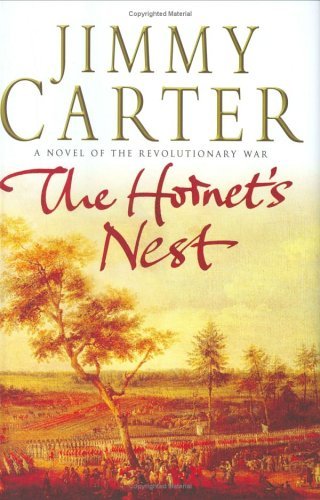
The Barnes & Noble ReviewFormer president and Nobel Peace Prize winner Jimmy Carter presents a novel of the Revolutionary War that emphasizes the role of the South in the battle for America's independence. With a multitude of previous nonfiction works, ranging in topics from the Middle East conflict (The Blood of Abraham) to the workings of democracy (A Government as Good as Its People), Carter uses his political understanding to bring this well-researched tale to fascinating life.When newlyweds Ethan and Epsey Pratt move from Philadelphia to a settlement in Georgia, they find themselves drawn into the war despite all their best efforts. Side by side with their Quaker neighbors Kindred and Mavis Morris, the Pratts are forced to take up arms against the British, as the world around them is bitterly changed forever. With a discerning eye and a commitment to historical accuracy, Carter provides a unique view of the American Revolution by presenting lesser-known aspects of the conflict -- including the shameful way everyone involved tried to manipulate and control the Indian tribes. Despite a huge cast of characters and an extremely detailed and complex narrative, Carter keeps the story rooted in the personalities of common folks faced with extraordinary difficulties. The Hornet's Nest is a vivid, compelling, and original fiction debut from one of our most noted history makers. Tom Piccirilli

If the Kennedys are America's royal family, then John F. Kennedy was the nation's crown prince. Magnetic, handsome, and charismatic, his perfectly coifed image overshadowed the successes and failures of his presidency, and his assassination cemented his near-mythological status in American culture and politics. Struck down in his prime, he represented the best and the brightest of America's future, and when he died, part of the nation's promise and innocence went with him. That, at least, is the public version of the story.The private version, according to Pulitzer Prize-winning journalist Seymour M. Hersh, is quite different. His meticulous investigation of Kennedy has revealed a wealth of indiscretions and malfeasance, ranging from frequent liaisons with prostitutes and mistresses to the attempted assassination of Fidel Castro to involvement in organized crime. Though scandals in the White House are nothing new, Hersh maintains that Kennedy's activities went beyond minor abuses of power and personal indulgences: they threatened the security of the nation--particularly in the realm of foreign policy--and the integrity of the office. Hersh believes it was only a matter of time before Kennedy's dealings were exposed, and only his popularity and charm, compounded by his premature death, spared such an investigation for so long. Exposure was further stalled by Bobby Kennedy's involvement in nefarious dealings, enabling him to bury any investigation of his brother and--by extension--himself.Based on interviews with former Kennedy administration officials, former Secret Service agents, and hundreds of Kennedy's personal friends and associates, The Dark Side of Camelot rewrites the history of John F. Kennedy and his presidency.

Theodore Roosevelt’s writing has the same verve, panache, and energy as the life he lived. Perhaps no president in U.S. history—not even Jefferson—had so many opinions and intellectual interests, believed in so many causes, or worked so hard to translate his beliefs into action. A hard-headed idealist, an unabashed interventionist, a crusader on behalf of environmental preservation and against big business ”trusts,” he was also a writer of uncommon grace and passion with a gift for the memorable phrase. His autobiography, one of the two or three finest ever written by a U.S. president, abounds in exciting episodes of personal transformation and insights into the bitter politics of the day. Roosevelt was a sickly youth who steeled himself for a life of vigor, growing up surrounded by wealth in nineteenth-century Manhattan but vacationing in the West, where he rode with cowboys and learned to revere and study the natural world. His book describes his early failures in his political career and his ascent from the New York City police board to assistant secretary of the Navy where he advocated war with Spain, to his brief stint and public renown as a Rough Rider; and on to the governorship of New York, vice presidency under McKinley, and finally the presidency itself. Elting Morison’s new introduction analyzes what Roosevelt has included—and not included—about his many political conflicts, his role in the acquisition of the Panama Canal, and the deaths of his wife and his mother.As everywhere in his writing, the personality of T.R.—alert, voluble, forceful, compassionate—shines forth from this book, which remains a singular study of a dynamic and, in many respects, exemplary man who was also a key figure in the Age of Reform.

William Lee Miller’s ethical biography is a fresh, engaging telling of the story of Lincoln’s rise to power. Through careful scrutiny of Lincoln’s actions, speeches, and writings, and of accounts from those who knew him, Miller gives us insight into the moral development of a great politician — one who made the choice to go into politics, and ultimately realized that vocation’s fullest moral possibilities.As Lincoln’s Virtues makes refreshingly clear, Lincoln was not born with his face on Mount Rushmore; he was an actual human being making choices — moral choices — in a real world. In an account animated by wit and humor, Miller follows this unschooled frontier politician’s rise, showing that the higher he went and the greater his power, the worthier his conduct would become. He would become that rare bird, a great man who was also a good man. Uniquely revealing of its subject’s heart and mind, it represents a major contribution to our understanding and of Lincoln, and to the perennial American discussion of the relationship between politics and morality.

After more than two decades, this dramatic and concise single-volume distillation of James Thomas Flexner's definitive four-volume biography "George Washington," which received a Pulitzer Prize citation and a National Book Award for the fourth volume, has itself become an American classic. Now in a new trade paperback edition, this masterful work explores the Father of Our Country - sometimes an unpopular hero, a man of great contradictions, but always a towering historical figure, who remains, as Flexner writes in these pages, "a fallible human being made of flesh and blood and spirit - not a statue of marble and wood... a great and good man." The author unflinchingly paints a portrait of Washington: slave owner, brave leader, man of passion, reluctant politician, and fierce general. His complex character and career are neither glorified nor vilified here; rather, Flexner sets up a brilliant counterpoint between Washington's public and private lives and gives us a challenging look at the man who has become as much a national symbol as the American flag.

Stephen E. Ambrose draws upon extensive sources, an unprecedented degree of scholarship, and numerous interviews with Eisenhower himself to offer the fullest, richest, most objective rendering yet of the soldier who became president. He gives us a masterly account of the European war theater and Eisenhower's magnificent leadership as Allied Supreme Commander. Ambrose's recounting of Eisenhower's presidency, the first of the Cold War, brings to life a man and a country struggling with issues as diverse as civil rights, atomic weapons, communism, and a new global role. Along the way, Ambrose follows the 34th President's relations with the people closest to him, most of all Mamie, his son John, and Kay Summersby, as well as Franklin D. Roosevelt, Winston Churchill, Charles de Gaulle, Harry Truman, Nixon, Dulles, Khrushchev, Joe McCarthy, and indeed, all the American and world leaders of his time. This superb interpretation of Eisenhower's life confirms Stephen Ambrose's position as one of our finest historians.

Critics called the movie JFK fiction, but they won't be able to say that about this shocking, unimpeachably convincing book that pieces together startling new disclosures behind John F. Kennedy's assassination. David Lifton's skilled analysis leads to one irrefutable that the plot did not begin in the twisted mind of a lone assassin but was a successfully executed conspiracy that reached the highest level of the federal government. "Sometime during Kennedy's thousand days, a secret veto was cast on his presidency and his life."Lifton's obsession with unanswered questions has led him again and again to the "best evidence" - that the president's body fell into the hands of people who deceived the nation and the world and who, to this day, have not been brought to justice.

The enthralling, often surprising story of John Adams, one of the most important and fascinating Americans who ever lived.In this powerful, epic biography, David McCullough unfolds the adventurous life-journey of John Adams, the brilliant, fiercely independent, often irascible, always honest Yankee patriot -- "the colossus of independence," as Thomas Jefferson called him -- who spared nothing in his zeal for the American Revolution; who rose to become the second President of the United States and saved the country from blundering into an unnecessary war; who was learned beyond all but a few and regarded by some as "out of his senses"; and whose marriage to the wise and valiant Abigail Adams is one of the moving love stories in American history. Like his masterly, Pulitzer Prize-winning biography Truman, David McCullough's John Adams has the sweep and vitality of a great novel. It is both a riveting portrait of an abundantly human man and a vivid evocation of his time, much of it drawn from an outstanding collection of Adams family letters and diaries. In particular, the more than one thousand surviving letters between John and Abigail Adams, nearly half of which have never been published, provide extraordinary access to their private lives and make it possible to know John Adams as no other major American of his founding era. As he has with stunning effect in his previous books, McCullough tells the story from within -- from the point of view of the amazing eighteenth century and of those who, caught up in events, had no sure way of knowing how things would turn out. George Washington, Benjamin Franklin, John Jay, the British spy Edward Bancroft, Madame Lafayette and Jefferson's Paris "interest" Maria Cosway, Alexander Hamilton, James Madison, the scandalmonger James Callender, Sally Hemings, John Marshall, Talleyrand, and Aaron Burr all figure in this panoramic chronicle, as does, importantly, John Quincy Adams, the adored son whom Adams would live to see become President. Crucial to the story, as it was to history, is the relationship between Adams and Jefferson, born opposites -- one a Massachusetts farmer's son, the other a Virginia aristocrat and slaveholder, one short and stout, the other tall and spare. Adams embraced conflict; Jefferson avoided it. Adams had great humor; Jefferson, very little. But they were alike in their devotion to their country. At first they were ardent co-revolutionaries, then fellow diplomats and close friends. With the advent of the two political parties, they became archrivals, even enemies, in the intense struggle for the presidency in 1800, perhaps the most vicious election in history. Then, amazingly, they became friends again, and ultimately, incredibly, they died on the same day -- their day of days -- July 4, in the year 1826. Much about John Adams's life will come as a surprise to many readers. His courageous voyage on the frigate Boston in the winter of 1778 and his later trek over the Pyrenees are exploits that few would have dared and that few readers will ever forget. It is a life encompassing a huge arc -- Adams lived longer than any president. The story ranges from the Boston Massacre to Philadelphia in 1776 to the Versailles of Louis XVI, from Spain to Amsterdam, from the Court of St. James's, where Adams was the first American to stand before King George III as a representative of the new nation, to the raw, half-finished Capital by the Potomac, where Adams was the first President to occupy the White House. This is history on a grand scale -- a book about politics and war and social issues, but also about human nature, love, religious faith, virtue, ambition, friendship and betrayal, and the far-reaching consequences of noble ideas. Above all, John Adams is an enthralling, often surprising story of one of the most important and fascinating Americans who ever lived.

In this unique biography of Thomas Jefferson, leading journalist and social critic Christopher Hitchens offers a startlingly new and provocative interpretation of our Founding Father. Situating Jefferson within the context of America's evolution and tracing his legacy over the past two hundred years, Hitchens brings the character of Jefferson to life as a man of his time and also as a symbolic figure beyond it.Conflicted by power, Jefferson wrote the Declaration of Independence and acted as Minister to France yet yearned for a quieter career in the Virginia legislature. Predicting that slavery would shape the future of America's development, this professed proponent of emancipation elided the issue in the Declaration and continued to own human property. An eloquent writer, he was an awkward public speaker; a reluctant candidate, he left an indelible presidential legacy.Jefferson's statesmanship enabled him to negotiate the Louisiana Purchase with France, doubling the size of the nation, and he authorized the Lewis and Clark expedition, opening up the American frontier for exploration and settlement. Hitchens also analyzes Jefferson's handling of the Barbary War, a lesser-known chapter of his political career, when his attempt to end the kidnapping and bribery of Americans by the Barbary states, and the subsequent war with Tripoli, led to the building of the U.S. navy and the fortification of America's reputation regarding national defense.In the background of this sophisticated analysis is a large historical drama: the fledgling nation's struggle for independence, formed in the crucible of the eighteenth-century Enlightenment, and, in its shadow, the deformation of that struggle in the excesses of the French Revolution. This artful portrait of a formative figure and a turbulent era poses a challenge to anyone interested in American history -- or in the ambiguities of human nature.

In retrospect, it seems as if the American Revolution was inevitable. But was it? In Founding Brothers, Joseph J. Ellis reveals that many of those truths we hold to be self-evident were actually fiercely contested in the early days of the republic. Ellis focuses on six crucial moments in the life of the new nation, including a secret dinner at which the seat of the nation's capital was determined--in exchange for support of Hamilton's financial plan; Washington's precedent-setting Farewell Address; and the Hamilton and Burr duel. Most interesting, perhaps, is the debate (still dividing scholars today) over the meaning of the Revolution. In a fascinating chapter on the renewed friendship between John Adams and Thomas Jefferson at the end of their lives, Ellis points out the fundamental differences between the Republicans, who saw the Revolution as a liberating act and hold the Declaration of Independence most sacred, and the Federalists, who saw the revolution as a step in the building of American nationhood and hold the Constitution most dear. Throughout the text, Ellis explains the personal, face-to-face nature of early American politics--and notes that the members of the revolutionary generation were conscious of the fact that they were establishing precedents on which future generations would rely. In Founding Brothers, Ellis (whose American Sphinx won the National Book Award for nonfiction in 1997) has written an elegant and engaging narrative, sure to become a classic. Highly recommended. --Sunny Delaney

A powerfully moving biography of JFK by one of his closest friends and advisors. Sorensen's work was first published in 1965 when the wounds caused by the assassination had barely time to heal. It has remained a classic and is indispensable for an evaluation of Kennedy and his place in history.

A masterful work by Pulitzer Prize–winning author David Herbert Donald, Lincoln is a stunning portrait of Abraham Lincoln’s life and presidency.Donald brilliantly depicts Lincoln’s gradual ascent from humble beginnings in rural Kentucky to the ever-expanding political circles in Illinois, and finally to the presidency of a country divided by civil war. Donald goes beyond biography, illuminating the gradual development of Lincoln’s character, chronicling his tremendous capacity for evolution and growth, thus illustrating what made it possible for a man so inexperienced and so unprepared for the presidency to become a great moral leader. In the most troubled of times, here was a man who led the country out of slavery and preserved a shattered Union—in short, one of the greatest presidents this country has ever seen.

October 1962: the United States and the Soviet Union stood eyeball to eyeball, each brandishing enough nuclear weapons to obliterate civilization in the Northern Hemisphere. It was one of the most dangerous moments in world history. Day by day, for two weeks, the inner circle of President Kennedy's National Security Council debated what to do, twice coming to the brink of attacking Soviet military units in Cuba--units equipped for nuclear retaliation. And through it all, unbeknownst to any of the participants except the President himself, tape was rolling, capturing for posterity the deliberations that might have ended the world as we know it. These are the full and authenticated transcripts of those audio recordings. Arguably the most important document in the history of the Cuban missile crisis, these transcripts are also a unique window on a drama rarely if ever witnessed by those outside the halls of the moment-by-moment decisionmaking of those with the fate of the West in their hands in a constantly changing, world-threatening situation. At the center of it all is President Kennedy, wary of experts after the debacle of the Bay of Pigs, puzzled and distrustful after confrontations with Khrushchev in Vienna and Berlin, and ever mindful of the responsibility symbolized by the satchel his military aides hold nearby, containing the codes to unleash nuclear warfare. In one brief segment, midway through the crisis, the President, alone, speaks his thoughts into the machine. In others, he copes with hawks from Capitol Hill and the Pentagon. And in the last meeting, we hear him explaining and defending the formula that finally defused the crisis. With him throughout are his team from the State Department, including Secretary Dean Rusk, Under Secretary George Ball, and Llewellyn Thompson; his Defense team, especially Robert McNamara; his key assistants, Theodore Sorenson and McGeorge Bundy; Secretary of the Treasury Douglas Dillon; Vice President Lyndon Johnson; and, of course, his brother Robert, the Attorney General. All are identified and put into their proper context by the editors, whose introduction makes sense of this singular drama within the history of the Cold War and the Kennedy administration and whose conclusions will shape our understanding of the Cold War.

Politically insightful, Nixonland recaptures the turbulent 60s & early 70s, revealing how Dick Nixon rose from the political grave to seize and hold the presidency. Perlstein's account begins with the '65 Watts riots, nine months after Johnson's landslide victory over Goldwater appeared to herald a permanent liberal consensus. Yet the next year, scores of liberals were tossed from Congress, America was more divided than ever and a disgraced politician was on his way to a shocking comeback.Between 1965 and 1972, America experienced a second civil war. From its ashes, today's political world was born. It was the era not only of Nixon, Johnson, Agnew, Humphrey, McGovern, Daley and Wallace; but Abbie Hoffman, Ronald Reagan, Angela Davis, Ted Kennedy, Charles Manson, John Lindsay and Jane Fonda. There are glimpses of Jimmy Carter, George H.W. Bush, Jesse Jackson, John Kerry and even of two ambitious young men named Karl Rove and Bill Clinton--and an unambitious young man named George W. Bush.Filled with prodigious research, driven by a powerful narrative, Perlstein's account of how America divided confirms his place as one of our country's most celebrated historians.

The American president has come to be the most powerful figure in the world—and back in the nineteenth century a great man held that office. William Lee Miller’s new book closely examines that great man in that hugely important Abraham Lincoln as president.Wars waged by American presidents have come to be pivotal historical events. Here Miller analyzes the commander in chief who coped with the profound moral dilemmas of America’s bloodiest war.In his acclaimed book Lincoln’s Virtues (“A fascinating account, sensitively written, rich in insight” —Arthur Schlesinger, Jr.), Miller explored Abraham Lincoln’s intellectual and moral development. Now he completes his “ethical biography,” showing the amiable and inexperienced backcountry politician transformed by constitutional alchemy into an oath-bound head of state, slapped in the face from the first minute of his presidency by decisions of the utmost gravity and confronted by the radical moral contradiction left by the nation’s universal ideals of Equality and Liberty and the monstrous injustice of human slavery.With wit and penetrating sensitivity, Miller shows us a Lincoln with unusual intellectual power, as he brings together the great themes that will be his legend—preserving the United States of America while ending the odious institution that corrupted the nation’s meaning. Miller finds in this superb politician a remarkable presidential an indomitable resolve, combined with the judgment that keeps it from being mindless stubbornness; and a supreme magnanimity, combined with the discriminating judgment that keeps it from being sentimentality. Here is the realistic war leader persisting after multiple defeats, pressing his generals to take the battle to the enemy, insisting that the objective was the destruction of Lee’s army and not the capture of territory, saying that breath alone kills no rebels, remarking that he regretted war does not admit of holy days, asking whether one could believe that he would strike lighter blows rather than heavier ones, or leave any card unplayed. And here is the pardoner, finding every excuse to keep from shooting the simple soldier boy who deserts. Here too is the eloquent leader who describes the national task in matchless prose, and who rises above vindictiveness and triumphalism as he guides the nation to a new birth of freedom.

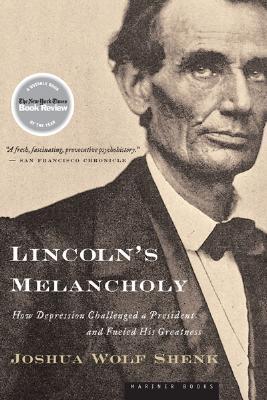
Drawing on a wealth of his own research and the work of other Lincoln scholars, Shenk reveals how the sixteenth president harnessed his depression to fuel his astonishing success. Lincoln found the solace and tactics he needed to deal with the nation's worst crisis in the coping strategies he developed over a lifetime of persevering through depressive episodes and personal tragedies. With empathy and authority gained from his own experience with depression, Shenk crafts a nuanced, revelatory account of Lincoln and his legacy, and in the process unveils a wholly new perspective on how our greatest president guided America through its greatest turmoil.

An American Iliad in the guise of contemporary political reportage, What It Takes penetrates the mystery at the heart of all presidential campaigns: How do presumably ordinary people acquire that mixture of ambition, stamina, and pure shamelessness that makes a true candidate? As he recounts the frenzied course of the 1988 presidential race -- and scours the psyches of contenders from George Bush and Robert Dole to Michael Dukakis and Gary Hart -- Pulitzer Prize-winning journalist Richard Ben Cramer comes up with the answers, in a book that is vast, exhaustively researched, exhilarating, and sometimes appalling in its revelations.

In this fascinating and disturbing book James Douglass presents a compelling account of why President John F. Kennedy was assassinated and why the unmasking of this truth remains crucial for the future of our country and the world. The title comes from a phrase of Thomas Merton, naming of the attitudes, forces and interests that generate and support international tension and conflict.Drawing on a vast field of investigations, including many sources available only recently, Douglass lays out a sequence of steps over the last three years of his life that transformed JFK from a traditional "Cold Warrior" to someone determined to pull the world back from the edge of nuclear apocalypse. Beginning with the fiasco of the Bay of Pigs invasion (which left the President wishing to "splinter the CIA in a thousand pieces"), followed by the Cuban Missile Crisis and his secret back-channel dialogues with Soviet Premier Nikita Khrushchev, JFK pursued a series of actions - right up to the week of his death - that caused members of his own U.S. military-intelligence establishment to regard him as a virtual traitor who had to be eliminated.As the 50th anniversary of Kennedy's assassination approaches, the story of why he was killed - his turn toward peace - is not ancient history, and bears crucial lessons for today in the light of a decade of war and continuing revelations of clandestine national security and military activities. Douglass shows convincingly how those who plotted the death of JFK were determined not simply to eliminate a single man but to kill a vision. Douglass's book has all the elements of a political thriller.But the stakes couldn't be higher. Only by understanding the truth behind the murder of JFK can we grasp his vision and assume the urgent struggle for peace today. "In JFK and the Unspeakable Jim Douglass has distilled all the best available research into a very well-documented and convincing portrait of President Kennedy's transforming turn to peace, at the cost of his life. Personally, it has made a very big impact on me. After reading it in Dallas, I was moved for the first time to visit Dealey Plaza. I urge all Americans to read this book and come to their own conclusions about why he died and why - after fifty years - it still matters."Robert F. Kennedy, Jr.

Winner of the Lincoln PrizeAcclaimed historian Doris Kearns Goodwin illuminates Lincoln's political genius in this highly original work, as the one-term congressman and prairie lawyer rises from obscurity to prevail over three gifted rivals of national reputation to become president.On May 18, 1860, William H. Seward, Salmon P. Chase, Edward Bates, and Abraham Lincoln waited in their hometowns for the results from the Republican National Convention in Chicago. When Lincoln emerged as the victor, his rivals were dismayed and angry.Throughout the turbulent 1850s, each had energetically sought the presidency as the conflict over slavery was leading inexorably to secession and civil war. That Lincoln succeeded, Goodwin demonstrates, was the result of a character that had been forged by experiences that raised him above his more privileged and accomplished rivals. He won because he possessed an extraordinary ability to put himself in the place of other men, to experience what they were feeling, to understand their motives and desires.It was this capacity that enabled Lincoln as president to bring his disgruntled opponents together, create the most unusual cabinet in history, and marshal their talents to the task of preserving the Union and winning the war.We view the long, horrifying struggle from the vantage of the White House as Lincoln copes with incompetent generals, hostile congressmen, and his raucous cabinet. He overcomes these obstacles by winning the respect of his former competitors, and in the case of Seward, finds a loyal and crucial friend to see him through.This brilliant multiple biography is centered on Lincoln's mastery of men and how it shaped the most significant presidency in the nation's history.

BRAND NEW

From one of America's most distinguished historians comes this classic analysis of Richard Nixon. By considering some of the president's opinions, Wills comes to the controversial conclusion that Nixon was actually a liberal. Both entertaining and essential, Nixon Agonistes captures a troubled leader and a struggling nation mired in a foolish Asian war, forfeiting the loyalty of its youth, puzzled by its own power, and looking to its cautious president for confidence. In the end, Nixon Agonistes reaches far beyond its assessment of the thirty-seventh president to become an incisive and provocative analysis of the American political machine.

The definitive biography of a larger-than-life president who defied norms, divided a nation, and changed Washington foreverAndrew Jackson, his intimate circle of friends, and his tumultuous times are at the heart of this remarkable book about the man who rose from nothing to create the modern presidency. Beloved and hated, venerated and reviled, Andrew Jackson was an orphan who fought his way to the pinnacle of power, bending the nation to his will in the cause of democracy. Jackson's election in 1828 ushered in a new and lasting era in which the people, not distant elites, were the guiding force in American politics. Democracy made its stand in the Jackson years, and he gave voice to the hopes and the fears of a restless, changing nation facing challenging times at home and threats abroad. To tell the saga of Jackson's presidency, acclaimed author Jon Meacham goes inside the Jackson White House. Drawing on newly discovered family letters and papers, he details the human drama-the family, the women, and the inner circle of advisers- that shaped Jackson's private world through years of storm and victory.One of our most significant yet dimly recalled presidents, Jackson was a battle-hardened warrior, the founder of the Democratic Party, and the architect of the presidency as we know it. His story is one of violence, sex, courage, and tragedy. With his powerful persona, his evident bravery, and his mystical connection to the people, Jackson moved the White House from the periphery of government to the center of national action, articulating a vision of change that challenged entrenched interests to heed the popular will- or face his formidable wrath. The greatest of the presidents who have followed Jackson in the White House-from Lincoln to Theodore Roosevelt to FDR to Truman-have found inspiration in his example, and virtue in his vision.Jackson was the most contradictory of men. The architect of the removal of Indians from their native lands, he was warmly sentimental and risked everything to give more power to ordinary citizens. He was, in short, a lot like his country: alternately kind and vicious, brilliant and blind; and a man who fought a lifelong war to keep the republic safe-no matter what it took.

1961 Common Reader Classic Bestseller. A narrative history of American politics in action. 2004 Barnes and Noble edition.

In Good condition. Fast Amazon shipping, delivery tracking number, no-hassle return policy - your satisfaction is guaranteed!

In The Breakthrough, veteran journalist Gwen Ifill surveys the American political landscape, shedding new light on the impact of Barack Obama’s stunning presidential victory and introducing the emerging young African American politicians forging a bold new path to political power. Ifill argues that the Black political structure formed during the Civil Rights movement is giving way to a generation of men and women who are the direct beneficiaries of the struggles of the 1960s. She offers incisive, detailed profiles of such prominent leaders as Newark Mayor Cory Booker, Massachusetts Governor Deval Patrick, and U.S. Congressman Artur Davis of Alabama (all interviewed for this book), and also covers numerous up-and-coming figures from across the nation. Drawing on exclusive interviews with power brokers such as President Obama, former Secretary of State Colin Powell, Vernon Jordan, the Reverend Jesse Jackson, his son Congressman Jesse Jackson Jr., and many others, as well as her own razor-sharp observations and analysis of such issues as generational conflict, the race/ gender clash, and the "black enough" conundrum, Ifill shows why this is a pivotal moment in American history. The Breakthrough is a remarkable look at contemporary politics and an essential foundation for understanding the future of American democracy in the age of Obama.

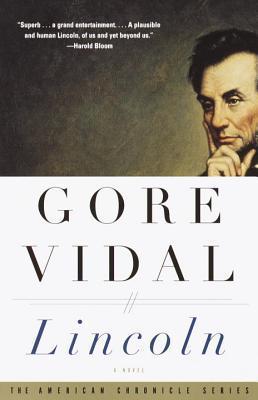
For Abraham Lincoln, whether he was composing love letters, speeches, or legal arguments, words mattered. In Lincoln, acclaimed biographer Fred Kaplan explores the life of America's sixteenth president through his use of language as a vehicle both to express complex ideas and feelings and as an instrument of persuasion and empowerment. Like the other great canonical writers of American literature—a status he is gradually attaining—Lincoln had a literary career that is inseparable from his life story. An admirer and avid reader of Burns, Byron, Shakespeare, and the Old Testament, Lincoln was the most literary of our presidents. His views on love, liberty, and human nature were shaped by his reading and knowledge of literature.Since Lincoln, no president has written his own words and addressed his audience with equal and enduring effectiveness. Kaplan focuses on the elements that shaped Lincoln's mental and imaginative world; how his writings molded his identity, relationships, and career; and how they simultaneously generated both the distinctive political figure he became and the public discourse of the nation. This unique account of Lincoln's life and career highlights the shortcomings of the modern presidency, reminding us, through Lincoln's legacy and appreciation for language, that the careful and honest use of words is a necessity for successful democracy.Illuminating and engrossing, Lincoln brilliantly chronicles Abraham Lincoln's genius with language.

A tiny, ebullient Jew who started as America's leading liberal and ended as its most famous judicial conservative. A Klansman who became an absolutist advocate of free speech and civil rights. A backcountry lawyer who started off trying cases about cows and went on to conduct the most important international trial ever. A self-invented, tall-tale Westerner who narrowly missed the presidency but expanded individual freedom beyond what anyone before had dreamed. Four more different men could hardly be imagined. Yet they had certain things in common. Each was a self-made man who came from humble beginnings on the edge of poverty. Each had driving ambition and a will to succeed. Each was, in his own way, a genius. They began as close allies and friends of FDR, but the quest to shape a new Constitution led them to competition and sometimes outright warfare. SCORPIONS tells the story of these four great justices: their relationship with Roosevelt, with each other, and with the turbulent world of the Great Depression, World War II, and the Cold War. It also serves as a history of the modern Constitution itself.

James A. Garfield was one of the most extraordinary men ever elected president. Born into abject poverty, he rose to become a wunderkind scholar, a Civil War hero, and a renowned and admired reformist congressman. Nominated for president against his will, he engaged in a fierce battle with the corrupt political establishment. But four months after his inauguration, a deranged office seeker tracked Garfield down and shot him in the back. But the shot didn’t kill Garfield. The drama of what happened subsequently is a powerful story of a nation in turmoil. The unhinged assassin’s half-delivered strike shattered the fragile national mood of a country so recently fractured by civil war, and left the wounded president as the object of a bitter behind-the-scenes struggle for power—over his administration, over the nation’s future, and, hauntingly, over his medical care. A team of physicians administered shockingly archaic treatments, to disastrous effect. As his condition worsened, Garfield received help: Alexander Graham Bell, the inventor of the telephone, worked around the clock to invent a new device capable of finding the bullet. Meticulously researched, epic in scope, and pulsating with an intimate human focus and high-velocity narrative drive, The Destiny of the Republic will stand alongside The Devil in the White City and The Professor and the Madman as a classic of narrative history.

NAMED ONE OF THE BEST BOOKS OF THE YEAR BY The Christian Science Monitor • St. Louis Post-Dispatch In his magisterial bestseller FDR, Jean Edward Smith gave us a fresh, modern look at one of the most indelible figures in American history. Now this peerless biographer returns with a new life of Dwight D. Eisenhower that is as full, rich, and revealing as anything ever written about America’s thirty-fourth president. As America searches for new heroes to lead it out of its present-day predicaments, Jean Edward Smith’s achievement lies in reintroducing us to a hero from the past whose virtues have become clouded in the mists of history. Here is Eisenhower the young dreamer, charting a course from Abilene, Kansas, to West Point, to Paris under Pershing, and beyond. Drawing on a wealth of untapped primary sources, Smith provides new insight into Ike’s maddening apprenticeship under Douglas MacArthur in Washington and the Philippines. Then the whole panorama of World War II unfolds, with Eisenhower’s superlative generalship forging the Allied path to victory through multiple reversals of fortune in North Africa and Italy, culminating in the triumphant invasion of Normandy. Smith also gives us an intriguing examination of Ike’s finances, details his wartime affair with Kay Summersby, and reveals the inside story of the 1952 Republican convention that catapulted him to the White House.Smith’s chronicle of Eisenhower’s presidential years is as compelling as it is comprehensive. Derided by his detractors as a somnambulant caretaker, Eisenhower emerges in Smith’s perceptive retelling as both a canny politician and a skillful, decisive leader. Smith convincingly portrays an Eisenhower who engineered an end to America’s three-year no-win war in Korea, resisted calls for preventative wars against the Soviet Union and China, and boldly deployed the Seventh Fleet to protect Formosa from invasion. This Eisenhower, Smith shows us, stared down Khrushchev over Berlin and forced the withdrawal of British, French, and Israeli forces from the Suez Canal. He managed not only to keep the peace—after Ike made peace in Korea, not one American soldier was killed in action during his tenure—but also to enhance America’s prestige in the Middle East and throughout the world.Domestically, Eisenhower reduced defense spending, balanced the budget, constructed the interstate highway system, and provided social security coverage for millions who were self-employed. Ike believed that traditional American values encompassed change and progress.Unmatched in insight, Eisenhower in War and Peace at last gives us an Eisenhower for our time—and for the ages.Praise for Eisenhower in War and Peace “[A] fine new biography . . . [Eisenhower’s] White House years need a more thorough exploration than many previous biographers have given them. Smith, whose long, distinguished career includes superb one-volume biographies of Grant and Franklin Roosevelt, provides just that.”—The Washington Post “Highly readable . . . [Smith] shows us that [Eisenhower’s] ascent to the highest levels of the military establishment had much more to do with his easy mastery of politics than with any great strategic or tactical achievements.”—The Wall Street Journal “Always engrossing . . . Smith portrays a genuinely admirable Eisenhower: smart, congenial, unpretentious, and no ideologue. Despite competing biographies from Ambrose, Perret, and D’Este, this is the best.”—Publishers Weekly (starred review)

“What was he like?”Jack Kennedy said the reason people read biography is to answer that basic question. With the verve of a novelist, Chris Matthews gives us just that. We see this most beloved president in the company of friends. We see and feel him close-up, having fun and giving off that restlessness of his. We watch him navigate his life from privileged, rebellious youth to gutsy American president. We witness his bravery in war and selfless rescue of his PT boat crew. We watch JFK as a young politician learning to play hardball and watch him grow into the leader who averts a nuclear war.What was he like, this person whose own wife called him “that elusive, unforgettable man”? The Jack Kennedy you discover here wanted never to be alone, never to be bored. He loved courage, hated war, lived each day as if it were his last.Chris Matthews’s extraordinary biography is based on personal interviews with those closest to JFK, oral histories by top political aide Kenneth O’Donnell and others, documents from his years as a student at Choate, and notes from Jacqueline Kennedy’s first interview after Dallas. You’ll learn the origins of his inaugural call to “Ask what you can do for your country.” You’ll discover his role in the genesis of the Peace Corps, his stand on civil rights, his push to put a man on the moon, his ban on nuclear arms testing. You’ll get, more than ever before, to the root of the man, including the unsettling aspects of his personal life. As Matthews writes, “I found a fighting prince never free of pain, never far from trouble, never accepting the world he found, never wanting to be his father’s son. He was a far greater hero than he ever wished us to know.”

The Presidents Club, established at Dwight Eisenhower's inauguration by Harry Truman and Herbert Hoover, is a complicated place: its members are bound forever by the experience of the Oval Office and yet are eternal rivals for history's favor. Among their secrets: How Jack Kennedy tried to blame Ike for the Bay of Pigs. How Ike quietly helped Reagan win his first race in 1966. How Richard Nixon conspired with Lyndon Johnson to get elected and then betrayed him. How Jerry Ford and Jimmy Carter turned a deep enmity into an alliance. The unspoken pact between a father and son named Bush. And the roots of the rivalry between Clinton and Barack Obama. Time magazine editors and presidential historians Nancy Gibbs and Michael Duffy offer a new and revealing lens on the American presidency, exploring the club as a hidden instrument of power that has changed the course of history.

Klein, who is known for getting the inside scoop on everyone from the Kennedys to the Clintons, reveals never-before-published details about the Obama administration's political inner workings, as well as Barack and Michelle's personal lives.

The political biography of our time, now available in a four-volume hardcover set. Robert A. Caro's life of Lyndon Johnson is one of the richest, most intensive and most revealing examinations ever undertaken of an American president. It is the magnum opus of a writer perfectly suited to his the Pulitzer Prize-winning biographer-historian, chronicler also of Robert Moses in "The Power Broker," whose inspired research and profound understanding of the nature of ambition and the dynamics of power have made him a peerless explicator of political lives. "Taken together the installments of Mr. Caro's monumental life of Johnson . . . form a revealing prism by which to view the better part of a century in American life and politics during which the country experienced tumultuous and divisive social change. . .Gripping." --Michiko Kakutani, "The New York Times " "By writing the best presidential biography the country has ever seen, Caro has forever changed the way we think, and read, A

Dumas Malone’s classic biography Jefferson and His Time -- originally published in six volumes over a period of thirty-four years, between 1948 and 1982 -- was awarded the Pulitzer Prize in history and became the standard work on Jefferson’s life. The University of Virginia Press is pleased to announce that the complete, illustrated six-volume biography is available for the first time in a handsome boxed set. Merrill Peterson, editor of the Library of America edition of Thomas Jefferson’s writings, has contributed a new foreword to the Virginia edition.

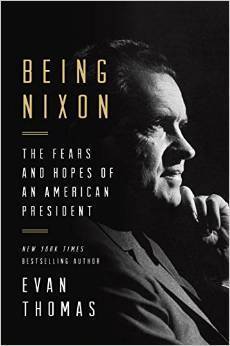
Evan Thomas delivers the best single-volume biography of Richard Nixon to date, a radical, unique portrait of a complicated figure who was both determinedly optimistic and tragically flawed. The New York Times bestselling author of Ike’s Bluff and Sea of Thunder, Thomas brings new life to one of American history’s most infamous, paradoxical, and enigmatic politicians, dispensing with myths to achieve an intimate and nuanced look at the actual man. What drove a painfully shy outcast in elite Washington society—a man so self-conscious he refused to make eye contact during meetings—to pursue power and public office? How did a president so attuned to the American political id that he won reelection in a historic landslide lack the self-awareness to recognize the gaping character flaws that would drive him from office and forever taint his legacy? In Being Nixon, Evan Thomas peels away the layers of the complex, confounding figure who became America’s thirty-seventh president. The son of devout Quakers, Richard Nixon (not unlike his rival John F. Kennedy) grew up in the shadow of an older, favored brother and thrived on conflict and opposition. Through high school and college, in the navy and in politics, he was constantly leading crusades and fighting off enemies real and imagined. As maudlin as he was Machiavellian, Nixon possessed the plainspoken eloquence to reduce American television audiences to tears with his career-saving “Checkers” speech; meanwhile, his darker half hatched schemes designed to take down his political foes, earning him the notorious nickname “Tricky Dick.” Drawing on a wide range of historical accounts, Thomas reveals the contradictions of a leader whose vision and foresight led him to achieve détente with the Soviet Union and reestablish relations with communist China, but whose underhanded political tactics tainted his reputation long before the Watergate scandal. One of the principal architects of the modern Republican Party and its “silent majority” of disaffected whites and conservative ex-Dixiecrats, Nixon was also deemed a liberal in some quarters for his efforts to desegregate Southern schools, create the Environmental Protection Agency, and end the draft. A deeply insightful character study as well as a brilliant political biography, Being Nixon offers a surprising look at a man capable of great bravery and extraordinary deviousness—a balanced portrait of a president too often reduced to caricature.Praise for Being Nixon“A biography of eloquence and breadth . . . No single volume about Nixon’s long and interesting life could be so comprehensive.” —Chicago Tribune “Terrifically engaging . . . a fair, insightful and highly entertaining portrait.”—The Wall Street Journal “Thomas has a fine eye for the telling quote and the funny vignette, and his style is eminently readable.”—The New York Times Book Review “Thomas proves an amiable and fair-minded tour guide.”—The Boston Globe “A measured, concise, and important American biography.”—Michael Beschloss, author of Presidential Courage

A vibrant celebration of President Obama, this perfect commemorative book provides a valuable record of his historical presidency.In January 2017, Barack Obama concluded two terms of his historic presidency. Through stunning images by White House photographers and beyond, as well as notable essays and quotes from a broad spectrum of people, Obama looks back at President Obama’s journey—from his remarkable victory to his final days in office and the significant milestones along the way. Obama features rare and unseen photographs, along with iconic images and newspaper front pages from the president’s 2,920 days in office. It includes dramatic pictures, including the iconic shot from the situation room as the president and his staff watched the live unfolding of the bin Laden raid; day-to-day images of Obama in his roles as a world leader, policy maker, commander in chief, and father; lighthearted photos from the White House Correspondents’ Dinner; late-night television appearances; and moments with the entire Obama family. Included are excerpts from seven historic speeches and contributions from notable historians, community leaders, journalists, academics and business leaders—including Sir Richard Branson, Laurie Garrett, Tweed Roosevelt, Anastasia Somoza and others whose lives have been touched by Obama’s actions and initiatives. Obama is truly a keepsake memento of a beloved president.

A sweeping reexamination of the Founding Father who transformed the United States in each of his political “lives”—as a revolutionary thinker, as a partisan political strategist, and as a president Over the course of his life, James Madison changed the United States three times: First, he designed the Constitution, led the struggle for its adoption and ratification, then drafted the Bill of Rights. As an older, cannier politician he co-founded the original Republican party, setting the course of American political partisanship. Finally, having pioneered a foreign policy based on economic sanctions, he took the United States into a high-risk conflict, becoming the first wartime president and, despite the odds, winning.Now Noah Feldman offers an intriguing portrait of this elusive genius and the constitutional republic he created—and how both evolved to meet unforeseen challenges. Madison hoped to eradicate partisanship yet found himself giving voice to, and institutionalizing, the political divide. Madison’s lifelong loyalty to Thomas Jefferson led to an irrevocable break with George Washington, hero of the American Revolution. Madison closely collaborated with Alexander Hamilton on the Federalist papers—yet their different visions for the United States left them enemies. Alliances defined Madison, too. The vivacious Dolley Madison used her social and political talents to win her husband new supporters in Washington—and define the diplomatic customs of the capital’s society. Madison’s relationship with James Monroe, a mixture of friendship and rivalry, shaped his presidency and the outcome of the War of 1812. We may be more familiar with other Founding Fathers, but the United States today is in many ways Madisonian in nature. Madison predicted that foreign threats would justify the curtailment of civil liberties. He feared economic inequality and the power of financial markets over politics, believing that government by the people demanded resistance to wealth. Madison was the first Founding Father to recognize the importance of public opinion, and the first to understand that the media could function as a safeguard to liberty. The Three Lives of James Madison is an illuminating biography of the man whose creativity and tenacity gave us America’s distinctive form of government. His collaborations, struggles, and contradictions define the United States to this day.

The revealing inside story of the partnership between Steve Bannon and Donald Trump—the key to understanding the rise of the alt-right, the fall of Hillary Clinton, and the hidden forces that drove the greatest upset in American political history. Based on dozens of interviews conducted over six years, Green spins the master narrative of the 2016 campaign from its origins in the far fringes of right-wing politics and reality television to its culmination inside Trump’s penthouse on election night. The shocking elevation of Bannon to head Trump’s flagging presidential campaign on August 17, 2016, hit political Washington like a thunderclap and seemed to signal the meltdown of the Republican Party. Bannon was a bomb-throwing pugilist who’d never run a campaign and was despised by Democrats and Republicans alike. Yet Bannon’s hard-edged ethno-nationalism and his elaborate, years-long plot to destroy Hillary Clinton paved the way for Trump’s unlikely victory. Trump became the avatar of a dark but powerful worldview that dominated the airwaves and spoke to voters whom others couldn’t see. Trump’s campaign was the final phase of a populist insurgency that had been building up in America for years, and Bannon, its inscrutable mastermind, believed it was the culmination of a hard-right global uprising that would change the world. Any study of Trump’s rise to the presidency is unavoidably a study of Bannon. Devil’s Bargain is a tour-de-force telling of the remarkable confluence of circumstances that decided the election, many of them orchestrated by Bannon and his allies, who really did plot a vast, right-wing conspiracy to stop Clinton. To understand Trump's extraordinary rise and Clinton’s fall, you have to weave Trump’s story together with Bannon’s, or else it doesn't make sense.

Instant New York Times BestsellerAs the fiftieth anniversary of the first lunar landing approaches, the award winning historian and perennial New York Times bestselling author takes a fresh look at the space program, President John F. Kennedy’s inspiring challenge, and America’s race to the moon.“We choose to go to the Moon in this decade and do the other things, not because they are easy, but because they are hard; because that goal will serve to organize and measure the best of our energies and skills, because that challenge is one that we are willing to accept, one we are unwilling to postpone, and one we intend to win.”—President John F. KennedyOn May 25, 1961, JFK made an astonishing announcement: his goal of putting a man on the moon by the end of the decade. In this engrossing, fast-paced epic, Douglas Brinkley returns to the 1960s to recreate one of the most exciting and ambitious achievements in the history of humankind. American Moonshot brings together the extraordinary political, cultural, and scientific factors that fueled the birth and development of NASA and the Mercury, Gemini and Apollo projects, which shot the United States to victory in the space race against the Soviet Union at the height of the Cold War.Drawing on new primary source material and major interviews with many of the surviving figures who were key to America’s success, Brinkley brings this fascinating history to life as never before. American Moonshot is a portrait of the brilliant men and women who made this giant leap possible, the technology that enabled us to propel men beyond earth’s orbit to the moon and return them safely, and the geopolitical tensions that spurred Kennedy to commit himself fully to this audacious dream. Brinkley’s ensemble cast of New Frontier characters include rocketeer Wernher von Braun, astronaut John Glenn and space booster Lyndon Johnson.A vivid and enthralling chronicle of one of the most thrilling, hopeful, and turbulent eras in the nation’s history, American Moonshot is an homage to scientific ingenuity, human curiosity, and the boundless American spirit.

A revealing new portrait of Robert F. Kennedy that gets closer to the man than any book before, by bestselling author Chris Matthews, an esteemed Kennedy expert and anchor of MSNBC’s Hardball.With his bestselling biography Jack Kennedy, Chris Matthews shared a new look of one of America’s most beloved Presidents and the patriotic spirit that defined him. Now, with Bobby Kennedy, Matthews returns with a gripping, in-depth, behind-the-scenes portrait of one of the great figures of the American twentieth century.Overlooked by his father, and overshadowed by his war-hero brother, Bobby Kennedy was the perpetual underdog. When he had the chance to become a naval officer like Jack, Bobby turned it down, choosing instead to join the Navy as a common sailor. It was a life changing experience that led him to connect with voters from all walks of life: young or old, black or white, rich or poor. They were the people who turned out for him in his 1968 campaign. RFK would prove himself to be the rarest of politicians—both a pragmatist who knew how to get the job done and an unwavering idealist who could inspire millions.Drawing on extensive research and interviews, Matthews pulls back the curtain on the public and private worlds of Robert Francis Kennedy. He shines a light on all the important moments of his life, from his early years and his start in politics to his crucial role as attorney general in his brother’s administration and his tragic run for president. This definitive book brings Bobby Kennedy to life like never before and is destined to become a political classic

Standout syndicated columnist and CNN contributor Salena Zito, with veteran Republican strategist Brad Todd, reports across five swing states and over 27,000 miles to answer the pressing question: Was Donald Trump's election a fluke or did it represent a fundamental shift in the electorate that will have repercussions--for Republicans and Democrats--for years to come.The history of the American electorate is not a litany of flukes; instead it is a pattern of tectonic plate-grinding, punctuated by a landscape-altering earthquake every generation or so. Donald Trump's electoral coalition is smashing both American political parties and its previously impenetrable political news media.The political experts called the 2016 election wrong and in the wake of the 2016 election surprise, the experts have continued to blow it - looking to predict the coming demise of the President without pausing to consider the durability of the trends and winds that swept him into office.The Great Revolt delves deep into the minds and hearts of the voters the make up this coalition. What emerges is a group of citizens who cannot be described by terms like "angry," "male," "rural," or the often-used "racist." They span job descriptions, income brackets, education levels, and party allegiances. What unites them is their desire to be part of a movement larger than themselves that puts pragmatism before ideology, localism before globalism, and demands the respect it deserve from Washington.Zito and Todd have traveled on over 27,000 miles of country roads to interview more than 300 Trump voters in 10 swing counties. What they have discovered is that these voters were hiding in plain sight--ignored by both parties, the media, and the political experts all at once, ready to unite into the movement that spawned the greatest upset in recent electoral history. Deeply rooted in the culture of these Midwestern swing states, Zito and Brad Todd reframe the discussion of the "Trump voter" to answer the question: What next?

From a preeminent presidential historian comes a groundbreaking and often surprising narrative of America’s wartime chief executives It sometimes seems, in retrospect, as if America has been almost continuously at war. Ten years in the research and writing, Presidents of War is a fresh, magisterial, intimate look at a procession of American leaders as they took the nation into conflict and mobilized their country for victory. It brings us into the room as they make the most difficult decisions that face any President, at times sending hundreds of thousands of American men and women to their deaths. From James Madison and the War of 1812 to recent times, we see them struggling with Congress, the courts, the press, their own advisors and antiwar protesters; seeking comfort from their spouses, families and friends; and dropping to their knees in prayer. We come to understand how these Presidents were able to withstand the pressures of war—both physically and emotionally—or were broken by them. Beschloss’s interviews with surviving participants in the drama and his discoveries in original letters, diaries, once-classified national security documents, and other sources help him to tell this story in a way it has not been told before. Presidents of War combines the sense of being there with the overarching context of two centuries of American history. This important book shows how far we have traveled from the time of our Founders, who tried to constrain presidential power, to our modern day, when a single leader has the potential to launch nuclear weapons that can destroy much of the human race.

Pulitzer Prize-winning author Jon Meacham helps us understand the present moment in American politics and life by looking back at critical times in our history when hope overcame division and fear.Our current climate of partisan fury is not new, and in The Soul of America Meacham shows us how what Abraham Lincoln called the "better angels of our nature" have repeatedly won the day. Painting surprising portraits of Lincoln and other presidents, including Ulysses S. Grant, Theodore Roosevelt, Woodrow Wilson, Franklin D. Roosevelt, Harry S. Truman, Dwight Eisenhower, and Lyndon B. Johnson, and illuminating the courage of such influential citizen activists as Martin Luther King Jr., early suffragettes Alice Paul and Carrie Chapman Catt, civil rights pioneers Rosa Parks and John Lewis, First Lady Eleanor Roosevelt, and Army-McCarthy hearings lawyer Joseph N. Welch, Meacham brings vividly to life turning points in American history.He writes about the Civil War, Reconstruction, and the birth of the Lost Cause; the backlash against immigrants in the First World War and the resurgence of the Ku Klux Klan in the 1920s; the fight for women's rights; the demagoguery of Huey Long and Father Coughlin and the isolationist work of America First in the years before World War II; the anti-Communist witch hunts led by Senator Joseph McCarthy; and Lyndon Johnson's crusade against Jim Crow. Each of these dramatic hours in our national life have been shaped by the contest to lead the country to look forward rather than back, to assert hope over fear — a struggle that continues even now.While the American story has not always — or even often — been heroic, we have been sustained by a belief in progress even in the gloomiest of times. In this inspiring book, Meacham reassures us, "The good news is that we have come through such darkness before" — as, time and again, Lincoln's better angels have found a way to prevail.

This is a book about two people making the most important decisions in the world. One is Barack Obama. The other is Ben Rhodes.The World As It Is tells the full story of what it means to work alongside a radical leader; of how idealism can confront reality and survive; of how the White House really functions; and of what it is to have a partnership, and ultimately a friendship, with a historic president.A young writer and Washington outsider, Ben Rhodes was plucked from obscurity aged 29. Chosen for his original perspective and gift with language, his role was to help shape the nation’s hopes and sense of itself. For nearly ten years, Rhodes was at the centre of the Obama Administration – first as a speechwriter, then a policymaker, and finally a multi-purpose aide and close collaborator.Rhodes puts us in the room at the most tense and poignant moments in recent history: starting every morning with Obama in the Daily Briefing; waiting out the bin Laden raid in the Situation Room; reaching a nuclear agreement with Iran; leading secret negotiations with the Cuban government; confronting the resurgence of nationalism that led to the election of Donald Trump.This is the most vivid portrayal yet of Obama’s presidency. It is an essential record of the last decade. But it also shows us what it means to hold the pen, and to write the words that change our world.

Fox News legal analyst Gregg Jarrett reveals the real story behind Hillary Clinton’s deep state collaborators in government and exposes their nefarious actions during and after the 2016 election.The Russia Hoax reveals how persons within the FBI and Barack Obama’s Justice Department worked improperly to help elect Hillary Clinton and defeat Donald Trump in the 2016 presidential election.When this suspected effort failed, those same people appear to have pursued a contrived investigation of President Trump in an attempt to undo the election results and remove him as president.The evidence suggests that partisans within the FBI and the Department of Justice, driven by personal animus and a misplaced sense of political righteousness, surreptitiously acted to subvert electoral democracy in our country.The book will examine: How did Hillary Clinton manage to escape prosecution despite compelling evidence she violated the law? Did Peter Strzok, James Comey, Andrew McCabe, Loretta Lynch, and others obstruct justice by protecting Clinton? Why was there never a legitimate criminal investigation of Clinton in the Uranium One case? Are the text messages exchanged between Strzok and FBI lawyer Lisa Page evidence of a concerted effort to undermine the electoral process? Was there ever any real evidence of "collusion" between Trump and the Russians? Did Trump obstruct justice in the firing of Comey or was he legally exercising his constitutional authority? Did the FBI and DOJ improperly use a discredited "dossier" about Trump to obtain a FISA warrant to spy on Trump associates? Should Muller have disqualified himself under the special counsel law based on glaring conflicts of interest? Was fired National Security Adviser Michael Flynn unfairly charged with making a false statement? With insightful analysis and a fact-filled narrative, The Russia Hoax delves deeply into Democrat wrongdoing.

In 1776, an elite group of soldiers were handpicked to serve as George Washington’s bodyguards. Washington trusted them; relied on them. But unbeknownst to Washington, some of them were part of a treasonous plan. In the months leading up to the Revolutionary War, these traitorous soldiers, along with the Governor of New York William Tryon and Mayor David Mathews, launched a deadly plot against the most important member of the military: George Washington himself.This is the story of the secret plot and how it was revealed. It is a story of leaders, liars, counterfeiters, and jailhouse confessors. It also shows just how hard the battle was for George Washington—and how close America was to losing the Revolutionary War.Taking place during the most critical period of our nation’s birth, The First Conspiracy tells a remarkable and previously untold piece of American history that not only reveals George Washington’s character, but also illuminates the origins of America’s counterintelligence movement that led to the modern day CIA.

"When Valerie Jarrett interviewed a promising young lawyer named Michelle Robinson in July 1991 for a job in Chicago city government, neither knew that it was the first step on a path that would end in the White House. Jarrett soon became Michelle and Barack Obama's trusted personal adviser and family confidante; in the White House, she was known as the one who "got" him and helped him engage his public life. Jarrett joined the White House team on January 20, 2009 and departed with the First Family on January 20, 2017, and she was in the room--in the Oval Office, on Air Force One, and everywhere else--when it all happened. No one has as intimate a view of the Obama Years, nor one that reaches back as many decades, as Jarrett shares in Finding My Voice. Born in Iran (where her father, a doctor, sought a better job than he could find in segregated America), Jarrett grew up in Chicago in the 60s as racial and gender barriers were being challenged. A single mother stagnating in corporate law, she found her voice in Harold Washington's historic administration, where she began a remarkable journey, ultimately becoming one of the most visible and influential African-American women of the twenty-first century. From her work ensuring equality for women and girls, advancing civil rights, reforming our criminal justice system, and improving the lives of working families, to the real stories behind some of the most stirring moments of the Obama presidency, Jarrett shares her forthright, optimistic perspective on the importance of leadership and the responsibilities of citizenship in the twenty-first century, inspiring readers to lift their own voices."--Provided by publisher.

With authoritative reporting honed through nine presidencies, author Bob Woodward reveals in unprecedented detail the harrowing life inside President Donald Trump’s White House and precisely how he makes decisions on major foreign and domestic policies.Fear is the most intimate portrait of a sitting president ever published during the president’s first years in office. The focus is on the explosive debates and the decision-making in the Oval Office, the Situation Room, Air Force One and the White House residence.Woodward draws from hundreds of hours of interviews with firsthand sources, meeting notes, personal diaries, files and documents. Often with day-by-day details, dialogue and documentation, Fear tracks key foreign issues from North Korea, Afghanistan, Iran, the Middle East, NATO, China and Russia. It reports in-depth on Trump’s key domestic issues particularly trade and tariff disputes, immigration, tax legislation, the Paris Climate Accord and the racial violence in Charlottesville in 2017.Fear presents vivid details of the negotiations between Trump’s attorneys and Robert Mueller, the special counsel in the Russia investigation, laying out for the first time the meeting-by-meeting discussions and strategies. It discloses how senior Trump White House officials joined together to steal draft orders from the president’s Oval Office desk so he would not issue directives that would jeopardize top secret intelligence operations.“It was no less than an administrative coup d’état,” Woodward writes, “a nervous breakdown of the executive power of the most powerful country in the world.”

Why President Trump has left us with no choice but to remove him from office, as explained by celebrated Supreme Court lawyer and former Acting Solicitor General Neal Katyal.No one is above the law. This belief is as American as freedom of speech and turkey on Thanksgiving—held sacred by Democrats and Republicans alike. But as celebrated Supreme Court lawyer and former Acting Solicitor General Neal Katyal argues in Impeach, if President Trump is not held accountable for repeatedly asking foreign powers to interfere in the 2020 presidential election, this could very well mark the end of our democracy. To quote President George Washington’s Farewell Address: “Foreign influence is one of the most baneful foes of republican government.” Impeachment should always be our last resort, explains Katyal, but our founders, our principles, and our Constitution leave us with no choice but to impeach President Trump—before it’s too late.

"A brilliant, unflinching look at the descent of the GOP - backed up with data, historic sweep & first person insights. This one is a must read." --John Avlon "I devoured an early copy in one sitting the day it arrived - highly recommend It Was All a Lie if you want to try to understand how the GOP got to this very dark place." --Elise Jordan"It's great! Highly recommend." --Max BootFrom the most successful Republican political operative of his generation, a searing, unflinching, and deeply personal expos� of how his party became what it is todayStuart Stevens spent decades electing Republicans at every level, from presidents to senators to local officials. He knows the GOP as intimately as anyone in America, and in this new book he offers a devastating portrait of a party that has lost its moral and political compass.This is not a book about how Donald J. Trump hijacked the Republican Party and changed it into something else. Stevens shows how Trump is in fact the natural outcome of five decades of hypocrisy and self-delusion, dating all the way back to the civil rights legislation of the early 1960s. Stevens shows how racism has always lurked in the modern GOP's DNA, from Goldwater's opposition to desegregation to Ronald Reagan's welfare queens and states' rights rhetoric. He gives an insider's account of the rank hypocrisy of the party's claims to embody "family values," and shows how the party's vaunted commitment to fiscal responsibility has been a charade since the 1980s. When a party stands for nothing, he argues, it is only natural that it will be taken over by the loudest and angriest voices in the room.It Was All a Lie is not just an indictment of the Republican Party, but a candid and often lacerating mea culpa. Stevens is not asking for pity or forgiveness; he is simply telling us what he has seen firsthand. He helped to create the modern party that kneels before a morally bankrupt con man and now he wants nothing more than to see what it has become burned to the ground.

From one of America’s most respected journalists and modern historians comes the highly acclaimed, “splendid” ( The Washington Post ) biography of Jimmy Carter, the thirty-ninth president of the United States and Nobel Prize–winning humanitarian.Jonathan Alter tells the epic story of an enigmatic man of faith and his improbable journey from barefoot boy to global icon. Alter paints an intimate and surprising portrait of the only president since Thomas Jefferson who can fairly be called a Renaissance Man, a complex figure—ridiculed and later revered—with a piercing intelligence, prickly intensity, and biting wit beneath the patented smile. Here is a moral exemplar for our times, a flawed but underrated president of decency and vision who was committed to telling the truth to the American people.Growing up in one of the meanest counties in the Jim Crow South, Carter is the only American president who essentially lived in three his early life on the farm in the 1920s without electricity or running water might as well have been in the nineteenth; his presidency put him at the center of major events in the twentieth; and his efforts on conflict resolution and global health set him on the cutting edge of the challenges of the twenty-first.“One of the best in a celebrated genre of presidential biography,” ( The Washington Post ), His Very Best traces how Carter evolved from a timid, bookish child—raised mostly by a Black woman farmhand—into an ambitious naval nuclear engineer writing passionate, never-before-published love letters from sea to his wife and full partner, Rosalynn; a peanut farmer and civic leader whose guilt over staying silent during the civil rights movement and not confronting the white terrorism around him helped power his quest for racial justice at home and abroad; an obscure, born-again governor whose brilliant 1976 campaign demolished the racist wing of the Democratic Party and took him from zero percent to the presidency; a stubborn outsider who failed politically amid the bad economy of the 1970s and the seizure of American hostages in Iran but succeeded in engineering peace between Israel and Egypt, amassing a historic environmental record, moving the government from tokenism to diversity, setting a new global standard for human rights and normalizing relations with China among other unheralded and far-sighted achievements. After leaving office, Carter eradicated diseases, built houses for the poor, and taught Sunday school into his mid-nineties.This “important, fair-minded, highly readable contribution” ( The New York Times Book Review ) will change our understanding of perhaps the most misunderstood president in American history.

Jenna Bush Hager, the former first daughter and granddaughter, bestselling author, and coanchor of the Today show, shares moving, funny stories about her beloved grandparents and the wisdom they passed on that has shaped her life.To the world, George and Barbara Bush were America’s powerful president and influential first lady. To Jenna Bush Hager, they were her beloved Gampy and Ganny, who taught her about respect, humility, kindness, and living a life of passion and meaning—timeless lessons that continue to guide her.In Midland, Texas, Jenna’s maternal grandparents, Harold and Jenna Welch—Pa and Grammee—a home builder and homemaker, lived a quieter life outside the national spotlight. Yet their influence was no less indelible to their granddaughter. Throughout Jenna’s childhood and adolescence, the Welches taught her the name of every star in the sky, the way a dove uses her voice—teaching her to appreciate the beauty in the smallest things.Now the mother of three young children, Jenna pays homage to her grandparents in this collection of heartwarming, intimate personal essays. Filled with love, laughter, and unforgettable stories, Everything Beautiful in Its Time captures the joyous and bittersweet nature of life itself. Jenna reflects on the single year in which she and her family lost Barbara and George H. W. Bush, and Jenna Welch. With the light, self-deprecating charm of the bestselling Sisters First—cowritten with her twin sister, Barbara—Jenna reveals how they navigated this difficult period with grace, faith, and nostalgic humor, uplifted by their grandparents’ sage advice and incomparable spirits.In this moving book, Jenna remembers the past, cherishes the present, and prepares for the future—providing a wealth of anecdotes and lessons for her own children and all of us. Poignant and humorous, intimate and sincere, Everything Beautiful in Its Time is a warm and wonderful celebration of the enduring power of family and an exploration of the things that truly matter most.

From praising dictators to alienating allies, Trump has made chaos his calling card. Has his strategy caused more problems than it solved?Richard Nixon tried it first. Hoping to make communist bloc countries uneasy and thus unstable, Nixon let them think he was just crazy enough to nuke them. He called this “the madman theory.” Nearly half a century later, President Trump has employed his own “madman theory,” sometimes intentionally and sometimes not.Trump praises Kim Jong-un and their “love notes,” admires and flatters Vladimir Putin, and gives a greenlight to Recep Tayyip Erdogan to invade Syria. Meanwhile, he attacks US institutions and officials, ignores his own advisors, and turns his back on US allies from Canada and Mexico to NATO to Ukraine to the Kurds at war with ISIS. Trump is willing to make the nation’s most sensitive and consequential decisions while often ignoring the best information and intelligence available to him. He continually catches the world off guard, but is it working?In The Madman Theory, Jim Sciutto shows how Trump's supporters assume he has a strategy for long-term success – that he is somehow playing three-dimensional chess. Now that we are four years into his presidency, we can see his unpredictable focus on short-term headlines has in fact lead to predictably mediocre results in the short and long run. Trump’s foreign policy has undermined American values and national security interests, while hurting allies who have been on our side for decades, leaving them isolated and vulnerable without American support. Meanwhile, he comforts and emboldens our enemies. The White House’s revolving door of staff demonstrates that Trump has no real plan; all serious policymakers—and those who would be a check on his most destructive impulses—have been exiled or jumped ship.Sciutto has interviewed a wide swath of current and former administration officials to assemble the first comprehensive portrait of the impact of Trump’s erratic foreign policy. Smart, authoritative, and compelling, The Madman Theory is the definitive take on Trump’s calamitous legacy around the globe, showing how his proclivity for chaos is creating a world which is more unstable, violent, and impoverished than it was before.

In this powerful new collection of oil paintings and stories, President George W. Bush spotlights the inspiring journeys of America's immigrants and the contributions they make to the life and prosperity of our nation.The issue of immigration stirs intense emotions today, as it has throughout much of American history. But what gets lost in the debates about policy are the stories of immigrants themselves, the people who are drawn to America by its promise of economic opportunity and political and religious freedom--and who strengthen our nation in countless ways.In the tradition of Portraits of Courage, President Bush's #1 New York Times bestseller, Out of Many, One brings together forty-three full-color portraits of men and women who have immigrated to the United States, alongside stirring stories of the unique ways all of them are pursuing the American Dream. Featuring men and women from thirty-five countries and nearly every region of the world, Out of Many, One shows how hard work, strong values, dreams, and determination know no borders or boundaries and how immigrants embody values that are often viewed as distinctly optimism and gratitude, a willingness to strive and to risk, a deep sense of patriotism, and a spirit of self-reliance that runs deep in our immigrant heritage. In these pages, we meet a North Korean refugee fighting for human rights, a Dallas-based CEO who crossed the Rio Grande from Mexico at age seventeen, and a NASA engineer who as a girl in Nigeria dreamed of coming to America, along with notable figures from business, the military, sports, and entertainment. President Bush captures their faces and stories in striking detail, bringing depth to our understanding of who immigrants are, the challenges they face on their paths to citizenship, and the lessons they can teach us about our country's character.As the stories unfold in this vibrant book, readers will gain a better appreciation for the humanity behind one of our most pressing policy issues and the countless ways in which America, through its tradition of welcoming newcomers, has been strengthened by those who have come here in search of a better life.

From Garrett Graff, comes the first definitive narrative history of Watergate, exploring the full scope of the scandal through the politicians, investigators, journalists, and informants who made it the most influential political event of the modern era.In the early hours of June 17, 1972, a security guard named Frank Wills enters six words into the log book of the Watergate office complex that will change the course of history: 1:47 AM Found tape on doors; call police. The subsequent arrests of five men seeking to bug and burgle the Democratic National Committee offices—three of them Cuban exiles, two of them former intelligence operatives—quickly unravels a web of scandal that ultimately ends a presidency and forever alters views of moral authority and leadership. Watergate, as the event is called, becomes a shorthand for corruption, deceit, and unanswered questions. Now, award-winning journalist and bestselling author Garrett M. Graff explores the full scope of this unprecedented moment from start to finish, in the first comprehensive, single-volume account in decades. The story begins in 1971, with the publication of thousands of military and government documents known as the Pentagon Papers, which reveal dishonesty about the decades-long American presence in Vietnam and spark public outrage. Furious that the leak might expose his administration’s own duplicity during a crucial reelection season, President Richard M. Nixon gathers his closest advisors and gives them implicit instructions: Win by any means necessary. Within a few months, an unsteady line of political dominoes are positioned, from the creation of a series of covert operations code-named GEMSTONE to campaign-trail dirty tricks, possible hostage situations, and questionable fundraising efforts—much of it caught on the White House’s own taping system. One by one they fall, until the thwarted June burglary attracts the attention of intrepid journalists, congressional investigators, and embattled intelligence officers, one of whom will spend decades concealing his identity behind the alias “Deep Throat.” As each faction slowly begins to uncover the truth, a conspiracy deeper and more corrupt than anyone thought possible emerges, and the nation is thrown into a state of crisis as its government—and its leader—unravels. Using newly public documents, transcripts, and revelations, Graff recounts every twist with remarkable detail and page-turning drama, bringing readers into the backrooms of Washington, chaotic daily newsrooms, crowded Senate hearings, and even the Oval Office itself during one of the darkest chapters in American history. Grippingly told and meticulously researched, Watergate is the defining account of the moment that has haunted our nation’s past—and still holds the power to shape its present and future.

A groundbreaking, revelatory history of Abraham Lincoln’s plan to secure a just and lasting peace after the Civil War—a vision that inspired future presidents as well as the world’s most famous peacemakers, including Nelson Mandela, Mahatma Gandhi, and Martin Luther King, Jr. It is a story of war and peace, race and reconciliation.As the tide of the Civil War turned in the spring of 1865, Abraham Lincoln took a dangerous two-week trip to visit the troops on the front lines accompanied by his young son, seeing combat up close, meeting liberated slaves in the ruins of Richmond, and comforting wounded Union and Confederate soldiers.The power of Lincoln’s personal example in the closing days of the war offers a portrait of a peacemaker. He did not demonize people he disagreed with. He used humor, logic, and scripture to depolarize bitter debates. Balancing moral courage with moderation, Lincoln believed that decency could be the most practical form of politics, but he understood that people were more inclined to listen to reason when greeted from a position of strength. Ulysses S. Grant’s famously generous terms of surrender to General Robert E. Lee at Appomattox that April were a direct expression of the president’s belief that a soft peace should follow a hard war.While his assassination sent the country careening off course, Lincoln’s vision would be vindicated long after his death, inspiring future generations in their own quests to secure a just and lasting peace. As US General Lucius Clay, architect of the post-WWII German occupation, said when asked what guided his “I tried to think of the kind of occupation the South would have had if Abraham Lincoln had lived.”Lincoln and the Fight for Peace reveals how Lincoln’s character informed his commitment to unconditional surrender followed by a magnanimous peace. Even during the Civil War, surrounded by reactionaries and radicals, he refused to back down from his belief that there is more that unites us than divides us. But he also understood that peace needs to be waged with as much intensity as war. Lincoln’s plan to win the peace is his unfinished symphony, but in its existing notes, we can find an anthem that can begin to bridge our divisions today.