
Jon Meacham
Jon Ellis Meacham is an American writer, reviewer, historian and presidential biographer who is serving as the Canon Historian of the Washington National Cathedral since November 7, 2021. A former executive editor and executive vice president at Random House, he is a contributing writer to The New York Times Book Review, a contributing editor to Time magazine, and a former editor-in-chief of Newsweek. He is the author of several books. He won the 2009 Pulitzer Prize for Biography or Autobiography for American Lion: Andrew Jackson in the White House. He holds the Carolyn T. and Robert M. Rogers Endowed Chair in American Presidency at Vanderbilt University.
19 Books Written

The definitive biography of a larger-than-life president who defied norms, divided a nation, and changed Washington foreverAndrew Jackson, his intimate circle of friends, and his tumultuous times are at the heart of this remarkable book about the man who rose from nothing to create the modern presidency. Beloved and hated, venerated and reviled, Andrew Jackson was an orphan who fought his way to the pinnacle of power, bending the nation to his will in the cause of democracy. Jackson’s election in 1828 ushered in a new and lasting era in which the people, not distant elites, were the guiding force in American politics. Democracy made its stand in the Jackson years, and he gave voice to the hopes and the fears of a restless, changing nation facing challenging times at home and threats abroad. To tell the saga of Jackson’s presidency, acclaimed author Jon Meacham goes inside the Jackson White House. Drawing on newly discovered family letters and papers, he details the human drama–the family, the women, and the inner circle of advisers– that shaped Jackson’s private world through years of storm and victory.One of our most significant yet dimly recalled presidents, Jackson was a battle-hardened warrior, the founder of the Democratic Party, and the architect of the presidency as we know it. His story is one of violence, sex, courage, and tragedy. With his powerful persona, his evident bravery, and his mystical connection to the people, Jackson moved the White House from the periphery of government to the center of national action, articulating a vision of change that challenged entrenched interests to heed the popular will– or face his formidable wrath. The greatest of the presidents who have followed Jackson in the White House–from Lincoln to Theodore Roosevelt to FDR to Truman–have found inspiration in his example, and virtue in his vision.Jackson was the most contradictory of men. The architect of the removal of Indians from their native lands, he was warmly sentimental and risked everything to give more power to ordinary citizens. He was, in short, a lot like his country: alternately kind and vicious, brilliant and blind; and a man who fought a lifelong war to keep the republic safe–no matter what it took.

The Soul of America: The Battle for Our Better Angels
by Jon Meacham
Rating: 4.3 ⭐
• 2 recommendations ❤️
#1 NEW YORK TIMES BESTSELLER • Pulitzer Prize–winning author Jon Meacham helps us understand the present moment in American politics and life by looking back at critical times in our history when hope overcame division and fear.ONE OF OPRAH’S “BOOKS THAT HELP ME THROUGH” • NAMED ONE OF THE BEST BOOKS OF THE YEAR BY NPR • The Christian Science Monitor • Southern LivingOur current climate of partisan fury is not new, and in The Soul of America Meacham shows us how what Abraham Lincoln called the “better angels of our nature” have repeatedly won the day. Painting surprising portraits of Lincoln and other presidents, including Ulysses S. Grant, Theodore Roosevelt, Woodrow Wilson, Franklin D. Roosevelt, Harry S. Truman, Dwight Eisenhower, and Lyndon B. Johnson, and illuminating the courage of such influential citizen activists as Martin Luther King, Jr., early suffragettes Alice Paul and Carrie Chapman Catt, civil rights pioneers Rosa Parks and John Lewis, First Lady Eleanor Roosevelt, and Army-McCarthy hearings lawyer Joseph N. Welch, Meacham brings vividly to life turning points in American history. He writes about the Civil War, Reconstruction, and the birth of the Lost Cause; the backlash against immigrants in the First World War and the resurgence of the Ku Klux Klan in the 1920s; the fight for women’s rights; the demagoguery of Huey Long and Father Coughlin and the isolationist work of America First in the years before World War II; the anti-Communist witch-hunts led by Senator Joseph McCarthy; and Lyndon Johnson’s crusade against Jim Crow. Each of these dramatic hours in our national life have been shaped by the contest to lead the country to look forward rather than back, to assert hope over fear—a struggle that continues even now.While the American story has not always—or even often—been heroic, we have been sustained by a belief in progress even in the gloomiest of times. In this inspiring book, Meacham reassures us, “The good news is that we have come through such darkness before”—as, time and again, Lincoln’s better angels have found a way to prevail.Praise for The Soul of America“Brilliant, fascinating, timely . . . With compelling narratives of past eras of strife and disenchantment, Meacham offers wisdom for our own time.” —Walter Isaacson“Gripping and inspiring, The Soul of America is Jon Meacham’s declaration of his faith in America.” — Newsday“Meacham gives readers a long-term perspective on American history and a reason to believe the soul of America is ultimately one of kindness and caring, not rancor and paranoia.” — USA Today

An intimate and inspiring portrait of civil rights icon and longtime U.S. congressman John Lewis, linking his life to the quest for justice in America from the 1950s to the present--from the Pulitzer Prize-winning author of The Soul of America John Lewis, who at age twenty-five marched in Selma, Alabama, and was beaten on the Edmund Pettus Bridge, is a visionary and a man of faith. Drawing on decades of wide-ranging interviews with Lewis and deep research into the history of the civil rights movement, Jon Meacham writes of how this great-grandson of a slave and a son of an Alabama tenant farmer was inspired by the Bible and his teachers in nonviolence, Reverend James Lawson and Martin Luther King, Jr., to put his life on the line in the service of what Abraham Lincoln called "the better angels of our nature." A believer in hope above all else, Lewis learned from a young age that nonviolence was not only a tactic but a philosophy, a biblical imperative, and a transforming reality. At the age of four, Lewis, ambitious to become a minister, practiced by preaching to his family's chickens. When his mother cooked one of the chickens, the boy refused to eat it--his first act, he wryly recalled, of nonviolent protest. Integral to Lewis's commitment to bettering the nation was his faith in humanity and in God--and an unshakable belief in the power of hope.Meacham calls Lewis "as important to the founding of a modern and multiethnic twentieth- and twenty-first-century America as Thomas Jefferson and James Madison and Samuel Adams were to the initial creation of the nation-state in the eighteenth century. He did what he did--risking limb and life to bear witness for the powerless in the face of the powerful--not in spite of America, but because of America, and not in spite of religion, but because of religion." In many ways Lewis made his vision a reality, and his example offers Americans today a map for social and political change.

In this magnificent biography, the Pulitzer Prize–winning author of American Lion and Franklin and Winston brings vividly to life an extraordinary man and his remarkable times. Thomas Jefferson: The Art of Power gives us Jefferson the politician and president, a great and complex human being forever engaged in the wars of his era. Philosophers think; politicians maneuver. Jefferson’s genius was that he was both and could do both, often simultaneously. Such is the art of power. Thomas Jefferson hated confrontation, and yet his understanding of power and of human nature enabled him to move men and to marshal ideas, to learn from his mistakes, and to prevail. Passionate about many things—women, his family, books, science, architecture, gardens, friends, Monticello, and Paris—Jefferson loved America most, and he strove over and over again, despite fierce opposition, to realize his vision: the creation, survival, and success of popular government in America. Jon Meacham lets us see Jefferson’s world as Jefferson himself saw it, and to appreciate how Jefferson found the means to endure and win in the face of rife partisan division, economic uncertainty, and external threat. Drawing on archives in the United States, England, and France, as well as unpublished Jefferson presidential papers, Meacham presents Jefferson as the most successful political leader of the early republic, and perhaps in all of American history. The father of the ideal of individual liberty, of the Louisiana Purchase, of the Lewis and Clark expedition, and of the settling of the West, Jefferson recognized that the genius of humanity—and the genius of the new nation—lay in the possibility of progress, of discovering the undiscovered and seeking the unknown. From the writing of the Declaration of Independence to elegant dinners in Paris and in the President’s House; from political maneuverings in the boardinghouses and legislative halls of Philadelphia and New York to the infant capital on the Potomac; from his complicated life at Monticello, his breathtaking house and plantation in Virginia, to the creation of the University of Virginia, Jefferson was central to the age. Here too is the personal Jefferson, a man of appetite, sensuality, and passion. The Jefferson story resonates today not least because he led his nation through ferocious partisanship and cultural warfare amid economic change and external threats, and also because he embodies an eternal drama, the struggle of the leadership of a nation to achieve greatness in a difficult and confounding world.
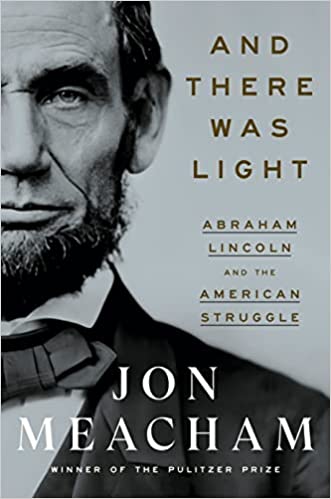
The life and moral evolution of Abraham Lincoln, exploring why and how Lincoln confronted secession, threats to democracy, and the tragedy of slavery in order to expand the possibilities of America.A president who governed a divided country has much to teach us in a twenty-first-century moment of polarization and political crisis. Abraham Lincoln was president when implacable secessionists gave no quarter in a clash of visions inextricably bound up with money, power, race, identity, and faith. He was hated and hailed, excoriated and revered. In Lincoln we can see the possibilities of the presidency as well as its limitations. At once familiar and elusive, Lincoln tends to be seen in popular minds as the greatest of American presidents—a remote icon—or as a politician driven more by calculation than by conviction. This illuminating new portrait gives us a very human Lincoln—an imperfect man whose moral antislavery commitment was essential to the story of justice in America. Here is the Lincoln who, as a boy, was steeped in the sermons of emancipation by Baptist preachers; who insisted that slavery was a moral evil; and who sought, as he put it, to do right as God gave him light to see the right. This book tells the story of Lincoln from his birth on the Kentucky frontier in 1809 to his leadership during the Civil War to his tragic assassination at Ford’s Theater on Good Friday 1865: his rise, his self-education through reading, his loves, his bouts of depression, his political failures, his deepening faith, and his persistent conviction that slavery must end. In a nation shaped by the courage of the enslaved of the era and by the brave witness of Black Americans of the nineteenth century, Lincoln’s story illuminates the ways and means of politics, the marshaling of power in a belligerent democracy, the durability of white supremacy in America, and the capacity of conscience to shape the maelstrom of events. Lincoln was not all he might have been—few human beings ever are—but he was more than many men have ever been. We could have done worse. And we have. And, as Lincoln himself would readily acknowledge, we can always do better. But we will do so only if we see Abraham Lincoln—and ourselves—whole.

#1 NEW YORK TIMES BESTSELLER • NAMED ONE OF THE TEN BEST BOOKS OF THE YEAR BY THE WASHINGTON POST AND ONE OF THE BEST BOOKS OF THE YEAR BY The New York Times Book Review | Time | NPR | St. Louis Post-DispatchIn this brilliant biography, Jon Meacham, the Pulitzer Prize–winning author, chronicles the life of George Herbert Walker Bush. Drawing on President Bush’s personal diaries, on the diaries of his wife, Barbara, and on extraordinary access to the forty-first president and his family, Meacham paints an intimate and surprising portrait of an intensely private man who led the nation through tumultuous times. From the Oval Office to Camp David, from his study in the private quarters of the White House to Air Force One, from the fall of the Berlin Wall to the first Gulf War to the end of Communism, Destiny and Power charts the thoughts, decisions, and emotions of a modern president who may have been the last of his kind. This is the human story of a man who was, like the nation he led, at once noble and flawed. His was one of the great American lives. Born into a loving, privileged, and competitive family, Bush joined the navy on his eighteenth birthday and at age twenty was shot down on a combat mission over the Pacific. He married young, started a family, and resisted pressure to go to Wall Street, striking out for the adventurous world of Texas oil. Over the course of three decades, Bush would rise from the chairmanship of his county Republican Party to serve as congressman, ambassador to the United Nations, head of the Republican National Committee, envoy to China, director of Central Intelligence, vice president under Ronald Reagan, and, finally, president of the United States. In retirement he became the first president since John Adams to see his son win the ultimate prize in American politics. With access not only to the Bush diaries but, through extensive interviews, to the former president himself, Meacham presents Bush’s candid assessments of many of the critical figures of the age, ranging from Richard Nixon to Nancy Reagan; Mao to Mikhail Gorbachev; Dick Cheney to Donald Rumsfeld; Henry Kissinger to Bill Clinton. Here is high politics as it really is but as we rarely see it. From the Pacific to the presidency, Destiny and Power charts the vicissitudes of the life of this quietly compelling American original. Meacham sheds new light on the rise of the right wing in the Republican Party, a shift that signaled the beginning of the end of the center in American politics. Destiny and Power is an affecting portrait of a man who, driven by destiny and by duty, forever sought, ultimately, to put the country first.Praise for Destiny and Power“Should be required reading—if not for every presidential candidate, then for every president-elect.”—The Washington Post “Reflects the qualities of both subject and judicious, balanced, deliberative, with a deep appreciation of history and the personalities who shape it.”—The New York Times Book Review “A fascinating biography of the forty-first president.”—The Dallas Morning News “When we rank, reconsider, laud, or denounce past Presidents, living or dead, we are taking stock of our own times. In that sense, the vindication of George H. W. Bush is a reflection of what we know we’ve lost. Jon Meacham’s new biography of Bush, Destiny and Power, makes that plain from its very first pages.”—The New Yorker “The story of the forty-first man to hold the office sheds light not only on the country we were, but the one we’ve become.”—Los Angeles TimesFrom the Hardcover edition.
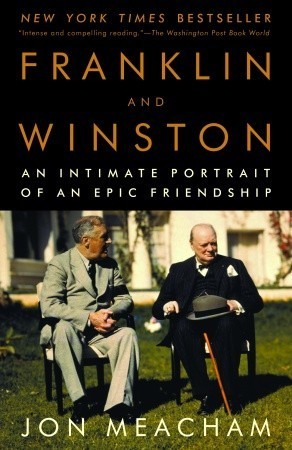
Franklin Roosevelt and Winston Churchill were the greatest leaders of "the Greatest Generation." In Franklin and Winston, Jon Meacham explores the fascinating relationship between the two men who piloted the free world to victory in World War II. It was a crucial friendship, and a unique one--a president and a prime minister spending enormous amounts of time together (113 days during the war) and exchanging nearly two thousand messages. Amid cocktails, cigarettes, and cigars, they met, often secretly, in places as far-flung as Washington, Hyde Park, Casablanca, and Teheran, talking to each other of war, politics, the burden of command, their health, their wives, and their children.Born in the nineteenth century and molders of the twentieth and twenty-first, Roosevelt and Churchill had much in common. Sons of the elite, students of history, politicians of the first rank, they savored power. In their own time both men were underestimated, dismissed as arrogant, and faced skeptics and haters in their own nations--yet both magnificently rose to the central challenges of the twentieth century. Theirs was a kind of love story, with an emotional Churchill courting an elusive Roosevelt. The British prime minister, who rallied his nation in its darkest hour, standing alone against Adolf Hitler, was always somewhat insecure about his place in FDR's affections--which was the way Roosevelt wanted it. A man of secrets, FDR liked to keep people off balance, including his wife, Eleanor, his White House aides--and Winston Churchill.Confronting tyranny and terror, Roosevelt and Churchill built a victorious alliance amid cataclysmic events and occasionally conflicting interests. Franklin and Winston is also the story of their marriages and their families, two clans caught up in the most sweeping global conflict in history.Meacham's new sources--including unpublished letters of FDR's great secret love, Lucy Mercer Rutherfurd, the papers of Pamela Churchill Harriman, and interviews with the few surviving people who were in FDR and Churchill's joint company--shed fresh light on the characters of both men as he engagingly chronicles the hours in which they decided the course of the struggle.Hitler brought them together; later in the war, they drifted apart, but even in the autumn of their alliance, the pull of affection was always there. Charting the personal drama behind the discussions of strategy and statecraft, Meacham has written the definitive account of the most remarkable friendship of the modern age.

The American Gospel-literally, the good news about America-is that religion shapes our public life without controlling it. In this vivid book, New York Times bestselling author Jon Meacham tells the human story of how the Founding Fathers viewed faith, and how they ultimately created a nation in which belief in God is a matter of choice. At a time when our country seems divided by extremism, American Gospel draws on the past to offer a new perspective. Meacham re-creates the fascinating history of a nation grappling with religion and politics-from John Winthrop's "city on a hill" sermon to Thomas Jefferson's Declaration of Independence; from the Revolution to the Civil War; from a proposed nineteenth-century Christian Amendment to the Constitution to Martin Luther King, Jr.'s call for civil rights; from George Washington to Ronald Reagan. Debates about religion and politics are often more divisive than illuminating. Secularists point to a "wall of separation between church and state," while many conservatives act as though the Founding Fathers were apostles in knee britches. As Meacham shows in this brisk narrative, neither extreme has it right. At the heart of the American experiment lies the God of what Benjamin Franklin called "public religion," a God who invests all human beings with inalienable rights while protecting private religion from government interference. It is a great American balancing act, and it has served us well. Meacham has written and spoken extensively about religion and politics, and he brings historical authority and a sense of hope to the issue. American Gospel makes it compellingly clear that the nation's best chance of summoning what Lincolncalled "the better angels of our nature" lies in recovering the spirit and sense of the Founding. In looking back, we may find the light to lead us forward. "In his American Gospel, Jon Meacham provides a refreshingly clear, balanced, and wise historical portrait of religion and American politics at exactly the moment when such fairness and understanding are much needed. Anyone who doubts the relevance of history to our own time has only to read this exceptional book."-David McCullough, author of 1776 "Jon Meacham has given us an insightful and eloquent account of the spiritual foundation of the early days of the American republic. It is especially instructive reading at a time when the nation is at once engaged in and deeply divided on the question of religion and its place in public life."-Tom Brokaw, author of The Greatest Generation "An absorbing narrative full of vivid characters and fresh thinking, American Gospel tells how the Founding Fathers-and their successors-struggled with their own religious and political convictions to work out the basic structure for freedom of religion. For me this book was nonstop reading."-Elaine Pagels, professor of religion, Princeton University, author of Beyond Belief: The Secret Gospel of Thomas "Jon Meacham is one of our country's most brilliant thinkers about religion's impact on American society. In this scintillating and provocative book, Meacham reveals the often-hidden influence of religious belief on the Founding Fathers and on later generations of American citizens and leaders up to our own. Today, as we argue more strenuously than ever about the proper place of religion in our politics and the rest of American life, Meacham's important book should serve as the touchstone of the debate." -Michael Beschloss, author of The Conquerors "At a time when faith and freedom seem increasingly polarized, American Gospel recovers our vital center-the middle ground where, historically, religion and public life strike a delicate balance. Well researched, well written, inspiring, and persuasive, this is a welcome addition to the literature."-Jonathan D. Sarna, Joseph H. & Belle R. Braun Professor of American Jewish History, Brandeis University, author of American Judaism: A History

Pulitzer Prize-winning author Jon Meacham explores the seven last sayings of Jesus as recorded in the Gospels, combining rich historical and theological insights to reflect on the true heart of the Christian story.For Jon Meacham, as for believers worldwide, the events of Good Friday and Easter reveal essential truths about Christianity. A former vestryman of Trinity Church Wall Street and St. Thomas Church Fifth Avenue, Meacham delves into that intersection of faith and history in this meditation on the seven phrases Jesus spoke from the cross.Beginning with "Father, forgive them, for they do not know what they do" and ending with "Father, into thy hands I commend my spirit," Meacham captures for the reader how these words epitomize Jesus's message of love, not hate; grace, not rage; and, rather than vengeance, extraordinary mercy. For each saying, Meacham composes an essay on the origins of Christianity and how Jesus's final words created a foundation for oral and written traditions that upended the very order of the world.Writing in a tone more intimate than any of his previous works, Jon Meacham returns us to the moment that transformed Jesus from a historical figure into the proclaimed Son of God, worshiped by billions.

A celebration of America and the music that inspired people and illuminated eras, from the Revolutionary War to the present, by Pulitzer Prize winner Jon Meacham and Grammy winner Tim McGraw. From "The Star Spangled Banner" to "Born in the U.S.A.," Jon Meacham and Tim McGraw take us on a journey through the eras and the music that helped to shape a nation. Meacham writes a celebration of the history and songs of the eras, and McGraw reflects on these songs as an artist and performer. Beginning with the battle hymns of the Revolution, and taking us through songs from the defining events of the Civil War, the two World Wars, the Great Depression, the Civil Rights movement, the Vietnam War, into the twenty-first century, Meacham and McGraw explore the songs that defined generations and the cultural and political climates that made them. The songs of America remind us where we've been, who we are—and what we can be.

In this special illustrated edition of the #1 New York Times bestselling Thomas Jefferson: The Art of Power by Pulitzer Prize–winning author Jon Meacham, young readers will learn about the life and political philosophy of one of our Founding Fathers. Thomas Jefferson was the third president of the United States. He was one of the authors of the Declaration of Independence. But he was also a lawyer and an ambassador, an inventor and a scientist. He had a wide range of interests and hobbies, but his consuming interest was the survival and success of the United States. This book contains a note from Meacham and over 100 archival illustrations, as well as sections throughout the text about subjects such as the Boston Tea Party, the Library of Congress, and Napoléon Bonaparte. Additional materials include a time line; a family tree; a Who’s Who in Jefferson’s world; sections on Jefferson’s original writings and correspondence, “inventions,” interests, places in Jefferson’s world, finding Jefferson in the United States today, additional reading, organizations, and websites; notes; a bibliography; and an index. This adaptation, ideal for those interested in American presidents, biographies, and the founding of the American republic, is an excellent example of informational writing and reflects Meacham’s extensive research using primary source material. Praise for Thomas Jefferson: President and Philosopher “A solid resource for young people intrigued by Jefferson.” –Booklist “Comprehensive and engaging.” –Scholastic Instructor “There is a surprising paucity of books about Jefferson at this level and this handsome, well-written, and engaging volume fills that literary gap.” –Horn Book “Wonderfully written and crafted... Entertaining for both kids and adults alike.” –KidsReads.com

The Call to Serve: The Life of an American President, George Herbert Walker Bush: A Visual Biography
by Jon Meacham
Rating: 4.3 ⭐
In honor of the 100th anniversary of George H. W. Bush’s birth, this visually stunning chronicle features never-before-published photos and mementos celebrating the 41st President’s vision of leadership as service to others—curated by the rich storytelling of Pulitzer Prize-winning biographer Jon Meacham.The lavishly illustrated The Call to Serve is an intimate, illuminating portrait of the 41st U.S. President, a man who was so much more than just his politics. Jon Meacham brings George Herbert Walker Bush vividly to life, including his dedication to political and moral leadership, and to a life marked by the strong values of integrity and respect for others that Bush learned during his childhood.Bush pursued a life of service to America and to others, including through action in the Pacific during World War II, his political rise in Texas, then his serving as U.S. Ambassador to the UN, envoy to China, director of the CIA, Vice President during the administration of Ronald Reagan, and as President. Set against the historical background of America during the twentieth and twenty-first centuries, this book celebrates the legacy of a man whose bedrock beliefs in honesty and respect for the dignity of others led to a life of leadership viewed as a call to serve. Barack Obama said towards the end of Bush's life that he put the country first, throughout his life, "both before he was president, while he was president, and ever since."Featuring over 450 photographs, a new introduction and commentary throughout by Jon Meacham, as well as narration adapted from his biography of George H. W. Bush, Destiny and Power, this is an essential tribute to a uniquely American life—a story that warrants attention in our own divided time.

Osama bin Laden was the most wanted man in American history—an enemy who brought the United States what President George W. Bush called “a day of fire,” and ushered in a new era of terrorism. It took a decade of blood and sacrifice, of determination and frustration, but finally, in a nighttime raid at the end of a dirt road in Pakistan, the hunt for Bin Laden ended with a gunshot. It was a dramatic climax to a long and painful chapter.But now what? The terrorist threat that has defined American policy since the attacks of 9/11 did not die with Bin Laden in his walled compound near Islamabad. Radicals still wish us harm, and we must fight on.In this provocative collection of essays edited and introduced by Pulitzer Prize winner Jon Meacham, a group of penetrating analysts and leaders look ahead to the world after Bin Laden—to the future of Al Qaeda, of Afghanistan, of Pakistan. We explore the political, military, and cultural implications of the post–Bin Laden war on terror. From Richard N. Haass of the Council on Foreign Relations to former Secretary of State James A. Baker III, from historian and journalist Evan Thomas to former U.S. Army officer Andrew Exum, Beyond Bin Laden gives readers intelligent, deeply informed, and urgent glimpses of what comes next.Contributors include:• Jon Meacham, executive editor, Random House• James A. Baker III, former Secretary of State• Karen Hughes, former counselor to President George W. Bush and former Under Secretary of State for Public Diplomacy• Richard N. Haass, president, Council on Foreign Relations• Bing West, author, The Wrong War, and former Assistant Secretary of Defense for International Security Affairs• Andrew Exum, fellow, Center for a New American Security• Daniel Markey, senior fellow for India, Pakistan, and South Asia, Council on Foreign Relations• Evan Thomas, award-winning historian and former editor-at-large, Newsweek

A literary anthology of important and artful interpretations of the civil rights movement and the fight against white supremacy, past and present—including pieces by Maya Angelou, James Baldwin, Ralph Ellison, Alice Walker, Richard Wright, and John Lewis “Jon Meacham . . . has done about the best job of anthologizing the movement that I’ve ever seen.”—Tom Wicker, Mother JonesEditor and Pulitzer Prize–winning author Jon Meacham has chosen pieces by journalists, novelists, historians, and artists, bringing together a wide range of perspectives and experiences. The result is an unprecedented and powerful portrait of the movement’s spirit and struggle, told through voices that resonate with passion and strength.Maya Angelou takes us on a poignant journey back to her childhood in the Arkansas of the 1930s. On the front page of The New York Times , James Reston marks the movement’s apex as he describes what it was like to watch Martin Luther King, Jr., deliver his heralded “I Have a Dream” speech in real time. Alice Walker takes up the movement’s progress a decade later in her article “Choosing to Stay at Ten Years After the March on Washington.” And John Lewis chronicles the unimaginable courage of the ordinary African Americans who challenged the prevailing order, paid for it in blood and tears, and justly triumphed.Voices in Our Blood is a compelling look at the movement as it actually happened, from the days leading up to World War II to the anxieties and ambiguities of this new century. The story of race in America is a never-ending one, and Voices in Our Blood tells us how we got this far—and how far we still have to go to reach the Promised Land.This powerful anthology contains works Maya Angelou • Russell Baker • James Baldwin • Taylor Branch • Hodding Carter • Ellis Cose • Stanley Crouch • Ralph Ellison • William Faulkner • Marshall Frady • Henry Louis Gates, Jr. • Peter Goldman • David Halberstam • Alex Haley • Elizabeth Hardwick • Charlayne Hunter-Gault • Murray Kempton • John Lewis • Louis E. Lomax • Benjamin E. Mays • Willie Morris • Flannery O’Connor • Walker Percy • Howell Raines • James Reston • Carl T. Rowan • John Steinbeck • William Styron • Calvin Trillin • Alice Walker • Robert Penn Warren • Pat Watters • Bernard Weinraub • Eudora Welty • Rebecca West • E. B. White • Gary Wills • Tom Wolfe • Richard Wright

American Homer Reflections On Shelby Foote And His Classic The Civil War: A Narrative
by Jon Meacham
Rating: 3.7 ⭐
A selection of these letters, along with essays by Jon Meacham, Michael Beschloss, Ken Burns, Annette Gordon-Reed, Michael Eric Dyson, Julia Reed, Robert Loomis, Donald Graham, John M. McCardell, Jr., and Jay Tolson, are included in American Homer, the bonus paperback book available only in the Modern Library boxed set of The Civil War.

Andrew Jackson remains one of America’s most extraordinary, influential and at times controversial leaders, defined by a brilliant military and political career that sought to advance the needs of the common man over those of the entrenched elite—in essence, giving rise to the idea of populism.This powerful TIME special edition, Andrew Jackson: An American Populist, examines the seventh president of the United States, his willful and combative style and his enduring legacy, and why it is so resonant today. Born of humble origins and orphaned as a child, Jackson became a lawyer, a brave and heroic general, and a United States senator before winning the presidency by besting John Quincy Adams, who had been born with great privilege. As a two-term president, Jackson distinguished himself with his skill at consensus-building as well as his quest to rout corruption out of the government. He could at times be woefully wrong: brutal in his treatment of American Indians and an unapologetic slave owner until his death. Yet as a gifted and strong-minded political tactician Jackson delivered significant legislative accomplishments, including keeping South Carolina in the union. After his presidency, Jackson retired to his plantation in Tennessee, the Hermitage, where he remained active in politics until he died. Jackson’s life, actions and legacy are as important today as they were in his time. Through unmatched writing and storytelling as well as remarkable illustrations, Andrew Jackson: An American Populist delivers the full essence of the man.

Songs of America: Young Reader's Edition: Patriotism, Protest, and the Music That Made a Nation
by Jon Meacham
Rating: 3.4 ⭐
An adaptation for young readers of the outstanding adult bestseller by Pulitzer Prize–winning writer Jon Meacham and Grammy Award–winning artist Tim McGraw celebrating America and the music that shaped it.Songs of America explores the music of important times in our history—the stirring pro- and anti-war music of the Revolutionary and Civil Wars, World Wars I and II, and the Vietnam War; the folk songs and popular music of the Great Depression, the fight for women’s rights, and the Civil Rights movement; and the music of both beloved and lesser-known poets, musicians, and songwriters from Colonial times to the twenty-first century. Pulitzer Prize–winning author Jon Meacham and Grammy Award–winning artist Tim McGraw present the songs of patriotism and protest that gave voice to the politicians and activists who moved the country forward, seeking to fulfill America’s destiny as the land of liberty and justice for all.Readers will recognize pages from the American songbook—examples include “The Star-Spangled Banner,” “The Battle Hymn of the Republic,” “We Shall Overcome,” and “Born in the U.S.A.”—and will be introduced to lesser-known but equally important works that have inspired Americans to hold on to the tenets of freedom at the roots of our nation.Adapted from the adult bestseller, Songs of Young Readers Edition highlights the unique role music has played in uniting and shaping a nation.


American Struggle: Democracy, Dissent, and the Pursuit of a More Perfect Union: An Anthology
by Jon Meacham
Rating: 5.0 ⭐
The #1 New York Times bestselling author of The Soul of America offers an empowering lens to understand our national debates and divisions from 1619 to the present, with his signature commentary on the consequential speeches, letters, and essays that led us to this moment.In a polarized era, history can become a subject of political contention. Many have seen America as perfect; many others argue that the national experiment is fundamentally flawed. The truth, Meacham shows, likely lies in between these extremes. America has had shining hours, and also dark ones.In American Struggle, Jon Meacham looks to the nation's complicated past for lessons on the way forward. This rich and diverse collection covers a wide spectrum of history, from 1619 to the present, with primary-source documents that spotlight in their own words those who sought unity or division, and with Meacham's commentary throughout--from the founders to Lincoln; to leaders in the South; to leaders during the World Wars; to figures in the modern era such as Martin Luther King, Jr., JFK, LBJ, Shirley Chisolm, Walter Cronkite, Bill Clinton, Barack Obama, and many more. As clashes over liberty and slavery, inclusion and exclusion play out, these voices, brilliantly framed by Meacham's singular commentary, remind us that contentious citizenship and fair-minded observations are essential to bringing about the more perfect union envisioned in the preamble to the Constitution, which Frederick Douglass called a "glorious liberty document".Conflict is nothing new in American life; rather, as Meacham and these texts show, these arguments are built into the nation's character. To know what has come before, to watch as long-running disputes rise and fall, is to be armed against despair.