Loading themes...
Explore the best books about Animals theme.

This beloved book by E. B. White, author of Stuart Little and The Trumpet of the Swan, is a classic of children's literature that is "just about perfect." This high-quality paperback features vibrant illustrations colorized by Rosemary Wells!Some Pig. Humble. Radiant. These are the words in Charlotte's Web, high up in Zuckerman's barn. Charlotte's spiderweb tells of her feelings for a little pig named Wilbur, who simply wants a friend. They also express the love of a girl named Fern, who saved Wilbur's life when he was born the runt of his litter.E. B. White's Newbery Honor Book is a tender novel of friendship, love, life, and death that will continue to be enjoyed by generations to come. This edition contains newly color illustrations by Garth Williams, the acclaimed illustrator of E. B. White's Stuart Little and Laura Ingalls Wilder's Little House series, among many other books.
In a great green room, tucked away in bed, is a little bunny. "Goodnight room, goodnight moon." And to all the familiar things in the softly lit room -- to the picture of the three little bears sitting on chairs, to the clocks and his socks, to the mittens and the kittens, to everything one by one -- the little bunny says goodnight.In this classic of children's literature, beloved by generations of readers and listeners, the quiet poetry of the words and the gentle, lulling illustrations combine to make a perfect book for the end of the day.
The adventures of Christopher Robin and his friends in which Pooh Bear uses a balloon to get honey, Piglet meets a Heffalump, and Eeyore has a birthday.

Il saggio Moscardo, l’ingegnoso Mirtillo, il prode Argento e tanti altri sono gli eroi di questo fantastico romanzo epico. Un drappello di piccoli coraggiosi conigli, alla ricerca di un avvenire più sicuro, migra attraverso le ridenti colline del Berkshire e affronta mille nemici in un indimenticabile cammino verso il più prezioso dei beni: la libertà. Con La collina dei conigli la letteratura contemporanea ha ricreato la sua Iliade e la sua Odissea: i piccoli e coraggiosi protagonisti vivono avventure ed emozioni, nella quiete di splendidi pascoli, e raccontano leggende sul Popolo dei Conigli, i suoi dèi e i suoi eroi.A 50 anni dalla sua prima uscita della Collina dei conigli, con la prefazione originale di Madeline Miller che illumina il potere della mitologia in quest'epica storia di conigli.

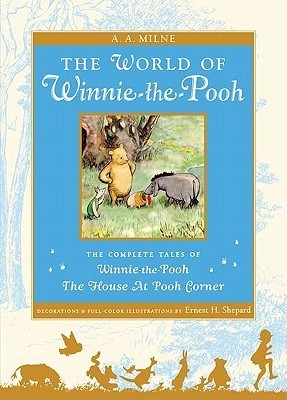
In 1926, "Winnie-the-Pooh," a collection of stories about a rather stout, somewhat confused bear, was published in England and America. The enchanting tales of Pooh, Piglet, Eeyore, Christopher Robin, and the others were an immediate success, and firmly established A.A. Milne, already an acclaimed dramatist, as a major author of children's books. "Winnie-the-Pooh" was followed in 1928 by a second collection, "The House at Pooh Corner," which continued the adventures from the Hundred Acre Wood and introduced bouncy, lovable Tigger.This deluxe volume brings all of the Pooh stories together in one full-colour, large-format book. The texts are complete and unabridged, and all of the illustrations, each gloriously recoloured, are included. Here are the beloved stories of Pooh stuck in Rabbit's doorway, of gloomy Eeyore and his nearly forgotten birthday, of playing Poohsticks on the bridge, and so many more.
Begun as a series of stories told by Kenneth Grahame to his six-year-old son, The Wind in the Willows has become one of the most beloved works of children’s literature ever written. It has been illustrated, famously, by E.H. Shepard and Arthur Rackham, and parts of it were dramatized by A.A. Milne as Toad of Toad Hall. A century after its initial publication it still enchants. Much in Grahame’s novel—the sensitivity of Mole, the mania of Toad, the domesticity of Rat—permeates our imaginative lives (as children and adults). And Grahame’s burnished prose still dazzles. Now comes an annotated edition of The Wind in the Willows by a leading literary scholar that instructs the reader in a larger appreciation of the novel’s charms and serene narrative magic.

Max, a wild and naughty boy, is sent to bed without his supper by his exhausted mother. In his room, he imagines sailing far away to a land of Wild Things. Instead of eating him, the Wild Things make Max their king.

It’s December 1997, and a man-eating tiger is on the prowl outside a remote village in Russia’s Far East. The tiger isn’t just killing people, it’s annihilating them, and a team of men and their dogs must hunt it on foot through the forest in the brutal cold. As the trackers sift through the gruesome remains of the victims, they discover that these attacks aren’t random: the tiger is apparently engaged in a vendetta. Injured, starving, and extremely dangerous, the tiger must be found before it strikes again.As he re-creates these extraordinary events, John Vaillant gives us an unforgettable portrait of this spectacularly beautiful and mysterious region. We meet the native tribes who for centuries have worshipped and lived alongside tigers, even sharing their kills with them. We witness the arrival of Russian settlers in the nineteenth and early twentieth centuries, soldiers and hunters who greatly diminished the tiger populations. And we come to know their descendants, who, crushed by poverty, have turned to poaching and further upset the natural balance of the region.This ancient, tenuous relationship between man and predator is at the very heart of this remarkable book. Throughout we encounter surprising theories of how humans and tigers may have evolved to coexist, how we may have developed as scavengers rather than hunters, and how early Homo sapiens may have fit seamlessly into the tiger’s ecosystem. Above all, we come to understand the endangered Siberian tiger, a highly intelligent super-predator that can grow to ten feet long, weigh more than six hundred pounds, and range daily over vast territories of forest and mountain.Beautifully written and deeply informative, The Tiger circles around three main characters: Vladimir Markov, a poacher killed by the tiger; Yuri Trush, the lead tracker; and the tiger himself. It is an absolutely gripping tale of man and nature that leads inexorably to a final showdown in a clearing deep in the taiga.

'There is no harm in a man's cub.'Best known for the 'Mowgli' stories, Rudyard Kipling's The Jungle Book expertly interweaves myth, morals, adventure and powerful story-telling. Set in Central India, Mowgli is raised by a pack of wolves. Along the way he encounters memorable characters such as the foreboding tiger Shere Kahn, Bagheera the panther and Baloo the bear. Including other stories such as that of Rikki-Tikki-Tavi, a heroic mongoose and Toomai, a young elephant handler, Kipling's fables remain as popular today as they ever were.

Over the last half-billion years, there have been five mass extinctions, when the diversity of life on earth suddenly and dramatically contracted. Scientists around the world are currently monitoring the sixth extinction, predicted to be the most devastating extinction event since the asteroid impact that wiped out the dinosaurs. This time around, the cataclysm is us. In prose that is at once frank, entertaining, and deeply informed, The New Yorker writer Elizabeth Kolbert tells us why and how human beings have altered life on the planet in a way no species has before. Interweaving research in half a dozen disciplines, descriptions of the fascinating species that have already been lost, and the history of extinction as a concept, Kolbert provides a moving and comprehensive account of the disappearances occurring before our very eyes. She shows that the sixth extinction is likely to be mankind's most lasting legacy, compelling us to rethink the fundamental question of what it means to be human.

PULITZER PRIZE WINNER • A dramatic story of groundbreaking scientific research of Darwin's discovery of evolution that "spark[s] not just the intellect, but the imagination" ( Washington Post Book World). “Admirable and much-needed.... Weiner’s triumph is to reveal how evolution and science work, and to let them speak clearly for themselves.”— The New York Times Book ReviewOn a desert island in the heart of the Galapagos archipelago, where Darwin received his first inklings of the theory of evolution, two scientists, Peter and Rosemary Grant, have spent twenty years proving that Darwin did not know the strength of his own theory. For among the finches of Daphne Major, natural selection is neither rare nor slow: it is taking place by the hour, and we can watch.In this remarkable story, Jonathan Weiner follows these scientists as they watch Darwin's finches and come up with a new understanding of life itself. The Beak of the Finch is an elegantly written and compelling masterpiece of theory and explication in the tradition of Stephen Jay Gould.

And God said, Let us make man in our image, after our likeness; and let them have dominion over the fish of the sea, and over the fowl of the air, and over the cattle, and over all the earth, and over every creeping thing that creepeth upon the earth.--Genesis 1:24-26In this crucial passage from the Old Testament, God grants mankind power over animals. But with this privilege comes the grave responsibility to respect life, to treat animals with simple dignity and compassion.Somewhere along the way, something has gone wrong.In Dominion, we witness the annual convention of Safari Club International, an organization whose wealthier members will pay up to $20,000 to hunt an elephant, a lion or another animal, either abroad or in American "safari ranches," where the animals are fenced in pens. We attend the annual International Whaling Commission conference, where the skewed politics of the whaling industry come to light, and the focus is on developing more lethal, but not more merciful, methods of harvesting "living marine resources." And we visit a gargantuan American "factory farm," where animals are treated as mere product and raised in conditions of mass confinement, bred for passivity and bulk, inseminated and fed with machines, kept in tightly confined stalls for the entirety of their lives, and slaughtered in a way that maximizes profits and minimizes decency.Throughout Dominion, Scully counters the hypocritical arguments that attempt to excuse animal abuse: from those who argue that the Bible's message permits mankind to use animals as it pleases, to the hunter's argument that through hunting animal populations are controlled, to the popular and "scientifically proven" notions that animals cannot feel pain, experience no emotions, and are not conscious of their own lives.The result is eye opening, painful and infuriating, insightful and rewarding. Dominion is a plea for human benevolence and mercy, a scathing attack on those who would dismiss animal activists as mere sentimentalists, and a demand for reform from the government down to the individual. Matthew Scully has created a groundbreaking work, a book of lasting power and importance for all of us.

National Geographic Field Guide to the Birds of North America continues to be the most sought-after, the most authoritative, and the easiest to access field guide to birds on the market. Now in its 4th Edition, revisions include 250 updated range maps, and new classification information National Geographic is reissuing the Field Guide to the Birds of North America in the 4th edition, focusing on its accuracy and easy use in the field. This is the ultimate birders field guide - sturdy, easy to carry and use, and featuring the most complete information among bird guides. It features all species known to breed in North America, including those that are regular visitors to our continent or that drop in occasionally - more than 800 in all. The edition is lavishly illustrated with specially commissioned full-colour illustrations, plus newly updated range maps and detailed descriptions. A superb new index allows birders in the field to quickly identify a species.

David Allen Sibley, America's most gifted contemporary painter of birds, is the author and illustrator of this comprehensive guide. His beautifully detailed illustrations—more than 6,600 in all—and descriptions of 810 species and 350 regional populations will enrich every birder's experience.The Sibley Guide 's innovative design makes it entirely user friendly. The illustrations are arranged to facilitate comparison, yet still capture the unique character of each species.The Sibley Guide to Birds provides a wealth of new —Captioned illustrations show many previously unpublished field marks and revisions of known marks—Nearly every species is shown in flight—Measurements include length, wingspan, and weight for every species—Subspecies and geographic varients are covered thoroughly—Complete voice descriptions are included for every species—Maps show the complete distribution of every summer and winter ranges, migration routes, and rare occurrencesBoth novice and experienced birders will appreciate these and other innovative —An introductory page for each family or group of related families makes comparisons simple—Clear and concise labels with pointers identify field marks directly—Birds are illustrated in similar poses to make comparisons between species quick and easy—Illustrations emphasize the way birds look in the fieldWith The Sibley Guide to Birds , the National Audubon Society makes the art and expertise of David Sibley available to the world in a comprehensive, handsome, easy-to-use volume that will be the indispensable identification guide every birder must own.

The summer Opal and her father, the preacher, move to Naomi, Florida, Opal goes into the Winn-Dixie supermarket—and comes out with a dog. A big, ugly, suffering dog with a sterling sense of humor. A dog she dubs Winn-Dixie. Because of Winn-Dixie, the preacher tells Opal ten things about her absent mother, one for each year Opal has been alive. Winn-Dixie is better at making friends than anyone Opal has ever known, and together they meet the local librarian, Miss Franny Block, who once fought off a bear with a copy of WAR AND PEACE. They meet Gloria Dump, who is nearly blind but sees with her heart, and Otis, an ex-con who sets the animals in his pet shop loose after hours, then lulls them with his guitar.Opal spends all that sweet summer collecting stories about her new friends and thinking about her mother. But because of Winn-Dixie or perhaps because she has grown, Opal learns to let go, just a little, and that friendship—and forgiveness—can sneak up on you like a sudden summer storm.Kate DiCamillo's beloved, best-selling debut novel is now available in a paperback digest edition.Kate DiCamillo's first published novel, like Winn-Dixie himself, immediately proved to be a keeper—a New York Times bestseller, a Newbery Honor winner, the inspiration for a popular film, and most especially, a cherished classic that touches the hearts of readers of all ages. It's now available in a paperback digest format certain to bring this tale's magic to an even wider circle of fans.

"Guess how much I love you," says Little Nutbrown Hare. Little Nutbrown Hare shows his daddy how much he loves him: as wide as he can reach and as far as he can hop. But Big Nutbrown Hare, who can reach farther and hop higher, loves him back just as much. Well then Little Nutbrown Hare loves him right up to the moon, but that's just halfway to Big Nutbrown Hare's love for him.

The remarkable story of a "talking" chimp, a leading scientist, and the profound insights they have uncovered about our speciesHe has been featured in cover stories in Time, Newsweek, and National Geographic, and has been the subject of a "NOVA" documentary. He is directly responsible for discoveries that have forced the scientific community to recast its thinking about the nature of the mind and the origins of language. He is Kanzi, an extraordinary bonobo chimpanzee who has overturned the idea that symbolic language is unique to our species. This is the moving story of how Kanzi learned to converse with humans and the profound lessons he has taught us about our animal cousins, and ourselves.". . . The underlying thesis is informative and well argued . . . Savage-Rumbaugh's results are impressive." — The Washington Post"This popular, absorbing, and controversial account is recommended." — Library Journal

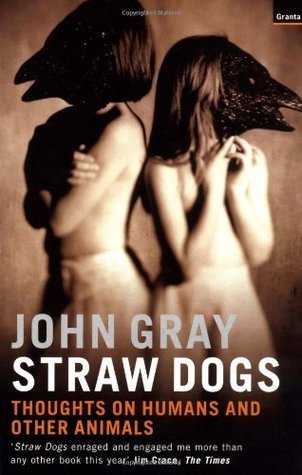
Straw Dogs is a work of philosophy, which sets out to challenge our most cherished assumptions about what it means to be human. From Plato to Christianity, from the Enlightenment to Nietzsche, the Western tradition has been based on arrogant and erroneous beliefs about human beings and their place in the world. Philosophies such as liberalism and Marxism think of humankind as a species whose destiny is to transcend natural limits and conquer the Earth. Even in the present day, despite Darwin's discoveries, nearly all schools of thought take as their starting point the belief that humans are radically different from other animals. John Gray argues that this humanist belief is an illusion. The aim of Straw Dogs is to explore how the world and human life look once humanism has been finally abandoned.Straw Dogs explores philosophical issues such as the nature of the self, free will, morality, progress and the value of truth. Drawing his inspiration from art, poetry, and the frontiers of science as well as philosophy itself, John Gray presents a post-humanist view of the world and of human life. Straw Dogs is an exhilarating, sometimes disturbing book that leads the reader to question their deepest beliefs.

David Quammen's book, The Song of the Dodo, is a brilliant, stirring work, breathtaking in its scope, far-reaching in its message -- a crucial book in precarious times, which radically alters the way in which we understand the natural world and our place in that world. It's also a book full of entertainment and wonders.In The Song of the Dodo, we follow Quammen's keen intellect through the ideas, theories, and experiments of prominent naturalists of the last two centuries. We trail after him as he travels the world, tracking the subject of island biogeography, which encompasses nothing less than the study of the origin and extinction of all species. Why is this island idea so important? Because islands are where species most commonly go extinct -- and because, as Quammen points out, we live in an age when all of Earth's landscapes are being chopped into island-like fragments by human activity.Through his eyes, we glimpse the nature of evolution and extinction, and in so doing come to understand the monumental diversity of our planet, and the importance of preserving its wild landscapes, animals, and plants. We also meet some fascinating human characters. By the book's end we are wiser, and more deeply concerned, but Quammen leaves us with a message of excitement and hope.

Have a ball with Dr. Seuss and the Cat in the Hat in this classic story... Now read by Kelsey Grammer! Then he said That is that.And then he was goneWith a tip of his hat.A dreary day turns into a wild romp when this beloved story introduces readers to the Cat in the Hat and his troublemaking friends, Thing 1 and Thing 2 – And don't forget Fish! A favorite among kids, parents and teachers, this story uses simple words and basic rhyme to encourage and delight beginning readers.Originally created by Dr. Seuss himself, Beginner Books are fun, funny, and easy to read. These unjacketed hardcover early readers encourage children to read all on their own, using simple words and illustrations. Smaller than the classic large format Seuss picture books like The Lorax and Oh, The Places You'll Go!, these portable packages are perfect for practicing readers ages 3-7, and lucky parents too!

First a story, and then a kiss from Mother Bear, and Father Bear carries Little Bear to bed. And that's when the fun begins. Father Bear gets to Little Bear's room, but Little Bear is missing! Little readers will see him hiding in the MOST obvious place but Father Bear cannot seem to find him. Is he under the stove? Is he in the garden? Is he in the woodbox? Only when Father Bear walks past the mirror does the silliness end, and in a very tasty way. With this, one of the most charming bedtime tales ever, Richard Scarry has once again proven his timeless appeal.

For 30 years Roger Fouts has pioneered communication with chimpanzees through sign language--beginning with a mischievous baby chimp named Washoe. This remarkable book describes Fout's odyssey from novice researcher to celebrity scientist to impassioned crusader for the rights of animals. Living and conversing with these sensitive creatures has given him a profound appreciation of what they can teach us about ourselves. It has also made Fouts an outspoken opponent of biomedical experimentation on chimpanzees. A voyage of scientific discovery and interspecies communication, this is a stirring tale of friendship, courage, and compassion that will change forever the way we view our biological--and spritual--next of kin. Fouts is a professor of Psychology.

From the New York Times bestselling author of Mama's Last Hug and Are We Smart Enough to Know How Smart Animals Are? , a provocative argument that apes have created their own distinctive culturesIn The Ape and the Sushi Master , eminent primatologist Frans de Waal corrects our arrogant assumption that humans are the only creatures to have made the leap from the natural to the cultural domain. The book's title derives from an analogy de Waal draws between the way behavior is transmitted in ape society and the way sushi-making skills are passed down from sushi master to apprentice. Like the apprentice, young apes watch their group mates at close range, absorbing the methods and lessons of each of their elders' actions. Responses long thought to be instinctive are actually learned behavior, de Waal argues, and constitute ape culture. A delightful mix of intriguing anecdote, rigorous clinical study, adventurous field work, and fascinating speculation, The Ape and the Sushi Master shows that apes are not human caricatures but members of our extended family with their own resourcefulness and dignity.

Join author Douglas Adams and zoologist Mark Carwardine as they take off around the world in search of exotic, endangered creatures.

Orca-the killer whale-is one of the most intelligent creatures in the universe. He hunts in packs, like a wolf. Incredibly, he is the only animal other than man who kills for revenge. He has one mate, and if she is harmed by man, he will hunt down that person with a relentless, terrible vengeance-across seas, across time, across all obstacles.

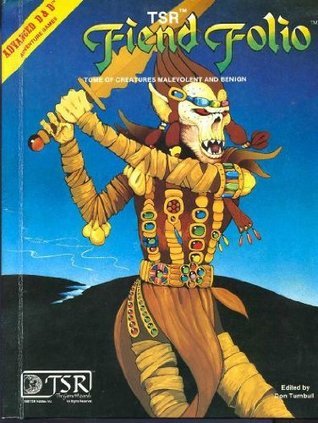
The Fiend Folio is a collection of monsters for use with Advanced Dungeons & Dragons, similar in format to the original Monster Manual and effectively a supplement to that book.

For centuries, parasites have lived in nightmares, horror stories, and in the darkest shadows of science. Now award-winning writer Carl Zimmer takes us on a fantastic voyage into the secret parasite universe we actually live in but haven't recognized. He reveals not only that parasites are the most successful life-forms on Earth, but that they triggered the development of sex, shape ecosystems, and have driven the engine of evolution. In mapping the parasite universe, Zimmer makes the astonishing observation that most species are parasites, and that almost every animal, including humans, will at one time or another become the home of a parasite. Zimmer shows how highly evolved parasites are and describes the frightening and amazing ingenuity these commando invaders use to devour their hosts from the inside and control their behavior. The sinister Sacculina carcini makes its home in an unlucky crab and proceeds to eat everything but what the crab needs to put food in its mouth, which Sacculina then consumes. When Sacculina finally reproduces, it places its young precisely where the crab would nurture its own progeny, and then has the crab nurture the foster family members. Single-celled Toxoplasma gondi has an even more insidious role, for it can invade the human brain. There it makes men distrustful and less willing to submit to social mores. Women become more outgoing and warm-hearted. Why would a parasite cause these particular personality changes? It seems Toxoplasma wants its host to be less afraid, to be more prone to danger and a violent end -- so that, in the carnage, it will be able to move on to another host. From the steamy jungles of Costa Rica to the fetid parasite heaven of rebel-held southern Sudan, Zimmer tracks the genius of parasitic life and its impact on humanity. We hosts have developed remarkable defenses against the indomitable parasite: our mighty immune system, our culturally enforced habit of keeping clean, and, perhaps most intriguingly, sex. But this is not merely a book about the evil power of parasitism and how we must defend against it. On the contrary, Zimmer concludes that humankind itself is a new kind of parasite, one that preys on the entire Earth. If we are to achieve the sophistication of the parasites on display here in vivid detail, if we are to promote the flourishing of life in all its diversity as they do, we must learn the ways nature lives with itself, the laws of Parasite Rex.

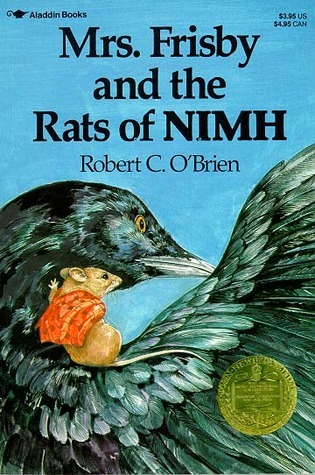
Some extraordinary rats come to the aid of a mouse family in this Newbery Medal Award–winning classic by notable children’s author Robert C. O’Brien.Mrs. Frisby, a widowed mouse with four small children, is faced with a terrible problem. She must move her family to their summer quarters immediately, or face almost certain death. But her youngest son, Timothy, lies ill with pneumonia and must not be moved. Fortunately, she encounters the rats of NIMH, an extraordinary breed of highly intelligent creatures, who come up with a brilliant solution to her dilemma. And Mrs. Frisby in turn renders them a great service.

Horton the kindly elephant has his work cut out saving the tiny Whos who live on a speck of dust – no one else believes they are there! But Horton eventually convinces everyone that ‘A person’s a person, no matter how small’!With his unique combination of hilarious stories, zany pictures and riotous rhymes, Dr Seuss has been delighting young children and helping them learn to read for over fifty years. Creator of the wonderfully anarchic Cat in the Hat, and ranked among the world's top ten favorite children’s authors, Dr. Seuss is a global best-seller, with nearly half a billion books sold worldwide.

Winner, 2008 Book of the Year, End Malaria Awards, Malaria Foundation International Malaria sickens hundreds of millions of people―and kills one to three million―each year. Despite massive efforts to eradicate the disease, it remains a major public health problem in poorer tropical regions. But malaria has not always been concentrated in tropical areas. How did other regions control malaria and why does the disease still flourish in some parts of the globe? From Russia to Bengal to Palm Beach, Randall Packard’s far-ranging narrative traces the natural and social forces that help malaria spread and make it deadly. He finds that war, land development, crumbling health systems, and globalization―coupled with climate change and changes in the distribution and flow of water―create conditions in which malaria's carrier mosquitoes thrive. The combination of these forces, Packard contends, makes the tropical regions today a perfect home for the disease. Authoritative, fascinating, and eye-opening, this short history of malaria concludes with policy recommendations for improving control strategies and saving lives.

The first edition of Frans de Waal's Chimpanzee Politics was acclaimed not only by primatologists for its scientific achievement but also by a much broader audience of politicians, business leaders, and social psychologists for its remarkable insights into very basic human needs and behaviors. In this revised edition―featuring a new gallery of color photographs along with a new introduction and epilogue―de Waal expands and updates his story of the Arnhem colony and its continuing political upheavals. We learn the fate of many memorable chimpanzees and meet the colony's current leaders and their allies. The new edition remains a detailed and thoroughly engrossing account―of sexual rivalries and coalitions, of actions governed by intelligence rather than instinct―and it reaffirms the complex bond between humans and their closest living relatives. As we watch the chimpanzees of Arnhem behave in ways we recognize from Machiavelli (and from the nightly news), de Waal reminds us again that the roots of politics are older than humanity.

Tom hates having to spend the summer on a farm . . . until he discovers the midnight fox.No one asked Tom how he felt about spending two months on his Aunt Millie’s farm. For a city boy, the farm holds countless terrors—stampeding baby lambs, boy-chasing chickens, and worst of all, loneliness. But everything changes when Tom sees the midnight fox. He can spend hours watching the graceful black fox in the woods. And when her life—and that of her cub—is in danger, Tom knows exactly what he must do.“An exceptional book.”— BooklistA Library of Congress Children’s Book of the Year

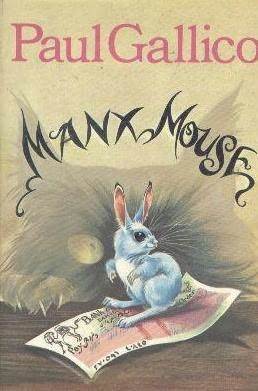
Just after the stroke of thirteen on the night of his creation by a tipsy ceramist, Manxmouse sets boldly off from Buntingdowndale on the road to high adventure and self-discovery.

A cat. A seagull. An impossible task.A worldwide bestseller and the subject of a feature film, THE STORY OF A SEAGULL... is finally out in paperback!Her wings burdened by an oil slick, a seagull struggles to the nearest port to lay her final egg. Exhausted, she lands on a balcony where Zorba the cat is sunning himself. She extracts three extraordinary promises from that he will watch over the egg, that he will not EAT the egg, and that, when it's time, he will teach the baby gull to fly. The first two promises are hard enough, but the third one is surely impossible. Isn't it?

The Book That Started A Revolution Since its original publication in 1975, this groundbreaking work has awakened millions of concerned men and women to the shocking abuse of animals everywhere -- inspiring a worldwide movement to eliminate much of the cruel and unnecessary laboratory animal experimentation of years past. In this newly revised and expanded edition, author Peter Singer exposes the chilling realities of today's "factory forms" and product-testing procedures -- offering sound, humane solutions to what has become a profound environmental and social as well as moral issue. An important and persuasive appeal to conscience, fairness, decency and justice, Animal Liberation is essential reading for the supporter and the skeptic alike.

"Doctor De Soto, the dentist, did very good work, so he had no end of patients..." With the aid of his able assistant, Mrs. De Soto, he copes with the toothaches of animals large and small. His expertise is so great that his fortunate patients never feel any pain.Since he's a mouse, Doctor De Soto refuses to treat "dangerous" animals—that is, animals who have a taste for mice. But one day a fox shows up and begs for relief from the tooth that's killing him. How can the kindhearted De Sotos turn him away? But, how can they make sure that the fox doesn't give in to his baser instincts once his tooth is fixed? Those clever De Sotos will find a way. 'Doctor De Soto' is a 1982 New York Times Book Review Notable Children's Book of the Year and Outstanding Book of the Year, a 1983 Boston Globe - Horn Book Awards Honor Book for Picture Books, and a 1983 Newbery Honor Book. William Steig (1907-2003) was an American cartoonist, illustrator and writer of children's books. He was best known for the picture book Shrek!' (1990), which inspired the film series of the same name, as well as others that included 'Sylvester and the Magic Pebble' (1969), 'Abel's Island' (1976), and 'Doctor De Soto' (1982).

Nursery magic is very strange and wonderful, and only those playthings that are old and wise and experienced like the Skin Horse understand all about it.Like the Skin Horse, Margery Williams understood how toys—and people—become real through the wisdom and experience of love. This reissue of a favorite classic, with the original story and illustrations as they first appeared in 1922, will work its magic for all who read it.

This is the account of a journey to the dazzling Tibetan plateau of Dolpo in the high Himalayas. In 1973 Matthiessen made the 250-mile trek to Dolpo, as part of an expedition to study wild blue sheep. It was an arduous, sometimes dangerous, physical endeavour: exertion, blisters, blizzards, endless negotiations with sherpas, quaking cold. But it was also a 'journey of the heart' - among the beauty and indifference of the mountains Matthiessen was searching for solace. He was also searching for a glimpse of a snow leopard, a creature so rarely spotted as to be almost mythical.

Part of the trilogy of memoirs that inspired the television show The Durrells in Corfu: A naturalist’s adventures with animals—and humans—on a Greek island. When his family moved to a Greek island, young naturalist Gerald Durrell was able to indulge his passion for wildlife of all sorts as he discovered the new world around him—and the creatures and people who inhabited it. Indeed, Durrell’s years growing up on Corfu would inspire the rest of his life. In addition to his tales of wild animals, Durrell recounts stories about his even wilder family—including his widowed mother, Louisa, and elder siblings Lawrence, Leslie, and Margo—with undeniable wit and humor. The final chapter in Durrell’s reflections on his family’s time in Greece before the start of World War II, The Garden of the Gods is a fascinating look at the childhood of a naturalist who was ahead of his time. This ebook features an illustrated biography of Gerald Durrell including rare photos from the author’s estate.

Peter Singer's remarkably clear and comprehensive Practical Ethics has become a classic introduction to applied ethics since its publication in 1979 and has been translated into many languages. For this second edition the author has revised all the existing chapters, added two new ones, and updated the bibliography. He has also added an appendix describing some of the deep misunderstanding of and consequent violent reaction to the book in Germany, Austria, and Switzerland where the book has tested the limits of freedom of speech. The focus of the book is the application of ethics to difficult and controversial social questions.

Carl Goes Shopping is a beautifully illustrated children’s book in the Carl series from author/artist Alexandra Day featuring everyone’s favorite babysitting Rottweiler.When Carl is told to mind baby Madeleine at a department store, the faithful canine and his little friend do some mischievous exploring. From the toy aisles and the clothing racks and home décor, the duo make the store their own little adventure land.

A little bunny keeps running away from his mother in an imaginative and imaginary game of verbal hide-and-seek; children will be profoundly comforted by this lovingly steadfast mother who finds her child every time.The Runaway Bunny, first published in 1942 and never out of print, has indeed become a classic. Generations of readers have fallen in love with the gentle magic of its reassuring words and loving pictures.

New York Public Library Book for the TeenagerNew York Public Library Book to RememberPSLA Young Adult Top 40 Nonfiction Titles of the Year"Engaging...a lively, informative compendium of facts, theories, and musings."-Michiko Kakutani, New York TimesBehold the rat, dirty and disgusting! Robert Sullivan turns the lowly rat into the star of this most perversely intriguing, remarkable, and unexpectedly elegant New York Times bestseller.Love them or loathe them, rats are here to stay-they are city dwellers as much as (or more than) we are, surviving on the effluvia of our society. In Rats , the critically acclaimed bestseller, Robert Sullivan spends a year investigating a rat-infested alley just a few blocks away from Wall Street. Sullivan gets to know not just the beast but its friends and foes: the exterminators, the sanitation workers, the agitators and activists who have played their part in the centuries-old war between human city dweller and wild city rat.Sullivan looks deep into the largely unrecorded history of the city and its masses-its herds-of-rats-like mob. Funny, wise, sometimes disgusting but always compulsively readable, Rats earns its unlikely place alongside the great classics of nature writing.With an all-new Afterword by the author

Born mute, speaking only in sign, Edgar Sawtelle leads an idyllic life with his parents on their farm in remote northern Wisconsin. For generations, the Sawtelles have raised and trained a fictional breed of dog whose thoughtful companionship is epitomized by Almondine, Edgar's lifelong friend and ally. But with the unexpected return of Claude, Edgar's paternal uncle, turmoil consumes the Sawtelles' once peaceful home. When Edgar's father dies suddenly, Claude insinuates himself into the life of the farm—and into Edgar's mother's affections. Grief-stricken and bewildered, Edgar tries to prove Claude played a role in his father's death, but his plan backfires—spectacularly. Forced to flee into the vast wilderness lying beyond the farm, Edgar comes of age in the wild, fighting for his survival and that of the three yearling dogs who follow him. But his need to face his father's murderer and his devotion to the Sawtelle dogs turn Edgar ever homeward. David Wroblewski is a master storyteller, and his breathtaking scenes—the elemental north woods, the sweep of seasons, an iconic American barn, a fateful vision rendered in the falling rain—create a riveting family saga, a brilliant exploration of the limits of language, and a compulsively readable modern classic.

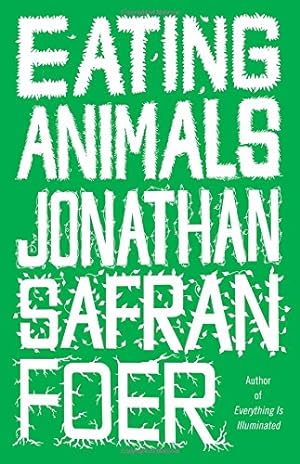
Jonathan Safran Foer spent much of his life oscillating between enthusiastic carnivore and occasional vegetarian. Once he started a family, the moral dimensions of food became increasingly important.Faced with the prospect of being unable to explain why we eat some animals and not others, Foer set out to explore the origins of many eating traditions and the fictions involved with creating them. Traveling to the darkest corners of our dining habits, Foer raises the unspoken question behind every fish we eat, every chicken we fry, and every burger we grill.Part memoir and part investigative report, Eating Animals is a book that, in the words of the Los Angeles Times, places Jonathan Safran Foer "at the table with our greatest philosophers."

First published in 1903, The Call of the Wild is regarded as Jack London's masterpiece. Based on London's experiences as a gold prospector in the Canadian wilderness and his ideas about nature and the struggle for existence, The Call of the Wild is a tale about unbreakable spirit and the fight for survival in the frozen Alaskan Klondike.

Told by the magnificent black horse himself, this is the dramatic and heartwarming tale of Black Beauty's life-from his idyllic days on a country squire's estate to his harsh fate as a London cab horse.

In a work that beautifully demonstrates the rewards of closely observing nature, Elisabeth Bailey shares an inspiring and intimate story of her uncommon encounter with a Neohelix albolabris —a common woodland snail. While an illness keeps her bedridden, Bailey watches a wild snail that has taken up residence on her nightstand. As a result, she discovers the solace and sense of wonder that this mysterious creature brings and comes to a greater understanding of her own confined place in the world. Intrigued by the snail’s molluscan anatomy, cryptic defenses, clear decision making, hydraulic locomotion, and mysterious courtship activities, Bailey becomes an astute and amused observer, providing a candid and engaging look into the curious life of this underappreciated small animal. Told with wit and grace, The Sound of a Wild Snail Eating is a remarkable journey of survival and resilience, showing us how a small part of the natural world illuminates our own human existence and provides an appreciation of what it means to be fully alive.

With 400 photos and a step-by-step plan, this puppy book visually guides you through socialization, potty training, and life skills while making the process fun. Dr. Marty Becker; "America's Veterinarian" of Good Morning America, says, "This is like no other puppy book you've seen before. It’s not just about teaching your puppy manners, it's a step-by-step recipe for bonding with your puppy, learning to communicate with him, and preparing you pup for life! With Dr. Yin's approach your puppy will learn more in a week than many dogs learn in a year!" Victoria Stillwell from Animal Planet's "It's Me or the Dog" says, " This book is a must-have for any puppy parent or canine educator." Dr. Johan Bradshaw, author of "Dog Sense" says, "This book is a comprehensive and humane guide to puppy behavior and training, incorporating a detailed guide on how to interpret your puppy's body language. Worth buying for the socialization advice and checklist alone." Dr. Ellen Lindell, veterinary behaviorist, states, "This well-organized book is filled with essential information about puppy development and learning. Experts and novices alike will appreciate the illustrations and analogies that turn science into a clear and enjoyable read. Most important, Dr. Yin offers a plan that incorporates critical socialization and training into a daily routine. It will be a puppy life-saver." Nancy Abplanalp of "Thinking Dogs" says, "I own tons of dog training books and none of them are as much fun to read as this one. It's accurate and easy to access. The puppy socialization chapters and checklist are especially well done. If you have a puppy, work with puppies, raise puppies, or just plain like puppies, get this book. Chapters • How Your Puppy Developed Before You Got Her • Why Start Training So Soon? • Preparing for the Puppy • A Foolproof Potty Training Program • Dr. Sophia Yin’s Learn to Earn Program for Puppies • Socializing Your Pup to Dogs, People and Handling • A Head Start on All the Rest

A Silent Spring for oceans, written by "the Rachel Carson of the fish world" (The New York Times)Who can forget the sense of wonder with which they discovered the creatures of the deep? In this vibrant hymn to the sea, Callum Roberts—one of the world’s foremost conservation biologists—leads readers on a fascinating tour of mankind’s relationship to the sea, from the earliest traces of water on earth to the oceans as we know them today. In the process, Roberts looks at how the taming of the oceans has shaped human civilization and affected marine life.We have always been fish eaters, from the dawn of civilization, but in the last twenty years we have transformed the oceans beyond recognition. Putting our exploitation of the seas into historical context, Roberts offers a devastating account of the impact of modern fishing techniques, pollution, and climate change, and reveals what it would take to steer the right course while there is still time. Like Four Fish and The Omnivore’s Dilemma, The Ocean of Life takes a long view to tell a story in which each one of us has a role to play.

Ebola, SARS, Hendra, AIDS, and countless other deadly viruses all have one thing in common: the bugs that transmit these diseases all originate in wild animals and pass to humans by a process called spillover. In this gripping account, David Quammen takes the reader along on this astonishing quest to learn how, where from, and why these diseases emerge and asks the terrifying question: What might the next big one be?

As Seen on "60 Minutes"!As a Navy SEAL during a combat deployment in Iraq, Mike Ritland saw a military working dog in action and instantly knew he'd found his true calling. Ritland started his own company training and supplying dogs for the SEAL teams, U.S. Government, and Department of Defense. He knew that fewer than 1 percent of all working dogs had what it takes to contribute to the success of our nation's elite combat units, and began searching the globe for animals who fit this specific profile. These specialized canines had to pass rigorous selection tests before their serious training could begin.The results were a highly trained working dogs capable of handling both detection and apprehension work in the most extreme environments and the tensest of battlefield conditions. Though fiercely aggressive and athletic, these dogs develop a close bond with the handlers they work side by side with and the other team members. Truly integrating themselves into their units, these K9 warriors are much like their human counterparts—unwavering in their devotion to duty, strong enough and tough enough to take it to the enemy through pain, injury, or fear.For the first time ever, Trident K9 Warriors gives readers an inside look at these elite canines—who they are, how they are trained, and the extreme missions they undertake saving countless lives, asking for little in the way of reward. From detecting explosives to eliminating the bad guys, these powerful dogs are also some of the smartest and most highly skilled working animals on the planet.

The New York Times bestselling author of The Jane Austen Book Club introduces a middle-class American family, ordinary in every way but one...Meet the Cooke family: Mother and Dad, Lowell, Rosemary and her unusual sister Fern. Rosemary begins her story in the middle. She has her reasons. “Until Fern’s expulsion...,” Rosemary says, “she was my twin, my funhouse mirror, my whirlwind other half and I loved her.” As a child, Rosemary never stopped talking. Then, something happened, and Rosemary wrapped herself in silence.In We Are All Completely Beside Ourselves, Karen Joy Fowler weaves her most accomplished work to date—a tale of loving but fallible people whose well-intentioned actions lead to heartbreaking consequences.

This book explodes with wonder and delight. Making use of remarkable scientific discoveries that transform our understanding of how natural systems work, George Monbiot explores a new, positive environmentalism that shows how damaged ecosystems on land and at sea can be restored, and how this restoration can revitalize and enrich our lives. Challenging what he calls his “ecological boredom,” Monbiot weaves together a beautiful and riveting tale of wild places, wildlife, and wild people. Roaming the hills of Britain and the forests of Europe, kayaking off the coast of Wales with dolphins and seabirds, he seeks out the places that still possess something of the untamed spirit he would like to resurrect.He meets people trying to restore lost forests and bring back missing species—such as wolves, lynx, wolverines, wild boar, and gray whales—and explores astonishing evidence that certain species, not just humans, have the power to shape the physical landscape. This process of rewilding, Monbiot argues, offers an alternative to a silent spring: the chance of a raucous summer in which ecological processes resume and humans draw closer to the natural world.

Before there was Max , there was Mike. A true story much like the touching movie, Navy SEAL Dogs explores the incomparable relationship between trainer and military dog.From the author of Team Dog , Trident K9 Warriors gave readers an inside look at the Navy SEAL teams' elite K9 warriors-who they are, how they are trained, and the extreme missions they undertake to save lives. From detecting explosives to eliminating the bad guys, these powerful dogs are also some of the smartest and highest skilled working animals on the planet. Mike Ritland's job is to train them.This special edition re-telling presents the dramatic tale of how Ritland discovered his passion and grew up to become the trainer of the nation's most elite military working dogs. Ritland was a smaller-than-average kid who was often picked-on at school-which led him to spend more time with dogs at a young age. After graduating BUD/S training-the toughest military training in the world-to become a SEAL, he was on combat deployment in Iraq when he saw a military working dog in action and instantly knew he'd found his true calling.Ritland started his own company to train and supply working and protection dogs for the U.S. Government, Department of Defense, and other clients. He also started the Warrior Dog Foundation to help retired Special Operations dogs live long and happy lives after their service.Navy SEAL Dogs is the true story of how Mike Ritland grew from a skinny, bullied child, to a member of our nation's most elite SEAL Teams, to the trainer of the world's most highly skilled K9 warriors.

A colorful, moving, and dramatic memoir of personal transformation, set against one of the most famous game reserves in the world.When Nelson Mandela was released after twenty-seven years of imprisonment, he needed a place to recover and adjust to his new life. He went to Londolozi Game Reserve. Founded over eighty years ago by Boyd Varty's great-grandfather, Londolozi started as a hunting safari. But in 1973, Boyd's visionary father, Dave, transformed it into a nature reserve, creating a blueprint for modern-day conservation. This transformation is the backdrop of Boyd's family history and his own personal odyssey.Alongside his feisty, daring sister, Bronwyn, Boyd grows up learning to track lions, raise leopard cubs, and pilot Land Rovers. The two of them tag along with their larger-than-life uncle, John, who repeatedly flung them in danger's way to capture the best footage for his legendary wildlife videos. Boyd survives harrowing rhino charges and a vicious crocodile attack, but his most difficult challenge was a private crisis of purpose. After a period of intense spiritual questing, Boyd reconnects with nature and is able to "rediscover the track."With conviction, hope and humor, Boyd sweeps readers along his journey of discovery and rediscovery, making a passionate claim for the power of the wild to heal and restore the human spirit.

A parody of the beloved worldwide television phenomenon Downton Abbey— with cats.Welcome to Downton TabbyHere, the aristocrats of the animal kingdom dwell in stately splendor, sleeping, grooming, sleeping some more, and being fed by their downstairs cats, unaware that their way of life—providing work for others—is about to be swept away by the tides of history...and runaway cars.The fur will fly.This humorous parody provides essential information for preserving their Golden Age, including How to Keep a Secret at Downton Tabby, How to Argue with Lord Grimalkin About His Most Deeply Held Beliefs, and some Uninvited but Necessary Words from the Dowager.

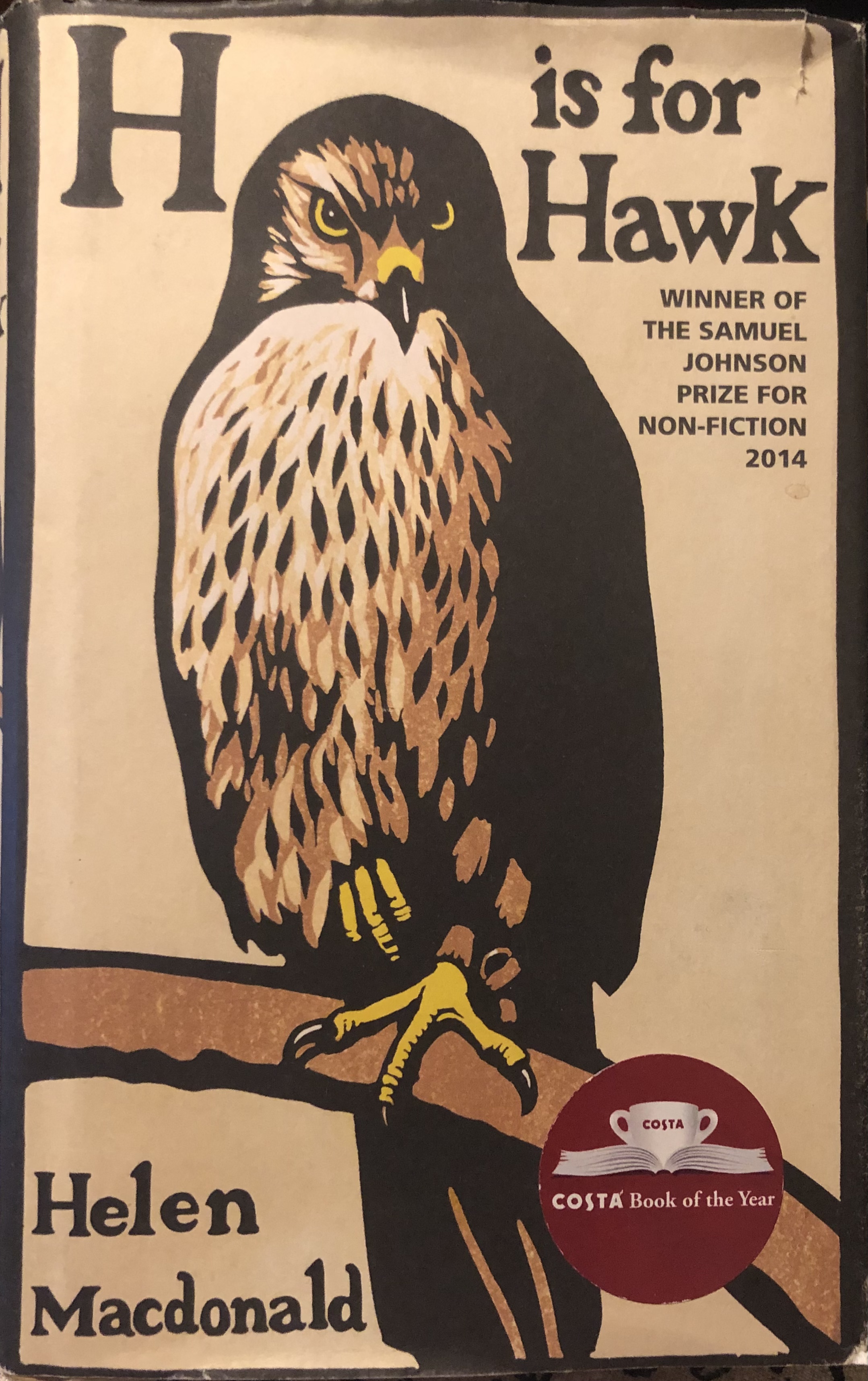
As a child, Helen Macdonald was determined to become a falconer. She learned the arcane terminology and read all the classic books, including T.H. White's tortured masterpiece, "The Goshawk," which describes White's struggle to train a hawk as a spiritual contest.When her father dies and she is knocked sideways by grief, she becomes obsessed with the idea of training her own goshawk. She buys Mabel for £800 on a Scottish quayside and takes her home to Cambridge. Then she fills the freezer with hawk food and unplugs the phone, ready to embark on the long, strange business of trying to train this wildest of animals.Destined to be a classic of nature writing, "H is for Hawk" is a record of a spiritual journey - an unflinchingly honest account of Macdonald's struggle with grief during the difficult process of the hawk's taming and her own untaming. At the same time, it's a kaleidoscopic biography of the brilliant and troubled novelist T. H. White, best known for "The Once and Future King." It's a book about memory, nature and nation, and how it might be possible to try to reconcile death with life and love.

Beyond Words, readers travel to Amboseli National Park in the threatened landscape of Kenya and witness struggling elephant families work out how to survive poaching and drought, then to Yellowstone National Park to observe wolves sort out the aftermath of one pack's personal tragedy, and finally plunge into the astonishingly peaceful society of killer whales living in the crystalline waters of the Pacific Northwest.

The familiar call of the common cuckoo, "cuck-oo," has been a harbinger of spring ever since our ancestors walked out of Africa many thousands of years ago. However, for naturalist and scientist Nick Davies, the call is an invitation to solve an enduring puzzle: how does the cuckoo get away with laying its eggs in the nests of other birds and tricking them into raising young cuckoos rather than their own offspring?Early observers who noticed a little warbler feeding a monstrously large cuckoo chick concluded the cuckoo's lack of parental care was the result of faulty design by the Creator, and that the hosts chose to help the poor cuckoo. These quaint views of bad design and benevolence were banished after Charles Darwin proposed that the cuckoo tricks the hosts in an evolutionary battle, where hosts evolve better defenses against cuckoos and cuckoos, in turn, evolve better trickery to outwit the hosts.For the last three decades, Davies has employed observation and field experiments to unravel the details of this evolutionary "arms race" between cuckoos and their hosts. Like a detective, Davies and his colleagues studied adult cuckoo behavior, cuckoo egg markings, and cuckoo chick begging calls to discover exactly how cuckoos trick their hosts. For birding and evolution aficionados, Cuckoo is a lyrical and scientifically satisfying exploration of one of nature's most astonishing and beautiful adaptations.

New York Times –bestselling author and former Navy SEAL Mike Ritland teaches all dog owners how to have the close relationship and exceptional training of combat dogs. In TEAM DOG, Mike taps into fifteen years’ worth of experience and shares, explaining in accessible and direct language, the science behind the importance of gaining a dog’s trust and then offering invaluable steps for how to achieve any level of obedience. His unique approach uses entertaining examples and anecdotes from his work with dogs on and off the battlefield and direct tips from the Navy SEAL guidebook to teach dog owners how choose the perfect dog for their household, establish themselves as the “team leader,” master “command and control,” employ “situational awareness,” and to solidify their dog’s position as the family’s ultimate best friend.TEAM DOG introduces pet owners everywhere to the new and distinctive authority on how to train your dog. . . the SEAL way.

In pursuit of the wild, solitary, predatory octopus, popular naturalist Sy Montgomery has practiced true immersion journalism. From New England aquarium tanks to the reefs of French Polynesia and the Gulf of Mexico, she has befriended octopuses with strikingly different personalities—gentle Athena, assertive Octavia, curious Kali, and joyful Karma. Each creature shows her cleverness in myriad ways: escaping enclosures like an orangutan; jetting water to bounce balls; and endlessly tricking companions with multiple “sleights of hand” to get food.Scientists have only recently accepted the intelligence of dogs, birds, and chimpanzees but now are watching octopuses solve problems and are trying to decipher the meaning of the animal’s color-changing techniques. With her “joyful passion for these intelligent and fascinating creatures” (Library Journal Editors’ Spring Pick), Montgomery chronicles the growing appreciation of this mollusk as she tells a unique love story. By turns funny, entertaining, touching, and profound, The Soul of an Octopus reveals what octopuses can teach us about the meeting of two very different minds.

Nerdy Birdy likes reading, video games, and reading about video games, which immediately disqualifies him for membership in the cool crowd.One thing is clear: being a nerdy birdy is a lonely lifestyle.When he's at his lowest point, Nerdy Birdy meets a flock just like him. He has friends and discovers that there are far more nerdy birdies than cool birdies in the sky. And then another bird moves in....

Every cow just wants to be happy. Every chicken just wants to be free. Every bear, dog, or mouse experiences sorrow and feels pain as intensely as any of us humans do. In a compelling appeal to reason and human kindness, Matthieu Ricard here takes the arguments from his best-sellers Altruism and Happiness to their logical conclusion: that compassion toward all beings, including our fellow animals, is a moral obligation and the direction toward which any enlightened society must aspire. He chronicles the appalling sufferings of the animals we eat, wear, and use for adornment or "entertainment," and submits every traditional justification for their exploitation to scientific evidence and moral scrutiny. What arises is an unambiguous and powerful ethical imperative for treating all of the animals with whom we share this planet with respect and compassion.

The hugely illuminating story of how a popular breed of dog became the most demonized and supposedly the most dangerous of dogs—and what role humans have played in the transformation. When Bronwen Dickey brought her new dog home, she saw no traces of the infamous viciousness in her affectionate, timid pit bull. Which made her wonder: How had the breed—beloved by Teddy Roosevelt, Helen Keller, and Hollywood’s “Little Rascals”—come to be known as a brutal fighter? Her search for answers takes her from nineteenth-century New York City dogfighting pits—the cruelty of which drew the attention of the recently formed ASPCA—to early twentieth‑century movie sets, where pit bulls cavorted with Fatty Arbuckle and Buster Keaton; from the battlefields of Gettysburg and the Marne, where pit bulls earned presidential recognition, to desolate urban neighborhoods where the dogs were loved, prized—and sometimes brutalized. Whether through love or fear, hatred or devotion, humans are bound to the history of the pit bull. With unfailing thoughtfulness, compassion, and a firm grasp of scientific fact, Dickey offers us a clear-eyed portrait of this extraordinary breed, and an insightful view of Americans’ relationship with their dogs.

The New York Times best-selling account of how coyotes--long the target of an extermination policy--spread to every corner of the United States Finalist for the PEN/E.O. Wilson Literary Science Writing Award "A masterly synthesis of scientific research and personal observation." - Wall Street Journal Legends don't come close to capturing the incredible story of the coyote. In the face of centuries of campaigns of annihilation employing gases, helicopters, and engineered epidemics, coyotes didn't just survive, they thrived, expanding across the continent from Alaska to New York. In the war between humans and coyotes, coyotes have won, hands-down. Coyote America is the illuminating five-million-year biography of this extraordinary animal, from its origins to its apotheosis. It is one of the great epics of our time.

How does life work? How does nature produce the right numbers of zebras and lions on the African savanna, or fish in the ocean? How do our bodies produce the right numbers of cells in our organs and bloodstream? In "The Serengeti Rules," award-winning biologist and author Sean Carroll tells the stories of the pioneering scientists who sought the answers to such simple yet profoundly important questions, and shows how their discoveries matter for our health and the health of the planet we depend upon.One of the most important revelations about the natural world is that everything is regulated--there are rules that regulate the amount of every molecule in our bodies and rules that govern the numbers of every animal and plant in the wild. And the most surprising revelation about the rules that regulate life at such different scales is that they are remarkably similar--there is a common underlying logic of life. Carroll recounts how our deep knowledge of the rules and logic of the human body has spurred the advent of revolutionary life-saving medicines, and makes the compelling case that it is now time to use the Serengeti Rules to heal our ailing planet.A bold and inspiring synthesis by one of our most accomplished biologists and gifted storytellers, "The Serengeti Rules" is the first book to illuminate how life works at vastly different scales. Read it and you will never look at the world the same way again.

The most joyful emanation produced by a colony of bees is the "song of increase"―declaring that the hive is flourishing and the bees are happy in its abundance. Song of Increase takes us inside the world of the honeybee to glean the wisdom of these fascinating creatures with whom humanity has shared a sacred bond for millennia.Within these pages is a bee-centric approach to living with honeybees, rather than advice for simply maximizing the products they provide. Jacqueline Freeman takes us beyond traditional beekeeping and offers a way to work in harmony with honeybees for both their good and ours. "Our way is one of kind observation," she explains, "where we create supportive homes and fields for bees to live in, as well as tend the heartfelt relationships we form by being together."Song of Increase focuses on hidden aspects of apiculture that lead us naturally to more sustainable practices. Freeman illuminates the unity consciousness that guides every action in the colony and how this profound awareness can influence the way we see both the natural world and ourselves. Each chapter presents a wealth of information about the life of bees, including Freeman's personal insights and direct teachings received from the bees themselves.Contents I. The Song of How Bees See Themselves, Their Colony, and the WorldII. The Song of The Sacred Work of the Queen, Drones, Maidens, and PipsIII. The Song of How Bees Create a Perfect HomeIV. The Song of the The Communion of Bees and FlowersV. The Song of The Blessings of the Swarm and the Ascension of a New QueenVI. The Song of The Generosity of BeesVII. The Song of How We Can Help Our Bee Friends

A major new exploration of the economics of animal exploitation and a practical roadmap for how we can use the marketplace to promote the welfare of all living creatures, from the renowned animal-rights advocate Wayne Pacelle, President/CEO of the Humane Society of the United States and New York Times bestselling author of The Bond.In the mid-nineteenth century, New Bedford, Massachusetts was the whaling capital of the world. A half-gallon of sperm oil cost approximately $1,400 in today’s dollars, and whale populations were hunted to near extinction for profit. But with the advent of fossil fuels, the whaling industry collapsed, and today, the area around New Bedford is instead known as one of the best places in the world for whale watching.This transformation is emblematic of a new sort of economic revolution, one that has the power to transform the future of animal welfare. In The Humane Economy, Wayne Pacelle, President/CEO of the Humane Society of the United States, explores how our everyday economic decisions impact the survival and wellbeing of animals, and how we can make choices that better support them. Though most of us have never harpooned a sea creature, clubbed a seal, or killed an animal for profit, we are all part of an interconnected web that has a tremendous impact on animal welfare, and the decisions we make—whether supporting local, not industrial, farming; adopting a rescue dog or a shelter animal instead of one from a “puppy mill”; avoiding products that compromise the habitat of wild species; or even seeing Cirque du Soleil instead of Ringling Brothers—do matter. The Humane Economy shows us how what we do everyday as consumers can benefit animals, the environment, and human society, and why these decisions can make economic sense as well.

A Newbery Medalist and a Caldecott Medalist join forces to give an overscheduled princess a day off and a wicked crocodile a day "on." Princess Cora is sick of boring lessons. She's sick of running in circles around the dungeon gym. She's sick, sick, sick of taking three baths a day. And her parents won't let her have a dog. But when she writes to her fairy godmother for help, she doesn't expect help to come in the form of a crocodile, a crocodile who does not behave properly.

Tucked away in Siberia, there are furry, four-legged creatures with wagging tails and floppy ears that are as docile and friendly as any lapdog. But, despite appearances, these are not dogs—they are foxes. They are the result of the most astonishing experiment in breeding ever undertaken—imagine speeding up thousands of years of evolution into a few decades. In 1959, biologists Dmitri Belyaev and Lyudmila Trut set out to do just that, by starting with a few dozen silver foxes from fox farms in the USSR and attempting to recreate the evolution of wolves into dogs in real time in order to witness the process of domestication. This is the extraordinary, untold story of this remarkable undertaking. Most accounts of the natural evolution of wolves place it over a span of about 15,000 years, but within a decade, Belyaev and Trut's fox breeding experiments had resulted in puppy-like foxes with floppy ears, piebald spots, and curly tails. Along with these physical changes came genetic and behavioral changes, as well. The foxes were bred using selection criteria for tameness, and with each generation, they became increasingly interested in human companionship. Trut has been there the whole time, and has been the lead scientist on this work since Belyaev's death in 1985, and with Lee Dugatkin, biologist and science writer, she tells the story of the adventure, science, politics, and love behind it all. In How to Tame a Fox, Dugatkin and Trut take us inside this path-breaking experiment in the midst of the brutal winters of Siberia to reveal how scientific history is made and continues to be made today. To date, fifty-six generations of foxes have been domesticated, and we continue to learn significant lessons from them about the genetic and behavioral evolution of domesticated animals. How to Tame a Fox offers an incredible tale of scientists at work, while also celebrating the deep attachments that have brought humans and animals together throughout time.

A charming story of Mozart and his pet starling, along with a natural history of the bird.On May 27th, 1784, Wolfgang Amadeus Mozart met a flirtatious little starling who sang (an improved version of!) the theme from his Piano Concerto Number 17 in G to him. Knowing a kindred spirit when he met one, Mozart wrote "That was wonderful" in his journal and took the bird home to be his pet. For three years Mozart and his family enjoyed the uniquely delightful company of the starling until one fitful April when the bird passed away.In 2013, Lyanda Lynn Haupt, author of Crow Planet, rescued her own starling, Carmen, who has become a part of her family. In Mozart's Starling, Haupt explores the unlikely bond between one of history's most controversial characters and one of history's most notoriously disliked birds. Part natural history, part story, Mozart's Starling will delight readers as they learn about language, music, and the secret world of starlings. A charming story of Mozart and his pet starling, along with a natural history of the bird.

From award-winning author John Crowley comes an exquisite fantasy novel about a man who tells the story of a crow named Dar Oakley and his impossible lives and deaths in the land of Ka.A Crow alone is no Crow.Dar Oakley—the first Crow in all of history with a name of his own—was born two thousand years ago. When a man learns his language, Dar finally gets the chance to tell his story. He begins his tale as a young man, and how he went down to the human underworld and got hold of the immortality meant for humans, long before Julius Caesar came into the Celtic lands; how he sailed West to America with the Irish monks searching for the Paradise of the Saints; and how he continuously went down into the land of the dead and returned. Through his adventures in Ka, the realm of Crows, and around the world, he found secrets that could change the humans’ entire way of life—and now may be the time to finally reveal them.

In her fourth collection, Aimee Nezhukumatathil hums a bright blue note—a sensuous love song to the Earth and its inhabitants. Oceanic is both a title and an ethos of radical inclusion, inviting in the grief of an elephant, the icy eyes of a scallop, “the ribs / of a silver silo,” and the bright flash of painted fingernails. With unmatched sincerity, Oceanic speaks to each reader as a cooperative part of the natural world—the extraordinary neighborhood to which we all belong. This is a poet ecstatically, emphatically, naming what it means to love a world in peril.

A picture book about a spotted pig in a class full of pink pigs who learns to accept her differences.Pip is a normal pig who does normal stuff: cooking, painting, and dreaming of what she’ll be when she grows up.But one day a new pig comes to school and starts pointing out all the ways in which Pip is different. Suddenly she doesn’t like any of the same things she used to . . . the things that made her Pip.

In this “little gem” (Washington Independent Review of Books), Pulitzer Prize–winning columnist and New York Times bestselling author Dave Barry learns how to age happily from his old but joyful dog, Lucy. As Dave Barry turns seventy—not happily—he realizes that his dog, Lucy, is dealing with old age far better than he is. She has more friends, fewer worries, and way more fun. So Dave decides to figure out how Lucy manages to stay so happy, to see if he can make his own life happier by doing the things she does (except for drinking from the toilet). He reconnects with old friends and tries to make new ones—which turns out to be a struggle, because Lucy likes people a lot more than he does. And he gets back in touch with two ridiculous but fun groups from his the Lawn Rangers, a group of guys who march in parades pushing lawnmowers and twirling brooms (alcohol is involved), and the Rock Bottom Remainders, the world’s oldest and least-talented all-author band. With each new lesson, Dave riffs hilariously on dogs, people, and life in general, while also pondering Deep Questions, such as when it’s okay to lie. ( when scallops are involved.) Lessons From Lucy shows you a new side to Dave Barry that’s “touching and sentimental, but there’s still a laugh on every page” (The Sacramento Bee). The master humorist has written a witty and affable guide to joyous living at any age.

We like to think of ourselves as exceptional beings, but is there really anything special about us that sets us apart from other animals? Humans are the slightest of twigs on a single family tree that encompasses four billion years, a lot of twists and turns, and a billion species. All of those organisms are rooted in a single origin, with a common code that underwrites our existence. This paradox - that our biology is indistinct from all life, yet we consider ourselves to be special - lies at the heart of who we are.In this original and entertaining tour of life on Earth, Adam Rutherford explores how many of the things once considered to be exclusively human are not: we are not the only species that communicates, makes tools, utilises fire, or has sex for reasons other than to make new versions of ourselves. Evolution has, however, allowed us to develop our culture to a level of complexity that outstrips any other observed in nature.THE BOOK OF HUMANS tells the story of how we became the creatures we are today, bestowed with the unique ability to investigate what makes us who we are. Illuminated by the latest scientific discoveries, it is a thrilling compendium of what unequivocally fixes us as animals, and reveals how we are extraordinary among them.

From National Book Award in Fiction finalist Andrew Krivak comes a gorgeous fable of Earth’s last two human inhabitants and a girl's journey home.In an Eden-like future, a girl and her father live close to the land in the shadow of a lone mountain. They own a few remnants of civilization: some books, a pane of glass, a set of flint and steel, a comb. The father teaches his daughter how to fish and hunt and the secrets of the seasons and the stars. He is preparing her for an adulthood in harmony with nature, for they are the last of humankind. But when the girl finds herself alone in an unknown landscape, it is a bear that will lead her back home through a vast wilderness that offers the greatest lessons of all, if she can learn to listen. A cautionary tale of human fragility, of love and loss, The Bear is a stunning tribute to the beauty of nature’s dominion.

En 2018, Sylvain Tesson est invité par le photographe animalier Vincent Munier à observer aux confins du Tibet les derniers spécimens de la panthère des neiges. Ces animaux discrets et très craintifs vivent sur un gigantesque plateau culminant à 5 000 m d'altitude, le Changtang. Situé au Tibet septentrional et occidental, il s'étend sur environ 1 600 km, du Ladakh à la province du Qinghai, et il est habité par les nomades Changpas.L'équipe atterrit à Pékin, puis prend la route à bord d'un 4X4 en direction du Tibet. Au fil des jours le convoi s'achemine vers des panoramas de plus en plus grandioses et déserts : là où la population recule, la faune avance et se déploie, protégée des effets nocifs de la civilisation.Sylvain Tesson décrit une sorte de savane africaine qui serait perchée à 4 000 mètres d'altitude, où l'on croise des troupeaux d'antilopes, des chèvres bleues, des hordes de yacks qui traversent de vastes étendues herbeuses où s'élèvent des dunes.L'équipe s'enfonce toujours plus loin, se hissant à des hauteurs qui dépassent largement ce que nous connaissons en Europe. À 5 000 m d'altitude s'ouvre le domaine de la panthère des neiges. Dans ce sanctuaire naturel totalement inhospitalier pour l'homme, le félin a trouvé les moyens de sa survie et de sa tranquillité. Les conditions d'observation deviennent très difficiles, il faut parfois rester immobile pendant trente heures consécutives par -30° C pour apercevoir quelques minutes le passage majestueux de l'animal...Sylvain Tesson entrecroise habilement le récit d'une aventure exceptionnelle aux confins du Tibet avec des réflexions d'une pertinence remarquable sur les conséquences désastreuses de l'activité humaine envers le règne animal. À travers l'exemple de la panthère des neiges, l'auteur s'interroge sur la morphologie d'un monde où toutes les espèces viendraient à se raréfier puis à s'éteindre. Il nous entraîne dans cette aventure singulière où l'on s'intéresse autant à l'art de l'affût animalier qu'à la spiritualité asiatique.

A wide-ranging take on why humans have a troubled relationship with being an animal, and why we need a better one Human are the most inquisitive, emotional, imaginative, aggressive, and baffling animals on the planet. But we are also an animal that does not think it is an animal. How well do we really know ourselves?How to Be Animal tells a remarkable story of what it means to be human and argues that at the heart of our existence is a profound struggle with being animal. We possess a psychology that seeks separation between humanity and the rest of nature, and we have invented grand ideologies to magnify this. As well as piecing together the mystery of how this mindset evolved, Challenger's book examines the wide-reaching ways in which it affects our lives, from our politics to the way we distance ourselves from other species. We travel from the origin of homo sapiens through the agrarian and industrial revolutions, the age of the internet, and on to the futures of AI and human-machine interface. Challenger examines how technology influences our sense of our own animal nature and our relationship with other species with whom we share this fragile planet.That we are separated from our own animality is a delusion, according to Challenger. Blending nature writing, history, and moral philosophy, How to Be Animal is both a fascinating reappraisal of what it means to be human, and a robust defense of what it means to be an animal.

Sandra Boynton and Yo-Yo Ma! Plus snoozing jungle animals! Two celebrated artists come together for JUNGLE NIGHT , a soothing bedtime board book. (Okay, MOSTLY soothing.) The book guides us through the jungle to hear the distinctive, gentle snore of each animal: "Listen to the tiger: ZEEE-ZOOO-HAAA. Listen to the cheetah: CHEE-CHEE-TAAAH." A free downloadable JUNGLE NIGHT recording offers a narration of the book, with each and every animal snore interpreted by the expressive, playful cello of Yo-Yo Ma. He even does the elephant's stop-the-show snore—though admittedly that took Ma's cello PLUS the classic horn salute of the James R. Barker steamship. (Seriously.) All of this fabulousness leads into the coolest lullaby ever: "Jungle Gymnopédie No. 1", a polyrhythmic jungly arrangement by Boynton of Erik Satie's renowned piece, with Yo-Yo Ma on cello, guitar played by Ron Block of Alison Krauss Union Station, and drums by Kevin MacLeod. "Yo-Yo and I chose this piece because it's the most gorgeous and mesmerizing night song imaginable," explains Boynton. "And there was surely nothing else that could get those animals back to sleep after that elephant blast."

Margot and Will cross paths at the local dog rescue centre where – after a series of misunderstandings and a lot of consternation – they agree to foster Blossom (a staffy with a giant head, soft, floppy ears and kohl-rimmed brown eyes) together: one week on, one week off.Margot and Will don’t get off to the best of starts: he thinks Margot is demanding and needy and Just So Much. And she thinks Will is emotionally unavailable, slightly brittle and very mistrustful. They’re both right.But the more they bicker, the worse Blossom behaves, and they realise they have to form some sort of truce in order to dog-parent (or “pawrent” as Margot calls it, to which Will rolls his eyes) her together. It’s almost as if Blossom has plans of her own…

Susan Orlean—the beloved New Yorker staff writer and the author of the New York Times bestseller The Library Book—gathers a lifetime of musings, meditations, and in-depth profiles about animals.“How we interact with animals has preoccupied philosophers, poets, and naturalists for ages,” writes Susan Orlean. Since the age of six, when Orlean wrote and illustrated a book called Herbert the Near-Sighted Pigeon, she’s been drawn to stories about how we live with animals, and how they abide by us. Now, in On Animals, she examines animal-human relationships through the compelling tales she has written over the course of her celebrated career.These stories consider a range of creatures—the household pets we dote on, the animals we raise to end up as meat on our plates, the creatures who could eat us for dinner, the various tamed and untamed animals we share our planet with who are central to human life. In her own backyard, Orlean discovers the delights of keeping chickens. In a different backyard, in New Jersey, she meets a woman who has twenty-three pet tigers—something none of her neighbors knew about until one of the tigers escapes. In Iceland, the world’s most famous whale resists the efforts to set him free; in Morocco, the world’s hardest-working donkeys find respite at a special clinic. We meet a show dog and a lost dog and a pigeon who knows exactly how to get home.Equal parts delightful and profound, enriched by Orlean’s stylish prose and precise research, these stories celebrate the meaningful cross-species connections that grace our collective existence.

The world is more astonishing, more miraculous and more wonderful than our wildest imaginings. In this passionately persuasive and sharply funny book, Katherine Rundell tells us how and why.A lavishly illustrated collection of the lives of some of the Earth's most astounding animals, The Golden Mole is a chance to be awestruck and lovestruck - to reckon with the beauty of the world, its fragility, and its strangeness.A swift flies two million kilometres in its lifetime. That's far enough to get to the moon and back twice over - and then once more to the moon. A pangolin keeps its tongue furled in a pouch by its hip, a Greenland shark can live five hundred years, a wombat once inspired a love poem.