
13 Books Written

2015 Pulitzer Prize WinnerOver the last half-billion years, there have been five mass extinctions, when the diversity of life on earth suddenly and dramatically contracted. Scientists around the world are currently monitoring the sixth extinction, predicted to be the most devastating extinction event since the asteroid impact that wiped out the dinosaurs. This time around, the cataclysm is us. In prose that is at once frank, entertaining, and deeply informed, New Yorker writer Elizabeth Kolbert tells us why and how human beings have altered life on the planet in a way no species has before. Interweaving research in half a dozen disciplines, descriptions of the fascinating species that have already been lost, and the history of extinction as a concept, Kolbert provides a moving and comprehensive account of the disappearances occurring before our very eyes. She shows that the sixth extinction is likely to be mankind’s most lasting legacy, compelling us to rethink the fundamental question of what it means to be human.

The Pulitzer Prize–winning author of The Sixth Extinction returns to humanity’s transformative impact on the environment, now asking: After doing so much damage, can we change nature, this time to save it?That man should have dominion “over all the earth, and over every creeping thing that creepeth upon the earth” is a prophecy that has hardened into fact. So pervasive are human impacts on the planet that it’s said we live in a new geological epoch: the Anthropocene. In Under a White Sky, Elizabeth Kolbert takes a hard look at the new world we are creating. She meets scientists who are trying to preserve the world’s rarest fish, which lives in a single, tiny pool in the middle of the Mojave. She visits a lava field in Iceland, where engineers are turning carbon emissions to stone; an aquarium in Australia, where researchers are trying to develop “super coral” that can survive on a hotter globe; and a lab at Harvard, where physicists are contemplating shooting tiny diamonds into the stratosphere in order to reflect sunlight back to space and cool the earth. One way to look at human civilization, says Kolbert, is as a ten-thousand-year exercise in defying nature. In The Sixth Extinction, she explored the ways in which our capacity for destruction has reshaped the natural world. Now she examines how the very sorts of interventions that have imperiled our planet are increasingly seen as the only hope for its salvation. By turns inspiring, terrifying, and darkly comic, Under a White Sky is an utterly original examination of the challenges we face.
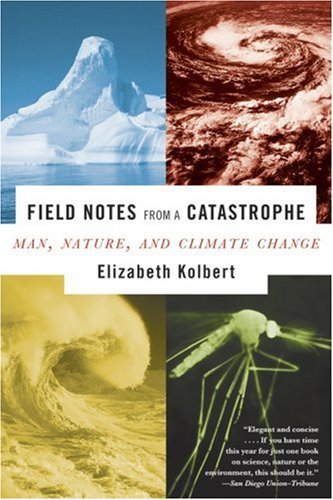
Long known for her insightful and thought-provoking political journalism, author Elizabeth Kolbert now tackles the controversial and increasingly urgent subject of global warming. In what began as groundbreaking three-part series in the New Yorker, for which she won a National Magazine Award in 2006, Kolbert cuts through the competing rhetoric and political agendas to elucidate for Americans what is really going on with the global environment and asks what, if anything, can be done to save our planet. Now updated and with a new afterword, Field Notes from a Catastrophe is the book to read on the defining issue and greatest challenge of our times.
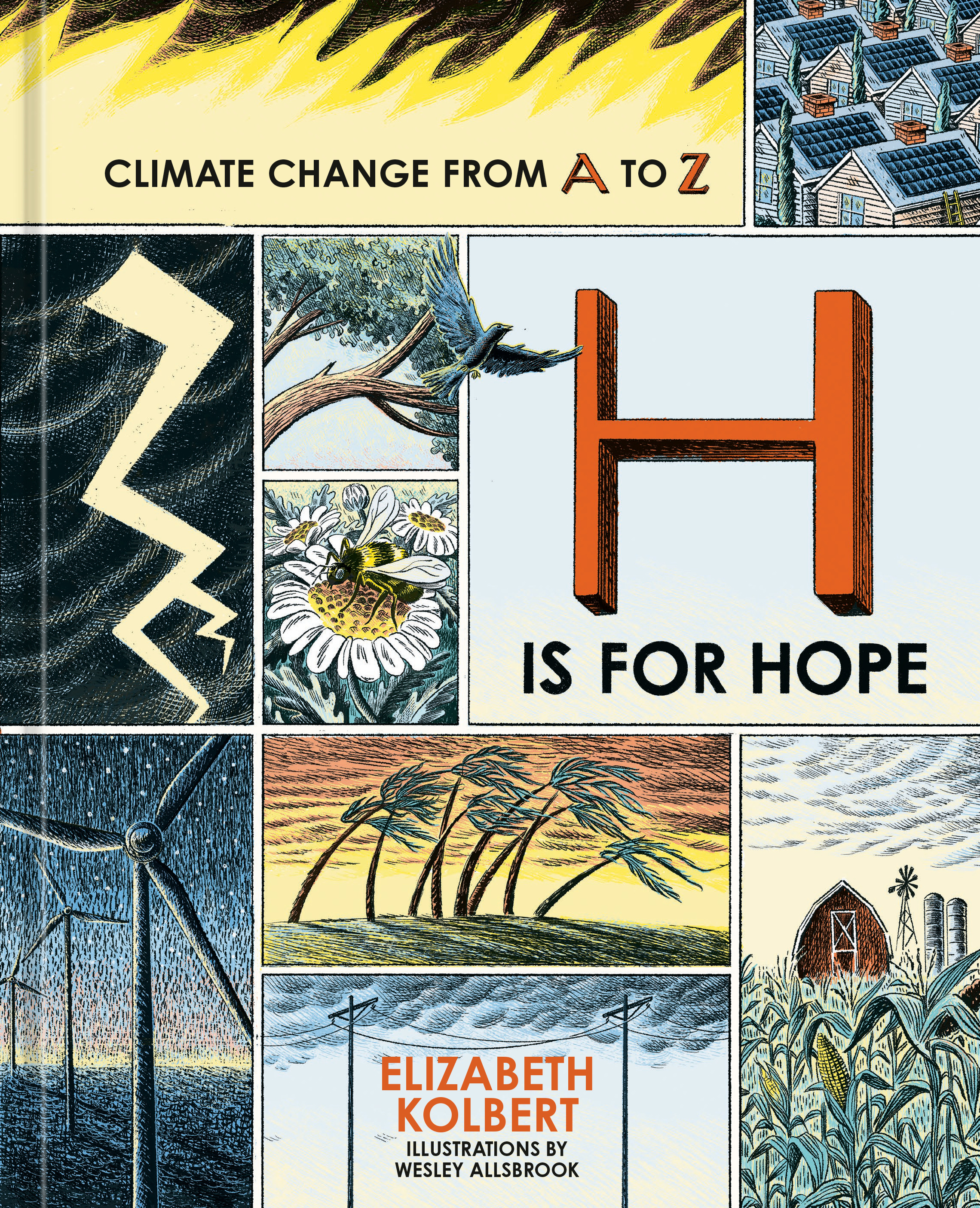
In twenty-six essays—one for each letter of the alphabet—the Pulitzer Prize-winning author of The Sixth Extinction takes us on a hauntingly illustrated journey through the history of climate change and the uncertainties of our future.Climate change resists narrative—and yet some account of what’s happening is needed. Millions of lives are at stake, and upward of a million species. And there are decisions to be made, even though it’s unclear who, exactly, will make them.In H Is for Hope, Elizabeth Kolbert investigates the landscape of climate change—from “A”, for Svante Arrhenius, who created the world’s first climate model in 1894, to “Z”, for the Colorado River Basin, ground zero for climate change in the United States. Along the way she looks at Greta Thurnburg’s “ blah blah blah” speech (“B”), flies an all- electric plane (“E”), experiments with the effects of extreme temperatures on the human body (“T”), and struggles with the deep uncertainty of the future of climate change (“U”).Adapted from essays originally published in The New Yorker and beautifully illustrated by Wesley Allsbrook, H Is for Hope is simultaneously inspiring, alarming, and darkly humorous—a unique examination of our changing world.

New Yorker writer Elizabeth Kolbert dissects the body politic in these incisive-and often hilarious-portraits of the people who make New York City run.As a reporter for The New York Times and then the The New Yorker , Elizabeth Kolbert has had unparalleled access to the inner workings of the country's most complex and fascinating city. In the acclaimed profiles assembled here, Kolbert talks to politicians and policemen, bureaucrats and radicals, celebrities and demagogues. She follows some on their heady ascent to greatness and others as they fall from grace, all the while questioning how power is attained, and then, just as often, squandered.Kolbert writes about such classic New York characters as Boss Tweed, Michael Bloomberg, Hillary Clinton, and Rudolph Giuliani. She reveals the machinations of city power in a provocative piece about the Amadou Diallo shooting and takes an unforgettably disgusting look at the work of city restaurant inspectors. And she investigates the influence of several private citizens, including Weather Underground member Kathy Boudin, the always controversial Al Sharpton, and Regis Philbin at the height of his fame.Written during a defining period in the city's history-one that encompasses the Bloomberg mayoral campaign, the Clinton-Giuliani senatorial race, and September 11th- The Prophet of Love is a witty and eye-opening debut from one of our most fiercely intelligent writers.
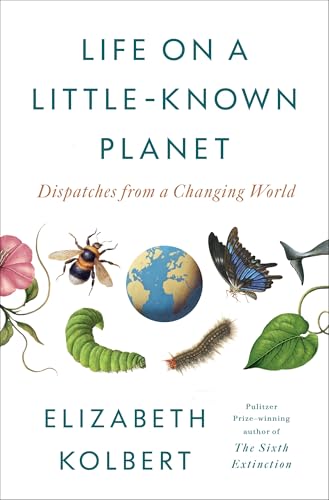
A landmark collection of Pulitzer Prize winner Elizabeth Kolbert's most important pieces about climate change and the natural world"To be a well-informed citizen of Planet Earth," Rolling Stone has advised, "you need to read Elizabeth Kolbert." From her National Magazine Award-winning series The Climate of Man to her Pulitzer Prize-winning book The Sixth Extinction, Kolbert’s work has shaped the way we think about the environment in the twenty-first century. Collected in Life on a Little-Known Planet are her most influential and thought-provoking essays.An intrepid reporter and a skillful translator of scientific idees, Kolbert expertly captures the wonders of nature and paints vivid portraits of the researchers and concerned citizens working to preserve them. She takes readers all around the globe, from an island in Denmark that’s succeeded in going carbon neutral, to a community in Florida that voted to give rights to waterways, to the Greenland ice sheet, which is melting in a way that has implications for everyone. We meet a biologist who believes we can talk to whales, an entomologist racing to find rare caterpillars before they disappear, and a climatologist who’s considered the "father of global warming," amongst other scientists at the forefront of environmental protection.The threats to our planet that Kolbert has devoted so much of her career to exposing have only grown more serious. Now is the time to deepen our understanding of the world we are in danger of losing.

Dans le désert des Mojaves, une grotte jalousement gardée abrite les derniers représentants d’une espèce de poissons minuscules.En Australie, des scientifiques s’efforcent de créer des coraux capables de supporter l’acidification des océans.Autour de Chicago, la flore aquatique n’a pu être sauvée qu’en électrifiant une rivière.Dans La 6e Extinction, salué unanimement comme un événement lors de sa parution, Elizabeth Kolbert dressait le constat implacable de ce que l’homme fait subir à son environnement.Avec Des poissons dans le désert, sa nouvelle et surprenante enquête, elle raconte comment, pour réparer les dommages causés par l’activité humaine, nous en sommes venus à nous substituer à la Nature, pour le meilleur et pour le pire.


地球温暖化の現場から
by Elizabeth Kolbert

Planeta Terra Em Perigo - O Que Esta, De Fato, Acontecendo No Mundo
by Elizabeth Kolbert


The Sixth Extinction (young readers adaptation): An Unnatural History
by Elizabeth Kolbert
Field Notes from a Catastrophe: Man, Nature, and Climate Change by Kolbert, Elizabeth(December 26, 2006) Paperback
by Elizabeth Kolbert