Loading genres...
Explore the best books about Books About Books genre.

From Pulitzer Prize-winning Annie Dillard, a collection that illuminates the dedication and daring that characterizes a writer's life.In these short essays, Annie Dillard—the author of Pilgrim at Tinker Creek and An American Childhood—illuminates the dedication, absurdity, and daring that characterize the existence of a writer. A moving account of Dillard’s own experiences while writing her works, The Writing Life offers deep insight into one of the most mysterious professions.
How to Read a Book, originally published in 1940, has become a rare phenomenon, a living classic. It is the best and most successful guide to reading comprehension for the general reader. And now it has been completely rewritten and updated. You are told about the various levels of reading and how to achieve them—from elementary reading, through systematic skimming and inspectional reading, to speed reading, you learn how to pigeonhole a book, X-ray it, extract the author's message, criticize. You are taught the different reading techniques for reading practical books, imaginative literature, plays, poetry, history, science and mathematics, philosophy and social science. Finally, the authors offer a recommended reading list and supply reading tests whereby you can measure your own progress in reading skills, comprehension and speed. This a previously-published edition of ISBN 9780671212094

Barcelona, 1945: A city slowly heals from its war wounds, and Daniel, an antiquarian book dealer's son who mourns the loss of his mother, finds solace in a mysterious book entitled The Shadow of the Wind, by one Julian Carax. But when he sets out to find the author's other works, he makes a shocking discovery: someone has been systematically destroying every copy of every book Carax has written. In fact, Daniel may have the last of Carax's books in existence. Soon Daniel's seemingly innocent quest opens a door into one of Barcelona's darkest secrets--an epic story of murder, madness, and doomed love.

For anyone who ever wondered what Marcel Proust had in mind when he wrote the one-and-a-quarter-million words of In Search of Lost Time (while bedridden, no less), Alain de Botton has the answer. For, in this stylish, erudite and frequently hilarious book, de Botton dips deeply into Proust’s life and work—his fiction, letter, and conversations—and distills from them that rare self-help manual: one that is actually helpful.Here, tendered in prose almost as luminous as it’s subject’s, is advice on cultivating friendships, suffering successfully, recognizing love and understanding why you should never sleep with someone on the first date. And here, too, is a generously perceptive literary biography that suggests that the master is as relevant today as he was in fin de siècle Paris. At once slyly ironic and genuinely wise, How Proust Can Change Your Life is an unqualified delight.

One of the world's most celebrated scholars, Stephen Greenblatt has crafted both an innovative work of history and a thrilling story of discovery, in which one manuscript, plucked from a thousand years of neglect, changed the course of human thought and made possible the world as we know it.Nearly six hundred years ago, a short, genial, cannily alert man in his late thirties took a very old manuscript off a library shelf, saw with excitement what he had discovered, and ordered that it be copied. That book was the last surviving manuscript of an ancient Roman philosophical epic, On the Nature of Things, by Lucretius—a beautiful poem of the most dangerous ideas: that the universe functioned without the aid of gods, that religious fear was damaging to human life, and that matter was made up of very small particles in eternal motion, colliding and swerving in new directions.The copying and translation of this ancient book—the greatest discovery of the greatest book-hunter of his age—fueled the Renaissance, inspiring artists such as Botticelli and thinkers such as Giordano Bruno; shaped the thought of Galileo and Freud, Darwin and Einstein; and had a revolutionary influence on writers such as Montaigne and Shakespeare and even Thomas Jefferson.

Humans live in landscapes of make-believe. We spin fantasies. We devour novels, films, and plays. Even sporting events and criminal trials unfold as narratives. Yet the world of story has long remained an undiscovered and unmapped country. It’s easy to say that humans are “wired” for story, but why?In this delightful and original book, Jonathan Gottschall offers the first unified theory of storytelling. He argues that stories help us navigate life’s complex social problems—just as flight simulators prepare pilots for difficult situations. Storytelling has evolved, like other behaviors, to ensure our survival.Drawing on the latest research in neuroscience, psychology, and evolutionary biology, Gottschall tells us what it means to be a storytelling animal. Did you know that the more absorbed you are in a story, the more it changes your behavior? That all children act out the same kinds of stories, whether they grow up in a slum or a suburb? That people who read more fiction are more empathetic?Of course, our story instinct has a darker side. It makes us vulnerable to conspiracy theories, advertisements, and narratives about ourselves that are more “truthy” than true. National myths can also be terribly dangerous: Hitler’s ambitions were partly fueled by a story.But as Gottschall shows in this remarkable book, stories can also change the world for the better. Most successful stories are moral—they teach us how to live, whether explicitly or implicitly, and bind us together around common values. We know we are master shapers of story. The Storytelling Animal finally reveals how stories shape us.

On the morning of April 29, 1986, a fire alarm sounded in the Los Angeles Public Library. As the moments passed, the patrons and staff who had been cleared out of the building realized this was not the usual fire alarm. As one fireman recounted, “Once that first stack got going, it was ‘Goodbye, Charlie.’” The fire was disastrous: it reached 2000 degrees and burned for more than seven hours. By the time it was extinguished, it had consumed four hundred thousand books and damaged seven hundred thousand more. Investigators descended on the scene, but more than thirty years later, the mystery remains: Did someone purposefully set fire to the library—and if so, who?Weaving her lifelong love of books and reading into an investigation of the fire, award-winning New Yorker reporter and New York Times bestselling author Susan Orlean delivers a mesmerizing and uniquely compelling book that manages to tell the broader story of libraries and librarians in a way that has never been done before.In The Library Book, Orlean chronicles the LAPL fire and its aftermath to showcase the larger, crucial role that libraries play in our lives; delves into the evolution of libraries across the country and around the world, from their humble beginnings as a metropolitan charitable initiative to their current status as a cornerstone of national identity; brings each department of the library to vivid life through on-the-ground reporting; studies arson and attempts to burn a copy of a book herself; reflects on her own experiences in libraries; and reexamines the case of Harry Peak, the blond-haired actor long suspected of setting fire to the LAPL more than thirty years ago.Along the way, Orlean introduces us to an unforgettable cast of characters from libraries past and present—from Mary Foy, who in 1880 at eighteen years old was named the head of the Los Angeles Public Library at a time when men still dominated the role, to Dr. C.J.K. Jones, a pastor, citrus farmer, and polymath known as “The Human Encyclopedia” who roamed the library dispensing information; from Charles Lummis, a wildly eccentric journalist and adventurer who was determined to make the L.A. library one of the best in the world, to the current staff, who do heroic work every day to ensure that their institution remains a vital part of the city it serves.Brimming with her signature wit, insight, compassion, and talent for deep research, The Library Book is Susan Orlean’s thrilling journey through the stacks that reveals how these beloved institutions provide much more than just books—and why they remain an essential part of the heart, mind, and soul of our country. It is also a master journalist’s reminder that, perhaps especially in the digital era, they are more necessary than ever.

A brilliantly inventive new novel about loss, growing up, and our relationship with things, by the Booker Prize-finalist author of A Tale for the Time Being After the tragic death of his beloved musician father, fourteen-year-old Benny Oh begins to hear voices. The voices belong to the things in his house--a sneaker, a broken Christmas ornament, a piece of wilted lettuce. Although Benny doesn't understand what these things are saying, he can sense their emotional tone; some are pleasant, a gentle hum or coo, but others are snide, angry and full of pain. When his mother, Annabelle, develops a hoarding problem, the voices grow more clamorous.At first, Benny tries to ignore them, but soon the voices follow him outside the house, onto the street and at school, driving him at last to seek refuge in the silence of a large public library, where objects are well-behaved and know to speak in whispers. There, Benny discovers a strange new world, where "things happen." He falls in love with a mesmerizing street artist with a smug pet ferret, who uses the library as her performance space. He meets a homeless philosopher-poet, who encourages him to ask important questions and find his own voice amongst the many.And he meets his very own Book--a talking thing--who narrates Benny's life and teaches him to listen to the things that truly matter.With its blend of sympathetic characters, riveting plot, and vibrant engagement with everything from jazz, to climate change, to our attachment to material possessions, The Book of Form and Emptiness is classic Ruth Ozeki--bold, wise, poignant, playful, humane and heartbreaking.

How do great writers do it? From James M. Cain's hard-nosed observation that "writing a novel is like working on foreign policy. There are problems to be solved. It's not all inspirational," to Joan Didion's account of how she composes a book--"I constantly retype my own sentences. Every day I go back to page one and just retype what I have. It gets me into a rhythm"--The Paris Review has elicited some of the most revelatory and revealing thoughts from the literary masters of our age. For more than half a century, the magazine has spoken with most of our leading novelists, poets, and playwrights, and the interviews themselves have come to be recognized as classic works of literature, an essential and definitive record of the writing life. They have won the coveted George Polk Award and have been a contender for the Pulitzer Prize. Now, Paris Review editor Philip Gourevitch introduces an entirely original selection of sixteen of the most celebrated interviews. Often startling, always engaging, these encounters contain an immense scope of intelligence, personality, experience, and wit from the likes of Elizabeth Bishop, Ernest Hemingway, Truman Capote, Rebecca West, and Billy Wilder. This is an indispensable book for all writers and readers.

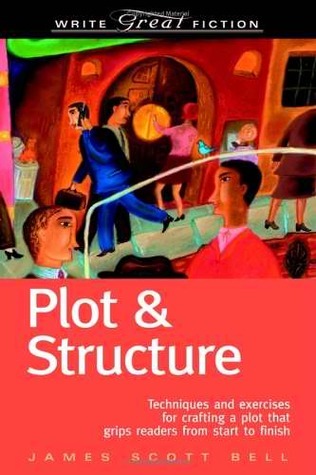
Craft an Engaging PlotHow does plot influence story structure? What's the difference between plotting for commercial and literary fiction? How do you revise a plot or structure that's gone off course?With "Write Great Fiction: Plot & Structure," you'll discover the answers to these questions and more. Award-winning author James Scott Bell offers clear, concise information that will help you create a believable and memorable plot, including: Techniques for crafting strong beginnings, middles, and endsEasy-to-understand plotting diagrams and chartsBrainstorming techniques for original plot ideasThought-provoking exercises at the end of each chapterStory structure models and methods for all genresTips and tools for correcting common plot problemsFilled with plot examples from popular novels, comprehensive checklists, and practical hands-on guidance, "Write Great Fiction: Plot & Structure" gives you the skills you need to approach plot and structure like an experienced pro.

Reissued in a handsome A List edition, the largest collection of critical prose to date from world renowned author and poet Margaret Atwood, featuring an introduction by Lennie Goodings. Originally published in 1982, Second Words brings together fifty of Margaret Atwood’s finest essays and reviews spanning two decades, beginning in 1962, with an introduction and commentary by the author. With her incomparable wit and originality, Atwood discusses the process of writing and the literary life, with insightful looks at the work of such figures as Erica Jong, E. L. Doctorow, Northrop Frye, Roch Carrier, Marie-Claire Blais, Gwendolyn MacEwen, Marge Piercy, Adrienne Rich, Sylvia Plath, and many more. In several pieces, we see the development of her ideas on Canadian identity and the American dream, as well as her controversial attitudes toward feminism, sexism, and the strange mythologies imposed on men and women in contemporary North America. Second Words remains the largest collection of Atwood’s critical prose to date.

Following the Brontë sisters through their many reincarnations at the hands of biographers, Lucasta Miller reveals as much about the impossible art of biography as she does about the Brontës themselves. Their first biographer, Mrs Gaskell, transformed their story of literary ambition into one of the great legends of the 19th century, a dramatic tale of three lonely sisters playing out their tragic destiny on top of a windswept moor. Lucasta Miller reveals where this image came from and how it took such a hold on the popular imagination.Each generation has rewritten the Brontës to reflect changing attitudes - towards the role of the woman writer, towards sexuality, towards the very concept of personality. The Brontë Myth gives vigorous new life to our understanding of the novelists and their culture. It is a witty, erudite and refreshingly unsentimental unravelling of what Henry James described as "the most complete intellectual muddle ever achieved on a literary question by our wonderful public."

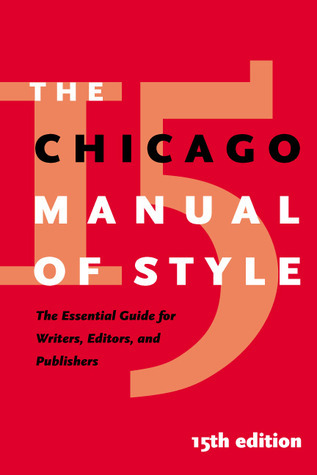
The 15th edition of The Chicago Manual of Style has been superseded by the 17th edition. In the 1890s, a proofreader at the University of Chicago Press prepared a single sheet of typographic fundamentals intended as a guide for the University community. That sheet grew into a pamphlet, and the pamphlet grew into a book—the first edition of the Manual of Style, published in 1906. Now in its fifteenth edition, The Chicago Manual of Style—the essential reference for authors, editors, proofreaders, indexers, copywriters, designers, and publishers in any field—is more comprehensive and easier to use than ever before.Those who work with words know how dramatically publishing has changed in the past decade, with technology now informing and influencing every stage of the writing and publishing process. In creating the fifteenth edition of the Manual, Chicago's renowned editorial staff drew on direct experience of these changes, as well as on the recommendations of the Manual's first advisory board, composed of a distinguished group of scholars, authors, and professionals from a wide range of publishing and business environments.Every aspect of coverage has been examined and brought up to date—from publishing formats to editorial style and method, from documentation of electronic sources to book design and production, and everything in between. In addition to books, the Manual now also treats journals and electronic publications. All chapters are written for the electronic age, with advice on how to prepare and edit manuscripts online, handle copyright and permissions issues raised by technology, use new methods of preparing mathematical copy, and cite electronic and online sources.A new chapter covers American English grammar and usage, outlining the grammatical structure of English, showing how to put words and phrases together to achieve clarity, and identifying common errors. The two chapters on documentation have been reorganized and updated: the first now describes the two main systems preferred by Chicago, and the second discusses specific elements and subject matter, with examples of both systems. Coverage of design and manufacturing has been streamlined to reflect what writers and editors need to know about current procedures. And, to make it easier to search for information, each numbered paragraph throughout the Manual is now introduced by a descriptive heading.Clear, concise, and replete with commonsense advice, The Chicago Manual of Style, fifteenth edition, offers the wisdom of a hundred years of editorial practice while including a wealth of new topics and updated perspectives. For anyone who works with words, whether on a page or computer screen, this continues to be the one reference book you simply must have.What's new in the Fifteenth Edition:* Updated material throughout to reflect current style, technology, and professional practice* Scope expanded to include journals and electronic publications* Comprehensive new chapter on American English grammar and usage by Bryan A. Garner (author of A Dictionary of Modern American Usage)* Updated and rewritten chapter on preparing mathematical copy* Reorganized and updated chapters on documentation, including guidance on citing electronic sources* Streamlined coverage of current design and production processes, with a glossary of key terms* Descriptive headings on all numbered paragraphs for ease of reference* New diagrams of the editing and production processes for both books and journals, keyed to chapter discussions* New, expanded Web site with special tools and features for Manual users at www.chicagomanualofstyle.org.

Chronicles the efforts of an NPR contributor to read the Encyclopedia Britannica from A to Z, sharing the humorous and unexpected mishaps that occurred as a result of the endeavor, from changed dynamics in his family relationships to his efforts to join Mensa and win a spot on Jeopardy! By the author of Fractured Fairy Tales. 100,000 first printing.

Every Thursday morning for two years in the Islamic Republic of Iran, a bold and inspired teacher named Azar Nafisi secretly gathered seven of her most committed female students to read forbidden Western classics. As Islamic morality squads staged arbitrary raids in Tehran, fundamentalists seized hold of the universities, and a blind censor stifled artistic expression, the girls in Azar Nafisi's living room risked removing their veils and immersed themselves in the worlds of Jane Austen, F. Scott Fitzgerald, Henry James, and Vladimir Nabokov. In this extraordinary memoir, their stories become intertwined with the ones they are reading. Reading Lolita in Tehran is a remarkable exploration of resilience in the face of tyranny and a celebration of the liberating power of literature.

This charming classic, first published in 1970, brings together twenty years of correspondence between Helene Hanff, a freelance writer living in New York City, and a used-book dealer in London. Through the years, though never meeting and separated both geographically and culturally, they share a winsome, sentimental friendship based on their common love for books. Their relationship, captured so acutely in these letters, is one that will grab your heart and not let go.

This elegantly haunting work of fiction features bookstore owner Boualem Yekker, who lives in a country overtaken by a radically conservative party known as the Vigilant Brothers, a group that seeks to control every aspect of life according to the precepts of their rigid moral theology. The belief that no work of beauty created by humans should rival the wonders of their god is slowly consuming society, and the art once treasured is now despised. Boualem resists the new regime with quiet determination, using the shop and his personal history as weapons against puritanical forces. Readers are taken into the lush depths of the bookseller's dreams, the memories of his now empty family life, and his passion for literature, then yanked back into the terror and drudgery of his daily routine by the vandalism, assaults, and death warrants that afflict him. "Books have been the compost in which Boualem's life ripened, to the point where his bookish hands and his carnal hands, his paper body and his body of flesh and blood very often overlap and mingle. In the end Boualem himself didn't see a clear distinction any more. He has met so many characters in books, he has come in contact with so many destinies that his own life would be nothing without them." Marketing plans for The Last Summer of Reason : A percentage of proceeds go to ABFFE. Joint promotions with ABFFE and member stores, including highlight in Bookselling This Week .Galley mailing & BookSense Galley Program participationNational advertisingCo-op available Tahar Djaout was considered one of the most promising writers of his generation, and was a firm believer in democracy. Djaout's murder was attributed to the Islamic Salvation Front, who reported that he was killed because he "wielded a fearsome pen." He is the author of eleven books, including the novel Les vigiles , which won the Prix Mediterrane.

On July 28, 1841, the body of Mary Rogers, a twenty-year-old cigar girl, was found floating in the Hudson-and New York's unregulated police force proved incapable of solving the crime. One year later, a struggling writer named Edgar Allan Poe decided to take on the case-and sent his fictional detective, C. Auguste Dupin, to solve the baffling murder of Mary Rogers in "The Mystery of Marie Rog�t."

The Professor and the Madman, masterfully researched and eloquently written, is an extraordinary tale of madness, genius, and the incredible obsessions of two remarkable men that led to the making of the Oxford English Dictionary -- and literary history. The compilation of the OED, begun in 1857, was one of the most ambitious projects ever undertaken. As definitions were collected, the overseeing committee, led by Professor James Murray, discovered that one man, Dr. W. C. Minor, had submitted more than ten thousand. When the committee insisted on honoring him, a shocking truth came to light: Dr. Minor, an American Civil War veteran, was also an inmate at an asylum for the criminally insane.

What difference did printing make? Although the importance of the advent of printing for the Western world has long been recognized, it was Elizabeth Eisenstein in her monumental, two-volume work, The Printing Press as an Agent of Change, who provided the first full-scale treatment of the subject. This illustrated and abridged edition provides a stimulating survey of the communications revolution of the fifteenth century. After summarizing the initial changes, and introducing the establishment of printing shops, it considers how printing effected three major cultural movements: the Renaissance, the Reformation, and the rise of modern science. First Edition Hb (1984) 0-521-25858-8 First Edition Pb (1984) 0-521-27735-3

#1 NEW YORK TIMES BESTSELLER - NOW A MAJOR MOTION PICTURE ON NETFLIX - A remarkable tale of the island of Guernsey during the German Occupation, and of a society as extraordinary as its name. "I wonder how the book got to Guernsey? Perhaps there is some sort of secret homing instinct in books that brings them to their perfect readers." January 1946: London is emerging from the shadow of the Second World War, and writer Juliet Ashton is looking for her next book subject. Who could imagine that she would find it in a letter from a man she's never met, a native of the island of Guernsey, who has come across her name written inside a book by Charles Lamb...As Juliet and her new correspondent exchange letters, Juliet is drawn into the world of this man and his friends—and what a wonderfully eccentric world it is. The Guernsey Literary and Potato Peel Pie Society—born as a spur-of-the-moment alibi when its members were discovered breaking curfew by the Germans occupying their island—boasts a charming, funny, deeply human cast of characters, from pig farmers to phrenologists, literature lovers all.Juliet begins a remarkable correspondence with the society's members, learning about their island, their taste in books, and the impact the recent German occupation has had on their lives. Captivated by their stories, she sets sail for Guernsey, and what she finds will change her forever.Written with warmth and humor as a series of letters, this novel is a celebration of the written word in all its guises and of finding connection in the most surprising ways.

Global conspiracy, complex code-breaking, high-tech data visualization, young love, the secret to eternal life. Mostly in a hole-in-the-wall San Francisco bookstore. Clay Jannon tells how serendipity, sheer curiosity, and the ability to climb a ladder like a monkey has sent him from Web Drone to night shift at Mr. Penumbra’s 24-Hour Bookstore. After just a few days on the job, Clay realizes just how curious this store is. A few customers come in repeatedly without buying anything. Instead they “check out” obscure volumes from strange corners of the store. All runs according to some elaborate, long-standing arrangement with the gnomic Mr. Penumbra. The store must be a front for something larger, Clay concludes.He embarks on a complex analysis of the customers’ behavior and ropes in friends to help. Once they bring their findings to Mr. Penumbra, it turns out the secrets extend far outside the walls of the bookstore. A quest to New York City dips in a world conspiracy for eternal life. The current of romance pulls Clay onward.

An unrelenting flow of choices confronts us at nearly every moment of our lives, and yet our culture offers us no clear way to choose. This predicament seems inevitable, but in fact it's quite new. In medieval Europe, God's calling was a grounding force. In ancient Greece, a whole pantheon of shining gods stood ready to draw an appropriate action out of you. Like an athlete in “the zone,” you were called to a harmonious attunement with the world, so absorbed in it that you couldn’t make a “wrong” choice. If our culture no longer takes for granted a belief in God, can we nevertheless get in touch with the Homeric moods of wonder and gratitude, and be guided by the meanings they reveal?All Things Shining says we can. Hubert Dreyfus and Sean Dorrance Kelly illuminate some of the greatest works of the West to reveal how we have lost our passionate engagement with and responsiveness to the world. Their journey takes us from the wonder and openness of Homer’s polytheism to the monotheism of Dante; from the autonomy of Kant to the multiple worlds of Melville; and, finally, to the spiritual difficulties evoked by modern authors such as David Foster Wallace and Elizabeth Gilbert.Dreyfus, a philosopher at the University of California, Berkeley, for forty years, is an original thinker who finds in the classic texts of our culture a new relevance for people’s everyday lives. His lively, thought-provoking lectures have earned him a podcast audience that often reaches the iTunesU Top 40. Kelly, chair of the philosophy department at Harvard University, is an eloquent new voice whose sensitivity to the sadness of the culture— and to what remains of the wonder and gratitude that could chase it away—captures a generation adrift.Re-envisioning modern spiritual life through their examination of literature, philosophy, and religious testimony, Dreyfus and Kelly unearth ancient sources of meaning, and teach us how to rediscover the sacred, shining things that surround us every day. This book will change the way we understand our culture, our history, our sacred practices, and ourselves. It offers a new—and very old—way to celebrate and be grateful for our existence in the modern world.

The inspiring story of a son and his dying mother, who form a "book club" that brings them together as her life comes to a close. Mary Anne Schwalbe is waiting for her chemotherapy treatments when Will casually asks her what she's reading. The conversation they have grows into tradition: soon they are reading the same books so they can have something to talk about in the hospital waiting room. The ones they choose range from classic to popular, from fantastic to spiritual, and we hear their passion for reading and their love for each other in their intimate and searching discussions. A profoundly moving testament to the power of love between a child and parent, and the power of reading in our lives.

Irresistibly magnetic on stage, mesmerizing in movies, seven times an Academy Award nominee, Richard Burton rose from humble beginnings in Wales to become Hollywood's most highly paid actor and one of England's most admired Shakespearean performers. His epic romance with Elizabeth Taylor, his legendary drinking and story-telling, his dazzling purchases (enormous diamonds, a jet, homes on several continents), and his enormous talent kept him constantly in the public eye. Yet the man behind the celebrity façade carried a surprising burden of insecurity and struggled with the peculiar challenges of a life lived largely in the spotlight.This volume publishes Burton's extensive personal diaries in their entirety for the first time. His writings encompass many years—from 1939, when he was still a teenager, to 1983, the year before his death—and they reveal him in his most private moments, pondering his triumphs and demons, his loves and his heartbreaks. The diary entries appear in their original sequence, with annotations to clarify people, places, books, and events Burton mentions.From these hand-written pages emerges a multi-dimensional man, no mere flashy celebrity. While Burton touched shoulders with shining lights—among them Olivia de Havilland, John Gielgud, Claire Bloom, Laurence Olivier, John Huston, Dylan Thomas, and Edward Albee—he also played the real-life roles of supportive family man, father, husband, and highly intelligent observer. His diaries offer a rare and fresh perspective on his own life and career, and on the glamorous decades of the mid-twentieth century.

Good Prose is an inspiring book about writing—about the creation of good prose—and the record of a warm and productive literary friendship. The story begins in 1973, in the offices of The Atlantic Monthly, in Boston, where a young freelance writer named Tracy Kidder came looking for an assignment. Richard Todd was the editor who encouraged him. From that article grew a lifelong association. Before long, Kidder’s The Soul of a New Machine, the first book the two worked on together, had won the Pulitzer Prize. It was a heady moment, but for Kidder and Todd it was only the beginning of an education in the art of nonfiction.Good Prose explores three major nonfiction forms: narratives, essays, and memoirs. Kidder and Todd draw candidly, sometimes comically, on their own experience—their mistakes as well as accomplishments—to demonstrate the pragmatic ways in which creative problems get solved. They also turn to the works of a wide range of writers, novelists as well as nonfiction writers, for models and instruction. They talk about narrative strategies (and about how to find a story, sometimes in surprising places), about the ethical challenges of nonfiction, and about the realities of making a living as a writer. They offer some tart and emphatic opinions on the current state of language. And they take a clear stand against playing loose with the facts. Their advice is always grounded in the practical world of writing and publishing.Good Prose—like Strunk and White’s The Elements of Style—is a succinct, authoritative, and entertaining arbiter of standards in contemporary writing, offering guidance for the professional writer and the beginner alike. This wise and useful book is the perfect companion for anyone who loves to read good books and longs to write one.

A National Book Critics Circle Finalist for CriticismA deeply Malcolmian volume on painters, photographers, writers, and critics.Janet Malcolm's In the Freud Archives and The Journalist and the Murderer, as well as her books about Sylvia Plath and Gertrude Stein, are canonical in the realm of nonfiction—as is the title essay of this collection, with its forty-one "false starts," or serial attempts to capture the essence of the painter David Salle, which becomes a dazzling portrait of an artist. Malcolm is "among the most intellectually provocative of authors," writes David Lehman in The Boston Globe, "able to turn epiphanies of perception into explosions of insight."Here, in Forty-one False Starts, Malcolm brings together essays published over the course of several decades (largely in The New Yorker and The New York Review of Books) that reflect her preoccupation with artists and their work. Her subjects are painters, photographers, writers, and critics. She explores Bloomsbury's obsessive desire to create things visual and literary; the "passionate collaborations" behind Edward Weston's nudes; and the character of the German art photographer Thomas Struth, who is "haunted by the Nazi past," yet whose photographs have "a lightness of spirit." In "The Woman Who Hated Women," Malcolm delves beneath the "onyx surface" of Edith Wharton's fiction, while in "Advanced Placement" she relishes the black comedy of the Gossip Girl novels of Cecily von Zeigesar. In "Salinger's Cigarettes," Malcolm writes that "the pettiness, vulgarity, banality, and vanity that few of us are free of, and thus can tolerate in others, are like ragweed for Salinger's helplessly uncontaminated heroes and heroines." "Over and over," as Ian Frazier writes in his introduction, "she has demonstrated that nonfiction—a book of reporting, an article in a magazine, something we see every day—can rise to the highest level of literature."One of Publishers Weekly's Best Nonfiction Books of 2013

This national bestseller from celebrated novelist and memoirist Dani Shapiro is an intimate and eloquent companion to living a creative life. Through a blend of memoir, meditation on the artistic process, and advice on craft, Shapiro offers her gift to writers a guide of hard-won wisdom and advice for staying the course. In the ten years since the first edition, Still Writing has become a mainstay of creative writing classes as well as a lodestar for writers just starting out, and above all, an indispensable almanac for modern writers.

It's a staple on almost every high school reading list in the country. It's a book that has remained current for over half a century, fighting off critics and changing tastes in fiction. But do even its biggest fans know all there is to appreciate about The Great Gatsby?Maureen Corrigan, the book critic for "Fresh Air" and a Gatsby lover extraordinaire, points out that while Gatsby may be the novel most Americans have read, it's also the ones most of us read too soon -- when we were "too young, too defensive emotionally, too ignorant about the life-deforming powers of regret" to really understand all that Fitzgerald was saying ("it's not the green light, stupid, it's Gatsby's reaching for it," as she puts it). No matter when or how recently you've read the novel, Corrigan offers a fresh perspective on what makes it so enduringly relevant and powerful. Drawing on her experience as a reader, lecturer, and critic, her book will be a rousing consideration of Gatsby: not just its literary achievements, but also its path to "classic" (its initial lukewarm reception has been a form of cold comfort to struggling novelists for decades), its under-acknowledged debt to hard-boiled crime fiction, its commentaries on race, class, and gender.With rigor, wit, and an evangelistic persuasiveness, Corrigan will leave readers inspired to grab their old paperback copies of Gatsby and re-experience this great novel in an entirely new light.

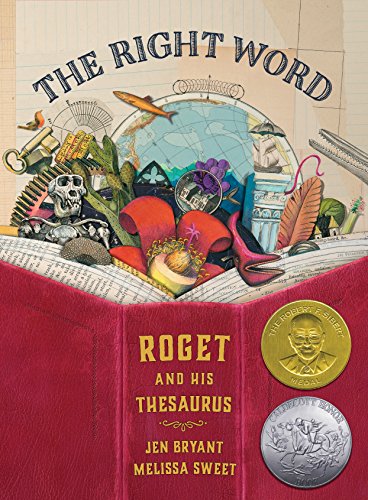
For shy young Peter Mark Roget, books were the best companions -- and it wasn’t long before Peter began writing his own book. But he didn’t write stories; he wrote lists. Peter took his love for words and turned it to organizing ideas and finding exactly the right word to express just what he thought. His lists grew and grew, eventually turning into one of the most important reference books of all time.

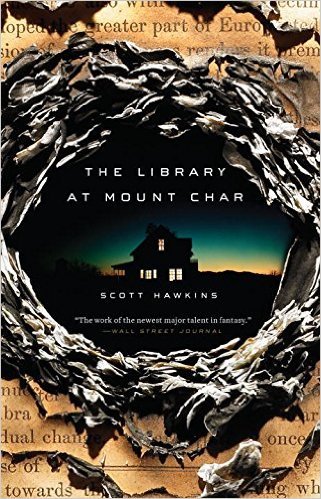
Carolyn's not so different from the other human beings around her. She's sure of it. She likes guacamole and cigarettes and steak. She knows how to use a phone. She even remembers what clothes are for. After all, she was a normal American herself, once. That was a long time ago, of course—before the time she calls “adoption day,” when she and a dozen other children found themselves being raised by a man they learned to call Father.Father could do strange things. He could call light from darkness. Sometimes he raised the dead. And when he was disobeyed, the consequences were terrible. In the years since Father took her in, Carolyn hasn't gotten out much. Instead, she and her adopted siblings have been raised according to Father's ancient Pelapi customs. They've studied the books in his library and learned some of the secrets behind his equally ancient power. Sometimes, they've wondered if their cruel tutor might secretly be God. Now, Father is missing. And if God truly is dead, the only thing that matters is who will inherit his library—and with it, power over all of creation. As Carolyn gathers the tools she needs for the battle to come, fierce competitors for this prize align against her. But Carolyn can win. She's sure of it. What she doesn't realize is that her victory may come at an unacceptable price—because in becoming a God, she's forgotten a great deal about being human.

A spirited and revealing memoir by the most celebrated editor of his timeAfter editing The Columbia Review, staging plays at Cambridge, and a stint in the greeting-card department of Macy's, Robert Gottlieb stumbled into a job at Simon and Schuster. By the time he left to run Alfred A. Knopf a dozen years later, he was the editor in chief, having discovered and edited Catch-22 and The American Way of Death, among other bestsellers. At Knopf, Gottlieb edited an astonishing list of authors, including Toni Morrison, John Cheever, Doris Lessing, John le Carré, Michael Crichton, Lauren Bacall, Katharine Graham, Robert Caro, Nora Ephron, and Bill Clinton--not to mention Bruno Bettelheim and Miss Piggy. In Avid Reader, Gottlieb writes with wit and candor about succeeding William Shawn as the editor of The New Yorker, and the challenges and satisfactions of running America's preeminent magazine. Sixty years after joining Simon and Schuster, Gottlieb is still at it--editing, anthologizing, and, to his surprise, writing.But this account of a life founded upon reading is about more than the arc of a singular career--one that also includes a lifelong involvement with the world of dance. It's about transcendent friendships and collaborations, "elective affinities" and family, psychoanalysis and Bakelite purses, the alchemical relationship between writer and editor, the glory days of publishing, and--always--the sheer exhilaration of work.

A collection of essays on life and literature, from one of the most iconic authors and astute critics in contemporary letters.Words Are My Matter is essential reading: a collection of talks, essays, and criticism by Ursula K. Le Guin, a literary legend and unparalleled voice of our social conscience. Here she investigates the depth and breadth of contemporary fiction—and, through the lens of literature, gives us a way of exploring the world around us. In “Freedom,” Le Guin notes: “Hard times are coming, when we’ll be wanting the voices of writers who can see alternatives to how we live now … to other ways of being, and even imagine real grounds for hope. We’ll need writers who can remember freedom—poets, visionaries—realists of a larger reality.” Le Guin was one of those authors and in Words Are My Matter she gives us just that: a vision of a better reality, fueled by the power and might and hope of language and literature.

From the author of the best-selling and beloved The End of Your Life Book Club - a wonderfully engaging new book: both a celebration of reading in general and an impassioned recommendation of specific books that can help guide us through our daily lives."I've always believed that everything you need to know you can find in a book," writes Will Schwalbe in his introduction to this thought-provoking, heartfelt, and inspiring new book about books. In each chapter he makes clear the ways in which a particular book has helped to shape how he leads his own life and the ways in which it might help to shape ours. He talks about what brought him to each book - or vice versa; the people in his life he associates each book with; how each has led him to other books; how each is part of his understanding of himself in the world. And he relates each book to a question of our daily lives, for example: Melville's Bartleby, the Scrivener speaks to quitting; 1984 to disconnecting from our electronics; James Baldwin's Giovanni's Room to the power of finding ourselves and connecting with one another; Anne Morrow Lindbergh's Gift from the Sea to taking time to recharge; Anne Lamott's Bird by Bird to being sensitive to the surrounding world; The Little Prince to making friends; Paula Hawkins's The Girl on the Train to trusting. Here, too, are books by Dickens, Daphne du Maurier, Haruki Murakami, Edna Lewis, E. B. White, and Hanya Yanagihara, among many others. A treasure of a book for everyone who loves books, loves reading, and loves to hear the answer to the question: "What are you reading?"

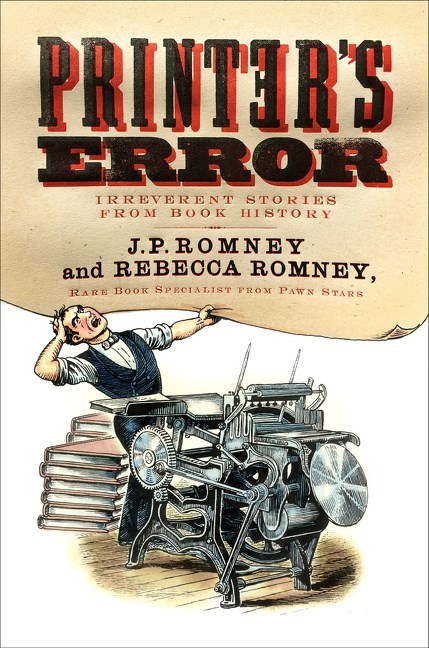
A funny and entertaining history of printed books as told through absurd moments in the lives of authors and printers, collected by television’s favorite rare-book expert from HISTORY’s hit series Pawn Stars.Since the Gutenberg Bible first went on sale in 1455, printing has been viewed as one of the highest achievements of human innovation. But the march of progress hasn’t been smooth; downright bizarre is more like it. Printer’s Error chronicles some of the strangest and most humorous episodes in the history of Western printing, and makes clear that we’ve succeeded despite ourselves. Rare-book expert Rebecca Romney and author J. P. Romney take us from monasteries and museums to auction houses and libraries to introduce curious episodes in the history of print that have had a profound impact on our world.Take, for example, the Gutenberg Bible. While the book is regarded as the first printed work in the Western world, Gutenberg’s name doesn’t appear anywhere on it. Today, Johannes Gutenberg is recognized as the father of Western printing. But for the first few hundred years after the invention of the printing press, no one knew who printed the first book. This long-standing mystery took researchers down a labyrinth of ancient archives and libraries, and unearthed surprising details, such as the fact that Gutenberg’s financier sued him, repossessed his printing equipment, and started his own printing business afterward. Eventually the first printed book was tracked to the library of Cardinal Mazarin in France, and Gutenberg’s forty-two-line Bible was finally credited to him, thus ensuring Gutenberg’s name would be remembered by middle-school students worldwide.

The author of the acclaimed Proust and the Squid follows up with a lively, ambitious, and deeply informative book that considers the future of the reading brain and our capacity for critical thinking, empathy, and reflection as we become increasingly dependent on digital technologies.A decade ago, Maryanne Wolf’s Proust and the Squid revealed what we know about how the brain learns to read and how reading changes the way we think and feel. Since then, the ways we process written language have changed dramatically with many concerned about both their own changes and that of children. New research on the reading brain chronicles these changes in the brains of children and adults as they learn to read while immersed in a digitally dominated medium.Drawing deeply on this research, this book comprises a series of letters Wolf writes to us—her beloved readers—to describe her concerns and her hopes about what is happening to the reading brain as it unavoidably changes to adapt to digital mediums. Wolf raises difficult questions, including:Will children learn to incorporate the full range of "deep reading" processes that are at the core of the expert reading brain?Will the mix of a seemingly infinite set of distractions for children’s attention and their quick access to immediate, voluminous information alter their ability to think for themselves?With information at their fingertips, will the next generation learn to build their own storehouse of knowledge, which could impede the ability to make analogies and draw inferences from what they know?Will all these influences, in turn, change the formation in children and the use in adults of "slower" cognitive processes like critical thinking, personal reflection, imagination, and empathy that comprise deep reading and that influence both how we think and how we live our lives?Will the chain of digital influences ultimately influence the use of the critical analytical and empathic capacities necessary for a democratic society?How can we preserve deep reading processes in future iterations of the reading brain?Who are the "good readers" of every epoch?Concerns about attention span, critical reasoning, and over-reliance on technology are never just about children—Wolf herself has found that, though she is a reading expert, her ability to read deeply has been impacted as she has become, inevitably, increasingly dependent on screens.Wolf draws on neuroscience, literature, education, technology, and philosophy and blends historical, literary, and scientific facts with down-to-earth examples and warm anecdotes to illuminate complex ideas that culminate in a proposal for a biliterate reading brain. Provocative and intriguing, Reader, Come Home is a roadmap that provides a cautionary but hopeful perspective on the impact of technology on our brains and our most essential intellectual capacities—and what this could mean for our future.

From his bid to become Eudora Welty's lawn boy to the time George Plimpton offered to punch him in the nose, lineage has always been important to Rick Bass. Now at a turning point--in his midfifties, with his long marriage dissolved and his grown daughters out of the house--Bass strikes out on a journey of thanksgiving. His aim: to make a memorable meal for each of his mentors, to express his gratitude for the way they have shaped not only his writing but his life. The result, an odyssey to some of America's most iconic writers, is also a record of self-transformation as Bass seeks to recapture the fire that drove him as a young man. Along the way we join in escapades involving smuggled contraband, an exploding grill, a trail of blood through Heathrow airport, an episode of dog-watching with Amy Hempel in Central Park, and a near run-in with plague-ridden prairie dogs on the way to see Lorrie Moore, as well as heartwarming and bittersweet final meals with the late Peter Matthiessen, John Berger, and Denis Johnson.

A thrilling tale of secretaries turned spies, of love and duty, and of sacrifice--the real-life story of the CIA plot to infiltrate the hearts and minds of Soviet Russia, not with propaganda, but with the greatest love story of the twentieth Doctor Zhivago . At the height of the Cold War, two secretaries are pulled out of the typing pool at the CIA and given the assignment of a lifetime. Their to smuggle Doctor Zhivago out of the USSR, where no one dares publish it, and help Pasternak's magnum opus make its way into print around the world. Glamorous and sophisticated Sally Forrester is a seasoned spy who has honed her gift for deceit all over the world--using her magnetism and charm to pry secrets out of powerful men. Irina is a complete novice, and under Sally's tutelage quickly learns how to blend in, make drops and invisibly ferry classified documents.The Secrets We Kept combines a legendary literary love story--the decades-long affair between Pasternak and his mistress and muse, Olga Ivinskaya, who was sent to the Gulag and inspired Zhivago's heroine, Lara--with a narrative about two women empowered to lead lives of extraordinary intrigue and risk. From Pasternak's country estate outside Moscow to the brutalities of the Gulag, from Washington, DC, to Paris and Milan, The Secrets We Kept captures a watershed moment in the history of literature--told with soaring emotional intensity and captivating historical detail. And at the centre of this unforgettable debut is the powerful belief that a piece of art can change the world.

An exhilarating and laugh-out-loud debut novel from a prize-winning new talent which chronicles the misadventures of a lovelorn Victorian lexicographer and the young woman put on his trail a century later to root out his misdeeds while confronting questions of her own sexuality and place in the world. Mountweazel n. the phenomenon of false entries within dictionaries and works of reference. Often used as a safeguard against copyright infringement.Peter Winceworth, Victorian lexicographer, is toiling away at the letter S for Swansby's multivolume Encyclopaedic Dictionary. His disaffection compels him to insert unauthorized fictitious entries into the dictionary in an attempt to assert some sense of individual purpose and artistic freedom.In the present day, Mallory, a young intern employed by the publisher, is tasked with uncovering these mountweazels before the work is digitized. She also has to contend with threatening phone calls from an anonymous caller. Is the change in the definition of marriage really that upsetting? And does the caller really intend for the Swansby's staff to 'burn in hell'?As these two narratives combine, both Winceworth and Mallory discover how they might negotiate the complexities of the often nonsensical, relentless, untrustworthy, hoax-strewn, and undefinable path we call life. An exhilarating debut novel from a formidably brilliant young writer, The Liar's Dictionary celebrates the rigidity, fragility, absurdity, and joy of language.

The stunning story of an Alabama serial killer and the true-crime book that Harper Lee worked on obsessively in the years after To Kill a MockingbirdReverend Willie Maxwell was a rural preacher accused of murdering five of his family members for insurance money in the 1970s. With the help of a savvy lawyer, he escaped justice for years until a relative shot him dead at the funeral of his last victim. Despite hundreds of witnesses, Maxwell's murderer was acquitted - thanks to the same attorney who had previously defended the Reverend.As Alabama is consumed by these gripping events, it's not long until news of the case reaches Alabama's - and America's - most famous writer. Intrigued by the story, Harper Lee makes a journey back to her home state to witness the Reverend's killer face trial. Lee had the idea of writing her own In Cold Blood, the true-crime classic she had helped her friend Truman Capote research. She spent a year in town reporting on the Maxwell case and many more years trying to finish the book she called The Reverend.Now Casey Cep brings this story to life, from the shocking murders to the courtroom drama to the racial politics of the Deep South. At the same time, she offers a deeply moving portrait of one of America's most beloved writers and her struggle with fame, success and the mystery of artistic creativity.This is the story Harper Lee wanted to write. This is the story of why she couldn't.

From the author of Me Before You, set in Depression-era America, a breathtaking story of five extraordinary women and their remarkable journey through the mountains of Kentucky and beyond.Alice Wright marries handsome American Bennett Van Cleve hoping to escape her stifling life in England. But small-town Kentucky quickly proves equally claustrophobic, especially living alongside her overbearing father-in-law. So when a call goes out for a team of women to deliver books as part of Eleanor Roosevelt’s new traveling library, Alice signs on enthusiastically.The leader, and soon Alice’s greatest ally, is Margery, a smart-talking, self-sufficient woman who’s never asked a man’s permission for anything. They will be joined by three other singular women who become known as the Packhorse Librarians of Kentucky. What happens to them–and to the men they love–becomes an unforgettable drama of loyalty, justice, humanity and passion. These heroic women refuse to be cowed by men or by convention. And though they face all kinds of dangers in a landscape that is at times breathtakingly beautiful, at others brutal, they’re committed to their job: bringing books to people who have never had any, arming them with facts that will change their lives.Based on a true story rooted in America’s past, The Giver of Stars is unparalleled in its scope and epic in its storytelling. Funny, heartbreaking, enthralling, it is destined to become a modern classic–a richly rewarding novel of women’s friendship, of true love, and of what happens when we reach beyond our grasp for the great beyond.

In 1901, the word ‘Bondmaid’ was discovered missing from the Oxford English Dictionary. This is the story of the girl who stole it.Esme is born into a world of words. Motherless and irrepressibly curious, she spends her childhood in the ‘Scriptorium’, a garden shed in Oxford where her father and a team of dedicated lexicographers are collecting words for the very first Oxford English Dictionary. Esme’s place is beneath the sorting table, unseen and unheard. One day a slip of paper containing the word ‘bondmaid’ flutters to the floor. Esme rescues the slip and stashes it in an old wooden case that belongs to her friend, Lizzie, a young servant in the big house. Esme begins to collect other words from the Scriptorium that are misplaced, discarded or have been neglected by the dictionary men. They help her make sense of the world.Over time, Esme realises that some words are considered more important than others, and that words and meanings relating to women’s experiences often go unrecorded. While she dedicates her life to the Oxford English Dictionary, secretly, she begins to collect words for another dictionary: The Dictionary of Lost Words.Set when the women’s suffrage movement was at its height and the Great War loomed, The Dictionary of Lost Words reveals a lost narrative, hidden between the lines of a history written by men. It’s a delightful, lyrical and deeply thought-provoking celebration of words, and the power of language to shape the world and our experience of it.

On bookshelves around the world, surrounded by ordinary books bound in paper and leather, rest other volumes of a distinctly strange and grisly sort: those bound in human skin. Would you know one if you held it in your hand?In Dark Archives, Megan Rosenbloom seeks out the historic and scientific truths behind anthropodermic bibliopegy--the practice of binding books in this most intimate covering. Dozens of such books live on in the world's most famous libraries and museums. Dark Archives exhumes their origins and brings to life the doctors, murderers, innocents, and indigents whose lives are sewn together in this disquieting collection. Along the way, Rosenbloom tells the story of how her team of scientists, curators, and librarians test rumored anthropodermic books, untangling the myths around their creation and reckoning with the ethics of their custodianship.A librarian and journalist, Rosenbloom is a member of The Order of the Good Death and a cofounder of their Death Salon, a community that encourages conversations, scholarship, and art about mortality and mourning. In Dark Archives--captivating and macabre in all the right ways--she has crafted a narrative that is equal parts detective work, academic intrigue, history, and medical curiosity: a book as rare and thrilling as its subject.

For the last twenty years, George Saunders has been teaching a class on the Russian short story to his MFA students at Syracuse University. In A Swim in a Pond in the Rain, he shares a version of that class with us, offering some of what he and his students have discovered together over the years. Paired with iconic short stories by Chekhov, Turgenev, Tolstoy, and Gogol, the seven essays in this book are intended for anyone interested in how fiction works and why it’s more relevant than ever in these turbulent times.In his introduction, Saunders writes, “We’re going to enter seven fastidiously constructed scale models of the world, made for a specific purpose that our time maybe doesn’t fully endorse but that these writers accepted implicitly as the aim of art—namely, to ask the big questions, questions like, How are we supposed to be living down here? What were we put here to accomplish? What should we value? What is truth, anyway, and how might we recognize it?” He approaches the stories technically yet accessibly, and through them explains how narrative functions; why we stay immersed in a story and why we resist it; and the bedrock virtues a writer must foster. The process of writing, Saunders reminds us, is a technical craft, but also a way of training oneself to see the world with new openness and curiosity.A Swim in a Pond in the Rain is a deep exploration not just of how great writing works but of how the mind itself works while reading, and of how the reading and writing of stories make genuine connection possible.

A groundbreaking resource for fiction writers, teachers, and students, this manifesto and practical guide challenges current models of craft and the writing workshop by showing how they fail marginalized writers, and how cultural expectations inform storytelling. The traditional writing workshop was established with white male writers in mind; what we call craft is informed by their cultural values. In this bold and original examination of elements of writing—including plot, character, conflict, structure, and believability—and aspects of workshop—including the silenced writer and the imagined reader—Matthew Salesses asks questions to invigorate these familiar concepts. He upends Western notions of how a story must progress. How can we rethink craft, and the teaching of it, to better reach writers with diverse backgrounds? How can we invite diverse storytelling traditions into literary spaces?Drawing from examples including One Thousand and One Nights, Curious George, Ursula K. Le Guin's A Wizard of Earthsea, and the Asian American classic No-No Boy, Salesses asks us to reimagine craft and the workshop. In the pages of exercises included here, teachers will find suggestions for building syllabi, grading, and introducing new methods to the classroom; students will find revision and editing guidance, as well as a new lens for reading their work. Salesses shows that we need to interrogate the lack of diversity at the core of published fiction: how we teach and write it. After all, as he reminds us, "When we write fiction, we write the world."

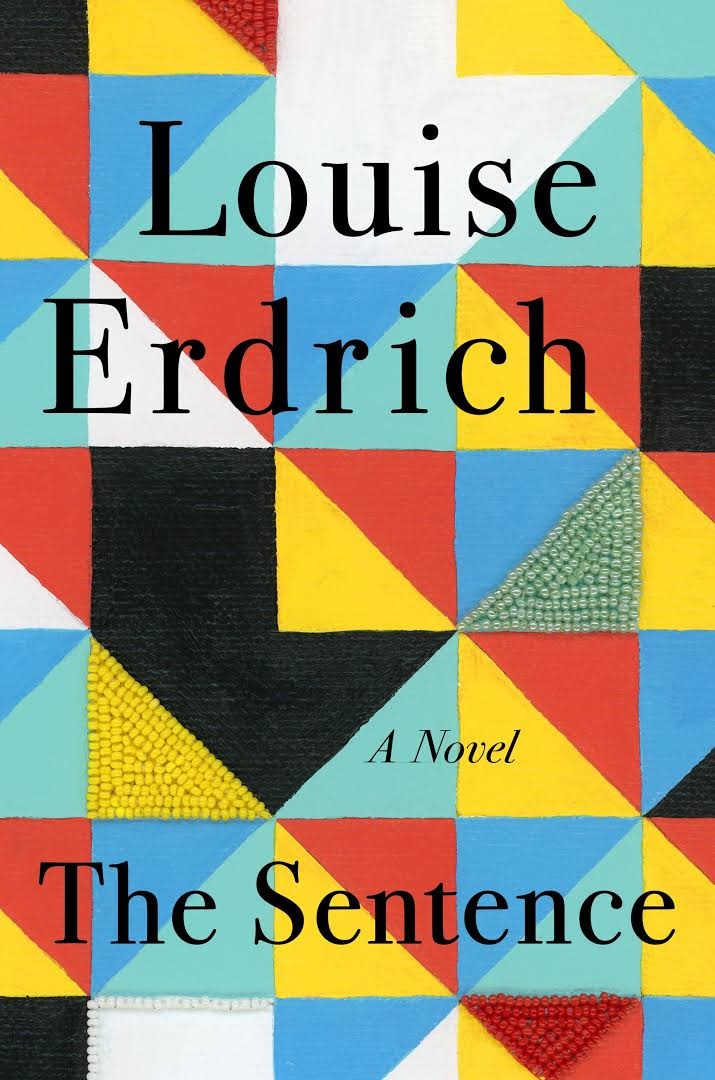
In this stunning and timely novel, Pulitzer Prize and National Book Award-winning author Louise Erdrich creates a wickedly funny ghost story, a tale of passion, of a complex marriage, and of a woman's relentless errors.Louise Erdrich's latest novel, The Sentence, asks what we owe to the living, the dead, to the reader and to the book. A small independent bookstore in Minneapolis is haunted from November 2019 to November 2020 by the store's most annoying customer. Flora dies on All Souls' Day, but she simply won't leave the store. Tookie, who has landed a job selling books after years of incarceration that she survived by reading with murderous attention, must solve the mystery of this haunting while at the same time trying to understand all that occurs in Minneapolis during a year of grief, astonishment, isolation, and furious reckoning.The Sentence begins on All Souls' Day 2019 and ends on All Souls' Day 2020. Its mystery and proliferating ghost stories during this one year propel a narrative as rich, emotional, and profound as anything Louise Erdrich has written

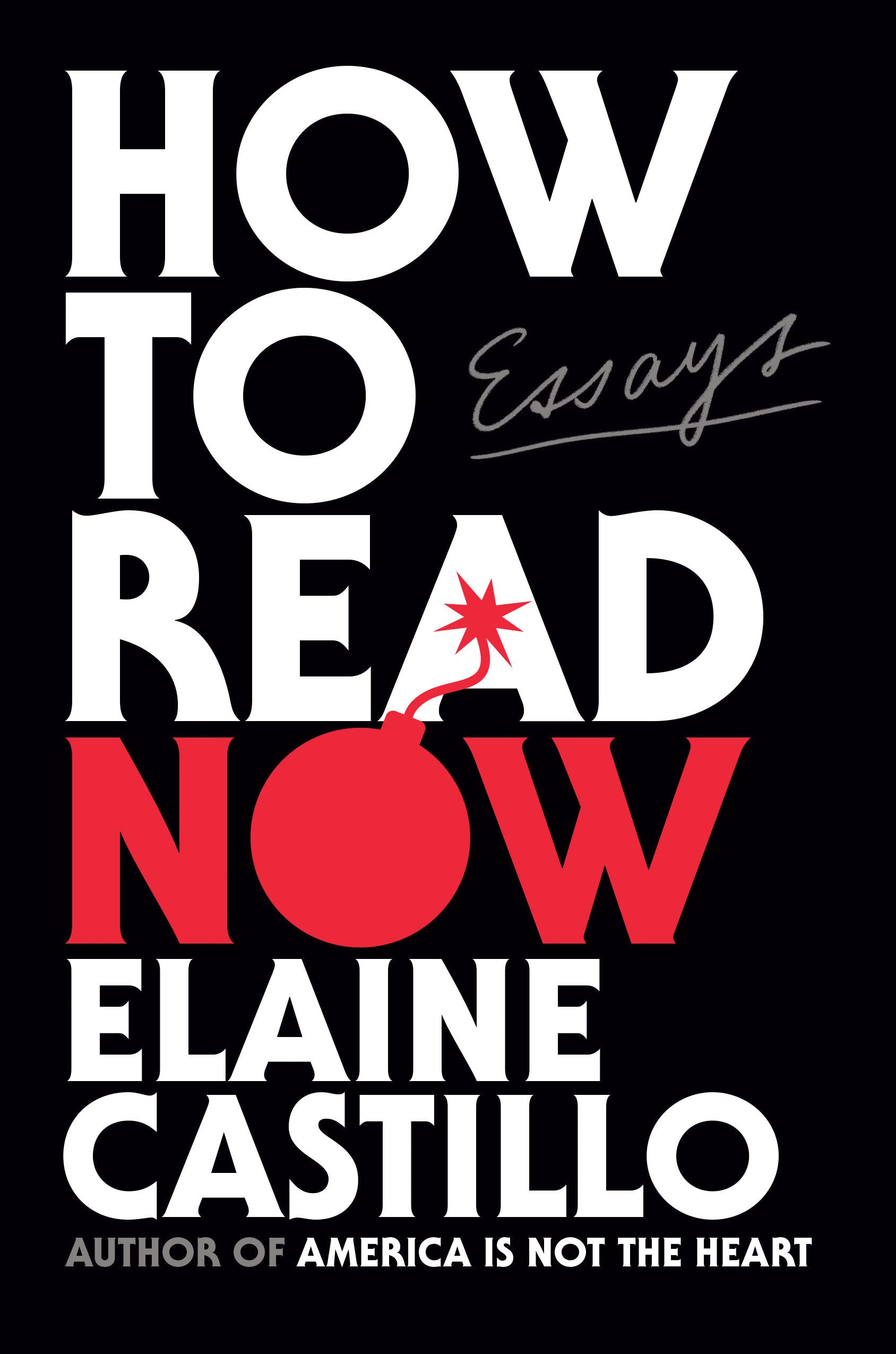
How to Read Now explores the politics and ethics of reading, and insists that we are capable of something better: a more engaged relationship not just with our fiction and our art, but with our buried and entangled histories. Smart, funny, galvanizing, and sometimes profane, Castillo attacks the stale questions and less-than-critical proclamations that masquerade as vital discussion: reimagining the cartography of the classics, building a moral case against the settler colonialism of lauded writers like Joan Didion, taking aim at Nobel Prize winners and toppling indie filmmakers, and celebrating glorious moments in everything from popular TV like The Watchmen to the films of Wong Kar-wai and the work of contemporary poets like Tommy Pico.At once a deeply personal and searching history of one woman's reading life, and a wide-ranging and urgent intervention into our globalized conversations about why reading matters today, How to Read Now empowers us to embrace a more complicated, embodied form of reading, inviting us to acknowledge complicated truths, ignite surprising connections, imagine a more daring solidarity, and create space for a riskier intimacy--within ourselves, and with each other.

From the bestselling author of Just Like You, High Fidelity, and Fever Pitch, a short, warm, and entertaining book about art, creativity, and the unlikely similarities between Victorian novelist Charles Dickens and modern American rock star Prince Every so often, a pairing comes along that seems completely unlikely—until it's not. Peanut butter and jelly, Dennis Rodman and Kim Jong Un, ducks and puppies, and now: Dickens and Prince.Equipped with a fan's admiration and his trademark humor and wit, Nick Hornby invites us into his latest obsession: the cosmic link between two unlikely artists, geniuses in their own rights, spanning race, class, and centuries—each of whom electrified their different disciplines and whose legacy resounded far beyond their own time.When Prince's 1987 record Sign o' the Times was rereleased in 2020, the iconic album now came with dozens of songs that weren't on the original— Prince was endlessly prolific, recording 102 songs in 1986 alone. In awe, Hornby began to wonder, Who else ever produced this much? Who else ever worked that way? He soon found his answer in Victorian novelist and social critic Charles Dickens, who died more than a hundred years before Prince began making music.Examining the two artists' personal tragedies, social statuses, boundless productivity, and other parallels, both humorous and haunting, Hornby shows how these two unlikely men from different centuries "lit up the world." In the process, he creates a lively, stimulating rumination on the creativity, flamboyance, discipline, and soul it takes to produce great art.