
Maureen Corrigan
Maureen Corrigan (Born July 30, 1955) is an American journalist, author and literary critic. She writes for the "Book World" section of The Washington Post, and is a book critic on the NPR radio program Fresh Air. In 2005, she published a literary memoir, Leave Me Alone, I'm Reading: Finding and Losing Myself in Books. Corrigan holds a B.A. from Fordham University as well as an M.A. and Ph.D from the University of Pennsylvania and is Critic in Residence and a lecturer in English at Georgetown University. Her specialist subjects include 19th-century British literature, women's literature (with a special focus on autobiographies), popular culture, detective fiction, contemporary American literature, and Anglo-Irish literature. Corrigan is a member of the advisory panel of The American Heritage Dictionary and an Advisor to the National Endowment of the Arts "Big Read" project. (from Wikipedia)
5 Books Written

So We Read On: How The Great Gatsby Came to Be and Why It Endures
by Maureen Corrigan
Rating: 4.2 ⭐
• 2 recommendations ❤️
The "Fresh Air" book critic investigates the enduring power of The Great Gatsby -- "The Great American Novel we all think we've read, but really haven't."Conceived nearly a century ago by a man who died believing himself a failure, it's now a revered classic and a rite of passage in the reading lives of millions. But how well do we really know The Great Gatsby ? As Maureen Corrigan, Gatsby lover extraordinaire, points out, while Fitzgerald's masterpiece may be one of the most popular novels in America, many of us first read it when we were too young to fully comprehend its power.Offering a fresh perspective on what makes Gatsby great -- and utterly unusual -- So We Read On takes us into archives, high school classrooms, and even out onto the Long Island Sound to explore the novel's hidden depths, a journey whose revelations include Gatsby 's surprising debt to hard-boiled crime fiction, its rocky path to recognition as a "classic," and its profound commentaries on the national themes of race, class, and gender.With rigor, wit, and infectious enthusiasm, Corrigan inspires us to re-experience the greatness of Gatsby and cuts to the heart of why we are, as a culture, "borne back ceaselessly" into its thrall. Along the way, she spins a new and fascinating story of her own.
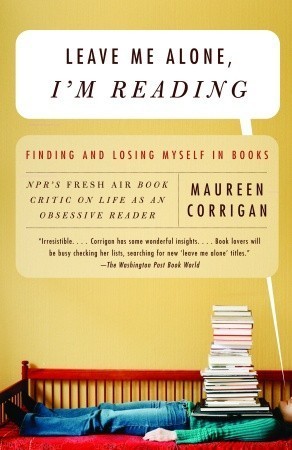
In this delightful memoir, the book critic for NPR’s Fresh Air reflects on her life as a professional reader. Maureen Corrigan takes us from her unpretentious girlhood in working-class Queens, to her bemused years in an Ivy League Ph.D. program, from the whirl of falling in love and marrying (a fellow bookworm, of course), to the ordeal of adopting a baby overseas, always with a book at her side. Along the way, she reveals which books and authors have shaped her own life—from classic works of English literature to hard-boiled detective novels, and everything in between. And in her explorations of the heroes and heroines throughout literary history, Corrigan’s love for a good story shines.

5 hours and 43 minutesMeet Agatha Christie, the best-selling novelist in human history. Her writing career spanned six decades, during which time she wrote 66 crime novels, 6 non-crime novels (including romances), and over 150 short stories. Not only was she a phenomenally successful novelist, but she is also the most successful female playwright of all time - her play "The Mousetrap" is the longest-running show in history.As you learn about Christie’s experiences and her storied career, you will better understand how the circumstances of her life shaped her work and vice versa. Along the way, consider some fascinating questions:How did becoming a nurse and an apothecary’s assistant influence her crime stories?Would her literary career have been different if she had not been a part of well-to-do British society?Why did Christie disappear at the height of her fame - and will we ever know the whole truth about that fateful event?Agatha Christie’s works have been read by millions and have been adapted into film, television, plays, and more since her debut novel, The Mysterious Affair at Styles, introduced the world to Hercule Poirot in 1920. Her famous detectives, Poirot and Miss Marple, have become beloved staples of pop culture around the world. With such a legacy, it can sometimes be surprising how much of her life remains a mystery to her readers. In The Mysterious Case of Agatha Christie, you will get an intimate glimpse of her private life, investigate the secrets of her greatest novels, and perhaps solve a few mysteries yourself.

Throughout the 24 lectures of Banned Books, Burned Books: Forbidden Literary Works, author and book critic Professor Maureen Corrigan of Georgetown University will take you on a tour of some of the most challenged and controversial works of literature, from the plays of Shakespeare to 21st-century best-sellers—even including the dictionary and classic fairy tales. You will trace the history, in the United States and Great Britain, of the challenges to books, the censoring of books, book bans, and even burnings. You will explore the common reasons books have been and continue to be banned, including profanity, heresy, illicit or sexual content, racism, violence, and more. And you’ll consider the shifting trends in why books are challenged.The challenging, censorship, and even destruction of works found to be offensive or threatening to the status quo is not new, but the nature of 21st-century communication and politics has certainly influenced the way books are evaluated and judged today. The rise of social media has blurred the line between an author’s work and their private life, while it has also given readers and would-be critics a platform to make their voices heard. And social justice movements have brought race, sexual identity, and other issues to the forefront of the consideration of literature and its influence on culture.These new elements certainly influence how we approach censorship now, and yet many of the complaints brought against books today are not so different from the criticism of a century (or several) earlier. And the taboo and forbidden nature of banned books has its own special appeal for the human psyche as well, making literary censorship an especially complicated and fascinating subject. As you consider the broader history of book censorship, you will hopefully find yourself thinking more rigorously about your own views on intellectual freedom and the right to read.

Leave Me Alone, I’m Reading
by Maureen Corrigan