
Rick Bass
Rick Bass was born in Fort Worth, Texas, and grew up in Houston, the son of a geologist. He studied petroleum geology at Utah State University and while working as a petroleum geologist in Jackson, Mississippi, began writing short stories on his lunch breaks. In 1987, he moved with his wife, the artist Elizabeth Hughes Bass, to Montana’s remote Yaak Valley and became an active environmentalist, working to protect his adopted home from the destructive encroachment of roads and logging. He serves on the board of both the Yaak Valley Forest Council and Round River Conservation Studies and continues to live with his family on a ranch in Montana, actively engaged in saving the American wilderness. Bass received the PEN/Nelson Algren Award in 1988 for his first short story, “The Watch,” and won the James Jones Fellowship Award for his novel Where the Sea Used To Be. His novel The Hermit’s Story was a Los Angeles Times Best Book of the Year in 2000. The Lives of Rocks was a finalist for the Story Prize and was chosen as a Best Book of the Year in 2006 by the Rocky Mountain News. Bass’s stories have also been awarded the Pushcart Prize and the O. Henry Award and have been collected in The Best American Short Stories.
30 Books Written

The Traveling Feast: On the Road and at the Table with My Heroes
by Rick Bass
Rating: 3.9 ⭐
• 2 recommendations ❤️
From his bid to become Eudora Welty's lawn boy to the time George Plimpton offered to punch him in the nose, lineage has always been important to Rick Bass. Now at a turning point--in his midfifties, with his long marriage dissolved and his grown daughters out of the house--Bass strikes out on a journey of thanksgiving. His aim: to make a memorable meal for each of his mentors, to express his gratitude for the way they have shaped not only his writing but his life. The result, an odyssey to some of America's most iconic writers, is also a record of self-transformation as Bass seeks to recapture the fire that drove him as a young man. Along the way we join in escapades involving smuggled contraband, an exploding grill, a trail of blood through Heathrow airport, an episode of dog-watching with Amy Hempel in Central Park, and a near run-in with plague-ridden prairie dogs on the way to see Lorrie Moore, as well as heartwarming and bittersweet final meals with the late Peter Matthiessen, John Berger, and Denis Johnson.

They were seeking a place to winter in the West, a secluded retreat where he could write and she could paint. Bass and his friend Elizabeth discovered the Yaak valley in northwest Montana. It was remote -- with no electricity or phone service, only erratic radio reception, and reachable by a gravel-and-dirt road that required four-wheel drive. There was one saloon, a general store and a handful of year-round residents. The nearest town, Libby, was 40 miles away. As caretakers of a defunct hunting lodge, the couple settled into their winter idyll. Bass writes exuberantly about their season in the wilderness: blizzards, woodchopping, wildlife, the occasional social gatherings at the Dirty Shame Saloon. He speaks to the wildness and freedom of valley people, the slow-motion quality of life, and the the physical and psychological hardships of wilderness living. This charming celebration will give readers a fresh perception of winter.

In this extraordinary fiction debut, Rick Bass establishes himself in the first rank of American writers. Rooted in the creative traditions of the South, his stories introduce us to men who belong— in spirit if not always in fact— to the American outback, to the deserts of Utah, the swamps of Mississippi, the remote ranges of the Rockies. Strong and inventive, funny and lyrical, these luminous tales stir the heart with wonder as they resonate with hard-won truths. With a title story that is “an American classic” (Newsweek), The Watch is a landmark in contemporary short fiction.

One of Rick Bass's most widely respected works of natural history, The Ninemile Wolves follows the fate of a modern wolf pack, the first known group of wolves to attempt to settle in Montana outside protected national park territory. The wolf inspires hatred, affection, myth, fear, and pity; its return polarizes the whole of the West -- igniting the passions of cattle ranchers and environmentalists, wildlife biologists and hunters. One man's vigorous, emotional inquiry into the proper relationship between man and nature, The Ninemile Wolves eloquently advocates wolf reintroduction in the West. In a new preface, Bass discusses the enduring lessons of the Ninemile story.

GQ called the three short novels in this collection "wondrous." A woman returns to live on her family's west Texas ranch . . . a man tracks his wife through a winter wilderness . . . an ancient ocean buried in the foothills of the Appalachians becomes a battleground for a young wildcat oilman and his aging mentor. Here is Bass at his magical, passionate, and lyrical best.
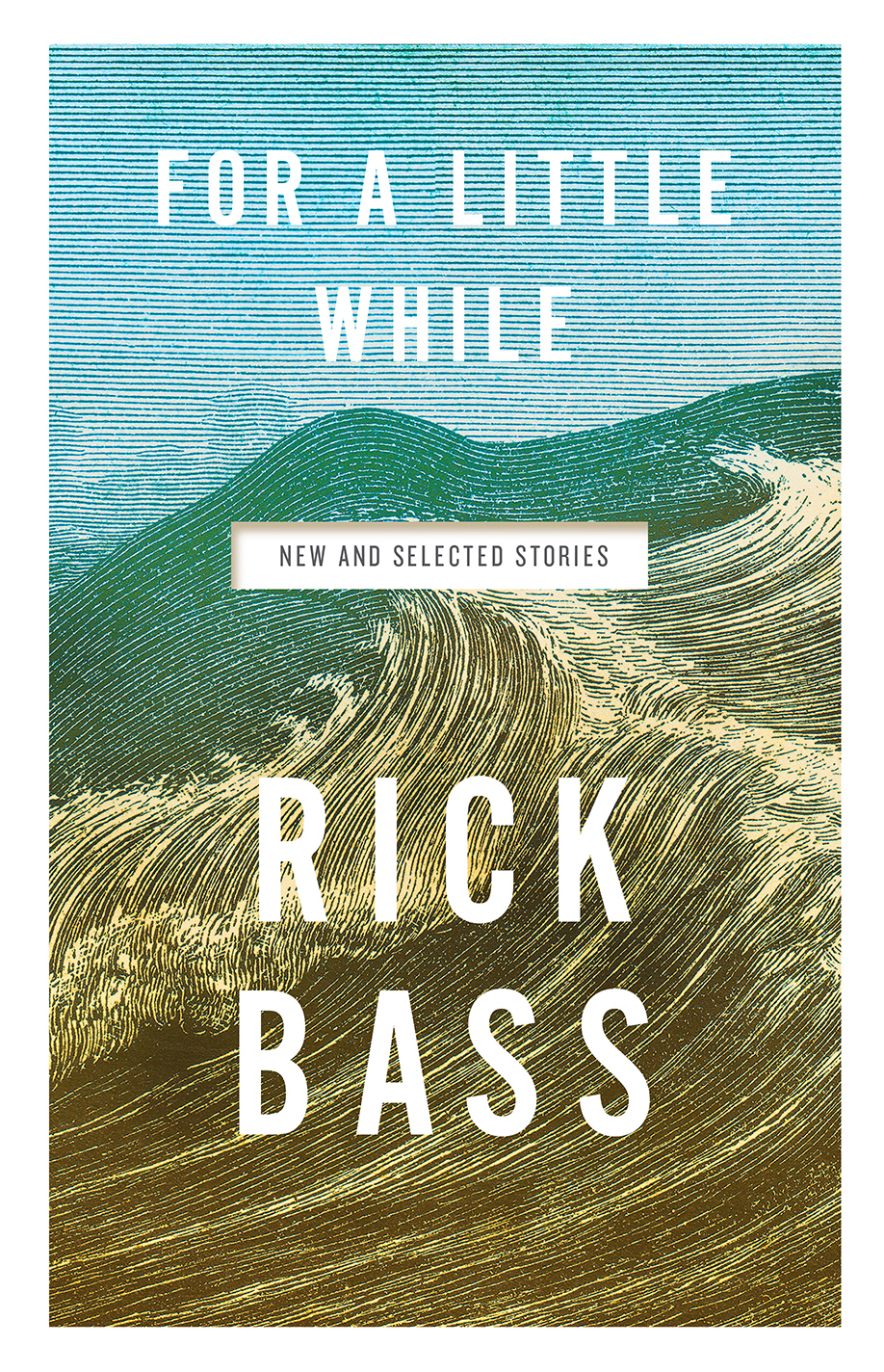
Long considered one of the most gifted practitioners of the short story, Rick Bass is unsurpassed in his ability to perceive and portray the enduring truths of the human heart. Now, at last, we have the definitive collection of stories, new and old, from the writer Newsweek has called "an American classic."To read his fiction is to feel more alive-connected, incandescently, to "the brief longshot of having been chosen for the human experience," as one of his characters puts it.These pages reveal men and women living with passion and tenderness at the outer limits of the senses, each attempting to triumph against fate. Bass provides searing insights into the complexity of family and romantic entanglements, and his lush and striking language draws us ineluctably into the lives of these engaging people and their vivid surroundings. The intricate stories collected in For A Little While--brimming with magic and wonder, filled with hard-won empathy, marbled throughout with astonishing imagery--have the power both to devastate and to uplift. Together they showcase an iconic American master at his peak.Table of Contents Selected Stories (pp 3 - 342) Wild Horses In Ruth’s Country Red Fish The Watch The Legend of Pig-Eye The History of Rodney Fires Field Events The Hermit’s Story The Fireman Swans Elk Pagans The Canoeists Goats Her First Elk Titan The Lives of RocksNew Stories (pp 343 - 468) How She Remembers it The Blue Tree Lease Hound The River in Winter Coach An Alcoholic’s guide to Peru & Chile Fish StoryAcknowledgments

From National Book Critics Circle Award finalist Rick Bass, The True Story of the Best Dog I Ever Had is "[a] gorgeous, heart-tugging, man-and-dog memoir" ( Milwaukee Journal Sentinel ).Colter, a German shorthair pup, was the runt of the litter, and Rick Bass took him only because nobody else would. Soon, though, Colter surprised his new owner, first with his raging genius, then with his innocent ability to lead Bass to new territory altogether, a place where he felt instantly more alive and more connected to the world.This interspecies love story vividly captures the essence of canine companionship, and yet, as we've come to expect from Rick Bass, it does far more. Colter illuminates the heart of life by recreating the sheer, unmitigated pleasure of an afternoon in the Montana hills with a loyal pup bounding at your side."Colter is a dog of boundless spirit, all grace and wild genius. And his terrific master, Rick Bass, happens to be a national treasure. What a terrific team they make."— New York Times best-selling author Carl Hiaasen

The Hermit’s Story is Rick Bass's best and most varied fiction yet. In the title story, a man and a woman travel across an eerily frozen lake—under the ice. “The Distance” casts a skeptical eye on Thomas Jefferson through the lens of a Montana man’s visit to Monticello. “Eating” begins with an owl being sucked into a canoe and ends with a man eating a town out of house and home, and “The Cave” is a stunning story of a man and woman lost in an abandoned mine. Other stories include “The Fireman,” “Swans,” “The Prisoners,” “Presidents’ Day,” “Real Town,” and “Two Deer.” Some of these stories have appeared in The Best American Short Stories, but for many readers, they won’t even be the best in this collection. Every story in this book is remarkable in its own way, sure to please both new readers and avid fans of Rick Bass’s passionate, unmistakable voice.

Author and naturalist Rick Bass searches with a veteran grizzly expert and a biologist for proof that the grizzly bear still inhabits the San Juan Mountains of Colorado, in spite of being hunted nearly to extinction. In the process, he describes the dangers and clues on the trail of the grizzly bear as well as the mystery and beauty of the creature who has inspired such a wealth of lore, not to mention terror. Annotation c. by Book News, Inc., Portland, Or.

The Yaak Valley of northwestern Montana is one of the last great wild places in the United States, a land of black bears and grizzlies, wolves and coyotes, bald and golden eagles, wolverine, lynx, marten, fisher, elk, and even a handful of humans. It is a land of magic, but its magic may not be enough to save it from the forces threatening it now. The Yaak does have one trick up its sleeve, though: a writer to give it voice. In Winter Rick Bass portrayed the wonder of living in the valley. In The Book of Yaak he captures the soul of the valley itself, and he shows how, if places like the Yaak are lost, we too are lost. Rick Bass has never been a writer to hold back, but The Book of Yaak is his most passionate book yet, a dramatic narrative of a man fighting to defend the place he loves.

A compilation of short fiction includes the title story about a woman's recovery from cancer, as well as "Pagans," a retrospective about the dangerous games played by a girl and two boys in their youth, and "Her First Elk," in which a woman recalls her first elk hunt.

Rick Bass is one of the foremost writers of his generation, charging headlong past the hard surface of modern life to illuminate human beings and their relationship to the natural world. Platte River is a collection of three novellas, each a singular exploration of the human heart set against the backdrop of God's creation. Filled with arresting images—chinook winds flying through a valley, couples skating in the dark on thin ice, tools made from animal bones, a delicate shape frozen in a river—“Mahatma Joe” is about an evangelist who settles in Grass Valley, Montana, and the woman who becomes obsessed with his vision of the world. In “Field Events” a woman falls in love with a man even larger than her discus-tossing brothers. And the title novella, “Platte River,” portrays one man's lyric meditation on loneliness, the nature of peace, and the quest for love.

To quote the Los Angeles Times: "Impelled by a profound love of the land, the ten stories in In the Loyal Mountains are a reminder that American literature draws its unique strength from a powerful sense of place." In this luminous collection, Rick Bass firmly establishes himself as a master of the short story, with tales that embrace vibrant images of ordinary human life and exuberant descriptions of the natural world.

The first full-length novel by one of our finest fiction writers, Where the Sea Used to Be tells the story of a struggle between a father and his daughter for the souls of two men, Matthew and Wallis-his protégés, her lovers. Old Dudley is a Texan whose religion is oil, and in his fifty years of searching for it in Swan Valley he has destroyed a dozen geologists. Matthew is Dudley's most recent victim, but Wallis begins to uncover the dark mystery of Dudley's life. Each character, the wildlife, and the land itself are rendered with the vivid poetry that is that hallmark of Rick Bass's writing.

Rick Bass brings a lyric imagination to the oil geologist's craft. Digging for oil is a way of digging deep into human experience, a subterranean exploration of self. And nothing escapes this writer's eye or imagination. 20 line drawings.

"Bass creates a slice of music history from the ground up, from the backwoods and front porches all the way to Elvis." â Los Angeles Times 1959: the Brown siblings are the biggest thing in country music. Their inimitable harmony will give rise to the polished sound of the multibillion-dollar country music industry we know today. But when the bonds of family begin to fray, the flame of their celebrity proves as brilliant as it is fleeting. In this arresting novel, acclaimed author Rick Bass draws poignant portraits of their lives, lived both in and out of the limelight. Masterfully jumping between the Brownsâ once auspicious past and the heartbreaking present, Nashville Chrome is the richly imagined story of this forgotten family and an unflinching portrait of an era in American music."An empathic, breath-catching, mythic and profoundly American tale of creation, destruction and renewal." â Kansas City Star "Splendid . . . Rick Bassâ s best." â Dallas Morning News

The Diezmo tells the incredible story of the Mier Expedition, one of the most absurd and tragic military adventures in the history of Texas -- a country and a state, as Rick Bass writes, that was "born in blood." In the early days of the Republic of Texas, two young men, wild for glory, impulsively volunteer for an expedition Sam Houston has ordered to patrol the Mexican border. But their dreams of triumph soon fade into prayers for survival, and all that is on their minds is getting home and having a cool drink of water. After being captured in a raid on the Mexican village of Mier, escaping, and being recaptured, the men of the expedition are punished with the terrible diezmo, in which one man in ten is randomly chosen to die. The survivors end up in the most dreaded prison in Mexico. There they become pawns in an international chess game to decide the fate of Texas, and with their hopes of release all but extinguished, they make one desperate, last-ditch effort to escape.A great crossover book with appeal for high school students. It will also interest readers of westerns and historical fiction.

In this poignant look at the thirty-year journey of one of our country’s great naturalist writers, Rick Bass describes how he fell in love with the mystique of the West--as a dramatic landscape, as an idea, and as a way of life. Bass grew up in the suburban sprawl of Houston, and after attending college in Utah he spent eight years working in Mississippi as a geologist, until one day he packed up and went in search of something visceral, true, and real. He found it in the remote Yaak Valley of northwestern Montana, where despite extensive logging not a single species has gone extinct since the last Ice Age. Bass has lived in “the Yaak” ever since, and in Why I Came West he chronicles his transformation into the writer, hunter, and environmental activist that he is today. He explains how the rugged, wild landscape smoothed out his own rough edges; attempts to define the appeal of the West that so transfixed him as a boy, a place of mountains and outlaws and continual rebirth; and tells of his own role as a reluctant activist—sometimes at odds with his own neighbors—unwilling to stand idly by and watch this treasured place disappear.Rick Bass is the author of many acclaimed books of nonfiction and fiction, including The Lives of Rocks, The Diezmo, and Winter.

A strange and powerful landscape summons strange and powerful happeningsRick Bass brings a lyrical lushness to the harsh backdrop of West Texas in his masterfully crafted fourth novel. All the Land to Hold Us is a sweeping tale of those who live on the desert’s edge, where riches—precious artifacts, oil, water, love—can all be found and lost again in an instant.Roaming across the salt flats and skirting the salt lake, Richard, a geologist working for an oil company, hunts for fossils under the spell of Clarissa, the local beauty who plans to use her share of their plunder to get out of small, dusty Midland for good. A generation earlier, a Depression-era couple, Max and Marie Omo, numbly mines for salt along the banks of the briny lake until the emotional terrain of their marriage is suddenly and irrevocably altered. The strange, surreal arrival of a runaway circus elephant, careening across the sand, sets in motion Marie’s final break from Max and heralds the beginning of her second chance. Consequences reverberate through the years and the dunes when Marie becomes indelibly linked to Richard’s own second act.With a cast of characters rounded out by a one-legged-treasure-hunter, a renegade teacher, and an unforgettable elephant trainer, All the Land to Hold Us is a vivid portrait of a fierce place and the inimitable characters that possess the capacity to adapt to and also despoil it. The novel boasts all the hallmarks of Bass’s most enduring work—human longing and greed, nature endangered, and the possibility for redemption are all writ large on his desert canvas.

The Wild Marsh is Rick Bass’s most mature, full account of life in the Yaak and a crowning achievement in his celebrated career. It begins with his family settling in for the long Montana winter, and captures all the subtle harbingers of change that mark each passing month — the initial cruel teasing of spring, the splendor and fecundity of summer, and the bittersweet memories evoked by fall.It is full of rich observation about what it takes to live in the valley — ruggedness, improvisation and, of course, duct tape. The Wild Marsh is also tremendously poignant, especially when Bass reflects on what it means for his young daughters to grow up surrounded by the strangeness and wonder of nature. He shares with them the Yaak’s little secrets — where the huckleberries are best in a dry year, where to find a grizzly’s claw marks in an old cedar — and discovers that passing on this intimate local knowledge, the knowledge of home, is a kind of rare and valuable love.Bass emerges not just as a writer but as a father, a neighbor, and a gifted observer, uniquely able to bring us close to the drama and sanctity of small things, ensuring that though the wilderness is increasingly at risk, the voice of the wilderness will not disappear.

A lyrical exploration of wildness and freedom in nature and in ourselves. In these thirteen essays, Rick Bass is a man divided, a lover of wilderness tied to the city. On long weekends, in his Volkswagen Rabbit, he drives away from Jackson, Mississippi, and the job that confines him. His excursions which take him to southern rivers, southern swamps, and sometimes to conservation meetings also lead to musings about his favorite mountains, grizzly bears, and the wildness in all of us. Drawings

A acclaimed nature writer offers a moving portrayal of the attempt to save the pristine Yaak Valley of Montana through a fictional overview of the personalities and steps necessary to build the concern and active support necessary for preservationist action. UP.

Rick Bass's first collection of essays captures the clear, passionate voice of this acclaimed author at the very beginning of his career. In The Deer Pasture , Rick Bass writes about a family tradition: each year, for more than fifty years, three generations of men in the Bass family have leased the same tract of land in the Texas hill country. More than a place to stalk the white-tail, this is a place to get together, chase armadillos, swap campfire stories, listen to quail, make biscuits, and enjoy the antics of ringtails. It's the sort of place where a man is only as good as his dog, where memories last longer, where the hunter's moon is the perfect light for chasing raccoons. Most important, it is a place to recharge the spirit and renew family ties.

Last year Rick Bass traveled to Rwanda, roaming from the bustle of Kigali to the breathtaking volcanic preserves of the last few mountain gorillas. Now he offers an extraordinary portrait of what can be found in that country today—heartbreaking evidence of the genocide that occurred there a generation ago, dazzling natural beauty, and young people who have emerged from tragedy with a blazingly optimistic spirit and a profound artistic voice. In My Home There Is No More Sorrow is an enchanting, harrowing narrative achievement—an unforgettable exploration of history and human nature from one of our greatest essayists.

Discusses the reintroduction of wild Mexican wolves to the American Southwest, offering a sympathetic view of the many opposing viewpoints on the issue

From one of our most gifted writers on the natural world comes a stunning exploration of a unique landscape and the improbable and endangered animal that makes its home there.Rick Bass first made a name for himself as a writer and seeker of rare, iconic animals, including the grizzlies and wolves of the American West. Now he’s off on a new, far-flung adventure in the Namib of southwest Africa on the trail of another fascinating, vulnerable species. The black rhino is a three-thousand-pound, squinty-eyed giant that sports three-foot-long dagger horns, lives off poisonous plants, and goes for days without water.Human intervention and cutting-edge conservation saved the rhinos—for now—from the brink of extinction brought on by poaching and war. Against the backdrop of one of the most ancient and harshest terrains on earth, Bass, with his characteristic insight and grace, probes the complex relationship between humans and nature and meditates on our role as both destroyer and savior.In the tradition of Peter Matthiessen’s The Tree Where Man Was Born , Bass captures a haunting slice of Africa, especially of the “black” rhinos that glow ghostly white in the gleaming sun.

Essays explore the author's relationship with his dog, Colter, and how it has helped him to understand intuition

In this mediative tale, a runner spends a summer training in a remote mountain town. This story appears in the collection For a Little While by Rick Bass.

Caribou Rising: Defending the Porcupine Herd, Gwich-'in Culture, and the Arctic National Wildlife Refuge
by Rick Bass
Rating: 3.8 ⭐
The eloquent voice of Rick Bass has been raised often in celebration and defense of America’s wilderness and wildlife. In Caribou Rising, Bass journeys to one of the sole remaining landscapes on Earth where the wild is entirely untrammeled—Alaska’s Arctic National Wildlife Refuge, where great caribou herds gather, calve, and migrate, and where the ancient bond between animals and human hunters still informs daily life.As the Bush administration was pressuring Congress to open the Refuge to oil drilling, Bass traveled to Arctic Village to join the native Gwich-‘in in their annual caribou hunt. He wanted to witness and report on what we all stand to lose if that comes to pass.Caribou Rising details Bass’s time hunting as well as talking with the Gwich-‘in and their leaders, and offers his reflections on the profound differences between that culture and our own, and on the ancient physical and spiritual connection between the Gwich-‘in and the caribou.Those who read this extraordinary testament to the Refuge, the caribou, and the Gwich-‘in will come to appreciate the interconnectedness of all three, and cannot help but be inspired to make a stand in their defense.

In November, countless families across Texas head out for the annual deer hunt, a ritual that spans generations, ethnicities, socioeconomics, and gender as perhaps no other cultural experience in the state. Rick Bass's family has returned to the same hardscrabble piece of land in the Hill Country—"the Deer Pasture"—for more than seventy-five years. In A Thousand Deer, Bass walks the Deer Pasture again in memory and stories, tallying up what hunting there has taught him about our need for wildness and wilderness, about cycles in nature and in the life of a family, and particularly about how important it is for children to live in the natural world. The arc of A Thousand Deer spans from Bass's boyhood in the suburbs of Houston, where he searched for anything rank or fecund in the little oxbow swamps and pockets of woods along Buffalo Bayou, to his commitment to providing his children in Montana the same opportunity—a life afield—that his parents gave him in Texas. Inevitably this brings him back to the Deer Pasture and the passing of seasons and generations he has experienced there. Bass lyrically describes his own passage from young manhood, when the urge to hunt was something primal, to mature adulthood and the waning of the urge to take an animal, his commitment to the hunt evolving into a commitment to family and to the last wild places.