
Simon Winchester
Simon Winchester, OBE, is a British writer, journalist and broadcaster who resides in the United States. Through his career at The Guardian, Winchester covered numerous significant events including Bloody Sunday and the Watergate Scandal. As an author, Simon Winchester has written or contributed to over a dozen nonfiction books and authored one novel, and his articles appear in several travel publications including Condé Nast Traveler, Smithsonian Magazine, and National Geographic. In 1969, Winchester joined The Guardian, first as regional correspondent based in Newcastle upon Tyne, but was later assigned to be the Northern Ireland Correspondent. Winchester's time in Northern Ireland placed him around several events of The Troubles, including the events of Bloody Sunday and the Belfast Hour of Terror. After leaving Northern Ireland in 1972, Winchester was briefly assigned to Calcutta before becoming The Guardian's American correspondent in Washington, D.C., where Winchester covered news ranging from the end of Richard Nixon's administration to the start of Jimmy Carter's presidency. In 1982, while working as the Chief Foreign Feature Writer for The Sunday Times, Winchester was on location for the invasion of the Falklands Islands by Argentine forces. Suspected of being a spy, Winchester was held as a prisoner in Tierra del Fuego for three months. Winchester's first book, In Holy Terror, was published by Faber and Faber in 1975. The book drew heavily on his first-hand experiences during the turmoils in Ulster. In 1976, Winchester published his second book, American Heartbeat, which dealt with his personal travels through the American heartland. Winchester's third book, Prison Diary, was a recounting of his imprisonment at Tierra del Fuego during the Falklands War and, as noted by Dr Jules Smith, is responsible for his rise to prominence in the United Kingdom. Throughout the 1980s and most of the 1990s, Winchester produced several travel books, most of which dealt with Asian and Pacific locations including Korea, Hong Kong, and the Yangtze River. Winchester's first truly successful book was The Professor and the Madman (1998), published by Penguin UK as The Surgeon of Crowthorne. Telling the story of the creation of the Oxford English Dictionary, the book was a New York Times Best Seller, and Mel Gibson optioned the rights to a film version, likely to be directed by John Boorman. Though Winchester still writes travel books, he has repeated the narrative non-fiction form he used in The Professor and the Madman several times, many of which ended in books placed on best sellers lists. His 2001 book, The Map that Changed the World, focused on geologist William Smith and was Whichester's second New York Times best seller. The year 2003 saw Winchester release another book on the creation of the Oxford English Dictionary, The Meaning of Everything, as well as the best-selling Krakatoa: The Day the World Exploded. Winchester followed Krakatoa's volcano with San Francisco's 1906 earthquake in A Crack in the Edge of the World. The Man Who Loved China (2008) retells the life of eccentric Cambridge scholar Joseph Needham, who helped to expose China to the western world. Winchester's latest book, The Alice Behind Wonderland, was released March 11, 2011. - source Wikipedia
29 Books Written

The Map That Changed the World: William Smith & the Birth of Modern Geology
by Simon Winchester
Rating: 3.8 ⭐
• 2 recommendations ❤️
In 1793, a canal digger named William Smith made a startling discovery. He found that by tracing the placement of fossils, which he uncovered in his excavations, one could follow layers of rocks as they dipped and rose and fell—clear across England and, indeed, clear across the world—making it possible, for the first time ever, to draw a chart of the hidden underside of the earth. Smith spent twenty-two years piecing together the fragments of this unseen universe to create an epochal and remarkably beautiful hand-painted map. But instead of receiving accolades and honors, he ended up in debtors’ prison, the victim of plagiarism, and virtually homeless for ten years more.The Map That Changed the World is a very human tale of endurance and achievement, of one man’s dedication in the face of ruin. With a keen eye and thoughtful detail, Simon Winchester unfolds the poignant sacrifice behind this world-changing discovery.

The Professor and the Madman: A Tale of Murder, Insanity and the Making of the Oxford English Dictionary
by Simon Winchester
Rating: 3.8 ⭐
• 2 recommendations ❤️
The Professor and the Madman, masterfully researched and eloquently written, is an extraordinary tale of madness, genius, and the incredible obsessions of two remarkable men that led to the making of the Oxford English Dictionary -- and literary history. The compilation of the OED, begun in 1857, was one of the most ambitious projects ever undertaken. As definitions were collected, the overseeing committee, led by Professor James Murray, discovered that one man, Dr. W. C. Minor, had submitted more than ten thousand. When the committee insisted on honoring him, a shocking truth came to light: Dr. Minor, an American Civil War veteran, was also an inmate at an asylum for the criminally insane.

Bestselling author Simon Winchester offers an enthralling biography of the Pacific Ocean and its role in the modern world, exploring our relationship with this imposing force of nature.As the Mediterranean shaped the classical world, and the Atlantic connected Europe to the New World, the Pacific Ocean defines our tomorrow. With China on the rise, so, too, are the American cities of the West coast, including Seattle, San Francisco, and the long cluster of towns down the Silicon Valley.Today, the Pacific is ascendant. Its geological history has long transformed us—tremendous earthquakes, volcanoes, and tsunamis—but its human history, from a Western perspective, is quite young, beginning with Magellan’s sixteenth-century circumnavigation. It is a natural wonder whose most fascinating history is currently being made.In telling the story of the Pacific, Simon Winchester takes us from the Bering Strait to Cape Horn, the Yangtze River to the Panama Canal, and to the many small islands and archipelagos that lie in between. He observes the fall of a dictator in Manila, visits aboriginals in northern Queensland, and is jailed in Tierra del Fuego, the land at the end of the world. His journey encompasses a trip down the Alaska Highway, a stop at the isolated Pitcairn Islands, a trek across South Korea and a glimpse of its mysterious northern neighbor.Winchester’s personal experience is vast and his storytelling second to none. And his historical understanding of the region is formidable, making Pacific a paean to this magnificent sea of beauty, myth, and imagination that is transforming our lives.

The Perfectionists: How Precision Engineers Created the Modern World
by Simon Winchester
Rating: 4.1 ⭐
• 2 recommendations ❤️
The revered New York Times bestselling author traces the development of technology from the Industrial Age to the Digital Age to explore the single component crucial to advancement—precision—in a superb history that is both an homage and a warning for our future.The rise of manufacturing could not have happened without an attention to precision. At the dawn of the Industrial Revolution in eighteenth-century England, standards of measurement were established, giving way to the development of machine tools—machines that make machines. Eventually, the application of precision tools and methods resulted in the creation and mass production of items from guns and glass to mirrors, lenses, and cameras—and eventually gave way to further breakthroughs, including gene splicing, microchips, and the Hadron Collider.Simon Winchester takes us back to origins of the Industrial Age, to England where he introduces the scientific minds that helped usher in modern production: John Wilkinson, Henry Maudslay, Joseph Bramah, Jesse Ramsden, and Joseph Whitworth. It was Thomas Jefferson who later exported their discoveries to the fledgling United States, setting the nation on its course to become a manufacturing titan. Winchester moves forward through time, to today’s cutting-edge developments occurring around the world, from America to Western Europe to Asia.As he introduces the minds and methods that have changed the modern world, Winchester explores fundamental questions. Why is precision important? What are the different tools we use to measure it? Who has invented and perfected it? Has the pursuit of the ultra-precise in so many facets of human life blinded us to other things of equal value, such as an appreciation for the age-old traditions of craftsmanship, art, and high culture? Are we missing something that reflects the world as it is, rather than the world as we think we would wish it to be? And can the precise and the natural co-exist in society?

The bestselling author of The Professor and the Madman and The Map That Changed the World examines the enduring and world-changing effects of the catastrophic eruption off the coast of Java of the earth's most dangerous volcano — Krakatoa. The legendary annihilation in 1883 of the volcano-island of Krakatoa — the name has since become a byword for a cataclysmic disaster — was followed by an immense tsunami that killed nearly forty thousand people. Beyond the purely physical horrors of an event that has only very recently been properly understood, the eruption changed the world in more ways than could possibly be imagined. Dust swirled round the planet for years, causing temperatures to plummet and sunsets to turn vivid with lurid and unsettling displays of light. The effects of the immense waves were felt as far away as France. Barometers in Bogotá and Washington, D.C., went haywire. Bodies were washed up in Zanzibar. The sound of the island's destruction was heard in Australia and India and on islands thousands of miles away. Most significant of all — in view of today's new political climate — the eruption helped to trigger in Java a wave of murderous anti-Western militancy among fundamentalist Muslims: one of the first outbreaks of Islamic-inspired killings anywhere. Simon Winchester's long experience in the world wandering as well as his knowledge of history and geology give us an entirely new perspective on this fascinating and iconic event as he brings it telling back to life.
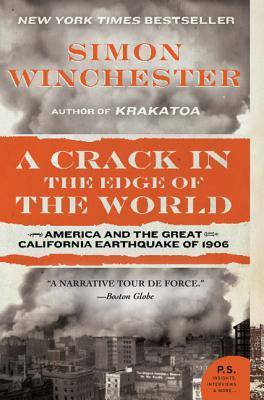
The international bestselling author of The Professor and the Madman and Krakatoa vividly brings to life the 1906 San Francisco Earthquake that leveled a city symbolic of America's relentless western expansion. Simon Winchester has also fashioned an enthralling and informative informative look at the tumultuous subterranean world that produces earthquakes, the planet's most sudden and destructive force.In the early morning hours of April 18, 1906, San Francisco and a string of towns to its north-northwest and the south-southeast were overcome by an enormous shaking that was compounded by the violent shocks of an earthquake, registering 8.25 on the Richter scale. The quake resulted from a rupture in a part of the San Andreas fault, which lies underneath the earth's surface along the northern coast of California. Lasting little more than a minute, the earthquake wrecked 490 blocks, toppled a total of 25,000 buildings, broke open gas mains, cut off electric power lines throughout the Bay area, and effectively destroyed the gold rush capital that had stood there for a half century.Perhaps more significant than the tremors and rumbling, which affected a swatch of California more than 200 miles long, were the fires that took over the city for three days, leaving chaos and horror in its wake. The human tragedy included the deaths of upwards of 700 people, with more than 250,000 left homeless. It was perhaps the worst natural disaster in the history of the United States.Simon Winchester brings his inimitable storytelling abilities -- as well as his unique understanding of geology -- to this extraordinary event, exploring not only what happened in northern California in 1906 but what we have learned since about the geological underpinnings that caused the earthquake in the first place. But his achievement is even greater: he positions the quake's significance along the earth's geological timeline and shows the effect it had on the rest of twentieth-century California and American history.A Crack in the Edge of the World is the definitive account of the San Francisco earthquake. It is also a fascinating exploration of a legendary event that changed the way we look at the planet on which we live.

The Meaning of Everything: The Story of the Oxford English Dictionary
by Simon Winchester
Rating: 4.0 ⭐
From the best-selling author of The Professor and the Madman, The Map That Changed the World, and Krakatoa comes a truly wonderful celebration of the English language and of its unrivaled treasure house, the Oxford English Dictionary. Writing with marvelous brio, Winchester first serves up a lightning history of the English language--"so vast, so sprawling, so wonderfully unwieldy"--and pays homage to the great dictionary makers, from "the irredeemably famous" Samuel Johnson to the "short, pale, smug and boastful" schoolmaster from New Hartford, Noah Webster. He then turns his unmatched talent for story-telling to the making of this most venerable of dictionaries. In this fast-paced narrative, the reader will discover lively portraits of such key figures as the brilliant but tubercular first editor Herbert Coleridge (grandson of the poet), the colorful, boisterous Frederick Furnivall (who left the project in a shambles), and James Augustus Henry Murray, who spent a half-century bringing the project to fruition. Winchester lovingly describes the nuts-and-bolts of dictionary making--how unexpectedly tricky the dictionary entry for marzipan was, or how fraternity turned out so much longer and monkey so much more ancient than anticipated--and how bondmaid was left out completely, its slips found lurking under a pile of books long after the B-volume had gone to press. We visit the ugly corrugated iron structure that Murray grandly dubbed the Scriptorium--the Scrippy or the Shed, as locals called it--and meet some of the legion of volunteers, from Fitzedward Hall, a bitter hermit obsessively devoted to the OED, to W.C. Minor, whose story is one of dangerous madness, ineluctable sadness, and ultimate redemption. The Meaning of Everything is a scintillating account of the creation of the greatest monument ever erected to a living language. Simon Winchester's supple, vigorous prose illuminates this dauntingly ambitious project--a seventy-year odyssey to create the grandfather of all word-books, the world's unrivalled uber-dictionary.

Atlantic: Great Sea Battles, Heroic Discoveries, Titanic Storms & a Vast Ocean of a Million Stories
by Simon Winchester
Rating: 3.7 ⭐
In a narrative tour de force, Simon Winchester dramatises the life of the Atlantic Ocean, from its birth in the farther recesses of geological time to its eventual extinction millions of years in the future. At the core of the book is the story of mankind's complex relationship with this immense sea, which stretches for 9,000 miles from pole to pole. The Atlantic has profoundly influenced the lives of those who have lived along its shores, from hardscrabble pioneers in windswept locations such as the Aran Islands and Newfoundland, to the inhabitants of the great port cities of Lisbon, Rio, London and New York. ATLANTIC brings to life key episodes in this compelling human drama - the age of exploration and the subsequent colonisation of the Americas; the flourishing of transatlantic commerce and the rise and fall of the slave trade; extraordinary tales of sea-borne emigration during the nineteenth century; and the great naval battles that have left an indelible imprint on Atlantic history. Travelling by small sailing craft, container ship and general cargo vessel, Simon Winchester will journey around the edges and across the vast expanse of the ocean to report from the places that encapsulate its most fascinating stories. It is an enthralling mixture of history, science and reportage from a master of narrative non-fiction, and the definitive account of this magnificent body of water.

The Man Who Loved China: The Fantastic Story of the Eccentric Scientist Who Unlocked the Mysteries of the Middle Kingdom
by Simon Winchester
Rating: 3.8 ⭐
In illuminating detail, Winchester, bestselling author of The Professor & the Madman ("Elegant & scrupulous"—NY Times Book Review) & Krakatoa ("A mesmerizing page-turner"—Time) tells the story of Joseph Needham, the Cambridge scientist who unlocked the most closely held secrets of China, long the world's most technologically advanced country. No cloistered don, this tall, married Englishman was a freethinking intellectual. A nudist, he was devoted to quirky folk dancing. In 1937, while working as a biochemist at Cambridge, he fell in love with a visiting Chinese student, with whom he began a lifelong affair. His mistress persuaded him to travel to her home country, where he embarked on a series of expeditions to the frontiers of the ancient empire. He searched for evidence to bolster a conviction that the Chinese were responsible for hundreds of humankind's most familiar innovations—including printing, the compass, explosives, suspension bridges, even toilet paper—often centuries before others. His journeys took him across war-torn China, consolidating his admiration for the Chinese. After the war, he determined to announce what he'd discovered & began writing Science & Civilization in China, describing the country's long history of invention & technology. By the time he died, he'd produced, almost single-handedly, 17 volumes, making him the greatest one-man encyclopedist ever. Epic & intimate, The Man Who Loved China tells the sweeping story of China thru Needham's life. Here's a tale of what makes men, nations & humankind great—related by one of the world's best storytellers.

The Men Who United the States: America's Explorers, Inventors, Eccentrics and Mavericks, and the Creation of One Nation, Indivisible
by Simon Winchester
Rating: 3.8 ⭐
The acclaimed New York Times bestselling author of Atlantic delivers his first book about America: a fascinating look at the men whose efforts and achievements helped unify the States and create one cohesive nation"History is rarely as charming and entertaining as when it's told by Simon Winchester."-New York Times Book ReviewFor more than two centuries, E pluribus unum-Out of many, one-has been featured on America's official government seals and stamped on its currency. But how did America become "one nation, indivisible"? What unified a growing number of disparate states into the modern country we recognize today? In this monumental history, Simon Winchester addresses these questions, bringing together the breathtaking achievements that helped forge and unify America and the pioneers who have toiled fearlessly to discover, connect, and bond the citizens and geography of the U.S.A. from its beginnings.Winchester follows in the footsteps of America's most essential explorers, thinkers, and innovators, including Lewis and Clark and their Corps of Discovery Expedition to the Pacific Coast, the builders of the first transcontinental telegraph, and the powerful civil engineer behind the Interstate Highway System. He treks vast swaths of territory, from Pittsburgh to Portland; Rochester to San Francisco; Truckee to Laramie; Seattle to Anchorage, introducing these fascinating men and others-some familiar, some forgotten, some hardly known-who played a pivotal role in creating today's United States. Throughout, he ponders whether the historic work of uniting the States has succeeded, and to what degree.Featuring 32 illustrations throughout the text, The Men Who United the States is a fresh, lively, and erudite look at the way in which the most powerful nation on earth came together, from one of our most entertaining, probing, and insightful observers.

The author of The Professor and the Madman and The Perfectionists explores the notion of property—our proprietary relationship with the land—through human history, how it has shaped us and what it will mean for our future.Land—whether meadow or mountainside, desert or peat bog, parkland or pasture, suburb or city—is central to our existence. It quite literally underlies and underpins everything. Employing the keen intellect, insatiable curiosity, and narrative verve that are the foundations of his previous bestselling works, Simon Winchester examines what we human beings are doing—and have done—with the billions of acres that together make up the solid surface of our planet.Land: How the Hunger for Ownership Shaped the Modern World examines in depth how we acquire land, how we steward it, how and why we fight over it, and finally, how we can, and on occasion do, come to share it. Ultimately, Winchester confronts the essential question: who actually owns the world’s land—and why does it matter?

The River at the Center of the World: A Journey Up the Yangtze & Back in Chinese Time
by Simon Winchester
Rating: 3.9 ⭐
Rising in the mountains of the Tibetan border, the Yangtze River, the symbolic heart of China pierces 3,900 miles of rugged country before debouching into the oily swells of the East China Sea. Connecting China's heartland cities with the volatile coastal giant, Shanghai, it has also historically connected China to the outside world through its nearly one thousand miles of navigable waters. To travel those waters is to travel back in history, to sense the soul of China, and Simon Winchester takes us along with him as he encounters the essence of China--its history and politics, its geography and climate as well as engage in its culture, and its people in remote and almost inaccessible places. This is travel writing at its best: lively, informative, and thoroughly enchanting.

Knowing What We Know: The Transmission of Knowledge: From Ancient Wisdom to Modern Magic
by Simon Winchester
Rating: 3.8 ⭐
From the creation of the first encyclopedia to Wikipedia, from ancient museums to modern kindergarten classes--this is a look at how humans acquire, retain, and pass on information and data, and how technology continues to change our lives and our minds.With the advent of the internet, any topic we want to know about is instantly available with the touch of a smartphone button. With so much knowledge at our fingertips, what is there left for our brains to do? At a time when we seem to be stripping all value from the idea of knowing things--no need for math, no need for map-reading, no need for memorization--are we risking our ability to think? As we empty our minds, will we one day be incapable of thoughtfulness?Addressing these questions, Simon Winchester explores how humans have attained, stored, and disseminated knowledge. Examining such disciplines as education, journalism, encyclopedia creation, museum curation, photography, and broadcasting, he looks at a whole range of knowledge diffusion--from the cuneiform writings of Babylon to the machine-made genius of artificial intelligence, by way of Gutenberg, Google, and Wikipedia to the huge Victorian assemblage of the Mundanaeum, the collection of everything ever known, currently stored in a damp basement in northern Belgium.Throughout this tour, Winchester forces us to ponder what rational humans are becoming. What good is all this knowledge if it leads to lack of thought? What is information without wisdom? Does Rene Descartes's Cogito, ergo sum--"I think therefore I am," the foundation for human knowledge widely accepted since the Enlightenment--still hold? And what will the world be like if no one in it is wise?

Simon Winchester, struck by a sudden need to discover exactly what was left of the British Empire, set out across the globe to visit the far-flung islands that are all that remain of what once made Britain great. He traveled 100,000 miles back and forth, from Antarctica to the Caribbean, from the Mediterranean to the Far East, to capture a last glint of imperial glory.His adventures in these distant and forgotten ends of the earth make compelling, often funny reading and tell a story most of us had thought was over: a tale of the last outposts in Britain's imperial career and those who keep the flag flying.With a new introduction, this updated edition tells us what has happened to these extraordinary places while the author's been away.

In the late 1980s, New York Times bestselling author Simon Winchester set out on foot to discover the Republic of Korea - from its southern tip to the North Korean border - in order to set the record straight about this enigmatic and elusive land. Fascinating for its vivid presentation of historical and geographic detail, Korea is that rare book that actually defines a nation and its people. Winchester's gift for capturing engaging characters in true, compelling stories provides us with a treasury of enchanting and informed insight on the culture, language, history, and politics of this little-known corner of Asia. With a new introduction by the author, Korea is a beautiful journey through a mysterious country and a memorable addition to the many adventures of Simon Winchester .

On a summer's day in 1858, in a garden behind Christ Church College in Oxford, Charles Dodgson, a lecturer in mathematics, photographed six-year-old Alice Liddell, the daughter of the college dean, with a Thomas Ottewill Registered Double Folding camera, recently purchased in London. Simon Winchester deftly uses the resulting image--as unsettling as it is famous, and the subject of bottomless speculation--as the vehicle for a brief excursion behind the lens, a focal point on the origins of a classic work of English literature. Dodgson's love of photography framed his view of the world, and was partly responsible for transforming a shy and half-deaf mathematician into one of the world's best-loved observers of childhood. Little wonder that there is more to "Alice Liddell as the Beggar Maid" than meets the eye. Using Dodgson's published writings, private diaries, and of course his photographic portraits, Winchester gently exposes the development of Lewis Carroll and the making of his Alice.

Terrible things have been going on in the Balkans for centuries, and they are likely to go on for centuries more to come. It is an area of great contrasts -- geographically beautiful, yet the underlying crust of the region is cracked along great tectonic fault lines. These natural fault lines pale in comparison to the borders made by man, which have added further layers of complexity to a region where war is frequent, horrors are unspeakable, and history is unfathomable. It is not an area of the world that many would care to visit -- unless they had been there before. Simon Winchester, a seasoned reporter, visited the region twenty years ago. During the recent Kosovo crisis, he remembered that first trip and the people he met, and he decided that parallel journeys might well be a device for explaining with sympathy the true nature of this fractured region. Two great capitals, Vienna and Istanbul, whose ceaseless imperial rivalries in the past played so profound a role in shaping the savage divisions of the region today, would anchor his second journey to the region. With the war under way, he enlisted the aid of a linguist friend and set off from Vienna on a long, scimitar-shaped adventure through Slovenia, Croatia, Bosnia, Montenegro, Albania, Macedonia, Kosovo, Bulgaria, and Turkey, arriving at the Golden Horn just as the war was officially declared over. With luck, and through valuable personal contacts, Winchester managed to be in Macedonia on the day the NATO forces moved in to assume control of Kosovo -- and because the commanding general was an old friend, he rode in with the liberating columns of troops and armor. This is not a book about the war, but rather an intimate portrait of the region painted while the war was going on. It is also an attempt to understand what has led this region to violence -- now, in the past, and inevitably again in the future. Written with a keen sense of time and place, The Fracture Zone is at once current and timeless. It goes behind the headlines and gives us a true picture of a region that has always been on the brink. Simon Winchester's remarkable journey puts all the elements together -- the faults, the fractures, and the chaos -- and makes sense out of a seemingly senseless place.

“I glanced at myself in a mirror and, though unshaven, and my hair still morning-tousled, I appeared to be just the same. It was inside, inside my head, where all had become so wretchedly different. I had the night before been incontrovertibly a man of stable mood, of calm, of good cheer and unforced bonhomie. Now I had become changed, with dreadful suddenness, into another being altogether.”Simon Winchester has never shied away from big, even enormous, topics—as evidenced by his bestselling biography of the Atlantic Ocean, his account of the Krakatoa volcanic eruption, and his wildly popular “The Professor and the Madman,” about the making of the Oxford English Dictionary. In his Byliner Original “The Man with the Electrified Brain,” he takes on arguably his most daunting subject his own flirtation with madness, and one of nature’s greatest and most enduring mysteries, the human brain.As a geology student in his second year at Oxford, Winchester was known as a young man of even temper and keen intellect, until one June morning when he woke to find himself “changed with dreadful suddenness into another being altogether,” his normal life “slumped into chasm” and “folded in the dirt.” For a period of nine days, he lived in immobilizing fear. Everyday items—familiar paintings, a pile of books, his own robe hanging from a hook—became objects of horror; the world lost color, purpose, all sense and safety. When the episode finally passed, he returned to normal, presuming that what had happened to him was a fluke. It wasn’t. The episode repeated itself at unpredictable and dangerous intervals for four years—always lasting for nine days—and very nearly caused the author’s death while he was on an expedition in the Arctic.What was wrong with him? Where could he find help? Would he spend the rest of his life anticipating the return of these mental blackouts? With the urgency of a whodunit, Winchester describes the coming and going of these terrifying dissociative states and the chance encounter that led to the controversial treatment of electroconvulsive therapy, which may or may not have cured him once and for all. Written by a consummate storyteller, “The Man with the Electrified Brain” locates that finest of lines between sanity and insanity and is Winchester’s most riveting and deeply personal work yet.

"Skulls" is a beautiful spellbinding exploration of more than 300 different animal skulls---amphibians, birds, fish, mammals, and reptiles--written by "New York Times" bestselling author, Simon Winchester and produced in collaboration with Theodore Gray and Touch Press, the geniuses behind "The Elements" and "Solar System."In "Skulls," best-selling author Simon Winchester (author of "The Professor and the Madman"; "Atlantic: A Biography of the Ocean"; "Krakatoa: The Day the World Exploded"; and others) tells the rich and fascinating story of skulls, both human and animal, from every perspective imaginable: historical, biographical, cultural, and iconographic. Presenting details about the parts of the skull (including the cranium, the mandible, the shape and positioning of the eye sockets, and species-specific features like horns, teeth, beaks and bills), information about the science and pseudoscience of skulls, and a look at skulls in religion, art and popular culture, his stories and information are riveting and enlightening.At the center of "Skulls" is a stunning, never-before-seen-in-any-capacity, visual array of the skulls of more than 300 animals that walk, swim, and fly. The skulls are from the collection of Alan Dudley, a British collector and owner of what is probably the largest and most complete private collection of skulls in the world. Every skull is beautifully photographed to show several angles and to give the reader the most intimate view possible. Each includes a short explanatory paragraph and a data box with information on the animal's taxonomy, behavior, and diet."Skulls "was published in December 2011 as an e-book for the iPad by the innovative e-book publishers Touch Press, creators of the best-selling e-books for iPad "The Elements" and "Solar System." Both books were also published in print by Black Dog & Leventhal.

Simon Winchester brings alive the dramatic history of America’s most storied, symbolic, and lawless river: The Mississippi. The acclaimed author takes readers on a journey back through dangerous attempts to control the mighty waters, and asks if, as climate change threats rise, it would be safer to let nature take its course.

A study of the hereditary peers of Great Britain, their history, their place in British society, and their varied lifestyles concludes that the hereditary aristocracy should be abolished

When the Sky Breaks: Hurricanes, Tornadoes, and the Worst Weather in the World
by Simon Winchester
Rating: 3.9 ⭐
New York Times bestselling author Simon Winchester looks at which way the wind blows in this exciting book about giant storms.Simon Winchester is an avid weather watcher. He’s scanned the skies in Oklahoma, waiting for the ominous “finger” of a tornado to touch the Earth. He’s hunkered down in Hong Kong when typhoon warning signals went up. He’s visited the world’s hottest and wettest places, reported on fierce whirlpools, and sailed around South Africa looking for freak winds and waves.He knows about the worst weather in the world.A master nonfiction storyteller, Winchester looks at how, when, where, and why hurricanes, typhoons, cyclones, and tornadoes start brewing, how they build, and what happens when these giant storms hit. His lively narrative also includes an historical look at how we learned about weather systems and where we’re headed because of climate change. Stunning photographs illustrate the power of these giant storms.

Earthquakes,volcanoes,tsunamis.Headline-making natural disasters with devastating consequences for millions of people. But what do we actually know about these literally earth-shaking events?New York Times bestselling author, explorer, journalist, and geologist Simon Winchester—who’s been shaken by earthquakes in New Zealand, skied through Greenland to help prove the theory of plate tectonics, and even charred the soles of his boots climbing a volcano—looks at the science, technology, and societal impact of these inter-connected natural phenomena.A master nonfiction storyteller, Winchester digs deep into the powerful natural forces that shape the earth, exploring the how and why of world-changing events from the 19th-century’s infamous volcanic eruption at Krakatoa and the earthquake that flattened San Francisco, to the 21st-century tsunamis that devastated Indonesia and Japan. It’s a gripping story about what happens when our seemingly unmovable planet shakes, explodes, and floods—all richly illustrated with fascinating historical and stunning contemporary photographs.

A British correspondent records his impressions of events occurring during thirty months of the bitter guerrilla war between Catholics and soldiers in Northern Ireland

Calcutta is a city in a state of permanent surprise, where amazement is around every crumbling corner, and astonishment lurks over every rickshaw-puller's shoulder. It is a city that never ceases to shock those who pass through, and it is also a city that manages to delight and enthrall those who are stalwart enough to stay and brave enough to make an effort to look, and to see. Best-selling writer Simon Winchester explores his love-hate relationship with Calcutta, a city that provokes intense reactions in all who visit. Collaborating with his son Rupert, Simon muses on his time spent in Calcutta, reflecting on his experiences, preconceptions and own individual fascination with the city. The Winchesters' personal essays are presented with a selection of wide-ranging extracts penned by other visitors to this surprising city. The result is a personal view of one of the world's most resonant destinations that also acts as an essential introduction to the wealth of writing on the subject. Includes extracts by V.S. Naipaul, Paul Theroux, Rudyard Kipling, Geoffrey Moorhouse, Rabindranath Tagore, N.C. Chaudhuri, Gunter Grass, Dominique Lapierre, James Morris, Mark Twain and Vikram Seth. Simon Winchester's Calcutta provides a rare insight into the inspiration writers gain from their love for a special place.

The Day the World Exploded: The Earthshaking Catastrophe at Krakatoa
by Simon Winchester
Rating: 4.0 ⭐
This is the children's picture book adaptation by Dwight Jon Zimmerman of the book "Krakatoa: the Day the World Exploded."Eruptions. Explosions.Shock waves.Tsunamis.The almighty explosion that destroyed the volcano island of Krakatoa was followed by an immense tsunami that killed more than thirty thousand people. The effects of the waves were felt as far away as France, and bodies were washed up in Zanzibar.Today, one hundred and twenty-five years after the volcano erupted in one of the greatest catastrophes the world has ever known, the name Krakatoa is still synonymous with disaster.In this illustrated account based on Simon Winchester's bestselling Krakatoa, the colossal explosion is brought to vivid life. From the ominous warnings leading up to the eruption to the wave of killings it provoked, here is an engaging and insightful look at what happened on the day the world exploded.

A British journalist recounts his experiences in an Argentinian jail during the Falklands War on suspicion of spying

The world hurtles toward World War III with the collapse of Hong Kong, the Chinese civil war and attempt to reclaim Taiwan, the rise of a Korean dictator, and Japanese imperialist aggression
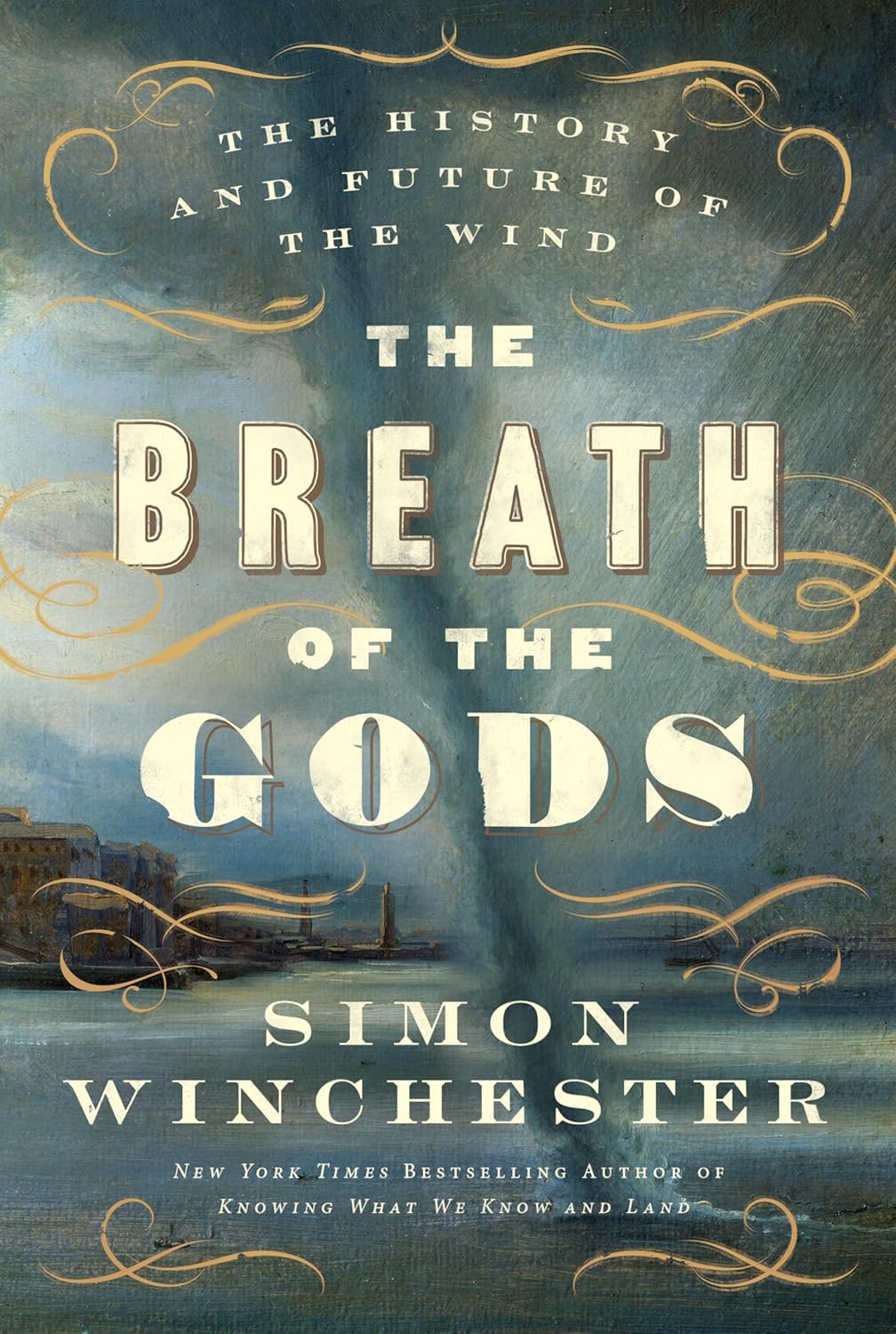
New York Times bestselling author Simon Winchester returns with a thought-provoking history of the wind, written in his edifying and entertaining style.What is going on with our atmosphere? The headlines are filled with news of devastating hurricanes, murderous tornadoes, and cataclysmic fires affecting large swaths of America. Gale force advisories are issued on a regular basis by the National Weather Service.In 2023, a report was released by atmospheric scientists at the University of Northern Illinois, warning that winds—the force at the center of all these dangerous natural events—are expected to steadily increase in the years ahead, strengthening in power, speed, and frequency.While this prediction worried the insurance industry, governmental leaders, scientists, and conscientious citizens, one particular segment of society received it with unbridled enthusiasm. To the energy industry, rising wind strength and speeds as an unalloyed boon for humankind—a vital source of clean and “safe” power.Between these two poles—wind as a malevolent force, and wind as savior of our planet—lies a world of fascination, history, literature, science, poetry, and engineering which Simon Winchester explores with the curiosity and vigor that are the hallmarks of his bestselling works. In The Breath of the Gods, he explains how wind plays a part in our everyday lives, from airplane or car travel to the “natural disasters” that are becoming more frequent and regular.The Breath of the Gods is an urgently-needed portrait across time of that unseen force—unseen but not unfelt—that respects no national borders and no vessel or structure in its path. Wind, the movement of the air, is seen by so many as a heavenly creation and generally a thing of essential goodness. But when it flexes its invisible muscles, all should take care and be very afraid.