
Stephen Greenblatt
Stephen Greenblatt (Ph.D. Yale) is Cogan University Professor of English and American Literature and Language at Harvard University. Also General Editor of The Norton Anthology of English Literature, Eighth Edition, he is the author of nine books, including Will in the World: How Shakespeare Became Shakespeare; Hamlet in Purgatory; Practicing New Historicism; Marvelous Possessions: The Wonder of the New World; Learning to Curse: Essays in Early Modern Culture; and The Swerve: How the World Became Modern. He has edited six collections of criticism, is the co-author (with Charles Mee) of a play, Cardenio, and is a founding coeditor of the journal Representations. He honors include the MLA's James Russell Lowell Prize, for Shakespearean Negotiations: The Circulation of Social Energy in Renaissance England, the Distinguished Humanist Award from the Mellon Foundation, the Distinguished Teaching Award from the University of California, Berkeley. He is a fellow of the American Academy of Arts and Sciences and the American Philosophical Society. He lives in Cambridge, Massachusetts, and in Vermont. Stephen Jay Greenblatt is a Pulitzer Prize winning American literary critic, theorist and scholar. Greenblatt is regarded by many as one of the founders of New Historicism, a set of critical practices that he often refers to as "cultural poetics"; his works have been influential since the early 1980s when he introduced the term. Greenblatt has written and edited numerous books and articles relevant to new historicism, the study of culture, Renaissance studies and Shakespeare studies and is considered to be an expert in these fields. He is also co-founder of the literary-cultural journal Representations, which often publishes articles by new historicists. His most popular work is Will in the World, a biography of Shakespeare that was on the New York Times Best Seller List for nine weeks.
19 Books Written

One of the world's most celebrated scholars, Stephen Greenblatt has crafted both an innovative work of history and a thrilling story of discovery, in which one manuscript, plucked from a thousand years of neglect, changed the course of human thought and made possible the world as we know it.Nearly six hundred years ago, a short, genial, cannily alert man in his late thirties took a very old manuscript off a library shelf, saw with excitement what he had discovered, and ordered that it be copied. That book was the last surviving manuscript of an ancient Roman philosophical epic, On the Nature of Things, by Lucretius—a beautiful poem of the most dangerous ideas: that the universe functioned without the aid of gods, that religious fear was damaging to human life, and that matter was made up of very small particles in eternal motion, colliding and swerving in new directions.The copying and translation of this ancient book—the greatest discovery of the greatest book-hunter of his age—fueled the Renaissance, inspiring artists such as Botticelli and thinkers such as Giordano Bruno; shaped the thought of Galileo and Freud, Darwin and Einstein; and had a revolutionary influence on writers such as Montaigne and Shakespeare and even Thomas Jefferson.

Named One of Esquire 's 50 Best Biographies of All TimeThe Pulitzer Prize and National Book Award finalist, reissued with a new afterword for the 400th anniversary of Shakespeare’s death. A young man from a small provincial town moves to London in the late 1580s and, in a remarkably short time, becomes the greatest playwright not of his age alone but of all time. How is an achievement of this magnitude to be explained? Stephen Greenblatt brings us down to earth to see, hear, and feel how an acutely sensitive and talented boy, surrounded by the rich tapestry of Elizabethan life, could have become the world’s greatest playwright. 23 illustrations

"Brilliant, beautifully organized, exceedingly readable." ―Philip RothWorld-renowned Shakespeare scholar Stephen Greenblatt explores the playwright’s insight into bad (and often mad) rulers. Examining the psyche―and psychoses―of the likes of Richard III, Macbeth, Lear, and Coriolanus, Greenblatt illuminates the ways in which William Shakespeare delved into the lust for absolute power and the disasters visited upon the societies over which these characters rule. Tyrant shows that Shakespeare’s work remains vitally relevant today, not least in its probing of the unquenchable, narcissistic appetites of demagogues and the self-destructive willingness of collaborators who indulge their appetites.

“Endlessly illuminating and a sheer pleasure to read.” ―Jack Miles, author of God: A BiographyDaring to take the great biblical account of human origins seriously, but without credulity. The most influential story in Western cultural history, the biblical account of Adam and Eve is now treated either as the sacred possession of the faithful or as the butt of secular jokes. Here, acclaimed scholar Stephen Greenblatt explores it with profound appreciation for its cultural and psychological power as literature. From the birth of the Hebrew Bible to the awe-inspiring contributions of Augustine, Dürer, and Milton in bringing Adam and Eve to vivid life, Greenblatt unpacks the story’s many interpretations and consequences over time. Rich allegory, vicious misogyny, deep moral insight, narrow literalism, and some of the greatest triumphs of art and literature: all can be counted as children of our “first” parents. 16 pages of color illustrations

A vibrant Shakespeare that brings readers closer than ever before possible to Shakespeare's plays as they were first acted. The Norton Shakespeare, Based on the Oxford Edition invites readers to rediscover Shakespearethe working man of the theater, not the universal bard-and to rediscover his plays as scripts to be performed, not works to be immortalized. Combining the freshly edited texts of the Oxford Edition with lively introductions by Stephen Greenblatt and his co-editors, glossaries and annotations, and an elegant single-column page (that of the Norton Anthologies), this edition of Shakespeare invites contemporary readers to see and read Shakespeare afresh. Greenblatt's full introduction creates a window into Shakespeare world-the culture, demographics, commerce, politics, and religion of early-modern EnglandShakespeare's family background and professional life, the Elizabethan industries of theater and printing, and the subsequent centuries of Shakespeare textual editing.

Renaissance Self-Fashioning is a study of sixteenth-century life and literature that spawned a new era of scholarly inquiry. Stephen Greenblatt examines the structure of selfhood as evidenced in major literary figures of the English Renaissance - More, Tyndale, Wyatt, Spenser, Marlowe, and Shakespeare - and finds that in the early modern period new questions surrounding the nature of identity heavily influenced the literature of the era. Now a classic text in literary studies, Renaissance Self-Fashioning continues to be of interest to students of the Renaissance, English literature, and the new historicist tradition, and this new edition includes a preface by the author on the book's creation and influence."No one who has read [Greenblatt's] accounts of More, Tyndale, Wyatt, and others can fail to be moved, as well as enlightened, by an interpretive mode which is as humane and sympathetic as it is analytical. These portraits are poignantly, subtly, and minutely rendered in a beautifully lucid prose alive in every sentence to the ambivalences and complexities of its subjects."—Harry Berger Jr., University of California, Santa Cruz

Dark Renaissance: The Dangerous Times and Fatal Genius of Shakespeare's Greatest Rival
by Stephen Greenblatt
Rating: 4.0 ⭐
The Pulitzer Prize–winning author of Will in the World reveals the daring and subversive life of Christopher Marlowe—Shakespeare’s contemporary, inspiration, and rival.In brutally repressive sixteenth-century England, artists had been frightened into dull conventionality; foreigners were suspect; popular entertainment largely consisted of coarse spectacles, animal fights, and hangings. Into this crude world came an ambitious cobbler’s son with an uncanny ear for Latin poetry—a torment for most schoolboys, yet for a few, a secret portal to beauty, visionary imagination, transgressive desire, and dangerous skepticism. What Christopher Marlowe found on the other side of that door, and what he did with it, brought about a spectacular explosion of English literature, language, and culture, enabling the success of his collaborator and rival, William Shakespeare.With propulsive narrative flair and brilliant literary criticism, Stephen Greenblatt reconstructs the youthful involvement with the queen’s spy service that shaped Marlowe’s brief, troubling life and gave us his Tamburlaine and Faustus—dramatic masterpieces on power and its costs. And with detailed historical insight, Greenblatt explores how the people Marlowe knew, and the transformations they wrought, birthed the economic, scientific, and cultural power of the modern world—involving Faustian bargains with which we reckon still.

Stephen Greenblatt sets out to explain his longtime fascination with the ghost of Hamlet's father, and his daring and ultimately gratifying journey takes him through surprising intellectual territory. It yields an extraordinary account of the rise and fall of Purgatory as both a belief and a lucrative institution--as well as a capacious new reading of the power of Hamlet.In the mid-sixteenth century, English authorities abruptly changed the relationship between the living and dead. Declaring that Purgatory was a false "poem," they abolished the institutions and banned the practices that Christians relied on to ease the passage to Heaven for themselves and their dead loved ones. Greenblatt explores the fantastic adventure narratives, ghost stories, pilgrimages, and imagery by which a belief in a grisly "prison house of souls" had been shaped and reinforced in the Middle Ages. He probes the psychological benefits as well as the high costs of this belief and of its demolition.With the doctrine of Purgatory and the elaborate practices that grew up around it, the church had provided a powerful method of negotiating with the dead. The Protestant attack on Purgatory destroyed this method for most people in England, but it did not eradicate the longings and fears that Catholic doctrine had for centuries focused and exploited. In his strikingly original interpretation, Greenblatt argues that the human desires to commune with, assist, and be rid of the dead were transformed by Shakespeare--consummate conjurer that he was--into the substance of several of his plays, above all the weirdly powerful Hamlet. Thus, the space of Purgatory became the stage haunted by literature's most famous ghost.This book constitutes an extraordinary feat that could have been accomplished by only Stephen Greenblatt. It is at once a deeply satisfying reading of medieval religion, an innovative interpretation of the apparitions that trouble Shakespeare's tragic heroes, and an exploration of how a culture can be inhabited by its own spectral leftovers.

A vibrant Shakespeare that brings readers closer than ever before possible to Shakespeare's plays as they were first acted. The Norton Shakespeare, Based on the Oxford Edition invites readers to rediscover Shakespeare—the working man of the theater, not the universal bard-and to rediscover his plays as scripts to be performed, not works to be immortalized. Combining the freshly edited texts of the Oxford Edition with lively introductions by Stephen Greenblatt and his co-editors, glossaries and annotations, and an elegant single-column page (that of the Norton Anthologies), this edition of Shakespeare invites contemporary readers to see and read Shakespeare afresh. Greenblatt's full introduction creates a window into Shakespeare world-the culture, demographics, commerce, politics, and religion of early-modern England—Shakespeare's family background and professional life, the Elizabethan industries of theater and printing, and the subsequent centuries of Shakespeare textual editing.

Marvelous Possessions: The Wonder of a New World, with a new Preface
by Stephen Greenblatt
Rating: 3.8 ⭐
Marvelous Possessions is a study of the ways in which Europeans of the late Middle Ages and the early modern period represented non-European peoples and took possession of their lands, in particular the New World.In a series of innovative readings of travel narratives, judicial documents, and official reports, Stephen Greenblatt shows that the experience of the marvelous, central to both art and philosophy, was cunningly yoked by Columbus and others to the service of colonial appropriation. He argues that the traditional symbolic actions and legal rituals through which European sovereignty was asserted were strained to the breaking point by the unprecedented nature of the discovery of the New World. But the book also shows that the experience of the marvelous is not necessarily an agent of in writers as different as Herodotus, Jean de Léry, and Montaigne—and notably in Mandeville's Travels, the most popular travel book of the Middle Ages—wonder is a sign of a remarkably tolerant recognition of cultural difference.Marvelous Possession is not only a collection of the odd and exotic through which Stephen Greenblatt powerfully conveys a sense of the marvelous, but also a highly original extension of his thinking on a subject that has occupied him throughout his career. The book reaches back to the ancient Greeks and forward to the present to ask how it is possible, in a time of disorientation, hatred of the other, and possessiveness, to keep the capacity for wonder from being poisoned?"A marvellous book. It is also a compelling and a powerful one. Nothing so original has ever been written on European responses to 'The wonder of the New World.'"—Anthony Pagden, Times Literary Supplement"By far the most intellectually gripping and penetrating discussion of the relationship between intruders and natives is provided by Stephen Greenblatt's Marvelous Possessions ."—Simon Schama, The New Republic"For the most engaging and illuminating perspective of all, read Marvelous Possessions ."—Laura Shapiro, Newsweek

Organized by genre, this volume includes the genre introductions enthusiastically received in The Norton Shakespeare, Second Edition: Shakespearean Tragedy by Stephen Greenblatt, Shakespearean Comedy by Katharine Eisaman Maus, Shakespearean History by Jean E. Howard, and Shakespearean Romance by Walter Cohen. Like its parent volume, this concise edition gives students the vibrant introductions, readable single-column format, helpful glosses and notes, and extensive reference materials maps, a timeline, annotated bibliographies and film lists, documents that have made The Norton Shakespeare, Second Edition the best-selling classroom edition worldwide."

Shakespeare lived in a world of absolutes—of claims for the absolute authority of scripture, monarch, and God, and the authority of fathers over wives and children, the old over the young, and the gentle over the baseborn. With the elegance and verve for which he is well known, Stephen Greenblatt, author of the best-selling Will in the World, shows that Shakespeare was strikingly averse to such absolutes and constantly probed the possibility of freedom from them. Again and again, Shakespeare confounds the designs and pretensions of kings, generals, and churchmen. His aversion to absolutes even leads him to probe the exalted and seemingly limitless passions of his lovers.Greenblatt explores this rich theme by addressing four of Shakespeare’s preoccupations across all the genres in which he worked. He first considers the idea of beauty in Shakespeare’s works, specifically his challenge to the cult of featureless perfection and his interest in distinguishing marks. He then turns to Shakespeare’s interest in murderous hatred, most famously embodied in Shylock but seen also in the character Bernardine in Measure for Measure. Next Greenblatt considers the idea of Shakespearean authority—that is, Shakespeare’s deep sense of the ethical ambiguity of power, including his own. Ultimately, Greenblatt takes up Shakespearean autonomy, in particular the freedom of artists, guided by distinctive forms of perception, to live by their own laws and to claim that their creations are singularly unconstrained.A book that could only have been written by Stephen Greenblatt, Shakespeare’s Freedom is a wholly original and eloquent meditation by the most acclaimed and influential Shakespearean of our time.

Shakespearean Negotiations: The Circulation of Social Energy in Renaissance England
by Stephen Greenblatt
Rating: 4.0 ⭐
Stephen Greenblatt has been at the center of a major shift in literary interpretation toward a critical method that situates cultural creation in history. Shakespearean Negotiations: The Circulation of Social Energy in Renaissance England is a sustained and powerful exemplification of this innovative method, offering a new way of understanding the power of Shakespeare's achievement and, beyond this, an original analysis of cultural process.

Stephen Greenblatt argued in these celebrated essays that the art of the Renaissance could only be understood in the context of the society from which it sprang. His approach - 'New Historicism' - drew from history, anthropology, Marxist theory, post-structuralism, and psychoanalysis and in the process, blew apart the academic boundaries insulating literature from the world around it. Learning to Curse charts the evolution of that approach and provides a vivid and compelling exploration of a complex and contradictory epoch.

A powerful exploration of the human capacity for renewal, as seen through Shakespeare and Freud In this fresh investigation, Stephen Greenblatt and Adam Phillips explore how the second chance has been an essential feature of the literary imagination and a promise so central to our existence that we try to reproduce it again and again. Innumerable stories, from the Homeric epics to the New Testament, and from Oedipus Rex to Hamlet , explore the realization or failure of second chances—outcomes that depend on accident, acts of will, or fate. Such stories let us repeatedly rehearse the experience of loss and to know the joy that comes with a renewal of love and pleasure and to face the pain that comes with realizing that some damage can never be undone. Through a series of illuminating readings, the authors show how Shakespeare was the supreme virtuoso of the second chance and Freud was its supreme interpreter. Both Shakespeare and Freud believed that we can narrate our life stories as tales of transformation, of momentous shifts, constrained by time and place but often still possible. Ranging from The Comedy of Errors to The Winter’s Tale , and from D. W. Winnicott to Marcel Proust, the authors challenge readers to imagine how, as Phillips writes, “it is the mending that matters.”
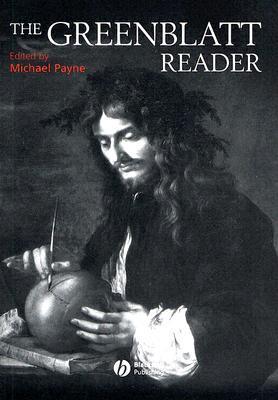
Stephen Greenblatt is one of the most influential practitioners of new historicism. This Reader makes available in one volume Greenblatt’s most important writings on culture, Renaissance studies, and Shakespeare. It also features occasional pieces on subjects as diverse as story-telling and miracles, demonstrating the range of his cultural interests. Taken together, the texts collected here dispel the idea that new historicism is antithetical to literary and aesthetic value.

Et si la Renaissance était née d'un livre ? Un livre perdu, connu par fragments, copié par quelques moines et retrouvé par un humaniste fou de manuscrits anciens ? L'idée, audacieuse, vertigineuse, ouvre les portes de l'histoire de Poggio Bracciolini, dit le Pogge, qui découvrit dans un monastère allemand une copie du De rerum natura de Lucrèce.C'était à l'aube du XVe siècle. Le Pogge n'était pas seulement un bibliophile passionné et un copiste exceptionnel. Il aimait les arts et avait écrit des facéties grivoises. Il aimait les femmes et était père de dix-neuf enfants. Il n'aimait pas l'Église, mais était secrétaire d'un pape diaboliquement intelligent et corrompu. Sa découverte allait précipiter les temps modernes et influencer des esprits aussi puissants que Botticelli, Montaigne ou Machiavel.

A responsive, refreshed, and media-rich revision of the best-selling anthology in the field The most trusted anthology for complete works and helpful editorial apparatus. The Tenth Edition supports survey and period courses with NEW complete major works, NEW contemporary writers, and dynamic and easy-to-access digital resources. NEW video modules help introduce students to literature in multiple exciting ways. These innovations make the Norton an even better teaching tool for instructors and, as ever, an unmatched value for students.

Τον Απρίλιο του 2014 έλαβα μία επιστολή από το Πανεπιστήμιο της Τεχεράνης με την πρόσκληση να απευθύνω την κεντρική ομιλία στο Α΄ Ιρανικό Συνέδριο για τον Σαίξπηρ. Αποφάσισα να πάω, χωρίς δεύτερη σκέψη. Ήταν ένα πολύ παλιό μου όνειρο να ταξιδέψω στο Ιράν.Ο Σαίξπηρ ήταν το μαγικό χαλί που με είχε μεταφέρει στο Ιράν· τί σημαίνει αυτό; Επί τέσσερις και πλέον αιώνες ο Σαίξπηρ λειτουργεί ως κρίσιμος δεσμός υπέρβασης των συνόρων που χωρίζουν κουλτούρες, ιδεολογίες, θρησκείες, έθνη και όλους τους άλλους τρόπους με τους οποίους οι άνθρωποι ορίζουν και περιχαρακώνουν την ταυτότητά τους. Οι διαφορές βέβαια παραμένουν - ο Σαίξπηρ δεν μπορεί έτσι απλά να τις απαλείψει, προσφέρει εντούτοις την ευκαιρία της καταλλαγής, όπως την αποκαλούσε ο ίδιος.Πολλοί από τους μελετητές του Σαίξπηρ της γενιάς μου προσέγγιζαν αυτόν το διάλογο με ακραίο σκεπτικισμό· προτεραιότητά τους ήταν να αποκαλύψουν τις ιδεολογικές βλέψεις τις οποίες εξυπηρετούσε και συνάμα απέκρυπτε, να εντρυφήσουν στο αρχικό περιβάλλον των έργων και να διερευνήσουν το εντελώς διαφορετικό περιβάλλον στο όποιο γίνεται σήμερα ή πρόσληψή τους. Θέλαμε να εντοπίσουμε, κατά κάποιον τρόπο, τους μυστικούς αστυνομικούς που καραδοκούσαν στο θέατρο όπου ανέβαιναν και στο τυπογραφείο όπου τυπώνονταν. Θαυμάσια όλα αυτά: ήταν ένα συναρπαστικό έργο, από το οποίο αντλήσαμε δύναμη και εγώ και οι σύγχρονοί μου επί δεκαετίες. Αμελήσαμε όμως παντελώς σχεδόν να αναρωτηθούμε πώς ο Σαίξπηρ κατάφερε να κάνει το έργο του έναν τόπο στον οποίο μπορούμε όλοι να συναντηθούμε.Με αυτό το ερώτημα ξεκίνησα. Η απλή απάντηση, είπα, εμπεριέχεται στη λέξη «ιδιοφυΐα», ιδιότητα που διακρίνει και τους ποιητές -τον Χαφέζ, για παράδειγμα, ή τον Ρούμι- οι οποίοι χαίρουν μεγάλου σεβασμού στο Ιράν. Ο Σαίξπηρ στην ΤεχεράνηΠώς ζει ο Σαίξπηρ σήμεραΤο γιατρικό του Σαίξπηρ για την ξενοφοβία