Loading themes...
Explore the best books about Technical theme.


Straight from the programming trenches, The Pragmatic Programmer cuts through the increasing specialization and technicalities of modern software development to examine the core process--taking a requirement and producing working, maintainable code that delights its users. It covers topics ranging from personal responsibility and career development to architectural techniques for keeping your code flexible and easy to adapt and reuse. Read this book, and you'll learn how toFight software rot; Avoid the trap of duplicating knowledge; Write flexible, dynamic, and adaptable code; Avoid programming by coincidence; Bullet-proof your code with contracts, assertions, and exceptions; Capture real requirements; Test ruthlessly and effectively; Delight your users; Build teams of pragmatic programmers; and Make your developments more precise with automation. Written as a series of self-contained sections and filled with entertaining anecdotes, thoughtful examples, and interesting analogies, The Pragmatic Programmer illustrates the best practices and major pitfalls of many different aspects of software development. Whether you're a new coder, an experienced programmer, or a manager responsible for software projects, use these lessons daily, and you'll quickly see improvements in personal productivity, accuracy, and job satisfaction. You'll learn skills and develop habits and attitudes that form the foundation for long-term success in your career. You'll become a Pragmatic Programmer.


The world's most infamous hacker offers an insider's view of the low-tech threats to high-tech security Kevin Mitnick's exploits as a cyber-desperado and fugitive form one of the most exhaustive FBI manhunts in history and have spawned dozens of articles, books, films, and documentaries. Since his release from federal prison, in 1998, Mitnick has turned his life around and established himself as one of the most sought-after computer security experts worldwide. Now, in The Art of Deception, the world's most notorious hacker gives new meaning to the old adage, "It takes a thief to catch a thief." Focusing on the human factors involved with information security, Mitnick explains why all the firewalls and encryption protocols in the world will never be enough to stop a savvy grifter intent on rifling a corporate database or an irate employee determined to crash a system. With the help of many fascinating true stories of successful attacks on business and government, he illustrates just how susceptible even the most locked-down information systems are to a slick con artist impersonating an IRS agent. Narrating from the points of view of both the attacker and the victims, he explains why each attack was so successful and how it could have been prevented in an engaging and highly readable style reminiscent of a true-crime novel. And, perhaps most importantly, Mitnick offers advice for preventing these types of social engineering hacks through security protocols, training programs, and manuals that address the human element of security.

Demarco and Lister demonstrate that the major issues of software development are human, not technical. Their answers aren't easy--just incredibly successful. New second edition features eight all-new chapters. Softcover. Previous edition: c1987. DLC: Management.

Spacetime and Geometry is an introductory textbook on general relativity, specifically aimed at students. Using a lucid style, Carroll first covers the foundations of the theory and mathematical formalism, providing an approachable introduction to what can often be an intimidating subject. Three major applications of general relativity are then discussed: black holes, perturbation theory and gravitational waves, and cosmology. Students will learn the origin of how spacetime curves (the Einstein equation) and how matter moves through it (the geodesic equation). They will learn what black holes really are, how gravitational waves are generated and detected, and the modern view of the expansion of the universe. A brief introduction to quantum field theory in curved spacetime is also included. A student familiar with this book will be ready to tackle research-level problems in gravitational physics.

The latest edition of this classic is updated with new problem sets and material The Second Edition of this fundamental textbook maintains the book's tradition of clear, thought-provoking instruction. Readers are provided once again with an instructive mix of mathematics, physics, statistics, and information theory.All the essential topics in information theory are covered in detail, including entropy, data compression, channel capacity, rate distortion, network information theory, and hypothesis testing. The authors provide readers with a solid understanding of the underlying theory and applications. Problem sets and a telegraphic summary at the end of each chapter further assist readers. The historical notes that follow each chapter recap the main points.The Second Edition features: * Chapters reorganized to improve teaching * 200 new problems * New material on source coding, portfolio theory, and feedback capacity * Updated referencesNow current and enhanced, the Second Edition of Elements of Information Theory remains the ideal textbook for upper-level undergraduate and graduate courses in electrical engineering, statistics, and telecommunications.

The classic book on statistical graphics, charts, tables. Theory and practice in the design of data graphics, 250 illustrations of the best (and a few of the worst) statistical graphics, with detailed analysis of how to display data for precise, effective, quick analysis. Design of the high-resolution displays, small multiples. Editing and improving graphics. The data-ink ratio. Time-series, relational graphics, data maps, multivariate designs. Detection of graphical deception: design variation vs. data variation. Sources of deception. Aesthetics and data graphical displays. This is the second edition of The Visual Display of Quantitative Information. Recently published, this new edition provides excellent color reproductions of the many graphics of William Playfair, adds color to other images, and includes all the changes and corrections accumulated during 17 printings of the first edition.

This is a one-of-a-kind reference for anyone with a serious interest in mathematics. Edited by Timothy Gowers, a recipient of the Fields Medal, it presents nearly two hundred entries, written especially for this book by some of the world's leading mathematicians, that introduce basic mathematical tools and vocabulary; trace the development of modern mathematics; explain essential terms and concepts; examine core ideas in major areas of mathematics; describe the achievements of scores of famous mathematicians; explore the impact of mathematics on other disciplines such as biology, finance, and musi—and much, much more.Unparalleled in its depth of coverage, The Princeton Companion to Mathematics surveys the most active and exciting branches of pure mathematics. Accessible in style, this is an indispensable resource for undergraduate and graduate students in mathematics as well as for researchers and scholars seeking to understand areas outside their specialties.- Features nearly 200 entries, organized thematically and written by an international team of distinguished contributors- Presents major ideas and branches of pure mathematics in a clear, accessible style- Defines and explains important mathematical concepts, methods, theorems, and open problems- Introduces the language of mathematics and the goals of mathematical research- Covers number theory, algebra, analysis, geometry, logic, probability, and more- Traces the history and development of modern mathematics- Profiles more than ninety-five mathematicians who influenced those working today- Explores the influence of mathematics on other disciplines- Includes bibliographies, cross-references, and a comprehensive indexContributors include:Graham Allan, Noga Alon, George Andrews, Tom Archibald, Sir Michael Atiyah, David Aubin, Joan Bagaria, Keith Ball, June Barrow-Green, Alan Beardon, David D. Ben-Zvi, Vitaly Bergelson, Nicholas Bingham, Béla Bollobás, Henk Bos, Bodil Branner, Martin R. Bridson, John P. Burgess, Kevin Buzzard, Peter J. Cameron, Jean-Luc Chabert, Eugenia Cheng, Clifford C. Cocks, Alain Connes, Leo Corry, Wolfgang Coy, Tony Crilly, Serafina Cuomo, Mihalis Dafermos, Partha Dasgupta, Ingrid Daubechies, Joseph W. Dauben, John W. Dawson Jr., Francois de Gandt, Persi Diaconis, Jordan S. Ellenberg, Lawrence C. Evans, Florence Fasanelli, Anita Burdman Feferman, Solomon Feferman, Charles Fefferman, Della Fenster, José Ferreirós, David Fisher, Terry Gannon, A. Gardiner, Charles C. Gillispie, Oded Goldreich, Catherine Goldstein, Fernando Q. Gouvêa, Timothy Gowers, Andrew Granville, Ivor Grattan-Guinness, Jeremy Gray, Ben Green, Ian Grojnowski, Niccolò Guicciardini, Michael Harris, Ulf Hashagen, Nigel Higson, Andrew Hodges, F. E. A. Johnson, Mark Joshi, Kiran S. Kedlaya, Frank Kelly, Sergiu Klainerman, Jon Kleinberg, Israel Kleiner, Jacek Klinowski, Eberhard Knobloch, János Kollár, T. W. Körner, Michael Krivelevich, Peter D. Lax, Imre Leader, Jean-François Le Gall, W. B. R. Lickorish, Martin W. Liebeck, Jesper Lützen, Des MacHale, Alan L. Mackay, Shahn Majid, Lech Maligranda, David Marker, Jean Mawhin, Barry Mazur, Dusa McDuff, Colin McLarty, Bojan Mohar, Peter M. Neumann, Catherine Nolan, James Norris, Brian Osserman, Richard S. Palais, Marco Panza, Karen Hunger Parshall, Gabriel P. Paternain, Jeanne Peiffer, Carl Pomerance, Helmut Pulte, Bruce Reed, Michael C. Reed, Adrian Rice, Eleanor Robson, Igor Rodnianski, John Roe, Mark Ronan, Edward Sandifer, Tilman Sauer, Norbert Schappacher, Andrzej Schinzel, Erhard Scholz, Reinhard Siegmund-Schultze, Gordon Slade, David J. Spiegelhalter, Jacqueline Stedall, Arild Stubhaug, Madhu Sudan, Terence Tao, Jamie Tappenden, C. H. Taubes, Rüdiger Thiele, Burt Totaro, Lloyd N. Trefethen, Dirk van Dalen, Richard Weber, Dominic Welsh, Avi Wigderson, Herbert Wilf, David Wilkins, B. Yandell, Eric Zaslow, Doron Zeilberger

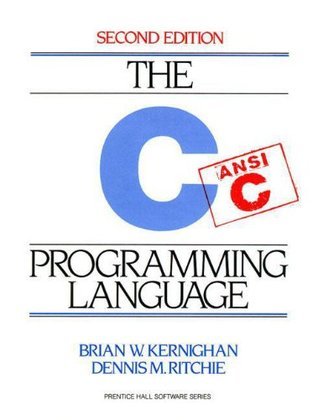
This book is meant to help the reader learn how to program in C. It is the definitive reference guide, now in a second edition. Although the first edition was written in 1978, it continues to be a worldwide best-seller. This second edition brings the classic original up to date to include the ANSI standard. From the Preface: We have tried to retain the brevity of the first edition. C is not a big language, and it is not well served by a big book. We have improved the exposition of critical features, such as pointers, that are central to C programming. We have refined the original examples, and have added new examples in several chapters. For instance, the treatment of complicated declarations is augmented by programs that convert declarations into words and vice versa. As before, all examples have been tested directly from the text, which is in machine-readable form. As we said in the first preface to the first edition, C "wears well as one's experience with it grows." With a decade more experience, we still feel that way. We hope that this book will help you to learn C and use it well.

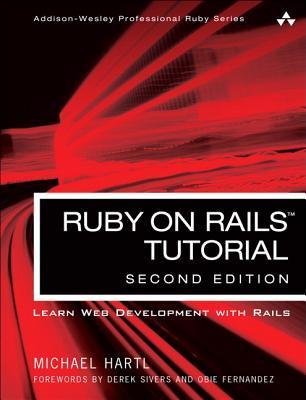
“ Ruby on Rails™ Tutorial by Michael Hartl has become a must-read for developers learning how to build Rails apps.” — Peter Cooper, Editor of Ruby Inside Using Rails, developers can build web applications of exceptional elegance and power. Although its remarkable capabilities have made Ruby on Rails one of the world’s most popular web development frameworks, it can be challenging to learn and use. Ruby on Rails™ Tutorial, Second Edition, is the solution. Best-selling author and leading Rails developer Michael Hartl teaches Rails by guiding you through the development of your own complete sample application using the latest techniques in Rails web development. The updates to this edition include all-new site design using Twitter’s Bootstrap; coverage of the new asset pipeline, including Sprockets and Sass; behavior-driven development (BDD) with Capybara and RSpec; better automated testing with Guard and Spork; roll your own authentication with has_secure_password; and an introduction to Gherkin and Cucumber. You’ll find integrated tutorials not only for Rails, but also for the essential Ruby, HTML, CSS, JavaScript, and SQL skills you’ll need when developing web applications. Hartl explains how each new technique solves a real-world problem, and he demonstrates this with bite-sized code that’s simple enough to understand, yet novel enough to be useful. Whatever your previous web development experience, this book will guide you to true Rails mastery. This book will help you

An inside look at modern open source software developers--and their applications to, and influence on, our online social world."Nadia is one of today's most nuanced thinkers about the depth and potential of online communities, and this book could not have come at a better time." --Devon Zuegel, director of product, communities at GitHubOpen source software--in which developers publish code that anyone can use--has long served as a bellwether for other online behavior. In the late 1990s, it provided an optimistic model for public

Widely considered one of the best practical guides to programming, Steve McConnell’s original code complete has been helping developers write better software for more than a decade. Now this classic book has been fully updated and revised with leading-edge practices—and hundreds of new code samples—illustrating the art and science of software construction. Capturing the body of knowledge available from research, academia, and everyday commercial practice, McConnell synthesizes the most effective techniques and must-know principles into clear, pragmatic guidance. No matter what your experience level, development environment, or project size, this book will inform and stimulate your thinking—and help you build the highest quality code.Discover the timeless techniques and strategies that help you:

Science and art have in common intense seeing, the wide-eyed observing that generates visual information. Beautiful Evidence is about how seeing turns into showing, how data and evidence turn into explanation. The book identifies excellent and effective methods for showing nearly every kind of information, suggests many new designs (including sparklines), and provides analytical tools for assessing the credibility of evidence presentations (which are seen from both sides: how to produce and how to consume presentations). For alert consumers of presentations, there are chapters on diagnosing evidence corruption and PowerPoint pitches. Beautiful Evidence concludes with two chapters that leave the world of pixel and paper flatland representations - and move onto seeing and thinking in space land, the real-land of three-space and time.

Everyone loses chess games occasionally, but all too often we lose a game due to moves that, deep down, we knew were flawed. Why do we commit these chess-board sins? Are they the result of general misconceptions about chess and how it should be played? And how can we recognize the warning signs better?In this thought-provoking and entertaining book, Jonathan Rowson investigates, in his inimitable style, the main reasons why chess-players sometimes go horribly astray, focusing on the underlying psychological * Thinking (unnecessary or erroneous)* Blinking (missing opportunities; lack of resolution)* Wanting (too much concern with the result of the game)* Materialism (lack of attention to non-material factors)* Egoism (insufficient awareness of the opponent and his ideas)* Perfectionism (running short of time; trying too hard)* Looseness (“losing the plot”; drifting; poor concentration)

Users experience the usability of a web site before they have committed to using it and before making any purchase decisions. The web is the ultimate environment for empowerment, and he or she who clicks the mouse decides everything. Designing Web Usability is the definitive guide to usability from Jakob Nielsen, the world's leading authority. Over 250,000 Internet professionals around the world have turned to this landmark book, in which Nielsen shares the full weight of his wisdom and experience. From content and page design to designing for ease of navigation and users with disabilities, he delivers complete direction on how to connect with any web user, in any situation. Nielsen has arrived at a series of principles that work in support of his findings: 1. That web users want to find what they're after quickly; 2. If they don't know what they're after, they nevertheless want to browse quickly and access information they come across in a logical manner. This book is a must-have for anyone who thinks seriously about the web.

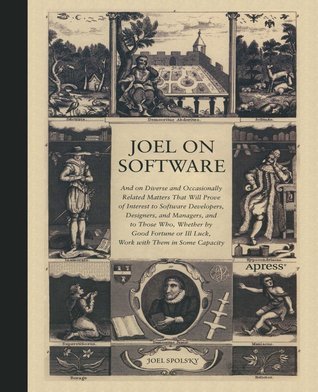
Someone once said that the task of a writer is to "make the familiar new and the new familiar". For years, Joel Spolsky has done exactly this at www.joelonsoftware.com. Now, for the first time, you can own a collection of the most important essays from his site in one book, with exclusive commentary and new insights from joel.

Most programmers' fear of user interface (UI) programming comes from their fear of doing UI design. They think that UI design is like graphic design―the mysterious process by which creative, latte-drinking, all-black-wearing people produce cool-looking, artistic pieces. Most programmers see themselves as analytic, logical thinkers instead―strong at reasoning, weak on artistic judgment, and incapable of doing UI design. In this brilliantly readable book, author Joel Spolsky proposes simple, logical rules that can be applied without any artistic talent to improve any user interface, from traditional GUI applications to websites to consumer electronics. Spolsky's primary axiom, the importance of bringing the program model in line with the user model, is both rational and simple. In a fun and entertaining way, Spolky makes user interface design easy for programmers to grasp. After reading User Interface Design for Programmers , you'll know how to design interfaces with the user in mind. You'll learn the important principles that underlie all good UI design, and you'll learn how to perform usability testing that works.

Starting in the 1980s, Lisp began to be used in several large systems, including Emacs, Autocad, and Interleaf. On Lisp explains the reasons behind Lisp's growing popularity as a mainstream programming language. On Lisp is a comprehensive study of advanced Lisp techniques, with bottom-up programming as the unifying theme. It gives the first complete description of macros and macro applications. The book also covers important subjects related to bottom-up programming, including functional programming, rapid prototyping, interactive development, and embedded languages. The final chapter takes a deeper look at object-oriented programming than previous Lisp books, showing the step-by-step construction of a working model of the Common Lisp Object System (CLOS). As well as an indispensable reference, On Lisp is a source of software. Its examples form a library of functions and macros that readers will be able to use in their own Lisp programs.

"The first edition of Programming Pearls was one of the most influential books I read early in my career, and many of the insights I first encountered in that book stayed with me long after I read it. Jon has done a wonderful job of updating the material. I am very impressed at how fresh the new examples seem." - Steve McConnell, author, Code CompleteWhen programmers list their favorite books, Jon Bentley's collection of programming pearls is commonly included among the classics. Just as natural pearls grow from grains of sand that irritate oysters, programming pearls have grown from real problems that have irritated real programmers. With origins beyond solid engineering, in the realm of insight and creativity, Bentley's pearls offer unique and clever solutions to those nagging problems. Illustrated by programs designed as much for fun as for instruction, the book is filled with lucid and witty descriptions of practical programming techniques and fundamental design principles. It is not at all surprising that Programming Pearls has been so highly valued by programmers at every level of experience. In this revision, the first in 14 years, Bentley has substantially updated his essays to reflect current programming methods and environments. In addition, there are three new essays on (1) testing, debugging, and timing; (2) set representations; and (3) string problems. All the original programs have been rewritten, and an equal amount of new code has been generated. Implementations of all the programs, in C or C++, are now available on the Web.What remains the same in this new edition is Bentley's focus on the hard core of programming problems and his delivery of workable solutions to those problems. Whether you are new to Bentley's classic or are revisiting his work for some fresh insight, this book is sure to make your own list of favorites.

The practice of building software is a “new kid on the block” technology. Though it may not seem this way for those who have been in the field for most of their careers, in the overall scheme of professions, software builders are relative “newbies.” In the short history of the software field, a lot of facts have been identified, and a lot of fallacies promulgated. Those facts and fallacies are what this book is about. There’s a problem with those facts–and, as you might imagine, those fallacies. Many of these fundamentally important facts are learned by a software engineer, but over the short lifespan of the software field, all too many of them have been forgotten. While reading Facts and Fallacies of Software Engineering , you may experience moments of “Oh, yes, I had forgotten that,” alongside some “Is that really true?” thoughts. The author of this book doesn’t shy away from controversy. In fact, each of the facts and fallacies is accompanied by a discussion of whatever controversy envelops it. You may find yourself agreeing with a lot of the facts and fallacies, yet emotionally disturbed by a few of them! Whether you agree or disagree, you will learn why the author has been called “the premier curmudgeon of software practice.” These facts and fallacies are fundamental to the software building field–forget or neglect them at your peril!

Paradigms of AI Programming is the first text to teach advanced Common Lisp techniques in the context of building major AI systems. By reconstructing authentic, complex AI programs using state-of-the-art Common Lisp, the book teaches students and professionals how to build and debug robust practical programs, while demonstrating superior programming style and important AI concepts. The author strongly emphasizes the practical performance issues involved in writing real working programs of significant size. Chapters on troubleshooting and efficiency are included, along with a discussion of the fundamentals of object-oriented programming and a description of the main CLOS functions. This volume is an excellent text for a course on AI programming, a useful supplement for general AI courses and an indispensable reference for the professional programmer.

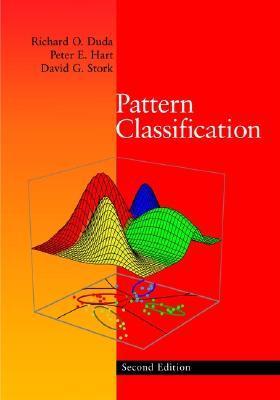
The first edition, published in 1973, has become a classic reference in the field. Now with the second edition, readers will find information on key new topics such as neural networks and statistical pattern recognition, the theory of machine learning, and the theory of invariances. Also included are worked examples, comparisons between different methods, extensive graphics, expanded exercises and computer project topics.An Instructor's Manual presenting detailed solutions to all the problems in the book is available from the Wiley editorial department.

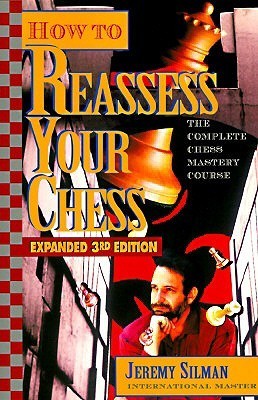
How to Reassess Your Chess is the popular step-by-step course that will create a marked improvement in anyone's game. In clear, direct language, Silman shows how to dissect a position, recognize its individual parts and ultimately find the move that conforms to the needs of that particular situation. By explaining the thought processes that go into a master's choice of move, the author presents a system of thought that makes advanced strategies seem clear, logical and at times even obvious. How the Reassess Your Chess offers invaluable knowledge and insight that cannot be found in any other book.

A fundamental software engineering project management guide based on the practical requirements of "Taming Wild Software Schedules". Emphasizes possible, realistic and "best practice" approaches for managers, technical leads and self-managed teams. The author emphasizes efficient development concepts with an examination of rapid development strategies and a study of classic mistakes, within the context of software-development fundamentals and risk management. Dissects the core issues of rapid development, lifecycle planning, estimation and scheduling. Contains very good and practical discussions of customer-oriented development, motivation and teamwork. Explains such fundamental requirements as team structure, feature-set control (the dreaded feature creep in every project), availability and use of productivity tools and project recovery options. Relevant case studies are analyzed and discussed within the context of specific software development problems. Over 200 pages in this publication are devoted to a summary of best practices, everything from the daily build and smoke test, through prototyping, model selection, measurement, reuse, and the top-10 risks list. This publication is definitely recommended and will become a classic in the field, just as the author's prior publication, "Code Complete" already is.

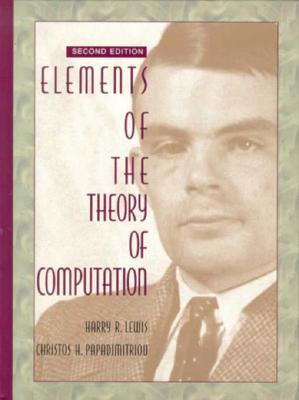
Appropriate for senior and graduate level courses in Computer Science Theory, Automata, and Theory of Computation. This is the long awaited Second Edition of Lewis and Papadimitriou's best-selling theory of computation text. In this substantially modified edition, the authors have enhanced the clarity of their presentation by making the material more accessible to a broader undergraduate audience with no special mathematical experience.

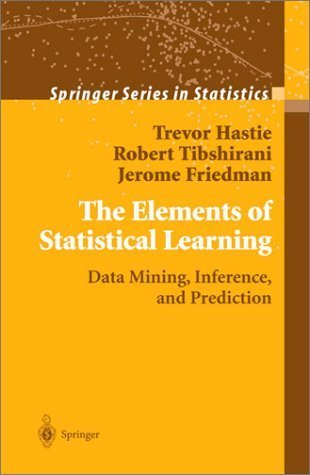
During the past decade there has been an explosion in computation and information technology. With it has come vast amounts of data in a variety of fields such as medicine, biology, finance, and marketing. The challenge of understanding these data has led to the development of new tools in the field of statistics, and spawned new areas such as data mining, machine learning, and bioinformatics. Many of these tools have common underpinnings but are often expressed with different terminology. This book describes the important ideas in these areas in a common conceptual framework. While the approach is statistical, the emphasis is on concepts rather than mathematics. Many examples are given, with a liberal use of color graphics. It should be a valuable resource for statisticians and anyone interested in data mining in science or industry. The book's coverage is broad, from supervised learning (prediction) to unsupervised learning. The many topics include neural networks, support vector machines, classification trees and boosting—the first comprehensive treatment of this topic in any book. Trevor Hastie, Robert Tibshirani, and Jerome Friedman are professors of statistics at Stanford University. They are prominent researchers in this area: Hastie and Tibshirani developed generalized additive models and wrote a popular book of that title. Hastie wrote much of the statistical modeling software in S-PLUS and invented principal curves and surfaces. Tibshirani proposed the Lasso and is co-author of the very successful An Introduction to the Bootstrap. Friedman is the co-inventor of many data-mining tools including CART, MARS, and projection pursuit.

FROM THE Please do NOT buy this original 1997 edition! I have created a new, greatly improved (and cheaper!) edition, which was published on February 28th, 2023:Visual Complex 25th Anniversary Edition (with a new Foreword by Roger Penrose)**************************************************************************************************This radical first course on complex analysis brings a beautiful and powerful subject to life by consistently using geometry (not calculation) as the means of explanation. Aimed at undergraduate students in mathematics, physics, and engineering, the book's intuitive explanations, lack of advanced prerequisites, and consciously user-friendly prose style will help students to master the subject more readily than was previously possible. The key to this is the book's use of new geometric arguments in place of the standard calculational ones. These geometric arguments are communicated with the aid of hundreds of diagrams of a standard seldom encountered in mathematical works. A new approach to a classical topic, this work will be of interest to students in mathematics, physics, and engineering, as well as to professionals in these fields.

Modern Operating Systems, Fourth Edition, is intended for introductory courses in Operating Systems in Computer Science, Computer Engineering, and Electrical Engineering programs.The widely anticipated revision of this worldwide best-seller incorporates the latest developments in operating systems (OS) technologies. The Fourth Edition includes up-to-date materials on relevant OS. Tanenbaum also provides information on current research based on his experience as an operating systems researcher.Modern Operating Systems, Third Edition was the recipient of the 2010 McGuffey Longevity Award. The McGuffey Longevity Award recognizes textbooks whose excellence has been demonstrated over time. http://taaonline.net/index.htmlTeaching and Learning ExperienceThis program will provide a better teaching and learning experience–for you and your students. It will help:* Provide Practical Detail on the Big Picture Concepts: A clear and entertaining writing style outlines the concepts every OS designer needs to master.* Keep Your Course Current: This edition includes information on the latest OS technologies and developments* Enhance Learning with Student and Instructor Resources: Students will gain hands-on experience using the simulation exercises and lab experiments.

John J. Murphy has updated his landmark bestseller Technical Analysis of the Futures Markets , to include all of the financial markets. This outstanding reference has already taught thousands of traders the concepts of technical analysis and their application in the futures and stock markets. Covering the latest developments in computer technology, technical tools, and indicators, the second edition features new material on candlestick charting, intermarket relationships, stocks and stock rotation, plus state-of-the-art examples and figures. From how to read charts to understanding indicators and the crucial role technical analysis plays in investing, readers gain a thorough and accessible overview of the field of technical analysis, with a special emphasis on futures markets. Revised and expanded for the demands of today's financial world, this book is essential reading for anyone interested in tracking and analyzing market behavior.

This textbook takes an innovative approach to the teaching of classical mechanics, emphasizing the development of general but practical intellectual tools to support the analysis of nonlinear Hamiltonian systems. The development is organized around a progressively more sophisticated analysis of particular natural systems and weaves examples throughout the presentation. Explorations of phenomena such as transitions to chaos, nonlinear resonances, and resonance overlap to help the student to develop appropriate analytic tools for understanding. Computational algorithms communicate methods used in the analysis of dynamical phenomena. Expressing the methods of mechanics in a computer language forces them to be unambiguous and computationally effective. Once formalized as a procedure, a mathematical idea also becomes a tool that can be used directly to compute results.The student actively explores the motion of systems through computer simulation and experiment. This active exploration is extended to the mathematics. The requirement that the computer be able to interpret any expression provides strict and immediate feedback as to whether an expression is correctly formulated. The interaction with the computer uncovers and corrects many deficiencies in understanding.

Reviews from the First Edition:"An excellent text ... The postulates of quantum mechanics and the mathematical underpinnings are discussed in a clear, succinct manner." (American Scientist)"No matter how gently one introduces students to the concept of Dirac's bras and kets, many are turned off. Shankar attacks the problem head-on in the first chapter, and in a very informal style suggests that there is nothing to be frightened of." (Physics Bulletin)Reviews of the Second Edition:"This massive text of 700 and odd pages has indeed an excellent get-up, is very verbal and expressive, and has extensively worked out calculational details---all just right for a first course. The style is conversational, more like a corridor talk or lecture notes, though arranged as a text. ... It would be particularly useful to beginning students and those in allied areas like quantum chemistry." (Mathematical Reviews)R. Shankar has introduced major additions and updated key presentations in this second edition of Principles of Quantum Mechanics. New features of this innovative text include an entirely rewritten mathematical introduction, a discussion of Time-reversal invariance, and extensive coverage of a variety of path integrals and their applications. Additional highlights include:- Clear, accessible treatment of underlying mathematics- A review of Newtonian, Lagrangian, and Hamiltonian mechanics- Student understanding of quantum theory is enhanced by separate treatment of mathematical theorems and physical postulates- Unsurpassed coverage of path integrals and their relevance in contemporary physicsThe requisite text for advanced undergraduate- and graduate-level students, Principles of Quantum Mechanics, Second Edition is fully referenced and is supported by many exercises and solutions. The book's self-contained chapters also make it suitable for independent study as well as for courses in applied disciplines.

The CLOS metaobject protocol is an elegant, high-performance extension tothe CommonLisp Object System. The authors, who developed the metaobject protocol andwho were among the group that developed CLOS, introduce this new approach toprogramming language design, describe its evolution and design principles, andpresent a formal specification of a metaobject protocol for CLOS.Kiczales, desRivi?res, and Bobrow show that the "art of metaobject protocol design" lies increating a synthetic combination of object-oriented and reflective techniques thatcan be applied under existing software engineering considerations to yield a newapproach to programming language design that meets a broad set of designcriteria.One of the major benefits of including the metaobject protocol inprogramming languages is that it allows users to adjust the language to better suittheir needs. Metaobject protocols also disprove the adage that adding moreflexibility to a programming language reduces its performance. In presenting theprinciples of metaobject protocols, the authors work with actual code for asimplified implementation of CLOS and its metaobject protocol, providing anopportunity for the reader to gain hands-on experience with the design process. Theyalso include a number of exercises that address important concerns and openissues.Gregor Kiczales and Jim des Rivi?res, are Members of the Research Staff, andDaniel Bobrow is a Research Fellow, in the System Sciences Laboratory at Xerox PaloAlto Research Center.

This completely updated volume presents the effective and practical tools you need to design great desktop applications, Web 2.0 sites, and mobile devices. You’ll learn the principles of good product behavior and gain an understanding of Cooper’s Goal-Directed Design method, which involves everything from conducting user research to defining your product using personas and scenarios. Ultimately, you’ll acquire the knowledge to design the best possible digital products and services.

". . . Nothing less than a major contribution to the scientific culture of this world." — The New York Times Book ReviewThis major survey of mathematics, featuring the work of 18 outstanding Russian mathematicians and including material on both elementary and advanced levels, encompasses 20 prime subject areas in mathematics in terms of their simple origins and their subsequent sophisticated developement. As Professor Morris Kline of New York University noted, "This unique work presents the amazing panorama of mathematics proper. It is the best answer in print to what mathematics contains both on the elementary and advanced levels."Beginning with an overview and analysis of mathematics, the first of three major divisions of the book progresses to an exploration of analytic geometry, algebra, and ordinary differential equations. The second part introduces partial differential equations, along with theories of curves and surfaces, the calculus of variations, and functions of a complex variable. It furthur examines prime numbers, the theory of probability, approximations, and the role of computers in mathematics. The theory of functions of a real variable opens the final section, followed by discussions of linear algebra and nonEuclidian geometry, topology, functional analysis, and groups and other algebraic systems.Thorough, coherent explanations of each topic are further augumented by numerous illustrative figures, and every chapter concludes with a suggested reading list. Formerly issued as a three-volume set, this mathematical masterpiece is now available in a convenient and modestly priced one-volume edition, perfect for study or reference."This is a masterful English translation of a stupendous and formidable mathematical masterpiece . . ." — Social Science

This landmark text offers a rigorous full-year graduate level course on gravitation physics, teaching students • Grasp the laws of physics in flat spacetime• Predict orders of magnitude• Calculate using the principal tools of modern geometry• Predict all levels of precision• Understand Einstein's geometric framework for physics• Explore applications, including pulsars and neutron stars, cosmology, the Schwarzschild geometry and gravitational collapse, and gravitational waves• Probe experimental tests of Einstein's theory• Tackle advanced topics such as superspace and quantum geometrodynamicsThe book offers a unique, alternating two-track pathway through the • In many chapters, material focusing on basic physical ideas is designated asTrack 1 . These sections together make an appropriate one-term advanced/graduate level course (mathematical vector analysis and simple partial-differential equations). The book is printed to make it easy for readers to identify these sections.• The remaining Track 2 material provides a wealth of advanced topics instructors can draw from to flesh out a two-term course, with Track 1 sections serving as prerequisites.

Discover why millions of computer users trust Dan Gookin to demystify DOS and communicate the essentials of computing. His clear explanations and down-to-earth style make exploring this operating system painless -- even fun! With complete coverage of all versions of DOS, as well as DOS under Windows 98, DOS For Dummies, 3rd Edition (the latest edition of this best-selling guide), offers frustrated DOS users more help than ever before. Inside, find helpful advice on how to Graps the facts and features of MS-DOS in Windows 98 Share data between DOS programs and Windows -- easily Find that lost file and retrieve your program if it crashes Handle error messages in DOS -- without panicking Work with all versions of DOS Discover more about modems and DOS utilities Understand complex terminology with clear explanations in a glossary of terms Run programs directly from the DOS prompt

In this book, the author convinces that Sir Arthur Stanley Eddington had things a little bit wrong, as least as far as physics is concerned. He explores the theory of groups and Lie algebras and their representations to use group representations as labor-saving tools.

Still the best book on the Internet. The Whole Internet User's Guide & Catalog, 2nd Edition is a comprehensive introduction to the international network of computer systems called the Internet, a resource of almost unimaginable wealth.As a complete introduction to the Internet, this book covers the basic utilities you use to access the mail, telnet, ftp, and news readers. But it also does much more. The Guide pays close attention to several important information servers (Archie, Wais, Gopher) that are, essentially, databases of they help you find what you want among the millions of files and thousands of archives available. There's also coverage of the World Wide Web. We've also included our own database of a resource index that covers a broad selection of several hundred important resources, ranging from the King James Bible to archives for USENET news.So if you use the Internet for work or for pleasure -- or if you'd like to, but don't know how -- you need this book. If you've been around the Net for a few years, you'll still be able to discover resources you didn't know existed. Also includes a pull-out quick-reference card.Now more comprehensive than ever, here's what you will find in the second

This text fits any course with the word "Manifold" in the title. It is a graduate level book.

Describes how to use the text-preparation system to create documents, covering such topics as inputting text, symbols, and mathematics; how to include graphics; using LATEX with HTML and XML; and PDF outputing.

An authoritative introduction to "fuzzy logic" brings readers up to speed on the "smart" products and computers that will change all of our lives in the future.

A guide to attracting, recruiting, interviewing, and hiring the best technical talent.A comprehensive system for hiring top-notch technical employees Packed with useful information and specific advice written in a breezy, humorous style Learn how to find great people--and get them to work for you--in an afternoon!The top software developers are ten times more productive than average developers. Ten times. You can't afford not to hire them. But if you haven't been reading Joel Spolsky's books or blog, you probably don't know how to find them and make them want to work for you.In this brief book, Joel reveals all his secrets--from his years at Microsoft, and as the co-founder of Fog Creek Software--for recruiting the best developers in the world.If you've ever wondered what you should be looking for in a resume, if you've ever struggled to decide whether to hire someone at the end of an interview, or if you're wondering why you can't find great programmers, stop everything and read this book.

This volume presents topics in probability theory covered during a first-year graduate course given at the Courant Institute of Mathematical Sciences, USA. The necessary background material in measure theory is developed, including the standard topics, such as extension theorem, construction of measures, integration, product spaces, Radon-Nikodym theorem, and conditional expectation.

Contains graphs and diagrams, used to illustrate shapes of distributions. This book shows real data examples in various ways.

When, in 1984–86, Richard P. Feynman gave his famous course on computation at the California Institute of Technology, he asked Tony Hey to adapt his lecture notes into a book. Although led by Feynman, the course also featured, as occasional guest speakers, some of the most brilliant men in science at that time, including Marvin Minsky, Charles Bennett, and John Hopfield. Although the lectures are now thirteen years old, most of the material is timeless and presents a “Feynmanesque” overview of many standard and some not-so-standard topics in computer science such as reversible logic gates and quantum computers.

Take the guesswork out of using regular expressions. With more than 140 practical recipes, this cookbook provides everything you need to solve a wide range of real-world problems. Novices will learn basic skills and tools, and programmers and experienced users will find a wealth of detail. Each recipe provides samples you can use right away. This revised edition covers the regular expression flavors used by C#, Java, JavaScript, Perl, PHP, Python, Ruby, and VB.NET. You’ll learn powerful new tricks, avoid flavor-specific gotchas, and save valuable time with this huge library of practical solutions.

Used extensively as a reference source for the FAA Knowledge Exams, this resource includes basic knowledge that is essential for all pilots, from beginning students to those pursuing advanced pilot certificates. This updated guide covers a wide array of fundamental subjects, including principles of flight, aircraft and engine structures, charts and graphs, performance calculations, weather theory, reports, forecasts, and flight manuals. Required reading for pilots for more than 25 years and formerly published as an Advisory Circular (AC 61-23C), this new edition is now listed as an official FAA Handbook.

This lively and engaging textbook explains the things you have to know in order to read empirical papers in the social and health sciences, as well as the techniques you need to build statistical models of your own. The author, David A. Freedman, explains the basic ideas of association and regression, and takes you through the current models that link these ideas to causality. The focus is on applications of linear models, including generalized least squares and two-stage least squares, with probits and logits for binary variables. The bootstrap is developed as a technique for estimating bias and computing standard errors. Careful attention is paid to the principles of statistical inference. There is background material on study design, bivariate regression, and matrix algebra. To develop technique, there are computer labs with sample computer programs. The book is rich in exercises, most with answers. Target audiences include advanced undergraduates and beginning graduate students in statistics, as well as students and professionals in the social and health sciences. The discussion in the book is organized around published studies, as are many of the exercises. Relevant journal articles are reprinted at the back of the book. Freedman makes a thorough appraisal of the statistical methods in these papers and in a variety of other examples. He illustrates the principles of modeling, and the pitfalls. The discussion shows you how to think about the critical issues including the connection (or lack of it) between the statistical models and the real phenomena. Features of the book: authoritative guidance from a well-known author with wide experience in teaching, research, and consulting careful analysis of statistical issues in substantive applications no-nonsense, direct style versatile structure, enabling the text to be used as a text in a course, or read on its own text that has been thoroughly class-tested at Berkeley background material on regression and matrix algebra plenty of exercises, most with solutions extra material for instructors, including data sets and code for lab projects (available from Cambridge University Press) many new exercises and examples reorganized, restructured, and revised chapters to aid teaching and understanding"

“YOU HAVE CHANGED MY LIFE” is a common refrain in the emails Walter Lewin receives daily from fans who have been enthralled by his world-famous video lectures about the wonders of physics. “I walk with a new spring in my step and I look at life through physics-colored eyes,” wrote one such fan. When Lewin’s lectures were made available online, he became an instant YouTube celebrity, and The New York Times declared, “Walter Lewin delivers his lectures with the panache of Julia Child bringing French cooking to amateurs and the zany theatricality of YouTube’s greatest hits.” For more than thirty years as a beloved professor at the Massachusetts Institute of Technology, Lewin honed his singular craft of making physics not only accessible but truly fun, whether putting his head in the path of a wrecking ball, supercharging himself with three hundred thousand volts of electricity, or demonstrating why the sky is blue and why clouds are white. Now, as Carl Sagan did for astronomy and Brian Green did for cosmology, Lewin takes readers on a marvelous journey in For the Love of Physics, opening our eyes as never before to the amazing beauty and power with which physics can reveal the hidden workings of the world all around us. “I introduce people to their own world,” writes Lewin, “the world they live in and are familiar with but don’t approach like a physicist—yet.” Could it be true that we are shorter standing up than lying down? Why can we snorkel no deeper than about one foot below the surface? Why are the colors of a rainbow always in the same order, and would it be possible to put our hand out and touch one? Whether introducing why the air smells so fresh after a lightning storm, why we briefly lose (and gain) weight when we ride in an elevator, or what the big bang would have sounded like had anyone existed to hear it, Lewin never ceases to surprise and delight with the extraordinary ability of physics to answer even the most elusive questions. Recounting his own exciting discoveries as a pioneer in the field of X-ray astronomy—arriving at MIT right at the start of an astonishing revolution in astronomy—he also brings to life the power of physics to reach into the vastness of space and unveil exotic uncharted territories, from the marvels of a supernova explosion in the Large Magellanic Cloud to the unseeable depths of black holes. “For me,” Lewin writes, “physics is a way of seeing—the spectacular and the mundane, the immense and the minute—as a beautiful, thrillingly interwoven whole.” His wonderfully inventive and vivid ways of introducing us to the revelations of physics impart to us a new appreciation of the remarkable beauty and intricate harmonies of the forces that govern our lives.

Emanuel Derman was a quantitative analyst (Quant) at Goldman Sachs, one of the financial engineers whose mathematical models usurped traders' intuition on Wall Street. The reliance traders put on such quantitative analysis was catastrophic for the economy, setting off the series of financial crises that began to erupt in 2007 with the mortgage crisis and from which we're still recovering. Here Derman looks at why people--bankers in particular--still put so much faith in these models, and why it's a terrible mistake to do so.Though financial models imitate the style of physics by using the language of mathematics, ultimately they deal with human beings. Their similarity confuses the fundamental difference between the aims and possible achievements of the phsyics world and that of the financial world. When we make a model involving human beings, we are trying to force the ugly stepsister's foot into Cinderella's pretty glass slipper. It doesn't fit without cutting off some of the essential parts. Physicists and economists have been too enthusiastic to recognize the limits of their equations in the sphere of human behavior--which of course is what economics is all about. Models.Behaving.Badly. includes a personal account Derman's childhood encounter with failed models--the utopia of the kibbutz, his experience as a physicist on Wall Street, and a look at the models quants generated: the benefits they brought and the problems they caused. Derman takes a close look at what a model is, and then he highlights the differences between the success of modeling in physics and its relative failure in economics. Describing the collapse of the subprime mortgage CDO market in 2007, Derman urges us to stop relying on these models where possible, and offers suggestions for mending these models where they might still do some good. This is a fascinating, lyrical, and very human look behind the curtain at the intersection between mathematics and human nature.

Increase profitability, elevate work culture, and exceed productivity goals through DevOps practices.More than ever, the effective management of technology is critical for business competitiveness. For decades, technology leaders have struggled to balance agility, reliability, and security. The consequences of failure have never been greater whether it's the healthcare.gov debacle, cardholder data breaches, or missing the boat with Big Data in the cloud.And yet, high performers using DevOps principles, such as Google, Amazon, Facebook, Etsy, and Netflix, are routinely and reliably deploying code into production hundreds, or even thousands, of times per day.Following in the footsteps of The Phoenix Project, The DevOps Handbook shows leaders how to replicate these incredible outcomes, by showing how to integrate Product Management, Development, QA, IT Operations, and Information Security to elevate your company and win in the marketplace."Table of contentsPrefaceSpreading the Aha! MomentIntroductionPART I: THE THREE WAYS1. Agile, continuous delivery and the three ways2. The First Way: The Principles of Flow3. The Second Way: The Principle of Feedback4. The Third Way: The Principles of Continual LearningPART II: WHERE TO START5. Selecting which value stream to start with6. Understanding the work in our value stream…7. How to design our organization and architecture8. How to get great outcomes by integrating operations into the daily work for developmentPART III: THE FIRST WAY: THE TECHNICAL PRACTICES OF FLOW9. Create the foundations of our deployment pipeline10. Enable fast and reliable automated testing11. Enable and practice continuous integration12. Automate and enable low-risk releases13. Architect for low-risk releasesPART IV: THE SECOND WAY: THE TECHNICAL PRACTICES OF FEEDBACK14*. Create telemetry to enable seeing abd solving problems15. Analyze telemetry to better anticipate problems16. Enable feedbackso development and operation can safely deploy code17. Integrate hypothesis-driven development and A/B testing into our daily work18. Create review and coordination processes to increase quality of our current workPART V: THE THRID WAY: THE TECHNICAL PRACTICES OF CONTINUAL LEARNING19. Enable and inject learning into daily work20. Convert local discoveries into global improvements21. Reserve time to create organizational learning22. Information security as everyone’s job, every day23. Protecting the deployment pipelinePART VI: CONCLUSIONA call to actionConclusion to the DevOps HandbookAPPENDICES1. The convergence of Devops2. The theory of constraints and core chronic conflicts3. Tabular form of downward spiral4. The dangers of handoffs and queues5. Myths of industrial safety6. The Toyota Andon Cord7. COTS Software8. Post-mortem meetings9. The Simian Army10. Transparent uptimeAdditional ResourcesEndnotes

Your no-nonsense guide to making sense of machine learning Machine learning can be a mind-boggling concept for the masses, but those who are in the trenches of computer programming know just how invaluable it is. Without machine learning, fraud detection, web search results, real-time ads on web pages, credit scoring, automation, and email spam filtering wouldn't be possible, and this is only showcasing just a few of its capabilities. Written by two data science experts, Machine Learning For Dummies offers a much-needed entry point for anyone looking to use machine learning to accomplish practical tasks. Covering the entry-level topics needed to get you familiar with the basic concepts of machine learning, this guide quickly helps you make sense of the programming languages and tools you need to turn machine learning-based tasks into a reality. Whether you're maddened by the math behind machine learning, apprehensive about AI, perplexed by preprocessing data―or anything in between―this guide makes it easier to understand and implement machine learning seamlessly. Dive into this complete beginner's guide so you are armed with all you need to know about machine learning!

It was early 1993 and id Software was at the top of the PC gaming industry. Wolfenstein 3D had established the First Person Shooter genre and sales of its sequel Spear of Destiny were skyrocketing. The technology and tools id had taken years to develop were no match for their many competitors.It would have been easy for id to coast on their success, but instead they made the audacious decision to throw away everything they had built and start from scratch. Game Engine Black Doom is the story of how they did it.This is a book about history and engineering. Don’t expect much prose (the author’s English has improved since the first book but is still broken). Instead you will find inside extensive descriptions and drawings to better understand all the challenges id Software had to overcome. From the hardware -- the Intel 486 CPU, the Motorola 68040 CPU, and the NeXT workstations -- to the game engine’s revolutionary design, open up to learn how DOOM changed the gaming industry and became a legend among video games.

Successful teams are fundamental to create successful outcomes for any business, across all industries, to include building and running modern software systems, and successful organizations take care in designing and evolving their team structures. In TEAM TOPOLOGIES DevOps consultants Matthew Skelton and Manuel Pais share secrets of successful team patterns and interactions to help readers choose and evolve the right team patterns for their organization, making sure to keep the software healthy and optimize value streams. TEAM TOPOLOGIES will help readers discover: Team patterns used by successful organizations Common team patterns to avoid with modern software systems When and why to use different team patternsHow to evolve teams effectivelyHow to split software and align to teams

The book investigates the misapplication of conventional statistical techniques to fat tailed distributions and looks for remedies, when possible. Switching from thin tailed to fat tailed distributions requires more than “changing the color of the dress.” Traditional asymptotics deal mainly with either n=1 or n=∞, and the real world is in between, under the “laws of the medium numbers”–which vary widely across specific distributions. Both the law of large numbers and the generalized central limit mechanisms operate in highly idiosyncratic ways outside the standard Gaussian or Levy-Stable basins of convergence. A few - The sample mean is rarely in line with the population mean, with effect on “naïve empiricism,” but can be sometimes be estimated via parametric methods. - The “empirical distribution” is rarely empirical. - Parameter uncertainty has compounding effects on statistical metrics. - Dimension reduction (principal components) fails. - Inequality estimators (Gini or quantile contributions) are not additive and produce wrong results. - Many “biases” found in psychology become entirely rational under more sophisticated probability distributions. - Most of the failures of financial economics, econometrics, and behavioral economics can be attributed to using the wrong distributions. This book, the first volume of the Technical Incerto, weaves a narrative around published journal articles.