
Andy Hunt
see also Andrew Hunt Andy Hunt is a programmer turned consultant, author and publisher. He co-authored the best-selling book "The Pragmatic Programmer", was one of the 17 founders of the Agile Alliance, and co-founded the Pragmatic Bookshelf, publishing award-winning and critically acclaimed books for software developers. Andy started writing software professionally in early 80's across diverse industries such as telecommunications, banking, financial services, utilities, medical imaging, graphic arts, and of course, the now-ubiquitous web. Source: Amazon.com
15 Books Written
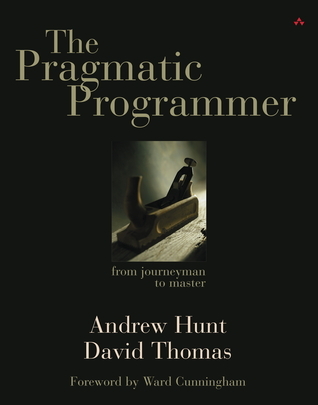
Straight from the programming trenches, The Pragmatic Programmer cuts through the increasing specialization and technicalities of modern software development to examine the core process--taking a requirement and producing working, maintainable code that delights its users. It covers topics ranging from personal responsibility and career development to architectural techniques for keeping your code flexible and easy to adapt and reuse. Read this book, and you'll learn how toFight software rot; Avoid the trap of duplicating knowledge; Write flexible, dynamic, and adaptable code; Avoid programming by coincidence; Bullet-proof your code with contracts, assertions, and exceptions; Capture real requirements; Test ruthlessly and effectively; Delight your users; Build teams of pragmatic programmers; and Make your developments more precise with automation. Written as a series of self-contained sections and filled with entertaining anecdotes, thoughtful examples, and interesting analogies, The Pragmatic Programmer illustrates the best practices and major pitfalls of many different aspects of software development. Whether you're a new coder, an experienced programmer, or a manager responsible for software projects, use these lessons daily, and you'll quickly see improvements in personal productivity, accuracy, and job satisfaction. You'll learn skills and develop habits and attitudes that form the foundation for long-term success in your career. You'll become a Pragmatic Programmer.
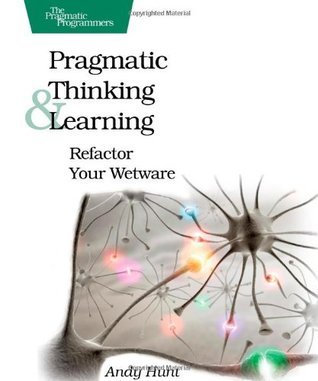
Software development happens in your head. Not in an editor, IDE, or designtool. You're well educated on how to work with software and hardware, but what about wetware--our own brains? Learning new skills and new technology is critical to your career, and it's all in your head. In this book by Andy Hunt, you'll learn how our brains are wired, and how to take advantage of your brain's architecture. You'll learn new tricks and tipsto learn more, faster, and retain more of what you learn. You need a pragmatic approach to thinking and learning. You need to Refactor Your Wetware. Programmers have to learn constantly; not just the stereotypical new technologies, but also the problem domain of the application, the whims of the user community, the quirks of your teammates, the shifting sands of the industry, and the evolving characteristics of the project itself as it is built. We'll journey together through bits of cognitive and neuroscience, learning and behavioral theory. You'll see some surprising aspects of how our brains work, and how you can take advantage of the system to improve your own learning and thinking skills. In this book you'll learn how Use the Dreyfus Model of Skill Acquisition to become more expert Leverage the architecture of the brain to strengthen different thinking modes Avoid common "known bugs" in your mind Learn more deliberately and more effectively Manage knowledge more efficiently
Learn how to improve your Java coding skills using unit testing. Despite it's name, unit testing is really a coding technique, not a testing technique. Unit testing is done by programmers, for programmers. It's primarily for our benefit: we get improved confidence in our code, better ability to make deadlines, less time spent in the debugger, and less time beating on the code to make it work correctly.This book shows how to write tests, but more importantly, it goes where other books fear to tread and gives you concrete advice and examples of what to test--the common things that go wrong in all of our programs. Discover the tricky hiding places where bugs breed, and how to catch them using the freely available JUnit framework. It's easy to learn how to think of all the things in your code that are likely to break. We'll show you how with helpful mnemonics, summarized in a handy tip sheet (also available from our pragmaticprogrammer.com website) to help you remember all this stuff.With this book you will:Write better code, and take less time to write it Discover the tricky places where bugs breed Learn how to think of all the things that could go wrong Test individual pieces of code without having to include the whole project Test effectively with the whole teamWe'll also cover how to use Mock Objects for testing, how to write high quality test code, and how to use unit testing to improve your design skills. We'll show you frequent "gotchas"--along with the fixes--to save you time when problems come up. We'll show you how with helpful mnemonics, summarized in a handy tip sheet (also available from our pragmaticprogrammer.com website).But the best part is that you don't need a sweeping mandate to change your whole team or your whole company. You don't need to adopt Extreme Programming or Test-Driven Development, or change your development process in order to reap the proven benefits of unit testing. You can start unit testing, the pragmatic way, right away.
The NIST estimates that poor testing costs the US economy $60 billion annually. This book gives teams straightforward and proven ways to introduce unit testing into their process, resulting in higher quality and fewer bugs.All over the world, software teams are using unit testing both to verify their code and as a way of helping them design better code. This book is unique in the way it covers two aspects: showing developers both how to test and helping them determine what to test.New in the second edition:Updated for NUnit 2.4 (.NET 2.0 and Visual Studio 2005) More assert methods New String and Collection assertion support Better support for multiple-platform development Higher-level setup and teardown fixtures Whole new chapter on extending NUnit and more!

The Green Earth of old was long gone.The People had printed their family ships from the reclaimed ruins and fled the devastation to find another planet, a new home. But system after system, planet after planet, they discovered that there were no other suitable homes in the cosmos. At least, not within a few generations of exploration at sub-light speeds. The People would have pressed further out into the void, but seas of unknown exotic energy interfered with the electromag drives and destroyed anything with sufficient mass trying to pass. So they stopped their wandering, and joined their ships together here at the edge of Nothing to form the Conglommora. Where the horse died, as it were.But against the endless black of deep space, a single, tiny, glowing dot is headed straight for them. Charlie Neylan and his neighbors anxiously watch and wait to discover who—or what—is coming. Inexorably, Charlie is pulled from the comfort of the only house and home he, his family, and his parents before him had ever known to explore the strange and exotic corners of the Conglommora.Suddenly thrust into a world of adventure, Charlie has to confront his own demons as this mysterious stranger plummets them into a startling journey across the galaxy to confront the past and threaten the future.

Learn to Program with Minecraft Plugins: Create Flying Creepers and Flaming Cows in Java
by Andy Hunt
Rating: 3.3 ⭐
Expand your Minecraft experience! You'll learn how to write Java code and build plugins for your own Minecraft servers using the popular Java programming language and the Minecraft Bukkit library.You'll create plugins that can change blocks from air to stone, or spawn cows and creepers. You'll write plugins that react to game events, and even schedule tasks that will run later in the game. Readers from age 9 to 99 will learn how to use variables and functions to build plugins that fling players into the sky, create flying creepers, and of course, shoot flaming cows.Along the way you'll learn real programming using Java, from classes, objects, and data structures (including arrays and hashes) to exception handling and threads. You'll even learn how to backup your code (and go back in time!) using Git, and set up and run your own server at home or in the cloud. A running progress bar shows you how far you've come in each chapter, and by the end of the book you'll be able to design and code your own plugins from scratch.Put your gaming to good use, and learn real programming skills today.

Conglommora sat there as it always did, stationary in the deep dark cold of space. Charlie Neylan and his son Alain thought their adventures were over, as they settled into the shape of their new lives on Conglommora. But things get complicated as Alain risks his life to find answers to the secrets from their past, and their very world gets a lot larger than anyone thought. The new hidden undersea base, Denisova, was a trove of scientific data and opportunity. So much new to study, so much to see—but safely, hidden from their descendants. The People of Conglommora couldn't reveal themselves without jeopardizing their future. They had to keep them isolated, alone. What was left of humanity was utterly alone. Until it wasn't.

After the Second Civil War, Henry buys a long-abandoned, desolate mansion from the pre-Internet era to get away from it away from the mass surveillance and constant monitoring of the new paranoid state at the very edge of civilization. But there's more to the house's history than the real estate listing admitted. Were ghosts real? Or panda bears? Or whales? No one knew for sure anymore. The tapestry of history was torn and threadbare, patched with both tattered cloth and with trash. And in that dim and murky place between the shores of consciousness and nightmare, Henry was running out of time.

The EFT Collection is a compilation of some of the Tapping techniques that I have developed over the years as an EFT Practitioner and Trainer. There are 12 techniques presented in this book. They range from very simple tactics to quite broad strategies for dealing with difficult situations. They will help Neutralise resistance to tapping so that you can get on with making the changes you want to make.* Make problems more “tappable”.* Identify and neutralise blocks to getting things done.* Soften negative emotions quickly and easily.* Easily find and dissolve limiting beliefs.* Change unhelpful patterns of behaviour and help create new ways of doing things. The EFT Collection is for people who already know and use tapping for their own self development or with the people they work with in their professional lives. It is a collection of techniques designed for people who want to be free of their unhelpful and limiting thoughts, feelings, beliefs and patterns of behaviour. To get the best out of the book you need to be willing to explore your own experience, try things out and learn from the process. It is an opportunity and an invitation to develop your awareness, intuition and judgement about your inner world and give you new ways to work with what you find. Get this book if you want to add new techniques and tactics to your self help or therapeutic activities as using them can lessen the amount of emotional suffering in your life.
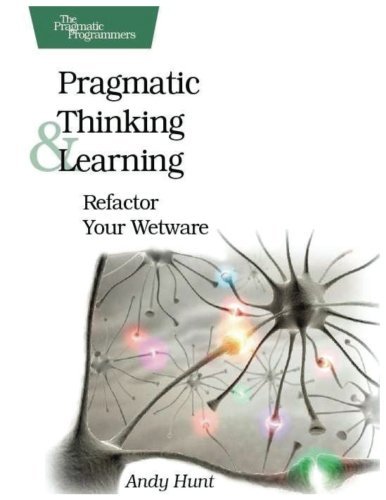
Pragmatic Thinking and Learning: Refactor Your Wetware (Pragmatic Programmers) 1st Edition
by Andy Hunt
Rating: 4.0 ⭐

The Tapping Toolkit
by Andy Hunt
The Tapping Toolkit is a practical collection of strategies and tactics for people who use EFT/Tapping for their own personal development or in their professional work with clients. It's a book for people who are ready, willing and able to work with their own experience and don't want to be spoon-fed general purpose, pre-digested solutions. What you will find in this A collection of techniques designed for people who want to be free of their unhelpful and limiting thoughts, feelings, beliefs and patterns of behaviour. The techniques ranging from very simple tactics to quite broad strategies for dealing with difficult situations. What you won't find in this This isn't a book for people who want to be spoon fed. There is no introduction to EFT and you wont find any tapping scripts or overly simple solutions to complex problems. To get the best out of the book you need to be willing to explore your own experience, try things out and learn from the process.
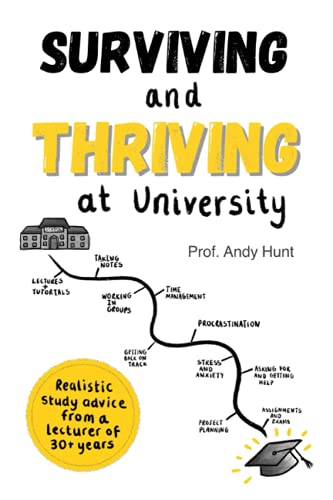
Surviving and Thriving at University: Realistic study advice from a lecturer of 30+ years
by Andy Hunt
"Surviving and Thriving at University" is a thorough guide to how to be a successful student at college or university. Unlike other books for university starters (which focus on lifestyle, accommodation, cooking, safety etc. ) this book distils practical wisdom, advice, working methods, practices, habits and guidance for actually getting through your degree.Andy Hunt has been teaching and advising students for over 30 years, and has helped hundreds to maximise their degree or to turn around failure into success.It's written people just about to start university, to act as a companion throughout their first year, anyone who suddenly finds that their studying is problematic, those who are returning to study after a break or failing a previous year, 6th students in school or college, about to go to university, who want to get prepared, parents and carers who wish to know what's happening at university in order to provide the best support, university staff and supervisors who want to help their students with their study skills. It brings together and explains the key skills that students need in order to flourish and succeed in a challenging and competitive environment.It's split into 6 major sections, each with several PART 1: Introduction, Welcome and Route-finding Explains the different routes through the book, and explains the differences in teaching and learning expectations between school and university. PART 2: Habits and Self-Management This is a starting-point for long-term success. You should work through this if you're planning on coming to university, or you're at university and haven't thought much about your study skills, or you've had a bad experience and know you need to do things differently now. It gives you an overview of the best habits to introduce and develop so that you can keep on top of your work and move from surviving to thriving. The chapter on Being Your Own Manager is perhaps one of the most important things to deeply absorb and practice. PART 3: Time Management and Planning This is a large section that includes several chapters on Time Management, how and when to work, planning and diaries. This may (to the outside) sound almost trivial and mechanical, but it is in fact the most needed skill-set for students, sadly underdeveloped in so many people, leading to a host of problems and struggles to keep up with the work. PART 4: Study Skills Once you are competently in charge of all your commitments and responsibilities, you'll need to be able to engage with the work itself - the core of what you've come to university to study. The chapters in this section explain the importance of (and show top tips for best practice in) note-taking, revision, long-term exam preparation, and handling assignments. PART 5: Communication Although much of university life concerns individual or solo work, many of the requirements of being a student depend on working with other people. It's important to spend some time thinking about and developing the ways you communicate with others. So this section contains chapters on keeping in touch, email mastery, the importance of supervision, and guides for group working. PART 6: Help and Support This is a major section because people generally know when they are in trouble, but don't often know what to do about it. The chapters here cover a wide range of issues from stress & anxiety, wanting to quit, procrastination, getting stuck, perfectionism, loss of focus, and losing motivation. There are also sections on special needs support, and how to get back on track when something has gone wrong.

La Boite à Outils du Tapping est un ensemble pratique de stratégies et de tactiques destinées aux personnes qui utilisent l’EFT / le Tapping pour leur propre développement personnel ou dans leur travail professionnel avec des clients.

Eine praxisnahe Sammlung von Strategien und Taktiken für Menschen, die EFT/Tapping für ihre eigene Persönlichkeitsentwicklung oder in ihrer beruflichen Arbeit mit Klienten einsetzen. Es ist ein Buch für Menschen, die bereit, gewillt und in der Lage sind, mit ihren eigenen Erfahrungen zu arbeiten und keine vorgekauten Lösungen suchen. Klopfakupressur – die Werkzeugkiste ist eine Zusammenstellung einiger EFT (Technik der Emotionalen Freiheit) / Tapping-Prozesse, die ich in mehr als 14 Jahren als EFT-Praktitioner und Trainer entwickelt habe.

Stehen Sie sich nicht länger im Weg
by Andy Hunt
Stehen Sie sich nicht mehr im Weg, ist eine einfache und gründliche Anleitung zur Aufdeckung und Lösung vieler Ihrer verborgenen, einschränkenden Glaubenssätze und Blockaden - der "Widerstand " - die unbewussten Saboteure welche Ihren Fortschritt behindert. Sie werden einfache Prozesse erlernen, welche die einschränkenden Glaubenssätzen und Blockaden bewusst machen. Dann können Sie EFT verwenden um diese Blockaden zu neutralisieren. Danach können Sie ohne zu zaudern Ihre Ziele und Projekte in Angriff nehmen. Dieses Buch ist für Menschen, welche ihre begrenzenden Glaubenssätze erkunden und verändern möchten. Es ist ein geeigneter Ratgeber für Therapeuten und Coaches, die damit ihren Klienten helfen können, zu erforschen was in ihren Leben hinderlich ist. Gleichzeitig ist es ein Selbsthilferatgeber um die eigenen Blockaden zu erkennen und zu beseitigen.