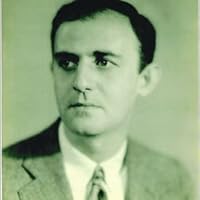
David Freedman
28 Books Written
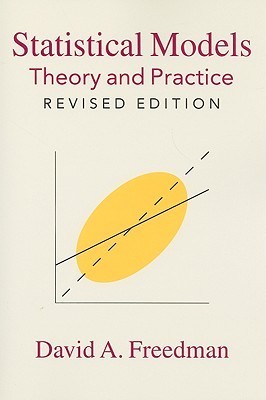
This lively and engaging textbook explains the things you have to know in order to read empirical papers in the social and health sciences, as well as the techniques you need to build statistical models of your own. The author, David A. Freedman, explains the basic ideas of association and regression, and takes you through the current models that link these ideas to causality. The focus is on applications of linear models, including generalized least squares and two-stage least squares, with probits and logits for binary variables. The bootstrap is developed as a technique for estimating bias and computing standard errors. Careful attention is paid to the principles of statistical inference. There is background material on study design, bivariate regression, and matrix algebra. To develop technique, there are computer labs with sample computer programs. The book is rich in exercises, most with answers. Target audiences include advanced undergraduates and beginning graduate students in statistics, as well as students and professionals in the social and health sciences. The discussion in the book is organized around published studies, as are many of the exercises. Relevant journal articles are reprinted at the back of the book. Freedman makes a thorough appraisal of the statistical methods in these papers and in a variety of other examples. He illustrates the principles of modeling, and the pitfalls. The discussion shows you how to think about the critical issues including the connection (or lack of it) between the statistical models and the real phenomena. Features of the book: authoritative guidance from a well-known author with wide experience in teaching, research, and consulting careful analysis of statistical issues in substantive applications no-nonsense, direct style versatile structure, enabling the text to be used as a text in a course, or read on its own text that has been thoroughly class-tested at Berkeley background material on regression and matrix algebra plenty of exercises, most with solutions extra material for instructors, including data sets and code for lab projects (available from Cambridge University Press) many new exercises and examples reorganized, restructured, and revised chapters to aid teaching and understanding"

Renowned for its clear prose and no-nonsense emphasis on core concepts, Statistics covers fundamentals using real examples to illustrate the techniques. The Fourth Edition has been carefully revised and updated to reflect current data.
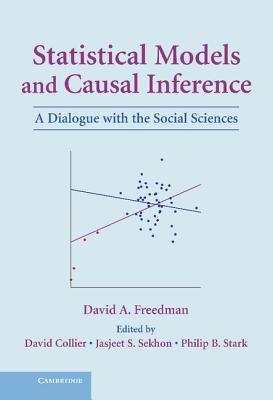
Statistical Models and Causal Inference: A Dialogue with the Social Sciences
by David Freedman
Rating: 3.7 ⭐
David A. Freedman presents here a definitive synthesis of his approach to causal inference in the social sciences. He explores the foundations and limitations of statistical modeling, illustrating basic arguments with examples from political science, public policy, law, and epidemiology. Freedman maintains that many new technical approaches to statistical modeling constitute not progress, but regress. Instead, he advocates a shoe leather methodology, which exploits natural variation to mitigate confounding and relies on intimate knowledge of the subject matter to develop meticulous research designs and eliminate rival explanations. When Freedman first enunciated this position, he was met with skepticism, in part because it was hard to believe that a mathematical statistician of his stature would favor low-tech approaches. But the tide is turning. Many social scientists now agree that statistical technique cannot substitute for good research design and subject matter knowledge. This book offers an integrated presentation of Freedman 's views.

214 pages W W Norton & Co Inc (June 1981) English

The surface smashes, droplets fly. The pond is shaken and the tiny fish is taken from his world without the blinking of an eye. The moorhen starts, the heron cranes his neck around to look, but they only hear the whistling of the Jewel of the Brook..." David Freedman's epic tale of the trials of life of one of our most treasured birds is beautifully illuminated by the stunning artwork of Mike Kelly, creating a timeless tale for nature lovers of all ages to enjoy. David and Mike are both keen observers of British wildlife, spending many happy hours staring into ponds and watching the skies. Their first book Stunt Crow is an aeronautical adventure following the antics of a brave crow. Jewel of the Brook is a lavishly illustrated insight into the precarious life of one of our favourite birds.

A long time ago I started writing a book about Markov chains, Brownian motion, and diffusion. I soon had two hundred pages of manuscript and my publisher was enthusiastic. Some years and several drafts later, I had a thousand pages of manuscript, and my publisher was less enthusiastic. So we made it a Markov Chains Brownian Motion and Diffusion Approximating Countable Markov Chains familiarly - MC, B & D, and ACM. I wrote the first two books for beginning graduate students with some knowledge of probability; if you can follow Sections 10.4 to 10.9 of Markov Chains you're in. The first two books are quite independent of one another, and completely independent of the third. This last book is a monograph which explains one way to think about chains with instantaneous states. The results in it are supposed to be new, except where there are specific disclaim ers; it's written in the framework of Markov Chains. Most of the proofs in the trilogy are new, and I tried hard to make them explicit. The old ones were often elegant, but I seldom saw what made them go. With my own, I can sometimes show you why things work. And, as I will VB1 PREFACE argue in a minute, my demonstrations are easier technically. If I wrote them down well enough, you may come to agree.


Continuing to develop statistical concepts using real data, the Fourth Edition features intriguing examples from medicine, business, genetics, economics, law, psychology, and other fields. Most of the numbers have been updated for the Fourth Edition. There are new results from the 2000 census, the 2004 Gallup Poll, the 2005 Current Population Survey, and more.

A long time ago I started writing a book about Markov chains, Brownian motion, and diffusion. I soon had two hundred pages of manuscript and my publisher was enthusiastic. Some years and several drafts later, I had a thousand pages of manuscript, and my publisher was less enthusiastic. So we made it a Markov Chains Brownian Motion and Diffusion Approximating Countable Markov Chains familiarly - MC, B & D, and ACM. I wrote the first two books for beginning graduate students with some knowledge of probability; if you can follow Sections 10.4 to 10.9 of Markov Chains, you're in. The first two books are quite independent of one another, and completely independent of this one, which is a monograph explaining one way to think about chains with instantaneous states. The results here are supposed to be new, except when there are specific disclaimers. It's written in the framework of Markov chains; we wanted to reprint in this volume the MC chapters needed for reference. but this proved impossible. Most of the proofs in the trilogy are new, and I tried hard to make them explicit. The old ones were often elegant, but I seldom saw what made them go. With my own, I can sometimes show you why things work. And, as I will argue in a minute, my demonstrations are easier technically. If I wrote them down well enough, you may come to agree.

A long time ago I started writing a book about Markov chains, Brownian motion, and diffusion. I soon had two hundred pages of manuscript and my publisher was enthusiastic. Some years and several drafts later, I had a pages of manuscript, and my publisher was less enthusiastic. So we made it a Markov Chains Brownian Motion and Diffusion Approximating Countable Markov Chains familiarly - Me, B & D, and ACM. I wrote the first two books for beginning graduate students with some knowledge of probability; if you can follow Sections 3.4 to 3.9 of Brownian Motion and Diffusion you're in. The first two books are quite independent of one another, and completely independent of the third. This last book is a monograph, which explains one way to think about chains with instantaneous states. The results in it are supposed to be new, except where there are spe cific disclaimers; it's written in the framework of Markov Chains. Most of the proofs in the trilogy are new, and I tried hard to make them explicit. The old ones were often elegant, but I seldom saw what made them go. With my own, I can sometimes show you why things work. And, as I will argue in a minute, my demonstrations are easier technically. If I wrote them down well enough, you may come to agree.

Kessinger Publishing is the place to find hundreds of thousands of rare and hard-to-find books with something of interest for everyone
From 1924 on, Freedman was a self-employed writer. He created sketches for musicals and had shows on Broadway almost every year from 1926 through 1937. His novel Mendel Marantz (1925) featured a Jewish father who frequently made witty remarks.
This book includes: -- Fundamentals of marketing-- Writing business and marketing plans-- Costs of marketing-- Market research-- Market segmentation-- Using the Internet and other innovations-- Customer Service-- How to measure success in marketing
A long time ago I started writing a book about Markov chains, Brownian motion, and diffusion. I soon had two hundred pages of manuscript and my publisher was enthusiastic. Some years and several drafts later, I had a pages of manuscript, and my publisher was less enthusiastic. So we made it a Markov Chains Brownian Motion and Diffusion Approximating Countable Markov Chains familiarly - Me, B & D, and ACM. I wrote the first two books for beginning graduate students with some knowledge of probability; if you can follow Sections 3.4 to 3.9 of Brownian Motion and Diffusion you're in. The first two books are quite independent of one another, and completely independent of the third. This last book is a monograph, which explains one way to think about chains with instantaneous states. The results in it are supposed to be new, except where there are spe cific disclaimers; it's written in the framework of Markov Chains. Most of the proofs in the trilogy are new, and I tried hard to make them explicit. The old ones were often elegant, but I seldom saw what made them go. With my own, I can sometimes show you why things work. And, as I will argue in a minute, my demonstrations are easier technically. If I wrote them down well enough, you may come to agree.
Sweet and Low: Program for the Forty-Fourth St Theatre, 1931
by David Freedman

Statistics by David Freedman
by David Freedman
By David Freedman Statistics
by David Freedman
The people's choice;: A comedy of politics,
by David Freedman
Statistics, Trial Fourth Edition Vol. II 8/15/06
by David Freedman
Characterization of Microbes Capable of Using Vinyl Chloride and Ethene as Sole Carbon and Energy Sources by Anaerobic Oxidation
by David Freedman
![[Statistics (Fourth International Student Edition)] [By: Freedman, David] [February, 2007]](https://m.media-amazon.com/images/S/compressed.photo.goodreads.com/books/1699923138i/136155345.jpg)
[Statistics (Fourth International Student Edition)] [By: Freedman, David] [February, 2007]
by David Freedman
The ATLANTIC Magazine (Jul/Aug 2013) The Cure for Obesity
by David Freedman
How Science is Engineering Healthy Junk Food // The 17 Ideas of the Year // NPR's Great Black Hope // How Long Can a Woman Wait to Have a Baby?....and much more
Bootstrapping a regression equation: Some empirical results
by David Freedman

Statistics, 2nd Ed., Instructor's Manual
by David Freedman
Statistics, 2nd Ed., Instructor's Manual

Statistics 4th (forth) edition
by David Freedman

Estadística, 2ª ed.
by David Freedman
Estadística es, en la opinión de numerosos estadísticos y matemáticos, el mejor libro introductorio de estadística que se haya escrito en muchos años. En esta segunda edición, que ahora traducimos al castellano, los autores conservan el frescor y la intensidad de la primera edición, a la vez que actualizan los ejemplos y amplían la discusión de algunos temas puntuales. El libro está dirigido a estudiantes con escaso bagaje matemático. Pone el énfasis en la comprensión intuitiva, más que en la manipulación formal, y consigue convencer al estudiante de que la estadística, después de todo, no es una disciplina tan misteriosa. Por el entusiasmo con que los estudiantes responden a su adopción como libro de texto, por la selección de los ejemplos, por su inteligente planteamiento y por la claridad y corrección de sus explicaciones, Estadística se halla seguramente una o dos desviaciones típicas por encima de cualquier otro libro de texto. Traducción de Alicia Coduras y Toni Cuffí.
Mendel, Inc
by David Freedman

On Infancy and Toddlerhood: An Elementary Textbook
by David Freedman
247 pages International Universities Press (December 1, 1999) English 0823681718 978-0823681716Product 0.6 x 5.9 x 8.8 inchesShipping 12.6 ounces