
Bart Kosko
19 Books Written
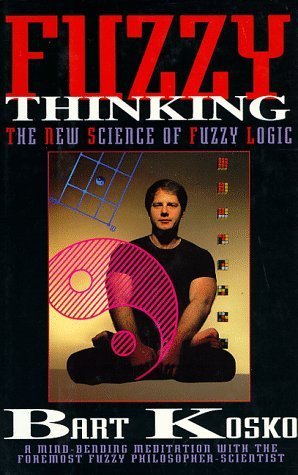
An authoritative introduction to "fuzzy logic" brings readers up to speed on the "smart" products and computers that will change all of our lives in the future.

From the well-known science commentator and bestselling author of Fuzzy Thinking comes a revelatory look at the phenomenon of noise A celebrated maverick in the world of science, Bart Kosko introduced—and continues to popularize in print and television media—the revolutionary concept of fuzzy logic. In his latest book, he provides the first scientific history of noise aimed at the general reader. Noise is a social nuisance, a cause of deafness and high blood pressure, and an all-around annoyance. But what is noise really? As Kosko simply states, “Noise is a signal that you don’t like.” It occurs at every level of the physical universe, from the big bang to blaring car alarms. Today, noise is considered the curse of the information age, but, in fact, not all noise is bad. Debunking this and many other commonly held beliefs about noise, Kosko gives readers a vivid sense of how deeply noise permeates both the world around us and within us. Along the way he covers many compelling topics, from noise’s possible role in the ice ages to noise pollution laws, the use of noise to generate synthetic speech, and Hedy Lamarr’s contribution to noisy wireless communication. The result is a vastly entertaining and illuminating scientific journey that promises to do for noise what James Gleick did for chaos—make it vital, fascinating, and relevant.

Fuzzy thinking means acknowledging that the universe is really shades of gray. This may seem like common sense, but all of our math and science and a lot of our culture is based on the black and white logic laid down by Aristotle three thousand years ago. In Fuzzy Thinking Dr. Kosko explained the scientific principle of fuzzy logic and how it led to emminently practical smart machines that now run everything from air conditioners to cars. Kosko's "The Fuzzy Future" begins where Fuzzy Thinking leaves off, demonstrating how fuzziness impacts our daily politics, art, and culture, in addition to its scientific uses. Readers will be introduced to the colorful, mind-expanding applications of fuzziness to such popular topics as: tax forms, the abortion debate (can we be a little bit pregnant?), property lines and land rights, smart missiles, neural networks, the bell curve, mind melding, cloning the works of great artists, smart drugs, cryonics, and our potential for immortality (storing our brains in microchips). The introduction lays out the basic principles of fuzzy logic so that it is not necessary to have read the previous book. Kosko's lucid text is interwoven with anecdote and real world examples.

2080. The countdown to the end of the world has begun.On an early June afternoon high up on the forested Sierra slopes of Mount Whitney, three scientists try to get to higher ground to avoid the ever bigger super-tsunamis wracking the coasts. On their perilous trek they encounter gene-enhanced teen gangs and a variety of wilderness challenges.There they also face the final fruits of their own misguided efforts to cool the earth—the world-wide geoengineering “cool earth” project that attempted to gently move the earth-moon system a little farther out from the sun.Bart Kosko’s Cool Earth is a hard-edged science-fiction thriller about the catastrophic unintended consequences of a geoengineering attempt to fix global warming.Praise for Cool Earth:'This fast and furious novel is hard near-future fiction, hard to put down' - Gregory Benford, author of Timescape, Nebula and Robert A. Heinlein Award winnerPraise for Bart Kosko:'Kosko is the quintessential scientific cyber-punk—a street-smart prophet of the information age' - Los Angeles Times Magazine'Bart Kosko is a wonderful futurist with a polymathic combination of talents' - Professor Marvin Minsky, M. I. T.'A wunderkind among the scientific elite of artificial intelligence' - The Jerusalem Report'Polymath' - WiredBest-selling author Dr. Bart Kosko is a professor of electrical engineering and law at the University of Southern California and one of the acclaimed founders of the machine-learning fields of fuzzy logic and neural networks. He holds degrees in law, philosophy, economics, mathematics, and engineering. He is an award-winning composer and a licensed attorney. He has a unique and truly interdisciplinary background that informs his prose—prose that ranges from popular fiction and op-ed essays to trade nonfiction and textbooks to journal articles in mathematical physics and nanotechnology.

William Gibson meets Tom Clancy in this brilliant and chilling cyberthriller set in the multimedia world of the near furture--where oil is running out, wars are smart, and intelligent software agents may be the only friends you can trust. In the year 2030--when the world has doubled in population and no one escape the prying eyes of the State--John Grant wants to save the Earth from its addiction to oil and get rich in the process. But the revoultionary new molecule he has patented--an astonishing advance that can split water and produce a virtually limitless supply of the cheap fuel hydrogen--has marked him as a traitor to his country. . .and as a target. Sufi mystic, genius mathematician and master terroist Hamid Tabriz wants Grant's patent and his mind. Now both goals are within Tabriz's reach, thanks to a chip he has perfected which enables him to place his own mind in another's head.An increasingly chatic world is racing toward annihilation. And John Grant will have to defend it--and himself--from a disembodied place far beyond the confines of space and time: in NANOTIME.
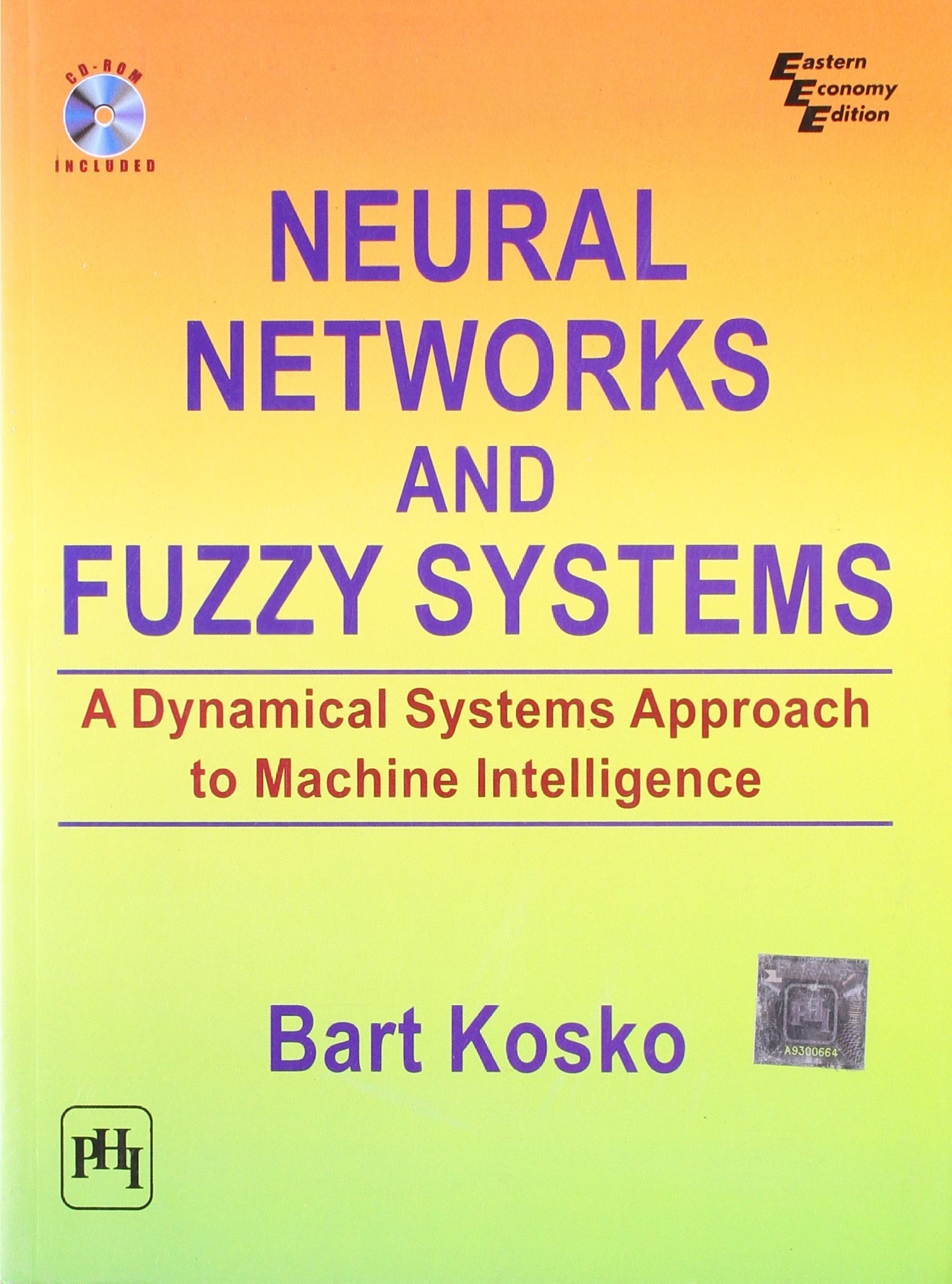
Neural Networks And Fuzzy Systems: A Dynamical Systems Approach To Machine Intelligence
by Bart Kosko
Rating: 3.5 ⭐
BOOKS
Written by one the top figure in this rapidly emerging field, this book introduces an important new framework for fuzzy systems and applies it to several engineering applications. Broad in scope, this is a must-read for anyone doing research or applications. Applications reach far beyond the usual fuzzy applications to control. Each chapter starting with a tutorial overview, presents new research results, and ends with detailed problems. Specific discussion is dedicated to fuzzy function approximation, fuzzy chaos and control, fuzzy signal processing, fuzzy communication, fuzzy hardware, computing in fuzzy cubes, and feedback in fuzzy cubes.
![Noise [First Printing]](/placeholder.svg?height=400&width=300)
Noise [First Printing]
by Bart Kosko
Neural Networks and Fuzzy Systems: A Dynamical Systems Approach to Machine Intelligence/Book and Disk [Hardcover]
by Bart Kosko
Heaven in a Chip
by Bart Kosko
Stability and Adaptation of Neural Networks
by Bart Kosko

The Fuzzy Future by Bart Kosko
by Bart Kosko

El futuro borroso (30 años)
by Bart Kosko
![INTRODUCTION TO FUZZY SET THEORY by BART KOSKO. selected papers from the Fuzzy Logic Workshop 14 November 1990 [ReImaged Loose Leaf Facsimile Edition. 2019 Printing.]](https://m.media-amazon.com/images/S/compressed.photo.goodreads.com/books/1699837609i/149894782.jpg)
PLEASE READ CAREFULLY BEFORE 191 Pages. 6 SAMPLE PROBLEMS ARE MISSING FROM THE ORIGINAL AT THE END OF THE 'FUZZINESS vs PROBABILITY CHAPTER AND, THEREFORE, THEY ARE ALSO MISSING FROM THIS EDITION. TABLE OF CONTENTS NEURAL NETWORKS AND FUZZY SYSTEMS FUZZINESS VS PROBABILITY ADAPTIVE FUZZY SYSTEMS FOR BACKING UP A TRUCK OR TRAILER PRODUCT-SPACE CLUSTERING WITH DIFFERENTIAL COMPETITIVE LEARNING ADAPTIVE FUZZY SYSTEMS FOR TARGET TRACKING. Black and White Loose Leaf Facsimile book on 24# (HEAVY) paper. UNBOUND BINDER-READY / LOOSE LEAF, BINDER-READY means that the pages are hole-punched and ready to be put in binders. PLEASE NOTE THE BINDER(S) ARE NOT INCLUDED. LOOSE LEAF UNBOUND EDITION NO BINDER.This is a re-imaged, enhanced, and restored book. 8.5x11 PD- OKDd//
Solution manual to Fuzzy engineering
by Bart Kosko

Neural Networks And Fuzzy Systems
by Bart Kosko
![6 Flute Sonatas by Johann Christoph Friedrich Bach (Six) [6 ReImaged Scores and their 6 associated Flute Parts. Loose Leaf Facsimile Edition Books. 2019 Printing.]](https://m.media-amazon.com/images/S/compressed.photo.goodreads.com/books/1699685235i/85831146.jpg)
PLEASE READ CAREFULLY BEFORE 150 total Pages. 6 Black and White Loose Leaf Facsimile books on 24# (HEAVY) paper. 6 Piano with Flute and Figured Bass Scores with accompanying Flute Parts. Flute Sonata No.1 in D major Flute Sonata No.2 in G major Flute Sonata No.3 in C major Flute Sonata No.4 in A major Flute Sonata No.5 in F major Flute Sonata No.6 in B flat major UNBOUND BINDER-READY / LOOSE LEAF, BINDER-READY means that the pages are hole-punched and ready to be put in binders. PLEASE NOTE THE BINDER(S) ARE NOT INCLUDED. LOOSE LEAF UNBOUND EDITION NO BINDER. 8.5x11- Okd
Neural Networks & Fuzzy Systems No Disk
by Bart Kosko
Foundations of Fuzzy Estimation Theory
by Bart Kosko