Loading themes...
Explore the best books about Music theme.

Nothing "goes viral." If you think a popular movie, song, or app came out of nowhere to become a word-of-mouth success in today's crowded media environment, you're missing the real story. Each blockbuster has a secret history--of power, influence, dark broadcasters, and passionate cults that turn some new products into cultural phenomena. Even the most brilliant ideas wither in obscurity if they fail to connect with the right network, and the consumers that matter most aren't the early adopters, but rather their friends, followers, and imitators--the audience of your audience.In his groundbreaking investigation, The Atlantic senior editor Derek Thompson uncovers the hidden psychology of why we like what we like and reveals the economics of cultural markets that invisibly shape our lives. Shattering the sentimental myths of hit-making that dominate pop culture and business, Thompson shows that quality is insufficient for success; nobody has "good taste"; and some of the most popular products in history were one bad break away from utter failure. It may be a new world, but there are some enduring truths to what audiences and consumers want. People love a familiar surprise: a product that is bold yet sneakily recognizable.Every business, every artist, every person looking to promote themselves and their work wants to know what makes some works so successful while others disappear. Hit Makers is a magical mystery tour through the last century of pop culture blockbusters and the most valuable currency of the twenty-first century--people's attention. From the dawn of impressionist art to the future of Facebook, from small Etsy designers to the origin of Star Wars, Thompson leaves no Pet Rock unturned to tell the fascinating story of how culture happens and why things become popular.

Somewhere in South America, at the home of the country's vice president, a lavish birthday party is being held in honor of the powerful businessman Mr. Hosokawa. Roxane Coss, opera's most revered soprano, has mesmerized the international guests with her singing. It is a perfect evening—until a band of gun-wielding terrorists takes the entire party hostage. But what begins as a panicked, life-threatening scenario slowly evolves into something quite different, a moment of great beauty, as terrorists and hostages forge unexpected bonds and people from different continents become compatriots, intimate friends, and lovers.

Leonard Cohen is one of the great writers, performers, and most consistently daring artists of our time. Book of Longing is Cohen’s eagerly awaited new collection of poems, following his highly acclaimed 1984 title, Book of Mercy , and his hugely successful 1993 publication, Stranger Music , a Globe and Mail national bestseller. Book of Longing contains erotic, playful, and provocative line drawings and artwork on every page, by the author, which interact in exciting and unexpected ways on the page with poetry that is timeless, meditative, and at times darkly humorous. The book brings together all the elements that have brought Leonard Cohen’s artistry with language worldwide recognition.

Do you know your desert-island, all-time, top five most memorable split-ups? Rob does. He keeps a list, in fact. But Laura isn't on it—even though she's just become his latest ex. He's got his life back, you see. He can just do what he wants when he wants: like listen to whatever music he likes, look up the girls that are on his list, and generally behaves as if Laura never mattered. But Rob finds he can't move on. He's stuck in a really deep groove—and it's called Laura. Soon, Rob's asking himself some big questions: about love, about life—and about why we choose to share ours with the people we do.

How Music Works is David Byrne’s remarkable and buoyant celebration of a subject he has spent a lifetime thinking about. In it he explores how profoundly music is shaped by its time and place, and he explains how the advent of recording technology in the twentieth century forever changed our relationship to playing, performing, and listening to music.Acting as historian and anthropologist, raconteur and social scientist, he searches for patterns—and shows how those patterns have affected his own work over the years with Talking Heads and his many collaborators, from Brian Eno to Caetano Veloso. Byrne sees music as part of a larger, almost Darwinian pattern of adaptations and responses to its cultural and physical context. His range is panoptic, taking us from Wagnerian opera houses to African villages, from his earliest high school reel-to-reel recordings to his latest work in a home music studio (and all the big studios in between).Touching on the joy, the physics, and even the business of making music, How Music Works is a brainy, irresistible adventure and an impassioned argument about music’s liberating, life-affirming power.

Oblique Strategies is a card-based method for promoting creativity jointly created by musician/artist Brian Eno and multimedia artist Peter Schmidt. Physically, it takes the form of a deck of 7-by-9-centimetre (2.8 in × 3.5 in) printed cards in a black box. Each card offers a challenging constraint intended to help artists (particularly musicians) break creative blocks by encouraging lateral thinking.

“Writing about yourself is a funny business…But in a project like this, the writer has made one promise, to show the reader his mind. In these pages, I’ve tried to do this.” —Bruce Springsteen, from the pages of Born to RunIn 2009, Bruce Springsteen and the E Street Band performed at the Super Bowl’s halftime show. The experience was so exhilarating that Bruce decided to write about it. That’s how this extraordinary autobiography began. Over the past seven years, Bruce Springsteen has privately devoted himself to writing the story of his life, bringing to these pages the same honesty, humor, and originality found in his songs. He describes growing up Catholic in Freehold, New Jersey, amid the poetry, danger, and darkness that fueled his imagination, leading up to the moment he refers to as “The Big Bang”: seeing Elvis Presley’s debut on The Ed Sullivan Show. He vividly recounts his relentless drive to become a musician, his early days as a bar band king in Asbury Park, and the rise of the E Street Band. With disarming candor, he also tells for the first time the story of the personal struggles that inspired his best work, and shows us why the song “Born to Run” reveals more than we previously realized. Born to Run will be revelatory for anyone who has ever enjoyed Bruce Springsteen, but this book is much more than a legendary rock star’s memoir. This is a book for workers and dreamers, parents and children, lovers and loners, artists, freaks, or anyone who has ever wanted to be baptized in the holy river of rock and roll. Rarely has a performer told his own story with such force and sweep. Like many of his songs (“Thunder Road,” “Badlands,” “Darkness on the Edge of Town,” “The River,” “Born in the U.S.A.,” “The Rising,” and “The Ghost of Tom Joad,” to name just a few), Bruce Springsteen’s autobiography is written with the lyricism of a singular songwriter and the wisdom of a man who has thought deeply about his experiences.

Dylan Jones's engrossing, magisterial biography of David Bowie is unlike any Bowie story ever written. Drawn from over 180 interviews with friends, rivals, lovers, and collaborators, some of whom have never before spoken about their relationship with Bowie, this oral history weaves a hypnotic spell as it unfolds the story of a remarkable rise to stardom and an unparalleled artistic path. Tracing Bowie's life from the English suburbs to London to New York to Los Angeles, Berlin, and beyond, its collective voices describe a man profoundly shaped by his relationship with his schizophrenic half-brother Terry; an intuitive artist who could absorb influences through intense relationships and yet drop people cold when they were no longer of use; and a social creature equally comfortable partying with John Lennon and dining with Frank Sinatra. By turns insightful and deliciously gossipy, DAVID BOWIE is as intimate a portrait as may ever be drawn. It sparks with admiration and grievances, lust and envy, as the speakers bring you into studios and bedrooms they shared with Bowie, and onto stages and film sets, opening corners of his mind and experience that transform our understanding of both artist and art. Including illuminating, never-before-seen material from Bowie himself, drawn from a series of Jones's interviews with him across two decades, DAVID BOWIE is an epic, unforgettable cocktail-party conversation about a man whose enigmatic shapeshifting and irrepressible creativity produced one of the most sprawling, fascinating lives of our time.

שום דבר בספר הזהאינו אמת ידועה.אלה הרהורים על דברים שהבחנתי בהם —לא עוּבדות, אלא מחשבות.כמה מהרעיונות עשויים לדבר אליכם,אחרים אולי לא.מעטים עשויים לעורר ידיעה פנימיתששכחתם שיש לכם.השתמשו במה שמועיל לכם.עזבו את השאר.כל אחד מהרגעים האלההוא הזמנהלבירור נוסף:הצעה להתבוננות עמוקה יותר,מרחוק, או מקרוב.פתיחת אפשרויותלהוויה חדשה.

For the first time, the full story of what happened when Frank brought his best pals to party in a land called VegasJanuary 1960. Las Vegas is at its smooth, cool peak. The Strip is a jet-age theme park, and the greatest singer in the history of American popular music summons a group of friends there to make a movie. One is an insouciant singer of Italian songs, ex-partner to the most popular film comedian of the day. One is a short, black, Jewish, one-eyed, singing, dancing wonder. One is an upper-crust British pretty boy turned degenerate B-movie star actor, brother-in-law to an ascendant politician. And one is a stiff-shouldered comic with the quintessential Borscht Belt emcee’s knack for needling one-liners. The architectonically sleek marquee of the Sands Hotel announces their presence simply by listing their FRANK SINATRA. DEAN MARTIN. SAMMY DAVIS, JR. PETER LAWFORD. JOEY BISHOP. Around them an entire cast actors, comics, singers, songwriters, gangsters, politicians, and women, as well as thousands of starstruck everyday folks who fork over pocketfuls of money for the privilege of basking in their presence. They call themselves The Clan. But to an awed world, they are known as The Rat Pack.They had it all. Fame. Gorgeous women. A fabulouse playground of a city and all the money in the world. The backing of fearsome crime lords and the blessing of the President of the United States. But the dark side–over the thin line between pleasure and debauchery, between swinging self-confidence and brutal arrogance–took its toll. In four years, their great ride was over, and showbiz was never the same.Acclaimed Jerry Lewis biographer Shawn Levy has written a dazzling portrait of a time when neon brightness cast sordid shadows. It was Frank’s World, and we just lived in it.

The fabled 1964 cross-country bus trip of Ken Kesey and the Merry Pranksters - on a psychedelically painted school bus crammed with amplifiers, cameras, costumes, and assorted contraband as cargo and Beat legend Neal Cassady at the wheelmarked the irreversible end of the "Eisenhower Era, " and set an American cultural revolution in motion. On the Bus is a celebration of the unforgettable exploits of the Merry Pranksters, immortalized in Tom Wolfe's bestselling book. In this engrossing popular history, the spirit of the era is captured in a remarkable living chronicle, combining analysis and history with colorful additional narrative by Kesey sidekick Ken Babbs. It features over 100 never-before-seen photos by Prankster photographer Ron Bevirt, Allen Ginsberg, and others, alongside candid and insightful interviews with participants and leading countercultural figures.

Copiously researched and documented, Hit Men is the highly controversial portrait of the pop music industry in all its wild, ruthless glory: the insatiable greed and ambition; the enormous egos; the fierce struggles for profits and power; the vendettas, rivalries, shakedowns, and payoffs. Chronicling the evolution of America's largest music labels from the Tin Pan Alley days to the present day, Fredric Dannen examines in depth the often venal, sometimes illegal dealings among the assorted hustlers and kingpins who rule over this multi-billion-dollar business.

Presenting twelve breakthrough practices for bringing creativity into all human endeavors, The Art of Possibility is the dynamic product of an extraordinary partnership. The Art of Possibility combines Benjamin Zander's experience as conductor of the Boston Philharmonic and his talent as a teacher and communicator with psychotherapist Rosamund Stone Zander's genius for designing innovative paradigms for personal and professional fulfillment. The authors' harmoniously interwoven perspectives provide a deep sense of the powerful role that the notion of possibility can play in every aspect of life. Through uplifting stories, parables, and personal anecdotes, the Zanders invite us to become passionate communicators, leaders, and performers whose lives radiate possibility into the world

From the moment that he first shook up the world in the mid 1950s, Elvis Presley has been one of the most vivid and enduring myths of American culture.Last Train to Memphis: The Rise of Elvis Presley is the first biography to go past that myth and present an Elvis beyond the legend. Based on hundreds of interviews and nearly a decade of research, it traces the evolution not just of the man but of the music and of the culture he left utterly transformed, creating a completely fresh portrait of Elvis and his world.This volume tracks the first twenty-four years of Elvis' life, covering his childhood, the stunning first recordings at Sun Records ("That's All Right," "Mystery Train"), and the early RCA hits ("Heartbreak Hotel," "Hound Dog," "Don't Be Cruel"). These were the years of his improbable self-invention and unprecedented triumphs, when it seemed that everything that Elvis tried succeeded wildly. There was scarcely a cloud in sight through this period until, in 1958, he was drafted into the army and his mother died shortly thereafter. The book closes on that somber and poignant note.Last Train to Memphis takes us deep inside Elvis' life, exploring his lifelong passion for music of every sort (from blues and gospel to Bing Crosby and Mario Lanza), his compelling affection for his family, and his intimate relationships with girlfriends, mentors, band members, professional associates, and friends. It shows us the loneliness, the trustfulness, the voracious appetite for experience, and above all the unshakable, almost mystical faith that Elvis had in himself and his music. Drawing frequently on Elvis' own words and on the recollections of those closest to him, the book offers an emotional, complex portrait of young Elvis Presley with a depth and dimension that for the first time allow his extraordinary accomplishments to ring true.Peter Guralnick has given us a previously unseen world, a rich panoply of people and events that illuminate an achievement, a place, and a time as never revealed before. Written with grace, humor, and affection, Last Train to Memphis has been hailed as the definitive biography of Elvis Presley. It is the first to set aside the myths and focus on Elvis' humanity in a way that has yet to be duplicated.

An exploration of musical harmony from its ancient fundamentals to its most complex modern progressions, addressing how and why it resonates emotionally and spiritually in the individual.W. A. Mathieu, an accomplished author and recording artist, presents a way of learning music that reconnects modern-day musicians with the source from which music was originally generated. As the author states, "The rules of music--including counterpoint and harmony--were not formed in our brains but in the resonance chambers of our bodies." His theory of music reconciles the ancient harmonic system of just intonation with the modern system of twelve-tone temperament. Saying that the way we think music is far from the way we do music, Mathieu explains why certain combinations of sounds are experienced by the listener as harmonious. His prose often resembles the rhythms and cadences of music itself, and his many musical examples allow readers to discover their own musical responses.

Scientists have only recently learned that the particles of an oxygen atom vibrate in a major key and that blades of grass ‘sing.” Europe’s foremost jazz producer takes the reader on an exhilarating journey through Asia, Europe, Africa, and Latin America, exploring the musical traditions of diverse cultures and reaffirming what the ancients have always known--the world is sound, rhythm, and vibration. Berendt’s book is alive with his experiences--living in Bali, studying at a Zen monastery in Kyoto, and encountering budding jazz stars in Indonesia, Japan, Europe, and the United States. Drawing from his friendships with composers and performers as well as his knowledge of new physics and Tantra, cybernetics, Sufism, and the works of Hermann Hesse, he reveals the importance of sound in shaping cultural and spiritual life worldwide. A tribute to the work of many of the greatest figures of our age--including Hans Kayser, Jean Gebser, Sufi Hazrat lnayat Khan, musicians John Coltrane and Ravi Shankar--Berendt’s book suggests that hearing, rather than seeing, is the key to a more spiritual experience of consciousness. His discussion of sound in relation to mathematics, logic, sacred geometry, myth, and sexuality is practical as well as theoretical, offering readers a variety of techniques for developing the ear as an organ of spiritual perception.

A seriously funny look at the roots of American EntertainmentWhen Groucho Marx and Charlie Chaplin were born, variety entertainment had been going on for decades in America, and like Harry Houdini, Milton Berle, Mae West, and countless others, these performers got their start on the vaudeville stage. From 1881 to 1932, vaudeville was at the heart of show business in the States. Its stars were America's first stars in the modern sense, and it utterly dominated American popular culture. Writer and modern-day vaudevillian Trav S.D. chronicles vaudeville's far-reaching impact in No Applause--Just Throw Money . He explores the many ways in which vaudeville's story is the story of show business in America and documents the rich history and cultural legacy of our country's only purely indigenous theatrical form, including its influence on everything from USO shows to Ed Sullivan to The Muppet Show and The Gong Show. More than a quaint historical curiosity, vaudeville is thriving today, and Trav S.D. pulls back the curtain on the vibrant subculture that exists across the United States--a vast grassroots network of fire-eaters, human blockheads, burlesque performers, and bad comics intent on taking vaudeville into its second century.

With innovative techniques and enjoyable exercises that have worked wonders with his professional clients, the internationally acclaimed vocal coach demonstrates how to carry a tune, expand vocal range, and speak with ease, confidence, and effectiveness. Illustrations.

The first major biography of the Carter Family, the musical pioneers who almost single-handedly created the sounds and traditions that grew into modern folk, country, and bluegrass music.Meticulously researched and lovingly written, it is a look at a world and a culture that, rather than passing, has continued to exist in the music that is the legacy of the Carters—songs that have shaped and influenced generations of artists who have followed them.Brilliant in insight and execution, Will You Miss Me When I'm Gone? is also an in-depth study of A.P., Sara, and Maybelle Carter, and their bittersweet story of love and fulfillment, sadness and loss. The result is more than just a biography of a family; it is also a journey into another time, almost another world, and theirs is a story that resonates today and lives on in the timeless music they created.

A walking bass line is the most common approach to jazz bass playing, but it is also used in rock music, blues, rockabilly, RandB, gospel, Latin, country and many other types of music. The term 'walking' is used to describe the moving feeling that quarter notes create in the bass part. The specific goal of this book is to familiarize players with the techniques used to build walking bass lines and to make them aware of how the process works. Through the use of 90-minutes' worth of recorded rhythm tracks, players will have the opportunity to put the new learning directly into action. This book literally gives bassists the tools they need to build their own walking bass lines.

“A crazy American epic” –NewsweekComplex, contentious, and blessed with the perfect-pitch ability to find the next big talent, David Geffen has shaped American popular culture and transformed the way Hollywood does business. His dazzling career has included the roles of power agent, record-industry mogul, Broadway producer, and billionaire Hollywood studio founder–but from the beginning his accomplishments have been shadowed by the ruthlessness with which he has pursued fame, money, and power. With The Operator, Tom King–who interviewed Geffen for the book and had unimpeded access to his circle of intimates–presents a mesmerizing chronicle of Geffen’s meteoric rise from the mailroom at William Morris, as well as a captivating tour of thirty sizzling years of Hollywood history. Drawing on the recollections of celebrities such as Tom Cruise, Yoko Ono, Warren Beatty, Courtney Love, Paul Simon, and even Cher (whom Geffen nearly married), The Operator transports readers to a world that is as ruthless as it is dazzling, revealing a great American story about success and the bargains made for it. “A detailed portrait of Hollywood’s premier manipulator…The Operator is as much a composite portrait of the ‘New Hollywood’ as it is of the fifty-seven-year-old partner in DreamWorks SKG.” –San Francisco Chronicle“Illuminating...[The Operator] shows how raging ambition and chutzpah are as much valued as talent–or more so–in determining success.” –Philadelphia Inquirer

'Jamaican music at last has the book it deserves' Prince Buster, from his Foreword'The first comprehensive history of every aspect of reggae (and) it could be the last that talked to those who were there at stage one...Bradley leaves no stone unturned in a coruscating rollercoaster ride through murder, major label gripes, ganja paranoia and racism, ending with Luciano hoping for a return to good songs and good singers. And if UB 40 get a mention, I missed it. Isn`t that recommendation enough for you?' Mojo'Switches between informed analysis and intoxicating aural history...With epic contributions from major players such as PrinceBuster, Horace Andy, Bunny Lee and Dennis Bovell' GQ'Fascinating...written with passion, style and gusto. This is a book many musicians would benefit from reading' Jah Wobble, Independent on Sunday'A compelling social and musical history running from Fifties soundsystem roots to contemporary dancehall...filled to the brim with anecdotes to keep the most hardened music-head happy' Face'A classic...Hilarious in places, peppered with social and historical comment in others, this is a fascinating account detailing how reggae evolved in Jamaica and became a global phenomenon' New Nation

Book by Rogan, Johnny

One of the most important books on contemporary music in the twentieth century. Here for the first time is an orderly presentation of the harmonic procedures to be found in music of the first half of the twentieth-century. The author examines the nature of intervals in various contexts, discusses the modes and other scales employed in modern music, describes the formation and uses of chords by thirds, by fourths, and by seconds, of added-note chords and polychords; he deals with different types of harmonic motion, with harmonic rhythm and dynamic sand ornamentation, with harmonic behavior in tonality, polytonality, atonality and serial composition.

Whether you load your iPod with Bach or Bono, music has a significant role in your life—even if you never realized it. Why does music evoke such powerful moods? The answers are at last be- coming clear, thanks to revolutionary neuroscience and the emerging field of evolutionary psychology. Both a cutting-edge study and a tribute to the beauty of music itself, This Is Your Brain on Music unravels a host of mysteries that affect everything from pop culture to our understanding of human nature, including: • Are our musical preferences shaped in utero? • Is there a cutoff point for acquiring new tastes in music? • What do PET scans and MRIs reveal about the brain’s response to music? • Is musical pleasure different from other kinds of pleasure?This Is Your Brain on Music explores cultures in which singing is considered an essential human function, patients who have a rare disorder that prevents them from making sense of music, and scientists studying why two people may not have the same definition of pitch. At every turn, this provocative work unlocks deep secrets about how nature and nurture forge a uniquely human obsession.

As the mother of hip-hop superstar Kanye West, Donda West has watched her son grow from a brilliant baby boy with all the intimations of fame and fortune to one of the hottest rappers on the music scene. And she has every right to be proud: She raised her son with strong moral values, teaching him right from wrong and helping him become the man he is today. In Raising Kanye, Donda not only pays homage to her famous son but reflects on all the things she learned about being his mother along the way. Featuring never-before-seen photos and compelling personal anecdotes, Donda's powerful and inspiring memoir reveals everything from the difficulties she faced as a single mother in the African-American community to her later experiences as Kanye's manager as he rose to superstardom. Speaking frankly about her son's reputation as a "Mama's Boy," and his memorable public outbursts about gay rights and President George W. Bush, Donda supports her son without exception, and here she shares the invaluable wisdom she has taken away from each experience -- passion, tolerance, patience, and above all, always telling the truth. Ultimately, she not only expresses what her famously talented son has meant to her but what he has meant to music and an entire generation.

From the bestselling social commentator and cultural historian, a fascinating exploration of one of humanity's oldest the celebration of communal joyIn the acclaimed Blood Rites , Barbara Ehrenreich delved into the origins of our species' attraction to war. Here, she explores the opposite impulse, one that has been so effectively suppressed that we lack even a term for the desire for collective joy, historically expressed in ecstatic revels of feasting, costuming, and dancing.Ehrenreich uncovers the origins of communal celebration in human biology and culture. Although sixteenth-century Europeans viewed mass festivities as foreign and "savage," Ehrenreich shows that they were indigenous to the West, from the ancient Greeks' worship of Dionysus to the medieval practice of Christianity as a "danced religion." Ultimately, church officials drove the festivities into the streets, the prelude to widespread Protestants criminalized carnival, Wahhabist Muslims battled ecstatic Sufism, European colonizers wiped out native dance rites. The elites' fear that such gatherings would undermine social hierarchies was the festive tradition inspired French revolutionary crowds and uprisings from the Caribbean to the American plains. Yet outbreaks of group revelry persist, as Ehrenreich shows, pointing to the 1960s rock-and-roll rebellion and the more recent "carnivalization" of sports.Original, exhilarating, and deeply optimistic, Dancing in the Streets concludes that we are innately social beings, impelled to share our joy and therefore able to envision, even create, a more peaceable future.

James Baldwin used to tell Nina Simone, “This is the world you have made for yourself, now you have to live in it.” Simone has created for herself a world of magnificent peaks. Often compared to Billie Holiday and Edith Piaf, Simone is known as one of the greatest singers of her generation. She has recorded forty-three albums, ranging from blues to jazz to folk, and her hits like “I Loves You, Porgy,” “My Baby Just Cares for Me,” “I Put a Spell on You,” and “Mississippi Goddam” have confirmed her as an enduring force in popular music. Her song “Young, Gifted, and Black” became the anthem for the Civil Rights Movement and thrust her beyond international stardom into the center of activism. But such worlds as Simone’s are not without their grim valleys: disastrous marriages, arrest and the threat of imprisonment, mental breakdown, poverty, and attempted suicide. She has survived these trials and continues to perform throughout Europe and the United States. With undiminished passion and in her unconquerable voice, this is Nina Simone’s powerful memoir of her tempestuous life.

The first two volumes chronicling the unique art and design of Roger Dean met with huge critical and popular success. Views (1975) went straight to number one in the Sunday Times bestseller list and went on to sell over a million copies. Magnetic Storm (1984) sold over 650,000 copies. These new editions, reworked to accompany the publication of the third book in the trilogy, Dragon's Dream, showcase the instantly recognizable work of Roger Dean.Views showcases the first seven years of Roger Dean's work after his graduation from the Royal College of Art in 1968. It includes paintings and graphics; branding such as the Yes typography and the first Virgin Records logo; groundbreaking stage sets; and album art including iconic early Yes covers such as the award-winning Tales From Topographic Oceans. The new edition streamlines the original square format and retains the combination of concept sketches and brilliantly displayed finished work. Featuring a new foreword, revised typography, and graphic openers and identifying icons, Views showcases and celebrates the art that defined an era.

How do you land a sweet six-figure marketing gig at the hallowed record label known for having signed everyone from Led Zeppelin to Stone Temple Pilots? You start with a resume like Dan Kennedy' * Dressed up as a member of Kiss every Halloween * Memorized Led Zeppelin Iv at age ten * Fronted a lip-sync band in junior high * Worked as a college Dj while he was a college drop-out In his outrageous memoir, McSweeney's contributor Kennedy chronicles his misadventures at a major record label. Whether he's directing a gangsta rapper's commercial or battling his punk roots to create an ad campaign celebrating the love songs of Phil Collins, Kennedy's in way over his head. And from the looks of those sitting around the boardroom, he's not alone. Egomaniacs, wackos, incompetents, and executive assistants who know more than their seven-figure bosses round out this power-ballad to office life and rock and roll.

A troubling satire of the romantic myth of stardom and the empty heart of rock and roll, more relevant than ever in our celebrity-obsessed times.Bucky Wunderlick is a rock and roll star. Dissatisfied with a life that has brought fame and fortune, he suddenly decides he no longer wants to be a commodity. He leaves his band mid-tour and holes up in a dingy, unfurnished apartment in Great Jones Street. Unfortunately, his disappearing act only succeeds in inflaming interest. As faithful fans await messages, Bucky encounters every sort of roiling force he is trying to escape.DeLillo’s third novel is more than a musical satire: it probes the rights of the individual, foreshadows the struggle of the artist within a capitalist world and delivers a scathing portrait of our culture’s obsession with the lives of the few.

A Time Out and Daily News Top Ten Book of the Year upon its initial release, Please Kill Me is the first oral history of the most nihilist of all pop movements. Iggy Pop, Danny Fields, Dee Dee and Joey Ramone, Malcom McLaren, Jim Carroll, and scores of other famous and infamous punk figures lend their voices to this definitive account of that outrageous, explosive era. From its origins in the twilight years of Andy Warhol's New York reign to its last gasps as eighties corporate rock, the phenomenon known as punk is scrutinized, eulogized, and idealized by the people who were there and who made it happen.

An iconic figure of the 1960s and ’70s, Pattie Boyd breaks a forty-year silence in Wonderful Tonight , and tells the story of how she found herself bound to two of the most addictive, promiscuous musical geniuses of the twentieth century and became the most famous muse in the history of rock and roll.She met the Beatles in 1964 when she was cast as a schoolgirl in A Hard Day’s Night . Ten days later a smitten George Harrison proposed. For twenty-year-old Pattie Boyd, it was the beginning of an unimaginably rich and complex life as she was welcomed into the Beatles inner circle—a circle that included Mick Jagger, Ron Wood, Jeff Beck, and a veritable who’s who of rock musicians. She describes the dynamics of the group, the friendships, the tensions, the musicmaking, and the weird and wonderful memories she has of Paul and Linda, Cynthia and John, Ringo and Maureen, and especially the years with her husband, George.It was a sweet, turbulent life, but one that would take an unexpected turn, starting with a simple note that began “dearest l.”I read it quickly and assumed that it was from some weirdo; I did get fan mail from time to time.... I thought no more about it until that evening when the phone rang. It was Eric [Clapton]. “Did you get my letter?”... And then the penny dropped. “Was that from you?” I said....It was the most passionate letter anyone had ever written me.For the first time Pattie Boyd, former wife of both George Harrison and Eric Clapton, a high-profile model whose face epitomized the swinging London scene of the 1960s, a woman who inspired Harrison’s song “Something” and Clapton’s anthem “Layla,” has decided to write a book that is rich and raw, funny and heartbreaking—and totally honest and open and breathtaking. Here is the truth, here is what happened, here is the story you’ve been waiting for.

Kitty Vandervane, the wife of a philandering orchestra conductor, asks Douglas Yandell, a music writer and family friend, to find out who is the current flame

This book is about the inner sources of spontaneous creation. It is about where art in the widest sense comes from. It is about why we create and what we learn when we do. It is about the flow of unhindered creative energy: the joy of making art in all its varied forms. Free Play is directed toward people in any field who want to contact, honor, and strengthen their own creative powers. It integrates material from a wide variety of sources among the arts, sciences, and spiritual traditions of humanity. Filled with unusual quotes, amusing and illuminating anecdotes, and original metaphors, it reveals how inspiration arises within us, how that inspiration may be blocked, derailed or obscured by certain unavoidable facts of life, and how finally it can be liberated - how we can be liberated - to speak or sing, write or paint, dance or play, with our own authentic voice. The whole enterprise of improvisation in life and art, of recovering free play and awakening creativity, is about being true to ourselves and our visions. It brings us into direct, active contact with boundless creative energies that we may not even know we had.

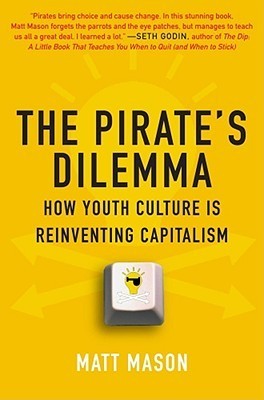
Draws on the insights of an iPod music fan and an IT guru to counsel readers on the social and technological relevance of today's interface between pop culture and innovation, in an account that charts the rise of various youth movements, from pirate radio to remix culture, to track their broader influence on society. 35,000 first printing.

In 1886 a shy, middle-aged piano tuner named Edgar Drake receives an unusual commission from the British War Office to travel to the remote jungles of northeast Burma and there repair a rare piano belonging to an eccentric army surgeon who has proven mysteriously indispensable to the imperial design. From this irresistible beginning, The Piano Tuner launches readers into a world of seductive, vibrantly rendered characters, and enmeshes them in an unbreakable spell of storytelling.

Bringing to life the fabulous, colorful panorama of New Orleans in the first flush of the jazz era, this book tells the story of Buddy Bolden, the first of the great trumpet players--some say the originator of jazz--who was, in any case, the genius, the guiding spirit, and the king of that time and place.In this fictionalized meditation, Bolden, an unrecorded father of Jazz, remains throughout a tantalizingly ungraspable phantom, the central mysteries of his life, his art, and his madness remaining felt but never quite pinned down. Ondaatje's prose is at times startlingly lyrical, and as he chases Bolden through documents and scenes, the novel partakes of the very best sort of modern detective novel--one where the enigma is never resolved, but allowed to manifest in its fullness. Though more 'experimental' in form than either The English Patient or In the Skin of a Lion , it is a fitting addition to the renowned Ondaatje oeuvre .

First published in 1943, this autobiography is also a superb portrait of America's Depression years, by the folk singer, activist, and man who saw it all.Woody Guthrie was born in Oklahoma and traveled this whole country over—not by jet or motorcycle, but by boxcar, thumb, and foot. During the journey of discovery that was his life, he composed and sang words and music that have become a national heritage. His songs, however, are but part of his legacy. Behind him Woody Guthrie left a remarkable autobiography that vividly brings to life both his vibrant personality and a vision of America we cannot afford to let die.

Argues that future generations are being harmed by a restrictive copyright system that protects corporate interests, in a report that calls for an end of the practice of criminalizing artists who build on the creative works of others and for implementing a collaborative and profitable "hybrid economy" that protects both creative and ethical needs. 30,000 first printing.

Thomas Mann's last great novel, first published in 1947 and now rendered into English by acclaimed translator John E. Woods, is a modern reworking of the Faust legend, in which Germany sells its soul to the Devil. Mann's protagonist, the composer Adrian Leverkühn, is the flower of German culture, a brilliant, isolated, overreaching figure, his radical new music a breakneck game played by art at the very edge of impossibility. In return for twenty-four years of unparalleled musical accomplishment, he bargains away his soul - and the ability to love his fellow man.Leverkühn's life story is a brilliant allegory of the rise of the Third Reich, of Germany's renunciation of its own humanity and its embrace of ambition and its nihilism. It is also Mann's most profound meditation on the German genius - both national and individual - and the terrible responsibilities of the truly great artist.

This book should be seen as a method to help the artist to develop his or her own way when trying to improvise chromatically. Through the concepts and examples offered, the improvisor should be able to use this material alongside already familiar tonal ideas. Specifically, the book serves as a guide for organizing chromaticism into a coherent musical statement meant to satisfy both the intellectual and emotional needs of artistic creation. The reader will be introduced to more than one way of conceiving chromatic lines and harmonies. There is nothing theoretically complex or new in the text, it is the organization of the material as well as many musical examples and transcriptions (Bach, Scriabin, Coltrane, Shorter, Hancock, Beirach, Liebman a.o.) which should serve to inspire musicians to expand their usual diatonic vocabulary. This book also provides insight into the style of playing that David Liebman is known for. In addition the book contains 100 assorted solo lines and 100 chord voicings. More from David Liebman at his homepage.

“An excellent read.” — St. Petersburg Times “An often hilarious, always candid and astutely observed memoir chronicling a life observed, largely, from the vantage point of a drum throne.” — Buffalo News Rock legend Stewart Copeland, drummer for seminal pop trio The Police, shares his stories from before, during, and after his days with Sting and Andy Summers, in one of the most popular and influential bands of the eighties. Strange Things Happen indeed.

A conductor reveals powerful leadership lessons by explaining the inner workings of a symphony orchestraRoger Nierenberg, a veteran conductor, is the creator of The Music Paradigm, a unique program that invites people to sit INSIDE a professional symphony orchestra as the musicians and conductor solve problems together.He captures that experience in A Surprising Story about Leading by Listening , a parable about a rising executive tough challenges. The narrator befriends an orchestra conductor and is inspired to think about leadership and communication in an entirely new way.For • A maestro doesn't micromanage, but encourages others to develop their own solutions. There's a big difference between conducting and trying to play all the instruments.• A maestro helps people feel ownership of the whole piece, not just their individual parts.• A maestro leads by listening. When people sense genuine open-mindedness, they offer more of their talent. If not, they get defensive and hold back their best ideas.• Truly great leaders, whether conductors striving for perfect harmony or CEOs reaching for excellence, act with a vision of their organization at its best.For more information, www.MaestroBook.com

Piper is a seventeen-year-old high school senior, and she's just been challenged to get her school's super-popular rock band, Dumb, a paying gig. The catch? Piper is deaf. Can she manage a band with five wildly different musicians, nurture a budding romance, and discover her own inner rock star, though she can't hear Dumb's music?"Complex characterizations, authentic dialogue and realistic ups-and-downs give this title chart-topping potential." - Kirkus Reviews , starred review"I loved it and laughed out loud. Hilarious and so smart. Dumb proves that everyone, no matter what, deserves to be heard." - Catherine Gilbert Murdock, author of Dairy Queen

Some people think Jay-Z is just another rapper. Others see him as just another celebrity/mega-star. The reality is, no matter what you think Jay-Z is, he first and foremost a business. And as much as Martha Stewart or Oprah, he has turned himself into a lifestyle. You can wake up to the local radio station playing Jay-Z's latest hit, spritz yourself with his 9IX cologne, slip on a pair of his Rocawear jeans, lace up your Reebok S. Carter sneakers, catch a Nets basketball game in the afternoon, and grab dinner at The Spotted Pig before heading to an evening performance of the Jay-Z-backed Broadway musical Fela! and a nightcap at his 40/40 Club. He'll profit at every turn of your day. But despite Jay-Z's success, there are still many Americans whose impressions of him are foggy, outdated, or downright incorrect. Surprisingly to many, he honed his business philosophy not at a fancy B school, but on the streets of Brooklyn, New York and beyond as a drug dealer in the 1980s. Empire State of Mind tells the story behind Jay-Z's rise to the top as told by the people who lived it with him- from classmates at Brooklyn's George Westinghouse High School; to the childhood friend who got him into the drug trade; to the DJ who convinced him to stop dealing and focus on music. This book explains just how Jay-Z propelled himself from the bleak streets of Brooklyn to the heights of the business world. Zack O'Malley Greenburg draws on his one-on-one interviews with hip-hop luminaries such as DJ Clark Kent, Questlove of The Roots, Damon Dash, Fred "Fab 5 Freddy" Brathwaite, MC Serch; NBA stars Jamal Crawford and Sebastian Telfair; and recording industry executives including Craig Kallman, CEO of Atlantic Records. He also includes new information on Jay-Z's various business dealings, such as: * The feature movie about Jay-Z and his first basketball team that was filmed by Fab 5 Freddy in 2003 but never released. * The Jay-Z branded Jeep that was scrapped just before going into production. * The real story behind his association with Armand de Brignac champagne. * The financial ramifications of his marriage to Beyonce. Jay-Z's tale is compelling not just because of his celebrity, but because it embodies the rags-to-riches American dream and is a model for any entrepreneur looking to build a commercial empire.

With the Rolling Stones, Keith Richards created the riffs, the lyrics and the songs that roused the world, and over four decades he lived the original rock and roll taking the chances he wanted, speaking his mind, and making it all work in a way that no one before him had ever done. Now, at last, the man himself tells us the story of life in the crossfire hurricane. And what a life. Listening obsessively to Chuck Berry and Muddy Waters records as a child in post-war Kent. Learning guitar and forming a band with Mick Jagger and Brian Jones. The Rolling Stones' first fame and success as a bad-boy band. The notorious Redlands drug bust and subsequent series of confrontations with a nervous establishment that led to his enduring image as outlaw and folk hero. Creating immortal riffs such as the ones in 'Jumping Jack Flash' and 'Street Fighting Man' and 'Honky Tonk Women'. Falling in love with Anita Pallenberg and the death of Brian Jones. Tax exile in France, wildfire tours of the US, 'Exile on Main Street' and 'Some Girls'. Ever increasing fame, isolation and addiction. Falling in love with Patti Hansen. Estrangement from Mick Jagger and subsequent reconciliation. Solo albums and performances with his band the Xpensive Winos. Marriage, family and the road that goes on for ever. In a voice that is uniquely and intimately his own, with the disarming honesty that has always been his trademark, Keith Richards brings us the essential life story of our times.

From the National Book Award nominated author of Innocents and Others and Wayward , “a smart, subtle, moving story about the complicated business of knowing the people you love” ( Book Forum ).In the sibling relationship, “there are no first impressions, no seductions, no getting to know each other,” says Denise Kranis. For Denise and her brother, Nik, now in their forties, no relationship is more significant. They grew up in Los Angeles in the late seventies and early eighties. Nik was always the artist, always wrote music, always had a band. Now he makes his art in private, obsessively documenting the work but never testing it in the world. Denise remains Nik’s most passionate and acute audience; she is also the crucial support for Nik and for their aging mother, whose dementia seems to threaten her own memory. When Denise’s daughter, Ada, decides to make a film about Nik, everyone’s vulnerabilities escalate.In Stone Arabia, Dana Spiotta “explores the inner workings of celebrity, family, and other modern-day mythologies” ( Vogue ) .

The second volume of Sondheim's collected lyrics is b oth a remarkable glimpse into the brilliant mind of a legend, and a continuation of the acclaimed and best-selling Finishing the Hat. Picking up where he left off in Finishing the Hat, Sondheim gives us all the lyrics, along with excluded songs and early drafts, of the Pulitzer Prize–winning Sunday in the Park with George, Into the Woods, Assassins and Passion. Here, too, is an in-depth look at the evolution of Wise Guys, which subsequently was transformed into Bounce and eventually became Road Show. Sondheim takes us through his contributions to both television and film, some of which may surprise you, and covers plenty of never-before-seen material from unproduced projects as well. There are abundant anecdotes about his many collaborations, and readers are treated to rare personal material in this volume, as Sondheim includes songs culled from commissions, parodies and personal special occasions—such as a hilarious song for Leonard Bernstein’s seventieth birthday. As he did in the previous volume, Sondheim richly annotates his lyrics with invaluable advice on songwriting, discussions of theater history and the state of the industry today, and exacting dissections of his work, both the successes and the failures. Filled with even more behind-the-scenes photographs and illustrations from Sondheim’s original manuscripts, Look, I Made a Hat is fascinating, devourable and essential reading for any fan of the theater or this great man’s work.

In this book of original, behind-the-scenes photographs, acclaimed photographer Terry Richardson follows superstar Lady Gaga during one year of her life, from Lollapalooza through the final show of her Monster Ball tour. During the time period he followed Gaga, Richardson took over 100,000 images and attended more than 30 Monster Ball dates around the world. From the 2010 MTV Video Music Awards to the Don't Ask, Don't Tell repeal rally in Portland, Maine, to the Thierry Mugler show at Maxime, Paris, Richardson captures Lady Gaga as you've never seen her before. A year-long global odyssey- -all access, nothing off limits--this is the book Lady Gaga fans have been waiting for.

From one of the most provocative entrepreneurs of our time, Marc Ecko reveals his formula for building an authentic brand or business in a compelling how-to guide that’s perfect to “educate the next generation of dreamers” ( Kirkus Reviews ).As instructive as it is innovative, Unlabel empowers you to channel your creativity, find the courage to defy convention, and summon the confidence to act and compete in any environment.This visual blueprint teaches you how to grow both creatively and commercially by testing your personal brand against the principles of the Authenticity Formula.Marc Ecko shares the bruising mistakes and remarkable triumphs that reveal the truth behind his success, growing from a misfit kid airbrushing T-shirts in his parents’ garage to the bold creator of two hugely successful branded platforms—Ecko Unltd. and Complex Media. As Ecko explains, it’s not enough to simply merge your inner artist with business savvy, you must understand the anatomy of a brand, starting with its authentic spine.With Unlabel , you will discover your own voice by overcoming fear, take action and deliver on your promises, understand why failure is essential, learn how your product or service makes people feel, and recognize if your nostalgia for the past is hampering your ability to envision your future.Unlabel provides a bold and honest approach to building an authentic personal brand, and a roadmap for growing a bootstrap start-up into a sustainable business.

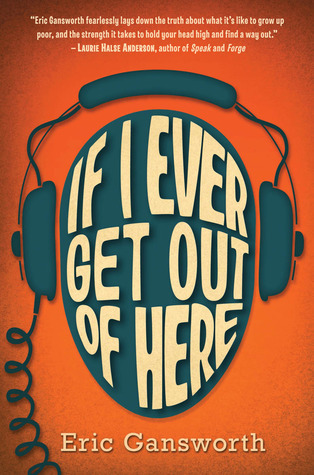
Lewis "Shoe" Blake is used to the joys and difficulties of life on the Tuscarora Indian reservation in 1975: the joking, the Fireball games, the snow blowing through his roof. What he's not used to is white people being nice to him -- people like George Haddonfield, whose family recently moved to town with the Air Force. As the boys connect through their mutual passion for music, especially the Beatles, Lewis has to lie more and more to hide the reality of his family's poverty from George. He also has to deal with the vicious Evan Reininger, who makes Lewis the special target of his wrath. But when everyone else is on Evan's side, how can he be defeated? And if George finds out the truth about Lewis's home -- will he still be his friend?Acclaimed adult author Eric Gansworth makes his YA debut with this wry and powerful novel about friendship, memory, and the joy of rock 'n' roll.

More than a quarter-century after his death, Bob Fosse’s fingerprints on popular culture remain indelible. The only person ever to win Oscar, Emmy, and Tony awards in the same year, Fosse revolutionized nearly every facet of American entertainment, forever marking Broadway and Hollywood with his iconic style — hat tilted, fingers splayed — that would influence generations of performing artists. Yet in spite of Fosse’s innumerable achievements, no accomplishment ever seemed to satisfy him, and offstage his life was shadowed in turmoil and anxiety.Now, bestselling author Sam Wasson unveils the man behind the swaggering sex appeal, tracing Fosse’s untold reinventions of himself over a career that would spawn The Pajama Game , Cabaret , Pippin , All That Jazz , and Chicago , one of the longest-running Broadway musicals ever. Drawing on a wealth of unpublished material and hundreds of sources — friends, enemies, lovers, and collaborators, many of whom have never spoken publicly about Fosse before — Wasson illuminates not only Fosse’s prodigious professional life, but also his close and conflicted relationships with everyone from Liza Minnelli to Ann Reinking to Jessica Lange and Dustin Hoffman. Wasson also uncovers the deep wounds that propelled Fosse’s insatiable appetites — for spotlights, women, and life itself. In this sweeping, richly detailed account, Wasson’s stylish, effervescent prose proves the ideal vehicle for revealing Bob Fosse as he truly was — after hours, close up, and in vibrant color.

A blend of This Is Spinal Tap and Fear and Loathing in Las Vegas, the cult classic confessions of a debauched rock 'n' roller and his adventures in excess on the '80s hair-metal nostalgia tour through Middle America-available again, and now revised and updated Once upon a time at the start of the new century, the unheard-of Unband got a chance to drink, fight, and play loud music with '80s metal bands like Dio and Def Leppard. To the mix they brought illegal pyrotechnics, a giant red inflatable hand with movable digits, a roadie dubiously named Safety Bear, a high tolerance for liver damage, and an infectious love of rock & roll and everything it represents.Unband bassist Michael Ruffino takes us on an epic joyride across a surrealistic American landscape where we meet mute Christian groupies, crack-smoking Girl Scouts, beer-drinking chimps, and thousands of head-bangers who cannot accept that hair metal is dead. Here, too, are uncensored portraits of Ronnie James Dio, Anthrax, Sebastian Bach, Lemmy of Motorhead, and others.Adios, Motherfucker is gonzo rock storytelling at its finest-excessive, incendiary, intelligent, hilarious, and utterly original.

This "comprehensive and illuminating" biography of the Queen of Soul ( USA Today ) was hailed by Rolling Stone as "a remarkably complex portrait of Aretha Franklin's music and her tumultuous life." Aretha Franklin began life as the golden daughter of a progressive and promiscuous Baptist preacher. Raised without her mother, she was a gospel prodigy who gave birth to two sons in her teens and left them and her native Detroit for New York, where she struggled to find her true voice. It was not until 1967, when a white Jewish producer insisted she return to her gospel-soul roots, that fame and fortune finally came via "Respect" and a rapidfire string of hits. She continued to evolve for decades, amidst personal tragedy, surprise Grammy performances, and career reinventions.Again and again, Aretha stubbornly found a way to triumph over troubles, even as they continued to build. Her hold on the crown was tenacious, and in Respect , David Ritz gives us the definitive life of one of the greatest talents in all American culture.

Soon to be a Paramount+ documentary series, narrated by Method Man and produced by Marshall Mathers, LeBron James, and moreOne of Billboard’s 100 Greatest Music Books of All TimeFinalist for the Los Angeles Times Book Prize, the J. Anthony Lukas Book Prize, and the Financial Times and McKinsey Business Book of the YearA New York Times Editors’ ChoiceONE OF THE YEAR'S BEST The Washington Post • The Financial Times • Slate • The Atlantic • Time • Forbes“[How Music Got Free] has the clear writing and brisk reportorial acumen of a Michael Lewis book.”—Dwight Garner, The New York TimesWhat happens when an entire generation commits the same crime?How Music Got Free is a riveting story of obsession, music, crime, and money, featuring visionaries and criminals, moguls and tech-savvy teenagers. It’s about the greatest pirate in history, the most powerful executive in the music business, a revolutionary invention and an illegal website four times the size of the iTunes Music Store. Journalist Stephen Witt traces the secret history of digital music piracy, from the German audio engineers who invented the mp3, to a North Carolina compact-disc manufacturing plant where factory worker Dell Glover leaked nearly two thousand albums over the course of a decade, to the high-rises of midtown Manhattan where music executive Doug Morris cornered the global market on rap, and, finally, into the darkest recesses of the Internet.Through these interwoven narratives, Witt has written a thrilling book that depicts the moment in history when ordinary life became forever entwined with the world online—when, suddenly, all the music ever recorded was available for free. In the page-turning tradition of writers like Michael Lewis and Lawrence Wright, Witt’s deeply reported first book introduces the unforgettable characters—inventors, executives, factory workers, and smugglers—who revolutionized an entire artform, and reveals for the first time the secret underworld of media pirates that transformed our digital lives.An irresistible never-before-told story of greed, cunning, genius, and deceit, How Music Got Free isn’t just a story of the music industry—it’s a must-read history of the Internet itself.

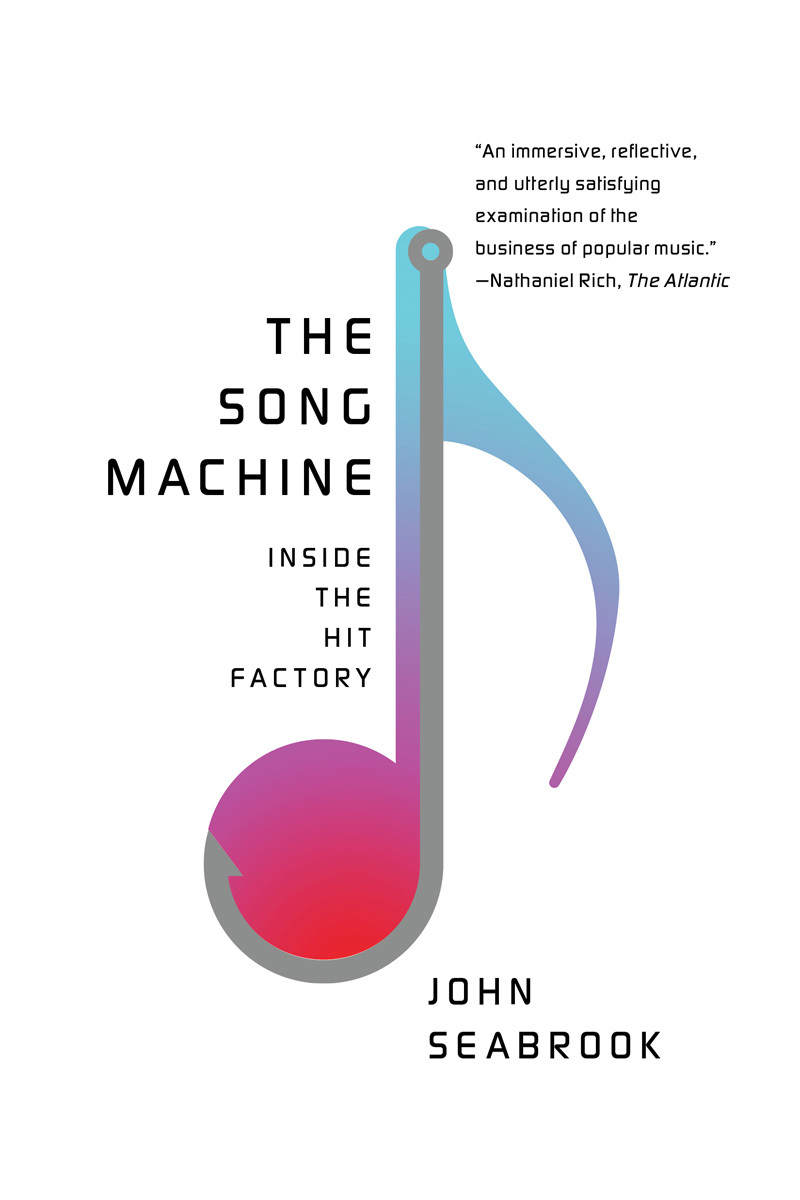
"An utterly satisfying examination of the business of popular music." ―Nathaniel Rich, The Atlantic There’s a reason today’s ubiquitous pop hits are so hard to ignore―they’re designed that way. The Song Machine goes behind the scenes to offer an insider’s look at the global hit factories manufacturing the songs that have everyone hooked. Full of vivid, unexpected characters―alongside industry heavy-hitters like Katy Perry, Rihanna, Max Martin, and Ester Dean―this fascinating journey into the strange world of pop music reveals how a new approach to crafting smash hits is transforming marketing, technology, and even listeners’ brains. You’ll never think about music the same way again. A Wall Street Journal Best Business Book

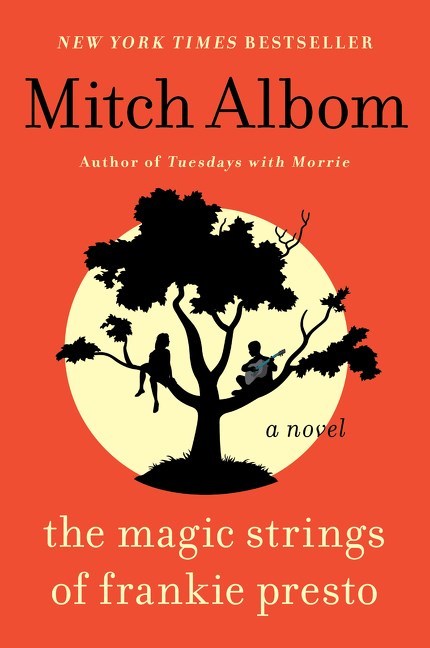
Mitch Albom creates a magical world through his love of music in this remarkable new novel about the power of talent to change our livesThis is the epic story of Frankie Presto—the greatest guitar player who ever lived—and the six lives he changed with his six magical blue stringsFrankie, born in a burning church, abandoned as an infant, and raised by a music teacher in a small Spanish town, until war rips his life apart. At nine years old, he is sent to America in the bottom of a boat. His only possession is an old guitar and six precious strings. His amazing journey weaves him through the musical landscape of the 1940s, ’50s and ’60s, with his stunning playing and singing talent affecting numerous stars (Duke Ellington, Hank Williams, Elvis Presley) until, as if predestined, he becomes a pop star himself.He makes records. He is adored. But Frankie Presto’s gift is also his burden, as he realizes the power of the strings his teacher gave him, and how, through his music, he can actually affect people’s lives. At the height of his popularity, tortured by his biggest mistake, he vanishes. His legend grows. Only decades later, having finally healed his heart, does Frankie reappearjust before his spectacular death—to change one last life. With the Spirit of Music as our guide, we glimpse into the lives that were changed by one man whose strings could touch the music—and the magic—in each of us.

From a leader of feminist punk music at the dawn of the riot-grrrl era, a candid and deeply personal look at life in rock and roll. Before Carrie Brownstein codeveloped and starred in the wildly popular TV comedy Portlandia, she was already an icon to young women for her role as a musician in the feminist punk band Sleater-Kinney. The band was a key part of the early riot- grrrl and indie rock scenes in the Pacific Northwest, known for their prodigious guitar shredding and their leftist lyrics against war, traditionalism, and gender roles.Hunger Makes Me a Modern Girl is the deeply personal and revealing narrative of Brownstein's life in music, from ardent fan to pioneering female guitarist to comedic performer and luminary in the independent rock world. Though Brownstein struggled against the music industry's sexist double standards, by 2006 she was the only woman to earn a spot on Rolling Stone readers' list of the "25 Most Underrated Guitarists of All-Time." This book intimately captures what it feels like to be a young woman in a rock-and-roll band, from her days at the dawn of the underground feminist punk-rock movement that would define music and pop culture in the 1990s through today.

An intriguing oral history of the post-9/11 decline of the old-guard music industry and rebirth of the New York rock scene, led by a group of iconoclastic rock bands.In the second half of the twentieth-century New York was the source of new sounds, including the Greenwich Village folk scene, punk and new wave, and hip-hop. But as the end of the millennium neared, cutting-edge bands began emerging from Seattle, Austin, and London, pushing New York further from the epicenter. The behemoth music industry, too, found itself in free fall, under siege from technology. Then 9/11/2001 plunged the country into a state of uncertainty and war—and a dozen New York City bands that had been honing their sound and style in relative obscurity suddenly became symbols of glamour for a young, web-savvy, forward-looking generation in need of an anthem.Meet Me in the Bathroom charts the transformation of the New York music scene in the first decade of the 2000s, the bands behind it—including The Strokes, The Yeah Yeah Yeahs, LCD Soundsystem, Interpol, and Vampire Weekend—and the cultural forces that shaped it, from the Internet to a booming real estate market that forced artists out of the Lower East Side to Williamsburg. Drawing on 200 original interviews with James Murphy, Julian Casablancas, Karen O, Ezra Koenig, and many others musicians, artists, journalists, bloggers, photographers, managers, music executives, groupies, models, movie stars, and DJs who lived through this explosive time, journalist Lizzy Goodman offers a fascinating portrait of a time and a place that gave birth to a new era in modern rock-and-roll.

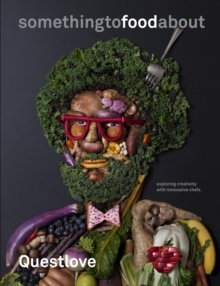
Questlove is a drummer, producer, musical director, culinary entrepreneur, and New York Times best-selling author. What unites all of his work is a profound interest in creativity. In somethingtofoodabout, Questlove applies his boundless curiosity to the world of food. In conversations with ten innovative chefs in America, he explores what makes their creativity tick, how they see the world through their cooking and how their cooking teaches them to see the world. The conversations begin with food but they end wherever food takes them. Food is fuel. Food is culture. Food is history. And food is food for thought. Featuring conversations Nathan Myhrvold, Modernist Cuisine Lab, Seattle; Daniel Humm, Eleven Madison Park, and NoMad, NYC; Michael Solomonov, Zahav, Philadelphia; Ludo Lefebvre, Trois Mec, L.A.; Dave Beran, Next, Chicago; Donald Link, Cochon, New Orleans; Dominque Crenn, Atelier Crenn, San Francisco; Daniel Patterson, Coi and Loco'l, San Francisco; Jesse Griffiths, Dai Due, Austin; and Ryan Roadhouse, Nodoguro, PortlandFrom the Hardcover edition.

More than fifty years ago, John Coltrane drew the twelve musical notes in a circle and connected them by straight lines, forming a five-pointed star. Inspired by Einstein, Coltrane put physics and geometry at the core of his music. Physicist and jazz musician Stephon Alexander follows suit, using jazz to answer physics' most vexing questions about the past and future of the universe. Following the great minds that first drew the links between music and physics-a list including Pythagoras, Kepler, Newton, Einstein, and Rakim-The Jazz of Physics reveals that the ancient poetic idea of the Music of the Spheres," taken seriously, clarifies confounding issues in physics. The Jazz of Physics will fascinate and inspire anyone interested in the mysteries of our universe, music, and life itself.

**One of Amazon's Best Books of 2016: Top 100 Editors' Picks**A rollicking look at 1971, rock’s golden year, the year that saw the release of the indelible recordings of Led Zeppelin, David Bowie, the Who, Rod Stewart, Carole King, the Rolling Stones, and others and produced more classics than any other year in rock historyThe Sixties ended a year late. On New Year’s Eve 1970 Paul McCartney instructed his lawyers to issue the writ at the High Court in London that effectively ended the Beatles. You might say this was the last day of the pop era.1971 started the following day and with it the rock era. The new releases of that hectic year―Don McLean’s “American Pie,” Sly Stone’s “Family Affair,” Marvin Gaye’s “What’s Going On,” Joni Mitchell’s “Blue,” Led Zeppelin’s “Stairway To Heaven,” the Who’s “Baba O’Riley,” and many others―are the standards of today.David Hepworth was twenty-one in 1971, and has been writing and broadcasting about music ever since. In this entertaining and provocative book, he argues that 1971 saw an unrepeatable surge of musical creativity, technological innovation, naked ambition and outrageous good fortune that combined to produce music that still crackles with relevance today. There’s a story behind every note of that music. From the electric blue fur coat David Bowie wore when he first arrived in America in February to Bianca’s neckline when she married Mick Jagger in Saint-Tropez in May, from the death of Jim Morrison in Paris in July to the re-emergence of Bob Dylan at Madison Square Garden in August, from the soft launch of Carole King’s “Tapestry” in California in February to the sensational arrival of Led Zeppelin’s “Stairway To Heaven” in London in November, Hepworth’s forensic sweep takes in all the people, places and events that helped make 1971 rock’s unrepeatable year.

Harley Flanagan provides a fascinating a child prodigy and family friend of Andy Warhol and Allen Ginsberg, at a young age he became close to many stars of the early punk rock scene like Joe Strummer of The Clash and was taught to play bass by members of the famed black punk band Bad Brains. He started playing drums for the New York punk band the Stimulators when he was 11 years old; playing at places like Max's Kansas City with some of the most notable names of the punk scene. He then went on to start the notorious hardcore band Cro-Mags.From the memoir's introduction by American Hardcore 's Steven "Harley Flanagan is not like you or me. Most of us grew up in relative safety and security. Harley came up like a feral animal, fending for himself in the '70s Lower East Side jungle of crime, drugs, abuse and poverty. By age 10 he was a downtown star at Max's Kansas City and CBGB, drumming in his aunt's punk band The Stimulators, and socializing with Blondie's Debbie Harry and Cleveland's Dead Boys. Everyone thought it was so cute, but it wasn't."Currently a black belt and an instructor for the famed Renzo Gracie Jiu-Jitsu Academy in New York, Harley was never making friends with important figures like Lemmy Kilmister of Motörhead, defending himself in street battles, and finding media play and court battles after former band members betrayed their one-time friend and bandmate.Of his much anticipated memoir, famed author and celebrity chef Anthony Bourdain "Don't even pretend to talk about New York... if you don't read this." "This book is the punch in the face you want and need."

"Iggy Pop is my total idol."—Kurt Cobain"The Stooges also carry a strong element of sickness in their music, a crazed quaking uncertainty and errant foolishness that effectively mirrors the absurdity and desperation of the times, but I believe that they also carry a strong element of cure, of post-derangement sanity. And I also believe that their music is as important as the product of any rock group working today."—Lester Bangs, Creem (1970)"[The Stooges'] Fun House is one of the greatest rock & roll records of all time and as great as they were, the Stones never went so deep, the Beatles never sounded so alive, and anyone would have a hard time matching Iggy Pop's ferocity as a vocalist."—Scott Seward, The Rolling Stone Album Guide (2004)TOTAL CHAOS is the first book telling Iggy Pop's story of The Stooges from his own words. Grammy winning editor and avid music historian Jeff Gold spent two days at the rock legend's home sharing pictures and memorabilia from his collection. Featuring a trove of unseen photos, TOTAL CHAOS shows and tells, with the help of best-selling author Jon Savage, the story of the Stooges from those tell-all interviews.Iggy Pop is a musician and actor. He was the vocalist for, and is the last remaining original member of the Stooges, a band Rolling Stone lists in their one hundred greatest artists of all time. The Stooges were first active 1967–1975, reunited in 2003, and in 2010 were inducted into the Rock and Roll Hall of Fame.

Traditional network television programming has always followed the same script: executives approve a pilot, order a trial number of episodes, and broadcast them, expecting viewers to watch a given show on their television sets at the same time every week. But then came Netflix's "House of Cards." Netflix gauged the show's potential from data it had gathered about subscribers' preferences, ordered two seasons without seeing a pilot, and uploaded the first thirteen episodes all at once for viewers to watch whenever they wanted on the devices of their choice.In this book, Michael Smith and Rahul Telang, experts on entertainment analytics, show how the success of "House of Cards" upended the film and TV industries -- and how companies like Amazon and Apple are changing the rules in other entertainment industries, notably publishing and music. We're living through a period of unprecedented technological disruption in the entertainment industries. Just about everything is affected: pricing, production, distribution, piracy. Smith and Telang discuss niche products and the long tail, product differentiation, price discrimination, and incentives for users not to steal content. To survive and succeed, businesses have to adapt rapidly and creatively. Smith and Telang explain how.How can companies discover who their customers are, what they want, and how much they are willing to pay for it? Data. The entertainment industries, must learn to play a little "moneyball." The bottom line: follow the data.

Without the Sex Pistols there would be no Punk. And without Steve Jones there would be no Sex Pistols. It was Steve who formed Kutie Jones and his Sex Pistols, the band that eventually went on to become the Sex Pistols, with his schoolmate Paul Cook and who was its original leader. As the world celebrates the 40th anniversary of Punk – the influence and cultural significance of which is felt in music, fashion and the visual arts to this day – Steve tells his story for the very first time.Steve’s modern Dickensian tale begins in the streets of Hammersmith and Shepherd’s Bush, West London, where as a lonely, neglected boy living off his wits and petty thievery he is given purpose by the glam art rock of David Bowie and Roxy Music and becomes one of the first generation of ragamuffin punks taken under the wings of Malcolm McLaren and Vivienne Westwood. For the very first time Steve describes the sadness of never having known his dad, the neglect and abuse he suffered at the hands of his step father, and how his interest in music and fashion saved him from a potential life of crime spent in remand centres and prison. From the Kings Road of the early seventies, through the years of the Sex Pistols, Punk Rock and the recording of Never Mind the Bollocks (ranked number 41 in Rolling Stone magazine’s Best Albums of All Time), to his self-imposed exile in New York and Los Angeles where he battled with alcohol, heroin and sex addiction – caught in a cycle of rehab and relapse – Lonely Boy, written with music journalist and author Ben Thompson, is the story of an unlikely guitar hero who, with the Sex Pistols, changed history.

A charming story of Mozart and his pet starling, along with a natural history of the bird.On May 27th, 1784, Wolfgang Amadeus Mozart met a flirtatious little starling who sang (an improved version of!) the theme from his Piano Concerto Number 17 in G to him. Knowing a kindred spirit when he met one, Mozart wrote "That was wonderful" in his journal and took the bird home to be his pet. For three years Mozart and his family enjoyed the uniquely delightful company of the starling until one fitful April when the bird passed away.In 2013, Lyanda Lynn Haupt, author of Crow Planet, rescued her own starling, Carmen, who has become a part of her family. In Mozart's Starling, Haupt explores the unlikely bond between one of history's most controversial characters and one of history's most notoriously disliked birds. Part natural history, part story, Mozart's Starling will delight readers as they learn about language, music, and the secret world of starlings. A charming story of Mozart and his pet starling, along with a natural history of the bird.

The Show That Never Ends is the definitive story of the extraordinary rise and fall of progressive (“prog”) rock. Epitomized by such classic, chart-topping bands as Yes, Genesis, Pink Floyd, Jethro Tull, and Emerson Lake Palmer, along with such successors as Rush, Marillion, Asia, Styx, and Porcupine Tree, prog sold hundreds of millions of records. It brought into the mainstream concept albums, spaced-out cover art, crazy time signatures, multitrack recording, and stagecraft so bombastic it was spoofed in the classic movie This Is Spinal Tap.With a vast knowledge of what Rolling Stone has called “the deliciously decadent genre that the punks failed to kill,” access to key people who made the music, and the passion of a true enthusiast, Washington Post national reporter David Weigel tells the story of prog in all its pomp, creativity, and excess.Weigel explains exactly what was “progressive” about prog rock and how its complexity and experimentalism arose from such precursors as the Beach Boys’ Pet Sounds and the Beatles’ Sgt. Pepper. He traces prog’s popularity from the massive success of Procol Harum’s “Whiter Shade of Pale” and the Moody Blues’ “Nights in White Satin” in 1967. He reveals how prog’s best-selling, epochal albums were made, including The Dark Side of the Moon, Thick as a Brick, and Tubular Bells. And he explores the rise of new instruments into the prog mix, such as the synthesizer, flute, mellotron, and—famously—the double-neck guitar.The Show That Never Ends is filled with the candid reminiscences of prog’s celebrated musicians. It also features memorable portraits of the vital contributions of producers, empresarios, and technicians such as Richard Branson, Brian Eno, Ahmet Ertegun, and Bob Moog.Ultimately, Weigel defends prog from the enormous derision it has received for a generation, and he reveals the new critical respect and popularity it has achieved in its contemporary resurgence.

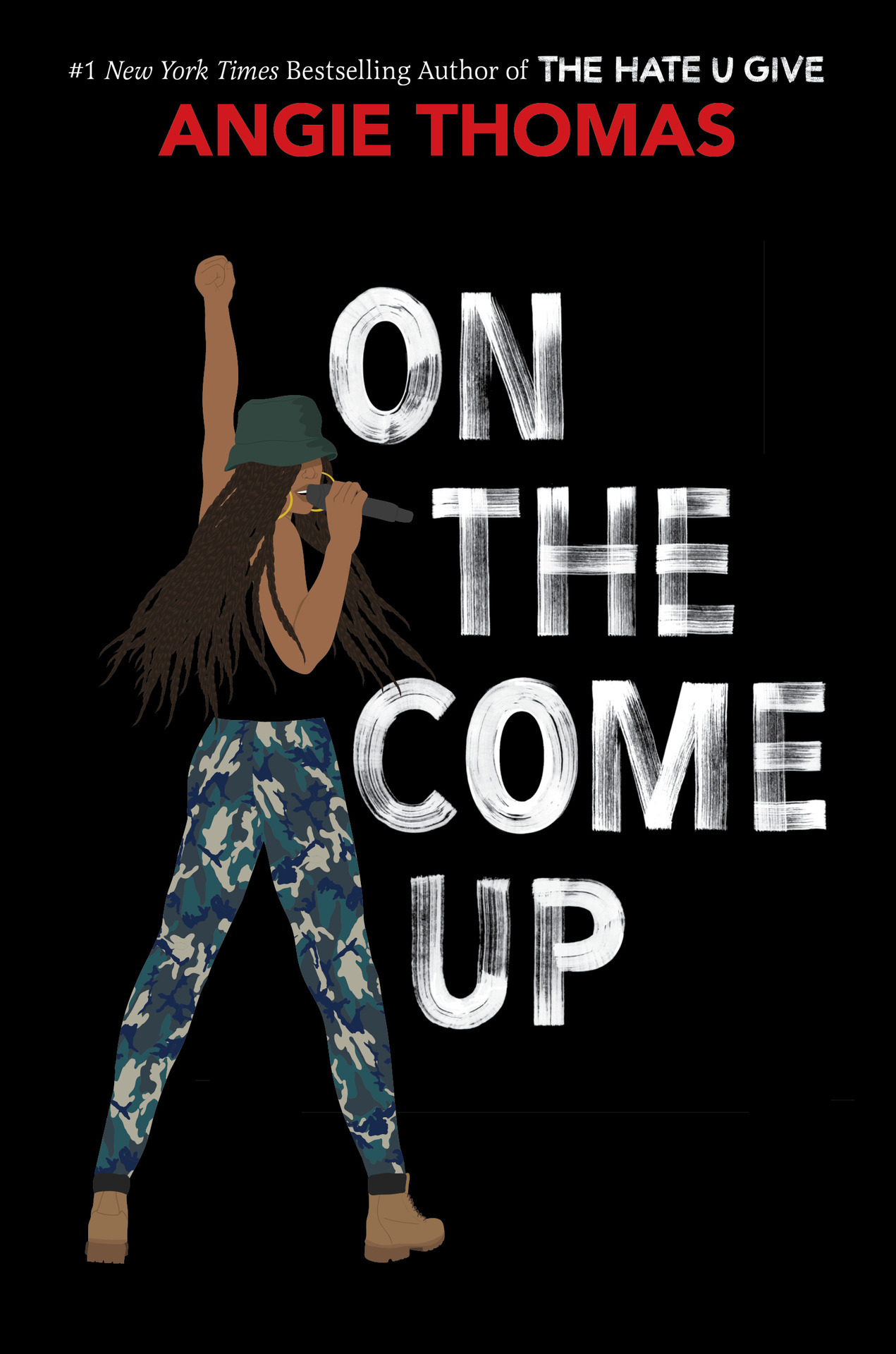
An alternate cover edition for ISBN 9780062498564 can be found here.Sixteen-year-old Bri wants to be one of the greatest rappers of all time. Or at least make it out of her neighborhood one day. As the daughter of an underground rap legend who died before he hit big, Bri’s got big shoes to fill. But now that her mom has unexpectedly lost her job, food banks and shutoff notices are as much a part of Bri’s life as beats and rhymes. With bills piling up and homelessness staring her family down, Bri no longer just wants to make it—she has to make it.On the Come Up is Angie Thomas’s homage to hip-hop, the art that sparked her passion for storytelling and continues to inspire her to this day. It is the story of fighting for your dreams, even as the odds are stacked against you; of the struggle to become who you are and not who everyone expects you to be; and of the desperate realities of poor and working-class black families.

John Perry Barlow wrote 30 songs for the Grateful Dead--and that's just the start to a Zelig-like life that took him from a childhood as Wyoming ranching royalty to friendships with Neal Cassady, Steve Jobs, and JFK Jr.Black-Throated Wind is the heartrendingly sad, hysterically funny, and often unbelievable yet always completely true story of a singular individual. Referred to by more than one publication as "The Most Interesting Man in the World," Barlow has throughout his life maintained close relationships with such diverse cultural figures as Bob Weir, Jerry Garcia, Timothy Leary, Jacqueline Kennedy Onassis, and Steve Jobs. During his long and varied career, Barlow has written the lyrics to 30 songs by the Grateful Dead while also running his family's cattle ranch. Despite being a freely self-confessed acidhead, he served as a campaign manager for Dick Cheney during his run for Congress in 1978--the same year he hosted 18-year-old JFK Jr. at his ranch for some summer seasoning. When he was 42, Barlow became a renowned internet guru who began vigorously defending the right for all to use it freely by co-founding the Electronic Freedom Foundation in 1990.A brilliant thinker and writer, he has over the course of the past half century somehow managed to be at the cutting edge of popular culture. And as impressive as his accomplishments have been, Barlow's dramatic personal life reads like the story of a generation writ large. Blessed with an incredible sense of humor and a unique voice that comes right off the page, Barlow is a born storyteller in the tradition of Mark Twain and Will Rogers.

Witty and moving, this debut memoir in essays from the dynamic rapper and singer Dessa, is a candid account of her life in the van as a hard-touring musician, her determination to beat long odds to make a name for herself as a performing artist, and her struggle to fall out of love with someone in her band. In a literary, honest style, evoking Amanda Palmer and Miranda July, Dessa demonstrates just how far the mind can travel while the body is on the six-hour ride to the next rap show. Dessa defies category--she is an academic with an international rap career; a lyrical writer fascinated by behavioral science; and a funny, charismatic performer dogged by blue moods and a perseverant case of heartache. In "The Fool That Bets Against Me," Dessa wonders if the romantic anguish that's helped her write so many sad songs might be an insurable professional asset. To find out, she applies to Geico for coverage. "A Ringing in the Ears" tells the story of her father building an airplane in their backyard garage--a task that took him almost seven years. The essay titled "Congratulations" reflects on recording a song for The Hamilton Mixtape in a Minneapolis basement, straining for a high note and hoping for a break. The last piece in the collection, "Call off Your Ghost," relays the fascinating project Dessa undertook with a team of neuroscientists that employed fMRI technology and neurofeedback to try to clinically excise her romantic feelings for an old flame. Her onstage and backstage stories are offset by her varied fascinations--she studies sign language, algebra, neuroanatomy--and this collection is a prism of her intellectual life. Her writing is infused with fascinating bits of science and sociology, philosophical insights, and an abiding tenderness for the people she tours with and the people she leaves behind to do it.Dessa's music has been praised as "forceful and whip-smart" (NPR) with a sound "like no one else" (The Los Angeles Times); and My Own Devices is as uncompromising and brilliant. Dessa finds unconventional approaches to all of her subjects--braiding her lived experience with academic research and a poet's tone and timing. In the vein of thinkers who defy categorization, we get the debut of a deft, likable, and unusual voice.

Listening Length 12 hours and 42 minutesFormed as a New York City hardcore band in 1981, Beastie Boys struck an unlikely path to global hip-hop superstardom. Here is their story, told for the first time in the words of the band. Adam "AD-ROCK" Horovitz and Michael "Mike D" Diamond offer revealing and very funny accounts of their transition from teenage punks to budding rappers; their early collaboration with Russell Simmons and Rick Rubin; the almost impossible to fathom overnight success of their debut studio album, Licensed to Ill; that album's messy fallout; and their break with Def Jam, move to Los Angeles and rebirth as musicians and social activists, with the genre-defying masterpiece Paul's Boutique. For more than 20 years, this band has had a wide-ranging and lasting influence on popular culture.With a style as distinctive and eclectic as a Beastie Boys album, Beastie Boys Book upends the typical music memoir. Alongside the band narrative you will find pieces by guest contributors and many more surprises.

A comprehensive collection of the writings of Mark Fisher (1968-2017), whose work defined critical writing for a generation.This comprehensive collection brings together the work of acclaimed blogger, writer, political activist and lecturer Mark Fisher (aka k-punk). Covering the period 2004 - 2016, the collection will include some of the best writings from his seminal blog k-punk; a selection of his brilliantly insightful film, television and music reviews; his key writings on politics, activism, precarity, hauntology, mental health and popular modernism for numerous websites and magazines; his final unfinished introduction to his planned work on "Acid Communism"; and a number of important interviews from the last decade. Edited by Darren Ambrose and with a foreword by Simon Reynolds.

A stirring meditation on Black performance in America from the New York Times bestselling author of Go Ahead in the RainAt the March on Washington in 1963, Josephine Baker was fifty-seven years old, well beyond her most prolific days. But in her speech she was in a mood to consider her life, her legacy, her departure from the country she was now triumphantly returning to. “I was a devil in other countries, and I was a little devil in America, too,” she told the crowd. Inspired by these few words, Hanif Abdurraqib has written a profound and lasting reflection on how Black performance is inextricably woven into the fabric of American culture. Each moment in every performance he examines—whether it’s the twenty-seven seconds in “Gimme Shelter” in which Merry Clayton wails the words “rape, murder,” a schoolyard fistfight, a dance marathon, or the instant in a game of spades right after the cards are dealt—has layers of resonance in Black and white cultures, the politics of American empire, and Abdurraqib’s own personal history of love, grief, and performance.Abdurraqib writes prose brimming with jubilation and pain, infused with the lyricism and rhythm of the musicians he loves. With care and generosity, he explains the poignancy of performances big and small, each one feeling intensely familiar and vital, both timeless and desperately urgent. Filled with sharp insight, humor, and heart, A Little Devil in America exalts the Black performance that unfolds in specific moments in time and space—from midcentury Paris to the moon, and back down again to a cramped living room in Columbus, Ohio.

Washington Post staff writer Geoff Edgers takes a deep dive into the story behind "Walk This Way," Aerosmith and Run-DMC's legendary, groundbreaking mashup that forever changed music. The early 1980s were an exciting time for music. Hair metal bands were selling out stadiums, while clubs and house parties in New York City has spawned a new genre of music. At the time, though, hip hop's reach was limited, an artform largely ignored by mainstream radio deejays and the rock-obsessed MTV network.But in 1986, the music world was irrevocably changed when Run-DMC covered Aerosmith's hit "Walk This Way" in the first rock-hip hop collaboration. Other had tried melding styles. This was different, as a pair of iconic arena rockers and the young kings of hip hop shared a studio and started a revolution. The result: Something totally new and instantly popular. Most importantly, "Walk This Way" would be the first rap song to be played on mainstream rock radio.In Walk This Way, Geoff Edgers sets the scene for this unlikely union of rockers and MCs, a mashup that both revived Aerosmith and catapulted hip hop into the mainstream. He tracks the paths of the main artists--Steven Tyler, Joe Perry, Joseph "Run" Simmons, and Darryl "DMC" McDaniels--along with other major players on the scene across their lives and careers, illustrating the long road to the revolutionary marriage of rock and hip hop. Deeply researched and written in cinematic style, this music history is a must-read for fans of hip hop, rock, and everything in between.

From acclaimed journalist Sophy Roberts, a journey through one of the harshest landscapes on earth — where music reveals the deep humanity and the rich history of SiberiaSiberia’s story is traditionally one of exiles, penal colonies and unmarked graves. Yet there is another tale to tell.Dotted throughout this remote land are pianos — grand instruments created during the boom years of the nineteenth century, as well as humble, Soviet-made uprights that found their way into equally modest homes. They tell the story of how, ever since entering Russian culture under the westernizing influence of Catherine the Great, piano music has run through the country like blood.How these pianos travelled into this snow-bound wilderness in the first place is testament to noble acts of fortitude by governors, adventurers, and exiles. Siberian pianos have accomplished extraordinary feats, from the instrument that Maria Volkonsky, wife of an exiled Decemberist revolutionary, used to spread music east of the Urals, to those that brought reprieve to the Soviet Gulag. That these instruments might still exist in such a hostile landscape is remarkable. That they are still capable of making music in far-flung villages is nothing less than a miracle.The Lost Pianos of Siberia is largely a story of music in this fascinating place, following Roberts on a three-year adventure as she tracks a number of different instruments to find one whose history is definitively Siberian. Her journey reveals a desolate land inhabited by wild tigers and deeply shaped by its dark history, yet one that is also profoundly beautiful — and peppered with pianos.

The hilarious and heartwarming new memoir from James Acaster: cult comedian, bestselling author, undercover cop, receiver of cabbages.January, 2017.James Acaster wakes hungover and alone in New York, his girlfriend having just left him. Thinking this is his rock bottom, little does James know that by the end of the year he will have befouled himself in a Los Angeles steakhouse and disrespected a pensioner on television. Luckily, there is one thing he can rely on for comfort – music. In true Acaster fashion, this ends up with a completely unnecessary mission: to buy as much music as he can released in 2016, the year before everything went wrong (for James, at least). Some albums are life-changing masterpieces, others are ‘Howdilly Doodilly’ by Okilly Dokilly, a metalcore album devoted to The Simpsons character Ned Flanders. But all of them play a part in the year that James gets his life back on track.In PERFECT SOUND WHATEVER, James takes us through the music of 2016, the bullshit of 2017, and how the beauty of one defeated the ugliness of the other. He will also reveal how he stole a cookie from Clint Eastwood and attempted to complete his musical odyssey by reforming one of Kettering’s most overlooked bands.

NEW YORK TIMES BESTSELLER In this follow-up to her critically acclaimed memoir, Home, Julie Andrews shares reflections on her astonishing career, including such classics as Mary Poppins, The Sound of Music, and Victor/Victoria. In Home, the number one New York Times international bestseller, Julie Andrews recounted her difficult childhood and her emergence as an acclaimed singer and performer on the stage. With this second memoir, Home Work: A Memoir of My Hollywood Years, Andrews picks up the story with her arrival in Hollywood and her phenomenal rise to fame in her earliest films--Mary Poppins and The Sound of Music. Andrews describes her years in the film industry -- from the incredible highs to the challenging lows. Not only does she discuss her work in now-classic films and her collaborations with giants of cinema and television, she also unveils her personal story of adjusting to a new and often daunting world, dealing with the demands of unimaginable success, being a new mother, the end of her first marriage, embracing two stepchildren, adopting two more children, and falling in love with the brilliant and mercurial Blake Edwards. The pair worked together in numerous films, including Victor/Victoria, the gender-bending comedy that garnered multiple Oscar nominations. Cowritten with her daughter, Emma Walton Hamilton, and told with Andrews's trademark charm and candor, Home Work takes us on a rare and intimate journey into an extraordinary life that is funny, heartrending, and inspiring.

In his only official autobiography, music icon Elton John writes about his extraordinary life, which is also the subject of the film Rocketman.Christened Reginald Dwight, he was a shy boy with Buddy Holly glasses who grew up in the London suburb of Pinner and dreamed of becoming a pop star. By the age of twenty-three, he was on his first tour of America, facing an astonished audience in his tight silver hotpants, bare legs and a T-shirt with ROCK AND ROLL emblazoned across it in sequins. Elton John had arrived and the music world would never be the same again.His life has been full of drama, from the early rejection of his work with song-writing partner Bernie Taupin to spinning out of control as a chart-topping superstar; from half-heartedly trying to drown himself in his LA swimming pool to disco-dancing with the Queen; from friendships with John Lennon, Freddie Mercury and George Michael to setting up his AIDS Foundation. All the while, Elton was hiding a drug addiction that would grip him for over a decade.In Me Elton also writes about getting clean and changing his life, about finding love with David Furnish and becoming a father.

An intimate, revealing look at one artist’s journey from self-censorship to full expressionAs one of the most celebrated musicians in the world, Alicia Keys has enraptured the globe with her heartfelt lyrics, extraordinary vocal range, and soul-stirring piano compositions. Yet away from the spotlight, Alicia has grappled with private heartache—over the challenging and complex relationship with her father, the people-pleasing nature that characterized her early career, the loss of privacy surrounding her romantic relationships, and the oppressive expectations of female perfection.Since Alicia rose to fame, her public persona has belied a deep personal she has spent years not fully recognizing or honoring her own worth. After withholding parts of herself for so long, she is at last exploring the questions that live at the heart of her Who am I, really? And once I discover that truth, how can I become brave enough to embrace it?More Myself is part autobiography, part narrative documentary. Alicia’s journey is revealed not only through her own candid recounting, but also through vivid recollections from those who have walked alongside her. The result is a 360-degree perspective on Alicia’s path, from her girlhood in Hell’s Kitchen and Harlem to the process of growth and self-discovery that we all must navigate.In More Myself, Alicia shares her quest for truth—about herself, her past, and her shift from sacrificing her spirit to celebrating her worth. With the raw honesty that epitomizes Alicia’s artistry, More Myself is at once a riveting account and a clarion call to to define themselves in a world that rarely encourages a true and unique identity.

A gritty, gripping memoir by the singer Mark Lanegan (Screaming Trees, Queens of the Stone Age, Soulsavers), chronicling his years as a singer and drug addict in Seattle in the '80s and '90s."Mark Lanegan-primitive, brutal, and apocalyptic. What's not to love?"-Nick Cave, author of The Sick Bag Song and The Death of Bunny MunroWhen Mark Lanegan first arrived in Seattle in the mid-1980s, he was just "an arrogant, self-loathing redneck waster seeking transformation through rock 'n' roll." Little did he know that within less than a decade, he would rise to fame as the front man of the Screaming Trees, then fall from grace as a low-level crack dealer and a homeless heroin addict, all the while watching some of his closest friends rocket to the forefront of popular music.In Sing Backwards and Weep, Lanegan takes readers back to the sinister, needle-ridden streets of Seattle, to an alternative music scene that was simultaneously bursting with creativity and dripping with drugs. He tracks the tumultuous rise and fall of the Screaming Trees, from a brawling, acid-rock bar band to world-famous festival favorites that scored a hit #5 single on Billboard's Alternative charts and landed a notorious performance on David Letterman, where Lanegan appeared sporting a fresh black eye from a brawl the night before. This book also dives into Lanegan's personal struggles with addiction, culminating in homelessness, petty crime, and the tragic deaths of his closest friends. From the back of the van to the front of the bar, from the hotel room to the emergency room, onstage, backstage, and everywhere in between, Sing Backwards and Weep reveals the abrasive underlining beneath one of the most romanticized decades in rock history-from a survivor who lived to tell the tale. Gritty, gripping, and unflinchingly raw, Sing Backwards and Weep is a book about more than just an extraordinary singer who watched his dreams catch fire and incinerate the ground beneath his feet. Instead, it's about a man who learned how to drag himself from the wreckage, dust off the ashes, and keep living and creating.

A deeply researched warning about how the digital economy threatens artists' lives and work―the music, writing, and visual art that sustain our souls and societies―from an award-winning essayist and critic.There are two stories you hear about earning a living as an artist in the digital age. One comes from Silicon Valley. There's never been a better time to be an artist, it goes. If you've got a laptop, you've got a recording studio. If you've got an iPhone, you've got a movie camera. And if production is cheap, distribution is free: it's called the Internet. Everyone's an artist; just tap your creativity and put your stuff out there.The other comes from artists themselves. Sure, it goes, you can put your stuff out there, but who's going to pay you for it? Everyone is not an artist. Making art takes years of dedication, and that requires a means of support. If things don't change, a lot of art will cease to be sustainable.So which account is true? Since people are still making a living as artists today, how are they managing to do it? William Deresiewicz, a leading critic of the arts and of contemporary culture, set out to answer those questions. Based on interviews with artists of all kinds, The Death of the Artist argues that we are in the midst of an epochal transformation. If artists were artisans in the Renaissance, bohemians in the nineteenth century, and professionals in the twentieth, a new paradigm is emerging in the digital age, one that is changing our fundamental ideas about the nature of art and the role of the artist in society.

From the award-winning author of Ma’am Darling: 99 Glimpses of Princess Margaret comes a fascinating, hilarious, kaleidoscopic biography of the Fab Four.On April 10th 2020, it will be exactly 50 years since Paul McCartney announced the break-up of the Beatles. At that point, we will be at the same distance in time from 1970 as 1970 was from 1920, the year Al Jolson's ‘Swanee’ was the bestselling record and Gustav Holst composed The Planets.The Beatles continue to occupy a position unique in popular culture. They have entered people's minds in a way that did not occur before, and has not occurred since. Their influence extended way beyond the realm of music to fashion, politics, class, religion and ethics. Countless books have doggedly catalogued the minutiae of The Beatles. If you want to know the make of George Harrison's first car you will always be able to find the answer (a second hand, two-door, blue Ford Anglia 105E Deluxe, purchased from Brian Epstein's friend Terry Doran, who worked at a dealership in Warrington). Before she met John Lennon, who was the only Beatle Yoko Ono could name, and why? Ringo. Because ‘ringo’ means ‘apple’ in Japanese. All very interesting, but there is, as yet, no book about The Beatles that combines the intriguing minutiae of their day-to-day lives with broader questions about their effect – complicated and fascinating – on the world around them, their contemporaries, and generations to come.Until now. Craig Brown's 1-2-3-4: The Beatles in Time is a unique, kaleidoscopic examination of The Beatles phenomenon – part biography, part anthropology, part memoir, by turns humorous and serious, elegiac and speculative. It follows the unique “exploded biography” form of his internationally bestselling, Ma'am Darling: 99 Glimpses of Princess Margaret.

Sandra Boynton and Yo-Yo Ma! Plus snoozing jungle animals! Two celebrated artists come together for JUNGLE NIGHT , a soothing bedtime board book. (Okay, MOSTLY soothing.) The book guides us through the jungle to hear the distinctive, gentle snore of each animal: "Listen to the tiger: ZEEE-ZOOO-HAAA. Listen to the cheetah: CHEE-CHEE-TAAAH." A free downloadable JUNGLE NIGHT recording offers a narration of the book, with each and every animal snore interpreted by the expressive, playful cello of Yo-Yo Ma. He even does the elephant's stop-the-show snore—though admittedly that took Ma's cello PLUS the classic horn salute of the James R. Barker steamship. (Seriously.) All of this fabulousness leads into the coolest lullaby ever: "Jungle Gymnopédie No. 1", a polyrhythmic jungly arrangement by Boynton of Erik Satie's renowned piece, with Yo-Yo Ma on cello, guitar played by Ron Block of Alison Krauss Union Station, and drums by Kevin MacLeod. "Yo-Yo and I chose this piece because it's the most gorgeous and mesmerizing night song imaginable," explains Boynton. "And there was surely nothing else that could get those animals back to sleep after that elephant blast."

There are few creative acts more mysterious and magical than writing a song. But what if the goal wasn't so mysterious and was actually achievable for anyone who wants to experience more magic and creativity in their life? That's something that anyone will be inspired to do after reading Jeff Tweedy's How to Write One Song.Why one song? Because the difference between one song and many songs isn't a cute semantic trick--it's an important distinction that can simplify a notoriously confusing art form. The idea of becoming a capital-S songwriter can seem daunting, but approached as a focused, self-contained event, the mystery and fear subsides, and songwriting becomes an exciting pursuit.And then there is the energizing, nourishing creativity that can open up. How to Write One Song brings readers into the intimate process of writing one song--lyrics, music, and putting it all together--and accesses the deep sense of wonder that remains at the heart of this curious, yet incredibly fulfilling, artistic act. But it's equally about the importance of making creativity part of your life every day, and of experiencing the hope, inspiration, and joy available to anyone who's willing to get started.

"[Jonathan Taplin] was the one who made Mean Streets and The Last Waltz possible, for which I will always be grateful. We had quite a few adventures on both projects, and they’re all chronicled in this memoir of his colorful life in show business." —Martin Scorsese " The Magic Years reads like a Magical Mystery Tour of music, loss, beauty, family, justice, and social upheaval." —Rosanne Cash Jonathan Taplin’s extraordinary journey has put him at the crest of every major cultural wave in the past half he was tour manager for Bob Dylan and the Band in the ’60s, producer of major films in the ’70s, an executive at Merrill Lynch in the ’80s, creator of the Internet’s first video-on-demand service in the ’90s, and a cultural critic and author writing about technology in the new millennium. His is a lifetime marked not only by good timing but by impeccable instincts—from the folk scene to Woodstock, Hollywood’s rebellious film movement, and beyond. Taplin is not just a witness but a lifelong producer, the right-hand man to some of the greatest talents of both pop culture and the underground. With cameos by Janis Joplin, Jimi Hendrix, Eric Clapton, Martin Scorsese, and countless other icons, The Magic Years is both a rock memoir and a work of cultural criticism from a key player who watched a nation turn from idealism to nihilism. Taplin offers a clear-eyed roadmap of how we got here and makes a convincing case for art’s power to deliver us from “passionless detachment” and rekindle our humanism.

One of the most dynamic and globally recognized entertainment forces of our time opens up fully about his life, in a brave and inspiring book that traces his learning curve to a place where outer success, inner happiness, and human connection are aligned. Along the way, Will tells the story in full of one of the most amazing rides through the worlds of music and film that anyone has ever had. Will Smith's transformation from a fearful child in a tense West Philadelphia home to one of the biggest rap stars of his era and then one of the biggest movie stars in Hollywood history, with a string of box office successes that will likely never be broken, is an epic tale of inner transformation and outer triumph, and Will tells it astonishingly well. But it's only half the story. Will Smith thought, with good reason, that he had won at life: not only was his own success unparalleled, his whole family was at the pinnacle of the entertainment world. Only they didn't see it that way: they felt more like star performers in his circus, a seven-days-a-week job they hadn't signed up for. It turned out Will Smith's education wasn't nearly over. This memoir is the product of a profound journey of self-knowledge, a reckoning with all that your will can get you and all that it can leave behind. Written with the help of Mark Manson, author of the multi-million-copy bestseller The Subtle Art of Not Giving a F*ck, Will is the story of how one person mastered his own emotions, written in a way that can help everyone else do the same. Few of us will know the pressure of performing on the world's biggest stages for the highest of stakes, but we can all understand that the fuel that works for one stage of our journey might have to be changed if we want to make it all the way home. The combination of genuine wisdom of universal value and a life story that is preposterously entertaining, even astonishing, puts Will the book, like its author, in a category by itself. "It's easy to maneuver the material world once you have conquered your own mind. I believe that. Once you've learned the terrain of your own mind, every experience, every emotion, every circumstance, whether positive or negative, simply propels you forward, to greater growth and greater experience. That is true will. To move forward in spite of anything. And to move forward in a way that brings others with you, rather than leave them behind." --Will Smith

In the vein of Sound Man and The Soundtrack of My Life , a lyrical, warmhearted, and inspirational memoir from the founder of Island Records about his astonishing life and career helping to bring reggae music to the world stage and working with Bob Marley, U2, Grace Jones, Cat Stevens, and many other icons.Chris Blackwell, like the paradigm-shifting artists he came to support over his sixty-plus years in the music business, never took the conventional route. He grew up between Jamaica and London, crossing paths with Ian Fleming, Noel Coward, and Errol Flynn. After being expelled from an elite British school for rebellious behavior in 1954 at age seventeen, he moved back to Jamaica, and within five years, founded Island Records—the company that would make an indelible mark on music, shifting with the times, but always keeping its core identity intact.The Islander is the story of Blackwell and his cohorts at Island Records, who time and again, identified, nurtured, and broke out musicians who had been overlooked by bigger record labels, including Steve Winwood, Nick Drake, John Martyn, and Cat Stevens. After an impromptu meeting with Bob Marley and his bandmates in 1972, Blackwell decided to fund and produce their groundbreaking album Catch a Fire . He’d go on to work with Marley over the rest of his career, remain his close friend, and continually champion Jamaican culture and reggae music.In the ensuing years, Blackwell worked with U2, Grace Jones, the B-52s, Tom Waits, Robert Palmer, Tom Tom Club, and many other groundbreaking artists. He also opened the first Jamaican boutique hotel, on the property of Ian Fleming’s former home, Goldeneye, where all the James Bond books were written.Blackwell is a legendary as well as deeply humble raconteur, and reading The Islander is like spending a day with the most interesting man in the world.

In this New York Times bestseller, Rolling Stone founder, co-editor, and publisher Jann Wenner offers a "touchingly honest" and "wonderfully deep" memoir from the beating heart of classic rock and roll (Bruce Springsteen). Jann Wenner has been called by his peers “the greatest editor of his generation.”His deeply personal memoir vividly describes and brings you inside the music, the politics, and the lifestyle of a generation, an epoch of cultural change that swept America and beyond. The age of rock and roll in an era of consequence, what will be considered one of the great watersheds in modern history. Wenner writes with the clarity of a journalist and an essayist. He takes us into the life and work of Bob Dylan, John Lennon, Mick Jagger, Bono, and Bruce Springsteen, to name a few. He was instrumental in the careers of Hunter S. Thompson, Tom Wolfe, and Annie Leibovitz. His journey took him to the Oval Office with his legendary interviews with Bill Clinton and Barack Obama, leaders to whom Rolling Stone gave its historic, full-throated backing. From Jerry Garcia to the Dalai Lama, Aretha Franklin to Greta Thunberg, the people Wenner chose to be seen and heard in the pages of Rolling Stone tried to change American culture, values, and morality.Like a Rolling Stone is a beautifully written portrait of one man’s life, and the life of his generation.

It’s 2013, and Circus Palmer, a forty-year-old Boston-based trumpet player and old-school ladies’ man, lives for his music and refuses to be tied down. Before a gig in Miami, he learns that the woman who is secretly closest to his heart, the free-spirited drummer Maggie, is pregnant by him. Instead of facing the necessary conversation, Circus flees, setting off a chain of interlocking revelations from the various women in his life.Most notable among them is his teenage daughter, Koko, who idolizes him and is awakening to her own sexuality even as her mentally fragile mother struggles to overcome her long-failed marriage and rejection by Circus. Delivering a lush orchestration of diverse female voices, Warrell spins a provocative, soulful, and gripping story of passion and risk, fathers and daughters, wives and single women, and, finally, hope and reconciliation.

From the bestselling author of Just Like You, High Fidelity, and Fever Pitch, a short, warm, and entertaining book about art, creativity, and the unlikely similarities between Victorian novelist Charles Dickens and modern American rock star Prince Every so often, a pairing comes along that seems completely unlikely—until it's not. Peanut butter and jelly, Dennis Rodman and Kim Jong Un, ducks and puppies, and now: Dickens and Prince.Equipped with a fan's admiration and his trademark humor and wit, Nick Hornby invites us into his latest obsession: the cosmic link between two unlikely artists, geniuses in their own rights, spanning race, class, and centuries—each of whom electrified their different disciplines and whose legacy resounded far beyond their own time.When Prince's 1987 record Sign o' the Times was rereleased in 2020, the iconic album now came with dozens of songs that weren't on the original— Prince was endlessly prolific, recording 102 songs in 1986 alone. In awe, Hornby began to wonder, Who else ever produced this much? Who else ever worked that way? He soon found his answer in Victorian novelist and social critic Charles Dickens, who died more than a hundred years before Prince began making music.Examining the two artists' personal tragedies, social statuses, boundless productivity, and other parallels, both humorous and haunting, Hornby shows how these two unlikely men from different centuries "lit up the world." In the process, he creates a lively, stimulating rumination on the creativity, flamboyance, discipline, and soul it takes to produce great art.

In 1986, the NME released a cassette that would shape music for years to come. A collection of twenty-two independently signed guitar-based bands, C86 was the sound and ethos that defined a generation. It was also arguably the point at which 'indie' was born.But what happened next to all those musical dreamers?Some of the bands, like Primal Scream, went on to achieve global stardom; others, such as Half Man Half Biscuit and the Wedding Present, cultivated lifelong fanbases that still sustain their careers thirty-five years later. Then there were the rest, who ultimately imploded in a riot of paisley shirts, bad drugs and general indifference from the record-buying public.Now, for the first time, music journalist Nige Tassell tracks down the class of C86 and recounts their stories, both tragic and uplifting.Yet, while the pursuit of long-lost musicians can often manifest as earnest hagiography, Tassell's unique, light-hearted approach makes this a very human story of ambition, hope, varying degrees of talent and what happens after you give up on pop - or, more precisely, after pop gives up on you. It's a world populated by bike-shop owners, architecture professors, dance-music producers, record-store proprietors, birdwatchers, solicitors, caricaturists and even a possible Olympic sailor - and let's not forget the musician-turned-actor gainfully employed as Jeremy Irons' body double...More than simply the tale of the tape, Whatever Happened to the C86 Kids? is an exploration of C86's wide-reaching and often surprising legacy.