
Hanif Abdurraqib
Hanif Abdurraqib is a poet, essayist, and cultural critic from Columbus, Ohio. His poetry has been published in Muzzle, Vinyl, PEN American, and various other journals. His essays and music criticism have been published in The FADER, Pitchfork, The New Yorker, and The New York Times. His first full length poetry collection, The Crown Ain't Worth Much, was released in June 2016 from Button Poetry. It was named a finalist for the Eric Hoffer Book Prize, and was nominated for a Hurston-Wright Legacy Award. With Big Lucks, he released a limited edition chapbook, Vintage Sadness, in summer 2017 (you cannot get it anymore and he is very sorry.) His first collection of essays, They Can't Kill Us Until They Kill Us, was released in winter 2017 by Two Dollar Radio and was named a book of the year by Buzzfeed, Esquire, NPR, Oprah Magazine, Paste, CBC, The Los Angeles Review, Pitchfork, and The Chicago Tribune, among others. He released Go Ahead In The Rain: Notes To A Tribe Called Quest with University of Texas press in February 2019. The book became a New York Times Bestseller, and was met with critical acclaim. His second collection of poems, A Fortune For Your Disaster, was released in 2019 by Tin House. He is a graduate of Beechcroft High School.
9 Books Written

A Little Devil in America: In Praise of Black Performance
by Hanif Abdurraqib
Rating: 4.5 ⭐
• 2 recommendations ❤️
NATIONAL BOOK AWARD FINALIST - "A masterpiece" (Minneapolis Star Tribune), a "devastating" (The New York Times) meditation on Black performance in America from the MacArthur "Genius Grant" Fellow and bestselling author of Go Ahead in the Rain WINNER OF THE GORDON BURN PRIZE - LONGLISTED FOR THE ANDREW CARNEGIE MEDAL - ONE OF THE TEN BEST BOOKS OF THE YEAR: Chicago Tribune, The Philadelphia Inquirer, Publishers Weekly - ONE OF THE BEST BOOKS OF THE YEAR: The New York Times Book Review, Time, The Boston Globe, NPR, Esquire, BookRiot, BookPage, The Rumpus, Library Journal"Gorgeous essays that reveal the resilience, heartbreak, and joy within Black performance."--Brit Bennett, author of The Vanishing HalfAt the March on Washington in 1963, Josephine Baker was fifty-seven years old, well beyond her most prolific days. But in her speech she was in a mood to consider her life, her legacy, her departure from the country she was now triumphantly returning to. "I was a devil in other countries, and I was a little devil in America, too," she told the crowd. Inspired by these few words, Hanif Abdurraqib has written a profound and lasting reflection on how Black performance is inextricably woven into the fabric of American culture. Each moment in every performance he examines--whether it's the twenty-seven seconds in "Gimme Shelter" in which Merry Clayton wails the words "rape, murder," a schoolyard fistfight, a dance marathon, or the instant in a game of spades right after the cards are dealt--has layers of resonance in Black and white cultures, the politics of American empire, and Abdurraqib's own personal history of love, grief, and performance.Abdurraqib writes prose brimming with jubilation and pain, infused with the lyricism and rhythm of the musicians he loves. With care and generosity, he explains the poignancy of performances big and small, each one feeling intensely familiar and vital, both timeless and desperately urgent. Filled with sharp insight, humor, and heart, A Little Devil in America exalts the Black performance that unfolds in specific moments in time and space--from midcentury Paris to the moon, and back down again to a cramped living room in Columbus, Ohio.

In an age of confusion, fear, and loss, Hanif Abdurraqib's is a voice that matters. Whether he's attending a Bruce Springsteen concert the day after visiting Michael Brown's grave, or discussing public displays of affection at a Carly Rae Jepsen show, he writes with a poignancy and magnetism that resonates profoundly.In the wake of the nightclub attacks in Paris, he recalls how he sought refuge as a teenager in music, at shows, and wonders whether the next generation of young Muslims will not be afforded that opportunity now. While discussing the everyday threat to the lives of black Americans, Abdurraqib recounts the first time he was ordered to the ground by police officers: for attempting to enter his own car.In essays that have been published by the New York Times, MTV, and Pitchfork, among others—along with original, previously unreleased essays—Abdurraqib uses music and culture as a lens through which to view our world, so that we might better understand ourselves, and in so doing proves himself a bellwether for our times.

Growing up in Columbus, Ohio, in the 1990s, Hanif Abdurraqib witnessed a golden era of basketball, one in which legends like LeBron James were forged, and countless others weren’t. His lifelong love of the game leads Abdurraqib into a lyrical, historical, and emotionally rich exploration of what it means to make it, who we think deserves success, the tensions between excellence and expectation, and the very notion of role models, all of which he expertly weaves together with intimate, personal storytelling. “Here is where I would like to tell you about the form on my father’s jump shot,” Abdurraqib writes. “The truth, though, is that I saw my father shoot a basketball only one time.”There’s Always This Year is a triumph, brimming with joy, pain, solidarity, comfort, outrage, and hope. No matter the subject of his keen focus—whether it's basketball, or music, or performance—Hanif Abdurraqib’s exquisite writing is always poetry, always profound, and always a clarion call to radically reimagine how we think about our culture, our country, and ourselves.
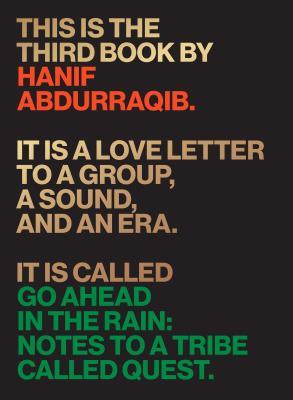
How does one pay homage to A Tribe Called Quest? The seminal rap group brought jazz into the genre, resurrecting timeless rhythms to create masterpieces such as The Low End Theory and Midnight Marauders. Seventeen years after their last album, they resurrected themselves with an intense, socially conscious record, We Got It from Here . . . Thank You 4 Your Service, which arrived when fans needed it most, in the aftermath of the 2016 election. Poet and essayist Hanif Abdurraqib digs into the group's history and draws from his own experience to reflect on how its distinctive sound resonated among fans like himself. The result is as ambitious and genre-bending as the rap group itself.Abdurraqib traces the Tribe's creative career, from their early days as part of the Afrocentric rap collective known as the Native Tongues, through their first three classic albums, to their eventual breakup and long hiatus. Their work is placed in the context of the broader rap landscape of the 1990s, one upended by sampling laws that forced a reinvention in production methods, the East Coast-West Coast rivalry that threatened to destroy the genre, and some record labels' shift from focusing on groups to individual MCs. Throughout the narrative Abdurraqib connects the music and cultural history to their street-level impact. Whether he's remembering The Source magazine cover announcing the Tribe's 1998 breakup or writing personal letters to the group after bandmate Phife Dawg's death, Abdurraqib seeks the deeper truths of A Tribe Called Quest; truths that--like the low end, the bass--are not simply heard in the head, but felt in the chest.

In his much-anticipated follow-up to The Crown Ain't Worth Much, poet, essayist, biographer, and music critic Hanif Abdurraqib has written a book of poems about how one rebuilds oneself after a heartbreak, the kind that renders them a different version of themselves than the one they knew. It's a book about a mother's death, and admitting that Michael Jordan pushed off, about forgiveness, and how none of the author's black friends wanted to listen to Don't Stop Believin'. It's about wrestling with histories, personal and shared. Abdurraqib uses touchstones from the world outside--from Marvin Gaye to Nikola Tesla to his neighbor's dogs--to create a mirror, inside of which every angle presents a new possibility.Read by the author.

The Crown Ain't Worth Much, Hanif Willis-Abdurraqib's first full-length collection, is a sharp and vulnerable portrayal of city life in the United States. A regular columnist for MTV.com, Willis-Abdurraqib brings his interest in pop culture to these poems, analyzing race, gender, family, and the love that finally holds us together even as it threatens to break us. Terrance Hayes writes that Willis-Abdurraqib "bridges the bravado and bling of praise with the blood and tears of elegy." The poems in this collection are challenging and accessible at once, as they seek to render real human voices in moments of tragedy and celebration.

There is music for dancing & for grieving, for sexting & responding to a snarky rejection letter. In his follow-up to the acclaimed The Crown Ain't Worth Much, Hanif Willis-Abdurraqib channels Ginuwine, Prince, and Carly Rae Jepsen to artfully reflect on intimacy, friendship, and becoming an adult. Vintage Sadness further cements Willis-Abdurraqib as one of the most important voices of our generation and proves that each life has its own tender soundtrack.

Sing, Aretha, Sing!: Aretha Franklin,"Respect," and the Civil Rights Movement
by Hanif Abdurraqib
Rating: 3.9 ⭐
A young Aretha Franklin captivates her community with the song “Respect” during the height of the Civil Rights Movement, in this striking picture book biography that will embolden today’s young readers to sing their own truth.When Aretha Franklin sang, she didn’t just sing…she sparked a movement. As a performer and a civil rights activist, the Queen of Soul used her voice to uplift freedom fighters and the Black community during the height of the 1960s Civil Rights Movement. Her song “Respect” was an anthem of identity, survival, and joy. It gave hope to people trying to make change. And when Aretha sang, the world sang along.With Hanif Abdurraqib’s poetic voice and Ashley Evans’s dynamic illustrations, Sing, Aretha, Sing! demonstrates how one brave voice can give new power to a nation, and how the legacy of Aretha Franklin lives on in a world still fighting for freedom.

A must-read collection featuring the best in sports journalism Editor Hanif Abdurraqib has curated an essential anthology showcasing incredible feats and diverse perspectives across the world of sports. Selected from a wide range of newspapers, magazines, and digital publications during the previous year, these stories capture enduring moments while celebrating the craft of writing at its most sublime. This extraordinary collection reveals the fascinating stories behind the sports we love, the competitors who push their boundaries, and the cultures they are ultimately embedded in.