
David Hepworth
David Hepworth is a music journalist, writer, and publishing industry analyst who has launched several successful British magazines, including Smash Hits, Q, Mojo and The Word, among many others. He presented the definitive BBC rock music program Whistle Test and anchored the BBC's coverage of Live Aid in 1985. He has won the Editor of the Year and Writer of the Year awards from the Professional Publishers Association and the Mark Boxer Award from the British Society of Magazine Editors. He is the radio columnist for the Saturday Guardian and a regular media correspondent for the newspaper.
13 Books Written

*THE SUNDAY TIMES TOP TEN BESTSELLER*The Sixties ended a year late – on New Year's Eve 1970, when Paul McCartney initiated proceedings to wind up The Beatles. Music would never be the same again.The next day would see the dawning of a new era. 1971 saw the release of more monumental albums than any year before or since and the establishment of a pantheon of stars to dominate the next forty years – Led Zeppelin, David Bowie, the Rolling Stones, Pink Floyd, Marvin Gaye, Carole King, Joni Mitchell, Rod Stewart, the solo Beatles and more.January that year fired the gun on an unrepeatable surge of creativity, technological innovation, blissful ignorance, naked ambition and outrageous good fortune. By December rock had exploded into the mainstream.How did it happen? This book tells you how. It's the story of 1971, rock’s golden year.

The age of the rock star, like the age of the cowboy, has passed. Like the cowboy, the idea of the rock star lives on in our imaginations.What did we see in them? Swagger. Recklessness. Sexual charisma. Damn-the-torpedoes self-belief. A certain way of carrying themselves. Good hair. Interesting shoes. Talent we wished we had.What did we want of them? To be larger than life but also like us. To live out their songs. To stay young forever. No wonder many didn’t stay the course.In Uncommon People, David Hepworth zeroes in on defining moments and turning points in the lives of forty rock stars from 1955 to 1995, taking us on a journey to burst a hundred myths and create a hundred more.As this tribe of uniquely motivated nobodies went about turning themselves into the ultimate somebodies, they also shaped us, our real lives and our fantasies. Uncommon People isn’t just their story. It’s ours as well.

_________‘Hepworth’s knowledge and understanding of rock history is prodigious … [a] hugely entertaining study of the LP’s golden age’ The Times_________The era of the LP began in 1967, with ‘Sgt Pepper’; The Beatles didn’t just collect together a bunch of songs, they Made An Album. Henceforth, everybody else wanted to Make An Album. The end came only fifteen years later, coinciding with the release of Michael Jackson’s ‘Thriller’. By then the Walkman had taken music out of the home and into the streets and the record business had begun trying to reverse-engineer the creative process in order to make big money. Nobody would play music or listen to it in quite the same way ever again.It was a short but transformative time. Musicians became ‘artists’ and we, the people, patrons of the arts. The LP itself had been a mark of sophistication, a measure of wealth, an instrument of education, a poster saying things you dare not say yourself, a means of attracting the opposite sex, and, for many, the single most desirable object in their lives.This is the story of that time; it takes us from recording studios where musicians were doing things that had never been done before to the sparsely furnished apartments where their efforts would be received like visitations from a higher power. This is the story of how LPs saved our lives.

Nothing Is Real: The Beatles Were Underrated and Other Sweeping Statements About Pop
by David Hepworth
Rating: 3.7 ⭐
Pop music’s a simple pleasure. Is it catchy? Can you dance to it? Do you fancy the singer?But what’s fascinating about pop is our relationship with it. David Hepworth is interested in the human side of pop. He’s interested in how people make the stuff and, more importantly, what it means to us. In this collection of essays written throughout his career, Hepworth shows how it is possible to take music seriously and, at the same time, not drain the life out of it. From the legacy of the Beatles to the dramatic decline of the record shop via the bewildering nomenclature of musical genres; with characteristic insight and humour Hepworth asks some essential questions about music and, indeed, is it all about the drummer; are band managers misunderstood; and is it appropriate to play ‘Angels’ at funerals?As Pope John Paul II said ‘of all the unimportant things, football is the most important’. David Hepworth believes the same to be true of music and this selection of his best writing, covering the music of last fifty years, shows you precisely why.‘This collection offers counterintuitive takes on everything from Sixties B-sides to wedding music’ - GQ

Abbey Road: The Inside Story of the World’s Most Famous Recording Studio
by David Hepworth
Rating: 4.0 ⭐
With a foreword by Paul McCartney'It's semi-devotional -- a really special place' Florence Welch'There are certain things that are mythical. Abbey Road is mythical' Nile RodgersMany people will recognise the famous zebra crossing. Some visitors may have graffitied their name on its hallowed outer walls. Others might even have managed to penetrate the iron gates. But what draws in these thousands of fans here, year after year? What is it that really happens behind the doors of the most celebrated recording studio in the world?It may have begun life as an affluent suburban house, but it soon became a creative hub renowned around the world as a place where great music, ground-breaking sounds and unforgettable tunes were forged - nothing less than a witness to, and a key participant in, the history of popular music itself.What has been going on there for over ninety years has called for skills that are musical, creative, technical, mechanical, interpersonal, logistical, managerial, chemical and, romantics might be tempted add, close to magic.This is for the people who believe in the magic.

Overpaid, Oversexed and Over There: How a Few Skinny Brits with Bad Teeth Rocked America
by David Hepworth
Rating: 4.0 ⭐
The Beatles landing in New York in February 1964 was the opening shot in a cultural revolution nobody predicted. Suddenly the youth of the richest, most powerful nation on earth was trying to emulate the music, manners and the modes of a rainy island that had recently fallen on hard times.The resulting fusion of American can-do and British fuck-you didn’t just lead to rock and roll’s most resonant music. It ushered in a golden era when a generation of kids born in ration card Britain, who had grown up with their nose pressed against the window of America’s plenty, were invited to wallow in their big neighbour’s largesse.It deals with a time when everything that was being done - from the Beatles playing Shea Stadium to the Rolling Stones at Altamont, from the Who performing their rock opera at the Metropolitan Opera House to David Bowie touching down in the USA for the first time with a couple of gowns in his luggage - was being done for the very first time.Rock and roll would never be quite so exciting again.

Hope I Get Old Before I Die: How Rock’s Greatest Generation Kept Going to the End
by David Hepworth
Rating: 4.1 ⭐
From the author of Abbey Road comes the story of how enduring rock icons like Pink Floyd, Bruce Springsteen and many more have remained in the ever changing music game.When Paul McCartney closed Live Aid in July 1985 we thought he was rock's Grand Old Man. He was forty-three years old.As the forty years since have shown he - and many others of his generation - were just getting started.This was the time when live performance took over from records. The big names of the 60s and 70s exploited the age of spectacle that Live Aid had ushered in to enjoy the longest lap of honour in the history of humanity, continuing to go strong long after everyone else had retired.Hence this is a story without precedent, a story in which Elton John plays a royal funeral, Mick Jagger gets a knighthood, Bob Dylan picks up the Nobel Prize, the Beatles become, if anything, bigger than the Beatles and it's beginning to look as though all of the above will, thanks to the march of technology, be playing Las Vegas for ever.

From the author of Abbey Road and Never a Dull Moment, the basis for AppleTV's 1971 documentary, come the stories of how rock icons like Pink Floyd, Bruce Springsteen, Mick Jagger, and more have survived, thrived, and remained the most powerful forces in music.When Paul McCartney closed Live Aid in July of 1985, we thought he was rock’s Grand Old Man. He was forty-three years old. As the forty years since have shown, he—and many others of his generation—were just getting started. This was the time when live performance took over from records. The big names of the ’60s and ’70s exploited the Age of Spectacle that Live Aid had ushered in to enjoy the longest lap of honor in the history of humanity, continuing to go strong long after everyone else in the business had retired. This is a story without precedent, a story in which Elton John plays a royal funeral, Mick Jagger gets a knighthood, Bob Dylan picks up a Nobel Prize, The Beatles become, if anything, bigger than The Beatles, and it’s beginning to look as though all of the above will, thanks in a large part to technology, be playing in Las Vegas forever.
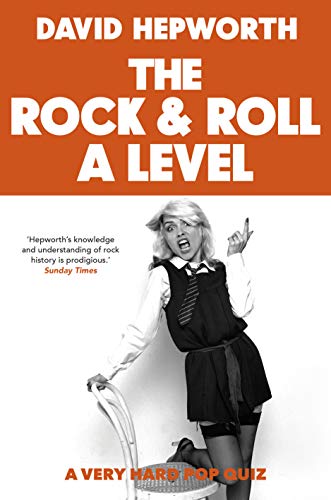
The Rock and Roll A Level is here to rescue the pop quiz from the grip of bores who know the chart position of everything and the value of nothing.It’s for the people who like pop music because it tells them so much about real life, the people who learned about America from the songs of Chuck Berry, about Europe from the albums of David Bowie and about all manner of things from the songs of Steely Dan.It’s the first quiz book where the answers are as interesting as the questions.It’s the first quiz book where general knowledge matters as much as an adolescence spent reading the NME or Smash Hits.It's a proper education.

Did you know that those aren’t Julia Roberts’ legs on the Pretty Woman poster? In fact, everything from the neck down belongs to model, actress, and body double Shelley Michelle. Do you know who inspired Eric Clapton’s “Layla?” Or the meaning of the “Wilhelm Scream” and how it links Star Wars, Reservoir Dogs, Planet of the Apes, and 57 other films? The Secret History of Entertainment is a collection of little-known stories touching on the strange world of the stars. So if you’d like to know why there are no laughs in The Simpsons or the economics of hiring the Rolling Stones for your next birthday party, dip into this intriguing little book.

Shipped from the UK in recyclable card packaging.

Please Note That The Following Individual Books As Per Original ISBN and Cover Image In this Listing shall be Dispatched David Hepworth 3 Books Collection Rock & Roll A Level [Hardcover]:The Rock and Roll A Level is here to rescue the pop quiz from the grip of bores who know the chart position of everything and the value of nothing.It's for the people who like pop music because it tells them so much about real life, the people who learned about America from the songs of Chuck Berry, about Europe from the albums of David Bowie and about all manner of things from the songs of Steely Dan.1971 - Never a Dull The Sixties ended a year late on New Year's Eve 1970, when Paul McCartney initiated proceedings to wind up The Beatles. Music would never be the same again. The next day would see the dawning of a new era. 1971 saw the release of more monumental albums than any year before or since and the establishment of a pantheon of stars to dominate the next forty years Led Zeppelin, David Bowie, the Rolling Stones, Pink Floyd, Marvin Gaye, Carole King, Joni Mitchell, Rod Stewart, the solo Beatles and more.Uncommon In Uncommon People, David Hepworth zeroes in on defining moments and turning points in the lives of forty rock stars from 1955 to 1995, taking us on a journey to burst a hundred myths and create a hundred more.As this tribe of uniquely motivated nobodies went about turning themselves into the ultimate somebodies, they also shaped us, our real lives and our fantasies. Uncommon People isn t just their story. It s ours as well.

Overpaid, Oversexed and Over There: How a Few Skinny Brits with Bad Teeth Rocked America
by David Hepworth
Brought to you by Penguin. The Beatles landing in New York in February 1964 was the opening shot in a cultural revolution nobody predicted. Suddenly the youth of the richest, most powerful nation on earth was trying to emulate the music, manners and the modes of a rainy island that had recently fallen on hard times. The resulting fusion of American can-do and British fuck-you didn't just lead to rock and roll's most resonant music. It ushered in a golden era when a generation of kids born in ration card Britain, who had grown up with their nose pressed against the window of America's plenty, were invited to wallow in their big neighbour's largesse. It deals with a time when everything that was being done - from the Beatles playing Shea Stadium to the Rolling Stones at Altamont, from the Who performing their rock opera at the Metropolitan Opera House to David Bowie touching down in the USA for the first time with a couple of gowns in his luggage - was being done for the very first time. Rock and roll would never be quite so exciting again.