
Mark Fisher
Mark Fisher (1968 – 2017) was a co-founder of Zero Books and Repeater Books. His blog, k-punk, defined critical writing for a generation. He wrote three books, Capitalist Realism, Ghosts of My Life and The Weird and the Eerie, and was a Visiting Fellow in the Visual Cultures department at Goldsmiths, University of London. Librarian’s note: There is more than one author in the Goodreads database with this name.
30 Books Written

K-punk: The Collected and Unpublished Writings of Mark Fisher
by Mark Fisher
Rating: 4.3 ⭐
• 2 recommendations ❤️
A comprehensive collection of the writings of Mark Fisher (1968-2017), whose work defined critical writing for a generation.This comprehensive collection brings together the work of acclaimed blogger, writer, political activist and lecturer Mark Fisher (aka k-punk). Covering the period 2004 - 2016, the collection will include some of the best writings from his seminal blog k-punk; a selection of his brilliantly insightful film, television and music reviews; his key writings on politics, activism, precarity, hauntology, mental health and popular modernism for numerous websites and magazines; his final unfinished introduction to his planned work on "Acid Communism"; and a number of important interviews from the last decade. Edited by Darren Ambrose and with a foreword by Simon Reynolds.
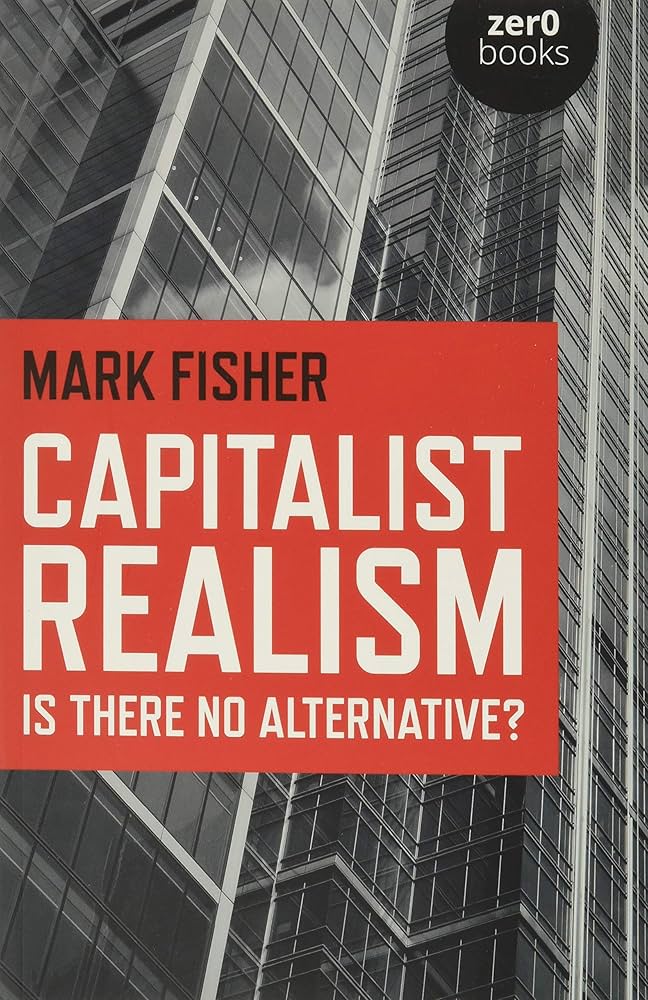
After 1989, capitalism has presented itself as the only realistic political-economic system. What effects has this “capitalist realism” had on work, culture, education and mental health? Is it possible to imagine an alternative to capitalism that is not some throwback to discredited models of state control?

This collection of writings by Mark Fisher, author of the acclaimed Capitalist Realism, argues that we are haunted by futures that failed to happen. Fisher searches for the traces of these lost futures in the work of David Peace, John Le Carré, Christopher Nolan, Joy Division, Burial and many others.

What exactly are the ‘weird’ and the ‘eerie’? In this new essay, Mark Fisher argues that some of the most haunting and anomalous fiction of the 20th century belongs to these two modes.The ‘weird’ and the ‘eerie’ are closely related but distinct modes, each possessing its own properties.Both have often been associated with Horror, yet this emphasis overlooks the aching fascination that such texts can exercise. The ‘weird’ and the ‘eerie’ both fundamentally concern the outside and the unknown, which are not intrinsically horrifying, even if they are always unsettling. Perhaps a proper understanding of the human condition requires examination of liminal concepts such as the ‘weird’ and the ‘eerie’.These two modes will be analysed with reference to the work of authors such as H.P. Lovecraft, H.G. Wells, M.R. James, Christopher Priest, Joan Lindsay, Nigel Kneale, Daphne du Maurier, Alan Garner and Margaret Atwood and films by Stanley Kubrick, Jonathan Glazer, and Christopher Nolan.

Edited with an introduction by Matt Colquhoun, this idiosyncratic collection of lecture notes and transcriptions reveals acclaimed writer and blogger Mark Fisher in his element — the classroom — sketching the outlines of a project that Fisher’s death left so bittersweetly unfinished.Beginning with that most fundamental of questions — “Do we really want what we say we want?” — Fisher explores the relationship between desire and capitalism, and wonders what new forms of desire we might still excavate from the past, present, and future. From the emergence and failure of the counterculture in the 1970s to the continued development of his left-accelerationist line of thinking, this volume charts a tragically interrupted course for thinking about the raising of a new kind of consciousness, and the cultural and political implications of doing so.For Fisher, this process of consciousness raising was always, fundamentally, psychedelic — just not in the way that we might think…

This summer, I seriously considered withdrawing from any involvement in politics. Exhausted through overwork, incapable of productive activity, I found myself drifting through social networks, feeling my depression and exhaustion increasing.‘Left-wing’ Twitter can often be a miserable, dispiriting zone. Earlier this year, there were some high-profile twitterstorms, in which particular left-identifying figures were ‘called out’ and condemned. What these figures had said was sometimes objectionable; but nevertheless, the way in which they were personally vilified and hounded left a horrible residue: the stench of bad conscience and witch-hunting moralism. The reason I didn’t speak out on any of these incidents, I’m ashamed to say, was fear. The bullies were in another part of the playground. I didn’t want to attract their attention to me.

Donna Haraway's celebrated observation that "our machines are disturbingly lively, while we ourselves are frighteningly inert" has given this issue a certain currency in contemporary cyber-theory. But what is in- teresting about Haraway's remark - its challenge to the oppositional think- ing that sets up free will against determinism, vitalism against mechanism - has seldom been processed by a mode of theorizing which has tended to reproduce exactly the same oppositions. These theoretical failings, it will be argued here, arise from a resistance to pursuing cybernetics to its limits (a failure evinced as much by cyberneticists as by cultural theorists, it must be added). Unraveling the implications of cybernetics, it will be claimed, takes us out to the Gothic flatline. The Gothic flatline designates a zone of radical immanence. And to theorize this flatline demands a new approach, one committed to the theorization of immanence. This thesis calls that approach Gothic Materialism.

A short zine collecting an introduction to the concept by Matt Colquhoun that appeared in 'krisis journal for contemporary philosophy Issue 2, 2018: Marx from the Margins' and the unfinished introduction to the unfinished book on Acid Communism that Mark Fisher was working on before his death in 2017."In this way ‘Acid’ is desire, as corrosive and denaturalising multiplicity, flowing through the multiplicities of communism itself to create alinguistic feedback loops; an ideological accelerator through which the new and previously unknown might be found in the politics we mistakenly think we already know, reinstantiating a politics to come."—Matt Colquhoun

«Al establecer conexiones entre campos remotos, Mark podía identificar la metafísica de un programa de televisión, las verdades psicoanalíticas latentes en una canción de Joy Division, las resonancias políticas de una película de Kubrick. Siento su ausencia como amigo y como camarada, pero más que nada como lector. Muchos días me pregunto qué habría dicho Mark sobre esto o aquello. Su escritura hacía que todo pareciera más cargado de significados. Leerlo producía adicción.» Simon Reynolds“Intelectual sin ser académica, popular sin ser populista”: de esta manera caracterizaba Mark Fisher la misión de su labor crítica. Su relación con la vida universitaria había sido siempre incomoda, y fue a partir de descubrir el potencial democratizador de los blogs y de utilizarlo como un conducto para el intercambio entre la cultura popular y la teoría que encontró su medio y su voz. k-punk (primero el nombre de su página, luego una especie de identidad digital alternativa, como las de los productores de jungle que tanto amaba) pronto devino el centro y el catalizador de una comunidad de investigadores autodidactas, académicos desencantados y excéntricos de toda clase que saqueaban la obra de pensadores consagrados en busca de herramientas analíticas que eran utilizadas de modo no convencional.Al reunir una parte significativa de esa desbordante producción online, además de reseñas, columnas de opinión, artículos activistas y ensayos que publicaba en simultaneo en revistas y libros, esta ambiciosa recopilación se propone reconstruir por primera vez la huella de aquellos años de escritura frenética y contagiosa en las que ya aparecerían sus obsesiones: el modernismo popular, los privilegios de clase, la precariedad y la depresión, las formas poscapitalistas del deseo, la hauntología y el realismo capitalista. Este libro –el primero de tres volúmenes– incluye sus textos sobre literatura, cine y televisión, y cubre un amplio arco de referentes que incluye a autores como J.G. Ballard, Margaret Atwood o Patricia Highsmith, directores como Cronenberg, Marker o Nolan, películas como Stars Wars, Los juegos del hambre o Terminator y programas televisivos como Big Brother, Breaking Bad, Westworld o The Americans.

Il nostro desiderio è senza nome è il primo dei volumi che minimum fax dedica agli scritti di Mark Fisher apparsi sul suo leggendario blog k-punk e su diversi giornali e riviste. In questo volume sono raccolti gli scritti politici, tra cui anche «Comunismo acido», la fulminante e incompiuta introduzione a quello che avrebbe dovuto essere il suo nuovo progetto. Senza lacrimosa nostalgia Fisher guarda agli anni Settanta del secolo scorso per parlare agli anni Dieci: il disappunto nei confronti della «nuova» sinistra che, sempre più impantanata nelle logiche neoliberiste, ha ormai tragicamente interiorizzato il principio tatcheriano per cui «non c’è alternativa» al capitalismo; il nuovo assetto del mondo del lavoro, sempre più atomizzato, pervasivo e precario, che ha privato i lavoratori del tempo e delle prospettive; la piaga dilagante della malattia mentale; il progressivo smantellamento del welfare; la Brexit; la minaccia del terrorismo. In un fosco panorama cybergotico e postapocalittico, Fisher non concede nulla alla rassegnazione, e anzi cerca instancabilmente una via d’uscita da quel «realismo capitalista» che rende impossibile anche solo sognare una condizione migliore: una rivolta contro la mancanza di alternative economiche, sociali ed esistenziali che sembra il segno più forte del nostro presente. Si tratta di rifiutare l’atteggiamento depressivo a cui le logiche di mercato ci hanno educati, e «valutare in modo responsabile e pragmatico le risorse a nostra disposizione qui e ora, e riflettere su come utilizzarle al meglio e incrementarle. Di muovere – magari lentamente, ma con assoluta determinazione – da dove ci troviamo oggi a un luogo molto diverso».

This is not an ordinary book on Michael Jackson. It is neither an unthinking tribute nor a rumor-mongering character assassination. The Resistible Rise Of Michael Jackson is the definitive account of the man's life and legacy by two generations of the world's best music writers. It will be appreciated by anyone who loved Jackson's records and wants to understand the times he defined. Written with erudition, originality and passion, these essays are the literary complement to the man they seek to understand. File this book with the records; it will help you enjoy them more. Contributors include Steven Shaviro, Joshua Clover, Barney Hoskyns, Paul Lester, Ian Penman, Chris Roberts, Mark Sinker, David Stubbs

La coincidencia de la música y la política en este segundo volumen de los escritos de Mark Fisher podría parecer arbitraria. Sin embargo, ese cruce será fundamental para lograr lo que él consideraba un objetivo estratégico: superar el efecto alienante del pensamiento académico y la estética deslibidinizante de la izquierda. Tanto el laboratorio de escritura experimental que fue durante los años ochenta la prensa musical británica como aquellos episodios electrificantes en los que la música popular se convirtió en un catalizador para las tendencias colectivas y sensibilidades radicales son las bases sobre las que Fisher edificó un proyecto que se proponía volver a conectar la crítica cultural con un programa político. El glam de clase trabajadora de bandas como Roxy Music o Visage, el modernismo pulp de The Fall, el culto suburbano a bandas góticas como The Cure, el sonido alienígena del jungle o los paisajes sónicos post-rave de Burial proporcionarán modelos para escapar del agotamiento de la imaginación que impone el realismo capitalista.K-punk puede interpretarse como un manual sobre cómo escribir crítica cultural en el siglo XXI. Si en el primer volumen comprendimos que la “k” del seudónimo blogger de Fisher refería a kuber (el término griego para «ciber»), esta entrega despeja toda duda sobre el segundo componente. Aquí la estética punk se manifiesta tanto en la prosa afilada con la que demuele a sus enemigos (Tony Blair, la prensa liberal británica, los festivales de rock) como en la urgencia de sus intervenciones, que operan como incisivos comentarios de la coyuntura en tiempo real. Leemos agudas reflexiones sobre resultados electorales o la crisis financiera de 2008, crónicas de los saqueos de Londres en 2011 y glosas sobre su insidiosa cobertura mediática. Este libro nos sugiere también elementos para una certera crítica a la privatización de la educación y de la salud mental, y para un análisis de los efectos nocivos del empleo precario y la adicción a los smartphones. El efecto de lectura refuerza la pregunta que nos acecha desde su muerte: ¿qué pensaría Mark Fisher sobre nuestra catastrófica actualidad? Las últimas entradas de este volumen –sobre ISIS, Trump y el Brexit– nos ayudan a imaginar algunas respuestas.

Si bien el principio que organiza los escritos reunidos de Mark Fisher no es cronológico, este tercer volumen refleja de manera fiel aquellas problemáticas que lo desvelaron los últimos años de su vida. En varias de las entrevistas seleccionadas para este libro, así como en sus numerosas intervenciones online entre las que destacan escritos como “Spinoza, k-punk, neuropunk”, “Bueno para nada” o el audaz, y en su momento muy debatido, “Salir del Castillo de Vampiros”, Fisher confrontaba una vez más con el purismo paralizante de la izquierda. Solo que en esta oportunidad su foco está puesto fundamentalmente en cómo las redes sociales, con sus ejércitos de trolls tóxicos y moralismo de caza de brujas, amplifican nuestros peores impulsos, incentivando por medio de algoritmos la indignación rápida y desmantelando casi por completo todo sentido de camaradería, conciencia de clase y solidaridad. Un fenómeno que, por supuesto, no ha dejado de crecer y que demuestra cuán efectivas son las tecnologías sociales del capitalismo comunicativo a la hora de exacerbar ciertas pulsiones y bloquear otras.Pero, como suele ocurrir con la obra de Fisher, a la crítica de los mecanismos que empobrecen nuestra potencia política le sigue el señalamiento sobre la positividad de aquello que “el capital se ve obligado a obstruir siempre: la capacidad colectiva de producir, cuidarnos y disfrutar”. En esta última entrega de K-punk, lo que funciona como coda inspiradora y luminosa son las mismas páginas que estamparon el final abierto con el que concluyó su legado intelectual. Nos referimos a la introducción a Comunismo ácido, el libro en el que estaba trabajando al momento de su muerte. Mucho se escribió y se seguirá escribiendo al respecto de su última visión para una política emancipadora. Comunismo ácido iba a ser un programa materialista y psicodélico destinado a liberar la imaginación política del constreñimiento del realismo capitalista, a partir de retomar la revolución social y psíquica que la contracultura de los años sesenta había comenzado y que el neoliberalismo tan eficazmente supo desarticular. Que el proyecto haya quedado inconcluso puede interpretarse como una invitación a continuarlo allí donde él lo dejó, teniendo siempre presente que la invención de un horizonte inédito de activismos culturales y políticos debe exceder la subjetividad de un escritor para volverse una tarea colectiva.

«Προς το παρόν, η επιθυμία μας δεν έχει όνομα – αλλά είναι πραγματική. Η επιθυμία μας αφορά το μέλλον –μια διαφυγή από τα αδιέξοδα και την απέραντη έρημο των ατελείωτων επαναλήψεων του κεφαλαίου– και προέρχεται από το μέλλον – εκείνο το μέλλον όπου νέες αντιλήψεις, επιθυμίες, γνώσεις θα είναι και πάλι δυνατές. Μέχρι στιγμής, μπορούμε να συλλάβουμε αυτό το μέλλον μόνο μέσα από αναλαμπές. Είναι όμως στο χέρι μας να κατασκευάσουμε αυτό το μέλλον, τη στιγμή που –σε ένα άλλο επίπεδο– εκείνο ήδη κατασκευάζει εμάς: μια νέα μορφή συλλογικότητας, μια νέα δυνατότητα να μιλάμε σε πρώτο πληθυντικό. Κάποια στιγμή σε αυτή τη διαδρομή, το όνομα της νέας μας επιθυμίας θα μας φανερωθεί – και θα το αναγνωρίσουμε.»Τα είκοσι δύο κείμενα του Φίσερ που περιλαμβάνονται σε αυτό το βιβλίο, κείμενα για τον καπιταλιστικό ρεαλισμό και για τη μυστική θλίψη του 21ου αιώνα, αποτελούν μια αντιπροσωπευτική επιλογή από το έργο του, που οργανώνεται γύρω από τους άξονες της δυσφορίας, της κουλτούρας και της πολιτικής.

This selection of essays from The Collected and Unpublished Writings of Mark Fisher (2004-2016) brings together the best of Fisher's political writing. Ranging across topics from UK and American politics to communist realism, football, and depression, as well as including the unpublished introduction to what would have been his next book on acid communism, Politics shows Fisher at his most combative and incendiary, wrangling with the contradictions and complexities of capitalism and setting out the way forward into a more just, fair, and equal future for all.

Schermi, sogni e spettri, il secondo dei volumi che minimum fax dedica agli scritti di Mark Fisher apparsi sul suo leggendario blog k-punk e su diversi giornali e riviste, comprende le sue riflessioni sul cinema e la televisione. Fisher è uno spettatore appassionato e curioso, senza pregiudizi ma con un occhio radicale, che analizza con uguale impegno e passione i film che hanno inciso in profondità sull’immaginario contemporaneo (Avatar, I figli degli uomini, V per Vendetta, Hunger Games, Batman) e le serie tv più innovative e inquietanti (Breaking Bad, The Leftovers, Westworld), ma anche il reality, documentari, talk show politici. A interventi d’occasione, ma mai occasionali nel giudizio e nella scrittura, si affiancano scritti su classici come la leggendaria serie inglese Il prigioniero, Shining o la saga di Guerre Stellari (che, precisa Fisher, si «svenduta» fin dall'inizio). Fisher affronta così maestri del passato e contemporanei, da Kubrick a Chris Marker, da Cronenberg a Nolan, e li inserisce in un fitto dialogo intellettuale con Marx, Freud, Lacan, Foucault, Žižek e scrittori come Philip K. Dick e Richard Matheson, tra inedite interpretazioni del passato e profetiche visioni sul futuro.La critica cinematografica è sempre anche critica dell’ideologia, e con l’originalità di pensiero e sguardo che lo contraddistingue in ogni suo intervento, Fisher prosegue anche qui il suo lungo confronto con il presente troppo reale del «realismo capitalista» e con gli spettri dell’utopia e della distopia.

Nel percorso tragicamente interrotto che ha fatto di Mark Fisher il critico culturale forse più influente delle ultime generazioni, la musica ha sempre rappresentato un interesse primario, quasi che le evoluzioni della scena pop e rock a cavallo del millennio rappresentassero lo specchio ideale per riflettere sulle dinamiche sociali e psicologiche della contemporaneità. Dopo aver sviscerato le ragioni di tale convinzione in Spettri della mia vita, nei saggi di Scegli le tue armi Fisher approfondisce le proprie riflessioni spaziando dal post punk alla jungle, dai Joy Division agli Scritti Politti. E disegna uno scenario complesso e affascinante, nel quale l'incapacità di immaginare il futuro, la rappresentazione di una metropoli «digitalizzata» e ostile, la catatonia e lo spegnersi delle pulsioni sessuali che caratterizzavano la grande stagione del rock vengono spiegati attraverso i cambiamenti traumatici che hanno investito il mondo intero: la globalizzazione del lavoro, l'ansia generalizzata, il crollo di tutte le certezze novecentesche. Una raccolta fondamentale per chi, attraverso la musica, cerca prospettive sorprendenti e spietate che illuminino il mondo postcapitalistico nel quale siamo costretti a vivere.

Сборник эссе, интернет-постов и интервью из блога Марка Фишера k-punk — знакового культурного пространства глобальной современности.Возникший в эпоху раннего интернета, в 2003 году, блог k-punk британского музыкального критика и теоретика культуры Марка Фишера (1968–2017) стал знаковым культурным пространством глобальной современности. Из огромного архива Фишера, в том числе и неопубликованного в печати, мы отобрали эссе, интернет-посты и интервью, которые обращаются к всеобщему ощущению ненужности, депрессии, невозможности и в то же время горячему желанию фундаментальных перемен, а также сопровождающей эти чувства поп-культуре. В своем живом и эмоциональном анализе Фишер совмещает повседневность с высокими гуманитарными науками, музыку, кино и интернет-дебаты с экзистенциальными вопросами, поверяя всё это панковским мировоззрением, которое отказывается принимать то, что есть, за чистую монету и неизменную истину.

El neoliberalisme ha sabut desmantellar la revolució dels anys seixanta, però no tot està perdut.En aquesta apassionant antologia Mark Fisher ens submergeix en un viatge materialista alhora que psicodèlic amb l'objectiu de deslliurar la imaginació política de les cadenes del realisme capitalista. A través de la recuperació de la revolució social i psíquica que va començar la contracultura dels anys seixanta, l'autor ens convida a explorar les possibilitats d'alliberament i transformació. El comunisme àcid es presenta com una invitació a explorar horitzons inèdits d'activisme cultural i polític, superant les limitacions imposades pel sistema actual. És una crida a abraçar la creativitat, la solidaritat i la visió col·lectiva com a eines per construir un futur més just i lliure.Mark Fisher va assajar diferents modes de militància, i, en repetides ocasions, va aconseguir treure forces de feblesa quan es van agreujar els episodis depressius per continuar escrivint a K-Punk i intervenint en l'esfera pública.És hora de somiar, d'actuar i de viure més enllà dels límits imposats, perquè el futur està esperant-nos.

Non siamo qui per intrattenervi. Scritti sulla letteratura, interviste e riflessioni. K-punk, Vol. 4
by Mark Fisher
Rating: 4.2 ⭐
Critico culturale radicalmente «pop», Fisher è stato in grado di scorgere il comune denominatore sociopolitico che sottende voci e forme artistiche diversissime. Fondendo nella sua analisi letteratura, filosofia, economia e archeologia culturale, ha tracciato linee che convergono verso il nodo cruciale delle sue riflessioni: la fallacia di pensiero che da decenni condiziona le nostre esistenze: quel «realismo capitalista» che ci induce a credere che, per quanto la situazione possa apparire disperata, non esiste alternativa. Nelle interviste, nelle riflessioni e negli scritti sulla letteratura contenuti nel quarto e ultimo volume della raccolta K-punk, Fisher analizza le migliori distopie e le peggiori utopie della nostra epoca, la nostra ossessione nostalgica e la nostra incapacità di inventare il futuro, la deriva censoria della sinistra, la scomparsa della dialettica di classe dal discorso politico e la privatizzazione della depressione. Gli scritti di Mark Fisher – intelligentissimi, illuminanti, a tratti dolorosi – non smettono di sorprendere, e confermano quanto sia necessario il suo pensiero per comprendere il contemporaneo e per provare a immaginare il tempo che ci attende.

Hyperdub launch new sub-label, Flatlines, for the vinyl and digital release of On Vanishing Land, an audio-essay by Justin Barton and the late Mark Fisher. OVL evokes a walk along the Suffolk coastline in 2006, from Felixstowe container port ("a nerve ganglion of capitalism") to the Anglo-Saxon burial ground at Sutton Hoo. A walk under immense skies, through zones of deep time and within sunlit, liminal terrains, into the eerie.Everywhere there are charged atmospheres, shadowy incursions, enigmatic departures. A derelict radar base, coastal heathland, drifting thistledown, towers of overgrown shipping containers - music haunted by wider levels of reality, narrations about rarely visited zones and potentials, voices of dreams and stories. Newly composed tracks by John Foxx, Gazelle Twin, Baron Mordant, Raime, Pete Wiseman, Farmers of Vega, Skjolbrot, Eerie Anglia, Ekoplekz and Dolly Dolly; and, alongside these, views toward M.R. James’s Oh Whistle and I’ll Come to You My Lad (1904), Joan Lindsay’s Picnic at Hanging Rock (1967), and Brian Eno’s On Land (1982). Beyond the surface of the day something becomes visible, a way forward, an escape-path from capitalist reality. On Vanishing Land is about following the lines of terrains and dreams. It is about a micropolitics of escape, of disappearance. A micropolitics of waking the faculties.“It is April, but it feels like summer. They turn left onto the seafront […]”On Vanishing Land was initially part of an exhibition commissioned by The Otolith Collective and The Showroom in London, and after londonunderlondon (2005) it was the second audio-work collaboration by Justin Barton and Mark Fisher. The LP cover features photos taken by Mark Fisher and a short essay by Justin Barton.


“So I’ve been trying to think of what remains after the physical body’s gone, when the singularity of a life can no longer rely on that frail support and needs other carriers. I try to think about it in a way I think he’d appreciate: in terms of an abstract, impersonal force acting in the present tense. The spectre isn’t a matter of pretending he’s still here in person—as if the notion of a ‘person’ wasn’t precisely what was at issue—or of commemoration or superstition, but—to use a word of his own invention—a question of hyperstition: What is the Fisher-Function? How did it make itself real, and how can we continue to realise it? Many of us naturally feel a need to ensure this is a moment when the force he brought into our world is redoubled rather than depleted. And to do so, to continue his work and our own, we have to try to understand his life, and the consequences of his death, at once horrifying and awakening, as a part of the Fisher-Function. And I don’t simply mean the intellectual contributions that we can appreciate, extend, take forward into the future; I also mean what we need to learn in terms of looking after ourselves and each other, right now.”Robin Mackay [Urbanomic 2017]

This selection of essays from The Collected and Unpublished Writings of Mark Fisher (2004-2016) brings together the best of Fisher's political writing. In Music, Fisher seamlessly blends political theory with music analysis, discussing the impact of neoliberalism and related political ideologies on the music industry and major music events such as Glastonbury.©2020 Mark Fisher (P)2020 Repeater Books


Inspireret af de modkulturelle bevægelser i 1960’erne og 1970’erne præsenterer Mark Fisher ideen om syrekommunisme som en måde at forestille sig en anden verden på, der kombinerer politisk aktivisme med psykedelisk kultur. Fisher opfordrer til at genopdage det utopiske potentiale i disse bevægelser og lade os inspirere til at skabe en ny kultur baseret på kollektive behov og alternative fællesskaber.Med udgangspunkt i tankerne i Kapitalistisk realisme. Findes der ikke noget alternativ? og Ghosts of My Life. Writings in Depression, Hauntology + Lost Futures kritiserer Fisher neoliberalismens gennemgribende bemægtigelse af alle livets facetter og advokerer for at overvinde nutidens fremmedgørelse og isolation gennem fantasi og eksperimentering. Hans arbejde tilskynder til en nytænkning af venstreorienteret politik med det formål at genantænde håbet og muligheden for en mere retfærdig og glædesfyldt fremtid. Syrekommunisme er således både en kritik og en opfordring til handling, der giver læseren mod på at forestille sig og stræbe efter en radikalt anderledes verden.Den britiske forfatter Mark Fisher (f. 1968, d. 2017) var kulturkritiker, filosof og lektor ved Goldsmiths University i London. Han var kendt som en uovertruffen formidler og skrev op igennem 00’erne og 10’erne om politiske, aktivistiske og filosofiske emner på sin blog k-punk. org. Bloggen var et fristed for komplekse debatter uden for den akademiske verden og inspirerede mange til at give sig i kast med aktivisme og finde alternativer til den kapitalistiske kultur. Fisher udgav flere bøger, herunder Ghosts of My Life. Writings on Depression, Hauntology + Lost Futures og The Weird And The Eerie, men han er især kendt for den nu klassiske Kapitalistisk realisme. Findes der ikke noget alternativ?, der udkom på dansk på forlaget Antipyrine i 2021.

The Little Book of Gym Marketing Secrets: A No-Fluff And Comprehensive Manual For Gym Owners Who Want More Leads And More Clients
by Mark Fisher
Rating: 5.0 ⭐
Hey there fellow Gym Owner!Let’s come right out with marketing a gym can be hard.It’s frustrating when…● Your lead flow is more like a lead trickle● You’re doing lots of “marketing stuff,” but not getting traction● Your sales opportunities are wildly inconsistent from week to weekWhat we want ● A steady stream of interested –– and qualified –– prospects● The peace of mind that comes from knowing we’re using our time well● A growing base of happy clients and revenue that increases month over monthIn this book, you’ll learn the very best tools and strategies for achieving these goals.We will ● Core Marketing Tools● Lead Generation Systems● Lead Nurture Systems● Lead Conversion Systems● Marketing PlannersThis short book is going to be dense and devoid of any fluff.So buckle up! ;-)

Mark Fisher, jeden z nejvlivnějších britských kulturních teoretiků 21. století, se v této knize vrací k hudbě, filmům a televizním pořadům, které formovaly jeho vnímání světa, a skrze ně zkoumá hlubší pocity ztráty, melancholie a kulturní stagnace.Po zhroucení vize budoucnosti, kterou nabízely modernistické projekty minulého století, se podle Fishera naše kultura stala posedlou vlastní minulostí. Pop se stal hauntologickým – pronásledovaným přízraky toho, co by mohlo být, ale nikdy se nestalo.Fisher s typickou pronikavostí píše o Joy Division, Burialovi, Stanleym Kubrickovi nebo BBC. Odhaluje, jak kulturní produkty posledních desetiletí stále znovu a znovu recyklují minulost a jak se kolektivní představivost zasekla v opakování, protože si už nedokáže představit nic radikálně nového.
The Human Drama
by Mark Fisher

Capitalist Realism: Is there no alternative?
by Mark Fisher
After 1989, capitalism has successfully presented itself as the only realistic political-economic system - a situation that the bank crisis of 2008, far from ending, actually compounded. The book analyses the development and principal features of this capitalist realism as a lived ideological framework. Using examples from politics, films, fiction, work and education, it argues that capitalist realism colours all areas of contemporary experience. But it will also show that, because of a number of inconsistencies and glitches internal to the capitalist reality program capitalism in fact is anything but realistic.