
William Deresiewicz
William Deresiewicz was an associate professor of English at Yale University until 2008 and is a widely published book critic. His reviews and essays have appeared in The New York Times, The New Republic, The Nation, Bookforum, and The American Scholar. He was nominated for National Magazine awards in 2008 and 2009 and the National Book Critics Circle's Nona Balakian Citation for Excellence in Reviewing in 2010. Wlliam Deresiewicz is an award-winning essayist and critic, a frequent college speaker, and the best-selling author of Excellent Sheep: The Miseducation of the American Elite and the Way to a Meaningful Life. He taught English at Yale and Columbia before becoming a full-time writer in 2008.
10 Books Written

Making Art in the Twenty-First Century: How Writers, Musicians, and Others are Earning a Living—or Trying to—in the Digital Age
by William Deresiewicz
Rating: 4.0 ⭐
• 2 recommendations ❤️
A deeply researched warning about how the digital economy threatens artists' lives and work―the music, writing, and visual art that sustain our souls and societies―from an award-winning essayist and criticThere are two stories you hear about earning a living as an artist in the digital age. One comes from Silicon Valley. There's never been a better time to be an artist, it goes. If you've got a laptop, you've got a recording studio. If you've got an iPhone, you've got a movie camera. And if production is cheap, distribution is it's called the Internet. Everyone's an artist; just tap your creativity and put your stuff out there.The other comes from artists themselves. Sure, it goes, you can put your stuff out there, but who's going to pay you for it? Everyone is not an artist. Making art takes years of dedication, and that requires a means of support. If things don't change, a lot of art will cease to be sustainable.So which account is true? Since people are still making a living as artists today, how are they managing to do it? William Deresiewicz, a leading critic of the arts and of contemporary culture, set out to answer those questions. Based on interviews with artists of all kinds, The Death of the Artist argues that we are in the midst of an epochal transformation. If artists were artisans in the Renaissance, bohemians in the nineteenth century, and professionals in the twentieth, a new paradigm is emerging in the digital age, one that is changing our fundamental ideas about the nature of art and the role of the artist in society.

Excellent Sheep: The Miseducation of the American Elite and the Way to a Meaningful Life
by William Deresiewicz
Rating: 3.9 ⭐
As a professor at Yale, Bill Deresiewicz saw something that troubled him deeply. His students, some of the nation’s brightest minds, were adrift when it came to the big questions: how to think critically and creatively, and how to find a sense of purpose.Excellent Sheep takes a sharp look at the high-pressure conveyor belt that begins with parents and counselors who demand perfect grades and culminates in the skewed applications Deresiewicz saw firsthand as a member of Yale’s admissions committee. As schools shift focus from the humanities to "practical" subjects like economics and computer science, students are losing the ability to think in innovative ways. Deresiewicz explains how college should be a time for self-discovery, when students can establish their own values and measures of success, so they can forge their own path. He addresses parents, students, educators, and anyone who's interested in the direction of American society, featuring quotes from real students and graduates he has corresponded with over the years, candidly exposing where the system is broken and clearly presenting solutions.

A Jane Austen Education: How Six Novels Taught Me About Love, Friendship, and the Things That Really Matter
by William Deresiewicz
Rating: 3.8 ⭐
Before Jane Austen, William Deresiewicz was a very different young man. A sullen and arrogant graduate student, he never thought Austen would have anything to offer him. Then he read Emma—and everything changed. In this unique and lyrical book, Deresiewicz weaves the misadventures of Austen’s characters with his own youthful follies, demonstrating the power of the great novelist’s teachings—and how, for Austen, growing up and making mistakes are one and the same. Honest, erudite, and deeply moving, A Jane Austen Education is the story of one man’s discovery of the world outside himself.
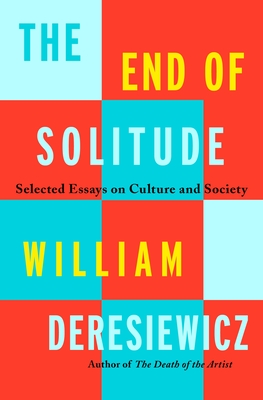
A passionate, probing collection gathering nearly thirty years of groundbreaking reflection on culture and society alongside four new essays, by one of our most respected essayists and critics.What is the internet doing to us? What is college for? What are the myths and metaphors we live by? These are the questions that William Deresiewicz has been pursuing over the course of his award-winning career. The End of Solitude brings together more than forty of his finest essays, including four that are published here for the first time.Ranging widely across the culture, they take up subjects as diverse as Mad Men and Harold Bloom, the significance of the hipster, and the purpose of art. Drawing on the past, they ask how we got where we are. Scrutinizing the present, they seek to understand how we can live more mindfully and freely, and they pose two fundamental What does it mean to be an individual, and how can we sustain our individuality in an age of networks and groups?

The lecture was delivered to the plebe class at the United States Military Academy at West Point in October 2009.

Never before has admission to elite colleges been so sought after. Parents spend a fortune trying to get their kids in; kids spend their high school years preparing to fill in every blank on their applications. But what, in the end, does it get them? asks William Deresiewicz, a former Yale University professor and author of A Jane Austen Education. The elite college system, he writes, produces highly skilled and specialized young people, who are poorly equipped for life. And these are the people who will one day run the country. Here, in this eye-opening eBook, is what every parent, student, and citizen needs to know.

This elegant and thoughtful work offers an important new way of understanding Jane Austen by defining the fundamental impact and influence of British Romanticism on her later novels. In comparing the earlier and later phases of Austen's career, Deresiewicz addresses an important yet neglected issue regarding her the longstanding critical consensus that Austen's last three novels ( Mansfield Park , Emma , and Persuasion ) represent far greater artistic achievements than do her first three ( Northanger Abbey , Sense and Sensibility , and Pride and Prejudice ).Jane Austen and the Romantic Poets offers a rich account of the differences between the two phases of Austen's career. In doing so, it contextualizes her later novels within the British Romantic movement and the works of Wordsworth, Coleridge, Scott, and Byron. Through close readings of Mansfield Park , Emma , and Persuasion , Deresiewicz reveals the importance of Romantic ideas in Austen's later work, considering the ways in which the novels investigate hidden mechanisms of psychic and affective life, including "substitution," "ambiguous relationships," and "widowhood." Deresiewicz's innovative approach and its emphasis on Romanticism opens up new perspectives on Austen's later novels by exploring their patterns of imagery, narrative logics, and social and historical dimensions.

The Death of the Artist: How Creators Are Struggling to Survive in the Age of Billionaires and Big Tech
by William Deresiewicz
Rating: 4.3 ⭐
这是一本关于艺术与金钱的书。在这本书中,作者讲述了在21世纪的经济环境下,艺术家们(包括音乐人、作家、视觉艺术家、电影电视制片人)谋生与奋斗的故事。如今还有人以艺术家的身份为生,这些人又是如何做到的呢?作者作为一位顶尖的艺术与当代文化批评家,试图揭开这些谜团。如果说艺术家在文艺复兴时期还是匠人,在十九世纪还在流浪,而在二十世纪则趋于职业化,那么在数字时代,一种新的范式正在应运而生,这种范式正在不断改变我们如何看待艺术的本质以及艺术家在社会中的角色。这是一部反映当下艺术家群体生存状态与时代变革的作品,极具现实意义。


Weekly columns from "The American Scholar" (2011-2013)https://theamericanscholar.org/dept/a...#