Loading themes...
Explore the best books about Space theme.

A race for survival among the stars... Humanity's last survivors escaped earth's ruins to find a new home. But when they find it, can their desperation overcome its dangers?WHO WILL INHERIT THIS NEW EARTH?The last remnants of the human race left a dying Earth, desperate to find a new home among the stars. Following in the footsteps of their ancestors, they discover the greatest treasure of the past age—a world terraformed and prepared for human life.But all is not right in this new Eden. In the long years since the planet was abandoned, the work of its architects has borne disastrous fruit. The planet is not waiting for them, pristine and unoccupied. New masters have turned it from a refuge into mankind's worst nightmare.Now two civilizations are on a collision course, both testing the boundaries of what they will do to survive. As the fate of humanity hangs in the balance, who are the true heirs of this new Earth?
A lone astronaut. An impossible mission. An ally he never imagined.Ryland Grace is the sole survivor on a desperate, last-chance mission—and if he fails, humanity and Earth itself will perish.Except that right now, he doesn’t know that. He can’t even remember his own name, let alone the nature of his assignment or how to complete it.All he knows is that he’s been asleep for a very, very long time. And he’s just been awakened to find himself millions of miles from home, with nothing but two corpses for company.His crewmates dead, his memories fuzzily returning, Ryland realizes that an impossible task now confronts him. Hurtling through space on this tiny ship, it’s up to him to puzzle out an impossible scientific mystery—and conquer an extinction-level threat to our species.And with the clock ticking down and the nearest human being light-years away, he’s got to do it all alone.Or does he?

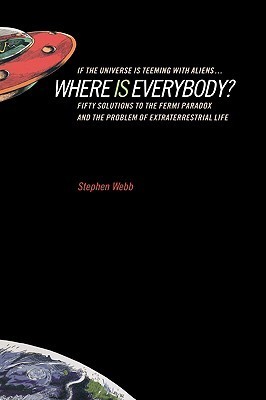
In a 1950 conversation at Los Alamos, four world-class scientists generally agreed, given the size of the Universe, that advanced extraterrestrial civilizations must be present. But one of the four, Enrico Fermi, asked, "If these civilizations do exist, where is everybody?" Given the fact that there are perhaps 400 million stars in our Galaxy alone, and perhaps 400 million galaxies in the Universe, it stands to reason that somewhere out there, in the 14 billion-year-old cosmos, there is or once was a civilization at least as advanced as our own. Webb discusses in detail the 50 most cogent and intriguing solutions to Fermi's famous paradox.

Spacetime and Geometry is an introductory textbook on general relativity, specifically aimed at students. Using a lucid style, Carroll first covers the foundations of the theory and mathematical formalism, providing an approachable introduction to what can often be an intimidating subject. Three major applications of general relativity are then discussed: black holes, perturbation theory and gravitational waves, and cosmology. Students will learn the origin of how spacetime curves (the Einstein equation) and how matter moves through it (the geodesic equation). They will learn what black holes really are, how gravitational waves are generated and detected, and the modern view of the expansion of the universe. A brief introduction to quantum field theory in curved spacetime is also included. A student familiar with this book will be ready to tackle research-level problems in gravitational physics.

From cyborgs, starships, UFOs, aliens and antimatter to telepathy, invisibility, psychokinesis and precognition, Michio Kaku's Physics of the Impossible is an exciting look at how science fiction could soon become science fact.Albert Einstein said, 'If at first an idea does not sound absurd, there is no hope for it.' Physics of the Impossible shows how our most far-fetched ideas today - from Star Trek's phasers and teleportation to time travel as envisioned by Back to the Future - are destined to become tomorrow's reality.Michio Kaku, bestselling science author and one of the world's most acclaimed physicists, looks at the technologies of the future and explains what's just around the corner, what we might have to wait a few millennia to get our hands on and how surprisingly little of it is truly impossible.'A brilliant, provocative, freewheeling tour around the exotic shores of physics' Independent'A rich compendium of jaw-dropping reality checks' The Times'One of the world's most distinguished physicists ... takes the reader on a journey to the frontiers of science and beyond' Guardian'After reading Kaku's boundless enthusiasm for the future, what you wouldn't give for a real-life time machine to travel forwards and see just how accurate his predictions are' Sunday TelegraphMichio Kaku is a leading theoretical physicist and one of the founders of string theory, widely regarded as the strongest candidate for the 'theory of everything'. He is also one of the most gifted popularizers of science of his generation. His books published by Penguin include Parallel Worlds, The Physics of the Future and The Physics of the Impossible. He holds the Henry Semat Professorship in Theoretical Physics at the City University of New York, where he has taught for over twenty-five years.

The first novel in Isaac Asimov's classic science-fiction masterpiece, the Foundation series For twelve thousand years the Galactic Empire has ruled supreme. Now it is dying. But only Hari Seldon, creator of the revolutionary science of psychohistory, can see into the future--to a dark age of ignorance, barbarism, and warfare that will last thirty thousand years. To preserve knowledge and save humankind, Seldon gathers the best minds in the Empire--both scientists and scholars--and brings them to a bleak planet at the edge of the galaxy to serve as a beacon of hope for future generations. He calls his sanctuary the Foundation.
A landmark volume in science writing by one of the great minds of our time, Stephen Hawking’s book explores such profound questions as: How did the universe begin—and what made its start possible? Does time always flow forward? Is the universe unending—or are there boundaries? Are there other dimensions in space? What will happen when it all ends?Told in language we all can understand, A Brief History of Time plunges into the exotic realms of black holes and quarks, of antimatter and “arrows of time,” of the big bang and a bigger God—where the possibilities are wondrous and unexpected. With exciting images and profound imagination, Stephen Hawking brings us closer to the ultimate secrets at the very heart of creation.

The historians can’t seem to settle whether to call this one "The Third Space War" (or the fourth), or whether "The First Interstellar War" fits it better. We just call it “The Bug War." Everything up to then and still later were "incidents," "patrols," or "police actions." However, you are just as dead if you buy the farm in an "incident" as you are if you buy it in a declared war...In one of Robert A. Heinlein’s most controversial bestsellers, a recruit of the future goes through the toughest boot camp in the Universe—and into battle with the Terran Mobile Infantry against mankind’s most alarming enemy.

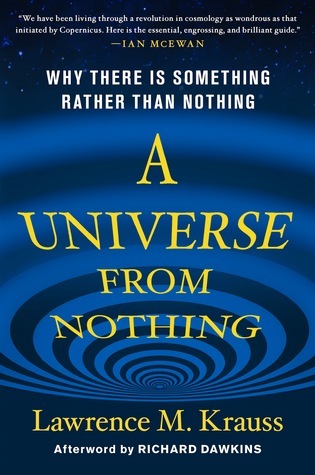
Bestselling author and acclaimed physicist Lawrence Krauss offers a paradigm-shifting view of how everything that exists came to be in the first place.“Where did the universe come from? What was there before it? What will the future bring? And finally, why is there something rather than nothing?”One of the few prominent scientists today to have crossed the chasm between science and popular culture, Krauss describes the staggeringly beautiful experimental observations and mind-bending new theories that demonstrate not only can something arise from nothing, something will always arise from nothing. With a new preface about the significance of the discovery of the Higgs particle, A Universe from Nothing uses Krauss’s characteristic wry humor and wonderfully clear explanations to take us back to the beginning of the beginning, presenting the most recent evidence for how our universe evolved—and the implications for how it’s going to end. Provocative, challenging, and delightfully readable, this is a game-changing look at the most basic underpinning of existence and a powerful antidote to outmoded philosophical, religious, and scientific thinking.

What is the nature of space and time? How do we fit within the universe? How does the universe fit within us? There’s no better guide through these mind-expanding questions than acclaimed astrophysicist and best-selling author Neil deGrasse Tyson.But today, few of us have time to contemplate the cosmos. So Tyson brings the universe down to Earth succinctly and clearly, with sparkling wit, in tasty chapters consumable anytime and anywhere in your busy day.

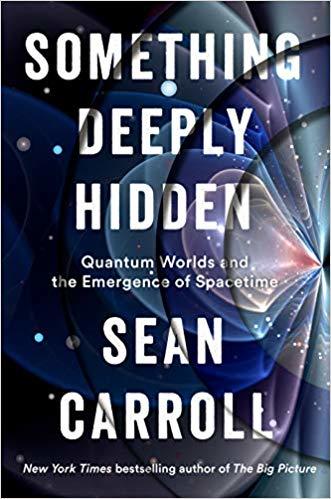
As you read these words, copies of you are being created. Sean Carroll, theoretical physicist and one of this world’s most celebrated writers on science, rewrites the history of 20th century physics. Already hailed as a masterpiece, Something Deeply Hidden shows for the first time that facing up to the essential puzzle of quantum mechanics utterly transforms how we think about space and time. His reconciling of quantum mechanics with Einstein’s theory of relativity changes, well, everything. Most physicists haven’t even recognized the uncomfortable truth: physics has been in crisis since 1927. Quantum mechanics has always had obvious gaps—which have come to be simply ignored. Science popularizers keep telling us how weird it is, how impossible it is to understand. Academics discourage students from working on the "dead end" of quantum foundations. Putting his professional reputation on the line with this audacious yet entirely reasonable book, Carroll says that the crisis can now come to an end. We just have to accept that there is more than one of us in the universe. There are many, many Sean Carrolls. Many of every one of us. Copies of you are generated thousands of times per second. The "many worlds theory" of quantum behavior says that every time there is a quantum event, a world splits off with everything in it the same, except in that other world the quantum event didn't happen. Step by step in Carroll's uniquely lucid way, he tackles the major objections to this otherworldly revelation until his case is inescapably established. Rarely does a book so fully reorganize how we think about our place in the universe. We are on the threshold of a new understanding—of where we are in the cosmos, and what we are made of.

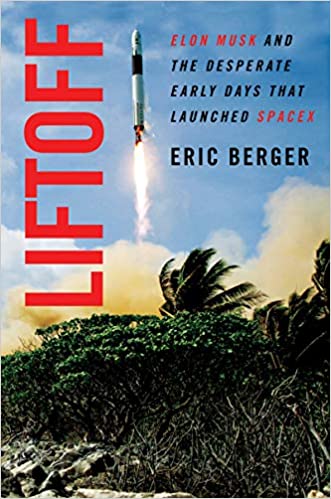
"This is as important a book on space as has ever been written and it's a riveting page-turner, too." —Homer Hickam, #1 New York Times Bestselling Author of Rocket BoysThe dramatic inside story of the historic flights that launched SpaceX—and Elon Musk—from a shaky startup into the world's leading-edge rocket company.SpaceX has enjoyed a miraculous decade. Less than 20 years after its founding, it boasts the largest constellation of commercial satellites in orbit, has pioneered reusable rockets, and in 2020 became the first private company to launch human beings into orbit. Half a century after the space race it is private companies, led by SpaceX, standing alongside NASA pushing forward into the cosmos, and laying the foundation for our exploration of other worlds.But before it became one of the most powerful players in the aerospace industry, SpaceX was a fledgling startup, scrambling to develop a single workable rocket before the money ran dry. The engineering challenge was immense; numerous other private companies had failed similar attempts. And even if SpaceX succeeded, they would then have to compete for government contracts with titans such as Lockheed Martin and Boeing, who had tens of thousands of employees and tens of billions of dollars in annual revenue. SpaceX had fewer than 200 employees and the relative pittance of $100 million in the bank.In Liftoff, Eric Berger, senior space editor at Ars Technica, takes readers inside the wild early days that made SpaceX. Focusing on the company’s first four launches of the Falcon 1 rocket, he charts the bumpy journey from scrappy underdog to aerospace pioneer. We travel from company headquarters in El Segundo, to the isolated Texas ranchland where they performed engine tests, to Kwajalein, the tiny atoll in the Pacific where SpaceX launched the Falcon 1. Berger has reported on SpaceX for more than a decade, enjoying unparalleled journalistic access to the company’s inner workings. Liftoff is the culmination of these efforts, drawing upon exclusive interviews with dozens of former and current engineers, designers, mechanics, and executives, including Elon Musk. The enigmatic Musk, who founded the company with the dream of one day settling Mars, is the fuel that propels the book, with his daring vision for the future of space.Filled with never-before-told stories of SpaceX’s turbulent beginning, Liftoff is a saga of cosmic proportions.

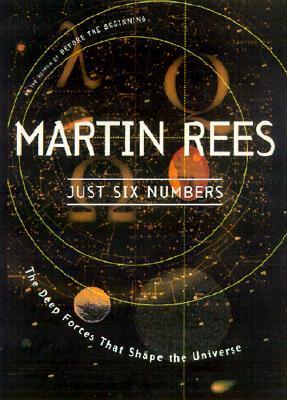
How did a single "genesis event" create billions of galaxies, black holes, stars and planets? How did atoms assemble -- here on earth, and perhaps on other worlds -- into living beings intricate enough to ponder their origins? What fundamental laws govern our universe?This book describes new discoveries and offers remarkable insights into these fundamental questions. There are deep connections between stars and atoms, between the cosmos and the microworld. Just six numbers, imprinted in the "big bang," determine the essential features of our entire physical world. Moreover, cosmic evolution is astonishingly sensitive to the values of these numbers. If any one of them were "untuned," there could be no stars and no life. This realization offers a radically new perspective on our universe, our place in it, and the nature of physical laws.

From science fiction master Peter F. Hamilton comes a standalone novel that is “a fascinating, compulsively readable clash of hardware and ideals”, political intrigue, and space opera at its best (Kirkus Reviews (starred review)). In the distant future, corporations have become sustainable communities with their own militaries, and corporate goals have essentially replaced political ideology. On a youthful, rebellious impulse, Lawrence joined the military of a corporation that he now recognizes to be ruthless and exploitative. His only hope for escape is to earn enough money to buy his place in a better corporation.When his platoon is sent to a distant colony to quell a local resistance effort, it seems like a stroke of amazing fortune, and Lawrence plans to rob the colony of their fabled gemstone, the Fallen Dragon, to get the money he needs. However, he soon discovers that the Fallen Dragon is not a gemstone at all, but an alien life form that the local colonists have been protecting since it crashed in their area. Now, Lawrence must decide if he will steal the alien to exploit the use of its inherent biotechnical processes — which far exceed anything humans are capable of — or if he will help the Resistance get the alien home.

This is a clear, vivid text with charts and maps showing the positions of the constellations the year round.
![The Whole Shebang: A State-of-the-Universe[s] Report](https://m.media-amazon.com/images/S/compressed.photo.goodreads.com/books/1347278841i/310330.jpg)
From the prizewinning author who has been called "the greatest science writer in the world" comes this delightfully comprehensive and comprehensible report on how science today envisions the universe as a whole. Timothy Ferris provides a clear, elegantly written overview of current research and a forecast of where cosmological theory is likely to go in the twenty-first century. He explores the questions that have occurred to even casual readers -- who are curious about nature on the largest scales: What does it mean to say that the universe is "expanding," or that space is "curved"? -- and sheds light on the possibility that our universe is only one among many universes, each with its own physical laws and prospects for the emergence of life.

On the Moon, an enigma is uncovered.So great are the implications of this discovery that for the first time men are sent out deep into our solar system.But long before their destination is reached, things begin to go horribly, inexplicably wrong...One of the greatest-selling science fiction novels of our time, this classic book will grip you to the very end.

Beyond Einstein takes readers on an exciting excursion into the discoveries that have led scientists to the brightest new prospect in theoretical physics today -- superstring theory. What is superstring theory and why is it important? This revolutionary breakthrough may well be the fulfillment of Albert Einstein's lifelong dream of a Theory of Everything, uniting the laws of physics into a single description explaining all the known forces in the universe. Co-authored by one of the leading pioneers in superstrings, Michio Kaku, and completely revised and updated with the newest groundbreaking research, the book approaches scientific questions with the excitement of a detective story, offering a fascinating look at the new science that may make the impossible possible.

Imagine a world where whole epochs will pass, cultures rise and fall, between a telephone call and the reply. Think of the human race multiplying 500-million fold, or evolving new, distinct species. Consider the technology of space colonization, computer-assisted reproduction, the “Martian potato.” One hundred years after H. G. Wells visited the future in The Time Machine , Freeman Dyson marshals his uncommon gifts as a scientist and storyteller to take us once more to that ever-closer, ever-receding time to come.Since Disturbing the Universe , the book that first brought him international renown, Freeman Dyson has been helping us see ourselves and our world from a scientist’s point of view. In Imagined Worlds he brings this perspective to a speculative future to show us where science and technology, real and imagined, may be taking us. The stories he tells―about “Napoleonic” versus “Tolstoyan” styles of doing science; the coming era of radioneurology and radiotelepathy; the works of writers from Aldous Huxley to Michael Crichton to William Blake; Samuel Gompers and the American labor movement―come from science, science fiction, and history. Sharing in the joy and gloom of these sources, Dyson seeks out the lessons we must learn from all three if we are to understand our future and guide it in hopeful directions.Whether looking at the Gaia theory or the future of nuclear weapons, science fiction or the dangers of “science worship,” seagoing kayaks or the Pluto Express , Dyson is concerned with ethics, with how we might mitigate the evil consequences of technology and enhance the good. At the heart of it all is the belief once expressed by the biologist J. B. S. Haldane, that progress in science will bring enormous confusion and misery to humankind unless it is accompanied by progress in ethics.

A Nobel Prize-winning physicist explains what happened at the very beginning of the universe, and how we know, in this popular science classic.Our universe has been growing for nearly 14 billion years. But almost everything about it, from the elements that forged stars, planets, and lifeforms, to the fundamental forces of physics, can be traced back to what happened in just the first three minutes of its life.In this book, Nobel Laureate Steven Weinberg describes in wonderful detail what happened in these first three minutes. It is an exhilarating journey that begins with the Planck Epoch - the earliest period of time in the history of the universe - and goes through Einstein's Theory of Relativity, the Hubble Red Shift, and the detection of the Cosmic Microwave Background. These incredible discoveries all form the foundation for what we now understand as the "standard model" of the origin of the universe. The First Three Minutes examines not only what this model looks like, but also tells the exciting story of the bold thinkers who put it together.Clearly and accessibly written, The First Three Minutes is a modern-day classic, an unsurpassed explanation of where it is we really come from.

This landmark text offers a rigorous full-year graduate level course on gravitation physics, teaching students • Grasp the laws of physics in flat spacetime• Predict orders of magnitude• Calculate using the principal tools of modern geometry• Predict all levels of precision• Understand Einstein's geometric framework for physics• Explore applications, including pulsars and neutron stars, cosmology, the Schwarzschild geometry and gravitational collapse, and gravitational waves• Probe experimental tests of Einstein's theory• Tackle advanced topics such as superspace and quantum geometrodynamicsThe book offers a unique, alternating two-track pathway through the • In many chapters, material focusing on basic physical ideas is designated asTrack 1 . These sections together make an appropriate one-term advanced/graduate level course (mathematical vector analysis and simple partial-differential equations). The book is printed to make it easy for readers to identify these sections.• The remaining Track 2 material provides a wealth of advanced topics instructors can draw from to flesh out a two-term course, with Track 1 sections serving as prerequisites.

Ignition! is the inside story of the Cold War era search for a rocket propellant that could be trusted to take man into space. A favorite of Tesla and SpaceX founder Elon Musk, listeners will want to tune into this "really good book on rocket[s]," available for the first time in audio.Ignition! is the story of the search for a rocket propellant which could be trusted to take man into space. This search was a hazardous enterprise carried out by rival labs who worked against the known laws of nature, with no guarantee of success or safety.Acclaimed scientist and sci-fi author John Drury Clark writes with irreverent and eyewitness immediacy about the development of the explosive fuels strong enough to negate the relentless restraints of gravity. The resulting volume is as much a memoir as a work of history, sharing a behind-the-scenes view of an enterprise that eventually took men to the moon, missiles to the planets, and satellites to outer space. A classic work in the history of science, listeners will want to get their hands on this influential classic, available for the first time in decades.

Based on a series of lectures given at Cambridge University, Professor Hawking's work introduced "the history of ideas about the universe" as well as today's most important scientific theories about time, space, and the cosmos in a clear, easy-to-understand way. "The Theory of Everything" presents the most complex theories, both past and present, of physics; yet it remains clear and accessible. It will enlighten readers and expose them to the rich history of scientific thought and the complexities of the universe in which we live.

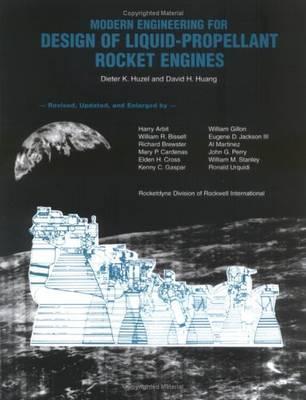
From the component design, to the subsystem design, to the engine systems design, engine development and flight-vehicle application, this how-to text bridges the gap between basic physical and design principles and actual rocket-engine design as it's done in industry.

In AD 2600 the human race is finally beginning to realize its full potential. Hundreds of colonized planets scattered across the galaxy host a multitude of prosperous and wildly diverse cultures. Genetic engineering has pushed evolution far beyond nature's boundaries, defeating disease and producing extraordinary spaceborn creatures. Huge fleets of sentient trader starships thrive on the wealth created by the industrialization of entire star systems. And throughout inhabited space the Confederation Navy keeps the peace. A true golden age is within our grasp.But now something has gone catastrophically wrong. On a primitive colony planet a renegade criminal's chance encounter with an utterly alien entity unleashes the most primal of all our fears. An extinct race which inhabited the galaxy aeons ago called it "The Reality Dysfunction." It is the nightmare which has prowled beside us since the beginning of history.

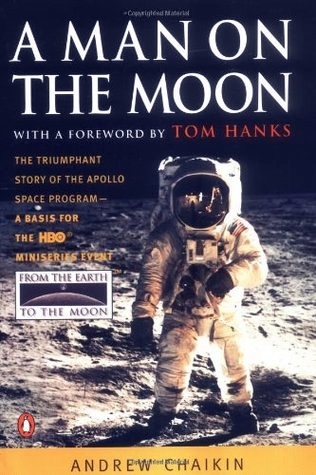
A celebration of the twenty-fifth anniversary of the first moon landing offers an accessible history of the Apollo space program from its less-than-auspicious beginnings, through its greatest triumphs, to its untimely end. Reprint.

The artefact is a circular ribbon of matter six hundred million miles long and ninety million miles in radius. Pierson's puppeteers, the aliens who discovered it, are understandably wary of encountering the builders of such an immense structure and have assembled a team of two humans, a mad puppeteer and a kzin, a huge cat-like alien, to explore it. But a crash landing on the vast edifice forces the crew on a desperate and dangerous trek across the Ringworld.

Alternate Cover Edition can be found here. A Fire upon the Deep is the big, breakout book that fulfills the promise of Vinge's career to date: a gripping tale of galactic war told on a cosmic scale.Thousands of years hence, many races inhabit a universe where a mind's potential is determined by its location in space, from superintelligent entities in the Transcend, to the limited minds of the Unthinking Depths, where only simple creatures and technology can function. Nobody knows what strange force partitioned space into these "regions of thought," but when the warring Straumli realm use an ancient Transcendent artifact as a weapon, they unwittingly unleash an awesome power that destroys thousands of worlds and enslaves all natural and artificial intelligence.Fleeing the threat, a family of scientists, including two children, are taken captive by the Tines, an alien race with a harsh medieval culture, and used as pawns in a ruthless power struggle. A rescue mission, not entirely composed of humans, must rescue the children-and a secret that may save the rest of interstellar civilization.

Using interviews with and writings by 30 astronauts and cosmonauts, Frank White shows how experiences such as circling the Earth every 90 minutes and viewing it from the moon have profoundly affected our space travelers' perceptions of themselves, their world, and the future. He shows how the rest of us, who have participated imaginatively in these great adventures, have also been affected psychologically by them.

One moment a man sits on a suburban hill, gazing curiously at the stars. The next, he is whirling through the firmament, and perhaps the most remarkable of all science fiction journeys has begun.Even Stapledon's other great work, LAST AND FIRST MEN, pales in ambition next to STAR MAKER, which presents nothing less than an entire imagined history of life in the universe, encompassing billions of years.

For a thousand years and more, The Worlds of Man had been dominated by the Laowon Imperium. The aliens thought humans made good slaves and better pets, and they were fond of creating new breeds. And the Laowon made sure that their playthings never grew too powerful. Born one day, on the edge of Human Space, Jon Iehard was ordered to hunt Eblis Bey, a terrorist for Old Earth. And that was the beginning of the end for the Laowon. Because Iehard had been a Laowon slave. And Eblis Bey held half the key to a weapon that could destroy the Laowon tyranny and bring freedon once more to Mankind!

Pulitzer Prize-winning author and astronomer Carl Sagan imagines the greatest adventure of all—the discovery of an advanced civilization in the depths of space.In December of 1999, a multinational team journeys out to the stars, to the most awesome encounter in human history. Who—or what—is out there? In Cosmos, Carl Sagan explained the universe. In Contact, he predicts its future—and our own.

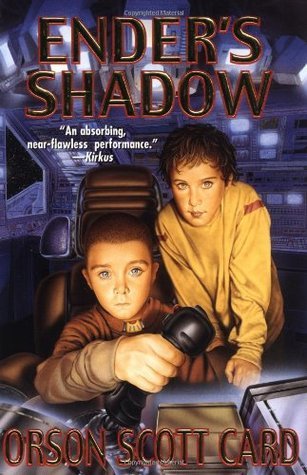
Welcome to Battleschool.Growing up is never easy. But try living on the mean streets as a child begging for food and fighting like a dog with ruthless gangs of starving kids who wouldn't hesitate to pound your skull into pulp for a scrap of apple. If Bean has learned anything on the streets, it's how to survive. And not with fists. He is way too small for that. But with brains.Bean is a genius with a magician's ability to zero in on his enemy and exploit his weakness.What better quality for a future general to lead the Earth in a final climactic battle against a hostile alien race, known as Buggers. At Battleschool Bean meets and befriends another future commander - Ender Wiggins - perhaps his only true rival.Only one problem: for Bean and Ender, the future is now.Ender's Shadow is the book that launched The Shadow Series, and the parallel novel to Orson Scott Card's science fiction classic, Ender's Game.

Book Two in the Magnificent Dune Chronicles--the Bestselling Science Fiction Adventure of All TimeDune Messiah continues the story of Paul Atreides, better known--and feared--as the man christened Muad'Dib. As Emperor of the Known Universe, he possesses more power than a single man was ever meant to wield. Worshipped as a religious icon by the fanatical Fremens, Paul faces the enmity of the political houses he displaced when he assumed the throne--and a conspiracy conducted within his own sphere of influence.And even as House Atreides begins to crumble around him from the machinations of his enemies, the true threat to Paul comes to his lover, Chani, and the unborn heir to his family's dynasty...Includes an introduction by Brian Herbert

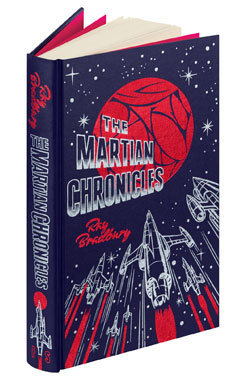
Published in 1950, Ray Bradbury’s dark short stories of Martian colonisation appeared when the idea of life on the Red Planet was very real. Space travel was still a fantasy, but with the destruction of Nagasaki and Hiroshima fresh in his mind, and new rocket technology offering untold possibilities, Bradbury, like many science-fiction writers, turned his thoughts to the sky. However, instead of a new and distant utopia, he imagined how humanity’s failings would follow us into space, and how our clumsy notions of manifest destiny are doomed to repeat themselves, no matter how far we journey.Drawn from the horrors of colonisation in the United States, the Chronicles focus on the experiences of the ordinary men and women who leave a troubled Earth for a new life on Mars. What follows is the inevitable deterioration from naive pioneering spirit to destructive avarice, played out among the ruins of a decimated indigenous civilisation. Beginning with the first expeditions, the stories explore each stage of Mars’ doomed conquest. We meet deluded priests, determined to convert the strange aboriginals to a foreign and redundant god; we flee on crystal sandships with an ignorant hot-dog vendor, terrified he will be robbed of his claim; and in ‘– and the Moon Be Still as Bright’ two colonists clash, torn between duty and the realisation that the men who follow them will tear the planet apart.In his brilliant introduction, the celebrated Canadian astronaut Chris Hadfield asks why generations of scientists and dreamers continue to be inspired by the beauty of Bradbury’s ‘delightful impossibility’. He gives fascinating insight into the training here on Earth for future Martian expeditions, and what the hope for a new life on Mars gives us, ‘in spite of ourselves’. Artist Mick Brownfield’s colourful illustrations, inspired by 1950s sci-fi, vividly portray this quest to be Martian, along with the ghostly splendour of Bradbury’s alien landscapes.[Bound in buckram, blocked with a design by Mick Brownfield; Set in Adobe Caslon Pro with Railroad Gothic display; 256 pages; Frontispiece and 8 colour illustrations; 9½" x 5¾"]

“America’s funniest science writer” ( Washington Post ) explores the irresistibly strange universe of life without gravity in this New York Times bestseller. The best-selling author of Stiff and Bonk explores the irresistibly strange universe of space travel and life without gravity. From the Space Shuttle training toilet to a crash test of NASA’s new space capsule, Mary Roach takes us on the surreally entertaining trip into the science of life in space and space on Earth.

Less than sixty kids awaken on a distant planet. The colony ship they arrived on is aflame. The rest of their contingent is dead. They've only received half their training, and they are being asked to conquer an entire planet. Before they can, however, they must first survive each other. In this gritty tale of youths struggling to survive, Hugh Howey fuses the best of young adult fantasy with the piercing social commentary of speculative fiction. The result is a book that begs to be read in a single sitting. An adventurous romp that will leave readers exhausted and begging for more.

Humanity has colonized the solar system—Mars, the Moon, the Asteroid Belt and beyond—but the stars are still out of our reach.Jim Holden is XO of an ice miner making runs from the rings of Saturn to the mining stations of the Belt. When he and his crew stumble upon a derelict ship, the Scopuli, they find themselves in possession of a secret they never wanted. A secret that someone is willing to kill for—and kill on a scale unfathomable to Jim and his crew. War is brewing in the system unless he can find out who left the ship and why.Detective Miller is looking for a girl. One girl in a system of billions, but her parents have money and money talks. When the trail leads him to the Scopuli and rebel sympathizer Holden, he realizes that this girl may be the key to everything.Holden and Miller must thread the needle between the Earth government, the Outer Planet revolutionaries, and secretive corporations—and the odds are against them. But out in the Belt, the rules are different, and one small ship can change the fate of the universe.

The year is 2312. Scientific and technological advances have opened gateways to an extraordinary future. Earth is no longer humanity's only home; new habitats have been created throughout the solar system on moons, planets, and in between. But in this year, 2312, a sequence of events will force humanity to confront its past, its present, and its future.The first event takes place on Mercury, on the city of Terminator, itself a miracle of engineering on an unprecedented scale. It is an unexpected death, but one that might have been foreseen. For Swan Er Hong, it is an event that will change her life. Swan was once a woman who designed worlds. Now she will be led into a plot to destroy them.

Zack Lightman has spent his life dreaming. Dreaming that the real world could be a little more like the countless science-fiction books, movies, and videogames he’s spent his life consuming. Dreaming that one day, some fantastic, world-altering event will shatter the monotony of his humdrum existence and whisk him off on some grand space-faring adventure. But hey, there’s nothing wrong with a little escapism, right? After all, Zack tells himself, he knows the difference between fantasy and reality. He knows that here in the real world, aimless teenage gamers with anger issues don’t get chosen to save the universe. And then he sees the flying saucer. Even stranger, the alien ship he’s staring at is straight out of the videogame he plays every night, a hugely popular online flight simulator called Armada—in which gamers just happen to be protecting the earth from alien invaders. No, Zack hasn’t lost his mind. As impossible as it seems, what he’s seeing is all too real. And his skills—as well as those of millions of gamers across the world—are going to be needed to save the earth from what’s about to befall it. It’s Zack’s chance, at last, to play the hero. But even through the terror and exhilaration, he can’t help thinking back to all those science-fiction stories he grew up with, and wondering: Doesn’t something about this scenario seem a little…familiar? At once gleefully embracing and brilliantly subverting science-fiction conventions as only Ernest Cline could, Armada is a rollicking, surprising thriller, a classic coming of age adventure, and an alien invasion tale like nothing you’ve ever read before—one whose every page is infused with the pop-culture savvy that has helped make Ready Player One a phenomenon.

Our Mathematical Universe is a journey to explore the mysteries uncovered by cosmology and to discover the nature of reality. Our Big Bang, our distant future, parallel worlds, the sub-atomic and intergalactic - none of them are what they seem. But there is a way to understand this immense strangeness - mathematics. Seeking an answer to the fundamental puzzle of why our universe seems so mathematical, Tegmark proposes a radical idea: that our physical world not only is described by mathematics, but that it is mathematics. This may offer answers to our deepest questions: How large is reality? What is everything made of? Why is our universe the way it is?Table of ContentsPreface 1 What Is Reality? Not What It Seems • What’s the Ultimate Question? • The Journey Begins Part One: Zooming Out 2 Our Place in Space Cosmic Questions • How Big Is Space? • The Size of Earth • Distance to the Moon • Distance to the Sun and the Planets • Distance to the Stars • Distance to the Galaxies • What Is Space? 3 Our Place in TimeWhere Did Our Solar System Come From? • Where Did theGalaxies Come From? • Where Did the Mysterious MicrowavesCome From? • Where Did the Atoms Come From? 4 Our Universe by NumbersWanted: Precision Cosmology • Precision Microwave-Background Fluctuations • Precision Galaxy Clustering • The Ultimate Map of Our Universe • Where Did Our Big Bang Come From? 5 Our Cosmic Origins What’s Wrong with Our Big Bang? • How Inflation Works • The Gift That Keeps on Giving • Eternal Inflation 6 Welcome to the Multiverse The Level I Multiverse • The Level II Multiverse • Multiverse Halftime Roundup Part Two: Zooming In 7 Cosmic Legos Atomic Legos • Nuclear Legos • Particle-Physics Legos • Mathematical Legos • Photon Legos • Above the Law? • Quanta and Rainbows • Making Waves • Quantum Weirdness • The Collapse of Consensus • The Weirdness Can’t Be Confined • Quantum Confusion 8 The Level III Multiverse The Level III Multiverse • The Illusion of Randomness • Quantum Censorship • The Joys of Getting Scooped • Why Your Brain Isn’t a Quantum Computer • Subject, Object and Environment • Quantum Suicide • Quantum Immortality? • Multiverses Unified • Shifting Views: Many Worlds or Many Words? Part Three: Stepping Back 9 Internal Reality, External Reality and Consensus Reality External Reality and Internal Reality • The Truth, the Whole Truth and Nothing but the Truth • Consensus Reality • Physics: Linking External to Consensus Reality 10 Physical Reality and Mathematical Reality Math, Math Everywhere! • The Mathematical Universe Hypothesis • What Is a Mathematical Structure? 11 Is Time an Illusion? How Can Physical Reality Be Mathematical? • What Are You? • Where Are You? (And What Do You Perceive?) • When Are You? 12 The Level IV Multiverse Why I Believe in the Level IV Multiverse • Exploring the Level IV Multiverse: What’s Out There? • Implications of the Level IV Multiverse • Are We Living in a Simulation? • Relation Between the MUH, the Level IV Multiverse and Other Hypotheses •Testing the Level IV Multiverse 13 Life, Our Universe and Everything How Big Is Our Physical Reality? • The Future of Physics • The Future of Our Universe—How Will It End? • The Future of Life •The Future of You—Are You Insignificant? Acknowledgments Suggestions for Further Reading Index

Colonel Chris Hadfield has spent decades training as an astronaut and has logged nearly 4000 hours in space. During this time he has broken into a Space Station with a Swiss army knife, disposed of a live snake while piloting a plane, and been temporarily blinded while clinging to the exterior of an orbiting spacecraft. The secret to Col. Hadfield's success-and survival-is an unconventional philosophy he learned at NASA: prepare for the worst-and enjoy every moment of it. In An Astronaut's Guide to Life on Earth, Col. Hadfield takes readers deep into his years of training and space exploration to show how to make the impossible possible. Through eye-opening, entertaining stories filled with the adrenaline of launch, the mesmerizing wonder of spacewalks, and the measured, calm responses mandated by crises, he explains how conventional wisdom can get in the way of achievement-and happiness. His own extraordinary education in space has taught him some counterintuitive lessons: don't visualize success, do care what others think, and always sweat the small stuff. You might never be able to build a robot, pilot a spacecraft, make a music video or perform basic surgery in zero gravity like Col. Hadfield. But his vivid and refreshing insights will teach you how to think like an astronaut, and will change, completely, the way you view life on Earth-especially your own.

The alien forces known as the Lankies are gathering on the solar system’s edge, consolidating their conquest of Mars and setting their sights on Earth. The far-off colony of New Svalbard, cut off from the rest of the galaxy by the Lanky blockade, teeters on the verge of starvation and collapse. The forces of the two Earth alliances have won minor skirmishes but are in danger of losing the war. For battle-weary staff sergeant Andrew Grayson and the ragged forces of the North American Commonwealth, the fight for survival is entering a catastrophic new phase.Forging an uneasy alliance with their Sino-Russian enemies, the NAC launches a hybrid task force on a long a stealth mission to breach the Lanky blockade and reestablish supply lines with Earth. Plunging into combat against a merciless alien species that outguns, outmaneuvers, and outfights them at every turn, Andrew and his fellow troopers could end up cornered on their home turf, with no way out and no hope for reinforcement. And this time, the struggle for humanity’s future can only end in either victory or annihilation.

For centuries, men and women have manned lighthouses to ensure the safe passage of ships. It is a lonely job, and a thankless one for the most part. Until something goes wrong. Until a ship is in distress. In the 23rd century, this job has moved into outer space. A network of beacons allows ships to travel across the Milky Way at many times the speed of light. These beacons are built to be robust. They never break down. They never fail. At least, they aren't supposed to.

"A stunning memoir from the astronaut who spent a record-breaking year aboard the International Space Station – a candid account of his remarkable voyage, the journeys that preceded it, and his colorful formative years." Inside book cover comments.

Centuries after the last humans left Earth, the Exodus Fleet is a living relic, a place many are from but few outsiders have seen. Humanity has finally been accepted into the galactic community, but while this has opened doors for many, those who have not yet left for alien cities fear that their carefully cultivated way of life is under threat.Tessa chose to stay home when her brother Ashby left for the stars, but has to question that decision when her position in the Fleet is threatened.Kip, a reluctant young apprentice, itches for change but doesn't know where to find it.Sawyer, a lost and lonely newcomer, is just looking for a place to belong.When a disaster rocks this already fragile community, those Exodans who still call the Fleet their home can no longer avoid the inescapable question:What is the purpose of a ship that has reached its destination?

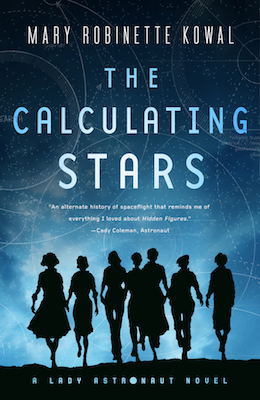
On a cold spring night in 1952, a huge meteorite fell to earth and obliterated much of the east coast of the United States, including Washington D.C. The ensuing climate cataclysm will soon render the earth inhospitable for humanity, as the last such meteorite did for the dinosaurs. This looming threat calls for a radically accelerated effort to colonize space, and requires a much larger share of humanity to take part in the process.Elma York’s experience as a WASP pilot and mathematician earns her a place in the International Aerospace Coalition’s attempts to put man on the moon, as a calculator. But with so many skilled and experienced women pilots and scientists involved with the program, it doesn’t take long before Elma begins to wonder why they can’t go into space, too.Elma’s drive to become the first Lady Astronaut is so strong that even the most dearly held conventions of society may not stand a chance against her.

Jazz Bashara is a criminal. Well, sort of. Life on Artemis, the first and only city on the moon, is tough if you're not a rich tourist or an eccentric billionaire. So smuggling in the occasional harmless bit of contraband barely counts, right? Not when you've got debts to pay and your job as a porter barely covers the rent. Everything changes when Jazz sees the chance to commit the perfect crime, with a reward too lucrative to turn down. But pulling off the impossible is just the start of her problems, as she learns that she's stepped square into a conspiracy for control of Artemis itself—and that now, her only chance at survival lies in a gambit even riskier than the first.

The #1 bestselling author of The Future of the Mind brings us a stunning new vision of our future in space.Human civilization is on the verge of spreading beyond Earth. More than a possibility, it is becoming a necessity: whether our hand is forced by climate change and resource depletion or whether future catastrophes compel us to abandon Earth, one day we will make our homes among the stars.World-renowned physicist and futurist Michio Kaku explores in rich, accessible detail how humanity might gradually develop a sustainable civilization in outer space. With his trademark storytelling verve, Kaku shows us how science fiction is becoming reality: mind-boggling developments in robotics, nanotechnology, and biotechnology could enable us to build habitable cities on Mars; nearby stars might be reached by microscopic spaceships sailing through space on laser beams; and technology might one day allow us to transcend our physical bodies entirely.With irrepressible enthusiasm and wonder, Dr. Kaku takes readers on a fascinating journey to a future in which humanity could finally fulfil its long-awaited destiny among the stars - and perhaps even achieve immortality.

Instant New York Times BestsellerAs the fiftieth anniversary of the first lunar landing approaches, the award winning historian and perennial New York Times bestselling author takes a fresh look at the space program, President John F. Kennedy’s inspiring challenge, and America’s race to the moon.“We choose to go to the Moon in this decade and do the other things, not because they are easy, but because they are hard; because that goal will serve to organize and measure the best of our energies and skills, because that challenge is one that we are willing to accept, one we are unwilling to postpone, and one we intend to win.”—President John F. KennedyOn May 25, 1961, JFK made an astonishing announcement: his goal of putting a man on the moon by the end of the decade. In this engrossing, fast-paced epic, Douglas Brinkley returns to the 1960s to recreate one of the most exciting and ambitious achievements in the history of humankind. American Moonshot brings together the extraordinary political, cultural, and scientific factors that fueled the birth and development of NASA and the Mercury, Gemini and Apollo projects, which shot the United States to victory in the space race against the Soviet Union at the height of the Cold War.Drawing on new primary source material and major interviews with many of the surviving figures who were key to America’s success, Brinkley brings this fascinating history to life as never before. American Moonshot is a portrait of the brilliant men and women who made this giant leap possible, the technology that enabled us to propel men beyond earth’s orbit to the moon and return them safely, and the geopolitical tensions that spurred Kennedy to commit himself fully to this audacious dream. Brinkley’s ensemble cast of New Frontier characters include rocketeer Wernher von Braun, astronaut John Glenn and space booster Lyndon Johnson.A vivid and enthralling chronicle of one of the most thrilling, hopeful, and turbulent eras in the nation’s history, American Moonshot is an homage to scientific ingenuity, human curiosity, and the boundless American spirit.

On the 50th anniversary of the Apollo 11 moon landing, renowned psychologist Richard Wiseman reveals the powerful life lessons behind humanity's greatest achievement.The historic moon landings were achieved against remarkable odds and within the space of just a few years. How can we apply the secrets of this astronomical success to our own goals, to achieve the impossible in work and in life?Psychologist Richard Wiseman brings together history, psychology, and self-help in this unique and powerful guide to achieving the impossible in work and in life. The result of intensive research, including interviews with surviving members of the Apollo mission-control team, Moonshot delivers eight key lessons on teamwork, leadership, persistence, creativity, and more, each one a vital part of the mindset for success.Filled with never-before-told stories and fresh insights, Moonshot sheds new light on the science of success--and empowers each of us to achieve the impossible.

When Newton discovered the law of gravity, he unified the rules governing the heavens and the Earth. Since then, physicists have been placing new forces into ever-grander theories. But perhaps the ultimate challenge is achieving a monumental synthesis of the two remaining theories--relativity and the quantum theory. This would be the crowning achievement of science, a profound merging of all the forces of nature into one beautiful, magnificent equation to unlock the deepest mysteries in science: What happened before the Big Bang? What lies on the other side of a black hole? Are there other universes and dimensions? Is time travel possible? Why are we here? Kaku also explains the intense controversy swirling around this theory, with Nobel laureates taking opposite sides on this vital question.

You no longer need to be a billionaire or rocket scientist to participate in space.Three things you need to know about space:It is an industry that is notoriously complex—which means it is misunderstood.It influences and benefits nearly every other industry on the planet.Accessing space has never been easier.Space Is Open for Business is an outstanding guidebook for the ultimate space-enabled business plan.Meticulously researched and edited for the most time-challenged reader, Space Is Open for Business provides a framework for those outside of the industry to understand the critical context that led to the commercial movement known as NewSpace.This book includes:Insights from over 100 experts, including industry leaders and investors, into the economics and strategies for leading the trillion-dollar race to commercialize space.Breakdown of the space economy verticals.How space, arts, and culture are deeply linked.A 360-degree view of the wide-ranging space industry, its emerging opportunities, investment potential, benefits on Earth, and more.Space investor and entrepreneur Robert C. Jacobson provides a comprehensive overview of this spectacular industry, allowing everyone on Earth to understand the integral role space plays in our lives, how it will continue to transform the world, and how you could participate.In the vein of Mary Roach, Jacobson makes a complex topic easily understandable—and accessible—for every reader.Space as an industry offers a triple bottom line: Return on Investment, Innovation, and Inspiration.INVESTMENTImagine if you had the opportunity to invest in Apple when it was new and undiscovered—would you do it?Space is a culmination of many disciplines, and it works in tandem with various industries. The sector’s growth depends on merging different fields with cutting-edge technologies, fantastical ideas with logical applications.Investors, including John Doerr, Khosla Ventures, Sequoia, RRE, Bessemer Venture Partners, First Round, Peter Thiel’s Founders Fund, and Andreesen Horowitz, took notice and are backing companies in this growing sector.INNOVATIONSpace is the sector with the most unlimited potential for progress and collaboration. When space advances, other industries benefit. When other industries advance, space benefits as well—innovations and progress multiply.From Hollywood to navigation, communications devices to streaming services, medical discoveries to robotics, agriculture to energy, all of these industries affect space and are affected by space—much like bees pollinating flowers.Jacobson proposes that space startups can borrow tactics and strategies developed by other entrepreneurs and thought leaders—such as Peter Thiel, Eric Ries, and Ben Horowitz—to improve space startups' probability for success.INSPIRATIONWhat do Jules Verne, Star Trek, Isaac Asimov, Arthur C. Clarke, Stanley Kubrick, Jerry Pournelle, Andy Weir, and David Bowie have in common?For centuries, artists and creators have helped inspire real space efforts. They merged space with arts and entertainment to construct visions and stories that helped us articulate, amplify, and imagine what is possible—ultimately influencing and shaping reality, from Moon missions to mobile phones.What will we accomplish over the next decade? Is there a way to achieve great personal success and benefit others—maybe even all of humanity?