
Arthur C. Clarke
Stories, works of noted British writer, scientist, and underwater explorer Sir Arthur Charles Clarke, include 2001: A Space Odyssey (1968). This most important and influential figure in 20th century fiction spent the first half of his life in England and served in World War II as a radar operator before migrating to Ceylon in 1956. He co-created his best known novel and movie with the assistance of Stanley Kubrick. Clarke, a graduate of King's College, London, obtained first class honours in physics and mathematics. He served as past chairman of the interplanetary society and as a member of the academy of astronautics, the royal astronomical society, and many other organizations. He authored more than fifty books and won his numerous awards: the Kalinga prize of 1961, the American association for the advancement Westinghouse prize, the Bradford Washburn award, and the John W. Campbell award for his novel Rendezvous with Rama. Clarke also won the nebula award of the fiction of America in 1972, 1974 and 1979, the Hugo award of the world fiction convention in 1974 and 1980. In 1986, he stood as grand master of the fiction of America. The queen knighted him as the commander of the British Empire in 1989.
30 Books Written

The classic science fiction novel that captures and expands on the vision of Stanley Kubrick's immortal film—and changed the way we look at the stars and ourselves. From the savannas of Africa at the dawn of mankind to the rings of Saturn as man ventures to the outer rim of our solar system, 2001: A Space Odyssey is a journey unlike any other.This allegory about humanity's exploration of the universe—and the universe's reaction to humanity—is a hallmark achievement in storytelling that follows the crew of the spacecraft Discovery as they embark on a mission to Saturn. Their vessel is controlled by HAL 9000, an artificially intelligent supercomputer capable of the highest level of cognitive functioning that rivals--and perhaps threatens--the human mind.Grappling with space exploration, the perils of technology, and the limits of human power, 2001: A Space Odyssey continues to be an enduring classic of cinematic scope.

Clarke's masterful evocation of the far future of humanity, considered his finest novel.Men had built cities before, but never such a city as Diaspar. For millennia its protective dome shut out the creeping decay and danger of the world outside. Once, it held powers that rule the stars.But then, as legend has it, the invaders came, driving humanity into this last refuge. It takes one man, a Unique, to break through Diaspar's stifling inertia, to smash the legend and discover the true nature of the Invaders.

The Light of Other Days: A Novel of the Transformation of Humanity
by Arthur C. Clarke
Rating: 4.0 ⭐
• 2 recommendations ❤️
From Arthur C. Clarke, the brilliant mind that brought us 2001: A Space Odyssey , and Stephen Baxter, one of the most cogent SF writers of his generation, comes a novel of a day, not so far in the future, when the barriers of time and distance have suddenly turned to glass.When a brilliant, driven industrialist harnesses cutting-edge physics to enable people everywhere, at trivial cost, to see one another at all times―around every corner, through every wall―the result is the sudden and complete abolition of human privacy, forever. Then the same technology proves able to look backward in time as well.The Light of Other Days is a story that will change your view of what it is to be human.

The Overlords appeared suddenly over every city—intellectually, technologically, and militarily superior to humankind. Benevolent, they made few demands: unify earth, eliminate poverty, and end war. With little rebellion, humankind agreed, and a golden age began. But at what cost? With the advent of peace, man ceases to strive for creative greatness, and a malaise settles over the human race. To those who resist, it becomes evident that the Overlords have an agenda of their own. As civilization approaches the crossroads, will the Overlords spell the end for humankind . . . or the beginning?
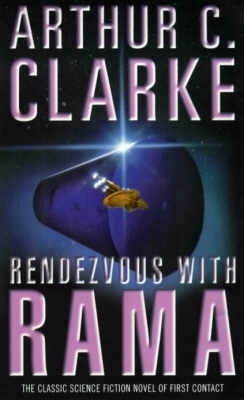
At first, only a few things are known about the celestial object that astronomers dub Rama. It is huge, weighing more than ten trillion tons. And it is hurtling through the solar system at an inconceivable speed. Then a space probe confirms the unthinkable: Rama is no natural object. It is, incredibly, an interstellar spacecraft. Space explorers and planet-bound scientists alike prepare for mankind's first encounter with alien intelligence. It will kindle their wildest dreams... and fan their darkest fears. For no one knows who the Ramans are or why they have come. And now the moment of rendezvous awaits — just behind a Raman airlock door.

When 2001: A Space Odyssey first shocked, amazed, and delighted millions in the late 1960s, the novel was quickly recognized as a classic. Since then, its fame has grown steadily among the multitudes who have read the novel or seen the film based on it. Yet, along with almost universal acclaim, a host of questions has grown more insistent through the years:Who or what transformed Dave Bowman into the Star-Child? What purpose lay behind the transformation? What would become of the Star-Child?What alien purpose lay behind the monoliths on the Moon and out in space?What could drive HAL, a stable, intelligent computer, to kill the crew? Was HAL really insane? What happened to HAL and the spaceship Discovery after Dave Bowman disappeared?Would there be a sequel?Now all those questions and many more have been answered. In this stunning sequel to his international bestseller, Clarke has written what will truly be one of the great books of the '80s. Cosmic in sweep, eloquent in its depiction of Man's place in the Universe, and filled with the romance of space, this novel is a monumental achievement.

This Hugo and Nebula Award-winning novel is reissued in this trade paperback edition. Vannemar Morgan's dream of linking Earth with the stars requires a 24,000-mile-high space elevator. But first he must solve a million technical, political, and economic problems while allaying the wrath of God. Includes a new introduction by the author.
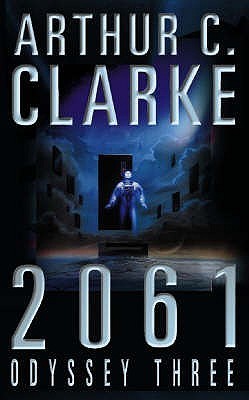
Arthur C. Clarke, creator of one of the world's best-loved science fiction tales, revisits the most famous future ever imagined in this NEW YORK TIMES bestseller, as two expeditions into space become inextricably tangled. Heywood Floyd, survivor of two previous encounters with the mysterious monloiths, must again confront Dave Bowman, HAL, and an alien race that has decided that Mankind is to play a part in the evolution of the galaxy whether it wishes to or not. --This text refers to an out of print or unavailable edition of this title.
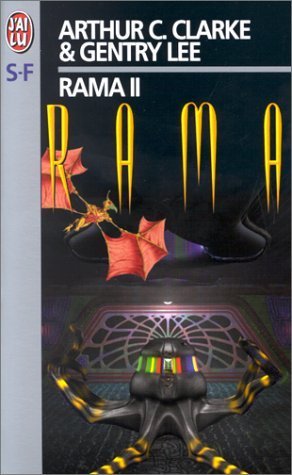
Rama est revenu ! Rama, ou plutôt son double, son clone, son jumeau : Rama II. Soixante-dix ans plus tôt, un mystérieux engin extraterrestre traversait brièvement le système solaire, donnant corps à cette fabuleuse révélation : l'homme n'était pas seul dans l'Univers. Et voilà qu'en cette année 2196, le scénario se répète ! Un deuxième vaisseau interstellaire, exactement semblable au précédent, se matérialise dans l'espace... L'humanité, pour la seconde fois de son histoire, envoie une équipe de savants à la rencontre du visiteur. Mission exaltante, bien sûr, mais les intentions des uns et des autres sont-elles aussi nobles qu'elles le paraissent ? Sans oublier celles de l'étranger : pourquoi la nef infléchit-elle brusquement sa course vers la Terre ? Que dissimulent les flancs de Rama II ? Des merveilles... ou un danger mortel ?

In the year 2130 a mysterious spaceship, Rama, arrived in the solar system. It was huge - big enough to contain a city and a sea - and empty, apparently abandoned. By the time Rama departed for its next, unknown, destination many wonders had been uncovered, but few mysteries solved. Only one thing was clear: everything the enigmatic builders of Rama did, they did in threes.Eighty years later the second alien craft arrived in the solar system. This time, Earth had been waiting. But all the years of preparation were not enough to unlock the Raman enigma.Now Rama II is on its way out of the solar system. Aboard it are three humans, two men and a woman, left behind when the expedition departed. Ahead of them lies the unknown, a voyage no human has ever experienced. And at the end of it - and who could tell how many years away that might be? - may lie the truth about Rama...

The mysteries of the monoliths are revealed in this inspired conclusion to the Hugo Award–winning Space Odyssey series—“there are marvels aplenty” (The New York Times). On an ill-fated mission to Jupiter in 2001, the mutinous supercomputer HAL sent crewmembers David Bowman and Frank Poole into the frozen void of space. Bowman’s strange transformation into a Star Child is traced through the novels 2010 and 2061. But now, a thousand years after his death, Frank Poole is brought back to life—and thrust into a world far more technically advanced than the one he left behind. Poole discovers a world of human minds interfacing directly with computers, genetically engineered dinosaur servants, and massive space elevators built around the equator. He also discovers an impending threat to humanity lurking within the enigmatic monoliths. To fight it, Poole must join forces with Bowman and HAL, now fused into one corporeal consciousness—and the only being with the power to thwart the monoliths’ mysterious creators. “3001 is not just a page-turner, plugged in to the great icons of HAL and the monoliths, but a book of wisdom too, pithy and provocative.” —New Scientist
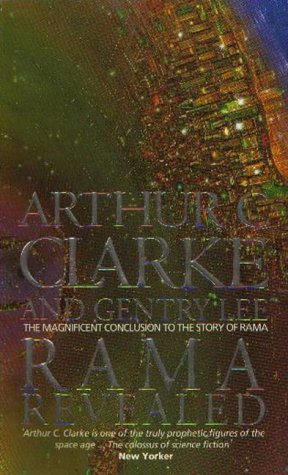
An alternative cover edition for this ISBN can be found here.Rama Revealed (1993) is a science fiction novel by Arthur C. Clarke and Gentry Lee. It is the last of three sequels to Clarke's Rendezvous with Rama by these authors. The book picks up the story immediately after the end of The Garden of Rama. The book follows the story of Nicole Wakefield and her escape from imprisonment left at the cliffhanger of the previous book.

Just a few islands in a planetwide ocean, Thalassa was a veritable paradise—home to one of the small colonies founded centuries before by robot Mother Ships when the Sun had gone nova and mankind had fled Earth.Mesmerized by the beauty of Thalassa and overwhelmed by its vast resources, the colonists lived an idyllic existence, unaware of the monumental evolutionary event slowly taking place beneath their seas...Then the Magellan arrived in orbit carrying one million refugees from the last, mad days on Earth. And suddenly uncertainty and change had come to the placid paradise that was Thalassa.
For a million years the bubble had been growing, like a vast abscess, below the root of the mountains. Now the abscess was about to burst. Captain Harris had left the controls on autopilot and was talking to the front row of passengers as the first tremor shook the boat. For a fraction of a second he wondered if a fan blade had hit some submerged obstacle; then, quite literally, the bottom fell out of his world.It fell slowly, as all things must upon the Moon. The sea was alive and moving . . . Every stage of that nightmare transformation was pitilessly illuminated by the earth light, until the crater was so deep that its firewall was completely lost in shadow, and it seemed as if Selene were racing into a curving crescent of utter blackness – an arc of annihilation.In darkness and in silence, they were sinking into the Moon. . . .

ARTHUR C. CLARKE'S FAVORITE STORIESTHE NINE BILLION NAMES OF GOD -- A short-term course for computer the way to God.TROUBLE WITH TIME -- Martian time proves that crimes doesn't pay!NO MORNING AFTER -- Drink, drink and be merry, for tomorrow there will be no morning after...THE POSSESSED -- Or, why the lemmings drowned.ENCOUNTER AT DAWN -- The day the gods came to Earth.THE SENTINEL -- The story which inspired 2001: A SPACE ODYSSEY; when man sets off the galactic burglar alarm, who will answer the call?

"Entertaining. . .[Clark] handles both ideas and characters with deftness and wit; in short, the outstanding living science fiction writers is romping".-- "Chicago Sun-Times". In the year 2110 technology has cured most of our worries. But even as humankind enters a new golden age, an amateur astronomer points his telescope at just the right corner of the night sky and sees disaster hurtling toward Earth: a chunk of rock that could annihilate civilization. While a few fanatics welcome the apocalyptic destruction as a sign from God, the greatest scientific minds of Earth desperately search for a way to avoid the inevitable. On board the starship Goliath Captain Robert Singh and his crew must race against time to redirect the meteor form its deadly collision course. Suddenly they find themselves on the most important mission in human history--a mission whose success may require the ultimate sacrifice."Clarke is still at the top of his game".-- "The Detroit News"."As good as any anything he's written. . .for a hard-science-fiction treat, I suspect "The Hammer Of God" won't be topped".-- "Star Tribune", Minneapolis."Classic Clarke. . .a good story".-- "The Denver Post".

In an instant, Earth is carved up and reassembled like a huge jigsaw puzzle. Suddenly the planet and every living thing on it no longer exist in a single timeline. Instead, the world becomes a patchwork of eras, from prehistory to 2037, each with its own indigenous inhabitants.Scattered across the planet are floating silver orbs impervious to all weapons and impossible to communicate with. Are these technologically advanced devices responsible for creating and sustaining the rifts in time? Are they cameras through which inscrutable alien eyes are watching? Or are they something stranger and more terrifying still?The answer may lie in the ancient city of Babylon, where two groups of refugees from 2037: three cosmonauts returning to Earth from the International Space Station, and three United Nations peacekeepers on a mission in Afghanistan have detected radio signals: the only such signals on the planet, apart from their own. The peacekeepers find allies in nineteenth-century British troops and in the armies of Alexander the Great. The astronauts, crash-landed in the steppes of Asia, join forces with the Mongol horde led by Genghis Khan. The two sides set out for Babylon, each determined to win the race for knowledge . . . and the power that lies within.Yet the real power is beyond human control, perhaps even human understanding. As two great armies face off before the gates of Babylon, it watches, waiting. . . .

Author of 2001: A Space Odyssey, Childhood's End, The City and the Stars, and the Hugo and Nebula Award-winning Rendezvous with Rama, Arthur C. Clarke is the most celebrated science fiction author alive. He is—with H. G. Wells, Isaac Asimov, and Robert A. Heinlein—one of the writers who define science fiction in our time. Now Clarke has cooperated in the preparation of a massive, definitive edition of his collected shorter works. From early work like "Rescue Party" and "The Lion of Comarre," through classics like "The Star," "Earthlight," "The Nine Billion Names of God," and "The Sentinel" (kernel of the later novel, and movie, 2001: A Space Odyssey), all the way to later work like "A Meeting with Medusa" and "The Hammer of God," this immense volume encapsulates one of the great SF careers of all time.

Imperial Earth is the fascinating odyssey of Duncan Makenzie, traveling from Titan, a moon of Saturn, to Earth, as a diplomatic guest of the United States for the celebration of its Quincentennial in the year 2276. Titan, an independent republic, was originally colonized from Earth three generations earlier. Duncan's initial challenge is to prepare, physically and intellectually, for the 500-million-mile trip to Earth. Once there, he is caught up in a sweep of new experiences, including the social and political whirl in Washington, a strange visit to a carefully preserved ancient city once prominent in the 20th century, and a search for and meeting with a woman he loved since she visited Titan years before.

Returned to the Earth of 2037 by the mysterious and powerful Firstborn, Bisesa Dutt is haunted by memories of her five years spent on the strange alternate Earth called Mir, a jigsaw-puzzle world made up of lands and people cut out of different eras of Earth’s history. Why did the Firstborn create Mir? Why was Bisesa taken there and then brought back just a day after her disappearance?Bisesa’s questions are answered when scientists discover an unnatural anomaly in the sun’s core—evidence of alien intervention more than two thousand years ago. Now plans set in motion by inscrutable observers light-years away are coming to fruition in a sunstorm designed to eradicate all life on Earth in a bombardment of radiation. As the apocalypse looms, religious and political differences on Earth threaten to undermine every countereffort. And all the while, the Firstborn are watching. . . .

Few masters of science fiction have brought us glimpses of the near future as vividly as Arthur C. Clarke. It is the startling realism of his vision that has made classics of his novels, such as CHILDHOOD'S END and 2001: A SPACE ODYSSEY. It has also made Clarke himself one of the genre's most successful writers. The trade paperback was published to commemorate the arrival of the year 2001, one of the most notable dates in science fiction history. THE SENTINEL is a brilliant collection of Clarke's highest calibre short fiction.
ONE BILLION YEARS FROM NOW . . .Mankind has reached the heights of civilization. Men live thousands of years in perfect freedom and leisure—their wants are attended to by ingenious machines—peace and culture flourish in ways undreamed of in our time. And yet ... mankind is dying. The price of peace has been the loss of the needed human qualities of curiosity and drive—they have been bred out of the human race. So when young Alvin of Diaspar began asking questions, he was looked on as a dangerous freak, a throwback. But Alvin kept asking, kept looking, kept seeking out the truth ...... and what he found offered his people a dreadful choice—battle and destruction, or a new and richer destiny!

Space writers holiday. When a celebrated science fiction writer takes to space on his first trip to Mars, he's sure to be in for some heckling from the spaceship crew. But Martin Gibson, man about space, takes it all in his stride. That is, until he lands on the red planet. Once there the intrepid author causes one problem after another as he stumbles upon Mars's most carefully hidden secrets and threatens the future of an entire planet!

The Firstborn-the mysterious race of aliens who first became known to science fiction fans as the builders of the iconic black monolith in 2001: A Space Odyssey-have inhabited legendary master of science fiction Sir Arthur C. Clarke's writing for decades. With Time's Eye and Sunstorm, the first two books in their acclaimed Time Odyssey series, Clarke and his brilliant co-author Stephen Baxter imagined a near-future in which the Firstborn seek to stop the advance of human civilization by employing a technology indistinguishable from magic. Their first act was the Discontinuity, in which Earth was carved into sections from different eras of history, restitched into a patchwork world, and renamed Mir. Mir's inhabitants included such notables as Alexander the Great, Genghis Khan, and United Nations peacekeeper Bisesa Dutt. For reasons unknown to her, Bisesa entered into communication with an alien artifact of inscrutable purpose and godlike power-a power that eventually returned her to Earth. There, she played an instrumental role in humanity's race against time to stop a doomsday event: a massive solar storm triggered by the alien Firstborn designed to eradicate all life from the planet. That fate was averted at an inconceivable price. Now, twenty-seven years later, the Firstborn are back. This time, they are pulling no punches: They have sent a quantum bomb. Speeding toward Earth, it is a device that human scientists can barely comprehend, that cannot be stopped or destroyed-and one that will obliterate Earth. Bisesa's desperate quest for answers sends her first to Mars and then to Mir, which is itself threatened with extinction. The end seems inevitable. But as shockingnew insights emerge into the nature of the Firstborn and their chilling plans for mankind, an unexpected ally appears from light-years away.

A collection of science fiction short stories by Arthur C. Clarke.Contents:Second DawnIf I Forget Thee, Oh Earth Breaking Strain History Lesson (as "Expedition to Earth" in the British Edition, Sidgwick & Jackson, 1954)SuperiorityExile of the Eons Hide-and-SeekExpedition to Earth (as "Encounter in the Dawn" in the British Edition, Sidgwick & Jackson, 1954)LoopholeInheritance The Sentinel (basis for 2001)

The time: 200 years after man's first landing on the Moon. There are permanent populations established on the Moon, Venus and Mars. Outer space inhabitants have formed a new political entity, the Federation, and between the Federation and Earth a growing rivalry has developed. EARTHLIGHT is the story of this emerging conflict.

In 1994, the Marines test a new missile. After launch it mysteriously disappears. If it reaches civilian areas they'll be in big trouble. Carol Dawson, a journalist, is alerted by an unusual sight of whales in the Miami area & decides to write about it. Armed with equipment provided by her friend, Dr. Dale Michaels from the Miami Oceanographic Institute, she goes to investigate the rumors of a missing missile that could be behind the mysterious whale behavior. She hires the services of Nick Williams & Jefferson Troy, boat owners, so she can get to the Mexican Gulf to investigate. They find an unknown artifact. They have doubts about its nature, hoping it's part of a lost treasure. Old friends of Williams & Troy notice their discovery & want to steal it. In the story's background, the authors describe a submarine snake civilization on a planet called Canthor, & how they struggled to stay alive despite threats to their ecosystem. It's revealed that the artifact is actually a cradle that contains seeds with altered superhumans extracted from Earth millions of years ago & altered so they could live with other species--including the submarine snakes--on Earth. The spaceship that carries the cradle is manned by robots/cyborgs & has hidden itself on the ocean floor to make repairs. Dawson, Williams & Troy are asked to gather materials so the ship can be repaired & return to its mission. The ship...

From outside it was simply an ordinary-looking London pub, a place you'd have to be guided to more than once before you memorized its location, somewhere between Fleet Street and the Embankment. But if, by chance, an insider led you to the White Hart on a Wednesday night, you would have found yourself in the midst of a select gathering or writers, editors, scientists and interested laymen—drinking, swapping odd bits of information, and, like as not, listening to Harry Purvis' memorable stories. A scientist by profession, Harry Purvis has had or heard about some of the most astonishing experiences—like the story of the carnivorous orchid that was used in a murder plot, or the one about the military computer that was converted to pacifism. There's SILENCE PLEASE, involving a spurned lover and a device that was supposed to destroy sound; and BIG GAME HUNT, in which an ambitious researcher becomes so wrapped up in his latest projest—controlling animal behavior with electrical impulses— that he overlooks one tiny important detail. Such stories may challenge your powers of logic and strain your imagination. Yet even if you doubt their veracity, they're guaranteed to provide you with hours of SF reading. Baron Munchausen, step aside.Contains: Silence Please; Big Game Hunt; Patent Pending; Armaments Race; Critical Mass; The Ultimate Melody; The Pacifist; The Next Tenants; Moving Spirit; The Man Who Ploughed the Sea; The Reluctant Orchid; Cold War; What Goes Up; Sleeping Beauty & The Defenestration of Ermintrude

The story of 'Islands in the Sky' centers around a young man, who, after brilliantly winning a space-related competition, requests a vacation on a space station as his prize. It is written with Arthur C. Clarke's obvious knowledge of science, but moves at a page turning rate througout the entire narrative. The short novel gives a realistic possiblilty of work and play in future space, hightened with constant excitment and action.

After a terrifying nightmare in outer space, Walter Franklin needed to discover a reason for living. He found it in the ocean depths when strangers defied death to give life back to him. Freedom to roam above and below the great waters should have been enough for any man - but Franklin was haunted by the memory of an echo.... an echo that could solve the oldest mystery of the sea....