
Stephen Hawking
Stephen William Hawking was an English theoretical physicist, cosmologist, and author who was director of research at the Centre for Theoretical Cosmology at the University of Cambridge. Between 1979 and 2009, he was the Lucasian Professor of Mathematics at Cambridge, widely viewed as one of the most prestigious academic posts in the world. Hawking was born in Oxford into a family of physicians. In October 1959, at the age of 17, he began his university education at University College, Oxford, where he received a first-class BA degree in physics. In October 1962, he began his graduate work at Trinity Hall, Cambridge, where, in March 1966, he obtained his PhD degree in applied mathematics and theoretical physics, specialising in general relativity and cosmology. In 1963, at age 21, Hawking was diagnosed with an early-onset slow-progressing form of motor neurone disease that gradually, over decades, paralysed him. After the loss of his speech, he communicated through a speech-generating device initially through use of a handheld switch, and eventually by using a single cheek muscle. Hawking's scientific works included a collaboration with Roger Penrose on gravitational singularity theorems in the framework of general relativity, and the theoretical prediction that black holes emit radiation, often called Hawking radiation. Initially, Hawking radiation was controversial. By the late 1970s, and following the publication of further research, the discovery was widely accepted as a major breakthrough in theoretical physics. Hawking was the first to set out a theory of cosmology explained by a union of the general theory of relativity and quantum mechanics. He was a vigorous supporter of the many-worlds interpretation of quantum mechanics. Hawking achieved commercial success with several works of popular science in which he discussed his theories and cosmology in general. His book A Brief History of Time appeared on the Sunday Times bestseller list for a record-breaking 237 weeks. Hawking was a Fellow of the Royal Society, a lifetime member of the Pontifical Academy of Sciences, and a recipient of the Presidential Medal of Freedom, the highest civilian award in the United States. In 2002, Hawking was ranked number 25 in the BBC's poll of the 100 Greatest Britons. He died in 2018 at the age of 76, having lived more than 50 years following his diagnosis of motor neurone disease.
35 Books Written

A landmark volume in science writing by one of the great minds of our time, Stephen Hawking’s book explores such profound questions as: How did the universe begin—and what made its start possible? Does time always flow forward? Is the universe unending—or are there boundaries? Are there other dimensions in space? What will happen when it all ends?Told in language we all can understand, A Brief History of Time plunges into the exotic realms of black holes and quarks, of antimatter and “arrows of time,” of the big bang and a bigger God—where the possibilities are wondrous and unexpected. With exciting images and profound imagination, Stephen Hawking brings us closer to the ultimate secrets at the very heart of creation.

Einstein's General Theory of Relativity leads to two remarkable predictions: first, that the ultimate destiny of many massive stars is to undergo gravitational collapse and to disappear from view, leaving behind a 'black hole' in space; and secondly, that there will exist singularities in space-time itself. These singularities are places where space-time begins or ends, and the presently known laws of physics break down. They will occur inside black holes, and in the past are what might be construed as the beginning of the universe. To show how these predictions arise, the authors discuss the General Theory of Relativity in the large. Starting with a precise formulation of the theory and an account of the necessary background of differential geometry, the significance of space-time curvature is discussed and the global properties of a number of exact solutions of Einstein's field equations are examined. The theory of the causal structure of a general space-time is developed, and is used to study black holes and to prove a number of theorems establishing the inevitability of singualarities under certain conditions. A discussion of the Cauchy problem for General Relativity is also included in this 1973 book.

The Theory Of Everything

THE FIRST MAJOR WORK IN NEARLY A DECADE BY ONE OF THE WORLD’S GREAT THINKERS—A MARVELOUSLY CONCISE BOOK WITH NEW ANSWERS TO THE ULTIMATE QUESTIONS OF LIFE When and how did the universe begin? Why are we here? Why is there something rather than nothing? What is the nature of reality? Why are the laws of nature so finely tuned as to allow for the existence of beings like ourselves? And, finally, is the apparent “grand design” of our universe evidence of a benevolent creator who set things in motion—or does science offer another explanation? The most fundamental questions about the origins of the universe and of life itself, once the province of philosophy, now occupy the territory where scientists, philosophers, and theologians meet—if only to disagree. In their new book, Stephen Hawking and Leonard Mlodinow present the most recent scientific thinking about the mysteries of the universe, in nontechnical language marked by both brilliance and simplicity. In The Grand Design they explain that according to quantum theory, the cosmos does not have just a single existence or history, but rather that every possible history of the universe exists simultaneously. When applied to the universe as a whole, this idea calls into question the very notion of cause and effect. But the “top-down” approach to cosmology that Hawking and Mlodinow describe would say that the fact that the past takes no definite form means that we create history by observing it, rather than that history creates us. The authors further explain that we ourselves are the product of quantum fluctuations in the very early universe, and show how quantum theory predicts the “multiverse”—the idea that ours is just one of many universes that appeared spontaneously out of nothing, each with different laws of nature.Along the way Hawking and Mlodinow question the conventional concept of reality, posing a “model-dependent” theory of reality as the best we can hope to find. And they conclude with a riveting assessment of M-theory, an explanation of the laws governing us and our universe that is currently the only viable candidate for a complete “theory of everything.” If confirmed, they write, it will be the unified theory that Einstein was looking for, and the ultimate triumph of human reason.A succinct, startling, and lavishly illustrated guide to discoveries that are altering our understanding and threatening some of our most cherished belief systems, The Grand Design is a book that will inform—and provoke—like no other.'

Stephen Hawking's worldwide bestseller, A Brief History of Time, has been a landmark volume in scientific writing. Its author's engaging voice is one reason, and the compelling subjects he addresses is another; the nature of space and time, the role of God in creation, the history and future of the universe. But it is also true that in the years since its publication, readers have repeatedly told Professor Hawking of their great difficulty in understanding some of the book's most important concepts. This is the origin of and the reason for A Briefer History of Time: its author's wish to make its content more accessible to readers - as well as to bring it up-to-date with the latest scientific observations and findings.Although this book is literally somewhat "briefer", it actually expands on the great subjects of the original. Purely technical concepts, such as the mathematics of chaotic boundary conditions, are gone. Conversely, subjects of wide interest that were difficult to follow because they were interspersed throughout the book have now been given entire chapters of their own, including relativity, curved space, and quantum theory.This reorganization has allowed the authors to expand areas of special interest and recent progress, from the latest developments in string theory to exciting developments in the search for a complete unified theory of all the forces of physics. Like prior editions of the book - but even more so - A Briefer History of Time will guide nonscientists everywhere in the ongoing search for the tantalizing secrets at the heart of time and space. Thirty-seven full-color illustrations enhance the text and make A Briefer History of Time an exhilarating addition in its own right to the literature of science.

Warum existieren wir? – Neue Antworten auf die letzten Fragen des Seins«Um das Universum auf fundamentalster Ebene zu verstehen, müssen wir nicht nur wissen, wie sich das Universum verhält, sondern auch, warum. Warum gibt es etwas und nicht einfach nichts? Warum existieren wir? Warum dieses besondere System von Gesetzen und nicht irgendein anderes?Das ist die letztgültige Frage nach dem Leben, dem Universum und dem ganzen Rest. Wir werden versuchen, sie in diesem Buch zu beantworten.» Stephen Hawking


Kalacha Ankhi Sankshipt Itihaas
by Stephen Hawking
हे पुस्तक स्थल आणि कालाचे स्वरूप, निर्मितीतला ईश्वराचा सहभाग, विश्वाचा इतिहास आणि भवितव्य यांसारख्या महत्त्वाच्या संकल्पना स्पष्ट होण्याकरिता एका अर्थाने आणखी संक्षिप्त असले, तरी दुसर्या बाजूला ते मूळ लिखाणातील महान विषयांची सुधारून वाढवलेली आवृत्ती आहे. आपल्या लिखाणाचा आशय वाचकांपर्यंत पोहोचावा आणि त्याचबरोबर ते लिखाण अद्यतन वैज्ञानिक निरीक्षणे आणि शोधांच्या प्रकाशात अद्ययावत बनावे, असे लेखकांना वाटते. केऑटिक बाऊंडरी कंडिशन्ससारख्या शुद्ध तांत्रिक संकल्पना आता गायब झाल्या आहेत. या उलट अधिक व्यापक आकर्षण असणार्या संकल्पना - उदाहरणार्थ सापेक्षता, स्थलाची वक्रता आणि पुंजयामिकी सिद्धान्तन - ज्या पूर्वी समजायला यासाठी कठीण होत्या की, त्या पुस्तकात सर्वत्

দ্য গ্র্যান্ড ডিজাইন | The Grand Design
by Stephen Hawking
প্রায় প্রাগৈতিহাসিক কাল থেকে মানবজাতি প্রশ্ন করে আসছে—মহাবিশ্বের সূচনা হলো কীভাবে? আমরা এখানে কেন? প্রাকৃতিক নিয়মকানুন এত সূক্ষ্মভাবে সমন্বয় করা কেন? মহাবিশ্বের এই শ্রেষ্ঠ নকশা বা গ্র্যান্ড ডিজাইনের অর্থ কী? সেটা কি আমাদের মতো জীবসত্তার অস্তিত্বের প্রয়োজনে? নাকি পেছনে রয়েছে অন্য কোনো কারণ? মহাবিশ্বের জন্ম ও এ-সংক্রান্ত অন্যান্য প্রশ্ন ও রহস্যের জবাব পেতে মানুষ একসময় আশ্রয় খুঁজেছে দর্শনের কাছে। এখন এসব প্রশ্নের ব্যাখ্যা দেয় বিজ্ঞান। এই বইয়ে তাত্ত্বিক পদার্থবিদ স্টিফেন হকিং এবং লিওনার্ড ম্লোডিনো সেসব জিজ্ঞাসা ও রহস্যের ব্যাখ্যা দিয়েছেন আধুনিক বিজ্ঞানের আলোকে। ব্যাখ্যা করার চেষ্টা করেছেন কোয়ান্টাম তত্ত্ব, আপেক্ষিকতা তত্ত্ব এবং হালের বহুল আলোচিত এম-থিওরির ভিত্তিতে। তা বর্ণনা করেছেন সাধারণ পাঠকের উপযোগী সহজ-সরল ভাষায়। হকিংয়ের অন্যতম জনপ্রিয় বইটি একসময় ছিল আমাজন বেস্টসেলারের তালিকায়। গভীর ভাবনায় সমৃদ্ধ, আকারে সংক্ষিপ্ত এ বই নতুন ভাবনা উসকে দেবে।
By Stephen Hawking, Leonard Mlodinow: The Grand Design [Audiobook]
by Stephen Hawking
The Grand Design 1st (first) edition
by Stephen Hawking
Briefer History of Time
by Stephen Hawking
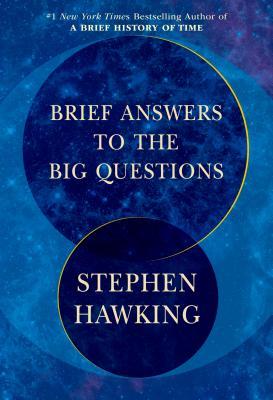
Stephen Hawking was recognized as one of the greatest minds of our time and a figure of inspiration after defying his ALS diagnosis at age twenty-one. He is known for both his breakthroughs in theoretical physics as well as his ability to make complex concepts accessible for all, and was beloved for his mischievous sense of humor. At the time of his death, Hawking was working on a final project: a book compiling his answers to the "big" questions that he was so often posed--questions that ranged beyond his academic field. Within these pages, he provides his personal views on our biggest challenges as a human race, and where we, as a planet, are heading next. Each section will be introduced by a leading thinker offering his or her own insight into Professor Hawking's contribution to our understanding.
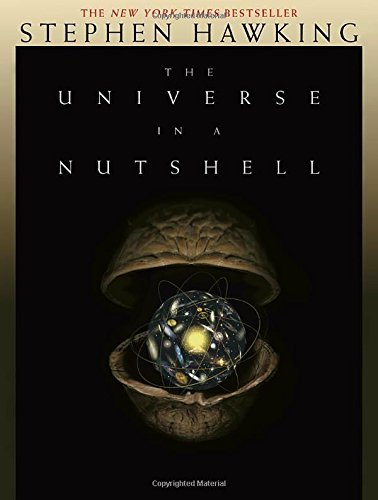
Jeder 750. Erdenbürger, so die Statistik, kaufte sich Eine kurze Geschichte der Zeit , den legendären Bestseller von Stephen Hawking. Mehr als zehn Jahre hat der Autor den Bitten standgehalten, ein weiteres populärwissenschaftliches Buch zu schreiben, in dem er den neuesten Stand der Forschung auch dem Laien verständlich macht. Jetzt ist es da, und anders als sein Vorgänger erscheint es gleich in einer großformatigen illustrierten Ausgabe, was sowohl Verständnis als auch Lesevergnügen fördert. Das Universum in der Nußschale ist kein Nachfolgewerk, kein zweiter Teil, und es orientiert sich nicht einmal am logischen Aufbau des erfolgreichen Erstlingswerks. Hawking beginnt in den ersten beiden Kapiteln mit den Grundlagen, und in seiner Forschungsdisziplin heißt Relativitätstheorie und Quantentheorie. Die folgenden vier Kapitel bauen nicht logisch aufeinander auf, sondern behandeln jeweils eigene Wie haben wir uns unser Universum in Größe, Ausdehnung und Geschichte vorzustellen? (Danach werden Sie auch die gern zitierte Quintessenz verstehen, dass die Geschichte unseres Universums einer kleinen, abgeflachten runden Nuss entspricht). Sind Zeitreisen möglich? Wird unser Leben in der Zukunft so aussehen wie in einer Star-Trek -Folge? Und das (zugegeben sehr anspruchsvolle) Was ist eine "Branwelt"? Bei aller Fundiertheit und Glaubwürdigkeit schafft es Hawking, einen eigenen Stil zu bewahren. Und einen ganz eigenen Witz. Da plaudert er von seinem Poker-Spiel mit Newton, Einstein und Data an Bord der Enterprise (belegt mit einem Foto!). Oder er erlaubt sich als abschließenden Satz zum Thema "Sind Zeitreisen physikalisch möglich?" einen Hinweis auf gängige Verschwö "Womöglich fragen Sie sich, ob dieses Kapitel nicht zum großen staatlichen Vertuschungsmanöver in Sachen Zeitreisen gehört. Vielleicht haben Sie recht." Neben dem sprachlichen Stil lebt das Buch von der opulenten Illustrierung, die von einfachen Diagrammen bis zur gewagten freien Interpretation des Textes Mir persönlich helfen kleine grüne Männchen am Seitenrand nicht beim Verständnis, aber lustig sind sie doch. Zur soliden Aufmachung gehört ein Anhang mit einem umfangreichen Glossar (von "Absoluter Nullpunkt" über "Spins" und "Strings" bis zur "Zeitschleife"), Empfehlungen zum Weiterlesen und einem Register. Was das nun alles mit einer Nuss-Schale zu tun hat? Vielleicht ist das auch ein Hinweis darauf, dass sich das Verständnis dieses Buches nicht ganz ohne ein wenig Arbeit erschließt. Aber es lohnt sich. Benutzen Sie Ihren Geist als Nussknacker! --Heike Reher

NY Times bestseller. 13 extraordinary essays shed new light on the mysteries of the universe & on one of the most brilliant thinkers of our time.In his phenomenal bestseller A Brief History of Time, Stephen Hawking literally transformed the way we think about physics, the universe, reality itself. In these thirteen essays and one remarkable extended interview, the man widely regarded as the most brilliant theoretical physicist since Einstein returns to reveal an amazing array of possibilities for understanding our universe. Building on his earlier work, Hawking discusses imaginary time, how black holes can give birth to baby universes, and scientists’ efforts to find a complete unified theory that would predict everything in the universe. With his characteristic mastery of language, his sense of humor and commitment to plain speaking, Stephen Hawking invites us to know him better—and to share his passion for the voyage of intellect and imagination that has opened new ways to understanding the very nature of the cosmos.

One of the most influential thinkers of our time, Stephen Hawking is an intellectual icon, known not only for the adventurousness of his ideas but for the clarity and wit with which he expresses them. In this new book Hawking takes us to the cutting edge of theoretical physics, where truth is often stranger than fiction, to explain in laymen's terms the principles that control our universe. Like many in the community of theoretical physicists, Professor Hawking is seeking to uncover the grail of science - the elusive Theory of Everything that lies at the heart of the cosmos. In his accessible and often playful style, he guides us on his search to uncover the secrets of the universe - from supergravity to supersymmetry, from quantum theory to M-theory, from holography to duality. He takes us to the wild frontiers of science, where superstring theory and p-branes may hold the final clue to the puzzle. And he lets us behind the scenes of one of his most exciting intellectual adventures as he seeks "to combine Einstein's General Theory of Relativity and Richard Feynman's idea of multiple histories into one complete unified theory that will describe everything that happens in the universe." With characteristic exuberance, Professor Hawking invites us to be fellow travelers on this extraordinary voyage through space-time. Copious four-color illustrations help clarify this journey into a surreal wonderland where particles, sheets, and strings move in eleven dimensions; where black holes evaporate and disappear, taking their secret with them; and where the original cosmic seed from which our own universe sprang was a tiny nut. The Universe in a Nutshell is essential reading for all of us who want to understand the universe in which we live. Like its companion volume, A Brief History of Time, it conveys the excitement felt within the scientific community as the secrets of the cosmos reveal themselves.

Stephen Hawking has dazzled readers worldwide with a string of bestsellers exploring the mysteries of the universe. Now, for the first time, perhaps the most brilliant cosmologist of our age turns his gaze inward for a revealing look at his own life and intellectual evolution. My Brief History recounts Stephen Hawking’s improbable journey, from his postwar London boyhood to his years of international acclaim and celebrity. Lavishly illustrated with rarely seen photographs, this concise, witty, and candid account introduces readers to a Hawking rarely glimpsed in previous books: the inquisitive schoolboy whose classmates nicknamed him Einstein; the jokester who once placed a bet with a colleague over the existence of a particular black hole; and the young husband and father struggling to gain a foothold in the world of physics and cosmology. Writing with characteristic humility and humor, Hawking opens up about the challenges that confronted him following his diagnosis of ALS at age twenty-one. Tracing his development as a thinker, he explains how the prospect of an early death urged him onward through numerous intellectual breakthroughs, and talks about the genesis of his masterpiece A Brief History of Time—one of the iconic books of the twentieth century. Clear-eyed, intimate, and wise, My Brief History opens a window for the rest of us into Hawking’s personal cosmos.

“It is said that fact is sometimes stranger than fiction, and nowhere is that more true than in the case of black holes. Black holes are stranger than anything dreamed up by science fiction writers.”In 2016 Professor Stephen Hawking delivered the BBC Reith Lectures on a subject that fascinated him for decades – black holes.In these flagship lectures the legendary physicist argued that if we could only understand black holes and how they challenge the very nature of space and time, we could unlock the secrets of the universe.
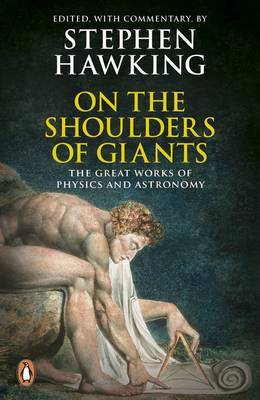
In On the Shoulders of Giants, Stephen Hawking brings together the greatest works by Copernicus, Galileo, Kepler, Newton and Einstein, showing how their pioneering discoveries changed the way we see the world.From Copernicus’ revolutionary claim that the earth orbits the sun and Kepler’s development of the laws of planetary motion to Einstein’s interweaving of time and space, each scientist built on the theories of their predecessors to answer the questions that had long mystified humanity.Hawking also provides fascinating glimpses into their lives and times – Galileo’s trial in the Papal inquisition, Newton’s bitter feuds with rivals and Einstein absent-mindedly jotting notes that would lead to his Theory of Relativity while pushing his baby son’s pram. Depicting the great challenges these men faced and the lasting contributions they made, Hawking explains how their works transformed the course of science – and gave us a better understanding of the universe and our place in it.

ContentsForeword by Sir Michael Francis Atiyah, OM, FRS, FRSE, FMedSci FAA, HonFREngLecture 1 - Classical Theory {Hawking}Lecture 2 - Structure of Spacetime Singularities {Penrose}Lecture 3 - Quantum Black Holes {Hawking}Lecture 4 - Quantum Theory and Spacetime {Penrose}Lecture 5 - Quantum Cosmology {Hawking}Lecture 6 - The Twistor View of Spacetime {Penrose}Chapter 7 - The Debate {Hawking and Penrose}Einstein said that the most incomprehensible thing about the universe is that it is comprehensible. But was he right? Can the quantum theory of fields and Einstein's general theory of relativity, the two most accurate and successful theories in all of physics, be united in a single quantum theory of gravity? Can quantum and cosmos ever be combined? On this issue, two of the world's most famous physicists--Stephen Hawking ("A Brief History of Time") and Roger Penrose ("The Emperor's New Mind" and "Shadows of the Mind")--disagree. Here they explain their positions in a work based on six lectures with a final debate, all originally presented at the Isaac Newton Institute for Mathematical Sciences at the University of Cambridge.How could quantum gravity, a theory that could explain the earlier moments of the big bang and the physics of the enigmatic objects known as black holes, be constructed? Why does our patch of the universe look just as Einstein predicted, with no hint of quantum effects in sight? What strange quantum processes can cause black holes to evaporate, and what happens to all the information that they swallow? Why does time go forward, not backward?In this book, the two opponents touch on all these questions. Penrose, like Einstein, refuses to believe that quantum mechanics is a final theory. Hawking thinks otherwise, and argues that general relativity simply cannot account for how the universe began. Only a quantum theory of gravity, coupled with the no-boundary hypothesis, can ever hope to explain adequately what little we can observe about our universe. Penrose, playing the realist to Hawking's positivist, thinks that the universe is unbounded and will expand forever. The universe can be understood, he argues, in terms of the geometry of light cones, the compression and distortion of spacetime, and by the use of twistor theory. With the final debate, the reader will come to realize how much Hawking and Penrose diverge in their opinions of the ultimate quest to combine quantum mechanics and relativity, and how differently they have tried to comprehend the incomprehensible.

Have you ever wondered how our universe began? Or what it takes to put humans on the moon? Do you know what happens in the microscopic world of a life-saving vaccine? What would you do if you could travel through space and time? Embark on the adventure of a lifetime in this beautiful collection of up-to-the-minute essays, mind-blowing facts and out-of-this-world colour photographs, by the world's leading scientists including Professor Stephen Hawking himself.This edition features brand-new content from Dr Mary Plagues, Pandemics and Planetary Health. This unmissable volume was curated by Stephen and Lucy Hawking, whose series of children's books George's Secret Key was a global hit. George's stories are punctuated with fascinating real-life facts and insights from leading scientists and now this incredible non-fiction has been collected into one bumper volume, with new content from key scientific figures and up-to-the-minute facts and figures for readers in 2021.

George and his best friend, Annie have been selected as junior astronauts - part of a programme that trains up young people for a trip to Mars in the future. This is everything they've ever wanted - they get to be a part of up-to-the minute space discoveries and meet a bunch of new friends who are as fascinated by the universe as they are.But when they arrive at space camp, George and Annie quickly learn that strange things are happening - on Earth as well as up in our skies. Mysterious space missions are happening in secret, and the astronaut training they're undertaking gets scarier and scarier . . .The fifth adventure in this series by Lucy and Stephen Hawking - also containing up-to-the-minute scientific facts and information by the world's leading scientists.

For the millions of readers of the international bestseller A Brief History of Time (with 3 million copies in print), this companion volume sheds more light on Stephen Hawking and his major scientific theories. Based on an exciting new documentary film. 100 photographs, diagrams and computerized graphics.

Where the science of black holes, gravitational waves, and time travel will likely lead us, as reported by spacetime's most important theoreticians and observers. Our minds tell us that some things in the universe must be true. The New Physics tells us that they are not, and in the process, blurs the line between science and science fiction. Here are six accessible essays by those who walk that line, moving ever further out in discovering the patterns of nature, aimed at readers who share their fascination with the deepest mysteries of the universe.• Richard Price: "An Introduction to Spacetime Physics"• Stephen Hawking: "Chronology Protection"• Igor Novikov: "Can We Change the Past?"• Kip S. Thorne: "Speculations about the Future"• Timothy Ferris: "On the Popularization of Science"• Alan Lightman: "The Physicist as Novelist"
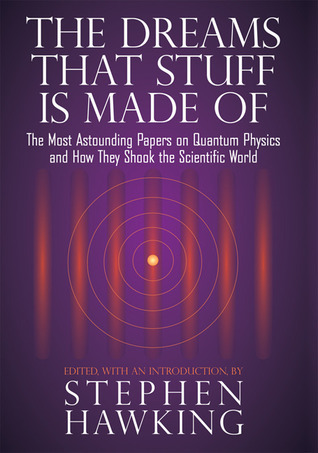
The Dreams That Stuff Is Made Of: The Most Astounding Papers of Quantum Physics--and How They Shook the Scientific World
by Stephen Hawking
Rating: 4.4 ⭐
“God does not play dice with the universe.” So said Albert Einstein in response to the first discoveries that launched quantum physics, as they suggested a random universe that seemed to violate the laws of common sense. This 20th-century scientific revolution completely shattered Newtonian laws, inciting a crisis of thought that challenged scientists to think differently about matter and subatomic particles.The Dreams That Stuff Is Made Of compiles the essential works from the scientists who sparked the paradigm shift that changed the face of physics forever, pushing our understanding of the universe on to an entirely new level of comprehension. Gathered in this anthology is the scholarship that shocked and befuddled the scientific world, including works by Niels Bohr, Max Planck, Werner Heisenberg, Max Born, Erwin Schrodinger, J. Robert Oppenheimer, Richard Feynman, as well as an introduction by today’s most celebrated scientist, Stephen Hawking.

'If you feel you are in a black hole, don't give up. There's a way out'What is inside a black hole?Is time travel possible?Throughout his extraordinary career, Stephen Hawking expanded our understanding of the universe and unravelled some of its greatest mysteries. In What Is Inside a Black Hole? Hawking takes us on a journey to the outer reaches of our imaginations, exploring the science of time travel and black holes.'The best most mind-bending sort of physics' The TimesBrief Answers, Big this stunning paperback series offers electrifying essays from one of the greatest minds of our age, taken from the original text of the No. 1 bestselling Brief Answers to the Big Questions.

Inspire kids to ask the big questions about Earth and the cosmos with this stunningly illustrated version of Professor Stephen Hawking's final message to humankind.We are all time travelers journeying together into the future. But let us work together to make that future a place we want to visit.Scientist and educator Stephen Hawking spent his life trying to unravel the mysteries of the universe. But, he still had many questions—and he wanted every reader, every child, to come together to help answer How can we save the planet? How can we learn to be there for one another?Adapted from Professor Hawking’s posthumous 2020 Earth Day message, You and the Universe is his first picture book and is a tribute to the littlest citizens of Earth, highlighting the power of coming together and creating a better tomorrow.

The theoretical physicist shares his latest thoughts on the nature of space and time in this anthology of selections from Princeton University Press. Along with eminent colleagues, Hawking extends theoretical frontiers by speculating on the big questions of modern cosmology.

'Real science can be far stranger than science fiction, and much more satisfying'Will artificial intelligence outsmart us?Is there other intelligent life in the universe?Throughout his extraordinary career, Stephen Hawking expanded our understanding of the universe and unravelled some of its greatest mysteries. Will Artificial Intelligence Outsmart Us? considers the threat of artificial super-intelligence - as well as the likelihood of intelligent life beyond our planet.'Modest, profound and sometimes very funny' Sunday TimesBrief Answers, Big this stunning paperback series offers electrifying essays from one of the greatest minds of our age, taken from the original text of the No. 1 bestselling Brief Answers to the Big Questions.

This series of lectures, given at Cambridge University, introduces listeners to the history of ideas about the Universe as well as today's most important scientific theories about time, space, and the cosmos.

«O tema do fim foi sempre um motivo abundantemente glosado em cada repetido fin de siècle. O terror do fim apoderou-se de algumas populações no final do primeiro milénio da era cristã. Entrou-se para as igrejas e rezou-se. A metáfora do fim da história está em voga nalguns meios culturais deste final do segundo milénio. Entra-se para as revistas e discute-se. Não admira que a ciência, banhada como está num contexto sociocultural, se abalance hoje a tratar do tema do fim: o fim de si própria e o fim do seu objecto de estudo. Mas é curioso que seja um homem perseguido pela eminência do seu próprio fim a lançar várias interrogações sobre o fim e a procurar com a tenção respectivas respostas.»Carlos Fiolhais (do «Prefácio»)STEPHEN HAWKING é reconhecido internacionalmente como um dos génios do século XX. Ocupa na Universidade de Cambridge a cátedra que pertenceu a Newton e é, segundo a opinião geral, um forte candidato ao Nobel da Física. O presente volume reúne dois textos da sua autoria - um sobre o fim da física e outro sobre o fim do espaço-tempo - que, após o sucesso de Breve História do Tempo, também publicado pela Gradiva, merecem divulgação acrescida.Autor(es)STEPHEN W. HAWKING foi durante trinta anos professor lucasiano de Matemática na Universidade de Cambridge e recebeu inúmeros prémios e distinções, incluindo, mais recentemente, a Medalha Presidencial da Liberdade, conferida pelo Presidente dos EUA. Os seus livros, editados pela Gradiva em Portugal, incluem os bem conhecidos Breve História do Tempo, A Teoria de Tudo e O Universo numa Casca de Noz.
'Remember to look up at the stars and not down at your feet'How did it all begin?Is there a God?Throughout his extraordinary career, Stephen Hawking expanded our understanding of the universe and unravelled some of its greatest mysteries. In How Did It All Begin? the world famous cosmologist and bestselling author of A Brief History of Time explores the fundamental questions of our existence.'A brilliant mind' Daily TelegraphBrief Answers, Big this stunning paperback series offers electrifying essays from one of the greatest minds of our age, taken from the original text of the No. 1 bestselling Brief Answers to the Big Questions.

В настоящее издание вошли три научно-популярных бестселлера выдающегося физика современности Стивена Хокинга, в которых он увлекательно и доступно рассказывает о природе пространства и времени, о происхождении Вселенной и ее возможной судьбе: "Краткая история времени", "Черные дыры и молодые Вселенные" и "Теория всего".
This book tells the complelling story of one of the greatest mysteries of modern Cosmology. Like all great breakthroughs in science, it is often an unexpected result, which spurs the science community into rethinking how the Universe works. Towards the end of the twentieth century scientists thought they had a unified picture of how the Universe worked. Then, at the end of the twentieth century an entirely unexpected discovery was made. This discovery has the potential to revolutionize the way we understand the Universe. Indeed, the discovery may allow science to unravel the mysteries of the entire physical Universe.
In mid-1962, Playboy founder Hugh Hefner was given a partial transcript of an interview with Miles Davis. It covered jazz, of course, but it also included Davis’s ruminations on race, politics and culture. Fascinated, Hef sent the writer—future Pulitzer-Prize-winning author Alex Haley, an unknown at the time—back to glean even more opinion and insight from Davis. The resulting exchange, published in the September 1962 issue, became the first official Playboy Interview and kicked off a remarkable run of public inquisition that continues today—and that has featured just about every cultural titan of the last half century.To celebrate the Interview’s 50th anniversary, the editors of Playboy have culled 50 of its most (in)famous Interviews and will publish them over the course of 50 weekdays (from September 4, 2012 to November 12, 2012) via Amazon’s Kindle Direct platform. Here is the interview with the theoretical physicist Stephen Hawking from the April 1990 issue.