
Martin J. Rees
Martin John Rees, Baron Rees of Ludlow, OM, PRS (born June 23, 1942 in York) is an English cosmologist and astrophysicist. He has been Astronomer Royal since 1995, and Master of Trinity College, Cambridge since 2004. He became President of the Royal Society on December 1, 2005.
26 Books Written
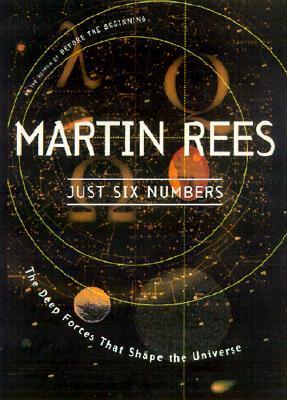
Just Six Numbers: The Deep Forces That Shape the Universe
by Martin J. Rees
Rating: 4.0 ⭐
• 2 recommendations ❤️
How did a single "genesis event" create billions of galaxies, black holes, stars and planets? How did atoms assemble -- here on earth, and perhaps on other worlds -- into living beings intricate enough to ponder their origins? What fundamental laws govern our universe?This book describes new discoveries and offers remarkable insights into these fundamental questions. There are deep connections between stars and atoms, between the cosmos and the microworld. Just six numbers, imprinted in the "big bang," determine the essential features of our entire physical world. Moreover, cosmic evolution is astonishingly sensitive to the values of these numbers. If any one of them were "untuned," there could be no stars and no life. This realization offers a radically new perspective on our universe, our place in it, and the nature of physical laws.

A provocative and inspiring look at the future of humanity and science from world-renowned scientist and bestselling author Martin ReesHumanity has reached a critical moment. Our world is unsettled and rapidly changing, and we face existential risks over the next century. Various outcomes--good and bad--are possible. Yet our approach to the future is characterized by short-term thinking, polarizing debates, alarmist rhetoric, and pessimism. In this short, exhilarating book, renowned scientist and bestselling author Martin Rees argues that humanity's prospects depend on our taking a very different approach to planning for tomorrow.The future of humanity is bound to the future of science and hinges on how successfully we harness technological advances to address our challenges. If we are to use science to solve our problems while avoiding its dystopian risks, we must think rationally, globally, collectively, and optimistically about the long term. Advances in biotechnology, cybertechnology, robotics, and artificial intelligence--if pursued and applied wisely--could empower us to boost the developing and developed world and overcome the threats humanity faces on Earth, from climate change to nuclear war. At the same time, further advances in space science will allow humans to explore the solar system and beyond with robots and AI. But there is no "Plan B" for Earth--no viable alternative within reach if we do not care for our home planet.Rich with fascinating insights into cutting-edge science and technology, this accessible book will captivate anyone who wants to understand the critical issues that will define the future of humanity on Earth and beyond.

Our Final Hour: A Scientist's warning - How Terror, Error, and Environmental Disaster Threaten Humankind's Future in This Century — On Earth and Beyond
by Martin J. Rees
Rating: 3.6 ⭐
Bolstered by unassailable science and delivered in eloquent style, Our Final Hour's provocative argument that humanity has a mere 50/50 chance of surviving the next century has struck a chord with readers, reviewers, and opinion-makers everywhere. Rees's vision of our immediate future is both a work of stunning scientific originality and a humanistic clarion call on behalf of the future of life.

One of our greatest scientific minds reflects on the role of science in the twenty-first century. In this riveting, eye-opening new book, preeminent astrophysicist Martin Rees charts out the future of science, offering a compelling vision of how scientists and laypeople can work together to address the most urgent issues of our era―including climate change and energy concerns, population growth, and epidemiological threats. Scientific research is crucial to a growing number of policy decisions, but in our public discussions, ideology and indignation all too often threaten to drown out research and evidence. To shape debates over health care, energy policy, space travel, and other vital issues, ordinary citizens must engage directly with research rather than relying on pundits’ and politicians’ interpretations. Otherwise, fringe opinions that have been discredited in the scientific community can take hold in the public imagination. At the same time, scientists must understand their roles as communicators and ambassadors as well as researchers. Rees not only diagnoses this central problem but also explains how scientists and the general public can deploy a global, long-term perspective to address the new challenges we face. In the process, he reveals critical shortcomings in our current system―for example, the tendency to be overly anxious about minor hazards while underrating the risk of potential catastrophes. Offering a strikingly clear portrait of the future of science, Rees tackles such diverse topics as the human brain, the possibility that humans will colonize other planets, and the existence of extraterrestrial life in order to distinguish between what scientists can hope to discover and what will always lie beyond our grasp. A fresh perspective on science’s significance and potential, From Here to Infinity will inspire and enlighten.

This is the ultimate guided tour of our universe. From the fiery mass of the Sun's core to the black hole at the centre of the Milky Way, take off into the farthest limits of space and discover our universe. Explore the latest discoveries in astronomy, spectacular star charts and stunning images from space probes and telescopes. It offers a dazzling visual exploration of all the astonishing features and phenomena of space. It is an out-of-this-world reference for all the family.

This volume presents an unique and accessible synthesis of modern cosmology. In recent years, observational cosmology has made remarkable advances, bringing into sharper focus a new set of fundamental questions that Martin Rees addresses in this book. Why is the universe expanding the way it is? What were the 'seeds' that caused galaxies, clusters and superclusters to form? What is the nature of 'dark matter'? What happened in the very early universe? The latest exciting advances and theories are discussed, while maintaining a clear distinction between aspects that now have a firm empirical basis and those that remain speculative.

Science in the twenty-first century inherits a fantastic record of accomplishment. Yet there remain enormous questions to answer - some of them revealed by those very past successes. Why is 95 per cent of the universe undetectable dark matter', and does it control the cosmos - how it began, its eventual fate and whether it is finite or infinite? Is our universe the only one, or could there be an infinity of others? Do other universes operate on different physical laws. Is there complex life in other star systems. If so, how far could it outstrip our intelligence? Could a sufficiently advanced life form even create new universes to its own design? In this playful and accessible book, Britain's best-known commentator on the most profound questions in science looks at whether they could be answered and asks, if they are, will the human brain be capable of comprehending the results? What we Still Don't Know looks beyond the edge of current scientific understanding, and poses problems for a new generation of inquiry.

Cognition Switch: An Artefact for the Transmission of New IdeasIssue #2: January 2019Featuring Ideas by: Michael Shermer, Peter Staudenmaier, Sabine Hossenfelder, Kate Raworth, Benjamin G Martin, Noah Charney, David Wengrow, Kimberley Brownlee, Tali Sharot, Robert Simpson, Thea Bechshoft, Martin Rees, Jon Butterworth, Bill Nye, Huw Price, and Henry Cowles

De vorderingen van de traditionele astronomie en de waarneemtechnieken die de laatste eeuwen hoe langer hoe meer vervolmaakt zijn, hebben ons in staat gesteld om kennis te nemen van de afstanden, massa's en afmetingen van de sterren en om de opbouw van het melkwegstelsel vast te stellen. Door de bestudering van de sterren van onze Melkweg hebben wij de veraf gelegen melkwegstelsels leren herkennen als sterrenfamilies en hebben wij hele opeenhopingen van stelsels kunnen ontdekken.In het begin van de twintigste eeuw maakten de algemene relativiteitstheorie en de studie der kernprocessen het mogelijk om de fysische aard van de sterren te verklaren. Dit boek vertelt ons over de onderzoekingen van de laatste decennia: 'zwarte' gaten', pulsars, quasars e.d. De fascinerende wereld van het universum gaat hier voor ons open.


Edexcel Gce History - A2: The United States, 1917-54: Boom Bust and Recovery: Unit 3 Option C2
by Martin J. Rees
Rating: 4.0 ⭐
Includes exam tips, activities and sources that help students to tackle typical exam questions of GCE History.

Milyen mértékben fenyegeti a terror, a tévedés és a környezeti katasztrófa az emberiség jövőjét? A tudomány sokkal gyorsabban fejlődik, mint korábban bármikor, és sokkal szélesebb területen: a biotechnika, a kibernetika és a nanoméretű technológia rendkívüli távlatokkal kecsegtet, csakúgy, mint a világűr kutatása. A 21. századi technikának azonban árnyoldalai is vannak, amelyek sokkal fenyegetőbbek és kiszámíthatatlanabbak lehetnek, mint az a nukleáris fenyegetettség, amivel évtizedeken keresztül szembesültünk. Az ember által a globális környezetre gyakorolt nyomás sokkal nagyobb kockázatokat rejt magában, mint a különféle ősrégi veszélyek, a földrengések, vulkánkitörések és aszteroida-becsapódások. A könyv ezekkel a veszélyekkel foglalkozik: tehát a fegyverkezési versennyel, az új technológiákkal, a környezeti válsággal, a tudományos találmányok céljával és korlátaival, valamint a Földön kívüli élet lehetőségeivel. Martin Rees angol csillagász, természetkutató, akinek A kezdetek kezdete című könyve sorozatunkban 1999-ben már sikert aratott.

Our amazing world: seen by a scientist, a thinker, an Astronomer Royal
by Martin J. Rees
Rating: 3.5 ⭐
Read how a leading scientist of our age sees the future of space travel, the prospects of life elsewhere, the nature of our solar system and of galaxies and the ‘multiverse’, how science works, and the begnning and likely cold and lonely ending of our universe. And will our world survive? A stunning and highly readable account of our amazing world and a glimpse into his personal vision. Unique.


Nesta edição são descritas e detalhadas cada uma das 88 constelações em que o céu está dividido atualmente, com relato de seus conteúdos. Você conhecerá em detalhes as constelações visíveis nos dois hemisférios.

Tanto os observadores iniciantes no conhecimento do céu quanto os veteranos nesse tipo de atividade se beneficiarão das cartas celestes que integram essa edição e que facilitam a navegação entre as estrelas.



THIS IS BRAND NEW BOOK.WE PROVIDE 100% CUSTOMER SATISFACTION.

In 1993, Professor Rees was invited by the Accademia Nazionale dei Lincei to give a series of lectures reviewing the progress of cosmology and its future prospects. Based on those lectures, this volume presents a unique synthesis of our understanding of modern cosmology. Observational cosmology has made remarkable advances in recent years, and has brought into sharper focus a new set of fundamental questions that Professor Rees addresses in this book. Why is the Universe expanding the way it is? What were the 'seeds' that caused galaxies, clusters and superclusters to grow? What is the nature of 'dark matter'? Many key issues and current controversies are also considered, but throughout a clear distinction is maintained between aspects that now have a firm empirical basis, and those that remain speculative. Given the unique contribution Professor Rees has made to cosmology, this book will be welcomed both by researchers in the field, and beginning graduate students with a background in physics.

Vor dem Anfang: Eine Geschichte des Universums
by Martin J. Rees
Gibt es neben unserem noch andere Universen? Wie und wann sind sie entstanden? Welche physikalischen Gesetze herrschen dort? – Die Grundfragen der Kosmologie, beantwortet von Martin Rees, einem der renommiertesten Astronomen der Welt.(Dieser Text bezieht sich auf eine frühere Ausgabe.)

Il nostro futuro (Voci)
by Martin J. Rees
Il nostro futuro dipende sempre di più da come riusciremo a sfruttare i progressi delle scienze per affrontare le sfide ambientali e sociali che si profilano all’orizzonte. Allo stesso tempo le opportunità sono divenute il campo di paure paralizzanti, e l’umanità si è trovata a mettere in discussione un’idea di progresso pressoché millenaria, alle prese con una tecnologia che si fa biologia e un’intelligenza che diviene artificiale. Martin Rees costruisce una riflessione critica ma ottimistica, basandosi sul dialogo fra scienza e umanesimo e restituendo fiducia e lucidità allo sguardo sul futuro dell’umanità.
Cartel Enforcement Worldwide
by Martin J. Rees
Competition law is now actively enforced in more than 100 jurisdictions throughout the world, and although the objectives of competition are commonly shared, procedures and policies can be vastly different. The globalisation of trade inexorably increases the risk of enforcement in jurisdictions throughout the world. Information sharing agreements that apply to competition authorities and enforcement agencies around the world are numerous and varied. For example confidential information (including leniency applications) can be shared between the National Competition Authorities of the European Union, the United Kingdom has agreements with the United States and Canada which permit the exchange of extensive information, and various other bilateral and tri-lateral agreements exist. Increasingly, information given to one competition authority could end up in the hands of another, creating yet another minefield for defendants faced with cartel enforcement in numerous jurisdictions. The work outlines the substantive competition law provisions, any proposed legislative changes and examines the procedural and practical aspects of cartel enforcement in numerous jurisdictions around the world. It also reviews the relationship between administrative and criminal sanctions, and the practical risk of prosecution by enforcement authorities. Cartel Enforcement Worldwide deals with a multitude of considerations that need to be addressed in the context of a cartel investigation, from the powers of the various regulators, to the rights of defence and the appeals process. As multijurisdictional enforcement becomes increasingly common, simultaneous leniency applications to several authorities are the norm, bringing with it the necessity of coordinating responses so that steps taken in one jurisdiction do not prejudice what is happening elsewhere. Each chapter therefore includes information about the leniency programmes adopted by the relevant regulators. Also included is guidance on private enforcement actions in the civil courts. Public enforcement is increasingly being used as a launch pad for private enforcement litigation in which companies and individuals that have suffered loss as a result of anti-competitive practices bring claims for damages against cartelists. Potential litigants are increasingly aware of the opportunities afforded by private competition enforcement, and of the benefits of simply relying on an infringement decision by a competition authority.
Gravity's Fatal Attraction: Black Holes In The Universe
by Martin J. Rees