
Kim Stanley Robinson
Kim Stanley Robinson is an American science fiction writer. He has published 22 novels and numerous short stories and is best known for his Mars trilogy. His work has been translated into 24 languages. Many of his novels and stories have ecological, cultural, and political themes and feature scientists as heroes. Robinson has won numerous awards, including the Hugo Award for Best Novel, the Nebula Award for Best Novel and the World Fantasy Award. The Atlantic has called Robinson's work "the gold standard of realistic, and highly literary, science-fiction writing." According to an article in The New Yorker, Robinson is "generally acknowledged as one of the greatest living science-fiction writers."
30 Books Written

ONE OF BARACK OBAMA’S FAVORITE BOOKS OF THE YEAR“The best science-fiction nonfiction novel I’ve ever read.” —Jonathan Lethem "If I could get policymakers, and citizens, everywhere to read just one book this year, it would be Kim Stanley Robinson’s The Ministry for the Future. " —Ezra Klein ( Vox )The Ministry for the Future is a masterpiece of the imagination, using fictional eyewitness accounts to tell the story of how climate change will affect us all. Its setting is not a desolate, postapocalyptic world, but a future that is almost upon us. Chosen by Barack Obama as one of his favorite books of the year, this extraordinary novel from visionary science fiction writer Kim Stanley Robinson will change the way you think about the climate crisis."One hopes that this book is read widely—that Robinson’s audience, already large, grows by an order of magnitude. Because the point of his books is to fire the imagination."― New York Review of Books"If there’s any book that hit me hard this year, it was Kim Stanley Robinson’s The Ministry for the Futur e, a sweeping epic about climate change and humanity’s efforts to try and turn the tide before it’s too late." ― Polygon (Best of the Year) "Masterly." — New Yorker"[ The Ministry for the Future ] struck like a mallet hitting a gong, reverberating through the year ... it’s terrifying, unrelenting, but ultimately hopeful. Robinson is the SF writer of my lifetime, and this stands as some of his best work. It’s my book of the year." — Locus"Science-fiction visionary Kim Stanley Robinson makes the case for quantitative easing our way out of planetary doom." ― Bloomberg Green

From the acclaimed author of New York 2140 and Red Mars , this NYT bestselling novel tells the story of a future where humanity has populated miraculous new habitats engineered across the solar system -- and the one death that triggers a precarious chain of events that could destroy it all.The year is 2312. Scientific and technological advances have opened gateways to an extraordinary future. Earth is no longer humanity's only home; new habitats have been created throughout the solar system on moons, planets, and in between. But in this year, 2312, a sequence of events will force humanity to confront its past, its present, and its future.The first event takes place on Mercury, on the city of Terminator, itself a miracle of engineering on an unprecedented scale. It is an unexpected death, but one that might have been foreseen. For Swan Er Hong, it is an event that will change her life. Swan was once a woman who designed worlds. Now she will be led into a plot to destroy them.

The concluding book in Kim Stanley Robinson's critically-acclaimed Three Californias Trilogy, Pacific Edge .2065: In a world that has rediscovered harmony with nature, the village of El Modena, California, is an ecotopia in the making. Kevin Claiborne, a young builder who has grown up in this "green" world, now finds himself caught up in the struggle to preserve his community's idyllic way of life from the resurgent forces of greed and exploitation.

In his most ambitious project to date, award-winning author Kim Stanley Robinson utilizes years of research and cutting-edge science in the first of a trilogy chronicling the colonization of Mars. For eons, sandstorms have swept the desolate landscape. For centuries, Mars has beckoned humans to conquer its hostile climate. Now, in 2026, a group of 100 colonists is about to fulfill that destiny. John Boone, Maya Toitavna, Frank Chalmers and Arkady Bogdanov lead a terraforming mission. For some, Mars will become a passion driving them to daring acts of courage and madness. For others it offers an opportunity to strip the planet of its riches. For the genetic alchemists, it presents a chance to create a biomedical miracle, a breakthrough that could change all we know about life and death. The colonists orbit giant satellite mirrors to reflect light to the surface. Black dust sprinkled on the polar caps will capture warmth. Massive tunnels, kilometers deep, will be drilled into the mantle to create stupendous vents of hot gases. Against this backdrop of epic upheaval, rivalries, loves and friendships will form and fall to pieces—for there are those who will fight to the death to prevent Mars from ever being changed. Brilliantly imagined, breathtaking in scope and ingenuity, Red Mars is an epic scientific saga, chronicling the next step in evolution, creating a world in its entirety. It shows a future, with both glory and tarnish, that awes with complexity and inspires with vision.

Nearly a generation has passed since the first pioneers landed, but the transformation of Mars to an Earthlike planet has just begun. The plan is opposed by those determined to preserve the planet's hostile, barren beauty. Led by rebels like Peter Clayborne, these young people are the first generation of children born on Mars. They will be joined by original settlers Maya Toitovna, Simon Frasier, and Sax Russell. Against this cosmic backdrop, passions, rivalries, and friendships explode in a story as spectacular as the planet itself.

The red planet is red no longer, as Mars has become a perfectly inhabitable world. But while Mars flourishes, Earth is threatened by overpopulation and ecological disaster. Soon people look to Mars as a refuge, initiating a possible interplanetary conflict, as well as political strife between the Reds, who wish to preserve the planet in its desert state, and the Green "terraformers". The ultimate fate of Earth, as well as the possibility of new explorations into the solar system, stand in the balance

A major new novel from one of science fiction's most powerful voices, AURORA tells the incredible story of our first voyage beyond the solar system.Brilliantly imagined and beautifully told, it is the work of a writer at the height of his powers. Our voyage from Earth began generations ago.Now, we approach our new home.AURORA.

It is the fourteenth century and one of the most apocalyptic events in human history is set to occur - the coming of the Black Death. History teaches us that a third of Europe's population was destroyed. But what if? What if the plague killed 99 percent of the population instead? How would the world have changed? This is a look at the history that could have been: a history that stretches across centuries, a history that sees dynasties and nations rise and crumble, a history that spans horrible famine and magnificent innovation. These are the years of rice and salt.

It is 2140. The waters rose, submerging New York City. But the residents adapted and it remained the bustling, vibrant metropolis it had always been. Though changed forever.Every street became a canal. Every skyscraper an island.Through the eyes of the varied inhabitants of one building, Kim Stanley Robinson shows us how one of our great cities will change with the rising tides.And how we too will change.

Kim Stanley Robinson, the New York Times bestselling author of science fiction masterworks such as the Mars trilogy and 2312, has, on many occasions, imagined our future. Now, in SHAMAN, he brings our past to life as never before.There is Thorn, a shaman himself. He lives to pass down his wisdom and his stories -- to teach those who would follow in his footsteps.There is Heather, the healer who, in many ways, holds the clan together.There is Elga, an outsider and the bringer of change.And then there is Loon, the next shaman, who is determined to find his own path. But in a world so treacherous, that journey is never simple -- and where it may lead is never certain.

American Fred Fredericks is making his first trip, his purpose to install a communications system for China's Lunar Science Foundation. But hours after his arrival he witnesses a murder and is forced into hiding.It is also the first visit for celebrity travel reporter Ta Shu. He has contacts and influence, but he too will find that the moon can be a perilous place for any traveler.Finally, there is Chan Qi. She is the daughter of the Minister of Finance, and without doubt a person of interest to those in power. She is on the moon for reasons of her own, but when she attempts to return to China, in secret, the events that unfold will change everything - on the moon, and on Earth.

2047: for 60 years America has been quarantined after a devastating nuclear attack. For the small community of San Onofre on the West Coast, life is a matter of survival: living simply on what the sea and land can provide, preserving what knowledge and skills they can in a society without mass communications. Until the men from San Diego arrive, riding the rails on flatbed trucks and bringing news of the new American Resistance. And Hank Fletcher and his friends are drawn into an adventure that marks the end of childhood...
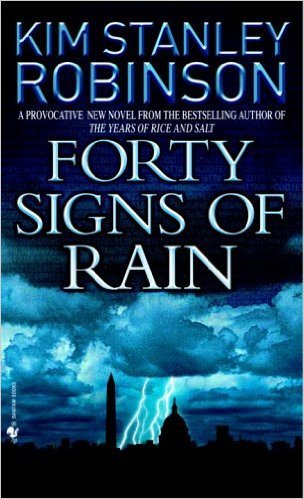
The bestselling author of the classic Mars trilogy and The Years of Rice and Salt returns with a riveting new trilogy of cutting-edge science, international politics, and the real-life ramifications of global warming as they are played out in our nation’s capital—and in the daily lives of those at the center of the action. Hauntingly realistic, here is a novel of the near future that is inspired by scientific facts already making headlines.When the Arctic ice pack was first measured in the 1950s, it averaged thirty feet thick in midwinter. By the end of the century it was down to fifteen. One August the ice broke. The next year the breakup started in July. The third year it began in May. That was last year.It’s an increasingly steamy summer in the nation’s capital as Senate environmental staffer Charlie Quibler cares for his young son and deals with the frustrating politics of global warming. Charlie must find a way to get a skeptical administration to act before it’s too late—and his progeny find themselves living in Swamp World. But the political climate poses almost as great a challenge as the environmental crisis when it comes to putting the public good ahead of private gain. While Charlie struggles to play politics, his wife, Anna, takes a more rational approach to the looming crisis in her work at the National Science Foundation. There a proposal has come in for a revolutionary process that could solve the problem of global warming—if it can be recognized in time. But when a race to control the budding technology begins, the stakes only get higher. As these everyday heroes fight to align the awesome forces of nature with the extraordinary march of modern science, they are unaware that fate is about to put an unusual twist on their work—one that will place them at the heart of an unavoidable storm. With style, wit, and rare insight into our past, present, and possible future, this captivating novel propels us into a world on the verge of unprecedented change—in a time quite like our own. Here is Kim Stanley Robinson at his visionary best, offering a gripping cautionary tale of progress—and its price—as only he can tell it.From the Hardcover edition.

In the near future, Wade Norton has been sent to Antarctica by Senator Phil Chase to investigate rumors of environmental sabotage. He arrives on the frozen continent and immediately begins making contact with the various scientific and political factions that comprise Antarctic society.What he finds is an interesting blend of inhabitants who don't always mesh well but who all share a common love of Antarctica and a fierce devotion to their life there. He also begins to uncover layers of Antarctic culture that have been kept hidden from the rest of the world, and some of them are dangerous indeed. Things are brought to a head when the saboteurs—or “ecoteurs” as they call themselves—launch an attack designed to drive humans off the face of Antarctica.

At the heart of a provocative narrative that stretches from Renaissance Italy to the moons of Jupiter is the father of modern science: Galileo Galilei.To the inhabitants of the Jovian moons, Galileo is a revered figure whose actions will influence the subsequent history of the human race. From the summit of their distant future, a charismatic renegade named Ganymede travels to the past to bring Galileo forward in an attempt to alter history and ensure the ascendancy of science over religion. And if that means Galileo must be burned at the stake, so be it.From Galileo's heresy trial to the politics of far-future Jupiter, Kim Stanley Robinson illuminates the parallels between a distant past and an even more remote future—in the process celebrating the human spirit and calling into question the convenient truths of our own moment in time.
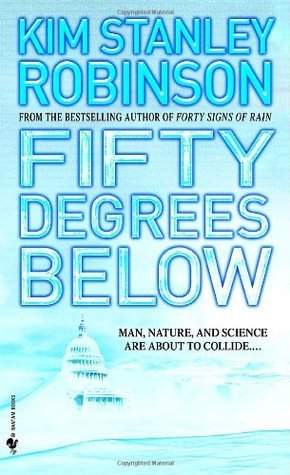
Kim Stanley Robinson is at his visionary best in this gripping cautionary tale of progress and its price as our world faces catastrophic climate change – the sequel to Forty Signs of Rain. Frank Vanderwal of the National Science Foundation in Washington, DC has been living a paleolithic lifestyle in a tree house in Rock Creek Park ever since a big flood of the Potomac destroyed his apartment block. The flood was just the beginning. It heralded a lot of bad-weather news. Now the Gulf Stream has shut down and the Antarctic ice sheet is melting. The good news is that Frank is part of an international effort by the National Science Foundation to restabilize Earth's climate. He understands the necessity for out-of-the-box thinking and he refuses to feel helpless before the indifference of the politicians and capitalists who run America. The bad news is that Frank has fallen in love – with a woman who is not who she seems. He discovers that their first meeting was no he was on a list all along! Her ulterior motive is political and she expects Frank to spy for her. And thus Frank is drawn into the world of Homeland Security, and other, blacker Washington security agencies as the presidential election year heats up. Then suddenly it's winter …It's winter like the ice age, fifty degrees below. As hellish conditions disrupt the lives of even the most important people, there is a convergence of meteorological and human events with Frank at the centre – catastrophe is in the air. This unforgettable story from the master of alternate and future history brings tomorrow into new focus with startling effect.
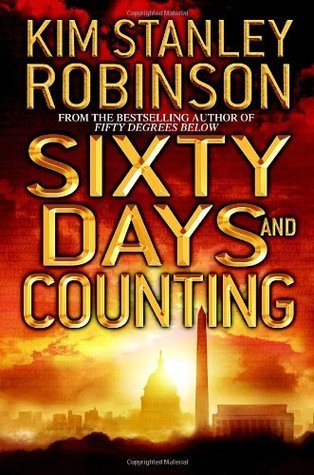
By the time Phil Chase is elected president, the world’s climate is far on its way to irreversible change. Food scarcity, housing shortages, diminishing medical care, and vanishing species are just some of the consequences. The erratic winter the Washington, D.C., area is experiencing is another grim reminder of a global weather pattern gone haywire: bone-chilling cold one day, balmy weather the next.But the president-elect remains optimistic and doesn’t intend to give up without a fight. A maverick in every sense of the word, Chase starts organizing the most ambitious plan to save the world from disaster since FDR–and assembling a team of top scientists and advisers to implement it.For Charlie Quibler, this means reentering the political fray full-time and giving up full-time care of his young son, Joe. For Frank Vanderwal, hampered by a brain injury, it means trying to protect the woman he loves from a vengeful ex and a rogue “black ops” agency not even the president can control–a task for which neither Frank’s work at the National Science Foundation nor his study of Tibetan Buddhism can prepare him. In a world where time is running out as quickly as its natural resources, where surveillance is almost total and freedom nearly nonexistent, the forecast for the Chase administration looks darker each passing day. For as the last–and most terrible–of natural disasters looms on the horizon, it will take a miracle to stop the clock . . . the kind of miracle that only dedicated men and women can bring about.From the Hardcover edition.

An early novel from Science Fiction legend Kim Stanley Robinson, now available for the first time in Icehenge .On the North Pole of Pluto there stands an a huge circle of standing blocks of ice, built on the pattern of Earth's Stonehenge--but ten times the size, standing alone at the farthest reaches of the Solar System. What is it? Who came there to build it?The secret lies, perhaps, in the chaotic decades of the Martian Revolution, in the lost memories of those who have lived for centuries.

Robinson returns to the realm he has made his own, in a work that brilliantly weaves together a futuristic setting with a poetic vision of the human spirit engaged in a drama as ancient as mankind itself.From a training mission in Antarctica to blistering sandstorms sweeping through labyrinths of barren canyons, the interwoven stories of The Martians set in motion a sprawling cast of characters upon the surface of Mars. As the planet is transformed from an unexplored and forbidding terrain to a troubled image of a re-created Earth, we meet the First Hundred explorers—men and women who are bound together by Earth’s tenuous toehold on Mars. Presenting unforgettable stories of hope and disappointment, of fierce physical and psychological struggles, The Martians is an epic chronicle of a planet that represents one of humanity’s most glorious possibilities.The Martians is a unique collection of previously unpublished fiction, a fascinating addition to Robinson’s oeuvre, and a must for all lovers of the red planet.

A “sublime” and “radically original” exploration of the Sierra Nevadas, the best mountains on Earth for hiking and camping, from New York Times bestselling novelist Kim Stanley Robinson (Bill McKibben, Gary Snyder).Kim Stanley Robinson first ventured into the Sierra Nevada mountains during the summer of 1973. He returned from that encounter a changed man, awed by a landscape that made him feel as if he were simultaneously strolling through an art museum and scrambling on a jungle gym like an energized child. He has returned to the mountains throughout his life—more than a hundred trips—and has gathered a vast store of knowledge about them. The High Sierra is his lavish celebration of this exceptional place and an exploration of what makes this span of mountains one of the most compelling places on Earth.Over the course of a vivid and dramatic narrative, Robinson describes the geological forces that shaped the Sierras and the history of its exploration, going back to the indigenous peoples who made it home and whose traces can still be found today. He celebrates the people whose ideas and actions protected the High Sierra for future generations. He describes uniquely beautiful hikes and the trails to be avoided. Robinson’s own life-altering events, defining relationships, and unforgettable adventures form the narrative’s spine. And he illuminates the human communion with the wild and with the sublime, including the personal growth that only seems to come from time spent outdoors.The High Sierra is a gorgeous, absorbing immersion in a place, born out of a desire to understand and share one of the greatest rapture-inducing experiences our planet offers. Packed with maps, gear advice, more than 100 breathtaking photos, and much more, it will inspire veteran hikers, casual walkers, and travel readers to prepare for a magnificent adventure.

2027: Southern California is a developer's dream gone mad, an endless sprawl of condos, freeways, and malls. Jim McPherson, the affluent son of a defense contractor, is a young man lost in a world of fast cars, casual sex, and designer drugs. But his descent into the shadowy underground of industrial terrorism brings him into a shattering confrontation with his family, his goals, and his ideals.The Gold Coast is the second novel in Robinson's Three Californias trilogy.

As the conversation shifts from debate over the existence of global warming to discussions of how best to deal with its impact, books examining the moral imperatives of biotechnology are more timely than ever. Acclaimed author, Kim Stanley Robinson offers a chilling and highly realistic look at our potential environmental future with his newly revised and collected Science in the Capitol trilogy.Kim Stanley Robinson—award winning author of the bestselling Mars trilogy—is at the top of his game in this trio of near-future eco-thrillers set in our nation’s capital. Intelligent, suspenseful, and profoundly moving, this is a tale of everyday people caught up in extraodinary circumstances as science, technology, politics, and global climatic changes collide.

Two eBooks in One! Red In his most ambitious project to date, award-winning author Kim Stanley Robinson utilizes years of research and cutting-edge science in the first of three novels that will chronicle the colonization of Mars. For eons, sandstorms have swept the barren, desolate landscape of the red planet. For centuries, Mars has beckoned to mankind to come and conquer its hostile climate. Now, in the year 2026, a group of one hundred colonists is about to fulfill that destiny. John Boone, Maya Toitovna, Frank Chalmers, and Arkady Bogdanov lead a mission whose ultimate goal is the terraforming of Mars. For some, Mars will become a passion driving them to daring acts of courage and madness; for others it offers an opportunity to strip the planet of its riches. And for the genetic "alchemists," Mars presents a chance to create a biomedical miracle, a breakthrough that could change all we know about life ... and death. The colonists place giant satellite mirrors in Martian orbit to reflect light to the planet's surface. Black dust sprinkled on the polar caps will capture warmth and melt the ice. And massive tunnels, kilometers in depth, will be drilled into the Martian mantle to create stupendous vents of hot gases. Against this backdrop of epic upheaval, rivalries, loves, and friendships will form and fall to pieces--for there are those who will fight to the death to prevent Mars from ever being changed. Brilliantly imagined, breathtaking in scope and ingenuity, Red Mars is an epic scientific saga, chronicling the next step in human evolution and creating a world in its entirety. Red Mars shows us a future, with both glory and tarnish, that awes with complexity and inspires with vision.Green Nearly a generation has passed since the first pioneers landed, but the transformation of Mars to an Earth-like planet has just begun. In Green Mars the colonists will attempt to turn the red planet into a lush garden for humanity. They will bombard the atmosphere with ice meteorites to add moisture. They will seed the red deserts with genetically engineered plants. Then they will tap the boiling planetary core to warm the planet's frozen surface. But their heroic efforts don't go unchallenged. For their plan to transform Mars is opposed by those determined to preserve the hostile and barren beauty of Mars. Led by rebels like Peter Clayborne, these young people are the first generation of children born on Mars, and they will be joined in their violent struggle by original settlers Maya Toitovna, Simon Frasier, and Sax Russell. Against this cosmic backdrop, passions, rivalries, and friendships will explode in a story as big as the planet itself. A novel of breathtaking scope and imagination, of lyric intensity and social resonance, Kim Stanley Robinson employs years of research and state-of-the-art science to create a prophetic vision of where humanity is headed--and of what life will be like on another world. Nebula Award® Winner, Hugo Award Winner

All three volumes of the worldwide bestselling Mars trilogy.Mars – the barren, forbidding planet that epitomises mankind’s dreams of space conquest.From the first pioneers who looked back at Earth and saw a small blue star, to the first colonists – hand-picked scientists with the skills necessary to create life from cold desert – Red Mars is the story of a new genesis. It is also the story of how Man must struggle against his own self-destructive mechanisms to achieve his dreams: before he even sets foot on the red planet, factions are forming, tensions are rising and violence is brewing… for civilization can be very uncivilized.

Living in the city of Kathmandu in the Kingdom of Nepal are dozens of American and British expatriates who are in love with the Himalayas. George Fergusson is one of them. He works as a trek guide for "Take You Higher, Ltd.", leading groups of tourists into the back country and occasionally assisting on serious climbs. George "Freds" Fredericks is another, a tall, easy-going American who converted to Buddhism while in college. He visited Nepal one year and never went home.The adventures started when George and Freds got together over the capture of a Yeti--an abominable snowman--by a scientific expedition. The thought of such a wild and mysterious creature in captivity--in prison--was too much for them to bear. And in freeing the Yeti, a great partnership was born. George and Freds will go on to greater heights as they explore the mysteries of Nepal, from Shangri-La to Kathmandu's governmental bureaucracy.

Kim Stanley Robinson, award-winning author of the bestselling Red Mars, Green Mars, and the soon-to-be-published Blue Mars, was called "a literary landscape artist, creating breathtaking vistas" by The Detroit Metro News. Now he confirms his reputation for brilliance and for the unexpected in this luminous short work.A Short, Sharp ShockA man tumbles through wild surf, half drowned, to collapse on a moonlit beach. When he regains consciousness, he has no memory of who he is or where he came from. he know only that the woman who washed ashore with him has disappeared sometime in the night, and that he has awakened in a surreal landscape of savage beauty -- a mysterious watery world encircled by a thin spine of land. Aided by strange tribesmen, he will journey to the cove of the spine kings, a brutal race that has enslaved the woman and several of the tribesmen. That is only the beginning of his quest, as he struggles to find her identity in this wondrous and cruel land -- and seeks out the woman whose hold on his imagination is both unfathomable and unshakable.Haunting and lyrical, filled with uncommon beauty and terrible peril, A Short, Sharp Shock is an ambitious and enthralling story by one of science fiction's most respected talents.

An early novel from Science Fiction legend Kim Stanley Robinson, The Memory of Whiteness is now available for the first time in decades.In 3229 A.D., human civilization is scattered among the planets, moons, and asteroids of the solar system. Billions of lives depend on the technology derived from the breakthroughs of the greatest physicist of the age, Arthur Holywelkin. But in the last years of his life, Holywelkin devoted himself to building a strange, beautiful, and complex musical instrument that he called The Orchestra.Johannes Wright has earned the honor of becoming the Ninth Master of Holywelkin's Orchestra. Follow him on his Grand Tour of the Solar System, as he journeys down the gravity well toward the sun, impelled by a destiny he can scarcely understand, and is pursued by mysterious foes who will tell him anything except the reason for their enmity.

Combining dazzling speculation with a profoundly humanist vision, this astounding alternate history tale presents a dramatic encounter with destiny wrapped around a simple yet provocative premise: the terrifying question of what might have happened if the fateful flight over Hiroshima had gone a bit differently. An extensive interview with the author, offering insight into his fiction and philosophies, is also included.

Adventurers, scientists, artists, workers, and visionaries — these are the men and women you will encounter in the short fiction of Kim Stanley Robinson. In settings ranging from the sunken ruins of Venice to the upper reaches of the Himalayas to the terraformed surface of Mars itself, and through themes of environmental sustainability, social justice, personal responsibility, sports, adventure, and fun, Robinson's protagonists explore a world which stands in sharp contrast to many of the traditional locales and mores of science fiction, presenting instead a world in which Utopia rests within our grasp.Kim Stanley Robinson has been an ongoing force in the Science Fiction genre for over twenty years, with his novels (Year’s of Rice and Salt, Forty Signs of Rain) crossing over to the mainstream, and routinely appearing on the New York Times best sellers list. During the 80s and early nineties, his short fiction continued to push the boundaries of science fiction, defining the science-focused side of the science fiction genre.Award-winning editor Jonathan Strahan worked with Kim Stanley Robinson to select the stories that make up this landmark volume. In addition to these reprints, The Best of Kim Stanley Robinson features a brand-new short story, "The Timpanist of the Berlin Philharmonic, 1942."From Kim Stanley Robinson, award-winning author of the Mars Trilogy, the Three Californias Trilogy, the Science in the Capital series, The Martians, and The Years of Rice and Salt, comes The Best of Kim Stanley Robinson. These twenty-two stories, including the Nebula Award-winning "The Blind Geometer," and World Fantasy Award winner "Black Air" represent The Best of Kim Stanley Robinson.

They sailed out of Lisbon harbor with the flags snapping and the brass culverins gleaming under a high white sun, priests proclaiming in sonorous Latin the blessing of the Pope, soldiers in armor jammed on the castles fore and aft, and sailors spiderlike in the rigging, waving at the citizens of the town who had left their work to come out on the hills and watch the ships crowd out the sunbeaten roads, for this was the Armada, the Most Fortunate Invincible Armada, off to subjugate the heretic English to the will of God. There would never be another departure like it.And aboard one of the ships was Manuel Tetuan, a young Moroccan orphan shanghaied from a Franciscan monastery. “Black Air” is the multiple award nominated and World Fantasy Award-winning novelette of Manuel’s beatific innocence, of his compassion in the face of war, and of the miracles that enabled him to survive the tragedy of the doomed Armada.Robinson’s extraordinary range of interests is demonstrated in haunting stories of: tourists looting the beautiful, sunken ruins of Venice; an amoral future sleuth who, with her bumbling Watson, must find the forger of Monets on a planet of wealthy esthetes; three friends, one brain-damaged, who confront eternity and subtle magic in the snowbound Sierras; a repertoire company of hypnotically trained, surgically altered actors, and an unknown psychopath whose murders mock the scripts of Elizabethan and Jacobean drama; the historic effects of the Second World War’s last traitor, the pilot who deliberately fails to A-bomb Hiroshima; impoverished Uranian miners who seek fame in an interplanetary music competition by reviving an ancient, lost form—Dixieland Jazz; and a dilapidated Arizona grill-souvenir shop that becomes the focus of a drifter’s encounters with Time and destiny.