
Mary Roach
Mary Roach is a science author who specializes in the bizarre and offbeat; with a body of work ranging from deep-dives on the history of human cadavers to the science of the human anatomy during warfare. Mary Roach is the author of the New York Times bestsellers STIFF: The Curious Lives of Human Cadavers; GULP: Adventures on the Alimentary Canal, PACKING FOR MARS: The Curious Science of Life in the Void; BONK: The Curious Coupling of Science and Sex; and GRUNT: The Curious Science of Humans at War. Mary has written for National Geographic, Wired, Discover, New Scientist, the Journal of Clinical Anatomy, and Outside, among others. She serves as a member of the Mars Institute's Advisory Board and the Usage Panel of American Heritage Dictionary. Her 2009 TED talk made the organization's 2011 Twenty Most-Watched To Date list. She was the guest editor of the 2011 Best American Science and Nature Writing, a finalist for the 2014 Royal Society Winton Prize, and a winner of the American Engineering Societies' Engineering Journalism Award, in a category for which, let's be honest, she was the sole entrant.
14 Books Written
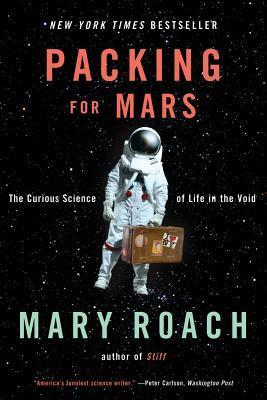
Packing for Mars: The Curious Science of Life in the Void
by Mary Roach
Rating: 4.0 ⭐
• 2 recommendations ❤️
“America’s funniest science writer” ( Washington Post ) explores the irresistibly strange universe of life without gravity in this New York Times bestseller. The best-selling author of Stiff and Bonk explores the irresistibly strange universe of space travel and life without gravity. From the Space Shuttle training toilet to a crash test of NASA’s new space capsule, Mary Roach takes us on the surreally entertaining trip into the science of life in space and space on Earth.

Stiff an oddly compelling, often hilarious exploration of the strange lives of our bodies postmortem. For two thousand years, cadavers—some willingly, some unwittingly—have been involved in science's boldest strides and weirdest undertakings. In this fascinating account, Mary Roach visits the good deeds of cadavers over the centuries and tells the engrossing story of our bodies when we are no longer with them.

In Bonk, the best-selling author of Stiff turns her outrageous curiosity and insight on the most alluring scientific subject of all: sex. Can a person think herself to orgasm? Why doesn't Viagra help women-or, for that matter, pandas? Can a dead man get an erection? Is vaginal orgasm a myth? Mary Roach shows us how and why sexual arousal and orgasm-two of the most complex, delightful, and amazing scientific phenomena on earth-can be so hard to achieve and what science is doing to make the bedroom a more satisfying place.

"America's funniest science writer" (Washington Post) takes us down the hatch on an unforgettable tour. The alimentary canal is classic Mary Roach terrain: the questions explored in Gulp are as taboo, in their way, as the cadavers in Stiff and every bit as surreal as the universe of zero gravity explored in Packing for Mars. Why is crunchy food so appealing? Why is it so hard to find words for flavors and smells? Why doesn't the stomach digest itself? How much can you eat before your stomach bursts? Can constipation kill you? Did it kill Elvis? In Gulp we meet scientists who tackle the questions no one else thinks of—or has the courage to ask. We go on location to a pet-food taste-test lab, a fecal transplant, and into a live stomach to observe the fate of a meal. With Roach at our side, we travel the world, meeting murderers and mad scientists, Eskimos and exorcists (who have occasionally administered holy water rectally), rabbis and terrorists—who, it turns out, for practical reasons do not conceal bombs in their digestive tracts. Like all of Roach's books, Gulp is as much about human beings as it is about human bodies.

The best-selling author of Stiff and Bonk trains her considerable wit and curiosity on the human soul. "What happens when we die? Does the light just go out and that's that―the million-year nap? Or will some part of my personality, my me-ness persist? What will that feel like? What will I do all day? Is there a place to plug in my lap-top?" In an attempt to find out, Mary Roach brings her tireless curiosity to bear on an array of contemporary and historical soul-searchers: scientists, schemers, engineers, mediums, all trying to prove (or disprove) that life goes on after we die.

What’s to be done about a jaywalking moose? A bear caught breaking and entering? A murderous tree? Three hundred years ago, animals that broke the law would be assigned legal representation and put on trial. The answers are best found not in jurisprudence but in science: the curious science of human-wildlife conflict, a discipline at the crossroads of human behavior and wildlife biology.Roach tags along with animal-attack forensics investigators, human-elephant conflict specialists, bear managers, and "danger tree" faller blasters. Intrepid as ever, she travels from leopard-terrorized hamlets in the Indian Himalaya to St. Peter’s Square in the early hours before the pope arrives for Easter Mass, when vandal gulls swoop in to destroy the elaborate floral display. She taste-tests rat bait, learns how to install a vulture effigy, and gets mugged by a macaque.Combining little-known forensic science and conservation genetics with a motley cast of laser scarecrows, langur impersonators, and trespassing squirrels, Roach reveals as much about humanity as about nature’s lawbreakers. When it comes to "problem" wildlife, she finds, humans are more often the problem—and the solution. Fascinating, witty, and humane, Fuzz offers hope for compassionate coexistence in our ever-expanding human habitat.

A New York Times / National Bestseller"America's funniest science writer" ( Washington Post ) Mary Roach explores the science of keeping human beings intact, awake, sane, uninfected, and uninfested in the bizarre and extreme circumstances of war. Grunt tackles the science behind some of a soldier's most challenging adversaries―panic, exhaustion, heat, noise―and introduces us to the scientists who seek to conquer them. Mary Roach dodges hostile fire with the U.S. Marine Corps Paintball Team as part of a study on hearing loss and survivability in combat. She visits the fashion design studio of U.S. Army Natick Labs and learns why a zipper is a problem for a sniper. She visits a repurposed movie studio where amputee actors help prepare Marine Corps medics for the shock and gore of combat wounds. At Camp Lemmonier, Djibouti, in east Africa, we learn how diarrhea can be a threat to national security. Roach samples caffeinated meat, sniffs an archival sample of a World War II stink bomb, and stays up all night with the crew tending the missiles on the nuclear submarine USS Tennessee. She answers questions not found in any other book on the military: Why is DARPA interested in ducks? How is a wedding gown like a bomb suit? Why are shrimp more dangerous to sailors than sharks? Take a tour of duty with Roach, and you’ll never see our nation’s defenders in the same way again. 15 illustrations
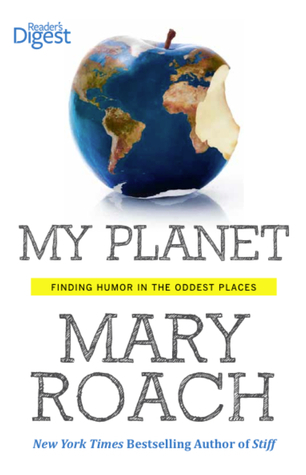
A Hilarious Collection of Essays from one of America's Most Gifted Humorists!Follow New York Times bestselling author Mary Roach -- but be careful not to trip -- as she weaves through personal anecdotes and everyday musings riddled with her uncanny wit and amazingly analytical eye. These essays, which found a well-deserved home within the pages of Reader's Digest as the column "My Planet," detail the inner workings of hypochondriacs, hoarders, and compulsive cheapskates. (Did we mention neurotic interior designers and professional list-makers?) For Roach, humor is hidden in the most unlikely places, which means that nothing is off limits. Whether she is dwelling on her age or talking about the pros and cons of a bedroom night light -- "A married couple can best be defined as a unit of people whose sleep habits are carefully engineered to keep each other awake" -- Roach finds a lesson, a slice of sarcasm, or a dash of something special that makes each day comical and absolutely priceless.In keeping with our mission -- curating the best reads in the land -- Reader's Digest editors neatly packaged these timeless (and hilarious) Roach essays together for the first time. Whether you read this cover-to-cover or during spare moments over morning coffee, flip to a page in this volume and try not to smile.

From the New York Times best-selling author of Stiff and Fuzz, a rollicking exploration of the quest to re-create the impossible complexities of human anatomy.The body is the most complex machine in the world, and the only one for which you cannot get a replacement part from the manufacturer. For centuries, medicine has reached for what’s available—sculpting noses from brass, borrowing skin from frogs and hearts from pigs, crafting eye parts from jet canopies and breasts from petroleum by-products. Today we’re attempting to grow body parts from scratch using stem cells and 3D printers. How are we doing? Are we there yet?In Replaceable You, Mary Roach explores the remarkable advances and difficult questions prompted by the human body’s failings. When and how does a person decide they’d be better off with a prosthetic than their existing limb? Can a donated heart be made to beat forever? Can an intestine provide a workable substitute for a vagina?Roach dives in with her characteristic verve and infectious wit. Her travels take her to the OR at a legendary burn unit in Boston, a “superclean” xeno-pigsty in China, and a stem cell “hair nursery” in the San Diego tech hub. She talks with researchers and surgeons, amputees and ostomates, printers of kidneys and designers of wearable organs. She spends time in a working iron lung from the 1950s, stays up all night with recovery techs as they disassemble and reassemble a tissue donor, and travels across Mongolia with the cataract surgeons of Orbis International.Irrepressible and accessible, Replaceable You immerses readers in the wondrous, improbable, and surreal quest to build a new you.

“America’s funniest science writer” ( Washington Post ) asks the questions children ask in this young readers adaptation of her best-selling Packing for Mars . What is it like to float weightlessly in the air? What happens if you vomit in your helmet during a spacewalk? How do astronauts go to the bathroom? Is it true that they don’t shower? Can farts really be deadly in space?Best-selling Mary Roach has the answers. In this whip-smart, funny, and informative young readers adaptation of her best-selling Packing for Mars , Roach guides us through the irresistibly strange, frequently gross, and awe-inspiring realm of space travel and life without gravity. From flying on NASA’s Weightless Wonder to eating space food, Packing for Mars for Kids is chock-full of firs-hand experiences and thorough research. Roach has crafted an authoritative and accessible book that is perfectly pitched to inquiring middle grade readers. 35 black-and-white photographs


Grunt and Gulp Mary Roach Collection 2 Books Bundle - The Curious Science of Humans at War, Travels Around the Gut
by Mary Roach
Rating: 3.8 ⭐
Grunt and Gulp Mary Roach Collection 2 Books Bundle - The Curious Science of Humans at War, Travels Around the Gut. The Curious Science of Humans at War At a converted movie studio amputee actors prepare army medics for the shock and gore of combat wounds, while at a base in East Africa diarrhoea threatens national security. Beyond weapons and strategy, this is about the other side of war – how scientists protect soldiers from panic, exhaustion, heat and noise. Setting about her task with infectious enthusiasm, the incomparable Mary Roach sniffs archival World War II stink bombs, tests earplugs in a simulated war zone with the Marine Corps and burns the midnight oil with the sleep-deprived crew of a nuclear submarine. Speaking to the scientists and the soldiers, she learns about everything from life-changing medical procedures such as testicular transplants to more esoteric innovations like firing dead chickens at fighter jets. Engrossing, insightful and laugh-out-loud funny, Grunt is an irresistible ride to the wilder shores of modern military life. Travels Around the Gut Eating is the most pleasurable, gross, necessary, unspeakable biological process we undertake. But very few of us realise what strange wet miracles of science operate inside us after every meal – let alone have pondered the results (of the research). How have physicists made crisps crispier? What do laundry detergent and saliva have in common? Was self-styled ‘nutritional economist’ Horace Fletcher right to persuade millions of people that chewing a bite of shallot seven hundred times would yield double the vitamins? In her trademark, laugh-out-loud style, Mary Roach breaks bread with spit connoisseurs, beer and pet-food tasters, stomach slugs, potato crisp engineers, enema exorcists, rectum-examining prison guards, competitive hot dog eaters, Elvis' doctor, and many more as she investigates the beginning, and the end, of our food.

Science Books Mary Roach Collection 3 Books Bundle includes titles in this collection :- The Curious Science of Humans at War, The Curious Lives of Human Cadavers, Travels Around the Gut. Travels Around the Gut For fans of Gut by Giulia Enders Eating is the most pleasurable, gross, necessary, unspeakable biological process we undertake. But very few of us realise what strange wet miracles of science operate inside us after every meal – let alone have pondered the results (of the research). How have physicists made crisps crispier? What do laundry detergent and saliva have in common? Was self-styled ‘nutritional economist’ Horace Fletcher right to persuade millions of people that chewing a bite of shallot seven hundred times would yield double the vitamins? The Curious Science of Humans at War At a converted movie studio amputee actors prepare army medics for the shock and gore of combat wounds, while at a base in East Africa diarrhoea threatens national security. Beyond weapons and strategy, this is about the other side of war – how scientists protect soldiers from panic, exhaustion, heat and noise.Setting about her task with infectious enthusiasm, the incomparable Mary Roach sniffs archival World War II stink bombs, tests earplugs in a simulated war zone with the Marine Corps and burns the midnight oil with the sleep-deprived crew of a nuclear submarine. The Curious Lives of Human Cadavers What happens to your body after you have died? Fertilizer? Crash Test Dummy? Human Dumpling? Ballistics Practise? Life after death is not as simple as it looks. Mary Roach's Stiff lifts the lid off what happens to our bodies once we have died. Bold, original and with a delightful eye for detail, Roach tells us everything we wanted to know about this new frontier in medical science.

"Stiff" & "Spook"
by Mary Roach