Loading themes...
Explore the best books about Parenting theme.


Karen Pryor’s clear and entertaining explanation of behavioral training methods made Don’t Shoot the Dog a bestselling classic with revolutionary insights into animal—and human—behavior.In her groundbreaking approach to improving behavior, behavioral biologist Karen Pryor says, “Whatever the task, whether keeping a four-year-old quiet in public, housebreaking a puppy, coaching a team, or memorizing a poem, it will go fast, and better, and be more fun, if you know how to use reinforcement.”Now Pryor clearly explains the underlying principles of behavioral training and reveals how this art can be applied to virtually any common situation. And best of all, she tells how to do it without yelling threats, force, punishment, guilt trips—or shooting the dog. From the eight methods for putting an end to all kinds of undesirable behavior to the ten laws of “shaping” behavior, Pryor helps you combat your own addictions and deal with such difficult problems as a moody spouse, an impossible teen, or an aged parent. Plus, there’s also incredibly helpful information on house training the dog, improving your tennis game, keeping the cat off the table, and much more!“In the course of becoming a renowned dolphin trainer, Karen Pryor learned that positive reinforcement…is even more potent that prior scientific work had suggested…Don’t Shoot the Dog looks like the very best on the subject—a full-scale mind-changer” (The Coevolution Quarterly). Learn why pet owners rave, “This book changed our lives!” and how these pioneering techniques can work for you, too.Karen Pryor is a behavioral biologist with an international reputation in marine mammal biology and behavioral psychology. She is a founder and leading proponent of “clicker training,” a training system based on operant conditioning (isolate wanted behaviors and ignore the unwanted) and the all-positive methods developed by marine mammal trainers. Pryor is the CEO of KCPT/Sunshine Books, Inc., a publishing, training product, and online company. In addition to her bestselling Don’t Shoot the Dog, Pryor wrote Nursing Your Baby (more than 2 million copies in print) along with several other books and many scientific papers and popular articles on learning and behavior. She has three grown children and lives in Boston with two clicker-trained dogs and a clicker-trained cat.


Searching for Bobby Fischer is the story of Fred Waitzkin and his son Josh, from the moment six-year-old Josh first sits down at a chessboard until he competes for the national championship. Drawn into the insular, international network of chess, they must also navigate the difficult waters of their own relationship. All the while, Waitzkin wonders about and searches for the elusive Bobby Fischer, whose myth still dominates the chess world and profoundly affects Waitzkin's dreams for his son.

Jean Liedloff, an American writer, spent two and a half years in the South American jungle living with Stone Age Indians. The experience demolished her Western preconceptions of how we should live and led her to a radically different view of what human nature really is. She offers a new understanding of how we have lost much of our natural well-being and shows us practical ways to regain it for our children and for ourselves.

Why are many of the most successful people plagued by feelings of emptiness and alienation? This wise and profound book has provided thousands of readers with an answer—and has helped them to apply it to their own lives.Far too many of us had to learn as children to hide our own feelings, needs, and memories skillfully in order to meet our parents’ expectations and win their ”love.” Alice Miller writes, ”When I used the word ’gifted’ in the title, I had in mind neither children who receive high grades in school nor children talented in a special way. I simply meant all of us who have survived an abusive childhood thanks to an ability to adapt even to unspeakable cruelty by becoming numb… Without this ’gift’ offered us by nature, we would not have survived.” But merely surviving is not enough. The Drama of the Gifted Child helps us to reclaim our life by discovering our own crucial needs and our own truth.Miller’s wide and profound book about childhood trauma has provided thousands of readers with guidance and hope, and is essential reading for those interested in psychology, psychotherapy, and more.

Upon becoming a new mother, Eula Biss addresses a chronic condition of fear--fear of the government, the medical establishment, and what is in your child's air, food, mattress, medicine, and vaccines. She finds that you cannot immunize your child, or yourself, from the world.In this bold, fascinating book, Biss investigates the metaphors and myths surrounding our conception of immunity and its implications for the individual and the social body. As she hears more and more fears about vaccines, Biss researches what they mean for her own child, her immediate community, America, and the world, both historically and in the present moment. She extends a conversation with other mothers to meditations on Voltaire's Candide, Bram Stoker's Dracula, Rachel Carson's Silent Spring, Susan Sontag's AIDS and Its Metaphors, and beyond.On Immunity is a moving account of how we are all interconnected-our bodies and our fates.

A rallying cry for working mothers everywhere that demolishes the "distracted, emotional, weak" stereotype and definitively shows that these professionals are more focused, decisive, and stronger than any other force.Working mothers aren’t a liability. They are assets you—and every manager and executive—want in your company, in your investment portfolio, and in your corner.There is copious academic research showing the benefits of working mothers on families and the benefits to companies who give women longer and more flexible parental leave. There are even findings that demonstrate women with multiple children actually perform better at work than those with none or one.Yet despite this concrete proof that working mothers are a lucrative asset, they still face the "Maternal Wall"—widespread unconscious bias about their abilities, contributions, and commitment. Nearly eighty percent of women are less likely to be hired if they have children—and are half as likely to be promoted. Mothers earn an average $11,000 less in salary and are held to higher punctuality and performance standards. Forty percent of Silicon Valley women said they felt the need to speak less about their family to be taken more seriously. Many have been told that having a second child would cost them a promotion.Fortunately, this prejudice is slowly giving way to new attitudes, thanks to more women starting their own businesses, and companies like Netflix, Facebook, Apple, and Google implementing more parent-friendly policies. But the most important barrier to change isn’t about men. Women must rethink the way they see themselves after giving birth. As entrepreneur Sarah Lacy makes clear in this cogent, persuasive analysis and clarion cry, the strongest, most lucrative, and most ambitious time of a woman’s career may easily be after she sees a plus sign on a pregnancy test.

This exciting book by three pioneers in the new field of cognitive science discusses important discoveries about how much babies and young children know and learn, and how much parents naturally teach them. It argues that evolution designed us both to teach and learn, and that the drive to learn is our most important instinct. It also reveals as fascinating insights about our adult capacities and how even young children -- as well as adults -- use some of the same methods that allow scientists to learn so much about the world. Filled with surprise at every turn, this vivid, lucid, and often funny book gives us a new view of the inner life of children and the mysteries of the mind.

Twenty years of experience treating men and their families has convinced psychotherapist Terrence Real that depression is a silent epidemic in men; that men hide their condition from family, friends, and themselves to avoid the stigma of depression's "un-manliness." Problems that we think of as typically male; difficulty with intimacy, workaholism, alcoholism, abusive behavior, and rage-are really attempts to escape depression. And these escape attempts only hurt the people men love and pass their condition on to their children.This ground breaking book is the "pathway out of darkness" that these men and their families seek. Real reveals how men can unearth their pain, heal themselves, restore relationships, and break the legacy of abuse. He mixes penetrating analysis with compelling tales of his patients and even his ownexperiences with depression as the son of a violent, depressed father and the father of two young sons.

The Evolving Self focuses upon the most basic and universal of psychological problems--the individual's effort to make sense of experience, to make meaning of life. According to Robert Kegan, meaning-making is a lifelong activity that begins in earliest infancy and continues to evolve through a series of stages encompassing childhood, adolescence, and adulthood. The Evolving Self describes this process of evolution in rich and human detail, concentrating especially on the internal experience of growth and transition, its costs and disruptions as well as its triumphs.At the heart of our meaning-making activity, the book suggests, is the drawing and redrawing of the distinction between self and other. Using Piagetian theory in a creative new way to make sense of how we make sense of ourselves, Kegan shows that each meaning-making stage is a new solution to the lifelong tension between the universal human yearning to be connected, attached, and included, on the one hand, and to be distinct, independent, and autonomous on the other. The Evolving Self is the story of our continuing negotiation of this tension. It is a book that is theoretically daring enough to propose a reinterpretation of the Oedipus complex and clinically concerned enough to suggest a variety of fresh new ways to treat those psychological complaints that commonly arise in the course of development.Kegan is an irrepressible storyteller, an impassioned opponent of the health-and-illness approach to psychological distress, and a sturdy builder of psychological theory. His is an original and distinctive new voice in the growing discussion of human development across the life span.

How much credit do parents deserve when their children turn out well? How much blame when they turn out badly? Judith Rich Harris has a message that will change parents' lives: The "nurture assumption"-- the belief that what makes children turn out the way they do, aside from their genes, is the way their parents raise them--is nothing more than a cultural myth. This electrifying book explodes some of our unquestioned beliefs about children and parents and gives us a radically new view of childhood.Harris examines with a fresh eye the lives of real children to show that it is what they experience outside the home, in the company of their peers, that matters most. Parents don't socialize children; children socialize children. With eloquence and humor, Judith Harris explains why parents have little power to determine the sort of people their children will become. The Nurture Assumption brings together insights from psychology, sociology, anthropology, primatology, and evolutionary biology to offer a startling new view of who we are and how we got that way.

A Simon & Schuster eBook

"A display of scientific courage and imagination." ―William Saletan, New York Times Book Review Why do people―even identical twins reared in the same home―differ so much in personality? Armed with an inquiring mind and insights from evolutionary psychology, Judith Rich Harris sets out to solve the mystery of human individuality. 12 illustrations
Traditional Chinese edition of Showing Up for Life--Thoughts on the Gifts of a Lifetime. Bill Gates, Sr. shares his thoughts and wisdom of raising Bill Gates, who, without a doubt, is a successful and respected human being, in addition to his fame as the co-founder of Microsoft and the richest man in the world. In Traditional Chinese. Distributed by Tsai Fong Books, Inc.

FREE RANGE KIDS has become a national movement, sparked by the incredible response to Lenore Skenazy?s piece about allowing her 9-year-old ride the subway alone in NYC. Parent groups argued about it, bloggers, blogged, spouses became uncivil with each other, and the media jumped all over it. A lot of parents today, Skenazy says, see no difference between letting their kids walk to school and letting them walk through a firing range. Any risk is seen as too much risk. But if you try to prevent every possible danger or difficult in your child?s everyday life, that child never gets a chance to grow up. We parents have to realize that the greatest risk of all just might be trying to raise a child who never encounters choice or independence.

A laugh-out-loud, adults-only bedtime story for parents familiar with the age-old struggle of putting their kids to bed“Hell no, you can’t go to the bathroom. You know where you can go? The f**k to sleep.”Go the Fuck to Sleep is a book for parents who live in the real world, where a few snoozing kitties and cutesy rhymes don’t always send a toddler sailing blissfully off to dreamland. Profane, affectionate, and radically honest, it captures the familiar—and unspoken—tribulations of putting your little angel down for the night. Read by a host of celebrities, from Samuel L. Jackson to Jennifer Garner, this subversively funny bestselling storybook will not actually put your kids to sleep, but it will leave you laughing so hard you won’t care.

One of the world's top behavioural geneticists argues that we need a radical rethink about what makes us who we are The blueprint for our individuality lies in the 1% of DNA that differs between people. Our intellectual capacity, our introversion or extraversion, our vulnerability to mental illness, even whether we are a morning person - all of these aspects of our personality are profoundly shaped by our inherited DNA differences. In Blueprint, Robert Plomin, a pioneer in the field of behavioural genetics, draws on a lifetime's worth of research to make the case that DNA is the most important factor shaping who we are. Our families, schools and the environment around us are important, but they are not as influential as our genes. This is why, he argues, teachers and parents should accept children for who they are, rather than trying to mould them in certain directions. Even the environments we choose and the signal events that impact our lives, from divorce to addiction, are influenced by our genetic predispositions. Now, thanks to the DNA revolution, it is becoming possible to predict who we will become, at birth, from our DNA alone. As Plomin shows us, these developments have sweeping implications for how we think about parenting, education, and social mobility. A game-changing book by a leader in the field, Blueprint shows how the DNA present in the single cell with which we all begin our lives can impact our behaviour as adults.

THE INSTANT #1 NEW YORK TIMES BESTSELLER • A Wall Street Journal Top 10 Book of 2024 • A Washington Post Notable Book • A New York Times Notable Book • The Goodreads Choice Award Nonfiction Book of the YearA must-read for all parents: the generation-defining investigation into the collapse of youth mental health in the era of smartphones, social media, and big tech—and a plan for a healthier, freer childhood.“With tenacity and candor, Haidt lays out the consequences that have come with allowing kids to drift further into the virtual world . . . While also offering suggestions and solutions that could help protect a new generation of kids.” —Shannon Carlin, ,i>TIME, 100 Must-Read Books of 2024After more than a decade of stability or improvement, the mental health of adolescents plunged in the early 2010s. Rates of depression, anxiety, self-harm, and suicide rose sharply, more than doubling on many measures. Why?In The Anxious Generation, social psychologist Jonathan Haidt lays out the facts about the epidemic of teen mental illness that hit many countries at the same time. He then investigates the nature of childhood, including why children need play and independent exploration to mature into competent, thriving adults. Haidt shows how the “play-based childhood” began to decline in the 1980s, and how it was finally wiped out by the arrival of the “phone-based childhood” in the early 2010s. He presents more than a dozen mechanisms by which this “great rewiring of childhood” has interfered with children’s social and neurological development, covering everything from sleep deprivation to attention fragmentation, addiction, loneliness, social contagion, social comparison, and perfectionism. He explains why social media damages girls more than boys and why boys have been withdrawing from the real world into the virtual world, with disastrous consequences for themselves, their families, and their societies.Most important, Haidt issues a clear call to action. He diagnoses the “collective action problems” that trap us, and then proposes four simple rules that might set us free. He describes steps that parents, teachers, schools, tech companies, and governments can take to end the epidemic of mental illness and restore a more humane childhood.Haidt has spent his career speaking truth backed by data in the most difficult landscapes—communities polarized by politics and religion, campuses battling culture wars, and now the public health emergency faced by Gen Z. We cannot afford to ignore his findings about protecting our children—and ourselves—from the psychological damage of a phone-based life.

Using a wealth of practical techniques, informative case histories and unique questionnaires, John Bradshaw demonstrates how your wounded inner child may be causing you pain. You'll learn to gradually, safely, go back to reclaim and nurture that inner child - and literally help yourself grow up again. Homecoming shows you how to:Validate your inner child through meditations and affirmations Give your child permission to break destructive family roles and rulesAdopt new rules allowing pleasure and honest self-expression Deal with anger and difficult relationshipsPay attention to your innermost purpose and desires...and find new joy and energy in living.

A young boy doesn't come with instructions. He just comes with boundless energy, spirit, and love, all waiting to be shaped. And one of the powerful forces in the shaping is the wish to grow up to be "just like Dad," who was himself a young boy once. With apologies to mothers and daughters, there's really nothing like the primal bond between a son and his father. A little book of wisdom for fathers on raising boys, "Father to Son" is a guide to the joys and responsibilities of fatherhood. Divided into sections covering the different stages of a boy's life, the book features one succinct lesson per page--some lighthearted, some serious, all supported by the book's strong moral backbone. Here is the importance of passing along skills-- "Show him how to eat an Oreo." "Show him how to put a baseball in a new glove and wrap a belt around it." Of setting a good example--"Be home for dinner." "Do push-ups together." Of staying involved-- "Race him. You'll never forget the day he beats you." "Be sure to meet his girlfriends." Being flexible--"If his favorite thing about organized sports is the uniform, let him wear it to school." Offering guideposts, material and intangible-- "Hang a punching bag in the garage." "Put a computer in his room. Never a TV." "Never tell him boys don't cry-ask him why he's crying." Nurturing responsibility-- "Make him understand that even a small lie makes him a liar." "Teach him the joy of finishing a job." And instilling wonder--"Teach him the joys of staring at the moon." "Encourage him to go barefoot."

In perhaps the most important parenting book of the decade, Dr. Harvey Karp reveals an extraordinary treasure sought by parents for centuries --an automatic “off-switch” for their baby’s crying.No wonder pediatricians across the country are praising him and thousands of Los Angeles parents, from working moms to superstars like Madonna and Pierce Brosnan, have turned to him to learn the secrets for making babies happy.Never again will parents have to stand by helpless and frazzled while their poor baby cries and cries. Dr. Karp has found there is a remedy for colic. “I share with parents techniques known only to the most gifted baby soothers throughout history …and I explain exactly how they work.”In an innovative and thought-provoking reevaluation of early infancy, Dr. Karp blends modern science and ancient wisdom to prove that newborns are not fully ready for the world when they are born. Through his research and experience, he has developed four basic principles that are crucial for understanding babies as well as improving their sleep and soothing their senses. ·The Missing Fourth Trimester: as odd as it may sound, one of the main reasons babies cry is because they are born three months too soon.·The Calming Reflex: the automatic reset switch to stop crying of any baby in the first few months of life.·The 5 “S’s”: the simple steps (swaddling, side/stomach position, shushing, swinging and sucking) that trigger the calming reflex. For centuries, parents have tried these methods only to fail because, as with a knee reflex, the calming reflex only works when it is triggered in precisely the right way. Unlike other books that merely list these techniques Dr. Karp teaches parents exactly how to do them, to guide cranky infants to calm and easy babies to serenity in minutes…and help them sleep longer too.·The Cuddle Cure: the perfect mix the 5 “S’s” that can soothe even the most colicky of infants.In the book, Dr. Karp also explains:What is colic?Why do most babies get much more upset in the evening?How can a parent calm a baby--in mere minutes?Can babies be spoiled?When should a parent of a crying baby call the doctor?How can a parent get their baby to sleep a few hours longer?Even the most loving moms and dads sometimes feel pushed to the breaking point by their infant’s persistent cries. Coming to the rescue, however, Dr. Karp places in the hands of parents, grandparents, and all childcare givers the tools they need to be able to calm their babies almost as easily as…turning off a light.

In the 1980's, Janet Woititz broke new ground in our understanding of what it is to be an Adult Child of an Alcoholic. In this updated edition of her bestseller she re-examines the movement and its inclusion of Adult Children from various dysfunctional family backgrounds who share the same characteristics. After decades of working with ACoAs she shares the recovery hints that she has found to work. Read Adult Children of Alcoholics to see where the journey began and for ideas on where to go from here.

Bring compassion, generosity, and kindness into your home with this essential interfaith parenting guide to raising kids in a virtuous and spiritual household, with week-by-week strategies for living your best lives. The most important job parents have is to pass basic virtues on to their children, and this invaluable book is designed to help make that job a little easier. Compiled by The Virtues Project, an international organization dedicated to inspiring spiritual growth in young and old alike, this multicultural, interfaith handbook shows parents and teachers how to turn words into actions and ideals into realities.Drawn from the world’s religions, the 52 virtues included here—one for each week of the year—nurture togetherness in family life. The simple strategies, which explain what a virtue is, how to practice it, and signs of success, will engage children of all ages in an exciting process of growth and discovery. This important book shows you how • Learn the language of integrity and self-esteem• Understand the five roles parents play• Discover ways to introduce sacred time into family life• Help children make moral choices The Family Virtues Guide gives adults and children the tools for spiritual and moral growth. Join the thousands of families discovering simple practices for bringing out the best in each other by sharing The Family Virtues Guide.

UPDATED 2019 EDITION • The pioneering book that’s guided millions of parents to more effectively resolve conflicts, communicate, and create loving relationships with their children—from Nobel Peace Prize nominee Dr. Thomas Gordon P.E.T., or Parent Effectiveness Training, began in 1962 as the first national parent-training program to teach parents how to communicate more effectively with kids and offer step-by-step advice to resolve family conflicts so everybody wins. This beloved classic is the most studied, highly praised, and proven parenting program in the world—and it will work for you. Now revised and updated, this groundbreaking guide will show • How to avoid being a permissive parent• How to listen so kids will talk to you and talk so kids will listen to you• How to teach your children to “own” their problems and to solve them• How to apply the “No Lose” method to resolve conflicts Using the timeless methods of P.E.T. will have immediate less fighting, fewer tantrums and lies, no need for punishment. Whether you have a toddler striking out for independence or a teenager who has already started rebelling, you’ll find P.E.T. a compassionate, effective way to instill responsibility and create a nurturing family environment in which your child will thrive.

Translation of: La formation du symbole chez l'enfant.

Scattered Minds explodes the myth of attention deficit disorder as genetically based – and offers real hope and advice for children and adults who live with the condition.Gabor Maté is a revered physician who specializes in neurology, psychiatry and psychology – and himself has ADD. With wisdom gained through years of medical practice and research, Scattered Minds is a must-read for parents – and for anyone interested how experiences in infancy shape the biology and psychology of the human brain.Scattered Minds:- Demonstrates that ADD is not an inherited illness, but a reversible impairment and developmental delay- Explains that in ADD, circuits in the brain whose job is emotional self-regulation and attention control fail to develop in infancy – and why- Shows how ‘distractibility’ is the psychological product of life experience- Allows parents to understand what makes their ADD children tick, and adults with ADD to gain insights into their emotions and behaviours- Expresses optimism about neurological development even in adulthood- Presents a programme of how to promote this development in both children and adults

Did you have a parent whose love for you felt more confining than freeing, more demanding than giving, more intrusive than nurturing? Did you feel trapped in a "psychological marriage" with this parent? If so, you may be a victim of covert incest. Identification of this kind of incest is difficult, since covert incest victims often feel idealized and privileged, not violated and abused. In Silently Seduced, Dr. Adams, through illustrative case examples and perceptive insight, provides covert incest victims a framework to understand what happened to them, how their lives and relationships continue to be affected and how to begin the process of recovery.

Born in Poland in 1878, educator, physician, and legendary child advocate Janusz Korczak believed that simply understanding children is the key to being able to take care of them. It’s a basic premise too often overlooked. This collection of one hundred quotations and passages from Korczak’s writings provides valuable advice on how to take care of, respect, and love every child. In an inviting gift-book format, this is a heartfelt and helpful reminder of who we were as children and who we might become as parents.

Here is a powerful new program that can clear away the unconscious agreement patterns that undermine even your best intentions. Through their own marriage and through nearly forty years of experience transforming relationships with thousands of people, Gay and Kathlyn Hendricks have developed precise strategies to help you create a vital partnership and enhance the energy, creativity, and happiness of each individual. You will learn how to: let go of power struggles and need for control; balance needs for closeness and separateness; increase intimacy by telling the microscopic truth; communicate in a positive way that stops arguments; make agreements you can keep; and allow more pleasure into your life. Addressed to individuals as well as to couples, Conscious Loving will heal old hurts and deepen your capacity for enjoyment, security, and enduing love.Runtime: 10. 59 hours, 1 MP3 CD

Even Hollywood's biggest stars face the same dilemma as other parents "How do I get my child to sleep?" As parents in the know are finding, whether they're on the red carpet or the soccer field, the answer is the The Sleepeasy Solution.Psychotherapists and sleep specialists Jennifer and Jill, the dynamic "girlfriends" all of Hollywood calls on to solve Junior's sleep problems, have perfected their sleep technique that will get any child snoozing in no time—most often in fewer than three nights. The key to their method? It addresses the emotional needs of both the parent and child (yes, how to handle the crying!)—a critical component of why most other sleep methods fail.In this much-needed, family-friendly guide, weary parents will learn to define their own individual sleep goals, those that work for their family’s schedule and style. They'll create a customized "sleep planner" to ensure consistency with both parents as well as extended caregivers. (As an added bonus, they'll even improve the readers' relationships with their spouses with the "marriage-saver" section.) With comprehensive sections devoted to each stage of Baby's and Toddler's development, plus solutions to special circumstances like traveling, daylight saving's time, moving to a "big kid bed" and multiples, The Sleepeasy Solution is a dream come true!"This approach was truly amazing in helping our family to thrive. . . . We are eternally grateful!"—Ben Stiller and wife, Christine Taylor, actors"With their gentle approach, Sleepeasy gave us the tools we needed to solve our daughter's sleep problems."—Conan O'Brien, host of NBC's Late Night with Conan O'Brien"Sleepeasy gave us all the tools we needed to get our baby sleeping through the night. Now when we say good night to our daughter, we know it really will be a good night."—Greg Kinnear, actorSales Points

Publisher Harold Hart approached Neill to write about his controversial school, & together compiled this book from Neill's other works, which became the number one nonfiction bestseller in the USA. The effect of the book helped to promulgate Neill's educational theories, as well as reviving the flagging attendance at the long-running experimental school that he had founded in 1921 in Germany in conjunction with the Neue Schule, & then moved to England in 1923.

The seminal book by this century's most important developmental psychologist chronicles the evolution of children's moral thinking.The Moral Judgement of the Child traces children's moral thinking from preschool to adolescence, tracing their concepts of lying, cheating, adult authority, punishment, and responsibility and offering important insights into how they learn -- or fail to learn -- the difference between right and wrong.

Computers have completely changed the way we teach children. We have Mindstorms to thank for that. In this book, pioneering computer scientist Seymour Papert uses the invention of LOGO, the first child-friendly programming language, to make the case for the value of teaching children with computers. Papert argues that children are more than capable of mastering computers, and that teaching computational processes like de-bugging in the classroom can change the way we learn everything else. He also shows that schools saturated with technology can actually improve socialization and interaction among students and between students and teachers.
The basic strategy we use for raising children, teaching students, and managing workers can be summarized in six words: Do this and you'll get that. We dangle goodies (from candy bars to sales commissions) in front of people in much the same way we train the family pet. Drawing on a wealth of psychological research, Alfie Kohn points the way to a more successful strategy based on working with people instead of doing things to them. "Do rewards motivate people?" asks Kohn. "Yes. They motivate people to get rewards." Seasoned with humor and familiar examples, Punished By Rewards presents an argument unsettling to hear but impossible to dismiss.
This book covers topics about codependency, addiction to drugs the recovery process, how drugs affect your relationships, self help techniques, where to go for emotional support. It also covers alcoholism.

Encourages fathers to take an active role in their children's upbringing and focuses attention on the psychological development of the young between the ages of six and twenty-one

Responsibility. Courage. Compassion. Honesty. Friendship. Persistence. Faith. Everyone recognizes these traits as essentials of good character. In order for our children to develop such traits, we have to offer them examples of good and bad, right and wrong. And the best places to find them are in great works of literature and exemplary stories from history.William J. Bennett has collected hundreds of stories in The Book of Virtues, an instructive and inspiring anthology that will help children understand and develop character -- and help adults teach them. From the Bible to American history, from Greek mythology to English poetry, from fairy tales to modern fiction, these stories are a rich mine of moral literacy, a reliable moral reference point that will help anchor our children and ourselves in our culture, our history, and our traditions -- the sources of the ideals by which we wish to live our lives. Complete with instructive introductions and notes, The Book of Virtues is a book the whole family can read and enjoy -- and learn from -- together.

The most honest, wildly enjoyable book written about motherhood is surely Anne Lamott's account of her son Sam's first year. A gifted writer and teacher, Lamott (Crooked Little Heart) is a single mother and ex-alcoholic with a pleasingly warped social circle and a remarkably tolerant religion to lean on. She responds to the changes, exhaustion, and love Sam brings with aplomb or outright insanity. The book rocks from hilarious to unbearably poignant when Sam's burgeoning life is played out against a very close friend's illness. No saccharine paean to becoming a parent, this touches on the rage and befuddlement that dog sweeter emotions during this sea change in one's life.

"Children are not the only ones that need to learn how to be truly happy. It's all in the bucket, that invisible bucket that follows you everywhere. . . teaches young readers valuable lessons about giving, sharing, and caring. This guide to daily happiness, though, is not just for kids. We all need reminders of the benefits of positive thinking and positive behavior. It's an important lesson to teach and remind us all . . . that showing kindness and appreciation of others goes along way to making this world a happier place for everyone, including ourselves. A classic tale, beautifully told and beautifully shared." -Emily-Jane Hills Orford, Readers' Favorite Book Reviews While using a simple metaphor of a bucket and a dipper, author Carol McCloud illustrates that when we choose to be kind, we not only fill the buckets of those around us, but also fill our OWN bucket! Conversely,when we choose to say or do mean things, we are dipping into buckets. All day long, we are either filling up or dipping into each other's buckets by what we say and what we do. When you're a bucket filler, you make the world a better place to be! This 32-page picture book is perfect for children,parents, grandparents, teachers and people that want to teach empathy, nurture kindness and create a positive environment in their home, classroom, workplace and community. Winner of 16 awards. For more information on bucket filling or free downloadables and resources, please visit bucketfillers101.com.Publications by Bucket ·Have You Filled a Bucket Today?·Fill a Bucket·Growing Up with a Bucket Full of Happiness·My Bucketfilling Journal·Will You Fill My Bucket?·Bucket Filling from A to Z·Bucket Filling from A to Z Poster Set·My Very Own Bucket Filling from A to Z Coloring Book·BABY'S BUCKET Book·Halle and Tiger with their Bucketfilling Family·Buckets, Dippers, and Lids

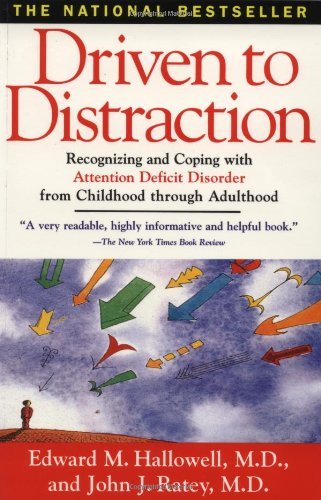
Through vivid stories of the experiences of their patients (both adults and children), Drs. Hallowell and Ratey show the varied forms ADD takes -- from the hyperactive search for high stimulation to the floating inattention of daydreaming -- and the transforming impact of precise diagnosis and treatment.

Describes nineteen different strategies of discipline, explains the discipline problems that occur at eight psychological stages of a child's development, and offers suggestions for handling them

*** OVER 13 MILLION COPIES SOLD ***Time and again, the work performed at The Institutes for the Achievement of Human Potential has demonstrated that children from birth to age six are capable of learning better and faster than older children. How To Teach Your Baby To Read shows just how easy it is to teach a young child to read, while How To Teach Your Baby Math presents the simple steps for teaching mathematics through the development of thinking and reasoning skills. Both books explain how to begin and expand each program, how to make and organize necessary materials, and how to more fully develop your child’s reading and math potential.How to Give Your Baby Encyclopedic Knowledge shows how simple it is to develop a program that cultivates a young child’s awareness and understanding of the arts, science, and nature―to recognize the insects in the garden, to learn about the countries of the world, to discover the beauty of a Van Gogh painting, and much more. How To Multiply Your Baby’s Intelligence provides a comprehensive program for teaching your young child how to read, to understand mathematics, and to literally multiply his or her overall learning potential in preparation for a lifetime of success.The Gentle Revolution Series :The Institutes for the Achievement of Human Potential has been successfully serving children and teaching parents for five decades. Its goal has been to significantly improve the intellectual, physical, and social development of all children. The groundbreaking methods and techniques of The Institutes have set the standards in early childhood education. As a result, the books written by Glenn Doman, founder of this organization, have become the all-time best-selling parenting series in the United States and the world.

This parenting classic is as relevant today as it was when it was first published, shining a light on one of the most misunderstood trends of our how the influence of peers, magnified by social media and video game culture, is replacing parents in the lives of children, and what parents can do about it.WINNER OF THE NATIONAL PARENTING PUBLICATIONS GOLD AWARD • “A worthy book that brings us genuinely new ideas and fresh perspectives on parenting.”—Mary Pipher, Ph.D., author of Reviving OpheliaChildren take their lead from their Being “cool” matters more than anything else. Shaping values, identity, and codes of behavior, peer groups are often far more influential than parents. But this situation is far from natural, and it can be dangerous—it undermines family cohesion, interferes with healthy development, and fosters a hostile and sexualized youth culture. Children end up becoming conformist, anxious, and alienated.In Hold On to Your Kids, acclaimed physician and bestselling author Gabor Maté joins forces with psychologist Gordon Neufeld to pinpoint the causes of this breakdown and offer practical advice on how to “reattach” to your children and earn back their loyalty and love.By helping to reawaken our instincts, Neufeld and Maté empower parents to be what nature a true source of enrichment, security, and warmth for their children.

Classic read from a very funny Dad.

This book presents four Tiny children can learn to

Here is the bestselling book that will give you the know-how you need to be effective with your children. Enthusiastically praised by parents and professionals around the world, the down--to--earth, respectful approach of Faber and Mazlish makes relationships with children of all ages less stressful and more rewarding.Recently revised and updated with fresh insights and suggestions, How to Talk so Kids Will Listen & Listen so Kids Will Talk is full of practical, innovative ways to solve common problems and build foundations for lasting relationships.

Kids are naturally curious, but when it comes to school it seems like their minds are turned off. Why is it that they can remember the smallest details from their favorite television program, yet miss the most obvious questions on their history test?Cognitive scientist Dan Willingham has focused his acclaimed research on the biological and cognitive basis of learning and has a deep understanding of the daily challenges faced by classroom teachers. this book will help teachers improve their practice by explaining how they and their students think and learn—revealing the importance of story, emotion, memory, context, and routine in building knowledge and creating lasting learning experiences.In this breakthrough book, Willingham has distilled his knowledge of cognitive science into a set of nine principles that are easy to understand and have clear applications for the classroom. Some of examples of his surprising findings are:“Learning styles” don't exist The processes by which different children think and learn are more similar than different.Intelligence is malleable Intelligence contributes to school performance and children do differ, but intelligence can be increased through sustained hard work.You cannot develop “thinking skills” in the absence of facts We encourage students to think critically, not just memorize facts. However thinking skills depend on factual knowledge for their operation.Why Don't Students Like School is a basic primer for every teacher who wants to know how their brains and their students’ brains work and how that knowledge can help them hone their teaching skills.

When Mike Feinberg and Dave Levin signed up for Teach for America right after college and found themselves utter failures in the classroom, they vowed to remake themselves into superior educators. They did that—and more. In their early twenties, by sheer force of talent and determination never to take no for an answer, they created a wildly successful fifth-grade experience that would grow into the Knowledge Is Power Program (KIPP), which today includes sixty-six schools in nineteen states and the District of Columbia.KIPP schools incorporate what Feinberg and Levin learned from America's best, most charismatic lessons need to be lively; school days need to be longer (the KIPP day is nine and a half hours); the completion of homework has to be sacrosanct (KIPP teachers are available by telephone day and night). Chants, songs, and slogans such as "Work hard, be nice" energize the program. Illuminating the ups and downs of the KIPP founders and their students, Mathews gives us something quite a hopeful book about education.

Helping kids set healthy boundaries for their private parts can be a daunting and awkward task for parents, counselors and educators. Written from a kid's point of view, I Said No! makes this task a lot easier. To help Zack cope with a real-life experience he had with a friend, he and his mom wrote a book to help prepare other kids to deal with a range of problematic situations. I Said No! uses kid-friendly language and illustrations to help parents and concerned adults give kids guidance they can understand, practice and use. Using a simple, direct, decidedly non-icky approach that doesn't dumb down the issues involved, as well as an easy-to-use system to help kids rehearse and remember appropriate responses to help keep them safe, I Said No! covers a variety of topics, including: * What's appropriate and with whom. * How to deal with inappropriate behavior, bribes and threats. * When and where to go for help, and what to do if the people you are turning to for help don't listen. * Dealing with feelings of guilt and shame.

When Michael Lewis became a father, he decided to keep a written record of what actually happened immediately after the birth of each of his three children. This book is that record. But it is also something else: maybe the funniest, most unsparing account of ordinary daily household life ever recorded, from the point of view of the man inside. The remarkable thing about this story isn’t that Lewis is so unusual. It’s that he is so typical. The only wonder is that his wife has allowed him to publish it.

World renowned researcher Dr. Barbara Fredrickson gives you the lab-tested tools necessary to create a healthier, morevibrant, and flourishing life through a process she calls "the upward spiral." You’ll •What positivity is, and why it needs to be heartfelt to be effective• The ten sometimes surprising forms of positivity• Why positivity is more important than happiness• How positivity can enhance relationships, work, and health, and how it relieves depression, broadens minds, and builds lives• The top-notch research that backs the 3-to-1 "positivity ratio" as a key tipping point• That your own sources of positivity are unique and how to tap into them• How to calculate your current positivity ratio, track it, and improve itWith Positivity , you’ll learn to see new possibilities, bounce back from setbacks, connect with others, and become the best version of yourself.

Never before in the history of Twelve Step programs has a fellowship brought together such a diverse group of recovering people that includes adult children of alcoholics, codependents, and addicts of various sorts. The program is Adult Children of Alcoholics, The term "adult child" is used to describe adults who grew up in alcoholic or dysfunctional homes and who exhibit identifiable traits that reveal past abuse or neglect. The group includes adults raised in homes without the presence of alcohol or drugs. These ACA members have the trademark presence of abuse, shame and abandonment found in alcoholic homes.

When Brad Meltzer's first son was born eight years ago, the bestselling writer and new father started compiling a list of heroes whose virtues and talents he wanted to share with his son: Abraham Lincoln, Rosa Parks, Jim Henson, Amelia Earhart, Muhammad Ali . . . and so many more, each one an ordinary person who was able to achieve the extraordinary. The list grew to include the fifty-two amazing people now gathered in Heroes for My Son, a book that parents and their children—sons and daughters alike—can now enjoy together as they choose heroes of their own.From the Wright Brothers, who brought extra building materials to every test flight, planning ahead for failure, to Miep Gies, who risked her life to protect Anne Frank and her family from the Nazis during World War II, Heroes for My Son brings well-known figures together with less famous ones, telling the inspiring, behind-the-scenes stories of the moment that made them great. They are a miraculous group with one thing in common: each is an example of the spectacular potential that can be found in all of us.Heroes for My Son is an unforgettable book of timeless wisdom, one that families everywhere can share again and again.

Do Less, Live More, Get Accepted What if getting into your reach schools didn’t require four years of excessive A.P. classes, overwhelming activity schedules, and constant stress? In How to Be a High School Superstar, Cal Newport explores the world of relaxed superstars—students who scored spots at the nation’s top colleges by leading uncluttered, low stress, and authentic lives. Drawing from extensive interviews and cutting-edge science, Newport explains the surprising truths behind these superstars’ mixture of happiness and admissions success, · Why doing less is the foundation for becoming more impressive.· Why demonstrating passion is meaningless, but being interesting is crucial.· Why accomplishments that are hard to explain are better than accomplishments that are hard to do. These insights are accompanied by step-by-step instructions to help any student adopt the relaxed superstar lifestyle—proving that getting into college doesn’t have to be a chore to survive, but instead can be the reward for living a genuinely interesting life.

The pressure on women today has pushed many American mothers to the breaking point. It feels as if “doing your best” is never enough to please everyone, and the demands mothers place on themselves are both impossible and unrealistic. Now Meg Meeker, M.D., critically acclaimed author of Strong Fathers, Strong Daughters, puts her twenty-five years’ experience as a practicing pediatrician and counselor into a sound, sane approach to reshaping the frustrating, exhausting lives of so many moms. Mothers are expected to do it raise superstar kids, look great, make good salaries, volunteer for everything, run errands, keep a perfect house, be the perfect wife. Single mothers often have even more demands—and less support. In this rallying cry for change, Dr. Meeker incorporates clinical data and her own experience raising four children to show why mothers suffer from the rising pressure to excel and the toll it takes on their emotional, physical, mental, and spiritual health. Too many mothers are increasingly lonely, anxious, depressed, and unhappy with themselves, refusing to let themselves off the hook. Here, Dr. Meeker has identified the 10 most positive habits of mothers who are healthy, happy, and fulfilled. The key is to embrace a new perspective and create real joy and purpose by utilizing such core habits as • making friends with those who know the meaning of friendship• finding out what money can buy (and what it cannot)• lightening the overload—and doing less more often• discovering faith and learning how to trust it• taking some alone time and reviving yourself Mothers, it’s time to view the unconditional trust that you see in your children’s eyes when they take your hand or find your face in a crowd as a mirror of your own wonder and worth. You are the light that shines in their lives, the beacon that guides them. By implementing the key strategies in Dr. Meeker’s book, you can be happy, hopeful, and a wonderful role model. You can teach your children to be the very best they can be—and isn’t that still the most precious reward of motherhood?

We've needlessly turned parenting into an unpleasant chore. Parents invest more time and money in their kids than ever, but the shocking lesson of twin and adoption research is that upbringing is much less important than genetics in the long run. These revelations have surprising implications for how we parent and how we spend time with our kids. The big Mold your kids less and enjoy your life more. Your kids will still turn out fine.Selfish Reasons to Have More Kids is a book of practical big ideas. How can parents be happier? What can they change--and what do they need to just accept? Which of their worries can parents safely forget? Above all, what is the right number of kids for you to have? You'll never see kids or parenthood the same way again.

Your toddler throws a tantrum in the middle of a store. Your preschooler refuses to get dressed. Your fifth-grader sulks on the bench instead of playing on the field. Do children conspire to make their parents’ lives endlessly challenging? No—it’s just their developing brain calling the shots!In this pioneering, practical book, Daniel J. Siegel, neuropsychiatrist and author of the bestselling Mindsight, and parenting expert Tina Payne Bryson demystify the meltdowns and aggravation, explaining the new science of how a child’s brain is wired and how it matures. The “upstairs brain,” which makes decisions and balances emotions, is under construction until the mid-twenties. And especially in young children, the right brain and its emotions tend to rule over the logic of the left brain. No wonder kids can seem—and feel—so out of control. By applying these discoveries to everyday parenting, you can turn any outburst, argument, or fear into a chance to integrate your child’s brain and foster vital growth. Raise calmer, happier children using twelve key strategies, including • Name It to Tame It: Corral raging right-brain behavior through left-brain storytelling, appealing to the left brain’s affinity for words and reasoning to calm emotional storms and bodily tension.• Engage, Don’t Enrage: Keep your child thinking and listening, instead of purely reacting.• Move It or Lose It: Use physical activities to shift your child’s emotional state.• Let the Clouds of Emotion Roll By: Guide your children when they are stuck on a negative emotion, and help them understand that feelings come and go.• SIFT: Help children pay attention to the Sensations, Images, Feelings, and Thoughts within them so that they can make better decisions and be more flexible.• Connect Through Conflict: Use discord to encourage empathy and greater social success. Complete with clear explanations, age-appropriate strategies for dealing with day-to-day struggles, and illustrations that will help you explain these concepts to your child, The Whole-Brain Child shows you how to cultivate healthy emotional and intellectual development so that your children can lead balanced, meaningful, and connected lives.

The secret behind France's astonishingly well-behaved children. When American journalist Pamela Druckerman has a baby in Paris, she doesn't aspire to become a "French parent." French parenting isn't a known thing, like French fashion or French cheese. Even French parents themselves insist they aren't doing anything special.Yet, the French children Druckerman knows sleep through the night at two or three months old while those of her American friends take a year or more. French kids eat well-rounded meals that are more likely to include braised leeks than chicken nuggets. And while her American friends spend their visits resolving spats between their kids, her French friends sip coffee while the kids play.Motherhood itself is a whole different experience in France. There's no role model, as there is in America, for the harried new mom with no life of her own. French mothers assume that even good parents aren't at the constant service of their children and that there's no need to feel guilty about this. They have an easy, calm authority with their kids that Druckerman can only envy.Of course, French parenting wouldn't be worth talking about if it produced robotic, joyless children. In fact, French kids are just as boisterous, curious, and creative as Americans. They're just far better behaved and more in command of themselves. While some American toddlers are getting Mandarin tutors and preliteracy training, French kids are- by design-toddling around and discovering the world at their own pace.With a notebook stashed in her diaper bag, Druckerman-a former reporter for The Wall Street Journal-sets out to learn the secrets to raising a society of good little sleepers, gourmet eaters, and reasonably relaxed parents. She discovers that French parents are extremely strict about some things and strikingly permissive about others. And she realizes that to be a different kind of parent, you don't just need a different parenting philosophy. You need a very different view of what a child actually is.While finding her own firm non, Druckerman discovers that children-including her own-are capable of feats she'd never imagined.

Jim Gaffigan never imagined he would have his own kids. Though he grew up in a large Irish-Catholic family, Jim was satisfied with the nomadic, nocturnal life of a standup comedian, and was content to be "that weird uncle who lives in an apartment by himself in New York that everyone in the family speculates about." But all that changed when he married and found out his wife, Jeannie "is someone who gets pregnant looking at babies."Five kids later, the comedian whose riffs on everything from Hot Pockets to Jesus have scored millions of hits on YouTube, started to tweet about the mistakes and victories of his life as a dad. Those tweets struck such a chord that he soon passed the million followers mark. But it turns out 140 characters are not enough to express all the joys and horrors of life with five kids, so hes' now sharing it all in Dad Is Fat.From new parents to empty nesters to Jim's twenty-something fans, everyone will recognize their own families in these hilarious takes on everything from cousins ("celebrities for little kids") to growing up in a big family ("I always assumed my father had six children so he could have a sufficient lawn crew") to changing diapers in the middle of the night ("like The Hurt Locker but much more dangerous") to bedtime (aka "Negotiating with Terrorists").Dad is Fat is sharply observed, explosively funny, and a cry for help from a man who has realized he and his wife are outnumbered in their own home.

A practical guidebook and passionate call-to-arms for parents of girls that empowers them to raise confident, well-rounded daughters in an exploitative world, from the author of the international bestseller Raising Boys. In today's world, it's especially critical for girls to grow up strong and capable. In this impassioned follow-up to his bestselling Raising Boys, author Steve Biddulph brings together the best thinking from around the world on how to raise daughters of sound character who know that they are loved, and can stand up for themselves and others. Biddulph teaches parents how to build their daughters' self-assuredness, encourage friendships, and equip them to learn and believe in themselves. This detailed guidebook teaches parents, grandparents, and caretakers exactly what matters for and to girls at which age, and how to build confidence and connectedness from infancy to young womanhood.

Caution! No English version! Polish release.

SHOULD U.S. COMICS BE BANNED?“SATANIC” HARRY POTTER BOOKS BURNTPLAYGROUNDS POSE THREAT TO CHILDRENTEXT-MAD YOUTH LOSING WRITING ABILITIESCHILD SUSPENDED FOR BRANDISHING CHICKENSOCIAL WEBSITES HARM CHILDREN’S BRAINSSTUDENT ARRESTED FOR “PASSING GAS” AT SCHOOL These are all real headlines screaming about the terrible stuff that’s out there . . . stuff that’s supposed to be BAD FOR YOU. But, honestly—is it?!Bad for You asks this question and many more—and not just about the things that modern parents fear like violent video games, social media, and dirty hands. Stuff in this book goes back centuries—all the way to Plato (yeah, that one) and his worries over the new “technology” of his time: the written word! Kevin C. Pyle and Scott Cunningham cleverly expose the long-standing CAMPAIGN AGAINST FUN for what it really is: a bunch of anxious adults grasping at straws, ignoring scientific data, and blindly yearning for the good old days that never were. Bad for You presents the facts, figures, and a whole lot more—in eye-grabbing graphics—to debunk these myths and give kids the power to prove there’s nothing wrong with having fun . . . or with being young.

A new educational paradigm for youth mindfulness. “If you are a teacher, or an educator, or involved in school administration and curriculum development, the book you hold in your hands has the potential to transform your life, the lives of your students, and the life of the school itself, as well as education in America.”―Jon Kabat-Zinn, PhD, from the ForewordWith attention spans waning and stress on the rise, many teachers are looking for new ways to help students concentrate, learn, and thrive. The Way of Mindful Education is a practical guide for cultivating attention, compassion, and well-being not only in these students, but also in teachers themselves. Packed with lesson plans, exercises, and considerations for specific age groups and students with special needs, this working manual demonstrates the real world application of mindfulness practices in K-12 classrooms. Part I, Why Mindful Education Matters, explains what mindfulness is, the science behind its benefits for students and educators, and the inspiring work that is already underway in the Mindful Education movement. In Part II, Begin with Yourself, we are reminded that in order to teach mindfully, we need to be mindful. Here teachers will learn the when, where, and how of mindfulness so they can effectively embody its practices with their students. Mindfulness practices offer teachers self-care and attention skills that prepare them to teach with greater energy and mastery. Discover how simple exercises can help manage stress, focus attention, develop compassion, and savor positive experiences in everyday life. Part III, Cultivating a Mindful Classroom, explores the qualities of a mindful teacher, the ingredients of a mindful learning environment, and helpful skills for appropriate, supportive work with cultural diversity, student stress and trauma, and varying age groups and developmental stages. Finally, in Part IV, Mindful Education Curriculum, we learn eighteen ready-to-use mindfulness lessons for use in schools. These practical exercises, designed to foster skills like embodiment, attention, heartfulness, and interconnectedness, can be readily adapted for any age group and population, and the author draws from his extensive personal experience to offer a wealth of tips for introducing them to students in real-time. Decades of research indicate the impressive benefits of mindfulness in social, emotional, and cognitive development, and as an antidote to emotional dysregulation, attention deficits, and social difficulties. This book invites teachers, administrators, and anyone else involved in education to take advantage of this vital tool and become purveyors of a mindful, compassionate, ethical, and effective way of teaching. 30 illustrations

A guide that helps parents focus on their children's unique strengths and inclinations rather than on gendered stereotypes to more effectively bring out the best in their individual children, for parents of infants to middle schoolers. Reliance on Gendered Stereotypes Negatively Impacts KidsStudies on gender and child development show that, on average, parents talk less to baby boys and are less likely to use numbers when speaking to little girls. Without meaning to, we constantly color-code children, segregating them by gender based on their presumed interests. Our social dependence on these norms has far-reaching effects, such as leading girls to dislike math or increasing aggression in boys.In this practical guide, developmental psychologist (and mother of two) Christia Spears Brown uses science-based research to show how over-dependence on gender can limit kids, making it harder for them to develop into unique individuals. With a humorous, fresh, and accessible perspective, Parenting Beyond Pink & Blue addresses all the issues that contemporary parents should consider—from gender-segregated birthday parties and schools to sports, sexualization, and emotional intelligence. This guide empowers parents to help kids break out of pink and blue boxes to become their authentic selves.

A timely and empowering book featuring “solid, practical advice for women on how to properly nurture their sons” ( Kirkus Reviews ). From the moment a mother holds her newborn son, his eyes tell her that she is his world. But often, as he grows up, the boy who needs her simultaneously pushes her away. Calling upon thirty years of experience as a pediatrician, Meg Meeker, M.D., a highly sought after national speaker, assistant professor of clinical medicine, and mother of four, shares the secrets that every mother needs to know in order to strengthen—or rebuild—her relationship with her son. Boys today face unique challenges and pressures, and the burden on mothers to guide their boys through them can feel overwhelming. This empowering book offers a road map to help mothers find the strength and confidence to raise extraordinary sons by providing encouragement, education, and practical advice about • the need for mothers to exercise courage and be bolder and more confident about advising and directing their boys• the crucial role mothers play in expressing love to sons in healthy ways so they learn to respect and appreciate women as they grow up• the importance of teaching sons about the values of hard work, community service, and a well-developed inner life• the natural traps mothers of boys often fall into—and how to avoid them• the need for a mother to heal her own wounds with the men in her life so she can raise her son without baggage and limitations• the best ways to survive the moments when the going gets tough and a mom’s natural ways of communicating—talking, analyzing, exploring—only fuel the fire When a mother holds her baby boy for the first time, she also instinctively knows something else: If she does her job right and raises her son with self-esteem, support, and wisdom, he will become the man she knows he was meant to be.

Once upon a time there lived a man and a woman. They were the happiest people on the planet.True, they were the only people on the planet, but they were still terrifically happy.Unfortunately, things didn’t stay happy and wonderful for long . . .The Bible is full of exciting stories that fill children with awe and wonder. But kids need to know how all those classic stories connect to Scripture’s overarching message about God’s glorious plan to redeem his rebellious people.In The Biggest Story, Kevin DeYoung—a best-selling author and father of six—leads kids and parents alike on an exciting journey through the Bible, connecting the dots from the garden of Eden to Christ's death on the cross to the new heaven and new earth.With powerful illustrations by award-winning artist Don Clark, this imaginative retelling of the Bible’s core message—how the Snake Crusher brings us back to the garden—will draw children into the biblical story, teaching them that God's promises are even bigger and better than we think. Ages 5-8 (read to me)Ages 8-11 (read to myself)

In the spirit of Wendy Mogel’s The Blessing of a Skinned Knee and Po Bronson and Ashley Merryman’s Nurture Shock, New York Times “Your Money” columnist Ron Lieber delivers a taboo-shattering manifesto that explains how talking openly to children about money can help parents raise modest, patient, grounded young adults who are financially wise beyond their years.For Ron Lieber, a personal finance columnist and father, good parenting means talking about money with our kids. Children are hyper-aware of money, and they have scores of questions about its nuances. But when parents shy away from the topic, they lose a tremendous opportunity—not just to model the basic financial behaviors that are increasingly important for young adults but also to imprint lessons about what the family truly values.Written in a warm, accessible voice, grounded in real-world experience and stories from families with a range of incomes, The Opposite of Spoiled is both a practical guidebook and a values-based philosophy. The foundation of the book is a detailed blueprint for the best ways to handle the basics: the tooth fairy, allowance, chores, charity, saving, birthdays, holidays, cell phones, checking accounts, clothing, cars, part-time jobs, and college tuition. It identifies a set of traits and virtues that embody the opposite of spoiled, and shares how to embrace the topic of money to help parents raise kids who are more generous and less materialistic.But The Opposite of Spoiled is also a promise to our kids that we will make them better with money than we are. It is for all of the parents who know that honest conversations about money with their curious children can help them become more patient and prudent, but who don’t know how and when to start.

From the author of the international bestseller Go the Fuck to Sleep comes a long-awaited sequel about the other great parental frustration: getting your little angel to eat something that even vaguely resembles a normal meal. Profane, loving, and deeply cathartic, You Have to Fucking Eat breaks the code of child-rearing silence, giving moms and dads new, old, grand-, and expectant a much-needed chance to laugh about a universal problem.A perfect gift book like the smash hit Go the Fuck to Sleep (over 1.5 million copies sold worldwide!), You Have to Fucking Eat perfectly captures Adam Mansbach's trademark humor, which is simultaneously affectionate and radically honest. You probably shouldn't read it to your kids.Adam Mansbach is the author of the #1 international bestseller Go the Fuck to Sleep, as well as the novels Rage Is Back, Angry Black White Boy, The Dead Run, and The End of the Jews, winner of the California Book Award. He has written for the New Yorker, the New York Times, Esquire, the Believer, and National Public Radio’s All Things Considered. His daughter Vivien is six.Owen Brozman has illustrated for National Geographic, Time Out New York, Scholastic, Ninja Tune, Definitive Jux, and numerous other clients. He and Mansbach recently collaborated on the acclaimed graphic novel Nature of the Beast, and his work has been recognized by the Society of Illustrators of Los Angeles, Creative Quarterly, 3x3 magazine, and many more. He lives in Brooklyn, New York, with his wife and daughter, whose favorite food is bananas.

Janet Lansbury is unique among parenting experts. As a RIE teacher and student of pioneering child specialist Magda Gerber, her advice is not based solely on formal studies and the research of others, but also on her twenty years of hands-on experience guiding hundreds of parents and their toddlers. “No Bad Kids” is a collection of Janet's most popular and widely read articles pertaining to common toddler behaviors and how respectful parenting practices can be applied to benefit both parents and children. It covers such common topics as punishment, cooperation, boundaries, testing, tantrums, hitting, and more. “No Bad Kids” provides a practical, indispensable tool for parents who are anticipating or experiencing those critical years when toddlers are developmentally obliged to test the limits of our patience and love. Armed with knowledge and a clearer sense of the world through our children’s eyes, this period of uncertainty can afford a myriad of opportunities to forge unbreakable bonds of trust and respect.

The monumental bestseller Quiet has been recast in a new edition that empowers introverted kids and teens Susan Cain sparked a worldwide conversation when she published The Power of Introverts in a World That Can’t Stop Talking . With her inspiring book, she permanently changed the way we see introverts and the way introverts see themselves.The original book focused on the workplace, and Susan realized that a version for and about kids was also badly needed. This book is all about kids' world—school, extracurriculars, family life, and friendship. You’ll read about actual kids who have tackled the challenges of not being extroverted and who have made a mark in their own quiet way. You’ll hear Susan Cain’s own story, and you’ll be able to make use of the tips at the end of each chapter. There’s even a guide at the end of the book for parents and teachers.This insightful, accessible, and empowering book, illustrated with amusing comic-style art, will be eye-opening to extroverts and introverts alike.

New Yorker cartoonist Emily Flake relates the hilarious horrors of pregnancy, birth, and early parenting in this funny, poignant, and beautifully illustrated book.For most people, having a child doesn't go exactly as planned. Not many are willing to admit that not only did they dislike the early days of parenting, they sometimes hated it. Mama Tried is a relatable collection of cartoons and essays pertaining to the good, bad, and (very) ugly parenting experiences we all face. Subjects range from "are you ready for children?" to "baby gear class-warfare." With incredible honesty, Flake tackles everything from morning sickness to sleep training, shedding much needed light on the gnarly realities of breastfeeding, child proofing, mommy groups, and every unrealistic expectation in between. Mama Tried will be an indispensable companion for sleepless parents and a fond reminder for those already out of the woods.

An unforgettable fable about a father's journey and a timeless guide to life's many questions —from Ethan Hawke, four-time Academy Award nominee, twice for writing and twice for acting.A knight, fearing he may not return from battle, writes a letter to his children in an attempt to leave a record of all he knows. In a series of ruminations on solitude, humility, forgiveness, honesty, courage, grace, pride, and patience, he draws on the ancient teachings of Eastern and Western philosophy, and on the great spiritual and political writings of our time. His intent: to give his children a compass for a journey they will have to make alone, a short guide to what gives life meaning and beauty.

Dziewczyny! Odważcie się na życie pełne przygód. Zdobywajcie świat i nie dajcie się strachowi i nieśmiałości! Ta książka jest dla WAS!A w niej: ekscytujące historie, przygody pełne odwagi, porywające opowieści, historie inspirujących kobiet, zadania do zrobienia i praktyczne triki. Wszystko to spisane przez odważną kobietę, lubiącą wyzwania, aby zainspirować Was do życia pełnego przygód, radości, pewności siebie i fascynacji.Autorka Caroline Paul jako dziecko bała się wielu rzeczy i była nieśmiała. Ale już będąc dorosłą kobietą, pilotuje samoloty, nurkuje, lata na paralotni, wspina się na wysokie szczyty i gasi pożary. W książce dzieli się opowieściami o swoich przygodach – i opowiada o innych dziewczynach i kobietach, które dokonały podobnych wyczynów. Wypełniona zadaniami i żywiołowymi ilustracjami Wendy MacNaughton książka zachęca i inspiruje dziewczyny i kobiety, by pokonały strach, stawiały czoło wyzwaniom i żyły po swojemu – z wiarą w siebie i umiejętnością pokonywania trudności, szukały w życiu przygód, przyjaźni i zabawy. Odwagi można się nauczyć i należy ją praktykować. Autorka nie jest pogromczynią strachu i nieśmiałości, jest po prostu zwolenniczką odwagi, pewności siebie i wiary we własne możliwości.Książkę poleca Sylwia Chutnik:"Wszystkie dziewczyny – zarówno te urwisowate, krnąbrne, wygadane, jak i kujonki – lubią nowe wyzwania. Nawet jeśli początkowo trochę się boją, bo przecież banie się jest czymś zwyczajnym, to chcą poznawać coś nowego: podróżować lub dużo czytać, uczyć się lub długo rozmawiać z innymi. Mają przed sobą cały świat, który mruga do nich okiem i otwiera ramiona.Hej, dziewczyny! Odważcie się mieć przygody! Słuchajcie innych, ale nie dajcie im się przestraszyć ani zagłaskać. Kiedy nie wiecie, co powinnyście zrobić, stańcie na chwilę, zamknijcie oczy i zadajcie sobie pytania: „Czego ja chcę? Co jest dla mnie dobre?” i biegnijcie przed siebie. Nie pozwólcie, żeby ktoś Was zatrzymał!"

Tyler and I inch toward the Green Room, in line with blow-dried TV anchors and stuffy columnists. He's practicing his handshake and hello: -It's a pleasure to meet you, Mr. President. It's a pleasure to meet you, Mr. President. It's a pleasure to meet you, Mr. President.- When the couple in front of us steps forward for their picture, my teenager with sky-blue eyes and a soft heart looks up at me and says, -I hope I don't let you down, Dad.- What kind of father raises a son to worry about embarrassing his dad? I want to tell Tyler not to worry, that he'd never let me down. That there's nothing wrong with being different. That I actually am proud of what makes him special. But we are next in line to meet the president of the United States in a room filled with fellow strivers, and all I can think about is the real possibility that Tyler might embarrass himself. Or, God forbid, me. LOVE THAT BOY is a uniquely personal story about the causes and costs of outsized parental expectations. What we want for our children--popularity, normalcy, achievement, genius--and what they truly need--grit, empathy, character--are explored by National Journal's Ron Fournier, who weaves his extraordinary journey to acceptance around the latest research on childhood development and stories of other loving-but-struggling parents.

In The Gardener and the Carpenter, Alison Gopnik, one of the world's leading child psychologists, illuminates the paradoxes of parenthood from a scientific perspective and shatters the myth of "good parenting".Caring deeply about our children is part of what makes us human. Yet the thing we call “parenting” is a surprisingly new invention. In the past thirty years, the concept of parenting and the multibillion-dollar industry surrounding it have transformed child care into obsessive, controlling, and goal-oriented labor intended to create a particular kind of child and therefore a particular kind of adult.In The Gardener and the Carpenter, the pioneering developmental psychologist and philosopher Alison Gopnik argues that the familiar twenty-first-century picture of parents and children is profoundly wrong—it’s not just based on bad science, it’s bad for kids and parents, too.Drawing on the study of human evolution and her own cutting-edge scientific research into how children learn, Gopnik shows that although caring for children is profoundly important, it is not a matter of shaping them to turn out a particular way. Children are designed to be messy and unpredictable, playful and imaginative—and to be very different both from their parents and from each other.

Making conscientious choices about technology in our families is more than just using internet filters and determining screen time limits for our children. It's about developing wisdom, character, and courage in the way we use digital media rather than accepting technology's promises of ease, instant gratification, and the world's knowledge at our fingertips. And it's definitely not just about the kids.Drawing on in-depth original research from the Barna Group, Andy Crouch shows readers that the choices we make about technology have consequences we may never have considered. He takes readers beyond the typical questions of what, where, and when and instead challenges them to answer provocative questions like, Who do we want to be as a family? and How does our use of a particular technology move us closer or farther away from that goal? Anyone who has felt their family relationships suffer or their time slip away amid technology's distractions will find in this book a path forward to reclaiming their real life in a world of devices.

Após o enorme sucesso de Sejamos todos feministas, Chimamanda Ngozi Adichie retoma o tema da igualdade de gêneros neste manifesto com quinze sugestões de como criar filhos dentro de uma perspectiva feminista. Escrito no formato de uma carta da autora a uma amiga que acaba de se tornar mãe de uma menina, Para educar crianças feministas traz conselhos simples e precisos de como oferecer uma formação igualitária a todas as crianças, o que se inicia pela justa distribuição de tarefas entre pais e mães. E é por isso que este breve manifesto pode ser lido igualmente por homens e mulheres, pais de meninas e meninos. Partindo de sua experiência pessoal para mostrar o longo caminho que ainda temos a percorrer, Adichie oferece uma leitura essencial para quem deseja preparar seus filhos para o mundo contemporâneo e contribuir para uma sociedade mais justa.

Fifth grade was the worst year of Marc's life. He stunk at gym class, math was too hard for him, the school lunch was horrible, and his class field trip was ruined because he couldn't swim. But what was most awful thing about fifth grade? Kenny Williamson, the class bully, who calls himself the King of the Jungle.When Marc's mother tells him that his Uncle Jake is coming to stay for the whole summer, Marc can't wait. Uncle Jake is a for real, super-cool Navy SEAL. And Uncle Jake has a plan.He's going to turn Marc into a warrior.Becoming a warrior isn't easy. It means a lot of pull ups, sit ups, pushups, squats, swimming, eating right, and studying harder than ever before! Can Marc transform himself into a warrior before school starts in the fall - and finally stand up to the King of the Jungle himself?The Way of the Warrior Kid is a new illustrated chapter book by #1 New York Times-bestselling author and retired Navy SEAL Jocko Willink.

The beautiful truth about Santa In a series of letters, a young girl writes to Santa to ask about the North Pole, Mrs. Claus, and of course, Christmas goodies. Year after year, Santa writes back, and a heartwarming relationship develops, until one year, the girl writes to her mother Mom, are you Santa? Her mother responds to say that no, she is not Santa. Because Santa is bigger than any one person -- we bring him out through kindness to one another and the power of imagination. This transformative tale spins a universal childhood experience into a story about love, giving, and the spirit of Christmas.

It's hard being a person, especially in a family, and no one knows that better than stand-up comedian, family man, and A Prairie Home Companion head writer and performer, Tom Papa.How do you deal with a life filled with a whole host of characters and their bizarre, inescapable behavior? Especially when you're related to them? Tom Papa is here to help you make sense of it all. Your Dad Stole My Rake is a hilarious and warm book that saws deep into every branch of the family tree and uncovers the most bizarre and surprisingly meaningful aspects of our lives. He exposes everyone, from crazy aunts with mustaches, grandparents who communicate by yelling, and uncles who use marijuana as a condiment.Among the topics covered: - Tiger Mom v. Ice-Cream Mom - Stop Trying to be Cool - In Defense of Family Vacations - No Fighting Before Coffee - Least Popular Baby Names - Wife Lie Detector - Your Cat Thinks You're Too NeedyAnyone who has a family, grew up in a family, or has spent time with another human being will love this book.

In a book inspired by her popular TED talk, New York Times bestselling author Reshma Saujani empowers women and girls to embrace imperfection and bravery.Imagine if you lived without the fear of not being good enough. If you didn't care how your life looked on Instagram, or worry about what total strangers thought of you. Imagine if you could let go of the guilt, and stop beating yourself up for tiny mistakes. What if, in every decision you faced, you took the bolder path?Too many of us feel crushed under the weight of our own expectations. We run ourselves ragged trying to please everyone, all the time. We lose sleep ruminating about whether we may have offended someone, pass up opportunities that take us out of our comfort zones, and avoid rejection at all costs.There's a reason we act this way, Reshma says. As girls, we were taught to play it safe. Well-meaning parents and teachers praised us for being quiet and polite, urged us to be careful so we didn't get hurt, and steered us to activities at which we could shine.The problem is that perfect girls grow up to be women who are afraid to fail. It's time to stop letting our fears drown out our dreams and narrow our world, along with our chance at happiness.By choosing bravery over perfection, we can find the power to claim our voice, to leave behind what makes us unhappy, and go for the things we genuinely, passionately want. Perfection may set us on a path that feels safe, but bravery leads us to the one we're authentically meant to follow.In Brave, Not Perfect, Reshma shares powerful insights and practices to help us override our perfect girl training and make bravery a lifelong habit. By being brave, not perfect, we can all become the authors of our biggest, boldest, and most joyful life.

An eye-opening report from an award-winning author and former New York Times reporter reveals the link between teenage marijuana use and mental illness, and a hidden epidemic of violence caused by the drug—facts the media have ignored as the United States rushes to legalize cannabis.Recreational marijuana is now legal in nine states. Almost all Americans believe the drug should be legal for medical use. Advocates argue cannabis can help everyone from veterans to cancer sufferers. But legalization has been built on myths– that marijuana arrests fill prisons; that most doctors want to use cannabis as medicine; that it can somehow stem the opiate epidemic; that it is not just harmless but beneficial for mental health. In this meticulously reported book, Alex Berenson, a former New York Times reporter, explodes those • Almost no one is in prison for marijuana;• A tiny fraction of doctors write most authorizations for medical marijuana, mostly for people who have already used;• Marijuana use is linked to opiate and cocaine use. Since 2008, the US and Canada have seen soaring marijuana use and an opiate epidemic. Britain has falling marijuana use and no epidemic;• Most of all, THC—the chemical in marijuana responsible for the drug’s high—can cause psychotic episodes. After decades of studies, scientists no longer seriously debate if marijuana causes psychosis.Psychosis brings violence, and cannabis-linked violence is spreading. In the four states that first legalized, murders have risen 25 percent since legalization, even more than the recent national increase. In Uruguay, which allowed retail sales in July 2017, murders have soared this year.Berenson’s reporting ranges from the London institute that is home to the scientists who helped prove the cannabis-psychosis link to the Colorado prison where a man now serves a thirty-year sentence after eating a THC-laced candy bar and killing his wife. He sticks to the facts, and they are devastating.With the US already gripped by one drug epidemic, this book will make readers reconsider if marijuana use is worth the risk.

In this poignant and urgent love letter to his son, award-winning Broadway, TV and film producer Richie Jackson reflects on his experiences as a gay man in America and the progress and setbacks of the LGBTQ community over the last 50 years.“My son is kind, responsible, and hardworking. He is ready for college. He is not ready to be a gay man living in America.”When Jackson's 18-year-old son born through surrogacy came out to him, the successful producer, now in his 50s, was compelled to reflect on his experiences and share his wisdom on life for LGBTQ Americans over the past half-century.Gay Like Me is a celebration of gay identity and parenting, and a powerful warning for his son, other gay men and the world. Jackson looks back at his own journey as a gay man coming of age through decades of political and cultural turmoil.Jackson's son lives in a seemingly more liberated America, and Jackson beautifully lays out how far we’ve come since Stonewall -- the increased visibility of gay people in society, the legal right to marry, and the existence of a drug to prevent HIV. But bigotry is on the rise, ignited by a president who has declared war on the gay community and fanned the flames of homophobia. A newly constituted Supreme Court with a conservative tilt is poised to overturn equality laws and set the clock back decades. Being gay is a gift, Jackson writes, but with their gains in jeopardy the gay community must not be complacent.As Ta-Nehisi Coates awakened us to the continued pervasiveness of racism in America in Between the World and Me, Jackson’s rallying cry in Gay Like Me is an eye-opening indictment to straight-lash in America. This book is an intimate, personal exploration of our uncertain times and most troubling questions and profound concerns about issues as fundamental as dignity, equality, and justice.Gay Like Me is a blueprint for our time that bridges the knowledge gap of what it’s like to be gay in America. This is a cultural manifesto that will stand the test of time. Angry, proud, fierce, tender, it is powerful letter of love from a father to a son that holds lasting insight for us all.

A blueprint for how parents can stop worrying about their children’s future and start helping them prepare for it, from the cofounder and CEO of one of America’s most innovative public-school networks“A treasure trove of deeply practical wisdom that accords with everything I know about how children thrive.”—Angela Duckworth, New York Times bestselling author of Grit In 2003, Diane Tavenner cofounded the first school in what would soon become one of America’s most innovative public-school networks. Summit Public Schools has since won national recognition for its exceptional outcomes: Ninety-nine percent of students are accepted to a four-year college, and they graduate from college at twice the national average. But in a radical departure from the environments created by the college admissions arms race, Summit students aren’t focused on competing with their classmates for rankings or test scores. Instead, students spend their days solving real-world problems and developing the skills of self-direction, collaboration, and reflection, all of which prepare them to succeed in college, thrive in today’s workplace, and lead a secure and fulfilled life.Through personal stories and hard-earned lessons from Summit’s exceptional team of educators and diverse students, Tavenner shares the learning philosophies underlying the Summit model and offers a blueprint for any parent who wants to stop worrying about their children’s future—and start helping them prepare for it.At a time when many students are struggling to regain educational and developmental ground lost to the disruptions of the pandemic, Prepared is more urgent and necessary than ever.

“Put down your phone and pick up this book” (Angela Duckworth, #1 New York Times bestselling author) that demonstrates how turning off screens one day a week can work wonders on your brain, body, and soul. Internet pioneer and renowned filmmaker Tiffany Shlain takes us on a provocative and entertaining journey through time and technology, introducing a strategy for living in our 24/7 world: turning off all screens for twenty-four hours each week. This practice, which she’s done for nearly a decade with her husband and kids, has completely changed their lives, giving them more time, productivity, connection, and presence. She and her family call it “Technology Shabbat.” Drawn from the ancient ritual of Shabbat, living 24/6 can work for anyone from any background. In this “useful and much-needed guide to turning the clock back to a less frazzled pre-Internet and -smartphone day” (Kirkus Reviews), Shlain shares her story, offers lessons she has learned, and provides a blueprint for how to do it yourself. Along the way, she delves into the neuroscience, philosophy, psychology, and history of a weekly day of rest across cultures, making the case for why we need to bring this ritual back. A compelling personal story and a fascinating, far-reaching examination of the complex world we’ve created, 24/6 is a call to regain “the essential dignity of being human in a digital age” (Douglas Rushkoff, author of Team Human).

Every parent wants the best for their child.That’s why they send them to college! But most parents struggle to pay for school and end up turning to student loans. That’s why the majority of graduates walk away with $35,000 in student loan debt and no clue what that debt will really cost them.Student loan debt doesn’t open doors for young adults—it closes them. They postpone getting married and starting a family. That debt even takes away their freedom to pursue their dreams. But there is a different way. Going to college without student loans is possible!In Debt-Free Degree, Anthony ONeal teaches parents how to get their child through school without debt, even if they haven’t saved for it. He also shows parents:-How to prepare their child for college-Which classes to take in high school-How and when to take the ACT and SAT-The right way to do college visits-How to choose a majorA college education is supposed to prepare a graduate for their future, not rob them of their paycheck and freedom for decades. Debt-Free Degree shows parents how to pay cash for college and set their child up to succeed for life.

Irreversible Damage is an exploration of a mystery: Why, in the last decade, has the diagnosis "gender dysphoria," transformed from a vanishingly rare affliction, applying almost exclusively to boys and men, to an epidemic among teenage girls? Author Abigail Shrier presents shocking statistics and stories from real families to show that America and the West have become fertile ground for a "transgender craze" that has nothing to do with real gender dysphoria and everything to do with our cultural frailty. Teenage girls are taking courses of testosterone and disfiguring their bodies. Parents are undermined; experts are over-relied upon; dissenters in science and medicine are intimidated; free speech truckles under renewed attack; socialized medicine bears hidden consequences; and an intersectional era has arisen in which the desire to escape a dominant identity encourages individuals to take cover in victim groups. Every person who has ever had a skeptical thought about the sudden rush toward a non-binary future but been afraid to express it—this book is for you.

With laugh-out-loud funny parenting observations, the NYT bestselling author and award-winning comedian delivers a book that is perfect for anyone who has ever raised a child, been a child, or refuses to stop acting like one.In 2016 comedian Mike Birbiglia and poet Jennifer Hope Stein took their fourteen-month-old daughter Oona to the Nantucket Film Festival. When the festival director picked them up at the airport she asked Mike if he would perform at the storytelling night. She said, "The theme of the stories is jealousy."Jen quipped, "You're jealous of Oona. You should talk about that." And so Mike began sharing some of his darkest and funniest thoughts about the decision to have a child. Jen and Mike revealed to each other their sides of what had gone down during Jen's pregnancy and that first year with their child. Over the next couple years, these stories evolved into a Broadway show, and the more Mike performed it the more he heard how it resonated -- not just with parents but also people who resist all kinds of change. So he pored over his journals, dug deeper, and created this book: The New One: Painfully True Stories From a Reluctant Dad. Along with hilarious and poignant stories he has never shared before, these pages are sprinkled with poetry Jen wrote as she navigated the same rocky shores of new parenthood.So here it is. This book is an experiment -- sort of like a family.

After tracking the lives of thousands of people from birth to midlife, four of the world's preeminent psychologists reveal what they have learned about how humans develop.Does temperament in childhood predict adult personality? What role do parents play in shaping how a child matures? Is day care bad--or good--for children? Does adolescent delinquency forecast a life of crime? Do genes influence success in life? Is health in adulthood shaped by childhood experiences? In search of answers to these and similar questions, four leading psychologists have spent their careers studying thousands of people, observing them as they've grown up and grown older. The result is unprecedented insight into what makes each of us who we are.In The Origins of You, Jay Belsky, Avshalom Caspi, Terrie Moffitt, and Richie Poulton share what they have learned about childhood, adolescence, and adulthood, about genes and parenting, and about vulnerability, resilience, and success. The evidence shows that human development is not subject to ironclad laws but instead is a matter of possibilities and probabilities--multiple forces that together determine the direction a life will take. A child's early years do predict who they will become later in life, but they do so imperfectly. For example, genes and troubled families both play a role in violent male behavior, and, though health and heredity sometimes go hand in hand, childhood adversity and severe bullying in adolescence can affect even physical well-being in midlife.Painstaking and revelatory, the discoveries in The Origins of You promise to help schools, parents, and all people foster well-being and ameliorate or prevent developmental problems.

How working parents can lead more purposeful lives, characterized by harmony, connection, and impact. Parents in today's fast-paced, disorienting world can easily lose track of who they are and what really matters most. But it doesn't have to be this way. As a parent, you can harness the powerful science of leadership in order to thrive in all aspects of your life. Drawing on the principles of his book Total Leadership --a bestseller and popular leadership development program used in organizations worldwide--and on their experience as researchers, educators, consultants, coaches, and parents, Stew Friedman and coauthor Alyssa Westring offer a robust, proven method that will help you gain a greater sense of purpose and control. It includes tools illustrated with compelling examples from the lives of real working parents that show you how to:

Meet Liz: all she wants is some peace and quiet so she can read a book with her cat Henry, love of her life, by her side. But trampling all over this dream is a group of wild things also known as Liz's family. Namely:Richard - a man, a husband, no serious rival to Henry.Thomas - their sensitive seven year old son, for whom life is a bed of pain already.Evie - five year old acrobat, gangster, anarchist, daughter.And as if her family's demands (Where are the door keys? Are we made of plastic? Do 'ghost poos' really count?) weren't enough, Liz must also contend with the madness of parents, friends, bosses, and at least one hovering nemesis. Are We Having Fun Yet? is a year with one woman as she faces all the storms of modern life (babysitters, death, threadworms) on her epic quest for that holy grail: a moment to herself.

“The Addiction Inoculation is a vital look into best practices parenting. Writing as a teacher, a mother, and, as it happens, a recovering alcoholic, Lahey's stance is so compassionate, her advice so smart, any and all parents will benefit from her hard-won wisdom.” —Peggy Orenstein, author of Girls & Sex and Boys & SexIn this supportive, life-saving resource, the New York Times bestselling author of The Gift of Failure helps parents and educators understand the roots of substance abuse and identify who is most at risk for addiction, and offers practical steps for prevention.Jessica Lahey was born into a family with a long history of alcoholism and drug abuse. Despite her desire to thwart her genetic legacy, she became an alcoholic and didn’t find her way out until her early forties. Jessica has worked as a teacher in substance abuse programs for teens, and was determined to inoculate her two adolescent sons against their most dangerous inheritance. All children, regardless of their genetics, are at some risk for substance abuse. According to the National Center on Addiction and Substance Abuse, teen drug addiction is the nation’s largest preventable and costly health problem. Despite the existence of proven preventive strategies, nine out of ten adults with substance use disorder report they began drinking and taking drugs before age eighteen. The Addiction Inoculation is a comprehensive resource parents and educators can use to prevent substance abuse in children. Based on research in child welfare, psychology, substance abuse, and developmental neuroscience, this essential guide provides evidence-based strategies and practical tools adults need to understand, support, and educate resilient, addiction-resistant children. The guidelines are age-appropriate and actionable—from navigating a child’s risk for addiction, to interpreting signs of early abuse, to advice for broaching difficult conversations with children. The Addiction Inoculation is an empathetic, accessible resource for anyone who plays a vital role in children’s lives—parents, teachers, coaches, or pediatricians—to help them raise kids who will grow up healthy, happy, and addiction-free.

"As a mother of three, this book's practical road map for helping our kids learn independently is invaluable. This should be a must-read for all parents." --Jenna Bush HagerDrawing on extensive experience as classroom teachers and the directors of their highly regarded tutoring business, Abby and Brian address a range of common frustrations caused by homework. They answer the most pressing questions on every parent's How much should I get involved, what does constructive help look like, and how can I help my child work independently?Taking the Stress out of Homework breaks down for parents exactly when and how to offer homework support. Whether your child's stress point is executive functioning--the ability to plan or organize--or a subject-specific struggle in math, reading, writing, or standardized test-preparation, Abby and Brian use real-life stories to provide individualized, actionable advice.At the center of Abby and Brian's philosophy is encouraging students to break free of the "let's get to the answer already so that we can be done with the assignment" mindset; they focus instead on a process-oriented approach that fosters engagement and self-sufficiency both in and out of school.Filled with expert tips about how to build executive functioning and content skills, Abby and Brian share stress-reducing best practices so homework not only supports what kids are learning, but also helps build confidence and skills that last a lifetime.

"A landmark, one of the most important books of the year" - David Brooks, New York Times“Real, practical, solutions to create a world that would be better for all of us, across the gender spectrum." — Anne-Marie Slaughter, CEO, New America and author of Unfinished Women Men Work Family A positive vision for masculinity in more equal world. Boys and men are struggling. Profound economic and social changes of recent decades have many losing ground in the classroom, the workplace, and in the family. While the lives of women have changed, the lives of many men have remained the same or even worsened. Our attitudes, our institutions, and our laws have failed to keep up. Conservative and progressive politicians, mired in their own ideological warfare, fail to provide thoughtful solutions. The father of three sons, a journalist, and a Brookings Institution scholar, Richard V. Reeves has spent twenty-five years worrying about boys both at home and work. His new book, Of Boys and Men, tackles the complex and urgent crisis of boyhood and manhood. Reeves looks at the structural challenges that face boys and men and offers fresh and innovative solutions that turn the page on the corrosive narrative that plagues this issue. Of Boys and Men argues that helping the other half of society does not mean giving up on the ideal of gender equality.

Every child in America deserves to know that a path to a successful life exists and that they have the power to follow it. But many never set foot on that path because they grow up hearing the message that systemic forces control their destinies, or that they are at fault for everything that has gone wrong in their lives. These children often come from difficult circumstances. Many are raised by young, single parents, live in disadvantaged neighborhoods, attend substandard schools, and lack the moral safeguards of religious and civic institutions. As a result, they can be dispirited into cycles of learned helplessness rather than inspired to pursue their own possibilities.Yet this phenomenon is not universal. Some children thrive where others do not. Why? Are there personal behaviors and institutional supports that have proven to make a difference in helping young people chart a course for their futures? Agency answers with a loud and clear “yes!” This book describes four pillars that can uplift every young person as they make the passage into Family, Religion, Education, and Entrepreneurship. Together, these pillars embody the true meaning of freedom, wherein people are motivated to embrace the ennobling responsibilities of building healthy social structures and shaping the outcomes of their own lives. For that reason, Ian Rowe calls the four pillars the FREE framework. With this framework in place, children are empowered to develop agency, which Rowe defines as the force of one’s free will, guided by moral discernment. Developing agency is the alternative to the debilitating ‘blame-the-system’ and ‘blame-the-victim’ narratives. It transcends our political differences and beckons all who dare to envision lives unshackled by present realities. In addition to making the case for agency, Rowe shares his personal story of success coming from an immigrant family. He defends America as an ever-improving country worthy of our esteem. He corrects misguided calls for “anti-racism” and “equity,” and champions a game plan for creating new agents of agency, dedicated to promoting the aspirational spirit of America’s children, and showing them the path that will set them FREE.

A groundbreaking, revelatory portrait of the six generations that currently live in the United States and how they connect, conflict, and compete with one another—from the acclaimed author of Generation Me and iGenThe United States is currently home to six generations: the Silents, Baby Boomers, Generation X, Millennials, Generation Z, and Generation Alpha. They have had vastly different life experiences and thus, one assumes, they must have vastly diverging beliefs and behaviors--but what are those differences, what causes them, and how deep do they actually run? Professor of psychology Jean Twenge does a deep dive into a treasure trove of long-running, government-funded surveys and databases to answer these questions. Are we truly defined by major historical events, such as the Great Depression for the Silents and September 11 for Millennials? Or, as Twenge argues, is it the rapid evolution of technology that differentiates the generations?With her clear-eyed and insightful voice, Twenge explores what the Silents and Boomers want out of the rest of their lives; how Gen X-ers are facing middle age; the ideals of Millennials as parents and in the workplace; and how Gen Z has been changed by COVID-19, among other fascinating topics. Surprising, engaging, and informative, Generations will forever change the way you view your parents, peers, coworkers, and children, no matter what your generation.