
Alfie Kohn
Alfie Kohn writes and speaks widely on human behavior, education, and parenting. The author of fourteen books and scores of articles, he lectures at education conferences and universities as well as to parent groups and corporations. Kohn's criticisms of competition and rewards have been widely discussed and debated, and he has been described in Time magazine as "perhaps the country's most outspoken critic of education's fixation on grades [and] test scores." Kohn lives (actually) in the Boston area with his wife and two children, and (virtually) at www.alfiekohn.org.
29 Books Written

Punished by Rewards: The Trouble with Gold Stars, Incentive Plans, A's, Praise, and Other Bribes
by Alfie Kohn
Rating: 4.2 ⭐
• 2 recommendations ❤️
The basic strategy we use for raising children, teaching students, and managing workers can be summarized in six words: Do this and you'll get that. We dangle goodies (from candy bars to sales commissions) in front of people in much the same way we train the family pet. Drawing on a wealth of psychological research, Alfie Kohn points the way to a more successful strategy based on working with people instead of doing things to them. "Do rewards motivate people?" asks Kohn. "Yes. They motivate people to get rewards." Seasoned with humor and familiar examples, Punished By Rewards presents an argument unsettling to hear but impossible to dismiss.
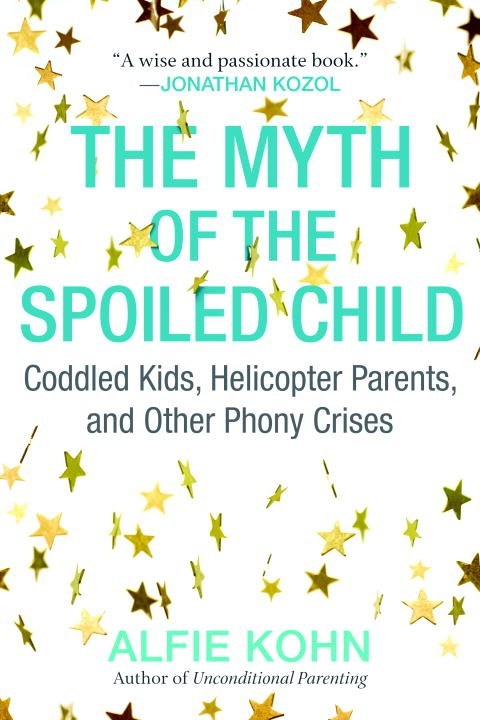
The Myth of the Spoiled Child: Coddled Kids, Helicopter Parents, and Other Phony Crises
by Alfie Kohn
Rating: 4.0 ⭐
• 2 recommendations ❤️
Caution! No English version! Polish release.
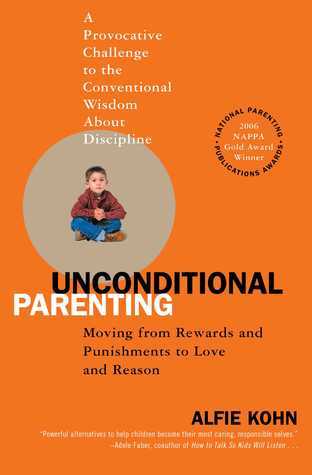
Unconditional Parenting: Moving from Rewards and Punishments to Love and Reason
by Alfie Kohn
Rating: 4.2 ⭐
Most parenting guides begin with the question "How can we get kids to do what they're told?" — and then proceed to offer various techniques for controlling them. In this truly groundbreaking book, nationally respected educator Alfie Kohn begins instead by asking "What do kids need — and how can we meet those needs?" What follows from that question are ideas for working with children rather than doing things to them. One basic need all children have, Kohn argues, is to be loved unconditionally, to know that they will be accepted even if they screw up or fall short. Yet conventional approaches to parenting such as punishments (including "time-outs"), rewards (including positive reinforcement), and other forms of control teach children that they are loved only when they please us or impress us. Kohn cites a body of powerful, and largely unknown, research detailing the damage caused by leading children to believe they must earn our approval. That's precisely the message children derive from common discipline techniques, even though it's not the message most parents intend to send. More than just another book about discipline, though, Unconditional Parenting addresses the ways parents think about, feel about, and act with their children. It invites them to question their most basic assumptions about raising kids while offering a wealth of practical strategies for shifting from "doing to" to "working with" parenting — including how to replace praise with the unconditional support that children need to grow into healthy, caring, responsible people. This is an eye-opening, paradigm-shattering book that will reconnect readers to their own best instincts and inspire them to become better parents.

Death and taxes come later; what seems inevitable for children is the idea that, after spending the day at school, they must then complete more academic assignments at home. The predictable stress and conflict, frustration and exhaustion. Parents respond by reassuring themselves that at least the benefits outweigh the costs. But what if they don't? In The Homework Myth , nationally known educator and parenting expert Alfie Kohn systematically examines the usual defenses of homework--that it promotes higher achievement, "reinforces" learning, and teaches study skills and responsibility. None of these assumptions, he shows, actually passes the test of research, logic, or experience. So why do we continue to administer this modern cod liver oil -- or even demand a larger dose? Kohn's incisive analysis reveals how a mistrust of children, a set of misconceptions about learning, and a misguided focus on competitiveness have all left our kids with less free time and our families with more conflict. Pointing to parents who have fought back -- and schools that have proved educational excellence is possible without homework -- Kohn shows how we can rethink what happens during and after school in order to rescue our families and our children's love of learning.

What is most remarkable about the assortment of discipline programs on the market today is the number of fundamental assumptions they seem to share. Some may advocate the use of carrots rather than sticks; some may refer to punishments as "logical consequences." But virtually all take for granted that the teacher must be in control of the classroom, and that what we need are strategies to get students to comply with the adult's expectations.Alfie Kohn challenged these widely accepted premises, and with them the very idea of classroom "management," when the original edition of Beyond Discipline was published in 1996. Since then, his path-breaking book has invited hundreds of thousands of educators to question the assumption that problems in the classroom are always the fault of students who don't do what they're told; instead, it may be necessary to reconsider what it is that they've been told to do--or to learn. Kohn shows how a fundamentally cynical view of children underlies the belief that we must tell them exactly how we expect them to behave and then offer "positive reinforcement" when they obey.Just as memorizing someone else's right answers fails to promote students' intellectual development, so does complying with someone else's expectations for how to act fail to help students develop socially or morally. Kohn contrasts the idea of discipline, in which things are done to students to control their behavior, with an approach in which we work with students to create caring communities where decisions are made together.Beyond Discipline has earned the status of an education classic, a vital alternative to all the traditional manuals that consist of techniques for imposing control. For this 10th anniversary edition, Kohn adds a new afterword that expands on the book's central themes and responds to questions from readers. Packed with stories from real classrooms around the country, seasoned with humor and grounded in a vision as practical as it is optimistic, Beyond Discipline shows how students are most likely to flourish in schools that have moved toward collaborative problem solving--and beyond discipline.

The Schools Our Children Deserve: Moving Beyond Traditional Classrooms and "Tougher Standards"
by Alfie Kohn
Rating: 4.2 ⭐
In this “lively, provocative and well-researched book” (Theodore Sizer), Alfie Kohn builds a powerful argument against the “back to basics” philosophy of teaching and simplistic demands to “raise the bar.” Drawing on stories from real classrooms and extensive research, Kohn shows parents, educators, and others interested in the debate how schools can help students explore ideas rather than filling them with forgettable facts and preparing them for standardized tests.Here at last is a book that challenges the two dominant forces in American education: an aggressive nostalgia for traditional teaching (“If it was bad enough for me, it’s bad enough for my kids”) and a heavy-handed push for Tougher Standards.

No Contest stands as the definitive critique of competition. Contrary to accepted wisdom, competition is not basic to human nature; it poisons our relationships and holds us back from doing our best. In this new edition, Alfie Kohn argues that the race to win turns all of us into losers.

What Does it Mean to Be Well Educated? And Other Essays on Standards, Grading, and Other Follies
by Alfie Kohn
Rating: 4.0 ⭐
Few writers ask us to question our fundamental assumptions about education as provocatively as Alfie Kohn. Time magazine has called him'perhaps the country's most outspoken critic of education's fixation on grades [and] test scores.' And the Washington Post says he is 'the most energetic and charismatic figure standing in the way of a major federal effort to make standardized curriculums and tests a fact of life in every U.S. school.'In this new collection of essays, Kohn takes on some of the most important and controversial topics in education of the last few years. His central focus is on the real goals of education-a topic, he argues, that we systematically ignore while lavishing attention on misguided models of learning and counterproductive techniques of motivation.The shift to talking about goals yields radical conclusions and wonderfully pungent essays that only Alfie Kohn could have written. From the title essay's challenge to conventional, conservative definitions of a good education to essays on standards and testing and grades that tally the severe educational costs of overemphasizing a narrow conception of achievement, Kohn boldly builds on his earlier work and writes for a wide audience.Kohn's new book will be greeted with enthusiasm by his many readers and by any teacher or parent looking for a refreshing perspective on today's debates about schools.

Mind-opening writing on what kids need from school, from one of education’s most outspoken voices Arguing that our schools are currently in the grip of a “cult of rigor”—a confusion of harder with better that threatens to banish both joy and meaningful intellectual inquiry from our classrooms—Alfie Kohn issues a stirring call to rethink our priorities and reconsider our practices. Kohn’s latest wide-ranging collection of writings will add to his reputation as one of the most incisive thinkers in the field, who questions the assumptions too often taken for granted in discussions about education and human behavior. In nineteen recently published essays—and in a substantive introduction, new for this volume—Kohn repeatedly invites us to think more deeply about the conventional wisdom. Is self-discipline always desirable? he asks, citing surprising evidence to the contrary. Does academic cheating necessarily indicate a moral failing? Might inspirational posters commonly found on school walls (“Reach for the stars!”) reflect disturbing assumptions about children? Could the use of rubrics for evaluating student learning prove counterproductive? Subjecting young children to homework, grades, or standardized tests—merely because these things will be required of them later—reminds Kohn of Monty Python’s “getting hit on the head lessons.” And, with tongue firmly in cheek, he declares that we should immediately begin teaching twenty- second -century skills. Whether Kohn is clearing up misconceptions about progressive education or explaining why incentives for healthier living are bound to backfire, debunking the idea that education reform should be driven by concerns about economic competitiveness or putting “Supernanny” in her place, his readers will understand why the Washington Post has said that “teachers and parents who encounter Kohn and his thoughts come away transfixed, ready to change their schools.”
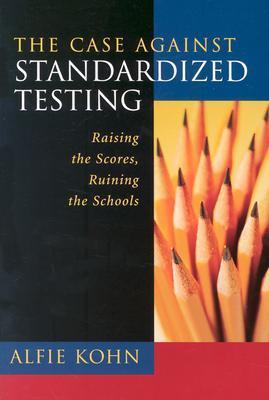
The Case Against Standardized Testing: Raising the Scores, Ruining the Schools
by Alfie Kohn
Rating: 4.3 ⭐
Our students are tested to an extent that is unprecedented in American history and unparalleled anywhere in the world. Politicians and businesspeople, determined to get tough with students and teachers, have increased the pressure to raise standardized test scores. Unfortunately, the effort to do so typically comes at the expense of more meaningful forms of learning. That disturbing conclusion emerges from Alfie Kohn's devastating new indictment of standardized testing. Drawing from the latest research, he concisely explains just how little test results really tell us and just how harmful a test-driven curriculum can be. Written in a highly readable question-and-answer format, The Case Against Standardized Testing will help readers respond to common questions and challenges-showing, for example, that:- high scores often signify relatively superficial thinking- many of the leading tests were never intended to measure teaching or learning- a school that improves its test results may well have lowered its standards to do so- far from helping to "close the gap," the use of standardized testing is most damaging for low-income and minority students- as much as 90 percent of the variations in test scores among schools or states have nothing to do with the quality of instruction- far more meaningful measures of student learning - or school quality - are availableKohn's central message is that standardized tests are "not like the weather, something to which we must resign ourselves . . . They are not a force of nature but a force of politics - and political decisions can be questioned, challenged, and ultimately reversed." The final section demonstrates how teachers, parents, and students can turn their frustration into action and successfully turn back the testing juggernaut in order to create classrooms that focus on learning.Also available on Audiotape: The Case Against Standardized Testing: Raising the Scores, Ruining the Schools, read by Alfie Kohn.
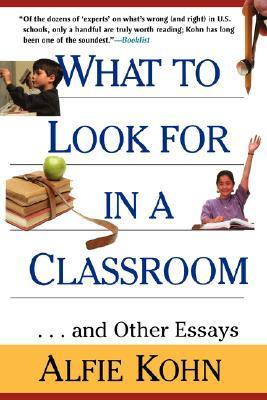
"Alfie Kohn has a knack for bursting the bubbles that surround just about every school topic imaginable, from putting kids into uniforms to make them behave better to raising kids' self-esteem by rewarding them with stickers and pizza for reading books and doing homework. This collection of previously published essays reminds us that many schools have veered off course in their day-to-day business. And it's a primer that, if taken seriously, can put schools back on the right track."--Educational LeadershipThrough his writings and speeches, Alfie Kohn has been stirring up controversy for years, demonstrating how the conventional wisdom about education often isn't supported by the available research, and illuminating gaps between our long-term goals for students and what actually goes on in schools. Now What to Look for in a Classroom brings together his most popular articles from Educational Leadership, Phi Delta Kappan, and Education Week--and also from The Atlantic Monthly, the Boston Globe, and other publications.From self-esteem to school uniforms, from grade inflation to character education, Kohn raises a series of provocative questions about the status quo in this collection of incisive essays. He challenges us to reconsider some of our most basic assumptions about children and education. Can good values really be instilledin students? What, if anything, lies behind the label of attention deficit disorder? Are there solid data to support our skepticism about watching TV? Might such allegedly enlightened practices as authentic assessment,logical consequences,and Total Quality educationturn out to be detrimental? Whether he is explaining why cooperative learning can be so threatening or why detracking is so fiercely opposed, Kohn offers a fresh, informed, and frequently disconcerting perspective on the major issues in education.In the And, his critical examination of current practice is complemented by a vision of what schooling ought to be. Kohn argues for giving children more opportunity to participate in their own schooling, for transforming classrooms into caring communities, and for providing the kind of education that taps and nourishes children's curiosity. Through all these essays, Kohn calls us back to our own ideals, showing us how we can be more effective at helping students to become good learners and good people.

Drawing from hundreds of studies in half a dozen fields, The Brighter Side of Human Nature makes a powerful case that caring and generosity are just as natural as selfishness and aggression. This lively refutation of cynical assumptions about our species considers the nature of empathy and the causes of war, why we (incorrectly) explain all behavior in terms of self-interest, and how we can teach children to care.

In this collection of provocative articles and blog posts originally published between 2010 and 2014, Alfie Kohn challenges the conventional wisdom about topics ranging from how low-income children are taught, to whether American schools have really fallen behind those in other countries. Why, he asks, do we assume learning can be reduced to numerical data? What leads us to believe that "standards-based" grading will eliminate the inherent limitations of marks? Or that training students to show more "grit" makes sense if the real trouble is with the tasks they've been given to do? Kohn's analytical style-incisive yet accessible-is brought to bear on big-picture policy issues as well as small-scale classroom interactions. He looks carefully at research about homework, play, the supposed benefits of practice, parent involvement in education, and summer learning loss-discovering in each case that what we've been led to believe doesn't always match what the studies actually say. Kohn challenges us to reconsider the goals that underlie our methods, to explore the often troubling values that inform talk about everything from the disproportionate enthusiasm for STEM subjects to claims made for more "effective" teaching strategies. During these dark days in which teachers are viewed as expendable test-prep technicians, and "global economic competitiveness" eclipses what children need, Kohn calls for us to summon the courage to act on what we already know makes sense. Alfie Kohn writes and speaks widely on human behavior, education, and parenting. The author of thirteen books and scores of articles, he lectures at education conferences and universities as well as to parent groups and corporations. Kohn's criticisms of competition and rewards have been widely discussed and debated, and he has been described in Time magazine as "perhaps the country's most outspoken critic of education's fixation on grades [and] test scores."

Putting our frequently incorrect conventional wisdom to the test through research, this book demonstrates the validity of popular beliefs, truisms, folk wisdom, and proverbs

Autorul care a revolutionat conceptul de crestere a copiilor, mutand accentul de pe autoritate pe dialog, de pe conditionare a comportamentului, pe iubire si incredere. O abordare inovatoare a unui specialist in educatie cunoscut in intreaga lume. Carte castigatoare a NAPPA Gold Award. Cum faci sa te asculte copilul? Iata intrebarea de la care pornesc majoritatea cartilor de parenting. Alfie Kohn, expert de renume international, porneste de la o intrebare diferita, care schimba fundamental felul in care ne privim copiii si cum relationam cu Ce nevoi au copiii nostri - si cum facem sa le implinim? Iubire neconditionata pentru copilul tau este o pledoarie puternica pentru respect, cooperare si acceptare, care pune sub semnul intrebarii instrumentele traditionale de educatie, in special pedepsele si recompensele. In locul lor, Alfie Kohn propune cultivarea motivatiei intrinsece, care va da rezultate pe termen lung, si a unei relatii de incredere intre parinti si copii, care va aduce armonie si cooperare fara constrangeri. Alfie Kohn se opreste din a mai oferi retete parentale de succes care duc, de fapt, la abordari rigide si, in final, la frustrari. Ce poate fi mai enervant pentru un copil decat un parinte care aplica inflexibil tehnici parentale invatate pe de rost si gresit intelese? Kohn ofera, in schimb, principii de baza de o inteligenta uimitoare, pe care putem construi, ulterior, abordari flexibile, diferentiate in functie de context si, mai ales, in functie de nevoile emotionale ale copilului.

Powszechnie uwaza sie, ze praca domowa to konieczna czesc edukacji. Panuje tendencja do zadawania coraz wiecej i coraz mlodszym dzieciom. Jednak badania naukowe dowodza, ze potencjalne korzysci tych praktyk sa minimalne i ograniczaja sie tylko do starszych uczniów.Nowa ksiazka autora bestsellerowego Wychowywania bez nagród i kar ukazala sie wlasnie nakladem Wydawnictwa Mind.Alfie Kohn zacheca do debaty nad zaletami i wadami pracy domowej. Jego ksiazka przynosi skrupulatna analize badan naukowych oraz mitów naroslych wokól edukacji. Kohn zacheca nauczycieli i rodziców do odwaznego i krytycznego stanowiska wobec tradycji, która odbiera radosc z nauki i czas potrzebny na zycie rodzinne.ALFIE KOHN - amerykanski badacz interdyscyplinarny, ceniony ekspert od edukacji i wychowania, blyskotliwy krytyk kultury rywalizacji i wychowania opartego na kontroli. Jego pola zainteresowan to zagadnienia motywacji, wspólpracy i dlugoterminowych skutków strategii wychowawczych. Znany przeciwnik ocen w szkolach i rywalizacyjnego podejscia do nauki. Autor wielu ksiazek, cenionych i glosno komentowanych na calym swiecie. W Polsce ukazalo sie dotychczas Wychowanie bez nagród i kar (2013) i Mit rozpieszczonego dziecka (2018).

“Ev Ö Bir Öğretim Efsanesi, her öğretmen, okul müdürü ve eğitim bölge müdürü için zorunlu kitap olmalı.” Boston GlobeÇoğumuz ödevin beraberinde getirdiği hüsrana, yorgunluğa ve bıkkınlığa aşinayız. Ama ödev yapmanın bunlara değdiğini düşünürüz çünkü daha yüksek başarıyı olanaklı kıldığını, öğrenmeyi “pekiştirdiğini,” ders çalışma becerisi geliştirdiğini ve sorumluluk duygusunu güçlendirdiğini varsayarız. Oysa mantık ve deneyimlerin söylediği, ayrıca araştırma kanıtları, bu varsayımlarla ters düşmekte.Mevcut veriler ödevin küçük çocuklara hiçbir akademik yarar sağlamadığını gösteriyor, büyük çocuklarda gerekli olup olmadığı konusunda ise ciddi kuşkular yaratıyor. Dahası, ödevin nitelikli çalışma alışkanlıkları ve bağımsızlık geliştirdiği inancını da kökünden sarsıyor.Peki, ödev bize bin bir çeşit sorun yaratırken neden hâlâ çocukları evde ikinci vardiyaya zorluyoruz? Kohn’un her zamanki gibi keskin ve ayrıntılı incelemesi öğrenmeye dair birtakım yanlış anlamaların, çocuklara beslenen güvensizliğin ve hedefini şaşırmış bir rekabet odağının çocuk dünyasındaki serbest zamanı nasıl azalttığını ve aile yaşamındaki çatışmayı nasıl artırdığını ortaya koyuyor. Kohn, ödev tahakkümü ile savaşan ebeveynlerin ve ödev olmadan da yüksek bir öğretim kalitesi yakalandığını ortaya koyan okulların örnekleri üzerinden bizi okulda ve sonrasında olup bitenleri baştan değerlendirmeye, sonra da aile huzurumuzu ve çocukların öğrenme sevgisini kurtarmak için adımlar atmaya çağırıyor.“Bu tipik bir Kohn kitabı. İlgi çekici ve bilgilendirici… 300’den fazla atıf yapan, sıkı bir araştırma ürünü. Kohn statükoya başkaldırmakta ve kralın çıplak olduğunu göstermekte hiç bu kadar başarılı olmamıştı.” Kappa Delta Pi Record
Competition is Ruining Us!: There is a Better Way: British Deming Association Seventh Annual Conference 1994
by Alfie Kohn
Rating: 3.5 ⭐

Несмотря на то, что эта книга посвящена системе школьного образования Америки, она, несомненно, представляет интерес и для нашего читателя, ибо кризис школы – явление вненациональное.Как внимательный и добросовестный доктор, Альфи Кон проводит тщательное исследование и выносит школьной системе неутешительный диагноз, звучащий как приговор. Но будучи профессионалом, который лично заинтересован в выздоровлении пациента, он выстраивает целостную стратегию лечения и дает рецепты, которыми мы можем воспользоваться. Для этого нам надо переосмыслить многое. Каким должно быть образование, какова цель школы, что должно стать необходимым условием конструктивных перемен и какими должны быть реформы… В своем объемном и структурированном труде Кон дает нам точное направление и заражает своей уверенностью в том, что школы могут стать действительно ДЛЯ детей, по-настоящему отвечая их потребностям и соответствуя духу времени.Книга будет полезна родителям, учителям, тьюторам, управленцам, всем, кто интересуется вопросами образования и осознает необходимость кардинальных изменений в этой сфере.

Punished by Rewards: The Trouble with Gold Stars, Incentive Plans, A's, Praise, and Other Bribes
by Alfie Kohn
Rating: 5.0 ⭐
The basic strategy we use for raising children, teaching students, and managing workers can be summarized in six Do this and you'll get that. We dangle goodies (from candy bars to sales commissions) in front of people in much the same way we train the family pet.Drawing on a wealth of psychological research, Alfie Kohn points the way to a more successful strategy based on working with people instead of doing things to them. "Do rewards motivate people?" asks Kohn. "Yes. They motivate people to get rewards." Seasoned with humor and familiar examples, Punished by Rewards presents an argument unsettling to hear but impossible to dismiss.

Cha mẹ vô điều kiện là cuốn sách sẽ khiến cha mẹ có cái nhìn hoàn toàn khác về tình yêu thương dành cho con trẻ.Thực tế, chúng ta có xu hướng yêu quý những đứa trẻ ngoan ngoãn, biết vâng lời hơn là những đứa trẻ nghịch ngợm. Cũng giống như việc chúng ta thường hay thỏa thuận với trẻ rằng nếu con không ngồi yên mẹ sẽ không cho con đi siêu thị nữa, nếu con không trật tự thì con sẽ không được ăn tố Tất cả những điều đó đã vô tình khiến chúng ta đã đặt điều kiện cho thứ tình yêu vốn thiêng liêng và thuần khiết nhất.Phụ huynh nào cũng từng dùng hình phạt để dạy bảo con, nhưng đã bao giờ họ tự hỏi việc dùng hình phạt có giúp trẻ tiến bộ và hiệu quả lâu dài hay không? Và nếu việc dùng hình phạt có hiệu quả thật thì tại sao cha mẹ phải dùng đi dùng lại nó mãi, thậm chí với cấp độ phạt nặng hơn?Tương tự như hình phạt thì dùng phần thưởng để khuyến khích trẻ sẽ khiến trẻ bị mất đi động lực nội sinh. Khi làm việc, nếu phần thưởng càng nhiều người ta càng dễ mất đi sự thích thú và đam mê trong công việc vì họ mải làm để nhận phần thưởng.Do đó dùng phần thưởng hay hình phạt để khuyến khích và khuyên răn con không còn là cách nuôi dạy hiệu quả nữa. Cuốn sách này cũng chỉ ra cho cha mẹ thấy rằng việc dùng hình phạt sẽ gây ra những hậu quả như thế nào, cha mẹ có nên kiểm soát quá mức và đặt ra những áp lực thành tích cho trẻ hay không. Và đâu mới là cách tốt nhất để thể hiện tình yêu thương vô điều kiện.Tủ sách Người Mẹ Tốt trân trọng giới thiệu tới độc giả cuốn sách “Cha mẹ vô điều kiện” của Alfie Kohn, tác giả của 14 cuốn sách và rất nhiều bài báo về hành vi của con người, chủ đề giáo dục và phương pháp nuôi dạy trẻ. Các cuốn sách của ông được dịch ra nhiều ngôn ngữ như Nhật Bản, Hàn Quốc, Tây Ban Nha, Đức, Italy, Nga, Trung QuốHy vọng cuốn sách này sẽ là chìa khóa để mở cánh cửa yêu thương vô điều kiện giữa cha mẹ và con cái.

NEW-Ungrading: Why Rating Students Undermines Learning (and What to Do Instead)
by Alfie Kohn
Rating: 4.0 ⭐

Ödüllerle Cezalandırılmak - 25. Yıl Dönümü Baskısı

Mitul temei pentru acasa. De ce copiii nostri primesc prea multe sarcini inutile Intr-un sistem de invatamant in care aproape toate practicile au un discret parfum de absurd Mitul temei pentru acasa e un exercitiu de gandire critica aproape revolutionar. Mitul temei pentru acasa este o analiza incisiva a sistemului de invatamant. In opinia lui Alfie Kohn un set de conceptii gresite despre invatare ne-a lasat copiii cu mai putin timp liber. Mitul temei pentru acasa arata de ce concentrarea pe ideea de competitivitate nu este benefica. Alfie Kohn aduce argumentele necesare pentru a intelege ca acest lucru a adus si mai mult conflict in familiile noastre. Conform statisticilor lui Alfie Kohn exista scoli si sisteme de invatamant care functioneaza si fara competitie si o fac foarte bine. Mitul temei pentru acasa este o pledoarie pentru a petrece mai mult timp liber cu familia intr-o atmosfera mai prietenoasa. In Mitul temei pentru acasa Alfie Kohn analizeaza cu minutiozitate si atentie literatura de cercetare citeaza zeci de studii unde cauta o corelatie intre teme si performanta, excelenta, profunzimea invatarii. Concluzia aproape unanima este ca nu exista o utilitate a temelor pentru acasa, fie ea dovedita stiintific sau observata empiric. Alfie Kohn nu pledeaza pentru solutii radicale. El incearca sa imagineze o lume mai buna pentru noi toti copii, parinti, educatori. In Mitul temei pentru acasa vorbeste pe larg, cu calm si elocventa despre pasii mici pe care putem deja incepe sa ii facem. Ei bine, Alfie Kohn recidiveaza" in acest volum si in stilul sau plin de curaj, dar in egala masura riguros documentat pune sub lupa chestiunea temelor pentru acasa.

Mitul Copilului Rasfatat
by Alfie Kohn
Dintr-o perspectiva romaneasca, am putea spune ca, in ultima sa carte, Alfie Kohn isi plaseaza preocuparile intre D-l Goe, celebra schita a lui Caragiale, si Pozitia copilului, filmul care ne-a adus Ursul de Aur la Berlin. Pentru ca in Mitul copilului rasfatat. Sa punem sub semnul intrebarii stereotipurile despre copii si parinti analiza acopera probleme ca permisivitatea si asa-zisul rasfat, asa cum au fost expuse in presa ultimilor ani care facea un domn Goe din orice copil crescut democratic, sau ca relatia copiilor mari, de douazeci sau chiar de treizeci de ani, cu parintii lor, in contextul agresivitatii mediatice impotriva tinerilor care isi gasesc cu greu locul intr-o societate inca fragmentata de criza economica a ultimilor ani.

BOOKS IN SPANISH
No Grades + No Homework = Better Learning
by Alfie Kohn
(Feel-Bad Education: Contrarian Essays on Children and Schooling) [By: Alfie Kohn] [Jun, 2011]
by Alfie Kohn