Loading themes...
Explore the best books about Japanese Literature theme.

Hagakure ("In the Shadow of Leaves") is a manual for the samurai classes consisting of a series of short anecdotes and reflections that give both insight and instruction-in the philosophy and code of behavior that foster the true spirit of Bushido-the Way of the Warrior. It is not a book ofphilosophy as most would understand the it is a collection of thoughts and sayings recorded over a period of seven years, and as such covers a wide variety of subjects, often in no particular sequence.The work represents an attitude far removed from our modern pragmatism and materialism, and possesses an intuitive rather than rational appeal in its assertion that Bushido is a Way of Dying, and that only a samurai retainer prepared and willing to die at any moment can be totally true to his lord.While Hagakure was for many years a secret text known only to the warrior vassals of the Hizen fief to which the author belonged, it later came to be recognized as a classic exposition of samurai thought and came to influence many subsequent generations, including Yukio Mishima.This translation offers 300 selections that constitute the core texts of the 1,300 present in the original.Hagakure was featured prominently in the film Ghost Dog , by Jim Jarmusch.

"Visions of Japan: Kawase Hasui's masterpieces brings together in a single volume one hundred of the artist's most celebrated prints. Fully illustrated, this publication includes annotated descriptions for each work, as well as two essays on Hasui's life and work by Dr. Kendall H. Brown." Kawase Hasui (1883-1957) is considered the foremost Japanese landscape print artist of the 20th century, and he is most closely associated with the pioneering Shin-hanga (New prints) publisher Watanabe Shozaburo (1885-1962). Hasui's work became hugely popular, not only in his native Japan but also in the West, especially in the United States. His valuable contribution to the woodblock print medium was acknowledged in 1956, a year before his death, when he was honoured with the distinction of 'Living National Treasure'.

In 1982, having sold his jazz bar to devote himself to writing, Murakami began running to keep fit. A year later, he’d completed a solo course from Athens to Marathon, and now, after dozens of such races, not to mention triathlons and a dozen critically acclaimed books, he reflects upon the influence the sport has had on his life and—even more important—on his writing. Equal parts training log, travelogue, and reminiscence, this revealing memoir covers his four-month preparation for the 2005 New York City Marathon and takes us to places ranging from Tokyo’s Jingu Gaien gardens, where he once shared the course with an Olympian, to the Charles River in Boston among young women who outpace him. Through this marvelous lens of sport emerges a panorama of memories and insights: the eureka moment when he decided to become a writer, his greatest triumphs and disappointments, his passion for vintage LPs, and the experience, after fifty, of seeing his race times improve and then fall back. By turns funny and sobering, playful and philosophical, What I Talk About When I Talk About Running is rich and revelatory, both for fans of this masterful yet guardedly private writer and for the exploding population of athletes who find similar satisfaction in running.

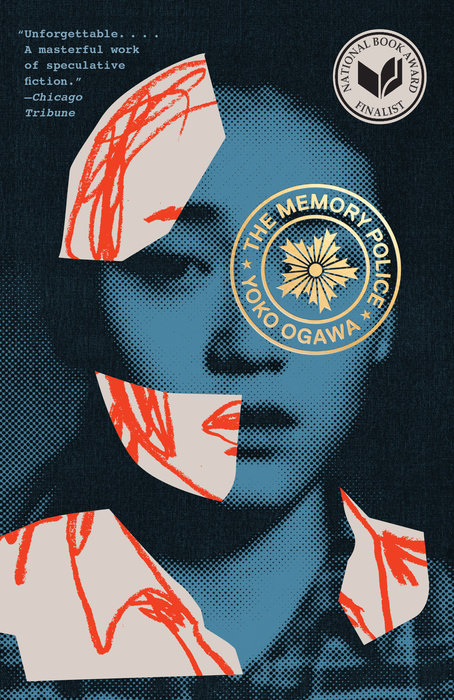
A haunting Orwellian novel about the terrors of state surveillance, from the acclaimed author of The Housekeeper and the Professor.On an unnamed island off an unnamed coast, objects are disappearing: first hats, then ribbons, birds, roses--until things become much more serious. Most of the island's inhabitants are oblivious to these changes, while those few imbued with the power to recall the lost objects live in fear of the draconian Memory Police, who are committed to ensuring that what has disappeared remains forgotten.When a young woman who is struggling to maintain her career as a novelist discovers that her editor is in danger from the Memory Police, she concocts a plan to hide him beneath her floorboards. As fear and loss close in around them, they cling to her writing as the last way of preserving the past.A surreal, provocative fable about the power of memory and the trauma of loss, The Memory Police is a stunning new work from one of the most exciting contemporary authors writing in any language.

The year is 1984 and the city is Tokyo.A young woman named Aomame follows a taxi driver’s enigmatic suggestion and begins to notice puzzling discrepancies in the world around her. She has entered, she realizes, a parallel existence, which she calls 1Q84 —“Q is for ‘question mark.’ A world that bears a question.” Meanwhile, an aspiring writer named Tengo takes on a suspect ghostwriting project. He becomes so wrapped up with the work and its unusual author that, soon, his previously placid life begins to come unraveled. As Aomame’s and Tengo’s narratives converge over the course of this single year, we learn of the profound and tangled connections that bind them ever closer: a beautiful, dyslexic teenage girl with a unique vision; a mysterious religious cult that instigated a shoot-out with the metropolitan police; a reclusive, wealthy dowager who runs a shelter for abused women; a hideously ugly private investigator; a mild-mannered yet ruthlessly efficient bodyguard; and a peculiarly insistent television-fee collector.A love story, a mystery, a fantasy, a novel of self-discovery, a dystopia to rival George Orwell’s — 1Q84 is Haruki Murakami’s most ambitious undertaking yet: an instant best seller in his native Japan, and a tremendous feat of imagination from one of our most revered contemporary writers.

The Woman in the Dunes, by celebrated writer and thinker Kobo Abe, combines the essence of myth, suspense and the existential novel. After missing the last bus home following a day trip to the seashore, an amateur entomologist is offered lodging for the night at the bottom of a vast sand pit. But when he attempts to leave the next morning, he quickly discovers that the locals have other plans. Held captive with seemingly no chance of escape, he is tasked with shoveling back the ever-advancing sand dunes that threaten to destroy the village. His only companion is an odd young woman, and together their fates become intertwined as they work side by side through this Sisyphean of tasks.

"A wonderful introduction the Japanese tradition of jisei , this volume is crammed with exquisite, spontaneous verse and pithy, often hilarious, descriptions of the eccentric and committed monastics who wrote the poems." — The Buddhist ReviewAlthough the consciousness of death is, in most cultures, very much a part of life, this is perhaps nowhere more true than in Japan, where the approach of death has given rise to a centuries-old tradition of writing jisei , or the "death poem." Such a poem is often written in the very last moments of the poet's life.Hundreds of Japanese death poems, many with a commentary describing the circumstances of the poet's death, have been translated into English here, the vast majority of them for the first time. Compiler Yoel Hoffmann explores the attitudes and customs surrounding death in historical and present-day Japan and gives examples of how these have been reflected in the nation's literature in general. The development of writing jisei is then examined—from the longing poems of the early nobility and the more "masculine" verses of the samurai to the satirical death poems of later centuries.Zen Buddhist ideas about death are also described as a preface to the collection of Chinese death poems by Zen monks that are also included. Finally, the last section contains three hundred twenty haiku, some of which have never been assembled before, in translated English and romanized Japanese.

In this fascinating document, one of Japan's best known-and controversial-writers created what might be termed a new literary form. It is new because it combines elements of many existing types of writing, yet in the end fits into none of them.At one level, it may be read as an account of how a puny, bookish boy discovered the importance of his own physical being; the "sun and steel" of the title are themselves symbols respectively of the cult of the open air and the weights used in bodybuilding. At another level, it is a discussion by a major novelist of the relation between action and art, and his own highly polished art in particular. More personally, it is an account of one individual's search for identity and self-integration. Or again, the work could be seen as a demonstration of how an intensely individual preoccupation can be developed into a profound philosophy of life.All these elements are woven together by Mishima's complex yet polished and supple style. The confession and the self-analysis, the philosophy and the poetry combine in the end to create something that is in itself perfect and self-sufficient. It is a piece of literature that is as carefully fashioned as Mishima's novels, and at the same time provides an indispensable key to the understanding of them as art.The road Mishima took to salvation is a highly personal one. Yet here, ultimately, one detects the unmistakable tones of a self transcending the particular and attaining to a poetic vision of the universal. The book is therefore a moving document, and is highly significant as a pointer to the future development of one of the most interesting novelists of modern times.

"Written with precise skill and beautifully controlled power. The translation by Ivan Morris is outstanding." -- The New York Times**Winner of the 1952 Yomiuri Prize**This haunting novel explores the complete degradation and isolation of a man by war. Fires on the Plain is set on the island of Leyte in the Philippines during World War II, where the Japanese army is disintegrating under the hammer blows of the American landings. Within this broader disintegration is another, that of a single human being, Private Tamura. The war destroys each of his ties to society, one by one, until Tamura, a sensitive and intelligent man, becomes an outcast.Nearly losing the will to survive, he hears of a port still in Japanese hands and struggles to walk through the American lines. Unfazed by danger, he welcomes the prospect of dying, but first, he loses his hope, and then his sanity. Lost among his hallucinations, Tamura comes to fancy himself an angel enjoined by God to eat no living thing--but even angels fall.Tamura is never less than human, even when driven to the ultimate sin against humanity. Shocking as the outward events are, the greatness of the novel lies in its uplifting vision during a time of crushing horror. As relevant today as when it was originally published, Fires on the Plain will strike a chord with anyone who has lived through the horrors of war.

Welcome to Neo-Tokyo, built on the ashes of a Tokyo annihilated by a blast of unknown origin that triggered World War III. The lives of two streetwise teenage friends, Tetsuo and Kaneda, change forever when paranormal abilities begin to waken in Tetsuo, making him a target for a shadowy agency that will stop at nothing to prevent another catastrophe like the one that leveled Tokyo. At the core of the agency’s motivation is a raw, all-consuming fear of an unthinkable, monstrous power known only as Akira.Katsuhiro Otomo’s stunning science fiction masterpiece is considered by many to be the finest work of graphic fiction ever produced, and Otomo’s brilliant animated film version is regarded worldwide as a classic.This edition includes a new foreword from the author and a postscript from Dark Horse publisher Mike Richardson!

The distinguished filmmaker chronicles his life from his birth in 1910 to the worldwide success in 1950 of his film Rashomon and provides a provocative account of the Japanese film industry.

Set in a remote fishing village in Japan, The Sound of Waves is a timeless story of first love. It tells of Shinji, a young fisherman and Hatsue, the beautiful daughter of the wealthiest man in the village. Shinji is entranced at the sight of Hatsue in the twilight on the beach and they fall in love. When the villagers' gossip threatens to divide them, Shinji must risk his life to prove his worth.

Japon haiku şairlerinin en büyüğü olarak kabul edilen Matsuo Başô’nun (1644-1694) beş yolculuğunda tuttuğu notlar ve onlarla birlikte yazılan haikulardan oluşuyor Kuzeye Giden İnce Yol. Büyük usta Başô’nun yazdıklarının yanında Nobuyuki Yuasa’nın Başô ve dönemini anlatan derinlikli “sunuş”u kitabı eksiksiz hale getiriyor. Coşkun Yerli’nin ustalıklı çevirisiyle. “Bir Nisan’da tapınakların en kutsalını ziyaret etmek için Nikko Dağı’na çıktım.Bu dağa eskiden Niko denirmiş. Başrahip Kukai tapınağı bu dağda yaptırdığında, dağın adını Nikko, yani ‘güneşin parlak ışıkları’ olarak değiştirmiş. Kukai bin yıl sonrasını görme gücüne sahipti herhalde, bu dağ şimdi tüm tapınakların en kutsalına konak olmuş, iyiliksever kudretiyle ülkeye egemen, halkı kucaklıyor, güneşin parlak ışıkları gibi. Bu tapınak üzerine daha fazla söz etmek onun kutsallığına gölge düşürmek olur. İçimi bir korku sarıyor, güneşte parlayan körpe yapraklara bakarken.”

Osamu Dazai's No Longer Human, this leading postwar Japanese writer's second novel, tells the poignant and fascinating story of a young man who is caught between the breakup of the traditions of a northern Japanese aristocratic family and the impact of Western ideas. In consequence, he feels himself "disqualified from being human" (a literal translation of the Japanese title).Donald Keene, who translated this and Dazai's first novel, The Setting Sun, has said of the author's work: "His world … suggests Chekhov or possibly postwar France, … but there is a Japanese sensibility in the choice and presentation of the material. A Dazai novel is at once immediately intelligible in Western terms and quite unlike any Western book." His writing is in some ways reminiscent of Rimbaud, while he himself has often been called a forerunner of Yukio Mishima.Cover painting by Noe Nojechowiz, from the collection of John and Barbara Duncan; design by Gertrude Huston

Shinmen Takezo is destined to become the legendary sword-saint, Miyamoto Musashi--perhaps the most renowned samurai of all time. For now, Takezo is a cold-hearted killer, who will take on anyone in mortal combat to make a name for himself. This is the journey of a wild young brute who strives to reach enlightenment by way of the sword--fighting on the edge of death.Chapter TitlesChapter 001. "Shinmen Takezo" (新免武蔵様)Chapter 002. "Akemi" (朱実)Chapter 003. "Oko" (お甲)Chapter 004. "The Brigand Tsujikaze" (野武士辻風)Chapter 005. "Blood Game" (血遊び)Chapter 006. "The Troubles of Honi'den Matahachi at Seventeen" (本位田又八17歳の懊悩)Chapter 007. "Farewell Takezo" (さらば武蔵)Chapter 008. "Miyamoto Village" (宮本村)Chapter 009. "Fiancee" (許嫁)Chapter 010. "Left Behind" (残された者たち)

This engaging series of childhood recollections tells about an ideal school in Tokyo during World War II that combined learning with fun, freedom, and love. This unusual school had old railroad cars for classrooms, and it was run by an extraordinary man--its founder and headmaster, Sosaku Kobayashi--who was a firm believer in freedom of expression and activity.

The hermit-monk Ryokan, long beloved in Japan both for his poetry and for his character, belongs in the tradition of the great Zen eccentrics of China and Japan. His reclusive life and celebration of nature and the natural life also bring to mind his younger American contemporary, Thoreau. Ryokan's poetry is that of the mature Zen master, its deceptive simplicity revealing an art that surpasses artifice. Although Ryokan was born in eighteenth-century Japan, his extraordinary poems, capturing in a few luminous phrases both the beauty and the pathos of human life, reach far beyond time and place to touch the springs of humanity.

A graphic novel version of this classic collection of martial arts parables, written by Issai Chozanshi, an 18-century samurai, brings these tales alive in a captivating and immediately accessible way. The stories, which feature demons, insects, birds, cats, and numerous other creatures, may seem whimsical, but they contain essential teachings that offer insight into the fundamental principles of the martial arts.Infused with Chozanshi’s deep understanding of Taoism, Buddhism, Confucianism, and Shinto, the tales elucidate the nature of conflict, the importance of following one’s own nature, yin and yang, the cultivation and transformation of ch’i (life energy), and the attainment of mushin (no-mind). Ultimately, the reader learns in a visually exciting way that the path of the sword is a path of self-knowledge and leads to an understanding of life itself.

In one compact volume, Japanese Verbs & Essentials of Grammar, Second Edition , offers an integrated beginner's guide to all major verbal and grammatical concepts of the Japanese language. This latest edition of the popular and accessible guide has been updated to

13 Secrets for Speaking Fluent Japanese presents tested shortcuts for Japanese language acquisition. Identifying two groups of people who actively and effectively study Japanese to the point of fluency-successful non-native learners and Japanese children-Giles Murray has collected from bothgroups the most rewarding and universal techniques which can be put to immediate use by both beginner and advanced students of Japanese.This book is designed for people who have tried orthodox textbooks and failed, people who know a little Japanese but don't have the necessary time or motivation to make the transition to more serious textbooks, and people seeking to increase fluency using ability already acquired. It introduces newstrategies for thinking, speaking and memorizing Japanese quickly, efficiently and independently. Used in tandem with a mainstream textbook, these strategies will enable any student to apply what they have learned in the classroom to real-life situations, and to speak without hesitation in naturaland fluent Japanese.With lively and entertaining commentaries, striking illustrations, two Japanese manga-including a six-page extract from Osamu Tezuka's famous Blackjack series-brainteasing puzzles, and genuinely useful example sentences, 13 Secrets offers a unique and exciting alternative to all students ofJapanese.Featuring- An original manga by Tezuka Osamu- All new custom-written 16-page manga- 3 mini-graphic novels- Over 100 illustrations- Dynamic quiz format- Full glossaries

This is an alternate cover edition of ISBN 9780679750154The Sailor Who Fell from Grace with the Sea tells the tale of a band of savage thirteen-year-old boys who reject the adult world as illusory, hypocritical and sentimental, and train themselves in a brutal callousness they call "objectivity." When the mother of one of them begins an affair with a ship's officer, he and his friends idealize the man at first; but it is not long before they conclude that he is in fact soft and romantic. They regard their disappointment in him as an act of betrayal on his part, and react violently.

In The Temple of the Golden Pavilion, celebrated Japanese novelist Yukio Mishima creates a haunting and vivid portrait of a young man’s obsession with idealized beauty and his destructive quest to possess it fully.Mizoguchi, an ostracized stutterer, develops a childhood fascination with Kyoto’s famous Golden Temple. While an acolyte at the temple, he fixates on the structure’s aesthetic perfection and it becomes the one and only object of his desire. But as Mizoguchi begins to perceive flaws in the temple, he determines that the only true path to beauty lies in an act of horrendous violence. Based on a real incident that occurred in 1950, The Temple of the Golden Pavilion brilliantly portrays the passions and agonies of a young man in postwar Japan, bringing to the subject the erotic imagination and instinct for the dramatic moment that marked Mishima as one of the towering makers of modern fiction. With an introduction by Donald Keene; Translated from the Japanese by Ivan Morris.(Book Jacket Status: Jacketed)

Isao is a young, engaging patriot, and a fanatical believer in the ancient samurai ethos. He turns terrorist, organising a violent plot against the new industrialists, who he believes are threatening the integrity of Japan and usurping the Emperor’s rightful power. As the conspiracy unfolds and unravels, Mishima brilliantly chronicles the conflicts of a decade that saw the fabric of Japanese life torn apart.

An essay on aesthetics by the Japanese novelist, this book explores architecture, jade, food, and even toilets, combining an acute sense of the use of space in buildings. The book also includes descriptions of laquerware under candlelight, and women in the darkness of the house of pleasure.

His life was like a recurring nightmare: a train to nowhere. But an ordinary life has a way of taking an extraordinary turn. Add a girl whose ears are so exquisite that, when uncovered, they improve sex a thousand-fold, a runaway friend, a right-wing politico, an ovine-obsessed professor and a manic-depressive in a sheep outfit, implicate them in a hunt for a sheep, that may or may not be running the world, and the upshot is another singular masterpiece from Japan's finest novelist.

Bushido. The Way of the Warrior presents a remarkably faithful mirror of many of the characteristics and habits of modern Japanese civilization, as it represents a tradition that enjoyed great power and prestige for centuries. This work was written to provide practical and moral instruction for warriors, and to outline the parameters of personal, social, and professional conduct characteristic of Bushido, or Way of the Warrior, the Japanese chivalric tradition.Personal responsibilities, family relationships, public duties, education, finances and ethics are treated in this text from the perspective of the spirit of Japanese gentlemen. Even the forms of political incompetence and corruption that Japan currently struggles with are accurately described in this more than 400-year-old book; So deep did the feudal and military modes of government that generated them take their roots in Japanese society. This manual is therefore an essential resource for anyone who wishes to understand Japan and the Japanese people in a realistic way.

Alternate cover edition of ISBN 9780099282990Tokyo, 1912. The closed world of the ancient aristocracy is being breached for the first time by outsiders - rich provincial familes, a new and powerful political and social elite. Kiyoaki has been raised among the elegant Ayakura family - members of the waning aristocracy - but he is not one of them. Coming of age, he is caught up in the tensions between old and new, and his feelings for the exquisite, spirited Satoko, observed from the sidelines by his devoted friend Honda. When Satoko is engaged to a royal prince, Kiyoaki realises the magnitude of his passion.

Japan's most highly regarded novelist now vaults into the first ranks of international fiction writers with this heroically imaginative novel, which is at once a detective story, an account of a disintegrating marriage, and an excavation of the buried secrets of World War II. In a Tokyo suburb a young man named Toru Okada searches for his wife's missing cat. Soon he finds himself looking for his wife as well in a netherworld that lies beneath the placid surface of Tokyo. As these searches intersect, Okada encounters a bizarre group of allies and antagonists: a psychic prostitute; a malevolent yet mediagenic politician; a cheerfully morbid sixteen-year-old-girl; and an aging war veteran who has been permanently changed by the hideous things he witnessed during Japan's forgotten campaign in Manchuria. Gripping, prophetic, suffused with comedy and menace, The Wind-Up Bird Chronicle is a tour de force equal in scope to the masterpieces of Mishima and Pynchon.

A narrative particle accelerator that zooms between Wild Turkey Whiskey and Bob Dylan, unicorn skulls and voracious librarians, John Coltrane and Lord Jim.Science fiction, detective story and post-modern manifesto all rolled into one rip-roaring novel, Hard-Boiled Wonderland and the End of the World is the tour de force that expanded Haruki Murakami's international following. Tracking one man's descent into the Kafkaesque underworld of contemporary Tokyo, Murakami unites East and West, tragedy and farce, compassion and detachment, slang and philosophy.

Shogunate executioner Ogami Itto is framed as a traitor by the agents from a rival clan. With his wife murdered and with an infant son to protect, Ogami chooses the path of the rōnin, the masterless samurai. The Lone Wolf and Cub wander feudal Japan, Ogami's sword for hire, but all roads will lead them to a single destination—vengeance.A samurai epic of staggering proportions, the acclaimed Lone Wolf and Cub begins its second life at Dark Horse Manga with new, larger editions of over 700 pages, value priced. The brilliant storytelling of series creator Kazuo Koike and the groundbreaking cinematic visuals of Goseki Kojima create a graphic-fiction masterpiece of beauty, fury, and thematic power.This volume collects material previously published in Dark Horse graphic novels Lone Wolf and Cub, Vol. 1: The Assassin's Road, Lone Wolf and Cub, Vol. 2: The Gateless Barrier, Lone Wolf and Cub, Vol. 3: The Flute of the Fallen Tiger.

A dark, satirical thriller by the bestselling Japanese author, following the perilous train ride of five highly motivated assassins—soon to be a major film from SonyNanao, nicknamed Lady Bird—the self-proclaimed “unluckiest assassin in the world”—boards a bullet train from Tokyo to Morioka with one simple task: grab a suitcase and get off at the next stop. Unbeknownst to him, the deadly duo Tangerine and Lemon are also after the very same suitcase—and they are not the only dangerous passengers onboard. Satoshi, “the Prince,” with the looks of an innocent schoolboy and the mind of a viciously cunning psychopath, is also in the mix and has history with some of the others. Risk fuels him as does a good philosophical debate . . . like, is killing really wrong? Chasing the Prince is another assassin with a score to settle for the time the Prince casually pushed a young boy off of a roof, leaving him comatose.When the five assassins discover they are all on the same train, they realize their missions are not as unrelated as they first appear.A massive bestseller in Japan, Bullet Train is an original and propulsive thriller that fizzes with an incredible energy and surprising humor as its complex net of double-crosses and twists unwind. Award-winning author Kotaro Isaka takes readers on a tension packed journey as the bullet train hurtles toward its final destination. Who will make it off the train alive—and what awaits them at the last stop?

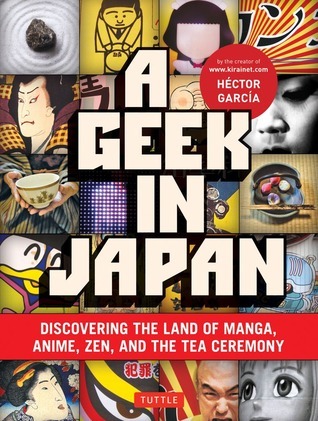
For every fan of manga, anime, J-pop, or Zen, A Geek in Japan is a hip, smart and concise guide to the land that is their source.Comprehensive and well informed, it covers a wide array of topics in short articles accompanied by sidebars and numerous photographs, providing a lively digest of the society and culture of Japan. Designed to appeal to the generations of Westerners who grew up on Pokemon, manga and video games, A Geek in Japan reinvents the culture guide for readers in the Internet age.Spotlighting the originality and creativity of the Japanese, debunking myths about them, and answering nagging questions like why they're so fond of robots, author Hector Garcia has created the perfect book for the growing ranks of Japanophiles in this inspired, insightful and highly informative guide.

INSTANT #1 NEW YORK TIMES BESTSELLER • One of the most revered voices in literature today gives us a story of love, friendship, and heartbreak for the ages.“Mesmerizing, immersive, hallucinogenic.”—Entertainment WeeklyColorless Tsukuru Tazaki and His Years of Pilgrimage is the remarkable story of a young man haunted by a great loss; of dreams and nightmares that have unintended consequences for the world around us; and of a journey into the past that is necessary to mend the present.ONE OF THE BEST BOOKS OF THE YEAR: The New York Times Book Review, The Washington Post, Financial Times, St. Louis Post-Dispatch, Slate, Mother Jones, The Daily Beast, BookPage

A dazzling new collection of short stories—the first major new work of fiction from the beloved, internationally acclaimed, Haruki Murakami since his #1 best-selling Colorless Tsukuru Tazaki and His Years of Pilgrimage.Across seven tales, Haruki Murakami brings his powers of observation to bear on the lives of men who, in their own ways, find themselves alone. Here are vanishing cats and smoky bars, lonely hearts and mysterious women, baseball and the Beatles, woven together to tell stories that speak to us all.Marked by the same wry humor that has defined his entire body of work, in this collection Murakami has crafted another contemporary classic.

Según los japoneses, todo el mundo tiene un ikigai, un motivo para existir. Algunos lo han encontrado y son conscientes de su ikigai, otros lo llevan dentro, pero todavía lo están buscando. Este es uno de los secretos para una vida larga, joven y feliz como la que llevan los habitantes de Okinawa, la isla más longeva del mundo. El proyecto de este libro surgió uniendo la experiencia en cultura japonesa de Héctor García (autor de “Un Geek en Japón”), que lleva doce años viviendo en Japón, con el arte escribiendo de Francesc Miralles (autor de decenas de libros y novelas y especialista en psicología). Para escribir la obra, los dos autores fueron recibidos por el alcalde de Ogimi (Okinawa), una localidad del norte de Japón con el mayor índice de longevidad del mundo, y tuvieron acceso a entrevistar a más de un centenar de sus habitantes.Analizamos las claves de los centenarios japoneses para una existencia optimista y vital, descubriendo cómo se alimentan, cómo se mueven, cómo trabajan, cómo se relacionan con los demás y –el secreto mejor guardado- cómo encuentran el ikigai que da sentido a su existencia y les impulsa a vivir cien años en plena forma. Tener un ikigai claro y definido, una gran pasión, es algo que da satisfacción, felicidad y significado a la vida. La misión de este libro es ayudarte a encontrarlo, además de descubrir muchas claves de la filosofía japonesa para una larga salud del cuerpo, la mente y el espíritu. • Una obra que nos acerca los secretos de los centenarios japoneses para una vida saludable y feliz. • Ofrece herramientas prácticas para que el lector descubra su particular ikigai, su razón de ser.

The English-language debut of one of Japan's most talented contemporary writers, selling over 650,000 copies there, Convenience Store Woman is the heartwarming and surprising story of thirty-six-year-old Tokyo resident Keiko Furukura. Keiko has never fit in, neither in her family, nor in school, but when at the age of eighteen she begins working at the Hiiromachi branch of “Smile Mart,” she finds peace and purpose in her life. In the store, unlike anywhere else, she understands the rules of social interaction―many are laid out line by line in the store’s manual―and she does her best to copy the dress, mannerisms, and speech of her colleagues, playing the part of a “normal” person excellently, more or less. Keiko is very happy, but the people close to her, from her family to her coworkers, increasingly pressure her to find a husband, and to start a proper career, prompting her to take desperate action…A brilliant depiction of a world hidden from view, Convenience Store Woman is an ironic and sharp-eyed look at contemporary work culture and the pressures we all feel to conform, as well as a charming and completely fresh portrait of an unforgettable heroine.

Here is the most complete single-volume collection of the writings of one of the great luminaries of Asian literature. Basho (1644–1694)—who elevated the haiku to an art form of utter simplicity and intense spiritual beauty—is best known in the West as the author of Narrow Road to the Interior, a travel diary of linked prose and haiku that recounts his journey through the far northern provinces of Japan. This volume includes a masterful translation of this celebrated work along with three other less well-known but important works by Basho: Travelogue of Weather-Beaten Bones, The Knapsack Notebook, and Sarashina Travelogue. There is also a selection of over two hundred fifty of Basho's finest haiku. In addition, the translator has provided an introduction detailing Basho's life and work and an essay on the art of haiku.

Challenging every preconception about storytelling and prose style, mixing wry humor and riveting emotional depth, Kawakami is today one of Japan’s most important and best-selling writers. She exploded onto the cultural scene first as a musician, then as a poet and popular blogger, and is now an award-winning novelist.Breasts and Eggs paints a portrait of contemporary womanhood in Japan and recounts the intimate journeys of three women as they confront oppressive mores and their own uncertainties on the road to finding peace and futures they can truly call their own.It tells the story of three women: the thirty-year-old Natsu, her older sister, Makiko, and Makiko’s daughter, Midoriko. Makiko has traveled to Tokyo in search of an affordable breast enhancement procedure. She is accompanied by Midoriko, who has recently grown silent, finding herself unable to voice the vague yet overwhelming pressures associated with growing up. Her silence proves a catalyst for each woman to confront her fears and frustrations.On another hot summer’s day ten years later, Natsu, on a journey back to her native city, struggles with her own indeterminate identity as she confronts anxieties about growing old alone and childless.

The author team behind worldwide bestseller The Courage To Be Disliked return with the must-have companion volume. In The Courage To Be Happy, Ichiro Kishimi and Fumitake Koga again distil their wisdom into simple yet profound advice to show us how we, too, can use twentieth-century psychological theory to find true happiness.

From the acclaimed author of Japan Story, this is the history of Japan, distilled into the stories of twenty remarkable individuals.The vivid and entertaining portraits in Chris Harding's enormously enjoyable new book take the reader from the earliest written accounts of Japan right through to the life of the current empress, Masako. We encounter shamans and warlords, poets and revolutionaries, scientists, artists and adventurers - each offering insights of their own into this extraordinary place.For anyone new to Japan, this book is the ideal introduction. For anyone already deeply involved with it, this is a book filled with surprises and pleasures.

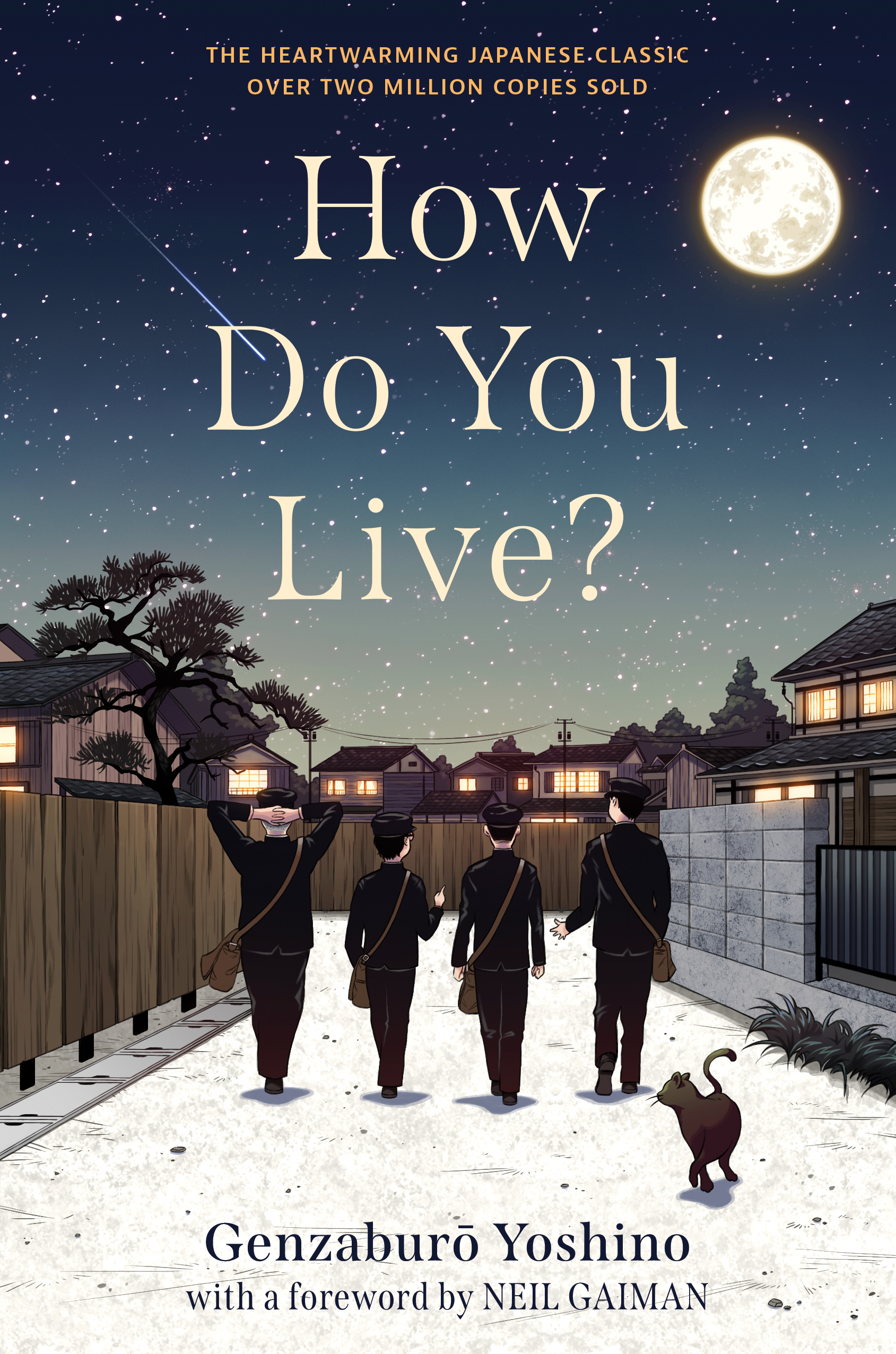
Anime master Hayao Miyazaki’s favorite childhood book, in English for the first time. First published in 1937, Genzaburō Yoshino’s How Do You Live? has long been acknowledged in Japan as a crossover classic for young readers. Academy Award–winning animator Hayao Miyazaki (Spirited Away, My Neighbor Totoro, Howl’s Moving Castle) has called it his favorite childhood book and announced plans to emerge from retirement to make it the basis of a final film. How Do You Live? is narrated in two voices. The first belongs to Copper, fifteen, who after the death of his father must confront inevitable and enormous change, including his own betrayal of his best friend. In between episodes of Copper’s emerging story, his uncle writes to him in a journal, sharing knowledge and offering advice on life’s big questions as Copper begins to encounter them. Over the course of the story, Copper, like his namesake Copernicus, looks to the stars, and uses his discoveries about the heavens, earth, and human nature to answer the question of how he will live. This first-ever English-language translation of a Japanese classic about finding one’s place in a world both infinitely large and unimaginably small is perfect for readers of philosophical fiction like The Alchemist and The Little Prince, as well as Miyazaki fans eager to understand one of his most important influences.