Loading themes...
Explore the best books about History Of Science theme.

An illuminating portrayal of Richard Feynman—a giant of twentieth century physics—from his childhood tinkering with radios, to his vital work on the Manhattan Project and beyond Raised in Depression-era Rockaway Beach, physicist Richard Feynman was irreverent, eccentric, and childishly enthusiastic—a new kind of scientist in a field that was in its infancy. His quick mastery of quantum mechanics earned him a place at Los Alamos working on the Manhattan Project under J. Robert Oppenheimer, where the giddy young man held his own among the nation’s greatest minds. There, Feynman turned theory into practice, culminating in the Trinity test, on July 16, 1945, when the Atomic Age was born. He was only twenty-seven. And he was just getting started. In this sweeping biography, James Gleick captures the forceful personality of a great man, integrating Feynman’s work and life in a way that is accessible to laymen and fascinating for the scientists who follow in his footsteps.

An original history of man's greatest adventure: his search to discover the world around him.

This is a history of how physics has drawn some inspiration from economics and how economics has sought to emulate physics, especially with regard to the theory of value. The author traces the development of the energy concept in Western physics and its subsequent effect on the invention and promulgation of neoclassical economics, the modern orthodox theory.

Lauded by critics and devoured by countless readers as a companion to the acclaimed PBS series, this work traces the development of science as an expression of the special gifts that characterize man and make him preeminent among animals. Bronowski's exciting, splendidly illustrated investigation offers a new perspective not just on science, but on civilization itself. Photographs.

'A monumental achievement - one of the great scientific biographies.' Michael FraynThe Strangest Man is the Costa Biography Award-winning account of Paul Dirac, the famous physicist sometimes called the British Einstein. He was one of the leading pioneers of the greatest revolution in twentieth-century science: quantum mechanics. The youngest theoretician ever to win the Nobel Prize for Physics, he was also pathologically reticent, strangely literal-minded and legendarily unable to communicate or empathize. Through his greatest period of productivity, his postcards home contained only remarks about the weather.Based on a previously undiscovered archive of family papers, Graham Farmelo celebrates Dirac's massive scientific achievement while drawing a compassionate portrait of his life and work. Farmelo shows a man who, while hopelessly socially inept, could manage to love and sustain close friendship.The Strangest Man is an extraordinary and moving human story, as well as a study of one of the most exciting times in scientific history.'A wonderful book . . . Moving, sometimes comic, sometimes infinitely sad, and goes to the roots of what we mean by truth in science.' Lord Waldegrave, Daily Telegraph

The period between 1867 and 1914 remains the greatest watershed in human history since the emergence of settled agricultural the time when an expansive civilization based on synergy of fuels, science, and technical innovation was born. At its beginnings in the 1870s were dynamite, the telephone, photographic film, and the first light bulbs. Its peak decade - the astonishing 1880s - brought electricity - generating plants, electric motors, steam turbines, the gramophone, cars, aluminum production, air-filled rubber tires, and prestressed concrete. And its post-1900 period saw the first airplanes, tractors, radio signals and plastics, neon lights and assembly line production. This book is a systematic interdisciplinary account of the history of this outpouring of European and American intellect and of its truly epochal consequences. It takes a close look at four fundamental classes of these epoch-making formation, diffusion, and standardization of electricsystems; invention and rapid adoption of internal combustion engines; the unprecedented pace of new chemical syntheses and material substitutions; and the birth of a new information age. These chapters are followed by an evaluation of the lasting impact these advances had on the 20th century, that is, the creation of high-energy societies engaged in mass production aimed at improving standards of living.

x^n + y^n = z^n, where n represents 3, 4, 5, ...no solution"I have discovered a truly marvelous demonstration of this proposition which this margin is too narrow to contain."With these words, the seventeenth-century French mathematician Pierre de Fermat threw down the gauntlet to future generations. What came to be known as Fermat's Last Theorem looked simple; proving it, however, became the Holy Grail of mathematics, baffling its finest minds for more than 350 years. In Fermat's Enigma--based on the author's award-winning documentary film, which aired on PBS's "Nova"--Simon Singh tells the astonishingly entertaining story of the pursuit of that grail, and the lives that were devoted to, sacrificed for, and saved by it. Here is a mesmerizing tale of heartbreak and mastery that will forever change your feelings about mathematics.

Asimov tells the stories behind the science: the men and women who made the important discoveries and how they did it. Ranging from Galilei, Achimedes, Newton and Einstein, he takes the most complex concepts and explains it in such a way that a first-time reader on the subject feels confident on his/her understanding.

For centuries people communicated across distances only as quickly as the fastest ship or horse could travel. Generations of innovators tried and failed to develop speedier messaging devices. But in the mid-1800s, a few extraordinary pioneers at last succeeded. Their invention--the electric telegraph--shrank the world more quickly than ever before.A colorful tale of scientific discovery and technological cunning, The Victorian Internet tells the story of the telegraph's creation and remarkable impact, and of the visionaries, oddballs, and eccentrics who pioneered it. By 1865 telegraph cables spanned continents and oceans, revolutionizing the ways countries dealt with one another. The telegraph gave rise to creative business practices and new forms of crime. Romances blossomed over the wires. Secret codes were devised by some users, and cracked by others. The benefits of the network were relentlessly hyped by its advocates and dismissed by its skeptics. And attitudes toward everything from news gathering to war had to be completely rethought. The telegraph unleashed the greatest revolution in communications since the development of the printing press. Its saga offers many parallels to that of the Internet in our own time--and is a fascinating episode in the history of technology.

The day Richard Feynman died, students at the California Institute of Technology hung a banner across the face of its library that read, simply, "We love you, Dick." To students of physics all over the world, Feynman was living proof that to lead a life in science you do not need ice water for blood and the mind of a Cray computer. This was a man who combined practical joking, safe-cracking, and bongo-playing with superlative teaching and brilliant insights. Although everyone knows that Feynman was a great scientist, few people could tell you even the name of the work for which he is acknowledged. The name of Hawking is associated with black holes, Darwin with evolution, Einstein with relativity. But Feynman? He was just a "scientist," which is ironic since his greatest work was actually in the area of quantum electrodynamics, a subject of enormous fascination to non-scientists today. Arguably the greatest physicist of his generation--and undoubtedly one of the most eccentric--Feynman's contributions are well illustrated in Richard A Life in Science, and readers are sure to grasp his remarkable contribution to scientific understanding through the book's friendly and accessible style.The biographical format offers an excellent way for non specialist readers to explore one of the more complex worlds of science.Richard Feynman's own collection of essays Surely You're Joking Mr. Feynman was a national bestseller.

For scientist and layman alike this book provides vivid evidence that the Copernican Revolution has by no means lost its significance today. Few episodes in the development of scientific theory show so clearly how the solution to a highly technical problem can alter our basic thought processes and attitudes. Understanding the processes which underlay the Revolution gives us a perspective, in this scientific age, from which to evaluate our own beliefs more intelligently. With a constant keen awareness of the inseparable mixture of its technical, philosophical, and humanistic elements, Mr. Kuhn displays the full scope of the Copernican Revolution as simultaneously an episode in the internal development of astronomy, a critical turning point in the evolution of scientific thought, and a crisis in Western man's concept of his relation to the universe and to God. The book begins with a description of the first scientific cosmology developed by the Greeks. Mr. Kuhn thus prepares the way for a continuing analysis of the relation between theory and observation and belief. He describes the many functions--astronomical, scientific, and nonscientific--of the Greek concept of the universe, concentrating especially on the religious implications. He then treats the intellectual, social, and economic developments which nurtured Copernicus' break with traditional astronomy. Although many of these developments, including scholastic criticism of Aristotle's theory of motion and the Renaissance revival of Neoplatonism, lie entirely outside of astronomy, they increased the flexibility of the astronomer's imagination. That new flexibility is apparent in the work of Copernicus, whose DE REVOLUTIONIBUS ORBIUM CAELESTIUM is discussed in detail both for its own significance and as a representative scientific innovation. With a final analysis of Copernicus' life work--its reception and its contribution to a new scientific concept of the universe--Mr. Kuhn illuminates both the researches that finally made the heliocentric arrangement work, and the achievements in physics and metaphysics that made the planetary earth an integral part of Newtonian science. These are the developments that once again provided man with a coherent and self-consistent conception of the universe and of his own place in it. This is a book for any reader interested in the evolution of ideas and, in particular, in the curious interplay of hypothesis and experiment which is the essence of modern science. Says James Bryant Conant in his "Professor Kuhn's handling of the subject merits attention, for... he points the way to the road which must be followed if science is to be assimilated into the culture of our times."

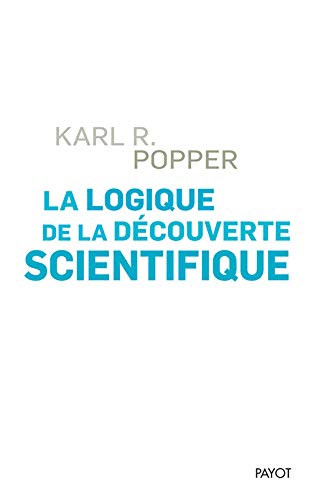
Qu'est-ce qui est scientifique et qu'est-ce qui ne l'est pas ? Comment vérifier une théorie ? Qu'est-ce qu'une hypothèse scientifique ? Comment la connaissance progresse-t-elle ? Chef-d'œuvre de Karl Popper, ce livre puissant défend l'idée que pour être scientifique une théorie doit être réfutable par l'expérience. Le célèbre philosophe y discute Einstein ou Bernoulli, Heisenberg ou Schrödinger, mais aussi Russell ou Wittgenstein ; il déploie plusieurs concepts cruciaux, tels ceux de corroboration, de falsifiabilité, ou de critère de démarcation, sur lequel repose toute connaissance scientifique ; et il aborde des thèmes comme la simplicité, l'incertitude, le hasard et la probabilité, les rapports entre théorie et expérience, entre science et métaphysique. Sir Karl R. Popper (1902-1994) est l'une des figures majeures de la philosophie du XX e siècle. Il est également l'auteur, aux Éditions Payot, de Conjectures et réfutations .

Francis Crick, who died at the age of eighty-eight in 2004, will be bracketed with Galileo, Darwin, and Einstein as one of the great scientists of all time. Between 1953 and 1966 he made and led a revolution in biology by discovering, quite literally, the secret of life: the digital cipher at the heart of heredity that distinguishes living from non-living things -- the genetic code. His own discoveries -- though he always worked with one other partner and did much of his thinking in conversation -- include not only the double helix but the whole mechanism of protein synthesis, the three-letter nature of the code, and much of the code itself. Matt Ridley's biography traces Crick's life from middle-class mediocrity in the English Midlands, through a lackluster education and six years designing magnetic mines for the Royal Navy, to his leap into biology at the age of thirty-one. While at Cambridge, he suddenly began to display the unique visual imagination and intense tenacity of thought that would allow him to see the solutions to several great scientific conundrums -- and to see them long before most biologists had even conceived of the problems. Having set out to determine what makes living creatures alive and having succeeded, he immigrated at age sixty to California and turned his attention to the second question that had fascinated him since his youth: What makes conscious creatures conscious? Time ran out before he could find the answer.

The Ptolemaic system of the universe, with the earth at the center, had held sway since antiquity as authoritative in philosophy, science, and church teaching. Following his observations of the heavenly bodies, Nicolaus Copernicus (1473-1543) abandoned the geocentric system for a heliocentric model, with the sun at the center. His remarkable work, On the Revolutions of Heavenly Spheres, stands as one of the greatest intellectual revolutions of all time, and profoundly influenced, among others, Galileo and Sir Isaac Newton.

In this “informative and delightful” ( American Scientist ) biography, Margaret Cheney explores the brilliant and prescient mind of Nikola Tesla, one of the twentieth century’s greatest scientists and inventors.In Man Out of Time, Margaret Cheney explores the brilliant and prescient mind of one of the twentieth century's greatest scientists and inventors. Called a madman by his enemies, a genius by others, and an enigma by nearly everyone, Nikola Tesla was, without a doubt, a trailblazing inventor who created astonishing, sometimes world-transforming devices that were virtually without theoretical precedent. Tesla not only discovered the rotating magnetic field -- the basis of most alternating-current machinery -- but also introduced us to the fundamentals of robotics, computers, and missile science. Almost supernaturally gifted, unfailingly flamboyant and neurotic, Tesla was troubled by an array of compulsions and phobias and was fond of extravagant, visionary experimentations. He was also a popular man-about-town, admired by men as diverse as Mark Twain and George Westinghouse, and adored by scores of society beauties.From Tesla's childhood in Yugoslavia to his death in New York in the 1940s, Cheney paints a compelling human portrait and chronicles a lifetime of discoveries that radically altered -- and continue to alter -- the world in which we live. Man Out of Time is an in-depth look at the seminal accomplishments of a scientific wizard and a thoughtful examination of the obsessions and eccentricities of the man behind the science.

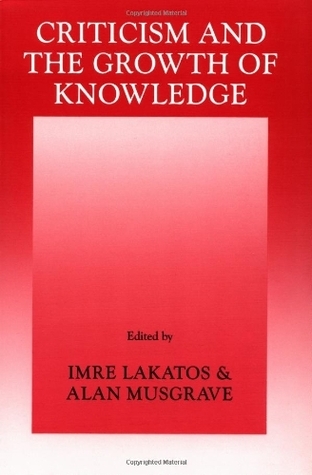
Two books have been particularly influential in contemporary philosophy of science: Karl R. Popper's Logic of Scientific Discovery, and Thomas S. Kuhn's Structure of Scientific Revolutions. Both agree upon the importance of revolutions in science, but differ about the role of criticism in science's revolutionary growth. This volume arose out of a symposium on Kuhn's work, with Popper in the chair, at an international colloquium held in London in 1965. The book begins with Kuhn's statement of his position followed by seven essays offering criticism and analysis, and finally by Kuhn's reply. The book will interest senior undergraduates and graduate students of the philosophy and history of science, as well as professional philosophers, philosophically inclined scientists, and some psychologists and sociologists.

Beyond Einstein takes readers on an exciting excursion into the discoveries that have led scientists to the brightest new prospect in theoretical physics today -- superstring theory. What is superstring theory and why is it important? This revolutionary breakthrough may well be the fulfillment of Albert Einstein's lifelong dream of a Theory of Everything, uniting the laws of physics into a single description explaining all the known forces in the universe. Co-authored by one of the leading pioneers in superstrings, Michio Kaku, and completely revised and updated with the newest groundbreaking research, the book approaches scientific questions with the excitement of a detective story, offering a fascinating look at the new science that may make the impossible possible.

The notion that our society, its education system and its intellectual life, is characterised by a split between two cultures—the arts or humanities on one hand, and the sciences on the other—has a long history. But it was C. P. Snow's Rede lecture of 1959 that brought it to prominence and began a public debate that is still raging in the media today. This 50th anniversary printing of The Two Cultures and its successor piece, A Second Look (in which Snow responded to the controversy four years later) features an introduction by Stefan Collini, charting the history and context of the debate, its implications and its afterlife. The importance of science and technology in policy run largely by non-scientists, the future for education and research, and the problem of fragmentation threatening hopes for a common culture are just some of the subjects discussed.

Western Europeans were among the first, if not the first, to invent mechanical clocks, geometrically precise maps, double-entry bookkeeping, precise algebraic and musical notations, and perspective painting. More people in Western Europe thought quantitatively in the sixteenth century than in any other part of the world, enabling them to become the world's leaders. With amusing detail and historical anecdote, Alfred Crosby discusses the shift from qualitative to quantitative perception that occurred during the late Middle Ages and Renaissance. Alfred W. Crosby is the author of five books, including the award-winning Ecological Imperialism: The Biological Expansion of Europe, 900-1900 (Cambridge, 1986)

Imagine a world where whole epochs will pass, cultures rise and fall, between a telephone call and the reply. Think of the human race multiplying 500-million fold, or evolving new, distinct species. Consider the technology of space colonization, computer-assisted reproduction, the “Martian potato.” One hundred years after H. G. Wells visited the future in The Time Machine , Freeman Dyson marshals his uncommon gifts as a scientist and storyteller to take us once more to that ever-closer, ever-receding time to come.Since Disturbing the Universe , the book that first brought him international renown, Freeman Dyson has been helping us see ourselves and our world from a scientist’s point of view. In Imagined Worlds he brings this perspective to a speculative future to show us where science and technology, real and imagined, may be taking us. The stories he tells―about “Napoleonic” versus “Tolstoyan” styles of doing science; the coming era of radioneurology and radiotelepathy; the works of writers from Aldous Huxley to Michael Crichton to William Blake; Samuel Gompers and the American labor movement―come from science, science fiction, and history. Sharing in the joy and gloom of these sources, Dyson seeks out the lessons we must learn from all three if we are to understand our future and guide it in hopeful directions.Whether looking at the Gaia theory or the future of nuclear weapons, science fiction or the dangers of “science worship,” seagoing kayaks or the Pluto Express , Dyson is concerned with ethics, with how we might mitigate the evil consequences of technology and enhance the good. At the heart of it all is the belief once expressed by the biologist J. B. S. Haldane, that progress in science will bring enormous confusion and misery to humankind unless it is accompanied by progress in ethics.

In the 1930s, physics was in a crisis. There appeared to be no way to reconcile the new theory of quantum mechanics with Einstein's theory of relativity. Several approaches had been tried and had failed. In the post-World War II period, four eminent physicists rose to the challenge and developed a calculable version of quantum electrodynamics (QED), probably the most successful theory in physics. This formulation of QED was pioneered by Freeman Dyson, Richard Feynman, Julian Schwinger, and Sin-Itiro Tomonaga, three of whom won the Nobel Prize for their work. In this book, physicist and historian Silvan Schweber tells the story of these four physicists, blending discussions of their scientific work with fascinating biographical sketches.Setting the achievements of these four men in context, Schweber begins with an account of the early work done by physicists such as Dirac and Jordan, and describes the gathering of eminent theorists at Shelter Island in 1947, the meeting that heralded the new era of QED. The rest of his narrative comprises individual biographies of the four physicists, discussions of their major contributions, and the story of the scientific community in which they worked. Throughout, Schweber draws on his technical expertise to offer a lively and lucid explanation of how this theory was finally established as the appropriate way to describe the atomic and subatomic realms.

A fresh look at Darwin's most radical idea, and the mysteriously slow process by which he revealed it.Evolution, during the early nineteenth century, was an idea in the air. Other thinkers had suggested it, but no one had proposed a cogent explanation for how evolution occurs. Then, in September 1838, a young Englishman named Charles Darwin hit upon the idea that "natural selection" among competing individuals would lead to wondrous adaptations and species diversity. Twenty-one years passed between that epiphany and publication of On the Origin of Species . The human drama and scientific basis of Darwin's twenty-one-year delay constitute a fascinating, tangled tale that elucidates the character of a cautious naturalist who initiated an intellectual revolution.The Reluctant Mr. Darwin is a book for everyone who has ever wondered about who this man was and what he said. Drawing from Darwin's secret "transmutation" notebooks and his personal letters, David Quammen has sketched a vivid life portrait of the man whose work never ceases to be controversial.

Everyone wants to live a meaningful life. Long before our own day of self-help books offering twelve-step programs and other guides to attain happiness, the philosophers of ancient Greece explored the riddle of what makes a life worth living, producing a wide variety of ideas and examples to follow. This rich tradition was recast by Diogenes Laertius into an anthology, a miscellany of maxims and anecdotes, that generations of Western readers have consulted for edification as well as entertainment ever since the Lives of the Eminent Philosophers, first compiled in the third century AD, came to prominence in Renaissance Italy. To this day, it remains a crucial source for much of what we know about the origins and practice of philosophy in ancient Greece, covering a longer period of time and a larger number of figures-from Pythagoras and Socrates to Aristotle and Epicurus-than any other ancient source.

A wonderfully readable account of scientific development over the past five hundred years, focusing on the lives and achievements of individual scientists, by the bestselling author of In Search of Schrödinger’s CatIn this ambitious new book, John Gribbin tells the stories of the people who have made science, and of the times in which they lived and worked. He begins with Copernicus, during the Renaissance, when science replaced mysticism as a means of explaining the workings of the world, and he continues through the centuries, creating an unbroken genealogy of not only the greatest but also the more obscure names of Western science, a dot-to-dot line linking amateur to genius, and accidental discovery to brilliant deduction.By focusing on the scientists themselves, Gribbin has written an anecdotal narrative enlivened with stories of personal drama, success and failure. A bestselling science writer with an international reputation, Gribbin is among the few authors who could even attempt a work of this magnitude. Praised as “a sequence of witty, information-packed tales” and “a terrific read” by The Times upon its recent British publication, The Scientists breathes new life into such venerable icons as Galileo, Isaac Newton, Albert Einstein and Linus Pauling, as well as lesser lights whose stories have been undeservedly neglected. Filled with pioneers, visionaries, eccentrics and madmen, this is the history of science as it has never been told before.

A one-volume reference to the history of ideas that is a compendium of everything that humankind has thought, invented, created, considered, and perfected from the beginning of civilization into the twenty-first century. Massive in its scope, and yet totally accessible, A HISTORY OF KNOWLEDGE covers not only all the great theories and discoveries of the human race, but also explores the social conditions, political climates, and individual men and women of genius that brought ideas to fruition throughout history."Crystal clear and concise...Explains how humankind got to know what it knows."Clifton FadimanSelected by the Book-of-the-Month Club and the History Book Club

The history of the clock opens a window on how different cultures have viewed time and on Europe's path to industrialization. How did a time-keeping device affect the growth of crafts guilds and the scientific research that led to the Industrial Revolution? Clocks and Culture is a brief history of the changes wrought by and on Europe over four hundred years due to technological advances in timekeeping and the rise of a time-aware culture. In his introduction, Anthony Grafton, Henry Putnam University Professor of History at Princeton University, puts this classic book in perspective. 14 b/w illustrations

Only once we understand the long history of human efforts to draw sustenance from the land can we grasp the nature of the crisis that faces humankind today, as hundreds of millions of people are faced with famine or flight from the land. From Neolithic times through the earliest civilizations of the ancient Near East, in savannahs, river valleys and the terraces created by the Incas in the Andean mountains, an increasing range of agricultural techniques have developed in response to very different conditions. These developments are recounted in this book, with detailed attention to the ways in which plants, animals, soil, climate, and society have interacted.Mazoyer and Roudart’s A History of World Agriculture is a path-breaking and panoramic work, beginning with the emergence of agriculture after thousands of years in which human societies had depended on hunting and gathering, showing how agricultural techniques developed in the different regions of the world, and how this extraordinary wealth of knowledge, tradition and natural variety is endangered today by global capitialism, as it forces the unequal agrarian heritages of the world to conform to the norms of profit.During the twentieth century, mechanization, motorization and specialization have brought to a halt the pattern of cultural and environmental responses that characterized the global history of agriculture until then. Today a small number of corporations have the capacity to impose the farming methods on the planet that they find most profitable. Mazoyer and Roudart propose an alternative global strategy that can safegaurd the economies of the poor countries, reinvigorate the global economy, and create a livable future for mankind.
The extension of a history of physics before the modern age

William Smith was not rich or well connected, but his passion for rocks and fossils, and his twenty-year obsession with single-handedly mapping the geology of Britain made him one of the most significant men of the nineteenth century. However his vision cost him dear - his wife went mad, his work was stolen by jealous colleagues who eventually ruined him, and he was imprisoned for debt.Simon Winchester tells the fascinating story of 'Strata' Smith, a man who crossed boundaries of class, wealth and science to produce a map that fundamentally changed the way we view the world.

An outstanding feature of Mr. Porter's book is its depiction of the interrelationships between statistics and certain intellectual and social movements. . . . [The book] is unfailingly interesting -Morris Kline, New York Times Book Review "The Rise of Statistical Thinking avoids technicalities and concentrates on the flow of ideas between the natural and social sciences. It emphasizes the philosophical issues raised by novel statistical methods, and how they affected the subject's development" -Ian Stewart, Nature

An extraordinary history of humanity's changing vision of the universe. In this masterly synthesis, Arthur Koestler cuts through the sterile distinction between 'sciences' and 'humanities' to bring to life the whole history of cosmology from the Babylonians to Newton. He shows how the tragic split between science and religion arose and how, in particular, the modern world-view replaced the medieval world-view in the scientific revolution of the seventeenth century. He also provides vivid and judicious pen-portraits of a string of great scientists and makes clear the role that political bias and unconscious prejudice played in their creativity.

In the 1760s a group of amateur experimenters met and made friends in the Midlands. Most came from humble families, all lived far from the centre of things, but they were young and their optimism was together they would change the world. Among them were the ambitious toy-maker Matthew Boulton and his partner James Watt, of steam-engine fame; the potter Josiah Wedgewood; the larger-than-life Erasmus Darwin, physician, poet, inventor and theorist of evolution (a forerunner of his grandson Charles). Later came Joseph Priestley, discoverer of oxygen and fighting radical. With a small band of allies they formed the Lunar Society of Birmingham (so called because it met at each full moon) and kick-started the Industrial Revolution. Blending science, art and commerce, the "Lunar Men" built canals, launched balloons, named plants, gases and minerals, changed the face of England and the china in its drawing rooms and plotted to revolutionize its soul. This exhilarating account uncovers the friendships, political passions, love affairs, and love of knowledge (and power) that drove these extraordinary men. It echoes to the thud of pistons and the wheeze and snort of engines, and brings to life the tradesmen, artisans and tycoons who shaped and fired the modern age.
![[(From Galileo to Newton )] [Author: A.Rupert Hall] [Jul-1982]](https://m.media-amazon.com/images/S/compressed.photo.goodreads.com/books/1698886852i/126193102.jpg)
Tracing the revolution in physics initiated by Galileo and culminating in Newton's achievements, this book surveys the work of Huygens, Leeuwenhoek, Boyle, Descartes, and others. 34 illustrations.

From the bestselling author of Where Good Ideas Come From, The Ghost Map and Everything Bad Is Good for You, a new national bestseller: the “exhilarating”( Los Angeles Times) story of Joseph Priestley, “a founding father long forgotten”(Newsweek) and a brilliant man who embodied the relationship between science, religion, and politics for America's Founding Fathers. In The Invention of Air, national bestselling author Steven Johnson tells the fascinating story of Joseph Priestley—scientist and theologian, protégé of Benjamin Franklin, friend of Thomas Jefferson—an eighteenth-century radical thinker who played pivotal roles in the invention of ecosystem science, the discovery of oxygen, the uses of oxygen, scientific experimentation, the founding of the Unitarian Church, and the intellectual development of the United States. As he did so masterfully in The Ghost Map, Steven Johnson uses a dramatic historical story to explore themes that have long engaged him: innovative strategies, intellectual models, and the way new ideas emerge and spread, and the environments that foster these breakthroughs.

Richard Holmes presents an entertaining study of the extraordinary figures that changed the face of science.This edition features many illuminating newly researched images: diagrams of galvanism show the effects of electricity on a severed ox’s head, and ‘Sadak in Search of the Waters of Oblivion’ poignantly illustrates the bravery of the lone traveller. In her introduction, the acclaimed writer Jenny Uglow shares her enthusiasm for a book that encourages us to ‘make our own imaginative flights’.The Age of Wonder reveals the fascinating cast of the era: William Herschel, whose explorations of the stars led to the discovery of Uranus, and the chemist Humphry Davy, who frequently endangered his own life in his experiments. Their devotion to discovery inspired a generation of romantic poets, including Coleridge, who would attend Davy’s lectures and write essays on his work. As well as these key figures, Holmes demonstrates the breadth of scientific and artistic endeavour: from the ballooning craze that consumed Europe in 1783, to Mary Shelly’s nightmarish Frankenstein, he sweeps the reader along in an infectious race for greater understanding.

In 1695, Isaac Newton—already renowned as the greatest mind of his age—made a surprising career change. He left quiet Cambridge, where he had lived for thirty years and made his earth-shattering discoveries, and moved to London to take up the post of Warden of His Majesty’s Mint. Newton was preceded to the city by a genius of another kind, the budding criminal William Chaloner. Thanks to his preternatural skills as a counterfeiter, Chaloner was rapidly rising in London’s highly competitive underworld, at a time when organized law enforcement was all but unknown and money in the modern sense was just coming into being. Then he crossed paths with the formidable new warden. In the courts and streets of London—and amid the tremors of a world being transformed by the ideas Newton himself had set in motion—the two played out an epic game of cat and mouse.

“Ferris is a master analogist who conveys his insights on the history of cosmology with a lyrical flair.” — The New York Times Book Review In The Science of Liberty , award-winning author Timothy Ferris—called “the best popular science writer in the English language today” by the Christian Science Monitor and “the best science writer of his generation” by the Washington Post —makes a passionate case for science as the inspiration behind the rise of liberalism and democracy. In the grand tradition of such luminaries of the field as Bill Bryson, Richard Dawkins, and Oliver Sacks—as well as his own The Whole Shebang and Coming of Age in the Milky Way —Ferris has written a brilliant chronicle of how science sparked the spread of liberal democracy and transformed today’s world.

While the physical sciences are a continuously evolving source of technology and of understanding about our world, they have become so specialized and rely on so much prerequisite knowledge that for many people today the divide between the sciences and the humanities seems even greater than it was when C. P. Snow delivered his famous 1959 lecture, "The Two Cultures." In A Cultural History of Physics , Hungarian scientist and educator Károly Simonyi succeeds in bridging this chasm by describing the experimental methods and theoretical interpretations that created scientific knowledge, from ancient times to the present day, within the cultural environment in which it was formed. Unlike any other work of its kind, Simonyi’s seminal opus explores the interplay of science and the humanities to convey the wonder and excitement of scientific development throughout the ages. These pages contain an abundance of excerpts from original resources, a wide array of clear and straightforward explanations, and an astonishing wealth of insight, revealing the historical progress of science and inviting readers into a dialogue with the great scientific minds that shaped our current understanding of physics. Beautifully illustrated, accurate in its scientific content and broad in its historical and cultural perspective, this book will be a valuable reference for scholars and an inspiration to aspiring scientists and humanists who believe that science is an integral part of our culture.

Bestselling author Michael Shermer's exploration of science and morality that demonstrates how the scientific way of thinking has made people, and society as a whole, more moralFrom Galileo and Newton to Thomas Hobbes and Martin Luther King, Jr., thinkers throughout history have consciously employed scientific techniques to better understand the non-physical world. The Age of Reason and the Enlightenment led theorists to apply scientific reasoning to the non-scientific disciplines of politics, economics, and moral philosophy. Instead of relying on the woodcuts of dissected bodies in old medical texts, physicians opened bodies themselves to see what was there; instead of divining truth through the authority of an ancient holy book or philosophical treatise, people began to explore the book of nature for themselves through travel and exploration; instead of the supernatural belief in the divine right of kings, people employed a natural belief in the right of democracy.In The Moral Arc , Shermer will explain how abstract reasoning, rationality, empiricism, skepticism--scientific ways of thinking--have profoundly changed the way we perceive morality and, indeed, move us ever closer to a more just world.

From the New York Times–bestselling author of Where Good Ideas Come From and Everything Bad Is Good for You, a new look at the power and legacy of great ideas.In this illustrated volume, Steven Johnson explores the history of innovation over centuries, tracing facets of modern life (refrigeration, clocks, and eyeglass lenses, to name a few) from their creation by hobbyists, amateurs, and entrepreneurs to their unintended historical consequences. Filled with surprising stories of accidental genius and brilliant mistakes—from the French publisher who invented the phonograph before Edison but forgot to include playback, to the Hollywood movie star who helped invent the technology behind Wi-Fi and Bluetooth—How We Got to Now investigates the secret history behind the everyday objects of contemporary life.In his trademark style, Johnson examines unexpected connections between seemingly unrelated fields: how the invention of air-conditioning enabled the largest migration of human beings in the history of the species—to cities such as Dubai or Phoenix, which would otherwise be virtually uninhabitable; how pendulum clocks helped trigger the industrial revolution; and how clean water made it possible to manufacture computer chips. Accompanied by a major six-part television series on PBS, How We Got to Now is the story of collaborative networks building the modern world, written in the provocative, informative, and engaging style that has earned Johnson fans around the globe.

This is the first full-scale biography of Leonhard Euler (1707-83), one of the greatest mathematicians and theoretical physicists of all time. In this comprehensive and authoritative account, Ronald Calinger connects the story of Euler's eventful life to the astonishing achievements that place him in the company of Archimedes, Newton, and Gauss. Drawing chiefly on Euler's massive published works and correspondence, which fill more than eighty volumes so far, this biography sets Euler's work in its multilayered context--personal, intellectual, institutional, political, cultural, religious, and social. It is a story of nearly incessant accomplishment, from Euler's fundamental contributions to almost every area of pure and applied mathematics--especially calculus, number theory, notation, optics, and celestial, rational, and fluid mechanics--to his advancements in shipbuilding, telescopes, ballistics, cartography, chronology, and music theory.The narrative takes the reader from Euler's childhood and education in Basel through his first period in St. Petersburg, 1727-41, where he gained a European reputation by solving the Basel problem and systematically developing analytical mechanics. Invited to Berlin by Frederick II, Euler published his famous "Introductio in analysin infinitorum," devised continuum mechanics, and proposed a pulse theory of light. Returning to St. Petersburg in 1766, he created the analytical calculus of variations, developed the most precise lunar theory of the time that supported Newton's dynamics, and published the best-selling "Letters to a German Princess"--all despite eye problems that ended in near-total blindness. In telling the remarkable story of Euler and how his achievements brought pan-European distinction to the Petersburg and Berlin academies of sciences, the book also demonstrates with new depth and detail the central role of mathematics in the Enlightenment.Some images inside the book are unavailable due to digital copyright restrictions.

ISBNs for 2003 edition re-used for this oneScience: A History is the enthralling story of the men and women who changed the way we see the world, and the turbulent times they lived in: from Galileo, tried by the Inquisition for his ideas, to Newton, who wrote his rivals out of the history books; from Marie Curie, forced to work apart from male students for fear that she might excite them, to Louis Agassiz, who marched his colleagues up a mountain to prove that ice ages had occurred. Filled with pioneers, visionaries, eccentrics and madmen, this is the history of science as it has never been told before.