
Graham Farmelo
Graham Farmelo is a senior research fellow at the Science Museum, London and associate professor of physics at Northeastern University, US.
7 Books Written

The Strangest Man: The Hidden Life of Paul Dirac, Mystic of the Atom
by Graham Farmelo
Rating: 4.4 ⭐
• 4 recommendations ❤️
Paul Dirac was among the greatest scientific geniuses of the modern age. One of Einstein's most admired colleagues, he helped discover quantum mechanics, and his prediction of antimatter was one of the greatest triumphs in the history of physics. In 1933 he became the youngest theoretician ever to win the Nobel Prize in Physics. Dirac's personality, like his achievements, is legendary. The Strangest Man uses previously undiscovered archives to reveal the many facets of Dirac's brilliantly original mind.
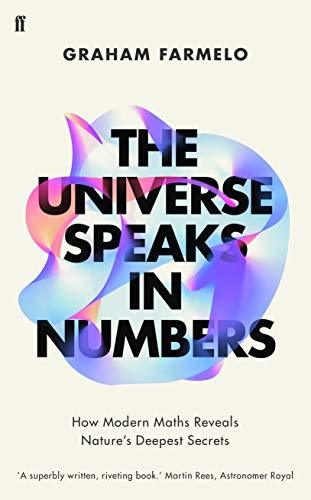
The Universe Speaks in Numbers: How Modern Maths Reveals Nature's Deepest Secrets
by Graham Farmelo
Rating: 3.7 ⭐
A groundbreaking exploration of how the interplay of physics and mathematics has enriched our understanding of the universe - essential reading for anyone who wants to grasp how physicists are attempting, in Stephen Hawking's words, to 'know the mind of God'. One of the great mysteries of science is that underlying all the complexities of the universe is a harmonious order, whose existence Einstein described as 'a miracle'. No less miraculous, the fundamental laws of the universe can be written in the language of advanced mathematics.Searching for these laws, physicists have found themselves developing ambitious mathematical ideas without experiment as their guide. In The Universe Speaks in Numbers, Graham Farmelo demonstrates how today's greatest scientific minds are working in a tradition that dates back to Newton. He takes us on an adventure from the Enlightenment, through the breakthroughs of Einstein and Dirac, to the contemporary physicists and mathematicians who are shedding fascinating light on each other's disciplines. As Farmelo shows, this blossoming relationship between mathematics and physics is responsible for huge, redefining advances in our understanding of reality, space and time. Always lively, vivid and authoritative, Farmelo guides the reader through the most thrilling and controversial developments in contemporary thought. LISTEN TO THE ACCOMPANYING PODCAST featuring interviews with leading scientists at www.grahamfarmelo.com 'A superbly written, riveting book. In elegant prose, and using virtually no equations, Farmelo describes the ongoing quest of great thinkers to understand the bedrock nature of reality' Martin Rees, Astronomer Royal, Emeritus Professor of Cosmology and Astrophysics at the University of Cambridge'I am overcome with admiration for this book's range and profundity ... An amazing achievement' Michael Frayn, award-winning writer of Copenhagen 'Masterful ... a riveting account of one of the greatest stories of our time' Nima Arkani-Hamed, Professor at the Institute of Advanced Study, Princeton

Churchill's Bomb: How the United States Overtook Britain in the First Nuclear Arms Race
by Graham Farmelo
Rating: 3.7 ⭐
Perhaps no scientific development has shaped the course of modern history as much as the harnessing of nuclear energy. Yet the twentieth century might have turned out differently had greater influence over this technology been exercised by Great Britain, whose scientists were at the forefront of research into nuclear weapons at the beginning of World War II.As award-winning biographer and science writer Graham Farmelo describes in Churchill's Bomb , the British set out to investigate the possibility of building nuclear weapons before their American colleagues. But when scientists in Britain first discovered a way to build an atomic bomb, Prime Minister Winston Churchill did not make the most of his country's lead and was slow to realize the Bomb's strategic implications. This was odd -- he prided himself on recognizing the military potential of new science and, in the 1920s and 1930s, had repeatedly pointed out that nuclear weapons would likely be developed soon. In developing the Bomb, however, he marginalized some of his country's most brilliant scientists, choosing to rely mainly on the counsel of his friend Frederick Lindemann, an Oxford physicist with often wayward judgment. Churchill also failed to capitalize on Franklin Roosevelt's generous offer to work jointly on the Bomb, and ultimately ceded Britain's initiative to the Americans, whose successful development and deployment of the Bomb placed the United States in a position of supreme power at the dawn of the nuclear age. After the war, President Truman and his administration refused to acknowledge a secret cooperation agreement forged by Churchill and Roosevelt and froze Britain out of nuclear development, leaving Britain to make its own way. Dismayed, Churchill worked to restore the relationship. Churchill came to be terrified by the possibility of thermonuclear war, and emerged as a pioneer of detente in the early stages of the Cold War.Contrasting Churchill's often inattentive leadership with Franklin Roosevelt's decisiveness, Churchill's Bomb reveals the secret history of the weapon that transformed modern geopolitics.

The Strangest Man: The hidden Life of Paul Dirac, Quantum Genius by Graham Farmelo
by Graham Farmelo
Rating: 4.7 ⭐


Eder behar du. Zientzia modernoko ekuazio bikainak
by Graham Farmelo
Philip Larkin-ek aipatu zuen poema on bat tipula baten modukoa dela. Kanpotik begiratuta, biak dira erakargarriro leun eta kitzikagarri, eta gero eta leunago eta kitzikagarriago bihurtzen dira ondoz ondoko esanahi-geruzak erantzi ahala. Zientziaren poesia, nolabait, haren ekuazio bikainetan gorderik dago, eta, liburu honetako saiakerek frogatzen dutenez, ekuazio horiek ere tipulak bezala zuritu daitezke. Ekuazioen edertasuna, jakina, poemena ez bezalakoa da, baina hura ere barrendu daiteke geruzaz geruza. Ekuazio bikainak, hala, poesia bezain pizgarri dira irudimen prestatu batentzat, eta badute beste ezaugarri bat haien edertasunaren baliagarritasuna. Esperimentu adierazgarri guztien emaitzekin bat etorri behar dute, eta, are gehiago, iragarpen batzuk egin, ordura arte inork egin ez dituenak. Dirac-ek Ni baino azkarragoa da nire ekuazioa.

Hawking: His Life and Work
by Graham Farmelo
An upcoming book to be published by Penguin Random House.