
Alfred W. Crosby
Alfred W. Crosby Jr. was Professor Emeritus of History, Geography, and American Studies at the University of Texas at Austin, Harvard University and University of Helsinki. Crosby studied at Harvard University and Boston University. He was an inter-disciplinary researcher who combined the fields of history, geography, biology and medicine. Recognizing the majority of modern-day wealth is located in Europe and the Neo-Europes, Crosby set out to investigate what historical causes are behind the disparity, investigating the biological factors that contributed to the success of Europeans in their quest to conquer the world. One of the important themes of his work was how epidemics affected the history of mankind. As early as the 1970s, he was able to understand the impact of the 1918 flu pandemic on world history. According to Hal Rothman, a Professor of History at the University of Nevada, Las Vegas, Crosby “added biology to the process of human exploration, coming up with explanations for events as diverse as Cortés’ conquest of Mexico and the fall of the Inca empire that made vital use of the physical essence of humanity. In 1972 he created the term "Columbian Exchange" in his book of the same name. The term has become popular among historians and journalists, such as Charles C. Mann, whose 2011 book 1493: Uncovering the New World Columbus Created expands and updates Crosby's original work. Crosby was also interested in the history of science and technology. He wrote several books on this subject, dealing with the history of quantification, of projectile technology, and the history of the use of energy. He said that the study of history also made him a researcher of the future. He was very much interested in how humankind could make the future a better one. He has taught at Washington State University, Yale University, the Alexander Turnbull Library in New Zealand, and twice at the University of Helsinki as a Fulbright Bicentennial Professor, most recently in 1997–98. He was appointed an academician by Finnish president Martti Ahtisaari. He retired from the chair of Professor Emeritus of History, Geography, and American Studies of the University of Texas at Austin in 1999. Crosby’s hobbies included birdwatching and jazz, on which topic he could lecture with great expertise. He was married to linguist Frances Karttunen.
21 Books Written

The Measure of Reality: Quantification and Western Society, 1250-1600
by Alfred W. Crosby
Rating: 4.1 ⭐
• 2 recommendations ❤️
Western Europeans were among the first, if not the first, to invent mechanical clocks, geometrically precise maps, double-entry bookkeeping, precise algebraic and musical notations, and perspective painting. More people in Western Europe thought quantitatively in the sixteenth century than in any other part of the world, enabling them to become the world's leaders. With amusing detail and historical anecdote, Alfred Crosby discusses the shift from qualitative to quantitative perception that occurred during the late Middle Ages and Renaissance. Alfred W. Crosby is the author of five books, including the award-winning Ecological Imperialism: The Biological Expansion of Europe, 900-1900 (Cambridge, 1986)

The Columbian Exchange: Biological and Cultural Consequences of 1492
by Alfred W. Crosby
Rating: 3.9 ⭐
• 2 recommendations ❤️
Thirty years ago, Alfred Crosby published a small work that illuminated a simple point, that the most important changes brought on by the voyages of Columbus were not social or political, but biological in nature. The book told the story of how 1492 sparked the movement of organisms, both large and small, in both directions across the Atlantic. This Columbian exchange, between the Old World and the New, changed the history of our planet drastically and forever.The book The Columbian Exchange changed the field of history drastically and forever as well. It has become one of the foundational works in the burgeoning field of environmental history, and it remains one of the canonical texts for the study of world history. This 30th anniversary edition of The Columbian Exchange includes a new preface from the author, reflecting on the book and its creation, and a new foreword by J. R. McNeill that demonstrates how Crosby established a brand new perspective for understanding ecological and social events. As the foreword indicates, The Columbian Exchange remains a vital book, a small work that contains within the inspiration for future examinations into what happens when two peoples, separated by time and space, finally meet.

Ecological Imperialism: The Biological Expansion of Europe, 900-1900
by Alfred W. Crosby
Rating: 4.0 ⭐
People of European descent form the bulk of the population in most of the temperate zones of the world--North America, Australia and New Zealand. The military successes of European imperialism are easy to explain because in many cases they were achieved by using firearms against spears. Alfred Crosby, however, explains that the Europeans' displacement and replacement of the native peoples in the temperate zones was more a matter of biology than of military conquest. Now in a new edition with a new preface, Crosby revisits his classic work and again evaluates the ecological reasons for European expansion. Alfred W. Crosby is the author of the widely popular and ground-breaking books,The Measure of Reality (Cambridge, 1996), and America's Forgotten Pandemic (Cambridge, 1990). His books have received the Ralph Waldo Emerson Prize, the Medical Writers Association Prize and been named by the Los Angeles Times as among the best books of the year. He taught at the University of Texas, Austin for over 20 years. First Edition Hb (1986): 0-521-32009-7 First Edition Pb (1987): 0-521-33613-9

Between August 1918 and March 1919 the Spanish influenza spread worldwide, claiming over 25 million lives, more people than those perished in the fighting of the First World War. It proved fatal to at least a half-million Americans. Yet, the Spanish flu pandemic is largely forgotten today. In this vivid narrative, Alfred W. Crosby recounts the course of the pandemic during the panic-stricken months of 1918 and 1919, measures its impact on American society, and probes the curious loss of national memory of this cataclysmic event. In a new edition, with a new preface discussing the recent outbreaks of diseases, including the Asian flu and the SARS epidemic, America's Forgotten Pandemic remains both prescient and relevant. Alfred W. Crosby is a Professor Emeritus in American Studies, History and Geography at the University of Texas at Austin, where he taught for over 20 years. His previous books include Throwing Fire (Cambrige, 2002), the Measure of Reality (Cambridge, 1997) and Ecological Imperialism (cambridge, 1986). Ecological Imperialism was the winner of the 1986 Phi Beta Kappa book prize. The Measure of Reality was chosen by the Los Angeles Times as one of the 100 most important books of 1997.

Children of the Sun: A History of Humanity's Unappeasable Appetite for Energy
by Alfred W. Crosby
Rating: 3.7 ⭐
A master historian's spirited survey of humanity's strategies for tapping sun energy, past and future. We don't often recognize the humble activity of cooking for the revolutionary cultural adaptation that it is. But when the hearth fires started burning in the Paleolithic, humankind broadened the exploitation of food and initiated an avalanche of change. And we don't often associate cooking with drilling for oil, but both are innovations that allow us to tap the sun energy accumulated in organic matter. Alfred W. Crosby, a founder of the field of global history, reveals how humanity's successes hinge directly on effective uses of sun energy. But dwindling natural resources, global warming, and environmental pollution all testify to the limits of our fossil-fuel civilization. Although we haven't yet adopted a feasible alternative―just look at the embarrassment of "cold fusion" or the 2003 blackout that humbled North America―our ingenuity and adaptability as a species give us hope. 10 illustrations, map.

In Throwing Fire, historian Alfred W. Crosby looks at hard, accurate throwing and the manipulation of fire as unique human capabilities. Humans began throwing rocks in prehistory and then progressed to javelins, atlatls, bows and arrows. We learned to make fire by friction and used it to cook, drive game, burn out rivals, and alter landscapes to our liking. Our exploitation of these two capabilities figured in the extinction of many species, and may have played a role in the demise of Neanderthals. In historic times we invented catapults, trebuchets, and such flammable liquids as Greek Fire, a napalm-like substance that stuck to whatever it hit and could not be extinguished with water. About 1,000 years ago we invented gunpowder, which led to guns and rockets, enabling us to literally throw fire. Gunpowder weaponry accelerated the rise of empires and the advance of European imperialism. In the 20th century, gunpowder weaponry enabled us to achieve unprecedented mayhem--the most destructive wars of all time. This trend peaked at the end of World War II with the V-2 and atomic bomb, at which point species suicide became possible. Faced with possible extinction should we experience World War III, we have turned our projectile talents to space travel which may make it possible for our species to migrate to other bodies of our solar system and even other star systems. Alfred W. Crosby is the author of the widely popular and ground-breaking books The Measure of Reality (Cambridge, 1996), America's Forgotten Pandemic (Cambridge, 1990) and Ecological Imperialism (Cambridge, 1986). He taught at the University of Texas, Austin for over 20 years. His books have received the Ralph Waldo Emerson Prize, the Medical Writers Association Prize and been named by the Los Angeles Times as among the best books of the year.
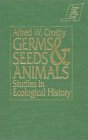
Alfred Crosby almost alone redirected the attention of historians to ecological issues that were important precisely because they were global. In doing so, he answered those who believed that world history had become impossible as a consequence of the post-war proliferation of new historical specialities, including not only ecological history but also new social histories, areas studies, histories of mentalities and popular cultures, and studies of minorities, majorities, and ethnic groups. In the introduction to this volume, Professor Crosby recounts an intellectual path to ecological history that might stand as a rationale for world history in general. He simply decided to study the most pervasive and important aspects of human experience. By focusing on human universals like death and disease, his studies highlight the epidemic rather than the epiphenomenal.

Book by Crosby, Alfred W.

By Alfred W. Crosby The Columbian Exchange: Biological and Cultural Consequences of 1492 (Contributions in American Stud
by Alfred W. Crosby
Rating: 4.5 ⭐

America, Russia, Hemp, and Napoleon: American Trade with Russia and the Baltic, 1783-1812
by Alfred W. Crosby
Rating: 5.0 ⭐
Great insight to how the Unite States cornered the hemp trade, created the first millionaires and denied the British majesty of the seas. John Quincy Adams as minister to Russia befriended Tzar Alexander making worldwide trade possible and allowed Russia to create St Petersburg as one of the centers of commerce in the old world.A fascinating look at post revolutionary history.One of the best history books I have ever read.

Germs, Seeds, and Animals: Studies in Ecological History
by Alfred W. Crosby
Children of the Sun: A History of Humanity's Unappeasable Appetite For Energy by Alfred W. Crosby
by Alfred W. Crosby
![Throwing Fire by Crosby, Alfred W.. (Cambridge University Press,2002) [Hardcover]](https://m.media-amazon.com/images/S/compressed.photo.goodreads.com/books/1696108917i/160126226.jpg)
Throwing Fire by Crosby, Alfred W.. (Cambridge University Press,2002) [Hardcover]
by Alfred W. Crosby

Ecological Imperialism : The Biological Expansion of Europe, 900-1900 by Alfred W. Crosby and Donald Worster. Cambridge University Press,2004
Ecological Imperialism: The Boilogical Expansion of Europe, 900-1900
by Alfred W. Crosby

La misura della realtà. Nascita di un nuovo modello di pensiero in Occidente
by Alfred W. Crosby

史上最悪のインフルエンザ 忘れられたパンデミック
by Alfred W. Crosby

Shijō saiaku no infuruenza : Wasurerareta pandemikku
by Alfred W. Crosby
![10-20 century as seen from the ecology - the mystery of European imperialism (1998) ISBN: 4000023896 [Japanese Import]](https://m.media-amazon.com/images/S/compressed.photo.goodreads.com/books/1678232881i/76394681.jpg)
10-20 century as seen from the ecology - the mystery of European imperialism (1998) ISBN: 4000023896 [Japanese Import]
by Alfred W. Crosby
Voyages of Columbus: A Turning Point in World History
by Alfred W. Crosby
Interpreting the early voyages