Loading themes...
Explore the best books about Games theme.


Don't make a move without it. Written by a U.S. Chess Champion, International Chess Grandmaster, and longtime instructor, this book includes information for both novice and expert, including over 400 illustrated chessboards and photos; over 20 pages of detailed answer key notes; a completely new chapter on new evidence about chess and its impact on brain power; a guide to the art of chess collectibles; and more. • Foreword by Larry Evans, former International Grandmaster and author of 20 highly acclaimed chess books and a popular monthly advice column in Chess Life • Strong sales for previous editions • For the beginner or the champ, and for young and old • Author has a high profile in the chess community

This book is essentially a teaching machine. The way a teaching machine works is: It asks you a question. If you give the right answer, it goes on to the next question. If you give the wrong answer, it tells you why the answer is wrong and tells you to go back and try again. This is called "programmed learning". The real authors were experts and authorities in the field of programmed learning. Bobby Fischer lent his name to the project. Stuart Margulies is a chess master and also a recognized authority on programmed learning. He is a widely published author of more than 40 books, all in the field of programmed learning, especially in learning how to read. For example, one of his books is "Critical reading for proficiency 1 : introductory level". Donn Mosenfelder is not a known or recognized chess player, but he was the owner of the company that developed and designed this book. He has written more than 25 books, almost all on basic reading, writing and math.

For over 100 years, the world's leading chess players and teachers have told their students to study the endgame. This book teaches the students what they need to know at their current rating level, and builds on that knowledge for each subsequent phase of the player's development.

Based on his private course for students, America’s foremost chess coach and game strategist for Netflix’s The Queen’s Gambit presents an easy-to-use guide that explains invaluable "inner circle" endgame concepts for players of any level.The endgame has always been a particularly instructive phase of chess play. It provides the perfect opportunity for understanding the potential power of each chess piece in every chess situation—from opening move to checkmate.But the endgame is often viewed as an inaccessible area of play by most players whose experience is limited to watching championship games. Now, Pandolfini changes all of that.With one endgame example per page and covering every endgame category in order of difficulty, Paldolfini walks you through all the basic concepts --square of the pawn--critical squares--corresponding squares--other new approaches not mentioned in classic referencesFeaturing a glossary of concepts and diagrams throughout, this volume is the not-so-secret password to a whole new realm of chess play and entertainment for the average player.

A Modern Classic - Third Edition!When it first appeared, Dvoretsky's Endgame Manual was immediately recognized by novice and master alike as one of the best books ever published on the endgame. The third edition, revised and enlarged - now over 400 pages - covers all the most important concepts required for endgame mastery."I am sure that those who study this work carefully will not only play the endgame better, but overall, their play will improve. One of the secrets of the Russian chess school is now before you, dear reader! - From the Foreword to the First Edition by Grandmaster Artur Yusupov"Going through this book will certainly improve your endgame knowledge, but just as important, it will also greatly improve your ability to calculate variations, What really impresses me is the deep level of analysis in the book, All I can say is: This is a great book. I hope it will bring you as much pleasure as it has me. - From the Preface to the First Edition by International Grandmaster Jacob Aagaard Here's what they had to say about the First Edition: "Dvoretsky's Endgame Manual ... may well be the chess book of the year... [It] comes close to an ultimate one-volume manual on the endgame. - Lubomir Kavalek in his chess column of December 1, 2003 in the Washington Post."Dvoretsky's Endgame Manual is quite simply a masterpiece of research and insight. It is a tremendous contribution to endgame literature, certainly the most important one in many years, and destined to be a classic of the literature (if it isn't already one). The famous trainer Mark Dvoretsky has put together a vast number of examples that he has not only collected, but analysed and tested with some of the world's strongest players. This is a particularly important book from the standpoint of clarifying, correcting, and extending the theory of endings. Most of all, Dvoretsky's analysis is staggering in its depth and accuracy. - John Watson, reviewing DEM at The Week In Chess2003 Book of the Year - JeremySilman.com2003 Book of the Year - Seagaard Chess Reviews: "This is an extraordinary good chess book. To call this the best book on endgames ever written seems to be an opinion shared by almost all reviewers and commentators. And I must say that I am not to disagree." - Erik Sobjerg

John Nunn is one of the most highly regarded chess writers in the world. He has carefully selected thirty modern games to help the reader understand the most important aspects of chess and to illustrate modern chess principles in action.Virtually every move is explained using words that everyone can understand. Jargon is avoided as far as possible. Almost all the examples are taken from recent decades and show how key ideas are handled by modern grandmasters. The emphasis is on general principles that readers will be able to use in their own games, and detailed analysis is only given where it is necessary.Each game contains many lessons, but to guide the reader through the most important ideas in each phase of the game, the thirty games are grouped thematically into those highlighting opening, middlegame and endgame themes.John Nunn is a grandmaster from England. He has won four individual gold medals and three team silver medals at Chess Olympiads. In the Chess World Cup of 1988/9, he finished sixth overall, ahead of several former World Champions. He is arguably the most highly acclaimed chess writer in the world, with three of his books receiving the prestigious British Chess Federation Book of the Year Award. He is principal author of the definitive one-volume openings encyclopedia, Nunn’s Chess Openings .

How to Reassess Your Chess is the popular step-by-step course that will create a marked improvement in anyone's game. In clear, direct language, Silman shows how to dissect a position, recognize its individual parts and ultimately find the move that conforms to the needs of that particular situation. By explaining the thought processes that go into a master's choice of move, the author presents a system of thought that makes advanced strategies seem clear, logical and at times even obvious. How the Reassess Your Chess offers invaluable knowledge and insight that cannot be found in any other book.

Why is Modern Chess Openings called "the chessplayer's bible"? Because since it was first published over a half-century ago, it has been one of the most trusted books in the chess world. Because it is the world's most current and comprehensive one-volume reference work on the chess openings. And because it has been completely revised to reflect the changes and advances made in chess over the past eight years, including major tournament matches and published theoretical works.

International chess master Jeremy Silman provides 131 problems designed to test a player's strengths and weaknesses, cover openings, middlegames, and endgames. This workbook may be utilizes with or without Silman's earlier book "How to Reassess Your Chess". Illustrations.

One of the finest chess books ever written, the Art of Attack has been transcribed into algebraic notation for the first time. In this revised edition of the great classic, the author expounds both the basic principles and the most complex forms of attack on the king. A study of this masterpiece will add power and brilliance to any chess enthusiast's play. (5 3/4' X 8 1/4', 352 pages, illustrations, index)

This new and expanded edition of The Mammoth Book of the World's Greatest Chess Games contains the 112 greatest chess games of all time—selected, analyzed, re-evaluated and explained by a team of experts and illustrated with more than 900 diagrams. Among the highlights are Kasparov vs. Topalov; Kasparov vs. Wijk aan Zee; the super-computer Deep Blue's historic first win over Kasparov; Boris Spassky's "James Bond" Mating Combination; and Bobby Fischer's "Game of the Century." Study these games and learn about defense and counterattack, logical opening play, endgame strategy, psychological warfare, and how great players think.

Here are 62 masterly demonstrations of the basic strategies of winning at chess, compiled and annotated by one of the game's most admired and respected writers. Each game offers a classic example of a fundamental problem and its best resolution, described and diagrammed in the clearest possible manner for players of every level of skill.As Irving Chernev observes in the Introduction, "Who will doubt the tremendous power exerted by a Rook posted on the seventh rank after seeing Capablanca's delightfully clear-cut demonstration in Game No. 1 against Tartakower? And who will not learn a great deal about the art of handling Rook and Pawn endings (the most important endings in chess) after playing through Tarrasch's game against Thorold?"Chernev's lively and illuminating notes on each game reveal precisely how Capablanca, Tarrasch, and other masters — Fischer, Alekhine, Lasker, and Petrosian among them — turn theory into practice as they attack and maneuver to control the board. Readers will find their techniques improving with each lesson as Irving Chernev dissects winning strategies, comments on alternate tactics, and marvels at the finesse of winning play, noting at the end of his "I might just as well have called this collection The Most Beautiful Games of Chess Ever Played ."

Winning Chess Strategy for Kids is a fun and comprehensive chess course written for children 7 to 13 years old. Full of original material and entertaining artwork, it's a perfect guide for learning the royal game. Parents and teachers are sure to like it too. The book begins on square covering the rules, basic mates, and elementary tactics. It then leads the student through a whole range of advanced strategies, including piece development, pawn structure, and attacking the castled king. Opening principles, middlegame plans, and endgames techniques are all explained in clear and simple language. Separate sections throughout the book are devoted to combinations and terminology. Whether kids are learning chess for recreation or are interested in playing competitively, Winning Chess Strategy for Kids will help them understand the game better and enjoy it more.

Chess is the art that expresses the science of logic . Mikhail BotvinnikGrandmaster Neil McDonald explains every single move made by White and Black in 30 striking tactical or strategical games played over the last quarter century.These games have been carefully chosen for their consistent logical thread, thereby providing the reader with prime instruction in the art of conceiving appropriate plans and attacks and carrying them out to their natural conclusion. Watching games unfold in this way will be both an education and inspiration to readers who can then try to play in the same purposeful way in their own games – with a corresponding increase in their playing strength.

This book takes the student on a journey through his own mind and returns him to the chess board with a wealth of new-found knowledge and the promise of a significant gain in strength. Most amateurs possess erroneous thinking processes that remain with them throughout their chess lives. These flaws in their mental armour result in stinging defeats and painful reversals. Books can be bought and studied, lessons can be taken -- but in the end, these elusive problems always prove to be extremely difficult to eradicate. Seeking a solution to this dilemma, the author wrote down the thoughts of his students while they played actual games, analysed them, and catalogued the most common misconceptions that arose. This second edition greatly expands on the information contained in the popular first edition.

This newly revised volume in the successful Comprehensive Chess Course sharpens and tightens your game through examination and study of the 300 most important chess game positions. The most important and instructive positions over the last 100 years arranged as challenges, with illuminating explanations and solutions. Lev Alburt, Grandmaster of Chess and renowned three-time US chess champion, presents and analyzes the 300 most important game positions an average player should understand and remember to become a chess expert. These most crucial and instructive positions taken from games over the last 100 years are arranged as challenges, with instructive explanations and solutions on facing pages. Besides giving students this essential knowledge, this book also helps them to train their chess abilities and improve their skills steadily and efficiently. These practical exercises, easy to read and to understand, take the reader from beginner to tournament-strength chess player.

He was a legend before he was of legal age. Stuey Ungar dropped out of high school to become an underground card-table sensation, eventually taking out every top gin-rummy player on the east coast. Bankrolled by the Genovese crime family, Ungar went on to win the World Series of Poker a record three times--then his luck began to run out. Nolan Dalla was commissioned by Ungar in 1998 to pen his story, resulting in hundreds of hours of taped interviews and conversations. Notorious for gambling every single dollar in his pocket, Ungar won an estimated $30 million in his lifetime, but when he was found dead in a Las Vegas motel at the age of forty-five, he had only $800 in cash on his person, with no bank account or home address. One of a Kind is the startling tale of a man who won at his game and lost control of his life.

In the spring of 2000, Harper's Magazine sent James McManus to Las Vegas to cover the World Series of Poker, in particular the progress of women in the $23 million event, and the murder of Ted Binion, the tournament's prodigal host, purportedly done in by a stripper and her boyfriend. But when McManus arrives, the lure of the tables compels him to risk his entire Harper's advance in a long-shot attempt to play in the tournament himself. This is his deliciously suspenseful account of the tournament--the players, the hand-to-hand combat, his own unlikely progress in it--and the delightfully seedy carnival atmosphere that surrounds it. Positively Fifth Street is a high-stakes adventure and a terrifying but often hilarious account of one man's effort to understand what Edward O. Wilson has called "Pleistocene exigencies"--the eros and logistics of our competitive instincts.

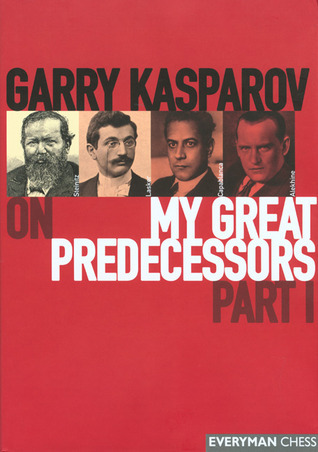
The battle for the World Chess Championship has witnessed numerous titanic struggles which have engaged the interest not only of chess enthusiasts but also of the public at large. The chessboard is the ultimate mental battleground and the world champions themselves are supreme intellectual gladiators.These magnificent compilations of chess form the basis of the first two parts of Garry Kasparov's definitive history of the World Chess Championship. Garry Kasparov, who is universally acclaimed as the greatest chessplayer ever, subjects the play of his predecessors to a rigorous analysis.Part one features the play of champions Wilhelm Steinitz (1886-1894), Emanuel Lasker (1894-1921), Jose Capablanca (1921-1927) and Alexander Alekhine (1927-1935 and 1937-1946).Part two features the play of champions Max Euwe (1935-1937) Mikhail Botvinnik (1946-1957, 1958-1961 and 1961-1963), Vassily Smyslov (1957-1958) and Mikhail Tal (1960-1961).These books are more than just a compilation of the games of these champions. Kasparov's biographies place them in a fascinating historical, political and cultural context. Kasparov explains how each champion brought his own distinctive style to the chessboard and enriched the theory of the game with new ideas.All these games have been thoroughly reassessed with the aid of modern software technology and the new light this sheds on these classic masterpieces is fascinating.

Texas Hold ’em is not an easy game to play well. To become an expert you must balance many concepts, some of which occasionally contradict each other. In 1988, the first edition appeared. Many ideas, which were only known to a small, select group of players, were made available to anyone who was striving to become an expert, and the hold ’em explosion had begun. It is now a new century, and the authors have again moved the state of the art forward by adding over 100 pages of new material, including extensive sections on "loose games," and "short-handed games." Anyone who studies this text, is well disciplined, and gets the proper experience should become a significant winner. Some of the other ideas discussed include play on the first two cards, semi-bluffing, the free card, inducing bluffs, staying with a draw, playing when a pair flops, playing trash hands, desperation bets, playing in wild games, reading hands, and psychology.

ONAG, as the book is commonly known, is one of those rare publications that sprang to life in a moment of creative energy and has remained influential for over a quarter of a century. Originally written to define the relation between the theories of transfinite numbers and mathematical games, the resulting work is a mathematically sophisticated but eminently enjoyable guide to game theory. By defining numbers as the strengths of positions in certain games, the author arrives at a new class, the surreal numbers, that includes both real numbers and ordinal numbers. These surreal numbers are applied in the author's mathematical analysis of game strategies. The additions to the Second Edition present recent developments in the area of mathematical game theory, with a concentration on surreal numbers and the additive theory of partizan games.

Advanced Dungeons & Dragons Special Reference Work Dungeon Masters Guide - Essential Reference Information for Gamemastering Advanced D&D by Gary Gygax - TSR Games. HC dated 1979 with 232 pages. A compiled volume of information primarily used by Advanced Dungeons & Dragons game referees, including: Combat Tables, Monster Lists and Encounters; Treasure and Magic Tables and Descriptions; Random Dungeon Generation; Random Wilderness Terrain Generation; Suggestions on Gamemastering; and More!

When J. D. Williams wrote this entertaining, witty introduction for the nonscientist, game theory was still a somewhat mysterious subject familiar to very few scientists beyond those researchers, like himself, working for the military. Now, over thirty years after its original publication as a Rand Corporation research study, his light-hearted though thoroughly effective primer is the recognized classic introduction to an increasingly applicable discipline. Used by amateurs, professionals, and students throughout the world in the classroom, on the job, and for personal amusement, the book has been through ten printings, and has been translated into at least five languages (including Russian and Japanese).Revised, updated, and available for the first time in an inexpensive paperback edition, The Compleat Strategyst is a highly entertaining text essential for anyone interested in this provocative and engaging area of modern mathematics. In fully illustrated chapters complete with everyday examples and word problems, Williams offers readers a working understanding of the possible methods for selecting strategies in a variety of situations, simple to complex. With just a basic understanding of arithmetic, anyone can grasp all necessary aspects of two-, three-, four-, and larger strategy games with two or more sets of inimical interests and a limitless array of zero-sum payoffs.As research and study continues not only in this new discipline but in the related areas of statistics, probability and behavioral science, understanding of games, decision making, and the development of strategies will be increasingly important. In the areas of economics, sociology, politics, and the military, game theory is sure to have an even wider impact. For students and amateurs fascinated by game theory's implications there is no better, immediately applicable, or more entertaining introduction to the subject than this engaging text by the late J. D. Williams, Professor of Mathematics at Princeton University and a member of the Research Council of The Rand Corporation.

The the best poker professionals in the world The a wealthy banker from Dallas The the richest poker stakes of all time... In 2001, a rich stranger from Texas descended upon the high-stakes poker room in the opulent Bellagio casino in Las Vegas. A self-made billionaire by the name of Andy Beal, the stranger challenged some of the world's greatest poker players-including Doyle Brunson, Chip Reese, Howard Lederer, and Jennifer Harman-to heads-up matches in the richest poker game ever played This is that story...Beginning the scintillating contest that would shock the world of poker, Andy and each opponent had $1 million, betting $10,000 and $20,000 per round. As the games intensified over the coming months and Andy developed into a great player, he realized how he could take his adversaries out of their comfort zone-he raised the stakes to put everything they had on the line. By the time the battle of wits ended, there was more than $20 million on the table. For the first time ever, here is the detailed, true account of the Big Game that has already achieved legendary status in poker lore. Putting you railside to observe the pulse-pounding action, where you can almost hear the distinct sound of clay chips on felt, Michael Craig takes you inside the iron-nerved mind and pathological psyche of the professional gambler. Filled with vivid characters, sensational tales, and riveting human drama, The Professor, the Banker, and the Suicide King is a unique, suspenseful journey into the world of people who live on the razor's edge of fortune-where incredible wealth, or utter ruin, turns on the flip of a card.

From the New York Times bestselling author of How We Got To Now and FarsightedForget everything you’ve ever read about the age of dumbed-down, instant-gratification culture. In this provocative, unfailingly intelligent, thoroughly researched, and surprisingly convincing big idea book, Steven Johnson draws from fields as diverse as neuroscience, economics, and media theory to argue that the pop culture we soak in every day—from Lord of the Rings to Grand Theft Auto to The Simpsons —has been growing more sophisticated with each passing year, and, far from rotting our brains, is actually posing new cognitive challenges that are actually making our minds measurably sharper. After reading Everything Bad is Good for You , you will never regard the glow of the video game or television screen the same way again. With a new afterword by the author.

A First Book of Morphy illustrates basic principles of chess with more than 60 brilliant and instructive games played by the first American chess champion, Paul Morphy.

" The Expert at the Card Table is the most famous, the most carefully studied book ever published on the art of manipulating cards at gaming tables." —from the Foreword by Martin Gardner.For almost a century, this book has been considered indispensable to attaining the highest level of card mastery. In it, S. W. Erdnase, a supreme master of card manipulation, teaches card enthusiasts how to perform the dazzling tricks and sleights — many of them his own creations — that made him famous.The first section of the book deals with card table artifice, or, to put it more bluntly, cheating at cards. Step by step, Mr. Erdnase demonstrates his own systems of false shuffling, false riffling and cutting, dealing from the bottom, and such slick moves as palming cards, "skinning the hand" — even three-card monte.The second section covers legerdemain: the art of forcing a card, one- and two-hand transformations, the devious "slide" and more. Card handlers will love Erdnase's selection of dazzling card tricks, including The Acrobatic Jacks, The Exclusive Coterie, The Divining Rod, The Invisible Flights, A Mind Reading Trick, and many others.In an informative Foreword to this edition, Martin Gardner relates the unhappy details of the author's personal life, and recounts the history of this famous book, whose methods, Mr. Gardner asserts, "are as useful today by magicians and card hustlers as they were in 1902. This book is still the bible of card 'mechanics,' and as much a delight to read as it was in the early years of this century."

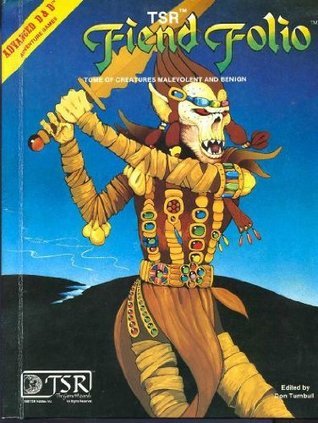
The Fiend Folio is a collection of monsters for use with Advanced Dungeons & Dragons, similar in format to the original Monster Manual and effectively a supplement to that book.

In the mid twentieth century the philosopher Ludwig Wittgenstein famously asserted that games are indefinable; there are no common threads that link them all. "Nonsense," says the sensible Bernard "playing a game is a voluntary attempt to overcome unnecessary obstacles." The short book Suits wrote demonstrating precisely that is as playful as it is insightful, as stimulating as it is delightful. Suits not only argues that games can be meaningfully defined; he also suggests that playing games is a central part of the ideal of human existence, so games belong at the heart of any vision of Utopia. Originally published in 1978, The Grasshopper is now re-issued with a new introduction by Thomas Hurka and with additional material (much of it previously unpublished) by the author, in which he expands on the ideas put forward in The Grasshopper and answers some questions that have been raised by critics.

Since he first burst onto the world chess scene in 1992, displaying a maturity of play far beyond his sixteen years, Vladimir Kramnik has benn tipped as a future world champion. Still only in his mid twenties, he is now firmly consolidated in the world top three (as of 2000 when the book was published).This book describes Kramnik's rise to the elite levels of professional chess and ends just before his historic upset of Garry Kasparov later in 2000.

Big Deal One Year as a Professional Poker Player by ANTHONY HOLDEN. Published by ABACUS,2002, Paperback

The Book That Made Las Vegas Change the RulesOver 1,000,000 Copies in PrintEdward O. Thorp is the father of card counting, and in this classic guide he shares the revolutionary point system that has been successfully used by professional and amateur card players for generations. This book o an overview of the basic rules of the gameo proven winning strategies ranging from simple to advancedo methods to overcome casino counter measureso ways to spot cheating o charts and tables that clearly illustrate key conceptsA fascinating read and an indispensable resource for winning big, Beat the Dealer is the bible for players of this game of chance. **Bring these strategies into the Perforated cards included in the book**

Now, at your fingertips, all you need to* All Recommended Character Fighters, Paladins, Rangers, Magic-Users, etc.* Character Dwarves, Elves, Gnomes, Half-Orcs, Humans, etc.Character Level StatisticsEquipment lists with Costs

In Homo Ludens, the classic evaluation of play that has become a "must-read" for those in game design, Dutch philosopher Johan Huizinga defines play as the central activity in flourishing societies. Like civilization, play requires structure and participants willing to create within limits. Starting with Plato, Huizinga traces the contribution of Homo Ludens, or "Man the player" through Medieval Times, the Renaissance, and into our modern civilization. Huizinga defines play against a rich theoretical background, using cross-cultural examples from the humanities, business, and politics. Homo Ludens defines play for generations to come."A happier age than ours once made bold to call our species by the name of Homo Sapiens. In the course of time we have come to realize that we are not so reasonable after all as the Eighteenth Century with its worship of reason and naive optimism, though us; "hence moder fashion inclines to designate our species asHomo Faber Man the Maker. But though faber may not be quite so dubious as sapiens it is, as a name specific of the human being, even less appropriate, seeing that many animals too are makers. There is a third function, howver, applicable to both human and animal life, and just as important as reasoning and making--namely, playing. it seems to me that next to Homo Faber, and perhaps on the same level as Homo Sapiens, Homo Ludens, Man the Player, deserves a place in our nomenclature. "--from the Foreward, by Johan Huizinga

Called "the best book ever written on poker" by players and critics alike, The Biggest Game in Town is a sought-after classic thats finally available in print again. Acclaimed author A. Alvarez delves into the seedy, obsessive world of high-stakes Vegas poker, where "the next best thing to playing and winning is playing and losing." Uncovering an exotic underground rich in ambiance and eccentricity, The Biggest Game in Town is "a magnificent book " (San Francisco Chronicle), a real one of a kind.

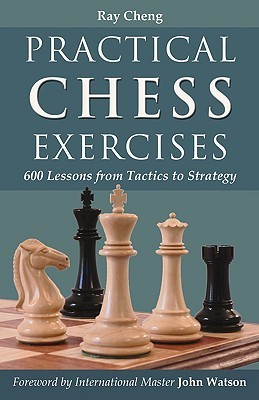
Raise your chess to the next level with this program of 600 instructive and challenging exercises covering all aspects of the game. This book will sharpen your tactical vision, deepen your positional understanding, and enrich your knowledge of theoretical positions. It will also strengthen your analytical skills, and instill a sound move selection process. Win more games and increase your enjoyment of chess!

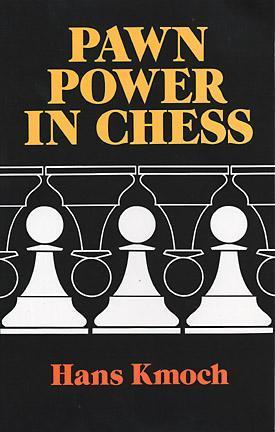
"One of the few books…which, at a glance, one can recognize as an immortal." — Chess .The proper use of pawns — of paramount importance in chess strategy — sometimes even puzzles experienced players. This profoundly original and stimulating book by an International Master and prolific chess writer offers superb instruction in pawn play by isolating its elements and elaborating on various aspects.After a lucid exposition of the fundamentals and the basic formations of one or two pawns that virtually constitute the keys to winning chess strategy, the reader is shown a multitude of examples demonstrating the paramount significance of elements of pawn manipulation. The author’s masterly explanation makes it perfectly clear to the beginner as well as the advanced player how the fate of a game depends on pawn formation and how pawn power holds the proceedings under its remote control. Over 180 games and diagrams illustrate the author’s theory and make it easy to follow the points made in the text.Hans Kmoch played with distinction in several international tournaments and is the author of a number of books and columns on chess and chess tournaments.“We consider it the best publication on chess strategy since the end of World War II.” — Die Welt.

There are, contrary to what most amateurs believe, relatively few chess endgames one must know. Jesus de la Villa, an international grandmaster and former champion of Spain, presents the endgames that show up most frequently in practice, are easy to learn and contain ideas and concepts that are useful in more difficult positions. He brings you simple rules, guiding ideas at the beginning of each chapter, detailed and lively explanations, many diagrams, clear summaries of the most important themes, recommended exercises that will help you understand the material, and tests, divided in two parts: basic and final. The main thing De la Villa asks of you is to always understand WHY you play a move.

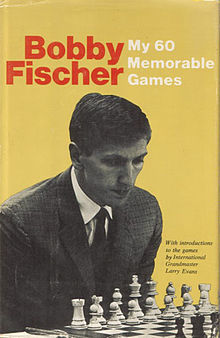
In this book, published by Simon and Schuster in 1969, Bobby Fischer analyzes his most important and representative games. He shows the strategic considerations, the tactics, and sometimes the blunders, that occur during the pressure of tournament play. He assesses his opponents’ thinking as well. Each game has, in addition to Fischer's own annotations, an analytical introduction by International Grandmaster Larry Evans.

Good game design happens when you view your game from as many perspectives as possible. Written by one of the world's top game designers, The Art of Game Design presents 100+ sets of questions, or different lenses, for viewing a game’s design, encompassing diverse fields such as psychology, architecture, music, visual design, film, software engineering, theme park design, mathematics, puzzle design, and anthropology. This Second Edition of a Game Developer Front Line Award winner: The Art of Game Design, Second Edition gives readers useful perspectives on how to make better game designs faster. It provides practical instruction on creating world-class games that will be played again and again.

A book for chess players who want to build their skills on solid foundations. Yusupov guides the reader towards a higher level of chess understanding using carefully selected positions and advice. This new understanding is then tested by a series of puzzles.Artur Yusupov was ranked No. 3 in the world from 1986 to 1992, just behind the legendary Karpov and Kasparov. He has won everything there is to win in chess except for the World Championship. In recent years he has mainly worked as a chess trainer with players ranging from current World Champion Anand to local amateurs in Germany, where he resides.

More than 31 million people in the UK are gamers. The average young person in the UK will spend 10,000 hours gaming by the age of twenty-one. What's causing this mass exodus? According to world-renowned game designer Jane McGonigal the answer is simple: videogames are fulfilling genuine human needs. Drawing on positive psychology, cognitive science and sociology, Reality is Broken shows how game designers have hit on core truths about what makes us happy, and utilized these discoveries to astonishing effect in virtual environments. But why, McGonigal asks, should we use the power of games for escapist entertainment alone? In this groundbreaking exploration of the power and future of gaming, she reveals how gamers have become expert problem solvers and collaborators, and shows how we can use the lessons of game design to socially positive ends, be it in our own lives, our communities or our businesses. Written for gamers and non-gamers alike, Reality is Broken sends a clear and provocative message: the future will belong to those who can understand, design and play games.

Study is a necessity for competitive chess players, and acclaimed chess author and International Grandmaster Andrew Soltis explains how it should be done. In his trademark witty, accessible style, Soltis provides tips on everything from the need for memorization to the use of computers-and even how to develop that indefinable thing called intuition.

Before Prince of Persia was a best-selling video game franchise and a Jerry Bruckheimer movie, it was an Apple II computer game created and programmed by one person, Jordan Mechner.Mechner's candid and revealing journals from the time capture his journey from his parents' basement to the forefront of the fast-growing 1980s video game industry... and the creative, technical and personal struggles that brought the prince into being and ultimately into the homes of millions of people worldwide.== What Other Creators Say =="Jordan's journals are remarkable. I so wish I had kept a similar record. Reading them transports me back to that place and time. We all knew this was an exciting new industry, but I don't think we had any clue what it was going to turn into during our careers. There were no schools, no books, no theories covering what we were doing. Everyone was just figuring it out on their own. Following Jordan's creative path is a great example of how to go with your own gut instinct. It's also a great inspiration, showing how persistence and determination can lead to unexpected and wonderful results."-- Will Wright, game designer, creator of The Sims"Mechner's journals are a time machine that takes us back to a weirdly familiar era, when ambitious young creators were making strange new video games all by themselves and making up the rules as they went. It is not a retrospective; instead, it is a present-tense diary written by the creator throughout the creation of his most influential work. It is a humbling and inspiring record of what it was like to make one of the best video games of all time. I love these journals."-- Adam "Atomic" Saltsman, game designer, creator of Canabalt"When an industry is brand-new, its innovators are generally so busy creating the future that they rarely have time to document the present. Luckily, Jordan Mechner did. With these journals, we can track the development of Prince of Persia from a few penciled squiggles to a global franchise. For anyone aspiring to create a game -- or any endeavor that takes months and man-hours -- Jordan's journal is sobering and inspiring."-- John August, screenwriter of Go, Big Fish and Charlie and the Chocolate Factory== About the Author ==Jordan Mechner is a game designer, screenwriter, filmmaker, and graphic novelist. He created Prince of Persia, Karateka, and The Last Express.His graphic novel Solomon's Thieves is also featured on Amazon.

The chess instruction establishment claims that all you need to do is concentrate on the characteristics of a position. Stick to some rules of thumb and good moves will pop up more or less automatically. But that is not how it works, finds International Master Willy Hendriks. Chess players, both weak and strong, don't first make a plan before looking at candidate moves. Trial and error is a very common and in fact highly effective way to get to the best move. In his journey into the chessplaying mind, Hendriks uses recent scientific insights in the working of our brain. He raises a number of intriguing questions: Can you, too (whether you are talented or not), become a grandmaster? Why does a chess trainer's advice often sound like a horoscope? Can you find strong moves by ticking off a todo list? Is it possible to reach master level without ever making a plan? Presents a wealth of valuable, nononsense training material. In this refreshing, entertaining and highly instructive book, Willy Hendriks shows how you can travel light on the road to chess improvement!"

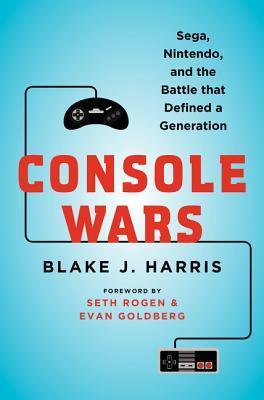
Following the success of The Accidental Billionaires and Moneyball comes Console Wars—a mesmerizing, behind-the-scenes business thriller that chronicles how Sega, a small, scrappy gaming company led by an unlikely visionary and a team of rebels, took on the juggernaut Nintendo and revolutionized the video game industry.In 1990, Nintendo had a virtual monopoly on the video game industry. Sega, on the other hand, was just a faltering arcade company with big aspirations and even bigger personalities. But that would all change with the arrival of Tom Kalinske, a man who knew nothing about videogames and everything about fighting uphill battles. His unconventional tactics, combined with the blood, sweat and bold ideas of his renegade employees, transformed Sega and eventually led to a ruthless David-and-Goliath showdown with rival Nintendo.The battle was vicious, relentless, and highly profitable, eventually sparking a global corporate war that would be fought on several fronts: from living rooms and schoolyards to boardrooms and Congress. It was a once-in-a-lifetime, no-holds-barred conflict that pitted brother against brother, kid against adult, Sonic against Mario, and the US against Japan.Based on over two hundred interviews with former Sega and Nintendo employees, Console Wars is the underdog tale of how Kalinske miraculously turned an industry punchline into a market leader. It's the story of how a humble family man, with an extraordinary imagination and a gift for turning problems into competitive advantages, inspired a team of underdogs to slay a giant and, as a result, birth a $60 billion dollar industry.

How the basic concepts of economics—including markets, institutions, and money—can be used to create and analyze economies based on virtual goods.In the twenty-first-century digital world, virtual goods are sold for real money. Digital game players happily pay for avatars, power-ups, and other game items. But behind every virtual sale, there is a virtual economy, simple or complex. In this book, Vili Lehdonvirta and Edward Castronova introduce the basic concepts of economics into the game developer's and game designer's toolkits. Lehdonvirta and Castronova explain how the fundamentals of economics—markets, institutions, and money—can be used to create or analyze economies based on artificially scarce virtual goods. They focus on virtual economies in digital games, but also touch on serious digital currencies such as Bitcoin as well as virtual economies that emerge in social media around points, likes, and followers. The theoretical emphasis is on elementary microeconomic theory, with some discussion of behavioral economics, macroeconomics, sociology of consumption, and other social science theories relevant to economic behavior.Topics include the rational choice model of economic decision making; information goods versus virtual goods; supply, demand, and market equilibrium; monopoly power; setting prices; and externalities. The book will enable developers and designers to create and maintain successful virtual economies, introduce social scientists and policy makers to the power of virtual economies, and provide a useful guide to economic fundamentals for students in other disciplines.

In 2009, game designer and author Jane McGonigal suffered a severe concussion that wouldn’t heal. Unable to think clearly, or work, or even get out of bed, she became anxious and depressed, even suicidal—a common symptom for concussion sufferers. But rather than let herself sink further, she decided to get better by doing what she does best: she turned her recovery process into a game. What started as a simple motivational exercise became a set of rules she shared on her blog. These rules became a digital game, then an online portal and a major research study with the National Institutes of Health. Today more than 400,000 people have played SuperBetter to get happier and healthier.But the ideas behind SuperBetter are much bigger than just one game. In this book, McGonigal reveals a decade’s worth of scientific research into the ways all games change how we respond to stress, challenge, and pain. She explains how we can cultivate new powers of recovery and resilience in everyday life simply by adopting a gameful mind-set. Being gameful means bringing the same psychological strengths we naturally display when we play games—such as optimism, creativity, courage, and determination—to real-world situations.McGonigal explores the best ways to harness these gameful skills in the real world not only to experience “posttraumatic growth,” but also to tackle positive life goals, achieving what she calls “postecstatic growth.” To show how, she shares stories and data from players who have followed the SuperBetter rules to get stronger, happier, and braver in the face of depression, anxiety, illness, and injury, as well as to achieve major goals like losing weight, running a marathon, or finding a new job.The SuperBetter method contains seven rules for activating gameful strengths in everyday life, distilled from McGonigal’s own pioneering work and that of others. SuperBetter the book turns these rules into playful challenges anyone can undertake while reading in a series of quests that explain the science behind the benefits. Playing by the seven rules begins to yield life-changing benefits in a matter of days, and eventually they become an ingrained skill set.Read by the author.Description: 12 audio discs (14 1/2 hr.) : digital

How filling life with play-whether soccer or lawn mowing, counting sheep or tossing Angry Birds-forges a new path for creativity and joy in our impatient ageLife is boring: filled with meetings and traffic, errands and emails. Nothing we'd ever call fun. But what if we've gotten fun wrong? In Play Anything, visionary game designer and philosopher Ian Bogost shows how we can overcome our daily anxiety; transforming the boring, ordinary world around us into one of endless, playful possibilities.The key to this playful mindset lies in discovering the secret truth of fun and games. Play Anything, reveals that games appeal to us not because they are fun, but because they set limitations. Soccer wouldn't be soccer if it wasn't composed of two teams of eleven players using only their feet, heads, and torsos to get a ball into a goal; Tetris wouldn't be Tetris without falling pieces in characteristic shapes. Such rules seem needless, arbitrary, and difficult. Yet it is the limitations that make games enjoyable, just like it's the hard things in life that give it meaning.Play is what happens when we accept these limitations, narrow our focus, and, consequently, have fun. Which is also how to live a good life. Manipulating a soccer ball into a goal is no different than treating ordinary circumstances- like grocery shopping, lawn mowing, and making PowerPoints-as sources for meaning and joy. We can "play anything" by filling our days with attention and discipline, devotion and love for the world as it really is, beyond our desires and fears.Ranging from Internet culture to moral philosophy, ancient poetry to modern consumerism, Bogost shows us how today's chaotic world can only be tamed-and enjoyed-when we first impose boundaries on ourselves.

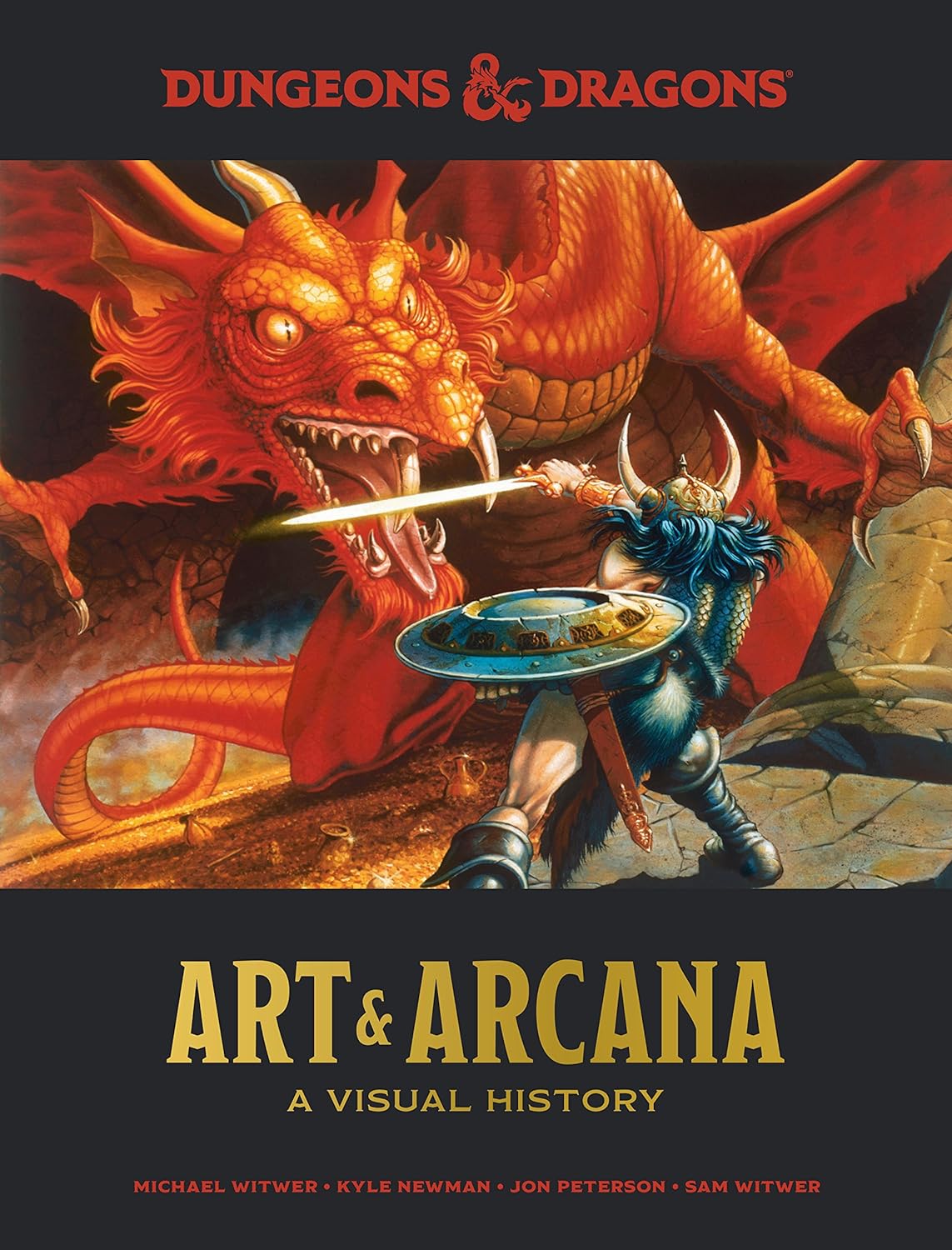
An illustrated guide to the history and evolution of the beloved role-playing game told through the paintings, sketches, illustrations, and visual ephemera behind its creation, growth, and continued popularity.Dungeons and Dragons is the most iconic and pervasive gaming franchise in the world. It is a seminal RPG (role-playing game) and the inspiration for video games like World of Warcraft and Zelda, fantasy art, and countless other facets of "geek culture." This officially licensed illustrated history provides an unprecedented look at the visual evolution of the game, showing its continued influence on the worlds of pop culture and fantasy. It features more than 700 pieces of artwork--from each edition of the game's core books, supplements, and modules; decades of Dragon and Dungeon magazines; classic advertisements and merchandise; and never-before-seen sketches, large-format canvases, rare photographs, one-of-a-kind drafts, and more from the now-famous designers and artists associated with the game. The superstar author team gained unparalleled access to the archives of Wizards of the Coast and the personal collections of top collectors, as well as the designers and illustrators who created the distinctive characters, concepts, and visuals that have defined fantasy art and gameplay for generations. This is the most comprehensive collection of D&D imagery ever assembled, making this the ultimate collectible for the game's millions of fans around the world.

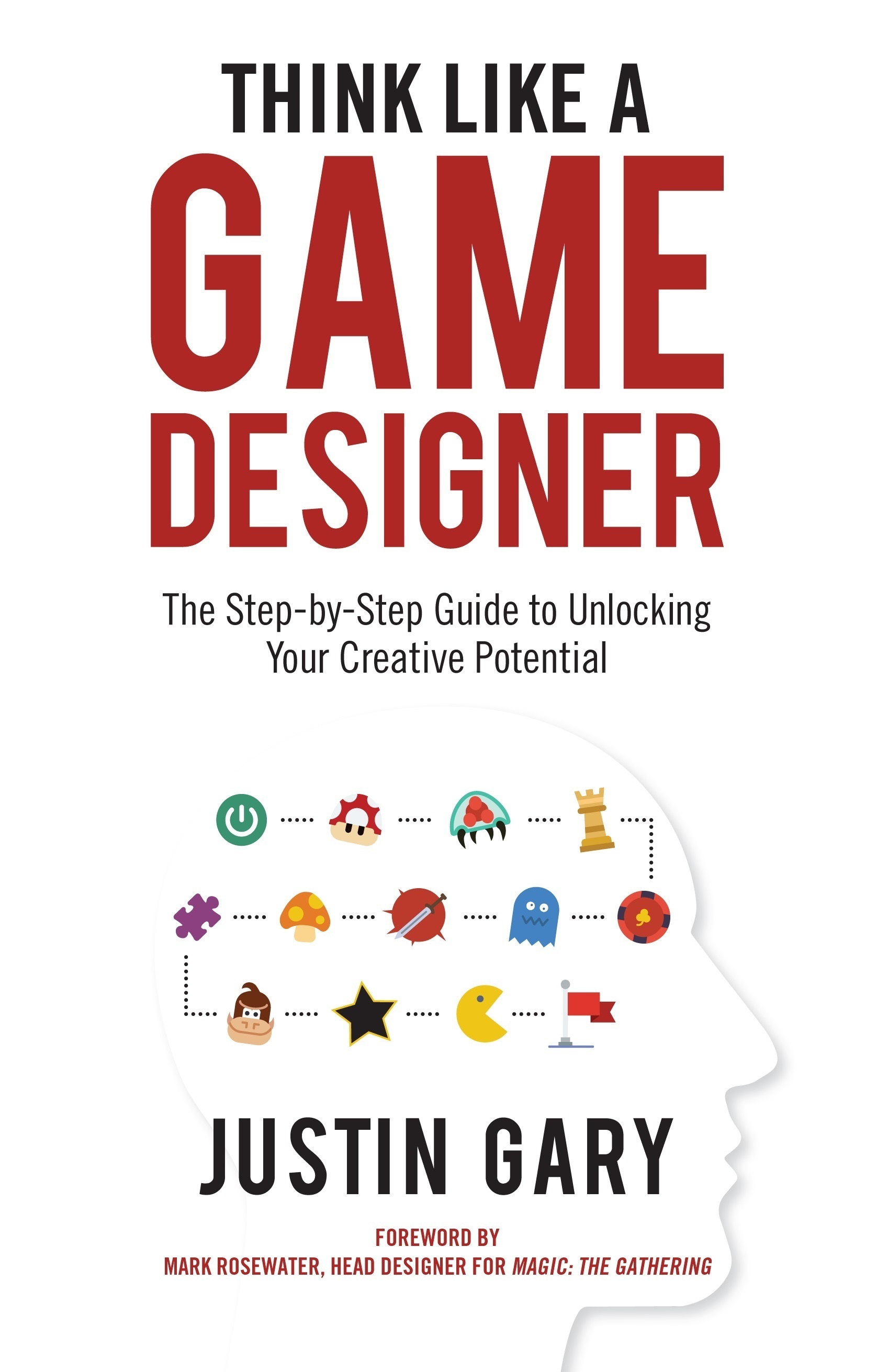
Do you love gaming? Do you have ideas for games of your own and want to learn how to produce them professionally? Longtime game designer Justin Gary has the answers you seek. After twenty years in the gaming industry, creating such games as Solforge, Ascension, and the World of Warcraft Miniatures Game, Justin is now sharing all his secrets in Think Like a Game Designer. Best of all, Justin’s secrets are really simple, practical, and common sense steps you can take yourself. Justin will walk you through each step and provide exercises for you to formulate your own game concepts and bring them to fruition. In Think Like a Game Designer, you will learn how • Overcome mental blocks to great creative work • Understand players’ emotional reactions and evoke the right ones • Brainstorm ideas and then refine them into useable ones • Follow the six steps of the core design loop for successfully designing a game • Capitalize on the excitement of Big Moments in a game • Get a job in the game industry and get your games published • Remove the grind of gaming or use it to your advantage • Integrate monetization into your designs • Deliver an enjoyable experience to your players so your game stands the test of time Whether you want to create video games, board games, or just discover how a true creative mind works, it’s all here in Think Like a Game Designer. It’s time to take the first step toward your game designer dream. Are you game? WHAT PEOPLE ARE SAYING ABOUT JUSTIN GARY AND THINK LIKE A GAME DESIGNER “Every journey starts with a single step, and if your desired journey is to become a game designer, I can think of no better fi rst step than reading and doing the exercises in Justin’s book. Justin has managed to capture and communicate the process for designing games starting from the blank sheet of paper all the way to thousands of fans playing your game.” — Jordan Wiesman, Creator of Shadowrun and BattleTech, and Founder of WizKids game studio “Justin Gary went from world champion The Gathering pro-tour competitor to award-winning game designer and then to multi-million-dollar CEO. He has a lot to teach and you can fi nd that wisdom clearly articulated in these pages.” — Peter Adkinson, Founder of Wizards of the Coast and Owner of Gen Con, the largest tabletop gaming convention in North America “Think Like a Game Designer should be on the shelf of anyone interested in game design, or even just in playing games. Plus, even people with no interest in games will learn valuable lessons about innovation, marketing, and how games motivate their players.” — Ethan Mollick, Professor of Innovation and Entrepreneurship, Wharton School of Business “Justin Gary has crafted a fun book that takes the essentials of game design and presents them in a light, personable format that anyone can understand. If you are new to game design, this is a great way to get started!” — Jesse Schell, CEO, Schell Games and Author of The Art of Game Design “Straightforward and relentlessly practical, this book efficiently guides you through the key steps involved in designing and publishing a game.

It took AlphaZero only a few hours of self-learning to become the chess player that shocked the world. The artificial intelligence system, created by DeepMind, had been fed nothing but the rules of the Royal Game when it beat the world’s strongest chess engine in a prolonged match. The selection of ten games published in December 2017 created a worldwide sensation: how was it possible to play in such a brilliant and risky style and not lose a single game against an opponent of superhuman strength?For Game Changer, Matthew Sadler and Natasha Regan investigated more than two thousand previously unpublished games by AlphaZero. They also had unparalleled access to its team of developers and were offered a unique look ‘under the bonnet’ to grasp the depth and breadth of AlphaZero’s search. Sadler and Regan reveal its thinking process and tell the story of the human motivation and the techniques that created AlphaZero.Game Changer also presents a collection of lucidly explained chess games of astonishing quality. Both professionals and club players will improve their game by studying AlphaZero’s stunning discoveries in every field that matters: opening preparation, piece mobility, initiative, attacking techniques, long-term sacrifices and much more.The story of AlphaZero has a wider impact. Game Changer offers intriguing insights into the opportunities and horizons of Artificial Intelligence. Not just in solving games, but in providing solutions for a wide variety of challenges in society.With a foreword by former World Chess Champion Garry Kasparov and an introduction by DeepMind CEO Demis Hassabis.Matthew Sadler (1974) is a Grandmaster who twice won the British Championship and was awarded an individual Gold Medal at the 1996 Olympiad. He has authored several highly acclaimed books on chess and has been writing the famous ‘Sadler on Books’ column for New In Chess magazine for many years. Natasha Regan is a Women’s International Master from England who achieved a degree in mathematics from Cambridge University. Matthew Sadler and Natasha Regan won the English Chess Federation 2016 Book of the Award for their book Chess for Life.

It was early 1993 and id Software was at the top of the PC gaming industry. Wolfenstein 3D had established the First Person Shooter genre and sales of its sequel Spear of Destiny were skyrocketing. The technology and tools id had taken years to develop were no match for their many competitors.It would have been easy for id to coast on their success, but instead they made the audacious decision to throw away everything they had built and start from scratch. Game Engine Black Doom is the story of how they did it.This is a book about history and engineering. Don’t expect much prose (the author’s English has improved since the first book but is still broken). Instead you will find inside extensive descriptions and drawings to better understand all the challenges id Software had to overcome. From the hardware -- the Intel 486 CPU, the Motorola 68040 CPU, and the NeXT workstations -- to the game engine’s revolutionary design, open up to learn how DOOM changed the gaming industry and became a legend among video games.

YOUR MIND IS NOW THE ULTIMATE GAMING ENGINE.Top 10 Games You Can Play In Your Head, By Yourself, is a collection of visionary author J. Theophrastus Bartholomew's most cherished mind-games, edited and updated by filmmaker and storyteller Sam Gorski and author D.F. Lovett. No peripherals needed. No controllers. No pens. No dice or boards. Everything you need to experience the forefront of game design is right here between these pages. What is a mind-game? Great Question! A mind-game is a game where you control the characters, the world, and every thing in between - a breathing, living story. A story that you can create on your own, and come back to time after time. A story with surprises that you will plant for yourself to find later, and never be the wiser!What will happen in your game? It's up to you to find out!

What explains the massive worldwide success of video games such as Fortnite , Minecraft , and Pokémon Go ? Game companies and their popularity are poorly understood and often ignored from the standpoint of traditional business strategy. Yet this industry generates billions in revenue by thinking creatively about digital distribution, free-to-play content, and phenomena like e-sports and live streaming. What lessons can we draw from its major successes and failures about the future of entertainment?One Up offers a pioneering empirical analysis of innovation and strategy in the video game industry to explain how it has evolved from a fringe activity to become a mainstream form of entertainment. Joost van Dreunen, a widely recognized industry expert with over twenty years of experience, analyzes how game makers, publishers, and platform holders have tackled strategic challenges to make the video game industry what it is today. Using more than three decades of rigorously compiled industry data, he demonstrates that video game companies flourish when they bring the same level of creativity to business strategy that they bring to game design. Filled with case studies of companies such as Activision Blizzard, Apple, Electronic Arts, Epic Games, Microsoft, Nexon, Sony, Take-Two Interactive, Tencent, and Valve, this book forces us to rethink common misconceptions around the emergence of digital and mobile gaming. One Up is required reading for investors, creatives, managers, and anyone looking to learn about the major drivers of change and growth in contemporary entertainment.

"The New York Times bestselling author of The Year of Living Biblically goes on a journey to understand the enduring power of why we love them, what they do to our brains, and how they can improve our world"--

The inspiring, long-awaited autobiography of video-game designer and DOOM cocreator John RomeroJohn Romero, gaming’s original rock star, is the cocreator of DOOM , Quake , and Wolfenstein 3-D , some of the biggest video games of all time. Considered the godfather of the first-person shooter, a genre that continues to dominate the market today, he holds a unique place in gaming history. In DOOM Life in First Person , Romero chronicles, for the first time, his difficult childhood and storied career, beginning with his early days submitting Apple II game code to computer magazines and sneaking computers out the back door of his day job to write code at night.Industry-redefining breakthroughs in design and tech during Romero’s time at id Software made DOOM and Quake cultural phenomena, and this thrilling story recounts every step of the process, from collaborative, heavy metal–fueled days spent crafting the industry’s most revolutionary and cutting-edge games to a high-profile falling-out with id cofounder John Carmack. After years in the gaming spotlight, Romero is now telling his story—the whole story—shedding new light on the development of his games and his business partnerships, from the highest highs to the lowest lows, sharing insights about design, code, the industry, and his career right up to today. Sharing gratitude for a lifetime in games, Romero reveals the twists and turns that led him, ultimately, to be called DOOM Guy.