
Hans Kmoch
19 Books Written
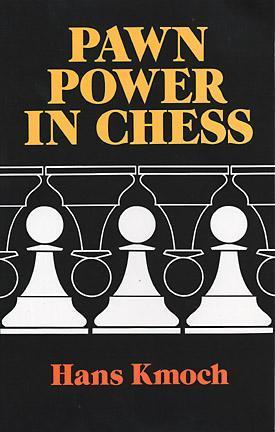
"One of the few books…which, at a glance, one can recognize as an immortal." — Chess .The proper use of pawns — of paramount importance in chess strategy — sometimes even puzzles experienced players. This profoundly original and stimulating book by an International Master and prolific chess writer offers superb instruction in pawn play by isolating its elements and elaborating on various aspects.After a lucid exposition of the fundamentals and the basic formations of one or two pawns that virtually constitute the keys to winning chess strategy, the reader is shown a multitude of examples demonstrating the paramount significance of elements of pawn manipulation. The author’s masterly explanation makes it perfectly clear to the beginner as well as the advanced player how the fate of a game depends on pawn formation and how pawn power holds the proceedings under its remote control. Over 180 games and diagrams illustrate the author’s theory and make it easy to follow the points made in the text.Hans Kmoch played with distinction in several international tournaments and is the author of a number of books and columns on chess and chess tournaments.“We consider it the best publication on chess strategy since the end of World War II.” — Die Welt.

Here are 100 of Rubenstein's best games against such opponents as Euwe, Janowski, Kashdan, Marshall, Tarrasch, and many others. His highly original contributions to chess theory cannot be overlooked by any serious player.

English, Russian, German (translation)


Pawn power in chess
by Hans Kmoch

The Book of the International Chess Tournament Held at the Manhattan Chess Club New York 1948-49
by Hans Kmoch
Coverage of the International Chess Tournament held at the Manhattan Chess Club, New York, 1948 to 1949. With annotations, analysis and general history of the tournament and round by round commentary by Hans Kmoch.

Die Kunst der Verteidigung. Na Nemetskom Iazyke
by Hans Kmoch
KMOCH, Hans - Die Kunst der Verteidigung. Na Nemetskom Iazyke. WALTER DE GRUYTER. 1966. Berlin . 142 pp. Paperback
Rubinsein's Chess Masterpieces 100 Selected Games
by Hans Kmoch
This is not merely a great book. It is an important piece of chess history, because the author, Hans Kmoch, visited the Rubinstein Family Home in 1933 in an effort to get the great grandmaster of chess to return to active play. When Rubinstein could not be induced to return, his family who was living in dire poverty asked Kmoch for help in raising funds. The result was an ad placed asking to finance this book on a subscription basis. The result was this book.

Die Kunst der Verteidigung: Wege zum Erfolg
by Hans Kmoch
Max Euwe: Mit Einem Bildnis Von Max Euwe
by Hans Kmoch

This title from the De Gruyter Book Archive has been digitized in order to make it available for academic research. It was originally published under National Socialism and has to be viewed in this historical context. Learn more . >
Die Kunst Der Verteidigung
by Hans Kmoch
Die Kunst Der Verteidigung
by Hans Kmoch
Die Kunst der Bauernfürung
by Hans Kmoch
The Book of the International Chess Tournament held at the Manhattan Chess Club New York 1948-1949
by Hans Kmoch

This is not merely a great book. It is an important piece of chess history, because the author Hans Kmoch visited the Rubinstein Family Home in 1933 in an effort to get the great grandmaster of chess to return to active play. When Rubinstein could not be induced to return, his family who was living in dire poverty asked Kmoch for help in raising funds. The result was an ad placed asking to finance this book on a subscription basis. The result was a book entitled “Rubinstein gewinnt! : Hundert Glanzpartien des grossen Schachknstlers. Erläutert von Hans Kmoch. Biographische Einleitung von Jacques Hannak. Verlag der Wiener Schachzeitung, Wien 1933” That book was then translated into this book. It was a direct translation. All the games are the same. I have not been able to find any changes at all, although there are no doubt a few. I have just purchased the only original copy of the 1933 book Rubinstein gewinnt! left that I have been able to find after months of searching. I am reprinting it as ISBN 4871875806.


Le grand maître français André Danican Philidor a établi, à l'époque de la Révolution, le fait que les pions étaient l'élément le plus important dans la stratégie échiquéenne, ce qu'il formula par la phrase célèbre : Les pions sont l'âme du jeu d'échecs. Philidor fut le premier à consacrer de sérieuses analyses à des concepts qui appartiennent aujourd'hui au bagage de tout joueur : pion passé, pion protégé, pions liés, chaîne de pions, pion isolé et arriéré, etc. Deux siècles se sont écoulés et la théorie de Philidor est toujours d'actualité. Le placement des pions conditionne le combat du milieu de partie. Cet ouvrage, unique dans la littérature échiquéenne, est à étudier soigneusement. On y apprend non seulement les principes stratégiques particuliers, mais aussi et surtout la méthode de