
John Nunn
John Denis Martin Nunn is an English chess grandmaster, a three-time world champion in chess problem solving, a chess writer and publisher, and a mathematician. He is one of England's strongest chess players and once was in the world's top ten.
30 Books Written

The three-times World Chess Solving Champion distils the most useful middlegame concepts and knowledge into 100 lessons that everyone can understand.Following on from his successful Understanding Chess Endgames, John Nunn turns his attention to the middlegame - the phase of the chess battle where most games are decided, yet the one that has received the least systematic treatment from chess writers. With the outstanding clarity for which he is famous, Nunn breaks down complex problems into bite-sized pieces.In the case of attacking play, we are shown how to decide where to attack, and the specific methods that can be used to pursue the enemy king. Positional play is described in terms of the major structural issues, and how the pieces work around and with the pawns. Nunn explains how to assess when certain pieces are better than others, and how we can make use of this understanding at the board. Readers will never be short of a plan, whatever type of position arises.Each lesson features two inspiring examples from modern chess, annotated honestly and with a keen focus on the main instructive points. Both sides' ideas are emphasized, so we get a clear picture of the ways to disrupt typical plans as well as how to form them.
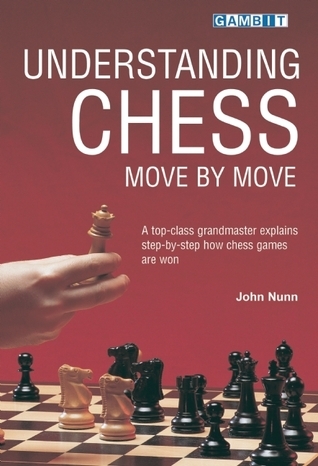
John Nunn is one of the most highly regarded chess writers in the world. He has carefully selected thirty modern games to help the reader understand the most important aspects of chess and to illustrate modern chess principles in action.Virtually every move is explained using words that everyone can understand. Jargon is avoided as far as possible. Almost all the examples are taken from recent decades and show how key ideas are handled by modern grandmasters. The emphasis is on general principles that readers will be able to use in their own games, and detailed analysis is only given where it is necessary.Each game contains many lessons, but to guide the reader through the most important ideas in each phase of the game, the thirty games are grouped thematically into those highlighting opening, middlegame and endgame themes.John Nunn is a grandmaster from England. He has won four individual gold medals and three team silver medals at Chess Olympiads. In the Chess World Cup of 1988/9, he finished sixth overall, ahead of several former World Champions. He is arguably the most highly acclaimed chess writer in the world, with three of his books receiving the prestigious British Chess Federation Book of the Year Award. He is principal author of the definitive one-volume openings encyclopedia, Nunn’s Chess Openings .

Once a chess-player has learnt the basic rules of the game, the next step is to study tactics . A knowledge of tactics will enable a novice to start winning games by giving checkmate or taking his opponent’s pieces. As the player progresses, his tactical arsenal will broaden and he will start to play sacrifices and combinations. Improving your tactical ability is the most efficient way to win more games and gain confidence at the chessboard.Given the fundamental importance of chess tactics, there are surprisingly few books that teach the subject in a systematic way. Consequently, many players suffer from tactical blind-spots that plague them throughout their career. The step-by-step approach used in this book ensures that each concept is explained and tested before the next one is introduced.John Nunn is a renowned grandmaster noted for his devastating tactical ability. In this book, he guides the reader to an understanding of key tactical ideas such as the fork, pin, and discovered attack, and discusses general ideas such as elimination and compulsion. No prior knowledge is assumed apart from the basic rules of chess.Throughout the book there are carefully graded exercises to test the reader’s understanding.Dr John Nunn is a grandmaster from England. He has won four individual gold medals and three team silver medals at Chess Olympiads. In the Chess World Cup of 1988/9, he finished sixth overall, ahead of several former World Champions. He is arguably the most highly acclaimed chess writer in the world, with three of his books receiving the prestigious British Chess Federation Book of the Year Award.

Mammoth Book of the World's Greatest Chess Games: Improve Your Chess by Studying the Greatest Games of All time
by John Nunn
Rating: 4.2 ⭐
This new and expanded edition of The Mammoth Book of the World's Greatest Chess Games contains the 112 greatest chess games of all time—selected, analyzed, re-evaluated and explained by a team of experts and illustrated with more than 900 diagrams. Among the highlights are Kasparov vs. Topalov; Kasparov vs. Wijk aan Zee; the super-computer Deep Blue's historic first win over Kasparov; Boris Spassky's "James Bond" Mating Combination; and Bobby Fischer's "Game of the Century." Study these games and learn about defense and counterattack, logical opening play, endgame strategy, psychological warfare, and how great players think.
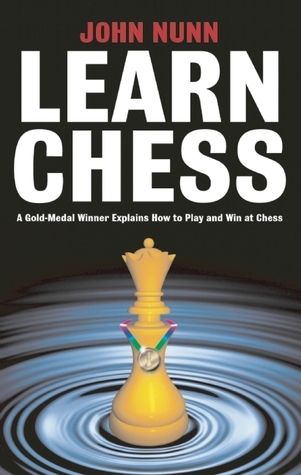
Starting with the very basics, this book tells you everything you need to know to become a successful chess-player.Dr John Nunn has built up a world-wide reputation for the outstanding clarity of his writings on a wide range of chess topics. This is his first book to tackle the fundamentals of chess.No prior knowledge is assumed. The reader learns step-by-step, with each new point illustrated by clear examples. By the end of the book, the reader will be fully ready to take on opponents across the board, or on the Internet, and start winning.Topics Dr John Nunn is a grandmaster from England. He has won four individual gold medals and three team silver medals at Chess Olympiads. In chess problem solving competitions he has three times won the world championship title. He is arguably the most highly acclaimed chess writer in the world, with three of his books receiving the prestigious British Chess Federation Book of the Year Award. His classic work Understanding Chess Move by Move is regarded by many as a must-read for all students of the game.
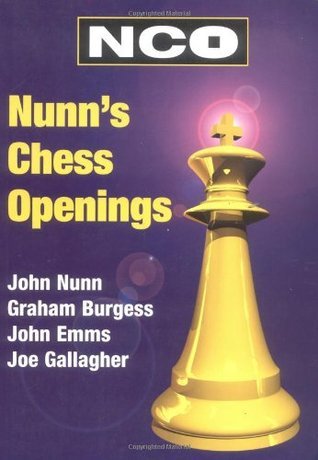
Nunn's Chess Openings is written by a team of experts -- four writers who are acclaimed as outstanding chess writers and experts in their fields. The expert team's collective knowledge and experience covers all openings. Each section is written by a player with expertise in that area, enabling Nunn's Chess Openings to provide the sort of insider knowledge that can only be gained by playing an opening against tough opposition.Setting it above the rest, the majority of game references are from the 1990s. Computers have also been used to make the book extremely accurate: full use has been made of databases of millions of games; tables have been generated from computer files, eliminating notation errors, impossible variations, etc.; powerful analytical engines have assisted with the analysis of tactical positions; a final blundercheck has made sure there are no wrong moves given.

For all chess-players, from beginners to world champions, from kids to seniors, delivering checkmate is the greatest thrill the game has to offer. The ability to spot checkmates is a vital skill – and this easy-to-use book shows you how it is done. With the help of Grandmaster John Nunn, you will be ready to shock your next opponent with a deadly checkmate, whether in a school match, a club tournament – or even a championship game!By focusing exclusively on positions from real games, ranging from junior events to grandmaster encounters, Nunn ensures that the mates featured are those which arise most often in real life. He also highlights themes and ideas that are often missed in practice. While solving these puzzles, your all-important ‘mental library’ of patterns will grow, leading to an immediate increase in your playing strength.All 1001 puzzle positions have been carefully checked, and are graded by theme and difficulty. Points are awarded for finding the checkmate, so you can measure your skill. Most of the puzzles are suitable for novice and junior players. The last chapter challenges you with ‘extreme checkmates’, but don’t you’ll be ready for them!

One of the world's foremost chess writers provides everything you need to know about chess endgames!Assuming no specialized endgame knowledge, John Nunn presents 100 key endgame concepts, and explains how they are used to win games or save difficult positions. He covers all the main types of endgames and typical thinking methods, and so equips readers with all the skills needed to excel in this vital phase of the game up to good club level and beyond.The endgame is the stage of the game where precision is most important, and where errors are punished most drastically. It is also many endgame positions look too simple to require prior knowledge, but yet contain fiendish concealed pitfalls that can reverse the result of the game on the spot. Some key positions simply have to be memorized, as they can hardly be worked out at the board, especially when playing with today's faster time-controls.In such perilous terrain, an expert guide is necessary. John Nunn could not be better he is a battle-hardened grandmaster of top-level over-the-board chess and a solving world champion. From his wealth of endgame expertise, he has distilled a course of fundamental knowledge that is highly targeted on practical success for all levels of players.
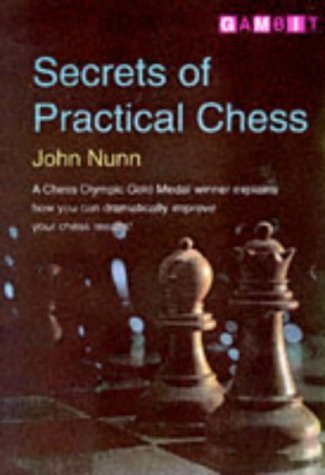

Most chess puzzle books put you in an artificial you are told a combination exists, what the theme is, and what you are required to achieve. This one is different. In a real game situation, a player may sometimes need to find a combination. On the other hand he may need to reject a tactical idea and simply find a good positional move. His task is to find the right move, whatever it may be. The puzzles in this book put you precisely in that situation. John Nunn, a top-class grandmaster and one of the world's best chess solvers, has selected 250 positions to test your skills to the full. In each case you are challenged to find the best move. Spectacular ideas abound in these positions, but it is for you to decide whether to go for them, or whether you would be falling into a trap. If you need them, there are hints to help you out. The book ends with a series of tests to measure your skills against those of other players.

Following on from his successful books Understanding Chess Endgames and Understanding Chess Middlegames , John Nunn fleshes out the theory by showing how World Champion Emanuel Lasker handled a wide variety of practical situations. We see how Lasker’s play, which his opponents found so unfathomable, was based on logic, extreme pragmatism and a deep understanding of how chess-players think.• Covers topics not usually considered, such as queenless middlegames and manoeuvring• Dissects strategic issues including piece activity, pawn-structure and bishop vs knight• Looks at psychological aspects of chess, such as choosing lines which are most uncomfortable for the opponent• Discusses how to handle inferior positions• Explanations focus on general ideas rather than detailed analysis• Features more than 100 of the most instructive examples from Lasker’s career• Concludes with a selection of exercises, with full commentary and explanationEmanuel Lasker from Germany – chess player, mathematician and philosopher – held the world title for 27 years, longer than any other champion. His victories against many of the all-time greats were based on an ahead-of-his-time understanding and had a subtle but profound influence on modern chess thinking.

Grandmaster Chess Move by Move: John Nunn Applies the Move by Move Approach to His Best Games
by John Nunn
Rating: 4.2 ⭐
A collection of John Nunn's best games from 1994 to the present day, annotated in detail in the same style as the best-selling Understanding Chess Move by Move . Throughout, the emphasis is on what the reader can learn from each game, so the book is ideal study material for those seeking to progress to a higher level of chess understanding. There is also entertainment in Nunn has a direct aggressive style, and many of his opponents in these games are ambitious young grandmasters from the generation inspired by Kasparov's dynamic chess. The book also includes all of John Nunn's compositions - problems and studies - with full solutions.

The Najdorf Sicilian (1.e4 c5 2.Nf3 d6 3.d4 cxd4 4.Nxd4 Nf6 5.Nc3 a6) is the most important, popular, and talked about opening in chess. Its name is synonymous with such luminaries as Tal, Fischer, and Kasparov. As would be expected by the preceding three names, Black plays soundly for a win, with a full-scale battle developing with no scope for drawish simplifications. The Najdorf includes many famous variations that have practically made players' careers, such as the Poisoned Pawn, the Polugaevsky Variation, and the Gothenburg Variation, introduced disastrously as a team weapon by Argentine players against Soviet Grandmasters in 1955. Kasparov has relied on the Najdorf in all of his World Championship matches. But not only World Championships hinge on the Najdorf, it has proven itself in millions of games as the ideal work-horse for club and tournament players. In this comprehensive book GM Nunn covers all of its variations in detail.

The Complete Najdorf: Modern Lines: The Definitive Guide to Fischer and Kasparov's Favorite Chess Opening
by John Nunn
Rating: 4.1 ⭐
The Najdorf Sicilian is synonymous with the all-time great chess openings--and is one of the sharpest and most hotly contested. The companion volume to The Complete Najdorf 6 Bg5, this is the most authoritative and up-to-date coverage available anywhere in the world today.Expert

One of the world's finest writers on chess presents his selection of brilliant modern games of 25 moves or fewer. Much can be learned from these sparkling miniatures. John Nunn examines both how the loser might have avoided disaster, and explains how the winner managed to punch home his advantage so effectively. An innovative format, with three diagrams per page, enables the book to be read without a chess set, making it ideal for readers looking for an entertaining book to dip into.

Analyzes twenty chess games, discusses strategy, and includes advice on how to analyze a position

The definitive work on practical endgame tactics

In this major two-volume work, renowned endgame theoretician John Nunn teaches the skills that are most important to success in practical endgames.Going beyond standard texts, Dr Nunn shows how to apply knowledge of standard endgames to find the right methods in tricky real-life practical situations - even when they differ greatly from the idealized forms given by traditional endgame manuals.* Identifies new and important motifs which occur repeatedly in over-the-board play* Tactical elements are heavily featured* In many examples, previous analysis is corrected* Focuses on endgames that are susceptible to concrete analysis* Geared to the over-the-board player - no composed or artificial positions* Ideas underlying analysis - however complex - are richly explained in wordsNunn shows that lack of familiarity with key ideas can cause important ideas and themes to be missed even by very strong players. We discover that a staggering amount of previously published endgame analysis is simply wrong, and that many of the standard guidelines are at best partially true.This second volume focuses on rook endgames - the most common and important category of practical endgames. Nunn also covers endings with rooks and minor pieces, a wide and rich area of strategic endgame play that is universally recognized as vital for chess mastery, but nevertheless neglected in chess literature.

The first edition of this book ushered in a new era in chess publishing. It was the first book based on computer-generated position databases that are guaranteed to provide the actual result of a position.However, this book is no computer print-out. It takes a human 'oracle' to extract the useful information from this mass of data and to identify new principles to help the rest of us appreciate the key practical points. Dr John Nunn, top-class grandmaster and renowned theoretician, performs this role admirably. He has identified where previous theory has been overturned, and where there are important new results. Dr Nunn was also the first to reveal the general importance of the many 'reciprocal zugzwang' positions.* The complete truth about the ending Rook and Pawn vs Rook* One of the most important and controversial chess books of the twentieth century* An essential addition to every serious chess-player's library* A new expanded editi! on

In this book, John Nunn, a top-class grandmaster who is also one of the world's finest solvers, explains the methods by which chess problems and studies are solved. The logical and creative methods advocated, while targeted at the solving of composed positions, may also help players find startling tactical solutions in their games. Solving in Style also constitutes an entertaining and insightful introduction to the world of problems and studies. There are chapters on series problems and other unorthodox stipulations, and also a discussion of specific themes such as the Novotny interference.This classic text is one of few on this important subject, and is now available again, having been difficult to obtain for a decade. Chess positions for solving are as old as the game itself, and provide stimulating and beneficial exercise for chess-players. However, while there is an abundance of books on chess puzzles, and much specialist literature on studies and problems, there is an astonishing dearth of guidance for solvers.

The Sicilian Defence is Black's most popular reply to 1e4 and players of the white pieces need to know how to win against it. The author provides a complete armoury of aggressive lines that take into account recent developments and which will defeat the antidotes that Black developed recently.

John Nunn presents 250 challenging positions where your task is to find a cunning way to win or draw. In many cases the odds against success seem overwhelming, yet by using all the tactical resources in the position it is possible to achieve the goal. The studies were subjected to a rigorous checking procedure, during which thousands of unsatisfactory positions were weeded out. The 250 studies finally selected represent some of the finest creations of composers such as Kasparian, Troitsky, Pogosiants, Mitrofanov, Chéron and Réti. Nunn's detailed solutions contain many points and clarifications that have hitherto gone unmentioned, so readers will rarely be left to wonder whether their intended solution really did work. In an over-the-board game, the ability to use the pieces in harmony is paramount, and those players who can exploit every resource in a position are those who become champions. While the focus in this book is on tactics, readers will also develop a greater understanding of many important endgame topics, such as fortresses, stalemate defences, the opposition and zugzwang.

Tactical Chess Endings: Improve Your Chess by Unlocking the Secrets of the Endgame
by John Nunn
Rating: 4.3 ⭐
Shows that the endgame is highly tactical requiring accurate calculation and constant alertness.

In this tremendously instructive and entertaining work, John Nunn selects 125 of the finest short decisive grandmaster games of the modern era.For a grandmaster to lose a game in 25 moves or fewer takes something special, and club players can learn a great deal from studying these miniatures. Each of these games is a true battle, with the result often in doubt until near the very end of the struggle.Nunn identifies the most common causes of the errors that lead to the loser's demise, and how one can seek to take dramatic advantage of the opponent's risky or faulty play. In his thought-provoking extended introduction, he explains that in many cases, the problem was of a psychological often the loser fails to accept that events have not unfolded according to plan, and as a consequence steers into the reefs when there was still time to head for safer waters.

The author includes forty of his best games at the grandmaster level

This is a revised edition of an established chess book which serves as a manual of strategy and tactics, with advice on how to think at the board, and also offers insights into the world of professional chess. Twenty-four of the author's best and most instructive games are included. The revised edition incorporates many discoveries from the Dvoretsky/Yusupov School, new diagrams, and updated analysis and anecdotes.

The Pirc is a modern chess opening whose unbalanced nature usually leads to eventful play and a decisive outcome. A perfect complement to John Nunn's earlier work, The Complete Pirc, a guide to pawn structures and their importance in forming and executing plans.Expert

This work focuses on the King's Indian variations that have undergone the most dramatic change in the last decade. A concise round-up of early deviations by both sides and a discussion of typical plans complete the coverage.

The Najdorf for the Tournament Player

This third edition is aimed at club and tournament chess players and provides ideas to overcome Black's latest counter-attacking ploys in the ever-changing Sicilian Defence.