
Andrew Soltis
30 Books Written

Study is a necessity for competitive chess players, and acclaimed chess author and International Grandmaster Andrew Soltis explains how it should be done. In his trademark witty, accessible style, Soltis provides tips on everything from the need for memorization to the use of computers-and even how to develop that indefinable thing called intuition.

The Wisest Things Ever Said About Chess: With over 250 Annotated Positions
by Andrew Soltis
Rating: 3.8 ⭐
• 2 recommendations ❤️
As a professional journalist and popular chess author, International Master Andrew Soltis is perhaps the best qualified to collect and edit this treasury of chess wisdom through the ages. With quotations running the gamut from timeless irony (“The winner of the game is the player who makes the next-to-last mistake.”—Anonymous) to pithy advice (“To get squares, ya gotta give squares.”—Bobby Fischer), each nugget of wisdom is accompanied by a chess position illustrating the idea behind it. Divided into chapters on Calculation, Intuition, Strategy, Position Evaluation, Openings, Sacrifices, Attitude, Endgames, Mistakes, Studying, Time Management, and Tournament Tactics, this is a book that chess fans will appreciate as much for its memorable wit as for its practical lessons.

A transposition in chess is a little like a bait-and-switch marketing ploy. The customer thinks he’s getting a bargain on one piece of merchandise, but he ends up buying another at a much higher price. In the first book devoted to chess transpositions, New York Post columnist and acclaimed chess author Andy Soltis shows how this strategy works over the board. By transposing a series of well-known moves (i.e., making them in an unfamiliar order), a player leads his opponent into an unfavorable position that he would normally have shunned. Using entertaining examples from the games of the masters, Soltis covers a variety of transpositions in virtually every kind of double e-pawn, Sicilian, the Reti, English, Indian, and others.

There are more than 30 moves to choose from in a typical chess position. Yet masters regularly manage to select the best one--and they do it faster, more confidently, and with less calculation than other players. The reason: masters know shortcuts that enable them to think more efficiently. International Grandmaster Andrew Soltis explains these techniques, including how to use specific cues to find good moves, how to streamline the analysis of a move's consequences, and how to use both objective and highly subjective criteria to find the right move--from any position. An enlightening window into a Grandmaster's thinking process.

Professionals know that during the course of a game, the value of chess pieces change. And they use this knowledge to decide which pieces to exchange--and when. International grandmaster Andrew Soltis, the author of Bobby Fischer Rediscovered , helps pass this important information on to novices so they can benefit, too. He investigates why the traditional "chart of relative values" or computer analysis so often fails to explain why certain trades and sacrifices work and others just don't. All the typical decisions a player has to make, such as whether to swap two minor pieces for rook and pawn, receive detailed scrutiny. Players will appreciate the insightful analysis.

Using a Socratic teacher-student approach in the characters of GM Noah Tall and Pat Sayre, Soltis centers his comments around the subjects the various pieces, techniques, plans, mismatches, rules, and how to get started—all dealt with from a chess grandmaster's perspective. Profuse illustrations and games allow everyone to grasp the concepts quicker, so you will improve in a shorter amount of time. Charts, graphics, and annotated examples in algebraic notation will add to your reading pleasure.
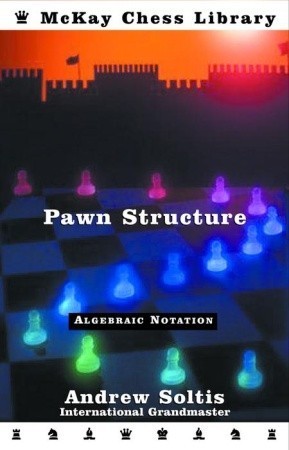
Some 250 years ago, the great Philidor wrote, "The pawns are the soul of chess." Although that statement is perhaps the most common cliche in the literature of the game, it is too often misunderstood.Pawns are usually considered weak because of their limited range of movement. But the pawns' restricted mobility is precisely what makes them so important they form a semi-permanent structure -- often called a "pawn skeleton" -- that establishes the territorial lines of the coming battle and thus the nature of the battle itself. Understanding how pawns affect strategy is the subject of this important book. In it you will -- how to handle the characteristic pawn structure of each opening "family" and each major variation-- how to recognize the strengths and weaknesses of pawn chains-- when to exchange pawns in the center -- and when not to-- how to cramp your opponent's position and what to do if your opponent cramps yours-- how to create and exploit pawn "holes"...and much, much more, all copiously illustrated by complete games from actual play.

Every player has heard the saying, "Chess is 99 percent tactics." It isn't.It's 99 percent calculation. But until now there has never been a book devoted entirely to this most mysterious and essential chess technique.This book examines both the technical and practical aspects of how to think ahead -- the selection of candidate moves, the evaluation of end positions, finding the proper move order, and the like.Special attention is paid to the broad range of calculating mistakes, such as overlooked zwischenzugs and "quiet moves," visualization blunders, and "believing" your opponent.

Most games are not won -- they are lost. The vast majority of instructional books tell how to improve a position when it is already (or may be) favorable. The Art of Defense in Chess analyzes the practical aspects of not having the -- How to obtain counterplay-- When to contest open lines-- When to accept sacrifices-- How to anticipate short- and long-term threats-- How to restrain your opponent's pieces-- How to create a defense perimeter-- How to minimize losses-- And much moreThe Art of Defense in Chess also discusses the proper psychological attitudes for successful defense -- coolness under fire, the Saving Grace, stonewalling, etc. -- as well as the Principle of Exploitable Weakness and the Principle of Economy, as illustrated in more than one hundred positions taken from competitive play.

So you're a fairly decent chess player. You compete in tournaments, you play on the Internet. But you would love to make that leap to become a chess master. What do you need to know, how much do you have to practise, and how much of the success of the masters is simply a matter of innate talent, superior brainpower or just good luck? This useful book, aimed at all chess players who aspire to become chess masters, shows you what the masters know and you don't.Written by one of our biggest-selling and best-loved chess authors, in his trademark chatty, accessible but always informative style, this book is filled with practical exercises and test games that will reveal the secrets of how to join chess's elite ranks.

Following on from the long success of one of the most important chess books ever written, Bobby My 60 Memorable Games , renowned chess writer Andrew Soltis delivers a book on today's blockbuster chess player Magnus Carlsen.Magnus Carlsen has been the world’s number one player for more than a decade, has won more super-tournaments than anyone ever and is still in his prime. He is the only player to repeatedly win the world championships in classical, speed and blitz chess formats. This book details his remarkable rise and how he acquired the crucial skills of 21st-century grandmaster chessHe will defend his world championship title this autumn and if he wins, it will set a record of five championship match victories. This book take you through how he wins by analysing 60 of the games that made him who he is, describing the intricacies behind his and his opponent's strategies, the tactical justification of moves and the psychological battle in each one.

This large and magnificent work of art is both an interpretive history of Soviet chess from the Bolshevik Revolution to the collapse of the U.S.S.R. in 1991 and a record of the most interesting games played. The text traces the phenomenal growth of chess from the days of the revolution to the devastation of World War II, and then from the Golden Age of Soviet-dominated chess in the 1950s to the challenge of Bobby Fischer and the quest to find his Soviet match. Included are 249 games, each with a diagram; most are annotated and many have never before been published outside the Soviet Union. The text is augmented by photographs and includes 63 tournament and match scoretables. Also included are a bibliography, an appendix of records achieved in Soviet national championships, two indexes of openings, and an index of players and opponents.

Emanuel Lasker held the world chess championship longer than any other player in history (1894 to 1921). He competed against such greats as Capablanca, Rubinstein, and Alekhine at the height of their game, and was consistently successful—yet almost no one studies his games today. International Grandmaster Andrew Soltis now rectifies that oversight with a book that takes the full measure of Lasker’s genius. With more than 100 annotated games, this extended look into the thinking of a neglected chess wizard is full of surprises—offering both a much-needed reappraisal of Lasker and a cornucopia of fresh insights for today’s player.

If you want to become a chess master, there are certain things you need to know – essential tips and techniques that the masters know, and you need to learn. This incredibly useful book collects all these techniques together in one volume, so you can try them out, tick them off, and start on your path towards chess greatness. Arranged in chapters covering every aspect of chess, from openings to endgames, renowned chess author Andrew Soltis provides top 20 rundowns of these specific positions and chapters include Top 20 Sacrifices, Top 20 Crucial Middlegame Decisions, Top 20 Endgame Techniques and Top 20 Exact Endgames. Written in Andrew Soltis's eternally engaging and accessible style, this book will prove invaluable to any player who wants to become a chess master.Author InformationInternational Grandmaster Andrew Soltis is chess correspondent for the New York Post and a very popular chess writer. He is the author of many books including What It Takes to Become a Chess Master, Transpo Tricks in Chess and How to Choose a Chess Move.

A lively, personal, and wonderfully informative look at Bobby Fischer, his personality and his playing. Although three decades have passed since Fischer won the world chess title from the former Soviet Union, he still remains a source of fascination and admiration for all players. Andy Soltis, a grandmaster and author of numerous chess books, looks back at his first encounters with Fischer in New York when they were both teenagers; assesses Fischer's exceptional ability to obtain and realize an advantage in play; and analyzes his career right up to his final matches with Boris Spassky. Most important, Soltis comments on and annotates many of Fischer's major matches in detail, explaining the logic behind the moves in illuminating detail. A must for any fan of chess and this remarkably enigmatic champion.

The games of Mikhail Botvinnik, world chess champion from 1948 to 1963, have been studied by players around the world for decades. But little has been written about Botvinnik himself. This book explores his unusual dual career--as a highly regarded scientist as well as the first truly professional chess player--as well as his complex relations with Soviet leaders, including Josef Stalin, his bitter rivalries, and his doomed effort to create the perfect chess-playing computer program. The book has more than 85 games, 127 diagrams, twelve photographs, a chronology of his life and career, a bibliography, an index of openings, an index of opponents, and a general index.

Increase your chess knowledge within the year! In this book, Andrew Soltis analyzes 365 key chess games in an easy way for busy people.In this book, 365 of the most instructive short games of chess are analyzed, step by step, by well-respected author Andrew Soltis. Arranged as daily lessons, this book is perfect for chess players who would like to reach the next level of skill but can't devote hours and hours each day to study.Learn to feel confident with each tactic – each game features test-yourself quizzes (with answers at the back of the book) to help cement understanding, as well as chess diagrams for those who learn visually. Challenging tactics are revisited in later games to help you recognize when they occur and how chess masters use them to their full advantage.With this book, Andrew encourages you to learn to think like a chess master within the year. From Castling to Zugzwang, learn something new everyday!

An insightful new book that is perfect for newcomers to chess inspired by Netflix's Queen's Gambit.Written by one of the best chess communicators in the business, chess master and chess journalist Andy Soltis divulges practical advice and explains technical terms that chess books often overlook. From learning how to train your mind with chess information to choosing the best chess opening, dip in and out of this invaluable guide to improve your chess in a minutes.Chess questions answered in this book Don't try to swallow too much information in one sitting. Dip in and out of these great chess questions to better understand the game and let the improvement happen incrementally.

Book by Soltis, Andrew


A completely revised 2nd edition of this classic guide to the Stonewall attack, popular in the late 19th and early 20th centuries but fallen out of favor. Fully understood, it is an excellent attacking strategy, sure to surprise your opponents and very succesful against the unprepared.

How does one determine the "best" chess games? What one may see as brilliant, another may see as simply necessary. Like some art lovers, chess fans claim that they know a good game when they see it, and that they know better from good. But "best"? How is this articulated? This book, itself a work of art, is brought together by the use of five criteria: the overall aesthetics (clever and relentless are insufficient qualities); the originality (e.g., not yet another white knight sacrifice in a Sicilian); the level of opposition (the loser played very well); the soundness (i.e., are the moves refutable with perfect play?), accuracy (few of the moves are second-best), and difficulty (the winner overcame major obstacles) of the game; and finally the overall breadth and depth (one wants a series of sparkling ideas, with no dry patches). The 100 best games were taken from an initial field of about 7,000 played from 1900 through 1999 that had already gained some attention in magazines, books and periodicals. Three hundred games were then selected that appeared to have features consistent with the criteria. The 300 games were evaluated with scores--points given for each category of criteria. The games were then ranked, one to 100, by the score they received. No attempt was made to balance the selection according to period, nationality of players or opening. Also included is a chapter on the most overrated games of the twentieth century and one on games that would have made the list if… Includes 335 diagrams, an index of players and an index of openings by ECO codes.

For the benefit of the improving player, Andrew Soltis - New York Post chess columnist and author of Pawn Structure Chess and other books - reviews the major types of chess errors. Using typical game situations drawn from Master play, the book concentrates on teaching recognition patterns for the major mistakes - and how to avoid those mistakes.

Becoming a Grandmaster is the ultimate aim for serious chess players, but whatever your chess abilities, this book will take you to the next level. Packed with tips, tricks and practical exercises aimed at players of all skill levels who aspire to greatness.Even an average chess player can find the same moves as a Grandmaster as much as 75 percent of the time. The difference is that only the Grandmaster can find the other 25 percent. This book identifies the kinds of moves and techniques that account for that 25 percent. Among the topics covered in the book Mysterious rook pawn moves, Tacking, Piece Nullification, “King Feeling,” and how to play for a win without risk.Written by one of our biggest-selling and best-loved chess authors, in his trademark chatty, accessible but always informative style, this book is filled with practical exercises and test games that will reveal the secrets of how to join chess's elite ranks.

White Opening System: Combining Stonewall Attack, Colle System, Torre Attack
by Andrew Soltis
Rating: 4.0 ⭐
1992 Out of Print 1st Ed. Paperback from Chess Digest, Ken Smith, Dallas, TX USA out of the original printer’s case, which was part of the 2006 total purchase of the Chess Digest, Ken Smith, Dallas, TX USA acquisition by Edward Labate * A detailed study of three related opening systems 131 pages * Not a remainder or ex-library. * 23 hr shipping or quicker!! Safely packaged with delivery tracking, with confirmation email. * From a SMOKE-FREE home * We will try to add new items and correct previous listing errors daily. Being a 2 person operation, my office manager REGINA & Myself, I have set a goal of 100,000 new listings within 3 years. I am honest, not infallible; thus, I only make one guarantee...I will make mistakes. If there is a mistake/problem with an item or description, please let me know and I will do my utmost in resolving it and making you VERY HAPPY!!!! "Always Buying Chess Libraries" THANK YOU Edward Labate National Chess Master LVChessKing@gmail.com Spring Valley (LV), NV 89103

Knowing when and what to exchange in chess—trading chessmen in a series of closely related moves, typically sequential—is an essential skill. This book, written by the hugely popular chess writer Andrew Soltis, is the only one that will help you up your game. He explains if you should exchange your bishop for a knight, which pair of bishops to exchange, when it's important to keep rooks on the board, and when to refuse any trade. Players of all levels will find plenty of practical tips and advice, as well as illustrative examples taken from actual play.

Emmanuel Lasker, one of the greatest chess players in history, once said, "The hardest game to win is a won game." How to Turn an Advantage into Victory is for the player who wins in the middlegame but doesn't know the right moves to pull off a victory. Learn how to overcome the most common -- and most challenging -- situation in every chess game.

Frank Marshall, United States Chess Champion: A Biography With 220 Games
by Andrew Soltis
Rating: 5.0 ⭐
Frank Marshall (1877-1944) reigned as America's chess champion from 1907 through 1936-the longest stint of anyone. Marshall's life and playing style are fully examined here, including over 200 of his games (some never before published) with 190 positional diagrams. International grandmaster and New Yorker Andy Soltis, author of over 50 chess books, is the eight-time champion of the world-famous Marshall Chess Club.

Tal, Petrosian, Spassky and Korchnoi: A Chess Multibiography With 207 Games
by Andrew Soltis
Rating: 5.0 ⭐
This book describes the intense rivalry--and collaboration--of the four players who created the golden era when USSR chess players dominated the world. More than 200 annotated games are included, along with personal details--many for the first time in English. Mikhail Tal, the roguish, doomed Latvian who changed the way chess players think about attack and sacrifice; Tigran Petrosian, the brilliant, henpecked Armenian whose wife drove him to become the world's best player; Boris Spassky, the prodigy who survived near-starvation and later bouts of melancholia to succeed Petrosian--but is best remembered for losing to Bobby Fischer; and "Evil" Viktor Korchnoi, whose mixture of genius and jealousy helped him eventually surpass his three rivals (but fate denied him the title they world champion).

Strategies and examples for beating a superior opponent in chess.Chess history is littered with David vs Goliath chess struggles where the weaker player has prevailed. Chess masters, even international grandmasters, can be defeated by young, improving players who use the right techniques and proper attitude.In David vs Goliath Chess , renowned chess writer Andrew Soltis takes you through 50 annotated games that show how weaker players have scored stunning upsets by overcoming a superior opponent’s greater knowledge and experience.He gives tips on everything from the best psychological mindset to take on a strong player, to studying your opponents past games, identifying weaknesses and identifying chess strategies he or she won't expect.A great chess improver book that will benefit any regular chess player, including club players, giving the reader confidence to take on anyone at chess.